Article

Three-Electrode Dynamic Electrochemical Impedance Spectroscopy as an Innovative Diagnostic Tool for Advancing Redox Flow Battery Technology

Faculty of Chemistry, Gdańsk University of Technology, ul. Narutowicza 11/12, 80-233 Gdańsk, Poland
*
Author to whom correspondence should be addressed.
Energies 2026, 19(1), 256; https://doi.org/10.3390/en19010256
Submission received: 10 December 2025 / Revised: 29 December 2025 / Accepted: 30 December 2025 / Published: 3 January 2026
(This article belongs to the Special Issue Innovations and Challenges in New Battery Generations)

Abstract

Vanadium redox flow batteries (VRFBs) experience performance losses driven by electrode ageing, yet the underlying mechanisms remain poorly resolved under operational conditions. This work presents a novel application of dynamic electrochemical impedance spectroscopy (DEIS) in both full-cell and three-electrode configurations to monitor kinetic and transport processes throughout complete charge–discharge cycles. Carbon felt electrodes subjected to thermal activation, chemical degradation, and electrochemical ageing were systematically examined to capture a broad range of ageing-induced modifications. Complementary electrochemical impedance spectroscopy (EIS) measurements at selected states of charge were performed to highlight the substantial differences between spectra recorded under load and at open-circuit conditions. The results reveal that the impedance response of the full cell is dominated by processes occurring at the negative electrode, and that ageing leads to increased charge-transfer resistance and enhanced state of charge-dependent variation. X-ray photoelectron spectroscopy (XPS) analysis confirms significant modifications in surface chemistry, including variations in the sp2/sp3 carbon distribution and the enrichment of oxygen-containing functional groups, which correlate with the observed electrochemical behavior. Overall, this study demonstrates—for the first time under realistic VRFB cycling conditions—that DEIS provides unique diagnostic capabilities, enabling mechanistic insights into electrode ageing that are inaccessible to conventional impedance approaches.

1. Introduction

Redox flow batteries (RFBs) are considered one of the most promising large-scale energy storage technologies and have already been commercialized for several years [1,2]. Regardless of the advantages and disadvantages of individual energy storage systems, aging phenomena inevitably occur, thus understanding and monitoring of these processes are crucial, particularly for large-scale installations. The lifetime of an RFB system depends on several interdependent factors, among which the stability of the redox pair in the electrolyte, proper membrane operation, and long-term electrode stability play key roles [3].
In vanadium redox flow batteries (VRFBs), the electrode material is typically carbon-based. Depending on the cell configuration, carbon electrodes can be applied in the form of thick felts (millimeter scale) or thin carbon papers (gas diffusion layers, GDL, micrometer scale). Such materials are produced from precursors such as rayon or polyacrylonitrile (PAN), assembled into a three-dimensional porous architecture, and subjected to multiple stabilization and high-temperature graphitization steps to obtain a conductive, chemically stable structure. Carbon felt is widely used both in laboratory configurations and commercial VRFB systems. Its advantages include high electrical conductivity, broad electrochemical stability window, corrosion resistance, and relatively low cost [4]. However, pristine felts require surface activation to introduce oxygen-containing functional groups, enhance hydrophilicity, and reduce charge-transfer resistance, thereby improving battery performance. Activation is typically achieved via chemical oxidation [5] or thermal treatment in oxygen-containing atmospheres [6].
During long-term battery operation, carbon felts are subjected to numerous degradation factors, including aggressive acidic media, strongly oxidizing and reducing environments, deep polarization, high current densities, and mechanical stress associated with electrolyte flow through the porous structure. In VRFB systems, most studies focus on degradation of the positive electrode [7] due to the strongly oxidizing character of the VO2+/VO2+ redox couple, whereas the V2+/V3+ electrolyte at the negative side is considered less aggressive. However, the reaction kinetics at the negative electrode are slower [8]; therefore, even moderate degradation of the negative felt can lead to a pronounced decrease in the overall reaction rate. Since the electrochemical system performance is limited by the slowest step, degradation of both electrodes must be considered. Notably, electroless aging was shown to occur in all carbon felts [9].
Electrode degradation is promoted not only by the harsh chemical environment but also by parasitic side reactions. Key undesired processes include hydrogen and oxygen evolution reactions and carbon oxidation, which gradually alter surface chemistry, reduce coulombic and energy efficiency, accelerate capacity fading, and deteriorate electrode morphology [10,11].
At the negative electrode, the hydrogen evolution reaction (HER) competes with the V3+/V2+ reaction, leading to loss of capacity and efficiency [11,12]. Gas bubbles block active sites, decrease the concentration of oxygen-containing functional groups [13], and proton consumption disturbs proton balance between half-cells, contributing to electrolyte imbalance and long-term capacity loss.
HER: 2H+ + 2e ↔ H2↑ E° = 0 V vs. SHE
At the positive electrode, the oxygen evolution reaction (OER) competes with the V(IV)/V(V) process at high state-of-charge values.
OER: 2H2O ↔ O2↑ + 4H+ + 4e E° = 1.23 V vs. SHE
Oxygen bubbles hinder mass transport and cause local pH changes, accelerating carbon degradation and changing the fraction of sp3-hybridized carbon [14], which affects double-layer capacitance [9].
Electrochemical oxidation of carbon (carbon corrosion) is another degradation mechanism at high potentials [10], leading to CO2 evolution and loss of electrochemically active surface area [11].
C + 2H2O → CO2↑ + 4H+ + 4e E° = 0.207 V vs. SHE
New surface groups (C=O, COOH) formed during oxidation may further catalyze corrosion [15].
Electrolyte stability is also temperature-dependent. At elevated temperatures, V2O5 precipitation may occur, while at low temperatures sulfate crystallization can take place, both blocking electrode pores and increasing flow resistance. A detailed understanding of these side reaction mechanisms is essential, as it enables the development of effective mitigation strategies to suppress or eliminate parasitic processes, thereby extending electrode lifetime and enhancing the overall durability of VRFB systems [3,11].
Even in the absence of parasitic reactions, the acidic environment alters surface chemistry, wettability, charge-transfer kinetics, and double-layer behavior, influencing overall cell performance. While real-system electrode harvesting provides the most realistic degradation scenario, such studies require years of operation. Therefore, accelerated stress tests are commonly used, including chemical exposure in heated sulfuric acid solution and electrochemical polarization in vanadium (V) solutions. After cycling, performance loss of 60–75% has been reported, with electrode degradation contributing 10–55% [9]. Electrochemical methods typically used for performance evaluation—including capacity, efficiency, cyclic voltammetry (CV), and electrochemical impedance spectroscopy (EIS)—are complemented by structural and surface analyses (XPS, SEM), revealing changes in the sp2/sp3 carbon ratio and surface chemistry [10,16].
A recent review [17] emphasizes that degradation mechanisms are still not fully elucidated. Altered surface functionality, hybridization changes, and strong adsorption of V2+ species are believed to contribute to performance decay. Given the fundamental role of electrode physicochemical properties in activation overpotential and energy efficiency, improved diagnostic methodologies are required. Additionally, the carbon degradation rate has been estimated at approximately 0.5 wt % per year under typical VRFB operating conditions [10], indicating a slow but inevitable deterioration of electrode materials over long-term operation.
Dynamic electrochemical impedance spectroscopy (DEIS), unlike conventional EIS technique, enables real-time tracking of impedance spectra during non-stationary operating conditions. This is particularly valuable for flow batteries, where the system is inherently dynamic due to electrolyte circulation, SoC evolution, and transient current distribution. Although DEIS has been successfully applied in various electrochemical systems, its use in RFBs remains extremely limited. In fact, to the best of our knowledge, DEIS has been reported only once for RFBs—in our previous study [18], where we presented a two-electrode DEIS approach under galvanostatic cycling conditions. That work established the theoretical foundations of DEIS for flow batteries and demonstrated its advantages over conventional EIS in capturing time-dependent impedance contributions and kinetic–transport transitions under operando conditions.
In this work, we extend this methodology by employing DEIS in a three-electrode configuration. While two-electrode measurements provide insight into total impedance of the full cell, they inherently convolute anode, cathode, and membrane contributions, making it difficult to differentiate electrode-specific degradation pathways. The three-electrode setup allows selective probing of individual electrodes, enabling independent evaluation of their kinetic and transport behavior during cycling. This approach enables, for the first time, electrode-specific evaluation of performance after applying accelerated ageing procedures under realistic VRFB operating conditions. The implementation of a three-electrode configuration in redox flow battery (RFB) systems introduces significant experimental complexity due to the harsh chemical environment and the unique geometry of the electrochemical cell. In such systems, classical reference electrodes—such as Ag/AgCl or saturated calomel electrodes—are often incompatible, primarily due to risk of contamination, or geometrical constraints. To address this challenge, pseudo-reference electrodes have emerged as a practical alternative. These electrodes, typically constructed from inert conductors such as platinum or silver wires, do not maintain a defined thermodynamic equilibrium but instead rely on relatively stable open-circuit potential over short experimental timescales [19,20,21]. The advantages of pseudo-reference electrodes include their simple design, broad compatibility with aggressive or nonaqueous electrolytes, and minimal junction potential effects as well as low contact resistance due to their direct immersion in the electrolyte. They also offer reduced ohmic resistance and do not introduce foreign ions into the system. These features make them especially useful in operando electrochemical studies such as dynamic impedance spectroscopy, where low polarization and high temporal resolution are critical.
In this work, pristine (PR), thermally activated (TA), chemically aged (CA), and electrochemically aged (EA) carbon felts were investigated to assess how activation and different degradation pathways influence electrode behavior in vanadium redox flow batteries. A combination of full-cell and three-electrode DEIS measurements was used to monitor the evolution of kinetic and transport parameters during charge and discharge, while conventional EIS at selected states of charge served as a comparative method to illustrate the differences between spectra recorded under load and at open-circuit conditions.
The results show that the electrochemical performance of the full cell is largely governed by processes occurring at the negative electrode, with aged materials exhibiting higher charge-transfer resistance and stronger SoC-dependent variation compared to the thermally activated reference. XPS analysis further confirmed that ageing introduces additional oxygen-containing functionalities and alters the sp2/sp3 carbon ratio, correlating with the observed changes in impedance behavior. These findings provide a consistent picture of how different ageing mechanisms modify electrode surface chemistry and electrochemical response in vanadium redox flow batteries.

2. Materials and Methods

2.1. Redox Flow Battery

The experiments were performed using a laboratory-scale all-vanadium redox flow battery (VRFB) cell supplied by Pinflow Energy Storage s.r.o. A commercial vanadium electrolyte (GfE, Nürnberg, Germany) was used, consisting of an aqueous sulfuric acid solution containing 1.6 M total vanadium ions at equimolar concentrations of V(IV) (as VO2+) and V(III). Rayon-based graphite felt was employed as both the negative and positive electrodes. Prior to use, all the felts were thermally activated in air at 500 °C for 9 h in a quartz tube furnace (PTF 12/105/500). The electrode geometric area was 2000 mm2 (40 × 50 mm) and the thickness was 5 mm.
A Nafion® 117 membrane, pre-soaked in 2 M H2SO4 for at least 24 h, was used as the separator. Electrolyte circulation was maintained using a peristaltic pump (Watson-Marlow 323, Cheltenham, UK) at a constant flow rate of 40 mL min−1. Prior to the experiment, dissolved oxygen was removed from the negative electrolyte by purging with nitrogen gas.

2.2. Accelerated Electrodes Aging

Thermally activated carbon felt (as described in the section above) was subjected to two types of accelerated aging: chemical and electrochemical.
For chemical aging, the electrodes were immersed in 4 M H2SO4 (technical grade, POCH, Poland) at 40 °C (Cooled Incubator ST 1, POL-EKO, Poland) for 15 days, with the solution being gently stirred throughout the exposure period. This procedure simulates chemical degradation occurring during VRFB operation, associated with the oxidative properties of concentrated sulfuric acid, further intensified by the elevated temperature [22,23]. Electrochemical aging was applied to reproduce the highly oxidative environment characteristic of the positive electrode during the fully charged state of a VRFB. Thermally activated felts were immersed in 0.1 M V(V) sulfate with 2 M H2SO4 and polarized potentiostatically at 1.2 V vs. SHE for five days at room temperature [22]. The potentiostatic aging process was controlled using a potentiostat–galvanostat (Autolab 302N), with a mercury–mercurous sulfate electrode.
The electrolyte for electrochemical aging was prepared by diluting the positive-electrolyte fraction collected from the VRFB during charging. The electrolyte was withdrawn once the cell achieved ~1.6 V between the felt electrodes at a charging current of a few mA cm−2, corresponding to the fully charged state of the battery.

2.3. Electrochemical Study

Before electrochemical testing in the redox-flow configuration, the area-specific resistance (ASR) of the dry cell was determined for all electrode types, i.e., pristine carbon felt, thermally activated felt, chemically aged activated felt, and electrochemically aged activated felt. The dry-cell resistance measurements were carried out using the fully assembled cell containing the carbon felt electrodes and bipolar plates, but without the membrane and without electrolyte. Impedance spectra were recorded in the potentiostatic mode using the same EIS settings as those later applied under operando conditions. A sinusoidal voltage perturbation of 10 mV was applied over the frequency range of 10 kHz to 100 mHz, and the resulting impedance response was used to determine the through-plane ASR for each electrode configuration. These measurements served as a reference for evaluating electrode-dependent contributions to the ohmic resistance of the working VRFB cell.
Each electrochemical test series for a given electrode type was preceded by three charge–discharge cycles. Charge–discharge measurements were conducted within the voltage window of 1.6–0.6 V under galvanostatic conditions. A current of 1 A, corresponding to a current density of 50 mA cm−2, was applied and controlled using a potentiostat–galvanostat (Autolab 302N). For the non-activated electrodes, a lower current of 0.75 A was used due to the very short charge–discharge cycles observed within the applied voltage window. The battery state of charge (SoC) was determined from the cumulative charge passed during cycling.
Electrochemical Impedance Spectroscopy (EIS) measurements were performed using single-frequency excitation signals over a frequency range of 10 kHz to 100 mHz. The measurements were carried out in potentiostatic mode at three different SoC levels (about 20%, 50% and 75%), and at SoC values corresponding to the cell voltage limits (approaching 0% and 100%). Impedance spectra at each SoC were recorded twice: during the charging and discharging processes, using the same galvanostatic current of 1 A (50 mA cm−2). For potentiostatic impedance measurements (PEIS), the cell was first charged or discharged to the desired SoC. After interrupting the current, the open-circuit voltage was recorded, followed by impedance acquisition using a sinusoidal perturbation of 10 mV amplitude.
Continuous impedance measurements during charge/discharge cycling were carried out using a National Instruments PXI-4461 card, which generated a multisinusoidal excitation signal and simultaneously recorded the current and voltage response. This AC perturbation was superimposed on the DC charging/discharging current provided by the Autolab 302N. The analyzed frequency range was 4.5 kHz to 700 mHz. Amplitudes and phase shifts of individual excitation components were selected to ensure that the resulting cell voltage response did not exceed ±25 mV. Signal acquisition and processing were performed using custom LabVIEW software (LabVIEW 2021, 32-bit version). Dynamic Electrochemical Impedance Spectroscopy (DEIS) measurements were conducted for each electrode set in three operation modes over a full charge–discharge cycle: (i) galvanostatic cycling at 1 A with pauses for PEISs; (ii) continuous cycling at 1 A; and (iii) continuous cycling at 0.5 A.
For three-electrode DEIS measurements, a platinum wire was used as a pseudo-reference electrode. Prior to its implementation in the flow-cell experiments, the stability of the platinum pseudo-reference potential was evaluated in the vanadium electrolyte employed in this study. The potential of the Pt wire was monitored for 4 h against a mercury–mercurous sulfate reference electrode (MSE) under quiescent conditions. The average drift rate, maximum instantaneous deviation, and average standard deviation calculated over 10 s segments were 1.06·10−5 V/(10 s), 2.00·10−4 (V/(10 s), and 6.93·10−6 V/(10 s), respectively, confirming that the Pt wire exhibited sufficiently stable potential for use as a pseudo-reference electrode for DEIS measurements.
A schematic representation of the flow-cell configuration used for three-electrode DEIS measurements is shown in Figure 1. Figure 1a illustrates the relative positions of the working electrodes and the platinum pseudo-reference electrodes within the electrolyte flow channels, together with the direction of electrolyte flow. Figure 1b presents a cross-sectional view of the flow cell, providing a more detailed illustration of the placement of the platinum pseudo-reference electrode inside the flow channel at the electrolyte inlet. This configuration enables reliable potential monitoring of the individual electrodes during operando measurements. Photographs of the 3D-printed holder used to mount the platinum wires are provided in the Supplementary Materials (Figure S1).

2.4. XPS Measurements

X-ray photoelectron spectroscopy (XPS) was used to determine the composition and surface chemistry of materials. The analysis was performed in the core-level binding energy range for O 1 s and C 1 s. ThermoFisher Scientific’s Advanced ESCALAB 250Xi multispectrometer (Waltham, MA, USA) was used for this purpose, with Al Kα X-rays, a precise spot diameter of 500 μm, and a pass energy of 20 eV. Low-energy electron and Ar+ ion bombardment were used to effectively negate potential surface charges. Advanced Advantage v5.9921 software (ThermoFisher Scientific) was used to accurately analyse the data obtained from the measurements, allowing peak deconvolution and calibration.

3. Results and Discussion

3.1. Dry Resistance and Cell Performance During Initial Cycling

The dry resistance values obtained from impedance measurements for the four types of electrodes—chemically aged (CA), pristine (PR), electrochemically aged (EA), and thermally activated (TA)—were 0.046, 0.047, 0.050 and 0.053 Ω, respectively. The pristine and chemically aged electrodes exhibit nearly identical dry resistance and represent the lowest values in the series. As expected, the thermally activated electrodes demonstrate the highest dry resistance, approximately 15% higher than the chemically aged electrode. The electrochemically aged electrode shows an intermediate value. This trend is consistent with the commonly reported effect [24] of thermal activation, which increases the electric resistance of carbon felts while simultaneously improving electrochemical activity, thereby enhancing overall cell performance under operating conditions.
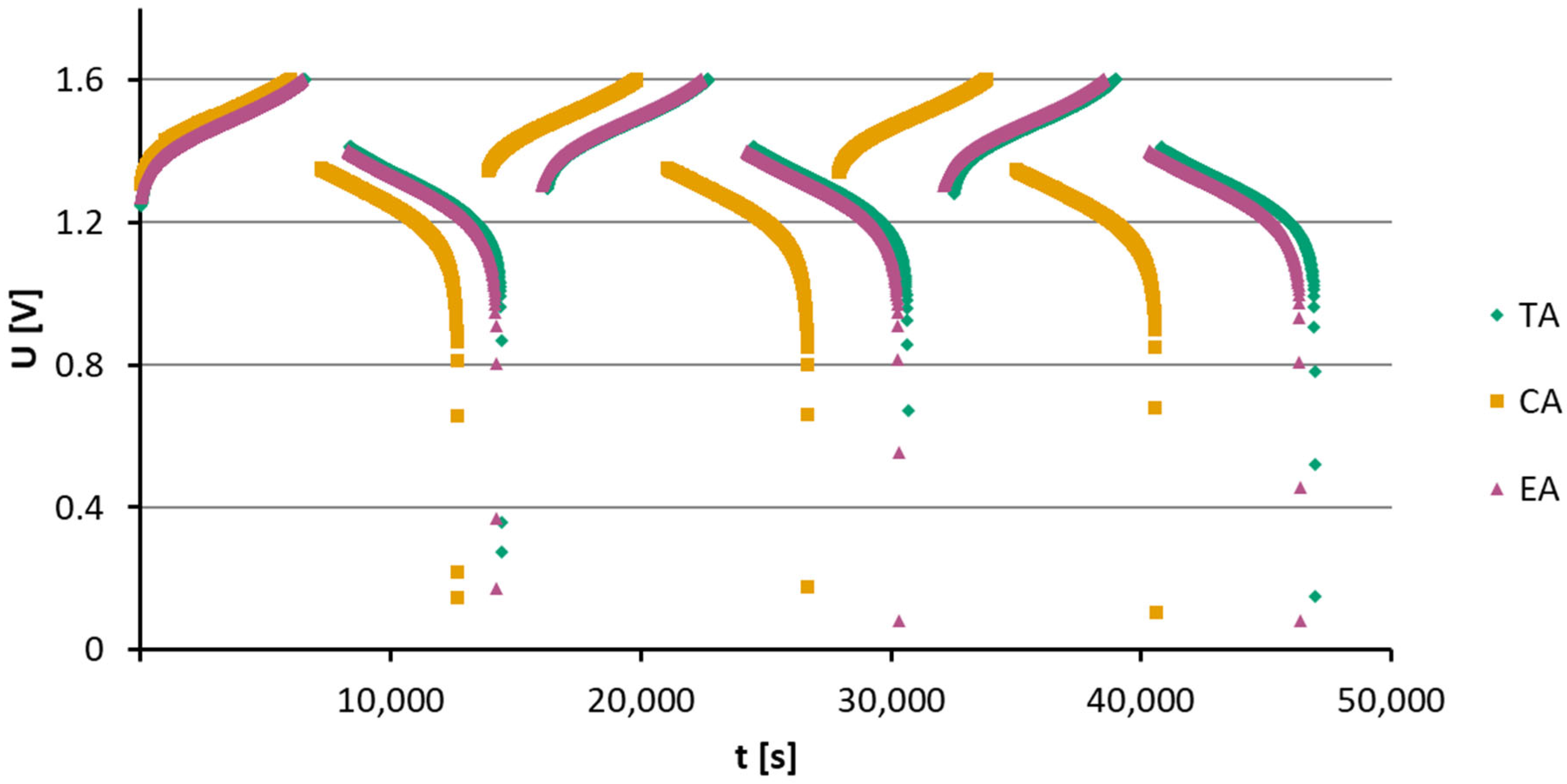
The charge–discharge behavior during the first three cycles at 1 A for cells constructed with thermally activated, chemically aged and electrochemically aged electrodes is presented in Figure 2. Such cycling is routinely used to evaluate basic operational characteristics of RFB systems. During the first charging step, all cells show comparable voltage profiles; however, the system with chemically aged electrodes reaches the upper voltage limit earlier than the others. As a consequence, its subsequent charging step begins noticeably sooner, while the discharge curves remain similar across electrodes. In the second cycle, differences between electrodes become more pronounced—both the charge and discharge curves separate clearly. This effect intensifies in the third cycle, where the cell with chemically aged electrodes reaches its voltage cutoffs first, followed by the cell with electrochemically aged electrodes, and finally by the system with thermally activated electrodes.
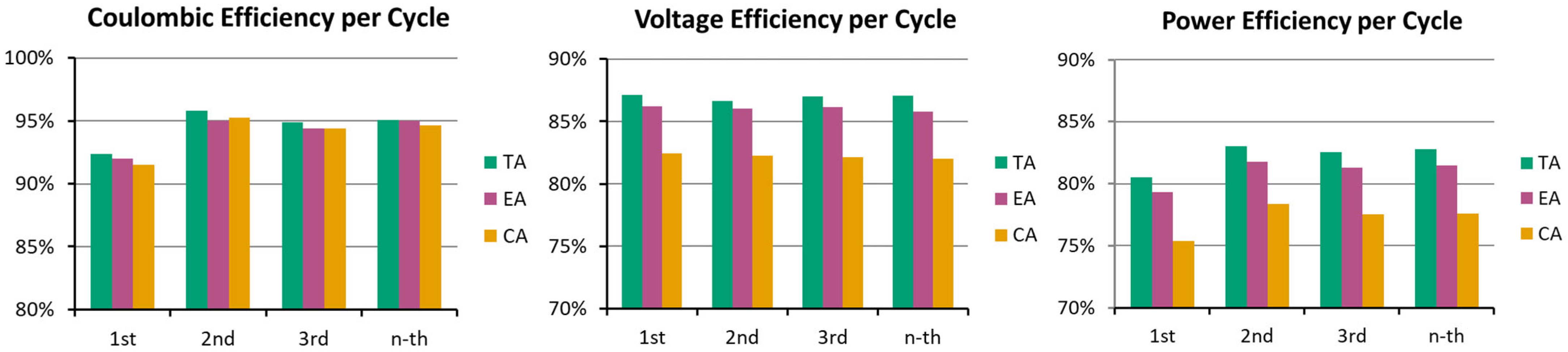
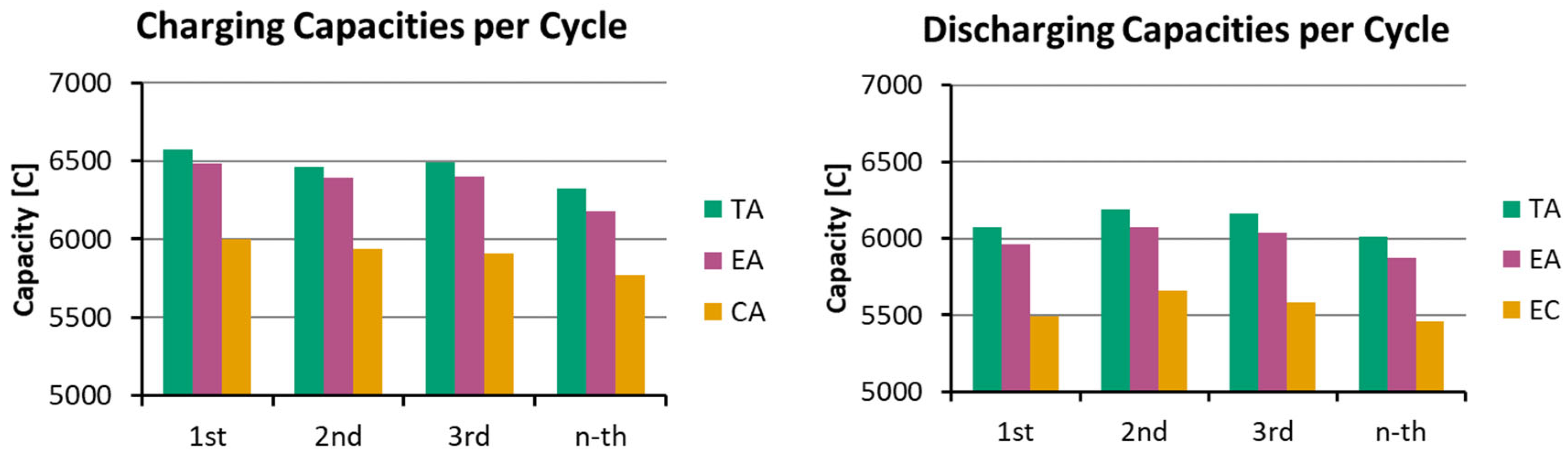
Based on these cycles, the coulombic, voltage, and power efficiencies were calculated and are shown in the grouped bar chart in Figure 3. The coulombic efficiencies of all three electrodes are nearly identical, indicating comparable charge-transfer balance during a cycle. In contrast, the voltage efficiency varies significantly: the cell with thermally activate electrodes exhibits the highest value, whereas the system with chemically aged electrodes shows the lowest. Consequently, the power efficiency follows the same trend, as it is directly influenced by voltage efficiency. The charging and discharging capacities (Figure 4) further support this observation: the chemically aged electrode provides the lowest capacities, whereas the thermally activated electrode yields the highest values among the studied systems.

3.2. DEIS Analysis During Charging and Discharging

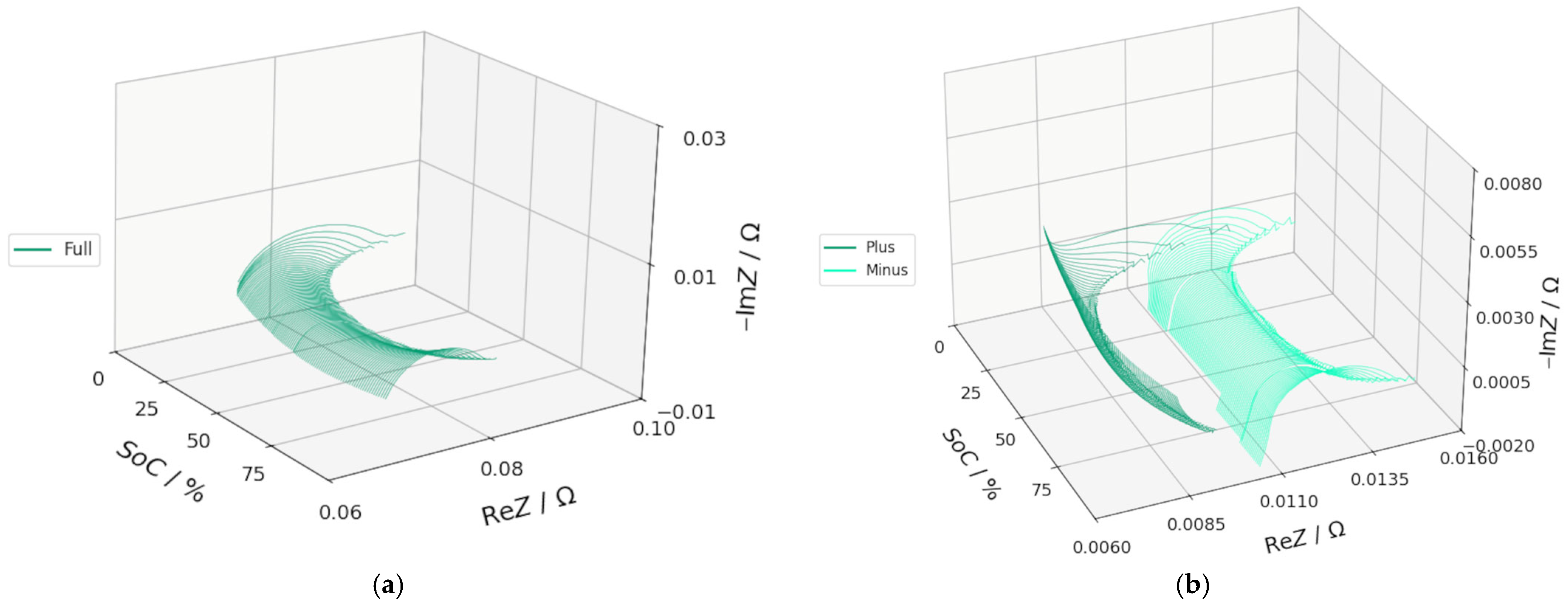
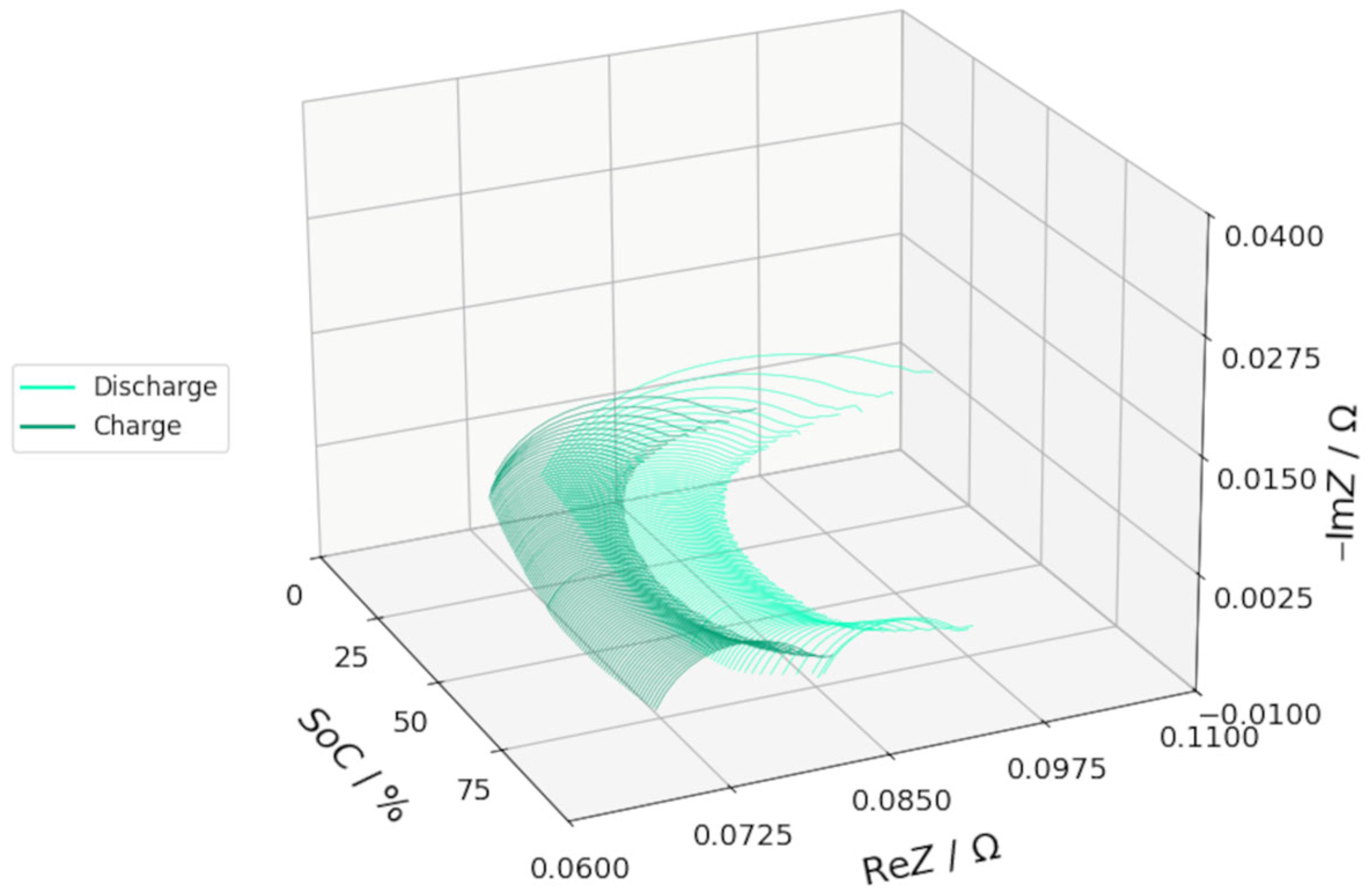
The DEIS measurements constitute the central part of this work. Impedance spectra were recorded at currents of 1 A and 0.5 A during both charging and discharging, for the full cell as well as for individual electrodes using a dual three-electrode configuration with a pseudo reference electrode. Representative spectra (Nyquist plot) for the cell equipped with thermally activated electrodes are shown in Figure 5. A clear evolution of the impedance response throughout the charge process is observed. If the diameter of the semicircle is initially interpreted as the charge-transfer resistance, the lowest values appear in the middle of the charging step, while the highest values occur at the beginning and end of charging.
The single-electrode spectra indicate that the negative electrode largely determines the behavior of the full cell, including the overall impedance signature. For the positive electrode, the highest charge-transfer resistance is recorded at the beginning of charging (i.e., at low state-of-charge). A slight increase is also visible toward the end of the process, though it is less pronounced than for the negative electrode and the full cell.
A corresponding set of DEIS spectra recorded at 0.5 A is presented in Figure S2. The overall evolution of the impedance response follows the same pattern as at 1 A, and the differences between the two current regimes remain practically negligible.
Because the application of DEIS to RFB systems remains limited and has thus far been used only by the authors, raw spectra are included here for clarity before the detailed interpretation presented in the subsequent section. Figure 6 presents representative DEIS spectra for the full cell with thermally activated electrodes during charging and discharging. Although the general shape of the spectra is similar for both processes, their relative positions differ considerably, suggesting notable differences in reaction kinetics between charging and discharging modes.
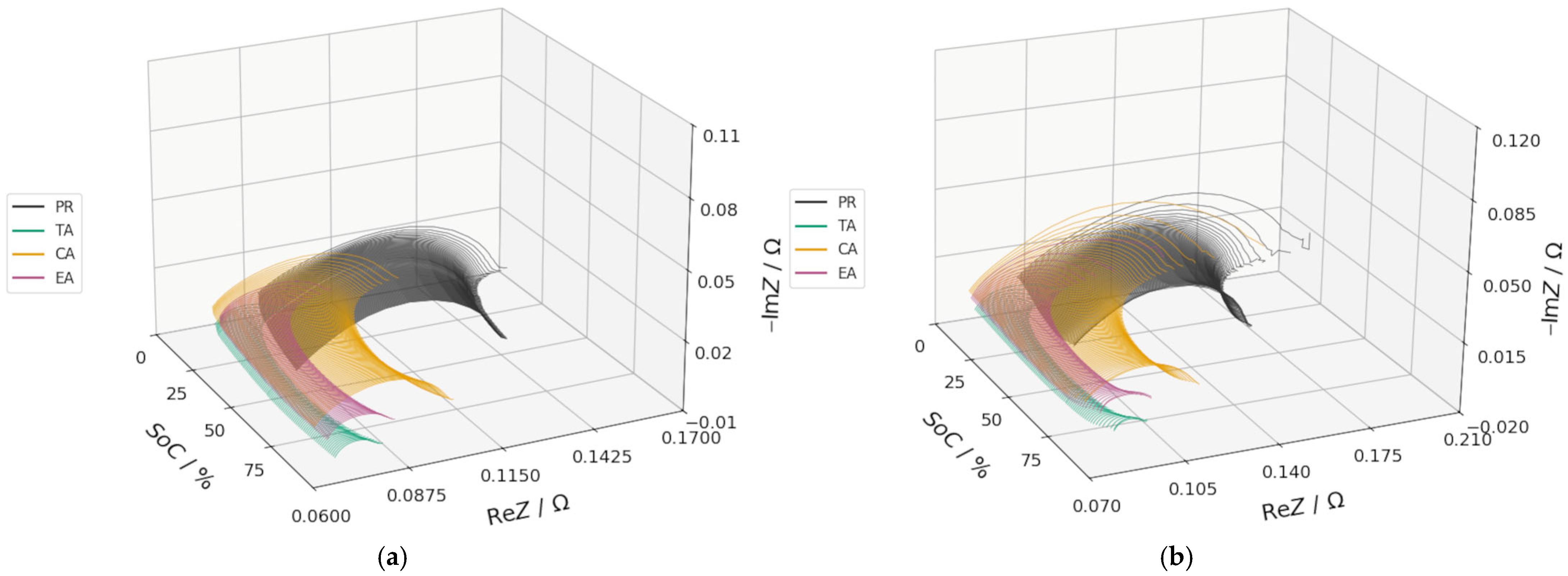
As a final example of Nyquist plots obtained in the DEIS measurements, Figure 7 presents the spectra recorded during charging and discharging cycles for the thermally activated, chemically aged and electrochemically aged electrodes at 1 A. Even at first glance, clear differences between the results can be observed, originating from the different conditions of the electrodes used in the tests. Analogous data for all electrode types measured at 0.5 A are shown in Figure S3. Although the general trends remain similar to those observed at 1 A, the spectra for the pristine electrode exhibit noticeably larger variations in shape, and the absolute impedance values are distinctly higher at the lower current.
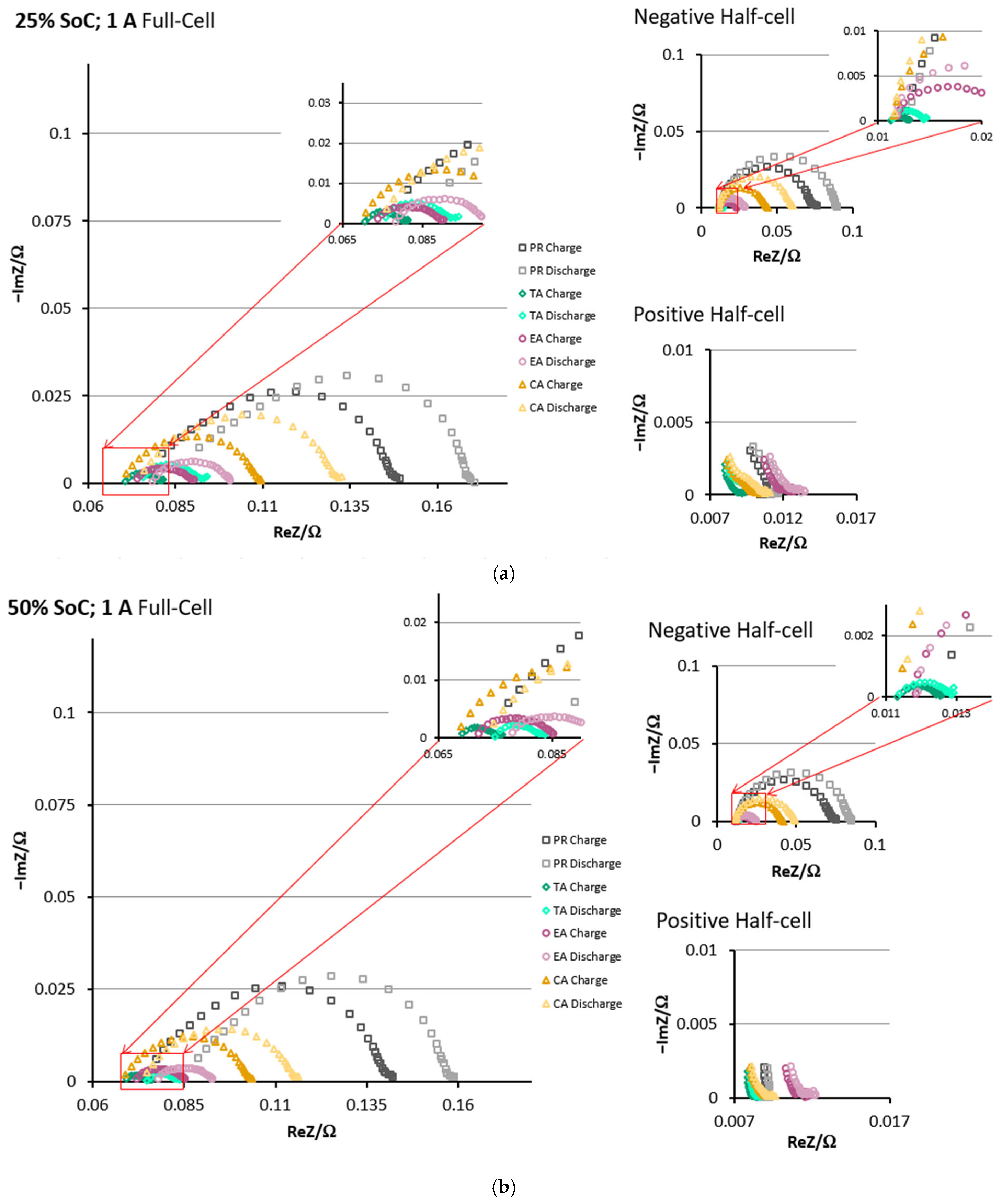
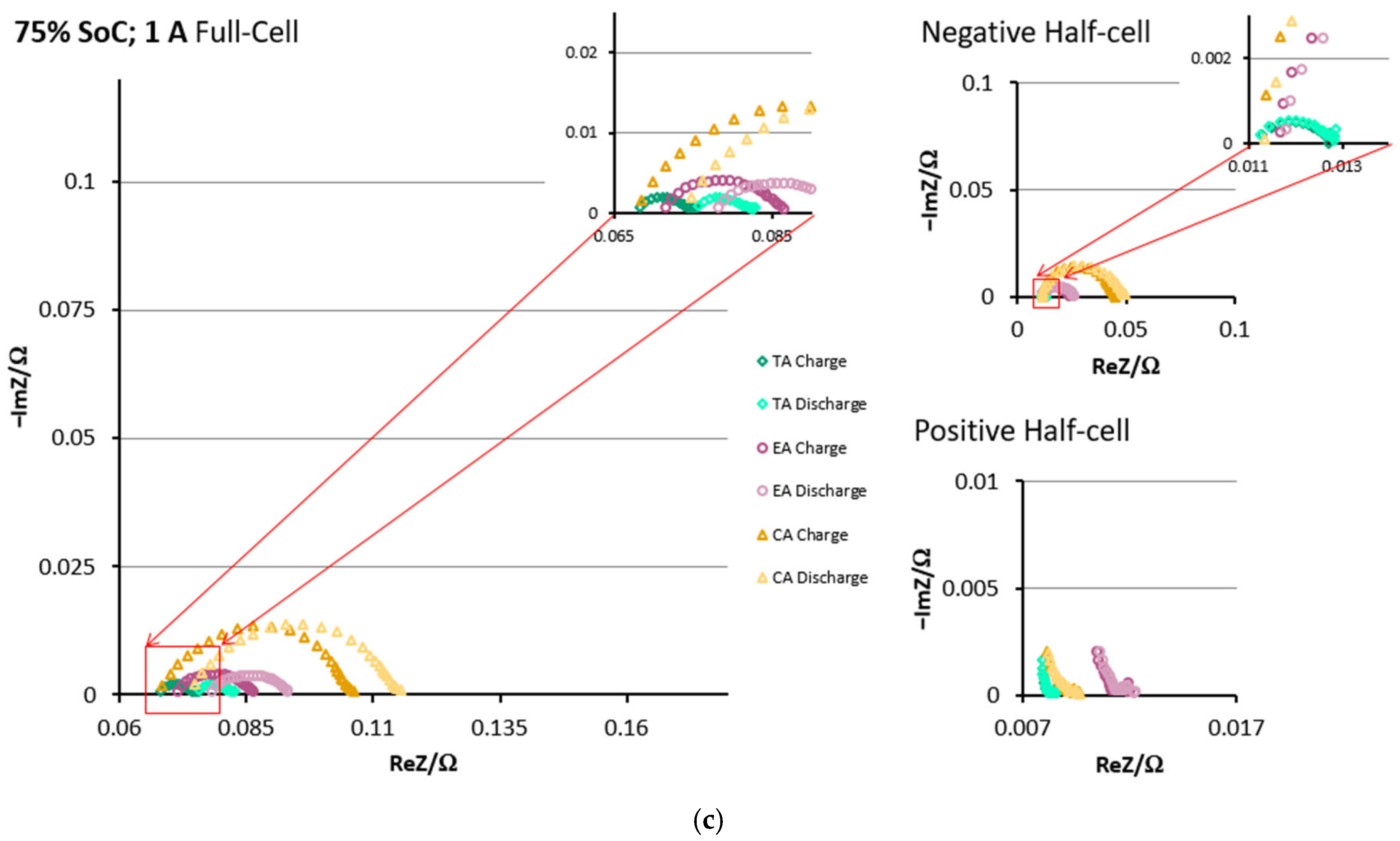
The differences in impedance behavior among the studied electrodes become much more pronounced in the subsequent plots (Figure 8), where three spectra from each series are shown, corresponding to identical states of charge (25%, 50%, and 75%). It is evident that the smallest semicircle diameters were recorded for the thermally activated electrodes, slightly larger values for the electrochemically aged electrodes, significantly larger for the chemically aged electrodes, and almost twice as large for the pristine electrodes. Notably, the SoC of 75% was not reached by the cell with the pristine electrodes due to the imposed voltage limit.
A characteristic feature is that the increase in charge-transfer resistance leads to a more distinct separation of spectra obtained at different SoC levels. Moreover, this differentiation is more pronounced during the discharging step—i.e., during the spontaneous process—than during charging, which represents a forced process.
For the positive electrode, the reaction kinetics are markedly faster compared to the negative electrode. Consequently, the recorded spectra appear at much lower impedance values and do not exhibit a well-defined semicircle under the experimental conditions, making their interpretation more challenging. Nevertheless, the immediately noticeable trend is the reduced divergence between the spectra collected during charging and discharging. In both processes, the lowest impedance values were observed for the thermally activated electrodes, higher values for the electrochemically aged electrodes, and then for the chemically aged electrodes. For the cell with pristine electrodes, substantial changes in impedance were recorded as a function of SoC (with impedance decreasing as SoC increased), although the absolute values still fell within the range obtained for the other electrodes.
An analogous set of spectra recorded at 0.5 A is presented in Figure S4; the relative ordering of the spectra remains the same as that for 1 A, although the absolute impedance values—particularly for the pristine electrode—are noticeably higher at the lower current.
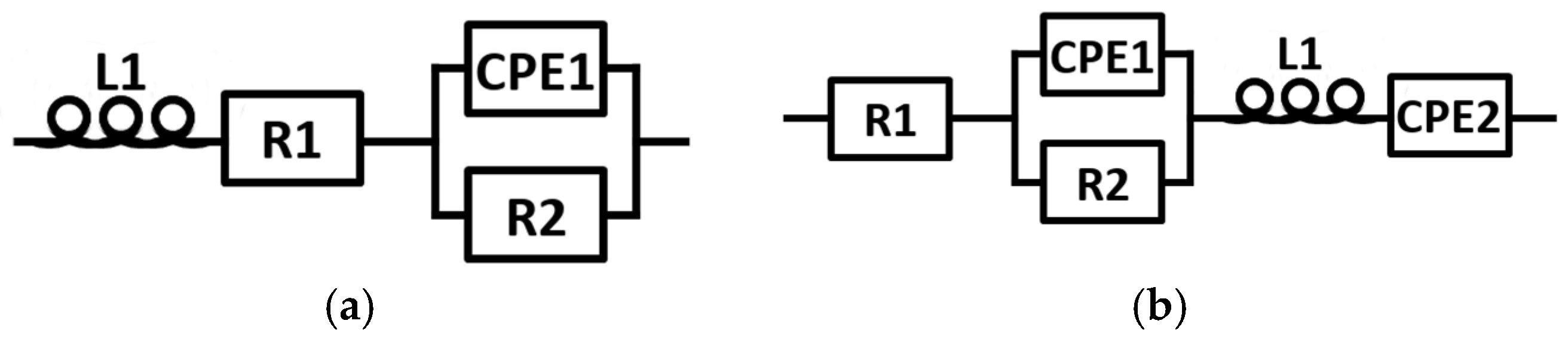
The next step in the analysis of the DEIS spectra involves assigning appropriate electrical equivalent circuits and attempting to interpret the obtained parameter values. No fitting was performed for the positive electrode due to the nature of the recorded spectra, which resulted in parameter estimates with unacceptably high uncertainty. In contrast, very good agreement with the experimental data was achieved for the negative electrode using the circuit shown in Figure 9a. This circuit consists of an inductance L1 connected in series with a resistor R1, followed by two elements connected in parallel—namely, a resistor R2 and a constant phase element CPE1. The resistor R1 is interpreted as the combined electric and electrolytic resistance between the current collectors, whereas R2 represents the charge-transfer resistance associated with the interfacial electrochemical reaction. The CPE–R2 branch therefore reflects the physicochemical processes occurring at the negative electrode.
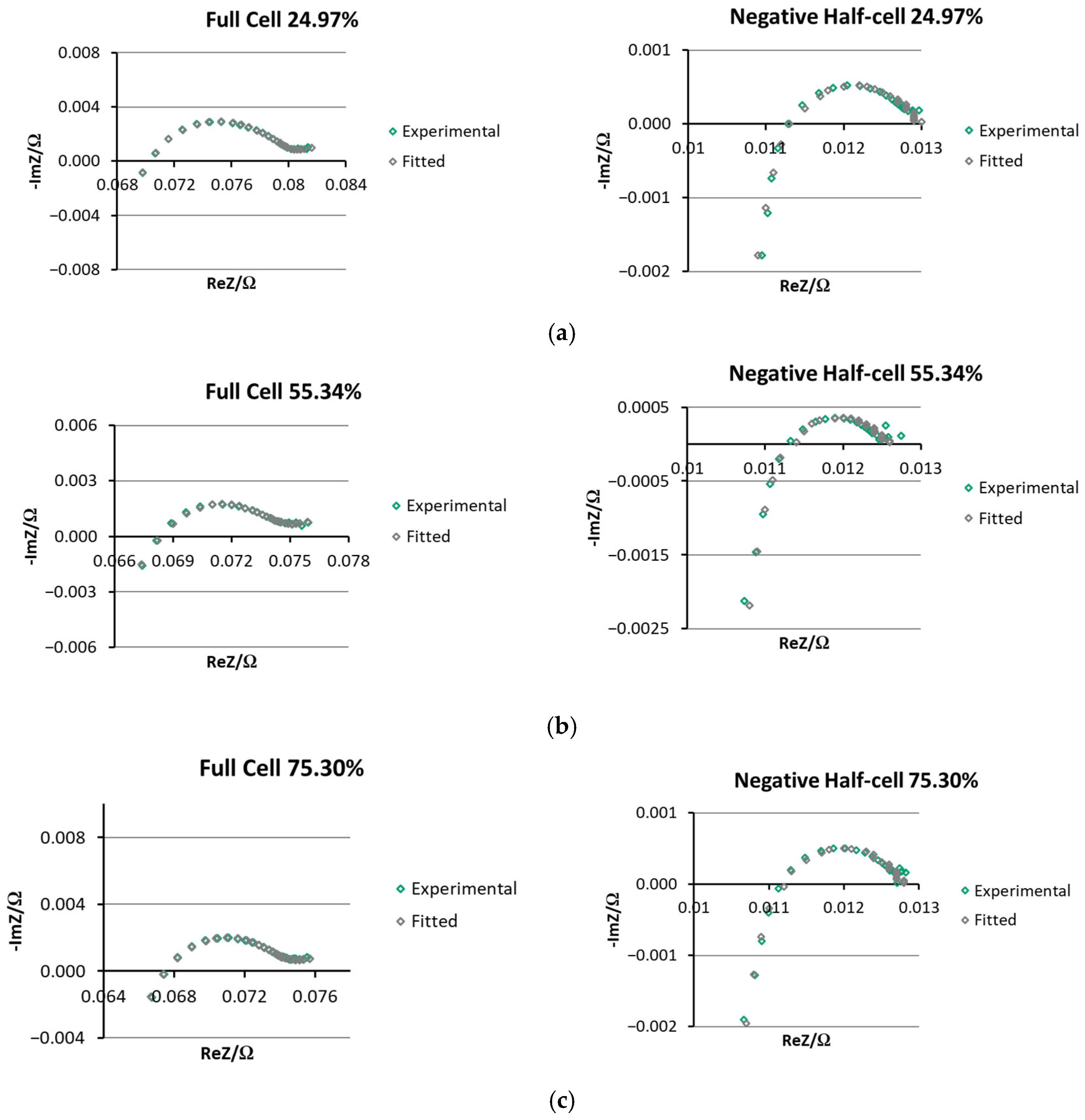
For the equivalent circuit representing the full cell, we initially introduced an additional branch analogous to CPE1(R2), intended to reflect the behavior of the second electrode. However, the fit quality was not satisfactory. We attribute this to the significant differences in reaction kinetics between the two electrodes. A much better fit was obtained using the equivalent circuit presented in Figure 9b. This finding is consistent with our earlier conclusion that the overall behavior of the cell—both during charging and discharging—is predominantly governed by the processes occurring at the negative electrode. Representative Nyquist plots together with the corresponding fitted spectra obtained using this circuit are shown in Figure 10 for the full cell equipped with TA electrodes and for the negative electrode at approximately 25%, 50%, and 75% SoC.
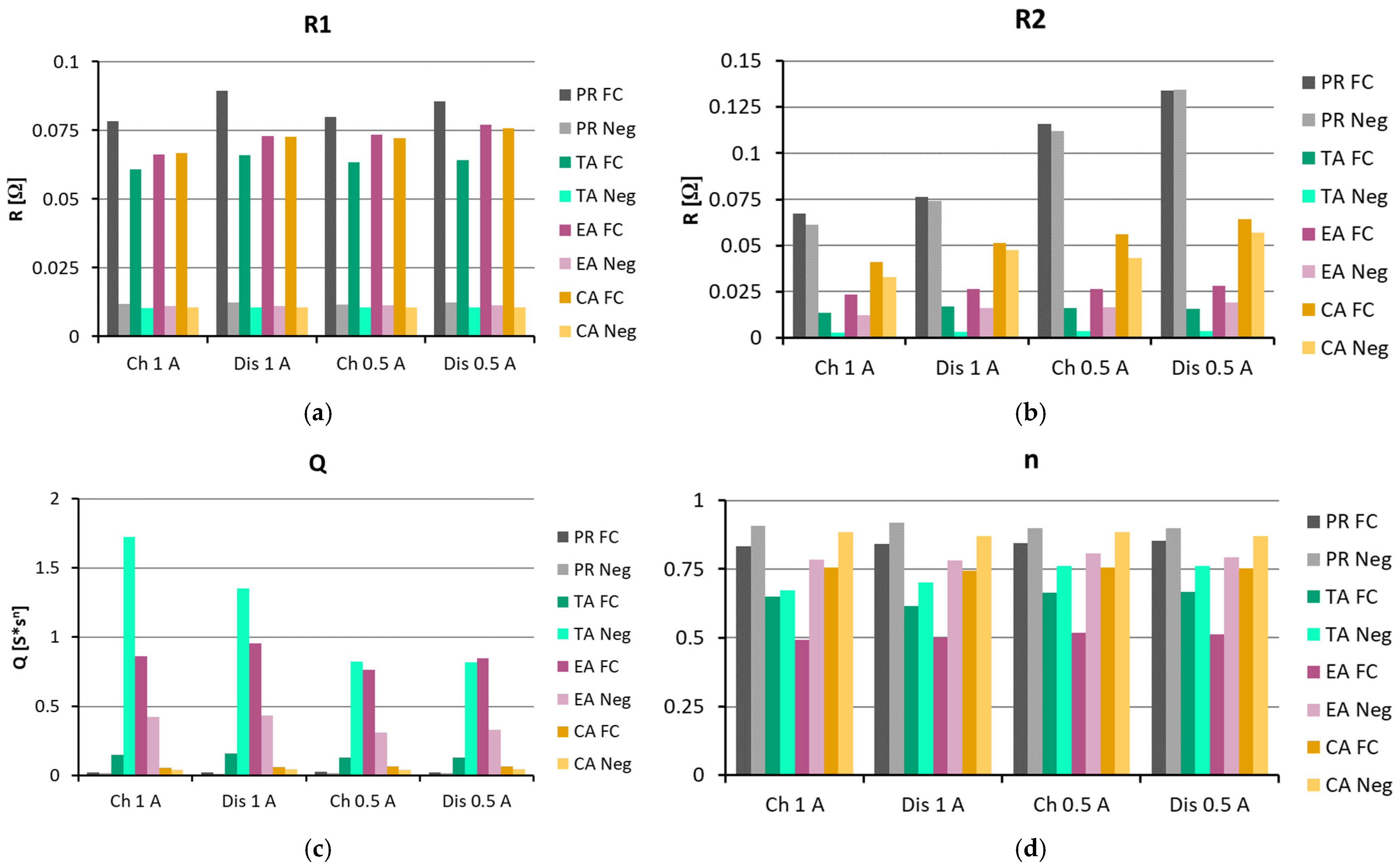
The parameters of the equivalent circuit elements obtained from fitting the Nyquist plots for each DEIS measurement series during the charge–discharge cycle are presented in graphical form in the Supplementary Materials (Figures S5–S8). Figure 11a–d summarize the average values of these parameters for all investigated systems. The DEIS measurements were conducted at two different operating currents, namely 1 A and 0.5 A, and all spectra included in the averaging were collected within the same voltage window during cell operation.
The average values of R1, representing the combined electric and electrolytic resistance between the current collectors, are highest for the cell equipped with pristine electrodes and lowest for the thermally activated electrodes. The remaining electrode types (chemically and electrochemically aged) show very similar values of R1. During charging at the higher current (1 A), the resistance of the aged electrodes is closer to that of the thermally activated ones, whereas at the lower current (0.5 A), it more closely approaches the values observed for pristine electrodes. The resistance R1 obtained from the three-electrode configuration for the negative electrode is significantly lower than that obtained for the full cell, while the relative differences between the electrode types follow a similar pattern. Naturally, R1 for the full cell includes not only the resistance associated with the negative electrode but also contributions from the positive electrode and the membrane.
The parameter R2 is associated with the charge-transfer resistance. It is clearly visible that R2 for the pristine electrodes is substantially higher than for the remaining systems. The lowest values are obtained for the thermally activated electrodes, followed by electrochemically aged, and then chemically aged electrodes. A notable feature is that as R2 increases for a given full-cell system, the corresponding value determined for the negative electrode also becomes relatively larger. Pronounced differences in R2 are observed between charging and discharging: as already noted in the Nyquist plots, the charge-transfer resistance is higher during the spontaneous discharge process. Even larger differences appear between the operating currents of 1 A and 0.5 A. A lower current results in higher charge-transfer resistance in all cases, although this effect is minimal for the thermally activated electrodes.
The constant phase element (CPE1) connected in parallel with R2 is characterized by two parameters, Q and n, where Q reflects the effective capacitive behavior and n describes the deviation of the CPE1 response from that of an ideal capacitor. Figure 11c shows clear differences among the systems. The smallest—and exceptionally low—values of Q were obtained for the pristine and chemically aged electrodes (the latter slightly higher) at both current levels. The highest capacitive values were observed for the negative thermally activated electrode during operation at 1 A, while operation at 0.5 A produced lower and nearly identical values for charging and discharging. The Q values for the electrochemically aged electrodes are also significant, but in this case they remain similar across all investigated conditions.
The CPE1 exponent n exhibits considerable variation among the tested electrodes, ranging from approximately 0.5 to 0.9, reflecting differences in the underlying physical factors influencing electrode behavior. The highest values are observed for the pristine electrodes. Moreover, the ordering of the obtained values differs slightly when considering the full-cell data (PR > CA > AT > EA) compared with the negative-electrode values (PR > CA > EA > AT). These rankings remain consistent across all tested operating conditions. No meaningful differences are observed between charging and discharging, nor between the two applied currents.
As mentioned previously, the equivalent-circuit parameters as a function of SoC are provided in the Supplementary Materials (Figures S5–S8). Some of these parameters remain nearly constant throughout the entire charge–discharge process, while others exhibit pronounced variations that are not reflected in the averaged values discussed above. As expected, R1 changes only slightly with SoC when considering the full cell, showing the highest values at the extremes of SoC and the lowest values around 50% SoC. For the negative electrodes, this parameter displays only minor upward or downward trends.
For R2, the largest values are observed at low SoC, and the most significant changes occur for the pristine and chemically aged electrodes.
Examining the CPE components, the parameter Q shows the largest SoC-dependent variations for the EA-based full cells. During both charging and discharging, and at both operating currents (1 A and 0.5 A), Q increases, reaching a maximum at approximately 50% SoC before decreasing again to its initial value. For the remaining two-electrode systems, Q remains practically unchanged across the entire SoC range under all tested conditions. In the case of the negative electrodes, the strongest variations are observed for the TA electrode, with changes significantly more pronounced at 1 A than at 0.5 A.
The CPE exponent n also exhibits two characteristic behaviors as a function of SoC. For systems with PR and CE electrodes (both in the two- and three-electrode configurations), n remains nearly constant or shows only minimal fluctuations. In contrast, for the systems with thermally activated and electrochemically aged electrodes, the highest n values appear at the SoC extremes, while the lowest occur near mid-range SoC.

3.3. EIS Comparison

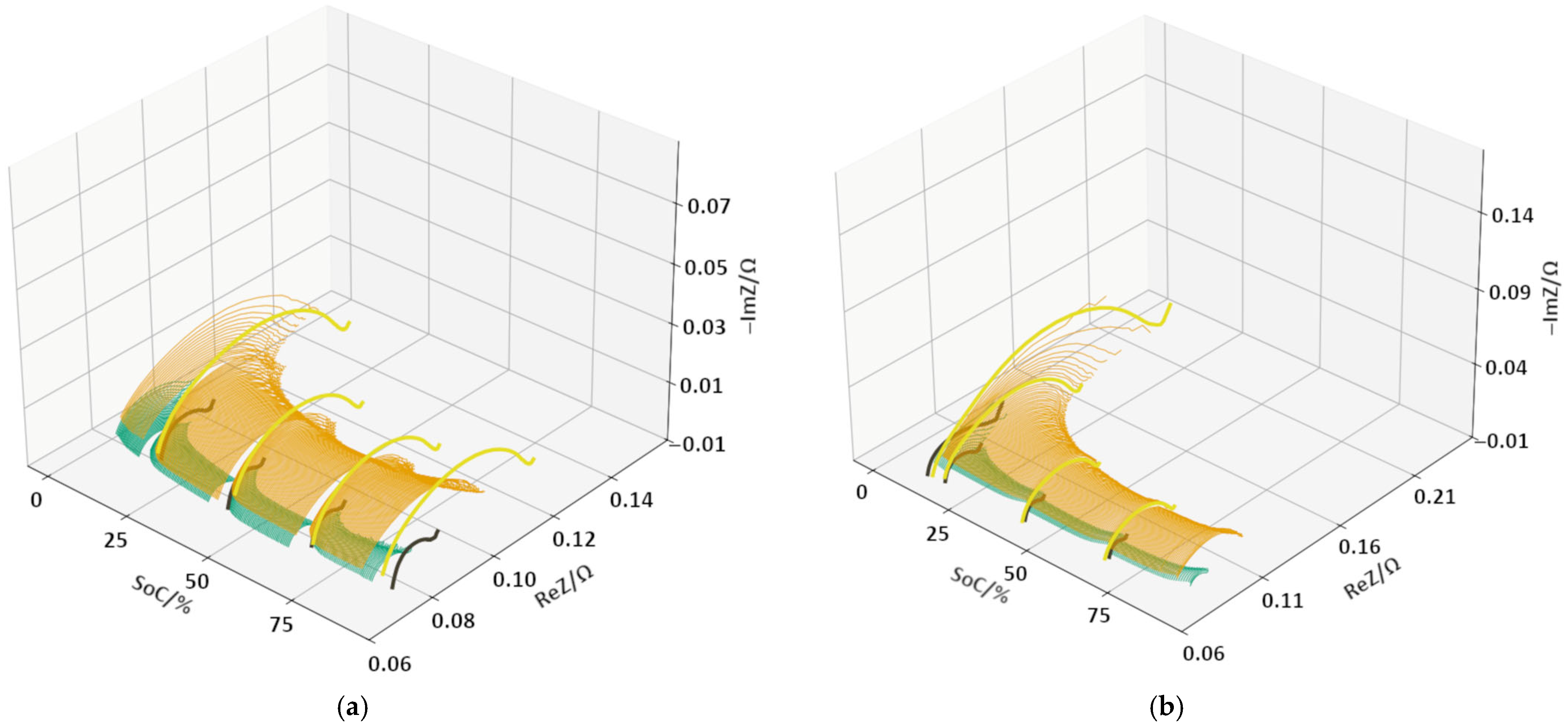
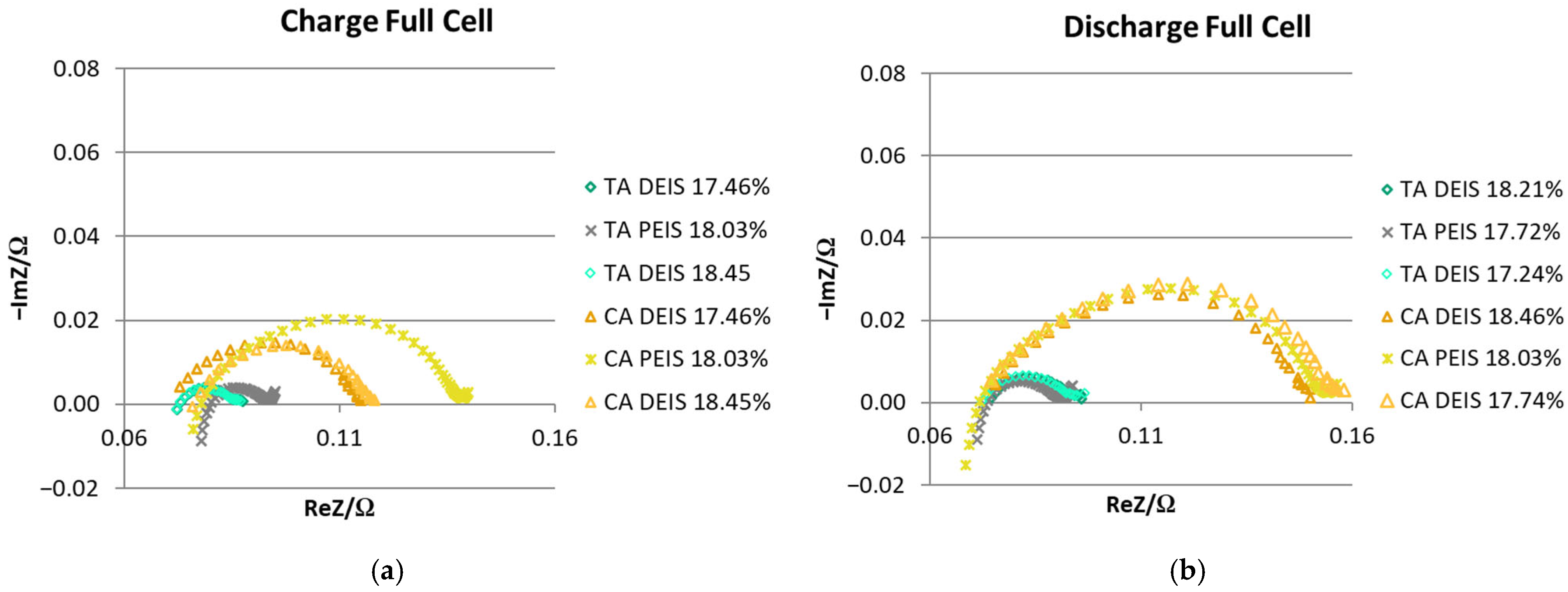
One of the experiments involved performing a full charge–discharge cycle with continuous DEIS measurements. At SoC values of 20%, 50%, and 70%, the cell operation and DEIS measurements were paused for around 20 min after which the EIS spectra were recorded in potentiostatic mode. Figure 12 presents a representative set of Nyquist plots showing both the DEIS spectra collected during cell operation and the EIS spectra measured during the pauses. A clear difference can be observed between the spectra obtained under load and those recorded at open-circuit conditions, highlighting the impact of ongoing electrochemical processes on the impedance response.
These differences become even more apparent when the spectra are compared directly in a two-dimensional representation, as shown in Figure 13. The plot includes the PEIS spectrum and the corresponding DEIS spectra recorded at the end of the DEIS sequence (just before the PEIS measurement) and at the beginning of the next DEIS sequence (immediately after the PEIS measurement), all obtained at a state of charge of approximately 20%. Data are presented for two electrode types: thermally activated and chemically aged.
For the spontaneous process (discharge), the PEIS and DEIS spectra remain relatively similar, indicating that the system is close to quasi-stationary behavior under these conditions. In contrast, during the forced process (charging), pronounced discrepancies emerge. For the thermally activated electrodes, the overall shape of the Nyquist plot is preserved, but the absolute position of the spectrum shifts considerably between PEIS and DEIS. The effect is even more significant for the chemically aged electrodes, where both the shape and the position of the impedance spectra differ strongly. These observations clearly demonstrate that DEIS captures dynamic features of the system that are absent in conventional EIS measurements, particularly under non-stationary, current-controlled conditions.

3.4. XPS Surface Chemistry Analysis

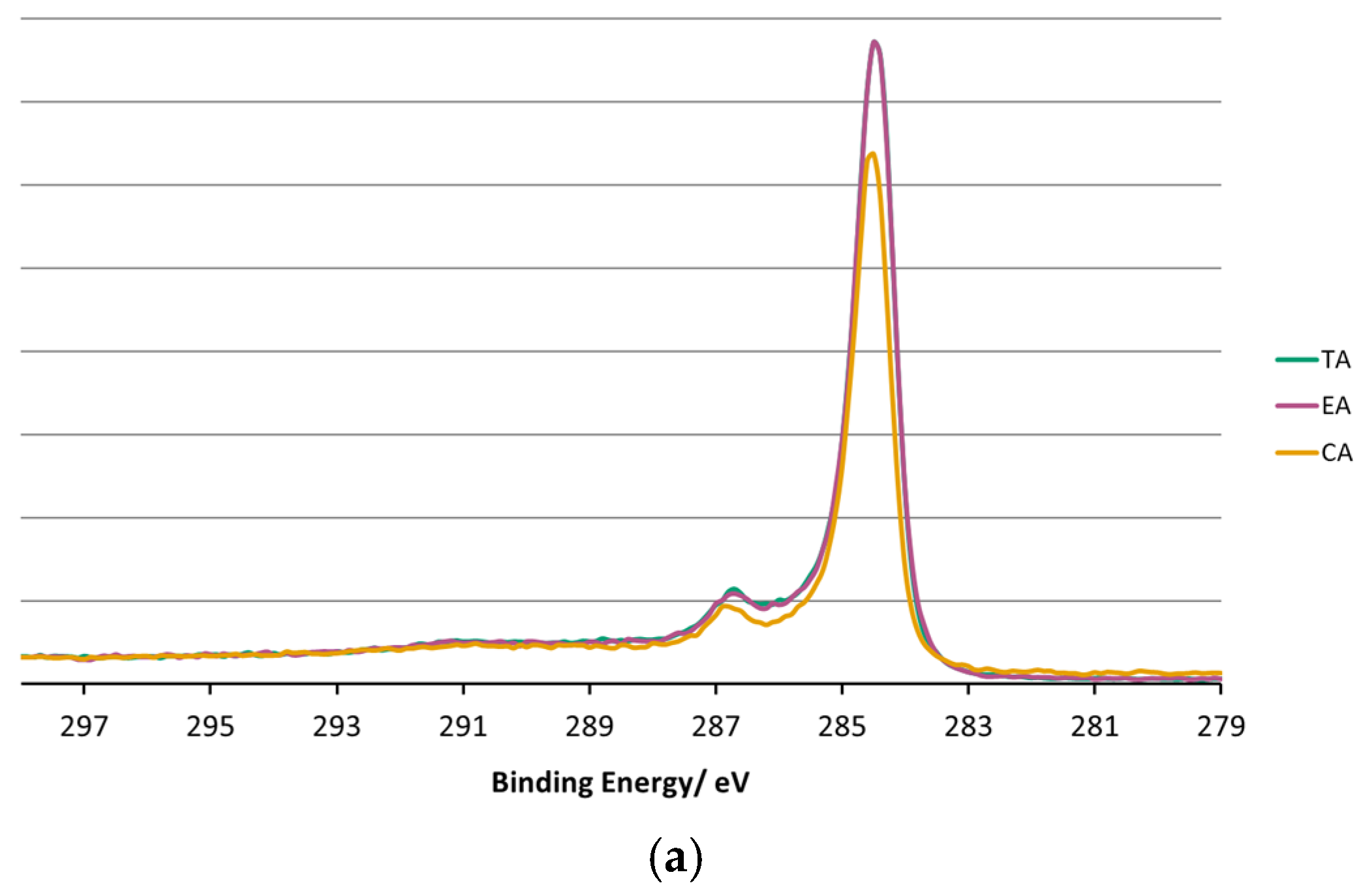
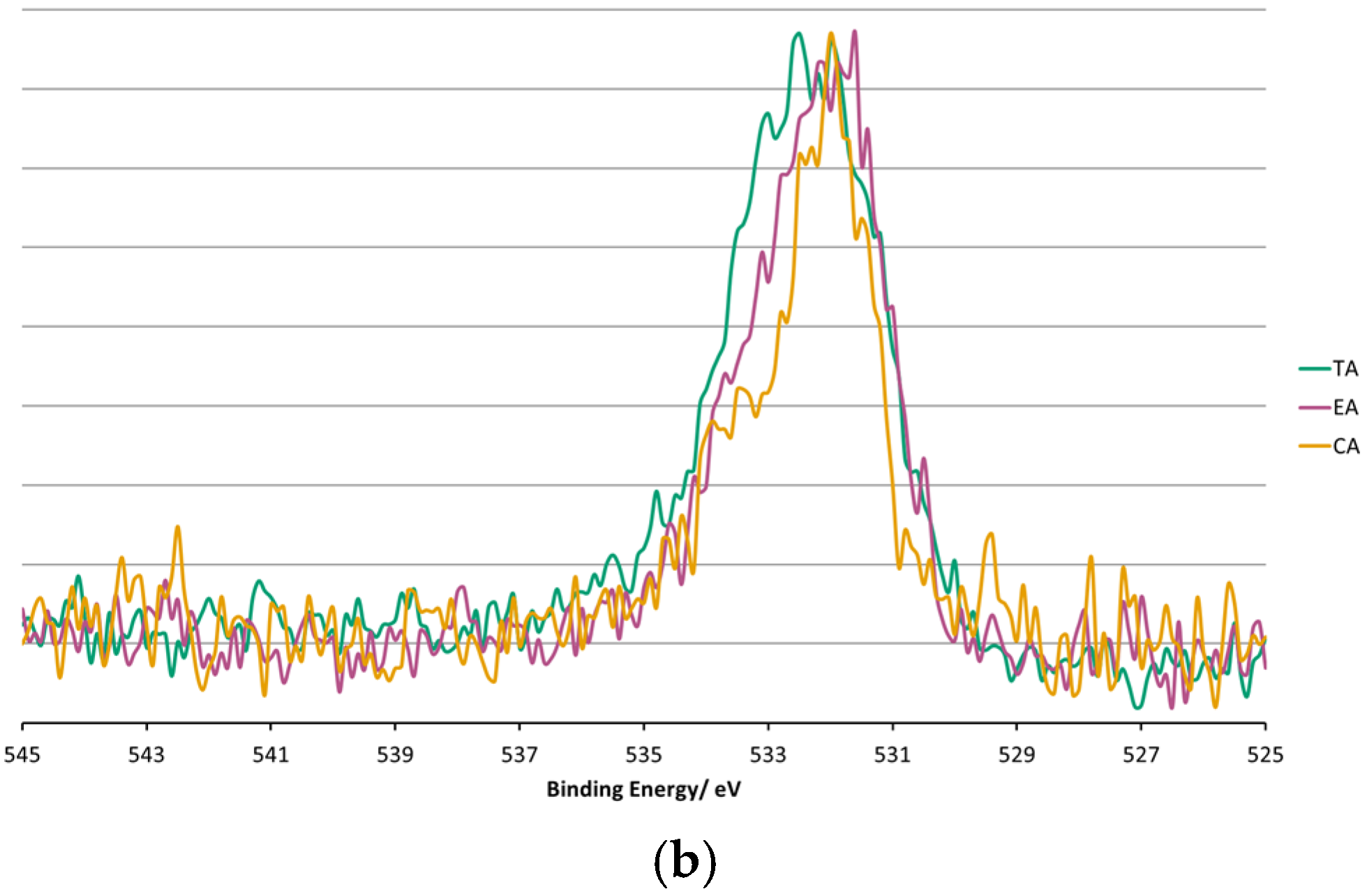
XPS measurements were carried out to characterize the surface chemical composition and functional groups present on the pristine (PR), thermally activated (TA), electrochemically aged (EA), and chemically aged (CA) electrodes. High-resolution XPS spectra were collected for the C 1 s and O 1 s regions, as these provide the most relevant information regarding the surface chemistry of carbon felt electrodes. Figure 14a presents the high-resolution C 1 s spectra for all investigated electrodes, while Figure 14b shows the corresponding O 1 s spectra. Clear differences between the samples are visible already at the level of the raw high-resolution spectra, indicating substantial variations in the degree of oxidation and in the distribution of carbon bonding environments among the differently aged materials.
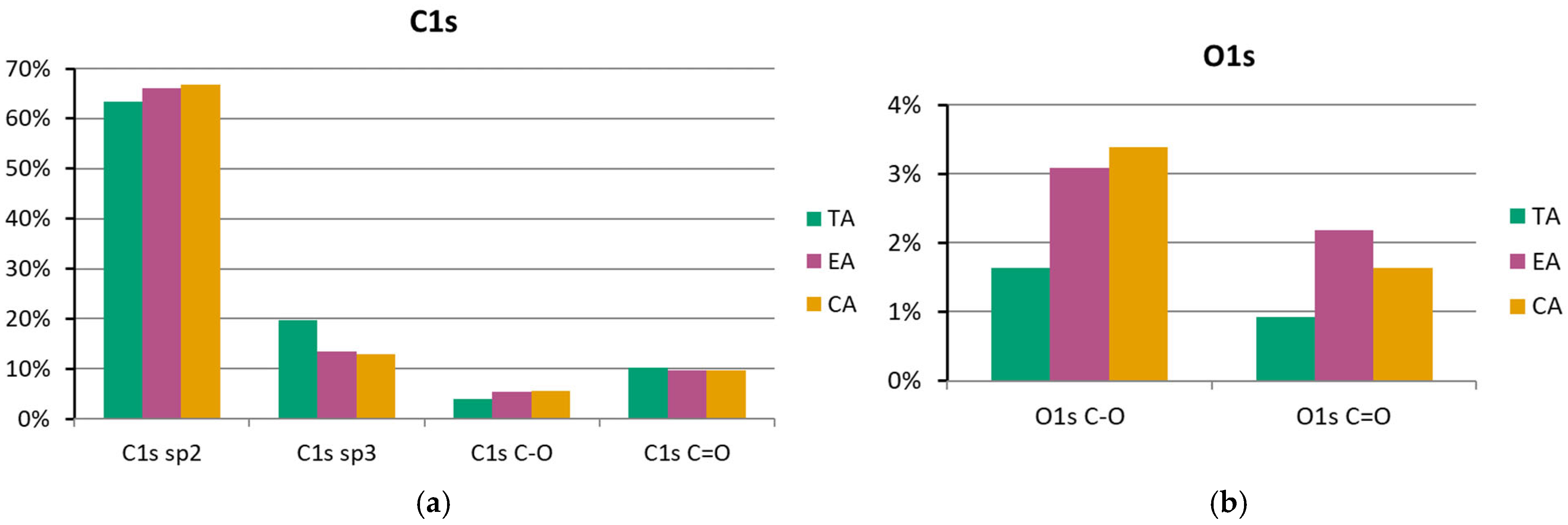
To enable quantitative comparison, the C 1 s and O 1 s spectra were deconvoluted into individual components. For the C 1 s region, the following contributions were identified: sp2 carbon (C=C) at 284.5 eV, sp3 carbon (C–C, C–H) at 285 eV, C–O–C (ether/epoxy) at 285.9 eV and C=O (carbonyl) 286.8 eV. In the O 1 s region, peaks corresponding to C–O (alcohol/ether/epoxy) at 531 eV and C=O (carbonyl/carboxyl) at 533.4 eV were resolved [25,26]. The relative contributions of these functional groups for all electrodes are presented in Figure 15.
The C 1 s spectra show that the fraction of sp2 carbon is highest for the chemically aged electrode, followed by the electrochemically aged sample and, finally, the thermally activated electrode. This indicates that chemical ageing partially enhance, the graphitic character of the carbon matrix. In contrast, the sp3 contribution is most pronounced for thermally activated electrodes and slightly lower but comparable for chemically and electrochemically aged ones, suggesting that thermal treatment generates additional disordered carbon domains which are only marginally affected by subsequent ageing.
For the oxygen-containing C 1 s components, the C–O–type species are clearly enriched on the electrochemically and chemically aged electrodes compared with thermally activated, while the C=O contribution remains practically the same for all three samples.
The O 1 s region is consistent with this picture. The C=O-related O 1 s component is most abundant for the chemically aged electrode, followed by electrochemically aged and thermally activated, whereas the C–O component follows the order CA > EA > TA. Thus, both ageing procedures increase the overall oxygen content relative to the thermally activated material, but in a somewhat different manner. Overall, the updated XPS results show that electrochemical ageing produces the most oxygen-rich and strongly oxidized surface, whereas chemical ageing enhances both the sp2 (graphitic) character and oxygen functionalization, leading to a distinct but comparably oxidized surface chemistry.

4. Conclusions

This study demonstrates that three-electrode dynamic electrochemical impedance spectroscopy (DEIS) is a powerful diagnostic tool for resolving electrode-specific ageing effects in vanadium redox flow batteries under realistic operating conditions. By combining full-cell and single-electrode DEIS measurements with complementary EIS and XPS analysis, we provide a comprehensive picture of how different ageing mechanisms influence charge-transfer kinetics, SoC-dependent impedance behavior, and surface chemistry.
Among the accelerated ageing methods investigated, chemical ageing was found to have the strongest detrimental impact on electrochemical performance. Chemically aged (CA) electrodes exhibited the highest charge-transfer resistance, reflected by elevated values of the fitted parameter R2, together with the largest state-of-charge-dependent variations in the impedance spectra and the most pronounced deviations in the equivalent-circuit parameters. The chemical treatment also significantly altered the surface chemistry, increasing the content of oxygenated functional groups while simultaneously modifying the sp2/sp3 carbon ratio. These changes correlate with decreased voltage and power efficiencies as well as reduced cell capacity.
Electrochemical ageing (EA) produced moderate oxidation and intermediate kinetic behavior, while thermally activated felts (TA) consistently exhibited the lowest resistance values and the most stable response across operating conditions. Importantly, the three-electrode DEIS results show that the negative electrode dominates the overall impedance response of the cell, and its degradation is the primary factor controlling performance losses during cycling. This finding has practical implications for targeted electrode design and ageing mitigation strategies in VRFB systems.
From a practical standpoint, the demonstrated DEIS methodology provides a sensitive and operando-capable approach for evaluating electrode health, identifying degradation pathways, and distinguishing between charge-transfer and mass-transport limitations during normal battery operation. Unlike conventional EIS, DEIS captures transient impedance information that directly reflects the evolving chemical and electrochemical environment inside working flow batteries.
Future work should exploit this methodology to develop diagnostic protocols for real-time state-of-health monitoring, establish accelerated testing standards, and guide the optimization of electrode treatments that minimize degradation while maintaining high activity. Extending DEIS to multi-cell stacks, advanced electrode materials, and alternative redox chemistries represents a promising direction toward improving the durability, efficiency, and commercial readiness of next-generation redox flow battery systems.

Supplementary Materials

The following supporting information can be downloaded at: https://www.mdpi.com/article/10.3390/en19010256/s1, Figure S1: Use of a platinum wire as a pseudo-reference electrode. (a) 3D-printed holder for mounting the platinum pseudo-reference electrode; (b) Installed holder positioned at the electrolyte inlet of the flow battery; Figure S2: Representative DEIS spectra (Nyquist plots) for the full cell (a) and individual electrodes (negative (a) and positive (b) at three-electrode configuration) using thermally activated (TA) electrodes during charging at 0.5 A; Figure S3: Nyquist DEIS spectra recorded during charging (a) and discharging (b) cycles for cells equipped with thermally activated (TA), chemically aged (CA), and electrochemically aged (EA) electrodes at 0.5 A; Figure S4: Selected Nyquist DEIS spectra (at 0.5 A) for TA, CA, EA, and PR electrodes at 25% (a), 50% (b), 75% (c) states of charge; Figure S5: Values of the equivalent-circuit parameter R1 as a function SoC obtained for the full cell (charging a) and discharging b)) and the negative electrode (charging c) and discharging d)) under both operating currents (0.5 and 1 A) and all types of used electrodes; Figure S6: Values of the equivalent-circuit parameter R2 as a function SoC obtained for the full cell (charging a) and discharging b)) and the negative electrode (charging c) and discharging d)) under both operating currents (0.5 and 1 A) and all types of used electrodes; Figure S7: Values of the Q parameter (CPE magnitude) as a function of SoC obtained for the full cell (charging (a) and discharging (b)) and for the negative electrode (charging (c) and discharging (d)) under both operating currents (0.5 and 1 A) and all types of used electrodes; Figure S8: Values of the n parameter (CPE magnitude) as a function of SoC obtained for the full cell (charging (a) and discharging (b)) and for the negative electrode (charging (c) and discharging (d)) under both operating currents (0.5 and 1 A) and all types of used electrodes.

Author Contributions

Conceptualization, J.K.; Methodology, W.B., Ł.G., P.Ś. and J.K.; Software, E.H. and P.Ś.; Validation, P.Ś.; Formal analysis, Ł.G. and J.K.; Investigation, E.H., W.B. and Ł.G.; Data curation, W.B. and Ł.G.; Writing—original draft, E.H. and J.K.; Writing—review & editing, W.B.; Visualization, E.H. and W.B.; Supervision, J.K. All authors have read and agreed to the published version of the manuscript.

Funding

This research received no external funding.

Data Availability Statement

The original contributions presented in this study are included in the article and Supplementary Materials. Further inquiries can be directed to the corresponding author.

Conflicts of Interest

The authors declare no conflict of interest.

References

  1. Vanadium Flow Battery Energy Storage—Invinity. Available online: https://invinity.com/vanadium-flow-batteries/?_gl=1*1q4g5a3*_up*MQ..&gclid=CjwKCAiAxc_JBhA2EiwAFVs7XOTDJZ1SfcRmGZs_4O6WNilnqdYS_RjOF1od1DK6esq_sj6_fY04lBoC8KEQAvD_BwE&gbraid=0AAAAACkMUkeHrbQ9yX7pmP3m1dPHjQ6uq (accessed on 8 December 2025).
  2. Vanadium Redox Flow Battery (VRFB)|Long-Duration Energy Storage|Sumitomo Electric. Available online: https://sumitomoelectric.com/products/flow-batteries?utm_source=chatgpt.com (accessed on 8 December 2025).
  3. Yuan, X.Z.; Song, C.; Platt, A.; Zhao, N.; Wang, H.; Li, H.; Fatih, K.; Jang, D. A review of all-vanadium redox flow battery durability: Degradation mechanisms and mitigation strategies. Int. J. Energy Res. 2019, 43, 6599–6638. [Google Scholar] [CrossRef]
  4. Schweiss, R.; Meiser, C.; Goh, F.W.T. Steady-State Measurements of Vanadium Redox-Flow Batteries to Study Particular Influences of Carbon Felt Properties. ChemElectroChem 2017, 4, 1969–1974. [Google Scholar] [CrossRef]
  5. Sun, B.; Skyllas-Kazacos, M. Chemical modification of graphite electrode materials for vanadium redox flow battery application—Part II. Acid treatments. Electrochim. Acta 1992, 37, 2459–2465. [Google Scholar] [CrossRef]
  6. Pezeshki, A.M.; Clement, J.T.; Veith, G.M.; Zawodzinski, T.A.; Mench, M.M. High performance electrodes in vanadium redox flow batteries through oxygen-enriched thermal activation. J. Power Sources 2015, 294, 333–338. [Google Scholar] [CrossRef]
  7. Liu, H.; Xu, Q.; Yan, C.; Qiao, Y. Corrosion behavior of a positive graphite electrode in vanadium redox flow battery. Electrochim. Acta 2011, 56, 8783–8790. [Google Scholar] [CrossRef]
  8. Schneider, J.; Tichter, T.; Khadke, P.; Zeis, R.; Roth, C. Deconvolution of electrochemical impedance data for the monitoring of electrode degradation in VRFB. Electrochim. Acta 2020, 336, 135510. [Google Scholar] [CrossRef]
  9. Derr, I.; Bruns, M.; Langner, J.; Fetyan, A.; Melke, J.; Roth, C. Degradation of all-vanadium redox flow batteries (VRFB) investigated by electrochemical impedance and X-ray photoelectron spectroscopy: Part 2 electrochemical degradation. J. Power Sources 2016, 325, 351–359. [Google Scholar] [CrossRef]
  10. Oreiro, S.N.; Jacquemond, R.R.; Boz, E.B.; Forner-Cuenca, A.; Bentien, A. Investigation of the positive electrode and bipolar plate degradation in vanadium redox flow batteries. J. Energy Storage 2025, 132, 117689. [Google Scholar] [CrossRef]
  11. Huang, Z.; Liu, Y.; Xie, X.; Huang, C.; Huang, Q.; Guo, Z.; Liu, Y. Experimental Validation of Side Reaction on Capacity Fade of Vanadium Redox Flow Battery. J. Electrochem. Soc. 2024, 171, 010521. [Google Scholar] [CrossRef]
  12. Wei, L.; Zhao, T.S.; Xu, Q.; Zhou, X.L.; Zhang, Z.H. In-situ investigation of hydrogen evolution behavior in vanadium redox flow batteries. Appl. Energy 2017, 190, 1112–1118. [Google Scholar] [CrossRef]
  13. Schweiss, R.; Pritzl, A.; Meiser, C. Parasitic Hydrogen Evolution at Different Carbon Fiber Electrodes in Vanadium Redox Flow Batteries. J. Electrochem. Soc. 2016, 163, A2089–A2094. [Google Scholar] [CrossRef]
  14. Derr, I.; Przyrembel, D.; Schweer, J.; Fetyan, A.; Langner, J.; Melke, J.; Weinelt, M.; Roth, C. Electroless chemical aging of carbon felt electrodes for the all-vanadium redox flow battery (VRFB) investigated by Electrochemical Impedance and X-ray Photoelectron Spectroscopy. Electrochim. Acta 2017, 246, 783–793. [Google Scholar] [CrossRef]
  15. Nourani, M.; Zackin, B.I.; Sabarirajan, D.C.; Taspinar, R.; Artyushkova, K.; Liu, F.; Zenyuk, I.V.; Agar, E. Impact of Corrosion Conditions on Carbon Paper Electrode Morphology and the Performance of a Vanadium Redox Flow Battery. J. Electrochem. Soc. 2019, 166, A353–A363. [Google Scholar] [CrossRef]
  16. Schilling, M.; Eifert, L.; Köble, K.; Jaugstetter, M.; Bevilacqua, N.; Fahy, K.F.; Tschulik, K.; Bazylak, A.; Zeis, R. Investigating the Influence of Treatments on Carbon Felts for Vanadium Redox Flow Batteries. ChemSusChem 2024, 17, e202301063. [Google Scholar] [CrossRef] [PubMed]
  17. Remmler, N.; Bron, M. Recent Progress in our Understanding of the Degradation of Carbon-Based Electrodes in Vanadium Redox Flow Batteries—Current Status and Next Steps. ChemElectroChem 2024, 11, e202400127. [Google Scholar] [CrossRef]
  18. Krakowiak, J.; Bącalski, W.; Lentka, G.; Peljo, P.; Ślepski, P. Three modes of electrochemical impedance spectroscopy measurements performed on vanadium redox flow battery. Sustain. Mater. Technol. 2024, 40, e00957. [Google Scholar] [CrossRef]
  19. Inzelt, G. Pseudo-reference Electrodes. In Handbook of Reference Electrodes; Inzelt, G., Lewenstam, A., Scholz, F., Eds.; Springer: Berlin/Heidelberg, Germany, 2013; pp. 331–332. ISBN 978-3-642-36188-3. [Google Scholar]
  20. AJ Torriero, A. Understanding the Differences between a Quasi-Reference Electrode and a Reference Electrode. Med. Anal. Chem. Int. J. 2019, 3, 000144. [Google Scholar] [CrossRef]
  21. Kasem, K.K.; Jones, S. Platinum as a reference electrode in electrochemical measurements. Platin. Met. Rev. 2008, 52, 100–106. [Google Scholar] [CrossRef]
  22. Eifert, L.; Jusys, Z.; Behm, R.J.; Zeis, R. Side reactions and stability of pre-treated carbon felt electrodes for vanadium redox flow batteries: A DEMS study. Carbon N. Y. 2020, 158, 580–587. [Google Scholar] [CrossRef]
  23. Eifert, L.; Banerjee, R.; Jusys, Z.; Zeis, R. Characterization of Carbon Felt Electrodes for Vanadium Redox Flow Batteries: Impact of Treatment Methods. J. Electrochem. Soc. 2018, 165, A2577–A2586. [Google Scholar] [CrossRef]
  24. Shanahan, B.; Seteiz, K.; Heizmann, P.A.; Koch, S.; Büttner, J.; Ouardi, S.; Vierrath, S.; Fischer, A.; Breitwieser, M. Rapid wet-chemical oxidative activation of graphite felt electrodes for vanadium redox flow batteries. RSC Adv. 2021, 11, 32095–32105. [Google Scholar] [CrossRef] [PubMed]
  25. Carbon (C), Z = 6, & Carbon Compounds. Available online: https://www.thermofisher.com/pl/en/home/materials-science/learning-center/periodic-table/non-metal/carbon.html (accessed on 9 December 2025).
  26. Klocek, J. Processing and Investigation of Thin Films with Incorporated Carbon Species for Possible Application as Low-k Materials. Ph.D. Thesis, der Brandenburgischen Technischen Universität Cottbus, Brandenburg, Germany, 2012. [Google Scholar]
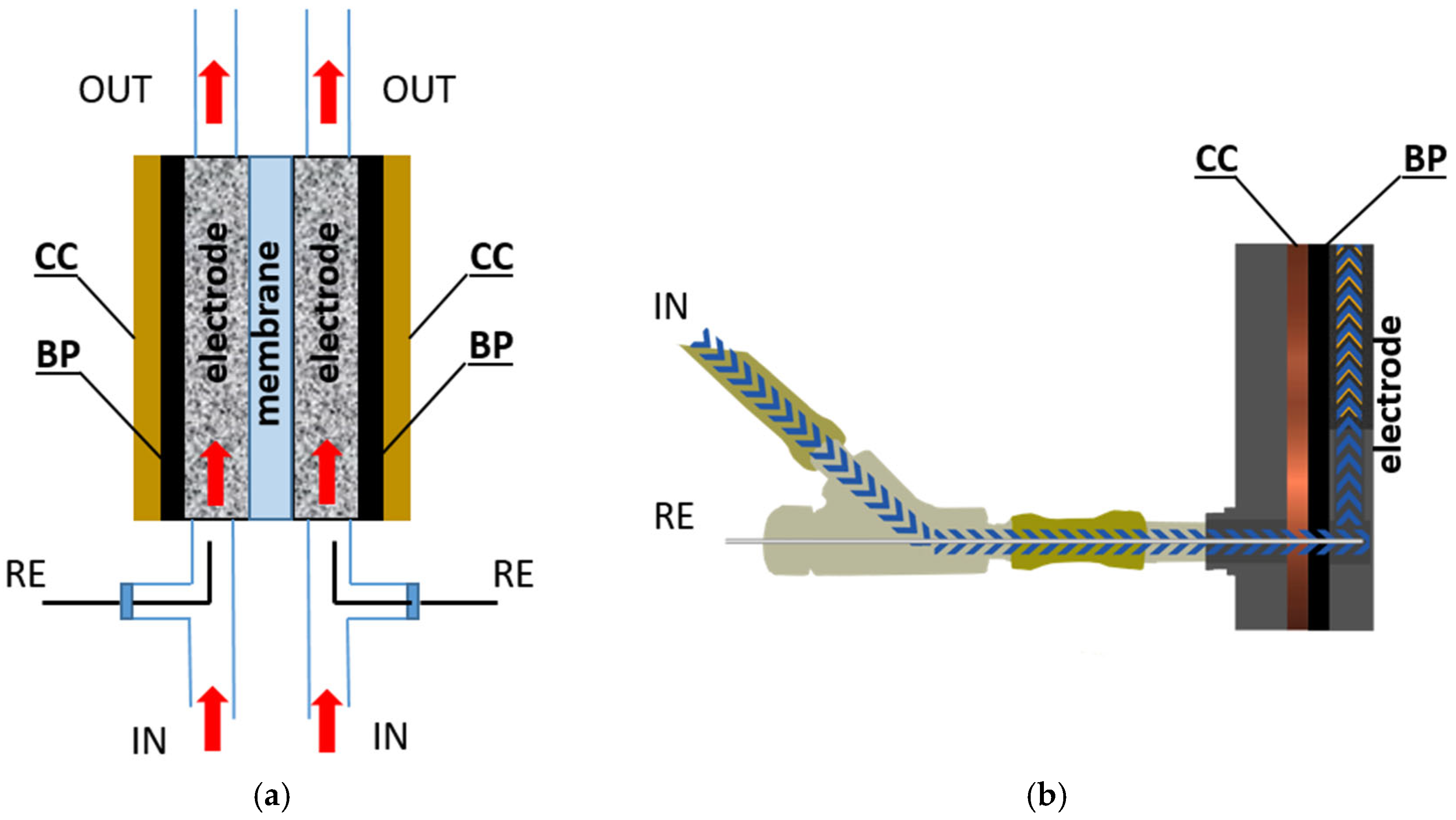
Figure 1. Schematic representation of the three-electrode configuration used for operando DEIS measurements in the vanadium redox flow battery. (a) Side view showing the electrolyte flow direction and the positions of the working electrodes and the platinum pseudo-reference electrodes. (b) Cross-sectional view of the flow cell illustrating the placement of the platinum pseudo-reference electrode within the electrolyte flow channel. Abbreviations: CC—current collector; BP—bipolar plate; RE—reference electrode.
Energies 19 00256 g001
Figure 2. Charge–discharge voltage profiles during the first three cycles at 1 A for cells equipped with thermally activated (TA), chemically aged (CA), and electrochemically aged (EA) electrodes.
Energies 19 00256 g002
Figure 3. Coulombic, voltage, and power efficiencies for TA, CA, and EA electrodes, calculated from the first three charge–discharge cycles.
Energies 19 00256 g003
Figure 4. Charging and discharging capacities obtained for TA, CA, and EA electrodes during the initial cycling sequence.
Energies 19 00256 g004
Figure 5. Representative DEIS spectra (Nyquist plots) for the full cell (a) and individual electrodes (negative and positive at three-electrode configuration, (b)) using thermally activated (TA) electrodes during charging at 1 A.
Energies 19 00256 g005
Figure 6. DEIS spectra (Nyquist plots) of the full cell with TA electrodes measured during charging and discharging at 1 A.
Energies 19 00256 g006
Figure 7. Nyquist DEIS spectra recorded during charging (a) and discharging (b) cycles for cells equipped with thermally activated (TA), chemically aged (CA), and electrochemically aged (EA) electrodes at 1 A.
Energies 19 00256 g007
Figure 8. Selected Nyquist DEIS spectra (at 1 A) for TA, CA, EA, and PR electrodes at 25% (a), 50% (b), 75% (c) states of charge.
Energies 19 00256 g008aEnergies 19 00256 g008b
Figure 9. Equivalent electrical circuit used to model the impedance response of the negative electrode (a) and the full-cell (b).
Energies 19 00256 g009
Figure 10. Selected DEIS Nyquist spectra recorded at 1 A for the TA electrodes, together with the corresponding fits obtained using the equivalent circuits shown in Figure 9. Data are presented for the full cell and the negative electrode at approximately 25% (a), 50% (b), and 75% (c) state of charge.
Energies 19 00256 g010
Figure 11. Average values of the equivalent-circuit parameters R1 (a), charge-transfer resistance R2 (b), CPE magnitude Q (c), and CPE exponent n (d) obtained for the full cell (FC) and the negative electrode (Neg) under both operating currents, shown separately for the charging (Ch) and discharging (Dis) steps.
Energies 19 00256 g011
Figure 12. Nyquist plots recorded during charge (a) and discharge (b) at 1 A using DEIS, and during pause intervals using EIS, at selected states of charge (25%, 50%, 75%). Green and black lines correspond to DEIS and EIS spectra for the TA electrodes, while orange and yellow lines represent DEIS and EIS spectra for the CA electrodes.
Energies 19 00256 g012
Figure 13. Comparison of PEIS spectra with DEIS spectra recorded immediately before and after the PEIS measurement at ~20% SoC for TA and CA electrodes. (a) charge full cell, (b) discharge full cell.
Energies 19 00256 g013
Figure 14. High-resolution XPS spectra of the C 1 s (a) and O 1 s (b) regions for thermally activated (TA), chemically aged (CA), and electrochemically aged (EA) carbon felt electrodes.
Energies 19 00256 g014aEnergies 19 00256 g014b
Figure 15. Atomic percentages of C 1 s (a) and O 1 s (b) components obtained from XPS analysis of thermally activated (TA), electrochemically aged (EA), and chemically aged (CA) electrodes.
Energies 19 00256 g015
Disclaimer/Publisher’s Note: The statements, opinions and data contained in all publications are solely those of the individual author(s) and contributor(s) and not of MDPI and/or the editor(s). MDPI and/or the editor(s) disclaim responsibility for any injury to people or property resulting from any ideas, methods, instructions or products referred to in the content.