Article

Stimulation Effect Evaluation of Boundary Sealing and Reservoir Fracturing on Offshore Challenging Gas Hydrates

1
School of Rail Transit, Chengdu Vocational & Technical College of Industry, Chengdu 610213, China
2
College of Construction Engineering, Jilin University, Changchun 130026, China
*
Author to whom correspondence should be addressed.
Energies 2026, 19(1), 120; https://doi.org/10.3390/en19010120
Submission received: 22 November 2025 / Revised: 14 December 2025 / Accepted: 23 December 2025 / Published: 25 December 2025
(This article belongs to the Special Issue Advances in Unconventional Reservoirs and Enhanced Oil Recovery)

Abstract

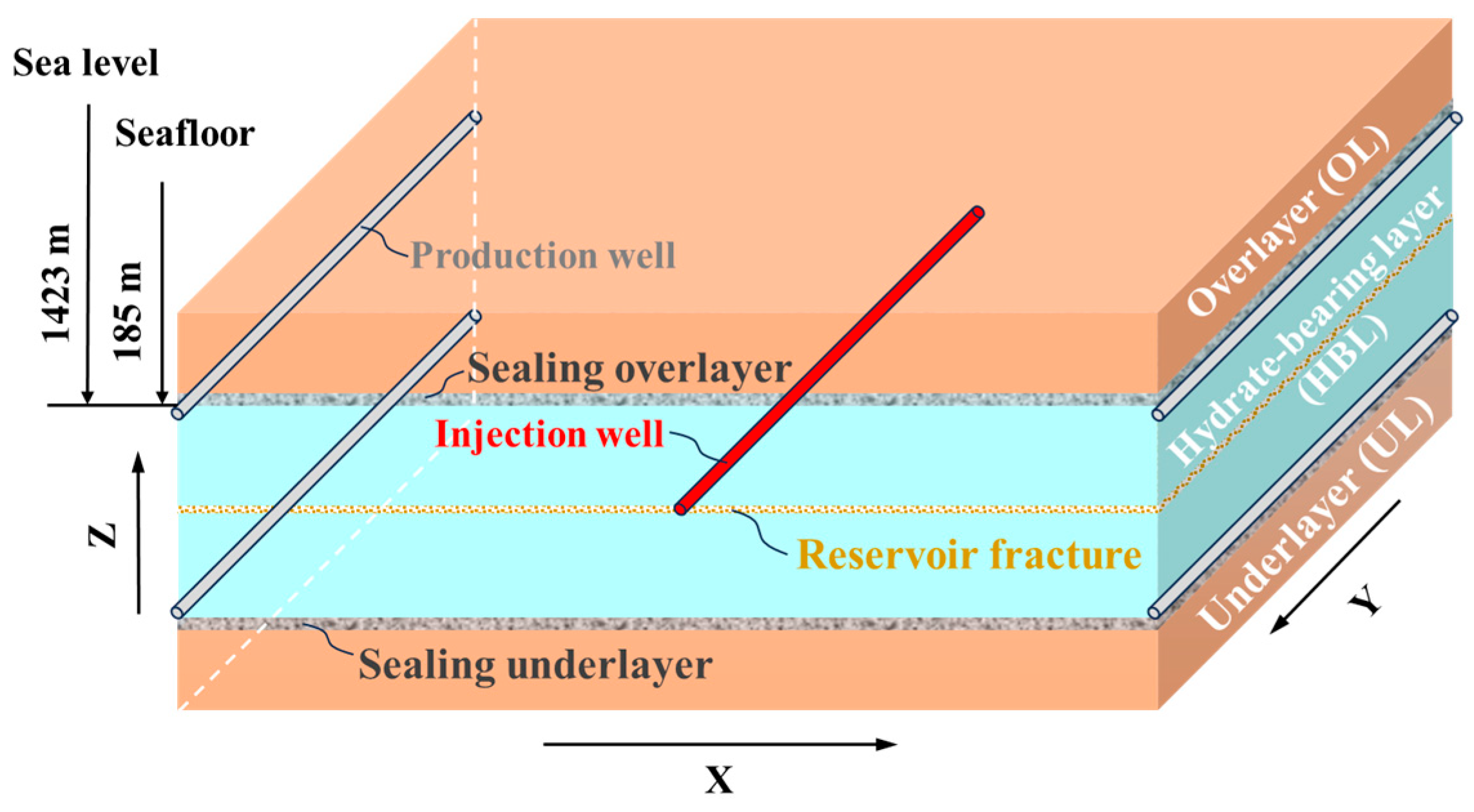
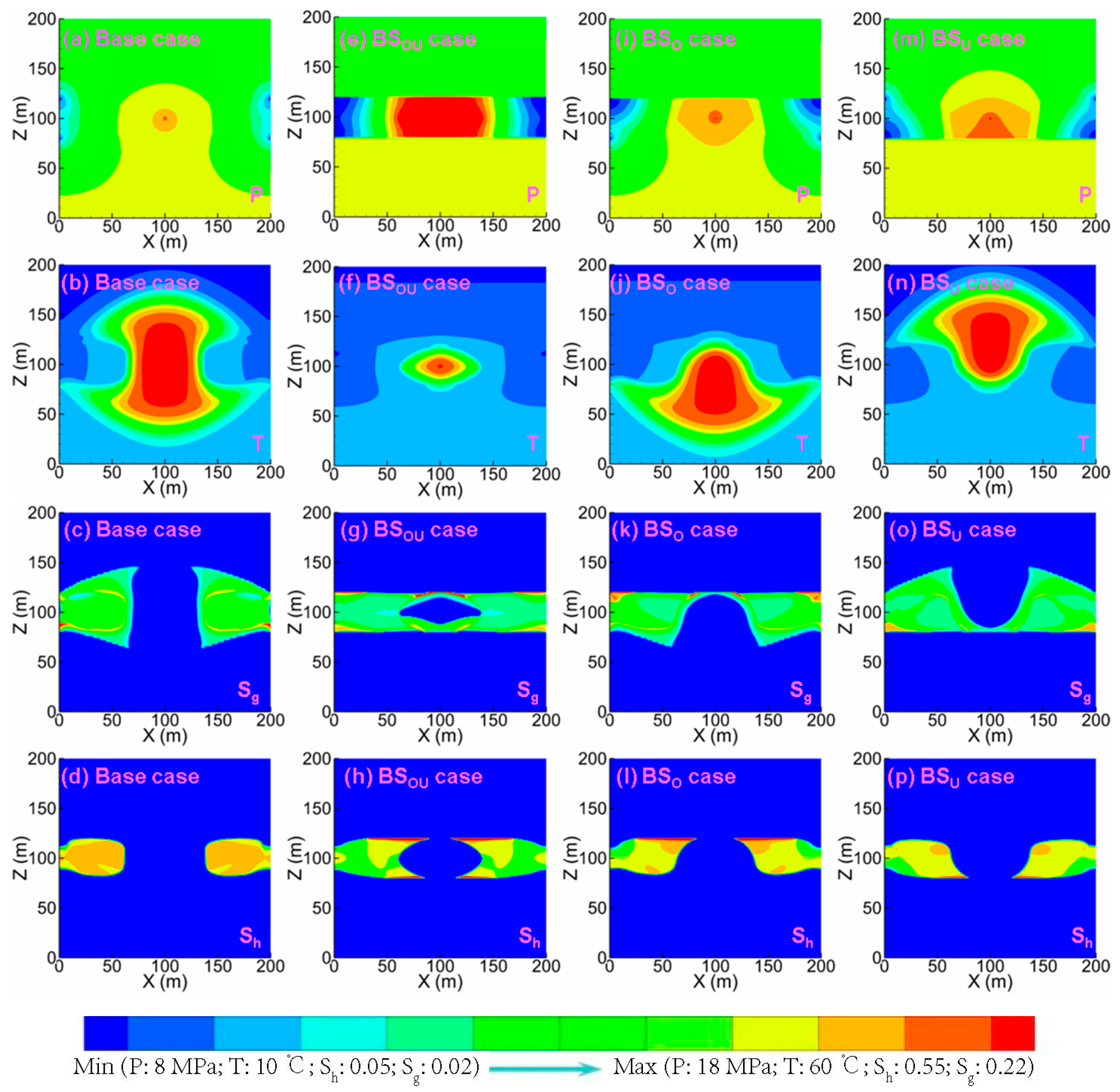
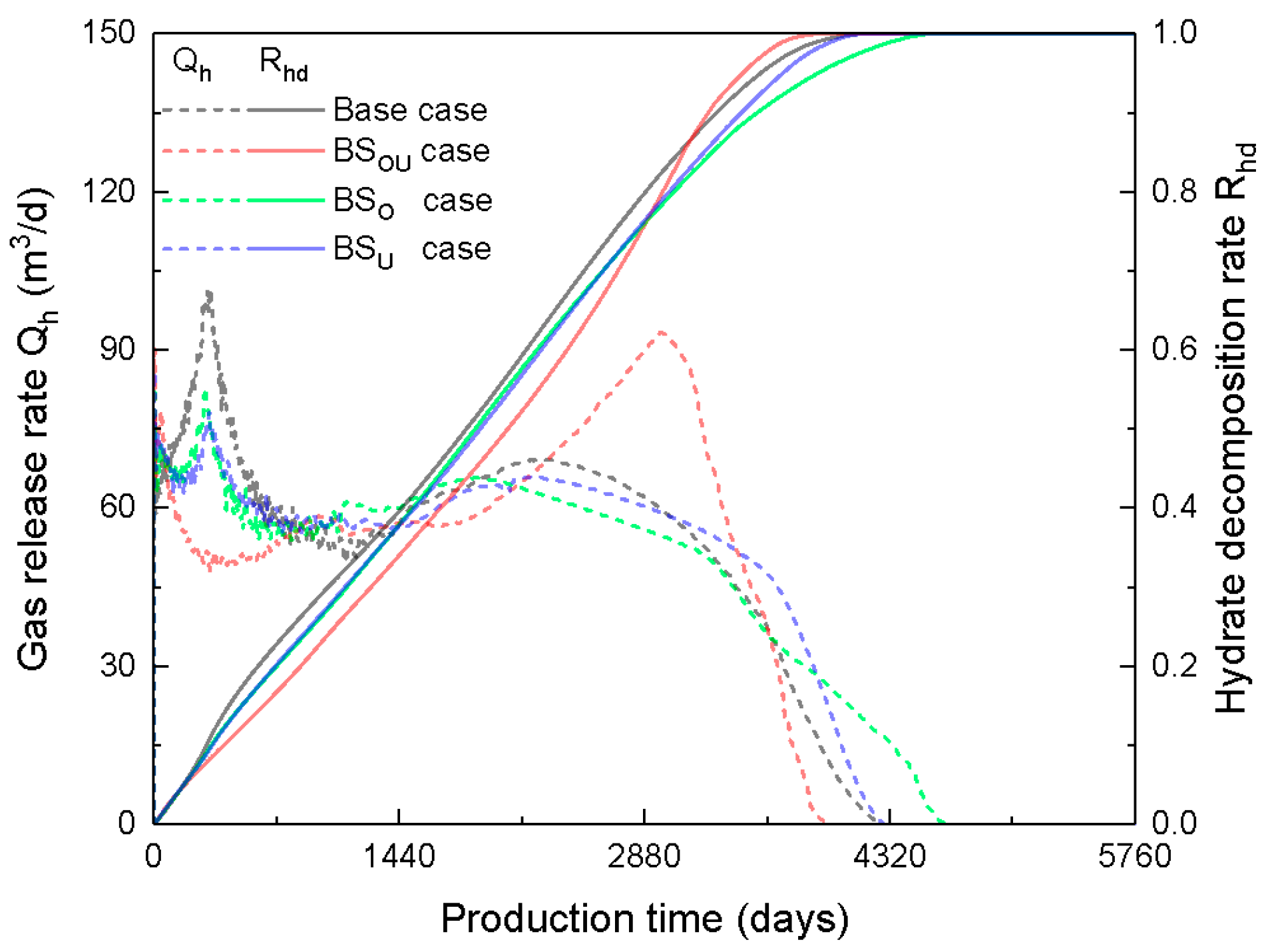
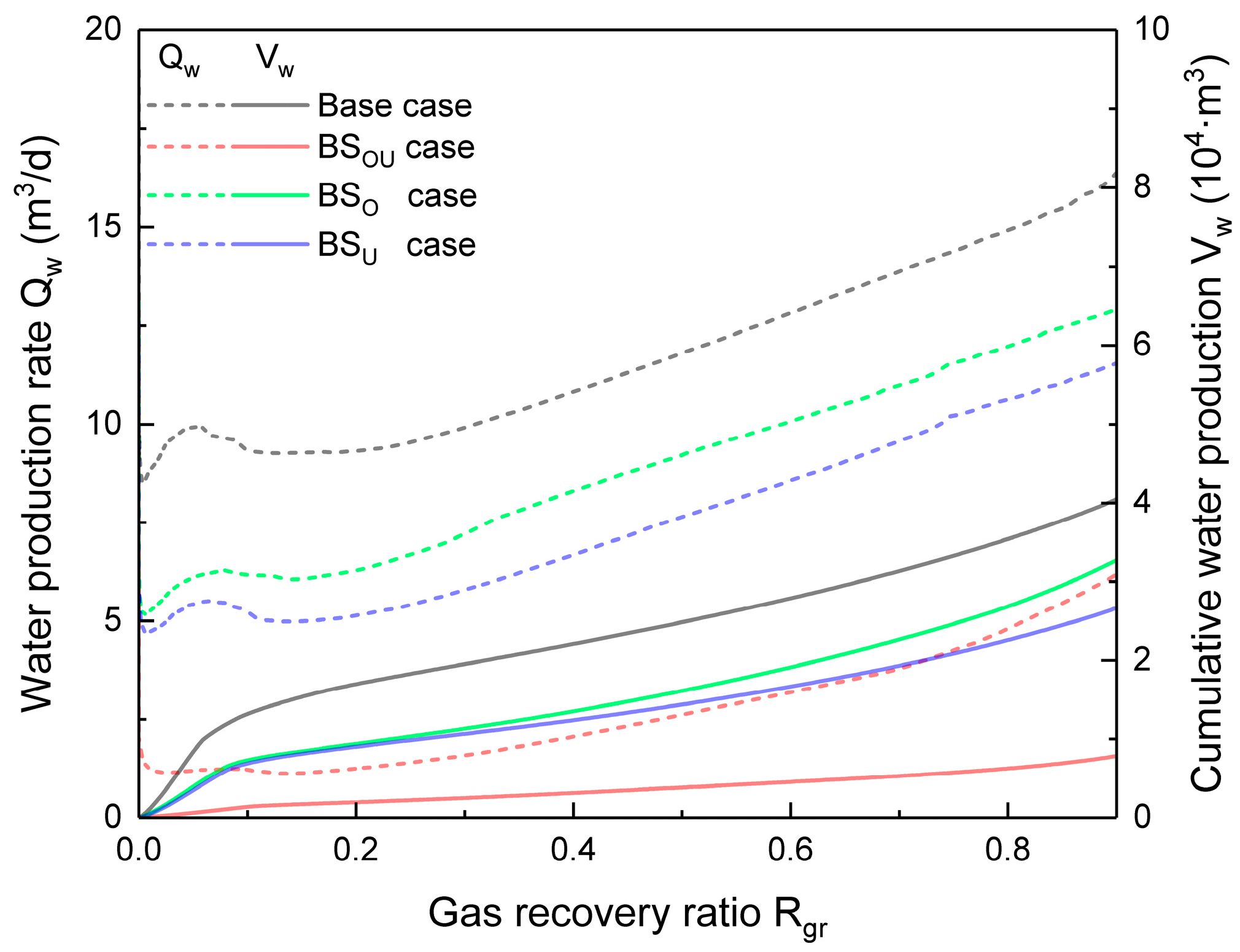
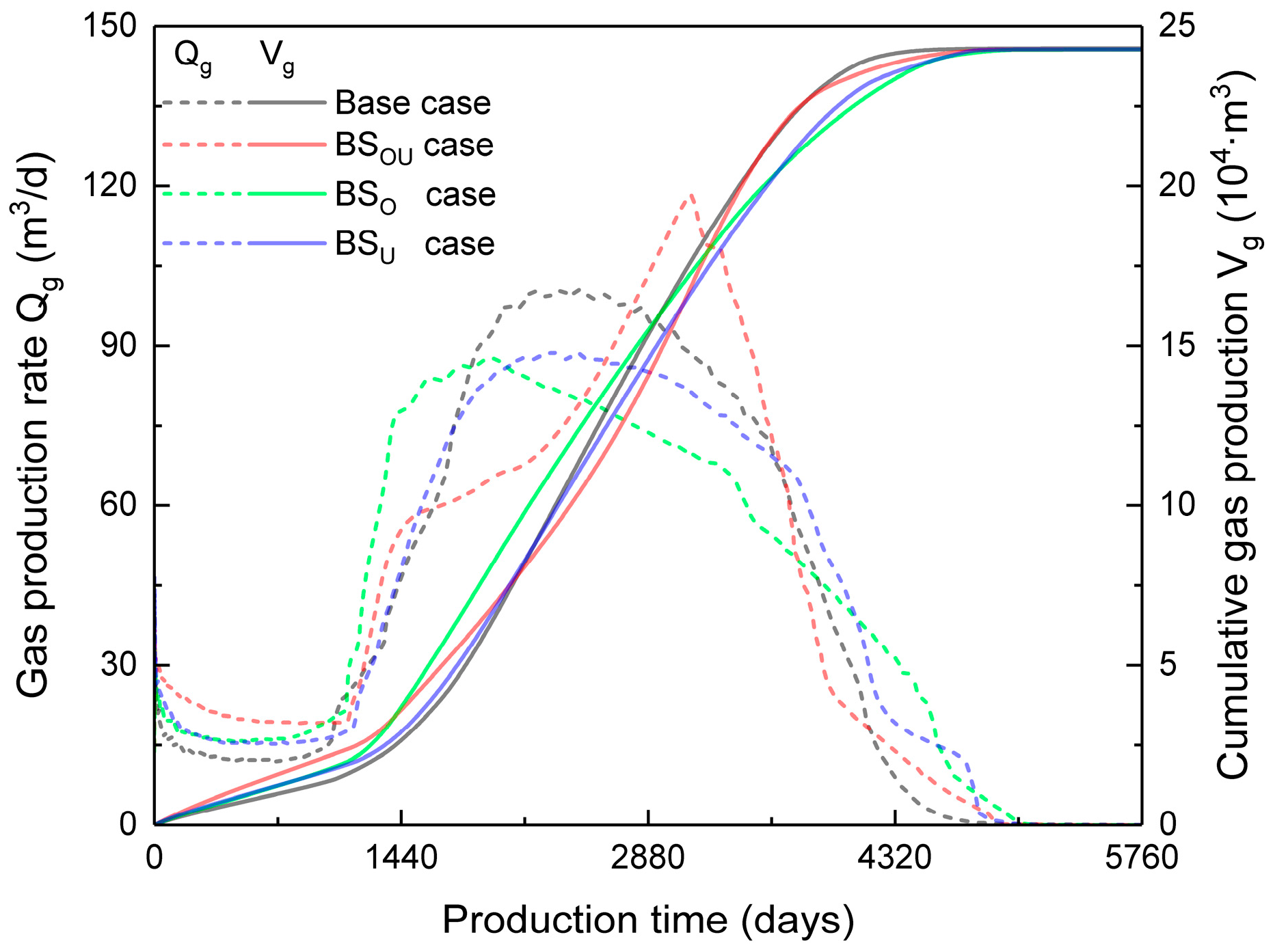
Depressurization combined with thermal stimulation based on injection-production well patterns is considered promising for gas hydrate development. Nevertheless, its direct application to Shenhu challenging hydrates may be problematic due to the presence of low reservoir permeability and permeable boundaries. The present study proposes to improve the development potential of Shenhu hydrate by reservoir reconstruction, including boundary sealing and reservoir fracturing, and numerically investigates the production performance. The results showed that water intrusion, hot loss, and gas leakage can be effectively addressed by boundary sealing. Nevertheless, it cannot enhance productivity as thermal decomposition gas accumulated around the injection well. Conversely, reservoir fracturing can significantly improve extraction efficiency as substantial amounts of hydrates dissociate along the fractures, and the gas can be well recovered through the fractures. However, reservoir fracturing was not conducive to water control and energy utilization as it induced more severe water flooding and gas leakage. Under the synergistic effect of the two, there was no methane leakage, and the gas production rate increased with increasing fracture conductivity, while the gas-to-water ratio and energy ratio presented the opposite trend. To obtain a favorable production performance, a fracture with a conductivity of 1–10 D·cm was recommended. Therefore, the combination of boundary sealing and reservoir fracturing makes it feasible for safe and efficient extraction of offshore challenging hydrate under the injection-production mode.
Keywords: gas hydrate; boundary sealing; reservoir fracturing; productivity enhancement; water control gas hydrate; boundary sealing; reservoir fracturing; productivity enhancement; water control