Article

Dynamic Behaviour of Energy Transfer Station Real Field Performance Compared to Ideal Laboratory Conditions

1
Danfoss Trata, d.o.o., Ulica Jožeta Jame 16, 1210 Ljubljana, Slovenia
2
Faculty of Mechanical Engineering, University of Ljubljana, Aškerčeva cesta 6, 1000 Ljubljana, Slovenia
*
Author to whom correspondence should be addressed.
Energies 2026, 19(1), 101; https://doi.org/10.3390/en19010101
Submission received: 26 October 2025 / Revised: 27 November 2025 / Accepted: 15 December 2025 / Published: 24 December 2025
(This article belongs to the Special Issue Energy Management and Life Cycle Assessment for Sustainable Energy)

Abstract

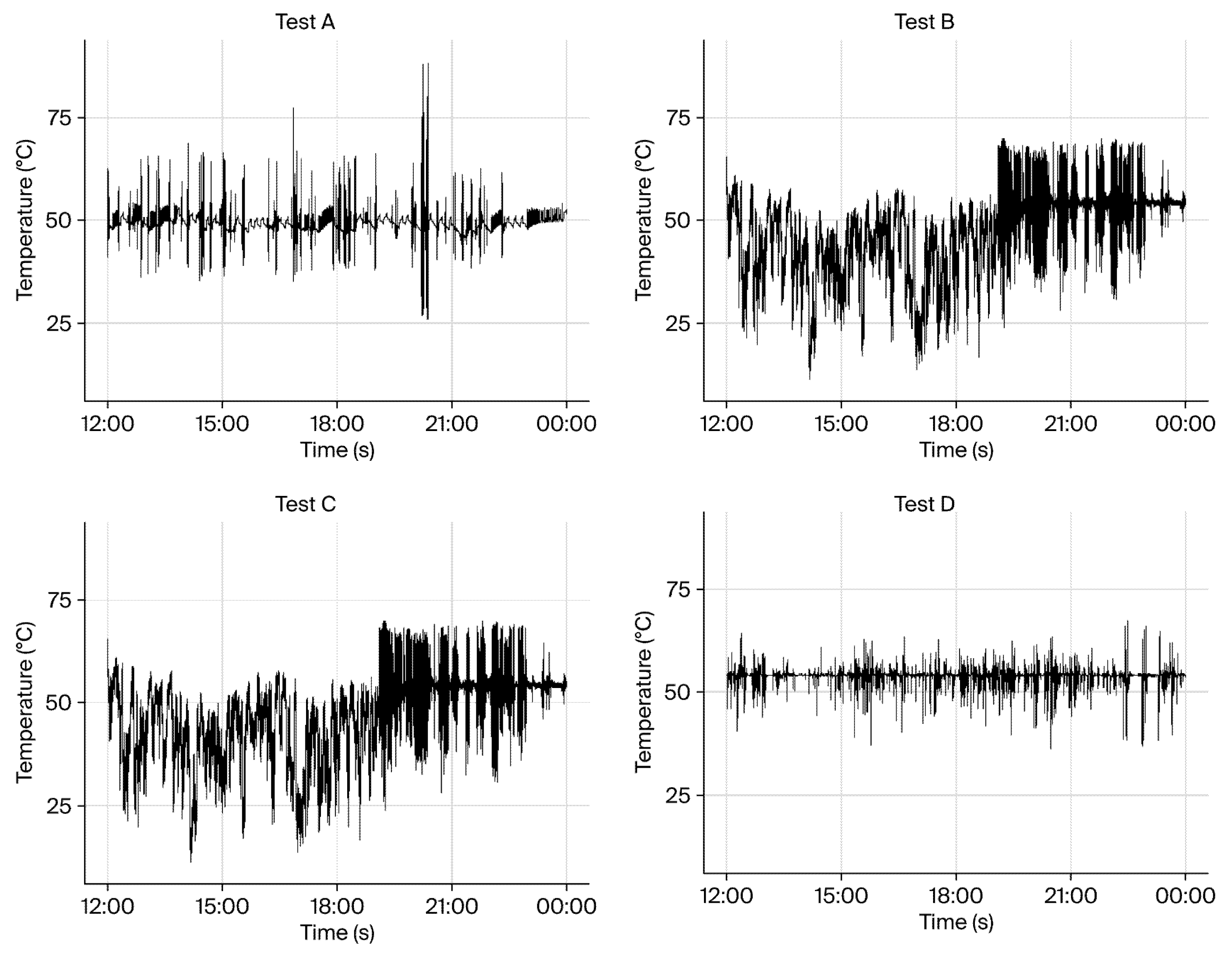
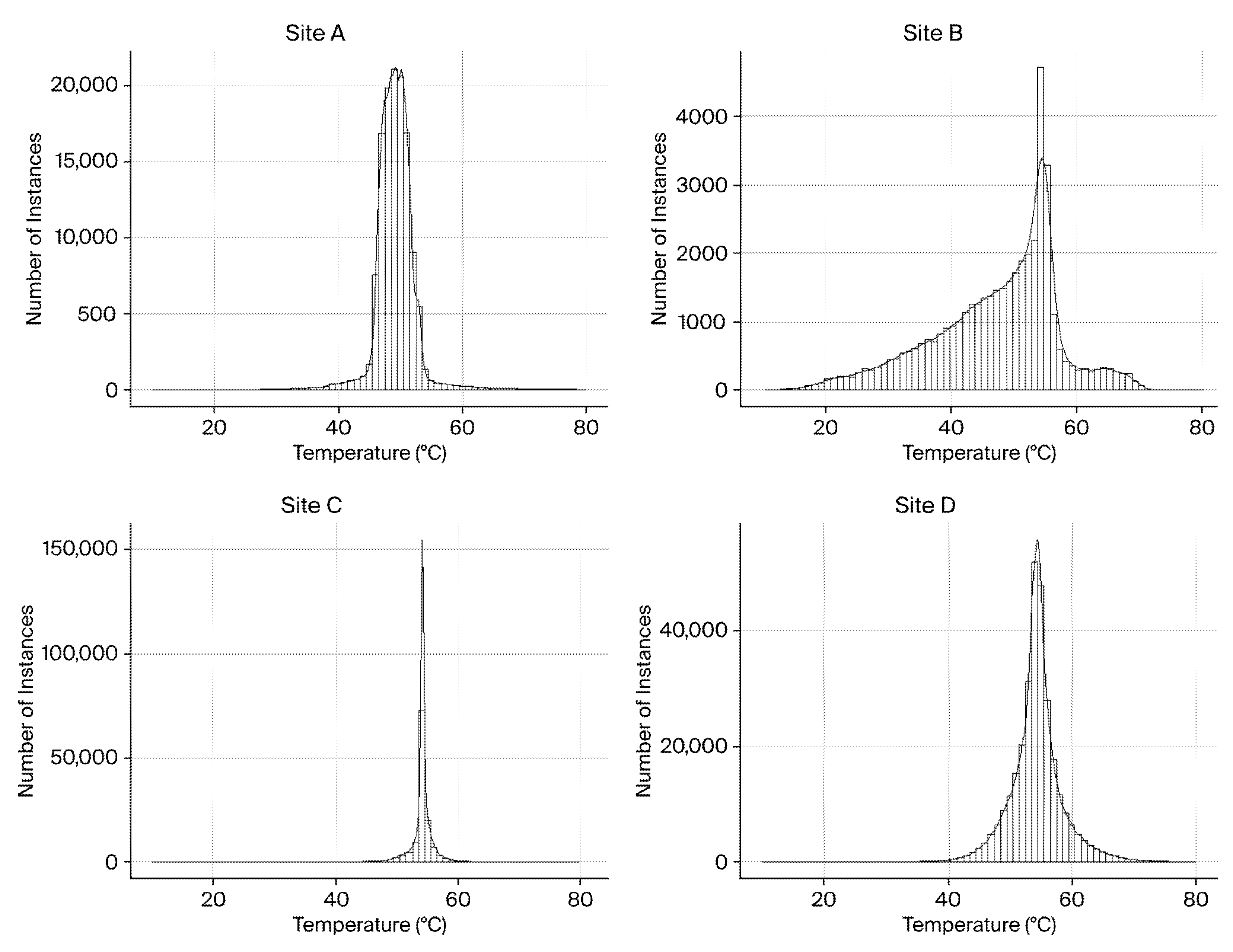
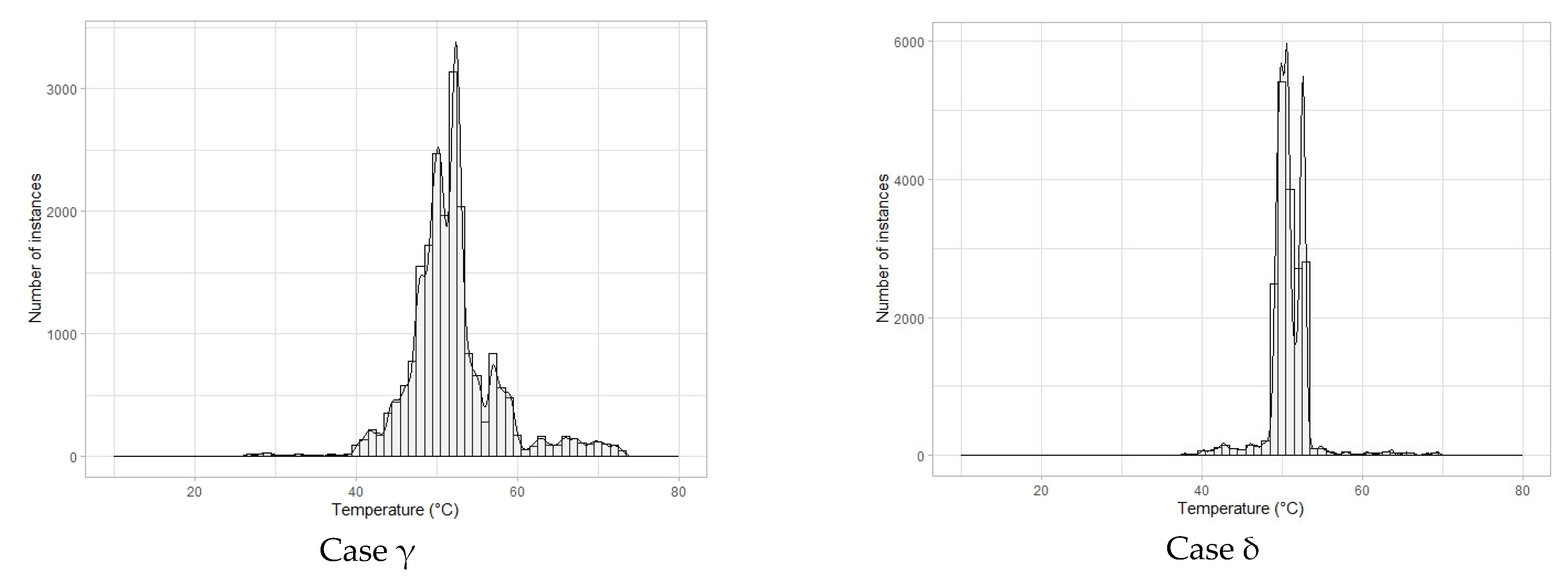
District energy is one of the most efficient heat distribution systems. The interface between the pipe network and buildings is made of thermal and hydraulic separation units named stations. The control of temperature on the secondary side is handled in substations. Several parameters influence control stability, such as differential pressure, mass flow, temperatures, valve inherent characteristics and controller tuning. There are different design approaches for stations in different geographies. However, one option is a generalist control loop setup, which is analysed here. Four sites in Sweden were monitored for performance (during the winter period and with the same hardware setups), and an analysis of the variability of controller tuning parameters was performed. For the purposes of laboratory comparison, the tests were executed with different configurations of generic control loop setups. The results, arranged into distribution histograms, show similarities between the laboratory and field setups. One can see that well-performing setups are close to a normal distribution, while the others are not. One key parameter is the controller setup and algorithm used. Proper tuning of the controller, together with differential pressure control, secures optimal performance of district energy stations. District heating stations with operations closer to the set point positively influence the performance of the whole grid and therefore improve the energy efficiency of the stations.
Keywords: district energy station; dynamic behaviour; temperature and pressure control coupling district energy station; dynamic behaviour; temperature and pressure control coupling