


Abstract
The growing global demand for food and energy requires land-use strategies that support agricultural production and renewable energy generation. Agrivoltaic (APV) systems allow farmland to be used for both agriculture and solar power generation. The aim of this study is to critically synthesize the interactions between the key dimensions of APV implementation—technical, agronomic, legal, and economic—in order to create a multidimensional framework for designing an APV optimization model. The analysis covers APV system topologies, appropriate types of photovoltaic modules, installation geometry, shading conditions, and micro-environmental impacts. The paper categorizes quantitative indicators and critical thresholds that define trade-offs between energy production and crop yields, including a discussion of shade-tolerant crops (such as lettuce, clover, grapevines, and hops) that are most compatible with APV. Quantitative aspects were integrated in detail through a review of mathematical approaches used to predict yields (including exponential-linear, logistic, Gompertz, and GENECROP models). These models are key to quantitatively assessing the impact of photovoltaic modules on the light balance, thus enabling the simultaneous estimation of energy efficiency and yields. Technical solutions that enhance synthesis, such as dynamic tracking systems, which can increase energy production by up to 25–30% while optimizing light availability for crops, are also discussed. Additionally, the study examines regional legal frameworks and the economic factors influencing APV deployment, highlighting key challenges such as land use classification, grid connection limitations, investment costs and the absence of harmonised APV policies in many countries. It has been shown that APV systems can increase water retention, mitigate wind erosion, strengthen crop resilience to extreme weather conditions, and reduce the levelized cost of electricity (LCOE) compared to small rooftop PV systems. A key contribution of the work is the creation of a coherent analytical design framework that integrates technical, agronomic, legal and economic requirements as the most important input parameters for the APV system optimization model. This indicates that wider implementation of APV requires clear regulatory definitions, standardized design criteria, and dedicated support mechanisms.
1. Introduction
The growth of the world’s population requires an increase in food production, as well as electricity, which is the most commonly used form of energy [1]. However, this is increasingly raising concerns about the supply of adequate food, particularly due to restrictions on land use, which is being used for other purposes, such as housing. Similar to the development of food production, the availability of large areas requires the use of renewable energy technologies (RES), e.g., in the form of agrophotovoltaics. It is extremely difficult to reconcile the increase in the area required for both of the above-mentioned types of production, especially in countries with high population density and a high degree of urbanisation. Therefore, measures are needed to create synergies between efficient agricultural production and electricity generation from RES [2,3].
The renewable energy sources currently in use include biomass, hydro, geothermal, wind and solar energy. Periods of economic and political turmoil (e.g., periodic difficulties in accessing fossil fuels, high inflation, wars) contribute to a much more efficient use of locally available raw materials and energy resources, as well as a different perspective on distributed energy, especially renewable energy. Therefore, the period in which societies have been operating in recent years is conducive to the real implementation of modern methods of electricity generation, including from renewable energy sources. It should also be noted that a very interesting alternative to sources using a single type of energy is the integration of these technologies into so-called hybrid systems [4]. Supplementing them with energy storage systems allows the disadvantages of generating energy from renewable sources to be minimised, particularly in terms of the continuous availability of a specific, necessary level of power [5,6,7,8,9].
Solar energy is considered one of the most promising renewable energy sources, so the effective integration of photovoltaic systems into various areas of human activity, such as agriculture, is justified. This is due to the high stability, predictability and availability of this source compared to other renewable sources. In addition, the supporting structures for PV panels are the easiest to implement in practice in many areas of application, including agriculture [8,10,11]. Initially, its use was limited mainly by economic factors resulting from the high prices of installation components and limited energy conversion efficiency. Currently, photovoltaics is the cheapest renewable energy technology, with photovoltaic module prices falling by about 90% between 2009 and 2020, and the average levelized cost of electricity (LCOE) in PV systems currently standing at 4–6 euro cents per kilowatt-hour, depending on the size of the system [12].
Taking into account food security, it is reasonable to use wasteland and agricultural land with the lowest soil quality for energy purposes. Agricultural producers rarely allocate currently cultivated agricultural land for the installation of photovoltaic equipment, even for their own energy needs. In the case of farm improvements, electricity and heat generators are mainly installed on the roofs of residential and farm buildings, at the end of agricultural plots or in orchards between trees.
Large-scale electricity generation using the internal photovoltaic effect often requires a significant area, which in many cases can no longer be used for agricultural purposes. With the current installed capacity in the photovoltaic sector in many countries around the world, in addition to electricity production at peak sunlight, it may be more important to correlate the energy generation profile with the profiles of energy price volatility on the exchange and self-consumption, including in agriculture. Fraunhofer ISE has reported that Germany needs between 300 and 450 GW of installed capacity by 2045. The EU solar strategy, on the other hand, has set a target of 600 GW of installed photovoltaic capacity by 2030.
The installation of solar systems in open areas is also the lowest-cost option [13], which has led to numerous attempts and efforts to introduce photovoltaic generators on agricultural land, bypassing agricultural production, which in many regions of the world, especially densely populated ones, has led to increased concerns about the loss of arable land to more profitable photovoltaic energy production. Such trends and social reactions, which can even lead to conflicts, are described by the authors of the following works, among others [14,15,16,17]. However, limiting domestic agricultural production may lead to the need to import food, which is not without significance for the level of national agricultural development. The Joint Research Centre (JRC) of the European Commission points out that the scenario of achieving full climate neutrality in the EU by 2050 envisages 5% of the available land being used for PV farms [18,19]. Photovoltaics on such a scale may prove impossible to implement without the synergistic and constructive integration of agricultural production and electricity generation.
Issues related to the use of photovoltaics in agriculture were known earlier, where they focused, among other things, on meeting the electricity needs of agricultural settlements located on islands or far away from other inhabited areas.
Farms are important elements of the landscape and fulfil production, processing, income, social, educational, ecological, recreational and cultural functions [20]. A farm includes all land, both agricultural and that which, in the light of the local spatial development plan, can be used for non-agricultural purposes. Climate change also forces a change in the approach to current agricultural management. Challenges related to water shortages in agriculture, extreme weather conditions and rising temperatures require new measures to protect crops and soil from adverse conditions. Many agricultural producers have also invested in photovoltaic systems on their farms. They are often interested in further projects. Agrophotovoltaics (agrivoltaics, Agro-PV, Agri-PV, APV) offers innovative development opportunities for farms. A new segment of solar energy, it can also be a response to identified problems in agriculture. This may require a re-evaluation of the current approach to farming. In modern agriculture, there is an emphasis on striving for sustainable farming, which consists of achieving stable, economically viable and socially acceptable production in a way that does not threaten the natural environment, equipping farms with rational technical infrastructure, ensuring lasting soil fertility, a high soil vegetation cover index, and compliance with the principles of proper agrotechnology and zootechnics [21]. These tasks can be achieved by introducing low-carbon farming and using renewable energy sources (biomass boilers, micro-biogas plants, small wind turbines and photovoltaic panels, solar collectors, heat pumps). The implementation of wind technology on pasture land has already been recognised, while the implementation of photovoltaic solutions on arable land is still being analysed [22]. The agrophotovoltaic system is an innovative concept in the field of renewable energy systems that can contribute to the implementation of sustainable development policies.
The key parameter presented as an indicator of the effective functioning of a farm is the amount of biomass yield per unit area. Agrophotovoltaics can increase land use efficiency and enable an increase in photovoltaic power while preserving fertile arable land for agriculture. This statement is confirmed in [23], where the authors proved that a 194-kW installation on 3 hectares of agricultural land in Germany is capable of producing enough electricity to power 62 households with an assumed electricity consumption of 4000 kWh per year, and the efficiency of land use will thus increase from 60% to 86%.
This effect can be further enhanced as the technical parameters of APV systems are constantly being improved, for example through the implementation of mobile sun-tracking systems, which increase electricity production while also increasing light availability, enabling sufficient plant growth [24]. The positioning of PV modules can be further modified in such a way that they are switched off in the morning and evening hours to reduce crop shading and activated during hours of strong solar radiation to protect crops, reduce evaporation, and the effects of high temperatures [25]. In experiments testing evaporation levels under solar panels for shade-tolerant crops, cucumbers and lettuce irrigated in the California desert, 14–29% savings in evaporation were found [26] and similar studies in the Arizona desert showed water savings of 50% for some crops [27].
A comprehensive review of existing APV facilities around the world (including their technical specifications and areas of application), as well as the results of experiments, is presented in [28]. It identifies possible technical innovations and adaptations in APV design that could improve agronomic and electrical efficiency.
The development of Agro-PV technology has progressed rapidly since 2004, along with the widespread development of photovoltaic technology. It is currently the subject of numerous scientific studies and research conducted by research centres worldwide [8].
Agri-PV technology has developed very dynamically in recent years and is present in almost all regions of the world. Since 2014, approximately 2800 Agri-PV systems with a total capacity of around 2.9 GW have been installed worldwide. Installed capacity grew exponentially from 5 MW in 2012 to 2.9 GW in 2018 and to over 14 GW in 2021, thanks to national funding programmes in Japan (since 2013), China (around 2014), France (since 2017), the USA (since 2018) and, most recently, South Korea in particular [23].
The potential synergy between APV component systems is particularly evident in regions and climates where high temperatures and solar radiation intensity can become detrimental to both crop and photovoltaic production. Regions with limited land are particularly suitable for agro-PV implementation. One study [25] found that, although the air under the PV panels remained unchanged, lower soil and plant temperatures were recorded during the growing season.
The Korean government is actively implementing agrophotovoltaic systems with the goal of raising the target level to 10 GW by 2030 [29]. The problem of land scarcity in South Korea is considered to be the main obstacle to the construction of solar power plants (or photovoltaic farms), where 70% of South Korea’s territory (220,848 km2) is mountainous. Most of the areas with sufficient sunlight are in the west, where there are clusters of cities in the north-western region, and the remaining areas in the south-western region are farmland. In order to overcome the problem of energy production without negatively impacting food production, the development of agrophotovoltaic systems is being adopted as an alternative. An example is an experimental APV system in Najusi with an area of 4410 m2 (63 by 70 m) and a height of 5.42 m. The system has three zones with different percentages of mutual shading of PV module rows [30].
A high growth in this type of investment is also currently being recorded in France (48 projects installed in 2020 alone). By 2024, the installed capacity of ground-mounted solar installations has reached 1.6 GW, 20% of which—about 300 MW—came from agrivoltaic projects [31].
In 2004, Japan began filling farmland with photovoltaic modules in the form of pilot projects, concluding that with a shading level of 32%, sufficient yields could be achieved. In Japan, higher profits per hectare through the use of APV systems are seen as a strategy to encourage young people to remain in rural areas [32]. In addition, care is taken to ensure that APV systems are properly designed so that the condition that crops grown underneath must achieve 80% of the agricultural yield achieved under normal conditions is met. Implementing this condition can be problematic, and farmers are required to report annually on crop yields and remove APV installations in the event of insufficient yields, which represents a high investment risk. It is argued that practical experience is still insufficient to enable reliable estimates of crop yields depending on environmental and technical factors.
The Solar Massachusetts Renewable Target Programme has also set the maximum permissible percentage reduction in yields due to the presence of APV systems over farmland at 50%, which seems achievable without increased risk of investing in and operating APV systems [33]. In [34], the authors concluded that for Central Europe, a reduction of approximately 30% in available radiation in crops may be justified if yield losses of up to 25% are tolerated. Using the required maximum reduction in available radiation seems to be more appropriate and easier to predict and forecast than the amount of crop losses, which depend on many other additional factors. The available radiation for crops, as a momentary numerical value, together with the uniformity of its distribution in the crop plane, can therefore be one of the appropriate criteria for the assessment and standardisation of APV installations, alongside the reduction of agricultural land losses for the construction of photovoltaic installations.
Although several studies have addressed the impact of APV systems on crop production, many aspects remain unexplored. To scientifically determine this impact of APV on plant production, the first research facility was installed in 2010 at the French National Institute for Agricultural Research (INRA) near Montpellier in southern France.
At the same time, alternative solutions are being developed for the implantation of additional photovoltaic systems in existing sectors, such as Aquaculture Photovoltaics (Aqua-PV) technology. Research conducted at Fraunhofer ISE indicates that the implementation of Aqua-PV will almost double land use efficiency compared to a conventional ground-mounted photovoltaic system. The construction of a research centre in Vietnam and a 100-kW installation in the form of a photovoltaic glass tunnel is expected to improve the conditions for shrimp and pangasius farming by providing shade and protection from predators, as well as a more stable, lower water temperature. This will also reduce water consumption compared to conventional shrimp farming [35]. In this case, the shading problem generated by PV modules, which is significant when using PV modules near crops sensitive to reduced sunlight access, can be an advantage. Figure 1 shows a view of the system concept.
Figure 1.
Photovoltaic tunnel for shrimp farming in Vietnam. Source: own elaboration based on [35].
In 2011, UNITe built and commissioned a photovoltaic facility with a peak capacity of 4 MW, integrated with a trout farming complex in the Landes region of France [36]. The shade prevents excessive heating of the water, which would be detrimental to the farmed fish and would also lead to the growth of harmful algae, and avoids sudden fluctuations in sunlight, which can stress the fish.
In summary, the potential synergy between photovoltaics and agriculture may include the following [23,37]:
- Reducing irrigation requirements by up to 20%;
- Collecting rainwater for irrigation systems;
- Reducing wind erosion;
- Using the photovoltaic system substructure to attach nets or protective sheets to crops;
- Optimising the available light for crops, for example by using photovoltaic systems that track radiation;
- Increasing the efficiency of photovoltaic modules through improved convective cooling;
- Increasing the efficiency of double-sided PV modules, which utilise light from both sides, thanks to greater distances between PV modules and between PV modules and the ground and adjacent rows;
- Creating new fields of electrification and automation in agriculture;
- Balancing the electricity generation profile in the power grid.
The advantages of agrophotovoltaic technologies include the following:
- Additional benefits for agriculture, including protection against hail, frost and drought damage;
- Local electricity generation in poorly electrified areas;
- Lower average cost of electricity (LCOE) compared to small rooftop photovoltaic systems;
- Diversification of farmers’ income (important, for example, in times of high fertiliser prices due to rising energy and gas prices, which poses a threat to the continuity of agricultural production).
In [38], the authors presented the interrelationships between the factors that influence the efficiency of APV systems. The paper also contains a detailed analysis of the factors that drive and hinder the large-scale implementation of APV technology, as well as how APV systems are perceived by the public. It points out that APV systems can potentially have a negative impact on landscape values, which are particularly important for recreational and tourist areas. Similar discussions are common in the context of wind farms. However, the impact on the landscape largely depends on the system’s location, and the visual effect can be mitigated by using existing environmental elements.
Therefore, there is a need for a comprehensive understanding of the technical, economic and agricultural aspects surrounding APV systems, and the factors influencing public acceptance of large-scale investments in the renewable energy sector.
The originality of this paper lies in the first-in-the-literature critical synthesis of the interactions between key dimensions of APV implementation technical (topologies, modules, shade dynamics), agronomic (growth patterns, crop requirements), legal (regulatory framework), and economic, to create a multidimensional framework for developing an APV optimization model. Consequently, the paper identifies and categorizes key trade-offs and critical thresholds that must be considered as input variables in future, quantitative APV optimization models, while also offering an overview of the most advanced mathematical modelling tools.
Unlike previous reviews, this paper emphasizes a holistic approach to modelling, demonstrating that modelling solar radiation distribution and crop growth (e.g., GENECROP) is essential for quantitatively assessing the impact of PV modules (Rshade coefficient) on the light balance of plants, thus enabling the simultaneous parameterization of energy efficiency and crop yields. A detailed analysis of advanced tracking systems, such as CT-AT, in combination with growth models, provides an original contribution to understanding how modern technology can overcome traditional trade-offs between maximizing energy production and agronomic requirements, which is key to increasing the Land Equivalence Ratio (LER).
2. Topologies of Agrophotovoltaic Systems
Agrophotovoltaics, also known as agrivoltaics or dual-use solar energy, is an emerging trend involving the simultaneous use of land for energy production (through the installation of ground-mounted photovoltaic modules) and conventional agriculture, with different types of crops or production profiles. This means that photosynthesis and photovoltaics processes occur simultaneously in the same space. The concept was first described by Adolf Goetzberger (founder of Fraunhofer ISE) and Armin Zastrow in 1982 [25]. The idea was further developed by the APV-RESOLA group. This resulted in an APV pilot project at the Heggelbach farm near Lake Constance. Figure 2 illustrates the coexistence of two types of production activities on the same site.
Figure 2.
Dual use of agricultural land with the installation of photovoltaics on fertile land: 1—Agricultural crops, grain, 2—Photovoltaic panels. Source: own elaboration based on [39].
Agrophotovoltaics refers to solutions in which single-sided or double-sided (bifacial) photovoltaic modules are installed using support structures. These structures can be vertical, with the photovoltaic cell planes oriented east-west direction-west or, less frequently, north-south, or horizontal, in the form of independent units or greenhouse roof structures.
Three basic topologies of agrivoltaic systems are being actively researched [20]:
- Photovoltaic modules installed on the ground, either stationary or using sun-tracking systems, with spacing between the structures and existing crops;
- Photovoltaic modules installed above crops, either stationary or using sun-tracking systems;
- The use of photovoltaic greenhouses that integrate classic solutions used in horticulture and agriculture with photovoltaic cells arranged to maintain partial transparency, or double-sided cells with a specific degree of transparency that utilise reflected radiation.
The popularity of the two basic topologies significantly exceeds that of the third (agricultural greenhouses with photovoltaics). Greenhouse cultivation requires large amounts of energy to control the internal environment, which is used, depending on the climate, for cooling, heating and lighting. Greenhouses create better conditions for plant growth, development and cultivation by effectively storing heat, thus extending the growing season and ensuring suitable conditions for yield. Currently, greenhouses face the problem of distribution light more effectively for generating electricity and reaching plants.
Using sun-tracking systems in these topologies can enable better lighting management and active modification of the instantaneous radiation intensity and its distribution according to the current stage of plant development and for each type of crop individually. The first design of a system with sliding PV modules was implemented in Japan in 2004 [40]. Research by the Japanese engineer Akira Nagashima has shown that it is possible to combine energy production in PV panels with the cultivating shade-intolerant crops such as maize. Figure 3 illustrates various methods through which photovoltaic installations can coexist with agricultural crops or livestock.
Figure 3.
Types of agrivoltaics systems: 1—crop production, 2—animal husbandry, 3—ecosystems services. Source: own elaboration based on [41].
One seemingly undemanding way of integrating agriculture and photovoltaics is to graze sheep under solar panels. The sheep control the vegetation and limits hading. They do an even a more thorough job than mowers because they can reach around the legs of the structure [42]. In return, the sheep or goats receive feed and a shaded place to rest. In selected countries, photovoltaic system operators pay shepherds to transport sheep. Experimental methods of agrivoltaics involving sheep have shown that the lower grass mass available on solar pastures is offset by higher feed quality. This results in similar spring lamb production as on open pastures. Agrivoltaics can also be used to shade cows. Grazing in the sun is popular in the USA, and an organisation has been established to support it [41,43]. Using PV modules for sheep farming is also common practice in Germany. When agrivoltaics are combined with animal husbandry, special types of fences and inverters must be installed to ensure the animals’ safety. Figure 4 shows the coexistence of sheep grazing and electricity generation facilities.
Figure 4.
A 6.5 MW photovoltaic installation that is part of the Barth project with a total capacity of 35 MW. Source: own elaboration based on [44].
Photovoltaics are also used to meet the electricity needs of farms involved in animal husbandry and breeding. Processes such as lighting buildings, milking, heating and pumping water, cooling milk, and ensuring the thermal comfort of animals require a normal supply of electricity. The highest electricity consumption is observed in farms specialising in poultry farms, and the lowest in farms engaged in field cultivation, farms with herbivorous animals and mixed production farms [45].
Installation an agrivoltaic system above an aviary for free-range poultry farming facilitates poultry farming protects the birds from intruding animals and from the droppings of birds flying over the aviary, which can transmit infectious diseases. Figure 5 shows the classification of APV systems based on studies by Fraunhofer ISE.
Figure 5.
Classification of APV systems. Source: own elaboration based on [46].
The most commonly used technical solutions for the installation of PV modules on agricultural land in an APV system are shown in Figure 6.
Figure 6.
Technical solutions for the installation of PV modules while maintaining cultivation. Source: own elaboration based on [47].
The area required for overhead agrivoltaic systems is typically 20–40% greater than that required for conventional ground-mounted photovoltaic systems (i.e., traditional farms, not APV). Overhead agrivoltaic systems are therefore described as having an efficiency of 500–800 kW/hectare, whereas conventional ground-mounted photovoltaic systems have an efficiency of 700–1100 kW/hectare, depending on the system type [47]. Interstitial agrivoltaic systems (case no. 1, Figure 6) have an efficiency of 250–400 kW/hectare, meaning they require approximately three times more space than ground-mounted photovoltaic systems.
In the presented variants, concrete foundations are not recommended in order to protect valuable agricultural land. Alternative options include pile or screw foundations, which can be dismantled without leaving any trace. This means that mobile agrivoltaics can be flexibly adapted and even implemented spontaneously in crisis regions.
The pillars of the support structures for the PV modules create unused strips, as most agricultural work, such as sowing, weed control and harvesting, is carried out parallel to them. This may necessitate labour-intensive manual mowing of areas there are inaccessible to large agricultural machinery, in order to prevent weeds from spreading to neighbouring areas. Working in close proximity to the support structures will be time-consuming in order to prevent possible damage. Using combustion engine machines may result in increased fuel consumption in order to carry out more precise work around problematic objects. Therefore, it is important to consciously design the layout of the supporting pillars and the distance between them, both longitudinally and transversely. On the other hand, the green belts preserved under the rows of modules provide a good habitat for many species of insects and birds and maintain the ecosystem. Some studies suggest that annual or perennial flowers (which increase biodiversity) could be grown in these sections (unused strips of land) to increase biodiversity and attract pollinators to the crops. Figure 7 shows the unused strips of land that have been created.
Figure 7.
Transition from celery cultivation area to winter wheat cultivation area, visible strips of wild vegetation with grass accents at the transition border [48].
The type of mounting solutions used for photovoltaic modules must allow for the introduction and uninterrupted use of agricultural machinery in the area covered by the investment. The chosen concept must consider various factors, such as the safe distribution of water and light, efficient land use, and the minimisation of soil erosion risk through effective rainwater harvesting solutions.
In accordance with the provisions set out in [49] which are the result of cooperation between Fraunhofer ISE, the University of Hohenheim and the German Institute for Standardisation (DIN), the DIN SPEC 91434:2021-05, Beuth Verlag GmbH, 10772 Berlin, Germany, standard was developed. According to these provisions, the loss of available crop area due to the presence of the PV subsystem of the APV system should not exceed 10% for category 1 facilities (mounted on poles) or 15% for category 2 facilities (ground-mounted). In addition, the agricultural yield must reach at least two-thirds (66%) of the reference yields achieved under normal cultivation conditions. The standard is also intended to enable the development of consistent testing procedures and methods, and it will be possible to certify agrivoltaic systems in the future, as it currently contains recommendations for the design and effective installation of such systems. The emergence of a preliminary standard for this new technology can be considered an important step towards ensuring the quality of APV installations.
3. Factors Optimising the Performance of APV Systems
3.1. Method of Installing Photovoltaic Modules
As confirmed in publication [50], optimising APV systems is complex issue. Different results were shown for the same APV system configuration and level of crop shading by PV modules for different consecutive harvest periods in 2017 and 2018 of the APV-RESOLA pilot installation. Optimising a photovoltaic system for higher electricity production can lead to a significant reduction in biomass production, and focusing on high yields may not necessarily correspond to the correct spatial orientation of PV modules.
In agrivoltaic systems, PV modules are typically installed in a raised configuration or between rows [3]. Growing crops under raised PV modules reduces the amount of solar radiation that reaches the ground, which can result in shading and reduced sunlight exposure [51]. The main crops grown in this type of system are grapes, small fruit trees, and delicate vegetables. In inter-row photovoltaic systems, agricultural production usually takes place in the space between the rows of modules. In these systems, the distance between successive rows can be significant. The most popular crops in these systems are grasses, hardy vegetables and higher-value horticultural plants [20].
A new approach involves the use of double-sided, vertically inclined PV modules oriented from east to west, which are currently being tested for use in APV systems. The steel structure consists of two vertical posts driven into the ground and connected by three horizontal crossbars. The foundation is approximately 1.5 m deep, with the exact depth determined for each project based on geotechnical studies and wind conditions. The spacing is determined by factors such as the terrain, the permissible installation slope of the structure, and the reductions in electricity production caused by of the rows shading each other. Systems of this type are already being used in the first commercial projects, reducing the amount of space occupied while facilitating the agricultural maintenance of the strips in close proximity to the vertical support structures. These systems may be particularly attractive and profitable in countries where electricity production is billed at different rates over short periods of time, e.g., hourly electricity prices. This leads to higher revenues from selling of electricity to the power grid, particularly during the morning and evening [52]. However, little research has been conducted in this area. In Germany, two such systems can be found in Donaueschingen (Baden-Württemberg) and Eppelborn-Dirmingen (Saarland). It seems that the above-described problems concerning the distribution of water and solar radiation availability between rows of panels may be mitigated. Figure 8 show an APV installation with vertically mounted PV modules.
Figure 8.
View of an APV installation using vertically mounted PV modules [53].
Vertical positioning of PV modules (single-sided or double-sided) may be particularly important for crop growth in windy areas, where photovoltaic modules can act as wind barriers and prevent wind erosion.
3.2. Height of Photovoltaic Module Installation
The height at which panels are installed is an important factor in the success of various agricultural practices. This depends on various factors, including geographical location, wind conditions, crop type, soil type and financial resources.
As early as 1982, Goetzberger and Zastrow [25] analysed the effect of installation height on the distribution of sunlight in the planes located under module structures. They concluded that raising the planes of 6 m-long modules to a height of 2 m above ground level, with 3 m between rows and in a stationary south-facing position, would ensure an almost uniform distribution of sunlight, with approximately 30% shading compared to no PV photo generator, while using only one third of the land for energy production. A height of 2 m would allow agricultural work to be carried out using a small tractor. Raising the modules promotes a more even distribution of sunlight under the photovoltaic panels.
However, lower panel heights can inhibit flowering, affect insect populations and disrupt pollination, hinder soil erosion control and increase mowing frequency if used without taking into account appropriately selected plant seed mixtures [54]. For mounting heights not exceeding 1.8 m, it is assumed that many crops can only be grown between the rows of modules.
The installation height of PV modules affects the type of technical equipment that can be used for all plant production activities, in order to create optimal growth and development conditions. The correct height also enables safe working when using support structures above crops. However, installing PV modules at a considerable height above the ground can lead to increased investment and operating costs if potential future maintenance work at height is required.
Ensuring the required height is also important for groups of farmers engaged in animal husbandry.
Numerous studies have been conducted to determine the optimal height and placement of PV to maximise energy and agricultural production. In [3], it was determined that the appropriate location for photovoltaic systems is at least 2.1 m above the ground. In Japan, many solutions are located at a height of 3 m [27], while there are also structures with a significant installation height, such as those presented in [37], where the authors studied the impact of module shading on crop conditions. Kim et al. [25] studied the impact of PV systems in South Korea at a height of 5.2 m, while in viticulture, an agrivoltaic system only needs to be 2 to 3 m high, which significantly reducing the cost of the substructure.
3.3. Distances Between Modules and Rows of Photovoltaic Modules
In conventional photovoltaic installations, minimum distances between rows must be designed to avoid mutual shading. The distance between rows of PV modules is typically 6 m to 12 m to minimise shading of farmland [55]. However, no consideration is given to the spacing between photovoltaic modules within the same row (inter-panel spacing), as is the case with open agrophotovoltaic systems. Traditional photovoltaic installations have minimum spacing between panels to allow for the use of mounting clamps. The wide spacing of the modules, combined with their considerable height in APV systems, increases the value and uniformity of solar radiation penetration to crops. However, increasing the spacing between modules leads to a reduction in the surface density of solar radiation energy. The spacing between panels also provides farmers with better access between rows and beds, which can lead to more efficient farming practices. Increased spacing between modules and between rows of modules leads to a reduction in ground coverage. This may affect the economics of the project in areas with high land costs or limited land availability. Dupraz et al. [56] found that installing a higher density of PV modules above crops leads to higher electrical efficiency and land productivity. At the same time, however, relative yields were 27% lower than for unshaded crops and 10% lower than for a topology with reduced panel density.
3.4. Degree of Ground Shading and Microclimate Change in APV Systems
The degree of solar radiation reduction in APV systems depends largely on seasonal (daily and annual) changes in the Sun’s altitude, and will therefore vary depending on the geographical location of the investment site and the time of the year. To increase farm productivity, modern facilities use sensors to monitor active photosynthetic radiation (PAR), irradiance (using pyranometers), temperature, relative humidity, wind speed and direction, rainfall, soil moisture, temperature and electrical conductivity in real time.
Although the literature does not provide comprehensive data on different plant species and categories, shading can affect both the size of the yield and the subsequent quality of the harvest. In [57], lower yields were observed under APV in the first year of the pilot plant study. A similar case was also described in [58], where increased yields were observed in the second year due to shading, despite it being a very dry summer. The findings presented in [57] also confirm that yield reduction is likely with APV; however, in hot and dry weather conditions, favourable growing conditions may be achieved. Studies [37,59] present research results on reduced yields sizes for five crops (sesame, mung beans, red beans, maize and soybeans) in four different shade zones—0%, 21.3%, 25.6% and 32%, proposing analytical mathematical formulas that link shading percentage to mass yield.
For certain plant species, the APV system can stabilise yields from one year to the next. A positive effect was observed in winter wheat cultivation, as detailed in [57], where the average grain yield in the APV system from 2017 to 2019 varied by only 0.4 t DM/ha. In contrast, the variation in the reference system during the same period was 2.3 t DM/ha. However, this stabilisation was not confirmed for celery cultivation under the same conditions and at the same observation site.
Nevertheless, in many cases, the effects of shading, compensated for by additional electricity production, can contribute to an increase in farm income of more than 30% [60].
Shading reduces the amount of radiation (i.e., photo synthetically active radiation, PAR) reaching the ground by around 30% [55]. The adaptive response of plants to the resulting shade may involve increasing leaf area and stem length as a strategy to avoid shade.
According to DIN SPEC 91434, the light availability, light uniformity and water availability must be checked and adjusted to the needs of the agricultural products in question.
In April 2022, scientists from Chonnam National University in South Korea, conducted research which was published in the scientific journal Agronomy [29]. This study showed that plants grown under a canopy of photovoltaic modules did not differ from others in terms of green colour. They also retained their taste and nutritional value.
In addition to external qualities, shading can also affect the chemical composition of harvested products to some extent. The proportion of individual nutrients can vary depending on the species. In wheat, for example, shading can increase the protein content of grains [38,61], whereas an increase in the proportion of fats and proteins is observed in corn kernels [62]. A similar effect of reduced solar radiation is observed in oilseeds, where changes in oil quality are the result of changes in fatty acid composition in response to periodically intercepted solar radiation [63].
The study [64] discusses the impact of the photovoltaic section of the APV system on the cultivation of celery (a root vegetable common in Central Europe) in terms of yield and quality. This was achieved by monitoring various plant development parameters, such as growth phase, plant height and leaf area index, as well as determining the biomass yield in the form of celery tubers and above-ground biomasses separately. Two-year studies conducted at the Herdwangen-Schönach research centre (2017 and 2018) showed that APV reduced active photosynthetic radiation by around 30%. However, monitoring of crop development revealed that plant growth in the APV system was satisfactory in both years. Fresh tuber yields decreased by around 19% in 2017 and increased by around 12% in 2018. Above-ground biomass increased under APV in both years. Complex chemical analysis of celery tubers revealed no clear negative effects resulting from the APV use. It was concluded that celery can be considered successfully in APV systems.
For effective plant growth, the temporal distribution of sunlight on the ground plane occupied by a given type of crop is as important as the instantaneous irradiance value. This distribution of sunlight will depend on the geometric dimensions of the individual PV modules used, how they are connected to the photovoltaic generator, the installation’s topology (stationary or tracking system), the positioning mode, the time required to change position and the angle of inclination of the supporting structure. As shown in [9], the typical arrangement of south-facing PV modules creates deep shadow zones of up to 60% for many hours during the day. In contrast, the use of sun-tracking systems with east–west positioning can reduce the shading duration to 1 h between 10:00 and 16:00. In addition, using reduced-size PV modules allows for better shaping of the photoreceptor plane, further reducing the duration of shading in the same zone and achieving a more uniform distribution of sunlight. Therefore, the use of sun tracking systems in APV systems can improve electrical efficiency and crop yields, as well as ensure targeted lighting management. However, aspects such as construction, operation and maintenance costs must be considered. In particular, operating costs for single- or dual-axis tracking photovoltaic systems are considered to be higher than for systems with fixed photovoltaic modules [65].
Simulations and measurements show that orienting the modules at a 30–50-degree angle facing south-east or south-west results in a more even distribution of radiation for the plants (without permanent shade) while generating only slightly less electrical power [66]. Another option is to maintain a south orientation and use narrower photovoltaic modules. Uniform light and oxygen conditions can also be achieved by positioning the photovoltaic modules from east to west. This arrangement maximises the movement of shade throughout the day.
The conscious selection of crops that are well adapted to permanent or periodically recurring shading, in conjunction with the lighting conditions obtained, makes it possible to minimise the impact of the shading effect, as confirmed in the study [67], where a reduction in the density of photovoltaic modules with a distance between panel rows of 3.2 m made it possible to maintain average yields at a level exceeding 80% for the majority of vegetable species grown, compared to a control sample grown without shading. Promising results were presented in [68], where the authors show only an approximately 2% decrease in the average yield of maize and wheat grown in APV systems. In the case of selected species such as fodder crops, yield losses due to operating in conditions of limited radiation can be mitigated by postponing harvesting in the typical period appropriate for the same species growing in open radiation conditions, and thus extending the growing season, as described in [69] for the case of lettuce cultivation with the additional use of APV. Deliberate shading is found in the case of specialised crops such as citrus fruits, blackberries and blueberries, where the use of special shading nets allows the harvest period to be changed (shifted), thus obtaining economic benefits from the sale of products at a different time than the typical period [70]. In addition, these are crops that naturally occur in habitats with moderate light conditions, which means that they can be effective crops in APV systems. It can be assumed that all plant species adapted to living in conditions of limited radiation, such as forest plants, could be adapted for cultivation in agroforestry systems.
Due to limited number of comparable studies on the impact of shading on crop production, it is difficult to make universal recommendations on the suitability of specific crop s for cultivation under APV system. The suitability of a given species for cultivation in APV systems may also be determined by an individually defined threshold of acceptable yield losses. However, Ref. [57] assumed that crop species whose yield consists mainly of above-ground biomass are particularly suitable for APV cultivation. In addition to leafy vegetables such as lettuce, spinach and cabbage, suitable crops include energy crops such as silage maize, perennial crops such as miscanthus, and fibre crops (e.g., hemp) [48].
When using PV technology in agricultural practice, an important issue will be the possible change in microclimate conditions and the resulting consequences. Using PV module roofing reduces solar radiation components, and may also interfere with other microclimate parameters, such as air and ground temperature, under the supporting structures. Based on observations of the functioning of pilot installations, it can be concluded that the closer the PV modules are suspended to the crop surface, the greater the microclimate changes [71].
In Ref. [72] the authors assess the impact of solar panels on the microclimate of non-irrigated pastures, which often suffer from water shortages, quantifying changes in microclimatology, soil moisture, water consumption and biomass productivity.
The impact of PV modules on the microclimate is also presented in Ref. [57]. Based on two years of field studies near Lake Constance in south-western Germany, the development of grass clover, potatoes, winter wheat and celery was observed in both an APV system and a reference open system. A change in microclimatic conditions and crop production was confirmed within the APV system, where the soil temperature in both years was reduced in the summer due to the presence of the APV. Reduced soil moisture and air temperature were also observed, as well as a change in precipitation distribution. In 2017 and 2018, the range of yield of crops grown in the APV compared to the reference site was from −19% to +3% for winter wheat, from −20% to +11% for potatoes and from −8% to −5% for grass clover. During the hot and dry summer of 2018, winter wheat and potato yields increased by 2.7% and 11%, respectively, in the APV system compared to the reference system. Areas under photovoltaic panels maintained higher soil moisture throughout the observation period and exhibited a significant late-season biomass increase of 90%. Water productivity also exceeded 320%.
However, in this regard, however, the authors of the studies do not provide clear conclusions. They point to an increase in recorded air temperature in conditions of limited ventilation and high irradiance [73], and a reduction in soil and air temperature due to the resulting shading [74].
In general, the shade generated will lead to reduced yields for most crops. The extent of these losses will depend largely on local climatic conditions, particularly the distribution of solar radiation, and on the technical method used to implement the APV system. An exception may be crops grown in arid regions, where crop stability can be maintained despite the negative effects of high sunlight levels and excessive water transpiration.
In northern latitudes, agrivoltaics are expected to change the microclimate of crops in both positive and negative ways. While they mitigate temperature fluctuations and thus increase yields, they also reduce quality by increasing humidity and disease, requiring greater expenditure on pesticides.
In countries with low or unstable rainfall, large temperature fluctuations and fewer opportunities for artificial irrigation, APV systems are expected to have a beneficial effect on microclimate quality [75].
3.5. Rainwater Management
As part of the EU’s Horizon 2020 programme, Fraunhofer ISE, is collaboration with partners from Algeria, to implement the WATERMED 4.0 project. The aim of this project is to determine the impact of agrivoltaics on water management and improve the use of rainwater in APV installations.
The positive impact of photovoltaic modules installed in APV systems on reducing water consumption and increasing water use efficiency has been highlighted in Ref. [72], with similar results have been observed in Refs. [27,69]. Some authors raise questions about the validity of using simple gutter structures mounted under the edge of the panels in the case of PV modules installed stationary at a given angle of inclination. Rainwater runoff can be directed directly to irrigation systems as part of smart water management (distribution with drip or sprinkler irrigation), or it can be collected in tanks. This is particularly useful in drier regions. In tropical areas (and areas with low latitudes), this solution can mitigate the adverse effects of heavy rainfall, and reduce the time required for water collection.
In Refs. [76,77] attention was drawn to the additional positive aspect of shading certain plant species during the rainy season (mango and grape crops), resulting in a reduction in the development of fungal diseases exacerbated by intense water inflow.
In terms of water management, the study [24] showed that the using mobile photovoltaic modules enables rainwater to be distributed more effectively to the lower part of the APV installation structure and the plants [69].
Direct runoff of rainwater onto the ground, especially during heavy rainfall, can increase the risk of soil erosion. In turn, in the sectors of the field covered by the modules’ plane, there is a risk of uneven water supply and reduced availability, and consequently uneven crop yields in different sections of the field. PV modules also redirect water. This leads to uneven water distribution (less water below the panels) and puddles and streams on the ground (increasing availability in some areas of the field), which can exacerbate erosion [56]. However, the reduction in rainwater supply directly under the PV modules can be offset after some time, especially if the field is sloped, so that excess water in the upper parts of the cultivation area is automatically distributed to other areas.
The parabolic trajectory of rainwater droplets flowing from PV modules to the ground in APV systems as a function of the spacing between PV modules, the height of the modules above the ground, the geometric dimensions of the modules and their angle of inclination, as well as the distribution of droplet sizes, can be calculated using the AVrain model presented in Ref. [78].
In Refs. [60,79], attention was drawn to the possibility of using water to clean photovoltaic panels in order to avoid a decrease in energy yield as a result of dust deposition during dry periods.
3.6. Photovoltaic Module Technology for APV Systems
In principle, all types of photovoltaic module can be used in agrophotovoltaic systems. Those using silicon solar cells account for around 95% of the global photovoltaic market.
However, transparent photovoltaic modules allow more solar radiation to reach the crops below. In most PV modules currently in use, the area between the cells accounts for around 5% of the total module area. Increasing the spacing between the cells and eliminating the aluminium frame of the module allows for further increases in radiation transmission while maintaining the protective functions for the crops. Increasing the spacing between cells can also mitigate the effect of shading. Double-sided photovoltaic modules can also use light falling on the rear surface of the cells to generate extra electricity. Depending on the level of radiation recorded on the rear surface, this can increase electricity yield by up to 25% [80]. Figure 9 shows double-sided photovoltaic modules being used in an APV system.
Figure 9.
Use of double-sided photovoltaic modules. Source: own elaboration based on [81].
Agrivoltaic systems usually have greater distances between rows and taller supports. This means that the irradiance recorded on the underside of the module may be higher than in conventional ground-mounted photovoltaic systems. For this reason, and due to the significant drop in bPV module prices, bifacial modules are preferred for use in APV systems. Glass-glass bifacial PV modules are more durable and resistant, which is important for farm safety. A key parameter of bifacial panels is the bifaciality factor.
The second group comprises thin-film PV modules (CIS, CdTe, a-Si/µ-Si), which can be installed on flexible, cylindrical structures (greenhouse roofs or other farm buildings). Their limited weight compared to silicon-based modules allows for a reduction in the amount of material needed to construct the supporting structure. However, the photovoltaic conversion efficiency of thin-film modules is generally lower, meaning a larger surface area is required to generate a comparable amount of electricity.
Modern solutions offer the possibility of using organic cells in APV systems, with an interesting solution being the use of concentrated photovoltaics (CPV) in APV systems. This allows radiation from a wide solid angle of space to be focused, e.g., towards the rear of a double-sided module. Currently, however, such solutions are rare in APV systems. One example is the Swiss company Insight, which provides such solutions.
In order to select the appropriate (optimal) type of PV modules for agrophotovoltaic applications, an analysis should be carried out in terms of the following:
- -
- Type of crop (deciduous, berries, vegetables, root crops, fruit trees, herbs, cereals, pasture, etc.);
- -
- Required transparency (20–40% for deciduous plants, 15–35% for berries);
- -
- Installation priority (maximization of energy yield, radiation transparency, or crop yield for a given type of crop);
- -
- Planned crop mechanization (row spacing, pole height, etc.);
- -
- Local climate.
The best types of PV modules for APV applications are as follows:
- -
- Semi-transparent PV modules: increased spacing between PV cells ensures an optimal amount of sunlight reaching the plants, reducing heat stress and ensuring even distribution of shade;
- -
- Bifacial PV modules: the ability to utilize radiation reflected from the ground/plants and additional electricity generation;
- -
- Glass-glass modules: high resistance to moisture (compared to modules with a back film, which has lower resistance to moisture, ammonia, and agricultural chemicals), temperature stability, usability;
- -
- Modules with increased PV cell spacing (spaced-cell): possibility of adjusting transparency to a specific type of crop in order to ensure precise shading.
The best solution is to combine double-sided semi-transparent glass-glass modules, as they combine all the best features in a single module (high mechanical resistance, temperature and humidity stability, additional electricity generation using radiation reflected from the substrate by the rear part of the PV cells). For this reason, monocrystalline silicon cells are the best type of cells to use. Thin-film cells (made of amorphous silicon, CIGS) may be used less frequently due to their lower efficiency, larger surface area required to provide the required system power, and lower energy yields. For agro PV solutions, it is not recommended to use modules with a back sheet (due to their shorter service life, poorer resistance to agricultural conditions, lack of transparency, and large and irregular shading of crops), which may lead to a decrease in crop yields. Table 1 summarizes selected features of PV modules dedicated to certain types of crops [8,82,83,84,85].
Table 1.
List of PV module types for selected crop types [8,82,83,84,85].
3.7. Type of Crops Grown
In recent years, research into the selection of suitable plant species and the determination of their cultivation conditions on agrivoltaic farms has gained momentum. Based on current knowledge, all types of crops are suitable for cultivation in an APV system, although the effects in terms of yield size and quality may vary depending on the growing conditions obtained, including the availability and homogeneity of solar radiation.
Crops with high shade tolerance, such as leafy vegetable species (e.g., lettuce), forage species (a mixture of grasses and clover), various species of pome and stone fruits, berries and apples (see Figure 10), and other specialised crops (e.g., wild garlic, asparagus, hops) seem particularly suitable.
Figure 10.
Agri-photovoltaic power plant installed above apple trees in Kressbronn, Germany. Source: own elaboration based on [81].
Specialised crops may also be favoured in integrated agrophotovoltaic systems. This is due to the fact that such crops often require more specific protective measures. An agrophotovoltaic structure can provide direct protection against environmental influences such as rain, hail and wind. The supports can also be used to integrate additional protective elements, such as hail nets and plastic tunnels, facilitating the cultivation of specialised crops. An example is the cultivation of demanding berry bushes. In addition, replacing traditional plastic tunnels with PV module-based screens reduces the need for regular replacement and disposal of plastic damaged during normal use, which can be an avoidable cost for farmers.
In viticulture, increased solar radiation and temperature changes have a negative impact on the size and quality of the crop for some types of vines. Increased solar radiation increases the sugar content of grapes, which in turn increases the alcohol content of wine and may impair its quality [86]. For this reason, the partial shade generated by the APV system can have a positive effect on growth while preventing premature ripening.
A positive synergy effect can also be expected in hop production. The support elements of the APV system can be used as attachment points for nets to which guides for the hops to climb can be attached. The entire structure also needs to be anchored at the edges to ensure stability, which can also be achieved using existing support posts. It has been shown that limiting the available sunlight to between 60 and 70% is sufficient for many apple varieties to obtain an optimal yield [87].
3.8. Sun-Tracking Systems
The literature emphasises that the key factors influencing the efficiency of PV installations include the height of the panels, the spacing between rows, and the tilt angles and orientation of the modules. It is crucial to ensure that these parameters are correct in order to balance the two objectives of maximising energy production and maintaining or improving crop yields [88]. In this context, solutions that enable the dynamic control of modules position are gaining importance as a means of optimising both functions more effectively.
The paper [89] presents an advanced methodology for optimising the position of photovoltaic modules in an agrophotovoltaic system within a single-axis tracking agrophotovoltaic system, located in an apple orchard in south-western Germany. The authors point out that dynamic tilt angle control can maintain a balance between energy yield and the availability of photosynthetically active radiation (PAR) for plants. Simulations carried out using the proprietary APyV tool showed that adjusting the panel position control allows 91% of the target plant irradiation level to be achieved with only a 20% reduction in electricity production. This confirms the potential of tracking systems to balance energy and agronomic efficiency.
In article [90], the authors presented an interesting concept for controlling the position of modules in agrophotovoltaic systems using a single-axis tracking system. This research was conducted for maize cultivation based on actual meteorological data and a solar radiation model. They proposed a strategy called CT-AT (critical-time anti-tracking), whereby the modules are positioned to minimise shading of the crops during periods that are critical for plant growth., The modules then operate in standard sun tracking mode for the rest of the time. This solution enabled approximately 87% of annual energy production to be maintained compared to a classic tracking system, while ensuring almost full light availability for plants.
In article [91], the authors presented a comprehensive review of the literature on agrophotovoltaic systems, analysing the technical, environmental, economic and social aspects of their implementation in the context of energy transition and sustainable development. Particular attention was paid to the diversity of technologies used in the systems, from simple fixed installations to single- and dual-axis tracking systems, as well as solutions featuring bifacial and semi-transparent panels that some of the light spectrum required by plants to pass through. The article also discusses innovative developments, such as integrating artificial intelligence into tracker control, using concentrated solar power (CSP) technology, and developing organic and photoelectrochromic PV modules that enable dynamic light transmission control. The authors emphasise that the using tracking systems in agrophotovoltaic systems can significantly increases energy yield—by up to 25–30% compared to fixed structures—and enable better control of light distribution on the crop surface. They point out that single-axis trackers offer an optimal compromise between investment costs and control flexibility, while dual-axis systems, although more efficient, are characterised by higher technical complexity and maintenance costs. The authors also highlight that dynamic panel positioning enables the level of shading to be adjusted according to the needs of the plants and weather conditions, thereby contributing to improved yields and stable energy production.
The literature on the subject describes a number of modern agrophotovoltaic installations with tracking systems, which currently set the standard for research into optimising the use of agricultural and energy space. An example is the Sun’Agri systems in France, which use single-axis solar tracking systems (Figure 11) with automatic control of the angle of inclination of the modules depending on the level of sunlight under the panels and the developmental stages of the plants. These installations enable dynamic shade management, resulting in improved microclimatic conditions and more consistent yields in the southern France [92].
Figure 11.
Sun’ Angri tracking agrophotovoltaic system in France. Source: own elaboration based on [93].
In Japan, a team from the University of Tokyo conducted research on agrivoltaics in rice fields in Miyada-mura (Nagano Prefecture). They used dual-axis trackers that allow the angle of inclination of the panels to be adjusted daily and seasonally (10–30°) [94]. The system, consisting of 352 PV modules, enabled the level of shading to be adjusted according to the growth stages of the rice, reducing light stress on the plants while maintaining high crop quality. After the first year of operation, the installation achieved a yield of 961 kWh/kW, comparable to European AgroPV systems. The authors pointed out that dynamic control of the panel position enables the effective combination of energy production with rice cultivation. Further improvements, such as the use of AI or semi-transparent panels, can increase the system’s efficiency even further.
In the United States, an example of tracking systems being used in agri-photovoltaics can be seen at the Iowa State University–Alliant Energy Solar Farm project in Iowa. This installation uses single-axis trackers to automatically adjust the angle of the panels to the position of the sun, which increases energy yield while maintaining adequate sunlight for crops. Studies have shown that this solution improves the system’s energy efficiency without significantly reducing yields [95,96].
In Belgium, a team from KU Leuven compared two AgroPV systems, one with a fixed structure and one with single-axis trackers, at a test site in Grembergen. The tracking installation produced 35% more energy and had a lower LCOE (0.077 €/kWh compared to 0.10 €/kWh for the fixed system). During the dry season of 2022, the tracker also achieved a 47% increase in total efficiency (energy and yield), confirming that dynamic control of the modules’ position improves the system’s energy and agricultural efficiency [97].
In Israel, Agri-Light Energy Systems launched a pilot agrophotovoltaic system with dual-axis tracking over a vineyard in Ramat Negev. The 1000 m2 installation with 100 PV modules (540 W) moves on tracks, allowing precise shade control depending on plant needs and weather conditions. Using sensors and control algorithms, the system balances energy production with optimal sunlight exposure for the vines, reducing overheating, evaporation and crop losses. The project exemplifies the effective use of dual-axis trackers in desert conditions [98].
The analysis of factors affecting the efficiency of APV systems to date has shown that the optimization of these systems requires a constant balancing of energy and agricultural objectives. Parameters such as module height and spacing, degree of shading, as well as the use of advanced tracking systems and the selection of PV module technology (e.g., bifacial, semi-transparent, or spaced cells) simultaneously affect electricity generation and microclimatic conditions critical for crops. For example, tracking systems can increase electricity production by 25–30% compared to fixed structures, while offering dynamic control over shading. In turn, deliberately increasing the transparency of modules by spacing the cells (e.g., 20–40% for leafy vegetables and herbs) or raising them (e.g., to 2.0–2.5 m), although it may lead to a reduction in power density, is necessary to maintain satisfactory yields (LER > 1) and to enable agricultural machinery to operate. Such optimization requires constant assessment of trade-offs, including the investment and maintenance (O&M) costs of dynamic systems, in exchange for income stabilization and crop protection against extreme weather conditions. Table 2 quantifies these key trade-offs, synthesizing measurable indicators and critical thresholds that are essential for designing effective APV systems.
Table 2.
Quantification of technical and agronomic trade-offs in APV.
4. Legal Aspects of PV Installations in Agriculture
The European Union pays particular attention to the implementation of the EU’s climate and energy policy framework. Increased the use of energy from renewable sources is also of fundamental importance. According to a report by the European Commission’s Joint Research Centre (JRC), covering just 1% of utilised agricultural area (UAA) in the EU with agrivoltaic technology could generate up to ~944 GW of installed direct current (DC) power [99]. For the first time, the EU’s agricultural strategy (A Vision for Agriculture and Food) explicitly recognises for the role of photovoltaics as a complementary tool for agriculture, including for improving energy security, decarbonisation and providing additional income for farmers [100]. At the same time, the solar industry (e.g., Solar Power Europe) is pressing the European Commission to accelerate the adoption of a legal framework for agrivoltaics in the context of the Common Agricultural Policy (CAP) and the agricultural land status [101]. At the EU level, there is not yet a legal framework exclusively dedicated to agrivoltaics; these technologies are currently subject to the general legal framework for renewable energy, agriculture, spatial planning, land use and environmental protection. As a result, many Member States are developing national regulations to adapt agrivoltaics to their legal systems.
Another factor contributing to the growing interest in Agri-PV is the European Commission’s assumptions, contained within the “Fit for 55” package, which forecast the installed capacity of renewable energy sources in Poland will reach 44 GW by 2030.
Agrophotovoltaic installations allow agricultural production and energy generation to take place simultaneously. Typically, photovoltaic installations on agricultural land do not change its intended use, meaning they can remain in production. Taking into account the literal interpretation, the problem in many countries, such as Germany, is the lack of legal regulations, including, in particular, a definition of what agri-photovoltaics is and how it should be implemented. The problem arises, in particular, when entrepreneurs intend to install such devices for the purpose of generating electricity for sale.
In Germany, however, it has become standard practice to designate areas for Agro-PV investments as “special areas–agrivoltaics” in the local plan. In addition, Agro-PV installations may be classified as privileged projects under building law, which could accelerate the development of this technology. The German Renewable Energy Sources Act (EEG 2021) promotes climate protection by encouraging investment in renewable energy. Since its introduction in 2000, the Act has set out a number of objectives for sustainable energy development. For example, 65% of German electricity must come from renewable sources by 2030, and all electricity generated or consumed must be greenhouse gas neutral by 2050 [102]. Although the DIN SPEC 91434 standard has been developed as a technical specification for agrivoltaics, in Germany does not yet have clearly defined regulations in all areas (building, energy and agricultural law). However, it is sometimes used as a reference in national law [103].
According to the definition proposed by the French Environment and Energy Management Agency (ADEME), a photovoltaic installation can be classified as agrophotovoltaic when its photovoltaic modules are located on the same plot of land as agricultural production, impacting it directly, for example by improving agronomic potential, adapting to climate change, protecting against hazards, or improving animal welfare. The decree of April 2024 introduces limits, e.g., a maximum coverage of 40% of the area with panels, maintenance of more than 90% of yields relative to the reference area, maintenance of farm income (excluding PV income), and no more than a 10% loss of arable land [104]. Installation of ordinary PV (not meeting agrivoltaic conditions) on agricultural land has essentially been banned—agricultural land can only be used for PV in the form of agrivoltaics [31].
In Italy, agrivoltaic installations cannot be treated in the same way as conventional photovoltaic farms, meaning there is a distinction in legal practice [105].
In January 2025, the Czech Republic introduced a new law that defines agrivoltaics, specifying two types of system (horizontal at a height of 2.1 m above the ground; vertical with rows at least 6 m apart) and stipulates that the land must remain in the agricultural land register. This allows the agricultural land status and subsidies to be maintained [106]. This change permits installations without the need to alter land use or development plans for eligible agrivoltaic projects. A maximum of 10% of a farm’s area can be covered by a PV installation [107].
In July 2023, Croatia adopted provisions in the Spatial Planning Act that define agrivoltaic installations and their areas of application. The aim is to speed up the approval of such investments [108].
In Poland, according to the EAGER Joint Study report for Poland, there are currently no legal provisions dedicated to regulating agrivoltaics in a consistent manner [109]. Instead, agrivoltaic investments are considered under existing legislation: the Construction Law, the RES Act, agricultural law (agricultural land protection, records), spatial planning and development regulations, and taxes. This means that each investment requires an individual analysis and often depends on how the authorities interpret the authorities [110]. In Poland, for example, the construction of photovoltaic power plants is permitted on agricultural land in accordance with the local spatial development plan [111]. A decision on building conditions is not required for the installation of photovoltaic equipment if it does not change the land use or the use of the building. This is the case when an agricultural producer generates energy for the needs of a given property and the equipment does not interfere with the cultivation of agricultural land. Work related to photovoltaics with an installed capacity of no more than 50 kW can be carried out without a building permit, regardless of whether the equipment is installed on a farm building or is a free-standing structure on the ground. Equipment with an installed capacity of more than 50 kW can be installed after obtaining a building permit. However, ground-mounted installations are often subject to spatial planning and building permits (depending on the design and height). This results in significant differences between municipalities [110]. The installation of APV may require a change of use or recognition as an agricultural activity; this affects subsidies, taxes and the possibility of implementation [112]. It is unclear whether the installation of panels (especially ground-mounted ones) excludes the right to area subsidies; ministries have announced work on regulating this issue, but no mature solutions (uniform interpretations) have been developed so far [113]. Economic issues (e.g., classification of activities, depreciation, taxation of energy revenues) are not yet specifically adapted to agrivoltaics; a tax analysis for a specific model is required [112]. Analyses and reports (national expert opinions and reports by law firms/lawyers/investors) are ongoing, indicating the need to establish a legal framework adapted to the specific nature of agrivoltaics [114].
Outside the European Union, the topic is global, but regulations vary greatly and are often still being developed.
In the US, the U.S. Department of Energy (DOE) describes agrivoltaics (“solar and agriculture co-location”) as the possibility of sharing land between agricultural production and PV installations [115]. There is no universal, federal regulation specific to agrivoltaics yet, and much depends on state and local regulations. Planning, land use and zoning issues are a major challenge, and local regulations may limit the development of solar installations on agricultural land [116].
Japan has one of the earliest agrivoltaic practices. In 2021, new guidelines for agrivoltaics were issued: requirements that the installation must coexist with cultivation or breeding, the share of agriculture must remain significant (90%), and agrivoltaic projects cannot exceed a height of 9 metres due to building regulations. Projects using trackers or installations installed in barns and horticultural greenhouses were excluded from these guidelines. The case of Japan shows that agrivoltaics can be a tool integrated with agriculture, but clear regulations and enforcement are necessary—installations that do not meet the conditions may lose support. In 2024, feed-in tariffs (FIT) were suspended for 342 agrivoltaic installations that violated agricultural land use regulations or did not obtain the required permits [117,118].
Australia still lacks specific regulations for agrivoltaics—while there is general law, there is no dedicated framework. In July 2025, the Agrivoltaics Handbook was published—a guide for landowners in Australia on integrating PV with agriculture [119]. Australia is an example of a region where the technology and interest exist, but clear legal guidelines are lacking, so projects are often experimental and local.
Based on the experience of countries that have already introduced similar regulations (e.g., France, the Czech Republic, Japan), it is worth specifying in the regulations the definition of agrivoltaics, limits on panel coverage, requirements for maintaining agricultural function (e.g., minimum yields, spacing, heights), simplified planning procedures, and rules for combining CAP (Common Agricultural Policy) subsidies with PV activities. Expert reports also recommend clear tax solutions and adjustments to grid connection rules. In non-EU countries, agrivoltaics is often seen as part of a strategy to combine food and energy production, as highlighted in analyses and reports [120]. The most common challenges are the definition of agrivoltaics, land classification, support/subsidy systems, spatial planning, and the conflict between agricultural and food production and PV installations. In many places, energy and agricultural laws were not originally designed for agrivoltaics, hence new frameworks or adaptations are necessary. Table 3 compares the legal status of agrivoltaics in selected countries outside the EU.
Table 3.
Legal frameworks for agrivoltaics around the world (outside the EU) [104,115,116,117,118,119,120,121,122,123,124,125,126,127,128,129,130,131].
Despite the growing number of legal initiatives across Europe, Asia and North America, the practical deployment of agrivoltaic systems is influenced not only by regulatory frameworks but also by a series of region-specific operational, economic and infra-structural challenges. In many EU Member States, including Poland, Germany, Italy and the Czech Republic, the initial hurdle lies in the classification of agricultural land and the ne-cessity to demonstrate that the land’s primary agricultural function remains intact. This often requires additional documentation, periodic yield verification or local administrative approval, resulting in prolonged project timelines. Another challenge is the lack of standardisation of APV system typologies: national laws differ with regard to permissible panel coverage, minimum yields, mounting heights and spacing. This complicates the transferability of best practices between regions.
From a technical perspective, the deployment of APVs is limited by agronomic uncertainties, such as crop-specific responses to shading and altered microclimate conditions (e.g., soil moisture, temperature and evapotranspiration), as well as the need to maintain year-round access for agricultural machinery. These challenges are particularly relevant in Central and Eastern Europe, where field sizes, types of machinery and agronomic conditions differ substantially from those in Southern Europe or Asia. In regions with strong solar resources but fragile ecosystems, such as the Mediterranean countries, Australia and the western US, additional concerns relate to soil erosion, water stress and biodiversity impacts. These require adaptations to mounting structures or crop selection.
Another group of challenges is constituted by infrastructure and energy-system limitations. Rural grids in Poland, Italy, the US Midwest and parts of Japan have insufficient hosting capacity, resulting in high grid connection fees and the need for network upgrades. These factors significantly increase development costs. In densely populated countries such as Germany, the Netherlands and Japan, conflicts arise in spatial planning, particularly where APV projects compete with food production, landscape protection regulations or ecological corridors. The cost of installing APV is consistently higher than that of conventional ground-mounted PV. Depending on the region, elevated structures, stronger foundations, anti-corrosion materials, wider spacing and dual-use design lead to CAPEX premiums. In addition, maintenance costs increase due to the need for vegetation management, crop monitoring, seasonal adaptation of panel orientation (in dynamic systems) and coordination between farmers and PV operators. In regions with fragmented land ownership, such as Italy, Poland and India, negotiating long-term land-lease contracts increases transaction costs. Energy market conditions also strongly influence APV economics. In countries with low electricity prices (e.g., France under regulated tariffs or markets with saturated PV capacity), the payback period is longer. In contrast, regions offering feed-in tariffs or dual-use bonuses (Japan, South Korea and certain US states) demonstrate significantly higher investment viability.
The policy environment plays a decisive role in determining the scalability of APV. France and Japan, for example, have introduced explicit national definitions, panel-coverage limits and yield-maintenance thresholds, thus enabling clear permitting rules and targeted subsidy schemes. The Czech Republic has established two standardised APV typologies (horizontal and vertical), which simplify compliance and access to agricultural subsidies. Conversely, Poland, the United States and Australia still lack uniform national definitions and systemic recognition of agrivoltaics in agricultural support schemes, resulting in uncertainty regarding subsidies, taxation and land use. In several countries, including Germany and the US, inconsistent local interpretations of zoning rules remain a key barrier despite supportive national renewable energy policies. Furthermore, few regions currently offer dedicated APV support mechanisms, and the integration of APV into the Common Agricultural Policy (CAP) or analogous national support systems is still in its infancy.
Overall, the regional landscape of APV deployment shows that the effectiveness of agrivoltaic projects depends on legal adaptation, technical feasibility, grid infrastructure readiness, economic incentives and agricultural policy instruments being aligned. Countries that have implemented clear definitions, unified permitting pathways, and integrated agricultural–energy support systems, such as France, Japan, and the Czech Republic, are progressing more rapidly than those that rely on general PV or agricultural regulations. These regulatory frameworks are measurable and constitute external optimization criteria for APV projects. Understanding them is crucial for quantifying the efficiency of the system. These thresholds include, among others, limits on surface loss under structures (e.g., 10% or 15% according to DIN SPEC 91434), minimum installation height requirements (e.g., 2.1 m in the Czech Republic), and most importantly, minimum acceptable yield (e.g., 66% in Germany or 80% in Japan). Table 4 provides a quantitative synthesis of these regulatory, economic and performance thresholds that must be considered in the design of an APV system to achieve an optimal balance between energy production and agricultural production, and to ensure compliance with regulatory requirements—economic and performance thresholds that must be taken into account in the design of an APV system in order to achieve an optimal balance between energy production and agricultural production, and to ensure compliance with legal requirements and market standards (such as LER > 1—land use efficiency ratio).
Table 4.
Quantitative indicators and regulatory limits in APV systems.
Figure 12 shows a world map with a colour-coded overview of countries showing the level of legal regulation in the field of APV.
Figure 12.
Regulatory status of agrivoltaics worldwide in 2025. Source: own elaboration based on [99,100,101,102,103,104,105,115,116,117,118,119,120,121,122,123,124,125,126,127,128,129,130,131].
5. Mathematical Modelling in Agrivoltaics
5.1. Solar Radiation Distribution Model
The concept of crop modelling dates back to the 1960s and is constantly being developed. Plant growth modelling has become a key area of research, especially in agriculture, environmental sciences and forestry. It is worth noting that most scientific papers discuss the implementation of existing PV panel projects or are limited to shade-tolerant crops, which represent only a small subset of commercial crops. This simplifies the difficult and complex issue of the coexistence of solar photovoltaic cells and agricultural crops.
Due to the existence of a light saturation point, understood as the maximum number of photons absorbed by a given plant species (additional photons do not increase the rate of photosynthesis), there is a growing understanding of the effective use of available solar radiation energy. One way to assess the shade tolerance of different crop species is to categorise crops according to their light saturation point. Once this point is reached, the intensity of photosynthesis is limited mainly by CO2 assimilation. Crop damage may also occur. The effect is shown in Figure 13. The lower the point at which the plant reaches light saturation, the more suitable the crop is for use in APV systems.
Figure 13.
Light saturation curves for light-loving and shade-loving plants. Source: own elaboration based on [132].
Crop modelling in agriculture uses quantitative measurements of ecophysiological processes to predict plant growth and development based on environmental conditions and measurable crop-related input data [132].
Crop growth models are mathematical equations representing the reactions occurring within a plant and the interactions between the plant and its environment [133]. Mathematical modelling of plant growth allows for the verification of theories regarding plant growth and development, which would otherwise take a long time to test in field conditions [134].
The models simulate the response of a crop in terms of growth or yield to environmental parameters, management parameters (planting date, planting density, crop diversity, fertilisation and irrigation), water, climate (rainfall, air temperature, wind speed, photoperiod) and soil (drainage class, pH, organic matter content and sand/silt/clay content) that interact during the growing season. The models also include physiological parameters such as leaf area index (LAI), total above-ground biomass, plant height and number of stands.
According to [134], plant growth can be estimated mainly and exclusively on the basis of available solar radiation, as it has the greatest impact on the photosynthesis process of each crop. Compared to other mathematical models, this is a significant simplification of the phenomenon of plant growth. Yield estimates for crops such as sesame, mung beans, red beans, soybeans and maize can be made on the basis of the following relationship [30]:
where
- Rshade—shading coefficient introduced by the APV system,
- I(1 − Rshade)—amount of solar radiation reaching crop type k; λ—effect of solar radiation on the yield of crop type k.
Extraterrestrial global solar radiation (I0, MJ/m2) can be calculated based on the solar constant, the next day of the year (n), latitude, solar declination (d) and solar hour angles [135]:
Solar declination () and atmospheric transparency KT are [135]:
Atmospheric transparency is the ratio of solar radiation energy (I) in a given area to extra-terrestrial radiation I0. Radiation I depends on atmospheric conditions, so its value is lower than the value of radiation I0.
In Ref. [30], a simplified polynomial analytical physical model calibrated based on actual data is presented for forecasting the amount of electricity generated in the APV system and crop production for the climatic conditions of South Korea. The model was described by a correlation coefficient R of 80.17% and 96.36% for the estimation of electricity production and crop production, respectively.
All available tools for modelling plant growth have significant limitations in the form of the lack of a single universal model and a set of model parameters that have been identified for all regions and crops worldwide. There is also limited accuracy in estimating plant responses to possible micronutrient stress and a limited amount of validation data available to improve models for different crops [136]. The required parameterisation of the model prior to simulation is difficult because some parameters may require a significant number of measurements. The further accuracy of the model depends on the period of parameter recording, e.g., the provision of daily total precipitation or hourly or wind speed measurements.
Two types of simulation models are commonly used, i.e., process-based models (PBMs) and data-driven regression models (e.g., Richards function) [137]. Process-based models simulate plant growth and development based on basic physiological mechanisms. Data-driven models use the relationship between variables without referring to any underlying biological or physical structure that may exist between the variables. Other sources distinguish between models in terms of dynamic crop simulation models, phenological models, stochastic models, and simulation models based on physics and physiology [138,139].
The paper [133] additionally presents the high utility of non-parametric dynamic plant growth models, which can be used to analyse complex relationships between plant growth and development using several modelling strategies. These include sigmoidal models, light GBM and XGBoost models. These models appear to be highly effective for modelling, for example, maize growth.
Parameters relevant to plant growth, particularly in advanced and complex plant growth models (some of which are found in simplified models), include light capture, evapotranspiration, soil mechanical impedance, water movement, soil oxygen content, nitrogen transformation, and pests [140].
A commonly used simplified equation for estimating evaporation in most mathematical models is the Penman equation [141,142], which requires input data in the form of solar radiation, wind speed, temperature, air humidity, and soil and crop albedo.
The oxygen content in the soil is calculated for the soil profile using apparent diffusion coefficients and the root-soil oxygen consumption rate as functions of the calculated soil water content, temperature, and root density. The usefulness and quality of the model are demonstrated by the Mean Absolute Error (MAE), Mean Bias Error (MBE) and Root Mean Square Error (RMSE) values, which take into account the relationships between the values predicted by the model and those observed.
In summary, modeling solar radiation distribution is a key element in agrophotovoltaic design, as it enables quantitative assessment of the impact of PV modules on the light balance of plants and their physiological responses. Parameters such as radiation intensity, shading coefficient (Rshade), atmospheric transparency (KT), and geometric changes in I0 determine the availability of photon energy, which—according to photosynthesis models and light saturation curves—directly determines the rate of CO2 assimilation and biomass development.
The integration of plant growth models with radiation models allows for the prediction of changes in LAI (Leaf Area Index), above-ground biomass, and yields as a function of variable shading generated by APV. This makes it possible to parametrically adjust the geometry of the APV installation (height, spacing, angle of inclination, panel density) and select plant species with appropriate light saturation points. These models also enable simultaneous estimation of energy yield and crop yield, which allows for optimization of the energy-agricultural productivity trade-off. Despite limitations related to the lack of universal parameters and high species variability, radiation modeling significantly increases the precision of APV design in diverse agroclimatic conditions.
Light modeling therefore makes it possible to increase APV efficiency in local conditions—from atmospheric and soil parameters to crop management practices. Despite the limitations of the models (lack of universal parameters, high species diversity, need for large data sets), the use of simulation tools significantly increases the precision of planning and reduces the risk of erroneous design decisions, which would be costly or time-consuming to verify in field conditions. The schematic synergy between radiation, APV, and agricultural crop planning is shown in Figure 14.
Figure 14.
Synergy diagram of the Sun, APV, and agricultural crops.
5.2. Microclimate and Crop Growth Model
5.2.1. Exponential-Linear Model
This type of analysis requires the measurement of plant biomass and assimilation area (leaf area) as well as methods for calculating certain parameters describing growth. Parameters commonly used in agricultural research include Leaf Area, Leaf Area Index (LAI), Leaf Area Ratio (LAR), Leaf Weight Ratio (LWR), Specific Leaf Area (SLA), Specific Leaf Weight (SLW), Absolute Growth Rate (AGR), Net Assimilation Rate (NAR), Relative Growth Rate (RGR), Crop Growth Rate (CGR), Total Dry Matter Production (TDMP), Translocation Percentage (TP), Light Extinction Coefficient, Light Transmission Ratio (LTR), Dry Matter Efficiency (DME), Unit Area Efficiency (UAE), Harvest Index (HI). These parameters are necessary to develop a mathematical model of plant growth as a function of many parameters [143].
The Leaf Area parameter is the photosynthetic area produced by a single plant in a given time interval. The amount of light captured depends on the leaf area of the crop, which is why capture is described using the Leaf Area Index parameter.
The Leaf Area Index (LAI) is expressed as [144]:
The Leaf Area Ratio (LAR) parameter expresses the ratio of leaf blade area to total plant biomass or reflects the size of the leaf area formed per unit of biomass. It is expressed as [145]:
The Leaf Weight Ratio (LWR) parameter is expressed as the ratio of dry leaf mass to dry mass of the whole plant [145]:
The Leaf Area Duration (LAD) parameter integrates the LAI parameter and time [145]:
where L1 = LAI at the first stage, L2 = LAI at the second stage, () = time interval in days.
Specific Leaf Area (SLA) is a measure of the leaf area of a plant relative to the dry mass of the leaves [145]:
If the SLA parameter value is high, the photosynthetic area will be high.
The Specific Leaf Weight (SLW) parameter is a measure of leaf mass per unit leaf area [145]:
The Absolute Growth Rate (AGR) parameter gives the absolute values of biomass between two time intervals [145]:
where h1 and h2—plant height at times and , respectively.
The Net Assimilation Rate (NAR) parameter is defined as the increase in dry mass per unit leaf area or per unit dry leaf mass per unit time [145]:
where and —dry mass of the whole plant at time and , respectively, and —leaf weight or leaf area at and , respectively, is the time interval in individual days.
The Relative Growth Rate (RGR) parameter expresses the increase in the total dry mass of plants in the time interval in relation to the initial mass [146]:
where W1 and W2 denote the dry mass of the whole plant at time t1 and t2, respectively.
The Crop Growth Rate (CGR) parameter explains the dry mass accumulated per unit area per unit of time [146]:
where ρ is the land area on which and are determined.
CGR is closely related to the plant’s capture of solar radiation.
The light extinction coefficient is expressed by the formula [146]:
where: I—light captured in the lower part of the canopy, I0—light captured at the top of the crop canopy.
The part of the total incident solar radiation captured by the leaves can be described by Beer’s function [146]:
where: L—leaf area index, K—light extinction coefficient, which depends on the spectral properties of the leaves and their orientation in relation to the spatial distribution of sunlight.
In practice, f rarely exceeds 0.95 due to the death of heavily shaded leaves located under the plant canopy. Horizontal leaves are described by a K parameter equal to 1; in practice, K ranges from about 0.3 to 0.9.
The increase in total dry biomass can be expressed as [147]:
where: L0—initial value of the leaf area index before plant development/growth, p1—increase in dry plant mass attributed to new leaves, s—specific leaf area, Cm—maximum value of plant mass increase over time if all incident radiation were absorbed by the plant.
To make the transition from leaf area growth analysis to total plant biomass growth, the ratio p1 s is used.
The relationship can be simplified by assuming that the parameters Cm and p1 s are constant. Then the Leaf Area Ratio and the total plant biomass growth remain constant throughout the growth phase, and the above relationship takes the form [148]:
The ratio C/Cm is denoted as f. Finally, the total plant biomass can be described as [148]:
The graph of this function over time is shown in Figure 15.
Figure 15.
Variability of plant biomass as a function of time. Source: own elaboration based on [148].
When W is extrapolated, the intersection with the time axis is described by the relationship:
The time parameter tb, which determines the position of the curve on the time axis, is called the lost time [149].
The initial fraction of radiation intercepted by the initial leaf area index (LAI0) [149]:
Substituting the form f0/(1 − f0) from this relationship into relationship (23), we obtain:
where Rm—maximum relative growth ratio, Cm—maximum value of parameter C that would be achieved if all incident solar radiation was intercepted by the plant (i.e., f equals 1).
The form of the equation above is referred to as the exponential plant growth equation. This form can be successfully used to model the growth of, for example, cereals, but also other plants. The exponential plant growth equation implies that plant growth can be divided into two phases. In the first phase of exponential growth, the growth rate increases from a low value, after the plant emerges from the seed, to the maximum growth rate Cm, reached shortly after time t2 [149].
In the second linear phase of growth, this maximum growth rate is maintained, provided that the environment remains constant.
The description of the third phase, in which C decreases as a result of plant ageing, requires the exponential growth equation to be extended to another form.
The exponential-linear plant growth model (expolinear growth model) as a function of time has three parameters: maximum relative growth rate (rm) in the exponential phase, maximum growth rate in the linear phase, and lost time (tb) to account for the apparent time lost during the growth of the plant inflorescence before all radiation is captured.
Parameter W is the total dry mass of shoots per unit of ground area [150]:
The parameter Cm can be treated, as a first approximation, as proportional to the incident PAR with the inflorescence closed.
The coefficient of dependence between incident PAR (MJ/m2/day) and parameter Cm (g/m2 * d) can be defined as the light use efficiency (LUE, g/MJ) [150]:
where: rm,i—relative increase in incident PAR during the exponential growth phase, LUE—light use efficiency in the linear growth phase with closed inflorescence, ib—lost incident PAR, Ii—accumulated daily incident PAR calculated from the day of planting to the day of harvest.
Lost incident PAR:
Formula can be written as [151]:
In the initial phase of the analysis, the accumulated incident PAR is assumed to be zero, assuming no growth on the day of planting. Therefore, the initial total dry weight of shoots (W0) [152]:
Therefore [152]:
As shown in [153], the exponential-linear growth equation, as a function of time or incident PAR, effectively describes, in addition to cereals, the periodically measured total dry biomass of plant shoots in the form of multiflower chrysanthemums. This is a plant that is intensively cultivated on an industrial scale.
The works [154,155] confirmed the possibility of applying the exponential-linear model also to describe the dry mass of cabbage, onion and beetroot.
In summary, this model is an advanced tool for the quantitative description of plant growth based on morphological and physiological parameters related to biomass accumulation and radiation capture. It requires precise measurement of indicators such as LAI, LAR, SLA, NAR, RGR, and CGR, which reflect leaf development dynamics, assimilation efficiency, and the ability of plants to convert PAR radiation into dry matter. Modelling light transmission in the canopy (K, LTR) and the contribution of leaves to radiation capture is also of key importance here.
The core of the model is the relationship between crop growth and effective radiation uptake (f), defined by LAI and the extinction coefficient, which allows dry matter accumulation to be linked to PAR distribution. The model distinguishes two phases: an initial exponential phase, in which RGR increases with the increase in assimilation area, and a linear phase, in which the growth rate reaches its maximum (Cm) with full utilization of available PAR. The “lost time” parameter (tb) reflects the shift in the growth curve resulting from initially low radiation capture at low LAI.
These relationships enable the description of biomass growth both as a function of time and cumulative PAR, with light use efficiency (LUE) becoming a key parameter. The model has been empirically validated for a wide range of species (cereals, vegetables, ornamental plants), making it a universal tool for forecasting crop growth dynamics and analysing the impact of light conditions—including shading generated by APV systems—on final plant production.
5.2.2. Logistic Growth Curve
The logistic growth curve is an S-shaped (sigmoidal) curve that can be used to model functions that initially grow gradually, then faster in the middle period, and finally slowly, stabilising at a maximum value after a certain time [156].
The logistic curve model can take the form [157,158]:
where y1—volume, a1—asymptote (maximum volume that can be achieved), b1—displacement on the x-axis, c1—growth parameter (describing how quickly the variable y1 approached the asymptote).
The logistic curve model can also take the form [159]:
where y2—side area, a2—asymptote (maximum side area that can be achieved), b2—displacement on the x-axis, c2—growth parameter (describing how quickly the variable y2 approached the asymptote).
The described model can simulate both the volume and surface area of plants under photovoltaic panels. The model parameters allow for forecasting growth rates and maximum crop yields, supporting optimal panel layout planning and crop management in agrophotovoltaics. The model naturally reflects limited biological growth (e.g., resource, light, or space constraints). It allows the final height (y1) or leaf area/leaf area index (y2) of crops to be predicted. This is important for designing the height of panel installation so that plants do not touch the structure ensuring adequate clearance, and determining the maximum planting density in the APV system.
5.2.3. Gompertz Model
The Gompertz model is a sigmoidal model that is often used for growth data, including plant growth. The model function is described by the relationship [160,161]:
where y1—variable volume, x—time, a1—asymptote obtained by performing the limit of the function when the volume tends to infinity (the largest volume that can be achieved), b2—displacement on the x-axis, c1—growth rate.
Scientific papers contain references to the application of the Gompertz model in biology and ecology [162], including, for example, in the description of the growth of fungal colonies [163].
Knowing the expected height and biomass of crops at a specific time is crucial for selecting the height and placement of panels—to avoid excessive shading or damage to crops by the structure—and assessing the impact of microclimatic conditions (partial shading) on crop productivity. The model helps in planning the harvest date or optimizing the irrigation/fertilization schedule based on the predicted growth rate. It can be used as a forecasting tool to understand and quantify crop growth in APV systems, which is essential for maximizing both energy production and agricultural yields.
5.2.4. GENECROP Growth Model
The https://www.apsnet.org (accessed on 18 December 2025) [164] (RI-RUE) paradigm has strong links to crop loss modelling and provides solutions to the problem of crop growth within a set of biophysical constraints. RI is the radiation intercepted by the crop canopy and can be expressed using Beer’s law [165]:
The RAD parameter refers to global solar radiation (MJ/m2/day) reaching the upper plane located directly above the analysed plant. This means that not all solar radiation energy contributes to the growth of a given plant. The k parameter is the extinction coefficient, while LAI is the leaf area index, understood as the leaf area per unit of ground area. The k parameter depends on the direction of incident radiation and the current orientation of the leaves. The average values for plants with upright and horizontal wings are typically around 0.6 and 0.8, respectively [166]. The radiation captured by a plant increases with the increase in the LAI parameter, but the rate (increase) decreases with the increase in the LAI parameter (Figure 16). For a given LAI value, the radiation captured is greater in the case of surfaces formed by horizontal plant leaves than in the case of upright leaves.
Figure 16.
Relationships between captured solar radiation and the LAI parameter. Source: own elaboration based on [167].
In general, two main stages of plant development can be distinguished: the vegetative stage and the reproductive stage. Plant growth depends on the amount of radiation that the upper part of the plant is able to intercept at each stage of its growth (over time, plants intercept very little, then quite a lot, and then less and less radiation, as the leaves are successively very young, fully developed and then ageing). The captured radiation is converted into carbohydrates through photosynthesis. The distribution of assimilates to different organs depends directly on the stage of crop development. The accumulated carbohydrates are distributed among the various developing organs of the plant, such as leaves, roots, stems and storage organs (suitable for harvesting). The distribution depends on the stage of crop development. Young plants allocate most of the carbohydrates obtained through photosynthesis to the development of roots and leaves; later to stems and leaves, and at the end of the crop cycle to storage organs (suitable for harvesting) [168].
Monteith [169] presented a linear relationship between the accumulated biomass of crops and the amount of RI. He introduced the concept of radiation use efficiency (RUE), which can be empirically estimated as the slope value from the linear regression of accumulated biomass against accumulated RI. RUE refers to the conversion of radiation energy into biomass (RUE represents the amount of dry biomass (DBM) produced per unit of radiation energy captured by the plant). The RUE value for crops grown under unrestricted radiation conditions is approximately1.4 gMJ−1 or approximately 2.8–3.2 gMJ−1 of photosynthetically active radiation (PAR).
The accumulated dry biomass DBMt in the time interval [0, t] can be written as [169,170,171]:
The time step of the GENECROP model is one day, and the modelled system is 1 m2 of crop. The processes determining plant growth are embedded in the model in three components: crop development dynamics, plant biomass accumulation, and shoot number growth.
The main processes occurring in the crop cycle are photosynthesis, biomass distribution in growing plants, leaf ageing, and yield growth. Most of these processes are driven by crop development. Plant development depends mainly on temperature, and the degree of their development, denoted as DVS, can be calculated as [172,173,174,175]:
where STEMPt—sum of temperatures above the crop-specific threshold temperature (TBASE), TBASE—temperature below which the plant does not develop, TFLOW—sum of temperatures required to reach the flowering stage of the plant, TMAT—sum of temperatures required to reach the maturity stage of the plant.
The relationship between the sum of temperatures and the stage of development is shown in Figure 17.
Figure 17.
Relationship between the sum of temperatures and the stage of development. Source: own elaboration based on [174,175].
Photosynthesis is an important process for plants and enables the production of assimilates for their growth using radiation energy. The amount of light is an important element of plant cultivation, which links the rate of photosynthesis and morphological processes of plants with their growth and development [176]. A reduction in light resources may be directly responsible for slower growth and development of crops in the shade.
Many other conditions also affect yields, such as temperature, CO2 concentration, soil nutrients and water, and cultivation methods.
Studies [177,178,179] have shown a reduction in maize and potato yields under shading conditions when this condition was applied during the plant growth phases. This conclusion is also confirmed in [180], which describes a 38.2% reduction in potato tuber yield in APV crops compared to conventional potato tuber yield. Homma et al. [42] reported that a 20% reduction in solar radiation led to a 20% reduction in rice yields. It should be noted that for some plant species, providing the correct amount of light in the key early stages of growth can ensure a proper and satisfactory yield, despite subsequent different (more intense) shading by PV modules. This means that the presence of shading can affect the plant development process differently when it occurs at different stages of its development [27].
The study [29] determined how to optimise the growth and yield of rice, potatoes, sesame and soybeans when grown in different APV systems in South Korea (potatoes in Cheongju, sesame in Gaesan, soybeans in Paju and Youngkwang, rice in Seungju in nd Boseong and in Naju), taking into account the recorded solar radiation, the level of shading (the degree of shading varied from 25% to 32%), the temperature value, as well as the photosynthetic efficiency at different stages of growth and different installation heights (from 4.0 to 4.5 m). The potato yield was similar in the APV system and in the control fields. In contrast, the yields of sesame, soybean and rice grown in APV systems were 19%, 18–20% and 13–30% lower than in the control fields, respectively.
The growth rate (RG) based on the photosynthesis process can be calculated synthetically [181]:
where RAD—daily global solar radiation, RUE—radiation use efficiency (amount of assimilates produced per unit of radiation intercepted by the upper part of the plant), k—light extinction coefficient.
The LAI parameter can be calculated from dry leaf biomass (LEAFB) [182,183]:
where SLA—specific leaf area expressed, for example, as leaf area per unit dry leaf biomass (it is a function of the stage of development of a given plant; young leaves have a higher SLA value than older leaves, and the parameter decreases with the plant’s development).
Radiation use efficiency (RUE) represents the total efficiency of a plant to convert plant biomass based on captured radiation. RUE varies depending on the species of crop analysed, its stage of development and the plant’s supply of nutrients and water. RUE varies depending on photosynthetic efficiency, which depends on leaf N concentration, water availability, and the proportion of different types of organic compounds synthesised during photosynthesis (e.g., lipids require much more energy for synthesis than carbohydrates, proteins are in an intermediate position, and the proportion of synthesised compounds depends on the plant’s developmental stage).
The amount of assimilates available for plant growth (POOL) accumulates daily according to the growth rate of RG [184]:
The assimilates accumulated daily are distributed to different plant organs. Most crops develop four main types of organs, such as leaves, stems, roots and storage organs (e.g., grains, tubers).
The dry biomass increment of crop organs can be calculated as follows [182,183,185]:
where PARTL, PARTS, PARTR, PARTSO are daily assimilate fluxes towards leaves, stems, roots and storage organs, respectively.
These flows depend on partitioning coefficients, which in turn depend on the stage of development of a given plant [184,186]:
where CPLt, CPSt, CPRt and CPSOt—coefficients of partitioning of assimilates to leaves, stems, roots and storage organs, respectively, at the stage of development on day/period t.
The parameters CPL, CPS, CPSO represent the distribution coefficients for above-ground biomass. CPR is the distribution coefficient towards roots, relative to total plant biomass.
The assimilates produced by photosynthesis are therefore distributed towards the plant organs and the equation [186,187,188]:
becomes:
The distribution of assimilates towards roots, stems and leaves occurs until flowering. From this stage onwards, assimilates are distributed towards storage organs.
The dynamics of tillering (the formation of plant shoots, the plant branches into many equal shoots) can be modelled (Figure 18), taking into account the first vegetative shoots that reproduce in the tillering phase (shoot emission). It is assumed that the rate of tillering is proportional to the rate of leaf and stem growth [173]:
where RTIL—tillering rate, PARTL—leaf growth rate, PARTS—stem growth rate, STW—dry biomass of one new shoot.
Figure 18.
Typical dynamics of the distribution of assimilates to individual organs in the case of cereals. Source: own elaboration based on [189].
The longer a plant remains in the growth phase, the more leaves and side branches it will produce.
A plant with a larger number of developed leaves will grow faster thanks to better utilisation of the light absorbed by the leaves. The initial stage always proceeds slowly until the point at which the leaves are sufficiently developed to supply the tissues of the newly formed plant structures.
In the tillering phase, the growth of leaves and stems gradually contributes less to the formation of new shoots and more to leaf production, leaf expansion and stem elongation.
This is reflected in the introduction of the coefficient (1 − (VTIL/MAXTIL)) into the equation above, where VTIL and MAXTIL denote the number of vegetative shoots and the maximum number of shoots, respectively.
When the plant reaches the maximum tillering phase, assimilates are no longer allocated to tillering. This is reflected in the term DVE, which is dependent on the stage of development. The equation above therefore takes the form [190]:
The vegetative development of plants is closely related to their growth, when, as they increase in size, meristematic cells differentiate into permanent tissue cells. These cells build the aforementioned vegetative elements, i.e., roots, stems and leaves. After reaching the peak of vegetative development, the plant develops generatively, producing elements used for reproduction. When a plant is in the vegetative stage, even under the most favourable environmental conditions, it does not form generative organs, i.e., flowers [191].
The transition from the vegetative to the generative phase (the phase of producing organs for reproduction) occurs at the most favourable time from the point of view of plant reproduction, ensuring the production of the maximum number of flowers and then seeds. As a result of sexual reproduction, flowers produce fruits consisting of a pericarp and seeds. This is a complex physiological process dependent on many internal and external factors, among which photoperiod and temperature play a key role.
The reactions of plants to the duration of light and dark periods during the day are called photoperiodism (the period of light exposure on plants is called the photoperiod) [191].
The primary site of photoperiodic stimulus reception is the leaves. They contain a pigment called phytochrome (blue-green). The light stimulus acting on the plant causes the formation of a flowering inducer, which moves to the growing tip of the shoot. This causes the plant to produce flowers.
There are short-day plants (SDP), long-day plants (LDP) and neutral plants (DNP). The most important difference between short-day and long-day plants is their sensitivity to the duration of uninterrupted darkness. Short-day plants flower when this period is sufficiently long.
Generative development includes flowering and fruiting, which is why flowers, seeds and fruits are produced during this process. Flowering is influenced by external factors (temperature, length of day and night). Spring plants (maize) are not affected by temperature (these are mainly annual plants).
The transition from the vegetative phase to the reproductive phase corresponds to the maturity of vegetative shoots, which become reproductive. This is reflected in the RMAT maturity index (dependent on the stage of development of a given plant) [190]:
where RRMAT—relative shoot maturity index, VTIL—number of vegetative shoots, REPTIL—number of reproductive shoots.
The dynamics of changes over time for vegetative shoots and reproductive shoots are described by the equations [190]:
where:
where REPTIL—number of reproductive shoots, RRMORTt—relative mortality rate of plant shoots and depends on the stage of development.
In practice, DVS modelling allows you to determine at which point in the plant’s life cycle shading has the greatest negative impact on the final yield. It also allows you to simulate different scenarios (installation height, degree of shading) in order to maximize both energy (PV) and crop (yield) profits. Plants with lower k (upright leaves): these are often preferred in APV systems because their vertical structure distributes light better throughout the canopy. This means that the lower leaves (which receive light passing between the panels) are more photo synthetically active, which can mitigate the negative effects of shading.
Plants with higher k (horizontal leaves): quickly form a dense upper “canopy.” In the APV system, the upper layer of leaves can capture all available light, leaving the lower part of the crop in complete shade, resulting in lower productivity.
The higher the LAI value (denser canopy), the more important leaf orientation (k) becomes in optimizing light capture.
Mathematical modelling provides a key basis for quantitatively assessing the impact of photovoltaic modules on light balance and biomass production, which is essential for the rational design of APV systems. Although these models vary in complexity, from simple growth curves to advanced biophysical simulations such as GENECROP, their common goal is to enable the simultaneous estimation of energy efficiency and agricultural yields. Effective APV design requires a precise estimation of how the technical parameters of the installation (e.g., geometry, degree of shading) affect key agronomic indicators such as light use efficiency (LUE) and shading ratio (Rshade), as well as the final economic profitability, measured for example by the Levelized Cost of Electricity (LCOE) or Land Equivalence Ratio (LER). This modelling allows us to go beyond intuitive assumptions and enables the parameterization of trade-offs between energy production and food production under different agro-climatic conditions. Table 5 summarizes the main models and quantitative indicators, indicating their functions in the context of APV system optimization.
Table 5.
Synthesis of quantitative models in APV.
5.3. Modelling Economic Aspects
The cost of an APV system can be a variable parameter depending on factors such as installed capacity, type of agricultural activity, geographical location and the photovoltaic module technology used. However, this cost will be higher than that of a conventional ground-mounted photovoltaic installation [75]. It seems that high-power APV installations should be used for large-area agricultural crops in order to achieve practical cost-effectiveness of the investment, while smaller installation capacities may be preferred for horticulture and greenhouse crops.
Factors favourable for the economic implementation of agrivoltaics [28,75,192]:
- Good connection to the grid in terms of proximity and connection capacity;
- Cultivation of permanent and protection-requiring row crops;
- Low level of machinery use;
- Possibility of low foundation of support structures for PV modules above crops that accept limited height;
- Cultivation area of more than 1 ha;
- High and flexible level of energy consumption in the facility (cooling, drying, processing);
- The investor’s readiness to carry out the investment.
The basis for the economic assessment of the investment’s effectiveness is an economic calculation that takes into account the investment outlay and operating costs in relation to the effects achieved as a result of the project’s implementation [28,75].
The methods of economic efficiency assessment used in the cost-benefit analysis can be divided into [192]:
- Simple, limiting the time horizon of the calculation to one year;
- Advanced (discounted), covering the entire construction period and the assumed operating period of a given investment project.
Discount methods are of particular importance among these methods.
In the case of investments for which it is possible to estimate their costs, but it is impossible, difficult or unjustified to evaluate their effects (benefits), the assessment of such projects can be carried out on the basis of a cost-effectiveness analysis (CAE). In general terms, this analysis is a method for identifying the cheapest option for achieving a specific goal.
One approach to cost-effectiveness analysis is the dynamic generation cost (DGC) indicator. It compares the discounted expenditure and discounted effects (results) of a project, thus indicating the discounted cost of obtaining a unit of result. The indicator’s structure includes not only the expenditure incurred in connection with the implementation of the investment, but also its operating costs resulting from the functioning of the project throughout its entire life cycle. This indicator can be used to evaluate alternative projects that aim to achieve the same objective [193]:
where: PR—price per physical unit of investment result, Vt—measure of result expressed in physical units obtained in individual years.
The cost assessment indicator that can be used to compare the competitiveness of different electricity generation systems is the liveliest cost of electricity (LCOE). It aims to ensure comparisons between different technologies with different project sizes, lifespans, capital costs, returns, risks and opportunities. This indicator is calculated as the ratio of the total cost of construction and operation of the installation over its entire lifetime to the total amount of energy generated during its operation [193]:
where: St—annual electricity production [kWh/year].
The study [75] found that the costs of electricity production in agriculture for the assumed period of 20 years may amount to 8.15 euro cents/kWh and are about 50% higher than for medium-sized ground-mounted photovoltaic systems and more cost-effective than small average-sized rooftop systems. In the case of permanent grassland, the costs of electricity generation amount to 6.03 euro cents, which is only slightly higher than in the case of ground-mounted photovoltaic systems. However, the study did not distinguish between APV systems for large-scale applications in arable farming and horticulture. The effect of scale may, however, have an impact on the presented LCOE value. The impact of the level of self-consumption of the energy produced by the farm was also not taken into account.
Figure 19 shows the estimated average electricity costs (LCOE) for ground-mounted PV systems and APV systems.
Figure 19.
Estimation of average electricity production costs. Source: own elaboration based on [46,47,76].
In 2016, Maximillian Trommsdorff, in collaboration with the Institute for Economic Research, University of Freiburg, conducted a comprehensive economic analysis of APV systems in terms of land use efficiency, potential profits and costs in his paper [194]. It was found that APV power plants will be profitable, especially with the right support system from local governments, and that the use of APV systems increases land use efficiency and thus social welfare.
The results obtained by Dinseh and Pearce [61] show a 30% increase in the economic value of farms if owners decide to use agrivoltaics. The economic effects achieved through agrivoltaics depend largely on how much energy can be obtained while maintaining the required production quality.
Interesting information on electricity production for the farm’s own needs is presented in [195], which presents calculations showing that electricity production using photovoltaic installations for the needs of farms in the Mazowieckie Province (Poland) is highly efficient in both microeconomic and macroeconomic terms. Efficiency in both accounts depends on the energy demand of the farm. As energy demand increases, so do investment costs, operating costs and the benefits of using photovoltaic installations.
Schindele et al. [9] concluded that, due to the higher prices obtained by producers for organic products, crop production in mach APV can be considered more profitable if managed organically, despite the generally lower yields of most crops in this mode compared to conventional crops. In this way, even a reduction in yield due to the presence of shading structures may become acceptable, as the income per unit of cultivated area can be increased (lower yield but higher price per yield for organic crops).
The intended benefit of introducing APV systems is the combined production of renewable energy and agricultural products on the same land. The Land Equivalence Ratio (LER) has been introduced to assess this benefit. The method of estimating land use in integrated agricultural and electricity production systems is derived from the intercropping method used in the agricultural sector to increase land productivity and total farm income. The LER is a function of the area of the PV system and the total area needed to meet the agricultural and electricity production needs of the system.
As presented in Ref. [3], Equations (58) and (59) are used to calculate LER. Equation (59) additionally takes into account ground losses caused by the area occupied by the photovoltaic module mounting structure:
where x—cultivated crop, y—electricity.
The implementation of agrophotovoltaic (APV) systems is more complex and costly than conventional ground-mounted PV installations but offers significant economic benefits when certain conditions are met. The cost of APV installations is higher than that of standard ground-mounted PV installations due to the need for taller and more complex support structures. To achieve practical cost-effectiveness, it is recommended to use high-power installations on large agricultural crops. Smaller installations may be preferred in horticulture and greenhouses. The LCOE for APV is higher than for average ground-mounted installations, but it is often more cost-effective than small rooftop installations. LER values > 1 indicate that the combined yield (crop + energy) is better than the sum of the yields achieved on separate farmland and PV, increasing the economic value of the farm by up to 30%.Although the costs of investing in APV are higher, the systems become profitable, especially when combined with subsidies, large scales of operation, and organic or high-value crops, which can accept potentially lower yields in exchange for a higher unit price. Investing in APV is most profitable if the following conditions are met: proximity and high connection capacity to the electricity grid, cultivation of permanent or row crops requiring protection, low use of heavy agricultural machinery, the possibility of low foundation construction for crops that accept limited height, high and flexible own energy consumption on the farm (e.g., cooling, drying, processing), which increases microeconomic benefits, and a cultivation area exceeding 1 ha.
6. Conclusions and Future Research Directions
Agrophotovoltaic systems allow crop production and solar energy generation to coexist sustainably, improving land use efficiency and climate resilience in rural areas. The results suggest that the productivity of crops and the output of power can be balanced through the optimal design of photovoltaic installations, especially for shade-tolerant crops. To realise the full potential of agrophotovoltaics, further research and a legal framework are required to standardise system design, land classification and economic incentives.
The study proves that agrophotovoltaic (APV) technology is a viable and effective method of sustainable using of agricultural space, as it allows for agricultural production and electricity generation from solar radiation to be conducted simultaneously. In an era of growing demand for food and energy, with limited land resources, APV solutions can significantly contribute to improving food and energy security.
The authors demonstrate that the placement, height and inclination angle of photovoltaic modules can be optimised to maintain high crop productivity while generating electricity. Research confirms that these systems have a beneficial effect on the microclimate of crops: they lower soil temperature and reduce water evaporation, improving the water balance of plants and potentially leading to more stable yields in drought conditions.
It has been shown that crops with high shade tolerance, such as lettuce, clover, vines, apple trees and hops, are the most effective. In these cases, APV installations not only do not reduce yields, but often improve their quality by protecting against excessive sunlight and extreme weather conditions (wind, hail, heavy rainfall).
From a technical point of view, the authors point out that the development of APV systems requires further optimisation of PV module types (silicon, thin-film, bifacial and semi-transparent) and support structures adapted to crop mechanisation and livestock movement is required for the development of APV systems. It is also important to develop standards for measuring “dual use” efficiency, combining energy (kWh/ha) and agricultural (yield, quality, soil moisture) indicators.
From an economic perspective, the authors note that investing in agrophotovoltaics can significantly improve the profitability of farms by providing additional, stable income from energy production. However, widespread implementation requires the creation of a clear and consistent legal framework regarding land status, access to agricultural subsidies, and planning and environmental procedures.
The authors also reviewed the most important methods used to model phenomena related to agrophotovoltaics. They described the factors that influence APV investment costs, such as installation capacity, crop type and location, and presented methods for assessing economic efficiency, including DGC and LCOE indicators. They presented research results confirming the profitability of agrivoltaics, particularly when supported by the government and involving a high level of energy self-consumption. The land equivalent ratio (LER), was introduced as a means of assessing the total efficiency of land use for crops and energy production. In addition, the authors presented the topic of crop yield modelling using various mathematical approaches to describe plant growth. Classic models were described, such as the exponential-linear model, the logistic growth curve and the Gompertz model, which differ in the way they map biomass growth dynamics. They also highlighted the GENECROP model, which integrates genetic and environmental data to enable more accurate yield forecasting. Using these models enables the analysis of the impact of environmental factors and crop management on crop production efficiency.
Agrophotovoltaics, which combines electricity generation with farming and land cultivation, offers many benefits without negatively impacting crop production. Thanks to the use of appropriately high support structures (e.g., 4–5 m above ground level), it is possible to grow tall plants (e.g., cereals) and use specialized agricultural machinery (e.g., tractors, combine harvesters). On the other hand, the use of translucent PV panels or panels with modified PV cell spacing limits the flow of sunlight to plants, which also has a positive effect on the development of certain species of vegetables and fruits. Shading the ground also reduces water evaporation from the soil and protects crops from hail, drought, and heat. It also reduces plant diseases (burning of tomato, cucumber, and cabbage leaves) and fruit mold (especially soft fruits in the ripening stage, such as raspberries and blueberries). Using the same agricultural land for the construction of a PV installation can reduce taxes for the farm (in some countries, combined PV crops are subject to lower agricultural taxes instead of business taxes, e.g., Germany, France).
The main advantages of APV systems include the following:
- -
- Dual use of land (for agricultural and energy purposes);
- -
- Protection of plants against excessive sunlight, intense UV radiation, burns, hail, heavy rain;
- -
- Protection of plants and fruits against diseases (e.g., mold);
- -
- Better water management (slower evaporation, lower water consumption for irrigation);
- -
- More stable crop yields (especially during droughts and high temperatures), and some crops (such as raspberries, blueberries, grapes, lettuce, herbs) can even produce higher yields;
- -
- Additional income for the investor/farm (additional electricity for own use or resale) and the possibility of obtaining additional forms of support (subsidies, tax relief);
- -
- Reduction of farm losses (e.g., by avoiding crop damage from frost, hail, rain), lower agricultural crop insurance rates;
- -
- Reduction of the temperature of PV cells placed above plants, which cool them by evaporating, thus increasing energy yield;
- -
- Increasing the farm’s resilience to climate change (APV is treated as a tool for adaptation to climate change).
The disadvantages of APV systems include:
- -
- Higher investment costs compared to traditional PV systems (higher and more mechanically resistant structures, more difficult and time-consuming installation, lower installed power per unit area due to increased spacing between PV cells and the need to ensure sufficient light reaching the plants);
- -
- Complex legal procedures (in many countries, there are no regulations for APV systems, the need to pay two taxes: agricultural and business, the need to obtain environmental decisions as for PV farms);
- -
- Difficult mechanization of crops (restrictions on the height/type of agricultural machinery, changes in irrigation and spraying methods, reconfiguration of crop settings);
- -
- Inability to use APV systems for all types of crops (reduced yields of light-loving plants such as corn or wheat);
- -
- More difficult APV system design, focused on a specific type of crop and inability to change the type of crop over the years (specific plant species require a specific amount of sunlight, shade, angle of inclination, etc.);
- -
- Difficult access and servicing of APV installations (due to ongoing crop cultivation).
In summary, agrophotovoltaics has the potential to be a key tool in the energy transition of rural areas and in adapting agriculture to climate change. Further research should focus on the following areas: developing and refining mathematical models describing the energy and yield balance depending on the geometry of the PV installation, long-term assessment of the impact of APV on soil, biodiversity and water management, economic and legal analysis of APV implementation in national conditions, development of a certification and standardisation system for APV projects in the EU and selected parts of the world.
In recent years, there has been a significant acceleration in the development of agrophotovoltaics. The global market for this technology is estimated to be worth approximately USD 5 billion by2025, with a forecast annual grow rate (CAGR) of around 14% until 2030 [196]. Research projects are showing increasing interest in new types of modules (e.g., bifacial, semi-transparent and spectrally selective) and dynamic solutions (e.g., tracking systems) that allow for better adaptation to light conditions for crops [197]. Meanwhile, in larger countries (e.g., China), “PV + agriculture/forestry” models are becoming increasingly important as part of decarbonisation, environmental protection and the efficient use of agricultural land strategies [198]. The literature proposes development schedules (for periods of 1–5, 5–10 years and over 10 years) are proposed in the literature, indicating key directions: from pilot projects and IoT/AI integration in the short term, to integration with other RES and optimisation in the medium term, and establishing agrivoltaics as a global standard, developing international regulations and life cycle assessment systems in the long term.
In the coming years, agrophotovoltaics will be increasingly integrated with digital technologies such as IoT systems, plant growth models based on environmental data, and algorithms that optimize light and energy balance. Advances in translucent, bifacial, and spectrally selective modules will enable more precise adjustment of light conditions to the requirements of individual crops. At the same time, the growing importance of life cycle assessments and certification standards will promote the harmonization of design and regulatory requirements at the international level. As a result, APV has the potential to become the reference technology for sustainable agricultural land use within a decade.
Author Contributions
Conceptualization, D.B., A.B., G.T., A.T., L.K., J.J., D.K., D.G., N.C.-G., A.K.-K. and W.W.; methodology, D.B., A.B., G.T., A.T., L.K., J.J., D.K., D.G., N.C.-G., A.K.-K. and W.W.; software, D.B., A.B., G.T., A.T., L.K., J.J., D.K., D.G., N.C.-G., A.K.-K. and W.W.; validation, D.B., A.B., G.T., A.T., L.K., J.J., D.K., D.G., N.C.-G., A.K.-K. and W.W.; formal analysis, D.B., A.B., G.T., A.T., L.K., J.J., D.K., D.G., N.C.-G., A.K.-K. and W.W.; investigation, D.B., A.B., G.T., A.T., L.K., J.J., D.K., D.G., N.C.-G., A.K.-K. and W.W.; resources, D.B., A.B., G.T., A.T., L.K., J.J., D.K., D.G., N.C.-G., A.K.-K. and W.W.; data curation, D.B., A.B., G.T., A.T., L.K., J.J., D.K., D.G., N.C.-G., A.K.-K. and W.W.; writing—original draft preparation, D.B., A.B., G.T., A.T., L.K., J.J., D.K., D.G., N.C.-G., A.K.-K. and W.W.; writing—review and editing, D.B., A.B., G.T., A.T., L.K., J.J., D.K., D.G., N.C.-G., A.K.-K. and W.W.; visualization, D.B., A.B., G.T., A.T., L.K., J.J., D.K., D.G., N.C.-G., A.K.-K. and W.W.; supervision, N.C.-G., A.K.-K. and W.W.; project administration, D.B., A.B., G.T., A.T., L.K., J.J., D.K., D.G., N.C.-G., A.K.-K. and W.W.; funding acquisition, N.C.-G., A.K.-K. and W.W. All authors have read and agreed to the published version of the manuscript.
Funding
This research was funded by the Polish Ministry of Science, grant number 0212/SBAD/0633.
Data Availability Statement
Data available in a publicly accessible repository.
Conflicts of Interest
The authors declare no conflicts of interest. The funders had no role in the design of the study, the collection and analyses or interpretation of the data, or in writing the manuscript, or in the decision to publish the results.
References
- Skawińska, E.; Zalewski, R.I. New Foods as a Factor in Enhancing Energy Security. Energies 2024, 17, 192. [Google Scholar] [CrossRef] [Scilit]
- Svazas, M.; Navickas, V. The Synergy Potential of Energy and Agriculture—The Main Directions of Development. Energies 2025, 18, 1031. [Google Scholar] [CrossRef] [Scilit]
- Trommsdorff, M.; Kang, J.; Reise, C.; Schindele, S.; Bopp, G.; Ehmann, A.; Weselek, A.; Högy, P.; Obergfell, T. Combining food and energy production: Design of an agrivoltaic system applied in arable and vegetable farming in Germany. Renew. Sustain. Energy Rev. 2021, 140, 110694. [Google Scholar] [CrossRef] [Scilit]
- Alhijazi, A.A.K.; Almasri, R.A.; Alloush, A.F. A Hybrid Renewable Energy (Solar/Wind/Biomass) and Multi-Use System Principles, Types, and Applications: A Review. Sustainability 2023, 15, 16803. [Google Scholar] [CrossRef] [Scilit]
- Bolson, N.; Prieto, P.; Patzek, T. Capacity factors for electrical power generation from renewable and nonrenewable sources. Proc. Natl. Acad. Sci. USA 2022, 119, e2205429119. [Google Scholar] [CrossRef] [Scilit]
- Asa’a, S.; Reher, T.; Rongé, J.; Diels, J.; Poortmans, J.; Radhakrishnan, H.S.; van der Heide, A.; Van de Poel, B.; Daenen, M. A multidisciplinary view on agrivoltaics: Future of energy and agriculture. Renew. Sustain. Energy Rev. 2024, 200, 114515. [Google Scholar] [CrossRef] [Scilit]
- Chatzipanagi, A.; Taylor, N.; Jaeger-Waldau, A. Overview of the Potential and Challenges for Agri-Photovoltaics in the European Union; Publications Office of the European Union: Luxembourg, 2023; p. 57. [Google Scholar]
- Sollazzo, L.; Mangherini, G.; Diolaiti, V.; Vincenzi, D. A Comprehensive Review of Agrivoltaics: Multifaceted Developments and the Potential of Luminescent Solar Concentrators and Semi-Transparent Photovoltaics. Sustainability 2025, 17, 2206. [Google Scholar] [CrossRef] [Scilit]
- Schindelea, S.; Trommsdorff, M.; Schlaaka, A.; Obergfell, T.; Bopp, G.; Reise, C.; Braun, C.; Weselek, A.; Bauerle, A.; Högy, P.; et al. Implementation of agrophotovoltaics: Techno-economic analysis of the price-performance ratio and its policy implications. Appl. Energy 2020, 265, 114737. [Google Scholar] [CrossRef] [Scilit]
- Jurasz, J.; Canales, F.A.; Kies, A.; Guezgouz, M.; Beluco, A. A review on the complementarity of renewable energy sources: Concept, metrics, application and future research directions. Sol. Energy 2020, 195, 703–724. [Google Scholar] [CrossRef] [Scilit]
- Magaña-González, R.C.; Rodriguez-Hernandez, O.; Canul-Reyes, D.A. Analysis of seasonal variability and complementarity of wind and solar resources in Mexico. Sustain. Energy Technol. Assess. 2023, 60, 103456. [Google Scholar] [CrossRef] [Scilit]
- Report IRENA 2024/2025 Renewable Energy Statistics 2023; International Renewable Energy Agency: Abu Dhabi, United Arab Emirates, 2025; Available online: https://www.irena.org/-/media/Files/IRENA/Agency/Publication/2025/Mar/IRENA_DAT_RE_Capacity_Highlights_2025.pdf (accessed on 10 October 2025).
- Trommsdorff, M.; Gruber, S.; Keinath, T.; Hopf, M.; Hermann, C.; Schönberger, F.; Zikeli, S.; Ehmann, A.; Weselek, A.; Bodmer, U.; et al. Agrivoltaics: Opportunities for Agriculture and the Energy Transition, 2nd ed.; Fraunhofer Institute for Solar Energy Systems ISE: Freiburg, Germany, 2022. [Google Scholar]
- Van de Ven, D.J.; Capellan-Peréz, I.; Arto, I.; Cazcarro, I.; De Castro, C.; Patel, P.; Gonzalez-Eguino, M. The potential land requirements and related land use change emissions of solar energy. Sci. Rep. 2021, 11, 2907. [Google Scholar] [CrossRef] [Scilit]
- Goldberg, Z.A. Solar energy development on farmland: Three prevalent perspectives of conflict, synergy and compromise in the United States. Energy Res. Soc. Sci. 2023, 101, 103145. [Google Scholar] [CrossRef] [Scilit]
- Anusuya, K.; Vijayakumar, K. A comparative study of floating and ground-mounted photovoltaic power generation in Indian contexts. Clean. Energy Syst. 2024, 9, 100140. [Google Scholar] [CrossRef] [Scilit]
- Muñoz-García, M.Á.; Fialho, L.; Moreda, G.P.; Baptista, F. Assessment of the impact of utility-scale photovoltaics on the surrounding environment in the Iberian Peninsula. Alternatives for the coexistence with agriculture. Sol. Energy 2024, 271, 112446. [Google Scholar] [CrossRef] [Scilit]
- Dorati, C.; Hormigos, F.C.; Perpiña, C.C.; Quaranta, E.; Taylor, N.; Kakoulaki, G.; Uihlein, A.; Auteri, D.; Dijkstra, L. Renewable Energy in EU Rural Areas: Production, Potential and Community Engagement; Publications Office of the European Union: Luxembourg, 2024. [Google Scholar]
- Vela, A. Ample Land for Sustainable Renewables Expansion in Europe, New Study Reveals. 24 July 2024. Available online: https://eeb.org/ample-land-for-sustainable-renewables-expansion-in-europe-new-study-reveals/ (accessed on 28 November 2025).
- Sarr, A.; Soro, Y.M.; Tossa, A.K.; Diop, L. Agrivoltaic, a Synergistic Co-Location of Agricultural and Energy Production in Perpetual Mutation: A Comprehensive Review. Processes 2023, 11, 948. [Google Scholar] [CrossRef] [Scilit]
- Fraser, M.D.; Vallin, H.E.; Roberts, B.P. Animal board invited review: Grassland-based livestock farming and biodiversity. Anim. Int. J. Anim. Biosci. 2022, 16, 100671. [Google Scholar] [CrossRef] [Scilit] [PubMed]
- Perna, A.; Grubbs, E.K.; Agrawal, R.; Bermel, P. Design Considerations for Agrophotovoltaic Systems: Maintaining PV Area with Increased Crop Yield. In Proceedings of the 2019 IEEE 46th Photovoltaic Specialists Conference (PVSC), Chicago, IL, USA, 16–21 June 2019; pp. 668–672. [Google Scholar] [CrossRef] [Scilit]
- Trommsdorff, M.; Gruber, S.; Keinath, T.; Hopf, M.; Hermann, C.; Schönberger, F.; Högy, P.; Zikeli, S.; Ehmann, A.; Weselek, A.; et al. Agrivoltaics: Opportunities for Agriculture and Energy Transition: A Guideline for Germany, Germany, 2020. Available online: https://share.google/j9rHIirLVHk85vCQC (accessed on 10 October 2025).
- Willockx, B.; Lavaert, C.; Cappelle, J. Performance evaluation of vertical bifacial and single-axis tracked agrivoltaic systems on arable land. Renew. Energy 2023, 217, 119181. [Google Scholar] [CrossRef] [Scilit]
- Goetzberger, A.; Zastrow, A. On the Coexistence of solar-energy Conversion and Plant Cultivation. Int. J. Sol. Energy 1982, 1, 55–69. [Google Scholar] [CrossRef] [Scilit]
- Barron-Gafford, G.A.; Pavao-Zuckerman, M.A.; Minor, R.L.; Sutter, L.F.; Barnett-Moreno, I.; Blackett, D.T.; Thompson, M.; Dimond, K.; Gerlak, A.K.; Nabhan, G.P.; et al. Agrivoltaics provide mutual benefits across the food–energy–water nexus in drylands. Nat. Sustain. 2019, 2, 848–855. [Google Scholar] [CrossRef] [Scilit]
- Weselek, A.; Ehmann, A.; Zikeli, S.; Lewandowski, I.; Schindele, S.; Högy, P. Agrophotovoltaic systems: Applications, challenges, and opportunities. A review. Agron. Sustain. Dev. 2019, 39, 35. [Google Scholar] [CrossRef] [Scilit]
- Zahrawi, A.A.; Aly, A.M. A Review of Agrivoltaic Systems: Addressing Challenges and Enhancing Sustainability. Sustainability 2024, 16, 8271. [Google Scholar] [CrossRef] [Scilit]
- Lee, H.J.; Park, H.H.; Kim, Y.O.; Kuk, Y.I. Crop Cultivation Underneath Agro-Photovoltaic Systems and Its Effects on Crop Growth, Yield, and Photosynthetic Efficiency. Agronomy 2022, 12, 1842. [Google Scholar] [CrossRef] [Scilit]
- Kim, S.; Kim, Y.; On, Y.; So, J.; Yoon, C.-Y.; Kim, S. Hybrid Performance Modeling of an Agrophotovoltaic System in South Korea. Energies 2022, 15, 6512. [Google Scholar] [CrossRef] [Scilit]
- France Enters the “2.0 Era of Agrivoltaics” and Aims to Install up to 2 GW per Year by 2026. Available online: https://strategicenergy.eu/france-agrivoltaic/ (accessed on 6 June 2025).
- Movellan, J. Japan Next-Generation Farmers Cultivate Crops and Solar Energy. Available online: https://www.renewableenergyworld.com/solar/japan-next-generation-farmerscultivate-agriculture-and-solar-energy/ (accessed on 10 October 2025).
- Solar Massachusetts Renewable Target Program. Effective Date: 26 April 2018. Available online: https://www.mass.gov/doc/agricultural-solar-tariff-generation-unit-guideline-clean/download (accessed on 23 January 2025).
- Thaler, S.; Berger, K.; Eitzinger, J.; Mahnaz, A.; Shala-Mayrhofer, V.; Zamini, S.; Weihs, P. Radiation Limits the Yield Potential of Main Crops Under Selected Agrivoltaic Designs—A Case Study of a New Shading Simulation Method. Agronomy 2024, 14, 2511. [Google Scholar] [CrossRef] [Scilit]
- Aqua-PV: “SHRIMPS” Project Combines Aquaculture and Photovoltaics. 2019. Available online: https://www.ise.fraunhofer.de/en/press-media/news/2019/aqua-pv-project-shrimps-combines-aquaculture-and-photovoltaics.html (accessed on 10 October 2025).
- Hrabanski, M.; Verdeil, S.; Ducastel, A. Agrivoltaics in France: The multi-level and uncertain regulation of an energy decarbonisation policy. Rev. Agric. Food. Environ. Stud. 2024, 105, 45–71. [Google Scholar] [CrossRef] [Scilit]
- Kim, S.; Kim, S.; Yoon, C.-Y. An Efficient Structure of an Agrophotovoltaic System in a Temperate Climate Region. Agronomy 2021, 11, 1584. [Google Scholar] [CrossRef] [Scilit]
- Artru, S.; Garré, S.; Dupraz, C.; Hiel, M.-P.; Blitz-Frayret, C.; Lassois, L. Impact of spatio-temporal shade dynamics on wheat growth and yield, perspectives for temperate agroforestry. Eur. J. Agron. 2017, 82, 60–70. [Google Scholar] [CrossRef] [Scilit]
- Agrivoltaics. Available online: https://www.ise.fraunhofer.de/en/key-topics/integrated-photovoltaics/agrivoltaics.html (accessed on 23 November 2025).
- Sekiyama, T.; Nagashima, A. Solar Sharing for Both Food and Clean Energy Production: Performance of Agrivoltaic Systems for Corn, A Typical Shade-Intolerant Crop. Environments 2019, 6, 65. [Google Scholar] [CrossRef] [Scilit]
- Macknick, J.; Hartmann, H.; Barron-Gafford, G.; Beatty, B.; Burton, R.; Choi, C.S.; Matthew, D.; Davis, R.; Figueroa, J.; Garrett, A.; et al. The 5 Cs of Agrivoltaic Success Factors in the United States: Lessons from the InSPIRE Research Study; National Renewable Energy Laboratory: Golden, CO, USA, 2022. [Google Scholar]
- Homma, M.; Doi, T.; Yoshida, Y. A field experiment and the simulation on agrivoltaic-systems regarding to rice in a paddy field. J. Jpn. Soc. Energy Resour. 2016, 37, 23–31. [Google Scholar]
- Sharpe, K.T.; Heins, B.J.; Buchanan, E.S.; Reese, M.H. Evaluation of solar photovoltaic systems to shade cows in a pasture-based dairy herd. J. Dairy Sci. 2021, 104, 2794–2806. [Google Scholar] [CrossRef] [Scilit] [PubMed]
- Palombi, A. Sustainable Agrivoltaics: Synergies Between Solar Energy and Agriculture. Univergy Solar. 2025. Available online: https://univergysolar.com/en/sustainable-agrivoltaics-synergies-between-solar-energy-and-agriculture/ (accessed on 20 October 2025).
- Golaś, P.; Litwiniuk, P. Ekonomiczne, Prawne i Społeczne Uwarunkowania Produkcji i Korzystania z Odnawialnych Źródeł Energii [Legal and Social Conditions of Production and Use of Renewable Energy Sources]; ResearchGate: Berlin, Germany, 2023; Available online: https://www.researchgate.net/publication/371540899_Ekonomiczne_prawne_i_spoleczne_uwarunkowania_produkcji_i_korzystania_z_odnawialnych_zrodel_energii_red_P_Golasa_P_Litwiniuk (accessed on 20 October 2025).
- Panchenko, V.A.; Kovalev, A.A.; Chakraborty, S. Agrivoltaics and green hydrogen–Symbiosis of solar energy technologies for sustainable development of humanity. Int. J. Hydrogen Energy 2025, 153, 150205. [Google Scholar] [CrossRef] [Scilit]
- Harres, K. Agri-Photovoltaics—Harvesting Energy and Crops; Fraunhofer ISE: Freiburg, Germany, 2024; Available online: https://biooekonomie.de/en/topics/in-depth-reports/agri-photovoltaics-harvesting-energy-and-crops/ (accessed on 15 October 2025).
- Weselek, A. The Impact of Agrivoltaics on Crop Production; Universität Hohenheim: Stuttgart, Germany, 2022; Available online: https://opus.uni-hohenheim.de/volltexte/2022/2078/pdf/Dissertation_Axel_Weselek.pdf (accessed on 15 November 2025).
- Deutsches Institut für Normung e.v. Agri-Photovoltaik-Anlagen—Anforderungen an Die landwirtschaftliche Hauptnutzung: Agri-Photovoltaic Systems—Requirements for Primary Agricultural Use; Beuth Verlag GmbH: Berlin, Germany, 2021; DIN SPEC 91434:2021-05; Available online: https://www.beuth.de/de/technische-regel/din-spec-91434/337886742 (accessed on 13 May 2025).
- Ketzer, D.; Schlyter, P.; Weinberger, N.; Rosch, C. Driving and restraining forces for the implementation of the Agrophotovoltaics system technology—A system dynamics analysis. J. Environ. Manag. 2020, 270, 110864. [Google Scholar] [CrossRef] [Scilit]
- Loik, M.E.; Carter, S.A.; Alers, G.; Wade, C.E.; Shugar, D.; Corrado, C.; Jokerst, D.; Kitayama, C. Wavelength-selective solar photovoltaic systems: Powering greenhouses for plant growth at the food-energy-water nexus. Earth Future 2017, 5, 1044–1053. [Google Scholar] [CrossRef] [Scilit]
- Arena, R.; Aneli, S.; Gagliano, A.; Tina, G.M. Optimal Photovoltaic Array Layout of Agrivoltaic Systems Based on Vertical Bifacial Photovoltaic Modules. Sol. RRL 2024, 8, 2300505. [Google Scholar] [CrossRef] [Scilit]
- Corab, S.A. i Kelfield Rozwiną Projekty Agrowoltaiczne o Mocy Ponad 1 GW. Available online: https://pap-mediaroom.pl/biznes-i-finanse/corab-sa-i-kelfield-rozwina-projekty-agrowoltaiczne-o-mocy-ponad-1-gw (accessed on 17 June 2025).
- Choi, C.S.; Macknick, J.; Li, Y.; Bloom, D.; McCall, J.; Ravi, S. Environmental co-benefits of maintaining native vegetation with solar photovoltaic infrastructure. Earth’s Future 2023, 11, e2023EF003542. [Google Scholar] [CrossRef] [Scilit]
- Santra, P.; Pande, P.C.; Kumar, S.; Mishra, D.; Singh, R.K. Agri-voltaics or solar farming: The concept of integrating solar PV based electricity generation and crop production in a single land use system. Int. J. Renew. Energy Res. 2017, 7, 694–699. [Google Scholar] [CrossRef] [Scilit]
- Dupraz, C.; Marrou, H.; Talbot, G.; Dufour, L.; Nogier, A.; Ferard, Y. Combining solar photovoltaic panels and food crops for optimising land use: Towards new agrivoltaic schemes. Renew. Energy 2011, 36, 2725–2732. [Google Scholar] [CrossRef] [Scilit]
- Weselek, A.; Bauerle, A.; Hartung, J.; Zikeli, S.; Lewandowski, I.; Högy, P. Agrivoltaic system impacts on microclimate and yield of different crops within an organic crop rotation in a temperate climate. Agron. Sustain. Dev. 2021, 41, 59. [Google Scholar] [CrossRef] [Scilit]
- Fraunhofer ISE. Agrophotovoltaics: High Harvesting Yield in Hot Summer of 2018. Available online: https://www.ise.fraunhofer.de/en/press-media/press-releases/2019/agrophotovoltaics-hight-harvesting-yield-in-hot-summer-of-2018.html (accessed on 15 October 2025).
- Kim, S.; Kim, S. Performance Estimation Modeling via Machine Learning of an Agrophotovoltaic System in South Korea. Energies 2021, 14, 6724. [Google Scholar] [CrossRef] [Scilit]
- Dinesh, H.; Pearce, J.M. The potential of agrivoltaic systems. Renew. Sustain. Energy Rev. 2016, 54, 299–308. [Google Scholar] [CrossRef] [Scilit]
- Li, X.; Cai, J.; Li, H.; Bo, Y.; Liu, F.; Jiang, D.; Dai, T.; Cao, W. Effect of shading from jointing to maturity on high molecular weight glutenin subunit accumulation and glutenin macropolymer concentration in grain of winter wheat. J. Agron. Crop Sci. 2012, 198, 68–79. [Google Scholar] [CrossRef] [Scilit]
- Jia, S.-f.; Li, C.-f.; Dong, S.-t.; Zhang, J.-w. Effects of shading at different stages after anthesis on maize grain weight and quality at cytology level. Agric. Sci. China 2011, 10, 58–69. [Google Scholar] [CrossRef] [Scilit]
- Gauthier, M.; Pellet, D.; Monney, C.; Herrera, J.M.; Rougier, M.; Baux, A. Fatty acids composition of oilseed rape genotypes as affected by solar radiation and temperature. Field Crop Res. 2017, 212, 165–174. [Google Scholar] [CrossRef] [Scilit]
- Weselek, A.; Bauerle, A.; Zikeli, S.; Lewandowski, I.; Högy, P. Effects on Crop Development, Yields and Chemical Composition of Celeriac (Apium graveolens L. var. rapaceum) Cultivated Underneath an Agrivoltaic System. Agronomy 2021, 11, 733. [Google Scholar] [CrossRef] [Scilit]
- Frydrychowicz-Jastrzębska, G.; Bugała, A. Energetyczna efektywność modułów fotowoltaicznych pracujących w systemach nadążnych. [Energetic effectiveness of photovoltaic modules operating with the follow-up systems]. Przegląd Elektrotechniczny 2013, 6, 253. Available online: https://archiwum.pe.org.pl/archive.php?lang=0 (accessed on 15 October 2025).
- Beck, M.; Bopp, G.; Goetzberger, A.; Obergfell, T.; Reise, C.; Schindele, S. Combining PV and food crops to Agrophotovoltaic—Optimization of orientation and harvest. In Proceedings of the 27th European Photovoltaic Solar Energy Conference and Exhibition, Frankfurt, Germany, 24–28 September 2012; Volume 5, pp. 4096–4100. [Google Scholar] [CrossRef] [Scilit]
- Marrou, H.; Wery, J.; Dufour, L.; Dupraz, C. Productivity and radiation use efficiency of lettuces grown in the partial shade of photovoltaic panels. Eur. J. Agron. 2013, 44, 54–66. [Google Scholar] [CrossRef] [Scilit]
- Praderio, S.; Perego, A. Photovoltaics and the Agricultural Landscape: The Agrovoltaico Concept; REM Tec: Asola, Italy, 2017; Available online: http://www.remtec.energy/en/2017/08/28/photovoltaics-form-landscapes/ (accessed on 6 April 2025).
- Elamri, Y.; Cheviron, B.; Lopez, J.-M.; Dejean, C.; Belaud, G. Water budget and crop modelling for agrivoltaic systems: Application to irrigated lettuces. Agric. Water Manag. 2018, 208, 440–453. [Google Scholar] [CrossRef] [Scilit]
- Lobos, G.A.; Retamales, J.B.; Hancock, J.F.; Flore, J.A.; Romero-Bravo, S.; del Pozo, A. Productivity and fruit quality of Vaccinium corymbosum cv. Elliott under photo-selective shading nets. Sci. Hortic. 2013, 153, 143–149. [Google Scholar] [CrossRef] [Scilit]
- Trommsdorff, M.; Gruber, S.; Keinath, T.; Hopf, M. Agrivoltaics: Opportunities for Agriculture and the Energy Transition. A Guideline for Germany, 3rd ed.; Fraunhofer ISE: Freiburg, Germany, 2024. [Google Scholar]
- Hassanpour Adeh, E.; Selker, J.S.; Higgins, C.W. Remarkable agrivoltaic influence on soil moisture, micrometeorology and water-use efficiency. PLoS ONE 2018, 13, e0203256. [Google Scholar] [CrossRef] [Scilit]
- Marrou, H.; Guilioni, L.; Dufour, L.; Dupraz, C.; Wery, J. Microclimate under agrivoltaic systems: Is crop growth rate affected in the partial shade of solar panels? Agric. For. Meteorol. 2013, 177, 117–132. [Google Scholar] [CrossRef] [Scilit]
- Ehret, M.; Graß, R.; Wachendorf, M. The effect of shade and shade material on white clover/perennial ryegrass mixtures for temperate agroforestry systems. Agrofor. Syst. 2015, 89, 557–570. [Google Scholar] [CrossRef] [Scilit]
- Barron-Gafford, G.A.; Murphy, P.; Salazar, A.; Lepley, K.; Rouini, N.; Barnett-Moreno, I.; Macknick, J.E. Agrivoltaics as a climate-smart and resilient solution for midday depression in photosynthesis in dryland regions. npj Sustain. Agric. 2025, 3, 32. [Google Scholar] [CrossRef] [Scilit]
- Jutamanee, K.; Onnom, S.; Yingjajaval, S.; Sangchote, S. Leaf photosynthesis and fruit quality of mango growing under field or plastic roof condition. Acta Hortic. 2013, 975, 415–420. [Google Scholar] [CrossRef] [Scilit]
- Du, F.; Deng, W.; Yang, M.; Wang, H.; Mao, R.; Shao, J.; Fan, J.; Chen, Y.; Fu, Y.; Li, C.; et al. Protecting grapevines from rainfall in rainy conditions reduces disease severity and enhances profitability. Crop Prot. 2015, 67, 261–268. [Google Scholar] [CrossRef] [Scilit]
- Elamri, Y.; Cheviron, B.; Mange, A.; Dejean, C.; Liron, F.; Belaud, G. Rain concentration and sheltering effect of solar panels on cultivated plots. Hydrol. Earth Syst. Sci. 2018, 22, 1285–1298. [Google Scholar] [CrossRef] [Scilit]
- Ravi, S.; Macknick, J.; Lobell, D.; Field, C.; Ganesan, K.; Jain, R.; Elchinger, M.; Stoltenberg, B. Colocation opportunities for large solar infrastructures and agriculture in drylands. Appl. Energy 2016, 165, 383–392. [Google Scholar] [CrossRef] [Scilit]
- Panele Fotowoltaiczne SW Premium BIFACIAL (HJT) 300 W, 6 mm. Datas, Catalog Note. Available online: http://sklep.hanplast.energy/panele-fotowoltaiczne/5-sw-premium-bifacial-hjt-300w (accessed on 10 October 2025).
- Fraunhofer Chile Research. Agro PV: Concepto de Doble Uso de Suelo con Experiencias Prácticas en Chile; Energy Partnership Chile-Alemania: Santiago, Chile, 2023; Available online: https://energypartnership.cl/fileadmin/chile/highlights/Agro_y_Floating_PV_Oportunidad_para_la_agricultura_y_la_transición/Evento_para_MEN/20230420_Fraunhofer_Chile_Agro_PV_comprimido.pdf (accessed on 10 September 2025).
- Pandey, G.; Lyden, S.; Franklin, E.; Millar, B.; Harrison, M.T. A systematic review of agrivoltaics: Productivity, profitability, and environmental co-benefits. Sustain. Prod. Consum. 2025, 56, 13–36. [Google Scholar] [CrossRef] [Scilit]
- Yano, A.; Li, Z. Application of a Dynamic Semitransparent Agrivoltaic Panel for Controlling Sunlight Allocation to Solar Cells and Crops. Adv. Sustain. Syst. 2025, 9, e00603. [Google Scholar] [CrossRef] [Scilit]
- Hu, Y.; Zhang, X.; Ma, X. Agrivoltaics with semitransparent panels can maintain yield and quality in soybean production. Sol. Energy 2024, 282, 112978. [Google Scholar] [CrossRef] [Scilit]
- Market Research Study: Agrivoltaics; Department of Energy: New York, NY, USA, 2022. Available online: https://science.osti.gov/-/media/sbir/pdf/Market-Research/SETO---Agrivoltaics-August-2022-Public.pdf (accessed on 28 November 2025).
- Van Leeuwen, C.; Destrac-Irvine, A. Modified grape composition under climate change conditions requires adaptations in the vineyard. OENO One 2017, 51, 147–154. [Google Scholar] [CrossRef] [Scilit]
- Ladon, T.; Chandel, J.S.; Sharma, N.C.; Verma, P. Optimizing tree density, canopy training and fertigation for improved productivity and light utilization in apple orchards. J. Soil Sci. Plant Nutr. 2025, 25, 2734. [Google Scholar] [CrossRef] [Scilit]
- Riaz, M.H.; Imran, H.; Alam, H.; Alam, M.A.; Butt, N.Z. Crop-specific Optimization of Bifacial PV Arrays for Agrivoltaic Food-Energy Production: The Light-Productivity-Factor Approach. IEEE J. Photovolt. 2021, 12, 572–580. [Google Scholar] [CrossRef] [Scilit]
- Bruno, M.; Gfüllner, L.; Berwind, M. Enhancing agrivoltaic synergies through optimized tracking strategies. J. Photonics Energy 2025, 15, 032703. [Google Scholar] [CrossRef] [Scilit]
- Grubbs, E.K.; Gruss, S.M.; Schull, V.Z.; Gosney, M.J.; Mickelbart, M.V.; Brouder, S.; Gitau, M.W.; Bermel, P.; Tuinstra, M.R.; Agrawal, R. Optimized agrivoltaic tracking for nearly-full commodity crop and energy production. Renew. Sustain. Energy Rev. 2024, 191, 114018. [Google Scholar] [CrossRef] [Scilit]
- Soto-Gómez, D. Integration of Crops, Livestock, and Solar Panels: A Review of Agrivoltaic Systems. Agronomy 2024, 14, 1824. [Google Scholar] [CrossRef] [Scilit]
- Dynamic Agrivoltaics: Designed for Your Crops, Proven in the Field. Available online: https://sunagri.fr/ (accessed on 26 April 2025).
- Agrivoltaics Can Increase Grape Yield by up to 60%. Available online: https://www.pv-magazine.com/2024/11/29/agrivoltaics-can-increase-grape-yield-by-up-to-60/ (accessed on 26 April 2025).
- Okada, Y.; Kotagiri, A.; Sakamoto, T.; Itoh, M.; Misawa, M. Case study of rice farming in Japan under agriphotovoltaic system. J. Photon. Energy 2025, 15, 032704. [Google Scholar] [CrossRef] [Scilit]
- Iowa State University; Alliant Energy. Customer-Hosted Renewables: Alliant Energy Solar Farm at ISU; Iowa State University: Ames, IA, USA, 2023; Available online: https://agrivoltaics.research.iastate.edu/files/inline-files/ISU%20Solar%20Fact%20Sheet_1_1.pdf (accessed on 10 October 2025).
- Iowa State University; Alliant Energy. A Public-Private Partnership to Develop Agrivoltaics in the US Midwest; Iowa State University: Ames, IA, USA, 2024; Available online: https://agrivoltaics.research.iastate.edu/files/inline-files/Alliant%20energy%20ISU%20Agrivoltaics%20abstract%20(2024)_1.pdf (accessed on 12 October 2025).
- Willockx, B.; KU Leuven Research Team. Agrivoltaic Facilities with Single-Axis Trackers Have Lower LCOE than Those with Fixed Structures; PV Magazine International: Berlin, Germany, 2023; Available online: https://www.pv-magazine.com/2023/09/12/agrivoltaic-facilities-with-single-axis-trackers-have-lower-lcoe-than-those-with-fixed-structures/ (accessed on 29 October 2025).
- Kahana, L. Israeli Startup Launches Agrivoltaic Pilot in Desert with Double-Axis Sun Tracking; PV Magazine International: Berlin, Germany, 2024; Available online: https://www.pv-magazine.com/2024/06/28/israeli-startup-launches-agrivoltaic-pilot-in-desert-with-double-axis-sun-tracking (accessed on 5 October 2025).
- Using Agrivoltaics on 1% of EU Farmland Could Lead to 944 GW Installed Capacity, JRC Says. Available online: https://www.pv-magazine.com/2023/10/13/using-agrivoltaics-on-1-of-eu-farmland-could-lead-to-944-gw-installed-capacity-jrc-says (accessed on 13 October 2025).
- EU Farming Strategy Recognises the Role of Solar for the First Time. Available online: https://www.solarpowereurope.org/press-releases/eu-farming-strategy-recognises-the-role-of-solar-for-the-first-time (accessed on 19 January 2025).
- SPE Urges Brussels to Accelerate Agri-PV Rollout. Available online: https://www.pveurope.eu/agriculture/spe-urges-brussels-accelerate-agri-pv-rollout (accessed on 8 February 2025).
- German Act—Erneuerbare-Energien-Gesetz vom 21. Juli 2014 (BGBl. I S. 1066), das Zuletzt Durch Artikel 1 des Gesetzes vom 21. Februar 2025 (BGBl. I Nr. 52) Geändert Worden Ist. Available online: https://www.gesetze-im-internet.de/eeg_2014/BJNR106610014.html (accessed on 25 October 2025).
- Dual Land Use for Agriculture and Solar Power Production: Overview and Performance of Agrivoltaic Systems 2025. Report IEA-PVPS T13-29:2025. 2025. Available online: https://iea-pvps.org/wp-content/uploads/2025/03/IEA-PVPS-T13-29-2025-REPORT-Dual-Land-Use.pdf (accessed on 7 October 2025).
- The Regulatory Framework for Agrivoltaics to Preserve French Agriculture. Available online: https://www.tse.energy/en/articles/le-cadre-reglementaire-de-lagrivoltaisme-pour-preserver-lagriculture-francaise (accessed on 4 February 2025).
- Italian Council of State Clarifies Rules for Agrivoltaics. Available online: https://www.pv-magazine.com/2023/09/05/italian-council-of-state-clarifies-rules-for-agrivoltaics (accessed on 5 September 2025).
- Czechia Approves New Laws for Agrivoltaics. Available online: https://www.pv-magazine.com/2025/01/10/czechia-approves-new-laws-for-agrivoltaics (accessed on 10 January 2025).
- Czechia Introduces First Rules for Agrivoltaics. Available online: https://www.pv-magazine.com/2024/05/10/czechia-introduces-first-rules-for-agrivoltaics (accessed on 10 October 2025).
- Croatia Adopts Legal Framework for Agrivoltaics. Available online: https://www.pv-magazine.com/2023/07/28/croatia-adopts-legal-framework-for-agrivoltaics (accessed on 10 October 2025).
- Regional Study—Podkarpackie/Poland. Available online: https://www.interregeurope.eu/sites/default/files/2025-02/EAGER_Joint%20Study_Annex%206_PL.pdf (accessed on 10 October 2025).
- CMS Expert Guide to Agrivoltaics and Floating Photovoltaics in Poland. Available online: https://cms.law/en/int/expert-guides/cms-expert-guide-to-agrivoltaics-and-floating-photovoltaics/poland (accessed on 28 April 2025).
- Kruś, M.; Tychmanowicz, K. Agrofotowoltaika jako narzędzie ochrony gruntów rolnych. [Agrophotovoltaics as a Tool for Protecting Agricultural Land]. Samorz. Teryt. 2022, 7-8, 122–130. Available online: http://bazekon.icm.edu.pl/bazekon/element/bwmeta1.element.ekon-element-000171651296 (accessed on 10 October 2025).
- AgriPV in Poland. Modern Solar-Powered Agriculture. Available online: https://www.cliffordchance.com/content/dam/cliffordchance/briefings/2023/11/agripv-in-poland-9-modern-solar-powered-agriculture.pdf (accessed on 10 October 2025).
- Agrofotowoltaika Wyklucza Dopłaty do Hektara? MRiRW Wyjaśnia. Available online: https://www.agropolska.pl/zielona-energia/energia-sloneczna/agrofotowoltaika-wyklucza-doplaty-do-hektara-mrirw-wyjasnia%2C174.html (accessed on 17 June 2025).
- Report launch: Implementation of Agrivoltaic Projects in Poland. Available online: https://bbs-legal.pl/en/blog/report-launch-implementation-of-agrivoltaic-projects-in-poland,Kancelaria Brysiewicz Bokina i Wspólnicy (accessed on 18 July 2025).
- Agrivoltaics: Solar and Agriculture Co-Location. Available online: https://www.energy.gov/eere/solar/agrivoltaics-solar-and-agriculture-co-location (accessed on 24 October 2025).
- Owusu-Obeng, P.Y.; Mills, S.B.; Craig, M.T. Implications of Zoning Ordinances for Rural Utility-Scale Solar Deployment and Power System Decarbonization in the Great Lakes Region. arXiv 2024, arXiv:2401.16626. [Google Scholar] [CrossRef] [Scilit]
- Japan Releases New Guidelines for Agrivoltaics as Installations Hit 200 MW. Available online: https://www.pv-magazine.com/2021/12/13/japan-releases-new-guidelines-for-agrivoltaics-as-installations-hit-200-mw (accessed on 10 October 2025).
- Japan Suspends Incentives for 342 Agrivoltaic Facilities. Available online: https://www.pv-magazine.com/2024/08/27/japan-suspends-incentives-for-342-agrivoltaic-facilities (accessed on 10 October 2025).
- Agrivoltaics Handbook. Available online: https://www.energyco.nsw.gov.au/agrivoltaics-handbook (accessed on 16 July 2025).
- Proctor, K.W.; Murthy, G.S.; Higgins, C.W. Agrivoltaics align with green new deal goals while supporting investment in the US’rural economy. Sustainability 2021, 13, 137. [Google Scholar] [CrossRef] [Scilit]
- Foundational Agrivoltaic Research for Megawatt Scale (FARMS) Funding Program. Available online: https://www.energy.gov/eere/solar/foundational-agrivoltaic-research-megawatt-scale-farms-funding-program (accessed on 10 October 2025).
- S.1778—Agrivoltaics Research and Demonstration Act of 2023. Available online: https://www.congress.gov/bill/118th-congress/senate-bill/1778/text (accessed on 10 October 2025).
- Fall 2024: Farming the Land, Farming the Sea. Available online: https://www.americanbar.org/groups/environment_energy_resources/resources/natural-resources-environment/2024-fall/ (accessed on 24 October 2025).
- The Socio-Technical Dynamics of Agrivoltaics in Japan. Volume 2. 2023. Available online: https://www.tib-op.org/ojs/index.php/agripv/article/view/990 (accessed on 8 October 2025).
- Agrivoltaics in India. Available online: https://beta.cstep.in/staaidev/assets/manual/APV.pdf (accessed on 25 October 2025).
- Taylor, M.; McDonnell, N.; Davies, P.; Trück, S. Scaling agrivoltaics: Planning, legal, and market pathways to readiness. Sustain. Sci. 2025, 20, 1499–1517. [Google Scholar] [CrossRef] [Scilit]
- Anderegg, D.; Jäger, M.; Strebel, S.; Rohrer, J. Potenzialabschätzungen für Agri-PV in der Schweizer Landwirtschaft; ZHAW Zürcher Hochschule für Angewandte Wissenschaften, IUNR Institut für Umwelt und Natürliche Ressourcen: Wädenswil, Switzerland, 2024. [Google Scholar]
- Agrivoltaics for Arboriculture. Available online: https://www.pv-magazine.com/2025/09/25/agrivoltaics-for-arboriculture/ (accessed on 25 September 2025).
- Clean Energy Canada. 2024 Annual Report. Available online: https://cleanenergycanada.org/wp-content/uploads/2025/02/CEC-AnnualReport-2024-V4.pdf (accessed on 25 October 2025).
- CMS Expert Guide to Agrivoltaics and Floating Photovoltaics in The United Kingdom. Available online: https://cms.law/en/int/expert-guides/cms-expert-guide-to-agrivoltaics-and-floating-photovoltaics/united-kingdom (accessed on 28 April 2025).
- PV Agrivoltaics Could Revitalize Brazilian Crops. Available online: https://www.pv-magazine.com/2024/08/24/pv-agrivoltaics-could-revitalize-brazilian-crops/ (accessed on 10 October 2025).
- Solar Panels Plus Farming? Agrivoltaics Explained. Available online: https://undecidedmf.com/solar-panels-plus-farming-agrivoltaics-explained/ (accessed on 10 October 2025).
- Gachoki, P.; Muraya, M.; Njoroge, G. Modelling plant growth based on Gompertz, logistic curve, extreme gradient boosting and light gradient boosting models using high-dimensional image-derived maize (Zea mays L.) phenomic data. Am. J. Appl. Math. Stat. 2022, 10, 52–64. [Google Scholar] [CrossRef] [Scilit]
- Jang, S.T.; Chang, S.J. Exploration of a light shelf system for multi-layered vegetable cultivation. KIEAE J. 2013, 13, 61–66. [Google Scholar]
- Yang, X.; Ji, Y.; Wang, X.; Niu, M.; Long, S.; Xie, J.; Sun, Y. Simplified Method for Predicting Hourly Global Solar Radiation Using Extraterrestrial Radiation and Limited Weather Forecast Parameters. Energies 2023, 16, 3215. [Google Scholar] [CrossRef] [Scilit]
- El Mghouchi, Y.; El Bouardi, A.; Choulli, Z.; Ajzoul, T. Models for obtaining the daily direct, diffuse and global solar radiations. Renew. Sustain. Energy Rev. 2016, 56, 87–99. [Google Scholar] [CrossRef] [Scilit]
- Crop Modeling Definition, Use Cases and Advantages. Available online: https://www.agmatix.com/blog/the-benefits-of-crop-modeling/ (accessed on 28 October 2025).
- Zhang, N.; Zhou, X.; Kang, M.; Hu, B.-G.; Heuvelink, E.; Marcelis, L.F.M. Machine learning versus crop growth models: An ally, not a rival. AoB Plants 2023, 15, plac061. [Google Scholar] [CrossRef] [Scilit]
- Brunton, B.W.; Beyeler, M. Data-driven models in human neuroscience and neuroimaging. Curr. Opin. Neurobiol. 2019, 58, 21–29. [Google Scholar] [CrossRef] [Scilit] [PubMed]
- Banerjee, K.; Dutta, S.; Das, S.; Sadhukhan, R. Crop simulation models as decision tools to enhance agricultural system productivity and sustainability—A critical review. Technol. Agron. 2025, 5, e002. [Google Scholar] [CrossRef] [Scilit]
- Gowda, P.T.; Satyareddi, S.A.; Manjunath, S.B. Crop Growth Modeling: A Review. Res. Rev. J. Agric. Allied Sci. 2013, 2. [Google Scholar]
- Kasperska-Wołowicz, W.; Łabędzki, L. Porównanie ewapotranspiracji wskaźnikowej według Penmana i Penmana-Monteitha w różnych regionach Polski. Woda-Sr.-Obsz. Wiej. 2004, 4, 123–136. [Google Scholar]
- Ghiat, I.; Mackey, H.R.; Al-Ansari, T. A review of evapotranspiration measurement models, techniques and methods for open and closed agricultural field applications. Water 2021, 13, 2523. [Google Scholar] [CrossRef] [Scilit]
- Jabbar, A.; Ibrahim, H.; Mahmood, A.; Javaid, M.M.; Wasaya, A.; Nadeem, M.A.; Ismael, M.; Awais, M.; Khan, S.R. Modern agronomic measurement for climate-resilient agriculture. In Climate-Resilient Agriculture; Javaid, M.M., Ed.; Springer: Cham, Switzerland, 2023; Volume 2, pp. 81–105. [Google Scholar] [CrossRef] [Scilit]
- Jonckheere, I.; Fleck, S.; Nackaerts, K.; Muys, B.; Coppin, P.; Weiss, M.; Baret, F. Review of methods for in situ leaf area index determination: Part I. Theories, sensors and hemispherical photography. Agric. For. Meteorol. 2004, 121, 19–35. [Google Scholar] [CrossRef] [Scilit]
- Mubushar, M.; El-Hendawy, S.; Dewir, Y.H.; Al-Suhaibani, N. Ability of different growth indicators to detect salt tolerance of advanced spring wheat lines grown in real field conditions. Plants 2024, 13, 882. [Google Scholar] [CrossRef] [Scilit] [PubMed]
- Lamont, B.B.; Williams, M.R.; He, T. Relative growth rate (RGR) and other confounded variables: Mathematical problems and biological solutions. Ann Bot. 2023, 131, 555–568. [Google Scholar] [CrossRef] [Scilit] [PubMed]
- Goudriaan, J.; Monteith, J.L. A Mathematical Function for Crop Growth Based on Light Interception and Leaf Area Expansion. Ann. Bot. 1990, 66, 695–701. [Google Scholar] [CrossRef] [Scilit]
- Lacasa, J.; Hefley, T.J.; Otegui, M.E.; Ciampitti, I.A. A practical guide to estimating the light extinction coefficient with nonlinear models—A case study on maize. Plant Methods 2021, 17, 60. [Google Scholar] [CrossRef] [Scilit]
- Monteith, J.L.; Scott, R.K. Crop growth and soil water management. In Advances in Irrigation; Hillel, D., Ed.; Academic Press: New York, NY, USA, 1985; Volume 1, pp. 33–85. ISBN 0-12-0243301-6. [Google Scholar]
- Yin, X.; Struik, P.C. Crop systems biology: Narrowing the gaps between crop modelling and genetics. Front Plant Sci. 2016, 7, 1783. [Google Scholar] [CrossRef] [Scilit]
- Guo, Y.; Ma, Y.T.; Dingkuhn, M.; Luquet, D.; Song, X.; Yin, X. GreenLab model for simulating rice growth: An evaluation using experimental data. Field Crops Res. 2016, 99, 167–176. [Google Scholar]
- Yin, X.; Guo, Y.; Struik, P.C. Modelling the crop: From system dynamics to functional–structural plant models. J. Exp. Bot. 2020, 71, 2325–2339. [Google Scholar] [CrossRef] [Scilit]
- Lee, J.H.; Goudriaan, J.; Challa, H. Using the expolinear growth equation for modelling crop growth in year-round cut chrysanthemum. Ann. Bot. 2023, 92, 697–708. [Google Scholar] [CrossRef] [Scilit]
- Tei, F.; Scaife, A.; Aikman, D.P. Growth of lettuce, onion, and red beet. 1. Growth analysis, light interception, and radiation use efficiency. Ann. Bot. 1996, 78, 633–643. [Google Scholar] [CrossRef] [Scilit]
- Ding, X.; Zhang, H.; Song, J.; Hu, W.; Li, Y. Growth and Leaf Development of Pak-Choi (Brassica rapa var. chinensis) under Semi-Closed Greenhouse Conditions. Horticulturae 2020, 8, 1130. [Google Scholar] [CrossRef] [Scilit]
- Bermingham, J.R. On Exponential growth and mathematical purity: A reply to bartlett. Popul. Environ. 2003, 25, 71–73. [Google Scholar] [CrossRef] [Scilit]
- Schimpf, D.J.; Flint, S.D.; Palmblad, I.G. Representation of Germination Curves with the Logistic Function. Ann. Bot. 1977, 41, 1357–1360. [Google Scholar] [CrossRef] [Scilit]
- Hsu, F.H.; Nelson, C.J.; Chow, W.S. A Mathematical Model to Utilize the Logistic Function in Germination and Seedling Growth. J. Exp. Bot. 1984, 35, 1629–1640. [Google Scholar] [CrossRef] [Scilit]
- Torres, M.; Frutos, G. Logistic Function Analysis of Germination Behaviour of Aged Seeds. Environ. Exp. Bot. 1990, 30, 383–390. [Google Scholar] [CrossRef] [Scilit]
- Gompertz, B. On the Nature of the Function Expressive of the Law of Human Mortality, and on a New Mode of Determining the Value of Life Contingencies. Philos. Trans. R. Soc. Lond. 1825, 115, 513–583. [Google Scholar] [CrossRef] [Scilit]
- Zwietering, M.H.; Jongenburger, I.; Rombouts, F.M.; van ‘t Riet, K. Modeling of the Bacterial Growth Curve. Appl. Environ. Microbiol. 1990, 56, 1875–1881. [Google Scholar] [CrossRef] [Scilit] [PubMed]
- Tjørve, K.M.C.; Tjørve, E. The Use of Gompertz Models in Growth Analyses, and New Insights from Recent Re-Parameterisations. PLoS ONE 2017, 12, e0178691. [Google Scholar] [CrossRef] [Scilit]
- APS. The American Phytopathological Society. Available online: https://www.apsnet.org (accessed on 10 October 2025).
- Passão, C.; Almeida-Aguiar, C.; Cunha, A. Modelling the In Vitro Growth of Phytopathogenic Filamentous Fungi and Oomycetes: The Gompertz Parameters as Robust Indicators of Propolis Antifungal Action. J. Fungi 2023, 9, 1161. [Google Scholar] [CrossRef] [Scilit]
- Mahakosee, S.; Jogloy, S.; Vorasoot, N.; Theerakulpisut, P.; Toomsan, B.; Holbrook, C.C.; Kvien, C.K.; Banterng, P. Light Interception and Radiation Use Efficiency of Three Cassava Genotypes with Different Plant Types and Seasonal Variations. Agronomy 2022, 12, 2888. [Google Scholar] [CrossRef] [Scilit]
- de Vries, F.W.T.P.; Jansen, D.M.; Berge, H.F.M.T.; Bakema, A. Simulation of Ecophysiological Processes of Growth in Several Annual Crops; International Rice Research Institute: Los Baños, Philippines, 1989; Volume 29. [Google Scholar]
- Peng, X.; Li, D.Q.; Cao, Z.J.; Gong, W.; Juang, C.H. Reliability-based robust geotechnical design using Monte Carlo simulation. Bull. Eng. Geol. Environ. 2017, 76, 1217–1227. [Google Scholar] [CrossRef] [Scilit]
- Monteith, J.L. Climate and the efficiency of crop production in Britain. Philos. Trans. R. Soc. Lond. B Biol. Sci. 1977, 281, 277–294. [Google Scholar] [CrossRef] [Scilit]
- Mwamba, S.; Kaluba, P.; Moualeu-Ngangue, D.; Winter, E.; Chiona, M.; Chishala, B.H.; Munyinda, K.; Stützel, H. Physiological and Morphological Responses of Cassava Genotypes to Fertilization Regimes in Chromi-Haplic Acrisols Soils. Agronomy 2021, 11, 1757. [Google Scholar] [CrossRef] [Scilit]
- Chavez, J.C.; Ganjegunte, G.K.; Jeong, J.; Rajan, N.; Zapata, S.D.; Ruiz-Alvarez, O.; Enciso, J. Radiation use efficiency and agronomic performance of biomass sorghum under different sowing dates. Agronomy 2022, 12, 1252. [Google Scholar] [CrossRef] [Scilit]
- Savary, S.; Willocquet, L. Simulation Modeling in Botanical Epidemiology and Crop Loss Analysis. Plant Health Instr. 2014, 173. Available online: https://scholar.google.com/scholar_lookup?title=Simulation+modeling+in+botanical+epidemiology+and+crop+loss+analysis&author=Savary,+S.&author=Willocquet,+L.&publication_year=2014&journal=Plant+Health+Instr.&pages=147 (accessed on 10 October 2025).
- De Wit, A.; Boogaard, H.; Fumagalli, D.; Janssen, S.; Knapen, R.; van Kraalingen, D.; Supit, I.; van der Wijngaart, R.; van Diepen, K. 25 years of the WOFOST cropping systems model. Agric. Syst. 2019, 168, 154–167. [Google Scholar] [CrossRef] [Scilit]
- Willocquet, L.; Bregaglio, S.; Ferrise, R.; Kim, K.H.; Savary, S. DYNAMO-A: A generic simulation model coupling crop growth and disease epidemic. PLoS ONE 2025, 20, e0321261. [Google Scholar] [CrossRef] [Scilit]
- Marrou, H.; Dufour, L.; Wery, J. How does a shelter of solar panels influence water flows in a soil–crop system? Eur. J. Agron. 2013, 50, 38–51. [Google Scholar] [CrossRef] [Scilit]
- Kuruppuarachchi, D.S.P. Intercropped potato (Solanum spp.): Effect of shade on growth and tuber yield in the northwestern regosol belt of Sri Lanka. Field Crop Res. 1990, 25, 61–72. [Google Scholar] [CrossRef] [Scilit]
- Midmore, D.J.; Berrios, D.; Roca, J. Potato, (Solanum spp.) in the hot tropics V. intercropping with maize and the influence of shade on tuber yields. Field Crop Res. 1988, 18, 159–176. [Google Scholar] [CrossRef] [Scilit]
- Reed, A.J.; Singletary, G.; Schussler, J.; Williamson, D.R.; Christy, A.L. Shading effects on dry matter and nitrogen partitioning, kernel number, and yield of maize. Crop Sci. 1988, 28, 819–825. [Google Scholar] [CrossRef] [Scilit]
- Valle, B.; Simonneau, T.; Sourd, F.; Pechier, P.; Hamard, P.; Frisson, T.; Ryckewaert, M.; Christophe, A. Increasing the total productivity of a land by combining mobile photovoltaic panels and food crops. Appl. Energy 2017, 206, 1495–1507. [Google Scholar] [CrossRef] [Scilit]
- Sinclair, T.R.; Muchow, R.C. Radiation-use efficiency. Adv. Agron. 1999, 65, 215–265. [Google Scholar]
- Kwon, B.; Kim, H.S.; Jeon, J.; Yi, M.J. Effects of Temporal and Interspecific Variation of Specific Leaf Area on Leaf Area Index Estimation of Temperate Broadleaved Forests in Korea. Forests 2016, 7, 215. [Google Scholar] [CrossRef] [Scilit]
- Du, Y.; Fan, W.; Wu, J.; Zheng, M.; Wang, L.; Yu, X.; Chigaba, S. Feasibility in Estimating the Dry Leaf Mass and Specific Leaf Area of 50 Bamboo Species Based on Nondestructive Measurements. Forests 2016, 12, 1554. [Google Scholar] [CrossRef] [Scilit]
- Zepeda, A.C.; Heuvelink, E.; Marcelis, L.F.M. Carbon storage in plants: A buffer for temporal light and temperature fluctuations. Silico Plants 2023, 5, diac020. [Google Scholar] [CrossRef] [Scilit]
- Connor, D.J.; Fereres, E. A dynamic model of crop growth and partitioning of biomass. Field Crops Res. 1999, 63, 139–157. [Google Scholar] [CrossRef] [Scilit]
- Kleemola, J.; Teittinen, M.; Karvonen, T. Modelling crop growth and biomass partitioning to shoots and roots in relation to nitrogen and water availability, using a maximization principle: I. Model description and validation. Plant Soil 1996, 185, 99–111. [Google Scholar] [CrossRef] [Scilit]
- Lemaire, S.; Maupas, F.; Cournède, P.H.; De Reffye, P. A morphogenetic crop model for sugar-beet (Beta vulgaris L.). In Crop Modeling and Decision Support; Springer: Berlin/Heidelberg, Germany, 2009; pp. 116–129. [Google Scholar]
- Nandeshwar, S.B. Genetically modified crops. In Plant Biology and Biotechnology: Volume II: Plant Genomics and Biotechnology; Springer: New Delhi, India, 2015; pp. 527–550. [Google Scholar]
- Willocquet, L.; Aubertot, J.N.; Lebard, S.; Robert, C.; Lannou, C.; Savary, S. Simulating multiple pest damage in varying winter wheat production situations. Field Crops Res. 2008, 107, 12–28. [Google Scholar] [CrossRef] [Scilit]
- Van Duinkerken, G.; Blok, M.C.; Bannink, A.; Cone, J.W.; Dijkstra, J.; Van Vuuren, A.M.; Tamminga, S. Update of the Dutch protein evaluation system for ruminants: The DVE/OEB2010 system. J. Agric. Sci. 2011, 149, 351–367. [Google Scholar] [CrossRef] [Scilit]
- Chen, C.; Hu, Y.; Ikeuchi, M.; Jiao, Y.; Prasad, K.; Su, Y.H.; Xiao, J.; Xu, L.; Yang, W.; Zhao, Z.; et al. Plant regeneration in the new era: From molecular mechanisms to biotechnology applications. Sci. China Life Sci. 2024, 67, 1338–1367. [Google Scholar] [CrossRef] [Scilit]
- Chalgynbayeva, A.; Mizik, T.; Bai, A. Cost–Benefit Analysis of Kaposvár Solar Photovoltaic Park Considering Agrivoltaic Systems. Clean Technol. 2022, 4, 1054–1070. [Google Scholar] [CrossRef] [Scilit]
- Castro-Santos, L.; Garcia, G.P.; Estanqueiro, A.; Justino, P.A. The Levelized Cost of Energy (LCOE) of wave energy using GIS based analysis: The case study of Portugal. Int. J. Electr. Power Energy Syst. 2015, 65, 21–25. [Google Scholar] [CrossRef] [Scilit]
- Trommsdorff, M. An Economic Analysis of Agrophotovoltaics: Opportunities, Risks and Strategies Towards a More Efficient Land Use; No. 03-2016; The Constitutional Economics Network Working Papers; University of Freiburg, Institute for Economic Research, Department of Economic Policy and Constitutional Economic Theory: Freiburg, Germany, 2016. [Google Scholar]
- Majewski, J. Wybrane Ekonomiczne i Prawne Aspekty Wytwarzania Energii z Instalacji Fotowoltaicznych [Selected Economic and Legal Aspects of Energy Generation from Photovoltaic Installations], Instytut Ekonomii i Finansów SGGW: Warszawa, Poland, 2022. Available online: https://www.ieif.sggw.pl/wp-content/uploads/2022/11/Wybrane-ekonomiczne-i-prawne-aspekty_fotowoltaiczne_MajewskiJ-wersja-el-1.pdf (accessed on 28 October 2025).
- Taiz, L.; Zeiger, E.; Møller, I.M.; Murphy, A. Plant Physiology and Development, 6th ed.; Sinauer Associates: Sunderland, UK, 2015; pp. 687–710. [Google Scholar]
- Agrivoltaics Market Size & Share Analysis—Growth Trends and Forecast (2025–2030); Mordor Intelligence: Telangana, India, 2024. Available online: https://www.mordorintelligence.com/industry-reports/agrivoltaics-market?utm_source=chatgpt.com (accessed on 24 October 2025).
- Pekk, L.; Varbanov, P.S.; Pan, T.; Weltsch, Z.; Radli-Burjan, B.; Hary, A.; Wang, X.C. Future of Agrivoltaic projects: A review from the technological forecasting perspective. Clean. Eng. Technol. 2025, 28, 101057. [Google Scholar] [CrossRef] [Scilit]
- Liao, B.; Qi, Y.; Fu, W.; Kumar Soothar, M. Current Status and Future Trends in China’s Photovoltaic Agriculture Development. Sustainability 2025, 17, 8625. [Google Scholar] [CrossRef] [Scilit]
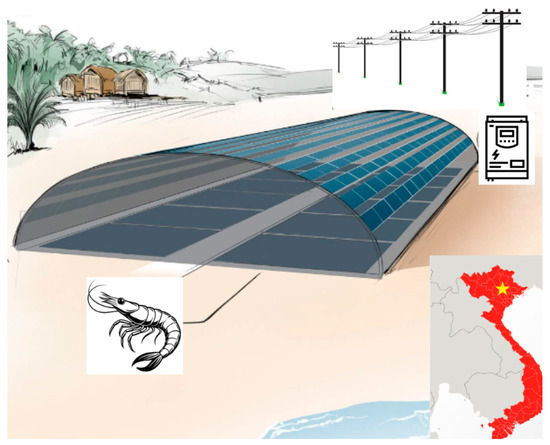
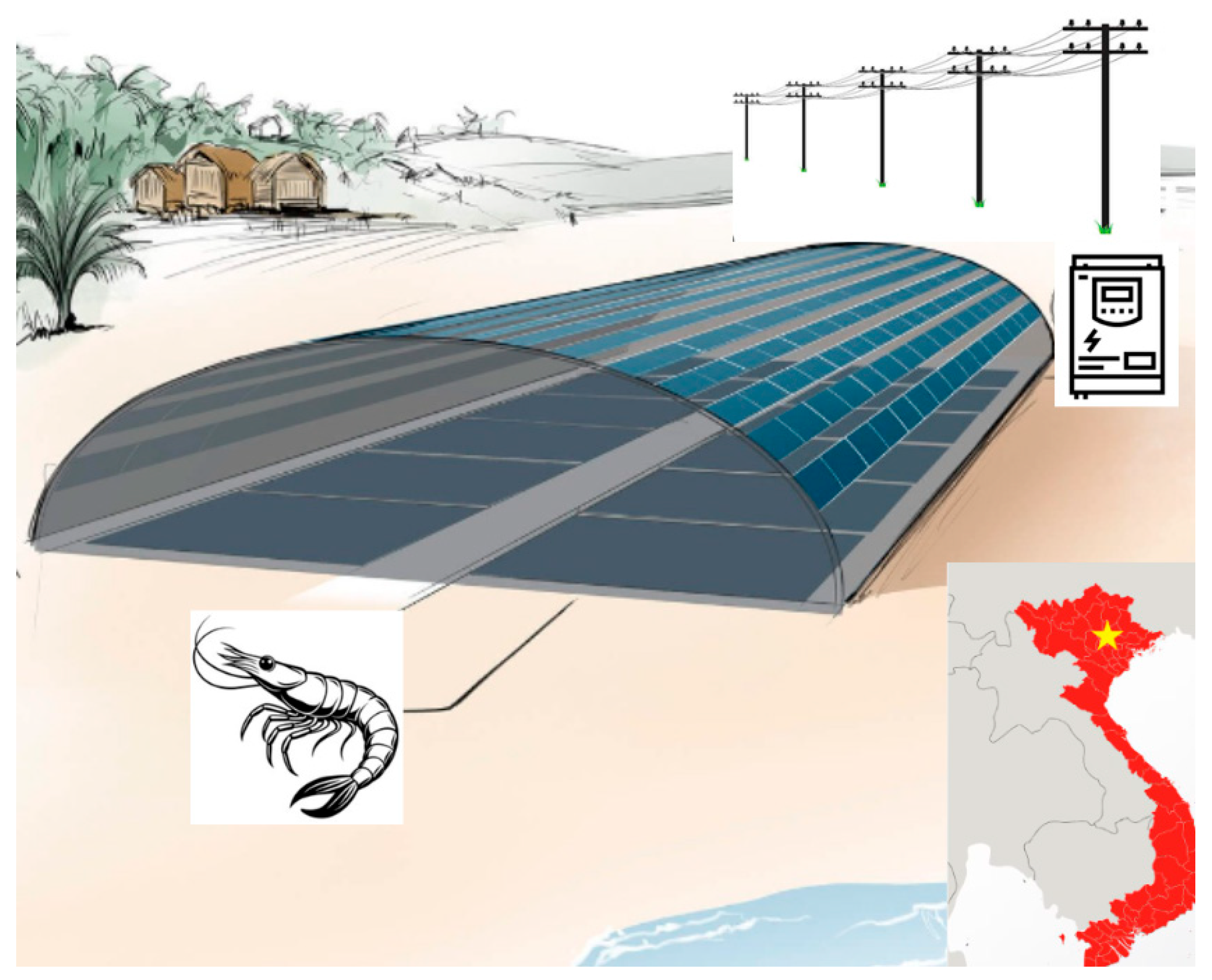
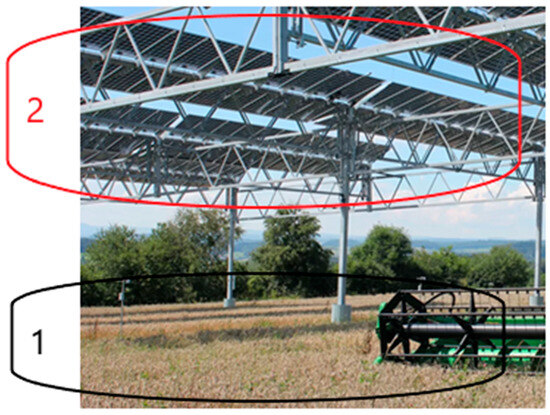
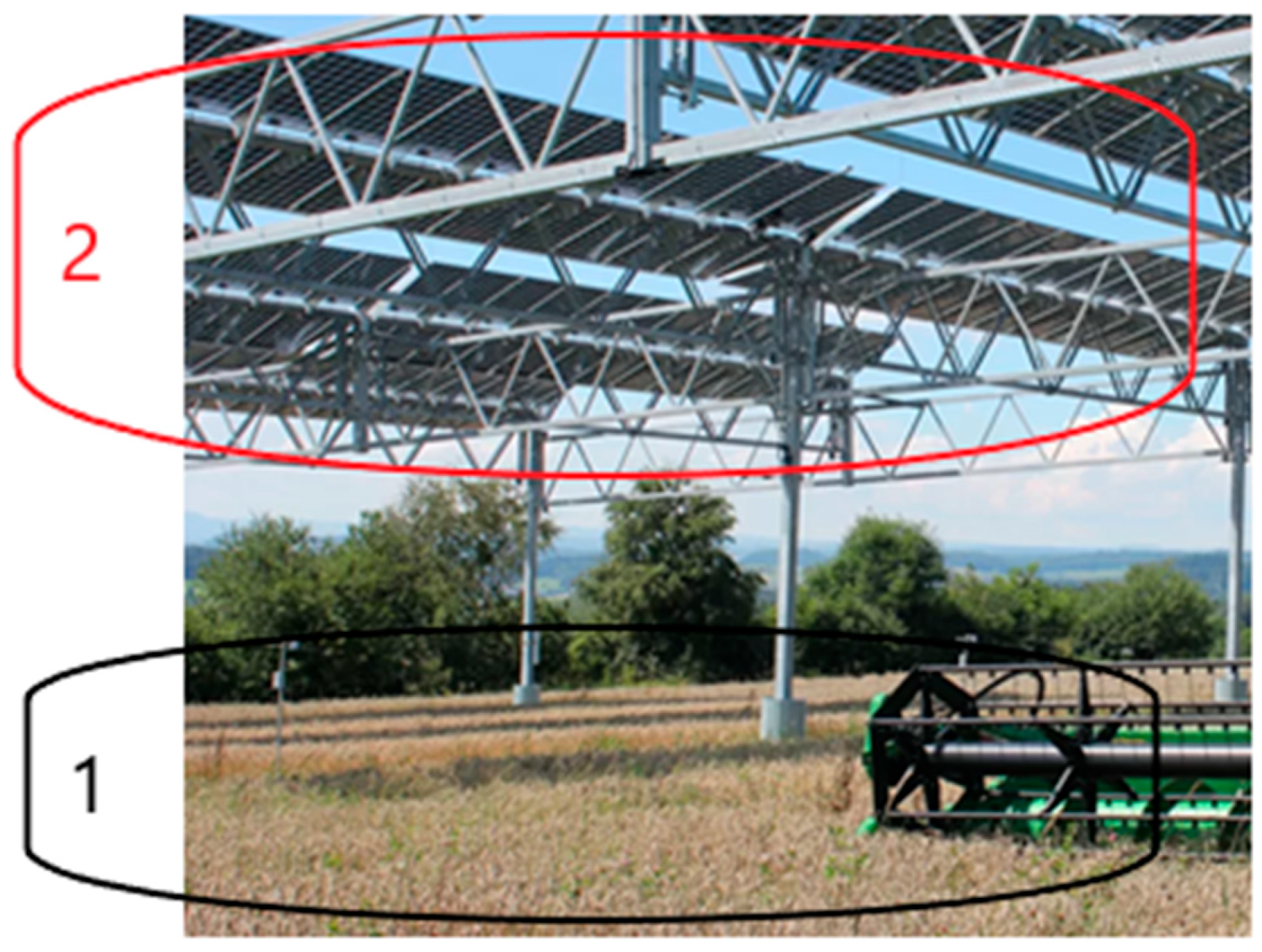
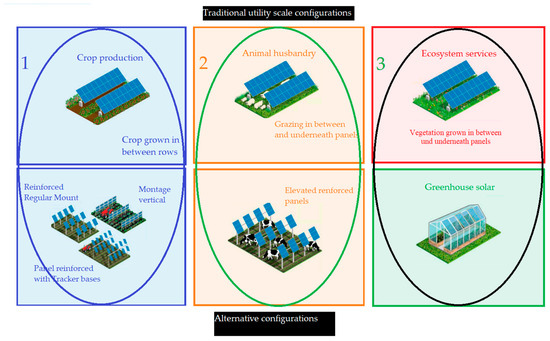
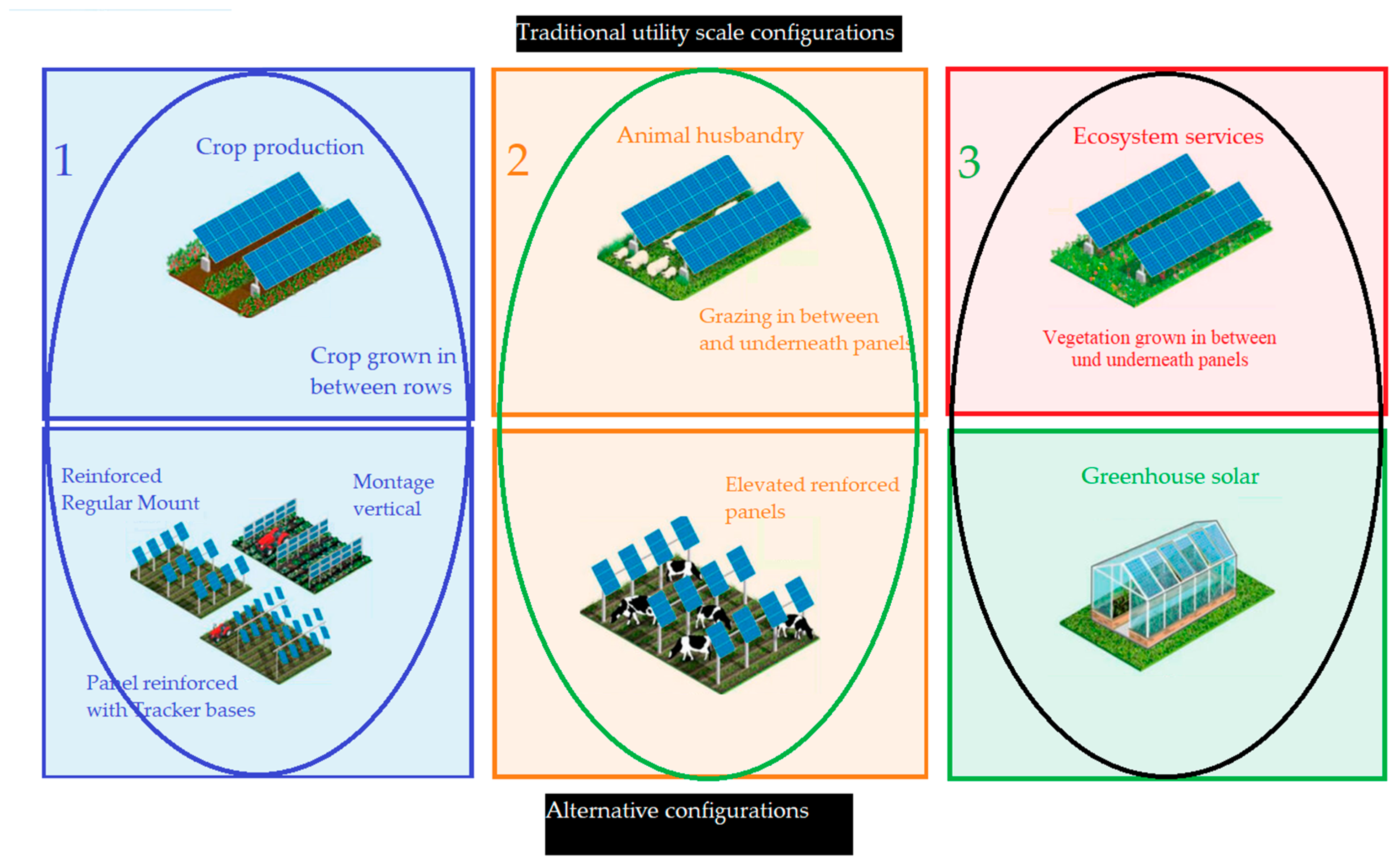
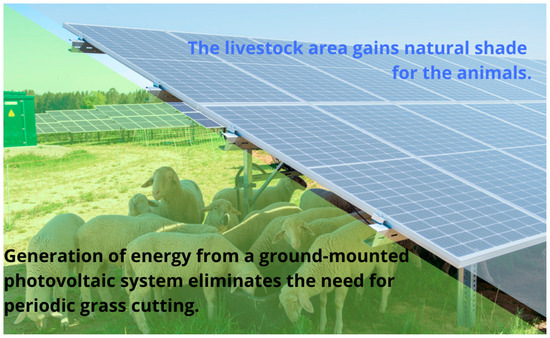
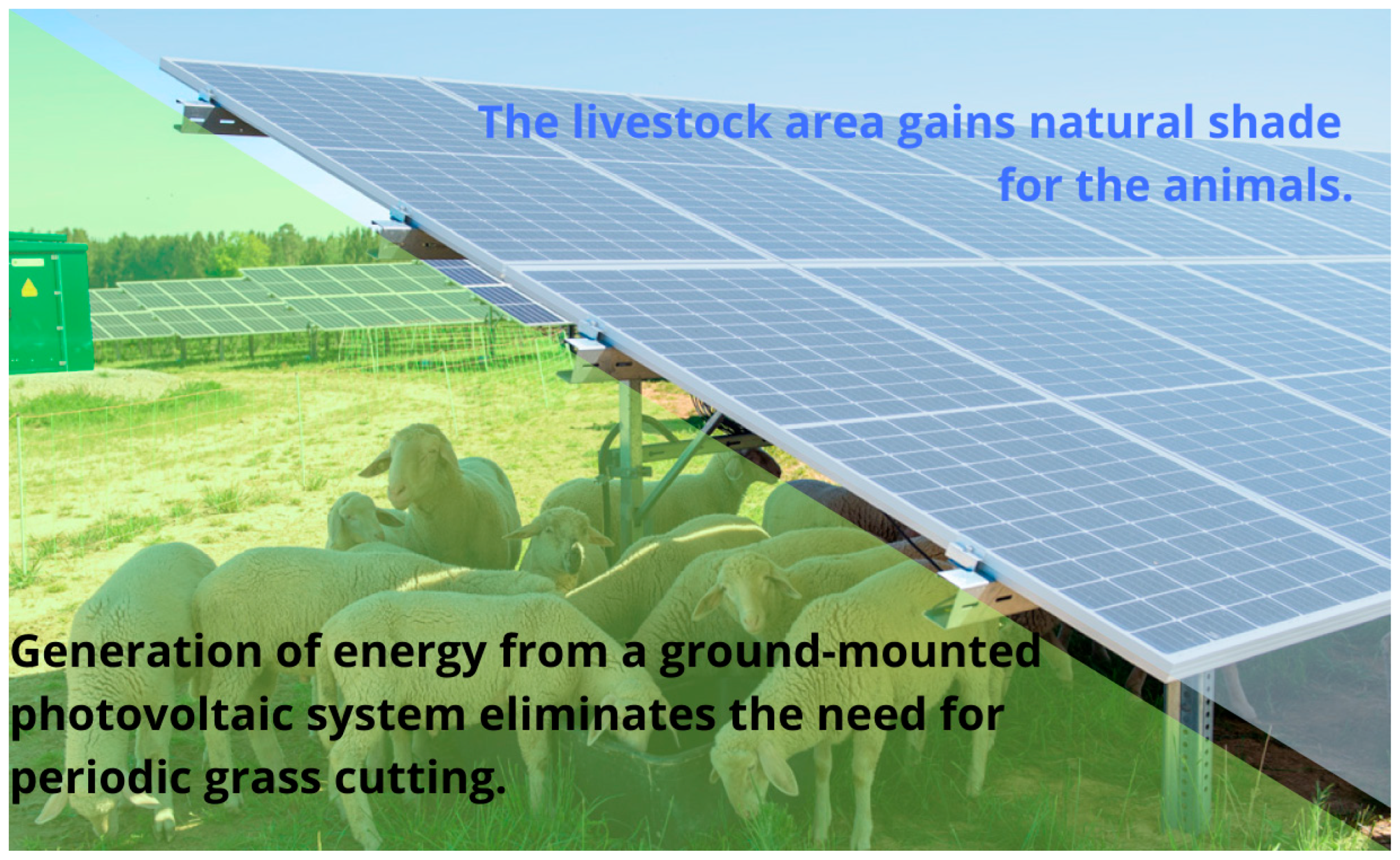
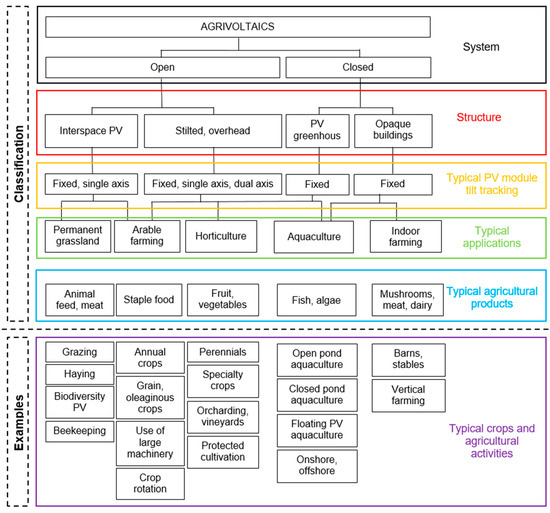
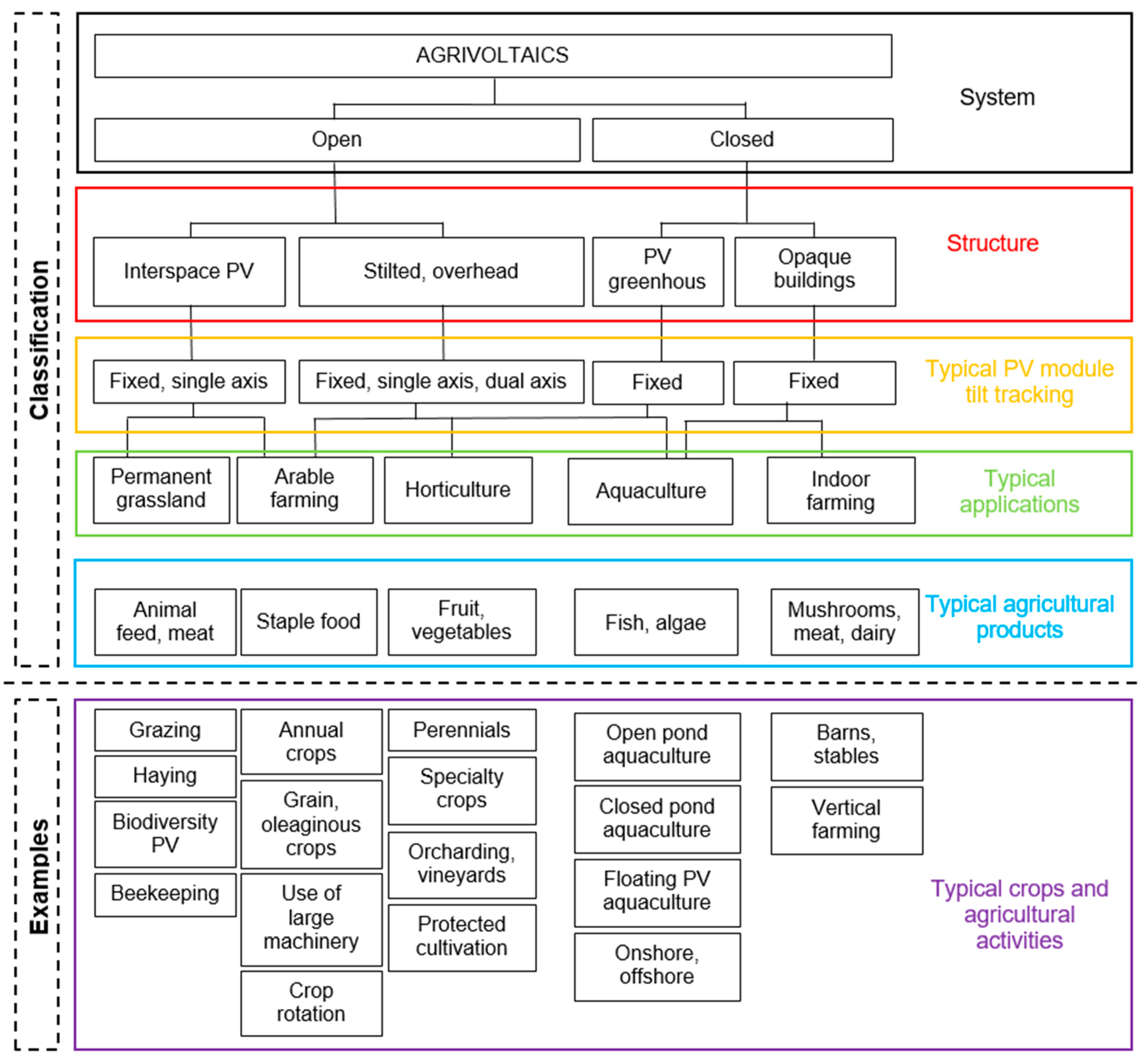
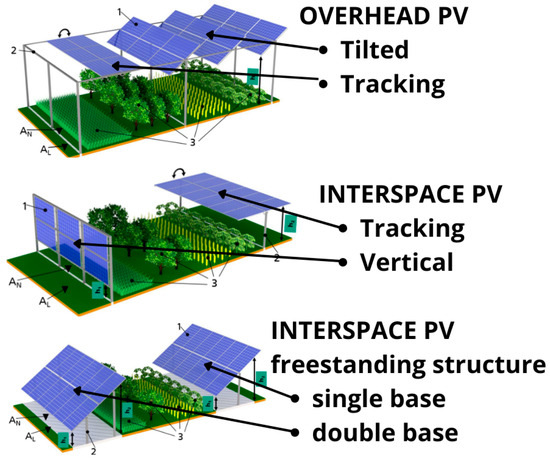
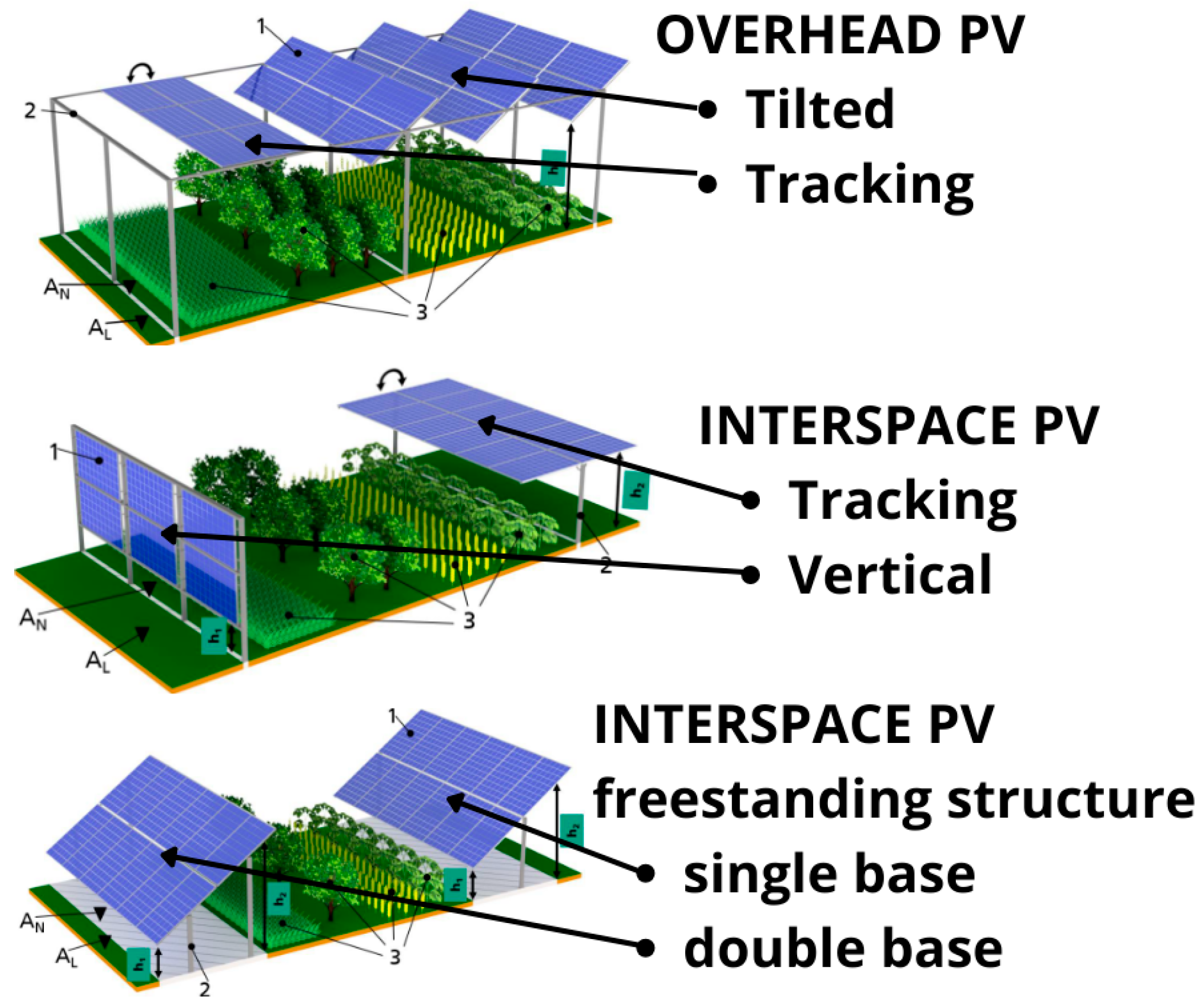
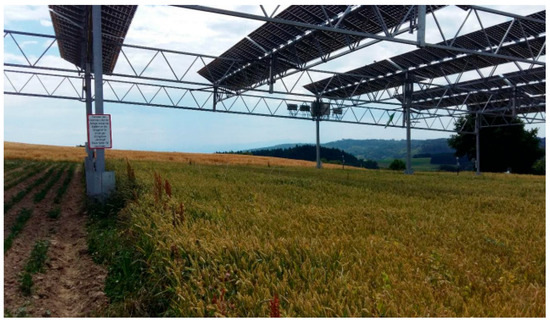
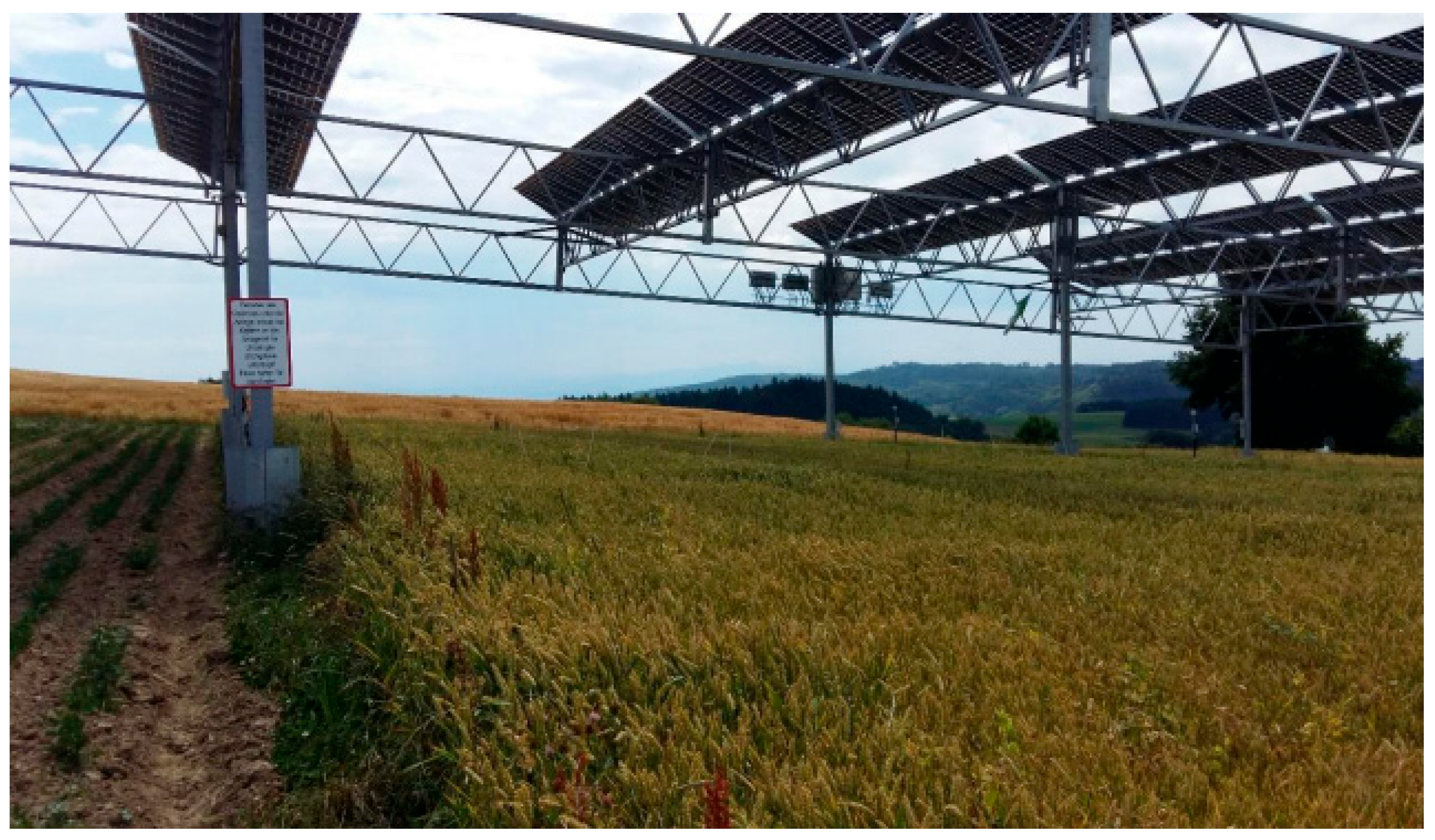
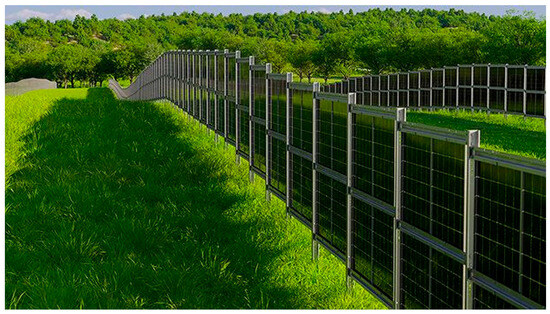
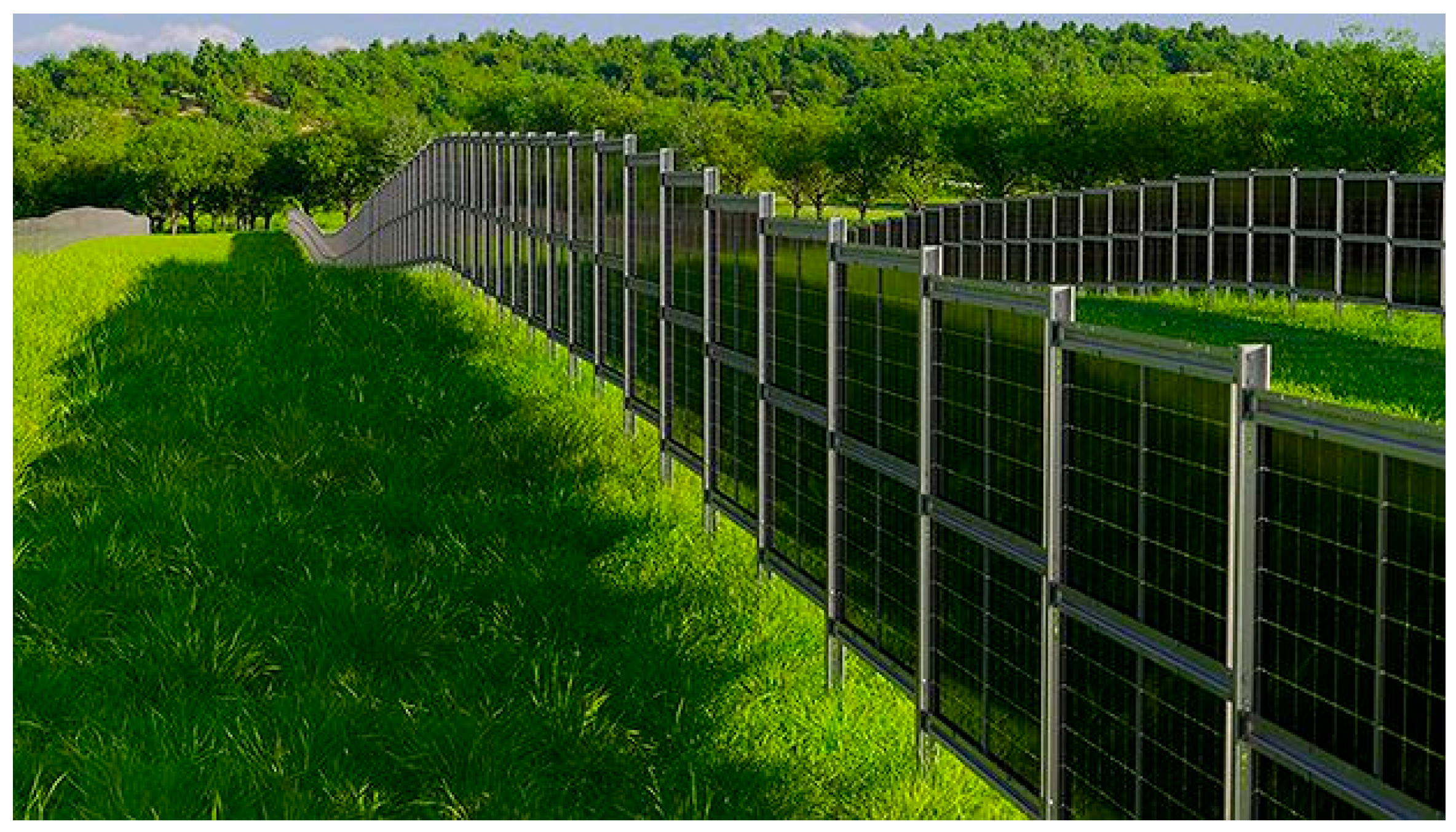
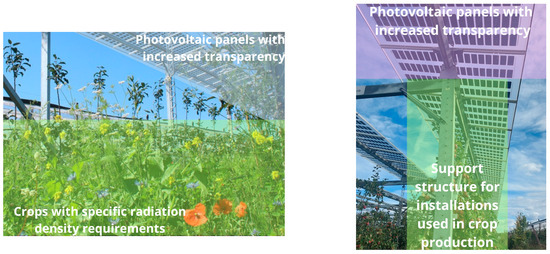
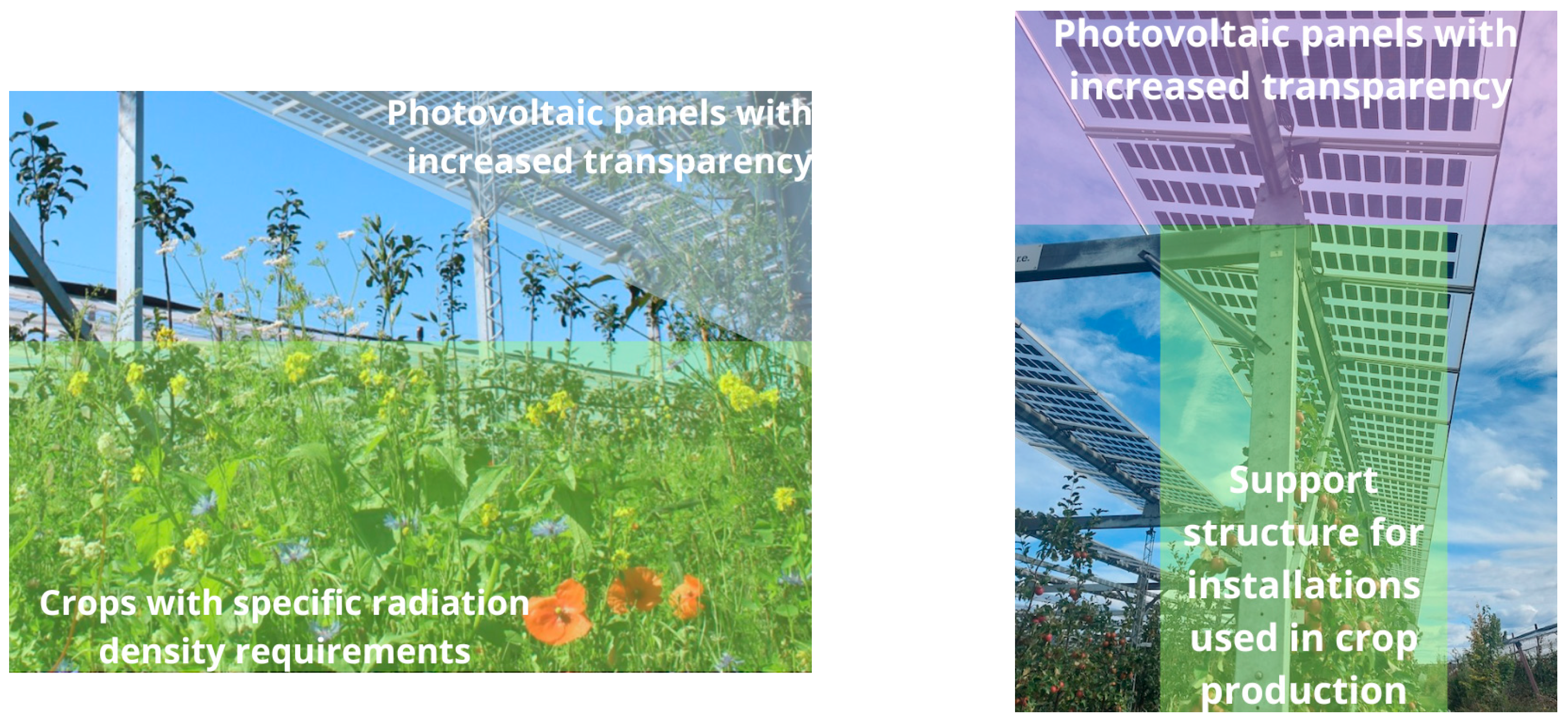
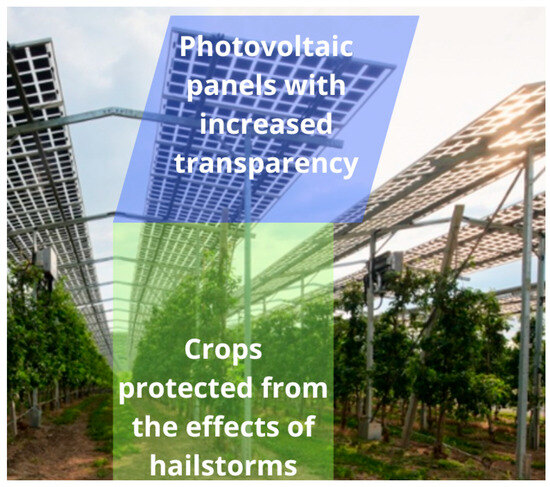
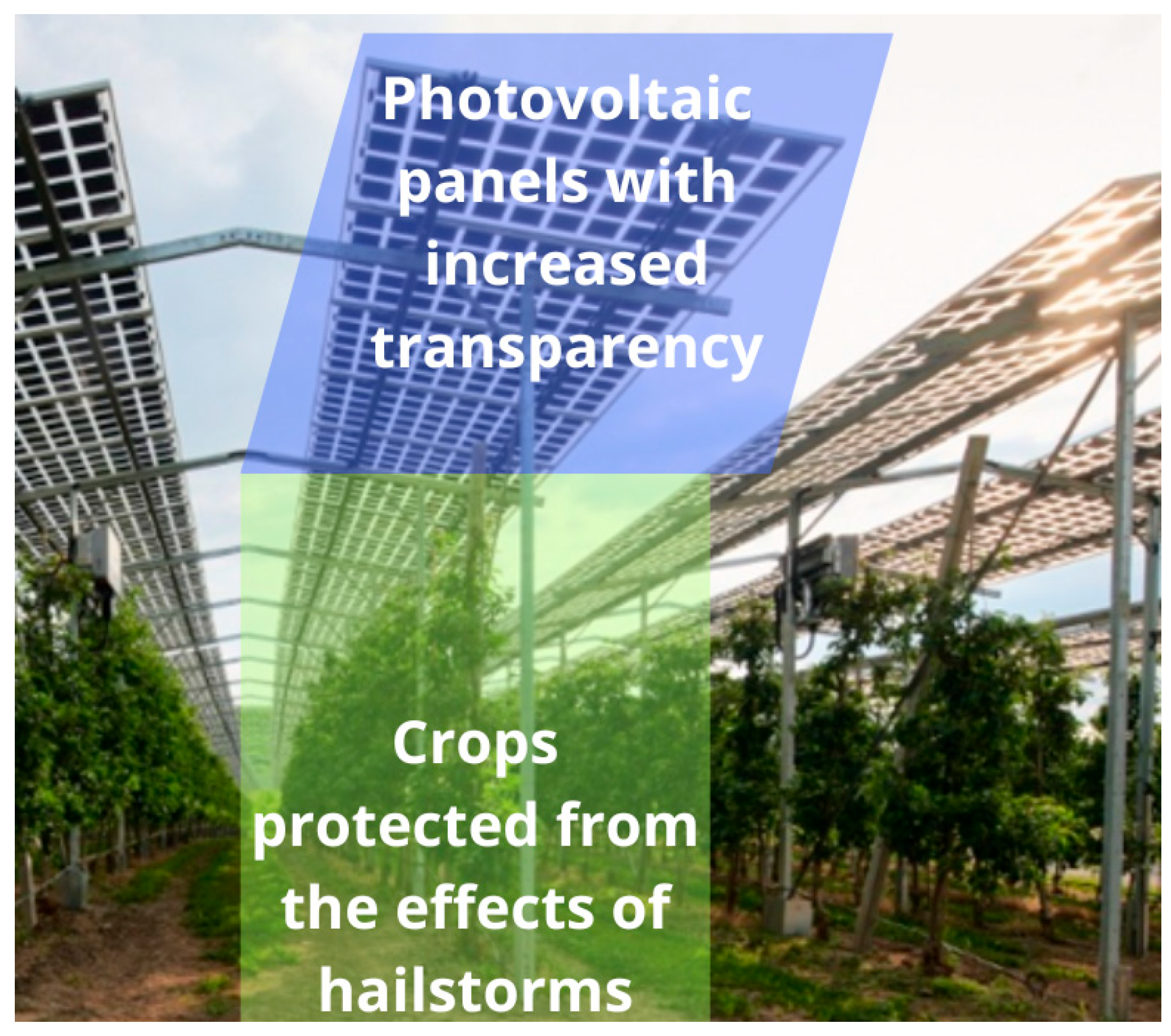
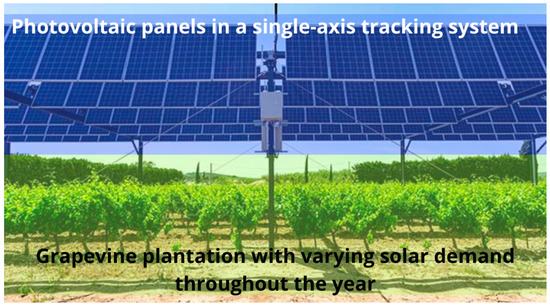
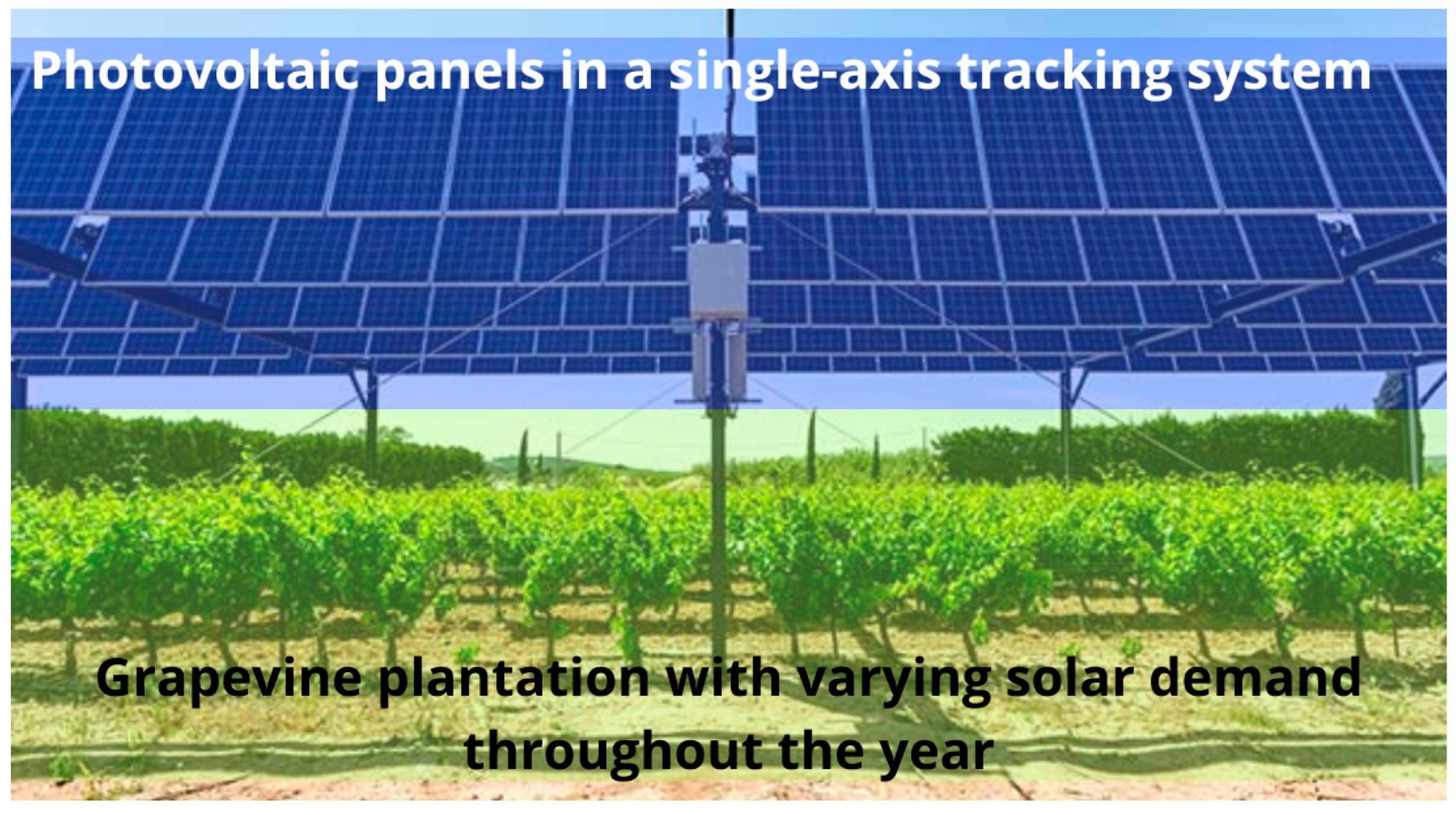
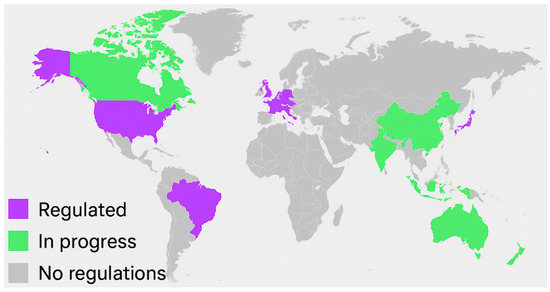
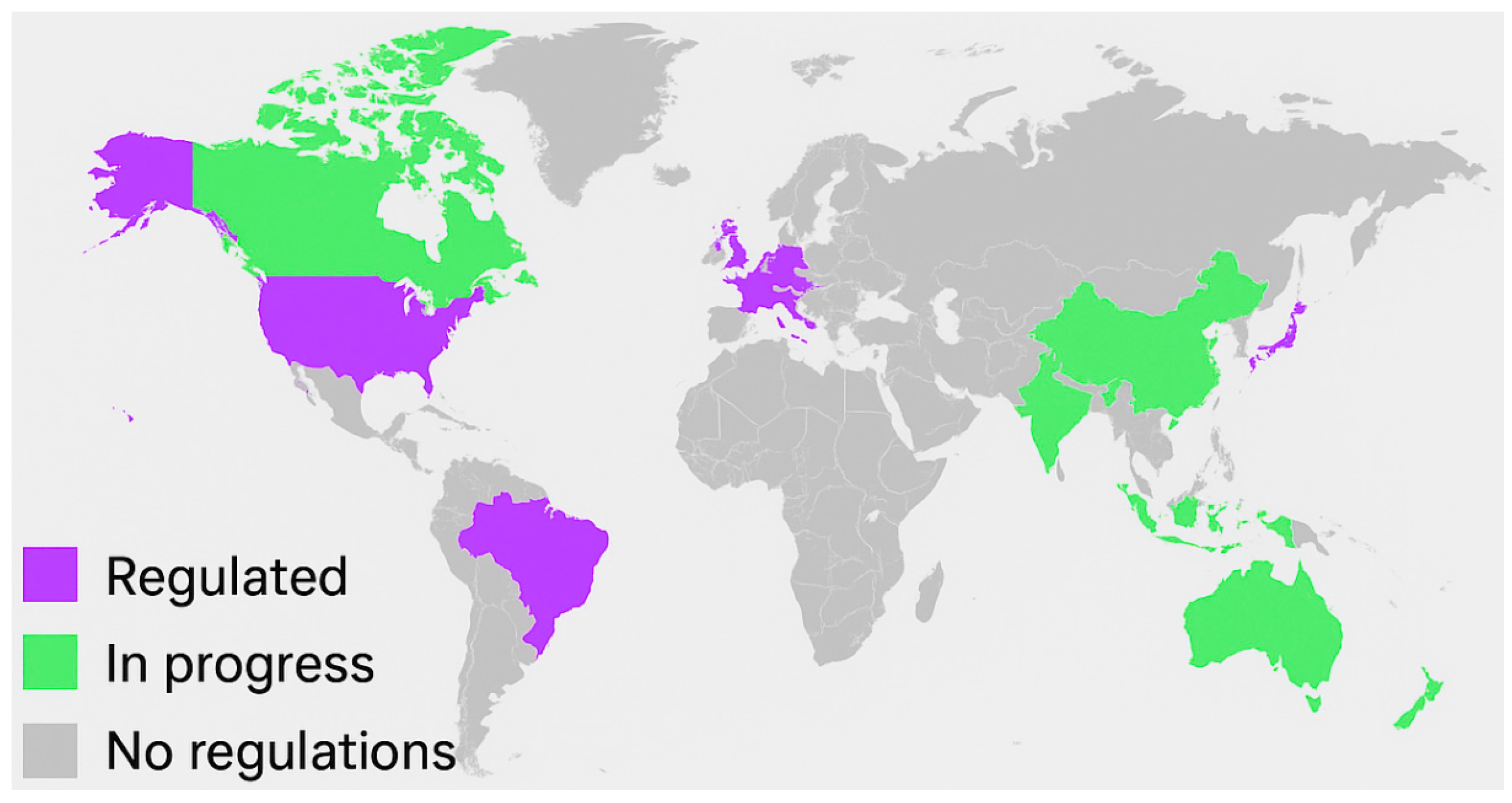
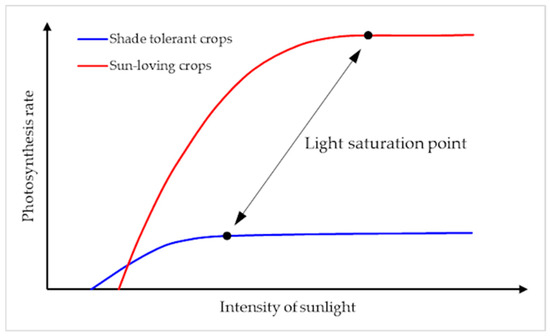
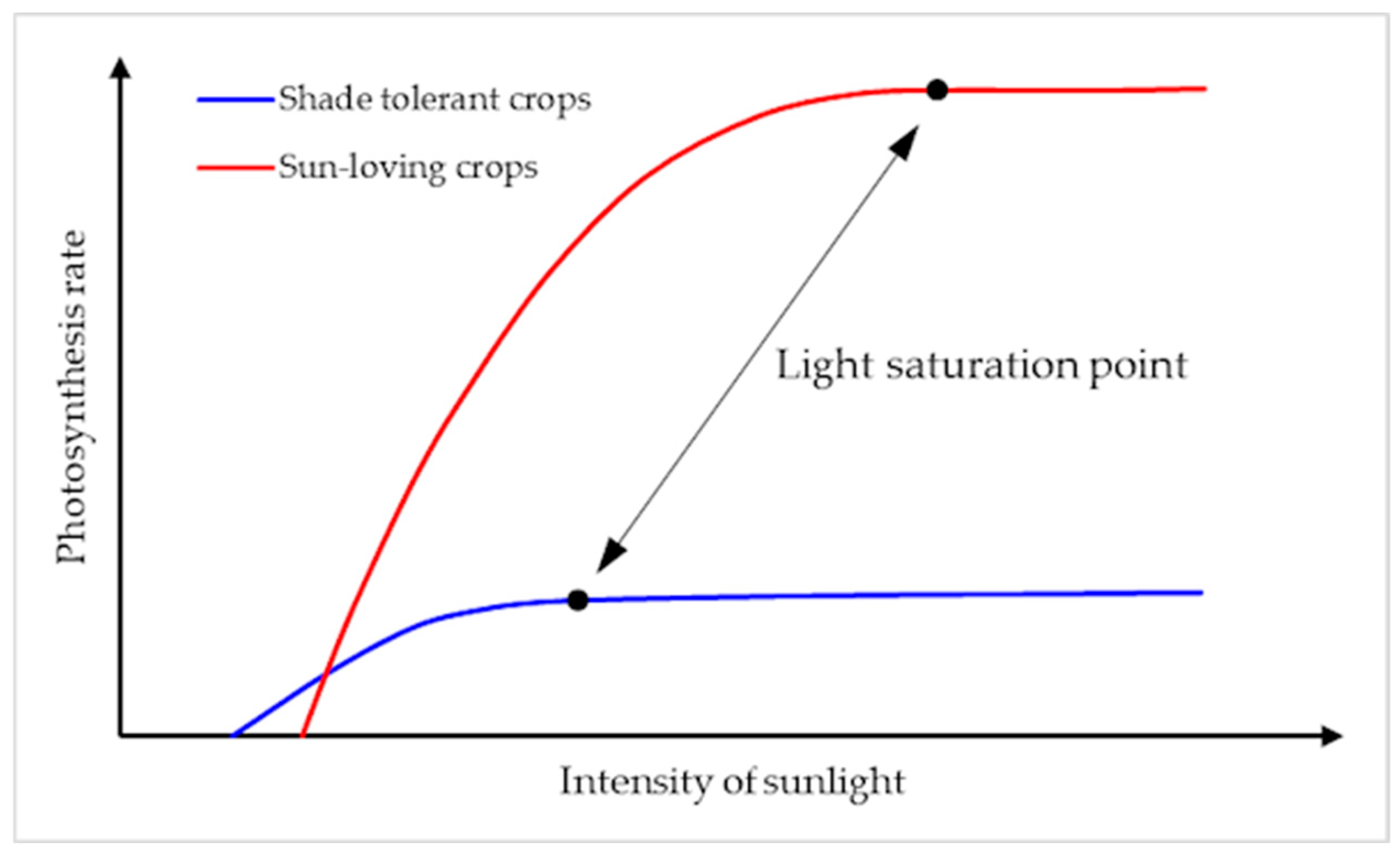
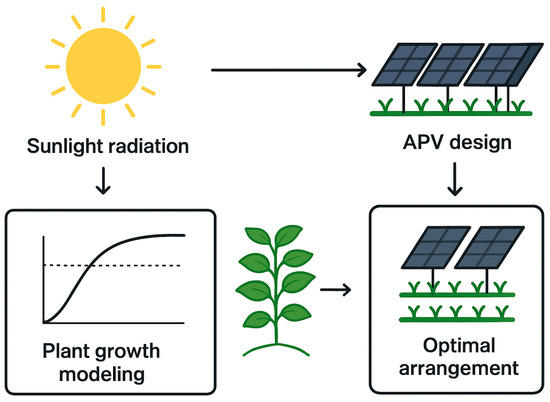
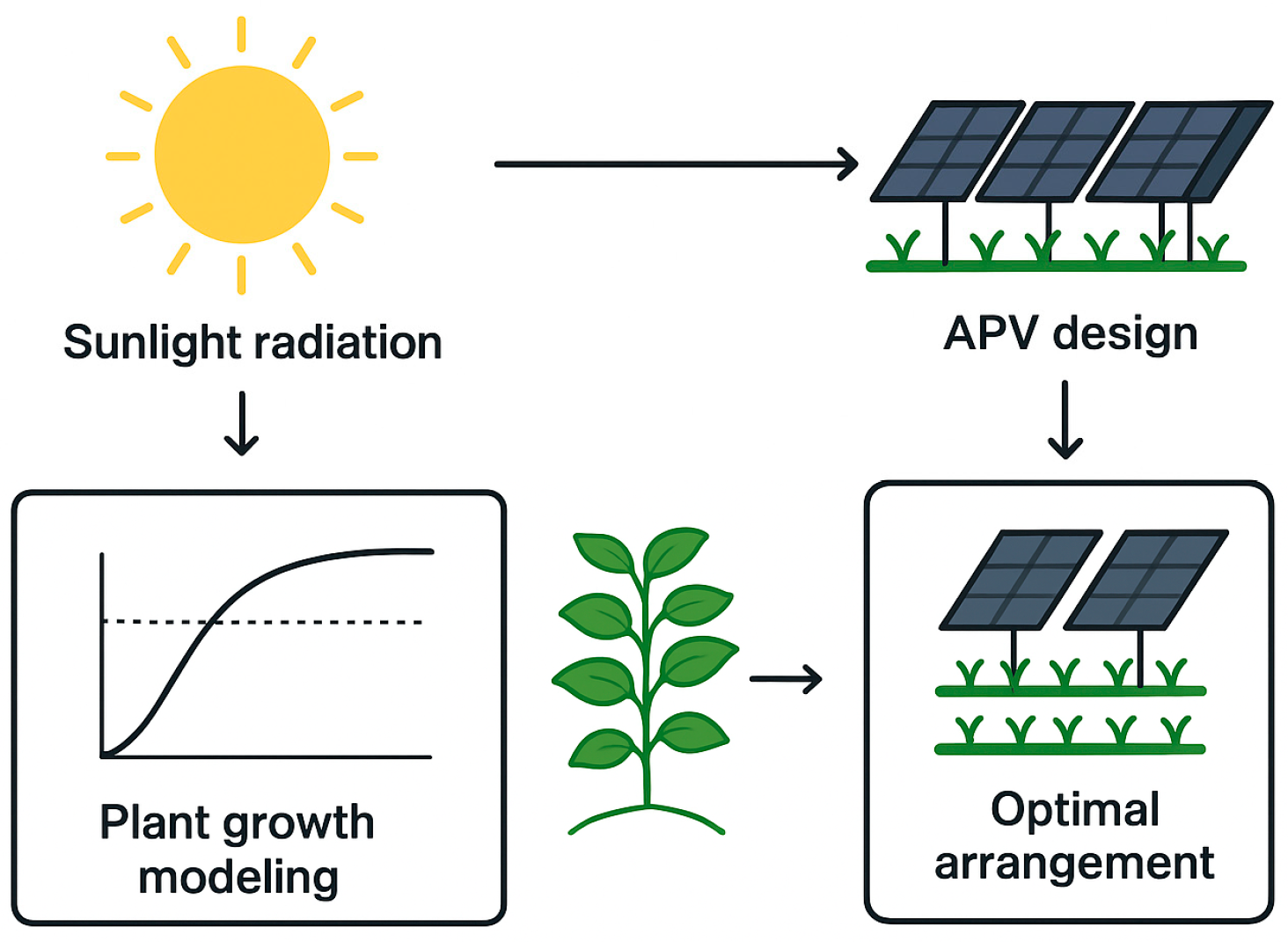
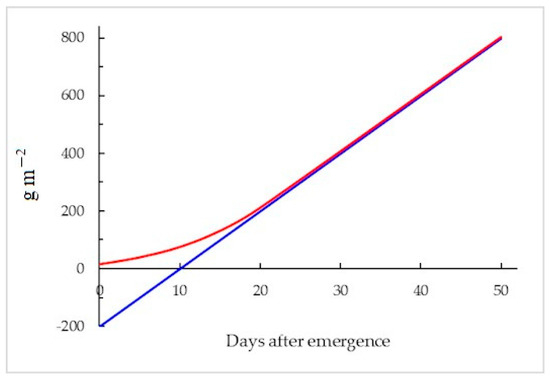
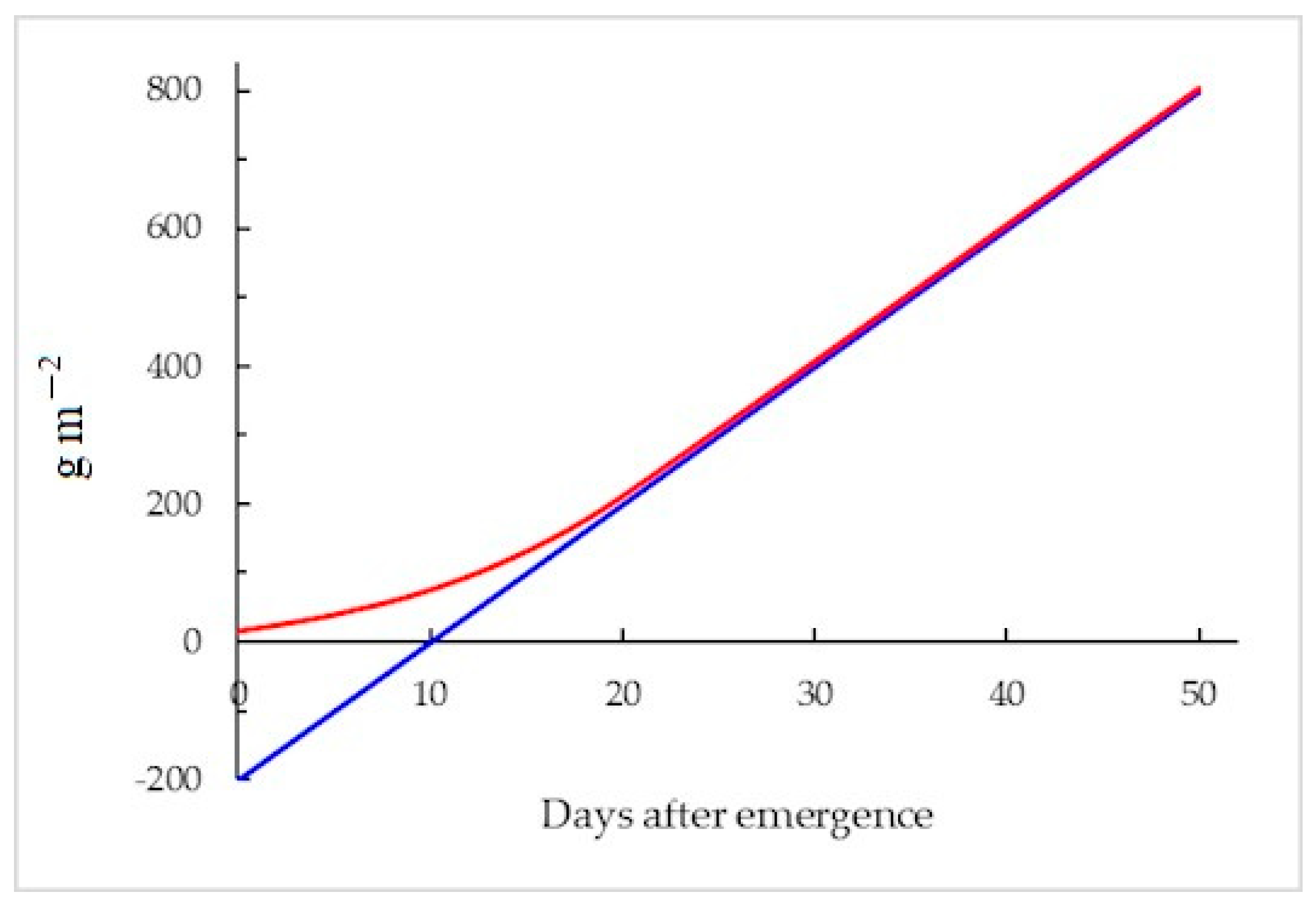
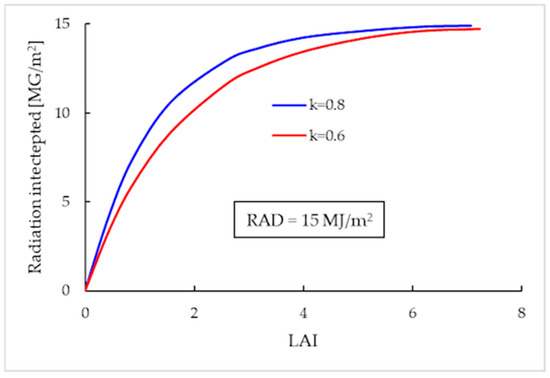
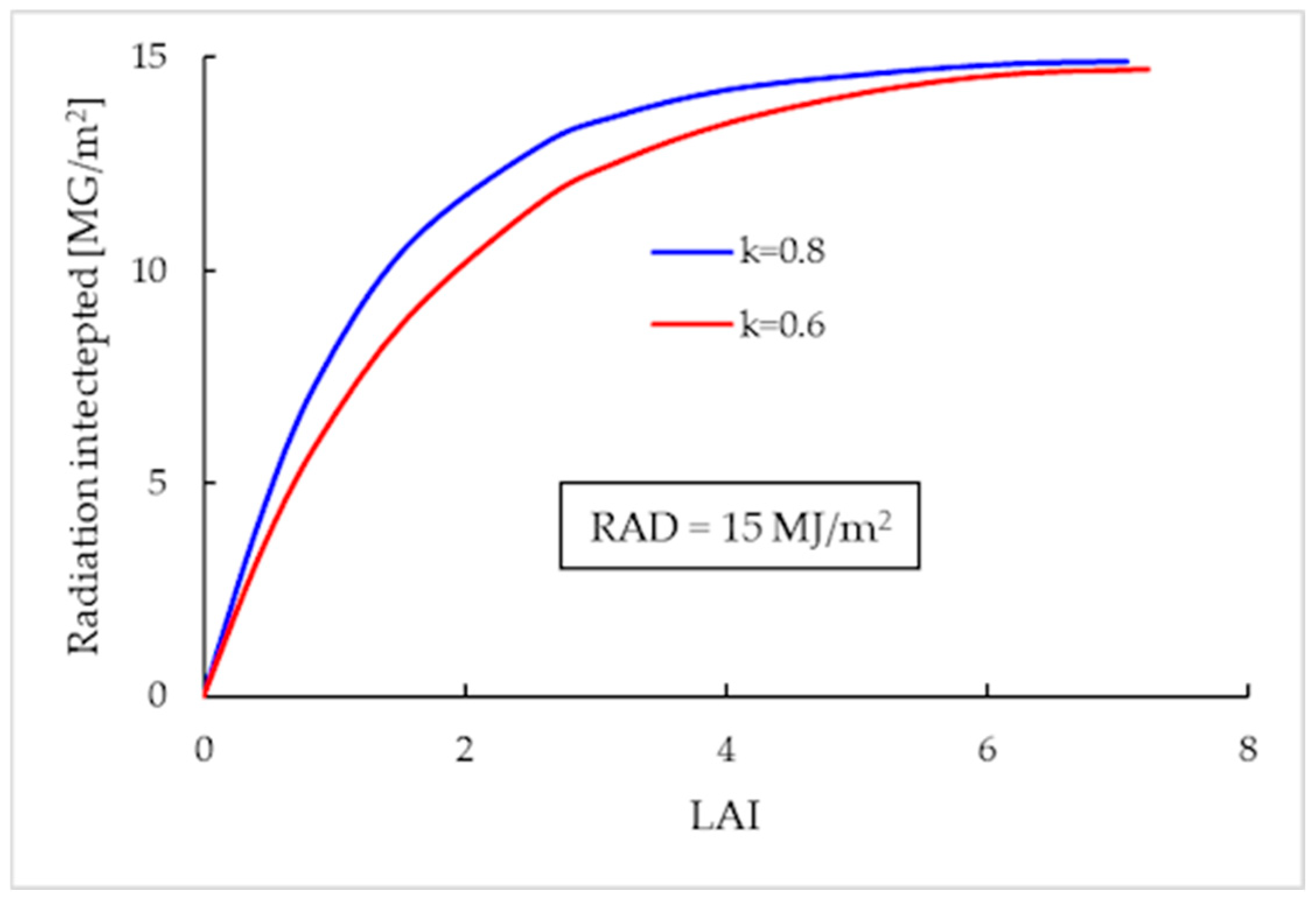
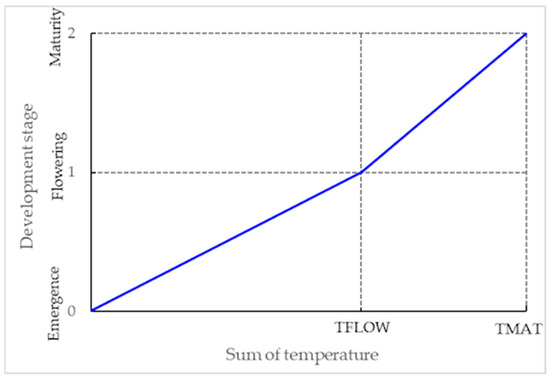
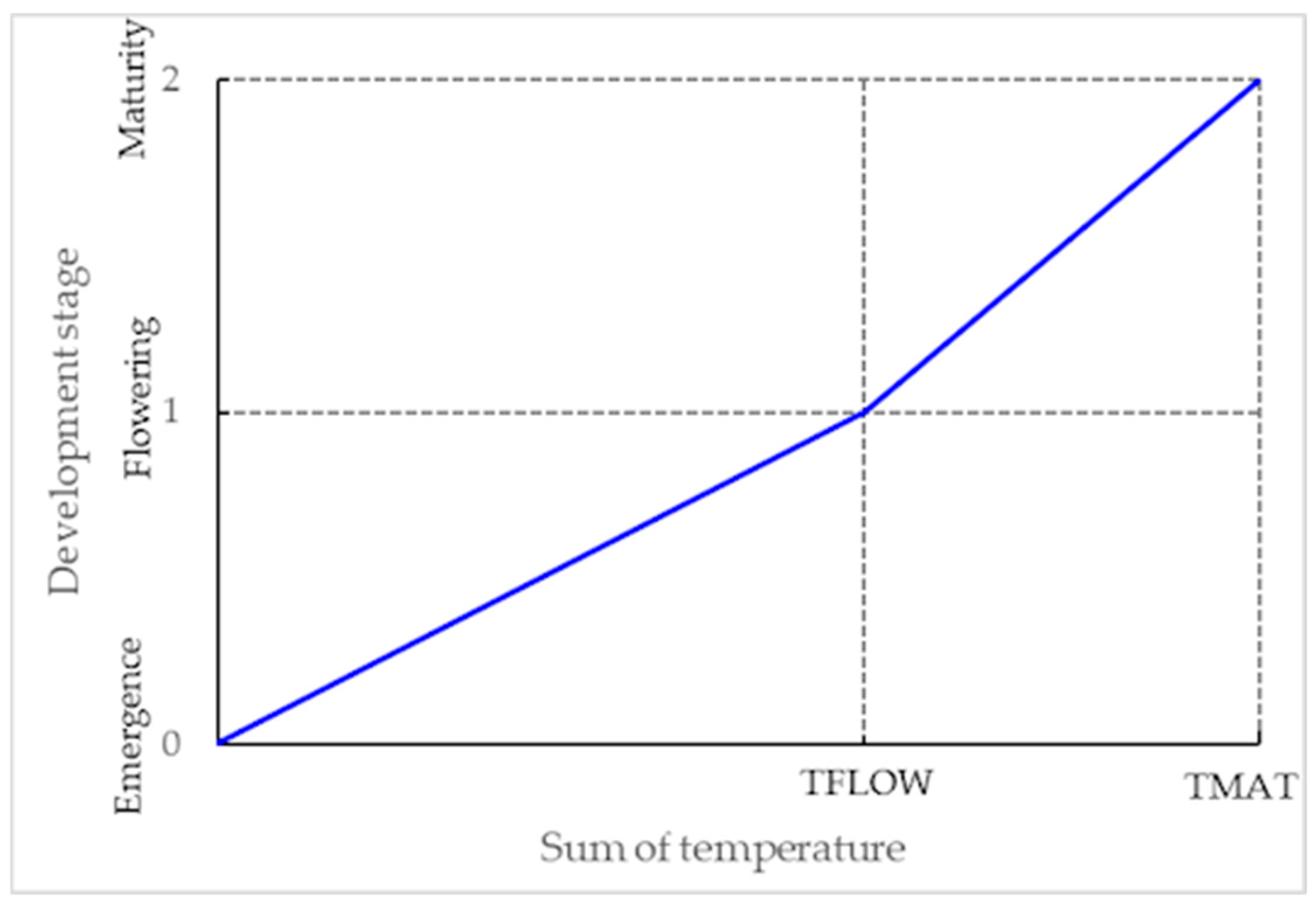
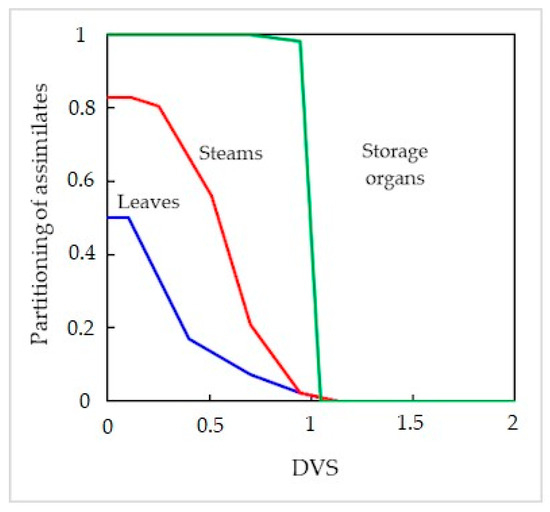
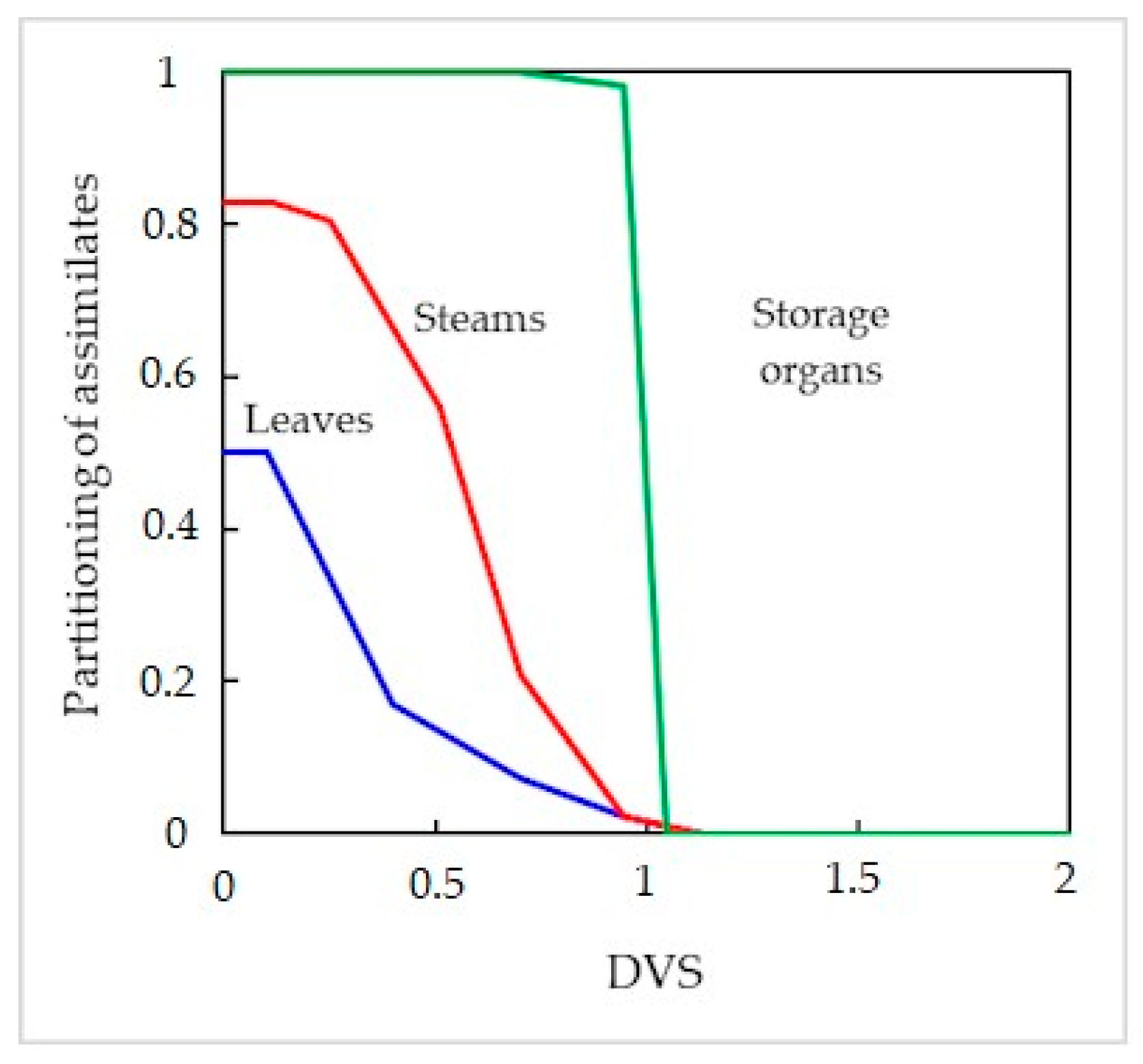
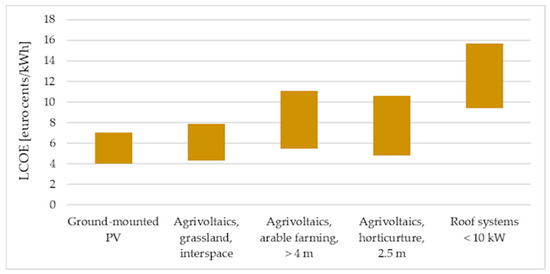
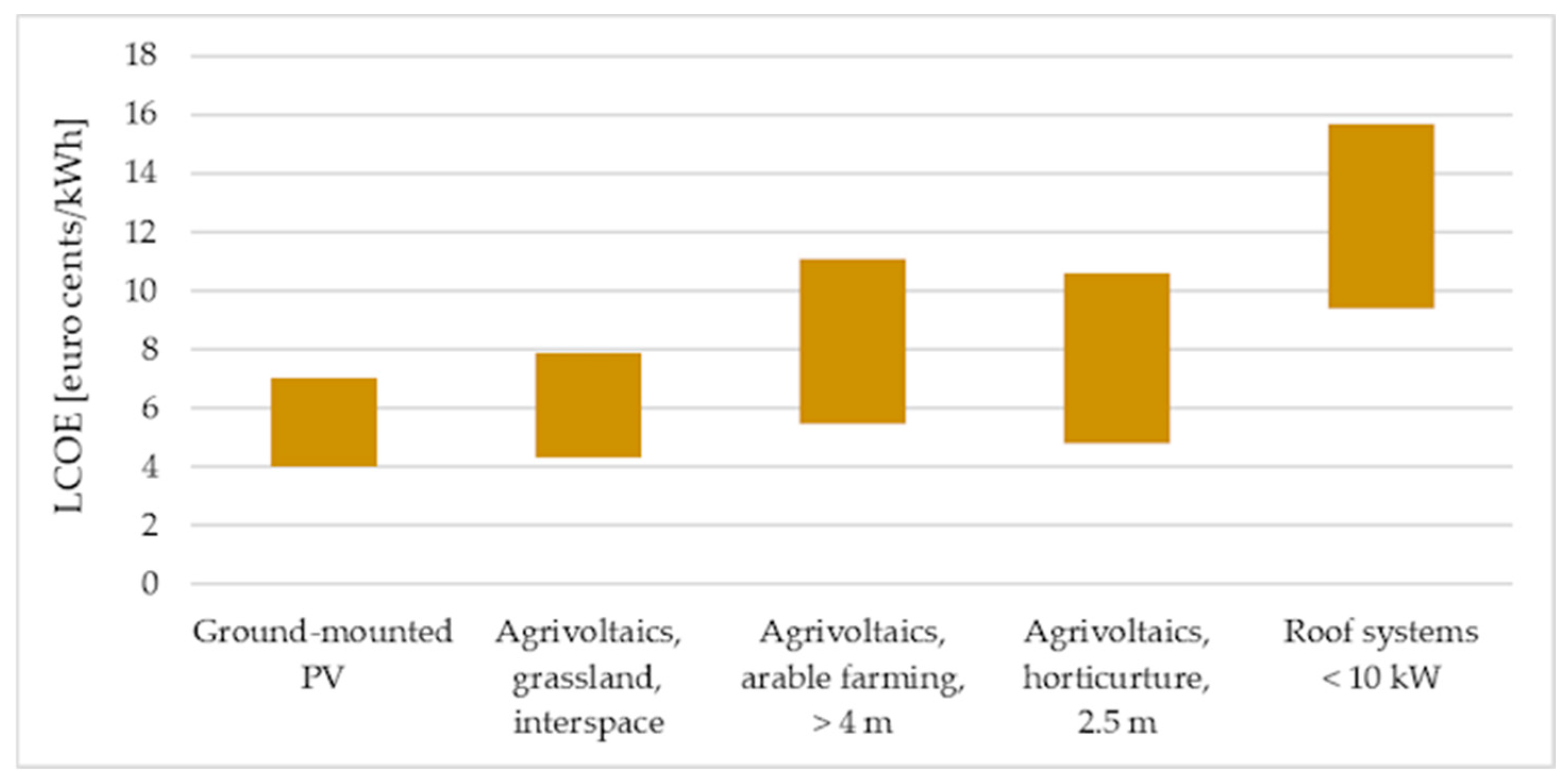

Disclaimer/Publisher’s Note: The statements, opinions and data contained in all publications are solely those of the individual author(s) and contributor(s) and not of MDPI and/or the editor(s). MDPI and/or the editor(s) disclaim responsibility for any injury to people or property resulting from any ideas, methods, instructions or products referred to in the content. |
© 2025 by the authors. Licensee MDPI, Basel, Switzerland. This article is an open access article distributed under the terms and conditions of the Creative Commons Attribution (CC BY) license.