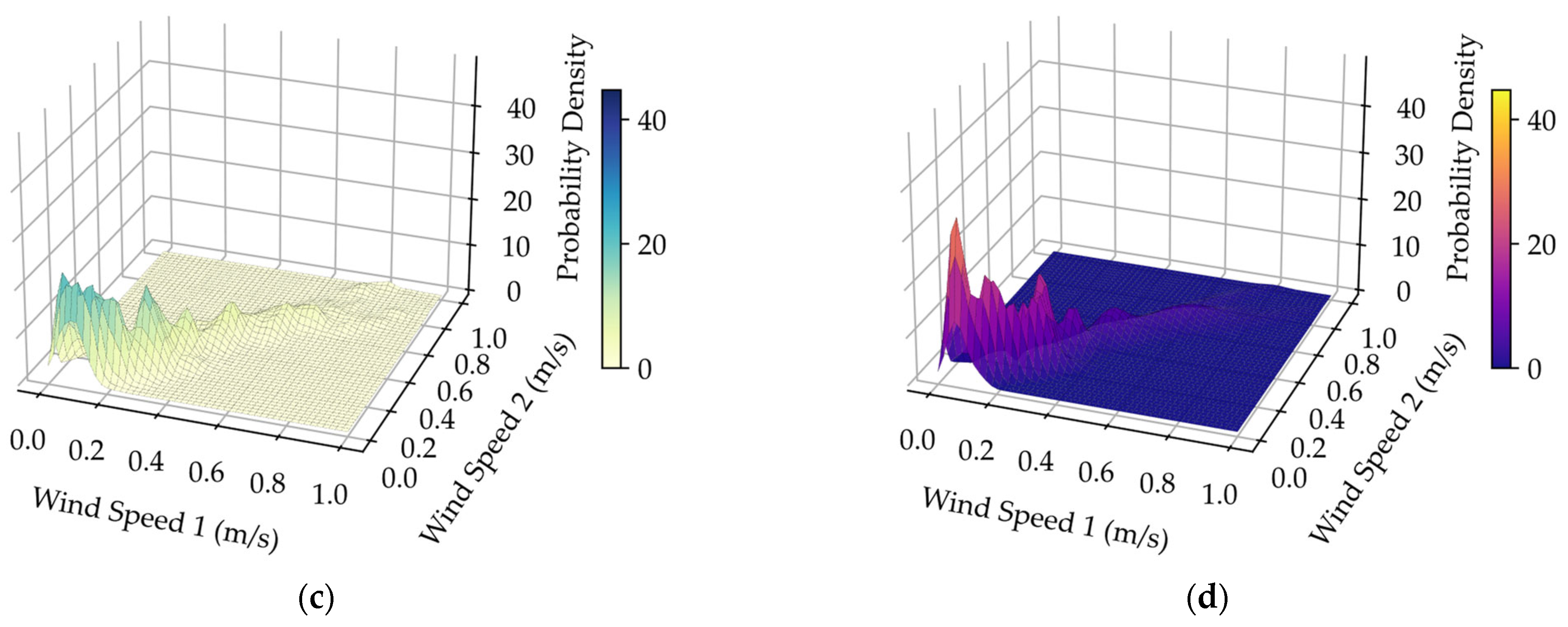
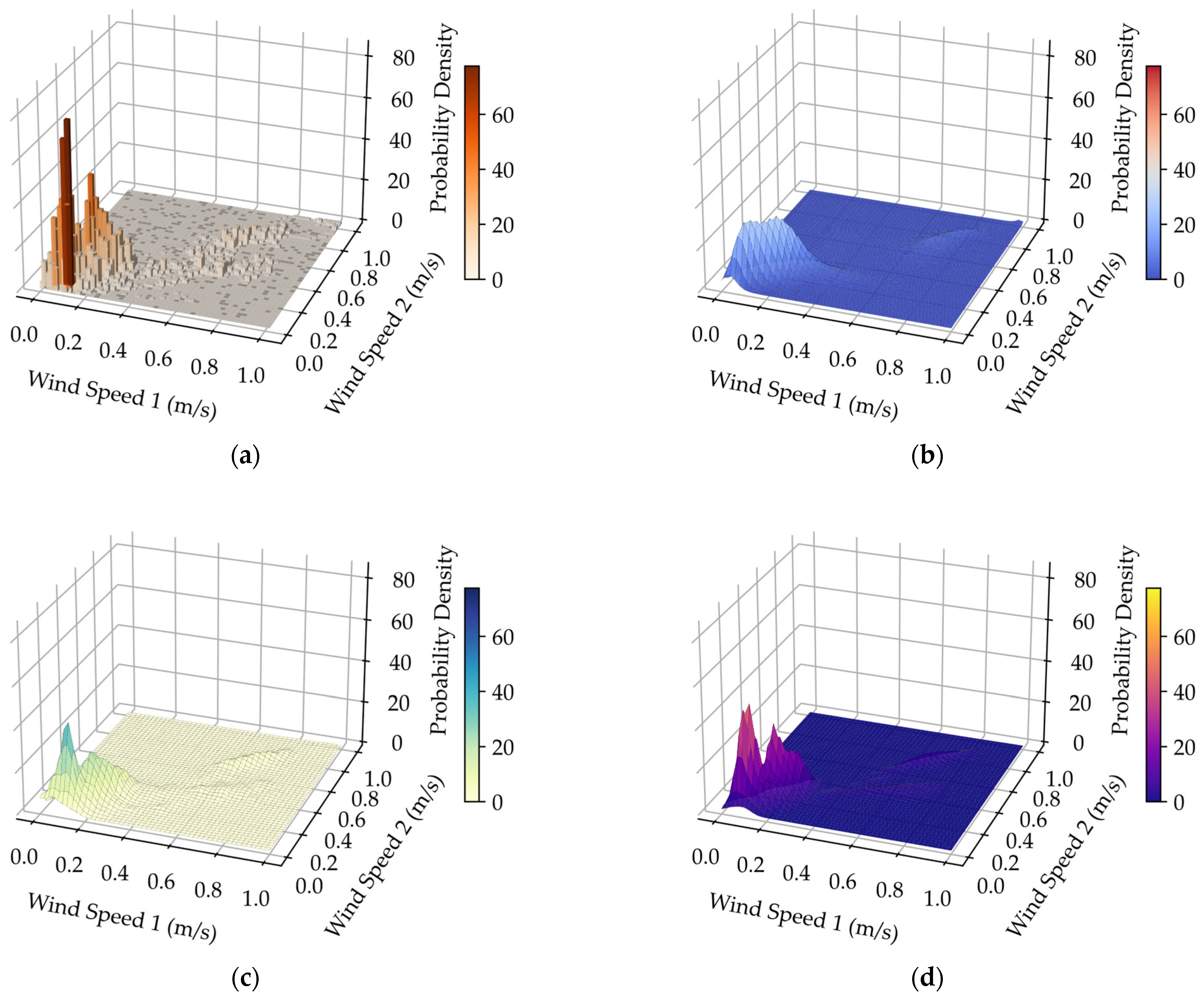
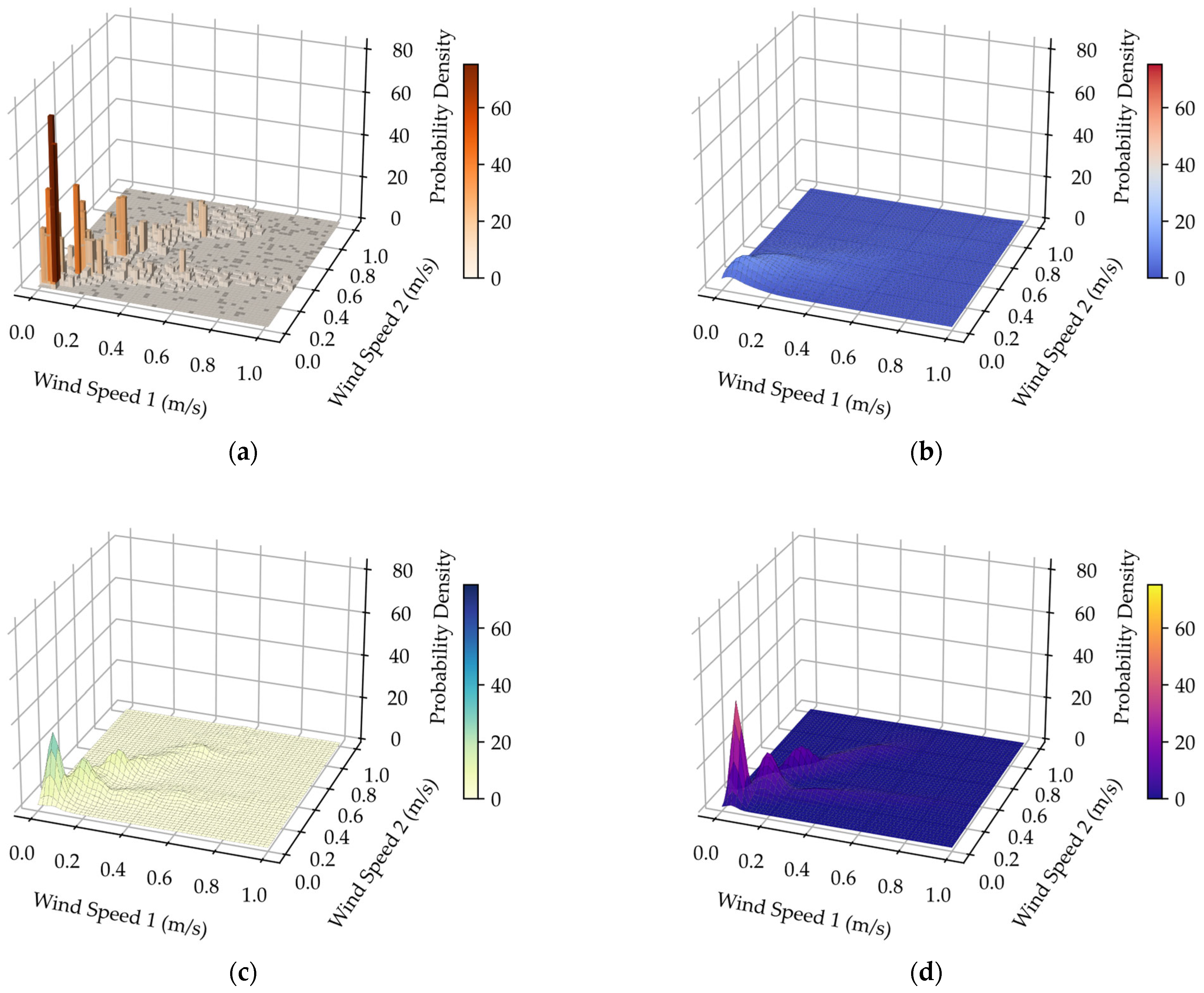
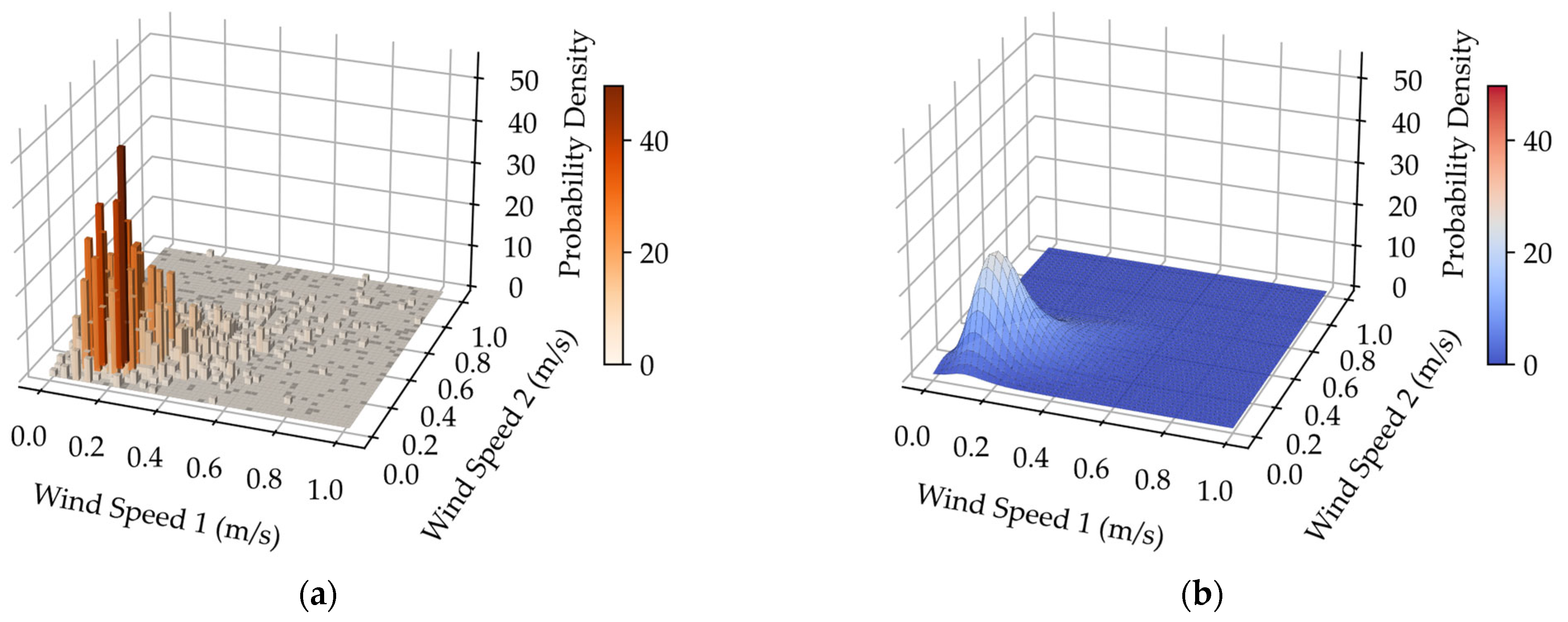
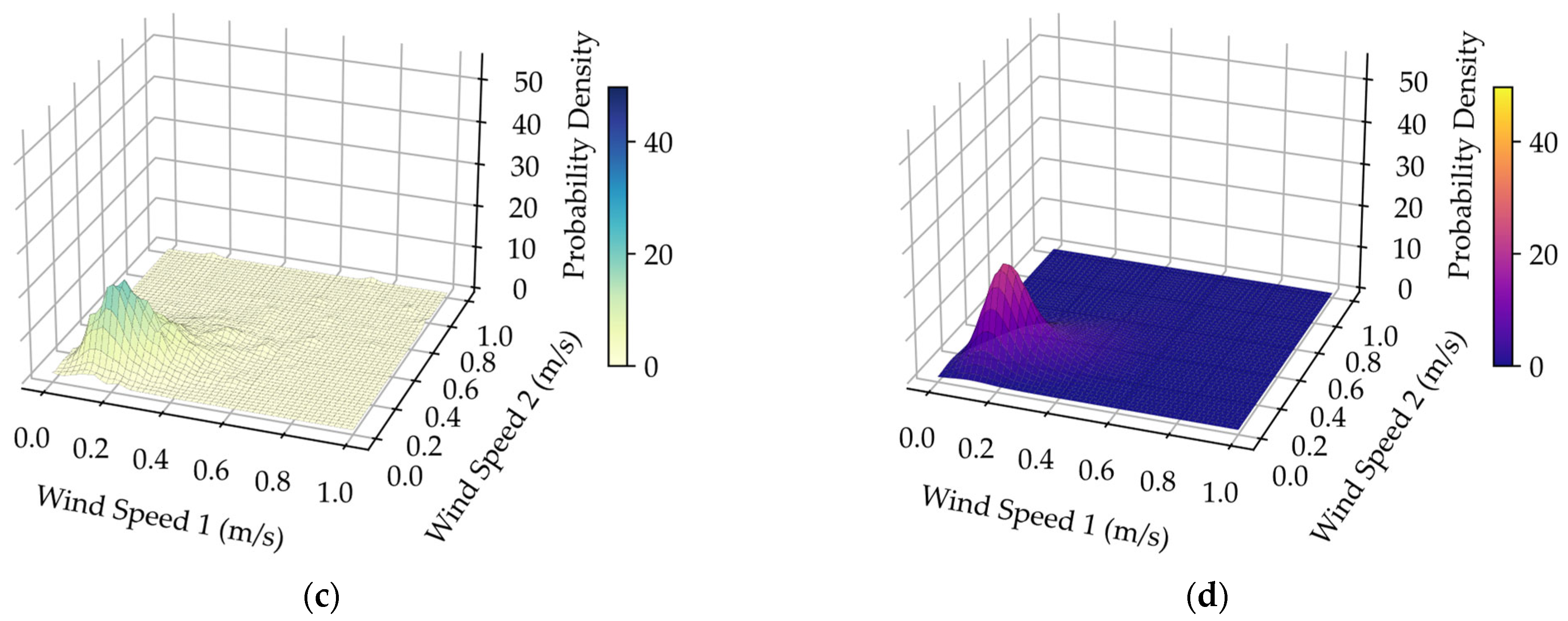
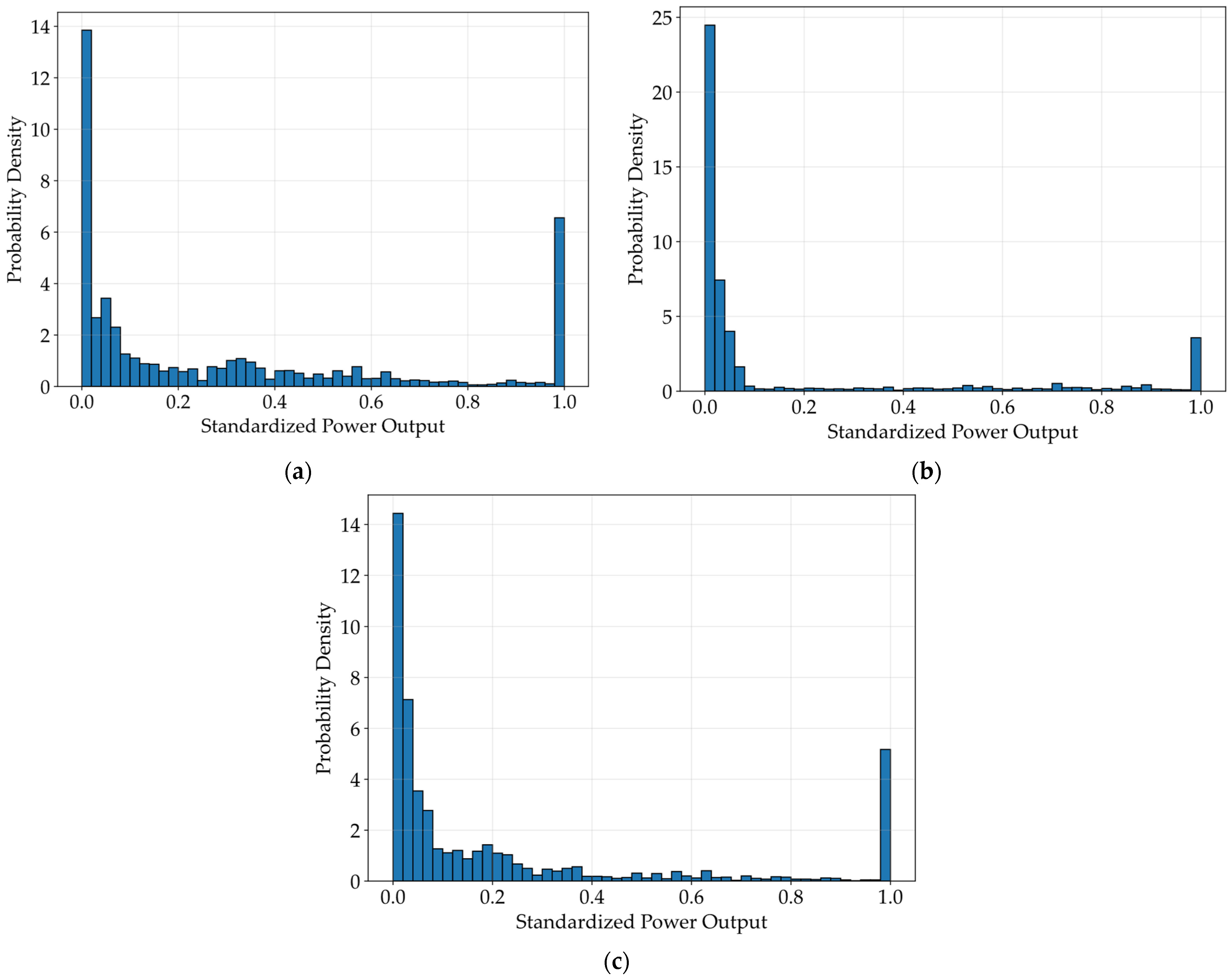
2.1. Characteristics of Wind Speed Under Varying Typhoon Intensities
A typhoon, as an intense tropical cyclone, exhibits wind speed characteristics that are intrinsically linked to its intensity category, which shapes the speed patterns of wind farms. Classified according to the Saffir-Simpson Hurricane Wind Scale [
33] and World Meteorological Organization definitions [
34], typhoons (or hurricanes/major tropical cyclones) can be categorized into several levels based on their maximum sustained wind speeds, including tropical depression, tropical storm, severe tropical storm, typhoon, severe typhoon, and super typhoon. Each level presents distinct wind speed distribution features, inducing different uncertainties in wind speed.
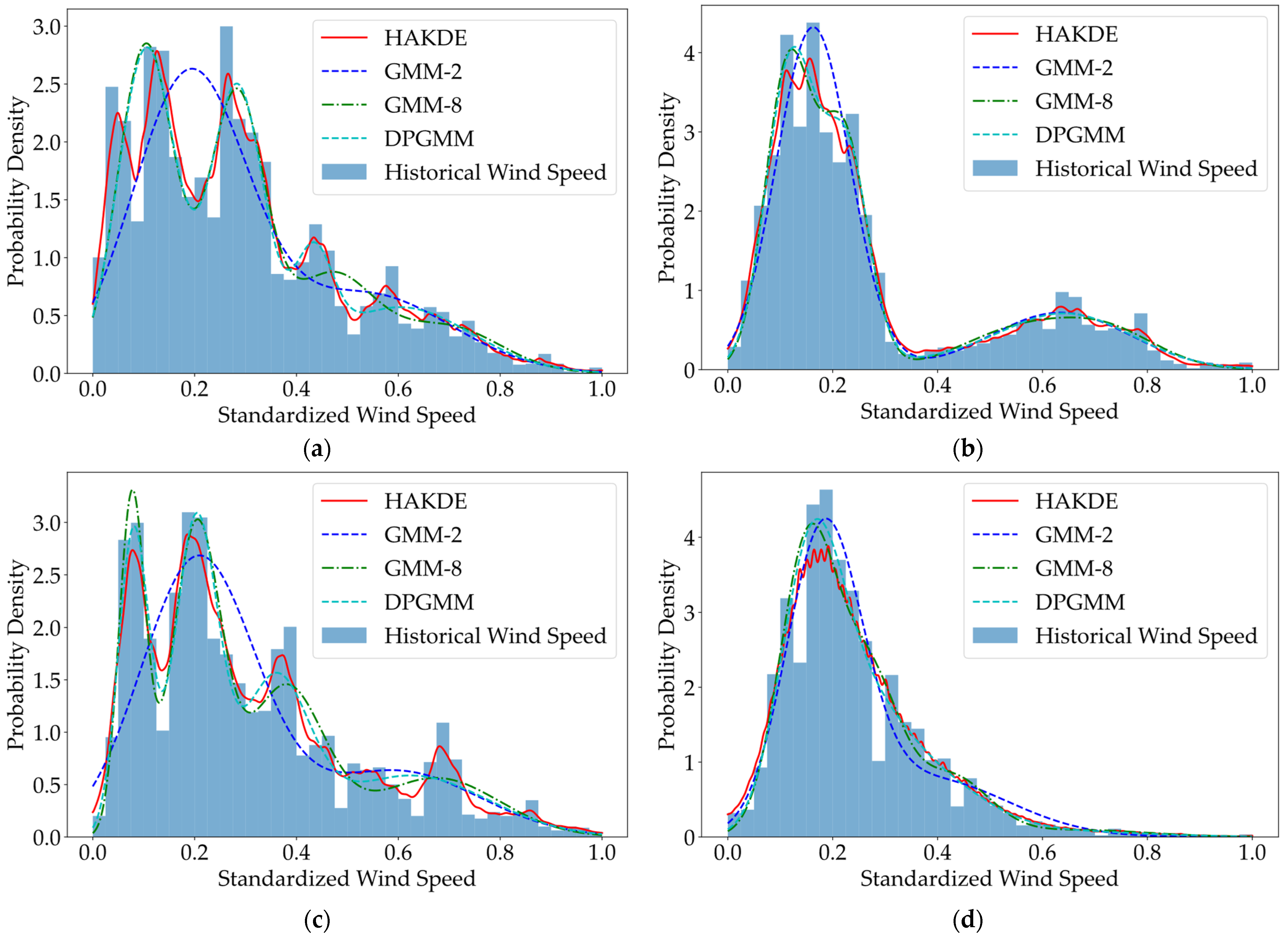
Tropical depression and tropical storm categories are characterized by relatively low maximum sustained winds, typically below 24 m/s. Their wind speed distributions are comparatively gentle, with variability higher than under normal weather conditions but generally remaining within the normal operating range of wind turbines. The probability distribution of wind speed often exhibits a unimodal shape, similar to the Weibull distribution for conventional wind speed, but with increased variance.
Regarding the severe tropical storm and typhoon, wind speeds intensify significantly, approximately between 24.3 and 41.4 m/s, accompanied by steeper wind speed gradients between the outer circulation and the core region. Wind speed time series demonstrate stronger non-stationarity and intermittent abrupt changes. While wind turbines can still operate at rated power within this range, frequent wind fluctuations cause drastic output variations. The output probability distribution begins to show slight skewness or even nascent multi-modal tendencies, reflecting the sudden wind shifts associated with the eyewall transition zone.
Severe typhoon and super typhoon, with wind speeds usually exceeding 49.4 m/s, feature complex structures with well-defined eyewalls, leading to highly non-uniform and sharply sheared wind speeds spatially. Temporally, wind speeds may undergo extreme fluctuations characterized by a sharp rise, a plateau during the eyewall passage, a brief calm period within the eye, and subsequent sharp rise. This characteristic induces extreme scenarios in wind farm output: an emergency shutdown (output plunging to zero) due to over-speed, potentially followed by a brief power recovery if the eye passes over, and then another shutdown. These intricate physical phenomena cause the probability distribution of wind speed to be pronouncedly non-Gaussian and multi-modal, with one mode corresponding to the zero-power state post-shutdown, and another mode (or other modes) associated with rated or partial power operation. Traditional parametric distribution models often struggle to accurately capture such complex distribution shapes.
Therefore, developing flexible, non-parametric probability models capable of adapting to distributions from unimodal to highly complex multi-modal forms is crucial for accurately assessing power system risk under typhoon disasters.
2.2. Principles of the HAKDE Method
To accurately capture the non-Gaussian, multi-modal probability distribution of wind speed under typhoon conditions, this study proposes a HAKDE method. KDE is a non-parametric density estimation tool that constructs a smooth PDF estimate by superimposing kernel functions centered on sample points. Given a set of independent and identically distributed samples
, the standard KDE estimate of the PDF
at point
is:
where
is the kernel function (typically the Gaussian kernel),
is the sample size, and
is the bandwidth parameter. The selection of
is critical to KDE performance: a bandwidth that is too small leads to an undersmoothed estimate characterized by high variance and sharp oscillations, while an excessively large bandwidth causes oversmoothing, which can obscure the underlying structure of the true distribution.
Classical KDE using a fixed global bandwidth struggles to achieve satisfactory accuracy across all regions when applied to typhoon wind speed data, which exhibits drastically variable variance and contains both high-density and low-density regions. Advanced KDE typically incorporate weighting factors or adaptive bandwidths to improve estimation accuracy. However, each approach has inherent limitations: weighting factors can adjust the contributions of different regions but lack the flexibility of bandwidth adaptation, while adaptive bandwidths can enhance estimation in boundary and sparse regions but may lead to overfitting in high-density areas, where excessively small bandwidths may overfit local fluctuations.
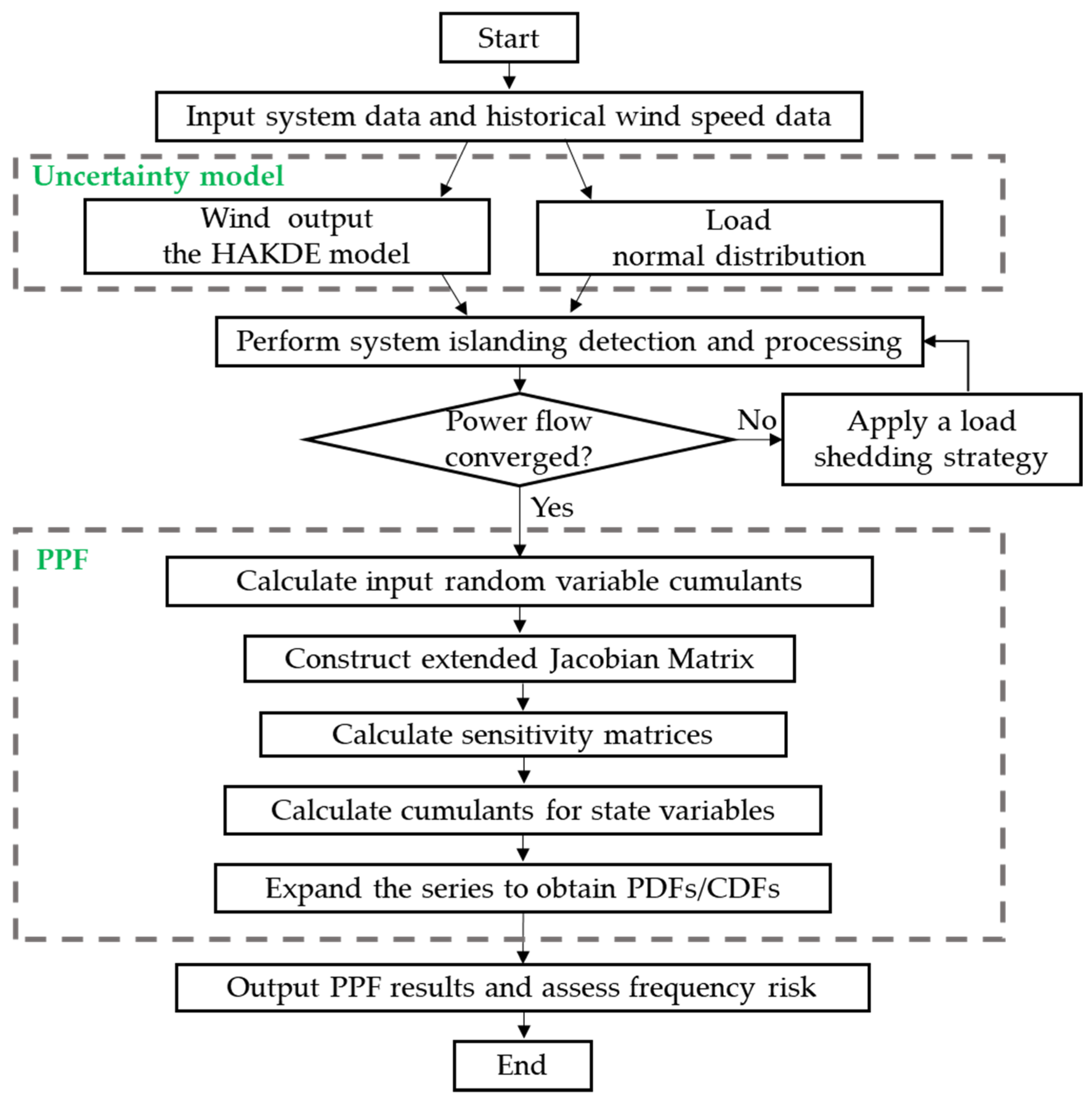
To address these, the proposed HAKDE method integrates an adaptive bandwidth mechanism and a hybrid strategy, significantly enhancing its adaptability to the local characteristics of the data. The proposed HAKDE method begins by constructing an initial smooth density estimate
using a global bandwidth
, typically determined via rule-of-thumb methods such as Silverman’s rule [
35]. For one-dimensional data, it is computed as follows:
where
is the sample standard deviation, and
is the sample size.
To account for differences in wind speed distributions under various meteorological conditions, a bandwidth adjustment factor
is introduced to modify the bandwidth:
where
is for normal wind data with small variance to increase smoothness, and
is for typhoon data with larger variance and complex structures to enhance sensitivity to local variations.
Subsequently, the proposed HAKDE method incorporates locally adaptive bandwidths to meticulously capture distributional details. The Abramson method [
36] is one of the classical approaches for this purpose. Based on an initial bandwidth
and a given pilot density estimate
, the locally adaptive bandwidth is defined as follows:
where
is a sensitivity parameter,
is the geometric mean of the sample densities,
. This approach employs larger bandwidths in sparse data regions (e.g., clusters of zero-power points during typhoons) to avoid noisy estimates and smaller bandwidths in dense regions (e.g., clusters of rated-power points) to resolve fine structure, yielding the local density estimate
.
However, relying solely on the local estimate can make it susceptible to errors in the initial pilot density and data noise. To mitigate this, this study proposes a hybrid strategy based on gradient consistency. The gradient consistency weighting is theoretically motivated by the bias-variance trade-off principle [
35]. In KDE, the global estimate serves as a high-bias, low-variance reference, while the local estimate acts as a low-bias, high-variance refinement. The weighting strategy utilizes the consistency of gradients as a proxy for structural stability to optimize the local mean squared error (MSE):
This strategy evaluates the consistency between the global estimate and the local estimate at point by comparing their gradients (in 1D) or gradient directions (in multi-D).
In one-dimensional space, a stability index
is defined as follows:
where
and
represent the smoothing gradients of the global and local estimates at location
, respectively. A larger value indicates stronger consistency in the local trend between the two estimates. Based on this metric, the weights are determined as follows:
where
is a very small positive number,
denotes the weight assigned to the local density estimate, and
represents the weight assigned to the global density estimate. The final HAKDE is given by:
This fusion ensures that greater trust is placed in the sensitive local model in regions where the estimates agree highly, while the stability of the global model is retained in regions of significant discrepancy, thus achieving an optimal balance between smoothness and sensitivity overall.
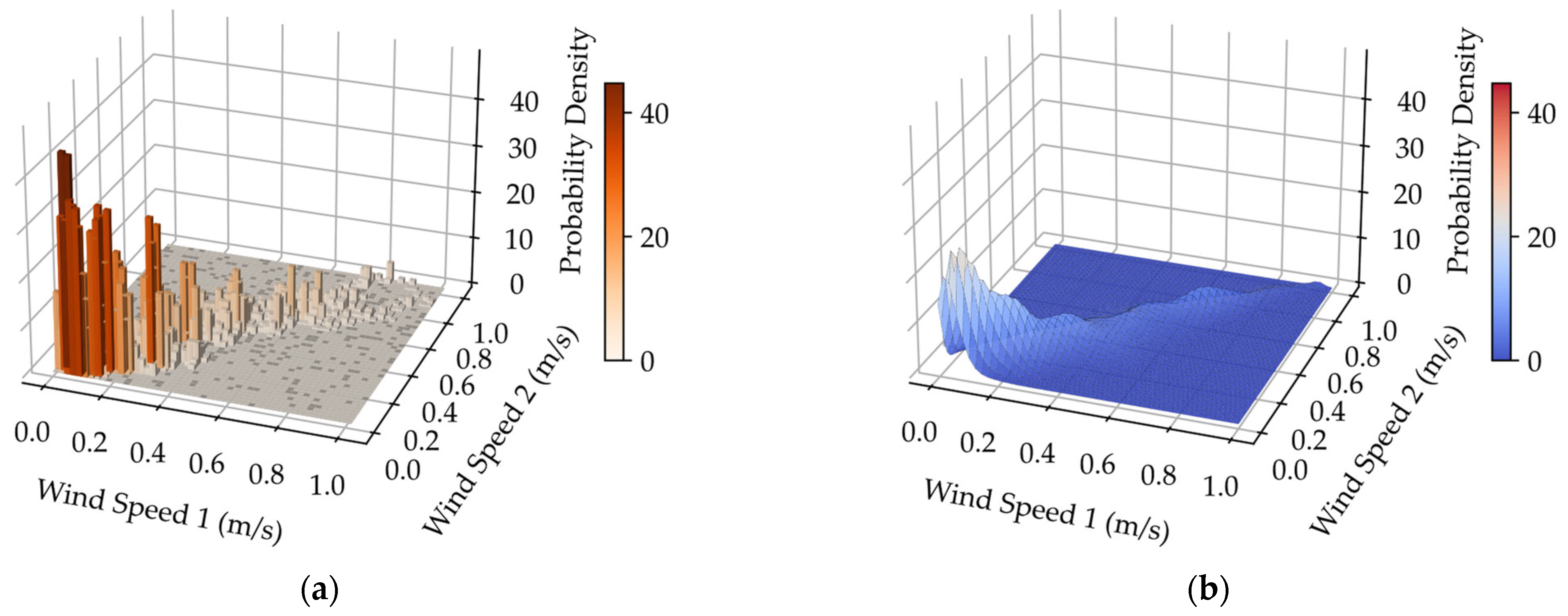
The method can be naturally extended to multi-dimensional cases (e.g., considering the outputs from multiple wind farms simultaneously). For d-dimensional data, the bandwidth becomes a bandwidth matrix
, and a multivariate Gaussian kernel is typically used [
37]:
where
is a
symmetric positive definite bandwidth matrix. The local bandwidth matrix
in HAKDE method can be expressed as:
where
is a local scaling factor,
denotes the initial bandwidth matrix, and
serves as a regularization term to ensure numerical stability.
The core of the hybrid strategy remains evaluating consistency via the cosine of the angle between multidimensional gradient vectors:
where
is the gradient vector of the local density estimate at point
,
is a small positive constant ensuring numerical stability.
To guarantee non-negative weighting, we take:
In summary, the key advantage of the HAKDE method lies in its ability to model complex distributions without assuming specific distributional forms. By employing dual adaptive mechanisms (bandwidth adaptation and estimate fusion adaptation), the HAKDE method effectively captures the complex, multi-modal, and heavy-tailed probability distributions of wind speed under extreme events such as typhoons, providing a solid foundation for the subsequent high-precision PPF calculations.