Article

Investigation of CH4 Desorption–Diffusion Properties Under the Stepwise Wetting–Corrosion Effects of Hydrochloric Acid and Cocamidopropyl Betaine


1
State Key Laboratory of Coal Mine Disaster Dynamics and Control, Chongqing University, Chongqing 400044, China
2
School of Resources and Safety Engineering, Chongqing University, Chongqing 400044, China
*
Authors to whom correspondence should be addressed.
Energies 2025, 18(23), 6336; https://doi.org/10.3390/en18236336
Submission received: 2 October 2025 / Revised: 28 November 2025 / Accepted: 30 November 2025 / Published: 2 December 2025

Abstract

Coalbed methane (CBM) is an unconventional natural gas primarily stored in coal seams. The efficient recovery of CBM mainly depends on the desorption and diffusion process. In this study, a stepwise wetting–corrosion method employing a combination of surfactant (cocamidopropyl betaine) and acid (hydrochloric acid) was proposed to promote the desorption and diffusion of CBM. The microstructure and CH4 desorption–diffusion characteristics of the coal samples treated with the stepwise wetting–corrosion method were evaluated at varying concentrations of cocamidopropyl betaine (CAB) and hydrochloric acid (HCl). The relationship between wettability, specific surface area, and CH4 adsorption–desorption was identified, and the effect of pore connectivity on CH4 diffusion was investigated. The results indicate that the stepwise wetting–corrosion treatment eliminated mineral blockages within the coal matrix, thereby clearing the microporous pathways and improving the overall pore connectivity for methane transport enhancement. By preventing the contact between the surfactant and the acid, the breakdown of surfactant molecules was inhibited. This enabled homogeneous acidizing throughout the coal matrix, which reduced the specific surface area and increased the methane desorption rate by 13.99%. In addition, a significant reduction in the mass transfer Biot number and a notable enhancement in methane diffusivity were obtained. Therefore, the stepwise wetting–corrosion method combining CAB and HCl shows a potential to increase gas production and will provide an alternative to traditional high-energy fracturing techniques, contributing to efficient and sustainable CBM extraction.

1. Introduction

Coalbed methane (CBM) is an unconventional natural gas primarily stored in coal seams or reservoirs. However, most CBM reservoirs are characterized by low gas saturation, low permeability, and high adsorption capacity, which pose significant challenges for commercial production [1,2]. These characteristics make it difficult to extract methane efficiently. A large number of CBM wells yield less than 10,000 m3/d, far below the threshold for economic viability in many cases [3,4]. To address these challenges, various technologies have been proposed and employed to promote CBM recovery.
Hydraulic fracturing is one method that is widely used to enhance the reservoir permeability by creating fractures in coal seams [5]. However, the use of high-pressure fluid can potentially damage the structure of coal seams, alter the accumulation and distribution of CBM, and undermine the sustainability and stability of production [6,7].The gas injection methods, such as displacing CH4 with CO2 or N2, have also been explored to enhance methane desorption and displacement from the coal matrix [8,9]. The thermal stimulation methods aim to reduce gas adsorption capacity by elevating temperature, while the microbial enhancement techniques utilize specialized microorganisms to alter the coal structure and promote methane release [10,11]. However, these approaches are facing significant limitations, including high operational costs, environmental concerns, limited effectiveness in certain geological conditions, and technical complexity [12,13]. These challenges hinder the widespread adoption of such methods, emphasizing the need for further research to overcome the barriers and improve the efficiency of CBM production.
Acid fracturing has been recognized as an effective alternative for CBM production, as it can reduce fracturing pressure, dissolve minerals, and improve both fracture connectivity and reservoir permeability [14,15]. However, uncontrolled corrosion may increase the surface roughness and specific surface area of the coals, creating additional sites for CH4 adsorption and increasing its overall adsorption capacity [16,17]. The acidic solutions also encounter challenges such as poor flowability and high migration resistance, limiting their ability to fully access pores and fractures. As a result, the effectiveness of the acid-based reservoir modification is limited [18,19].
The wetting–corrosion composite method provides a solution to address these problems by improving the desorption and diffusion of CBM in coal seams. It combines surfactants with acidic solutions to alleviate reservoir damage, reduce frictional forces, and improve fluid properties [20,21]. Research shows that the coal treated with this method has smoother surfaces and better pore connectivity than the coal only treated with acid or surfactants [22,23]. This treatment increases CH4 desorption rates and decreases residual adsorption compared to the use of water or single-component solutions [24,25]. Increasing the acidity and fluidity of the composite solution can further improve CH4 desorption and reduce residual adsorption [26,27]. Despite these benefits, the surfactants can react with inorganic acids, consuming H+ and destroying surfactant molecules, reducing the overall effectiveness of the treatment [28,29]. To overcome these challenges, some methods are proposed, such as using acid-resistant surfactants, applying microencapsulation technologies, or adding buffering agents to control acidity [30,31]. However, these methods only help protect surfactant degradation and cannot completely solve the problem [32,33].
In this study, a stepwise wetting–corrosion method utilizing cocamidopropyl betaine (CAB) and hydrochloric acid (HCl) is proposed to prevent the reaction between surfactants and inorganic acids. The process begins with injecting a surfactant solution to enhance fluid flow and stabilize the coal structure. Subsequently, the surfactant solution is removed and replaced with an acidic solution. This sequence enables H+ to penetrate the pore structure and react with subsurface minerals. However, the performance of the stepwise method has not yet been well understood. Few studies have explored the effects of this method on wettability, corrosion, and mineral composition. Additionally, the impacts of the stepwise method on the pore structure and its role in CH4 adsorption, desorption, and diffusion require further investigation. Understanding the effects of these factors is essential for improving the stepwise method and optimizing the effectiveness of the wetting–corrosion treatments. This study aims to investigate the relationship between wettability, specific surface area, and CH4 adsorption–desorption. It also examines how the pore connectivity affects CH4 diffusion. The findings will offer insights into the improvement of CBM desorption and the optimization of the stepwise wetting–corrosion method.

2. Experimental Section

2.1. Materials

The coal samples used in this study were collected from Sandaogou, Ordos, China, at a depth of 250 m, with a porosity of 2.05% and a permeability of 0.32 mD. Table 1 lists the ultimate and proximate analyses of the coal [22]. As seen, the coal contains 30.06% volatile matter and 75.34% carbon, indicating that it has a low degree of metamorphism and is classified as fat coal. Prior to the experiments, the coal was ground, sieved, and dried at 105 °C for 24 h. Samples in the 10–20 mesh range were prepared for adsorption–desorption experiments, 60–80 mesh for low-temperature liquid nitrogen experiments, and 200–300 mesh for X-ray diffraction (XRD) analysis.
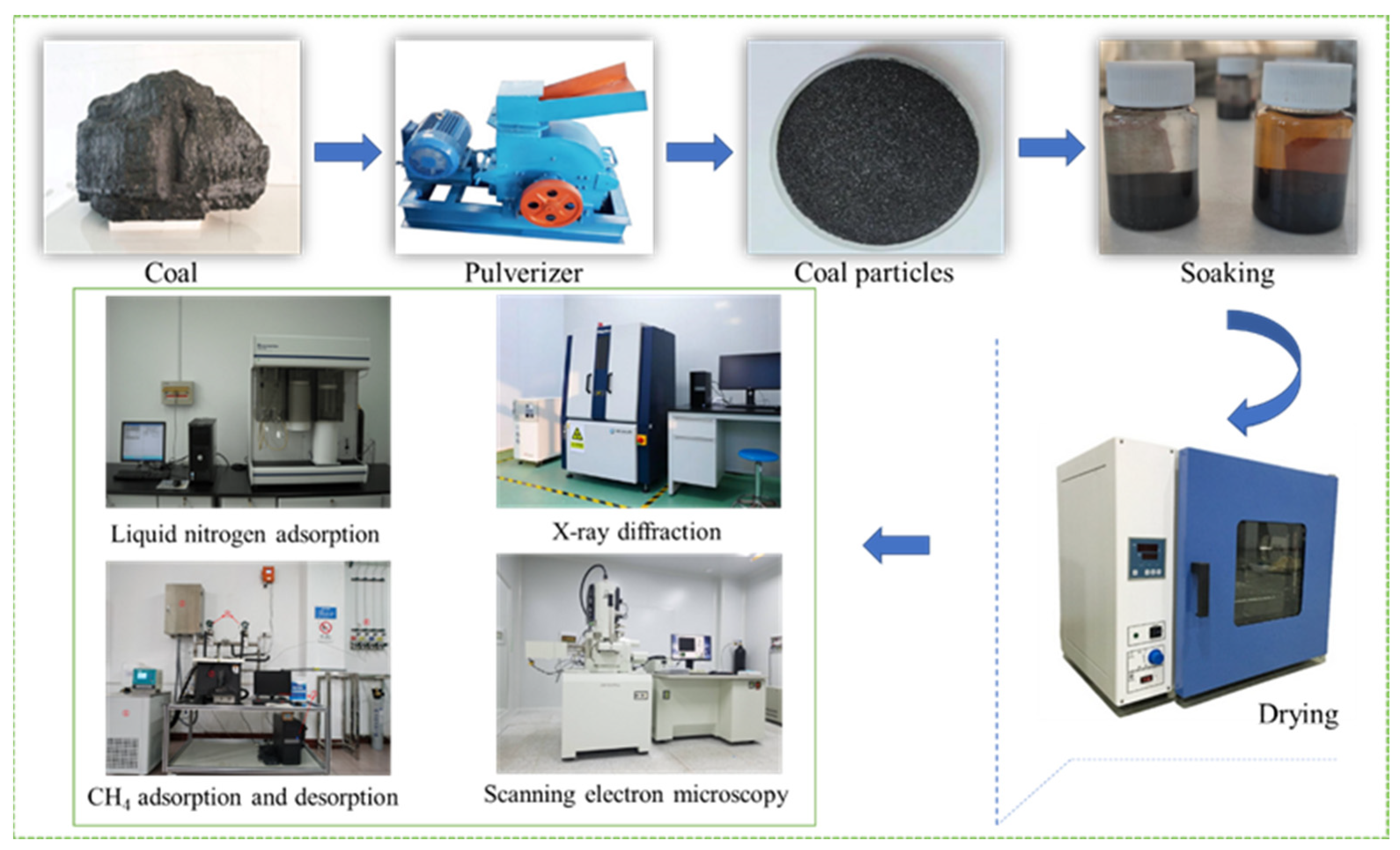
As shown in Table 2, coal samples were treated with the solutions of cocamidopropyl betaine (CAB) and hydrochloric acid (HCl). The concentration of HCl varied from 0.035 mol/L to 0.15 mol/L, while the CAB concentration ranged from 0.0005 mol/L to 0.002 mol/L. Figure 1 illustrates the experimental process [22]. The coal samples were treated according to one of the following three protocols: (1) soaking in HCl, (2) soaking in CAB, or (3) sequential soaking in CAB followed by HCl. All soaking steps maintained a coal-to-solution mass ratio of 1:3 at 30 °C for 24 h per solution. In the sequential method, after the initial CAB soak, the samples were drained for 2 h and then directly immersed in HCl to retain the pore liquid as diffusion channels, thereby enhancing dissolution. After their respective treatments, all samples were rinsed with water, immersed in distilled water for 2 h to remove residues, and finally dried at 105 °C for 48 h. The dried samples were used for XRD, SEM, low-temperature N2 adsorption, and CH4 adsorption–desorption tests, with each experiment repeated three times.

2.2. Experimental Methods

2.2.1. Mineral Components and Surface Morphology

The X-ray diffraction spectrum was obtained using D8 ADVANCE X-ray diffractometer produced by Bruker in Karlsruhe, Germany. The θ range was from 5° to 80°. XRD was used to characterize the mineral components of the coal. The microscopic images of the wetting–corrosion coal were captured and analyzed using Phenom XL G2 scanning electron microscope (manufactured by Phenom-World, a Thermo Fisher Scientific company, in Eindhoven, the Netherlands) at magnifications of 1250× and 10,000×.

2.2.2. Pore Structure

The N2 adsorption–desorption isotherms were measured at 77 K using ASAP 2020M surface area and micropore analyzer produced by Mack Instruments in Atlanta, Georgia, USA, with the relative pressures ranging from 0.01 to 0.95. The pore volume and pore size distribution were calculated using the BJH method, and the specific surface area was calculated using the BET method [34,35].

2.2.3. CH4 Adsorption and Desorption

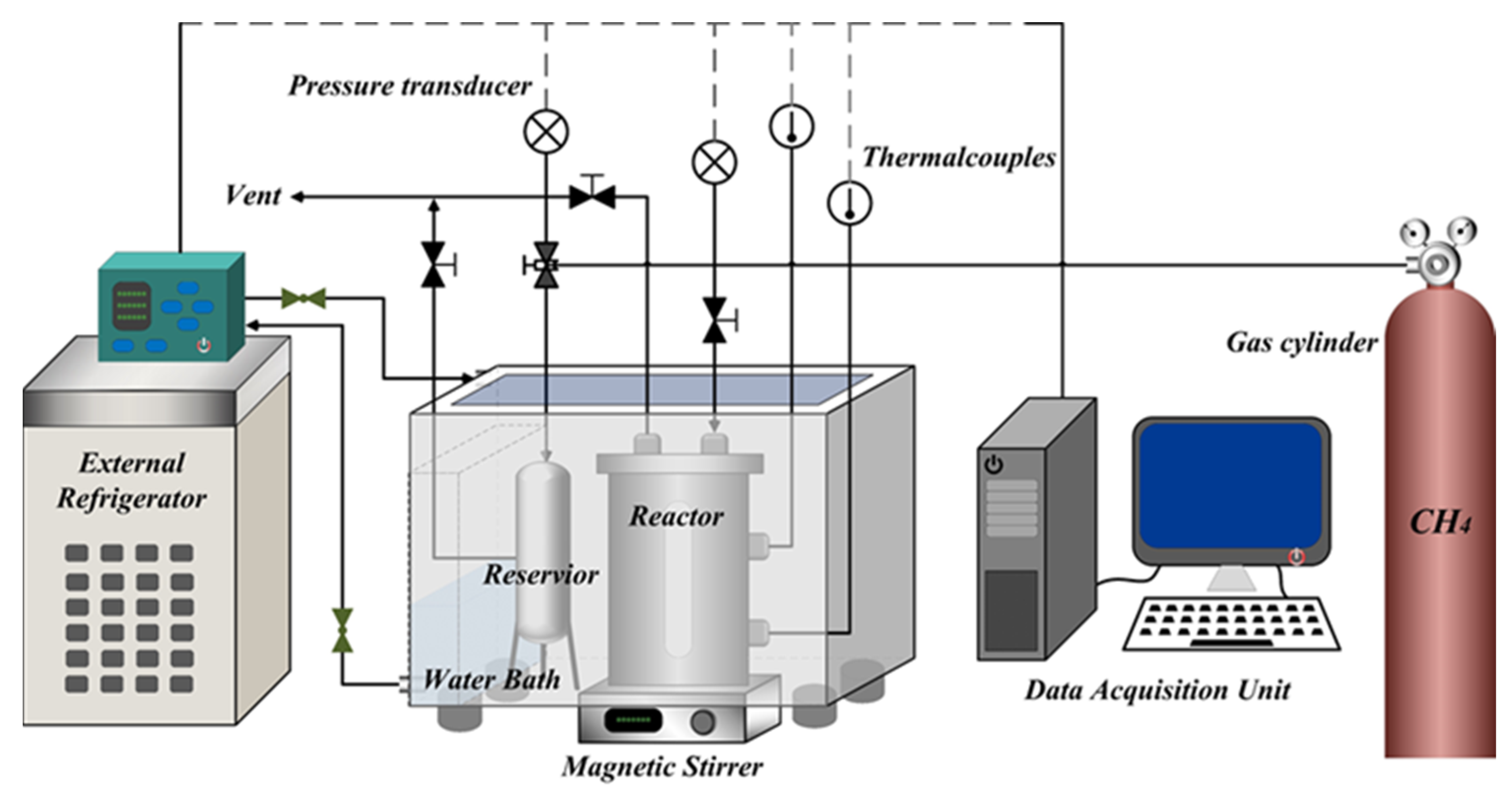
Figure 2 illustrates the experimental setup for CH4 adsorption and desorption experiments, which consists of gas tubes, a data acquisition system, a thermostatic water bath, and a high-pressure reactor [22]. The mass of the test sample was 60 g, and the water bath temperature was set at 30 °C. Prior to the experiments, the system was purged at least three times with CH4 to remove air. The adsorption and desorption process lasted for 8 h, with an adsorption pressure of 5 MPa and a desorption pressure of 0.1 MPa [36,37].

2.2.4. CH4 Diffusion Kinetic Parameters

CH4 diffusion in the coal is a process in which gas molecules move from the regions of high concentration to low concentration through the pores of different sizes, driven by the concentration gradient [38,39]. This process conforms to Fick’s first law of diffusion:
J = D C x
where C represents the concentration of the diffusing fluid, g/cm3; D represents the diffusion coefficient, m2/min; C x represents the gradient of CH4 concentration in the direction of diffusion; J represents the CH4 diffusion rate, g/(s·cm2).
When applying Fick’s first law of diffusion to a three-dimensional unsteady flow field, Fick’s second law can be derived:
C t = D ( 2 C x 2 + 2 C y 2 + 2 C z 2 )
where t is the CH4 diffusion time, s.
The diffusion of CH4 in coal particles is a non-steady-state process. Based on Fick’s second law, a mathematical model for the homogeneous spherical CH4 diffusion in coal particles is proposed:
C t = D ( 2 C r 2 + 2 r C r )
The kinetic model for CH4 diffusion in the coal, expressed in spherical coordinates, is given as follows:
{ C t = D 2 C r 2 + 2 r C r C r | r = 0 = 0 , r = 0 , t 0 C | t = 0 = C 0 = a b p 0 / 1 + b p 0 , 0 r r 0 , t = 0 D C r | r = r 0 = α c c f
where C 0 is the initial equilibrium concentration, kg/m3; r is the distance from a certain point to the center, m; r 0 is the initial radius, m; α is the mass transfer coefficient m/min; a and b are Langmuir constants; C f is free CH4, kg/m3.
It can be solved by separating variables, and the solution is:
Q t Q = 1 6 n = 1 ( β n cos β n sin β n ) 2 β n 2 ( β n 2 β n sin β n cos β n ) e β n 2 F 0
where F 0 is the mass transfer Fourier series, F 0 = D t / r 0 2 ; Q is limit CH4 desorption amount; Q t is the CH4 desorption amount at time t. When F 0 > 0 , it is a rapidly converging series, so the first term is sufficient for engineering accuracy. Therefore, Equation (6) can be rewritten as:
1 Q t Q = 6 ( β 1 cos β 1 sin β 1 ) 2 β 1 2 ( β 1 2 β 1 sin β 1 cos β 1 ) e β 1 2 F 0
Taking the logarithm yields:
ln 1 Q t / Q = λ t + ln A
A = 6 ( β 1 cos β 1 sin β 1 ) 2 β 1 2 ( β 1 2 β 1 sin β 1 cos β 1 )
λ = β 1 2 r 0 2 D

3. Results and Discussion

3.1. The Wetting–Corrosion Effects on Mineral Composition and Content

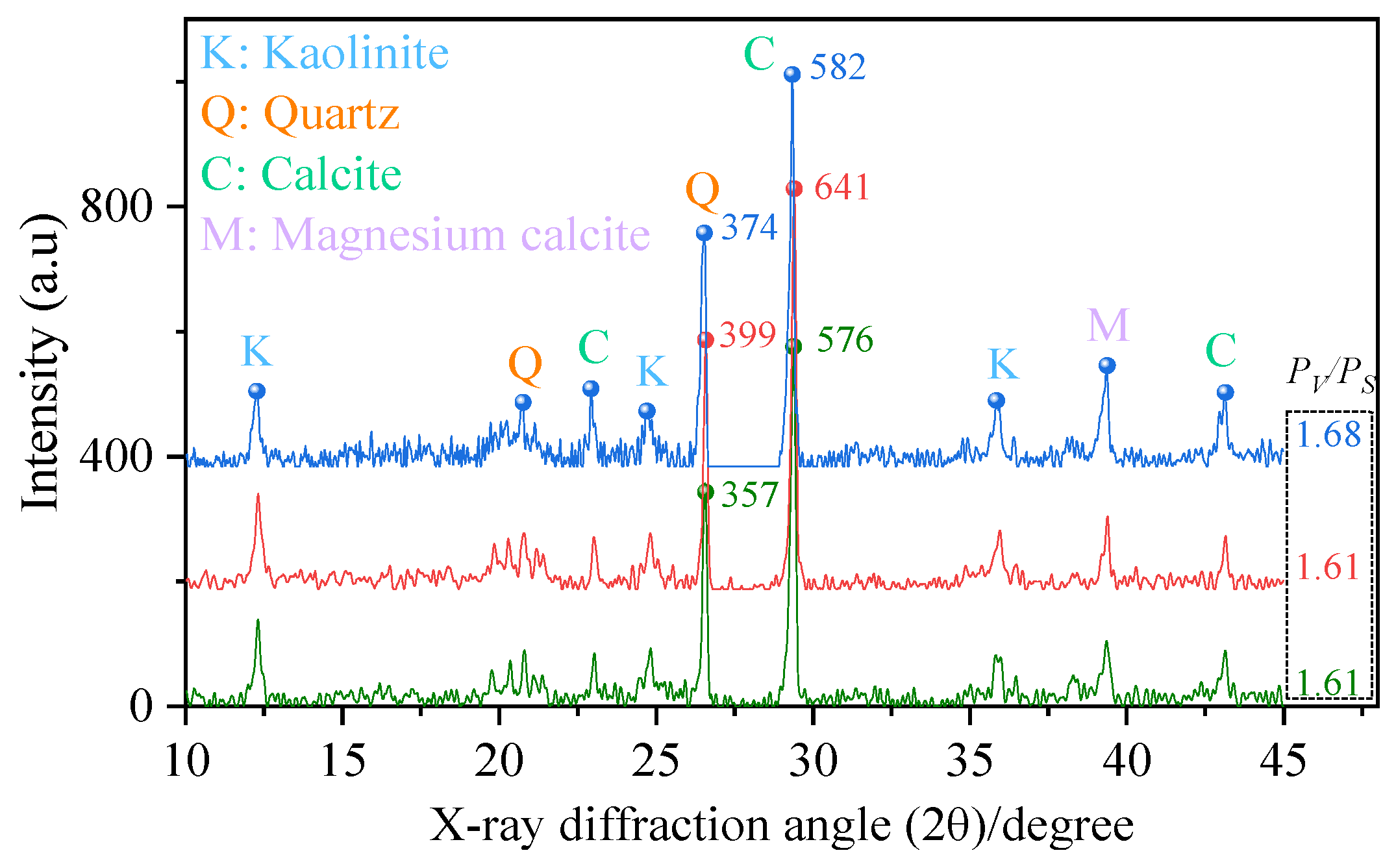
Figure 3 shows the XRD spectra of three coal samples soaked in water for 48 h. The intensity of the calcite peak at 29.4° is 357, 399, and 374, corresponding to the green, red, and blue lines, and the intensity of the quartz peak at 26.5° is 576, 641, and 582, respectively. The variation in the diffraction peak intensities for calcite, quartz, and kaolinite is due to the differing amounts of each sample. Notably, the relative peak intensities remain consistent across the samples. For example, the intensity ratios of the calcite peak at 29.4° to the quartz peak at 26.5° are 1.61, 1.61, and 1.68. Since neither HCl nor CAB reacts with quartz, the quartz peak at 26.5° is used as a standard peak, while the calcite peak at 29.4° is treated as a variable peak. The ratio of the variable peak to the standard peak (PV/PS) reflects the change in mineral content.
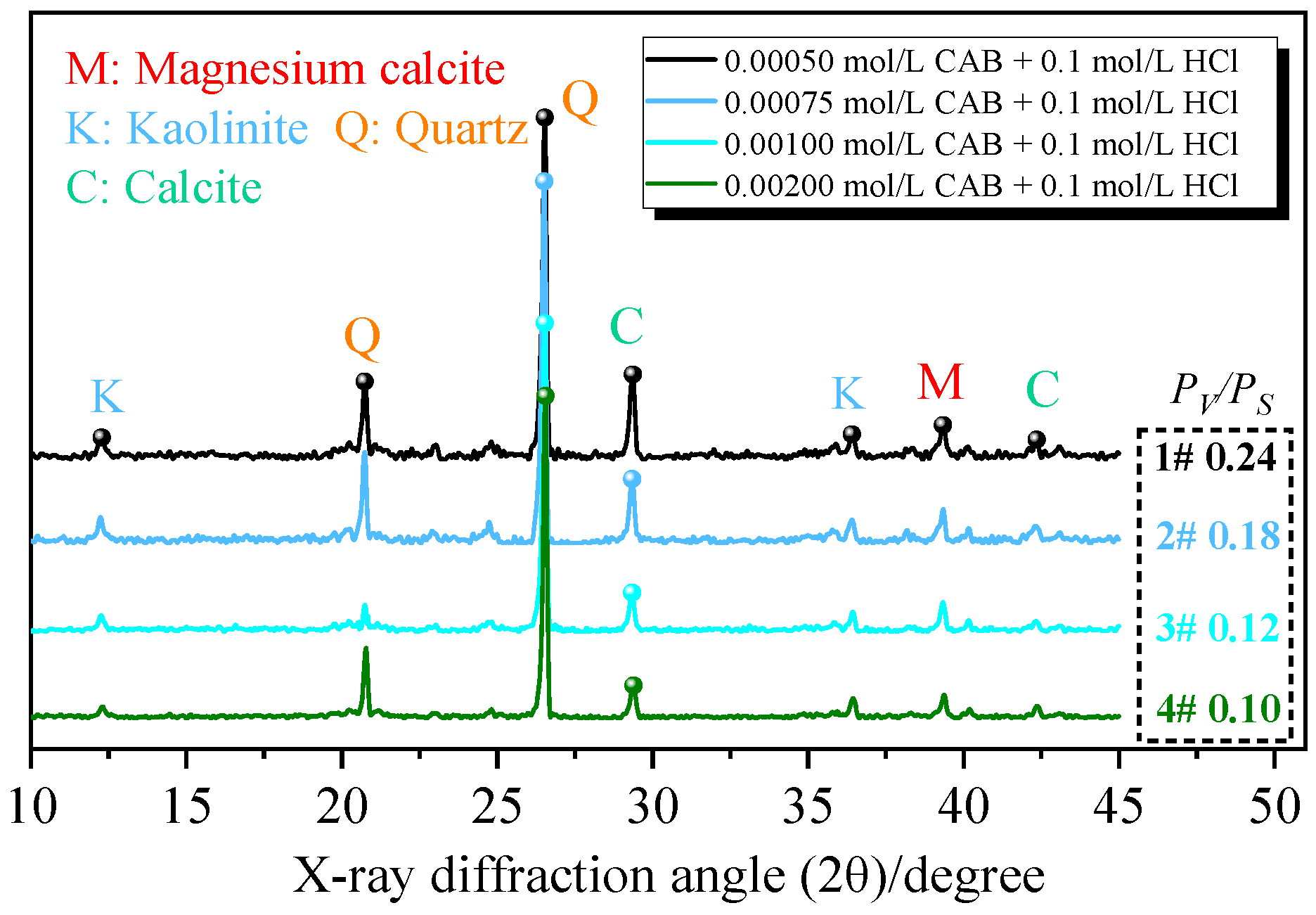
Figure 4 illustrates the effect of CAB on the variation in mineral composition of the coal, with the samples undergoing stepwise treatment. As shown in Figure 4, the PV/PS ratio of the 1# sample is 0.24, indicating a significant reduction of 85.09% compared to the water-treated coal. This significant decrease is attributed to the reaction between calcite and kaolinite with H+, resulting in the production of H2O, CO2, and water-soluble substances. As the CAB concentration increases, the PV/PS ratio continues to decrease. When the CAB concentration reaches 0.002 mol/L, the PV/PS ratio drops to 0.10. Moreover, the intensity ratios of the calcite peaks (22.9° and 43.2°), kaolinite peak (36.4°), and magnesium calcite peak (39.3°) relative to the quartz peak (26.5°) exhibit a notable reduction. This observation suggests that as the fluidity of the solution increases, both the range and effectiveness of corrosion are enhanced, resulting in a reduction in the PV/PS ratio. In contrast, for the composite method, when the solution concentration is kept the same as that used for samples 1#, 2#, 3#, and 4#, the PV/PS ratios of the coal are 0.36, 0.21, 0.18 and 0.16, which are 14.29–37.5% higher than those of coal treated by the stepwise method [40]. This disparity arises because the stepwise method eliminates the direct contact between CAB and HCl and prevents the deactivation of surfactant molecules. Consequently, the wetting effect of CAB is effectively harnessed, facilitating the infiltration of the solution into micropores and mesopores, thus expanding the range of corrosion.
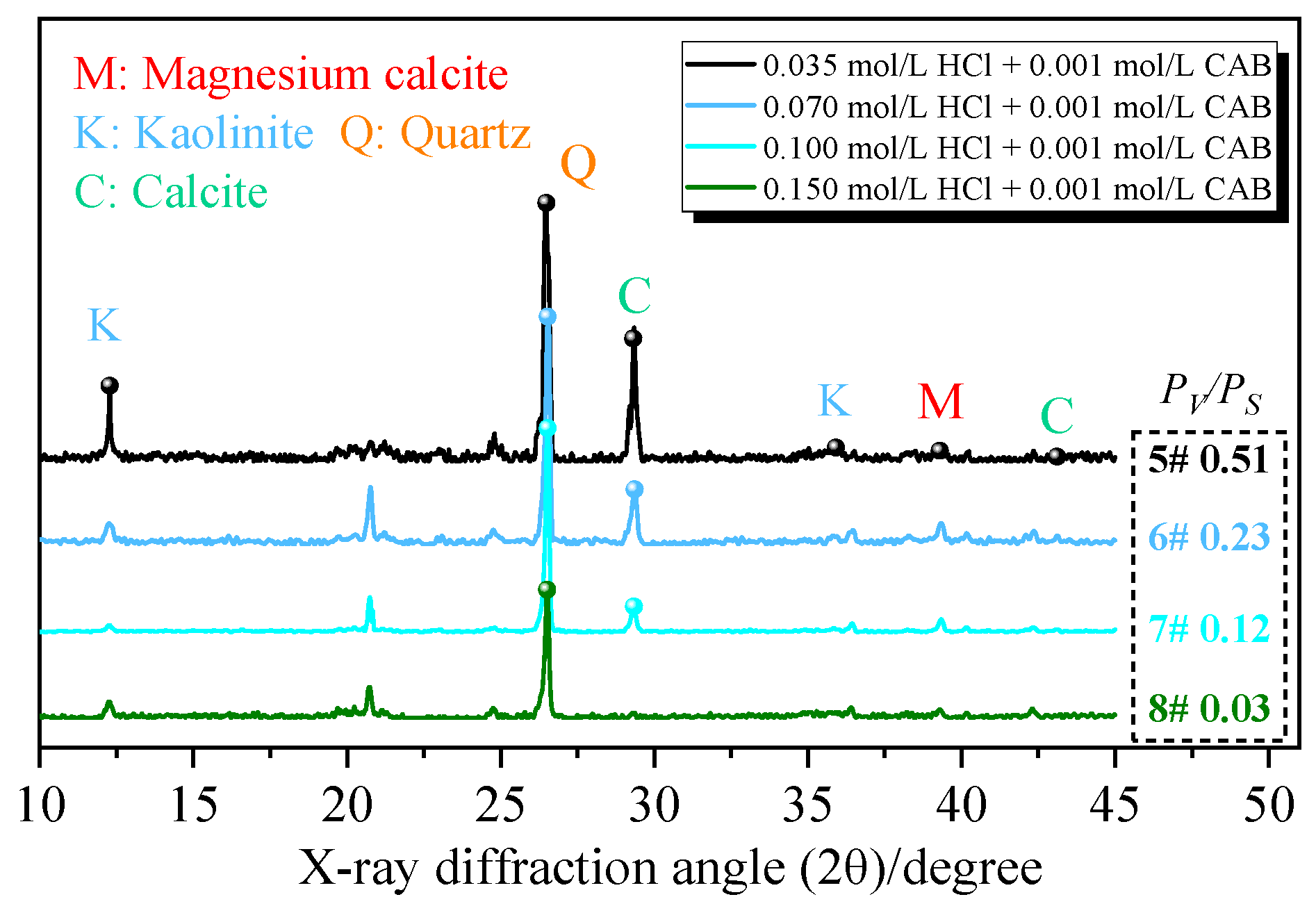
Figure 5 illustrates the effect of HCl on the mineral composition of the coal. The decrease in the intensity ratios of the calcite peaks (22.9° and 43.2°), kaolinite peak (36.4°), and magnesium calcite peak (39.3°) relative to the quartz peak (26.5°) with increasing H+ concentration indicates a stronger reaction between the inorganic acid and the mineral components. As a result, the increase in pore size and pore volume leads to the connectivity of previously mineral-blocked pores with adjacent ones. Additionally, the wetting–corrosion effect is more pronounced in the stepwise method than in the composite method at equivalent H+ concentrations. For example, at an H+ concentration of 0.035 mol/L, the PV/PS ratios for coal treated with the composite and stepwise methods are 0.69 and 0.51, respectively. This substantial difference is likely due to the inhibition of surfactant activity in acidic environments, which leads to decreased fluidity of the solution.
The mechanistic superiority of the stepwise treatment lies in its ability to fundamentally overcome a critical limitation of the conventional composite methods by physically separating the wetting and corrosion stages. This meticulously designed sequencing can prevent detrimental interactions between the acid and surfactant molecules. This is the main cause for the suboptimal performance of the combined methods. Consequently, the surfactant retains its full wetting capability, enabling more uniform penetration of the acid solution into the coal matrix. This leads to enhanced mineral dissolution efficiency (particularly calcite and dolomite, evidenced by reduced key mineral peak ratios) and more effective removal of pore-blocking residues compared to the composite treatments. This improved cleaning is identified as the primary driver for permeability and pore connectivity enhancement.

3.2. The Wetting–Corrosion Effects on Surface Morphology and Elemental Composition

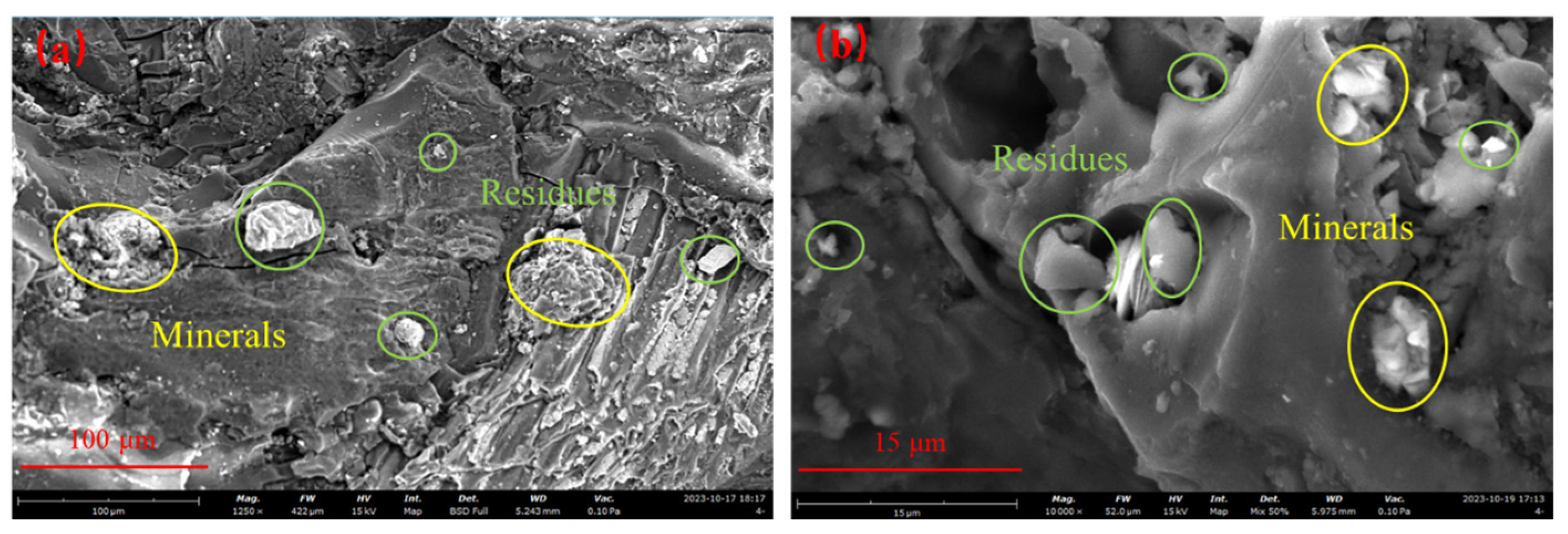
Figure 6 displays the scanning electron microscope (SEM) images of the coal treated with water. Figure 6a and Figure 6b are magnified at 1250× and 10,000×, respectively. The green circles highlight the mobile residues scattered on the coal surface, including both coal and minerals, while the yellow circles indicate the minerals embedded in the coal surface. As shown in Figure 6, a significant amount of minerals and residues are dispersed and embedded on the pore surfaces of the coal, remaining intact without being stripped or corroded by water. These minerals and residues affect the permeability, porosity, and pore connectivity of the coal, thus impeding CH4 desorption and diffusion. An energy-dispersive spectrometer (EDS) was utilized to quantitatively characterize the elemental composition of the coal, with the results reported in Table 3 (excluding C, N, and O elements). The symbol “N/A” indicates that this element was not detected. As seen in Table 3, the primary elements present in the coal include silicon (Si), sodium (Na), magnesium (Mg), aluminum (Al), sulfur (S), potassium (K), calcium (Ca), and iron (Fe). Si is the most abundant element in minerals, primarily sourced from quartz. Na, Mg, Al, S, K, Ca, and Fe originate from calcite, kaolinite, pyrite, and dolomite.
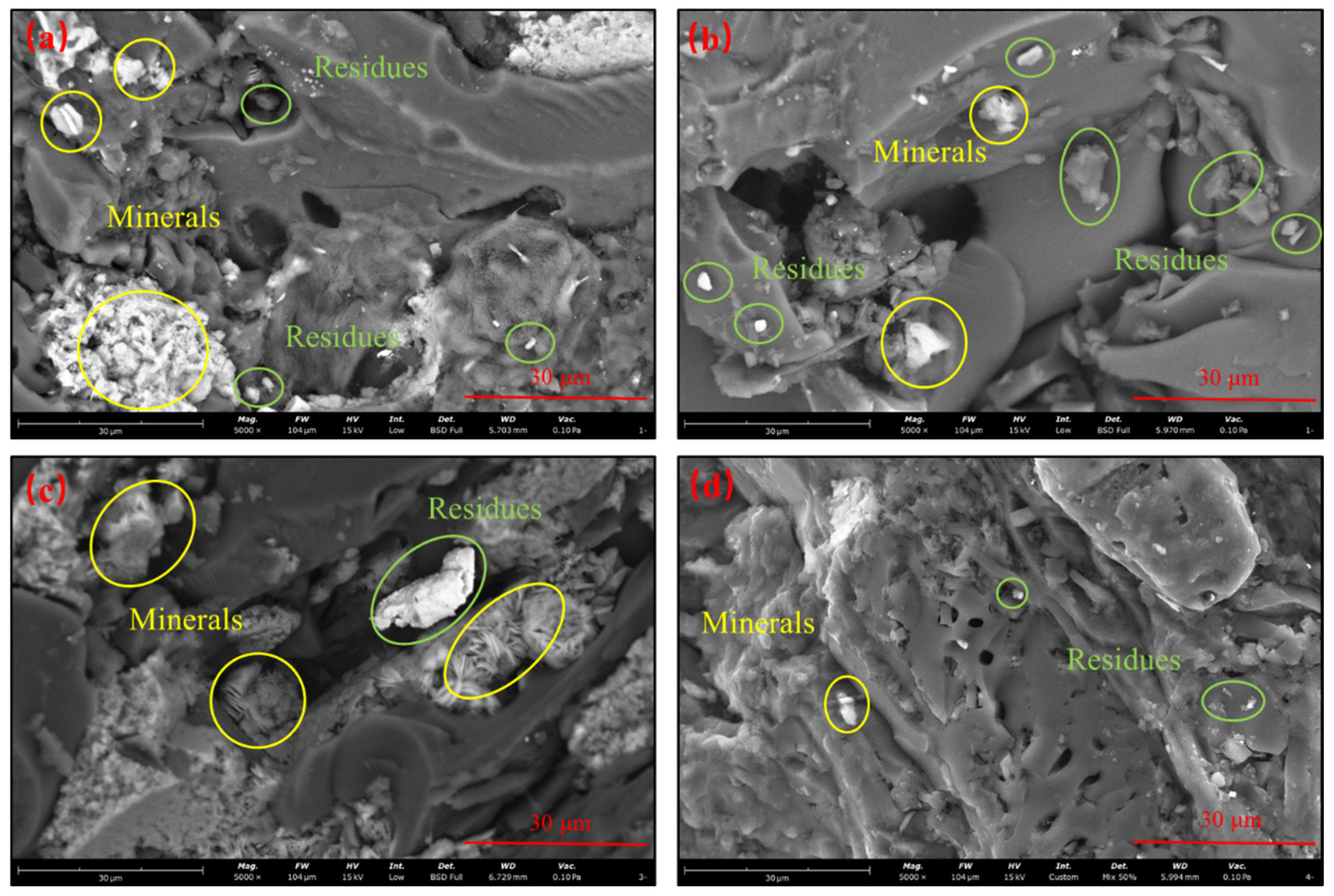
Figure 7 displays the scanning electron microscope (SEM) images of the coals subjected to wetting–corrosion, and Table 4 presents the elemental distribution and percentage of the coal samples. As shown in Figure 7a, the minerals and residues dispersed on the surface or within the pores of the coal treated with CAB are almost completely removed. This enhanced the pore and fracture connectivity, thus promoting the diffusion and migration of methane. This phenomenon can be attributed to CAB’s ability to increase solution fluidity and reduce surface tension, which facilitates the separation of minerals from the coal matrix and promotes the dispersion of residues into the solution. According to Table 4, the primary elements observed in Figure 7a include Na, S, Ca, Al, Si, and Fe. The types of minerals, including calcite, kaolinite, pyrite, and dolomite, remain unchanged, indicating that no chemical reactions took place between the solution and the minerals.
The mechanism by which inorganic acid improves pore connectivity differs from that of surfactants. As shown in Figure 7b, a significant quantity of minerals and residues is dispersed and embedded on the surface and within the pores of the acid-corroded coal. In contrast, a notable feature of the HCl-treated coal compared to the water-treated sample is the absence of Na, Mg, and Ca elements. This indicates that the calcite and dolomite embedded within the coal matrix have been corroded. As shown in Figure 7c,d, after the treatment with the composite and stepwise methods, the coal surface exhibits no attachment of minerals or residues. Furthermore, the elements Na, Mg, and Ca have been removed, and both calcite and dolomite have been dissolved. These images show that both methods exert a more significant effect on pore connectivity compared to the single-component solutions. However, the XRD results indicate that the composite solution primarily interacted with the minerals attached to the coal surface or present in the macropores, while corrosion within the mesopores and micropores is insufficient. As a result, the pore structures of the coal treated with the composite and stepwise methods are significantly different, which will affect CH4 adsorption and desorption characteristics [41].

3.3. The Wetting–Corrosion Effect on the Specific Surface Area and Pore Roughness of the Coal

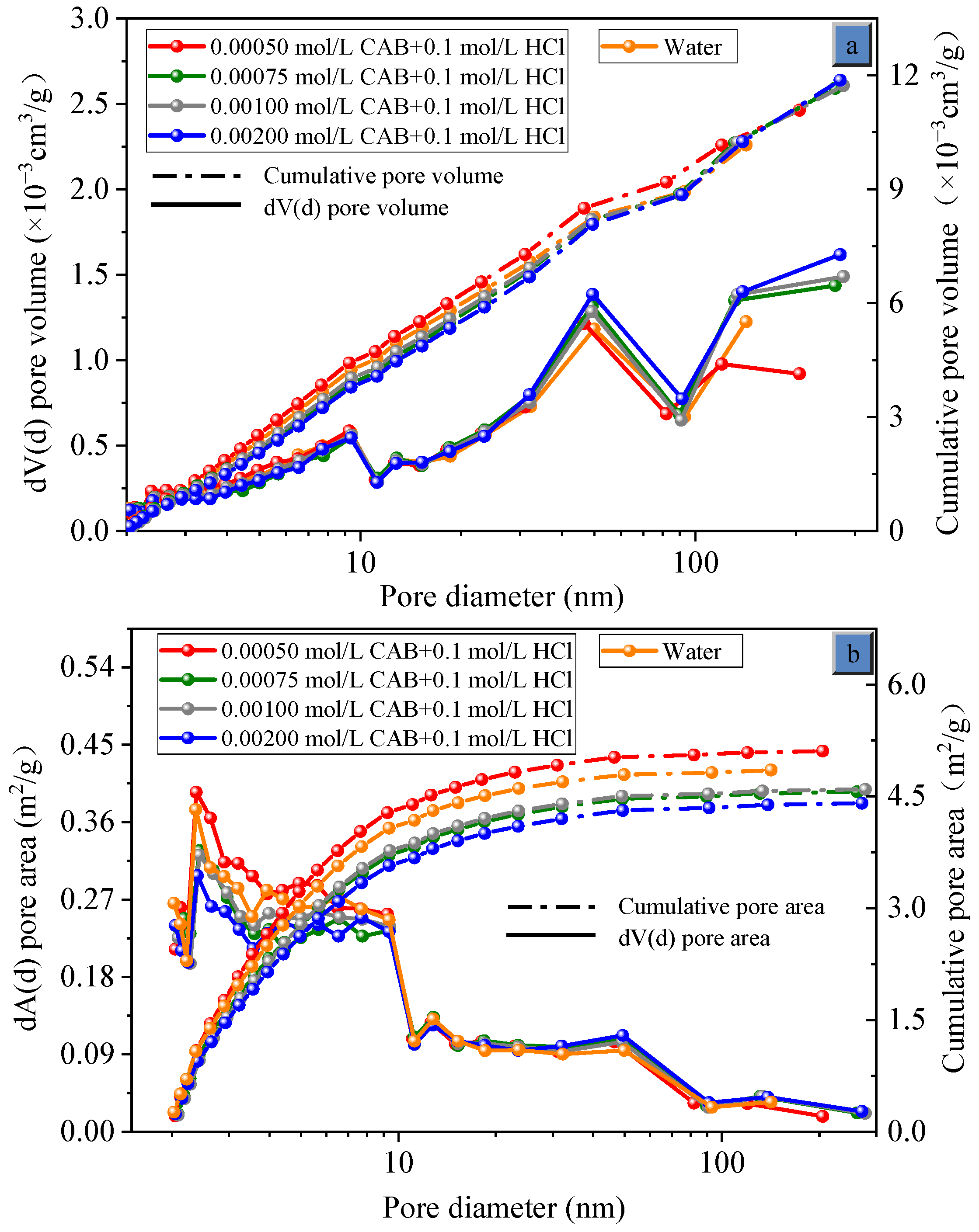
Figure 8 illustrates the impact of CAB concentration on the pore volume and specific surface area of coal using the stepwise method. The dotted line represents the cumulative pore volume and specific surface area, while the solid line indicates the contribution from pores within specific size ranges. Table 5 shows the results of the pore structure of the wetting–corrosion coal. The symbol Δ represents the percentage difference between the wetting–corrosion coal and the water-treated coal. As shown in Figure 8a, the pore volume of micropores and mesopores in the wetting–corrosion coal is generally lower than the water-treated coal, while the macropore volume shows a significant increase, with numerous newly formed pores appearing in the 200–300 nm range. This suggests that the removal of residues and the corrosion of minerals within the pores lead to pore enlargement, resulting in the transformation of micropores and mesopores into macropores. The total pore volume of the 1# sample is 11.08 × 10⁻³ cm3/g, showing an increase of 9.03% compared to the water-treated coal. As the CAB concentration increases, the enhanced fluidity of the solution promotes the conversion of micropores and mesopores into macropores, with the pore volume increasing to 11.86 × 10⁻³ cm3/g at a concentration of 0.002 mol/L. These structural changes contribute to the reduction in the specific surface area, as observed in Figure 8b. When the CAB concentration reaches 0.002 mol/L, the specific surface area decreases to 4.41 m2/g. Moreover, since macropores provide less specific surface area than micropores and mesopores, changes in macropore volume have a limited impact on the overall surface area. At constant CAB and HCl concentrations, the stepwise method results in a greater increase in pore volume and a more pronounced decrease in specific surface area compared to the composite method [40]. For example, at 0.002 mol/L CAB, the pore volume of the coal treated by the stepwise method is 1.46% higher than that treated by the composite method, and the specific surface area is reduced by 11.41%. This disparity arises from the lack of direct contact between CAB and HCl in the stepwise method, which prevents the deactivation of surfactant molecules, allowing for the full utilization of the CAB’s wettability.
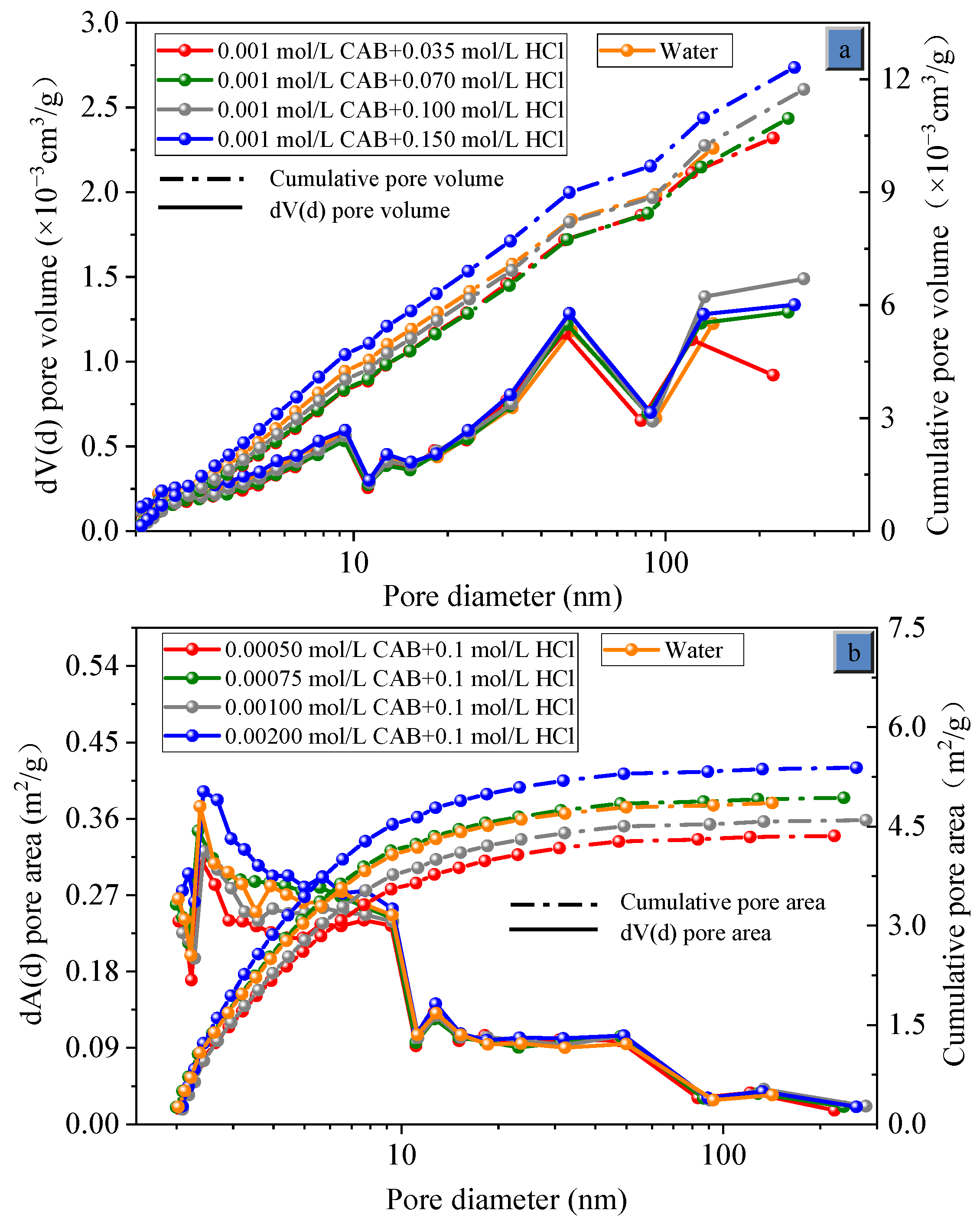
Figure 9 shows the impact of HCl concentration on the pore volume and specific surface area of the coal in the stepwise method. As illustrated in Figure 9a,b, the pore volume of the 5# sample is 10.43 × 10⁻³ cm3/g, indicating a 2.61% increase compared to the water-treated coal, while its specific surface area is 10.36% lower. Furthermore, the volumes of micropores, mesopores, and macropores all increase, indicating that the rise in the specific surface area is attributed to a smoother coal surface rather than a decrease in pore volume. As the solution acidity increases, mineral corrosion within the coal is intensified, leading to an increase in pore volume. At an H+ concentration of 0.15 mol/L, the pore volume reaches 12.31 × 10⁻³ cm3/g, representing an 18.02% increase compared to the 5# sample. Specifically, the micropore and mesopore volume is 8.99 × 10⁻³ cm3/g, while the macropore volume is 3.32 × 10⁻³ cm3/g, increasing by 16.37% and 22.68%, respectively. This significant increase in the pore volume leads to a corresponding enhancement of the coal-specific surface area. The specific surface area of the 8# sample is increased to 5.36 m2/g, which is 23.22% higher than that of the 5# sample.
Table 6 presents the fractal dimensions D1 and D2 of the coals, where D1 correlates with the surface roughness of the pores, and D2 is associated with pore connectivity [42,43]. The fractal dimension D1 for the 1# sample is 2.739. As the CAB concentration increases, D1 decreases, reaching 2.724 at 0.002 mol/L. This trend indicates that the enhanced wetting effect promotes better interaction between the solution and the minerals, improving the uniformity of corrosion and resulting in a smoother coal surface. Notably, the fractal dimension D1 of the 1# sample is smaller than that of water-treated coal, despite its larger specific surface area. This is because the 1# sample contains larger pores, particularly the mesopores and micropores, which are bigger than those in the water-treated coal, resulting in an increase in specific surface area. Furthermore, as the H+ concentration increases from 0.035 mol/L to 0.15 mol/L, the fractal dimension D1 rises from 2.717 to 2.752, indicating an increase in surface roughness due to the enhanced corrosion.
As shown in Table 6, increasing the CAB concentration is associated with a rise in pore volume, which in turn leads to an increase in D2. Specifically, as the CAB concentration increases from 0.0005 mol/L to 0.002 mol/L, the pore volume rises by 7.01%, and the fractal dimension D2 reaches 2.562, indicating the reduced pore connectivity and increased pore complexity. Similarly, as the concentration of HCl increases, the fractal dimension D2 also rises, reaching 2.556 at 0.1 mol/L. However, the 8# sample exhibits a higher pore volume than the 7# sample despite the decrease in D2. This is because the increase in pore volume in the 8# sample primarily results from the expansion of the existing pores, rather than the formation of new ones, leaving the overall structure of the pore network relatively unchanged. As a result, the pore connectivity of the 8# sample is stronger than that of the 7# sample.
In this study, one critical finding demonstrates that the stepwise method drives a substantial reduction in the coal-specific surface area by enabling the effective removal of minerals and residues. Crucially, this reduction minimizes the number of high-energy adsorption sites available for CH4. The stepwise process prevents the retention of surfactants on the coal surface, reducing water adsorption and thereby avoiding the formation of hydrophilic surfaces that create water films hindering CH4 diffusion. The synergistic effect of the reduced surface area and the optimized surface chemistry is key to achieving the lower CH4 adsorption capacity, minimized residual adsorption amount of coal, and higher desorption rates.

3.4. The Wetting–Corrosion Effect on CH4 Adsorption, Desorption, and Diffusion Characteristics of the Coal

3.4.1. The Characteristics of CH4 Adsorption and Desorption

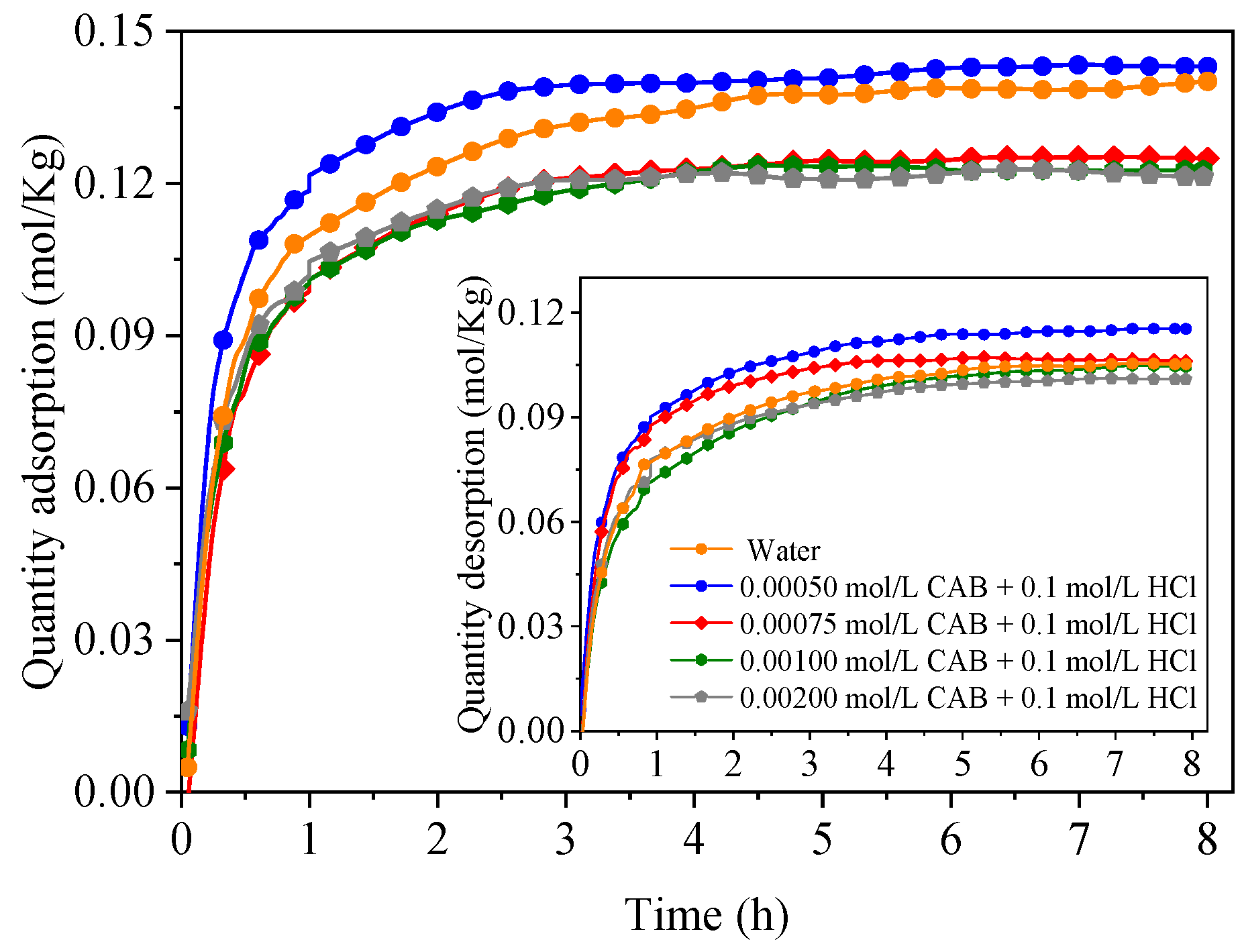
Figure 10 illustrates the impact of CAB on CH4 adsorption and desorption in coal. Table 7 shows the CH4 adsorption and desorption amounts of the wetting–corrosion coal. The symbol Δ represents the percentage difference between the wetting–corrosion coal and the water-treated coal. The CH4 adsorption and desorption capacities for the 1# sample are 0.1431 mol/kg and 0.1153 mol/kg, respectively, showing an increase of 1.17% and 9.71% compared to the water-treated coal. As the CAB concentration increases, the CH4 adsorption and desorption amounts decrease. At 0.002 mol/L CAB, the CH4 adsorption and desorption amounts drop to 0.1213 mol/kg and 0.1009 mol/kg, respectively, which are 14.23% and 4.02% smaller than those of the water-treated coal. The CH4 adsorption and desorption characteristics of the coal treated with the stepwise method are primarily influenced by the pore structure, differing from those treated with the composite method. This distinction arises because the coal’s wettability is enhanced by the CAB remaining on the surface of the samples treated with the composite method. The increased wettability enhances the adsorption of H2O on the coal surface, resulting in competitive adsorption between H2O and CH4. Consequently, despite the larger specific surface area of the coal treated by the composite method compared to the stepwise method, the difference in CH4 adsorption is not substantial [40]. For example, when the CAB and HCl concentrations are 0.001 mol/L and 0.1 mol/L, the specific surface area of the coal treated with the composite method is 11.41% larger than that of the coal treated with the stepwise method, while the CH4 adsorption amount increases by only 2.62%.
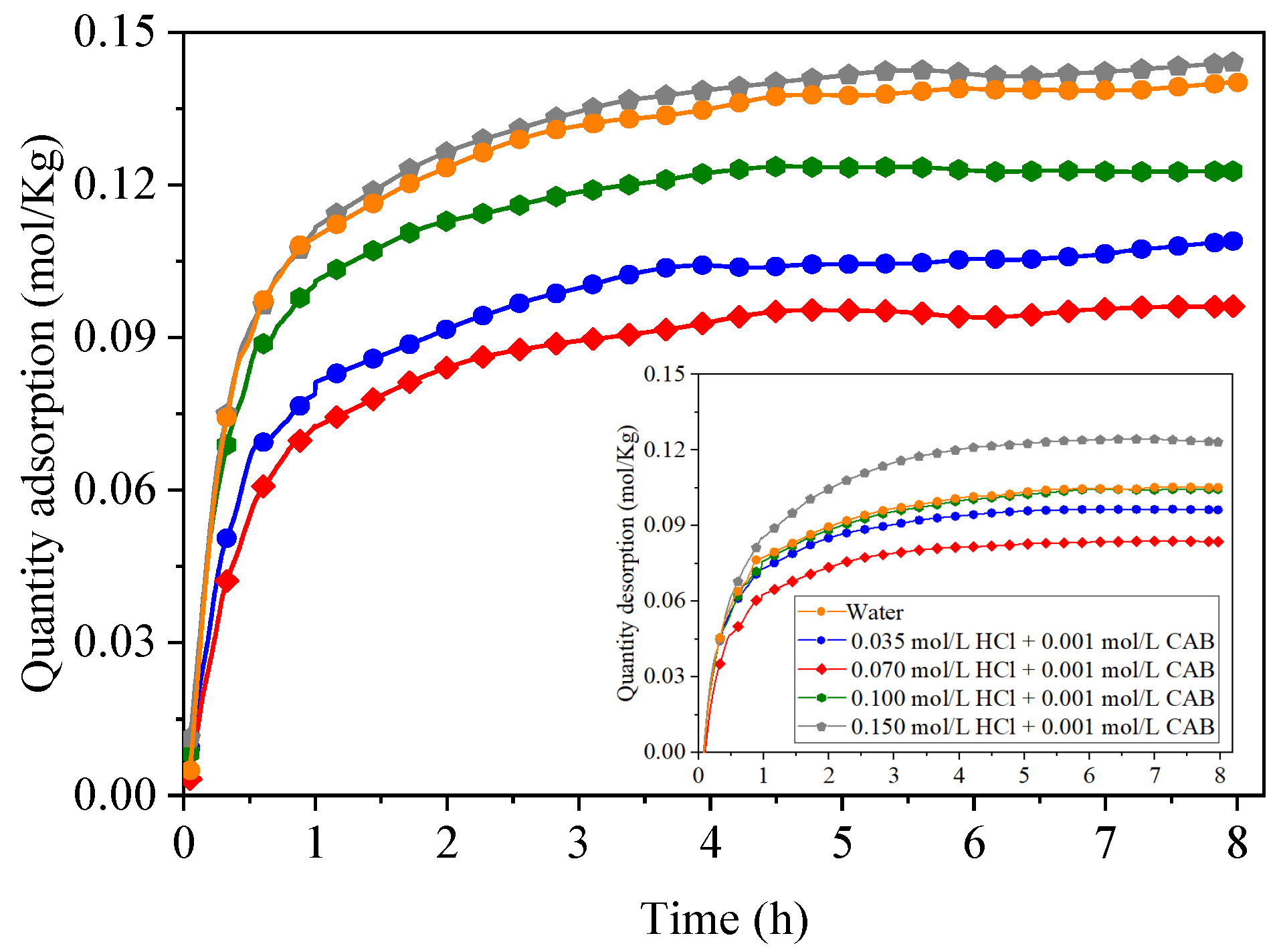
Figure 11 shows the influence of HCl on the CH4 adsorption and desorption characteristics of coal. The CH4 adsorption and desorption capacities for the 5# sample are 0.1089 mol/kg and 0.0963 mol/kg, respectively, reflecting a reduction of 23.97% and 8.47% compared to the water-treated coal. At this concentration, the CH4 adsorption capacity of the coal treated with the stepwise method is lower than the coal treated with the composite method (0.1092 mol/kg). As the acidity increases, the CH4 adsorption and desorption initially decrease and then increase. Notably, the high acid concentration significantly increases the specific surface area of coal, providing a larger amount of adsorption sites for CH4, which leads to an increase in CH4 adsorption amount to 0.1441 mol/kg at an H+ concentration of 0.15 mol/L [22,28]. At this stage, the coal samples treated with the stepwise method exhibit a higher CH4 adsorption capacity compared to those treated using the composite method. This is because surfactants occupy high-energy adsorption sites, such as oxygen-containing functional groups, resulting in competition for adsorption with CH4 molecules. Moreover, surfactants change the coal surface to shift from hydrophobic to hydrophilic, thereby reducing its affinity for CH4 [18,20]. The coal samples treated with the stepwise method exhibit almost no residual surfactants on the surface, leading to a CH4 adsorption amount 16.15% higher than the coal treated with the composite method.
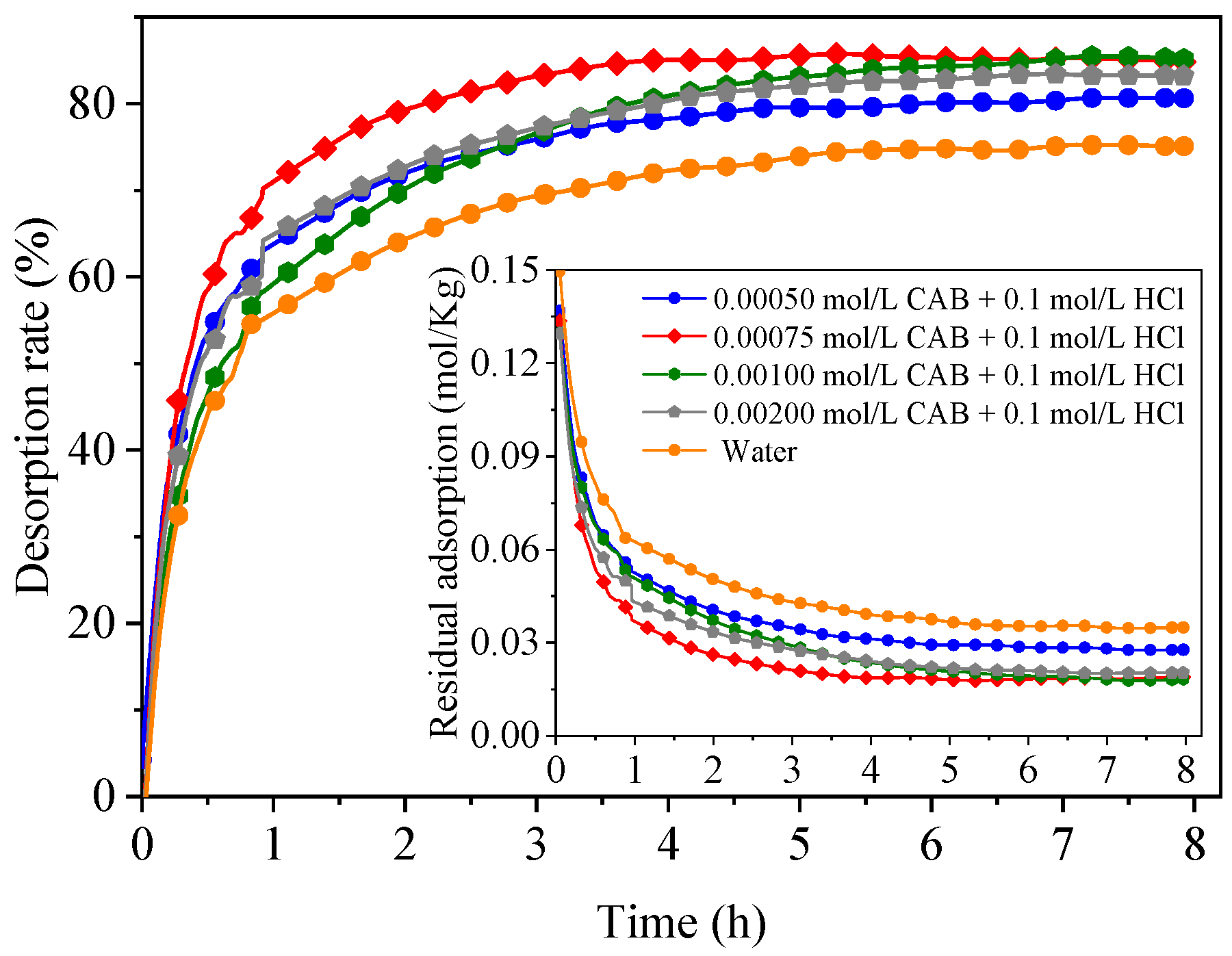
Figure 12 illustrates the effect of CAB on the CH4 desorption rate and the residual adsorption amount in coal. The desorption rate is defined as the ratio of the desorbed amount to the adsorbed amount, while the difference is referred to as the residual adsorption capacity. The CH4 desorption rate and the residual adsorption amount of coal treated with the stepwise method are independent of CAB concentration. The desorption rates of the samples 1#–4# range from 83.22% to 86.69%, which are higher than those of the coal treated with water. The residual adsorption amount of samples 1#–4# ranges from 0.0177 mol/kg to 0.023 mol/kg, with the greatest reduction being 51.08% compared to the water-treated coal. This indicates that the wetting–corrosion effect has significantly promoted CH4 desorption. When the CAB concentration is below 0.001 mol/L, the residual adsorption amount of the stepwise-treated coal is lower than that of the composite-treated coal. As the CAB concentration increases, surfactant adsorption changes the wettability of the composite-treated coal, enhancing the interaction between H2O and the coal while reducing the interaction between CH4 and the coal, thereby promoting CH4 desorption. Consequently, the CH4 desorption rate of the composite-treated coal increases, while that for the stepwise-treated coal shows no significant change [40] As a result, when the CAB concentration exceeds 0.001 mol/L, the residual adsorption amount of the stepwise-treated coal is greater than that of the composite-treated coal.
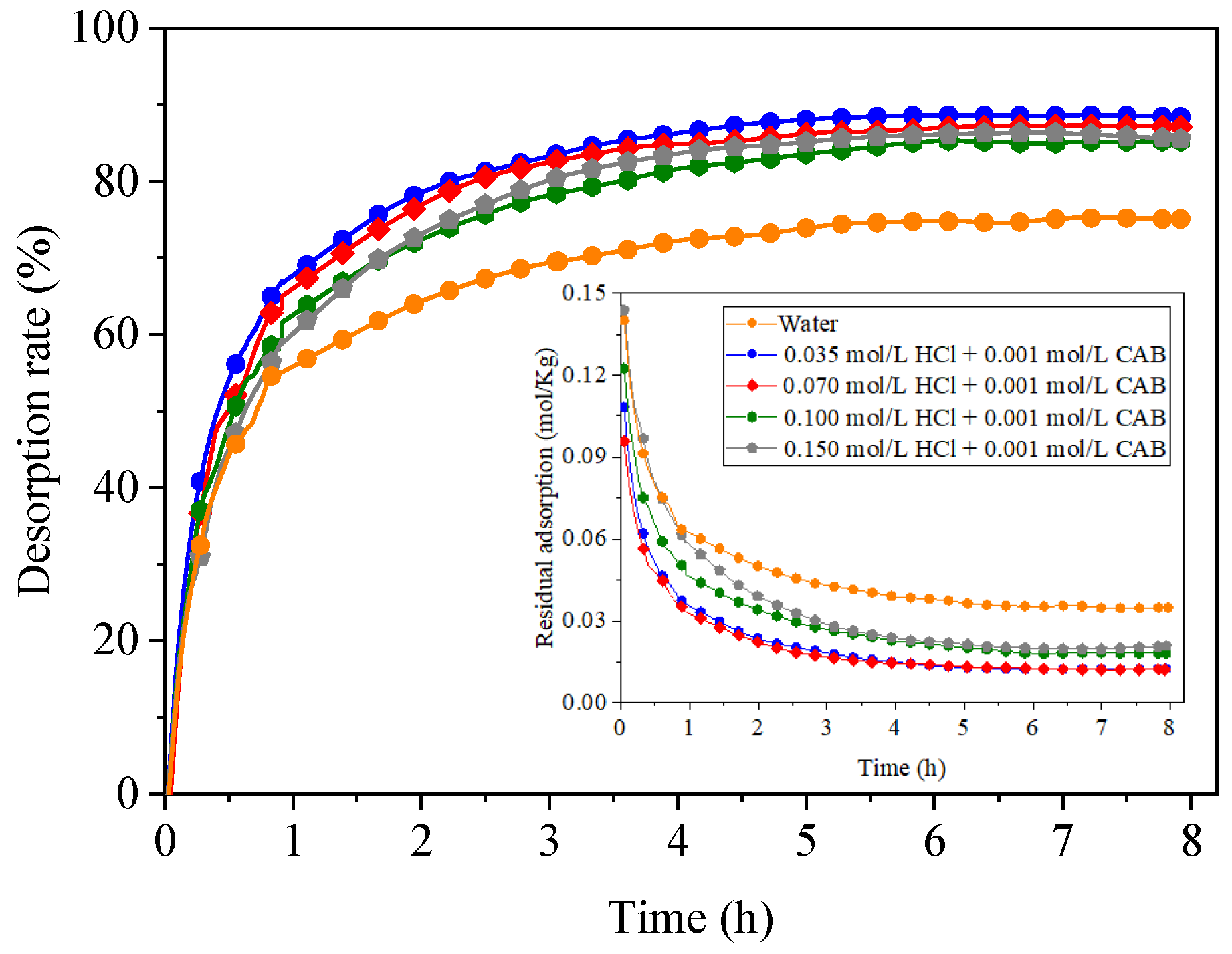
Figure 13 displays the effect of HCl on the CH4 desorption rate and the residual adsorption amount of coal. As can be seen, the CH4 desorption rate of the 5# sample is 88.39%, and the residual adsorption amount is 0.0126 mol/kg. Compared to the water-treated coal, the desorption rate has increased by 13.99%, while the residual adsorption amount has decreased by 65.08%. At this concentration, the residual adsorption amount of the coal treated with the stepwise method is lower than that treated with the composite method (0.0148 mol/kg). As the HCl concentration increases, the volume of micropores and mesopores increases, leading to a decrease in the desorption rate and a higher residual adsorption. When the H+ concentration is increased to 0.15 mol/L, the desorption rate is 85.52%, and the residual adsorption amount is 0.0208 mol/kg. The residual adsorption amount of the coal treated with the stepwise method is higher than that treated with the composite method.

3.4.2. The Characteristic of CH4 Diffusion Kinetic

Table 8 presents the diffusion kinetic parameters for wet-corrosion-treated coals, with 0# representing the water-treated coal. The Biot number (Bi) serves as a metric for the diffusion resistance of CH4 in coal, with a higher Bi value denoting greater resistance. The mass transfer coefficient (α) indicates the rate of mass transfer between CH4 and coal, and the diffusion coefficient (D) characterizes the CH4 diffusion rate within the coal. Higher values of α and D signify enhanced mass transfer and accelerated diffusion rate. For the 1# sample, the Bi is 2.84, which is 47.51% lower than that of the water-treated coal, indicating a reduction in diffusion resistance. This reduction is attributed to mineral corrosion within the coal, which enlarges the diffusion channels for CH4. Consequently, the CH4 diffusion coefficient increases by 78.75%, reaching 1.43 × 10⁻¹⁰ m2/min. However, the mass transfer coefficient decreases by 6.09%, indicating a reduction in the mass transfer rate and a subsequent decline in CH4 adsorption, which is attributed to surfactant inhibition and competitive adsorption between H2O and CH4. When the CAB concentration reaches 0.002 mol/L, the Bi decreases to 1.43, which is 73.56% lower than that of the water-treated coal, while the diffusion coefficient increases to 1.53 × 10⁻¹⁰ m2/min, indicating an increase of 91.25% compared to the water-treated coal. These results suggest that increasing the CAB concentration in the stepwise method can enhance the fluidity of the solution, enlarge the contact area between the coal and the solution, and promote the reaction between H+ and minerals. As a result, the CH4 flow channels increase, which reduces the CH4 diffusion resistance and enhances the diffusion rate. Additionally, the mass transfer coefficient decreases to 1.83 × 10⁻⁷ m/min, indicating a reduced CH4 adsorption in coal, consistent with the change in CH4 adsorption presented in Section 3.4.1.
As shown in Table 8, the mass transfer Bi of the 5# sample is 3.11, reflecting a 42.51% decrease compared to the water-treated coal, which indicates a reduction in the diffusion resistance. Furthermore, the diffusion coefficient increases by 17.5%, and the diffusion rate increases. The mass transfer coefficient (α) decreases by 32.69%, leading to a decreased CH4 adsorption capacity. With the increase in HCl concentration, the gas flow channels expand, thereby reducing diffusion resistance and increasing the diffusion rate. As a result, the mass transfer Bi decreases, while the diffusion coefficient increases. When the HCl concentration reaches 0.15 mol/L, the Bi decreases to 1.77, and the diffusion coefficient rises to 1.65 × 10⁻¹⁰ m2/min. In addition, as the HCl concentration increases, the specific surface area of the coal decreases, and the surface roughness is reduced, resulting in fewer active sites for CH4 adsorption. Consequently, methane molecules interact less readily with the coal surface, leading to a reduction in the mass transfer coefficient. Subsequently, as the specific surface area of the coal increases, the mass transfer coefficient rises accordingly. Therefore, the mass transfer coefficient first decreases to 1.97 × 10⁻⁷ m/min and then increases to 2.44 × 10⁻⁷ m/min, while the CH4 adsorption amount first decreases to 0.0963 mol/kg and then increases to 0.1447 mol/kg.
Through mineral corrosion, the stepwise treatment effectively enhances pore connectivity and enlarges flow pathways, thereby directly reducing the diffusion resistance encountered by CH4 molecules within the coal matrix. This is demonstrated by the substantial decrease in the mass transfer Bi and concurrent increase in the diffusion coefficient observed from the stepwise-treated samples, significantly outperforming the composite methods. This finding underscores the critical link between pore structure modification (connectivity and size) and the kinetics of gas diffusion, providing a clear mechanistic explanation for the enhanced CBM recovery potential.

3.5. Mechanism of Promoting CH4 Adsorption and Diffusion by Composite and Stepwise Methods

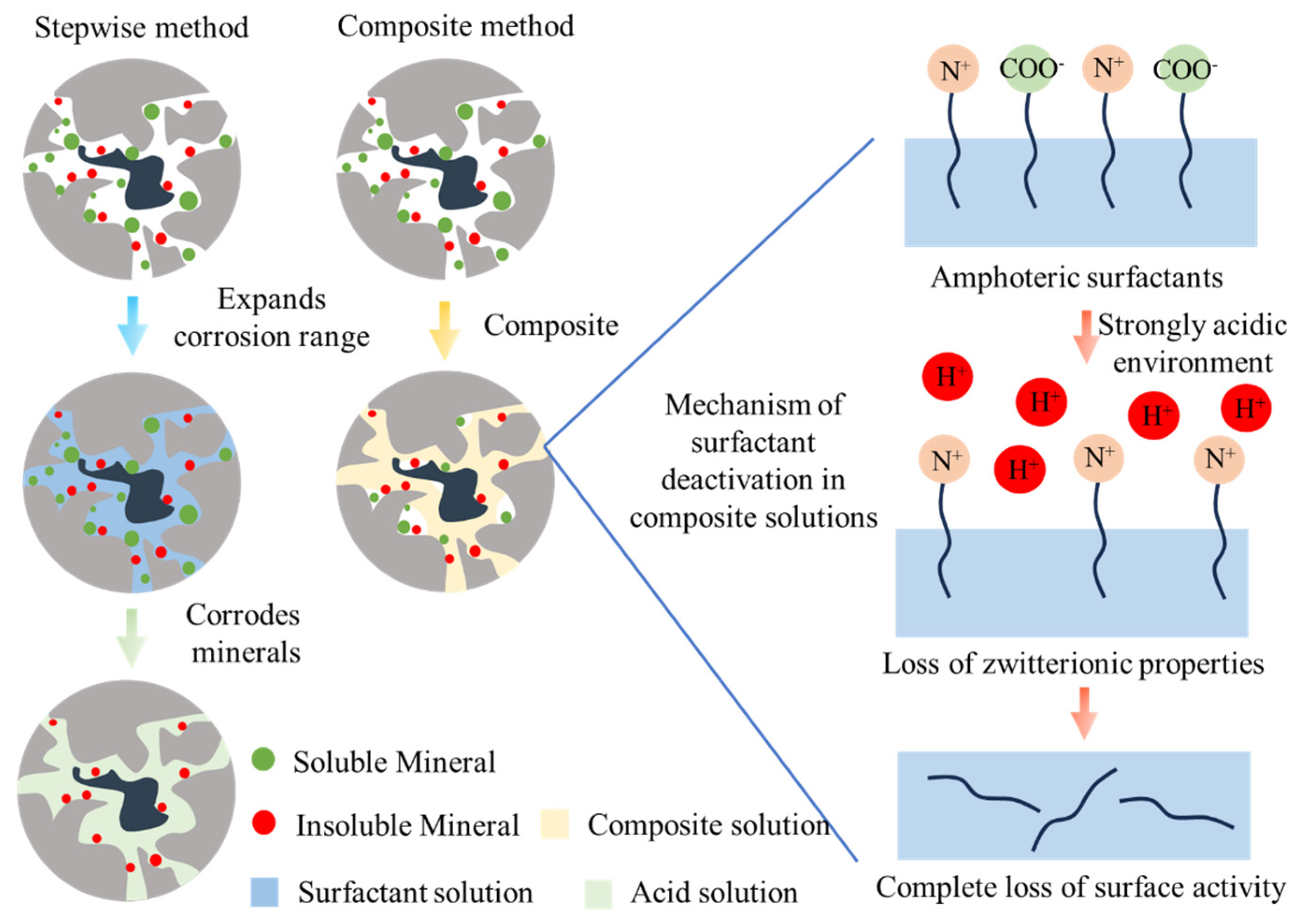
Figure 14 shows a schematic of mineral corrosion and pore expansion by the composite and stepwise methods. In the composite solution, the H+ provided by HCl combines with the carboxylate anions (–COO-) in the hydrophilic head group of CAB, converting them into electrically neutral carboxyl groups (–COOH) [44]. This process causes the surfactant molecules to lose their zwitterionic characteristics and transform into a cationic compound [45]. Such a structural change disrupts the electrical neutrality and the hydrophilic–lipophilic balance (HLB) of the surfactant, thereby significantly weakening its micelle formation, reducing interfacial adsorption efficiency, and greatly lowering surface activity. Moreover, the protonated cationic form tends to interact with anionic components in the system [46], inducing flocculation or precipitation, which further leads to the loss of its fundamental function as a surfactant.
The stepwise method is proposed to prevent the reaction between surfactants and inorganic acids. The process begins with injecting a surfactant solution to enhance fluid flow and protect the coal structure. Then, the surfactant solution is removed and replaced with an acidic solution. This sequence enables H+ to penetrate the pore structure and react with subsurface minerals. Compared with the composite method, the stepwise method significantly improves the extent, severity, and uniformity of corrosion, thereby increasing the pore volume of treated coal samples, with more macropores, fewer micropores and mesopores, and a reduced specific surface area.
CH4 adsorption is primarily due to van der Waals forces, the strength of which is positively correlated with the specific surface area of the coal matrix. Therefore, a larger specific surface area leads to higher CH4 adsorption capacity. The spatial dimensions of micropores and mesopores closely match CH4 molecules, and their correlation with CH4 adsorption is governed by both geometric matching and the enhancement of adsorption potential. Micropores and mesopores provide dense adsorption sites, and certain micropores enhance the accumulation of CH4 through capillary condensation, forming multilayer adsorption. As the volume of micropores and mesopores decreases in coal treated by the stepwise method, the efficient adsorption space is reduced, leading to a reduction in CH4 adsorption capacity.
Diffusion resistance is mainly affected by two factors. The first is the matching degree between pore size and CH4 molecular diameter. Smaller pores increase the probability of molecular collisions with the pore walls, which results in greater resistance. The second factor is the connectivity of diffusion channels. Stronger connectivity shortens the diffusion path and reduces resistance. The diameters of macropores are much larger than those of CH4 molecules, so the collision resistance within macropores can be neglected. In addition, macropores act as the primary channels in the coal pore network, and their connectivity is stronger than that of micropores and mesopores. Therefore, when the stepwise method increases the pore volume of macropores in coal, the connectivity of effective migration pathways is enhanced, diffusion resistance decreases, CH4 diffusion rate accelerates, and the diffusion coefficient increases.

4. Conclusions

In this study, a stepwise wetting–corrosion method is proposed to enhance the desorption and diffusion of CBM. By physically separating the wetting and acidizing stages, the direct contact between the surfactant solution and the acid is avoided, so the surfactant activity is preserved and, at the same time, more homogeneous corrosion is achieved. The experimental results show that this method simultaneously reduces adsorption sites, enhances pore-network connectivity, and significantly lowers the methane transport resistance, resulting in an improved overall gas-migration efficiency. Compared with the conventional composite treatments, this stepwise protocol delivers notable increases in methane desorption rates and diffusion coefficients, indicating strong potential for CBM productivity enhancement. As a novel reservoir-stimulation strategy, this technique outperforms traditional methods and offers a promising solution to improving CBM recovery, particularly in low-permeability coal seams where conventional approaches are ineffective. The mechanisms underlying the interactions among chemical stimulation, pore-structure evolution, surface properties, and gas transport are elucidated, offering new insights into the unconventional natural gas extraction. However, as the present study is fundamental and laboratory-based, the actual effectiveness of this method in field applications remains to be verified. Future field tests, including assessments of cost-effectiveness and penetration homogeneity, will be required to confirm its practical applicability.

Author Contributions

Conceptualization, K.D. and D.Z.; methodology, K.D. and D.Z.; validation, W.Z.; formal analysis, K.D.; investigation, K.D. and W.Z.; resources, W.Z.; data curation, K.D. and W.Z.; writing—original draft preparation, K.D.; writing—review and editing, D.Z. and J.Y.; supervision, D.Z. and J.Y.; funding acquisition, D.Z. All authors have read and agreed to the published version of the manuscript.

Funding

This research was funded by the National Natural Science Foundation of China (Nos. 52576191, U19B2009), the Fundamental Research Funds for the Central Universities (2024CDJYDYL006), and the Natural Science Foundation of Chongqing Municipality, China (CSTB2022NSCQ-LZX0030).

Data Availability Statement

The original contributions presented in this study are included in the article. Further inquiries can be directed to the corresponding authors.

Conflicts of Interest

The authors declare no conflicts of interest.

References

  1. Chen, S.; Tao, S.; Tang, D. In Situ Coal Permeability and Favorable Development Methods for Coalbed Methane (CBM) Extraction in China: From Real Data. Int. J. Coal Geol. 2024, 284, 104472. [Google Scholar] [CrossRef]
  2. Leng, K.; Guan, B.; Liu, W.; Jiang, C.; Cong, S.; Xin, Y. Research Progress of Coalbed Methane Extraction. Energy Rep. 2024, 12, 5728–5746. [Google Scholar] [CrossRef]
  3. Hu, B.; Nie, B.; Ma, C.; Zhang, Y.; Bao, S.; Li, Z.; Luo, X. Enhanced Coalbed Methane Extraction by High-Strength Electric Detonation Technology: Numerical Study and Field Test. Fuel 2025, 396, 135340. [Google Scholar] [CrossRef]
  4. Ran, D.; Cheng, J.; Liu, Y.; Fu, Q.; Ma, Z.; Mei, J. Experimental Validation and Mechanistic Elucidation of Crack Division and Two-Phase Flow-Mediated Sealing in Coalbed Methane Extraction Boreholes. Int. J. Rock Mech. Min. Sci. 2025, 186, 106021. [Google Scholar] [CrossRef]
  5. Ouyang, W.; Huang, L.; Liu, J.; Zhang, H. Analysis of Hydraulic Fracture Network Morphology in Stimulated Coal Reservoirs with Pre-Existing Natural Fractures. Energy 2025, 122, 1491–1509. [Google Scholar] [CrossRef]
  6. Liang, Y.; Yang, K.; Yang, Z.; Li, Q.; Chen, Q.; Sun, W. Hydro-Mechanical-Damage Coupling Effect of Hydraulic Fracturing in Fractured Dual-Medium Coal Masses. Comput. Geotech. 2025, 178, 106909. [Google Scholar] [CrossRef]
  7. Wang, X.; Wang, E.; He, X.; Hu, S. Study of Dynamic Mechanical Characterization of Coal with Different Metamorphism Degrees under Hydraulic Fracturing. Fuel 2025, 385, 134204. [Google Scholar] [CrossRef]
  8. Hosseinzadeh, S.; Haghighi, M.; Salmachi, A.; Shokrollahi, A. Carbon Dioxide Storage within Coal Reservoirs: A Comprehensive Review. Geoenergy Sci. Eng. 2024, 241, 213198. [Google Scholar] [CrossRef]
  9. Busch, A.; Gensterblum, Y. CBM and CO2-ECBM Related Sorption Processes in Coal: A Review. Int. J. Coal Geol. 2011, 87, 49–71. [Google Scholar] [CrossRef]
  10. Huang, D.; Zhang, R.; Wang, N.; Bai, X.; Wu, J.; Dong, Z.; Chen, H.; Xu, Q. Microbial Assembly Regulated Microbial Succession of Biochar-Mediated CH4 Biofiltration to Resume Function under H2S Stress. Chem. Eng. J. 2025, 506, 160071. [Google Scholar] [CrossRef]
  11. Shi, Y.; Lin, B.; Liu, T. Confinement Pressure-Rising Response and Its Influence on Pore-Fracture Structure Evolution of Gas-Containing Coal under Thermal Stimulation. Measurement 2025, 253, 117573. [Google Scholar] [CrossRef]
  12. Li, H.; Lv, X.; Lu, J.; Liu, M.; Yang, W.; Hong, Y.; Liu, T.; Lin, B.; Wang, Z. Effect of Cyclic Thermal Stimulation on the Pore Structure and Fluid Space of Coal and Inspiration for Coalbed Methane Production. Energy 2024, 289, 129994. [Google Scholar] [CrossRef]
  13. Zhang, Q.; Zhu, H. Macromolecular Insights into the Influence of Bituminous Coal Matrix Deformation on CH4-N2 Competitive Adsorption and Diffusion. Colloids Surf. A Physicochem. Eng. Asp. 2024, 694, 134143. [Google Scholar] [CrossRef]
  14. Balucan, R.D.; Turner, L.G.; Steel, K.M. Acid-Induced Mineral Alteration and Its Influence on the Permeability and Compressibility of Coal. J. Nat. Gas Sci. Eng. 2016, 33, 973–987. [Google Scholar] [CrossRef]
  15. Farrokhrouz, M.; Akhondzadeh, H.; Yang, Y.; Rahman Awan, F.U.; Iglauer, S.; Lebedev, M.; Keshavarz, A. Coal Cleat Network Stimulation through a Combination of Acidizing and Liquid Nitrogen Fracturing. Gas Sci. Eng. 2024, 125, 205308. [Google Scholar] [CrossRef]
  16. Ni, G.; Li, S.; Rahman, S.; Xun, M.; Wang, H.; Xu, Y.; Xie, H. Effect of Nitric Acid on the Pore Structure and Fractal Characteristics of Coal Based on the Low-Temperature Nitrogen Adsorption Method. Powder Technol. 2020, 367, 506–516. [Google Scholar] [CrossRef]
  17. Zhang, B.; Deng, Z.; Fu, X.; Yu, K.; Zeng, F. (Bill) An Experimental Study on the Effects of Acidization on Coal Permeability: Implications for the Enhancement of Coalbed Methane Production. Energy 2023, 280, 128145. [Google Scholar] [CrossRef]
  18. Dong, K.; Dai, W.-X.; Zhong, D.-L.; Yan, J.; Xie, F.-M.; Sun, H.-S.; Wang, M. Experimental Study on Coal Structure Variation and CH4 Adsorption Properties under the Effect of Cocamidopropyl Betaine. Energy Fuels 2022, 36, 14055–14065. [Google Scholar] [CrossRef]
  19. Zheng, Y.; Zhai, C.; Sun, Y.; Cong, Y.; Tang, W.; Yu, X.; Xu, J.; Chen, A.; Xu, H.; Wu, X. Effect of Reservoir Temperatures on the Stabilization and Flowback of CO2 Foam Fracturing Fluid Containing Nano-SiO2 Particles: An Experimental Study. Geoenergy Sci. Eng. 2023, 228, 212048. [Google Scholar] [CrossRef]
  20. Xie, H.; Ni, G.; Li, S.; Sun, Q.; Dong, K.; Xie, J.; Wang, G.; Liu, Y. The Influence of Surfactant on Pore Fractal Characteristics of Composite Acidized Coal. Fuel 2019, 253, 741–753. [Google Scholar] [CrossRef]
  21. Zhang, Y.; Zheng, Y.; Jiang, B.; Yu, G.; Ren, B.; Yu, C.; Wang, S. Experimental Study on the Influence of Acid Fracturing Fluid on Coal Wettability. Fuel 2023, 343, 127965. [Google Scholar] [CrossRef]
  22. Dong, K.; Zhong, D.-L.; Lu, Y.-Y.; Yan, J.; Dai, W.-X. Facilitating Desorption and Diffusion of Coalbed Methane by Wetting-Corrosion: Perspectives from the Change of Pore Structure. Gas Sci. Eng. 2023, 119, 205138. [Google Scholar] [CrossRef]
  23. Xie, H.; Li, X.; Xue, F.; Sui, H.; Zhao, J.; Cai, J.; Feng, C. Influences of Evolution of Pore Structures in Tectonic Coal under Acidization on Methane Desorption. ACS Omega 2023, 8, 34059–34076. [Google Scholar] [CrossRef] [PubMed]
  24. Liu, Z.; Jiao, L.; Yang, H.; Zhu, M.; Zhang, M.; Dong, B. Study on the Microstructural Characteristics of Coal and the Mechanism of Wettability of Surfactant Solutions at Different pH Levels. Fuel 2023, 353, 129268. [Google Scholar] [CrossRef]
  25. Xie, H.; Li, X. Microstructure and Nanomechanical Characterization of Tectonic Coal Based on SEM, AFM, XRD and DSI. Surf. Interfaces 2024, 46, 104158. [Google Scholar] [CrossRef]
  26. He, J.; Li, H.; Yang, W.; Lu, J.; Lu, Y.; Liu, T.; Shi, S. Experimental Study on Erosion Mechanism and Pore Structure Evolution of Bituminous and Anthracite Coal under Matrix Acidification and Its Significance to Coalbed Methane Recovery. Energy 2023, 283, 128485. [Google Scholar] [CrossRef]
  27. Jiang, B.; Zhang, Y.; Zheng, Y.; Yu, C.-F.; Wang, S.; Lin, H.; Lu, K.; Ren, B.; Nie, W.; Yu, H.; et al. Effect of Acid-Thermal Coupling on the Chemical Structure and Wettability of Coal: An Experimental Study. Energy 2024, 294, 130943. [Google Scholar] [CrossRef]
  28. Dou, H.; Xie, J.; Xie, J.; Sun, G.; Li, Z.; Wang, Z.; Miao, Y. Study on the Mechanism of the Influence of HNO3 and HF Acid Treatment on the CO2 Adsorption and Desorption Characteristics of Coal. Fuel 2022, 309, 122187. [Google Scholar] [CrossRef]
  29. Guo, Z.; Cao, Y.; Dong, S.; Zhang, Z. Experimental Studies on the Enhancement of Permeability of Anthracite by Acidizing: A Case Study in the Daning Block, Southern Qinshui Basin. ACS Omega 2021, 6, 31112–31121. [Google Scholar] [CrossRef]
  30. Nguyen, N.N.; Nguyen, A.V.; Dang, L.X. The Inhibition of Methane Hydrate Formation by Water Alignment underneath Surface Adsorption of Surfactants. Fuel 2017, 197, 488–496. [Google Scholar] [CrossRef]
  31. Wen, Y.; Ni, G.; Zhang, X.; Zheng, Y.; Wang, G.; Wang, Z. Qiming Fine Characterization of Pore Structure of Acidified Anthracite Based on Liquid Intrusion Method and Micro-CT. Energy 2023, 263, 125639. [Google Scholar] [CrossRef]
  32. Dai, C.; Fang, J.; Ding, Q.; Wang, T.; Zhao, M.; Wu, Y. Study on Adsorption Characteristic of Novel Nonionic Fluorocarbon Surfactant (4-Hydroxyethyl Ether) (Pentadecafluoro-Alkyl) Amide at Coal-Water Interface. Colloid Polym. Sci. 2018, 296, 21–30. [Google Scholar] [CrossRef]
  33. Zeighami, A.; Kargozarfard, Z.; Khiabani, N.P.; Ayatollahi, S. Salt-Acid-Surfactant Synergistic Effects on Interfacial Characteristics of Water/Oil Systems: A Molecular Dynamics Simulation Study. J. Mol. Liq. 2024, 396, 123996. [Google Scholar] [CrossRef]
  34. Li, H.; Liu, W.; Lu, J.; Lu, Y.; Shi, S.; Wang, Z.; Ye, Q.; Jia, Z. Effect of Microwave-Assisted Acidification on the Microstructure of Coal: XRD, 1H-NMR, and SEM Studies. Int. J. Min. Sci. Technol. 2023, 33, 919–926. [Google Scholar] [CrossRef]
  35. Xin, H.; Tian, W.; Zhou, B.; Qi, X.; Li, J.; Wu, J.; Wang, D. Pore Structure Evolution and Oxidation Characteristic Change of Coal Treated with Liquid Carbon Dioxide and Liquid Nitrogen. Energy 2023, 268, 126674. [Google Scholar] [CrossRef]
  36. Ge, B.-B.; Li, X.-Y.; Zhong, D.-L.; Lu, Y.-Y. Investigation of Natural Gas Storage and Transportation by Gas Hydrate Formation in the Presence of Bio-Surfactant Sulfonated Lignin. Energy 2022, 244, 122665. [Google Scholar] [CrossRef]
  37. Lu, Y.-Y.; Ge, B.-B.; Zhong, D.-L. Investigation of Using Graphite Nanofluids to Promote Methane Hydrate Formation: Application to Solidified Natural Gas Storage. Energy 2020, 199, 117424. [Google Scholar] [CrossRef]
  38. Ni, G.; Lin, B.; Zhai, C.; Li, Q.; Peng, S.; Li, X. Kinetic Characteristics of Coal Gas Desorption Based on the Pulsating Injection. Int. J. Min. Sci. Technol. 2014, 24, 631–636. [Google Scholar] [CrossRef]
  39. Nie, B.; Guo, Y.; WU, S.; Zhang, L. Theoretical Model of Gas Diffusion Through Coal Particles and Its Analytical Solution. J. China Univ. Min. Technol. 2001, 30, 19–22. [Google Scholar]
  40. Dong, K.; Zhong, D.; Li, Q.; Li, C.; Zhang, W. A Wetting-Corrosion Combined Method for CH4 Desorption-Diffusion Improvement Using Hydrochloric Acid and Cocamidopropyl Betaine. Energy Fuels 2025, 39, 13344–13353. [Google Scholar] [CrossRef]
  41. Wu, J.; Ansari, U. From CO2 Sequestration to Hydrogen Storage: Further Utilization of Depleted Gas Reservoirs. Reserv. Sci. 2025, 1, 19–35. [Google Scholar] [CrossRef]
  42. Wang, H.; Wang, L.; Zheng, S.; Sun, Y.; Shen, S.; Zhang, X. Research on Coal Matrix Pore Structure Evolution and Adsorption Behavior Characteristics under Different Thermal Stimulation. Energy 2024, 287, 129677. [Google Scholar] [CrossRef]
  43. Zheng, Y.; Zhai, C.; Chen, A.; Yu, X.; Xu, J.; Sun, Y.; Cong, Y.; Tang, W.; Zhu, X.; Li, Y. Microstructure Evolution of Bituminite and Anthracite Modified by Different Fracturing Fluids. Energy 2023, 263, 125732. [Google Scholar] [CrossRef]
  44. Matusik, J.; Dziewiątka, K.; Deng, Y. Smectite Functionalization for Targeted Zearalenone Immobilization: Investigating the Key Role of Surface Chemistry and Adsorption Mechanisms. Appl. Clay Sci. 2026, 279, 108023. [Google Scholar] [CrossRef]
  45. Kelleppan, V.T.; King, J.P.; Butler, C.S.G.; Williams, A.P.; Tuck, K.L.; Tabor, R.F. Heads or Tails? The Synthesis, Self-Assembly, Properties and Uses of Betaine and Betaine-like Surfactants. Adv. Colloid Interface Sci. 2021, 297, 102528. [Google Scholar] [CrossRef]
  46. Abdel Ghafar, H.H.; Radwan, E.K.; El-Wakeel, S.T. Removal of Hazardous Contaminants from Water by Natural and Zwitterionic Surfactant-Modified Clay. ACS Omega 2020, 5, 6834–6845. [Google Scholar] [CrossRef]
Figure 1. Illustration of the experimental process, including sample preparation, XRD, SEM, low-temperature N2 adsorption, and CH4 adsorption–desorption tests [22].
Energies 18 06336 g001
Figure 2. Schematic of the adsorption–desorption experimental setup [22].
Energies 18 06336 g002
Figure 3. The XRD spectra of the water-treated coal.
Energies 18 06336 g003
Figure 4. Effect of CAB on the mineral composition of the coal.
Energies 18 06336 g004
Figure 5. Effect of HCl on the mineral composition of the coal.
Energies 18 06336 g005
Figure 6. SEM images of the water-treated coal. (a) Magnified at 1250×; (b) Magnified at 10,000×.
Energies 18 06336 g006
Figure 7. SEM images of the wetting–corrosion coal. (a) CAB-treated coal; (b) HCl-treated coal; (c) Composite-treated coal; (d) Stepwise-treated coal.
Energies 18 06336 g007
Figure 8. Effect of CAB concentration in the stepwise method on the pore structure of the coal. (a) Pore volume; (b) Specific surface area.
Energies 18 06336 g008
Figure 9. Effect of HCl concentration in the stepwise method on the pore structure of the coal. (a) Pore volume; (b) Specific surface area.
Energies 18 06336 g009
Figure 10. Effect of CAB on CH4 adsorption and desorption of the coal.
Energies 18 06336 g010
Figure 11. Effect of HCl on CH4 adsorption and desorption of the coal.
Energies 18 06336 g011
Figure 12. Effect of CAB on CH4 desorption rate and the residual adsorption amount of the coal.
Energies 18 06336 g012
Figure 13. Effect of HCl on the CH4 desorption rate and residual adsorption amount of the coal.
Energies 18 06336 g013
Figure 14. Schematic of mineral corrosion and pore expansion by the composite and stepwise methods.
Energies 18 06336 g014
Table 1. Ultimate and proximate analysis of the coal.
Proximate Analysis (%)Ultimate Analysis (%)
AadMadVdafFCadSNHOC
5.126.5430.0658.280.3480.754.4918.5275.34
Table 2. Solutions of cocamidopropyl betaine and hydrochloric acid used for coal treatment.
SamplesSolutionSamplesSolution
1#0.0005 mol/L CAB + 0.1 mol/L HCl5#0.035 mol/L HCl + 0.001 mol/L CAB
2#0.00075 mol/L CAB + 0.1 mol/L HCl6#0.07 mol/L HCl + 0.001 mol/L CAB
3#0.001 mol/L CAB + 0.1 mol/L HCl7#0.1 mol/L HCl + 0.001 mol/L CAB
4#0.002 mol/L CAB + 0.1 mol/L HCl8#0.15 mol/L HCl + 0.001 mol/L CAB
Table 3. Elemental composition of the water-treated coal (%).
MagnificationNaMgAlSiSKCaFe
12504.91N/A32.4333.111.7510.075.6212.11
10,000N/A4.9117.6259.313.72N/A5.918.53
Table 4. The elemental composition of the wetting–corrosion coal (%).
NaAlSiSCaFe
CAB8.4321.5551.856.0812.09N/A
HClN/A48.9648.70N/AN/A5.33
CompositeN/A45.4347.99N/AN/A6.57
StepwiseN/A21.1461.239.662N/AN/A
Table 5. The pore structure of the wetting–corrosion coal.
SamplesPore Volume (×10−3 cm3/g)Δ (%)Samples Area (m2/g)Δ (%)
1#11.089.03%5.115.21%
2#11.6514.61%4.56−6.03%
3#11.7315.38%4.59−5.34%
4#11.8616.67%4.41−9.13%
5#10.432.61%4.35−10.36%
6#10.957.72%4.931.58%
7#11.7315.38%4.59−5.34%
8#12.3121.08%5.3610.96%
Table 6. The fractal dimensions D1 and D2 of the wetting–corrosion coal.
SamplesD1D2SamplesD1D2
1#2.7392.5435#2.7172.535
2#2.7332.5516#2.7252.552
3#2.7322.5567#2.7412.556
4#2.7242.5628#2.7522.551
Table 7. CH4 adsorption and desorption amounts of the wetting–corrosion coal.
SamplesAdsorption
Amount (mol/kg)
Δ (%)Desorption
Amount (mol/kg)
Δ (%)
1#0.14311.18%0.11549.71%
2#0.1249−11.61%0.10610.84%
3#0.1226−13.25%0.1045−0.66%
4#0.1213−14.23%0.1009−4.01%
5#0.1089−22.96%0.0963−8.47%
6#0.0961−32.03%0.0837−20.44%
7#0.1226−13.25%0.1045−0.66%
8#0.14411.89%0.123217.09%
Table 8. The diffusion kinetic parameters of the wetting–corrosion coals.
SamplesλAR2Biot Number BiMass Transfer
Coefficient
α (×10−7 m/min)
Diffusion Coefficient
D (×10−10 m2/min)
0#0.02280.84260.8890 5.413.610.80
1#0.03030.92260.8839 2.843.391.43
2#0.02890.93020.8858 2.633.121.42
3#0.02320.96210.8604 1.752.161.48
4#0.02080.97280.8704 1.431.831.53
5#0.02090.91290.8794 3.112.430.94
6#0.01880.93630.8828 2.471.970.96
7#0.02320.96210.8952 1.752.161.48
8#0.02610.96150.9073 1.772.441.65
Disclaimer/Publisher’s Note: The statements, opinions and data contained in all publications are solely those of the individual author(s) and contributor(s) and not of MDPI and/or the editor(s). MDPI and/or the editor(s) disclaim responsibility for any injury to people or property resulting from any ideas, methods, instructions or products referred to in the content.