High-Temperature Aquifer Thermal Energy Storage (HT-ATES) Projects in Germany and the Netherlands—Review and Lessons Learned †
 , , , , , , , ,
  , , and
Abstract
1. Introduction
2. Potential Issues for High-Temperature Aquifer Thermal Energy Storage Projects Identified from Previous Studies
2.1. Non-Technical Issues
2.2. Technical Issues
3. German Case Studies
3.1. Berlin
3.1.1. Geology
3.1.2. Wells
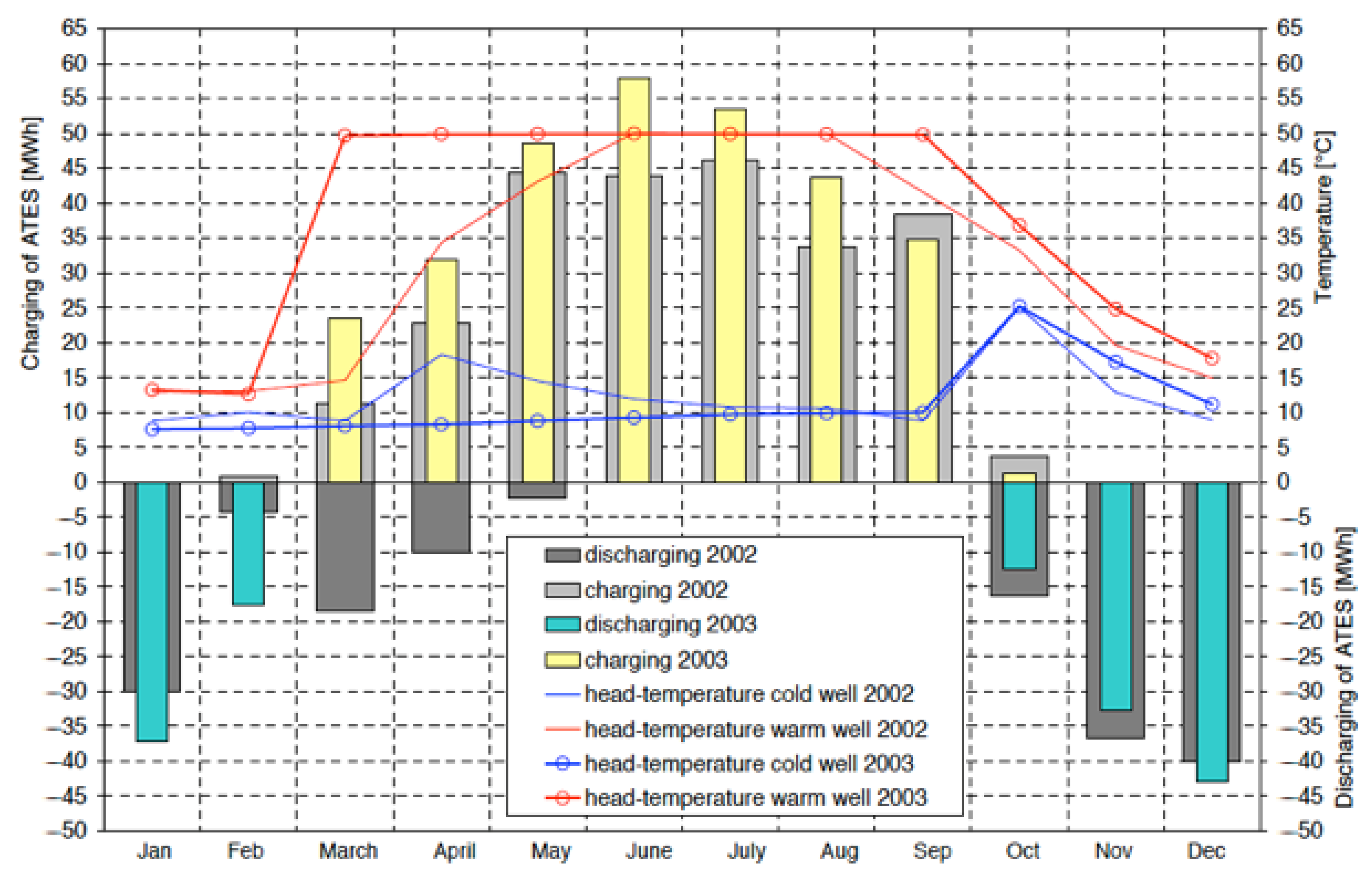
3.1.3. Charging/Discharging of Thermal Energy
- (a)
- Increasing the storage temperature for the warm wells;
- (b)
- Lowering the injection temperature for the cold wells;
- (c)
- Increasing the total volume of circulated groundwater;
- (d)
- Increasing the amount of stored thermal energy.
3.1.4. Thermal, Geochemical, and Microbiological Modeling and Monitoring
3.1.5. Lessons Learned
3.2. Neubrandenburg
3.2.1. Geology
3.2.2. Wells
3.2.3. Charging/Discharging of Thermal Energy
3.2.4. Thermal, Geochemical, and Microbiological Modeling and Monitoring
3.2.5. Lessons Learned
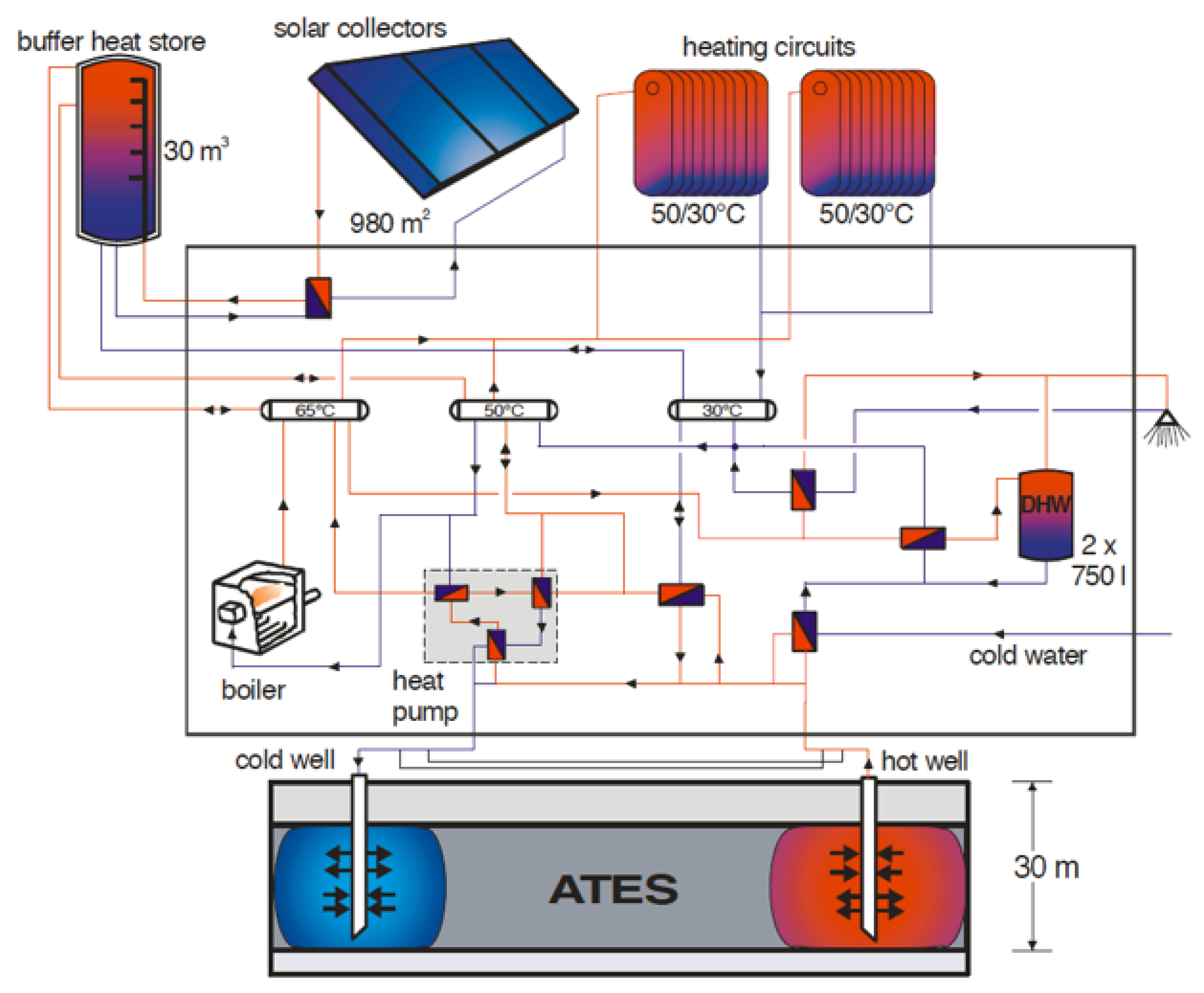
3.3. Rostock
3.3.1. Geology
3.3.2. Wells
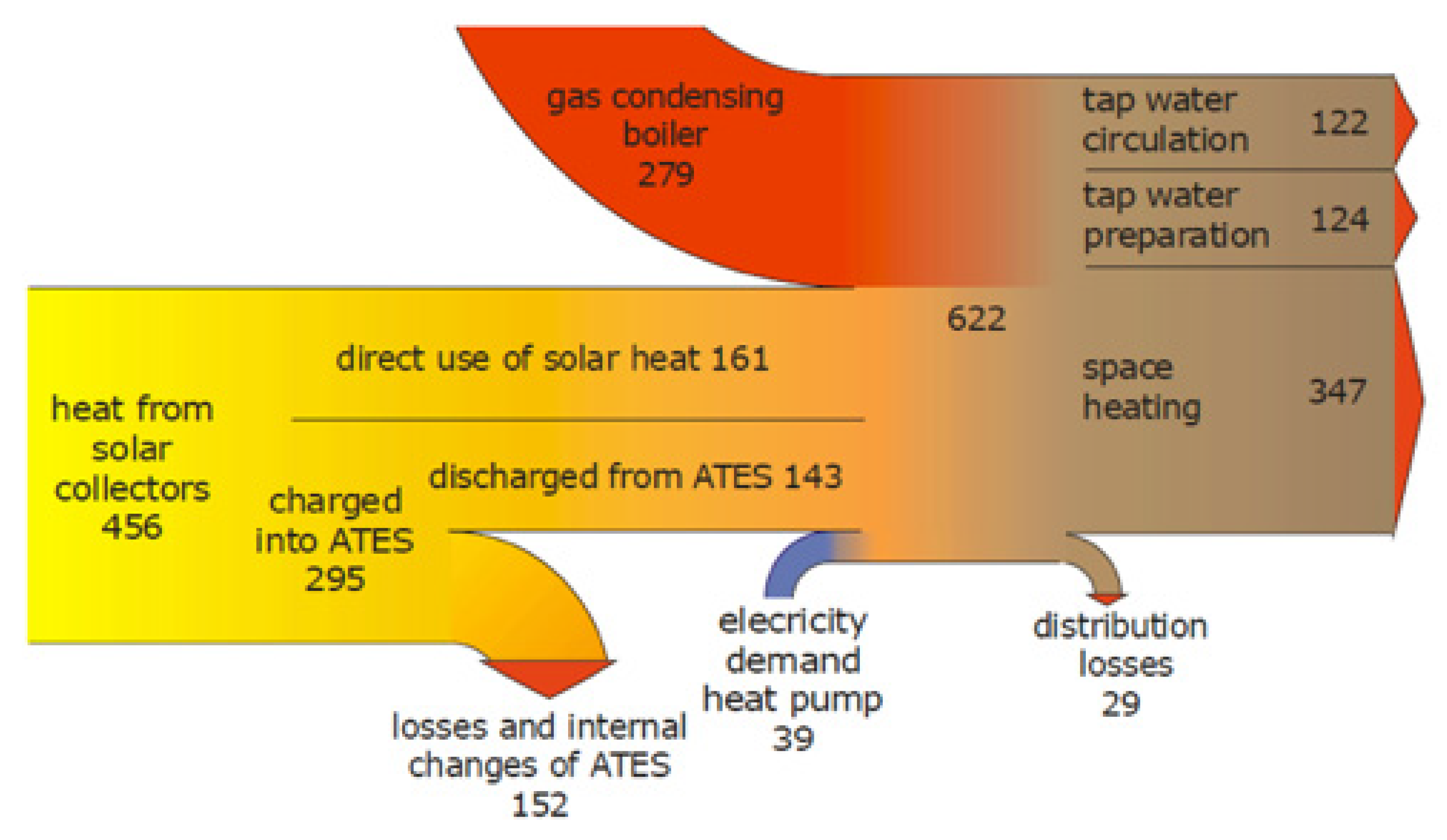
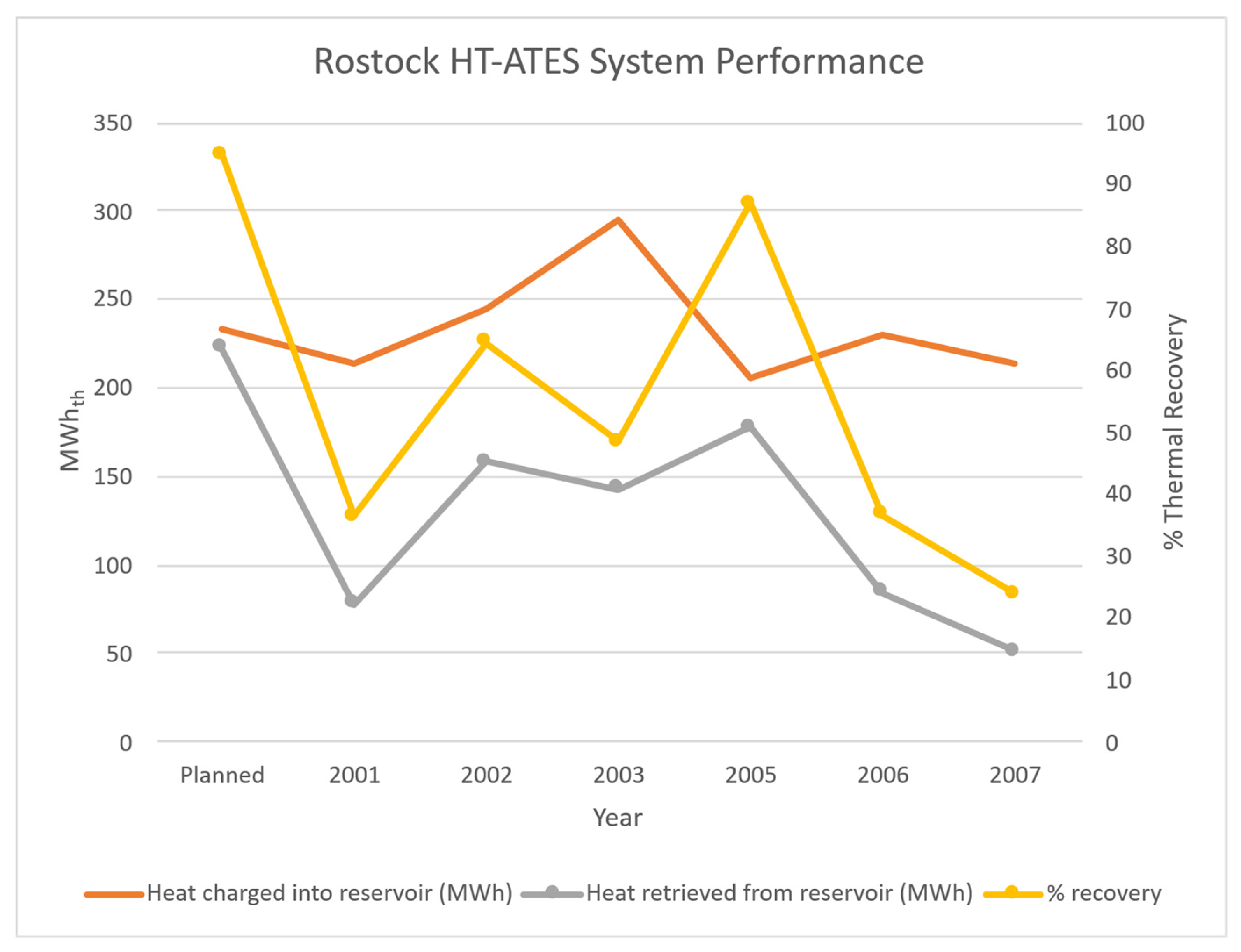
3.3.3. Charging/Discharging of Thermal Energy
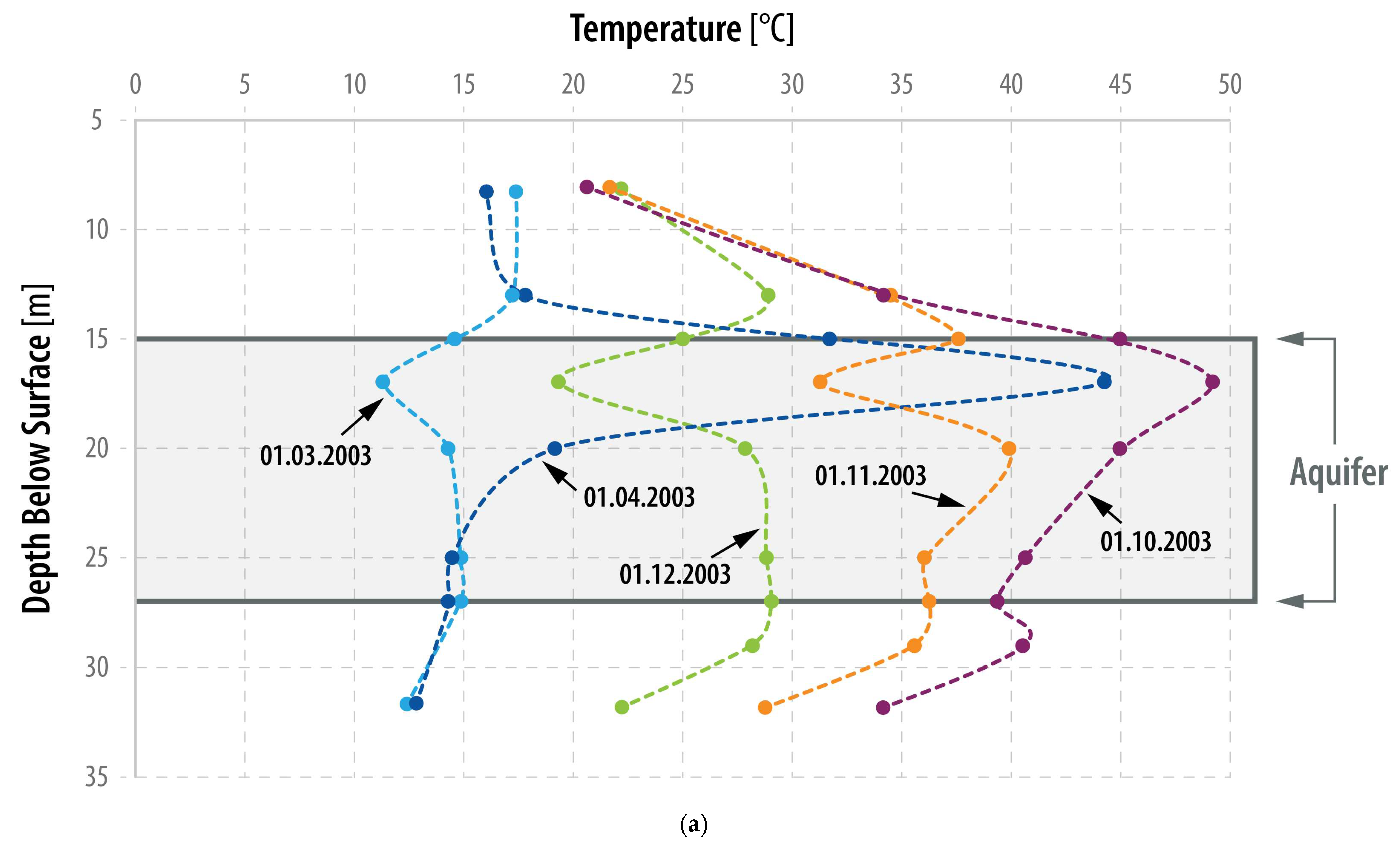
3.3.4. Thermal and Geochemical Modeling and Monitoring
3.3.5. Lessons Learned
3.4. Dingolfing
3.4.1. Geology
3.4.2. Wells
3.4.3. Charging/Discharging of Thermal Energy
3.4.4. Thermal and Geochemical Modeling and Monitoring
3.4.5. Lessons Learned
4. The Netherlands Case Studies
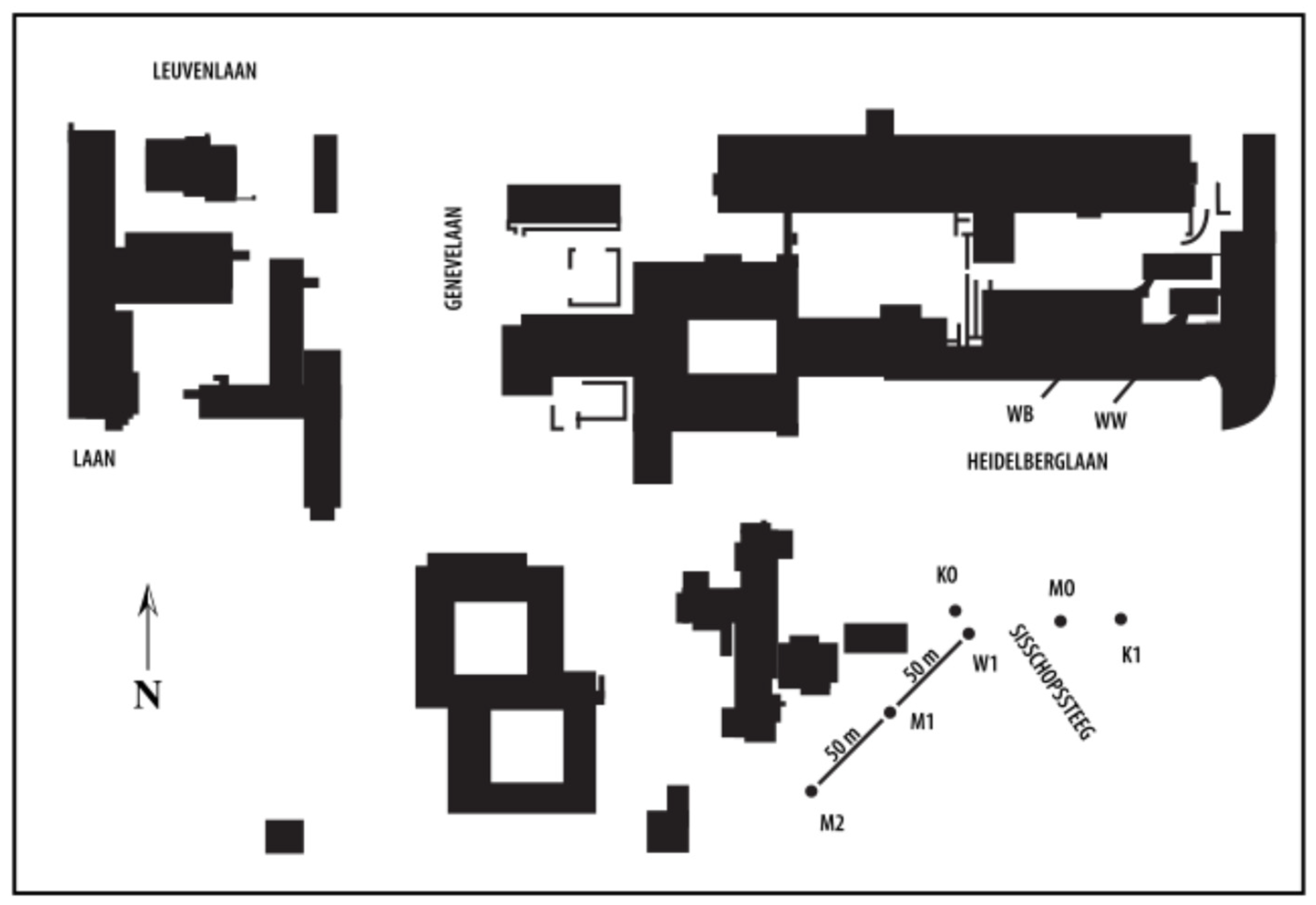
4.1. Monster (Koppert-Cress)
4.1.1. Geology
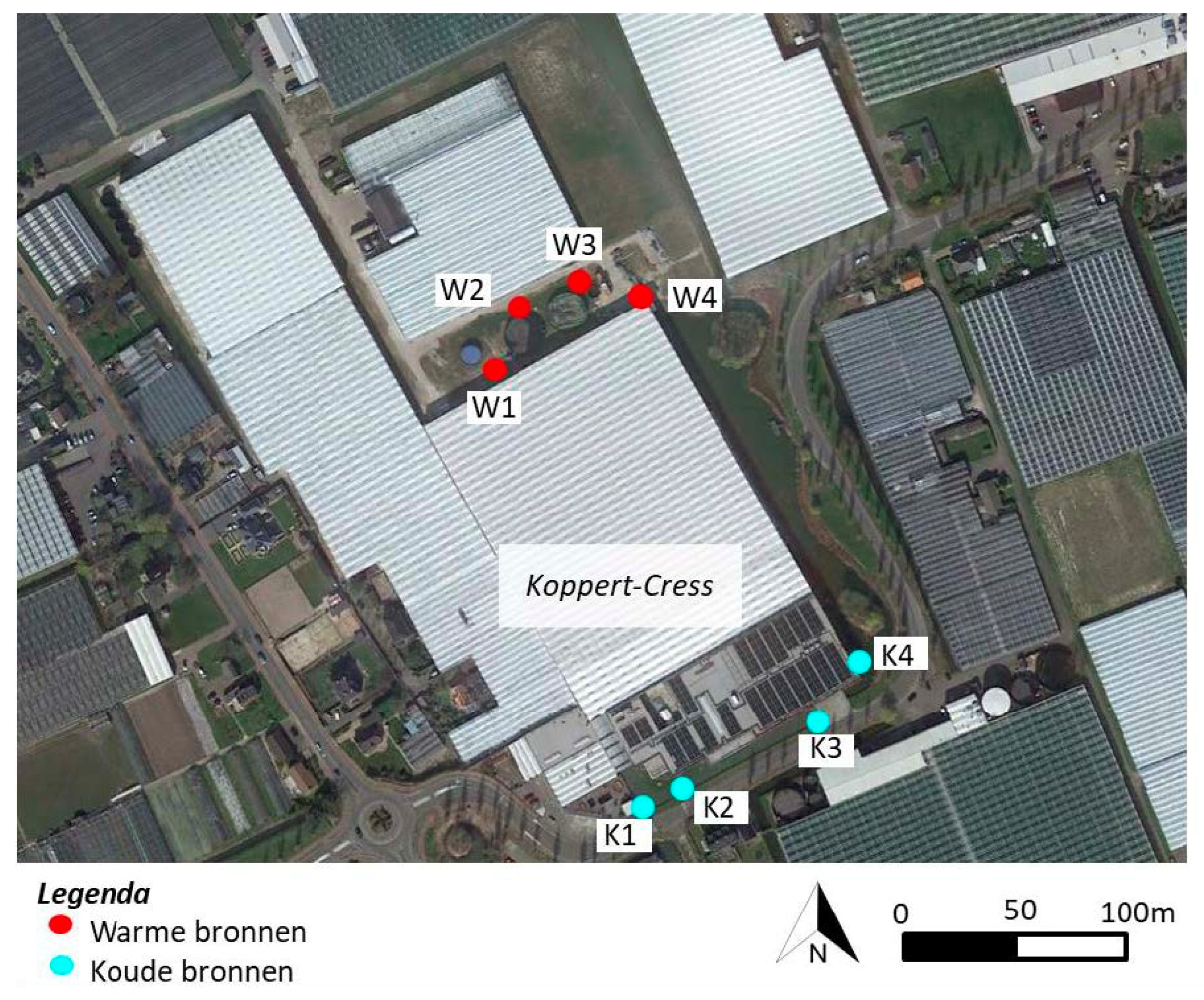
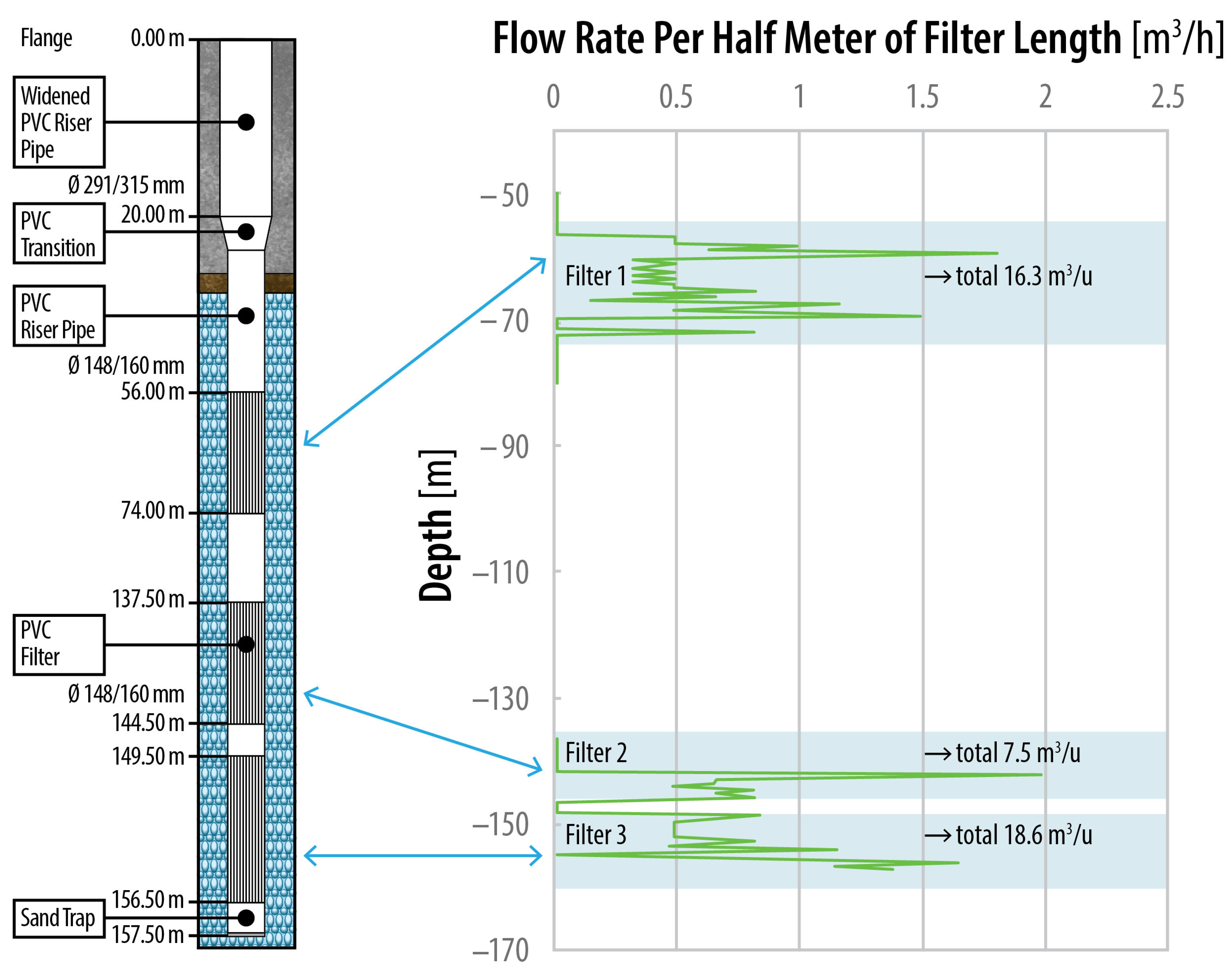
4.1.2. Wells
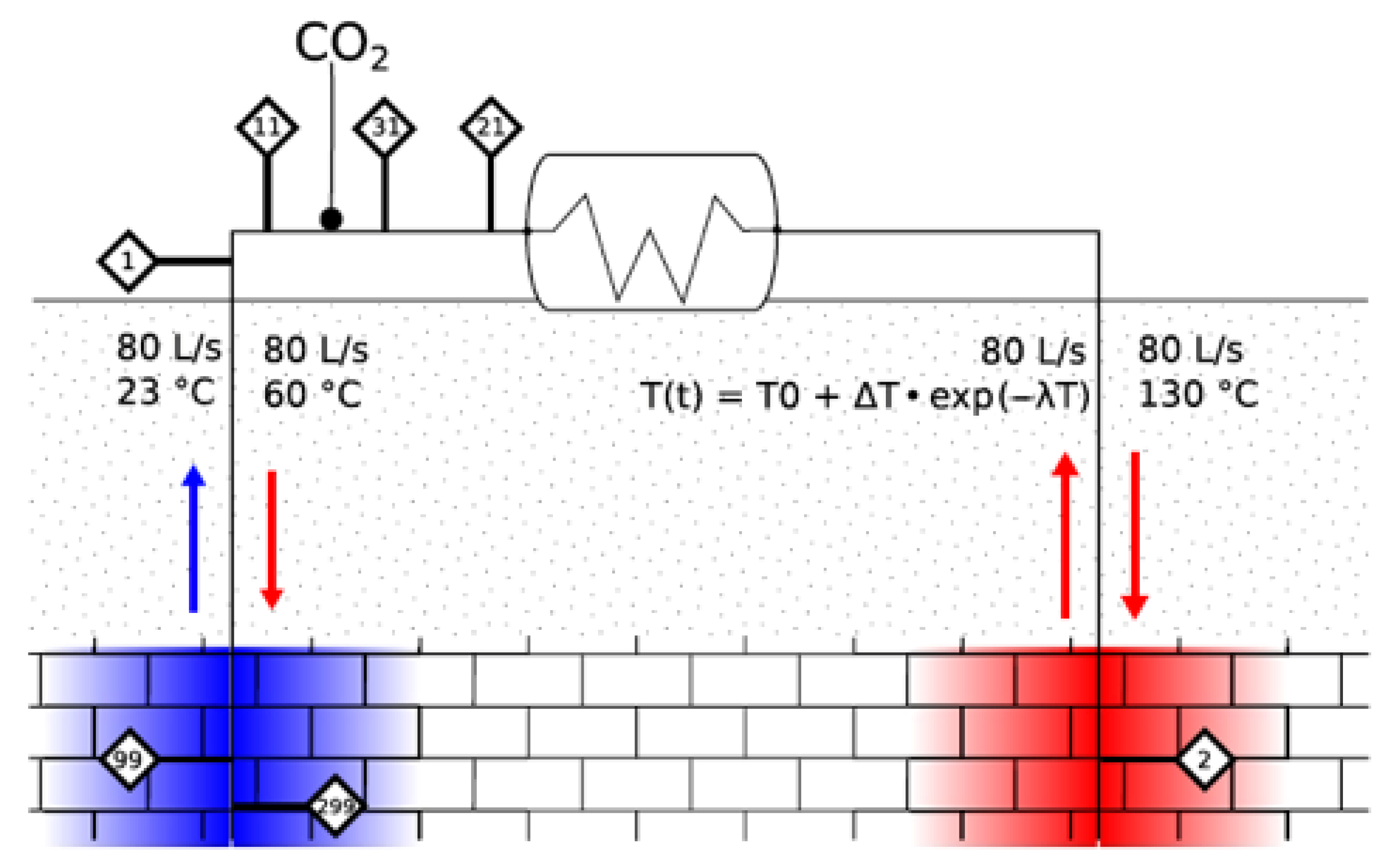
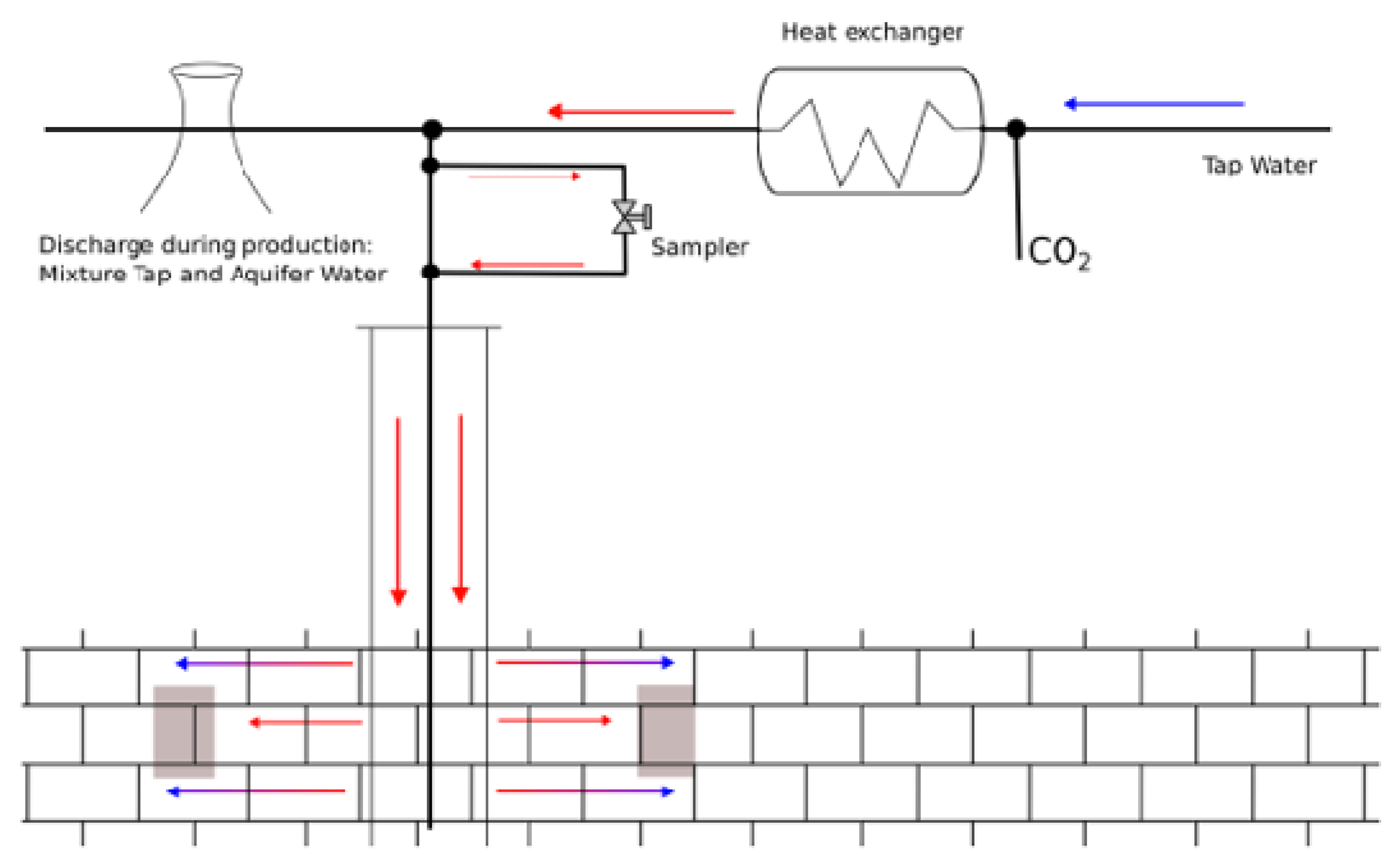
4.1.3. Charging/Discharging of Thermal Energy
4.1.4. Thermal, Geochemical, and Microbiological Modeling and Monitoring
4.1.5. Lessons Learned
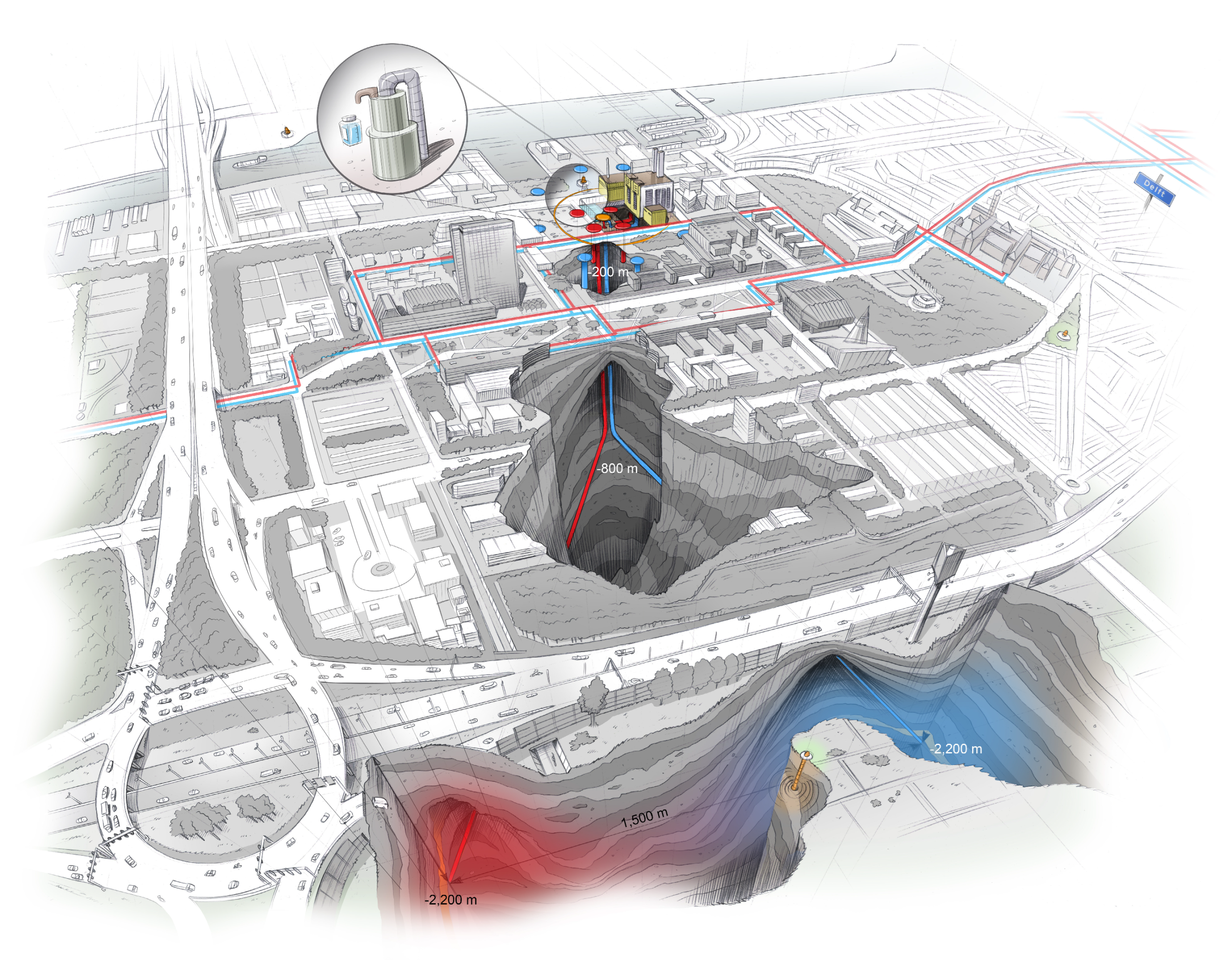
4.2. Delft
4.2.1. Geology
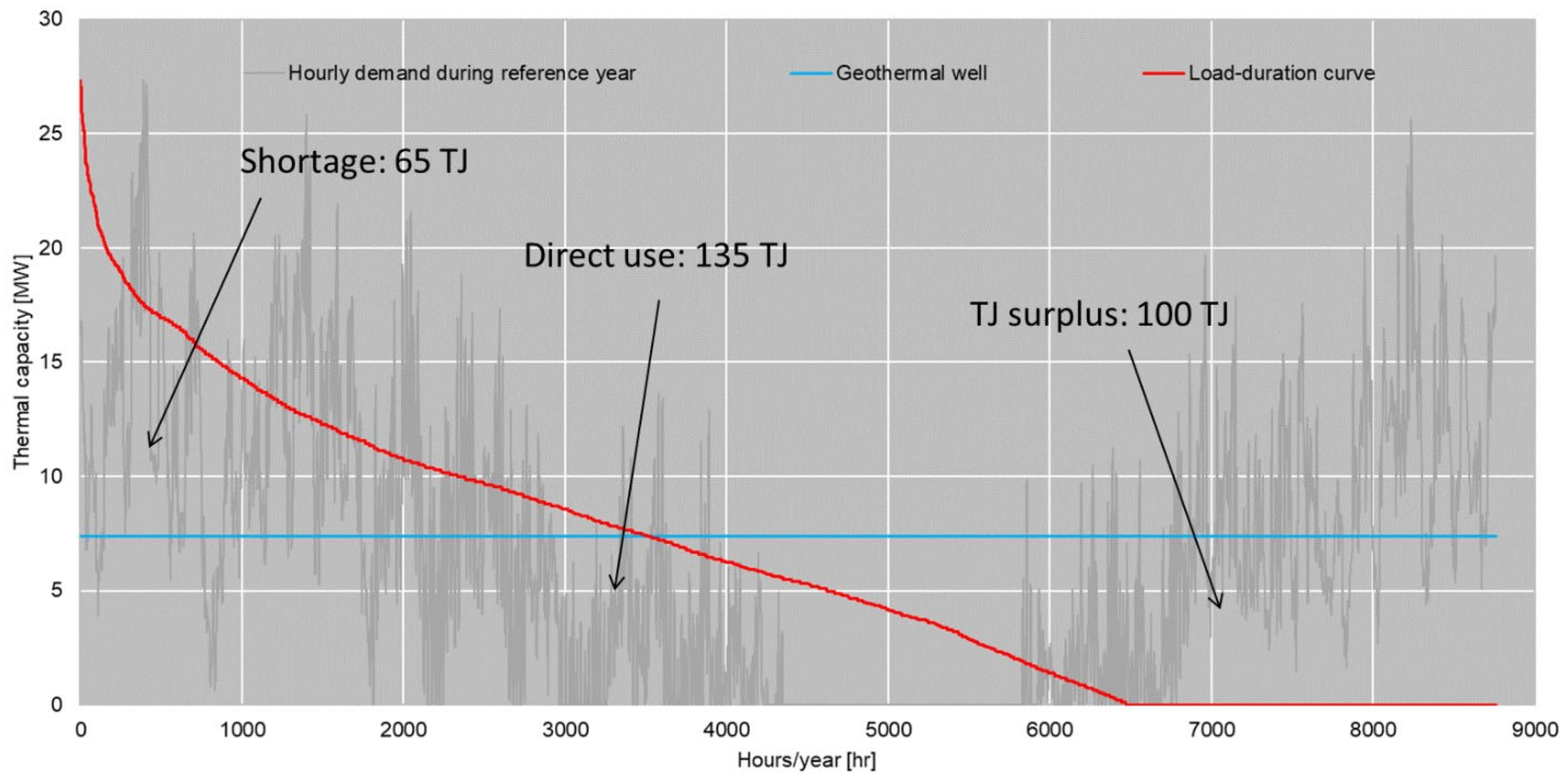
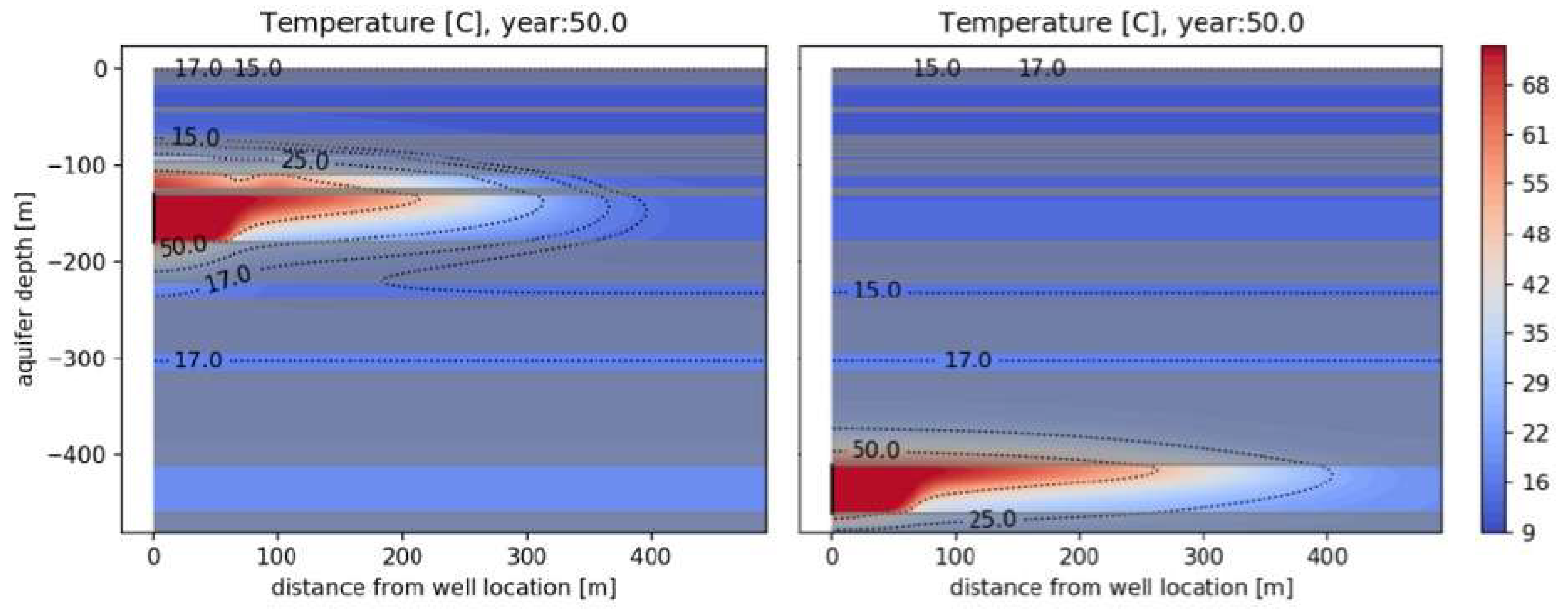
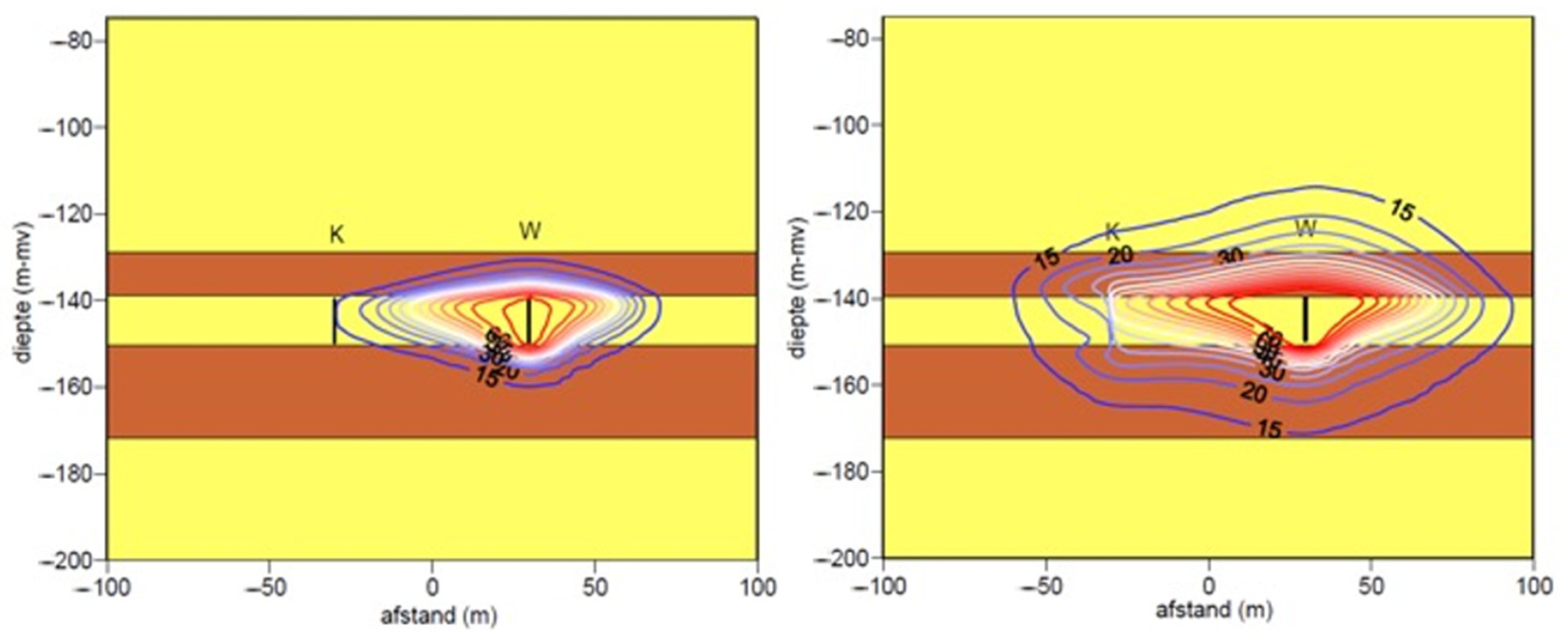
4.2.2. System Modeling and Evaluation
4.2.3. Lessons Learned
4.3. Utrecht
4.3.1. Geology
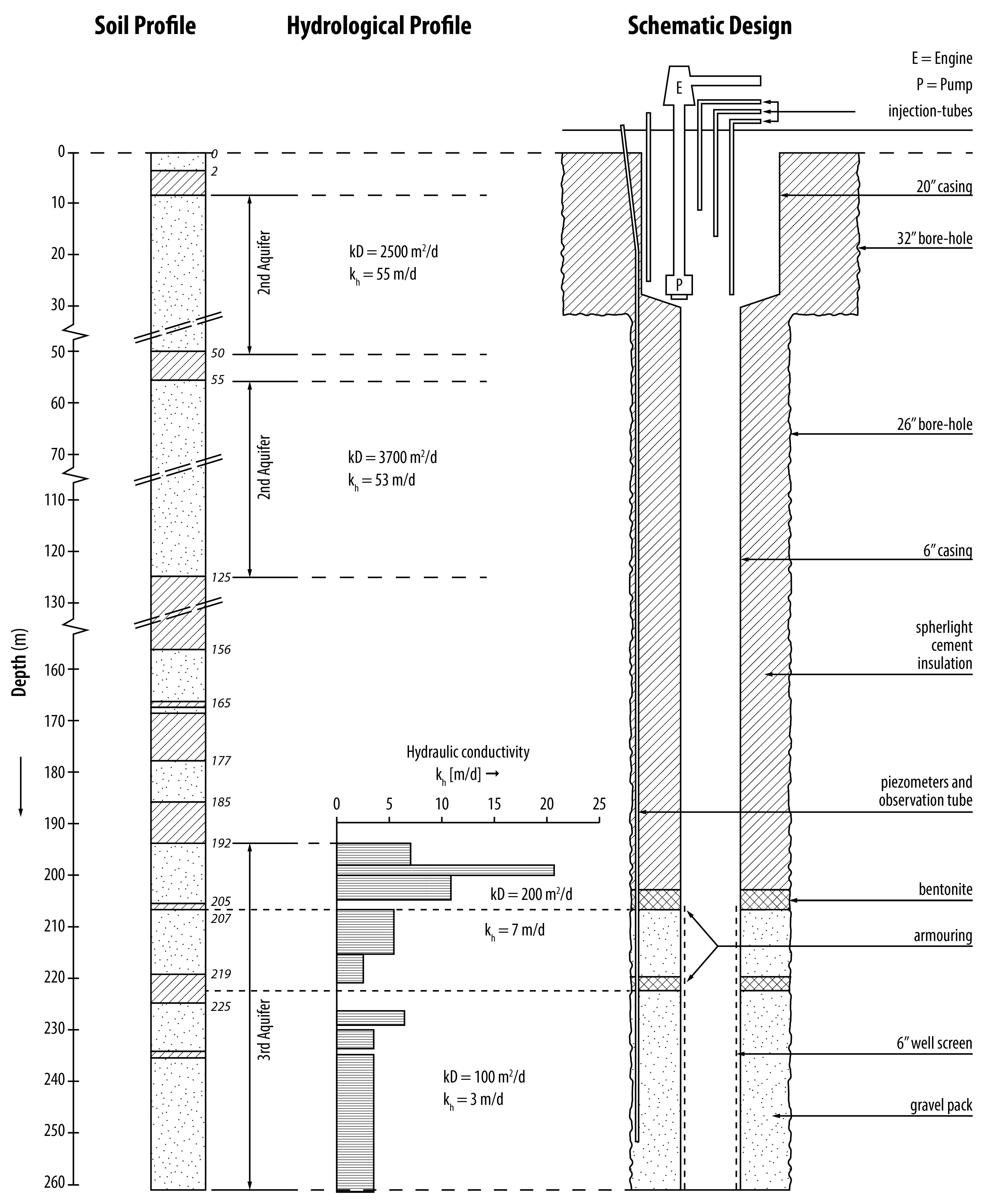
4.3.2. Wells
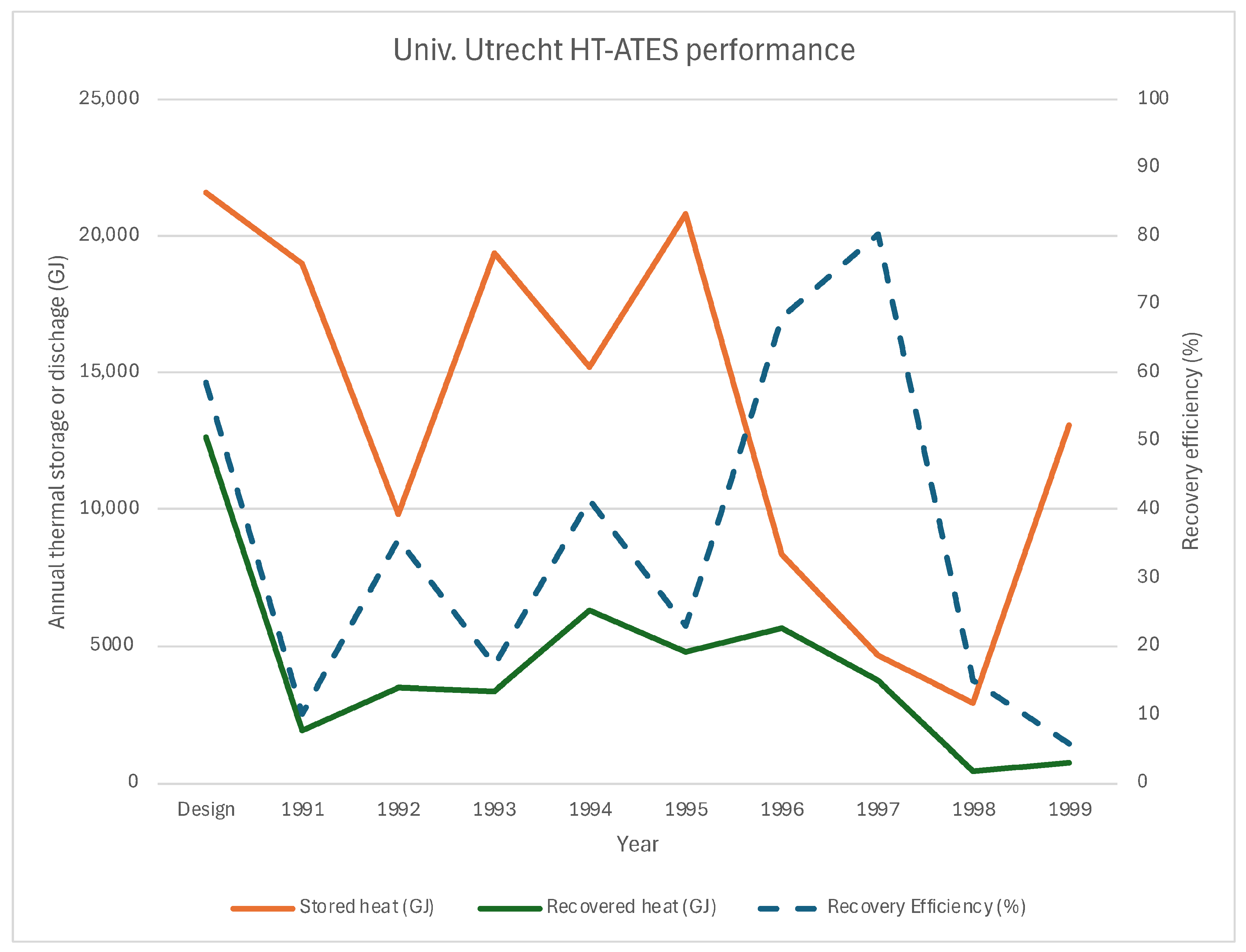
4.3.3. Charging/Discharging of Thermal Energy
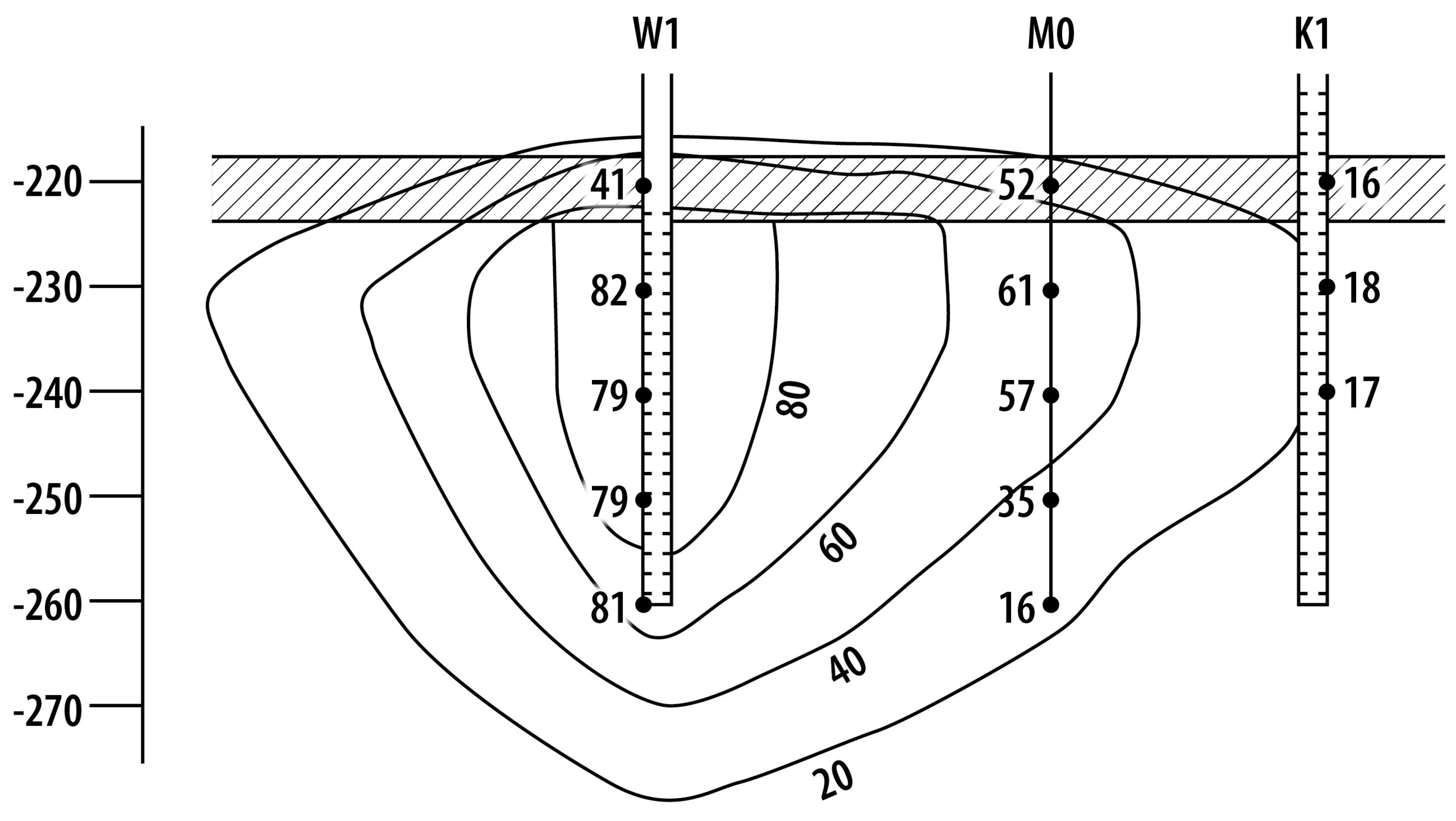
4.3.4. Thermal and Geochemical Modeling and Monitoring
4.3.5. Lessons Learned
4.4. Zwammerdam
4.4.1. Geology
4.4.2. Wells
4.4.3. Charging/Discharging of Thermal Energy
4.4.4. Thermal and Geochemical Modeling and Monitoring
4.4.5. Lessons Learned
4.5. Wageningen
4.5.1. Geology
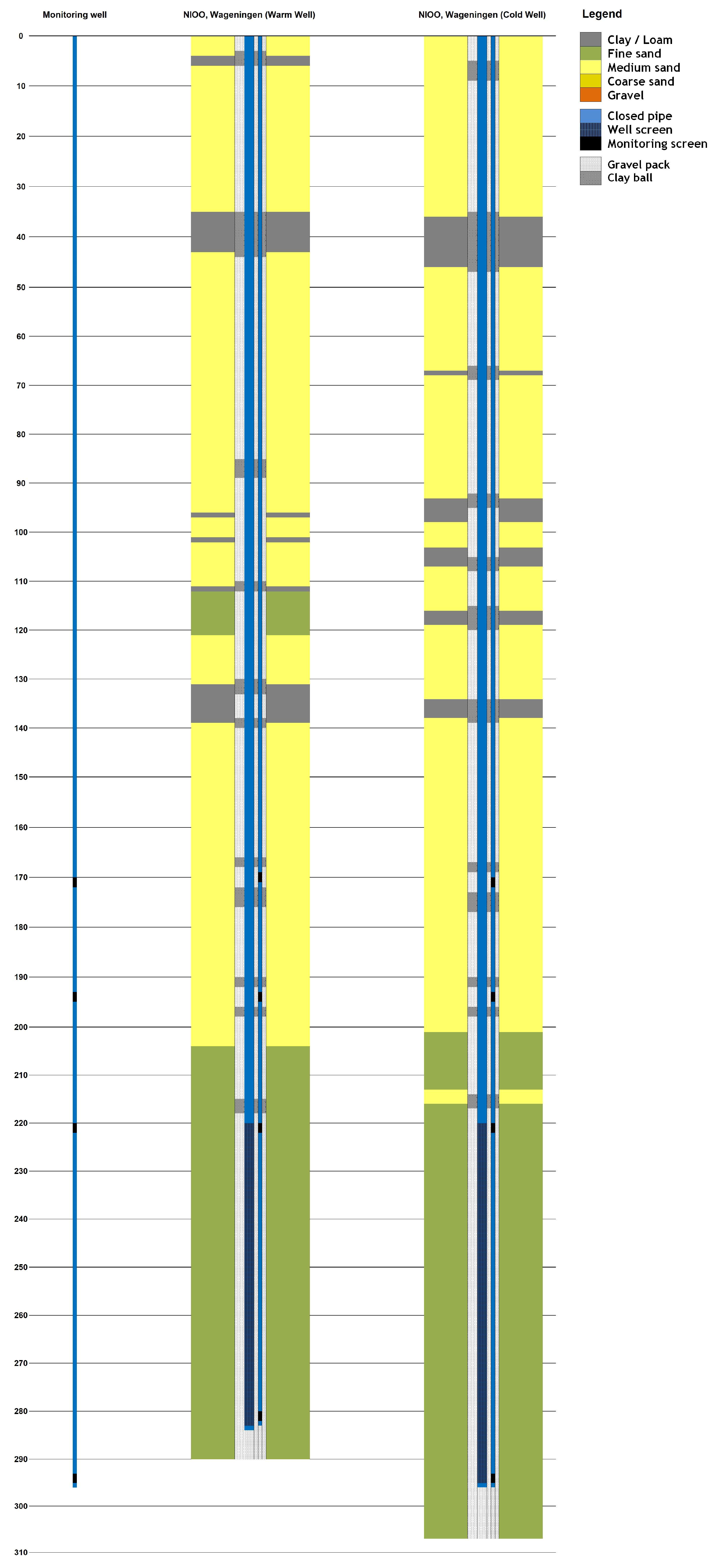
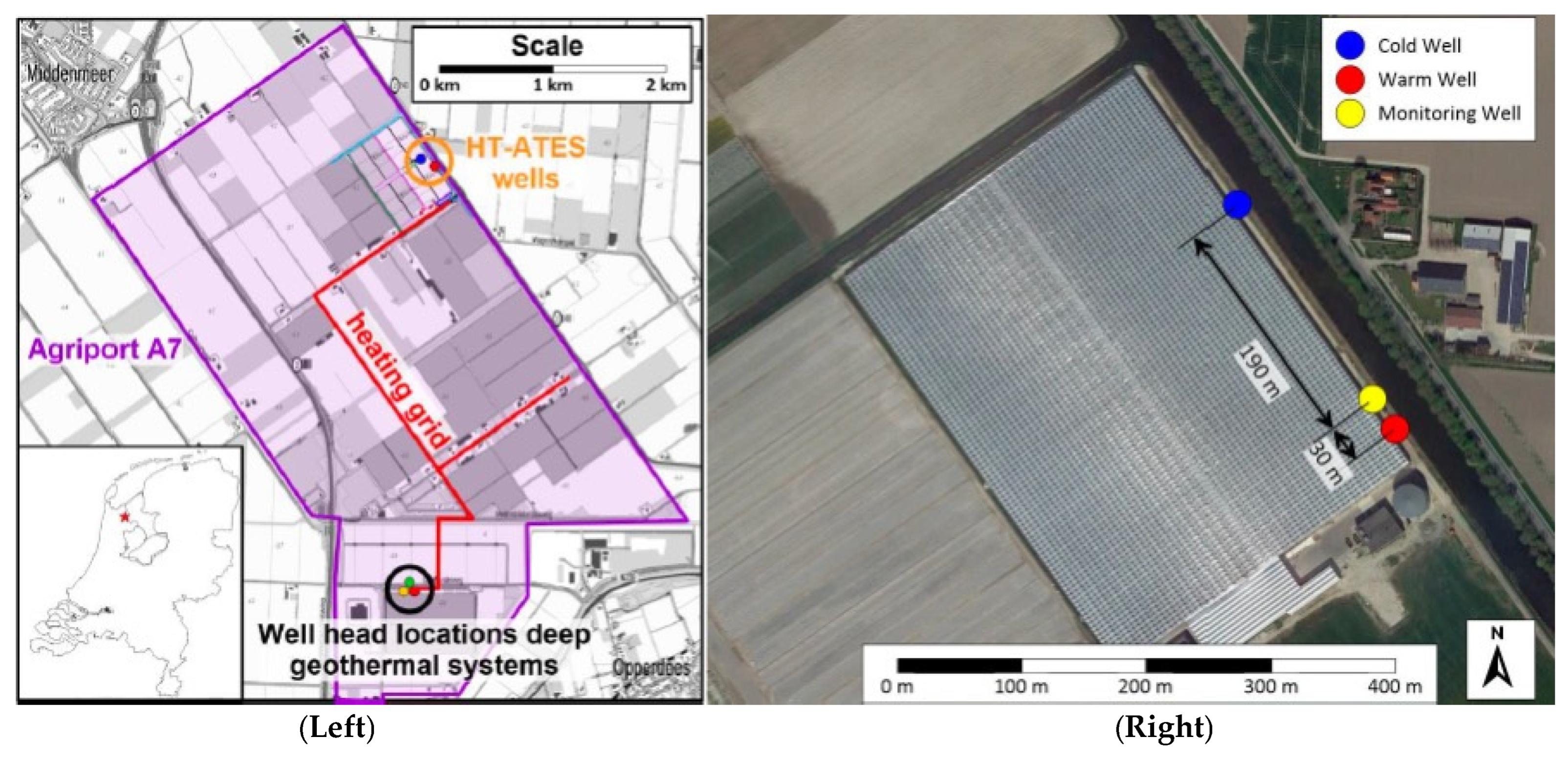
4.5.2. Wells
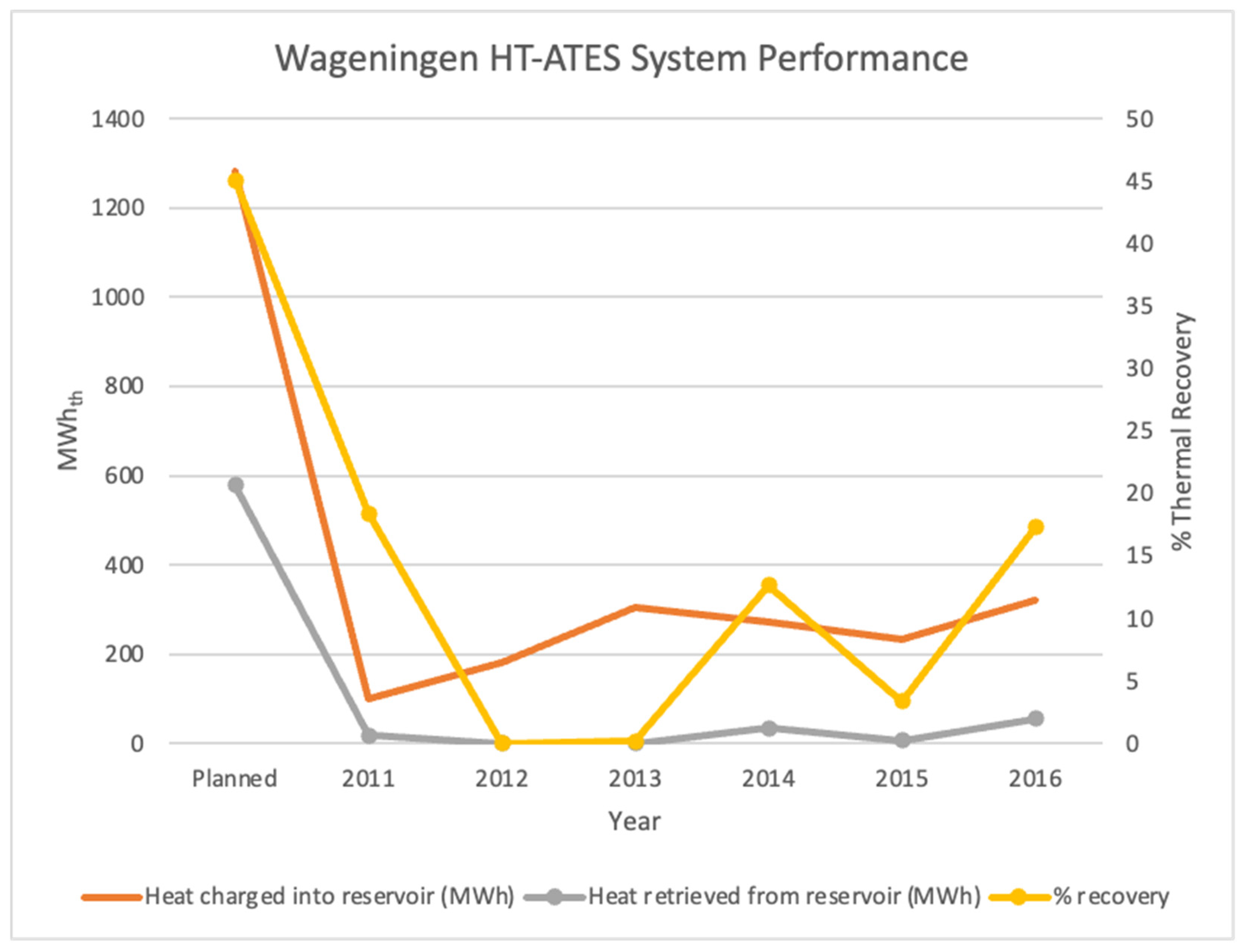
4.5.3. Charging/Discharging of Thermal Energy
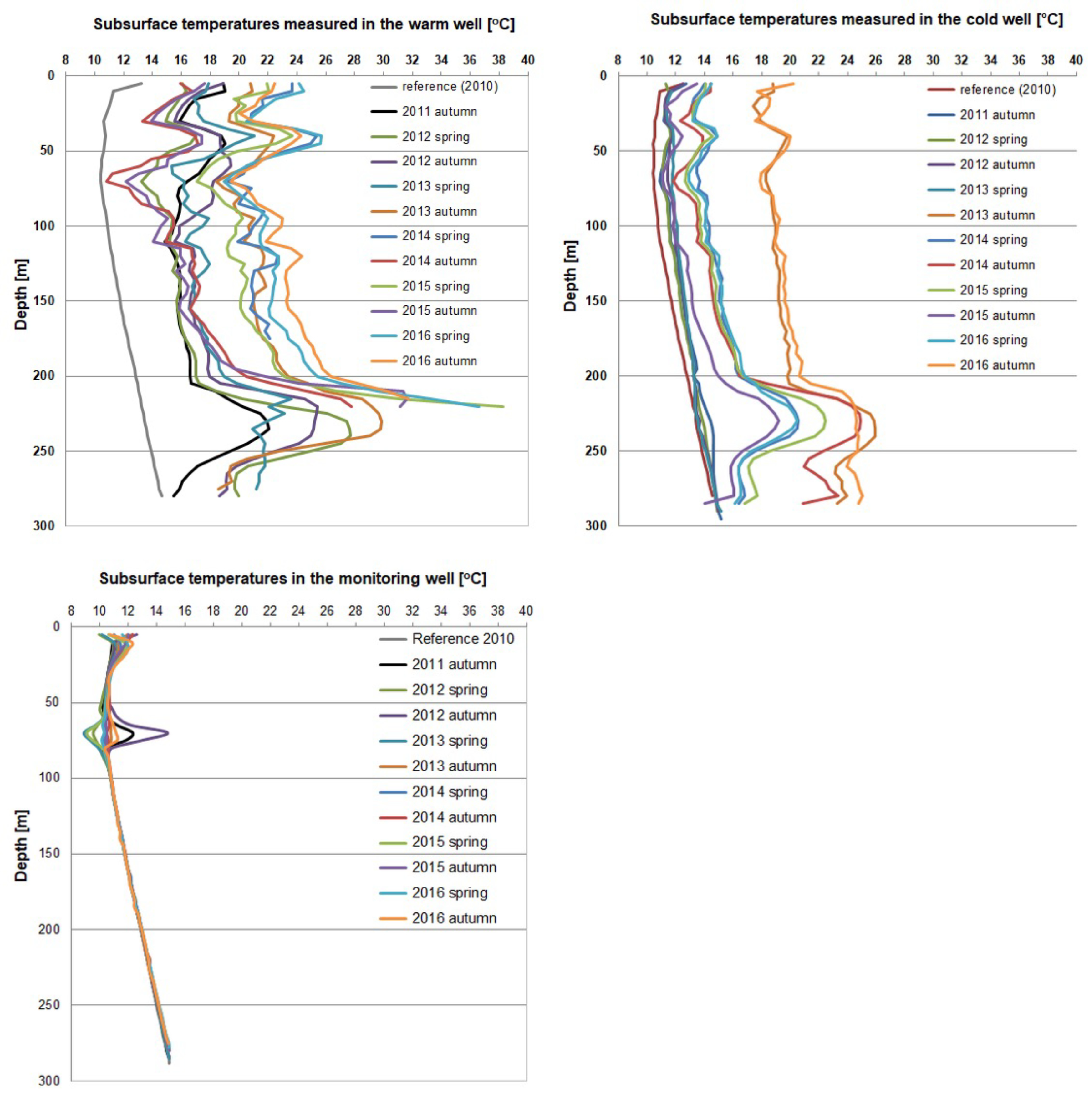
4.5.4. Thermal and Geochemical Modeling and Monitoring
4.5.5. Lessons Learned
4.6. Middenmeer
4.6.1. Geology
4.6.2. Wells
4.6.3. System Modeling and Evaluation
4.6.4. Lessons Learned
5. Summary of Key Findings
- Each project needs to consider site-specific conditions. The local geology and hydrogeology are critical factors in selecting an aquifer suited for thermal energy storage—i.e., a suitable site has to have an impermeable cap to prevent flow to adjacent aquifers, the permeability has to be high enough to permit lateral flow between wells, but low enough to counteract/prevent vertical buoyancy flow, the system needs to be in an area with minimal background groundwater velocity, and the type of mineralogy and fluid chemistry need to minimally cause detrimental geochemical interactions (e.g., [3]). Proper site characterization conducted (and preferably a test drilling) at an early phase of the project will lead to more accurate predictions of system performance and identify potential operational and technical issues.
- Monitoring systems have been very useful in observing system performance and identifying potential operational issues. Data obtained from these systems can be used to calibrate reservoir models, which in turn can be used to predict future performance using different operational scenarios to allow for system optimization.
- The effectiveness (and profitability) of the HT-ATES projects depends on the efficiency of thermal energy storage and recovery, which is impacted by the energy supply and demand, the cut-off temperatures for the thermal energy that is extracted, and the performance of the subsurface energy storage system. Changes in thermal energy supply and demand can negatively impact the thermal energy recovery coefficient, and these changes have posed a major issue for many of the failed projects.
- The project economics will depend on a variety of factors, such as the thermal efficiency of the system, the extent to which the off-takers can take full advantage of the thermal energy, the cost of the wells (which depends on the depth of the aquifer), and the operational costs needed to keep the system running reliably (e.g., [17,23]). However, the benefits provided by having seasonal storage balance out variable thermal energy demands can make these costs competitive. Having higher temperature storage provides a greater energy density for the storage system, which could lead to improved performance and economics. Small thermal plumes generally experience relatively greater thermal losses than large ones due to their larger surface area to volume ratio, and larger systems benefit from the economy of scale [24].
- Many of the early HT-ATES projects were quite small, so a single operational issue (such as a corroded pump or leaking well) could shut down the entire system. Building more robust systems that are resilient enough to continue running due to system redundancy makes these projects more attractive to off-takers.
- Incorporating lessons learned from past projects should help avoid some of the pitfalls that were experienced. Updating design models based on new field and operational data is critical to generating reasonable expectations for systems performance and properly assessing the risks of such projects (e.g., [10]).
6. Failure Modes and Possible Mitigation Methods
Author Contributions
Funding
Data Availability Statement
Acknowledgments
Conflicts of Interest
Abbreviations
| ATES | Aquifer thermal energy storage |
| BMW | Bavarian Motor Works |
| CH | Cogeneration heating |
| CHP | Combined heat and power plant |
| DG | Deep geothermal |
| DTS | Distributed temperature sensing |
| EU | European Union |
| GJ | Gigajoule |
| GRE | Glass fiber-reinforced epoxy |
| HT-ATES | High-temperature aquifer thermal energy storage |
| IHC | Industrial heating and cooling |
| JKH | Jakob Kaiser house |
| LCOH | Levelized cost of heat |
| LT-ATES | Low-temperature aquifer thermal energy storage |
| MELH | Marie Elisabeth Lüders house |
| MW | Megawatt |
| MWhth | Megawatt hour thermal |
| PBHC | Public building heating and cooling |
| PLH | Paul Löbe house |
| PVC | Polyvinyl chloride |
| RHC | Residential heating and cooling |
| RTG | Reichstag Building |
| SH | Solar heating |
| STES | Seasonal thermal energy storage |
| TDS | Total dissolved solids |
| TH | Thermal-hydraulic |
| TJ | Terajoule |
| TU Delft | Delft University of Technology |
| UTES | Underground thermal energy storage |
References
- Victoria, M.; Zhu, K.; Brown, T.; Andresen, G.B.; Greiner, M. The role of storage technologies throughout the decarbonization of the sector-coupled European energy system. Energy Convers. Manag. 2019, 201, 111977. [Google Scholar] [CrossRef]
- Fry, N.; Adebayo, P.; Tian, R.; Shor, R.; Mwesigye, A. A review of district energy technology with subsurface thermal storage integration. Geotherm. Energy 2024, 12, 29. [Google Scholar] [CrossRef]
- Veldkamp, H.; Dinkelman, D.; Koornneef, J. Balancing energy supply and demand by underground thermal energy storage. Geotherm. Rising Bull. 2020, 49, 1–4. [Google Scholar]
- Sanner, B. High temperature underground thermal energy storage: State-of-the-art and prospects. Giess. Geol. Schriften 1999, 67, 158. [Google Scholar]
- Caliskan, H.; Dincer, I.; Hepbasli, A. Thermodynamic analyses and assessments of various thermal energy storage systems for buildings. Energy Convers. Manag. 2012, 62, 109–122. [Google Scholar] [CrossRef]
- Li, G. Sensible heat thermal storage energy and exergy performance evaluations. Renew. Sustain. Energy Rev. 2016, 53, 897–923. [Google Scholar] [CrossRef]
- Witter, E.; Dobson, P.; Akindipe, D.; McTigue, J.; Atkinson, T.; Kumar, R.; Sonnenthal, E.; Zhu, G. A review of geological thermal energy storage for seasonal, grid-scale dispatching. Renew. Sustain. Energy Rev. 2025, 218, 115761. [Google Scholar] [CrossRef]
- Pepin, J.D.; Burns, E.R.; Cahalan, R.C.; Hayba, D.O.; Dickenson, J.E.; Duncan, L.L.; Kuniansky, E.L. Reservoir thermal energy storage pre-assessment for the United States. Geothermics 2025, 129, 103256. [Google Scholar] [CrossRef]
- Fleuchaus, P.; Godschalk, B.; Stober, I.; Blum, P. Worldwide application of aquifer thermal energy storage—A review. Renew. Sustain. Energy Rev. 2018, 94, 861–876. [Google Scholar] [CrossRef]
- Fleuchaus, P.; Schüppler, S.; Bloemendal, M.; Guglielmetti, L.; Opel, O.; Blum, P. Risk analysis of High-Temperature Aquifer Thermal Energy Storage (HT-ATES). Renew. Sustain. Energy Rev. 2020, 133, 110153. [Google Scholar] [CrossRef]
- Koornneef, J.; Guglielmetti, L.; Hahn, F.; Egermann, P.; Vandkilde-Pedersen, T.; Aradottir, E.S.; Allaerts, K.; Viveiros, F.; Saaltink, M. HEATSTORE: High temperature underground thermal energy storage. In Proceedings of the European Geothermal Congress 2019, The Hague, The Netherlands, 11–14 June 2019. [Google Scholar]
- Akin, T.; Bruhn, D.; Daniilidis, A. Predictive modeling of heat storage in TU Delft Campus. In Proceedings of the 50th Workshop on Geothermal Reservoir Engineering, Stanford University, Stanford, CA, USA, 10–12 February 2025. [Google Scholar]
- Schill, E.; Bauer, F.; Zhang, Y.; Rutqvist, J.; Dobson, P.; Atkinson, T.; Jin, W. DeepStor—District heating form high-temperature heat storage in a depleted hydrocarbon reservoir in the upper Rhine Graben. GRC Trans. 2024, 48, 3066–3075. [Google Scholar]
- Sanner, B.; Knoblich, K. Advantages and problems of high temperature underground thermal energy storage. Bull. Hydrogeol. 1999, 17, 341–348. [Google Scholar]
- Hähnlein, S.; Bayer, P.; Ferguson, G.; Blum, P. Sustainability and policy for the thermal use of shallow geothermal energy. Energy Policy 2013, 59, 914–925. [Google Scholar] [CrossRef]
- Drijver, B.; Bakema, G.; Oerlemans, P. State of the art of HT-ATES in the Netherlands. In Proceedings of the European Geothermal Congress 2019, The Hague, The Netherlands, 11–14 June 2019. [Google Scholar]
- Bloemendal, M.; Vardon, P.J.; Pijnenborg, M.; Sudintas, G.; Medema, A.; Marif, K.; Beernink, S.; van Veldhuizen, F.; Snelleman, S.; van Oort, T. A techno-economic evaluation of high temperature thermal aquifer storage (HT-ATES) for use with the geothermal well on the TU Delft campus. In Proceedings of the World Geothermal Congress 2020+1, Reykjavik, Iceland, April–October 2021. [Google Scholar]
- Dobson, P.F.; Atkinson, T.A.; Jin, W.; Acharya, M.; Akindipe, D.; Li, B.; McLing, T.; Kumar, R. Hybrid uses of high-temperature reservoir thermal energy storage: Lessons learned from previous projects. In Proceedings of the SPE Energy Transitions Symposium, Houston, TA, USA, 22–23 August 2023. [Google Scholar]
- Reith, S.; Kölbel, T.; Schlagermann, P.; Pellizzone, A.; Allansdottir, A. Public Acceptance of Geothermal Electricity Production. Geoelec Deliverable No. 4.4 Report on Public Acceptance, April 2013. Available online: http://www.geoelec.eu/wp-content/uploads/2014/03/D-4.4-GEOELEC-report-on-public-acceptance.pdf (accessed on 29 September 2025).
- Otero, S. Fighting the information gap and the steam monster, the Chilean experience on geothermal outreach. In Proceedings of the World Geothermal Congress 2015, Melbourne, Australia, 19–25 April 2015. [Google Scholar]
- Van Douwe, A.; Stahl, L.K.; Kreuter, H. Acceptance of geothermal projects in a critical environment in the Upper Rhine Graben. In Proceedings of the European Geothermal Congress 2016, Strasbourg, France, 19–23 September 2016. [Google Scholar]
- Bloemendal, M.; Olsthoorn, T.; Boons, F. How to achieve optimal and sustainable use of the subsurface for Aquifer Thermal Energy Storage. Energy Policy 2014, 66, 104–114. [Google Scholar] [CrossRef]
- Fleuchaus, P.; Schüppler, S.; Godschalk, B.; Bakema, G.; Zorn, R.; Blum, P. Techno-economic performance evaluation of aquifer thermal energy storage. In Proceedings of the World Geothermal Congress 2020+1, Reykjavik, Iceland, April–October 2021. [Google Scholar]
- Herrmann, M.; Fleuchaus, P.; Godschalk, B.; Verbiest, M.; Sørensen, S.N.; Blum, P. Capital costs of aquifer thermal energy storage (ATES): A review. Renew. Sustain. Energy Rev. 2026, 226, 116202. [Google Scholar] [CrossRef]
- Jenne, E.A.; Andersson, O.; Willemsen, A. Well, Hydrology, and Geochemistry Problems Encountered in ATES Systems and their Solutions. In Proceedings of the 27th Intersociety Energy Conversion Engineering Conference, San Diego, CA, USA, 3–7 August 1992. SAE Technical Paper 929153. [Google Scholar] [CrossRef]
- Griffioen, J.; Appelo, C.A.J. Nature and extent of carbonate precipitation during aquifer thermal energy storage. Appl. Geochem. 1993, 8, 161–176. [Google Scholar] [CrossRef]
- García-Gil, A.; Epting, J.; Ayora, C.; Garrido, E.; Vázquez-Suñé, E.; Huggenberger, P.; Gimenez, A.C. A reactive transport model for the quantification of risks induced by groundwater heat pump systems in urban aquifers. J. Hydrol. 2016, 542, 719–730. [Google Scholar] [CrossRef]
- Wanner, C.; Eichinger, F.; Jahrfeld, T.; Diamond, L.W. Causes of abundant calcite scaling in geothermal wells in the Bavarian Molasse Basin, Southern Germany. Geothermics 2017, 70, 324–338. [Google Scholar] [CrossRef]
- Devine-Wright, P.; Batel, S.; Aas, O.; Sovacool, B.; Labelle, M.C.; Ruud, A. A conceptual framework for understanding the social acceptance of energy infrastructure: Insights from energy storage. Energy Policy 2017, 107, 27–31. [Google Scholar] [CrossRef]
- Blum, P.; Menberg, K.; Koch, F.; Benz, S.A.; Tissen, C.; Hemmerle, H.; Bayer, P. Is thermal use of groundwater a pollution? J. Contam. Hydrol. 2021, 239, 103791. [Google Scholar] [CrossRef]
- Lee, K.-K.; Ellsworth, W.L.; Giardini, D.; Townend, J.; Ge, S.; Kang, T.-S.; Shimamoto, T.; Yeo, I.-W.; Kang, T.-S.; Rhie, J.; et al. Managing injection-induced seismic risks. Science 2019, 364, 730–732. [Google Scholar] [CrossRef]
- GeoTES. Thermische Energiespeicherung in Tiefen Aquiferen. Available online: https://www.geotes.de (accessed on 26 October 2025).
- OptInAquiFer. Optimierte Integration Thermischer Aquiferspeicher. Available online: https://www.aquifer-speicher.de/ (accessed on 26 October 2025).
- Lüders, K.; Firmbach, L.; Ebert, M.; Dahmke, A.; Dietrich, P.; Kober, R. Gas-phase formation during thermal energy storage in near-surface aquifers: Experimental and modelling results. Environ. Earth Sci. 2016, 75, 1404. [Google Scholar] [CrossRef]
- Mayrhofer, C.; Niessner, R.; Baumann, T. Hydrochemistry and hydrogen sulfide generating processes in the Malm aquifer, Bavarian Molasse Basin, Germany. Hydrogeol. J. 2014, 22, 151–162. [Google Scholar] [CrossRef]
- Müller, D.R.; Regenspurg, S. The element-release mechanisms of two pyrite-bearing siliciclastic rocks form the North German Basin at temperatures up to 90 °C under oxic and anoxic conditions. Geotherm. Energy 2017, 5, 25. [Google Scholar] [CrossRef]
- Rosenbrand, E.; Haugwitz, C.; Jacobsen, P.S.M.; Kjøller, C.; Fabricius, I.L. The effect of hot water injection on sandstone permeability. Geothermics 2014, 50, 155–166. [Google Scholar] [CrossRef]
- Ueckert, M.; Baumann, T. Hydrochemical aspects of high-temperature aquifer storage in carbonaceous aquifers: Evaluation of a field study. Geotherm. Energy 2019, 7, 4. [Google Scholar] [CrossRef]
- Holmslykke, H.D.; Kjøller, C.; Fabricius, I.L. Evaluating chemical reactions upon seasonal heat storage in Danish geothermal reservoirs. In Proceedings of the European Geothermal Congress 2019, The Hague, The Netherlands, 11–14 June 2019. [Google Scholar]
- Jin, W.; Atkinson, T.; Neupane, G.; McLing, T.; Doughty, C.; Spycher, N.; Dobson, P.; Smith, R. Influence of mechanical deformation and mineral dissolution /precipitation on reservoir thermal energy storage; ARMA 22-2068. In Proceedings of the 56th US Rock Mechanics/Geomechanics Symposium, Santa Fe, NM, USA, 26–29 June 2022. [Google Scholar]
- Dijkstra, H.; de Boer, C.; Griffioen, J.; Koenen, M. Workflow to Evaluate the Risk of Mineral Scaling in a HT-ATES System and Application to a Potential Site in Middenmeer, The Netherlands; Netherlands Institute for Applied Geosciences (TNO) Report 2020 R10437; TNO: Utrecht, The Netherlands, 2020. [Google Scholar]
- Spycher, N.; Doughty, C.; Dobson, P.; Neupane, G.; Smith, R.; Jin, W.; Atkinson, T.; McLing, T. Evaluation of mineral scaling during high-temperature thermal energy storage in deep saline aquifers. GRC Trans. 2021, 45, 1201–1215. [Google Scholar]
- Kumar, R.; Sonnenthal, E.L.; Smith, J.T.; Nico, P.S.; Dobson, P.F. Reactive transport modeling of the Aquifer Thermal Energy Storage (ATES) system at Stockton University, New Jersey during seasonal operations. Geothermics 2024, 123, 103121. [Google Scholar] [CrossRef]
- Norden, B. (Ed.) Geothermal Energy Utilization in Low-Enthalpy Sedimentary Environments; GFZ Helmholtz-Zentrum Potsdam, Scientific Technical Report STR11/06; GFZ: Potsdam, Germany, 2011; ISSN 1610-0956. [Google Scholar]
- Jesußek, A.; Grandel, S.; Dahmke, A. Impacts of subsurface heat storage on aquifer hydrogeochemistry. Environ. Earth Sci. 2013, 69, 1999–2012. [Google Scholar] [CrossRef]
- Jesußek, A.; Köber, R.; Grandel, S.; Dahmke, A. Aquifer heat storage: Sulphate reduction with acetate at increased temperatures. Environ. Earth Sci. 2013, 69, 1763–1771. [Google Scholar] [CrossRef]
- Lerm, S.; Westphal, A.; Miethling-Graff, R.; Alawi, M.; Seibt, A.; Wolfgramm, M.; Würdemann, H. Thermal effects on microbial composition and microbially induced corrosion and mineral precipitation affecting operation of a geothermal plant in a deep saline aquifer. Extremophiles 2013, 17, 311–327. [Google Scholar] [CrossRef]
- Opel, O.; Eggerichs, T.; Otte, T.; Ruck, W.K.L. Monitoring of microbially mediated corrosion and scaling processes using redox potential measurements. Bioelectrochemistry 2014, 97, 137–144. [Google Scholar] [CrossRef] [PubMed]
- Vetter, A.; Mangelsdorf, K.; Schettler, G.; Seibt, A.; Woldframm, M.; Rauppach, K.; Vieth-Hillebrand, A. Fluid chemistry and impact of different operating modes on microbial community at Neubrandenburg heat storage (Northeast German Basin). Org. Geochem. 2012, 53, 8–15. [Google Scholar] [CrossRef]
- Würdemann, H.; Westphal, A.; Lerm, S.; Kleyböcker, A.; Teitz, S.; Kasina, M.; Miethling-Graff, R.; Seibt, A.; Wolfgramm, M. Influence of microbial processes on the operational reliability in a geothermal heat store—Results of long-term monitoring at a full scale plant and first studies in a bypass system. Energy Procedia 2014, 59, 412–417. [Google Scholar] [CrossRef]
- Westphal, A.; Lerm, S.; Meithling-Graff, R.; Seibt, A.; Wolfgramm, M.; Würdemann, H. Effects of plant downtime on the microbial community composition in the highly saline brine of a geothermal plan in the North German Basin. Appl. Microbiol. Biotechnol. 2016, 100, 3277–3290. [Google Scholar] [CrossRef] [PubMed]
- Seibt, P.; Kabus, F. Aquifer thermal energy storage—Projects implemented in Germany. In Proceedings of the 10th International Conference on Thermal Energy Storage, The Richard Stockton College of New Jersey, Pomona, NJ, USA, 31 May–2 June 2006. [Google Scholar]
- Holstenkamp, L.; Meisel, M.; Neidig, P.; Opel, O.; Steffahn, J.; Strodel, N.; Lauer, J.J.; Vogel, M.; Degenhart, H.; Michalzik, D.; et al. Interdisciplinary review of medium-deep aquifer thermal energy storage in north Germany. Energy Procedia 2017, 135, 327–336. [Google Scholar] [CrossRef]
- Stober, I.; Bucher, K. Hydrothermale Nutzung, Geothermische Dublette. In Geothermie; Springer Spektrum: Berlin, Germany, 2020. [Google Scholar] [CrossRef]
- Fleuchaus, P.; Schüppler, S.; Stemmle, R.; Menberg, K.; Blum, P. Aquiferspeicher in Deutschland. Grundwasser 2021, 26, 123–134. [Google Scholar] [CrossRef]
- Stemmle, R.; Arab, A.; Bauer, S.; Beyer, C.; Blöcher, G.; Bossennec, C.; Dörnbrack, M.; Hahn, F.; Jaeger, P.; Kranz, S.; et al. Current research on aquifer thermal energy storage (ATES) in Germany. Grundwasser 2025, 30, 107–124. [Google Scholar] [CrossRef]
- Kabus, F.; Seibt, P.; Poppei, J. Aquifer thermal energy stores in Germany. In Proceedings of the International Symposium on Heating and Co-Generative Systems in Urban Environments and Industry, Ohrid, Macedonia, 4–5 October 2000. [Google Scholar]
- Sanner, B.; Kabus, F.; Seibt, P.; Bartels, J. Underground thermal energy storage for the German Parliament in Berlin, system concept and operational experience. In Proceedings of the World Geothermal Congress 2005, Antalya, Turkey, 24–29 April 2005. [Google Scholar]
- Kabus, F.; Seibt, P. Aquifer thermal energy storage for the Berlin Reichstag building-new seat of the German parliament. In Proceedings of the World Geothermal Congress 2000, Kyushu-Tohoku, Japan, 28 May–10 June 2000. [Google Scholar]
- Poppei, J.; Seibt, P.; Fischer, D. Recent examples for the utilisation of geothermal aquifers for heat and cold storage or improvement of the reservoir conditions by heat injection (storage and combined production/storage projects in Germany). In Proceedings of the 23rd Workshop Geothermal Reservoir Engineering, Stanford University, Stanford, CA, USA, 26–28 January 1998. [Google Scholar]
- Kabus, F.; Bartels, J. Underground storage of heat and cold. Therm. Eng. 2004, 51, 498–506. [Google Scholar]
- Böttcher, O. Energy efficient and sustainable—Federal buildings in Germany. REHVA J. 2012, 49, 41–45. [Google Scholar]
- Kranz, S.; Frick, S. Efficient cooling energy supply with aquifer thermal energy storages. Appl. Energy 2013, 109, 321–327. [Google Scholar] [CrossRef]
- Wolfgramm, M.; Rauppach, K.; Puronpää-Schäfer, P. Berliner Parlamentsbauten—Betrieb, Monitoring und Regenerierungen N2-beaufschlagter Kältespeicherbrunnen. DVGW Energ. Wasser-Prax. 2010, 9, 2–9. [Google Scholar]
- Seibt, P.; Wolfgramm, M. Practical experience in the reinjection of thermal waters into sandstone. United Nations University Geothermal Training Pro-gramme. In Proceedings of the Workshop for Decision Makers on Direct Heating Use of Geothermal Resources in Asia, organized by UNU-GTP, TBLRREM and TBGMED, Tianjin, China, 11–18 May 2008. [Google Scholar]
- Ueckert, M.; Niessner, R.; Baumann, T. High temperature aquifer storage. In Proceedings of the 41st Workshop on Geothermal Reservoir Engineering, Stanford University, Stanford, CA, USA, 22–24 February 2016. [Google Scholar]
- Bloemendal, J.M.; Beernink, S.; van Bel, N.; Hockin, A.; Schout, G. Open Bodemenergiesysteem Koppert-Cress met Verhoogde Opslagtemperatuur—Evaluatie van Energiebesparingen en Grondwatereffecten; KWR 2020.156; KWR Water Research Institute: Nieuwegein, The Netherlands, 2020. [Google Scholar]
- Kranz, S.; Bartels, J. Simulation and data based optimisation of an operating seasonal aquifer thermal energy storage. In Proceedings of the World Geothermal Congress 2010, Bali, Indonesia, 25–29 April 2010. [Google Scholar]
- Lerm, S.; Alawi, M.; Miethling-Graff, R.; Wolfgramm, M.; Rauppach, K.; Seibt, A.; Würdemann, H. Influence of microbial processes on the operation of a cold store in a shallow aquifer: Impact on well injectivity and filter lifetime. Grundwasser 2011, 16, 93–104. [Google Scholar] [CrossRef]
- Würdemann, H.; Westphal, A.; Kleyböcker, A.; Miethling-Graff, R.; Teitz, S.; Kasina, M.; Seibt, A.; Wolfgramm, M.; Eichinger, F.; Lerm, S. Störungen des Betriebs geothermischer Anlagen durch mikrobielle Stoffwechselprozesse und Erfolg von Gegenmaßnahmen. Grundwasser 2016, 21, 93–106. [Google Scholar] [CrossRef]
- Zenke, J.; Seibt, P.; Kabus, F. Increase of the efficiency of the Neubrandenburg geothermal heating plant through surplus heat storage in summer. In Proceedings of the World Geothermal Congress 2000, Kyushu-Tohuku, Japan, 28 May–10 June 2000. [Google Scholar]
- Seibt, P.; Kellner, T. Practical experience in the reinjection of cooled thermal waters back into the sandstone reservoir. Geothermics 2003, 32, 733–741. [Google Scholar] [CrossRef]
- Kabus, F. Aquifer storge of waste heat arising from a gas and steam cogeneration plant. In Proceedings of the 9th International Conference on Thermal Energy Storage (Futurestock 2003), Warsaw, Poland, 1–4 September 2003. [Google Scholar]
- Kabus, F.; Hoffmann, F.; Möllmann, G. Storage of waste heat arising from a gas and steam cogeneration plant—Concept and first operating experience. In Proceedings of the World Geothermal Congress 2005, Antalya, Turkey, 24–29 April 2005. [Google Scholar]
- Seibt, P.; Kabus, F.; Wolfgramm, M.; Bartels, J.; Seibt, A. Monitoring of hydrogeothermal plants in Germany—An overview. In Proceedings of the World Geothermal Congress 2010, Bali, Indonesia, 25–29 April 2010. [Google Scholar]
- Kabus, F.; Wolfgramm, M.; Seibt, A.; Richlak, U.; Beuster, H. Aquifer thermal energy storage in Neubrandenburg—Monitoring throughout three years of regular operation. In Proceedings of the 11th International Conference on Energy Storage (Effstock 2009), Stockholm, Sweden, 14–17 June 2009. [Google Scholar]
- Franz, M.; Barth, G.; Zimmermann, J.; Budach, I.; Nowak, K.; Wolfgramm, M. Geothermal Resources of the North German Basin: Exploration Strategy, Development Examples and Remaining Opportunities in Mesozoic Hydrothermal Reservoirs. In Mesozoic Resource Potential in the Southern Permian Basin; Kilhams, B., Kukla, P.A., Mazur, S., McKie, T., Mijnlieff, H.F., van Ojik, K., Eds.; Geological Society, London, Special Publications: London, UK, 2018; Volume 469, pp. 193–222. [Google Scholar]
- Wolfgramm, M.; Seibt, A. Geochemisches Monitoring des geothermalen Tiefenspeichers in Neubrandenburg. In Proceedings of the GtV Conference, Karlsruhe, Germany, 15–17 November 2006. [Google Scholar]
- Kleyböcker, A.; Lienen, T.; Kasina, M.; Westphal, A.; Teitz, S.; Eichinger, F.; Seibt, A.; Wolfgramm, M.; Würdemann, H. Effects of heat shocks on biofilm formation and the influence on corrosion and scaling in a geothermal plant in the North German Basin. Energy Procedia 2017, 125, 268–272. [Google Scholar] [CrossRef]
- Schmidt, T.; Kabus, F.; Müller-Steinhagen, H. The Central Solar Heating Plant with Aquifer Thermal Energy Store in Rostock, Germany. In Proceedings of the Terrastock 2000, Stuttgart, Germany, 28 August–1 September 2000. [Google Scholar]
- Bartels, J.; Kabus, F.; and Schmidt, T. Seasonal aquifer solar heat storage at Rostock-Brinckmanshöhe—First operational experience and aquifer simulation. In Proceedings of the 9th International Conference on Thermal Energy Storage (Futurestock 2003), Warsaw, Poland, 1–4 September 2003. [Google Scholar]
- Schmidt, T.; Müller-Steinhagen, H. The Central Solar Heating Plant with Aquifer Thermal Energy Store in Rostock—Results after four years of operation. In Proceedings of the 5th ISES Europe Solar Conference, Freiburg, Germany, 20–23 June 2004. [Google Scholar]
- Schmidt, T.; Müller-Steinhagen, H. Erdsonden- und Aquifer-Wärmespeicher in Deutschland. In Proceedings of the OTTI Profiforum Oberflachennahe Geothermie, Regenstauf, Germany, 14–15 April 2005. [Google Scholar]
- Agster, G.; Bäzner, K.; Christensen, S.; Gaschnitz, R.; Hellmann, M.; Kabus, F.; Kirsch, R.; Liebsch-Dörschner, T.; Nommensen, B.; Scheer, W.; et al. Geothermie in Schleswig-Holstein; Landesamt für Natur und Umwelt des Landes Schleswig-Holstein: Flintbek, Germany, 2004; ISBN 3-923339-96-8. [Google Scholar]
- Nußbicker-Lux, J.; Bauer, D.; Marx, R.; Heidemann, W.; Müller-Steinhagen, H. Monitoring results from German central solar heating plants with seasonal thermal energy storage. In Proceedings of the 11th International Conference on Thermal Energy Storage (Effstock 2009), Stockholm, Sweden, 14–17 June 2009. [Google Scholar]
- Bauer, D.; Marx, R.; Nußbicker-Lux, J.; Ochs, F.; Heidemann, W.; Müller-Steinhagen, H. German central solar heating plants with seasonal storage. Sol. Energy 2010, 84, 612–623. [Google Scholar] [CrossRef]
- Pavlov, G.K.; Oleson, B.W. Thermal energy storage—A review of concepts and system for heating and cooling applications in buildings: Part 1—Seasonal storage in the ground. HVAC&R Res. 2012, 18, 515–538. [Google Scholar] [CrossRef]
- Lottner, V.; Schulz, M.E.; Hahne, E. Solar-assisted district heating plants: Status of the German programme Solarthermie-2000. Solar Energy 2000, 69, 449–459. [Google Scholar] [CrossRef]
- Yang, T.; Liu, W.; Kramer, G.J.; Sun, Q. Seasonal thermal energy storage: A techno-economic literature review. Renew. Sustain. Energy Rev. 2021, 139, 110732. [Google Scholar] [CrossRef]
- Bodmann, M.; Mangold, D.; Nußbicker, J.; Raab, S.; Schenke, A.; Schmidt, T. Solar Unterstützte Nahwärme und Langzeit-Wärmespeicher; Forschungsbericht zum BMWA/BMU-Vorhaben (Februar 2003 bis Mai 2005); Universität Stuttgart: Stuttgart, Germany, 2006. [Google Scholar]
- Benner, M.; Bodmann, M.; Mangold, D.; Nußbicker, J.; Raab, S.; Schmidt, T.; Seiwald, H. Solar Unterstützte Nahwärmeversorgung mit und ohne Langzeit-Wärmespeicher; Forschungsbericht zum BMBF/BMWA-Vorhaben (November 1998 bis Januar 2003); Universität Stuttgart: Stuttgart, Germany, 2003. [Google Scholar]
- Ueckert, M.; Wismeth, C.; Baumann, T. Crystallization of calcium carbonate in a large-scale push-pull heat storage test in the Upper Jurassic carbonate reservoir. Geotherm. Energy 2020, 8, 7. [Google Scholar] [CrossRef]
- Bakema, G.; Pittens, B.; Buik, N.; Drijver, B. HEATSTORE Design Considerations for High Temperature Storage in Dutch Aquifers. In Underground Thermal Energy Storage (UTES)—State-of-the-Art, Example Cases and Lessons Learned; HEATSTORE Project Report, 2019; Appendix 2; Kallesøe, A.J., Vangkilde-Pedersen, T., Eds.; GEOTHERMICA—ERA NET Cofund Geothermal: Reykjavík, Iceland, 2019. [Google Scholar]
- Bakema, G.; Drijver, B. HEATSTORE State of the Art HT-ATES in the Netherlands. In Underground Thermal Energy Storage (UTES)—State-of-the-Art, Example Cases and Lessons Learned; HEATSTORE Project Report D.1.1, Final 2019.04.26; Appendix 1; Kallesøe, A.J., Vangkilde-Pedersen, T., Eds.; GEOTHERMICA—ERA NET Cofund Geothermal: Reykjavík, Iceland, 2019. [Google Scholar]
- Oerlemans, P. Modelling Heat Transport in a High Temperature ATES System. Master’s Thesis, Utrecht University, Utrecht, The Netherlands, 2018. [Google Scholar]
- Bloemendal, M.; Beernink, S.; Hartog, N.; van Meurs, B. Transforming ATES to HT-ATES, Insights from Dutch Pilot Project. In Proceedings of the European Geothermal Congress 2019, The Hague, The Netherlands, 11–14 June 2019. [Google Scholar]
- Vardon, P.J.; Bruhn, D.F.; Steiginga, A.; Cox, B.; Abels, H.; Barnhoorn, A.; Drijkoningen, G.; Slob, E.; Wapenaar, K. A geothermal well doublet for research and heat supply of the TU Delft Campus. In Proceedings of the World Geothermal Congress 2020+1, Reykjavik, Iceland, April–October 2021. [Google Scholar]
- Vardon, P.J.; Abels, H.A.; Barnhoom, A.; Daniilidis, A.; Bruhn, D.; Drijkoningen, G.; Elliott, K.; van Esser, B.; Laumann, S.; van Paassen, P.; et al. A research and energy production geothermal project on the TU Delft campus: Project implementation and initial data collection. In Proceedings of the 49th Workshop on Geothermal Reservoir Engineering, Stanford University, Stanford, CA, USA, 12–14 February 2024. [Google Scholar]
- Vardon, P. Delft campus geothermal well: Current status and related research projects. In Proceedings of the European Plate Observing System-Netherlands (EPOS-NL) Annual Meeting, Utrecht, The Netherlands, 8 November 2022; Available online: https://epos-nl.nl/wp-content/uploads/2022/11/Vardon_DAPwell_progress_-and_research_projects.pdf (accessed on 11 November 2025).
- Tholen, J. Potential for High Temperature-Aquifer Thermal Energy Storage (HT-ATES) in the Dutch Subsurface. Master’s Thesis, Utrecht University, Utrecht, The Netherlands, 2017. [Google Scholar]
- Wegman, T. HT-ATES System Case Study on TU Delft Campus: Increasing Efficiency with Density Difference Compensation with the Application of Saline Groundwater from Deeper Layers. Bachelor’s Thesis, Delft University of Technology, Delft, The Netherlands, 2017. [Google Scholar]
- Leclercq, V. Enhancing the Efficiency of High-Temperature Storage by Reducing the Effect of Density-Driven Flow: A Case Study of High-Temperature Storage on the TU-Delft Campus. Bachelor’s Thesis, Civil Engineering, Delft University of Technology, Delft, The Netherlands, 2017. [Google Scholar]
- Hacking, T. The Suitability of a High Temperature Aquifer Thermal Energy Storage on the TU-Delft Campus. Bachelor’s Thesis, Civil Engineering and Geosciences, Delft University of Technology, Delft, The Netherlands, 2017. [Google Scholar]
- Voskov, D.; Abels, H.; Barnhoorn, A.; Chen, Y.; Daniilidis, A.; Bruhn, D.; Drijkoningen, G.; Geiger, S.; Laumann, S.; Song, G.; et al. A research and production geothermal project on the TU Delft campus: Initial modeling and establishment of a digital twin. In Proceedings of the 49th Workshop on Geothermal Reservoir Engineering, Stanford University, Stanford, CA, USA, 12–14 February 2024. [Google Scholar]
- Chen, Y.; Rongier, G.; Mullins, J.R.; Voskov, D.; Daniilidis, A. Coupled numerical and analytical simulation on the Delft campus geothermal well. In Proceedings of the 50th Workshop on Geothermal Reservoir Engineering, Stanford University, Stanford, CA, USA, 10–12 February 2025. [Google Scholar]
- van Loon, L.M.J.; van der Heide, K. High temperature ATES at the University of Utrecht, the Netherlands. In Proceedings of the 27th Intersociety Energy Conversion Engineering Conference, San Diego, CA, USA, 3–7 August 1992. SAE Technical Paper 929053. [Google Scholar] [CrossRef]
- Willemsen, A. PHREEQM-2D: A computer model to calculate geochemical reactions during transport of groundwater: Model description and application to the Utrecht University ATES. In Proceedings of the 27th Intersociety Energy Conversion Engineering Conference, San Diego, CA, USA, 3–7 August 1992. SAE Technical Paper 929193. [Google Scholar] [CrossRef]
- Drijver, B. High temperature aquifer thermal energy storage (HT-ATES): Water treatment in practice. In Proceedings of the 1st Nationaal Congres Bodemenergie, Utrecht, The Netherlands, 13–14 October 2011. [Google Scholar]
- Kallesøe, A.J.; Vangkilde-Pedersen, T. (Eds.) Underground Thermal Energy Storage (UTES)—State-of-the-Art, Example Cases and Lessons Learned; HEATSTORE Project Report D.1.1, Final 2019.04.26, 130 pp + Appendices; GEOTHERMICA—ERA NET Cofund Geothermal: Reykjavík, Iceland, 2019. [Google Scholar]
- Drijver, B. Hogetemperatuuropslag Kennisoverzicht en Praktijkmetingen Rondom Hogetemperatuur-warmteopslagsystemen; Report nr. 6; Joint report from Bioclear: Tacoma, WA, USA; Deltares: Delft, The Netherlands; IF Technology: Arnhem, The Netherlands; Wageningen University: Wageningen, The Netherlands, 2012. [Google Scholar]
- Díaz-Maurin, F.; Saaltink, M.W. (Eds.) Model Validation for Subsurface Dynamics; HEATSTORE Project Report D5.3, Final 2021.10.31; GEOTHERMICA—ERA NET Cofund Geothermal: Reykjavík, Iceland, 2021. [Google Scholar]
- IF Technology. Hoge Temperatuur Opslag, ECW Agriport Middenmeer—Rapportage Uitvoering Proefboring MDM-HTO-01; IF Report 67196/BP/20190712; IF Technology BV: Arnhem, the Netherlands, 2019. [Google Scholar]
- Dinkelman, D.; Carpentier, S.; Koenen, M.; Oerlemans, P.; Godschalk, B.; Peters, E.; Bos, W.; Vrijlandt, M.; van Wees, J.D. High temperature aquifer thermal energy storage performance in Middenmeer, the Netherlands: Thermal monitoring and model calibration. In Proceedings of the European Geothermal Congress 2022, Berlin, Germany, 17–21 October 2022. [Google Scholar]
- Oerlemans, P.; Drijver, B.; Koenen, M.; Koornneef, J.; Dinkelman, D.; Bos, W.; Godschalk, B. First field results on the technical risks and effectiveness of mitigation measures for the full scale HT-ATES demonstration project in Middenmeer. In Proceedings of the European Geothermal Congress 2022, Berlin, Germany, 17–21 October 2022. [Google Scholar]
- Szklarz, S.P.; Dinkelman, D.; Khoshnevis Gargar, N.; Boullenger, B.; Peters, E.; Barros, E.G.D.; Koenen, M. Ensemble-based assisted history matching of DTS monitoring data in HT-ATES systems: Application to a real-life case study. Geotherm. Energy 2024, 12, 46. [Google Scholar] [CrossRef]
- Godschalk, B. HTO een Sleutelrol in de Energietransitie? IF Technology, Netherlands. Available online: https://iftechnology.nl/kennisbank/hto-een-sleutelrol-in-de-energietransitie/ (accessed on 30 September 2025).
- Van Velden, P. Ondergronde Warmwateropslag van 85 °C Verbetert Rendement Doubletten. Available online: https://www.onderglas.nl/ondergrondse-warmwateropslag/ (accessed on 30 September 2025).
- Hamm, V.; Maragna, C.; Maurel, C.; Klein, S.; Nardini, I.; Hahn, F.; Vangkilde-Pedersen, T.; Gauthier, G.; Godschalk, B.; Oerlemans, P.; et al. Synthesis of Demonstrators and Case Studies—Best Practice Guidelines for UTES Development; HEATSTORE Report D1.4-4.2-4.3, Final 2020.11.10; GEOTHERMICA—ERA NET Cofund Geothermal: Reykjavík, Iceland, 2021. [Google Scholar]
- Huizer, J.; Weerts, H.J.T. Beschrijving Lithostratigrafische Eenheid—Formatie van Maassluis; Netherlands Institute for Applied Geosciences (TNO) Report; Nederlands Instituut voor Toegepaste Geowetenschappen TNO: Utrecht, The Netherlands, 2003. [Google Scholar]
- Dinkelman, D. Optimization of Technical and Economic Efficiency of HT-ATES Combined with Geothermal Energy—Case STUDY modelling of Agriport A7, Middenmeer. Master’s Thesis, Utrecht University, Utrecht, The Netherlands, 2019. [Google Scholar]
- Van Unen, M.; van der Valk, K.; Koomneef, J.; Brunner, L.; Koenen, M. HEATSTORE Risk Assessment for HT-ATES Applied to Demonstration Case Middenmeer, The Netherlands; TNO Report 2020 R10192; TNO: Utrecht, The Netherlands, 2020. [Google Scholar]

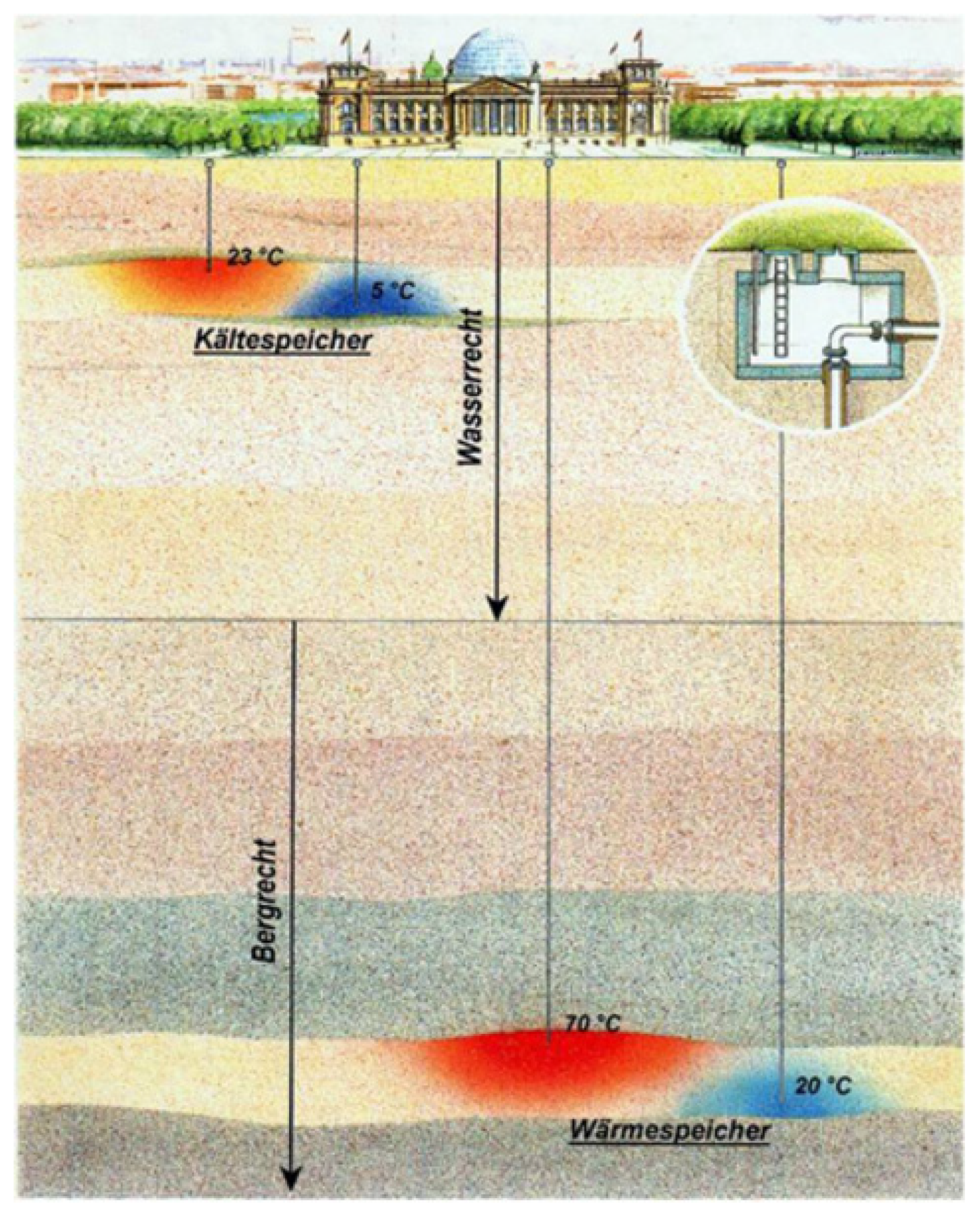

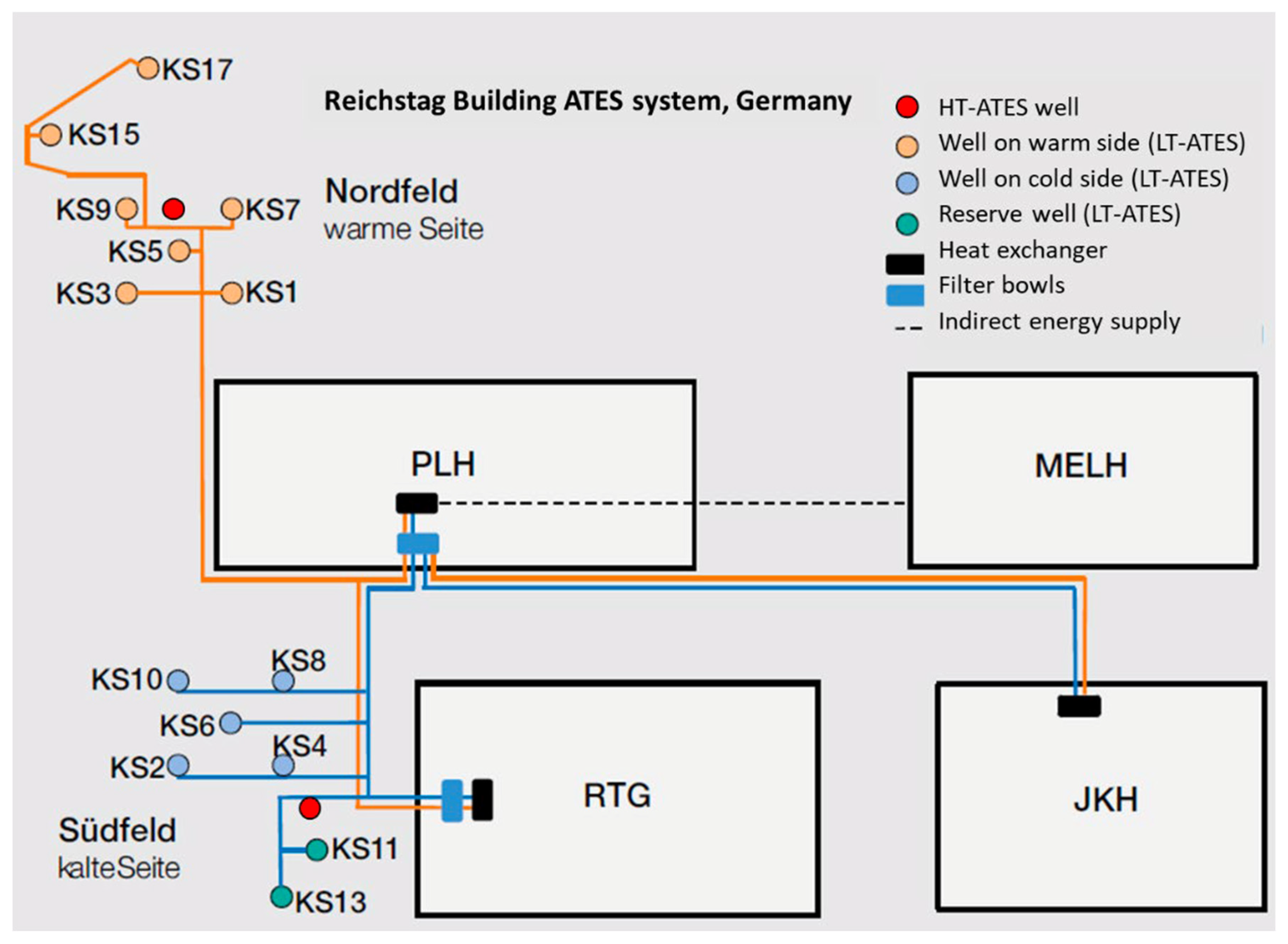
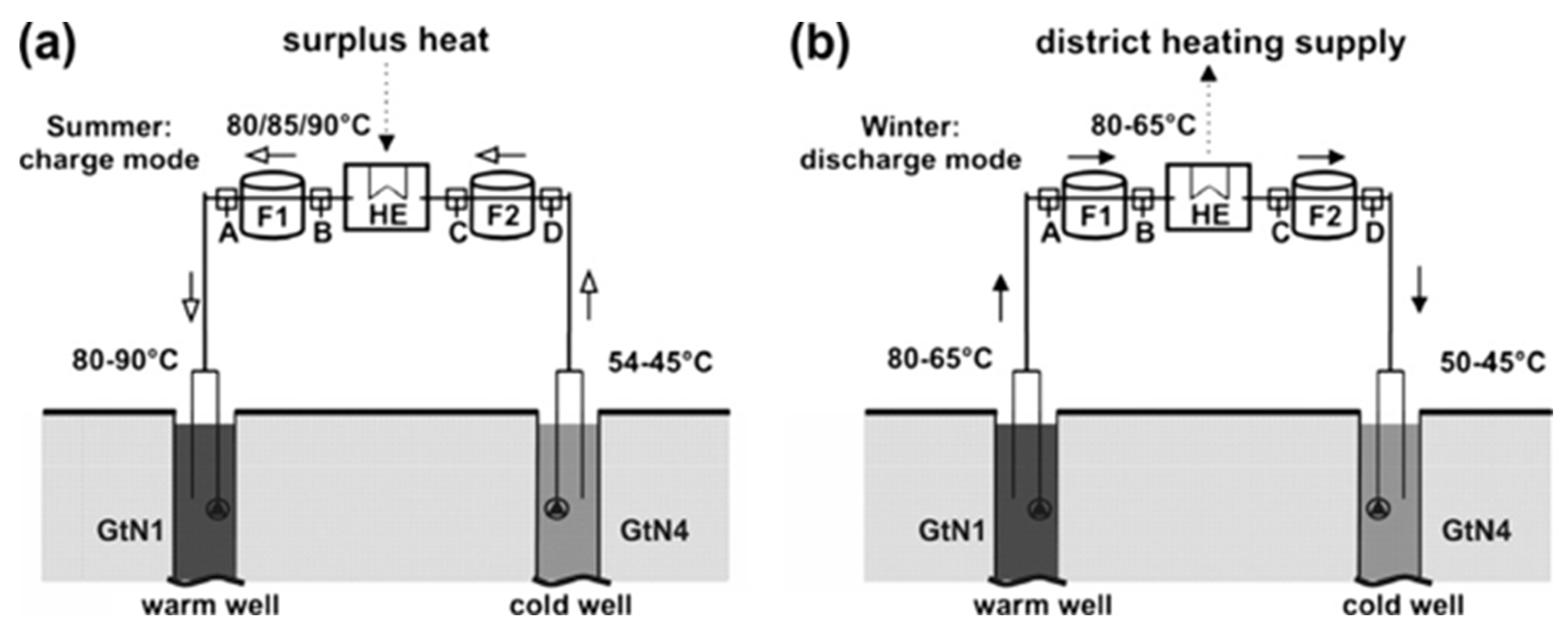
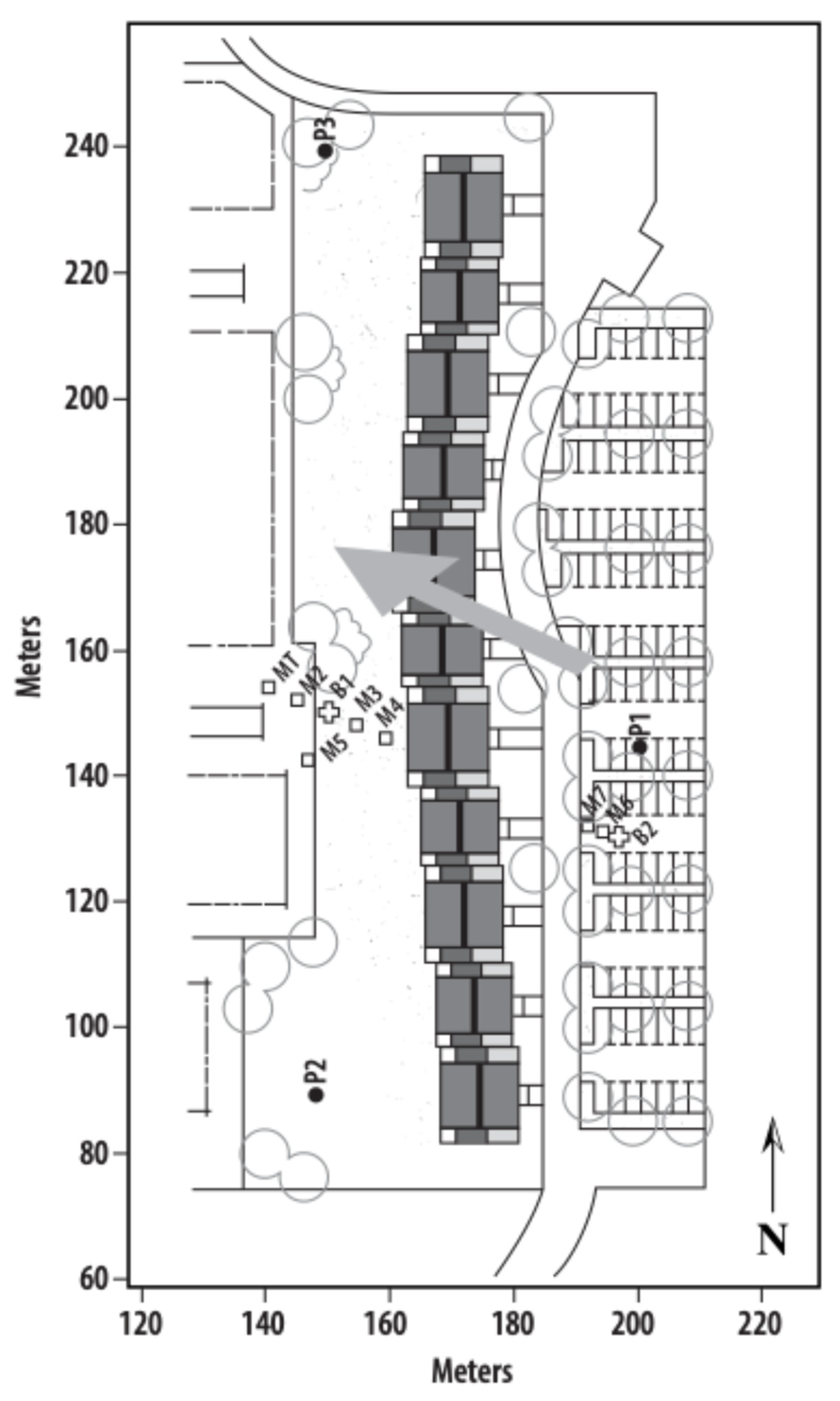










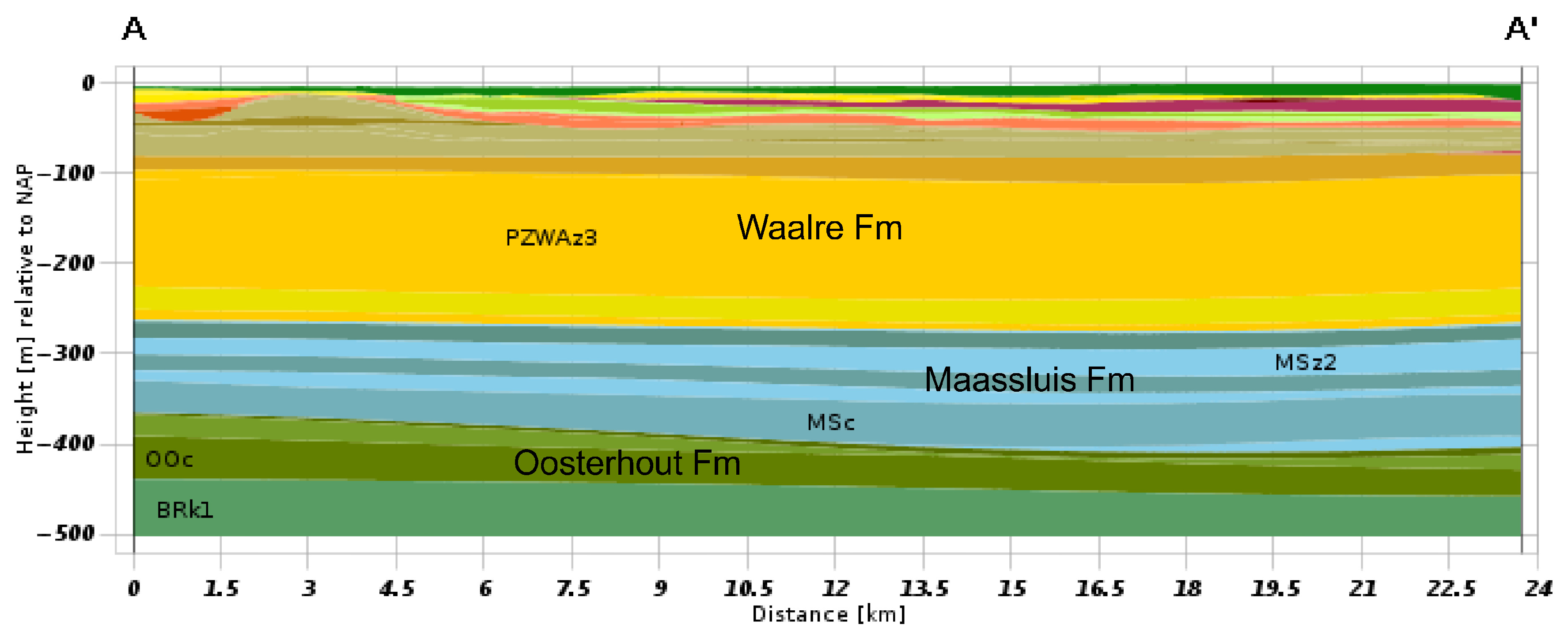
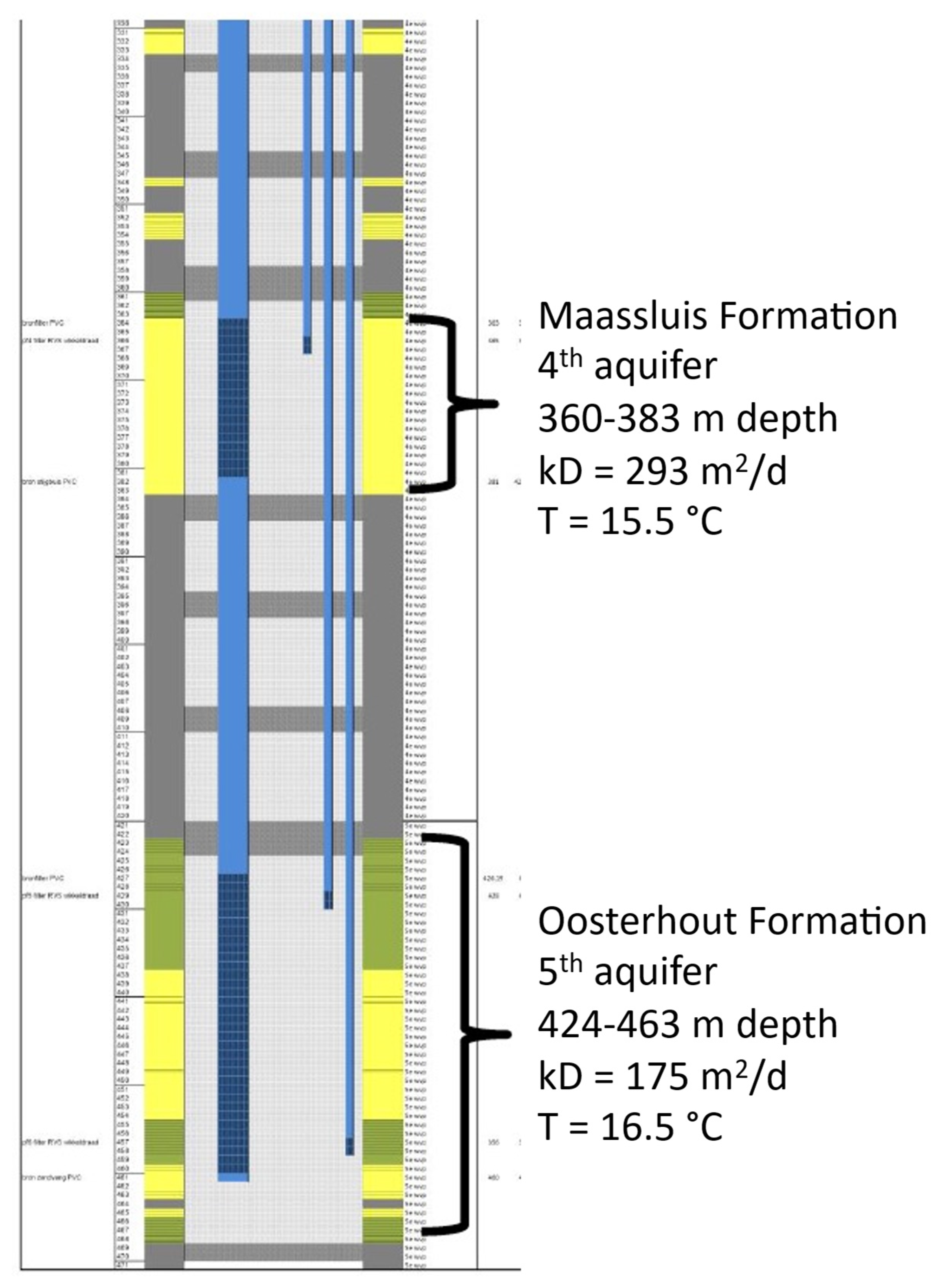
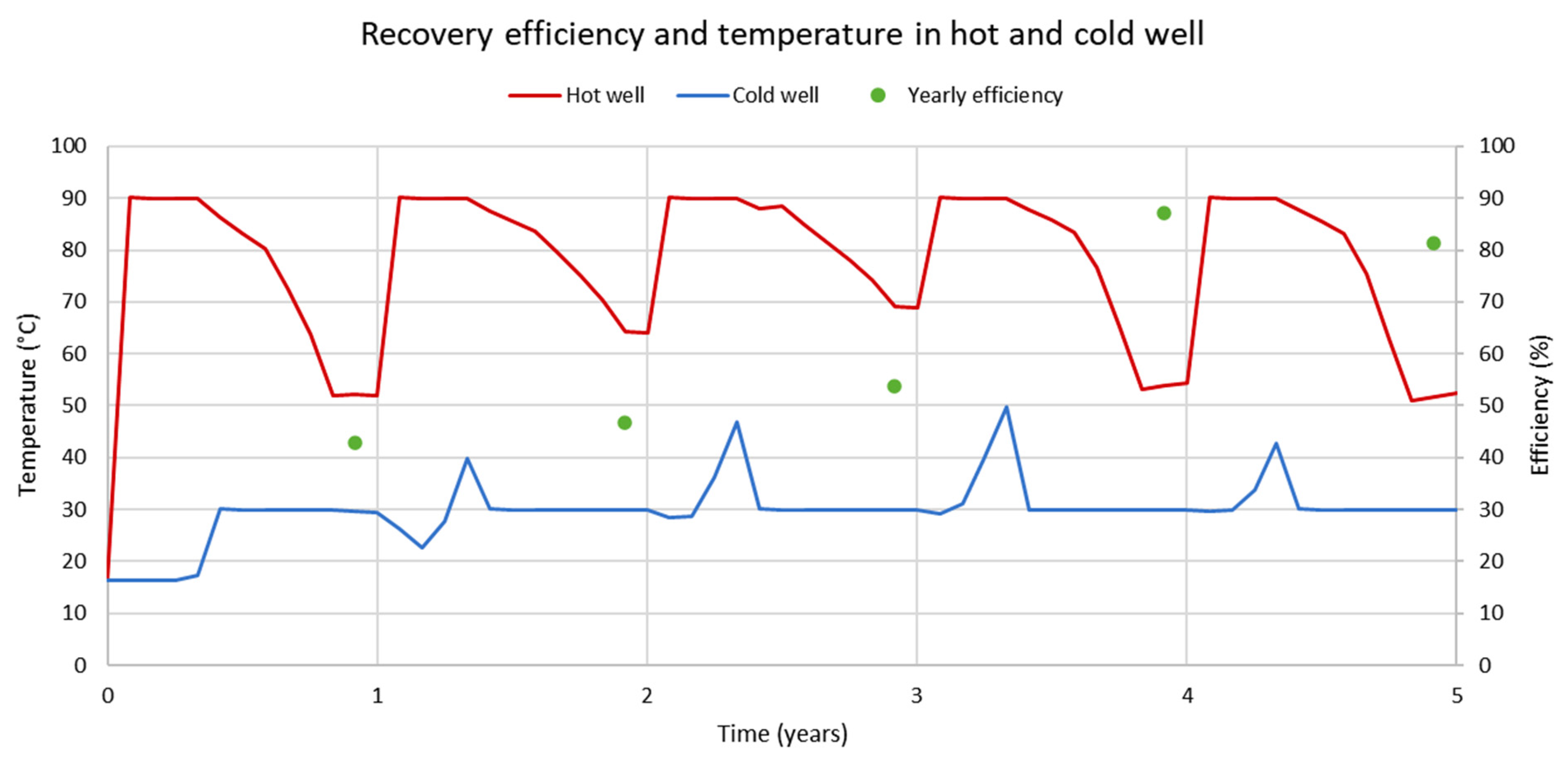

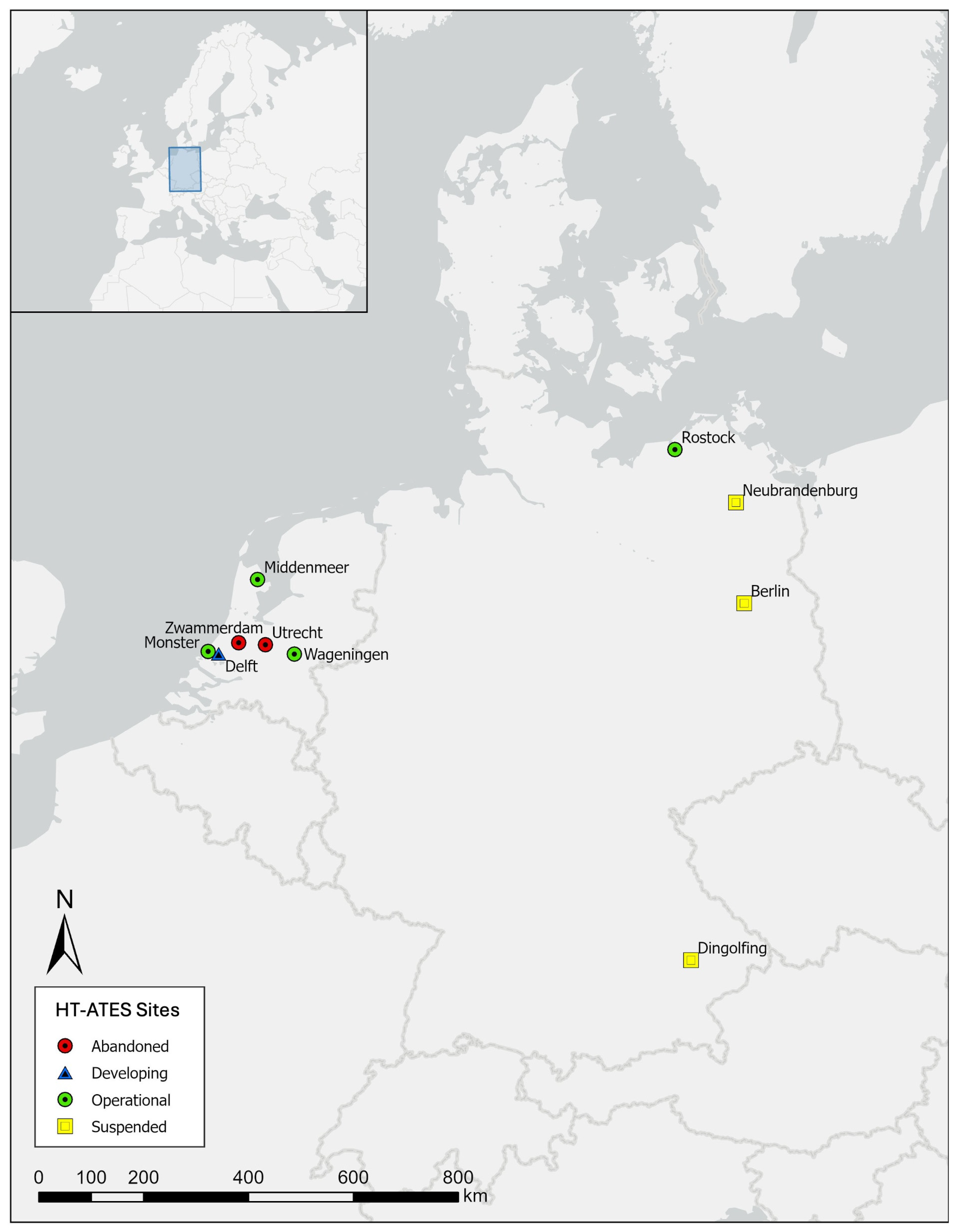
| Site | Reservoir Depth (m) | Storage Lithology | Storage Temp (°C) | Fluid TDS (g/L) | # of Wells * | Heated Water Source | Application | Project Status |
|---|---|---|---|---|---|---|---|---|
| Germany | ||||||||
| Berlin | 320 | Sandstone | 70 | 29 | 2 | CH | PBHC | Suspended |
| Neubrandenburg | 1250 | Sandstone | 80–90 | 130 | 2 | CH | RHC | Suspended |
| Rostock | 13–27 | Sand | 50 | - | 2 | SH | RHC | Operational |
| Dingolfing | 500 | Limestone | 130 | 0.9 | 1 | CH | IHC | Suspended |
| Netherlands | ||||||||
| Monster | 160 | Sand | <40 | 11 | 8 | SH, CH | IHC | Operational |
| Delft | 130–190 | Sandstone | 80 | 4.7 | # | DG | PBHC | Developing |
| Utrecht | 220–260 | Sand | 90 | - | 2 | CH | PBHC | Abandoned |
| Zwammerdam | 130–150 | Sand | 90 | - | 2 | CH | PBHC | Abandoned |
| Waginingen | 225–295 | Sand | 45 | - | 2 | SH | PBHC | Operational |
| Middenmeer | 360–383 | Sand | 85 | 17.6 | 2 | DG | IHC | Operational |
| Non-Technical Issues | ||
|---|---|---|
| Issues | Factors | References |
| Public acceptance | Lack of familiarity; NIMBY (not in my backyard); negative publicity | [19,20,21] |
| Regulatory framework | Lack of regulations governing use of the subsurface for energy storage | [22] |
| Overlapping uses | Competing uses of the subsurface; concerns with contamination of drinking water aquifers | [15,22] |
| Financing | Lack of previous positive project outcomes hampers obtaining project financing (seen as high risk); budget overruns; project delays | [10,17,23,24] |
| Technical Issues | ||
| Issues | Factors | References |
| Geological factors | Inadequate subsurface characterization; reservoir heterogeneity; aquitard cap integrity | [14,16,17] |
| Geochemical factors | Geochemistry of formation fluids and minerals; degassing caused by pump cavitation leading to scaling; precipitation of mineral phases with retrograde solubility upon heating; entry of oxygen into subsurface—can lead to mineral scaling, biofouling, and corrosion | [14,25,26,27,28] |
| Thermal energy recovery efficiency and system performance | System design vs. operational conditions; availability, quantity, and temperature of hot water for injection, cut-off return temperatures for used hot water | [14,16,17] |
| System design and construction, maintenance, and operational reliability | Design and completion of hot and cold wells; performance of downhole pumps, filters, water circulation systems, and heat exchanger | [14,16] |
| HT-ATES Site | Berlin | Neubrandenburg | Dingolfing | Monster | Middenmeer |
|---|---|---|---|---|---|
| Na | 11,000 | 49,000 | 157 | 2480 | 5622 |
| Ca | 300 | 2000 | 43 | 605 | 419.5 |
| Mg | 250 | 630 | 27 | 550 | 526 |
| K | 50 | 210 | 14 | 80 | 95 |
| Sr | 20 | 97 | - | 7.4 | 18.7 |
| Fe | 1.1 | 12–15 | - | 14.9 | 2.4 |
| Mn | - | 0.7 | - | 0.5 | 0.2 |
| Cl | 17,000 | 81,000 | 136 | 6300 | 10,681 |
| Br | 17 | 98 | - | - | - |
| SO4 | 1 | 900–1000 | 16 | 550 | 1.4 |
| HCO3 | 300 | 165 | 485 | 375 | - |
| TDS | 29,000 | 130,000 | 880 | 11,000 | 17,600 |
| pH | 7.2 | 6 | 7.07 | 6.9 | - |
| References | [65] | [47,65] | [38,66] | [67] | [41] |
| Technical Challenges | Potential Solutions |
|---|---|
| Geological and hydrogeological factors | |
|
|
| Geochemical factors | |
|
|
| Thermal energy recovery efficiency and system performance | |
|
|
| System design and construction, maintenance, and operational reliability | |
|
|
Disclaimer/Publisher’s Note: The statements, opinions and data contained in all publications are solely those of the individual author(s) and contributor(s) and not of MDPI and/or the editor(s). MDPI and/or the editor(s) disclaim responsibility for any injury to people or property resulting from any ideas, methods, instructions or products referred to in the content. |
© 2025 by the authors. Licensee MDPI, Basel, Switzerland. This article is an open access article distributed under the terms and conditions of the Creative Commons Attribution (CC BY) license (https://creativecommons.org/licenses/by/4.0/).
Share and Cite
Dobson, P.; McLing, T.; Spycher, N.; Fleuchaus, P.; Neupane, G.; Doughty, C.; Zhang, Y.; Smith, R.; Atkinson, T.; Jin, W.; et al. High-Temperature Aquifer Thermal Energy Storage (HT-ATES) Projects in Germany and the Netherlands—Review and Lessons Learned. Energies 2025, 18, 6292. https://doi.org/10.3390/en18236292
Dobson P, McLing T, Spycher N, Fleuchaus P, Neupane G, Doughty C, Zhang Y, Smith R, Atkinson T, Jin W, et al. High-Temperature Aquifer Thermal Energy Storage (HT-ATES) Projects in Germany and the Netherlands—Review and Lessons Learned. Energies. 2025; 18(23):6292. https://doi.org/10.3390/en18236292
Chicago/Turabian StyleDobson, Patrick, Travis McLing, Nicolas Spycher, Paul Fleuchaus, Ghanashyam Neupane, Christine Doughty, Yingqi Zhang, Robert Smith, Trevor Atkinson, Wencheng Jin, and et al. 2025. "High-Temperature Aquifer Thermal Energy Storage (HT-ATES) Projects in Germany and the Netherlands—Review and Lessons Learned" Energies 18, no. 23: 6292. https://doi.org/10.3390/en18236292
APA StyleDobson, P., McLing, T., Spycher, N., Fleuchaus, P., Neupane, G., Doughty, C., Zhang, Y., Smith, R., Atkinson, T., Jin, W., Blum, P., Dinkelman, D., & Veldkamp, H. (2025). High-Temperature Aquifer Thermal Energy Storage (HT-ATES) Projects in Germany and the Netherlands—Review and Lessons Learned. Energies, 18(23), 6292. https://doi.org/10.3390/en18236292