Kinetics and Energy Yield in Anaerobic Digestion: Effects of Substrate Composition and Fundamental Operating Conditions



Abstract
1. Introduction
2. Fundamentals of Anaerobic Digestion
3. Substrates Used in Anaerobic Digestion
4. Pretreatment Processes to Improve AD Performance
4.1. Mechanical Pretreatment of Substrates
4.2. Thermal Pretreatment of Substrates
4.3. Chemical Pretreatment of Substrates
4.4. Biological Pretreatment of Substrates
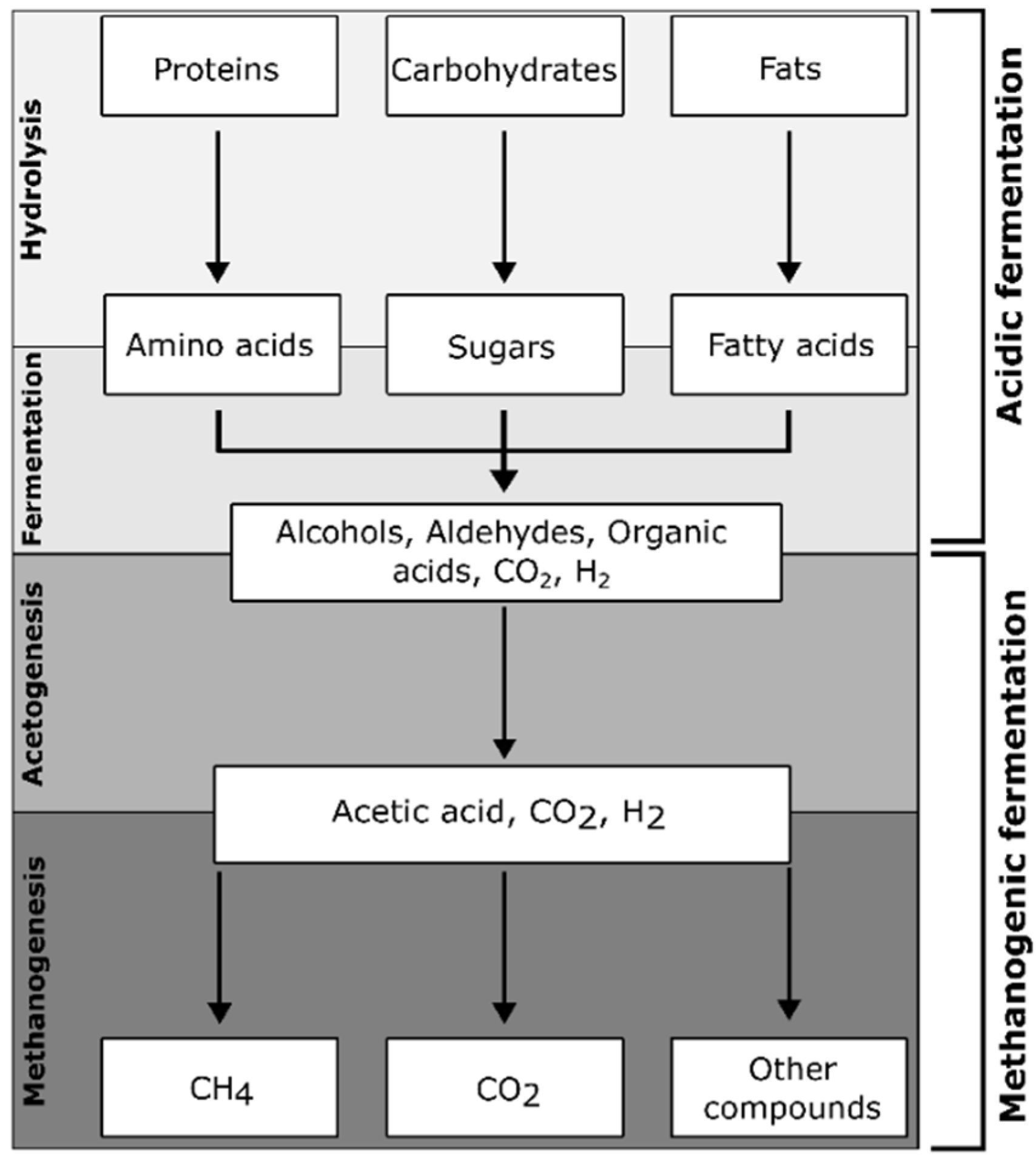
5. Biochemical Pathways and Kinetic Control in Anaerobic Digestion
- Hydrolysis
- Acidogenesis
- Acetogenesis
- Methanogenesis
6. Reactor Design, Kinetic Regimes, and Energy Performance
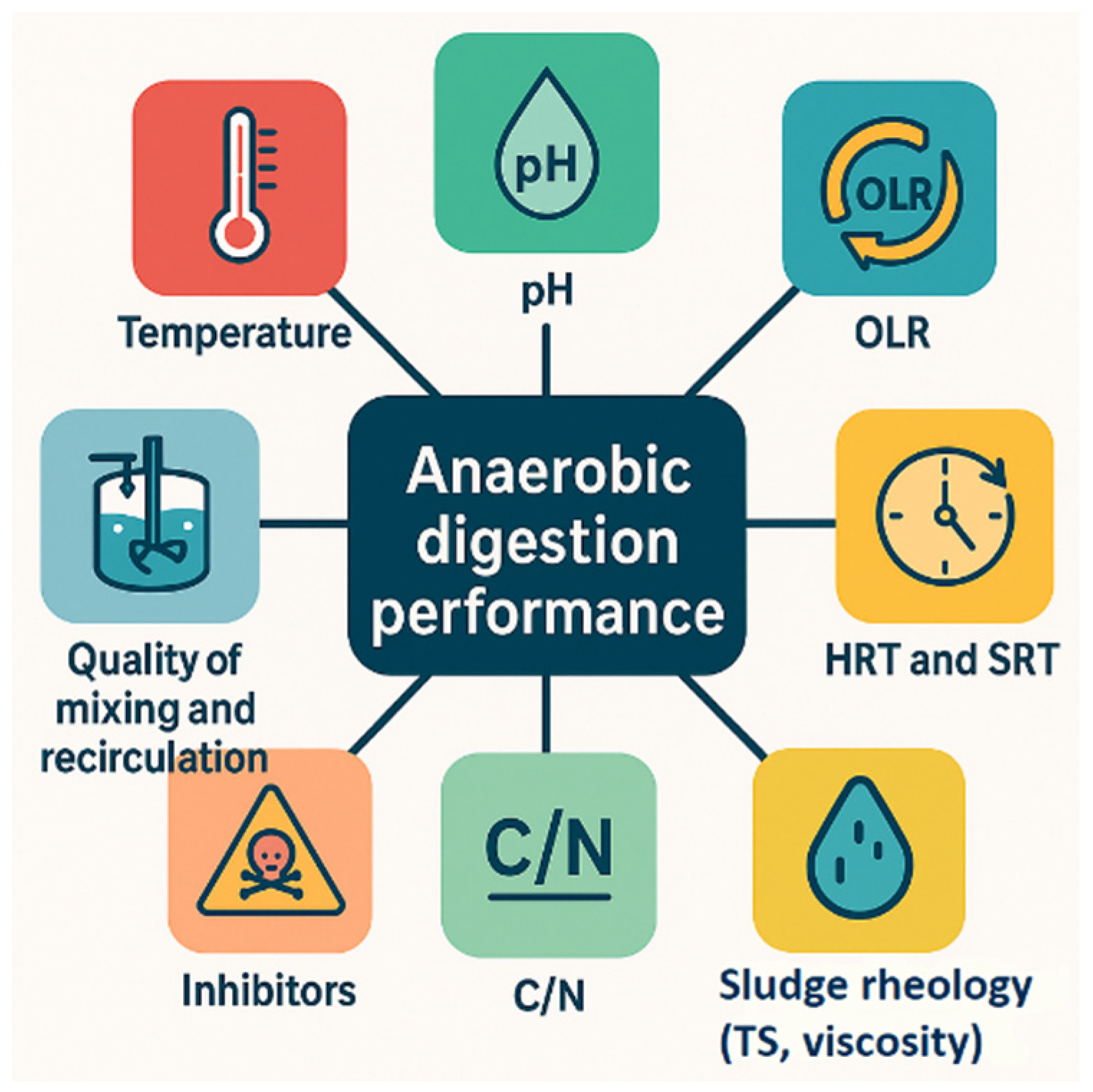
7. Factors Affecting the Anaerobic Digestion Process
7.1. pH
7.2. Temperature
7.3. Hydraulic Retention Time and Solids Retention Time
7.4. Carbon-to-Nitrogen Ratio
7.5. Inhibitors
7.6. Mixing and Recirculation
7.7. Organic Loading Rate
8. Kinetic and Thermodynamic Interrelations in Methanogenic Fermentation Under Operating Conditions
9. Conclusions
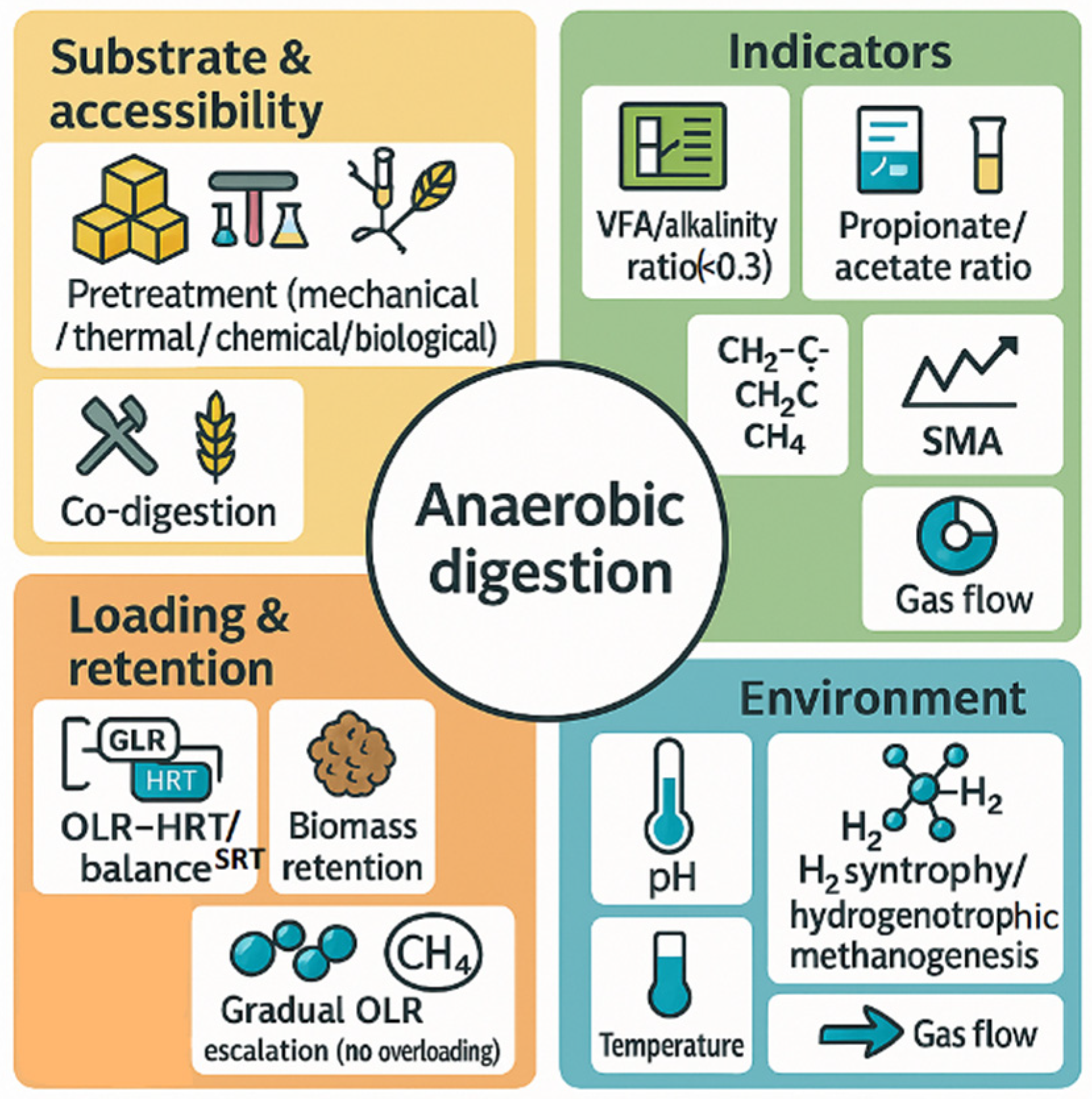
- Substrates and co-digestion. Feeds should be selected and blended to hold C/N near the optimal range and to minimise precursors of inhibition such as free ammonia, long-chain fatty acids and sulphides. Co-digestion is most effective when it first corrects stoichiometry and buffering capacity and only then enables a controlled increase in organic loading once hydrolytic constraints have been reduced.
- Pretreatment. Mechanical, thermal, chemical, or biological pretreatments are warranted when substrate structure makes hydrolysis rate-limiting. Adoption should be contingent on a positive net balance where gains in space–time methane productivity exceed additional thermal, mixing, and reagent demands. Heat recovery and integration with cogeneration improve viability where thermal steps are applied.
- Reactor configuration with respect to kinetics and energy. Designs that decouple solids retention from hydraulic residence—by granulation, carriers, or staged layouts—support higher loadings at stable methane rates. Mesophilic operation generally maximises net energy for variable or inhibition-prone feeds, whereas thermophilic set-points are justified when the increase in productivity outweighs thermal demand and narrower stability margins. In wet CSTRs, variable-speed agitation and adequate buffering sustain homogeneity without excessive power draw. In dry plug–flow systems, mild recirculation improves contact and alleviates diffusion-limited hydrolysis. Across configurations, operating practice should match loading to realised kinetics and maintain SRT greater than HRT to protect methanogenesis.
- Operating factors. pH should be controlled around 6.8–7.4 with resilience up to about 6.5–8.2, where alkalinity is sufficient. Temperature choice should reflect measured kinetic benefit against energy cost and disturbance tolerance. Mixing must homogenise the medium and lower diffusion resistance while preserving floc or granule integrity. Organic loading is best increased in steps and referenced to contemporaneous VFA and alkalinity trends to avoid a mismatch between conversion capacity and feed rate.
- Kinetic-thermodynamic interrelations. Low hydrogen partial pressure should be maintained through active hydrogenotrophic methanogenesis so that syntrophic acetogenesis remains favourable. This requirement elevates the importance of biomass retention, conservative ramping of load and prompt control actions that prevent accumulation of inhibitory intermediates.
- Monitoring and control. Early-warning indicators such as the VFA to alkalinity ratio, the propionate to acetate ratio, specific methanogenic activity, methane content, and gas-rate trends should trigger timely adjustments to loading, residence times, buffering, mixing intensity, and micronutrient supply. Coordinated use of these measurements shifts operation from constraint-driven to rate-controlled and delivers high, durable methane productivity.
Author Contributions
Funding
Data Availability Statement
Conflicts of Interest
References
- Appels, L.; Lauwers, J.; Degrève, J.; Helsen, L.; Lievens, B.; Willems, K.; Van Impe, J.; Dewil, R. Anaerobic digestion in global bio-energy production: Potential and research challenges. Renew. Sustain. Energy Rev. 2011, 15, 4295–4301. [Google Scholar] [CrossRef]
- Pilarski, K.; Pilarska, A.A.; Kolasa-Więcek, A.; Suszanowicz, D. An Agricultural Biogas Plant as a Thermodynamic System: A Study of Efficiency in the Transformation from Primary to Secondary Energy. Energies 2023, 16, 7398. [Google Scholar] [CrossRef]
- Kangle, K.M.; Kore, S.V.; Kore, V.S.; Kulkarni, G.S. Recent trends in anaerobic co-digestion: A review. Univers. J. Environ. Res. Technol. 2012, 2, 210–219. [Google Scholar]
- Budzianowski, W.M.; Postawa, K. Renewable energy from biogas with reduced carbon dioxide footprint: Implications of applying different plant configurations and operating pressures. Renew. Sustain. Energy Rev. 2017, 68, 852–868. [Google Scholar] [CrossRef]
- Labatut, R.A.; Angenent, L.T.; Scott, N.R. Biochemical methane potential and biodegradability of complex organic substrates. Bioresour. Technol. 2011, 102, 2255–2264. [Google Scholar] [CrossRef] [PubMed]
- Owen, J.J.; Silver, W.L. Greenhouse gas emissions from dairy manure management: A review of field-based studies. Glob. Change Biol. 2015, 21, 550–565. [Google Scholar] [CrossRef] [PubMed]
- Ding, L.; Lu, Q.; Xie, L.; Liu, J.; Cao, W.; Shi, Z.; Li, B.; Wang, C.; Zhang, G.; Ren, S. Greenhouse gas emissions from dairy open lot and manure stockpile in northern China: A case study. J. Air Waste Manag. Assoc. 2016, 66, 267–279. [Google Scholar] [CrossRef]
- Zhang, R.; El-Mashad, H.M.; Hartman, K.; Wang, F.; Liu, G.; Choate, C.; Gamble, P. Characterization of food waste as feedstock for anaerobic digestion. Bioresour. Technol. 2007, 98, 929–935. [Google Scholar] [CrossRef]
- Gadirli, G.; Pilarska, A.A.; Dach, J.; Pilarski, K.; Kolasa-Więcek, A.; Borowiak, K. Fundamentals, Operation and Global Prospects for the Development of Biogas Plants—A Review. Energies 2024, 17, 568. [Google Scholar] [CrossRef]
- Kandel, T.P.; Ward, A.J.; Elsgaard, L.; Møller, H.B.; Lærke, P.E. Methane yield from anaerobic digestion of festulolium and tall fescue cultivated on a fen peatland under different harvest managements. Acta Agric. Scand. Sect. B Soil Plant Sci. 2017, 67, 670–677. [Google Scholar] [CrossRef]
- Doddapaneni, T.R.K.C.; Praveenkumar, R.; Tolvanen, H.; Palmroth, M.R.T.; Konttinen, J.; Rintala, J. Anaerobic batch conversion of pine wood torrefaction condensate. Bioresour. Technol. 2017, 225, 299–307. [Google Scholar] [CrossRef]
- Pilarska, A.A.; Pilarski, K.; Kulupa, T.; Kubiak, A.; Wolna-Maruwka, A.; Niewiadomska, A.; Dach, J. Additives Improving the Efficiency of Biogas Production as an Alternative Energy Source—A Review. Energies 2024, 17, 4506. [Google Scholar] [CrossRef]
- Amin, F.R.; Khalid, H.; Zhang, H.; Rahman, S.U.; Zhang, R.; Liu, G.; Chen, C. Pretreatment methods of lignocellulosic biomass for anaerobic digestion. AMB Express 2017, 7, 72. [Google Scholar] [CrossRef] [PubMed]
- Ponkumar, S.; Subramani, T. Anaerobic digestion of aerobic pretreated organic waste. Int. J. Mod. Eng. Res. 2012, 2, 607–611. [Google Scholar]
- Ariunbaatar, J.; Panico, A.; Frunzo, L.; Esposito, G.; Lens, P.N.L.; Pirozzi, F. Enhanced anaerobic digestion of food waste by thermal and ozonation pretreatment methods. J. Environ. Manag. 2014, 146, 142–149. [Google Scholar] [CrossRef] [PubMed]
- Zheng, Y.; Zhao, J.; Xu, F.; Li, Y. Pretreatment of lignocellulosic biomass for enhanced biogas production. Prog. Energy Combust. Sci. 2014, 42, 35–53. [Google Scholar] [CrossRef]
- Pilarska, A.; Pilarski, K.; Witaszek, K.; Dukiewicz, H.; Dobrzański, K. Preliminary studies on the effect of thermal treatment of maize silage on biogas yield. Nauka Przyr. Technol. (Sci. Nat. Technol.) 2015, 9, 18. [Google Scholar] [CrossRef]
- Val del Río, A.; Morales, N.; Isanta, E.; Mosquera-Corral, A.; Campos, J.L.; Steyer, J.P.; Carrère, H. Thermal pre-treatment of aerobic granular sludge: Impact on anaerobic biodegradability. Water Res. 2011, 45, 6011–6020. [Google Scholar] [CrossRef]
- Nayak, J.K.; Ranade, V.V. Valorisation of digestate: Characteristics, products, processes and potential. Chem. Eng. J. Adv. 2025, 24, 100887. [Google Scholar] [CrossRef]
- Menardo, S.; Balsari, P.; Dinuccio, E.; Gioelli, F. Thermal pre-treatment of solid fraction from mechanically-separated raw and digested slurry to increase methane yield. Bioresour. Technol. 2011, 102, 2026–2032. [Google Scholar] [CrossRef]
- Bougrier, C.; Delgenès, J.P.; Carrère, H. Effects of thermal treatments on five different waste activated sludge samples solubilisation, physical properties and anaerobic digestion. Chem. Eng. J. 2008, 139, 236–244. [Google Scholar] [CrossRef]
- Caroca, E.; Serrano, A.; Borja, R.; Jiménez, A.; Carvajal, A.; Braga, A.F.M.; Rodriguez-Gutierrez, G.; Fermoso, F.G. Influence of phenols and furans released during thermal pretreatment of olive mill solid waste on its anaerobic digestion. Waste Manag. 2021, 120, 202–208. [Google Scholar] [CrossRef] [PubMed]
- Rafique, R.; Poulsen, T.G.; Nizami, A.-S.; Asam, Z.-U.-Z.; Murphy, J.D.; Kiely, G. Effect of thermal, chemical and thermo-chemical pre-treatments to enhance methane production. Energy 2010, 35, 4556–4561. [Google Scholar] [CrossRef]
- Lin, Y.; Wang, D.; Wu, S.; Wang, C. Alkali Pretreatment Enhances Biogas Production in the Anaerobic Digestion of Pulp and Paper Sludge. J. Hazard. Mater. 2009, 170, 366–373. [Google Scholar] [CrossRef]
- Sharma, A.; Thakur, M.; Bhattacharya, M.; Mandal, T.; Goswami, S. Commercial application of cellulose nano-composites—A review. Biotechnol. Rep. 2019, 21, e00316. [Google Scholar] [CrossRef]
- Machhirake, N.; Singh, D.; Yadav, B.R.; Tembhare, M.; Kumar, S. Optimizing Alkali-Pretreatment Dosage for Waste-Activated Sludge Disintegration and Enhanced Biogas Production Yield. Environ. Res. 2024, 252, 118876. [Google Scholar] [CrossRef]
- Vinuthana, V.H.; Govindaraj, O.; Subramaniam, S.; Gnanachitra, M.; Uthandi, S. Harnessing lignocellulosic biomass: Insights into pre-treatment strategies and hydrolytic enzyme production. Ind. Crops Prod. 2025, 229, 120986. [Google Scholar] [CrossRef]
- Gupta, P.; Singh, R.S.; Sachan, A.; Vidyarthi, A.S.; Gupta, A. A re-appraisal on intensification of biogas production. Renew. Sustain. Energy Rev. 2012, 16, 4908–4916. [Google Scholar] [CrossRef]
- Zheng, C.-C.; Gao, L.; Sun, H.; Zhao, X.-Y.; Gao, Z.-Q.; Liu, J.; Guo, W. Advancements in enzymatic reaction-mediated microbial transformation. Heliyon 2024, 10, e38187. [Google Scholar] [CrossRef]
- Noyola, A.; Tinajero, A. Effect of biological additives and micronutrients on the anaerobic digestion of physicochemical sludge. Water Sci. Technol. 2005, 52, 275–281. [Google Scholar] [CrossRef]
- Hasegawa, S.; Shiota, N.; Katsura, K.; Akashi, A. Solubilization of organic sludge by thermophilic aerobic bacteria as a pretreatment for anaerobic digestion. Water Sci. Technol. 2000, 41, 163–169. [Google Scholar] [CrossRef] [PubMed]
- Cao, J.; Zhang, C.; Li, X.; Wang, X.; Dai, X.; Xu, Y. Microbial Community and Metabolic Pathways in Anaerobic Digestion of Organic Solid Wastes: Progress, Challenges and Prospects. Fermentation 2025, 11, 457. [Google Scholar] [CrossRef]
- Karagiannidis, A.; Perkoulidis, G. A multi-criteria ranking of different technologies for the anaerobic digestion for energy recovery of the organic fraction of municipal solid wastes. Bioresour. Technol. 2009, 100, 2355–2360. [Google Scholar] [CrossRef]
- lavi-Borazjani, S.A.; da Cruz Tarelho, L.A.; Capela, M.I. Biohythane production via anaerobic digestion process: Fundamentals, scale-up challenges, and techno-economic and environmental aspects. Environ. Sci. Pollut. Res. 2024, 31, 49935–49984. [Google Scholar] [CrossRef]
- Thauer, R.K.; Kaster, A.-K.; Seedorf, H.; Buckel, W.; Hedderich, R. Methanogenic Archaea: Ecologically relevant differences in energy conservation. Nat. Rev. Microbiol. 2008, 6, 579–591. [Google Scholar] [CrossRef]
- Nayeri, D.; Mohammadi, P.; Bashardoust, P.; Eshtiaghi, N. A comprehensive review on the recent development of anaerobic sludge digestions: Performance, mechanism, operational factors, and future challenges. Results Eng. 2024, 22, 102292. [Google Scholar] [CrossRef]
- Pilarska, A.A.; Wolna-Maruwka, A.; Pilarski, K. Kraft Lignin Grafted with Polyvinylpyrrolidone as a Novel Microbial Carrier in Biogas Production. Energies 2018, 11, 3246. [Google Scholar] [CrossRef]
- Lee, H.-G.; Dulany, Z. Biogas and Hydrogen Production from Waste Biomass via Dark Fermentation Evaluating VFAs, COD, and HRT for Process Optimization. Biomass 2025, 5, 57. [Google Scholar] [CrossRef]
- Detman, A.; Bucha, M.; Treu, L.; Chojnacka, A.; Pleśniak, Ł.; Salamon, A.; Łupikasza, E.; Gromadka, R.; Gawor, J.; Gromadka, A.; et al. Evaluation of acidogenesis products’ effect on biogas production performed with metagenomics and isotopic approaches. Biotechnol. Biofuels 2021, 14, 125. [Google Scholar] [CrossRef]
- Borja, R. Biogas Production. In Comprehensive Biotechnology, 2nd ed.; Moo-Young, M., Ed.; Academic Press: Burlington, MA, USA, 2011; pp. 785–798. [Google Scholar] [CrossRef]
- Zieliński, M.; Kazimierowicz, J.; Dębowski, M. Advantages and Limitations of Anaerobic Wastewater Treatment—Technological Basics, Development Directions, and Technological Innovations. Energies 2023, 16, 83. [Google Scholar] [CrossRef]
- Gebreeyessus, G.D.; Jenicek, P. Thermophilic versus Mesophilic Anaerobic Digestion of Sewage Sludge: A Comparative Review. Bioengineering 2016, 3, 15. [Google Scholar] [CrossRef]
- Akinbomi, J.G.; Patinvoh, R.J.; Taherzadeh, M.J. Current challenges of high-solid anaerobic digestion and possible measures for its effective applications: A review. Biotechnol. Biofuels Bioprod. 2022, 15, 52. [Google Scholar] [CrossRef]
- Gao, Q.; Li, L.; Wang, K.; Zhao, Q. Mass Transfer Enhancement in High-Solids Anaerobic Digestion of Organic Fraction of Municipal Solid Wastes: A Review. Bioengineering 2023, 10, 1084. [Google Scholar] [CrossRef]
- Pilarski, K.; Pilarska, A.A.; Boniecki, P.; Niedbała, G.; Witaszek, K.; Piekutowska, M.; Idzior-Haufa, M.; Wawrzyniak, A. Degree of Biomass Conversion in the Integrated Production of Bioethanol and Biogas. Energies 2021, 14, 7763. [Google Scholar] [CrossRef]
- Qin, Y.; Zhai, C. Global Stabilizing Control of a Continuous Ethanol Fermentation Process Starting from Batch Mode Production. Processes 2024, 12, 819. [Google Scholar] [CrossRef]
- Hayyat, U.; Khan, M.U.; Sultan, M.; Zahid, U.; Bhat, S.A.; Muzamil, M. A Review on Dry Anaerobic Digestion: Existing Technologies, Performance Factors, Challenges, and Recommendations. Methane 2024, 3, 33–52. [Google Scholar] [CrossRef]
- Hong, Y.; Bayly, R.A.; Salasso, D.; Cumin, J.R.; Sproule, D.E.; Chang, S. Method for Utilizing Internally Generated Biogas for Closed Membrane System Operation. U.S. Patent 8,580,113 B2, 12 November 2013. Available online: https://patents.google.com/patent/US8580113B2/en (accessed on 12 November 2013).
- Andersen, L.J.N.; Jeppesen, M.D. Integration of Digester and Thermo-Chemical Digestate Treatment Equipment with Heat Recovery. International Patent WO 2023/208304 A1, 2 November 2023. Available online: https://patents.google.com/patent/WO2023208304A1/en (accessed on 2 November 2023).
- Sidi Habib, S.; Torii, S.; S, K.M.; Charivuparampil Achuthan Nair, A. Optimization of the Factors Affecting Biogas Production Using the Taguchi Design of Experiment Method. Biomass 2024, 4, 687–703. [Google Scholar] [CrossRef]
- Qian, S.; Chen, L.; Xu, S.; Zeng, C.; Lian, X.; Xia, Z.; Zou, J. Research on Methane-Rich Biogas Production Technology by Anaerobic Digestion Under Carbon Neutrality: A Review. Sustainability 2025, 17, 1425. [Google Scholar] [CrossRef]
- Jaya Prasanna Kumar, D.; Mishra, R.K.; Chinnam, S.; Binnal, P.; Dwivedi, N. A comprehensive study on anaerobic digestion of organic solid waste: A review on configurations, operating parameters, techno-economic analysis and current trends. Biotechnol. Notes 2024, 5, 33–49. [Google Scholar] [CrossRef] [PubMed]
- Cioabla, A.E.; Ionel, I.; Dumitrel, G.A.; Popescu, F. Comparative study on factors affecting anaerobic digestion of agricultural vegetal residues. Biotechnol. Biofuels 2012, 5, 39. [Google Scholar] [CrossRef] [PubMed]
- Edwards, T.M.; Puglis, H.J.; Kent, D.B.; López Durán, J.; Bradshaw, L.M.; Farag, A.M. Ammonia and aquatic ecosystems—A review of global sources, biogeochemical cycling, and effects on fish. Sci. Total Environ. 2024, 907, 167911. [Google Scholar] [CrossRef]
- Lee, D.-H.; Behera, S.K.; Kim, J.-W.; Park, H.-S. Methane production potential of leachate generated from Korean food waste recycling facilities: A lab-scale study. Waste Manag. 2009, 29, 876–882. [Google Scholar] [CrossRef]
- Kim, J.; Park, C.; Kim, T.H.; Lee, M.; Kim, S.; Kim, S.W.; Lee, J. Effects of various pretreatments for enhanced anaerobic digestion with waste activated sludge. J. Biosci. Bioeng. 2003, 95, 271–275. [Google Scholar] [CrossRef] [PubMed]
- Wu, H.-M.; Li, X.; Chen, J.-N.; Yan, Y.-J.; Kobayashi, T.; Hu, Y.; Zhang, X. Food Waste Anaerobic Digestion Under High Organic Loading Rate: Inhibiting Factors, Mechanisms, and Mitigation Strategies. Processes 2025, 13, 2090. [Google Scholar] [CrossRef]
- Voidarou, C.; Antoniadou, M.; Rozos, G.; Tzora, A.; Skoufos, I.; Varzakas, T.; Lagiou, A.; Bezirtzoglou, E. Fermentative Foods: Microbiology, Biochemistry, Potential Human Health Benefits and Public Health Issues. Foods 2021, 10, 69. [Google Scholar] [CrossRef]
- Yan, X.; Deng, P.; Ding, T.; Zhang, Z.; Li, X.; Wu, Z. Effect of Temperature on Anaerobic Fermentation of Poplar Ethanol Wastewater: Performance and Microbial Communities. ACS Omega 2023, 8, 5486–5496. [Google Scholar] [CrossRef] [PubMed]
- Kabaivanova, L.; Petrova, P.; Hubenov, V.; Simeonov, I. Biogas Production Potential of Thermophilic Anaerobic Biodegradation of Organic Waste by a Microbial Consortium Identified with Metagenomics. Life 2022, 12, 702. [Google Scholar] [CrossRef]
- Finore, I.; Feola, A.; Russo, L.; Cattaneo, A.; Di Donato, P.; Nicolaus, B.; Poli, A.; Romano, I. Thermophilic Bacteria and Their Thermozymes in Composting Processes: A Review. Chem. Biol. Technol. Agric. 2023, 10, 7. [Google Scholar] [CrossRef]
- Menardo, S.; Gioelli, F.; Balsari, P. The methane yield of digestate: Effect of organic loading rate, hydraulic retention time, and plant feeding. Bioresour. Technol. 2011, 102, 2348–2351. [Google Scholar] [CrossRef]
- Hmaissia, A.; Hernández, E.M.; Boivin, S.; Vaneeckhaute, C. Start-Up Strategies for Thermophilic Semi-Continuous Anaerobic Digesters: Assessing the Impact of Inoculum Source and Feed Variability on Efficient Waste-to-Energy Conversion. Sustainability 2025, 17, 5020. [Google Scholar] [CrossRef]
- Labatut, R.A.; Angenent, L.T.; Scott, N.R. Conventional Mesophilic vs. Thermophilic Anaerobic Digestion: A Trade-Off between Performance and Stability? Water Res. 2014, 53, 249–258. [Google Scholar] [CrossRef]
- Alcocer-García, H.; Sánchez-Ramírez, E.; García-García, E.; Ramírez-Márquez, C.; Ponce-Ortega, J.M. Unlocking the Potential of Biomass Resources: A Review on Sustainable Process Design and Intensification. Resources 2025, 14, 143. [Google Scholar] [CrossRef]
- Issahaku, M.; Agyemang Derkyi, N.S.; Kemausuor, F. A Systematic Review of the Design Considerations for the Operation and Maintenance of Small-Scale Biogas Digesters. Heliyon 2024, 10, e24019. [Google Scholar] [CrossRef]
- Makamure, F.; Mukumba, P.; Makaka, G. An analysis of bio-digester substrate heating methods: A review. Renew. Sustain. Energy Rev. 2021, 137, 110432. [Google Scholar] [CrossRef]
- Aboudi, K.; Greses, S.; González-Fernández, C. Hydraulic Retention Time as an Operational Tool for the Production of Short-Chain Carboxylates via Anaerobic Fermentation of Carbohydrate-Rich Waste. Molecules 2023, 28, 6635. [Google Scholar] [CrossRef] [PubMed]
- Harirchi, S.; Wainaina, S.; Sar, T.; Nojoumi, S.A.; Parchami, M.; Parchami, M.; Varjani, S.; Khanal, S.K.; Wong, J.; Awasthi, M.K.; et al. Microbiological Insights into Anaerobic Digestion for Biogas, Hydrogen or Volatile Fatty Acids (VFAs): A Review. Bioengineered 2022, 13, 6521–6557. [Google Scholar] [CrossRef] [PubMed]
- Parajuli, A.; Khadka, A.; Sapkota, L.; Ghimire, A. Effect of Hydraulic Retention Time and Organic-Loading Rate on Two-Staged, Semi-Continuous Mesophilic Anaerobic Digestion of Food Waste during Start-Up. Fermentation 2022, 8, 620. [Google Scholar] [CrossRef]
- Srisowmeya, G.; Chakravarthy, M.; Nandhini Devi, G. Critical Considerations in Two-Stage Anaerobic Digestion of Food Waste—A Review. Renew. Sustain. Energy Rev. 2020, 119, 109587. [Google Scholar] [CrossRef]
- Woźniak, A.; Kuligowski, K.; Świerczek, L.; Cenian, A. Review of Lignocellulosic Biomass Pretreatment Using Physical, Thermal and Chemical Methods for Higher Yields in Bioethanol Production. Sustainability 2025, 17, 287. [Google Scholar] [CrossRef]
- Li, Y.; Zhao, J.; Krooneman, J.; Euverink, J.G.W. Strategies to Boost Anaerobic Digestion Performance of Cow Manure: Laboratory Achievements and Their Full-Scale Application Potential. Sci. Total Environ. 2021, 755, 142940. [Google Scholar] [CrossRef]
- Ivanovici, M.; Dumitrel, G.-A.; Gherman, V.D.; Todinca, T.; Pana, A.-M.; Ordodi, V.L. Anaerobic Digestion of Food Waste and Granular Inoculum: Study on Temperature Effect and Substrate-to-Inoculum Ratio on Biogas Production. Fermentation 2025, 11, 348. [Google Scholar] [CrossRef]
- Makamure, F.; Mukumba, P.; Makaka, G. Biogas Production from a Solar-Heated Temperature-Controlled Biogas Digester. Sustainability 2024, 16, 9894. [Google Scholar] [CrossRef]
- Ugwu, S.N.; Enweremadu, C.C. Enhancement of Biogas Production Process from Biomass Wastes Using Iron-Based Additives: Types, Impacts, and Implications. Energy Sources Part A Recovery Util. Environ. Eff. 2022, 44, 4458–4480. [Google Scholar] [CrossRef]
- Song, Y.; Qiao, W.; Westerholm, M.; Huang, G.; Taherzadeh, M.J.; Dong, R. Microbiological and Technological Insights on Anaerobic Digestion of Animal Manure: A Review. Fermentation 2023, 9, 436. [Google Scholar] [CrossRef]
- Pilarska, A.A.; Wolna-Maruwka, A.; Niewiadomska, A.; Grządziel, J.; Gałązka, A.; Paluch, E.; Borowiak, K.; Pilarski, K. Quantitative and Qualitative Changes in Genetic Diversity of Bacterial Communities in Anaerobic Bioreactors with Diatomaceous Earth/Peat Cell Carrier. Cells 2022, 11, 2571. [Google Scholar] [CrossRef]
- Sarker, S.; Lamb, J.J.; Hjelme, D.R.; Lien, K.M. A Review of the Role of Critical Parameters in the Design and Operation of Biogas Production Plants. Appl. Sci. 2019, 9, 1915. [Google Scholar] [CrossRef]
- Serrano-Meza, A.; Moreno-Andrade, I.; Estrada-Arriaga, E.B.; Díaz-Barajas, S.A.; García-Sánchez, L.; Garzón-Zúñiga, M.A. Biomethane Production and Methanogenic Microbiota Restoration after a pH Failure in an Anaerobic Sequencing Batch Reactor (A-SBR) Treating Tequila Vinasse. Fermentation 2024, 10, 557. [Google Scholar] [CrossRef]
- Ibro, M.K.; Ancha, V.R.; Lemma, D.B. Impacts of Anaerobic Co-Digestion on Different Influencing Parameters: A Critical Review. Sustainability 2022, 14, 9387. [Google Scholar] [CrossRef]
- Jarosz, Z.; Kapłan, M.; Klimek, K.; Dybek, B.; Herkowiak, M.; Wałowski, G. An Assessment of the Development of a Mobile Agricultural Biogas Plant in the Context of a Cogeneration System. Appl. Sci. 2023, 13, 12447. [Google Scholar] [CrossRef]
- Venkiteshwaran, K.; Bocher, B.; Maki, J.; Zitomer, D. Relating Anaerobic Digestion Microbial Community and Process Function. Microbiol. Insights 2016, 8 (Suppl. 2), 37–44. [Google Scholar] [CrossRef]
- Qian, W.; Peng, Y.; Li, X.; Zhang, Q.; Ma, B. The Inhibitory Effects of Free Ammonia on Ammonia Oxidizing Bacteria and Nitrite Oxidizing Bacteria under Anaerobic Condition. Bioresour. Technol. 2017, 243, 1247–1250. [Google Scholar] [CrossRef]
- Lee, E.H.; Moon, K.E.; Kim, T.G.; Lee, S.D.; Cho, K.S. Inhibitory Effects of Sulfur Compounds on Methane Oxidation by a Methane-Oxidizing Consortium. J. Biosci. Bioeng. 2015, 120, 670–676. [Google Scholar] [CrossRef]
- Beschkov, V.N.; Angelov, I.K. Volatile Fatty Acid Production vs. Methane and Hydrogen in Anaerobic Digestion. Fermentation 2025, 11, 172. [Google Scholar] [CrossRef]
- Szacherska, K.; Oleskowicz-Popiel, P.; Ciesielski, S.; Możejko-Ciesielska, J. Volatile Fatty Acids as Carbon Sources for Polyhydroxyalkanoates Production. Polymers 2021, 13, 321. [Google Scholar] [CrossRef]
- Guo, Q.; Majeed, S.; Xu, R.; Zhang, K.; Kakade, A.; Khan, A.; Hafeez, F.Y.; Mao, C.; Liu, P.; Li, X. Heavy Metals Interact with the Microbial Community and Affect Biogas Production in Anaerobic Digestion: A Review. J. Environ. Manag. 2019, 240, 266–272. [Google Scholar] [CrossRef]
- Nsair, A.; Onen Cinar, S.; Alassali, A.; Abu Qdais, H.; Kuchta, K. Operational Parameters of Biogas Plants: A Review and Evaluation Study. Energies 2020, 13, 3761. [Google Scholar] [CrossRef]
- Niya, B.; Yaakoubi, K.; Beraich, F.Z.; Arouch, M.; Kadmiri, I.M. Current Status and Future Developments of Assessing Microbiome Composition and Dynamics in Anaerobic Digestion Systems Using Metagenomic Approaches. Heliyon 2024, 10, e28221. [Google Scholar] [CrossRef] [PubMed]
- Singh, B.; Singh, N.; Čonka, Z.; Kolcun, M.; Siménfalvi, Z.; Péter, Z.; Szamosi, Z. Critical Analysis of Methods Adopted for Evaluation of Mixing Efficiency in an Anaerobic Digester. Sustainability 2021, 13, 6668. [Google Scholar] [CrossRef]
- Singh, B.; Kovács, K.L.; Bagi, Z.; Nyári, J.; Szepesi, G.L.; Petrik, M.; Siménfalvi, Z.; Szamosi, Z. Enhancing Efficiency of Anaerobic Digestion by Optimization of Mixing Regimes Using Helical Ribbon Impeller. Fermentation 2021, 7, 251. [Google Scholar] [CrossRef]
- Farid, M.U.; Olbert, I.A.; Bück, A.; Ghafoor, A.; Wu, G. CFD Modelling and Simulation of Anaerobic Digestion Reactors for Energy Generation from Organic Wastes: A Comprehensive Review. Heliyon 2025, 11, e41911. [Google Scholar] [CrossRef]
- Neuner, T.; Meister, M.; Pillei, M.; Senfter, T.; Draxl-Weiskopf, S.; Ebner, C.; Winkler, J.; Rauch, W. Impact of Design and Mixing Strategies on Biogas Production in Anaerobic Digesters. Water 2024, 16, 2205. [Google Scholar] [CrossRef]
- Pilarski, K.; Pilarska, A.A. Operation and Challenges of Biogas Technology: A Fundamental Overview. Tech. Sci. 2024, 27, 281–307. [Google Scholar] [CrossRef]
- Pilarski, K.; Pilarska, A.A.; Boniecki, P.; Niedbała, G.; Durczak, K.; Witaszek, K.; Mioduszewska, N.; Kowalik, I. The Efficiency of Industrial and Laboratory Anaerobic Digesters of Organic Substrates: The Use of the Biochemical Methane Potential Correction Coefficient. Energies 2020, 13, 1280. [Google Scholar] [CrossRef]
- Meegoda, J.N.; Chande, C.; Bakshi, I. Biodigesters for Sustainable Food Waste Management. Int. J. Environ. Res. Public Health 2025, 22, 382. [Google Scholar] [CrossRef]
- Sihlangu, E.; Magama, P.; Chiyanzu, I.; Regnier, T.; Luseba, D.; Nephawe, K.A. Investigating the Influence of Organic Loading Rate, Temperature and Stirring Speed on Biogas Production Using Agricultural Waste in South Africa. Agriculture 2024, 14, 2091. [Google Scholar] [CrossRef]
- Alhraishawi, A.; Aslan, S. Effect of Salt Content on Biogas Production and Microbial Activity: Review Study. Eur. Sci. J. 2023, 19, 17. [Google Scholar] [CrossRef]
- Kang, X.; Liu, Y.; Liu, W.; Wang, L.; Li, C. Fermentation and Biogas Production of Alkaline Wasted Sludge Enhanced in a Bioelectrolysis-Assisted Anaerobic Digestion Reactor under Increasing Organic Loads. Sustainability 2023, 15, 1443. [Google Scholar] [CrossRef]
- Lu, Y.; Huang, G.; Zhang, J.; Han, T.; Tian, P.; Li, G.; Li, Y. Optimization of Anaerobic Co-Digestion Parameters for Vinegar Residue and Cattle Manure via Orthogonal Experimental Design. Fermentation 2025, 11, 493. [Google Scholar] [CrossRef]
- Nieścioruk, M.J.; Bandrow, P.; Szufa, S.; Woźniak, M.; Siczek, K. Biomass-Based Hydrogen Extraction and Accompanying Hazards—Review. Molecules 2025, 30, 565. [Google Scholar] [CrossRef] [PubMed]
- Liu, J.; Olsson, G.; Mattiasson, B. Monitoring and Control of an Anaerobic Upflow Fixed-Bed Reactor for High-Loading-Rate Operation and Rejection of Disturbances. Biotechnol. Bioeng. 2004, 87, 43–53. [Google Scholar] [CrossRef] [PubMed]
- Ferguson, M.W.R.; Coulon, F.; Villa, R. Organic Loading Rate: A Promising Microbial Management Tool in Anaerobic Digestion. Water Res. 2016, 100, 348–356. [Google Scholar] [CrossRef] [PubMed]
- Kaneko, H.; Ozaki, Y.; Takezaki, J.; Daimon, H. Granular Activated Carbon and Organic Loading Interactions in Methane Fermentation: An Inverse Load-Dependent Relationship and Absolute Microbial Abundance Analysis. Fuels 2025, 6, 72. [Google Scholar] [CrossRef]
- Maleki, E.; Bokhary, A.; Liao, B.Q. A Review of Anaerobic Digestion Bio-Kinetics. Rev. Environ. Sci. Biotechnol. 2018, 17, 691–705. [Google Scholar] [CrossRef]
- Ripoll, M.; López, I.; Borzacconi, L. Hydrogenotrophic Activity: A Tool to Evaluate the Kinetics of Methanogens. J. Environ. Manag. 2020, 270, 110937. [Google Scholar] [CrossRef] [PubMed]
- Ao, T.; Chen, L.; Zhou, P.; Liu, X.; Zhang, J.; Li, Y. The Role of Oxidation–Reduction Potential as an Early Warning Indicator and a Microbial Instability Mechanism in a Pilot-Scale Anaerobic Mesophilic Digestion of Chicken Manure. Renew. Energy 2021, 179, 223–232. [Google Scholar] [CrossRef]
- Shen, R.; Geng, T.; Yao, Z.; Yu, J.; Luo, J.; Wang, H.; Zhao, L. Characteristics of Instability and Suitable Early-Warning Indicators for Cornstalk-Fed Anaerobic Digestion Subjected to Various Sudden Changes. Energy 2023, 278, 127735. [Google Scholar] [CrossRef]
- Cai, G.; Zhao, L.; Wang, T.; Lv, N.; Li, J.; Ning, J.; Pan, X.; Zhu, G. Variation of Volatile Fatty Acid Oxidation and Methane Production during the Bioaugmentation of Anaerobic Digestion System: Microbial Community Analysis Revealing the Influence of Microbial Interactions on Metabolic Pathways. Sci. Total Environ. 2021, 754, 142425. [Google Scholar] [CrossRef] [PubMed]
- Rusanowska, P.; Zieliński, M.; Kisielewska, M.; Dudek, M.; Paukszto, Ł.; Dębowski, M. Methane Production, Microbial Community, and Volatile Fatty Acids Profiling During Anaerobic Digestion under Different Organic Loading. Energies 2025, 18, 575. [Google Scholar] [CrossRef]
- Manyi-Loh, C.E.; Lues, R. Anaerobic Digestion of Lignocellulosic Biomass: Substrate Characteristics (Challenge) and Innovation. Fermentation 2023, 9, 755. [Google Scholar] [CrossRef]
- Mikulski, D.; Kłosowski, G. Delignification Efficiency of Various Types of Biomass Using Microwave-Assisted Hydrotropic Pretreatment. Sci. Rep. 2022, 12, 4561. [Google Scholar] [CrossRef]
- Arantes, V.; Saddler, J.N. Cellulose Accessibility Limits the Effectiveness of Minimum Cellulase Loading on the Efficient Hydrolysis of Pretreated Lignocellulosic Substrates. Biotechnol. Biofuels 2011, 4, 3. [Google Scholar] [CrossRef] [PubMed]
- Dipak, A.R.; Dutta, S.J.; Sherpa, K.C.; Jayaswal, K.; Saravanabhupathy, S.; Mohanty, K.T.; Banerjee, R.; Kumar, J.; Rajak, R.C. Co-Digestion Processes of Waste: Status and Perspective. In Advanced Zero Waste Tools, Bio-Based Materials and Waste for Energy Generation and Resource Management; Hussain, C.M., Kushwaha, A., Bharagava, R.N., Goswami, L., Eds.; Elsevier: Amsterdam, The Netherlands, 2023; Volume 5, pp. 207–241. [Google Scholar] [CrossRef]
- Chen, J.; Ma, X.; Liang, M.; Guo, Z.; Cai, Y.; Zhu, C.; Wang, Z.; Wang, S.; Xu, J.; Ying, H. Physical–Chemical–Biological Pretreatment for Biomass Degradation and Industrial Applications: A Review. Waste 2024, 2, 451–473. [Google Scholar] [CrossRef]
- Brodeur, G.; Yau, E.; Badal, K.; Collier, J.; Ramachandran, K.B.; Ramakrishnan, S. Chemical and Physicochemical Pretreatment of Lignocellulosic Biomass: A Review. Enzyme Res. 2011, 2011, 787532. [Google Scholar] [CrossRef] [PubMed]
- de la Lama-Calvente, D.; Mancilla-Leytón, J.M.; Garrido-Murillo, I.; Rojas-Carrillo, J.; Borja, R.; Fernández-Rodríguez, M.J. Influence of Nitrogen Bioavailability on the Anaerobic Co-Digestion of the Aegagropiles of the Seagrass Posidonia oceanica with Different Nitrogen-Rich Substrates: Process Performance and Kinetic Analysis. Appl. Sci. 2025, 15, 2880. [Google Scholar] [CrossRef]
- Atiqueuzzaman Khan, M.A.; Ngo, H.H.; Guo, W.; Liu, Y.; Nghiem, L.D.; Chang, S.W.; Nguyen, D.D.; Zhang, S.; Luo, G.; Jia, H. Optimization of Hydraulic Retention Time and Organic Loading Rate for Volatile Fatty Acid Production from Low-Strength Wastewater in an Anaerobic Membrane Bioreactor. Bioresour. Technol. 2019, 271, 100–108. [Google Scholar] [CrossRef]
- Lee, I.S.; Parameswaran, P.; Rittmann, B.E. Effects of Solids Retention Time on Methanogenesis in Anaerobic Digestion of Thickened Mixed Sludge. Bioresour. Technol. 2011, 102, 10266–10272. [Google Scholar] [CrossRef]
- Maldonado-Saeteros, S.; Baquerizo-Crespo, R.; Gómez-Salcedo, Y.; Pérez-Ones, O.; Pereda-Reyes, I. Influence of Temperature on Kinetics and Hydraulic Retention Time in Discontinuous and Continuous Anaerobic Systems. Environ. Eng. Res. 2023, 28, 210442. [Google Scholar] [CrossRef]
- Neto, A.d.S.; Taherzadeh, M.J. Guiding Microbial Crossroads: Syngas-Driven Valorisation of Anaerobic-Digestion Intermediates into Bio-Hydrogen and Volatile Fatty Acids. Bioengineering 2025, 12, 816. [Google Scholar] [CrossRef]
- Schink, B. Energetics of Syntrophic Cooperation in Methanogenic Degradation. Microbiol. Mol. Biol. Rev. 1997, 61, 262–280. [Google Scholar] [CrossRef]
- Szpicer, A.; Bińkowska, W.; Stelmasiak, A.; Wojtasik-Kalinowska, I.; Czajkowska, A.; Mierzejewska, S.; Domiszewski, Z.; Rydzkowski, T.; Piepiórka-Stepuk, J.; Półtorak, A. Advances in Computational Fluid Dynamics of Mechanical Processes in Food Engineering: Mixing, Extrusion, Drying, and Process Optimization. Appl. Sci. 2025, 15, 8752. [Google Scholar] [CrossRef]
- Nadeem, K.; Alliet, M.; Plana, Q.; Bernier, J.; Azimi, S.; Rocher, V.; Albasi, C. Modeling, Simulation and Control of Biological and Chemical P-Removal Processes for Membrane Bioreactors (MBRs) from Lab to Full-Scale Applications: State of the Art. Sci. Total Environ. 2022, 809, 151109. [Google Scholar] [CrossRef] [PubMed]
- Glass, J.B.; Orphan, V.J. Trace Metal Requirements for Microbial Enzymes Involved in the Production and Consumption of Methane and Nitrous Oxide. Front. Microbiol. 2012, 3, 61. [Google Scholar] [CrossRef] [PubMed]
- Elazhar, M.; Bouchabchoub, A.; Elazhar, F.; Elmidaoui, A.; Takyi, M. Influence of Volatile Fatty Acids/Alkalinity Ratio on Methane Production during Mesophilic Anaerobic Digestion: Stability, Efficiency and Optimization. Desalination Water Treat. 2022, 257, 142–149. [Google Scholar] [CrossRef]



| Source Category | Substrate | Typical Origin | Total Solids, TS (%) | Volatile Solids VS (% of TS) | C/N Ratio (–) | Inhibition Risks/Issues | Required/Beneficial Pretreatment | References |
|---|---|---|---|---|---|---|---|---|
| Agriculture—cattle slurry | Cattle slurry | Dairy/beef cattle farms | 7–10 | 70–80 | 8–15 | Ammonia, hydrogen sulphide; low readily fermentable sugars | No pretreatment; mixing and homogenisation advised | [1,5] |
| Agriculture—pig slurry | Pig slurry | Pig farms | 3–6 | 70–80 | 8–14 | Ammonia; foaming with excess protein | Screens/grates; homogenisation | [1,2] |
| Agriculture—cattle manure | Cattle manure | Barns/sties with bedding | 20–30 | 70–85 | 15–25 | Fibres; risk of pH drop with fresh fraction | Size reduction; dilution | [1,5] |
| Energy crops | Maize silage | Maize plantations | 28–35 | 90–95 | 25–35 | Nitrogen deficiency in mono-feed | Size reduction; balanced C/N (co-digestion) | [2,5] |
| Crops/meadows | Grass silage | Grasslands | 25–35 | 85–90 | 12–20 | Lignocellulose; risk of fibrous mats and scum | Size reduction; optional enzymatic conditioning | [1,10] |
| Food industry | Bakery/confectionery waste | Bakeries, confectioneries | 50–70 | 95–98 | 20–30 | Rapid pH drop; foaming | Dilution; batch-wise dosing | [3,8] |
| Dairy industry | Whey | Dairies | 5–7 | 80–90 | 20–30 | Volatile acids; pH drop | Alkaline buffering; mixing | [5] |
| Wastewater treatment | Raw sewage sludge | Municipal WWTPs | 2–4 | 60–75 | 6–12 | Heavy metals; trace toxins | Thickening; hygienisation as required | [1,9] |
| Municipal waste | OFMSW (biowaste fraction) | Source-separated biowaste | 20–35 | 80–90 | 15–25 | Physical contaminants (plastics, glass) | Mechanical sorting; pulper; washing | [1,8] |
| Meat industry | Slaughterhouse waste | Abattoirs, slaughterhouses | 20–35 | 90–95 | 5–8 | High nitrogen (NH3), H2S, lipids (LCFA) | Hygienisation; cautious dosing | [3,12] |
| Kitchen wastes (HORECA) | Kitchen waste | Food service, catering | 25–35 | 85–95 | 15–25 | Physical contaminants; fats | Sorting; size reduction; dilution | [8,9] |
| Oil industry | Fats/oils/FOG | Grease traps | ~100 | ~100 | — | LCFA inhibition; foaming | Slow dosing; co-digestion with slurry | [5,12] |
| Chemical–food industry | Crude glycerol | Biodiesel/technical glycerine | 85–90 | 85–90 | — | Rapid pH drop; osmotic inhibition | Low dosing; buffering | [3,12] |
| Agriculture—field residues | Wheat straw | Arable fields | 85–90 | 85–90 | 60–90 | Lignin; low degradability | Size reduction; thermo-chemical/biological pretreatment | [1,9] |
| Sugar industry | Pressed beet pulp | Sugar factories | 22–28 | 90–95 | 20–30 | Rapid fermentation; foaming | Dilution; batch-wise dosing | [1,9] |
| Distillery industry | Stillage | Distilleries/breweries | 8–12 | 85–95 | — | Volatile acids; pH drop | Buffering; co-digestion | [3,12] |
| Green waste management | Green waste (branches, leaves) | Municipal services | 30–50 | 70–85 | 30–60 | Lignin; foreign materials | Sorting; size reduction; optional hydrothermal treatment | [1,9] |
| Substrate | BMP (Nm3 CH4/kg VS) | Methane Yield (Nm3 CH4/Mg Fresh Mass) | Methane Content in Biogas (%) | Process Notes | References |
|---|---|---|---|---|---|
| Cattle slurry | 220–280 | 10–25 | 55–60 | Lower yields—stable base feedstock for co-digestion | [1,5] |
| Pig slurry | 260–320 | 12–25 | 55–60 | Higher energy density than cattle slurry; risk of NH3 | [1,2] |
| Cattle manure | 180–250 | 40–70 | 50–58 | High TS; requires dilution/efficient mixing | [1,5] |
| Maize silage | 300–340 | 90–120 | 52–55 | High stability; nitrogen needed in mono-feed | [2,5] |
| Grass silage | 250–320 | 70–100 | 50–55 | Improved after size reduction; synergistic with slurry | [1,10,13] |
| Bakery/confectionery wastes | 400–500 | 150–300 | 55–60 | Rapid fermentation; control VFA and foam | [3,8] |
| Whey | 350–420 | 10–25 | 55–60 | Low TS—low yield per fresh mass; good for process start-up | [5] |
| Raw sewage sludge | 150–250 | 5–15 | 60–65 | Lower BMP; sanitary requirements | [1,9] |
| Biowaste fraction (OFMSW) | 350–500 | 80–180 | 55–60 | Composition variability; thorough removal of contaminants required | [1,8,14] |
| Slaughterhouse wastes | 400–600 | 120–220 | 60–65 | Beware NH3 and H2S; restricted dosing | [3,12] |
| Kitchen wastes (HORECA) | 380–520 | 100–200 | 55–60 | Variable composition; good blend with slurry | [8,9,15] |
| Fats/oils/FOG | 700–1000 | 300–600 | 65–70 | Very high BMP; LCFA risk—low dosing | [5,12] |
| Crude glycerol | 400–600 | 200–350 | 55–60 | Rapid acidification; buffering required | [5,12] |
| Wheat straw (raw) | 150–220 | 20–40 | 50–55 | Requires pretreatment; otherwise, low conversion | [5,9,16] |
| Pressed beet pulp | 300–380 | 60–100 | 55–60 | Good synergy with slurry; foam control | [1,9] |
| Distillery stillage (stillage) | 350–450 | 30–60 | 55–60 | High VFA; buffering required | [3,12] |
| Green wastes (mixed) | 150–250 | 20–60 | 50–55 | Lignin limits yield; pretreatment beneficial | [1,9,16,17] |
| Reactor Type | Description | Advantages | Disadvantages | Kinetic/Energy Implications | References |
|---|---|---|---|---|---|
| ASBR—Anaerobic Sequencing Batch Reactor | A single vessel performing both digestion and clarification; the substrate is fed and withdrawn periodically. | • high biogas production efficiency, • flexible process control, • low demand for mechanical energy, • simple operation | • risk of clogging, • lower effectiveness with large working volumes | Feast–famine cycling can recover SMA; average CH4·m−3·d−1 depends on cycle design and minimising idle time; low mixing energy if cycles are optimised. | [1,28,40] |
| CSTR—Continuous Stirred-Tank Reactor | Single- or two-stage installation in which the substrate is mixed with microorganisms continuously or intermittently. | • stable operation, • ability to treat high-strength liquid wastes, • easy operation | • difficult to retain microorganisms in the reactor, • risk of system acidification | Mixing lowers diffusion limits and evens pH/T, but raises mixing energy; SRT≈HRT unless biomass retention (two-stage/attached growth) keeps methanogens and supports higher OLR. | [1,2,4] |
| APFR—Anaerobic Plug–Flow Reactor | A long, narrow tank operating continuously without internal mixing; the substrate moves along the reactor like a “plug.” | • low capital cost, • high efficiency, • operates under mesophilic and thermophilic conditions, • simple construction | • slow conversion of solid fractions, • requires periodic cleaning | Low mixing energy and quasi-staging; mild recirculation reduces diffusion limits for fibrous feeds without losing plug–flow benefits; productivity limited by hydrolysis. | [33,43,47] |
| UASB—Upflow Anaerobic Sludge Blanket Reactor | A system with a granular sludge bed at the bottom that enables contact between biomass and the medium being treated. | • low operating costs, • high biogas production, • small footprint, • no need for effluent recirculation | • long start-up period, • requires experienced operation, • some substrates hinder sludge granulation | Very high SRT at low HRT → high space–time CH4 yields with minimal mixing energy; start-up/granule stability are kinetically decisive for net energy performance. | [1,9,41] |
Disclaimer/Publisher’s Note: The statements, opinions and data contained in all publications are solely those of the individual author(s) and contributor(s) and not of MDPI and/or the editor(s). MDPI and/or the editor(s) disclaim responsibility for any injury to people or property resulting from any ideas, methods, instructions or products referred to in the content. |
© 2025 by the authors. Licensee MDPI, Basel, Switzerland. This article is an open access article distributed under the terms and conditions of the Creative Commons Attribution (CC BY) license (https://creativecommons.org/licenses/by/4.0/).
Share and Cite
Pilarski, K.; Pilarska, A.A. Kinetics and Energy Yield in Anaerobic Digestion: Effects of Substrate Composition and Fundamental Operating Conditions. Energies 2025, 18, 6262. https://doi.org/10.3390/en18236262
Pilarski K, Pilarska AA. Kinetics and Energy Yield in Anaerobic Digestion: Effects of Substrate Composition and Fundamental Operating Conditions. Energies. 2025; 18(23):6262. https://doi.org/10.3390/en18236262
Chicago/Turabian StylePilarski, Krzysztof, and Agnieszka A. Pilarska. 2025. "Kinetics and Energy Yield in Anaerobic Digestion: Effects of Substrate Composition and Fundamental Operating Conditions" Energies 18, no. 23: 6262. https://doi.org/10.3390/en18236262
APA StylePilarski, K., & Pilarska, A. A. (2025). Kinetics and Energy Yield in Anaerobic Digestion: Effects of Substrate Composition and Fundamental Operating Conditions. Energies, 18(23), 6262. https://doi.org/10.3390/en18236262