Article

Analysis of the Influence of Structural Defects on the Insulation of GIL Basin Insulator Under AC Electric Field


by
Zhuoran Yang
1,
Yue Wang
1,
Jian Liu
1,
Hongze Li
1,
Lixiang Lv
1 and
Xiaolong Li
2,*
1
State Grid Nanjing Power Supply Company, Nanjing 210005, China
2
School of Electrical Engineering, Shenyang University of Technology, Shenyang 110870, China
*
Author to whom correspondence should be addressed.
Energies 2025, 18(20), 5347; https://doi.org/10.3390/en18205347
Submission received: 3 September 2025 / Revised: 27 September 2025 / Accepted: 8 October 2025 / Published: 11 October 2025

Abstract

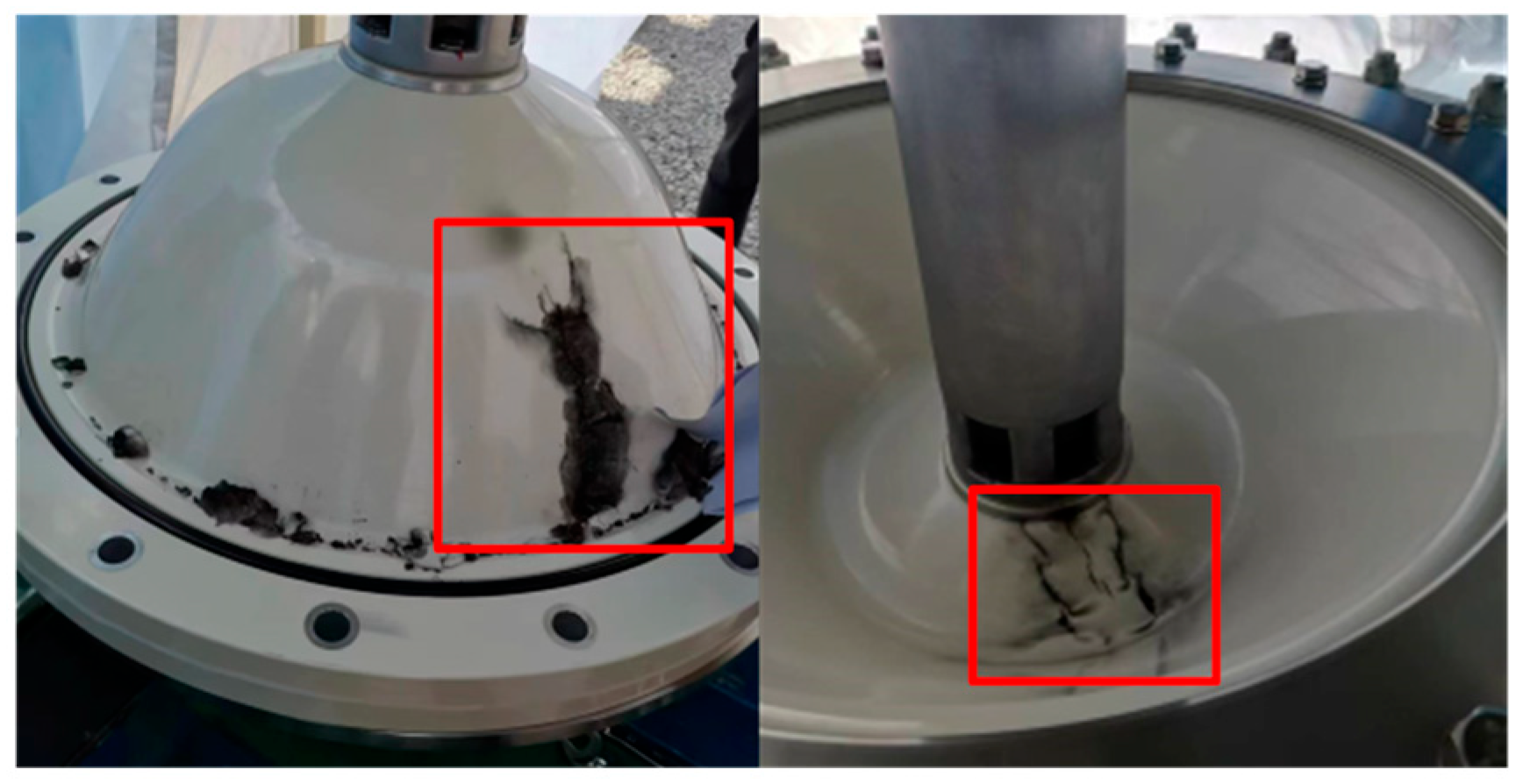
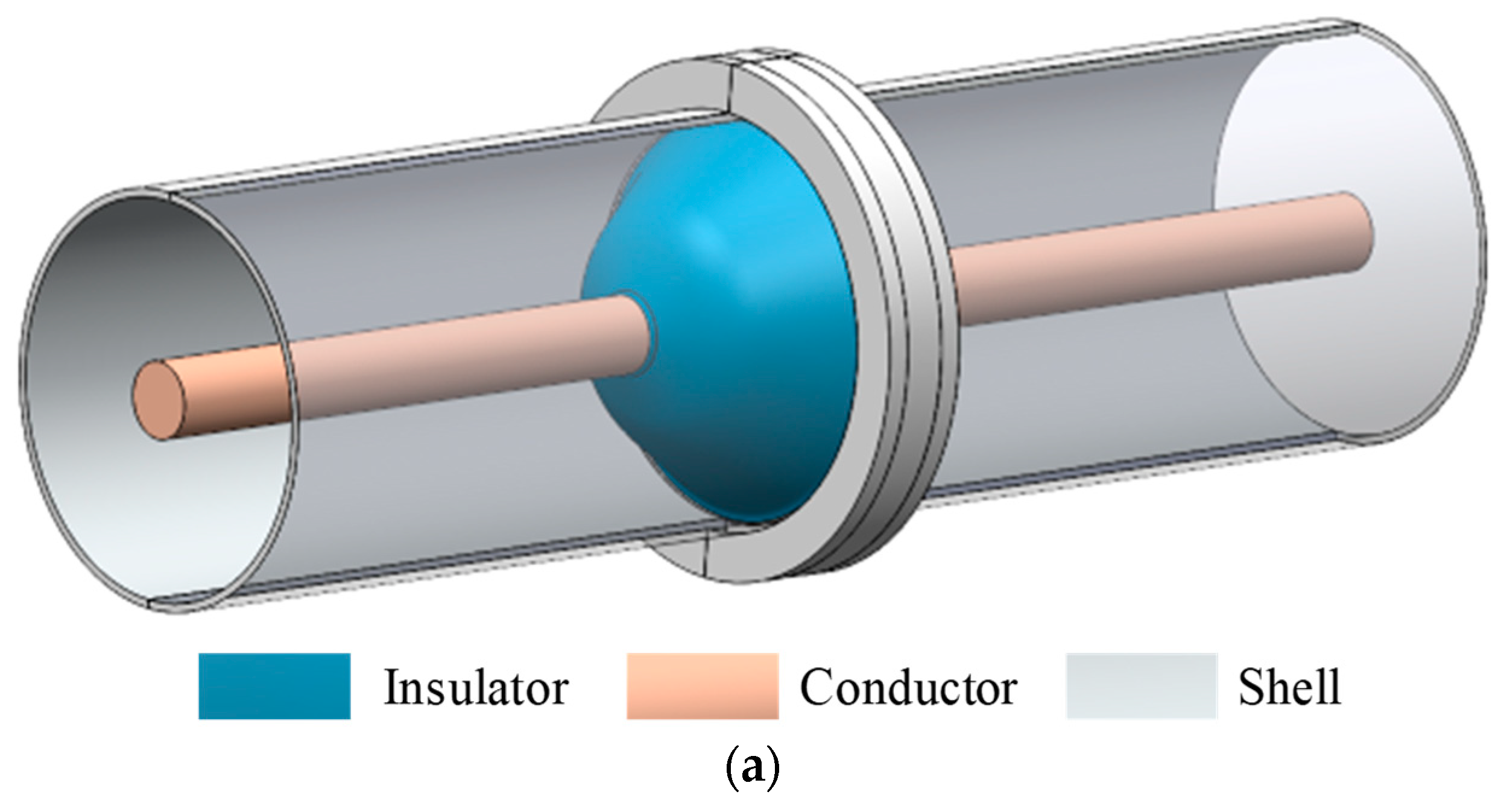
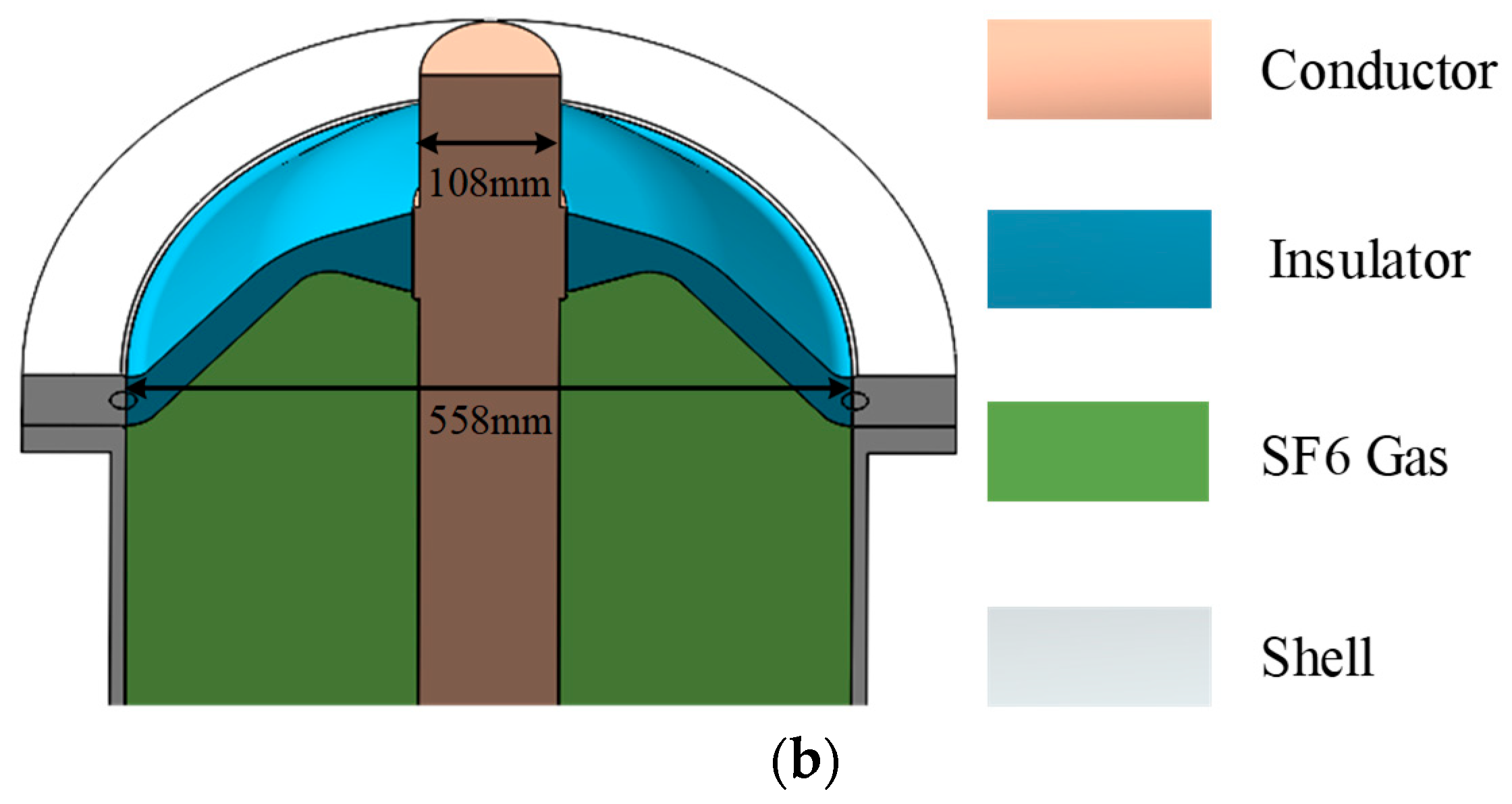
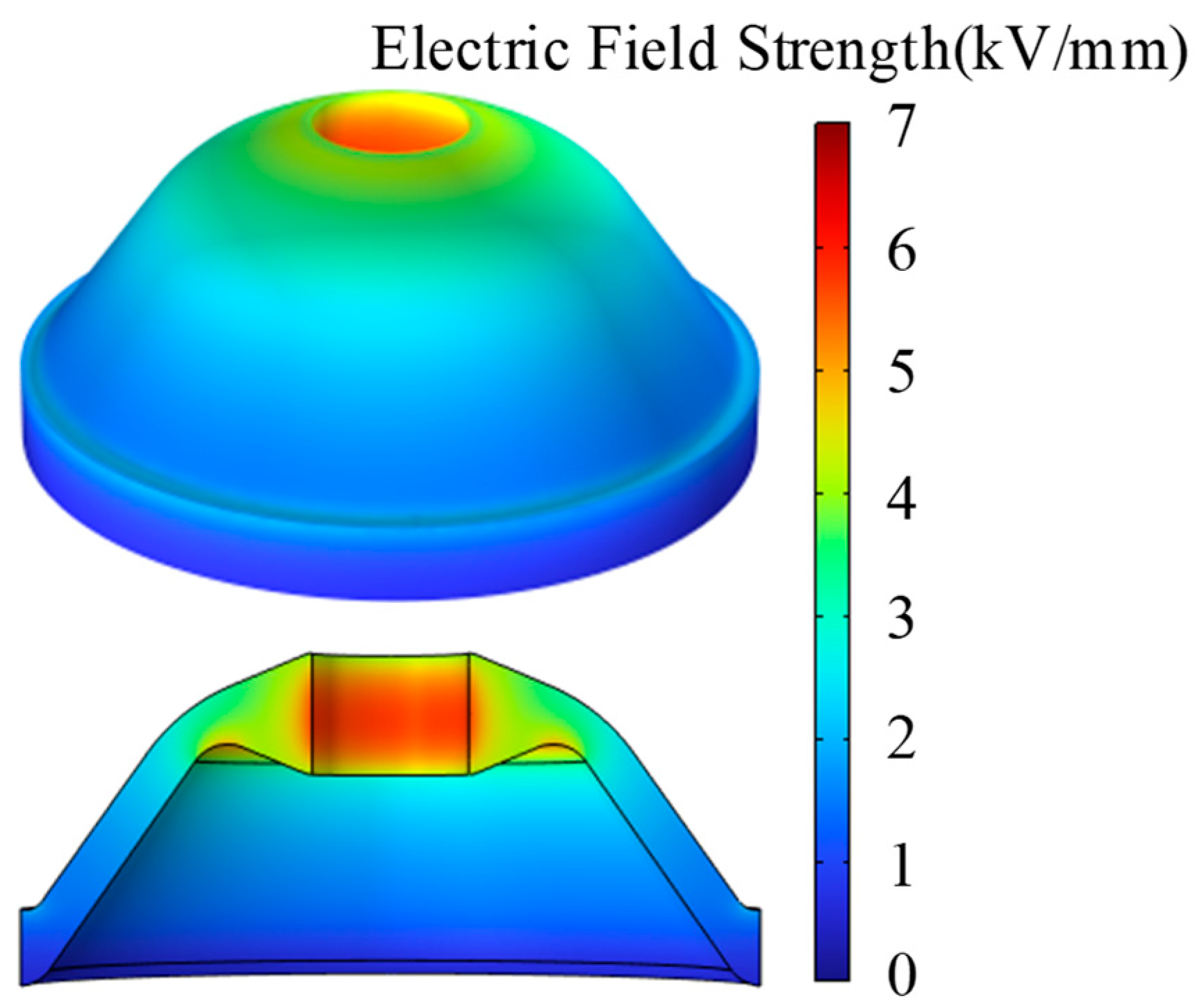
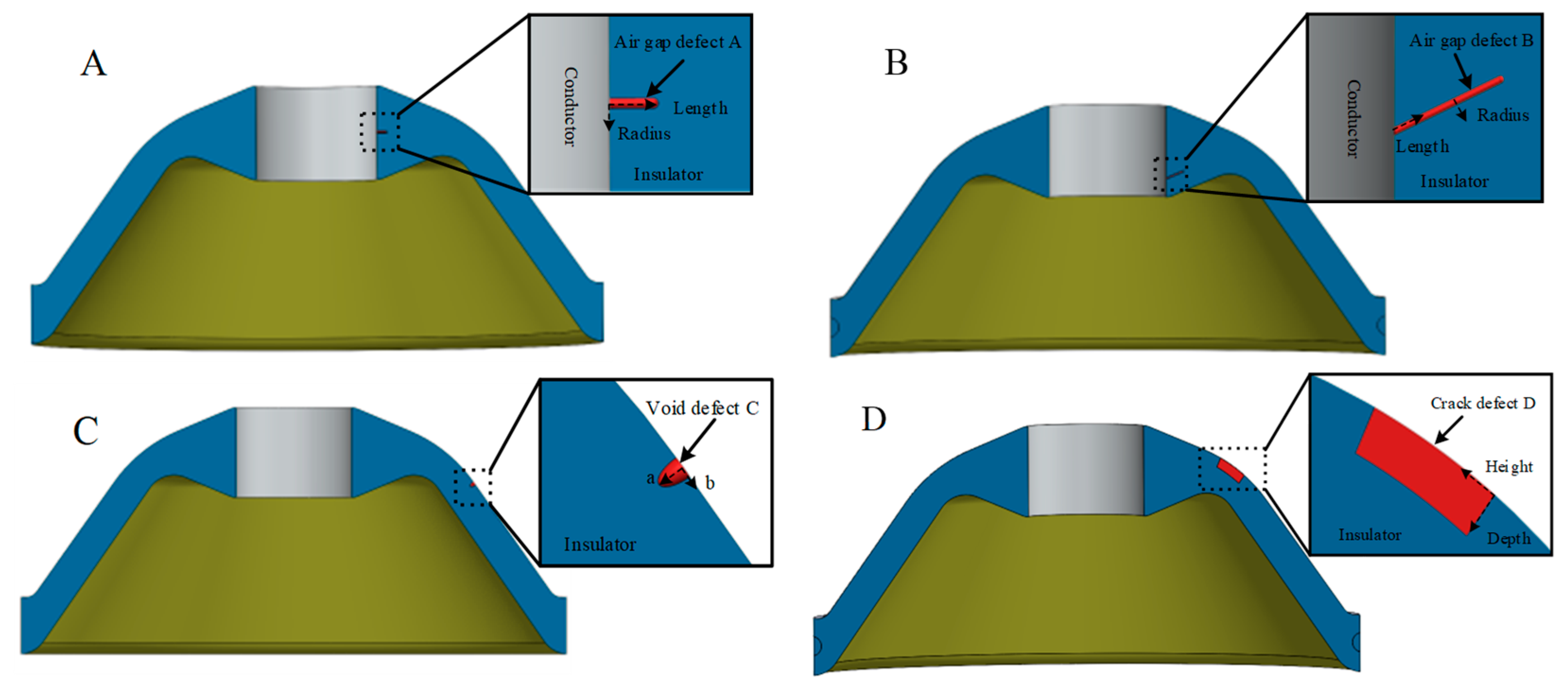
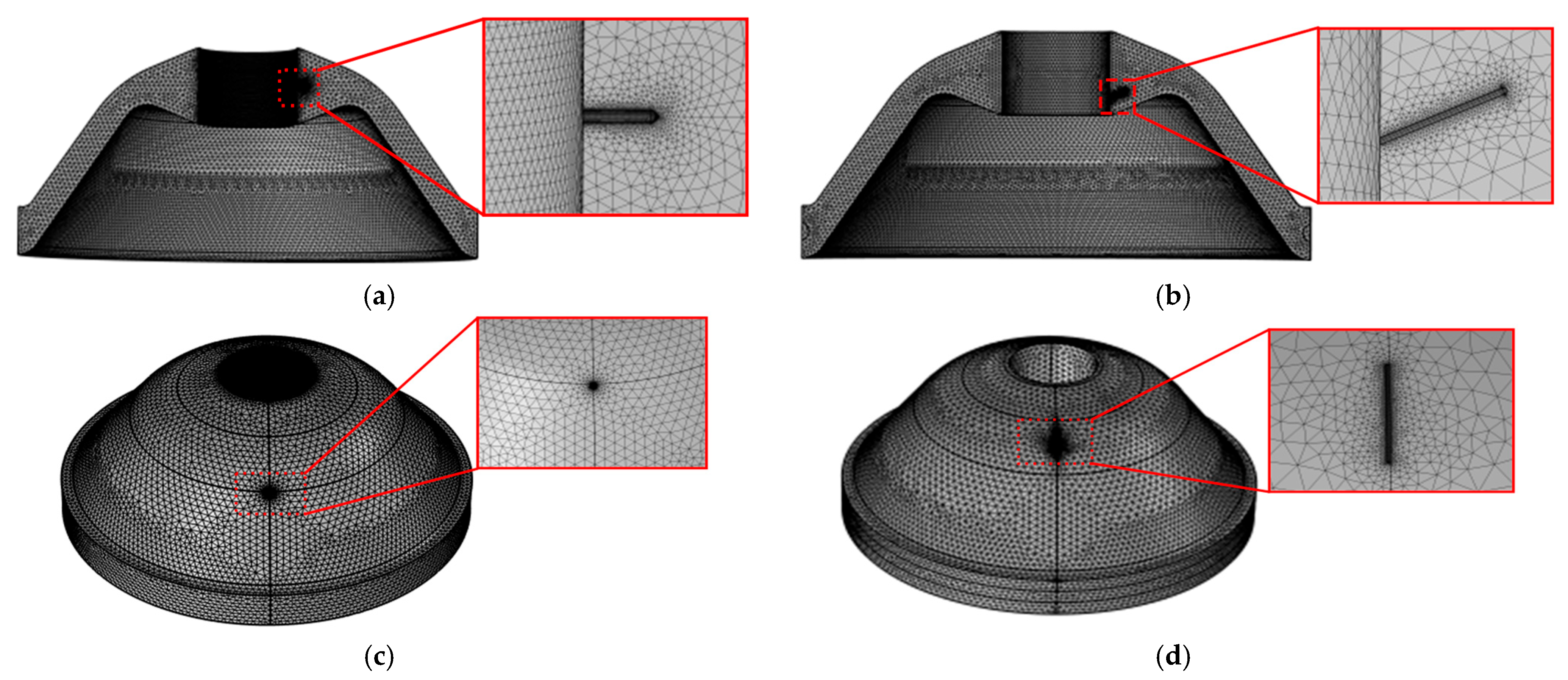
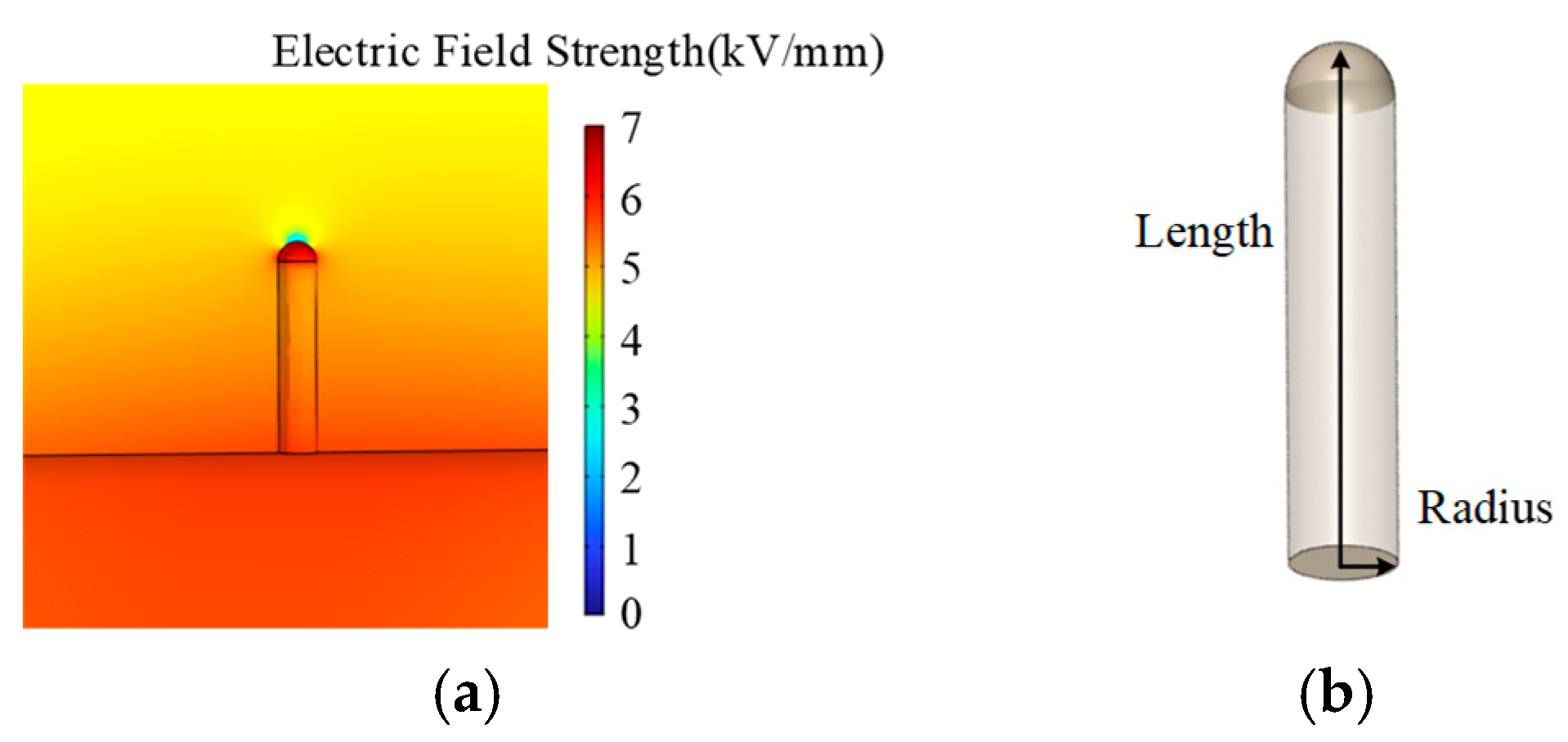
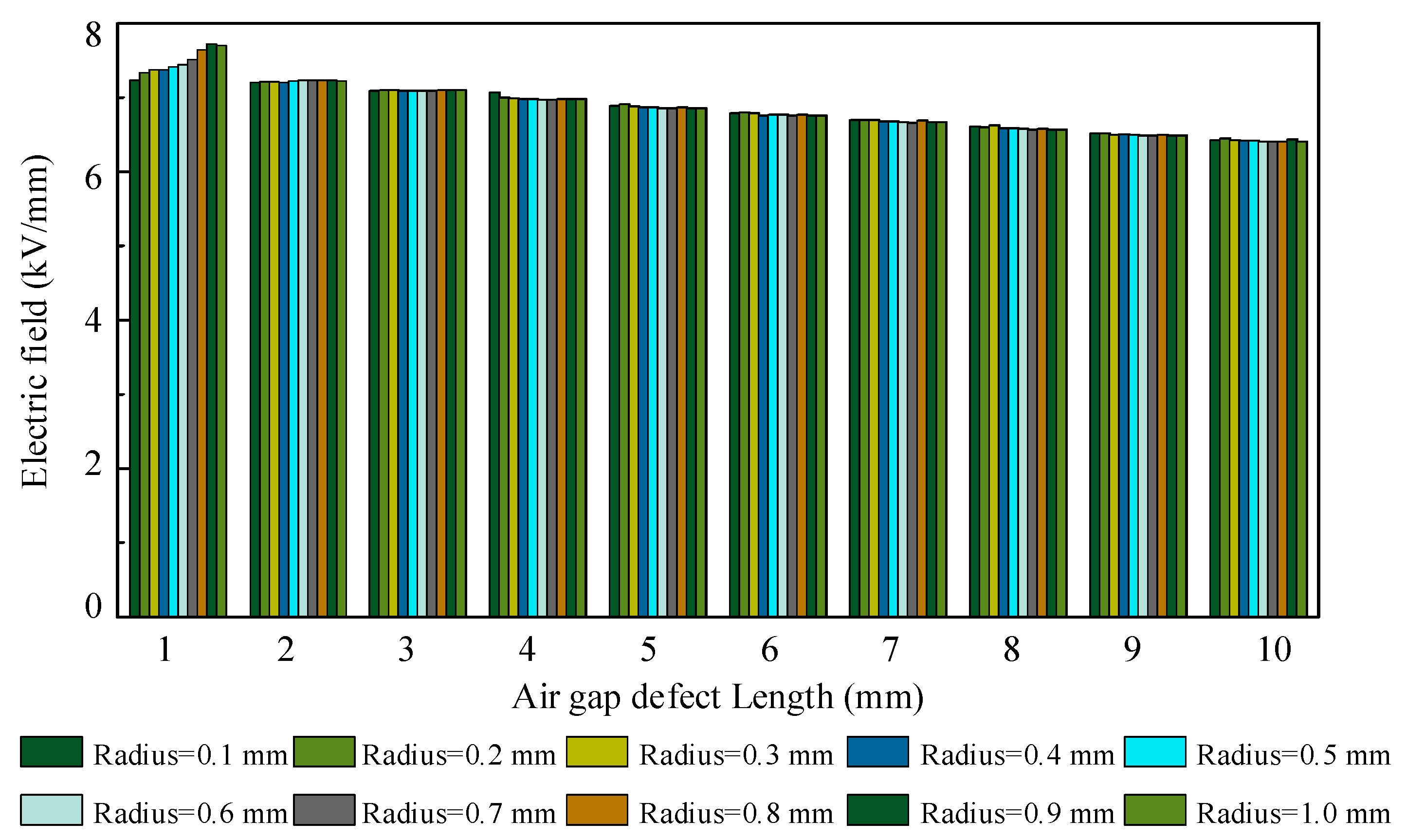
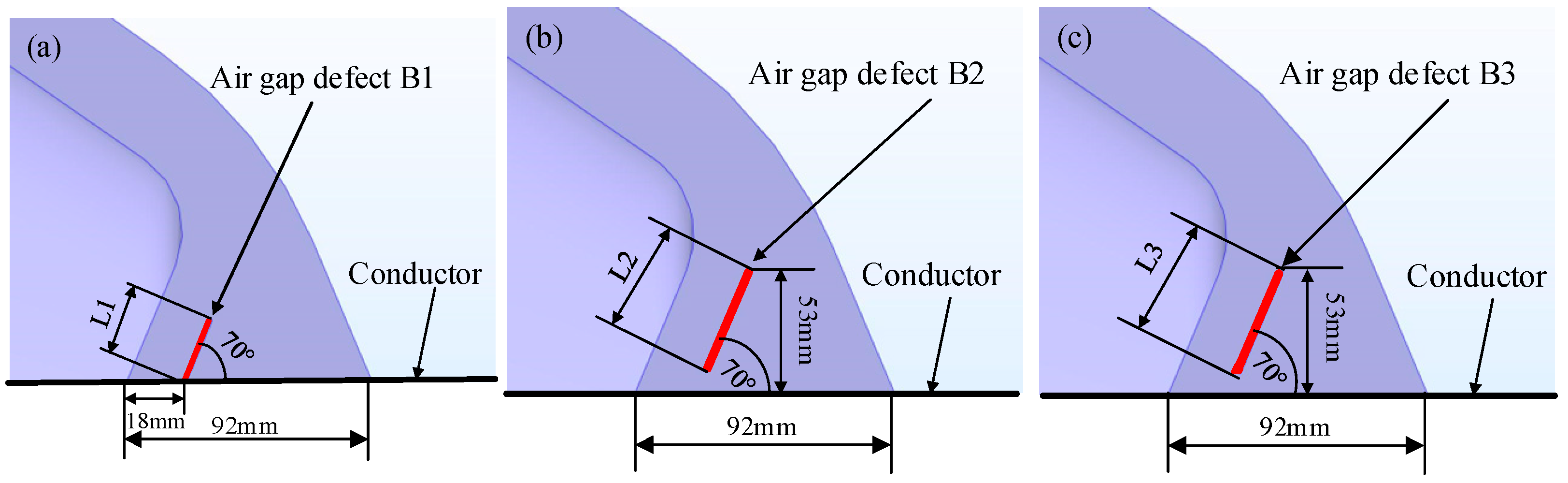
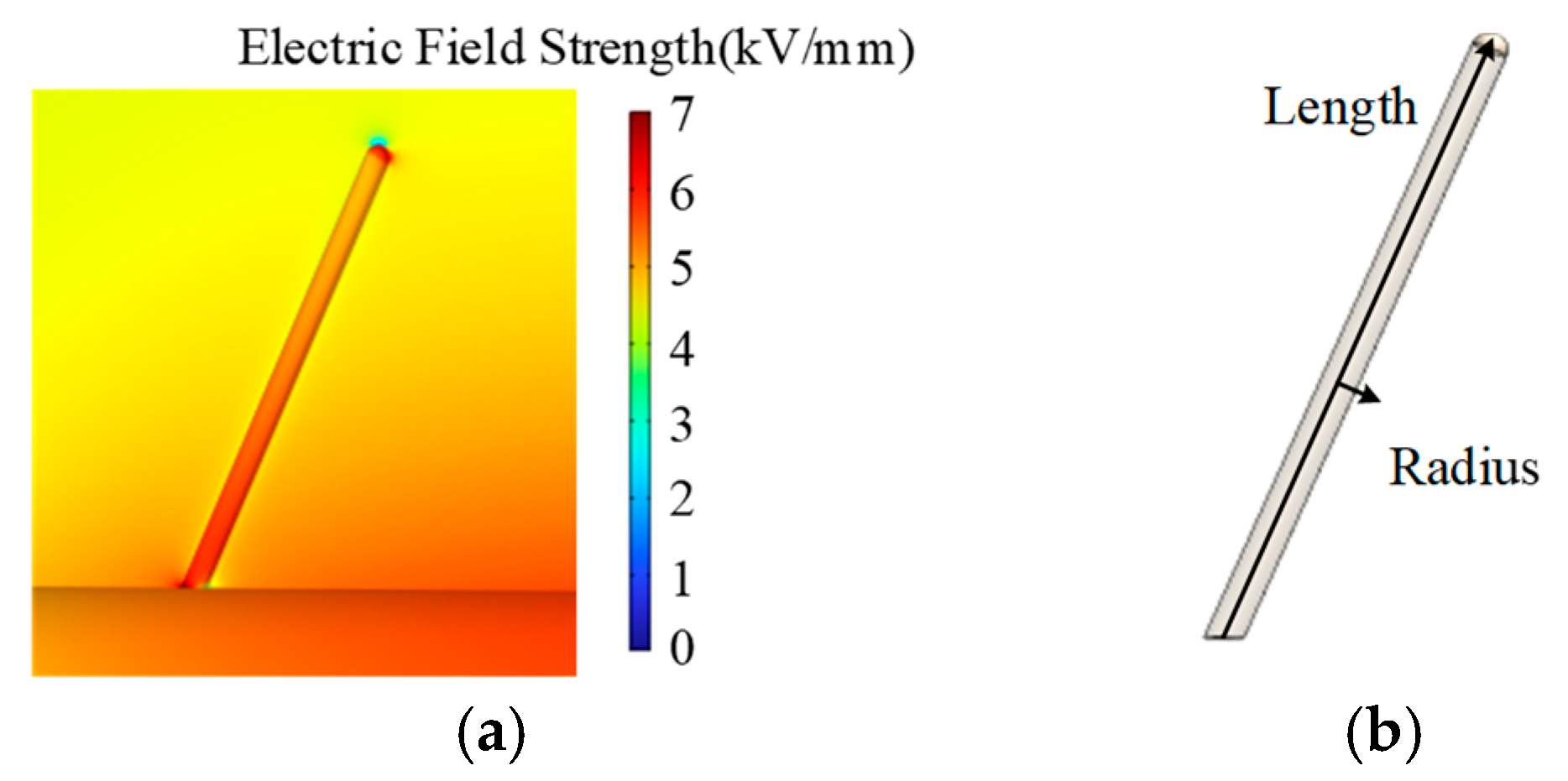
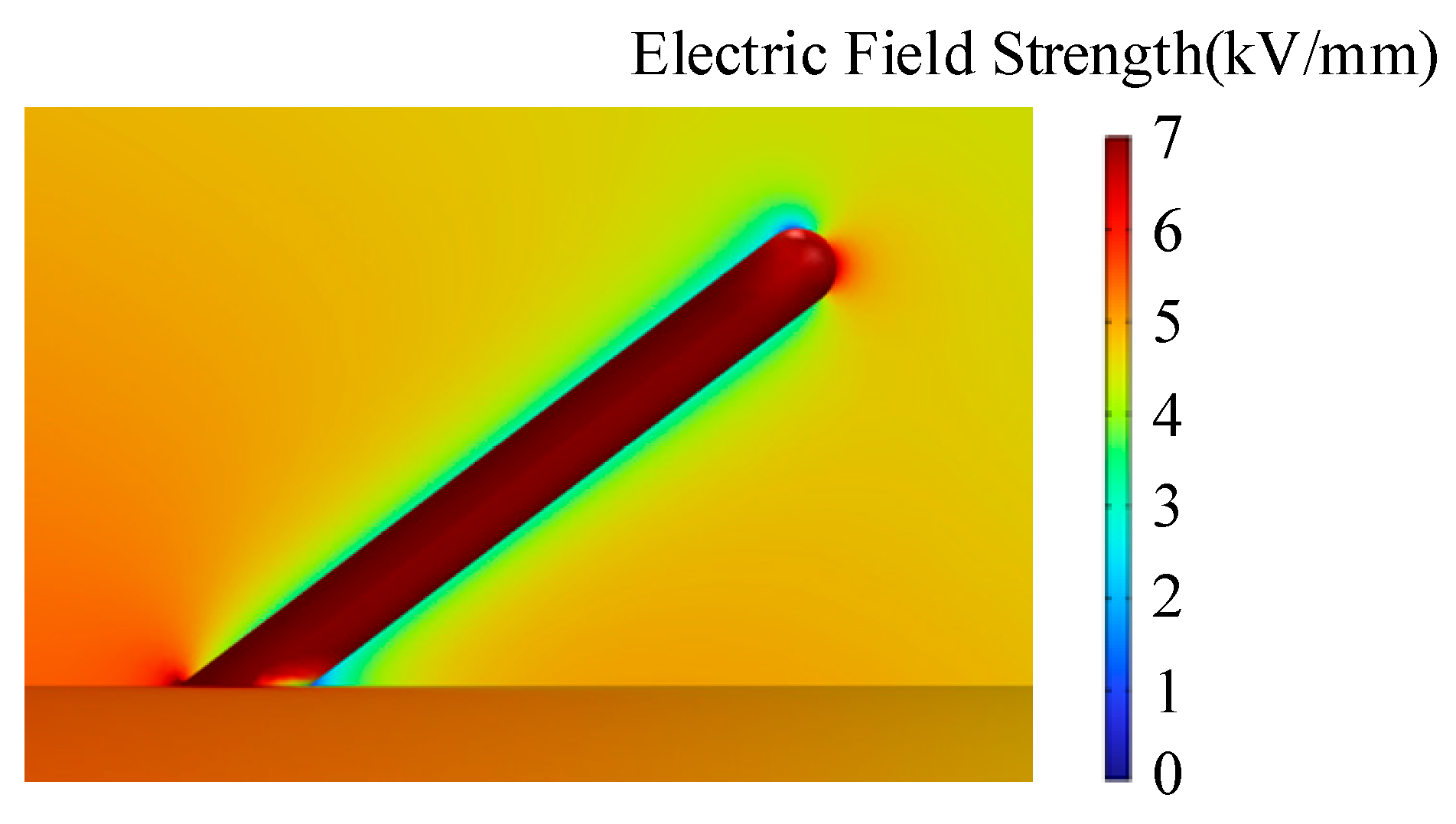
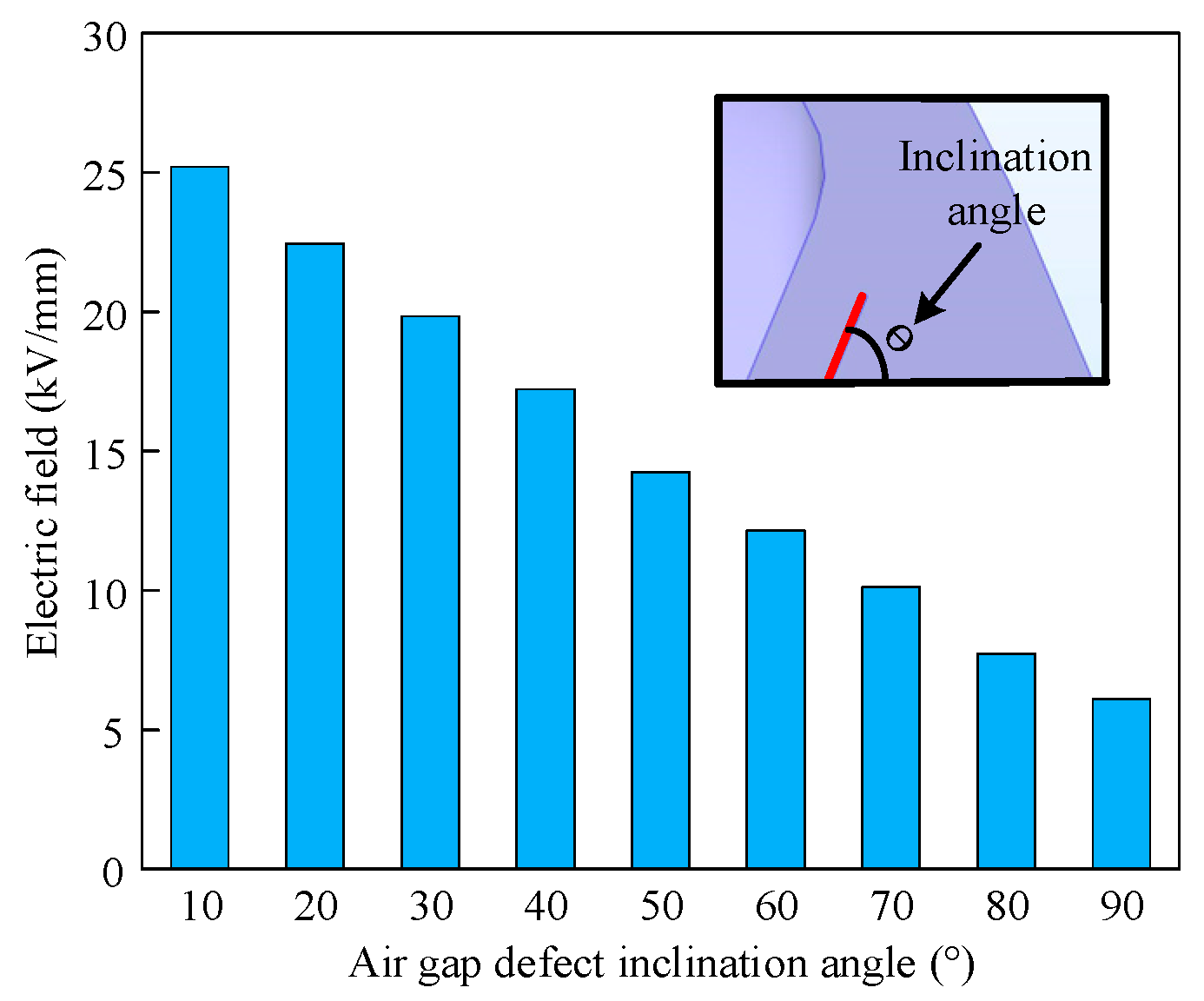
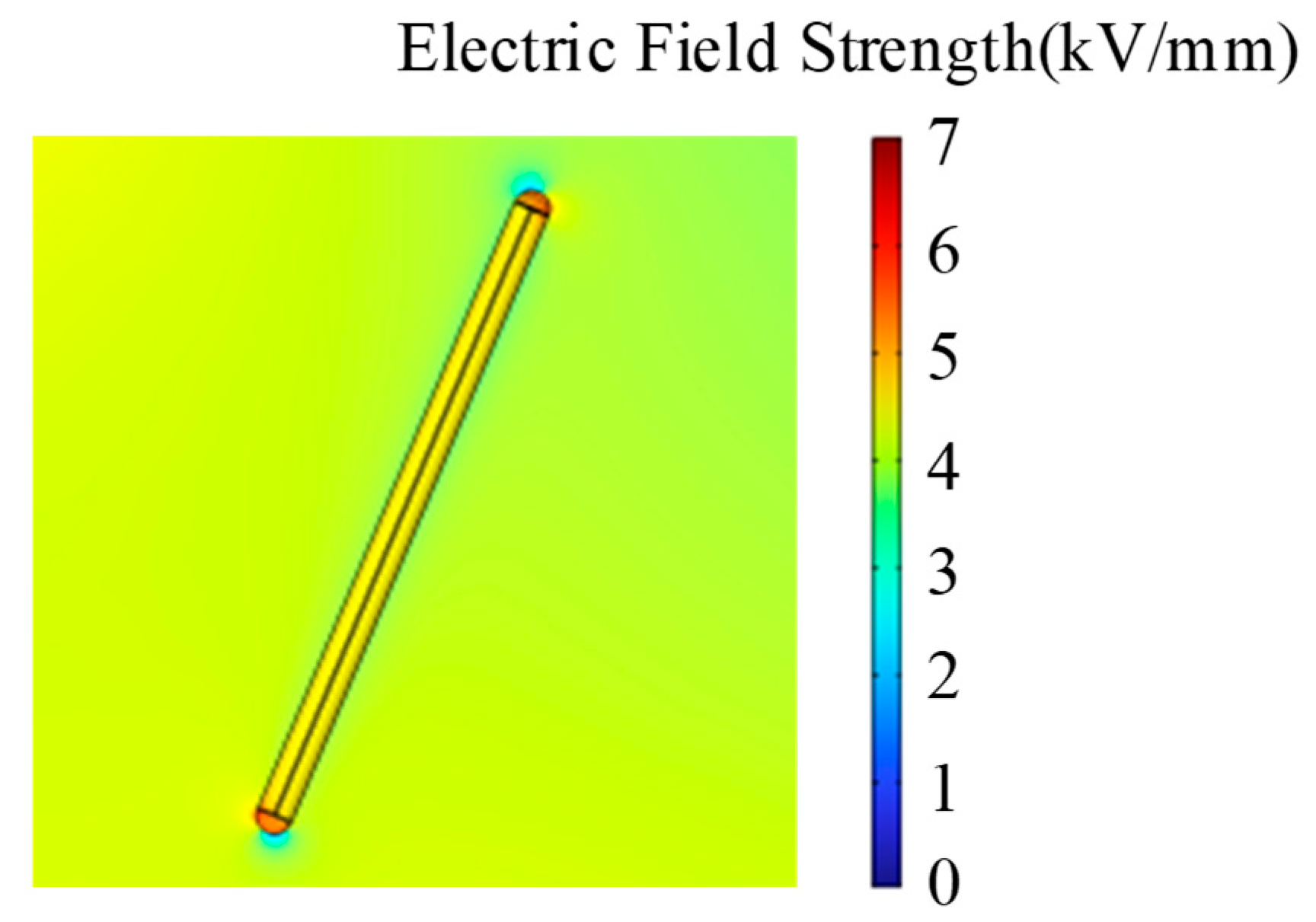
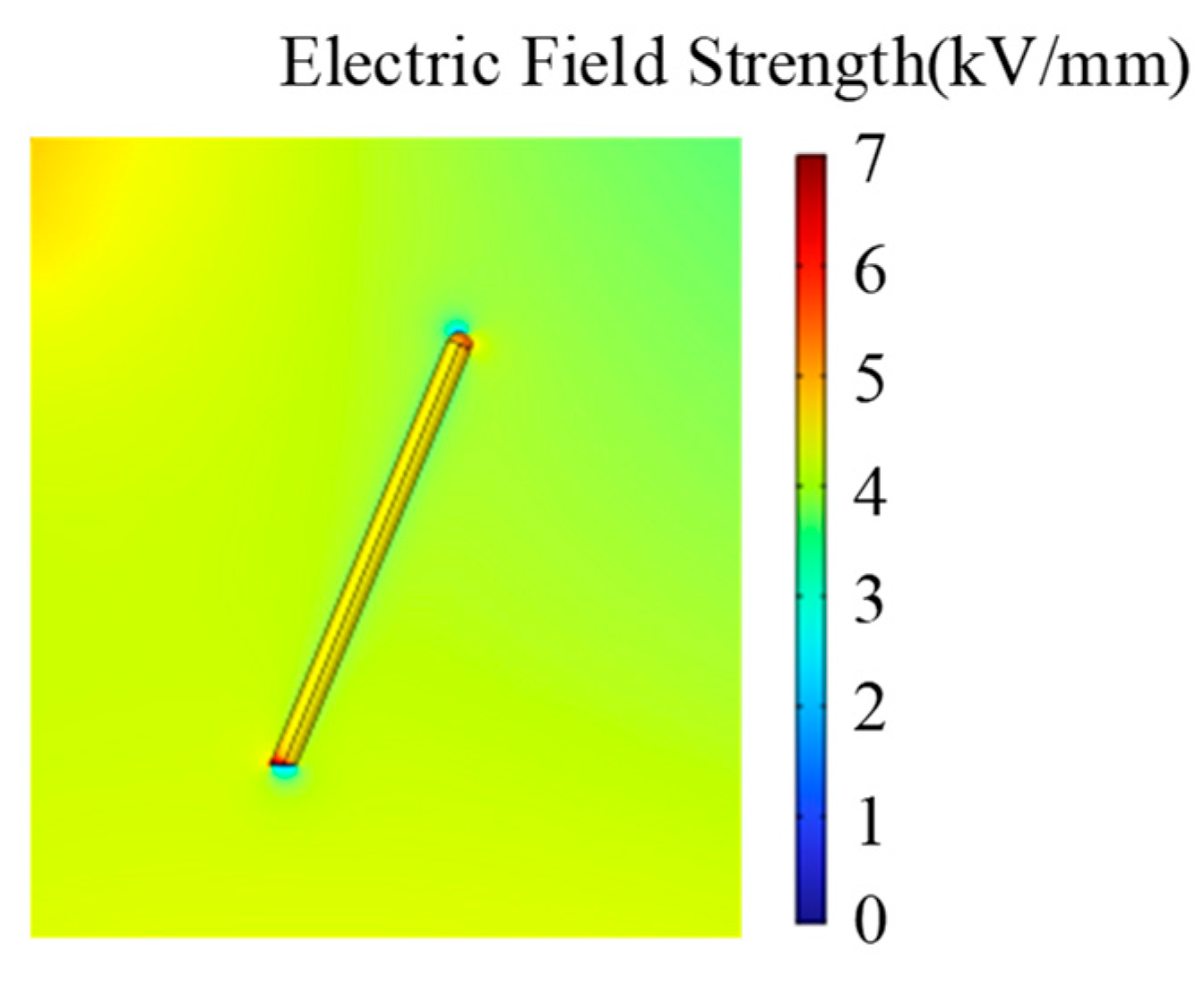
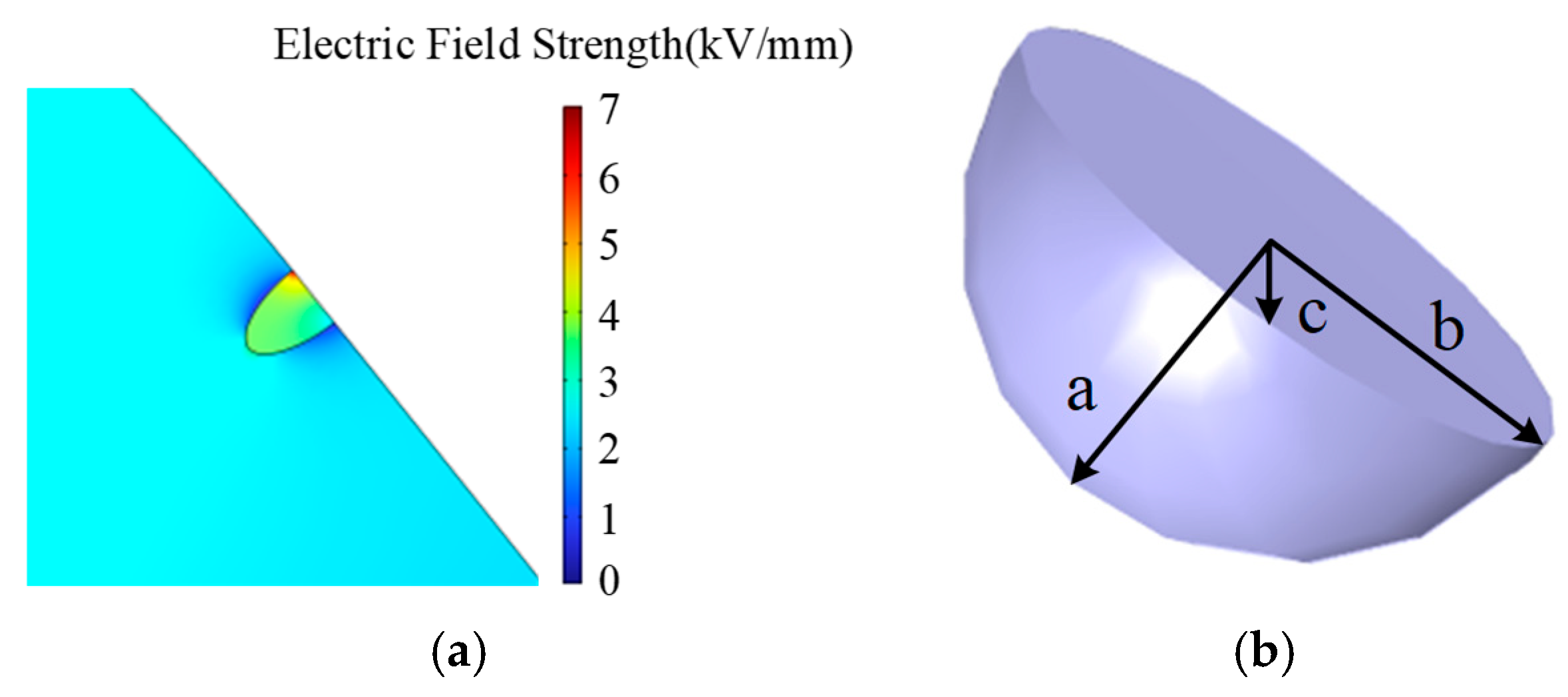
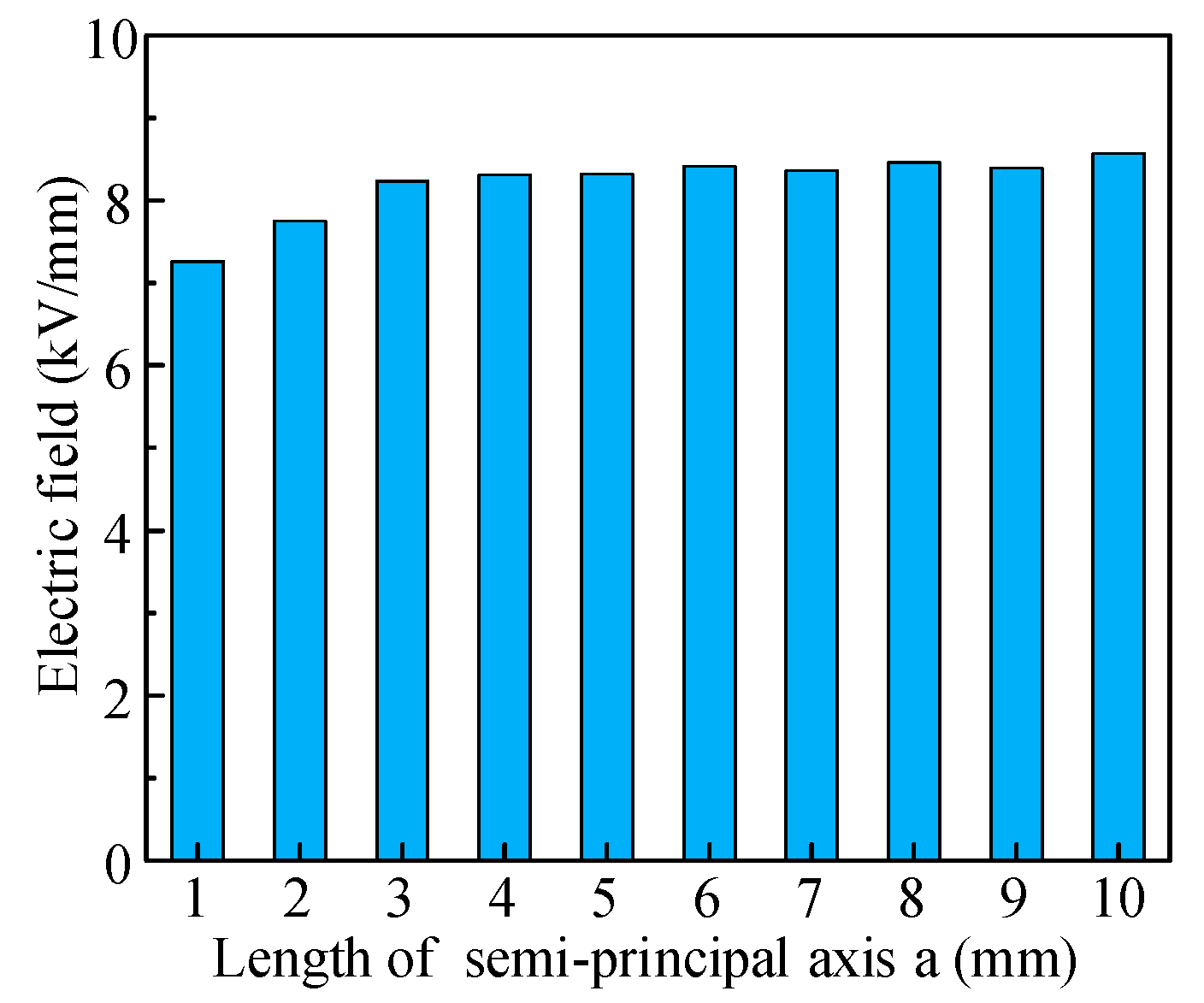
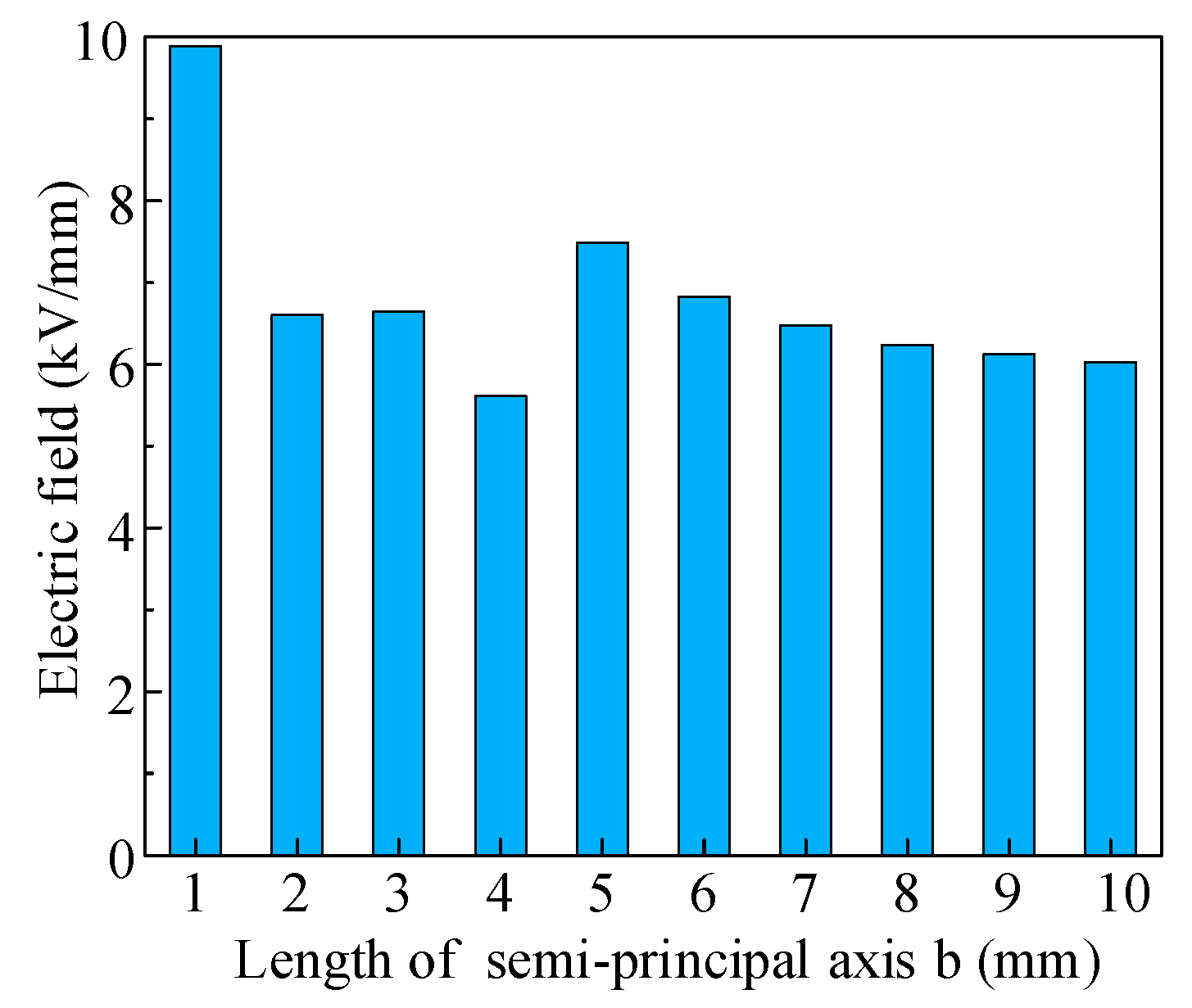
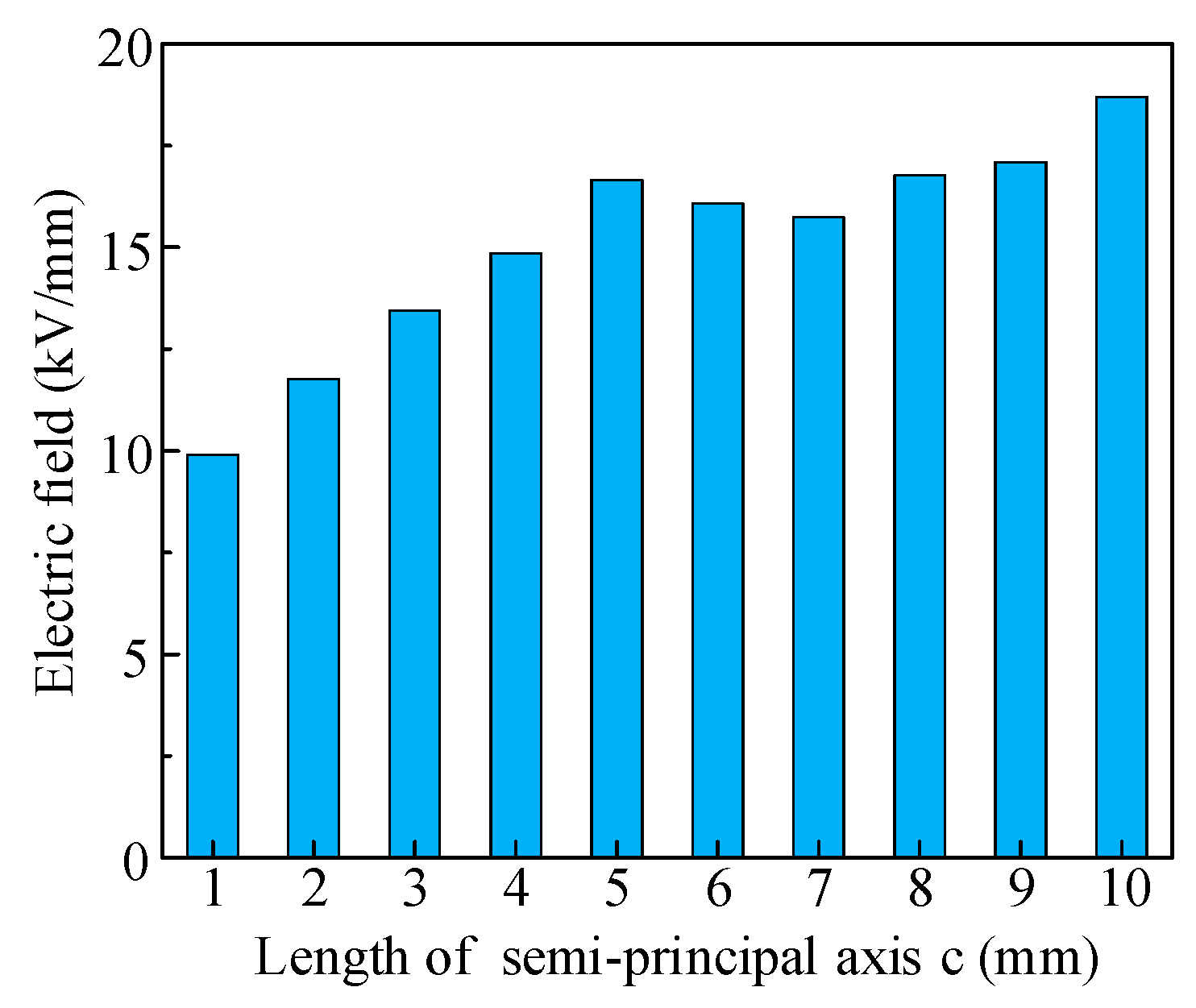
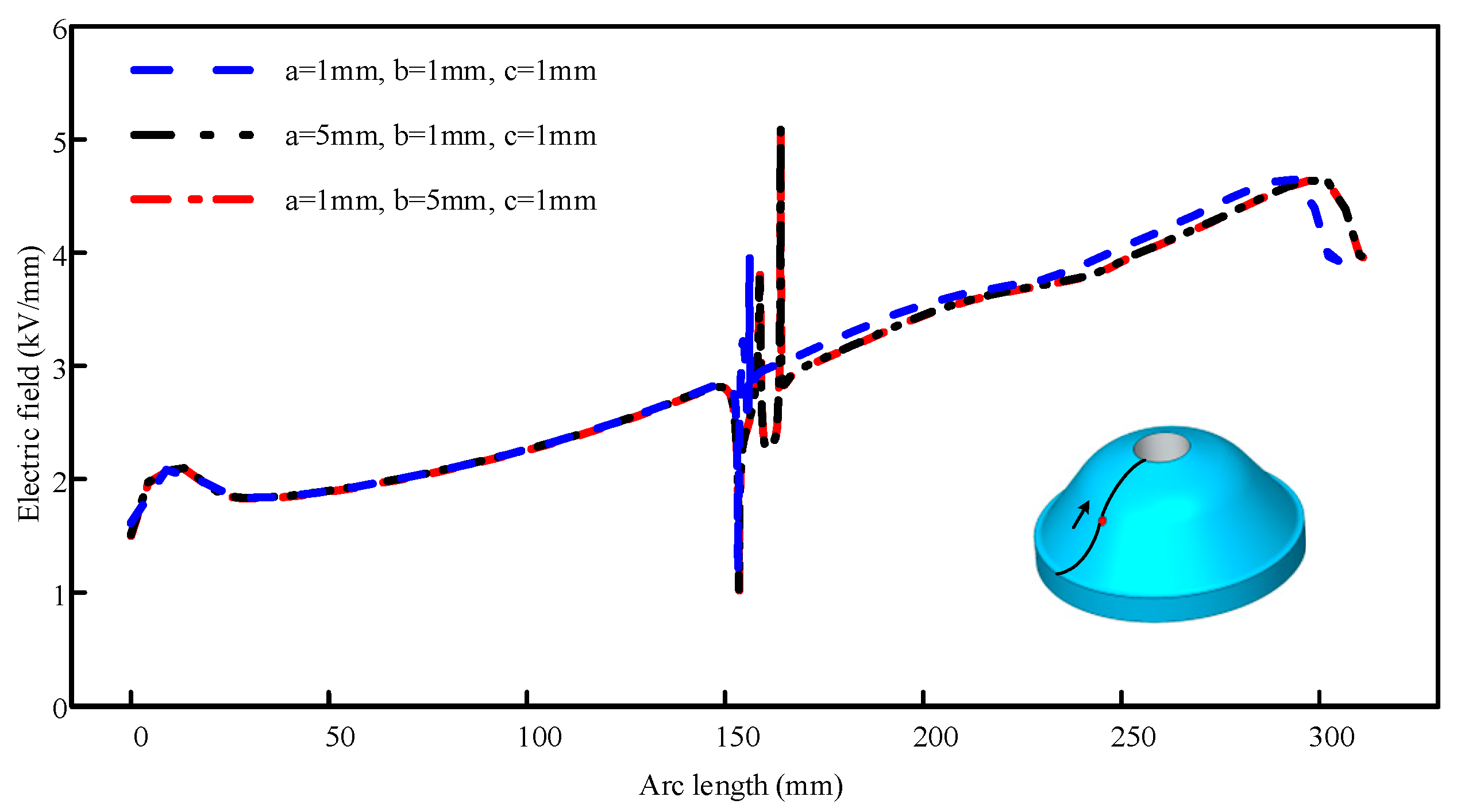
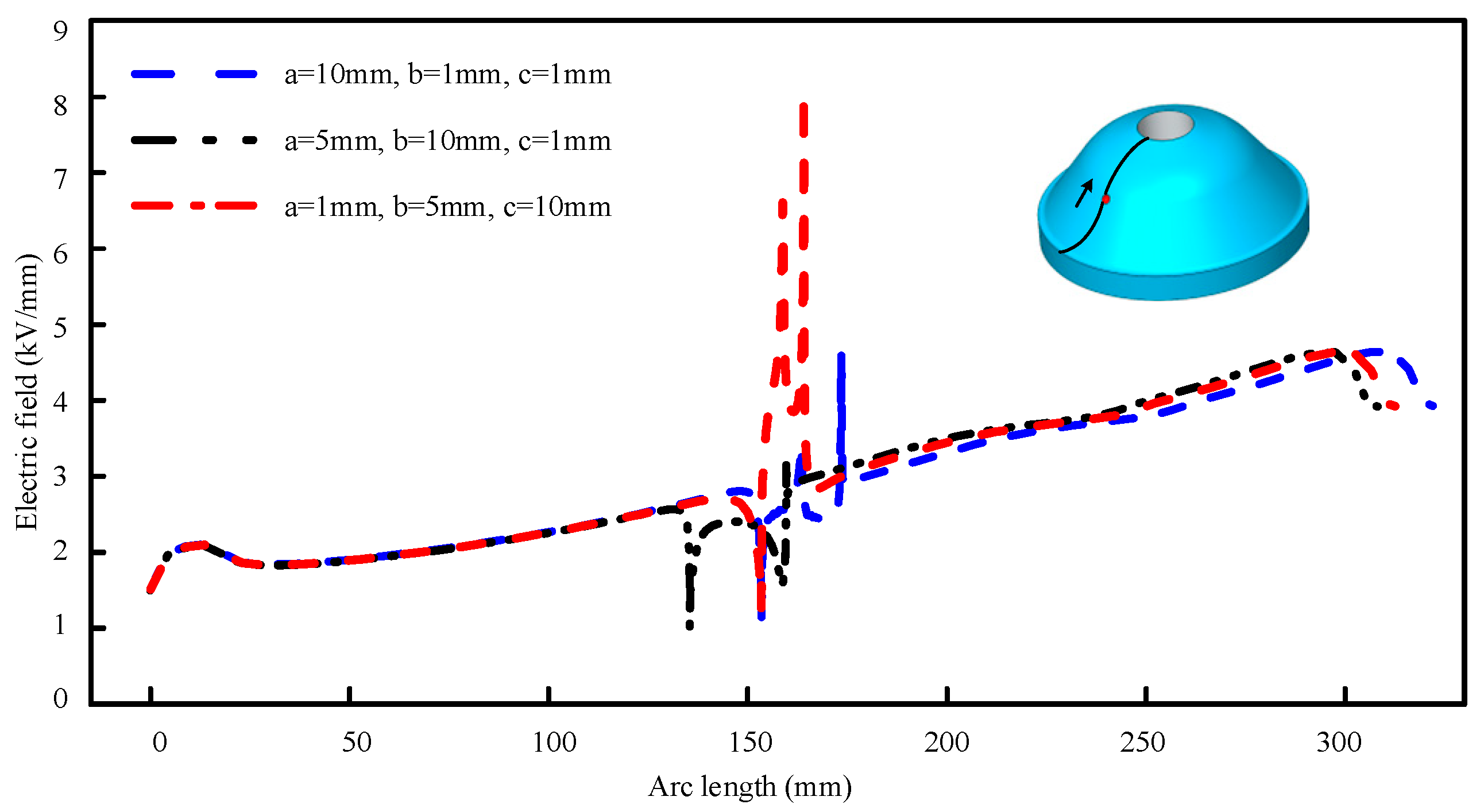
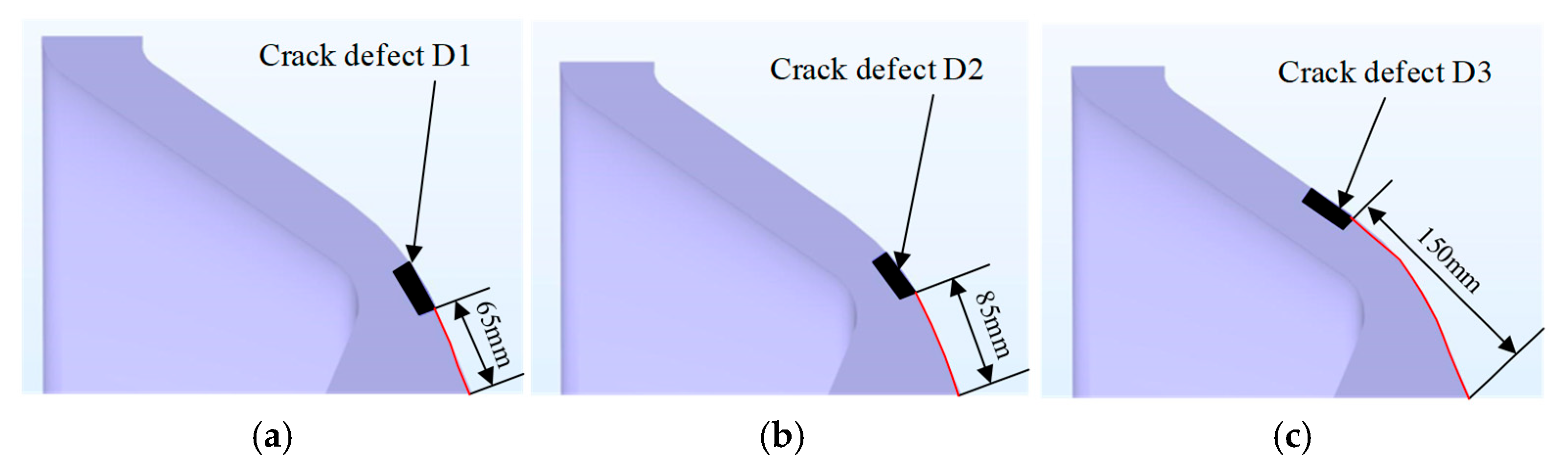
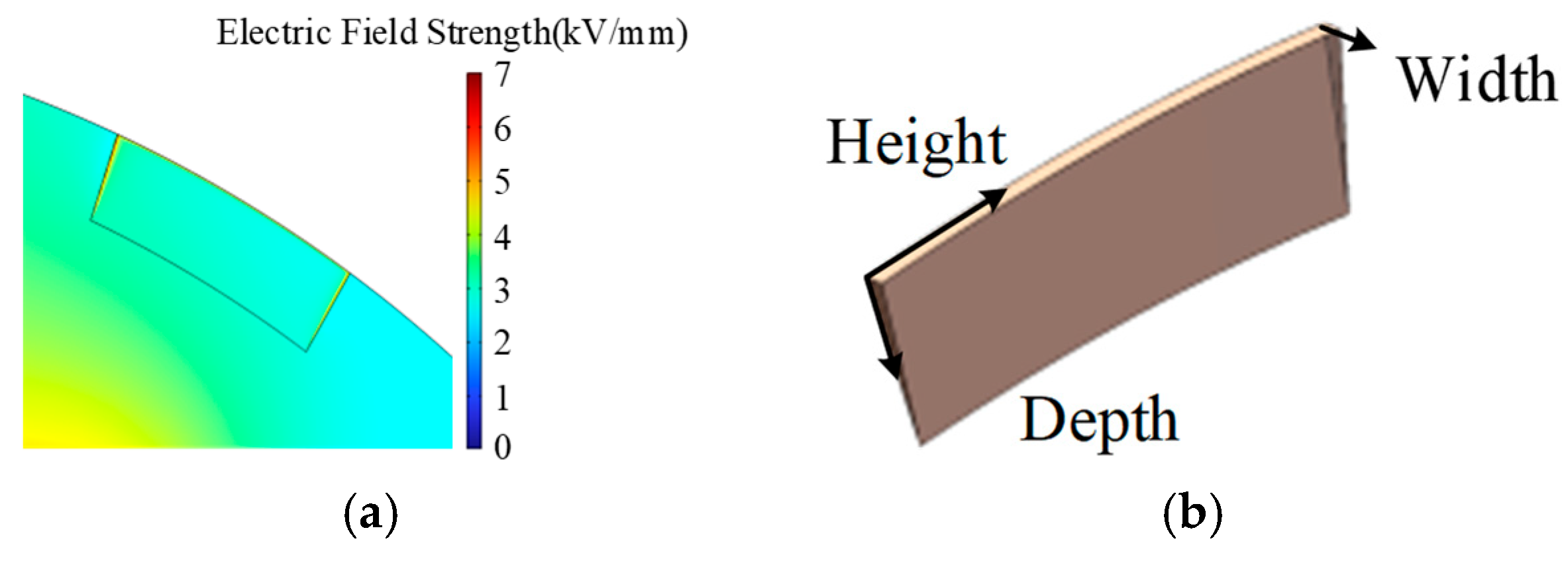
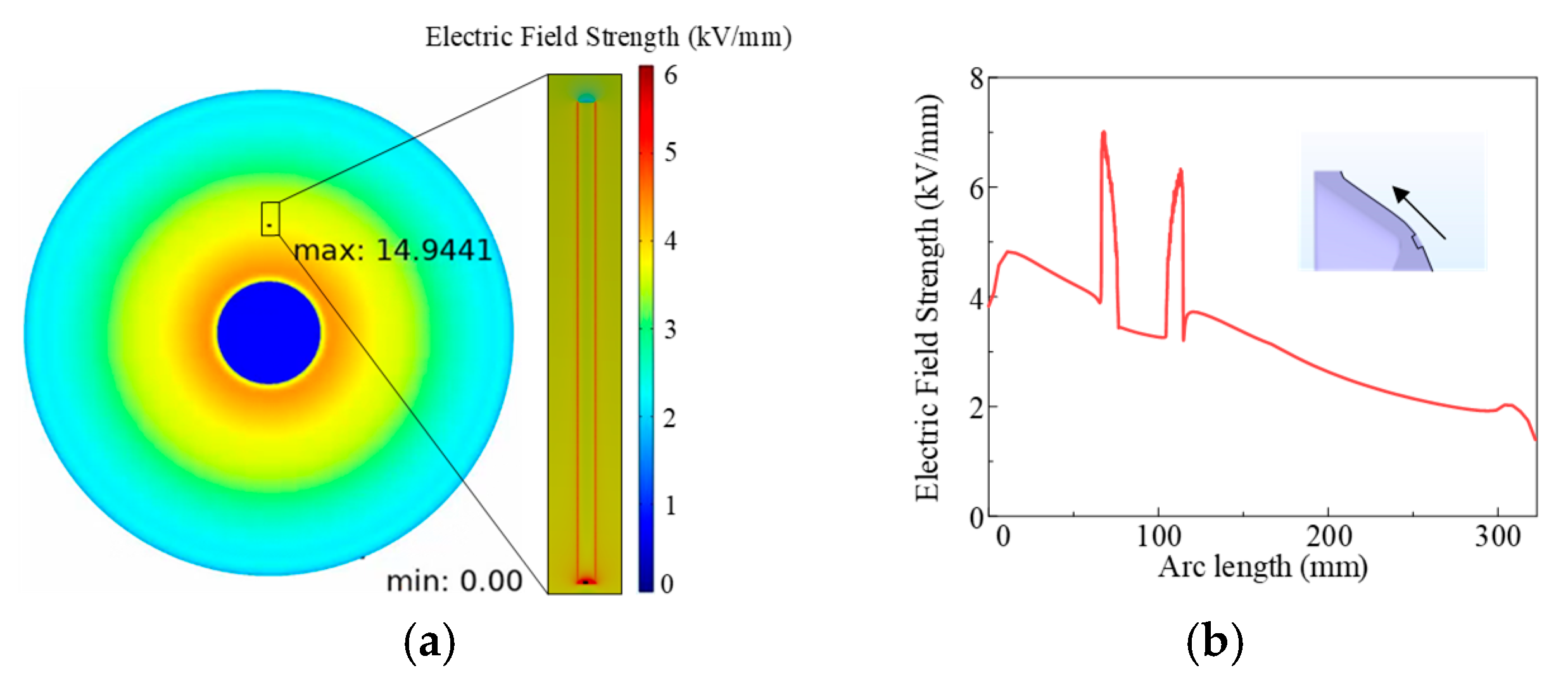
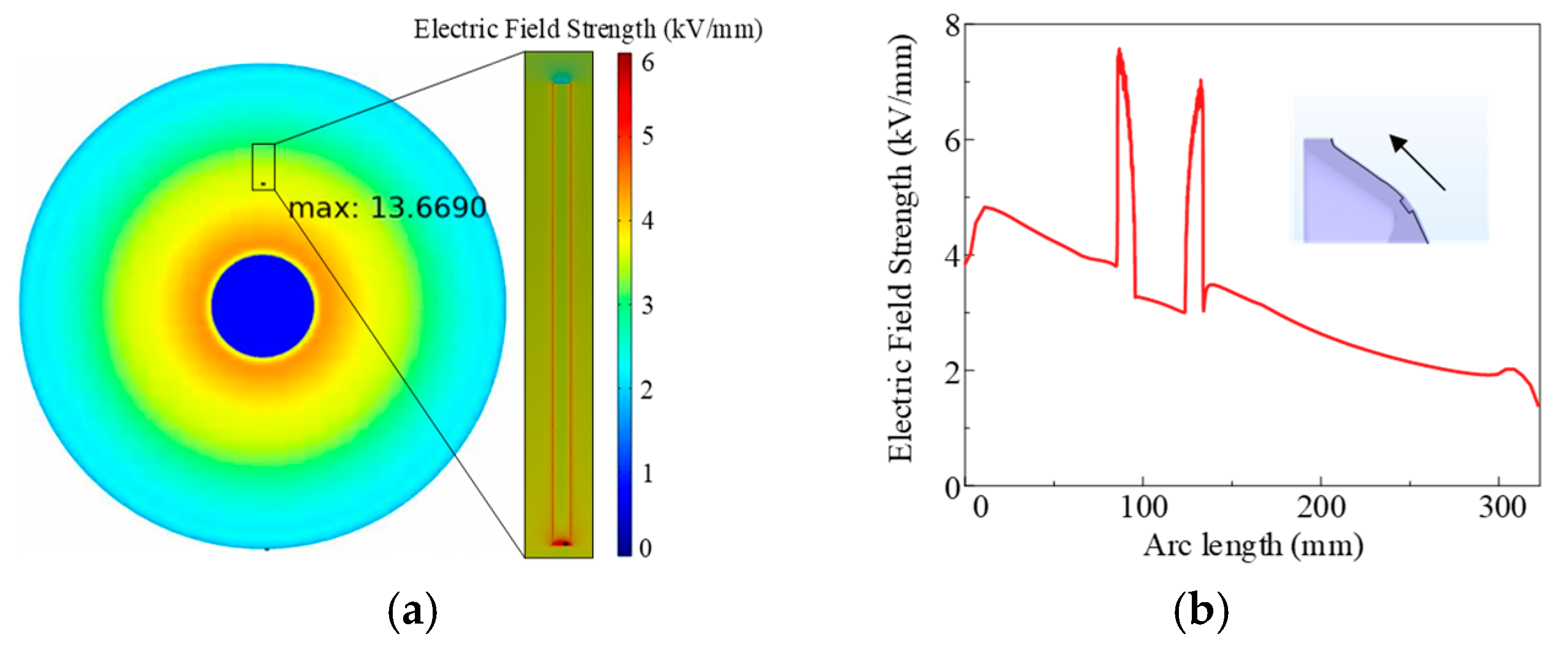
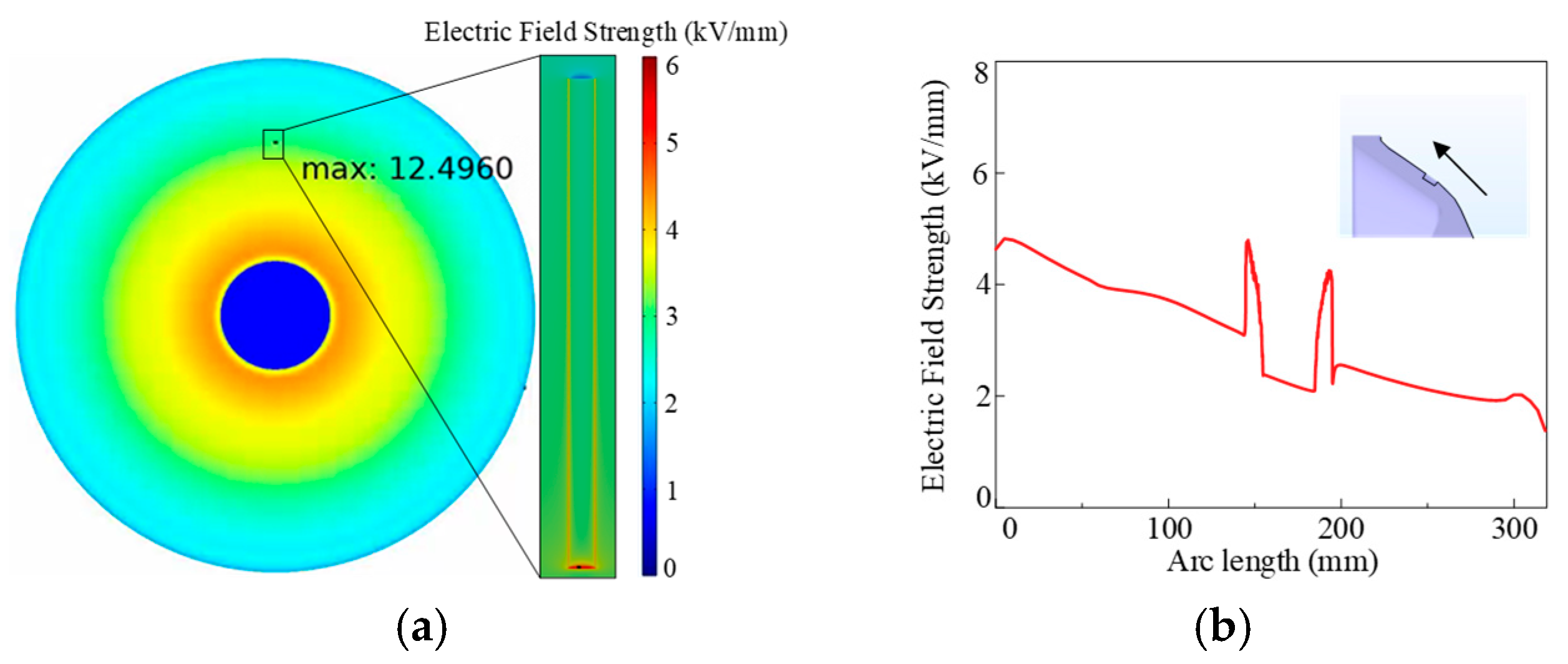
Basin insulator is a critical component of gas-insulated transmission line (GIL) systems. Air gap defects and surface crack defects may form in basin insulators due to casting, installation, or transport processes. This phenomenon poses a significant threat to long-term safety and stability and may even lead to partial discharges. This study establishes a simulation model of a GIL system-incorporating insulator to systematically analyze the influence patterns of various defects on the insulation characteristics of the basin insulator. Meanwhile, an equation predicting the relationship between defect size and maximum electric field strength is derived. The research revealed the following: For short air gap defects near the conductor, increasing length reduces their impact on the surrounding electric field, with the radius having minimal effect; for long air gap defects near the conductor, increasing length amplifies their influence. Smooth air gap defects distant from the conductor show negligible variation in maximum electric field strength with increasing length, while unsmooth air gap defects exhibit more pronounced effects at shorter lengths. Under identical conditions, unsmooth air gap defects demonstrate greater influence on the electric field than smooth ones. For elliptical surface defects, variations in radius show the strongest distortion. The degree of influence from surface crack defects correlates directly with their proximity to the conductor. These findings provide critical diagnostic criteria for assessing the insulation performance of basin insulator under damaged conditions.
Keywords: GIL; basin insulator; surface crack; air gap; electric field simulation GIL; basin insulator; surface crack; air gap; electric field simulation