Article

Deep Learning Models Applied Flowrate Estimation in Offshore Wells with Electric Submersible Pump


by
Josenílson G. Araújo
1,2,
Hellockston G. Brito
1,*,
Marcus V. Galvão
1,2,
Carla Wilza S. P. Maitelli
1 and
Adrião D. Doria Neto
1
1
Centro de Tecnologia, Campus Universitário Lagoa Nova, Universidade Federal do Rio Grande do Norte—UFRN, Natal 59078-970, RN, Brazil
2
Exploration and Production (E&P), Petrobras, Natal 59070-900, RN, Brazil
*
Author to whom correspondence should be addressed.
Energies 2025, 18(19), 5311; https://doi.org/10.3390/en18195311
Submission received: 31 August 2025 / Revised: 22 September 2025 / Accepted: 23 September 2025 / Published: 9 October 2025
(This article belongs to the Special Issue Modern Aspects of the Design and Operation of Electric Machines)

Abstract

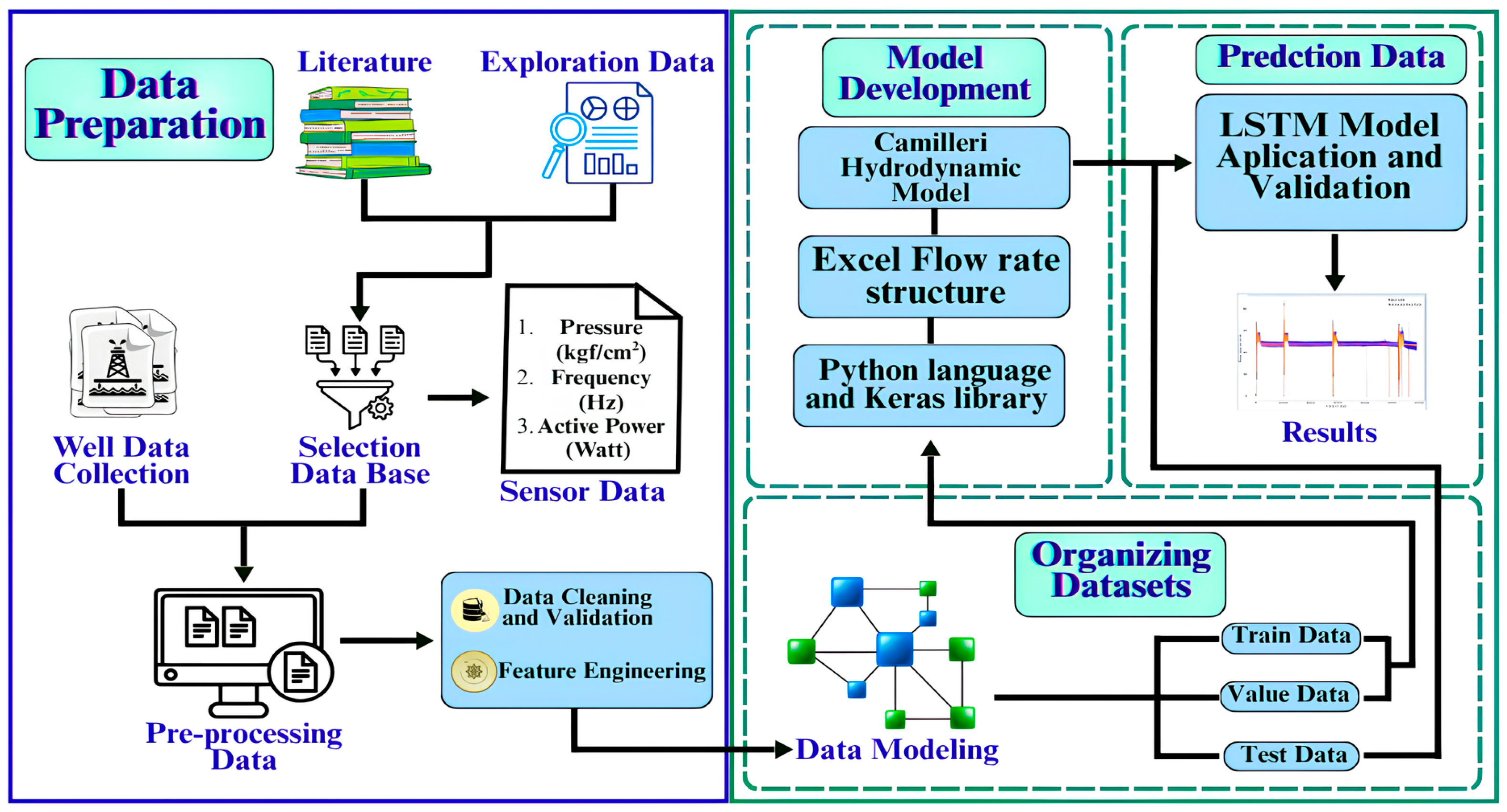
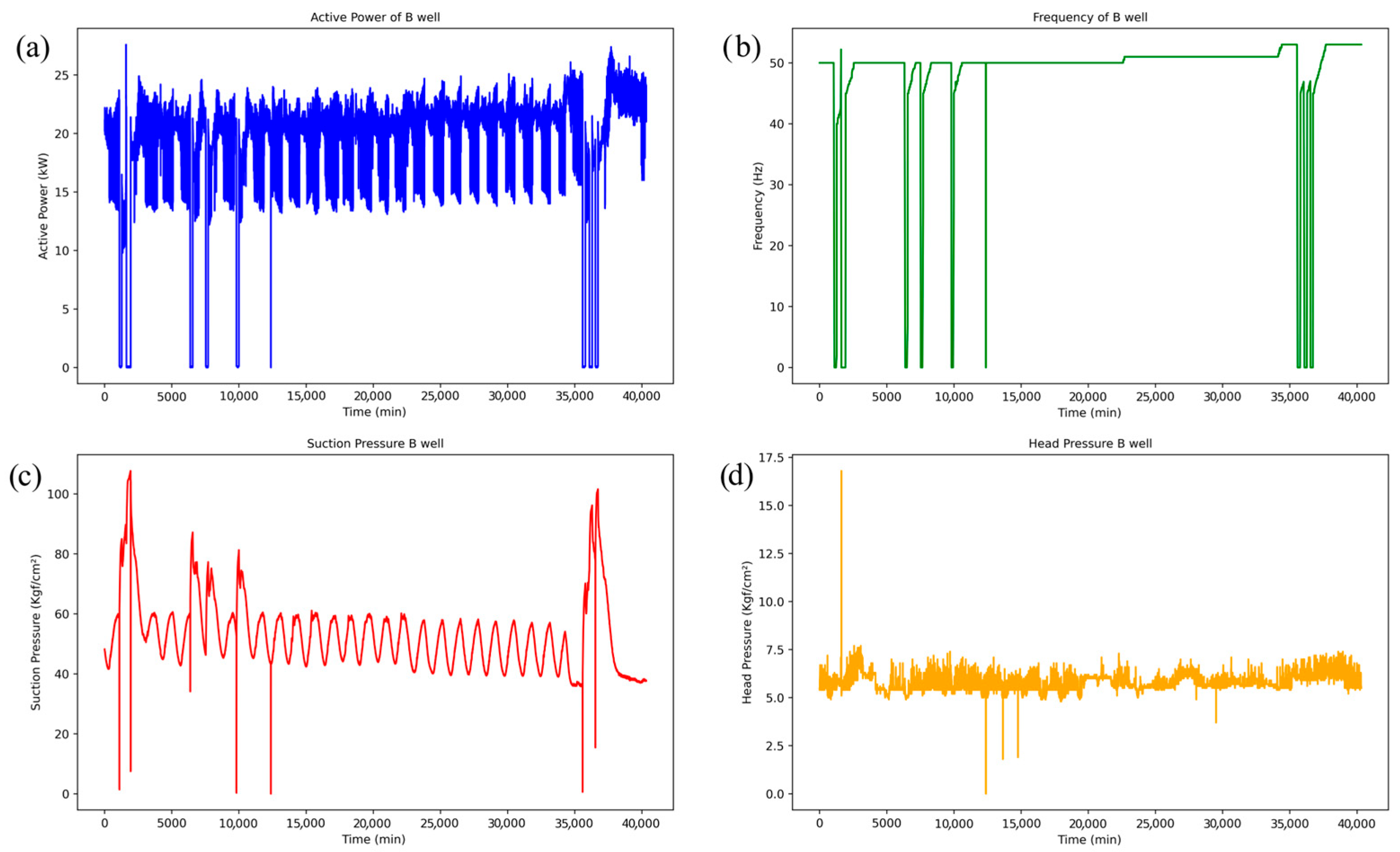
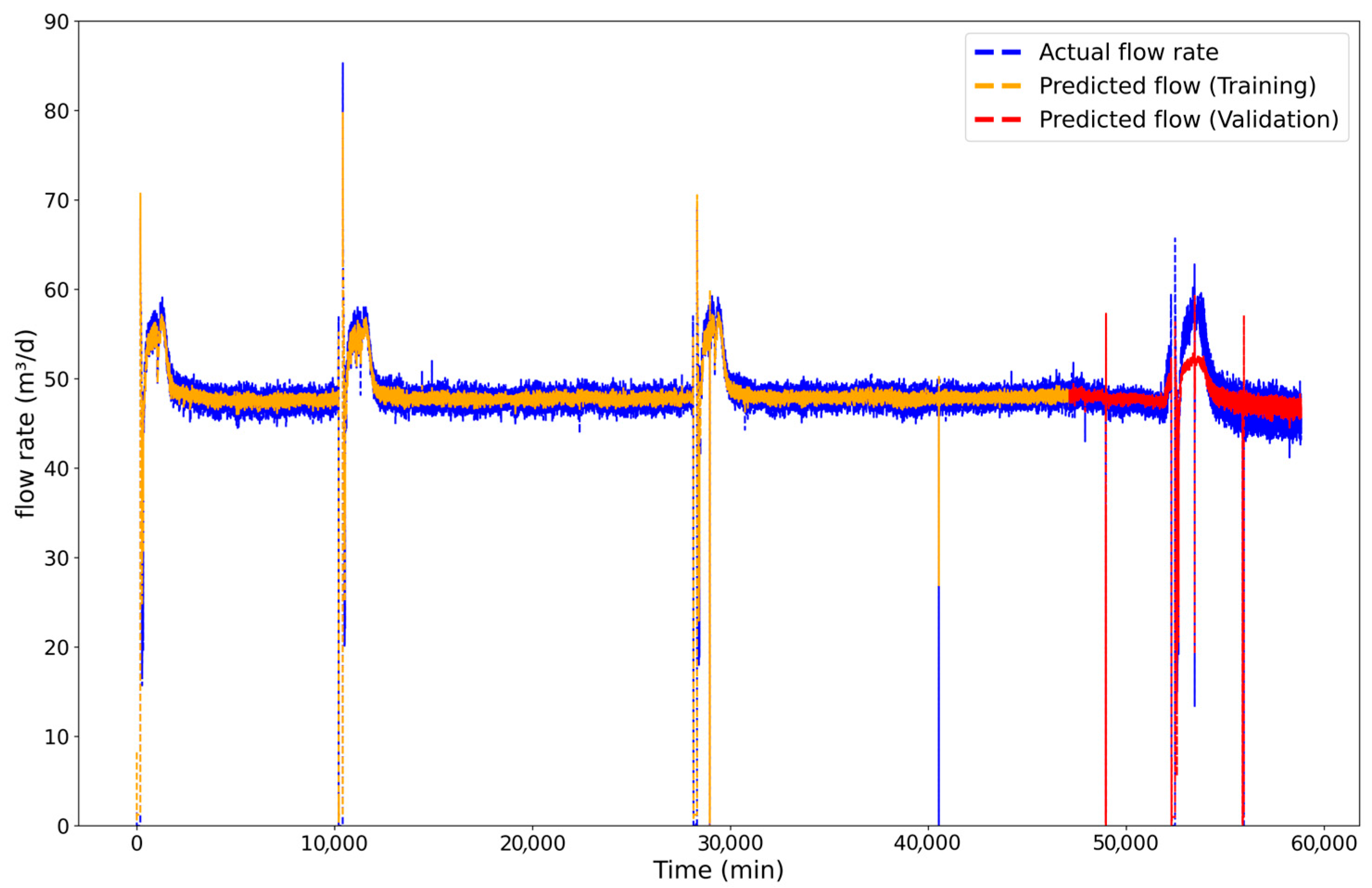
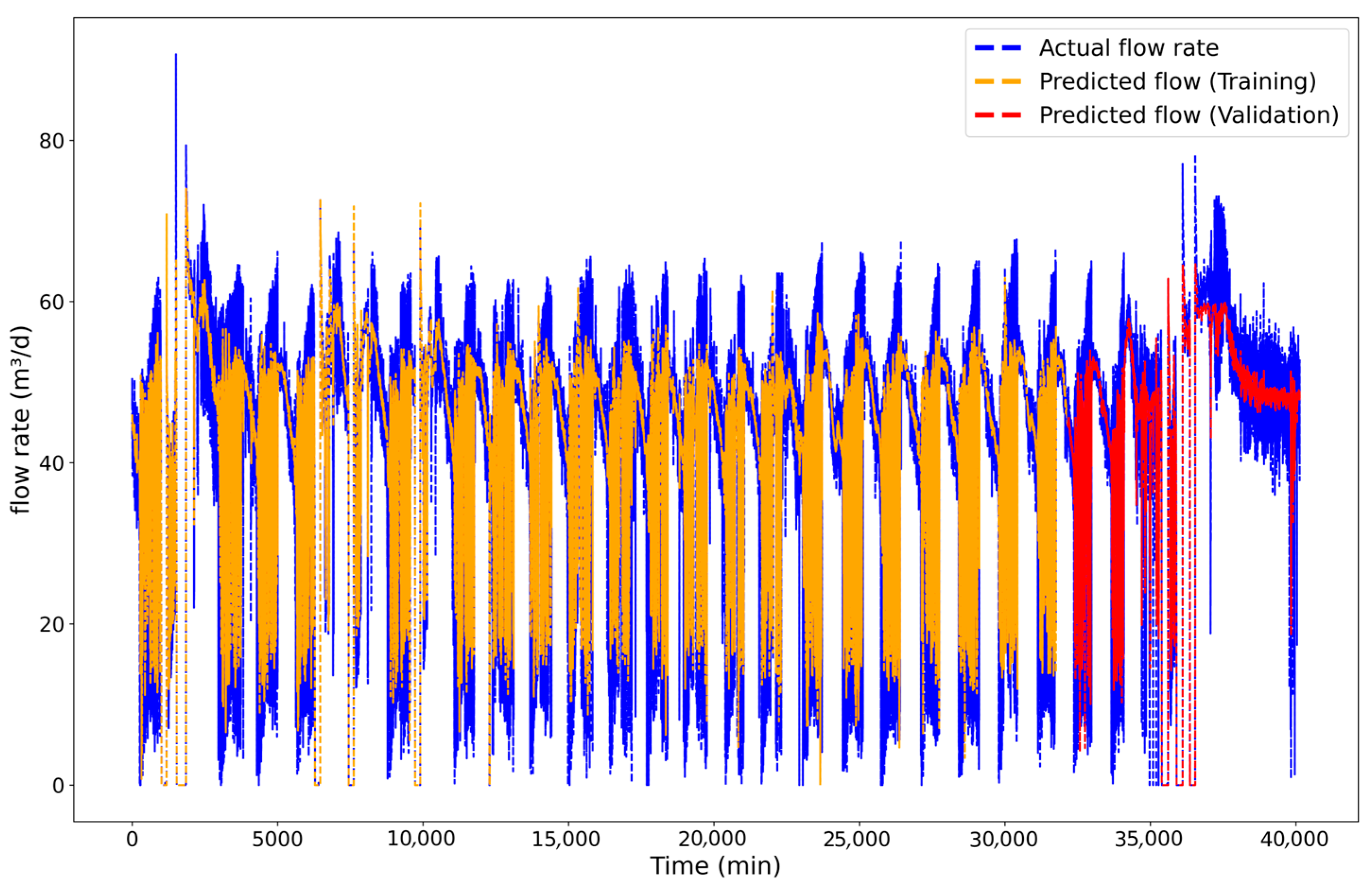
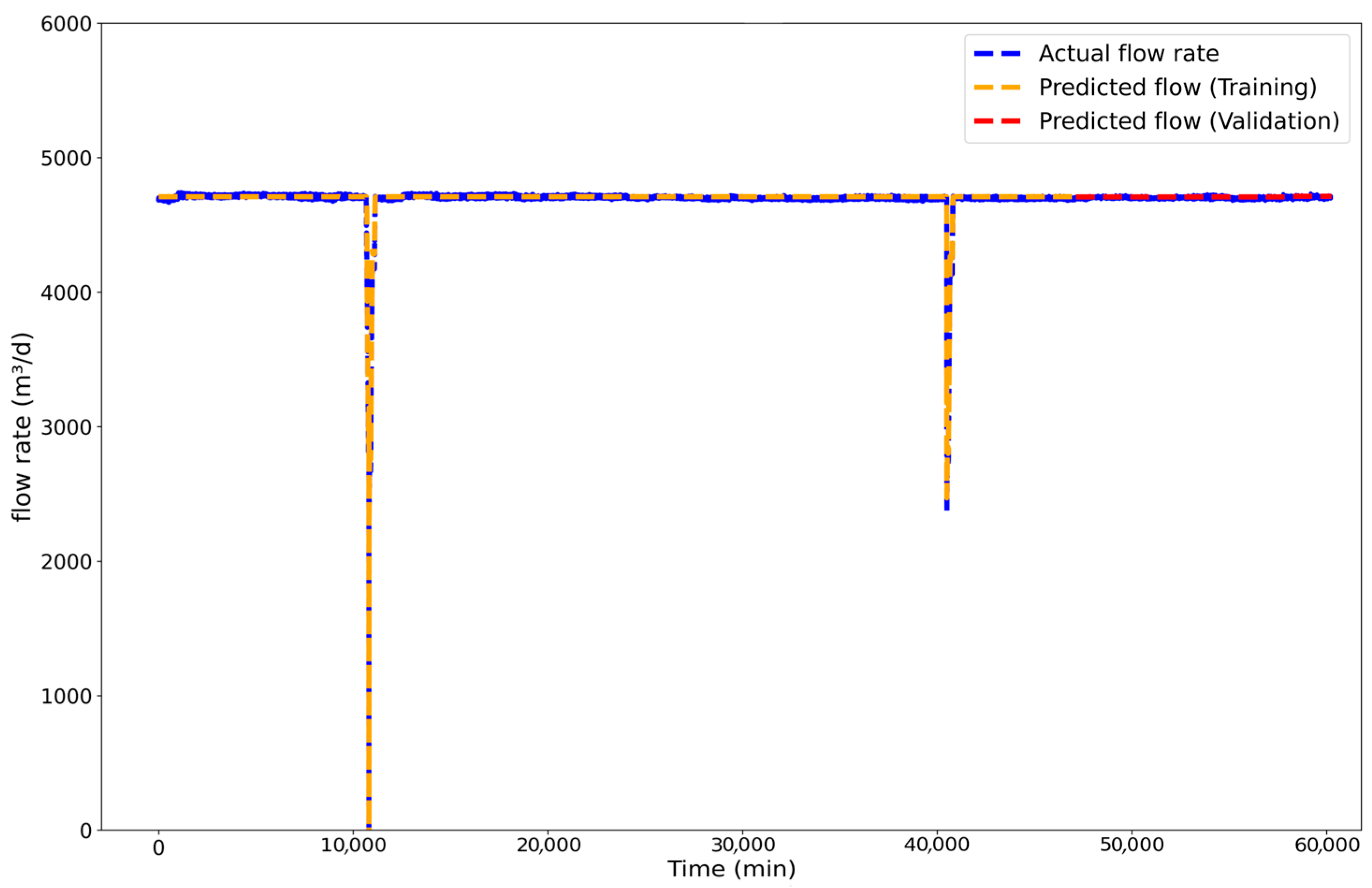
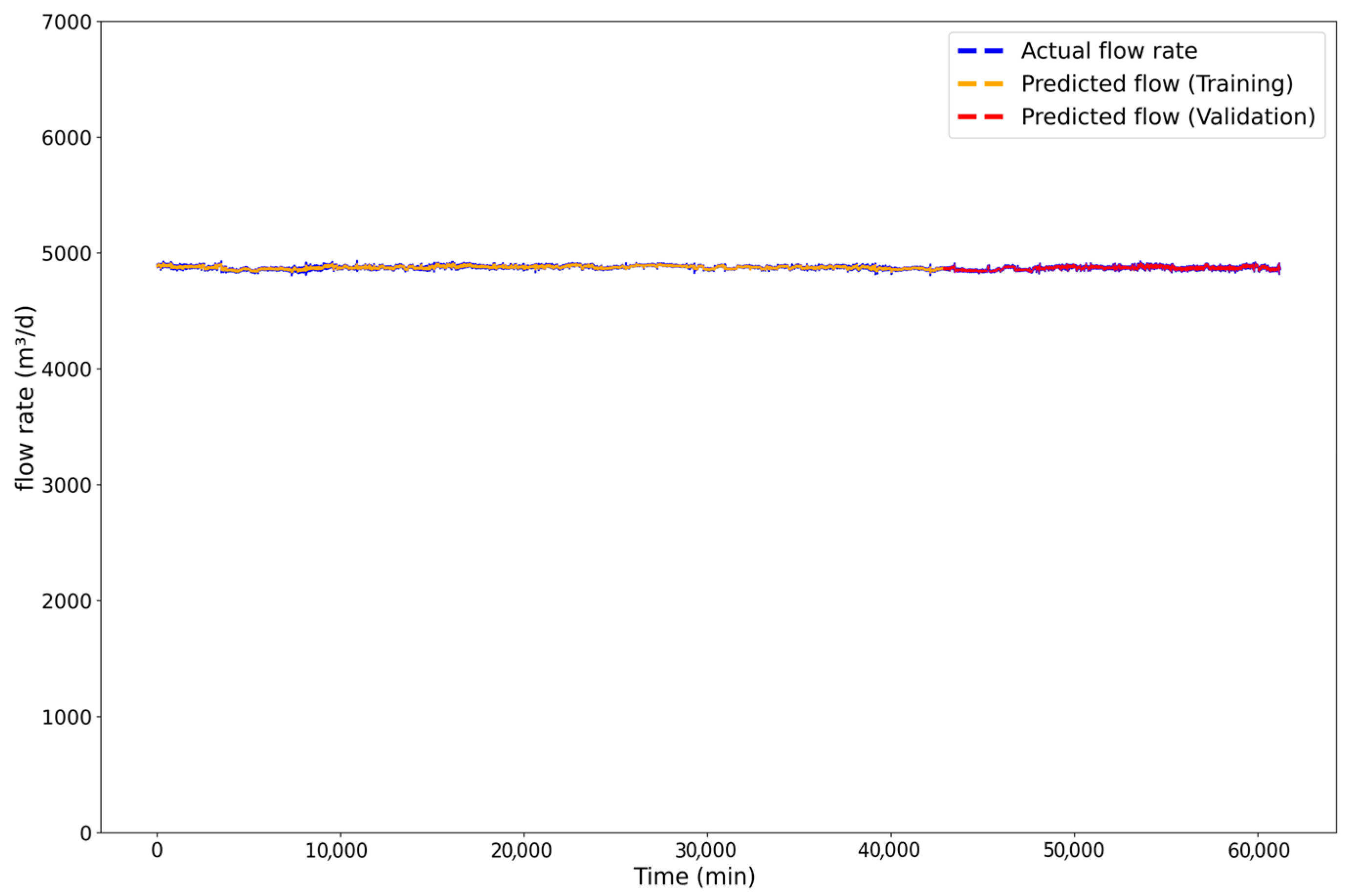
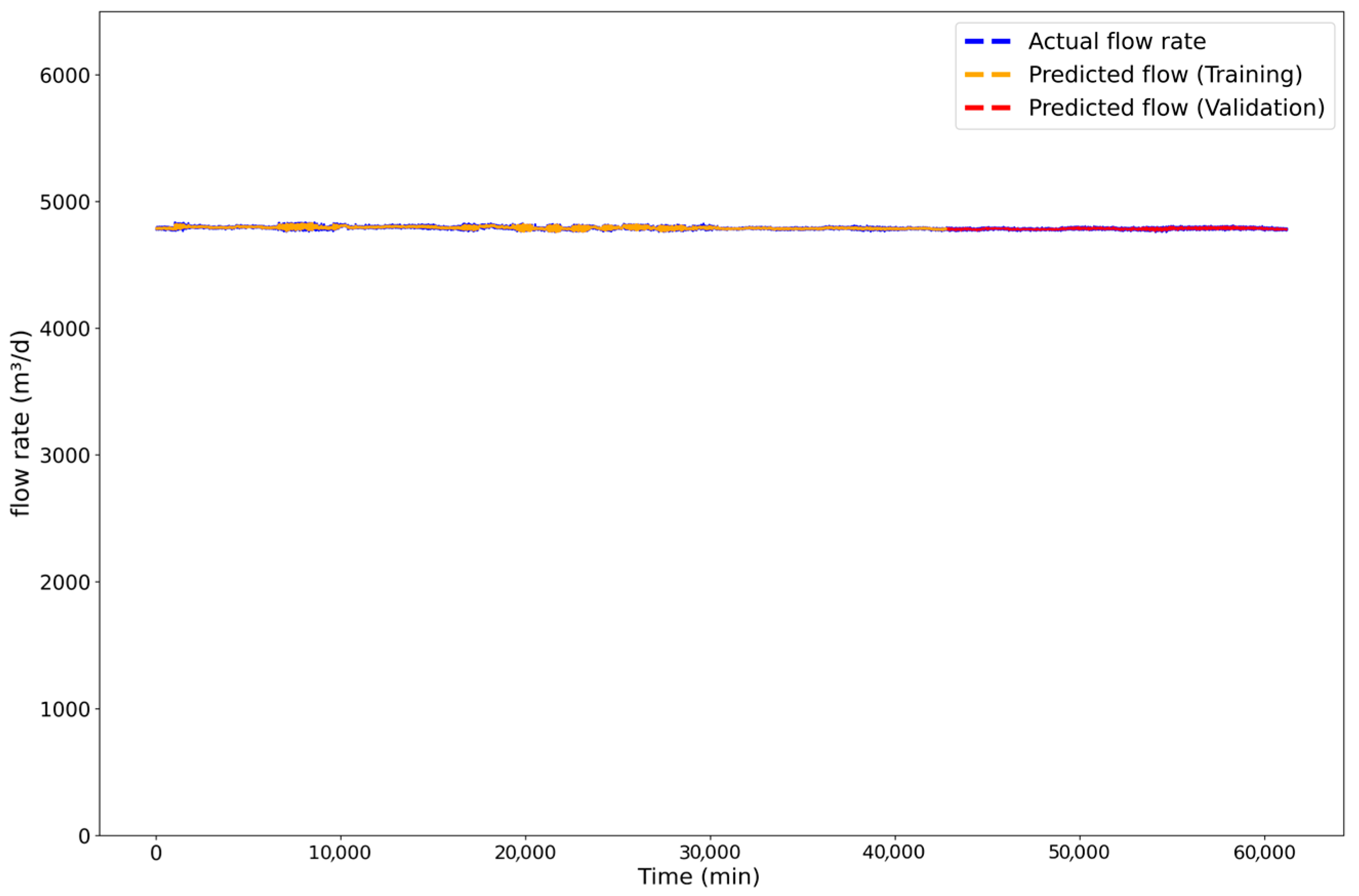
To address the persistent challenge of reliable real-time flowrate estimation in complex offshore oil production systems using Electric Submersible Pumps (ESPs), this study proposes a hybrid modeling approach that integrates a first-principles hydrodynamic model with Long Short-Term Memory (LSTM) neural networks. The aim is to enhance prediction accuracy across five offshore wells (A through E) in Brazil, particularly under conditions of limited or noisy sensor data. The methodology encompasses exploratory data analysis, preprocessing, model development, training, and validation using high-frequency operational data, including active power, frequency, and pressure, all collected at one-minute intervals. The LSTM architectures were tailored to the operational stability of each well, ranging from simpler configurations for stable wells to more complex structures for transient systems. Results indicate that prediction accuracy is strongly correlated with operational stability: LSTM models achieved near-perfect forecasts in stable wells such as Well E, with minimal residuals, and effectively captured cyclical patterns in unstable wells such as Well B, albeit with greater error dispersion during abrupt transients. The model also demonstrated adaptability to planned interruptions, as observed in Well A. Statistical validation using ANOVA, Levene’s test, and Tukey’s HSD confirmed significant performance differences (α < 0.01) among the wells, underscoring the importance of well-specific model tuning. This study confirms that the LSTM-based hybrid approach is a robust and scalable solution for real-time flowrate forecasting in digital oilfields, supporting production optimization and fault detection, while laying the groundwork for future advances in adaptive and interpretable modeling of complex petroleum systems.
Keywords: flowrate estimation; long short-term memory; deep learning; electrical submersible pump; time-series forecasting; oil and gas production flowrate estimation; long short-term memory; deep learning; electrical submersible pump; time-series forecasting; oil and gas production