Article

Energy-Efficient Operation of Industrial Induction Motors Exposed to Multiple Power Quality Disturbances


Department of Ship Electrical Power Engineering, Faculty of Marine Electrical Engineering, Gdynia Maritime University, Morska St. 83, 81-225 Gdynia, Poland
*
Author to whom correspondence should be addressed.
Energies 2026, 19(1), 26; https://doi.org/10.3390/en19010026 (registering DOI)
Submission received: 31 October 2025 / Revised: 13 December 2025 / Accepted: 17 December 2025 / Published: 20 December 2025
(This article belongs to the Special Issue Modern Aspects of the Design and Operation of Electric Machines)

Abstract

Induction motors (IMs) are the largest consumers of electrical energy across most industrial sectors owing to their widespread application. The power losses in IMs significantly depend on the quality of the supply voltage. The presence of various power quality (PQ) disturbances, such as voltage deviation, voltage unbalance, and voltage harmonics, may increase the power losses by over 60%, even if the PQ fulfils the standards. To ensure the energy-efficient operation of IMs, PQ standards should be modified. One possible solution is the implementation of a coefficient of voltage energy efficiency (cvee), which is proportional to power losses in IMs under PQ disturbances. In this paper, recommendations concerning the implementation of cvee in the relevant standards are formulated. Additionally, results of PQ monitoring are presented and values of cvee in land power systems are discussed.

1. Introduction

Induction motors (IMs) are characterised by high durability, reliability, and comparatively low cost and are considered the most important industrial prime mover. IMs consume approximately 70% of the electrical energy used in industry [1].
To ensure the energy-efficient operation of IMs, requirements concerning their efficiency classes [2] have been introduced. In practice, IMs with a low efficiency class cannot be sold in many countries. Notably, the rated IM efficiency corresponds to the ideal supply conditions, that is, supplying the IM with a sinusoidal, balanced voltage of the rated value and rated frequency.
In real power systems, various power quality (PQ) disturbances occur, such as voltage waveform distortions, voltage unbalance, voltage deviation, and in marine power systems, frequency deviations and fluctuations as well [3,4]. PQ disturbances have a detrimental effect on electrical equipment, including IMs. These disturbances cause excessive vibration and torsional vibration [5], rotational speed and torque fluctuations [1,6,7], reductions in load-carrying capacity [6,8,9], overheating and an increase in power losses [1,8,9,10,11,12,13,14,15,16,17]. The increase in power losses is related to an excess in the magnetising current (for overvoltage), an excess in the current for electromagnetic torque production (for undervoltage), the flow through windings of additional current components (for voltage unbalance and harmonics) and changes in iron losses (for overvoltage and harmonics) and stray load losses.
The permissible levels of each PQ disturbance are specified in the relevant standards. For example, according to Standard EN 50160—Voltage Characteristics of Electricity Supplied by Public Distribution Systems [18], “Under normal operating conditions…during each period of one week, 95% of the 10 min rms-values of the supply voltage shall be within the range Un ± 10% all 10 min rms-values of the supply voltage shall be within the range Un +10%/−15%.” Furthermore, the permissive ratio of the negative- and positive-sequence voltage component, called the voltage unbalance factor (VUF), is limited to 2%. However, the standard warns that unbalances of up to 3% can occur at three-phase supply terminals. According to [18], the permissible total harmonic distortion (THD) is 8%, and the values of the 5th, 7th, 11th, and 13th voltage harmonics are 6%, 5%, 3.5% and 3%, respectively. In some countries, the legislation concerning PQ includes provisions of the standard [18].
The compatibility levels in the industry environment are provided in Standard EN-IEC 61000-2-4 Electromagnetic Compatibility (EMC)-Part 2-4: Environment-Compatibility Levels in Power Distribution Systems in Industrial Locations for Low-frequency Conducted Disturbances” [19]. The standard [19] distinguishes 5 electromagnetic environment classes, denoted as Class 1 (protected supply for sensitive devices), Class 2L (legacy/existing installations), Class 2a (installations without power electronic equipment), Class 2b (installations containing both power electronic converters and non-industrial equipment like light sources), and Class 3 (installations without non-industrial equipment, containing disturbing loads). For Classes 2L, 2a, and 2b, the compatibility levels for voltage tolerance, voltage unbalance, and the 5th, 7th, 11th, and 13th voltage harmonics correspond to the maximal permissible levels of these disturbances established in [18]. Furthermore, for Class 3, the compatibility level for voltage tolerance is Un ± 10% (for a short period of time, Un +10%/−15%), 3% for voltage unbalance, 10% for THD, and 8%, 7%, 5% and 4.5% for the 5th, 7th, 11th, and 13th voltage harmonics [19]. In some cases, the compatibility levels can be increased by 20% for the harmonics [19].
Note that the permissible levels of PQ disturbances provided in [18,19] are not interconnected. Consequently, IMs can be exposed to 10% voltage deviation, 3% voltage unbalance, and high voltage harmonics at the same time. Under such supply conditions, the IM power losses can be up to more than 60% higher than for the ideal supply. In practice, under PQ disturbances, the real efficiency of an IM in the IE4 efficiency class [2] may even be lower than a nominally supplied IM in the IE1 class. For this reason, it is necessary to introduce a more reliable method of PQ assessment that takes into account the simultaneous presence of various PQ disturbances and their cumulative effect on power losses occurring in IMs.
PQ and IMs can be analysed with machine learning methods [20,21]. Another solution approach is the application of an appropriate synthetic PQ coefficient that accounts for the cumulative impact of various PQ disturbances on power losses in IMs. Specifying the permissible level of such a coefficient in PQ standards may help to eliminate the most harmful combinations of various disturbances.
PQ coefficients, interconnecting various disturbances that may appear simultaneously, were presented in [10,11,12,13,22,23,24,25,26,27,28,29,30]. Refs. [23,24,25,26,28,29,30] discussed the general PQ coefficient based on the weighting of various PQ indices. Ref. [27] developed a PQ index for nuclear plants, based on the dynamic weighting of each PQ disturbance. Ref. [22] proposed the integration of PQ indices for various switchgears into one composite coefficient. It should be stressed that the coefficients presented in [23,24,25,26,27,28,29,30] are inappropriate for the assessment of power losses in IMs under PQ disturbances because they were elaborated for other purposes.
PQ indexes dedicated to IMs under lowered voltage quality were considered in [11,12,13,14,15]. Ref. [11] described a PQ index for monitoring the effect of voltage unbalance and voltage harmonics on IM heating. In a previous paper [12,14], a simplified temperature coefficient of power quality (cpqs) was discussed, whose value is proportional to the windings’ temperature rise in fully loaded IMs under PQ disturbances. Additionally, these indexes are inappropriate for the assessment of the effect of PQ disturbances on power losses in IMs, as discussed in previous work [13]. First, cpqs corresponds to IMs under full load, whereas most IMs operate under much less power output, typically ~60% of the rated output [31]. Second, some power loss components may be significantly high but exert a moderate effect on the temperature of the stator windings, such as the power losses in a rotor (based on the authors’ experience). Moreover, some PQ disturbances cause a comparatively low increase in total power losses, but a relatively high increment in winding temperature. For instance, the main agent causing motor overheating under voltage unbalance [16] is the unequal distribution of power losses between three-phase windings [13].
The PQ coefficient suitable for the assessment of power losses in IMs, referred to as the coefficient of voltage energy efficiency (cvee), was previously developed and experimentally verified [13]. In subsequent work [15], the implementation of the cvee coefficient in standards designed for ship power systems was considered. Although the coefficient was developed and examined for ship power systems, it also appropriate for PQ standards and regulations concerning land power systems.
It should be stressed that for some PQ disturbances, cvee and cpqs indicate significantly different percentage increases in power losses and the winding temperature. For example, for VUF = 2%, cvee = 1.05 (meaning that power losses in some motors can be 5% higher than those for the ideal supply conditions), while cpqs = 1.096 (meaning that an increase in the winding temperature above the ambient temperature could be ~10% higher compared to the ideal supply conditions). The reasons for the differences are discussed above. Some additional comparisons between the values of cvee and cpqs for various power quality disturbances are provided in [13], along with the results of experimental and analytical investigations of how various PQ disturbances affect the efficiency of motors with different properties.
In summary, the brief literature review has shown the necessity of introducing a reliable method of PQ assessment into relevant standards and regulations. A possible solution is the application of a coefficient of voltage energy efficiency. To the best of the authors’ knowledge, this coefficient is the only synthetic PQ factor that enables assessment of the effects of various PQ disturbances on power losses in IMs. In a previous study [15], the authors presented recommendations for its implementation in a ship’s power system. They take into account specific PQ regulations of ship classification societies but are inconsistent with provisions of the standards [18,19] and for that reason cannot be directly implemented in land power systems.
The main aims of this paper are to (1) propose recommendations for the implementation of cvee in PQ standards concerning land power systems and (2) investigate the value of the coefficient in land power plants.

2. Coefficient of Voltage Energy Efficiency and Power Quality Assessment

2.1. Derivation of the Coefficient of Voltage Energy Efficiency

The coefficient of voltage energy efficiency was formalised in [13], based on an electromagnetic model of IMs, a power losses model and the assumption of motor and load parameters. The mathematical description of the power losses accounted for the non-linearity of the magnetic circuit, the skin effect, and an increase in winding power losses due to additional motor heating under PQ disturbances.
The applied circuit models of IMs are shown in Figure 1 [12,13] for the positive-sequence and negative-sequence voltage components. In Figure 1a, the magnetising current (MC) is represented by a current source. The relative value of MC can be estimated as follows [12]:
i m = u 1 f 1 k i m u 1 f 1 ,
where im is MC, which is related to its value under reference working conditions (URWC), understood as the fully balanced, sinusoidal supply voltage of the rated frequency and rms value and the given load torque, e.g., 60% of the rated value; u1 is the fundamental voltage component (U1), which is related to the rated voltage (Urat); f is the relative frequency, which is related to its rated value; and kim is the z coefficient, the value of which depends on the motor properties [12,13].
The relative power losses occurring in IM can be expressed as follows [13]:
p t o t = w s w p s w + w r w p r w + w F e p F e + w m p m + w s l l p s l l ,
where ptot is the ratio of power losses in IM under real supply conditions to power losses URWC; psw, prw, pFe, pm, and psll are the ratios of the power loss components to their corresponding value URWC; the subscripts sw, rw, Fe, m, and sll are the stator windings, rotor windings, iron, mechanical and stray load losses, respectively; and wsw, wrw, wFe, wm, and wsll are the contributions of the power loss components URWC to the total power losses of IM. It should be noted that the sum wsw + wrw + wFe + wm + wsll = 1.000.
The relative power losses in the stator or rotor windings (pw1h) caused by the fundamental current component can be determined as follows [13]:
p w 1 h = i w 2 ϑ r + K ϑ ϑ r e f + K ϑ ,
where iw is the ratio of the currents flowing through the winding in real and reference working conditions; ϑ r and ϑ ref are winding temperatures under real working conditions and URWC, respectively; and K ϑ is a material constant [13].
For the neglected effect of temperature on winding resistance, the relative power losses in stator and rotor windings due to voltage unbalance and a single voltage harmonic of hth order can be assessed as follows [12,13]:
p w s _ / h = i _ / h 2 ,
p w r _ / h = 1 i r r e f 2 k r i _ / h 2 ,
where pws_/h and pwr_/h are relative power losses in stator and rotor windings (related to power losses URWC) due to voltage unbalance or a single harmonic; i_/h is the negative-sequence current or the current harmonic of the hth order (related to the stator winding rms current URWC); irref is the ratio of the rotor to stator currents URWC; and kr is the skin effect coefficient [13].
The methods for recalculation of stray load losses, mechanical losses, iron losses, and the anti-torque for motors driven a fan-type load are presented in [13].
In the next stage, the following motor and load parameters, among others, were assumed: rated powers; the parameters of equivalent circuits; wsw, wrw, wFe, wm, and wsll; and the ratio of the load torque to its rated value [13]. Based on the authors’ experience with IMs PQ disturbances (e.g., [12,16]), the following motors were chosen [13]:
(a)
Motors with strongly saturated magnetic circuits (SMCs) [13] driving appliances with constant anti-torques,
(b)
Motors with strongly SMCs driving fan-type loads,
(c)
Motors with weakly SMCs [13] driving appliances with constant anti-torques, and
(d)
Motors with weakly SMCs driving fan-type loads.
Because of the complexity of the original mathematical description, a polynomial approximation was applied. The stages of elaboration of the cvee coefficient are presented in Figure 2.
Where es is the relative rotor electromotive force [13]; uneq and ϕeq are the relative equivalent supply voltage and the equivalent phase shift, respectively [13]; j is the imaginary unit; s is the slip; rs, xs, rr, and xr are the per unit stator and rotor resistances/reactances, respectively, for the positive-sequence component; rr_ and xr_ are the per unit rotor resistance and reactance, respectively, for the negative-sequence component [13]; xm is the magnetising reactance; imag is the magnetising current; and iFe is the current modelling iron power losses.

2.2. Coefficient of Voltage Energy Efficiency as a Power Quality Index

The coefficient of voltage energy efficiency is expressed with the following dependencies [13]:
c v e e = p f u n d + p h a r + p u n b a l ,
where
p f u n d = max p f u n d 1 , p f u n d 2 ,
p f u n d 1 = f * 2.9 c 1 u * 3 u * 3 + c 2 u * 3 + c 3 u * 1 ,
p f u n d 2 = f * 2.9 c 4 u * 2 + u * 0.7           for   u * 0 ,
p f u n d 2 = f * 2.9 c 4 u * 2 + u * 0.7         for   u * < 0 ,
f * = f                   for   f > 1 ,
f * = 1                   for   f 1 ,
u * = f 1.45 u 1 1         for   f > 1 ,
u * = f u 1 1                 for   f 1 ,
u * = u * 1 ,
p h a r = h = 2,5 , 11 h m a x u h 2 c h 1 f h 1.2 + c h 2 f h 1.7 + h = 4,7 , 13 h m a x u h 2 c h 3 f h 1.2 + c h 4 f h 1.7 ,
p u n b a l = c u 2
where u- is the negative-sequence voltage component, related to the rated voltage, and uh and fh are the voltage and the frequency of a harmonic of the hth order, related to the rated voltage/frequency, respectively. In addition, c1 = −150, c2 = 0.3, c3 = 0.7, c4 = 1.3, ch1 = 7000, ch2 = 50,000, ch3 = 7000, ch4 = 15,000, and c_ = 125.
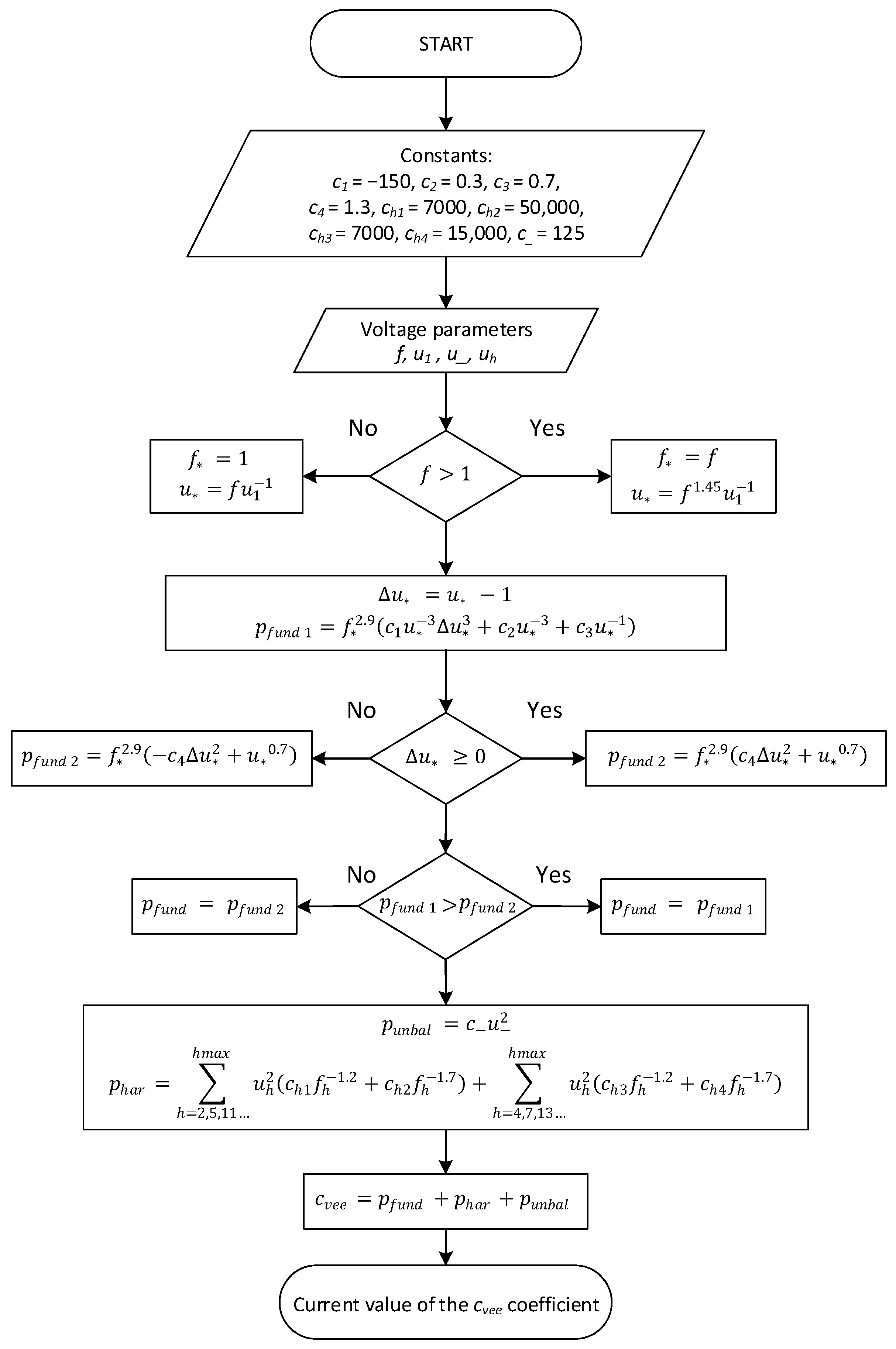
A flowchart of the cvee coefficient calculations is presented in Figure 3.
The physical meaning of the coefficient of voltage energy efficiency is the relative total power losses ptot (2), which are related to the power losses URWC. For a purely sinusoidal, balanced voltage of the rated value and frequency, cvee = 1.00. PQ disturbances increase the power losses in IMs, which is reflected in the cvee value. In practice, for example, cvee = 1.5 means that in some IMs [13], power losses are 50% greater than those expected under ideal supply conditions. It should be added that the power losses in windings make the greatest contribution to the value of the cvee.
Notably, the increase in power losses in a particular motor depends on its properties [12,13,16]. For example, motors with a strongly saturated magnetic circuit and comparatively high magnetising current are especially sensitive to overvoltage, whereas motors with a weakly saturated magnetic circuit and a comparatively low magnetising current are sensitive to undervoltage [12,13,16]. For this reason, the value of cvee for a given PQ disturbance corresponds to the worst case among four sets of motor and load parameters assumed in [13].
In [13], cvee was validated under laboratory conditions, and in [15], its value was examined in real ship power systems, including experiments performed onboard a research/survey vessel of Gdynia Maritime University—Horyzont II. These investigations revealed that cvee can be used for the estimation of power losses in IMs and for the assessment of PQ in power systems. In practice, cvee is a complement to the presently used PQ indices [13,15].

3. Possible Levels of the Coefficient of Voltage Energy Efficiency in Land Power Systems

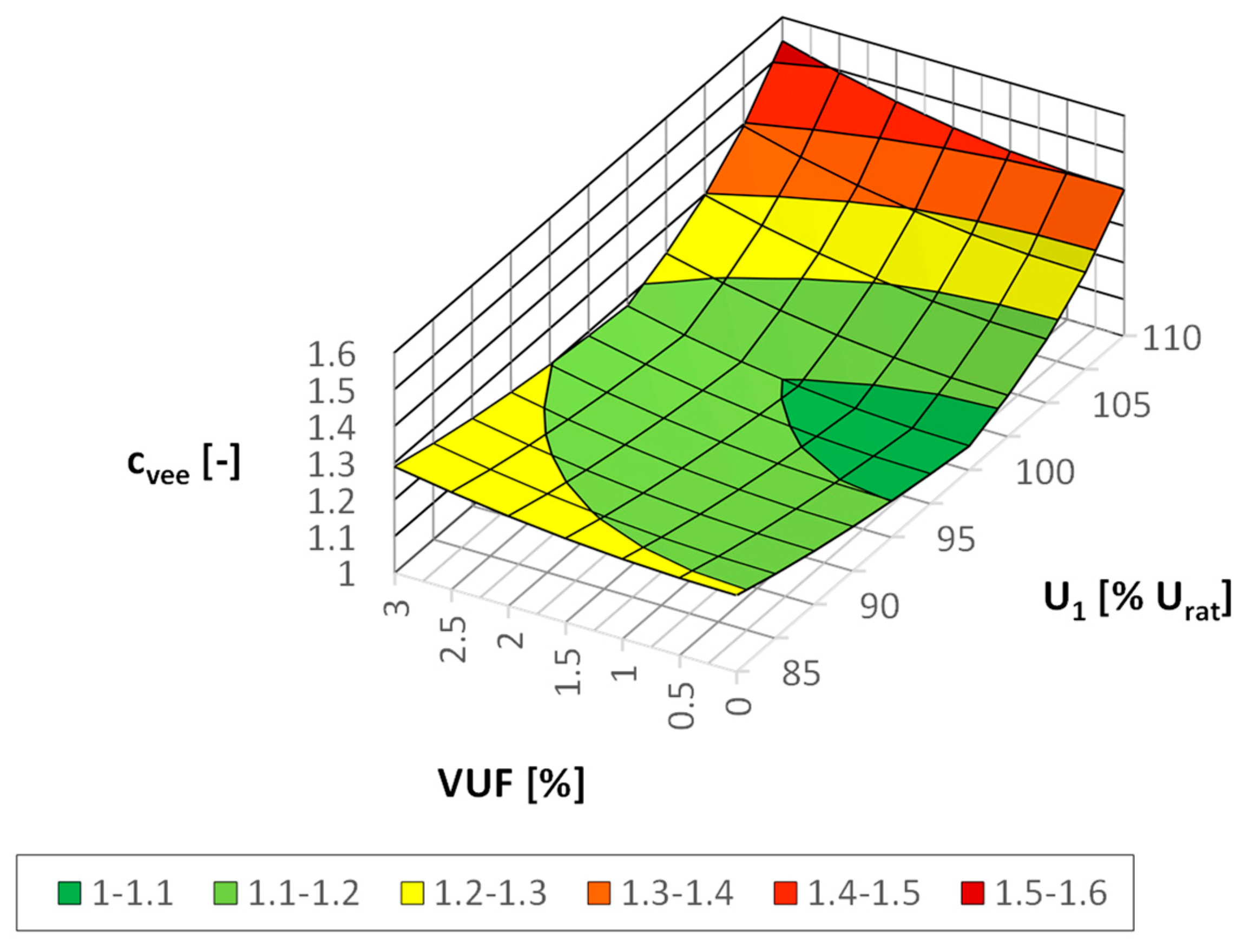
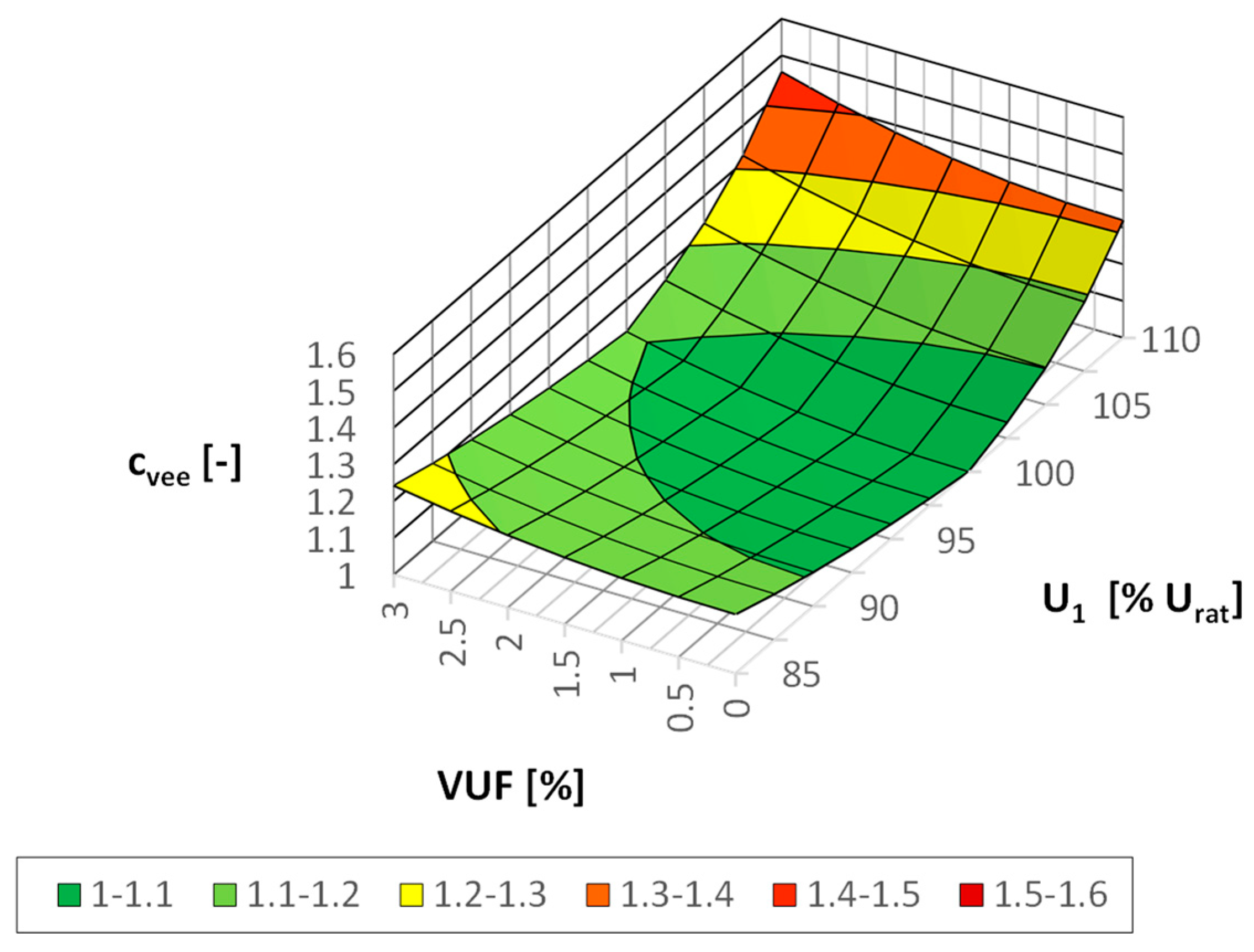
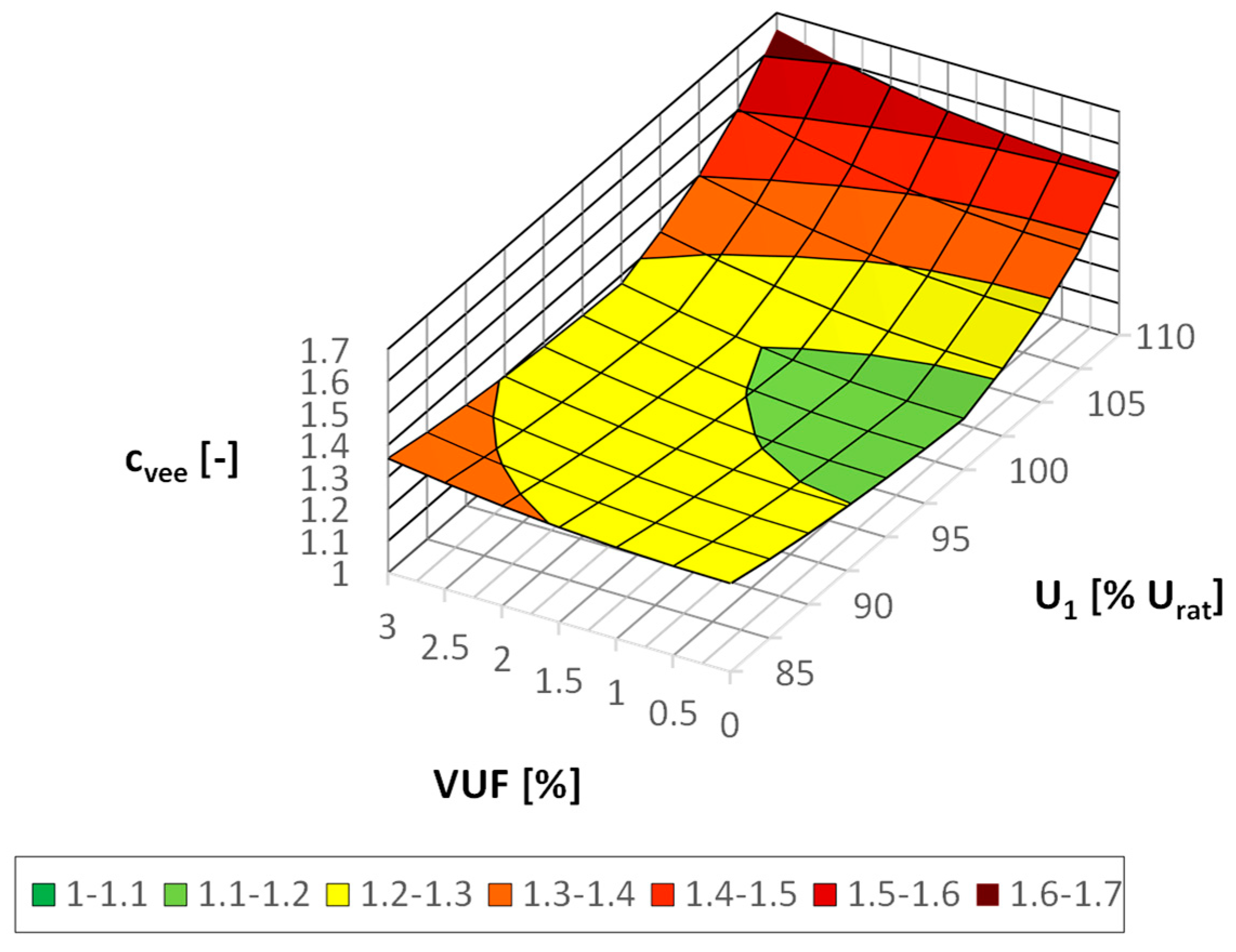
As mentioned in the previous section, cvee is a measure of the power losses in IMs under PQ disturbances. Figure 4, Figure 5 and Figure 6 present the values of cvee for PQ disturbances permitted in land power systems (see Section 1).
The value of cvee for the purely sinusoidal voltage is shown in Figure 4 versus VUF and U1. For 10% undervoltage (u1 = 0.9) appearing as a single PQ disturbance, the cvee = 1.093, and for 10% overvoltage (u1 = 1.1), cvee = 1.319. Furthermore, for VUF = 3% combined with 10% undervoltage (u1 = 0.9), cvee = 1.242, and for VUF = 3% with 10% overvoltage (u1 = 1.1), cvee = 1.445.
Figure 5 and Figure 6 present the values of cvee for voltage harmonics combined with voltage deviation and voltage unbalance. Figure 5 corresponds to the maximal permissible values of the 5th and 7th harmonics according to the standard [18] (u5 = 6%, u7 = 5%) and the maximal permissible THD (8%). In addition, Figure 6 conforms to the maximal values of these harmonics specified in [19] for Class 3 electromagnetic compatibility, u5 = 9.6% and u7 = 7.2%. Note that the resulting THD factor is 12%, which is the maximal value for this compatibility class [19]. In Figure 5, cvee is as high as 1.535, and in Figure 6, cvee reaches 1.649. In practice, the power losses in a real IM can be approximately 60% higher than those occurring for the ideal supply conditions.
It is also worth noting that the sharp increase in cvee under specific combinations of overvoltage, voltage unbalance, and voltage harmonics (Figure 4, Figure 5 and Figure 6) can be explained by the structure of (1)–(5) and (7)–(14). For example, the overvoltage may cause a significant increase in the magnetising current, described by (1), and consequently, high power losses in stator windings. Because of the additional motor heating, ohmic losses increase slightly faster than in proportion to the square of the current flowing through windings—see (3).
In summary, some combinations of voltage deviation, voltage unbalance, and voltage harmonics may cause an unacceptable increase in power losses in IMs. For this reason, it is necessary to introduce a more reliable method of PQ assessment.

4. Coefficient of Voltage Energy Efficiency in a Real Power System

4.1. Methodology of Measurement

For this paper, detailed analyses of cvee were conducted for 8 substations of the shipyard’s electrical power system, which supplied electricity for different applications, with different operating characteristics of devices, such as welding machines, machine tools, cranes and overhead cranes, and ventilation equipment. Each substation was equipped with a dedicated switchboard, and the measuring device voltage probes were connected directly to each substation busbar. For each substation of the large industrial facility, PQ parameters were continuously registered for at least 4 days. Herein, three cases are presented in detail, representing conditions of the highest observed voltage deviation (Case 1, highest value of Pfund), highest level of harmonic distortion (Case 2, highest value of Phar), and highest value of unbalance (Case 3, highest value of Punbal). However, voltage increases above the rated value were always the main reason for the cvee increase. In all cases, for each measurement, values every 30 s were used for the voltage, frequency, harmonics and VUF.
The MAVOWATT 70 (Gossen Metrawatt GmbH, Nürnberg, Germany) was used for the power quality measurements. The device operates in accordance with IEC 61000-4-30 [32] requirements for Class A accuracy. For the purpose of this study, only voltage input channels were used. The voltage rms value, frequency unbalance, and harmonic subgroups up to the 50th order were measured and stored in internal memory. Sampling of the waveform was synchronised to the fundamental frequency. The phase-locked loop and input voltage on channel A were used for fundamental frequency tracking. The device was set to standard tracking mode, as recommended by the manufacturer for normal power quality applications. In accordance with the technical specifications of the manufacturer, the voltage input range was 10–600 Vrms, with an accuracy of ±0.1% of the reading and ±0.05% of the full scale over a 7 kHz bandwidth, and the accuracy of the frequency measurement was f ±0.2% of the reading. Harmonics were measured in accordance with IEC 61000-4-7 [33] Class I, using a synchronous window of 10 cycles for 50 Hz. Harmonic subgroups were determined according to IEC 61000-4-7 for the cvee calculation.

4.2. Results of Power Quality and cvee Coefficient Monitoring

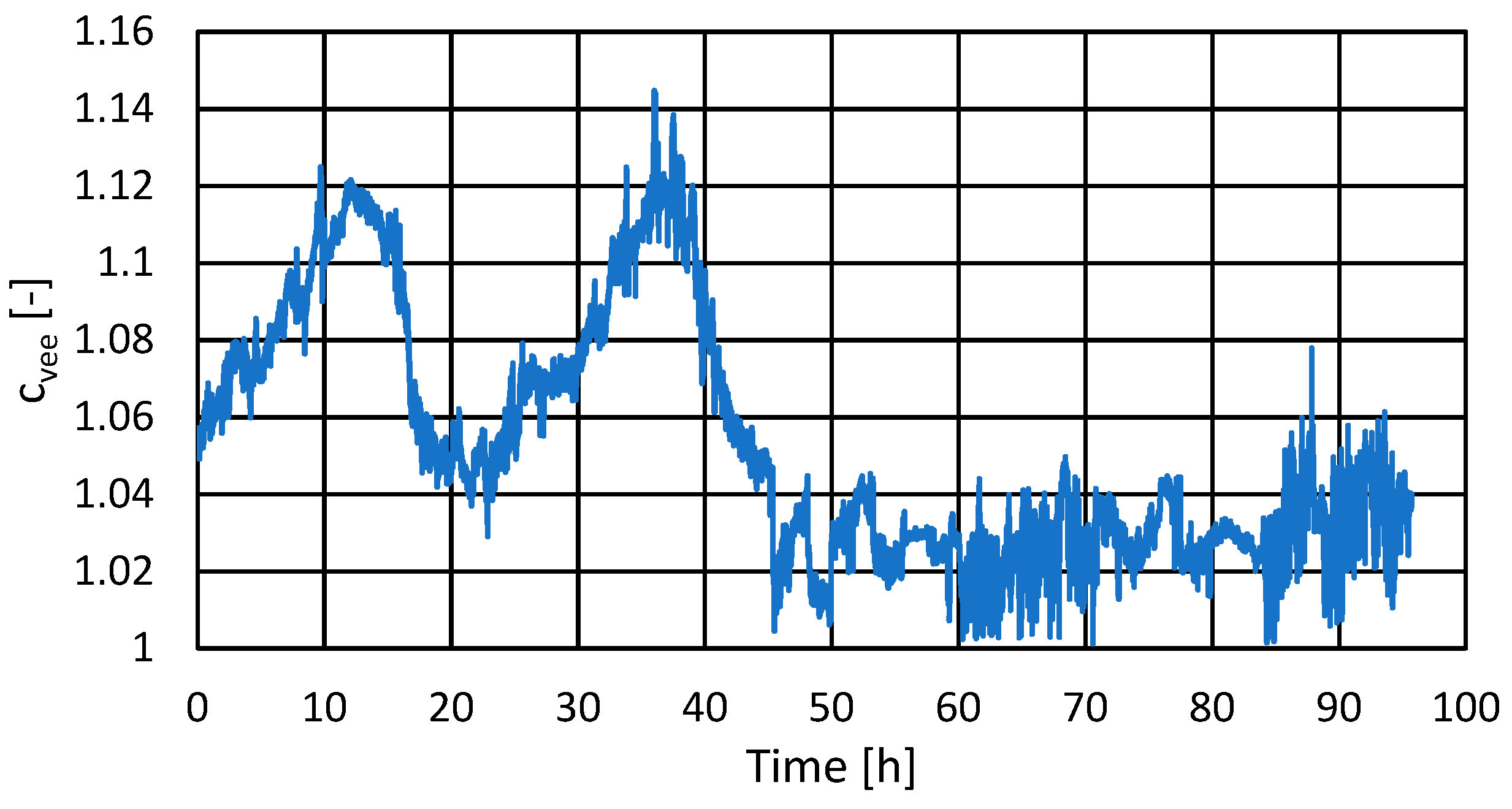
Figure 7 presents the changes in cvee for Case 1, and the maximum and mean values of Pfund, Phar, and Punbal are listed in Table 1. The maximum registered value of cvee is not simply the sum of the maximum values of its components, because the components’ local maxima are shifted in time. For Case 1, the maximum value of voltage deviation was 6.35%, the maximum frequency deviation was 0.18%, THD was 4.06%, and u- was 0.34%.
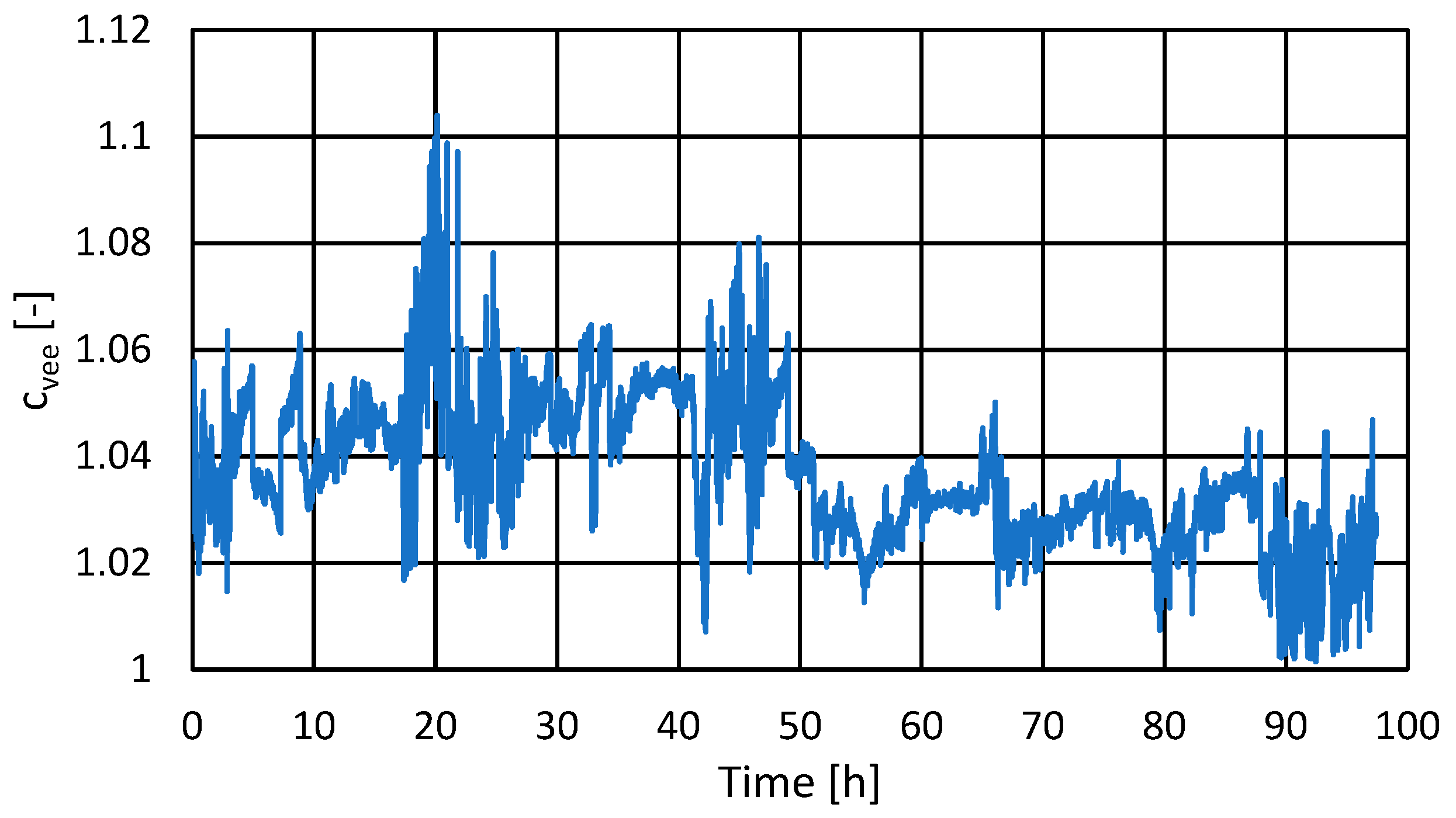
Figure 8 presents the changes in cvee for Case 2, and the maximum and mean values of Pfund, Phar, and Punbal are listed in Table 2. Note that the local maxima for each cvee component are shifted similarly to those in Case 1. However, the component related to harmonics assumes a greater value because the THD is higher (4.7%), and the voltage deviation is lower (4.1%). The negative-sentence voltage component u_ was 0.24%.
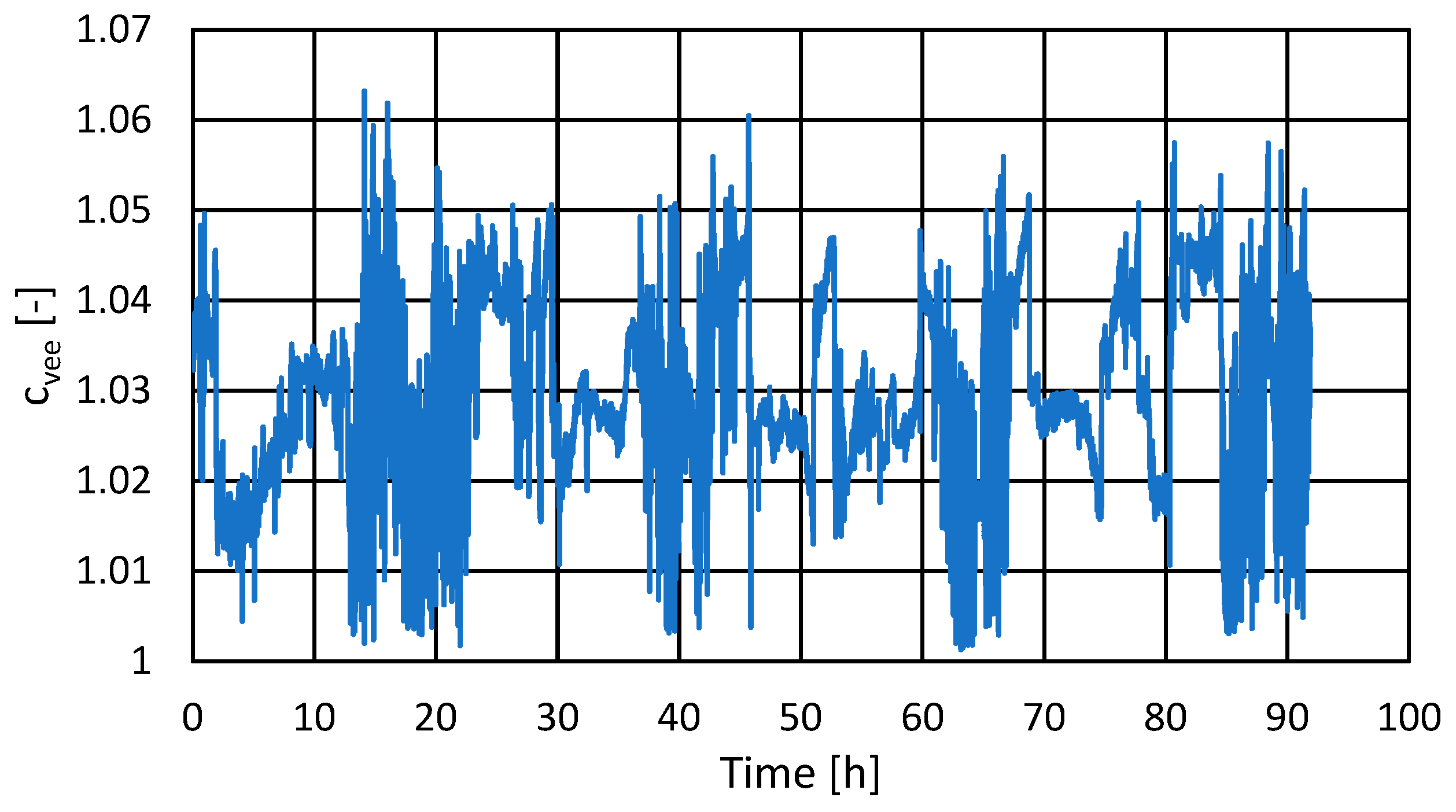
For both Cases 1 and 2, the influence of voltage unbalance on cvee was negligible. Only Case 3 had a higher voltage unbalance (0.89%), with a voltage deviation of +3.35%, frequency deviation of −0.2%, and THD of 3.17%. The changes in cvee for Case 3 are presented in Figure 9, and the maximum and mean values of Pfund, Phar, and Punbal are listed in Table 3.
For the 5 remaining cases (not presented in detail in this paper) the maximum cvee values for these substations reached 1.045–1.065. This led to the conclusion that in order to limit power losses and decreases in thermal ageing of IMs, the cvee coefficient should be taken into account during planning the industrial facilities operation.
Next, the main source of the cvee increase for all 8 substations was overvoltage. In existing power systems, one of the main sources of the voltage increase is the broad proliferation of photovoltaic power plants [34]. Industrial plants in the EU, especially energy-intensive ones, are increasingly considering high-power photovoltaic installations, which are expected to exacerbate the overvoltage problem. Therefore, in the future, cvee values may reach significantly higher values than the maximum observed in the shipyard (1.145). Furthermore, the associated use of high-power inverters can lead to distortion problems, including the occurrence of interharmonics. These observations suggest that PQ disturbances will become increasingly significant in such environments, and the proposed cvee indicator may be a useful tool for assessing the impact.
The cvee coefficient values were calculated for a real power system (the shipyard). Therefore, the variation in the cvee coefficient can be attributed to two factors: impacts external to the shipyard on the utility supply and operation of the shipyard’s own loads. A number of low- and medium-power loads, such as welding machines, lathes, cranes and overhead cranes, and ventilation, were supplied from each substation. However, the load characteristics differed among the substations. The load impact was responsible for sharp increases in the value of the cvee coefficient and the differences between the cvee coefficient components and the coefficient changes. The periods with sharp variations in the coefficient value were related to the operational pattern of the shipyard and the various loads operating, with visible increases in the variations during the daytime, except on Saturdays and Sundays.

5. Discussion

As mentioned previously, the current standards limit each PQ disturbance separately and do not take into account the cumulative effect of various disturbances occurring simultaneously. For any single PQ disturbance within the limits of the standards [18,19], the value of cvee is less than 1.32. Further, for voltage deviation combined with voltage unbalance and voltage harmonics, the value of cvee may exceed 1.6, indicating an unacceptable increase in power losses in IMs. To ensure their energy-efficient operation, the existing PQ standards must be modified and incorporating cvee is one possible solution. The value of coefficient of voltage energy efficiency should be limited to exclude the most harmful combinations of various PQ disturbances.
In previous work [15], the inclusion of cvee in the rules of ship classification societies was investigated, based on the analysis of standards concerning electrical machines and ship power systems. The maximal permissible value of cvee was proposed to be 1.2, which was justified, inter alia, by the provisions specified in Standard IEC-EN 60034-30-1 Rotating Electrical Machines—Part 30-1: Efficiency Classes of Line Operated AC Motors (IE Code) [2]. According to [2], an increase in power losses of approximately 20% under nominal working conditions could lead to a drop from efficiency class IE3 to efficiency class IE1 [15]. For this reason, an increment in power losses exceeding 20% was found to be unacceptable.
However, the proposal provided in [15] cannot be adopted for land power systems because it is inconsistent with the current PQ regulations. Specifically, for the maximal allowable overvoltage (10% overvoltage) occurring as a single PQ disturbance, cvee = 1.319. In the authors’ opinion, PQ regulations should be modified gradually, and the permissible value of cvee should be compatible with permissible levels of PQ disturbances. In practice, for any single PQ disturbance within the permissible level (10% overvoltage), cvee should not exceed the maximal permissible value.
Accordingly, the maximal permissible cvee for land power systems is proposed to be 1.32. The appropriate notation in the standard [18] can be outlined as follows: “Under normal operating conditions…during each period of one week, 95% of the 10 min values of the cvee coefficient shall not exceed 1.32.” This value can also be specified as the compatibility level for Classes 2L, 2a, 2b, and 3 of electromagnetic environment [19]. Furthermore, given that Class 1 corresponds to subsystems dedicated to the protected supply of sensitive devices and is characterised with low compatibility levels of PQ disturbances, the permissible value of cvee is not applicable.
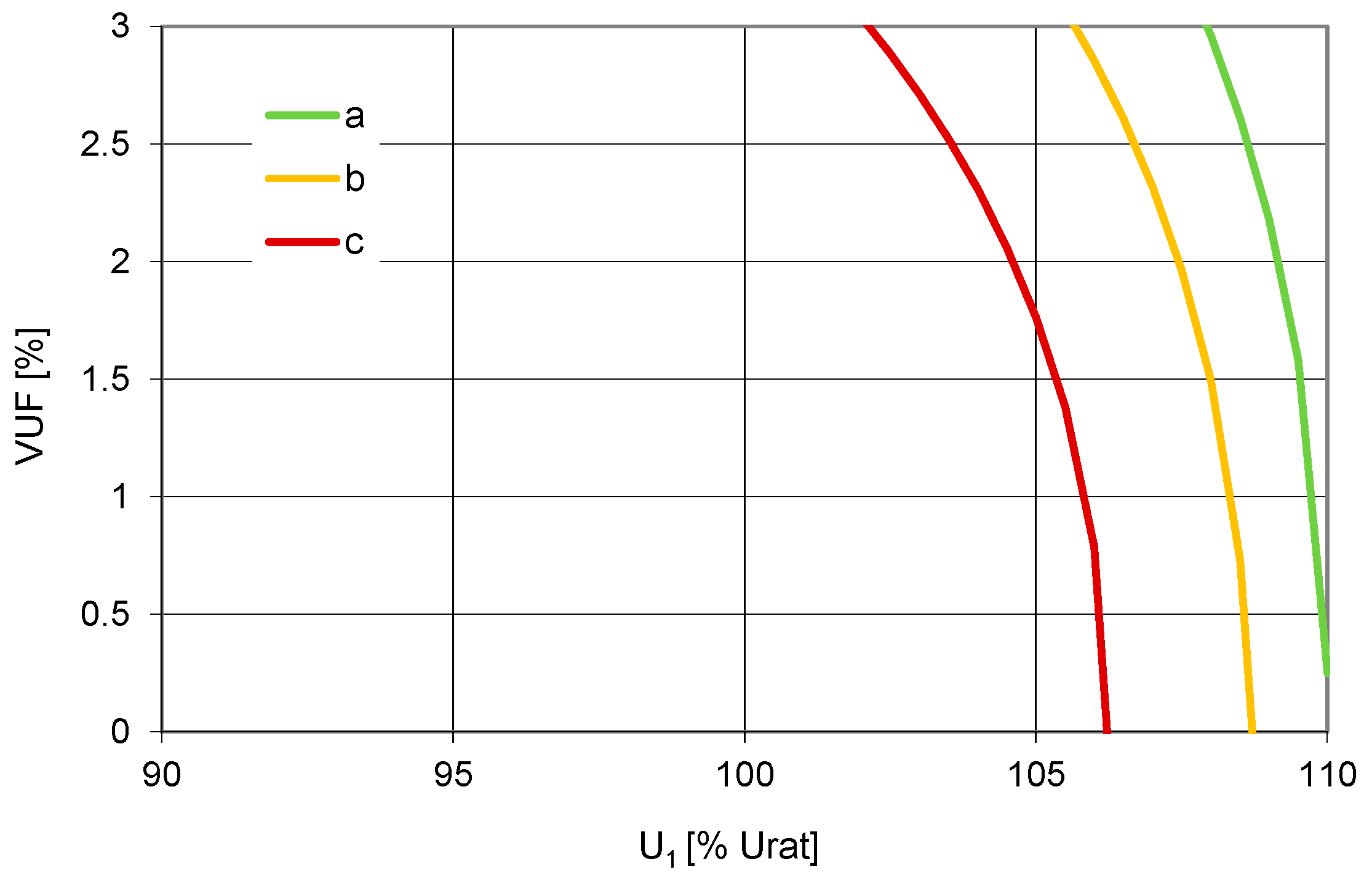
The curves obtained for cvee = 1.32 versus the VUF and the per-unit fundamental voltage component are presented in Figure 10 for various harmonics in the voltage waveform. The permitted combinations of VUF and the fundamental voltage component are located to the left of the respective limit curves. For VUF = 2% and the purely sinusoidal voltage, the maximal permissible level of the fundamental voltage component is u1 = 109.2%. For the voltage containing the 5th and 7th voltage harmonics of u5 = 6% and u7 = 5%, the maximal permissible level is u1 = 107.4%. Furthermore, for u5 = 9.6% and u7 = 7.2%, the maximal permissible level is u1 = 104.6% (Figure 10).
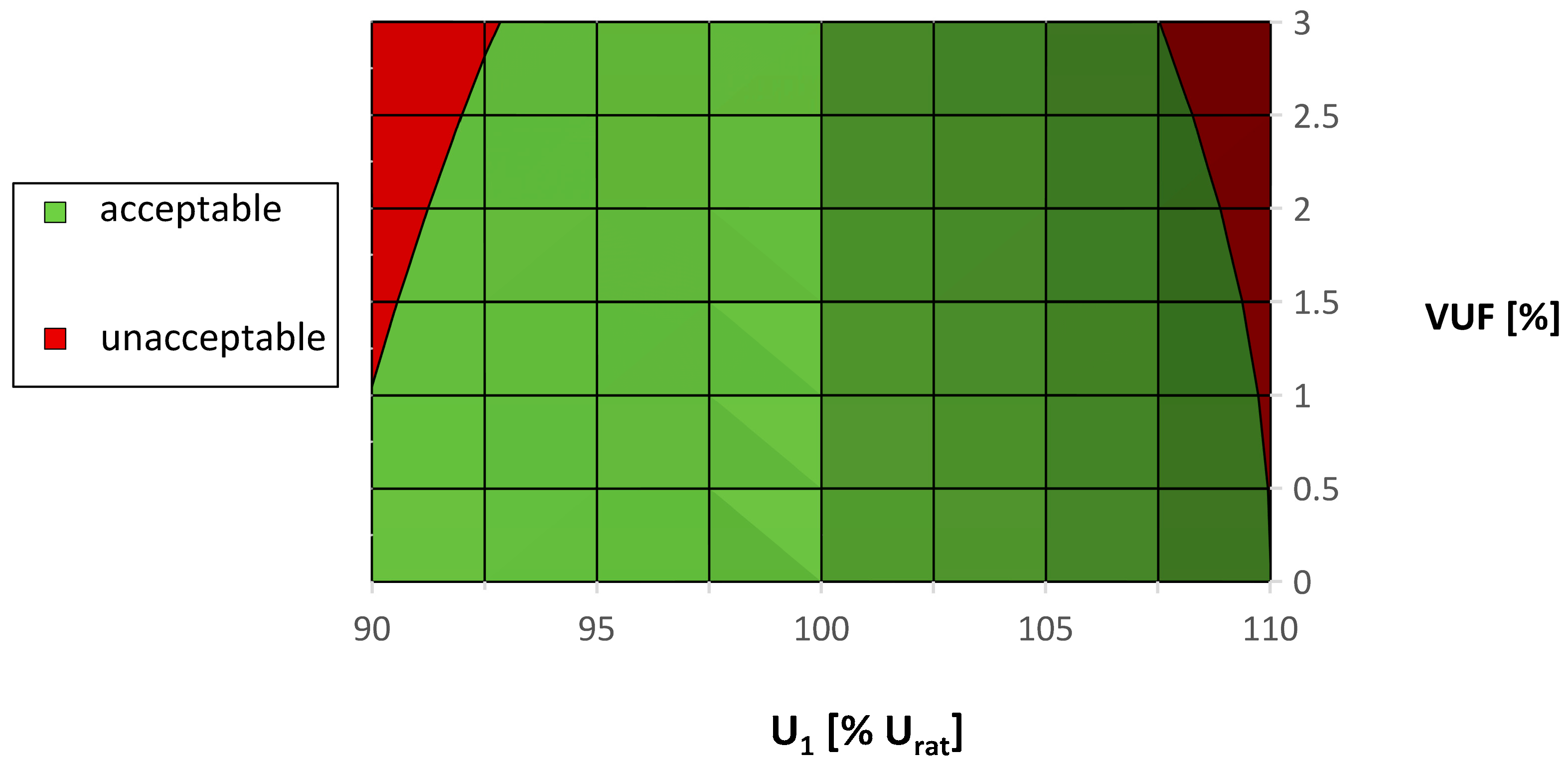
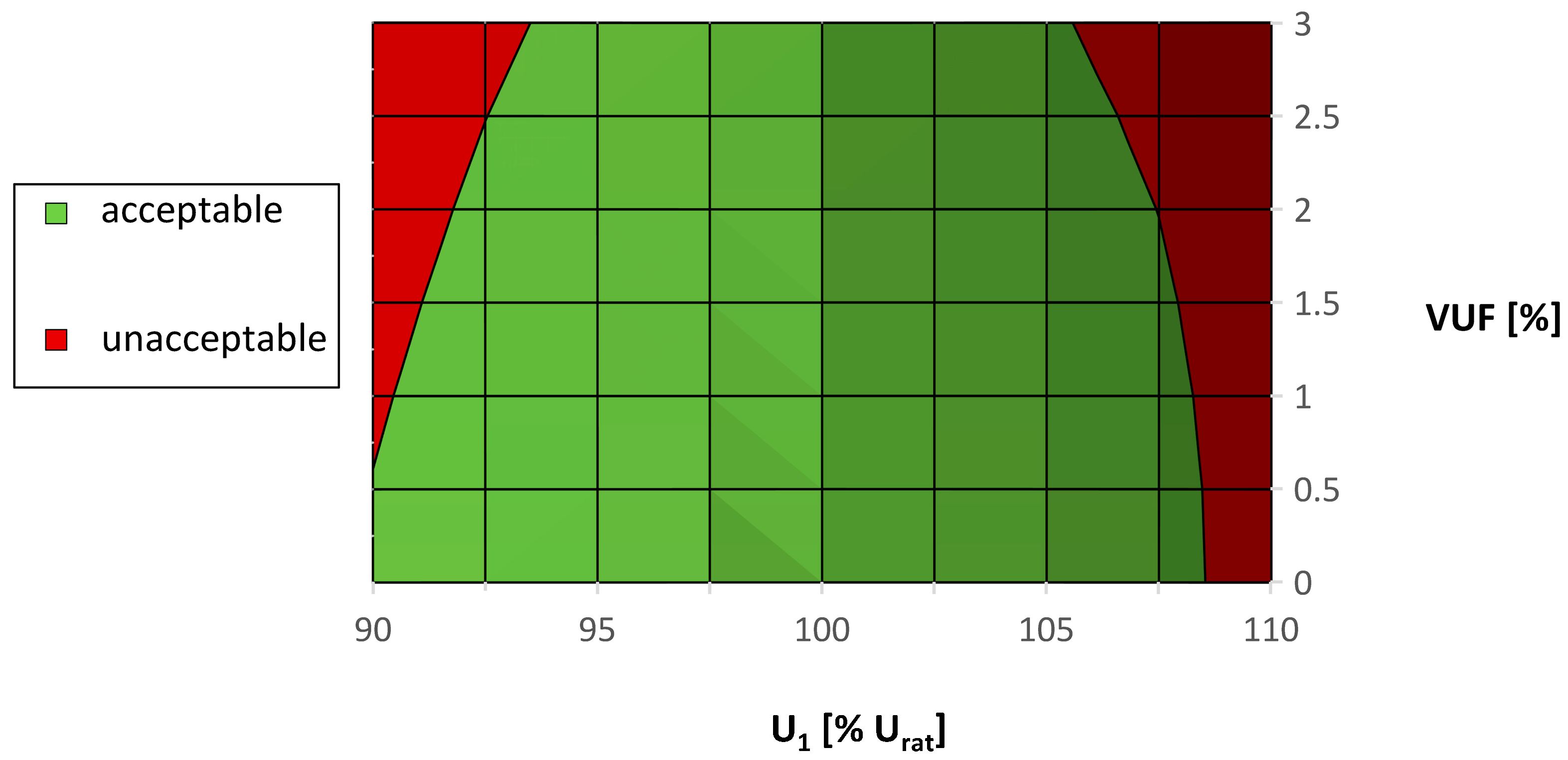
In previous work [14], the maximal permitted value of the simplified temperature coefficient of power quality (cpqs) was proposed to be 1.34 for public power systems. The proposal was justified based on the heating analysis of common motors with the insulation class F and winding temperatures within the limits specified for class B. Figure 11 and Figure 12 present the PQ according to the criterion cpqs ≤ 1.34 and cvee ≤ 1.32. Figure 11 corresponds to the purely sinusoidal voltage, and Figure 12 corresponds to the voltage containing the 5th and 7th voltage harmonics of u5 = 6% and u7 = 5%. Of note, the sharp increase in cvee for some combinations of PQ disturbances (Figure 10, Figure 11 and Figure 12) is explained in Section 2.
The charts in Figure 10, Figure 11 and Figure 12 show that the most harmful combinations of overvoltage, voltage unbalance, and voltage harmonics are avoided by limiting the permissible value of cvee. Moreover, the most detrimental combinations of undervoltage, voltage unbalance, and voltage harmonics are excluded by considering the permissible value of cpqs. Consequently, both PQ indexes complement each other, and they should be implemented in parallel in relevant standards.
In summary, cvee complements existing PQ indices, including cpqs. The authors recommend introducing limited values of the coefficient of voltage energy efficiency (cvee ≤ 1.32) and the simplified temperature coefficient of power quality (cpqs ≤ 1.34) simultaneously into PQ standards. The possible modification of PQ standards should help to eliminate the most harmful combinations of voltage deviation, voltage unbalance, and voltage harmonics in land power systems. It may also contribute to reducing both unnecessary power losses and thermal stress in IMs and consequently to more energy-efficient operation of IMs and their increased reliability and durability.

6. Conclusions

The current PQ standards specify the maximal permissible levels of various PQ disturbances, which are not interconnected with each other. Consequently, significant voltage deviations, voltage unbalances, and voltage harmonics may occur simultaneously, leading to an unacceptable increase in power losses in IMs. In practice, these power losses can even exceed the values occurring under a purely sinusoidal, balanced supply voltage by over 60%.
The implementation of the coefficient of voltage energy efficiency, being a measure of power losses in IMs, may help to ensure their energy-efficient operation. Notably, cvee is a supplement of existing PQ indices, including cpqs. In practice, both cvee and cpqs complement each other and should be implemented in parallel.
For implementation in the relevant standards, the proposed permissible level of cvee in public power systems is 1.32. This value can also be recommended as the compatibility level for Classes 2L, 2a, 2b, and 3 in electromagnetic environments.
The cvee coefficient takes comparatively low values in the industrial facility examined herein (up to 1.145), considerably less than the proposed limit. However, the further adoption of photovoltaic installations may lead to the frequent occurrence of a significant overvoltage, which is the main cause of the cvee increase. Consequently, in the future, the cvee values are expected to reach significantly higher levels than the maximal observed herein.

Author Contributions

Conceptualization, P.G.; methodology, P.G., investigation, P.G., M.G. and T.T.; writing—original draft preparation, P.G., M.G. and T.T. All authors have read and agreed to the published version of the manuscript.

Funding

This research received no external funding.

Data Availability Statement

The original contributions presented in this study are included in the article. Further inquiries can be directed to the corresponding author.

Conflicts of Interest

The authors declare no conflicts of interest.

References

  1. Beleiu, H.G.; Pavel, S.G.; Birou, I.M.; Miron, A.; Darab, P.C.; Sallah, M. Effects of voltage unbalance and harmonics on drive systems with induction motor. J. Taibah Univ. Sci. 2022, 16, 381–391. [Google Scholar] [CrossRef]
  2. EN-IEC 60034-30-1:2014; Rotating Electrical Machines—Part 30-1: Efficiency Classes of Line Operated AC Motors (IE Code). International Electrotechnical Commission: Geneva, Switzerland, 2014.
  3. Huang, S.; Xiong, L.; Zhou, Y.; Gao, F.; Jia, Q.; Li, X.; Li, X.; Wang, Z.; Khan, M.W. Robust distributed fixed-time fault-tolerant control for shipboard microgrids with actuator fault. IEEE Trans. Transp. Electrif. 2024, 11, 1791–1804. [Google Scholar] [CrossRef]
  4. Nasiri, S.; Peyghami, S.; Parniani, M.; Blaabjerg, F. Power management strategies based on propellers speed control in waves for mitigating power fluctuations of ships. IEEE Trans. Transp. Electrif. 2022, 8, 3247–3260. [Google Scholar] [CrossRef]
  5. Donolo, P.; Pezzani, C.; Bossio, G.; de Angelo, C.; Donolo, M. Vibration magnitude analysis on induction motors of different efficiency classes due to voltage unbalance. IEEE Trans. Ind. Appl. 2023, 59, 2913–2918. [Google Scholar] [CrossRef]
  6. Majeed, S.H.; Seifossadat, S.G.; Saniei, M.; Moosapour, S.S. Derating factor determination of the three-phase induction motor under unbalanced voltage using pumping system. IET Electr. Power Appl. 2024, 18, 1305–1316. [Google Scholar] [CrossRef]
  7. Nadir, B.; Azzeddine, D.; Ahmed, B.; Issam, A. Exploring the effects of overvoltage unbalances on three phase induction motors: Insights from motor current spectral analysis and discrete wavelet transform energy assessment. Comput. Electr. Eng. 2024, 117, 109242. [Google Scholar] [CrossRef]
  8. Ferreira, F.J.T.E.; Alberto, J.M.; de Almeida, A.T. Assessment of induction motor tolerance to supply voltage unbalance for different dual-winding configurations. IEEE Trans. Energy Convers. 2025, 40, 233–245. [Google Scholar] [CrossRef]
  9. Shaier, A.A.; Flah, A.; Kraiem, H.; Enany, M.A.; Elymany, M.M. Novel technique for precise derating torque of induction motors using ANFIS. Sci. Rep. 2025, 15, 8550. [Google Scholar] [CrossRef]
  10. Beleiu, H.G.; Miron, A.; Pavel, S.G.; Cziker, A.C.; Niste, D.F.; Darab, P.C. Impact of voltage unbalance and harmonics on induction motor efficiency. In Proceedings of the 2024 IEEE International Conference and Exposition on Electric and Power Engineering (EPEi), Iasi, Romania, 17–19 October 2024; pp. 328–332. [Google Scholar]
  11. Duarte, S.X.; Kagan, N. A power-quality index to assess the impact of voltage harmonic distortions and unbalance to three-phase induction motors. IEEE Trans. Power Deliv. 2010, 25, 1846–1854. [Google Scholar] [CrossRef]
  12. Gnaciński, P. Effect of power quality on windings temperature of marine induction motors: Part I: Machine model. Energy Convers. Manag. 2009, 50, 2463–2476. [Google Scholar] [CrossRef]
  13. Gnacinski, P.; Mindykowski, J.; Peplinski, M.; Tarasiuk, T.; Costa, J.D.; Assuncao, M.; Silveira, L.; Zakharchenko, V.; Drankova, A.; Mukha, M.; et al. Coefficient of voltage energy efficiency. IEEE Access 2020, 8, 75043–75059. [Google Scholar] [CrossRef]
  14. Gnacinski, P.; Tarasiuk, T. Energy-efficient operation of induction motors and power quality standards. Electr. Power Syst. Res. 2016, 135, 10–17. [Google Scholar] [CrossRef]
  15. Gnaciński, P.; Tarasiuk, T.; Mindykowski, J.; Pepliński, M.; Górniak, M.; Hallmann, D.; Piłlat, A. Power quality and energy-efficient operation of marine induction motors. IEEE Access 2020, 8, 152193–152203. [Google Scholar] [CrossRef]
  16. Gnacinski, P. Windings temperature and loss of life of an induction machine under voltage unbalance combined with over-or undervoltages. IEEE Trans. Energy Convers. 2008, 23, 363–371. [Google Scholar] [CrossRef]
  17. Silva, M.D.; Ferreira Filho, A.D.L. An alternative methodology for quantifying voltage unbalance based on the effects of the temperatures and efficiency of induction motors. IEEE Access 2022, 10, 83567–83579. [Google Scholar] [CrossRef]
  18. EN Standard 50160; Voltage Characteristics of Electricity Supplied by Public Distribution Network. CELENEC: Brussels, Belgium, 2022.
  19. EN-IEC 61000-2-4:2024; Electromagnetic Compatibility (EMC)-Part 2-4: Environment-Compatibility Levels in Power Distribution Systems in Industrial Locations for Low-Frequency Conducted Disturbances. International Electrotechnical Commission: Geneva, Switzerland, 2024.
  20. Rozal Filho, E.O.; Tabora, J.M.; Tostes MEde, L.; de Matos, E.O.; Soares, T.M.; Bezerra, U.H.; Manito, A.R. Harmonic classifier for efficiency induction motors using ANN. Rev. Contemp. 2023, 3, 17660–17678. [Google Scholar] [CrossRef]
  21. Laadjal, K.; Amaral, A.M.; Sahraoui, M.; Cardoso, A.J.M. Machine learning based method for impedance estimation and unbalance supply voltage detection in induction motors. Sensors 2023, 23, 7989. [Google Scholar] [CrossRef]
  22. Bajaj, M.; Singh, A.K. A global power quality index for assessment in distributed energy systems connected to a harmonically polluted network. Energy Sources Part A Recovery Util. Environ. Eff. 2025, 47, 8331–8357. [Google Scholar] [CrossRef]
  23. de Castro, G.R.; dos Santos Pereira, G.M.; Biasuz Block, P.A.; Riboldi, V.B.; Ji, T.; Chen, X. Unified power quality index method using AHP for consumers sensitivity evaluation. In Proceedings of the 2020 IEEE PES Transmission & Distribution Conference and Exhibition-Latin America (T&D LA), Montevideo, Uruguay, 28 September–2 October 2020; pp. 1–6. [Google Scholar]
  24. Chen, Y.; Tang, Z.; Weng, X.; He, M.; Zhang, G.; Yuan, D.; Jin, T. A novel approach for evaluating power quality in distributed power distribution networks using AHP and S-transform. Energies 2024, 17, 411. [Google Scholar] [CrossRef]
  25. Gerber, D.L.; Ghatpande, O.A.; Nazir, M.; Heredia, W.G.B.; Feng, W.; Brown, R.E. Energy and power quality measurement for electrical distribution in AC and DC microgrid buildings. Appl. Energy 2022, 308, 118308. [Google Scholar] [CrossRef]
  26. Guo, X.; Xu, P.; Shao, X. Comprehensive evaluation of power quality of coal mine power grid based on equilibrium empowerment and improved grey relational projection method. Energy Rep. 2022, 8, 1680–1688. [Google Scholar] [CrossRef]
  27. Elsotohy, A.M.; Ali, M.H.; Adail, A.S.; Eisa, A.A.; Othman, E.S.A. Developing a dynamic combined power quality index for assessing the performance of a nuclear facility. Sci. Rep. 2025, 15, 6792. [Google Scholar] [CrossRef] [PubMed]
  28. Jasinski, M.; Sikorski, T.; Kaczorowska, D.; Kostyla, P.; Leonowicz, Z.; Rezmer, J.; Janik, P.; Bejmert, D. Global power quality index application in virtual power plant. In Proceedings of the 2020 12th International Conference and Exhibition on Electrical Power Quality and Utilisation-(EPQU), Cracow, Poland, 14–15 September 2020. [Google Scholar]
  29. Xiang, Y.; Lin, Y.; Zhang, Y.; Lan, J.; Hao, M.; Wang, L.; Wang, J.; Qin, L. A Grid-wide comprehensive evaluation method of power quality based on complex network theory. Energies 2024, 17, 3193. [Google Scholar] [CrossRef]
  30. Xu, S.T.; Fang, X.L.; Lin, Y.; Lan, J.C.; Zhang, Z.G. Comprehensive evaluation of power quality based on AHM-CRITIC method. J. Phys. Conf. Ser. 2022, 2355, 012053. [Google Scholar] [CrossRef]
  31. Ferreira, F.J.; de Almeida, A.T. Method for in-field evaluation of the stator winding connection of three-phase induction motors to maximize efficiency and power factor. IEEE Trans. Energy Convers. 2006, 21, 370–379. [Google Scholar] [CrossRef]
  32. IEC 61000-4-30; Electromagnetic Compatibility (EMC)—Part 4–30: Testing and Measurement Techniques—Power Quality Measurement Methods. International Electrotechnical Commission: Geneva, Switzerland, 2015.
  33. IEC 61000-4-7; Electromagnetic Compatibility (EMC)—Part 4-7: Testing and Measurement Techniques—General Guide on Harmonics and Interharmonics Measurements and Instrumentation for Power Supply Systems and Equipment Connected Thereto. International Electrotechnical Commission: Geneva, Switzerland, 2002.
  34. Dogaru, V.G.; Dogaru, F.D.; Năvrăpescu, V.; Constantinescu, L.M. From the photovoltaic effect to a low voltage photovoltaic grid challenge—A review. Rev. Roum. Sci. Tech. Série Électrotech. Énergétique 2024, 69, 263–268. [Google Scholar] [CrossRef]
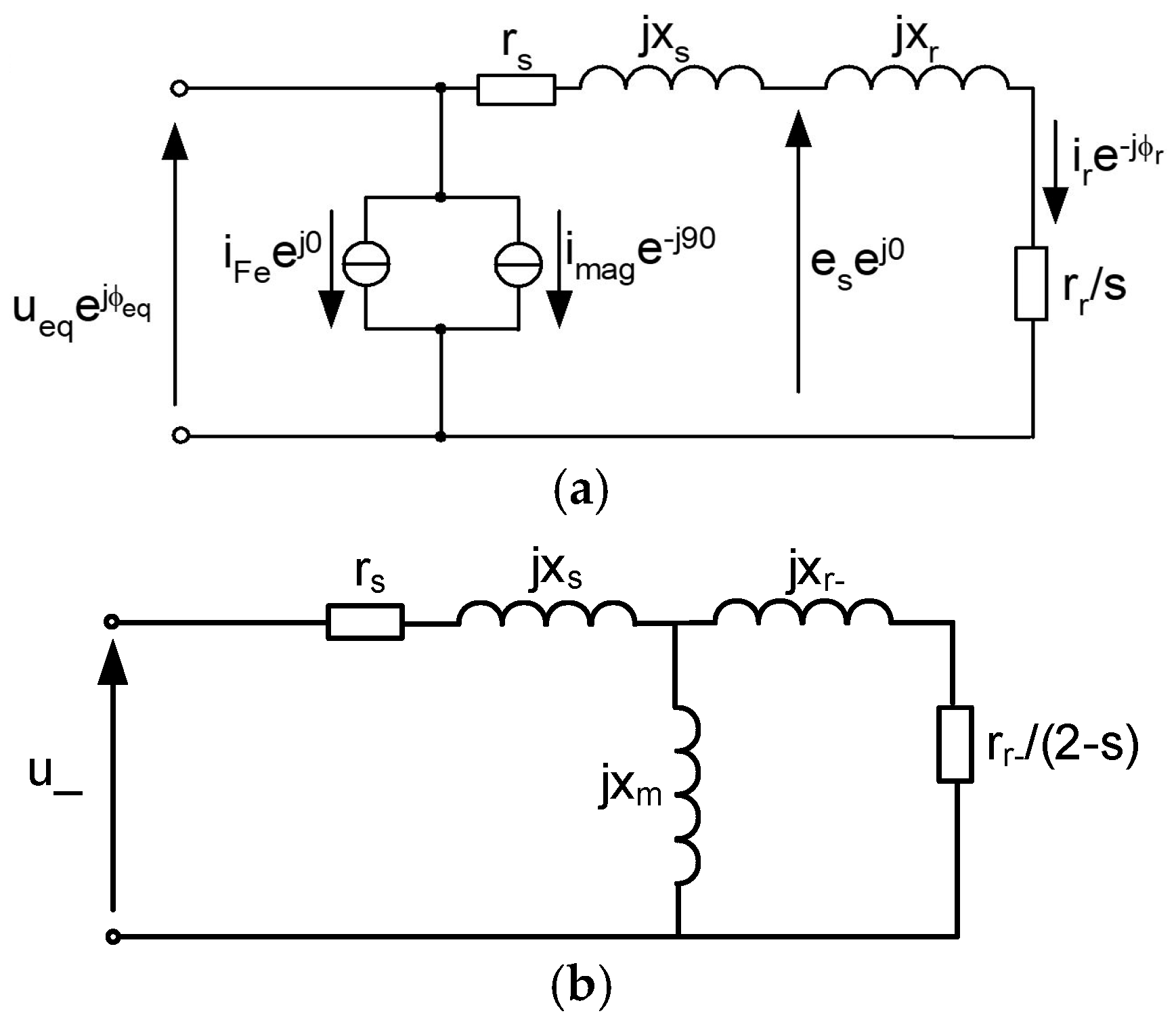
Figure 1. Circuit motor models for (a) the positive-sequence voltage component and (b) the negative-sequence voltage component.
Energies 19 00026 g001
Figure 2. Flowchart of elaboration of the cvee coefficient.
Energies 19 00026 g002
Figure 3. Flowchart of the cvee coefficient calculations.
Energies 19 00026 g003
Figure 4. Coefficient of voltage energy efficiency vs. VUF and U1 for the purely sinusoidal voltage.
Energies 19 00026 g004
Figure 5. Coefficient of voltage energy efficiency vs. VUF and U1 for the 5th and 7th voltage harmonics equal to 6% and 5%, respectively.
Energies 19 00026 g005
Figure 6. Coefficient of voltage energy efficiency vs. VUF and U1 for the 5th and 7th voltage harmonics equal to 9.6% and 7.2%, respectively.
Energies 19 00026 g006
Figure 7. Changes in the cvee value in the chosen substation of the shipyard’s power system for Case 1, with a maximum value of 1.145, mean value of 1.053, and standard deviation of 0.031.
Energies 19 00026 g007
Figure 8. Changes in the cvee value in the chosen substation of the shipyard’s power system for Case 2, with a maximum value of 1.104, mean value of 1.037, and standard deviation of 0.013.
Energies 19 00026 g008
Figure 9. Changes in the cvee value in the chosen substation of the shipyard’s power system for Case 3, with a maximum value of 1.063, mean value of 1.030, and standard deviation of 0.010.
Energies 19 00026 g009
Figure 10. The curves of cvee = 1.32 vs. VUF and U1/Urat for: (a) the purely sinusoidal voltage, (b) the 5 and the 7 voltage harmonics equal u5 = 6% and u7 = 5%, (c) the 5 and the 7 voltage harmonics equal u5 = 9.6% and u7 = 7.2%.
Energies 19 00026 g010
Figure 11. PQ according to the criterion cvee ≤ 1.32 and cpqs ≤ 1.34 for the purely sinusoidal voltage.
Energies 19 00026 g011
Figure 12. PQ according to the criterion cvee ≤ 1.32 and cpqs ≤ 1.34 for the voltage waveform containing the 5th and 7th voltage harmonics of u5 = 6% and u7 = 5%.
Energies 19 00026 g012
Table 1. Maximum and mean values, as well as standard deviations, of cvee components for Case 1.
Statistical
Parameter
Pfund
Value
Phar
Value
Punbal
Value
Maximum1.1410.0130.002
Mean1.0490.0030.000
Standard deviation0.0310.0010.000
Table 2. Maximum and mean values, as well as standard deviations, of cvee components for Case 2.
Statistical
Parameter
Pfund
Value
Phar
Value
Punbal
Value
Maximum1.0890.0310.001
Mean1.0340.0030.000
Standard deviation0.0120.0020.000
Table 3. Maximum and mean values, as well as standard deviations, of cvee components for Case 3.
Statistical
Parameter
Pfund
Value
Phar
Value
Punbal
Value
Maximum1.0570.0110.010
Mean1.0270.0020.000
Standard deviation0.0100.0010.001
Disclaimer/Publisher’s Note: The statements, opinions and data contained in all publications are solely those of the individual author(s) and contributor(s) and not of MDPI and/or the editor(s). MDPI and/or the editor(s) disclaim responsibility for any injury to people or property resulting from any ideas, methods, instructions or products referred to in the content.