Article

Methodology for Assessing the Technical Potential of Solar Energy Based on Artificial Intelligence Technologies and Simulation-Modeling Tools


by
Pavel Buchatskiy
1,
Stefan Onishchenko
1,
Sergei Petrenko
1,2 and
Semen Teploukhov
1,*
1
Laboratory of Renewable Energy, Adyghe State University, Maykop 385000, Russia
2
Information Technology and Artificial Intelligence Group, Sirius University of Science and Technology, Sirius 354340, Russia
*
Author to whom correspondence should be addressed.
Energies 2025, 18(19), 5296; https://doi.org/10.3390/en18195296
Submission received: 25 August 2025 / Revised: 1 October 2025 / Accepted: 3 October 2025 / Published: 7 October 2025
(This article belongs to the Special Issue Solar Energy, Governance and CO2 Emissions)

Abstract

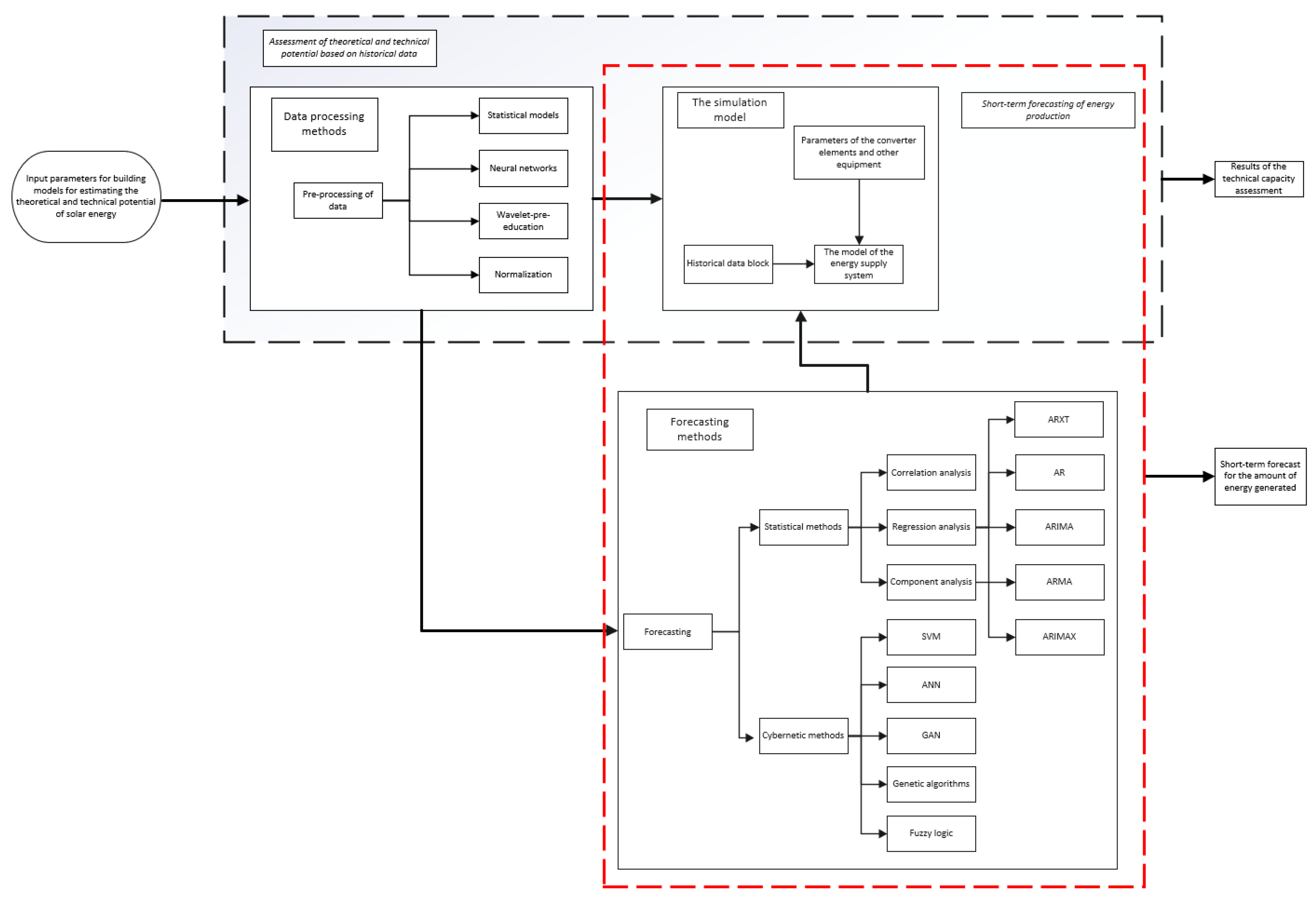
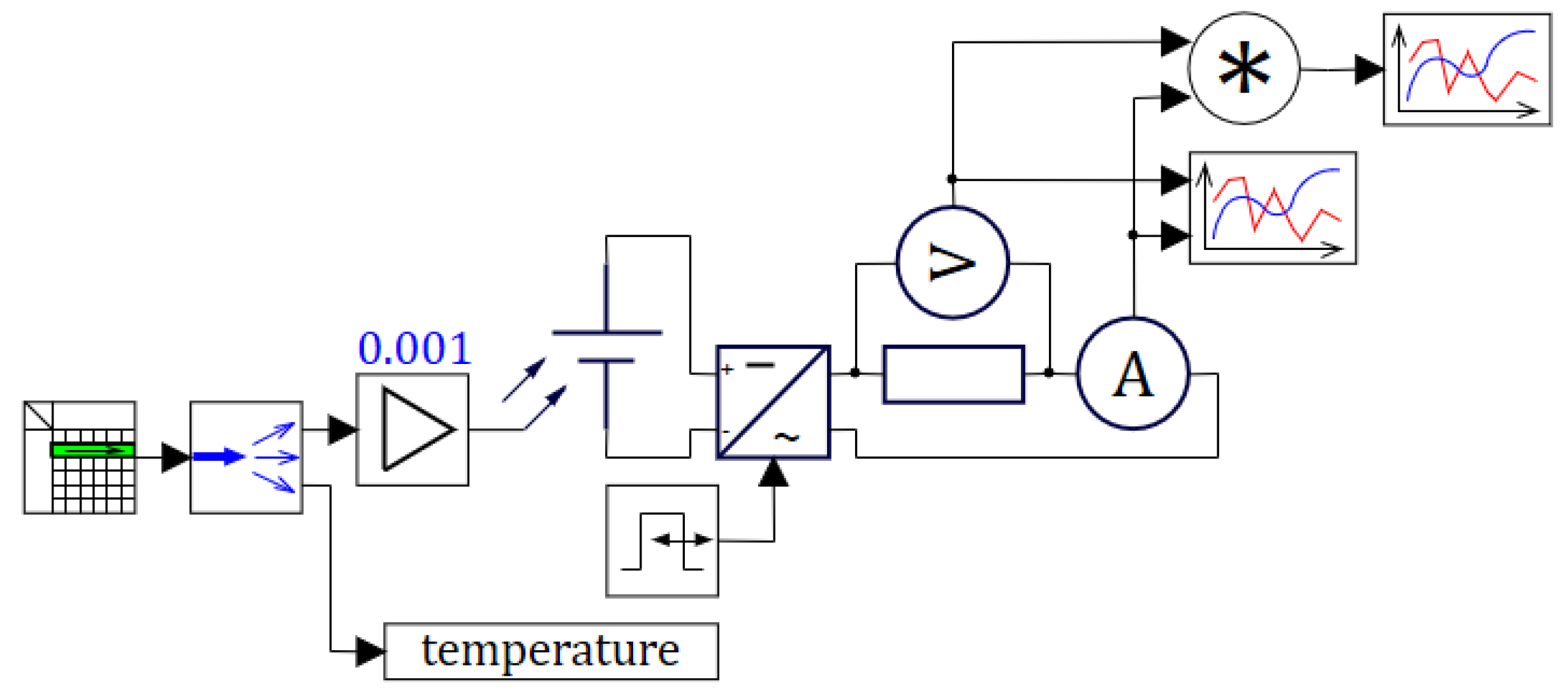
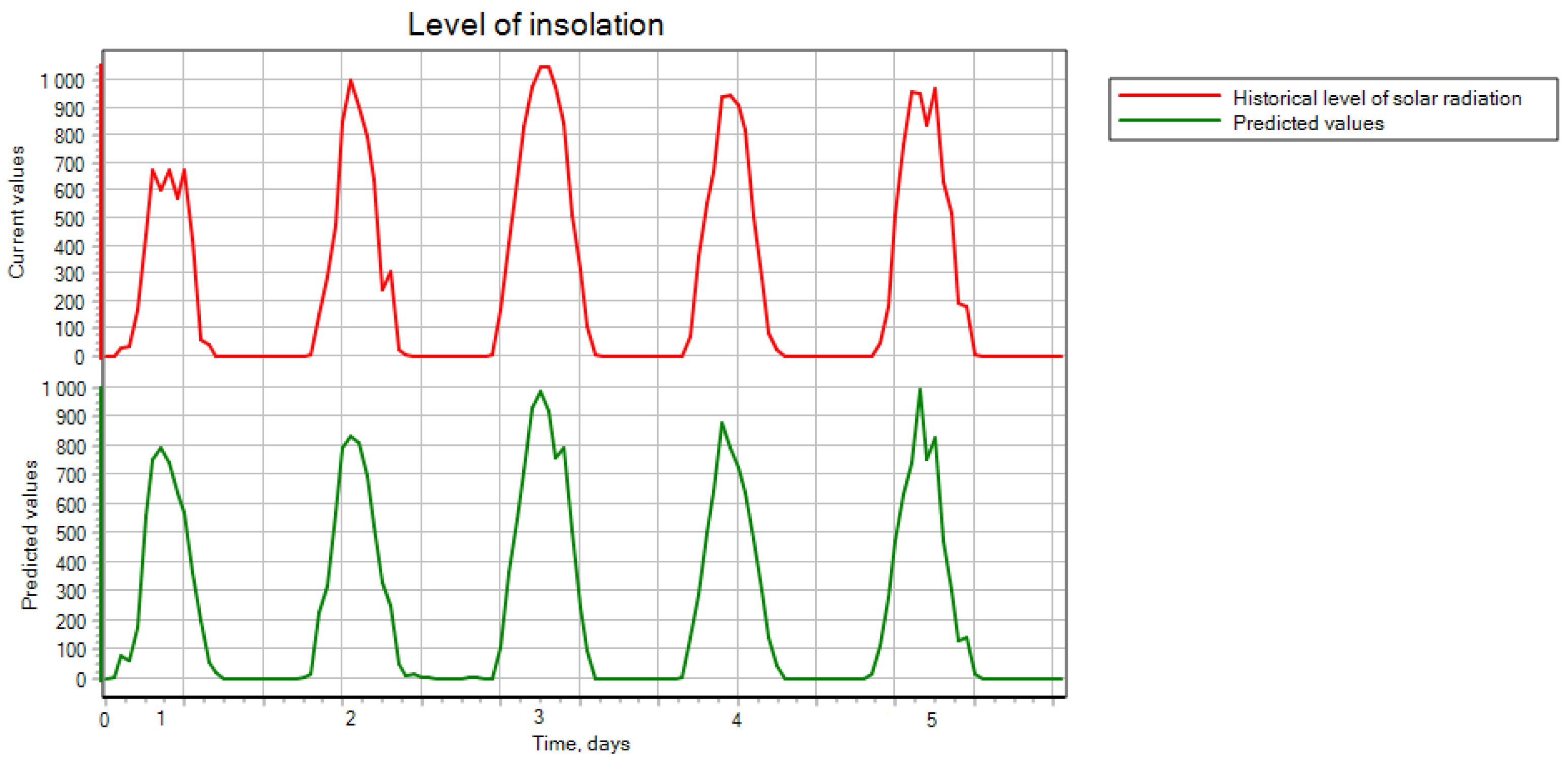
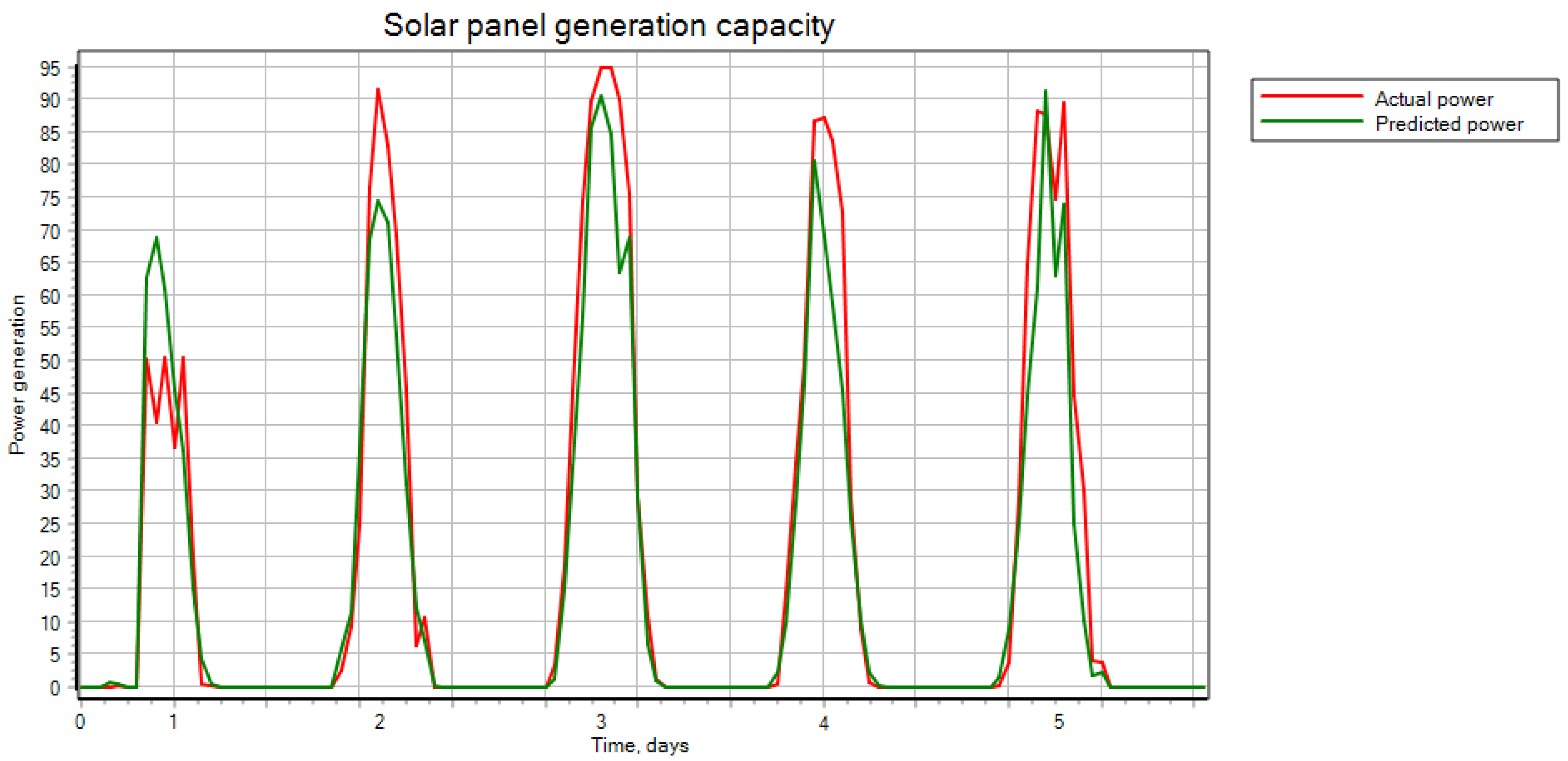
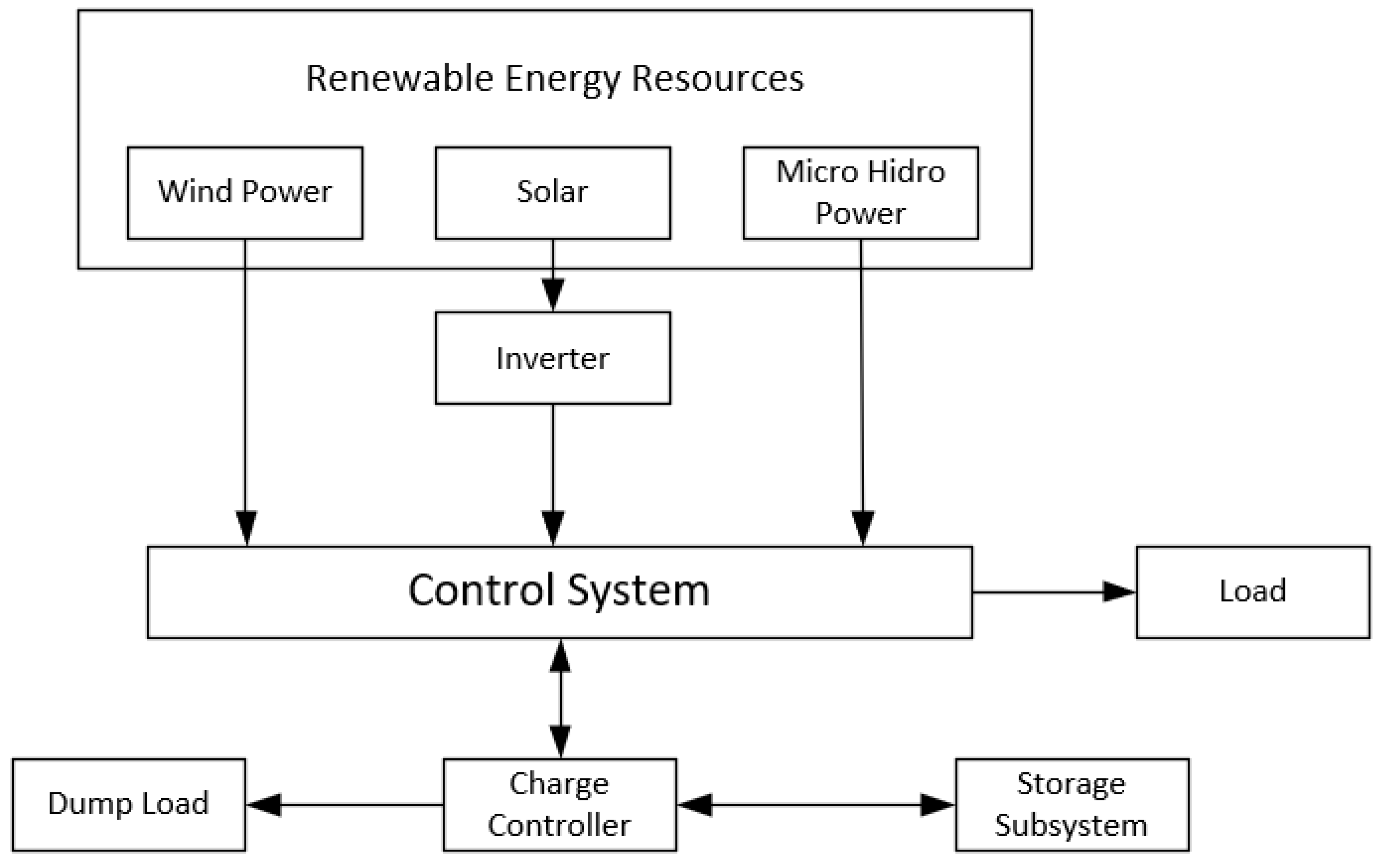
The integration of renewable energy sources (RES) into energy systems is becoming increasingly widespread around the world, driven by various factors, the most relevant of which is the high environmental friendliness of these types of energy resources and the possibility of creating stable generation systems that are independent of the economic and geopolitical situation. The large-scale involvement of green energy leads to the creation of distributed energy networks that combine several different methods of generation, each with its own characteristics. As a result, the issues of data collection and processing necessary for optimizing the operation of such energy systems are becoming increasingly relevant. The first stage of renewable energy integration involves building models to assess theoretical potential, allowing the feasibility of using a particular type of resource in specific geographical conditions to be determined. The second stage of assessment involves determining the technical potential, which allows the actual energy values that can be obtained by the consumer to be determined. The paper discusses a method for assessing the technical potential of solar energy using the example of a private consumer’s energy system. For this purpose, a generator circuit with load models was implemented in the SimInTech dynamic simulation environment, accepting various sets of parameters as input, which were obtained using an intelligent information search procedure and intelligent forecasting methods. This approach makes it possible to forecast the amount of incoming solar insolation in the short term, whose values are then fed into the simulation model, allowing the forecast values of the technical potential of solar energy for the energy system configuration under consideration to be determined. The implementation of such a hybrid assessment system allows not only the technical potential of RES to be determined based on historical datasets but also provides the opportunity to obtain forecast values for energy production volumes. This allows for flexible configuration of the parameters of the elements used, which makes it possible to scale the solution to the specific configuration of the energy system in use. The proposed solution can be used as one of the elements of distributed energy systems with RES, where the concept of demand distribution and management plays an important role. Its implementation is impossible without predictive models.
Keywords: renewable energy; intelligent methods; energy systems; potential assessment; technical potential; simulation modeling renewable energy; intelligent methods; energy systems; potential assessment; technical potential; simulation modeling