Article

Resource Optimization for Grid-Connected Smart Green Townhouses Using Deep Hybrid Machine Learning


by
Seyed Morteza Moghimi
1,*,†,
Thomas Aaron Gulliver
1,*,†,
Ilamparithi Thirumarai Chelvan
1 and
Hossen Teimoorinia
2,3
1
Department of Electrical and Computer Engineering, University of Victoria, Victoria, BC V8W 2Y2, Canada
2
NRC Herzberg Astronomy and Astrophysics, 5071 West Saanich Road, Victoria, BC V9E 2E7, Canada
3
Department of Physics and Astronomy, University of Victoria, Victoria, BC V8P 5C2, Canada
*
Authors to whom correspondence should be addressed.
These authors contributed equally to this work.
Energies 2024, 17(23), 6201; https://doi.org/10.3390/en17236201
Submission received: 19 September 2024 / Revised: 2 December 2024 / Accepted: 3 December 2024 / Published: 9 December 2024
(This article belongs to the Section G: Energy and Buildings)

Abstract

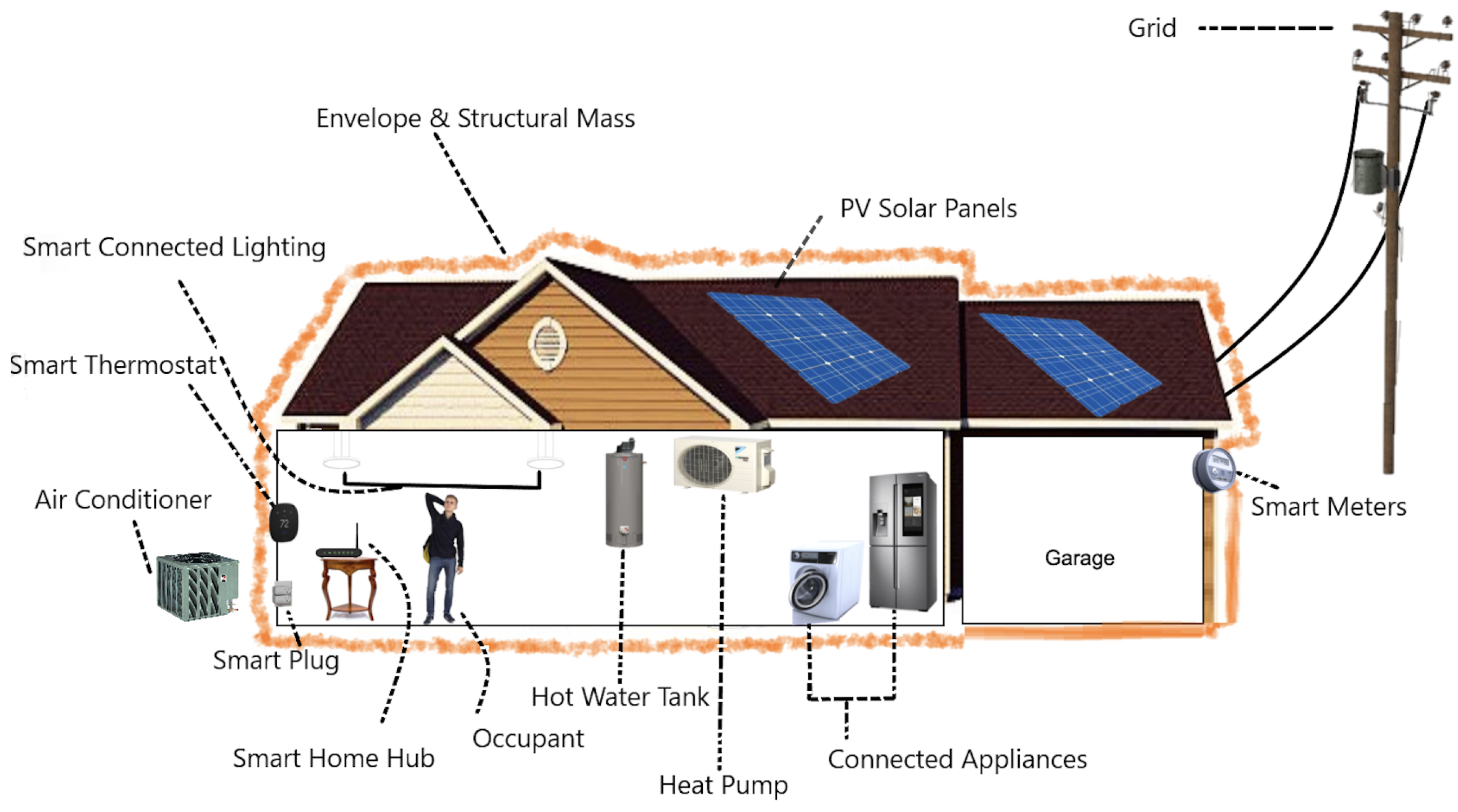
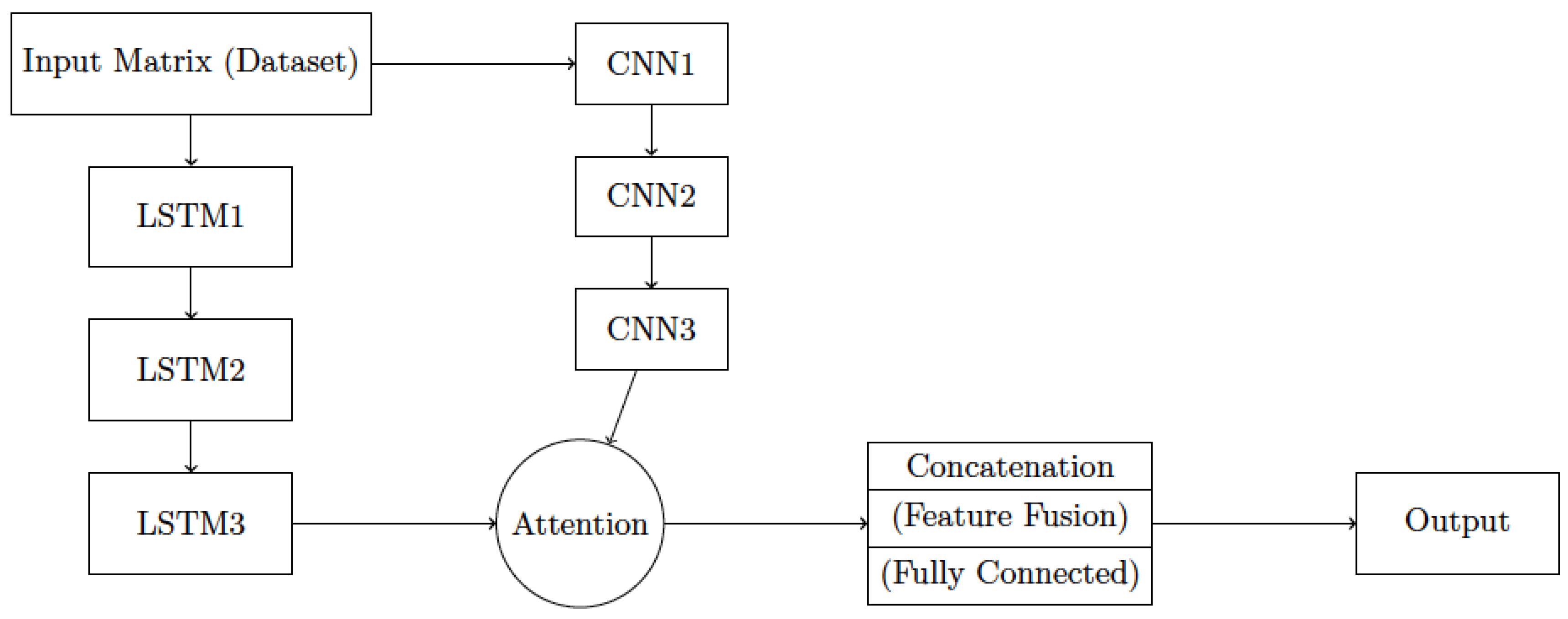
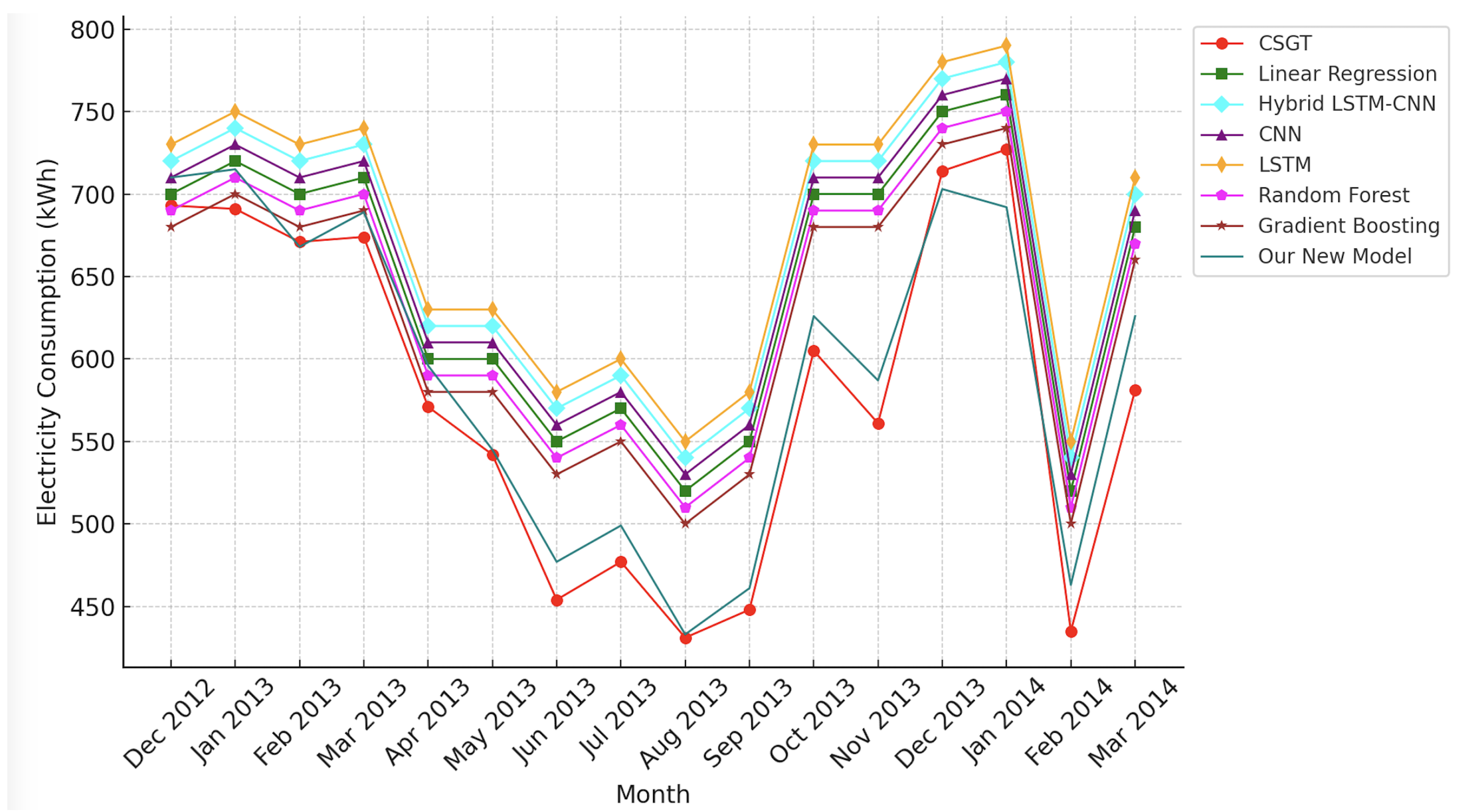
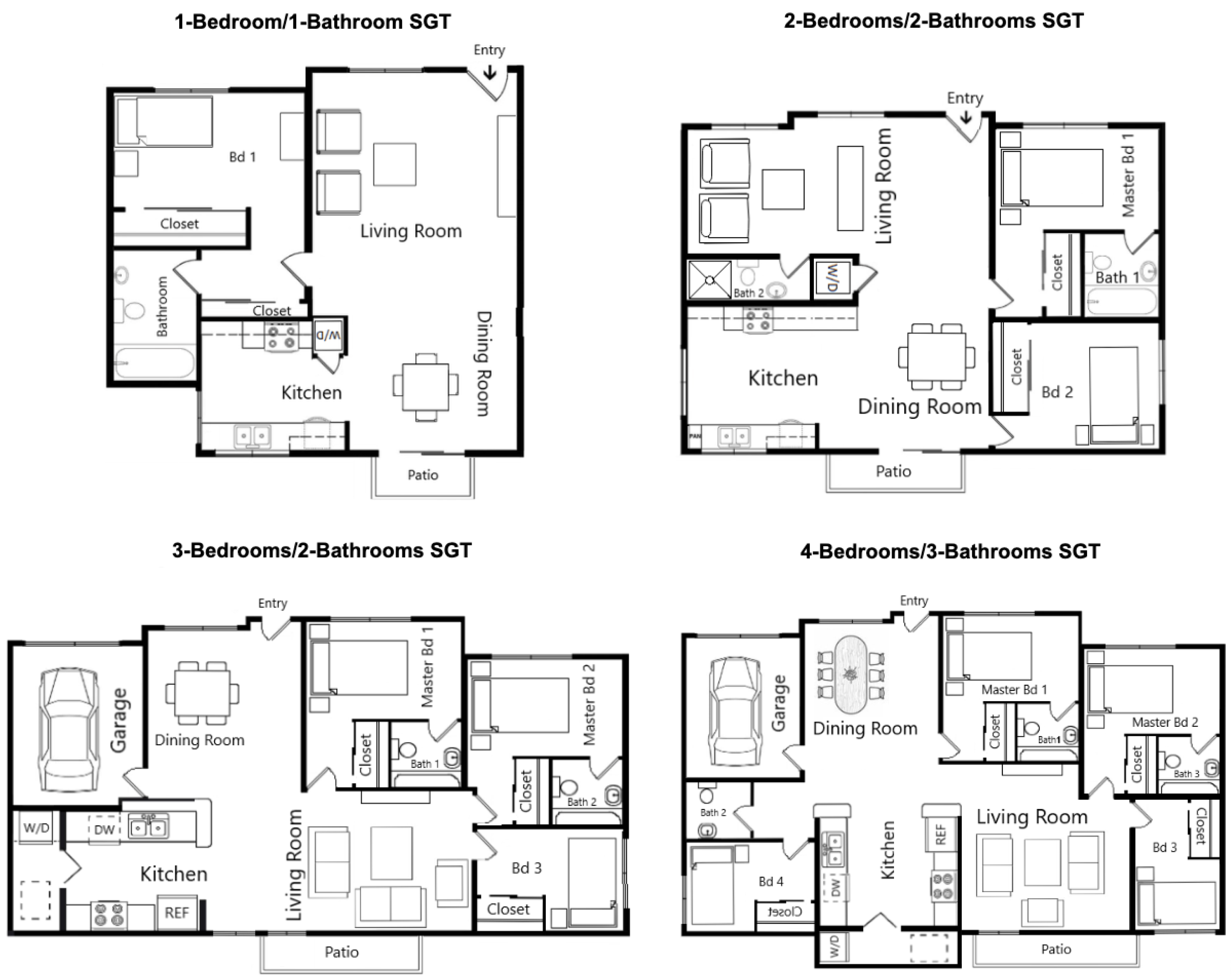
This paper examines Connected Smart Green Townhouses (CSGTs) as a modern residential building model in Burnaby, British Columbia (BC). This model incorporates a wide range of sustainable materials and smart components such as recycled insulation, Photovoltaic (PV) solar panels, smart meters, and high-efficiency systems. The CSGTs operate in grid-connected mode to balance on-site renewables with grid resources to improve efficiency, cost-effectiveness, and sustainability. Real datasets are used to optimize resource consumption, including electricity, gas, and water. Renewable Energy Sources (RESs), such as PV systems, are integrated with smart grid technology. This creates an effective framework for managing energy consumption. The accuracy, efficiency, emissions, and cost are metrics used to evaluate CSGT performance. CSGTs with one to four bedrooms are investigated considering water systems and party walls. A deep Machine Learning (ML) model combining Long Short-Term Memory (LSTM) and a Convolutional Neural Network (CNN) is proposed to improve the performance. In particular, the Mean Absolute Percentage Error (MAPE) is below 5%, the Root Mean Square Error (RMSE) and Mean Absolute Error (MAE) are within acceptable levels, and R2 is consistently above 0.85. The proposed model outperforms other models such as Linear Regression (LR), CNN, LSTM, Random Forest (RF), and Gradient Boosting (GB) for all bedroom configurations.
Keywords: connected smart buildings; efficiency development; energy optimization; green buildings; machine learning connected smart buildings; efficiency development; energy optimization; green buildings; machine learning