Article

Multi-Criterial Carbon Assessment of the City

by
Piotr Sobierajewicz
1,
Janusz Adamczyk
2,* and
Robert Dylewski
3
1
Institute of Architecture and Urban Planning, Faculty of Civil Engineering, Architecture and Environmental Engineering, University of Zielona Góra, Licealna 9 St., 65-417 Zielona Góra, Poland
2
Institute of Economics and Finance, Faculty of Economics and Management, University of Zielona Góra, Licealna 9 St., 65-417 Zielona Góra, Poland
3
Institute of Mathematics, Faculty of Mathematics, Computer Science and Econometrics, University of Zielona Góra, Licealna 9 St., 65-417 Zielona Góra, Poland
*
Author to whom correspondence should be addressed.
Energies 2024, 17(18), 4555; https://doi.org/10.3390/en17184555
Submission received: 13 August 2024 / Revised: 3 September 2024 / Accepted: 6 September 2024 / Published: 11 September 2024
(This article belongs to the Section B: Energy and Environment)

Abstract

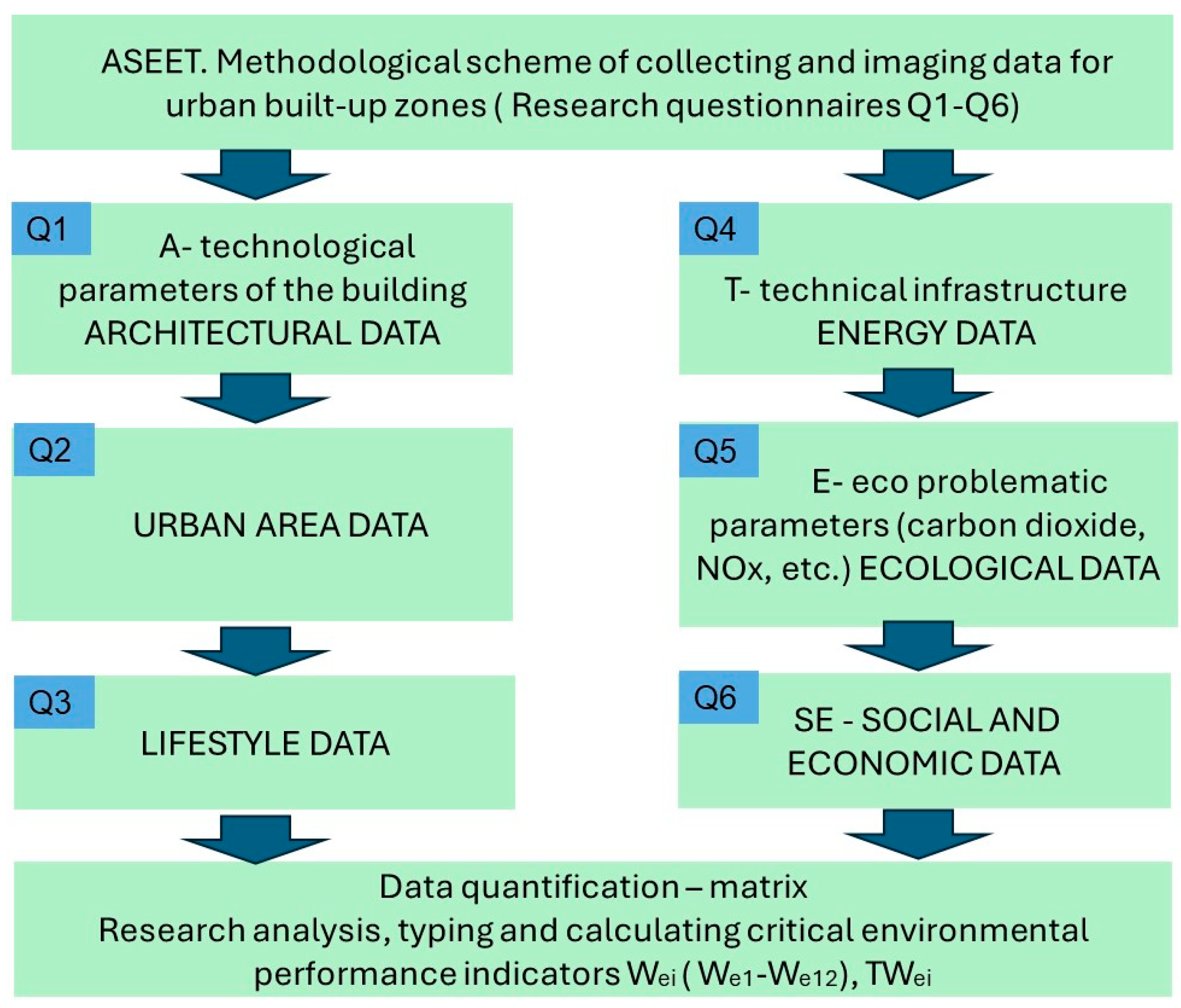
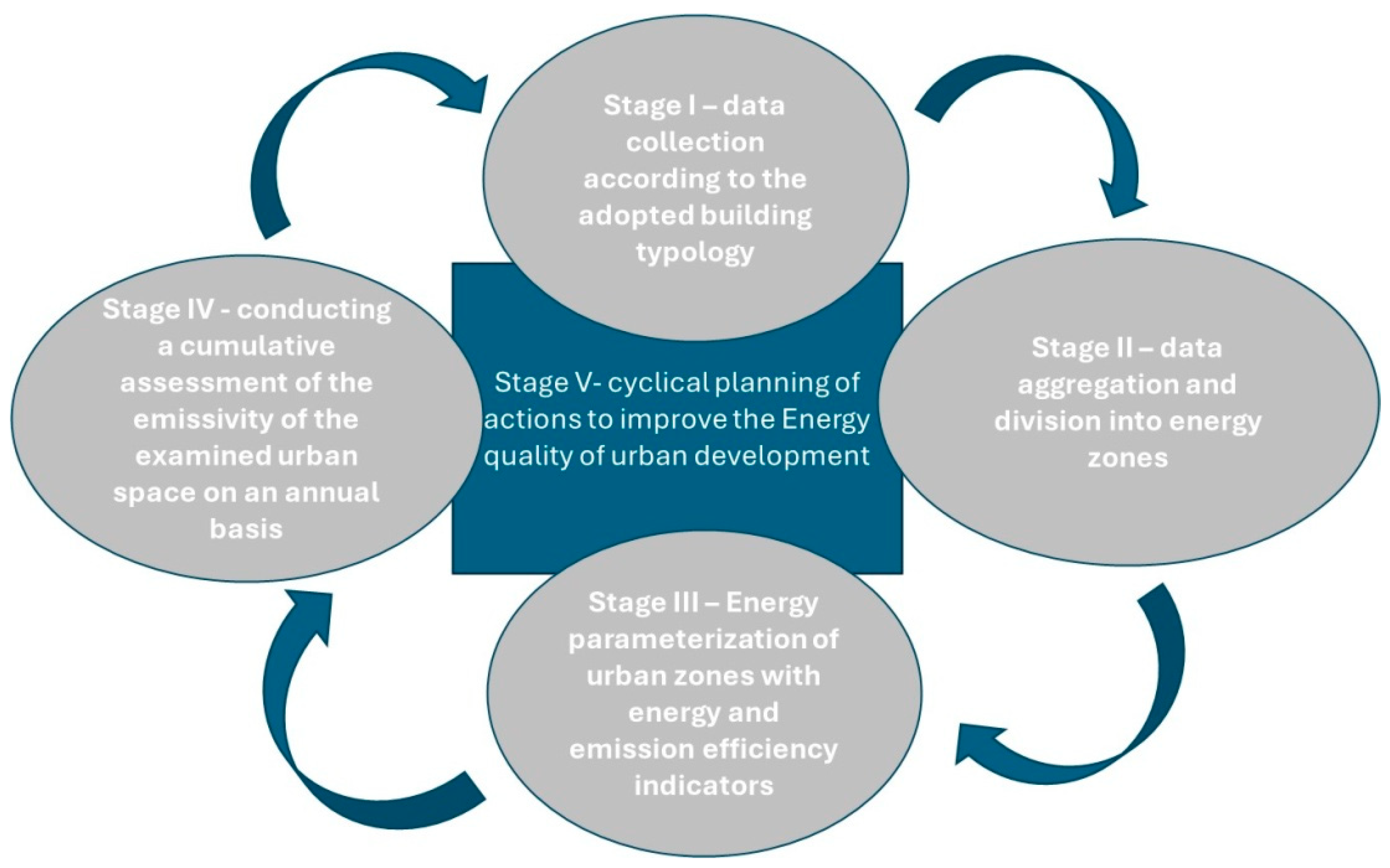
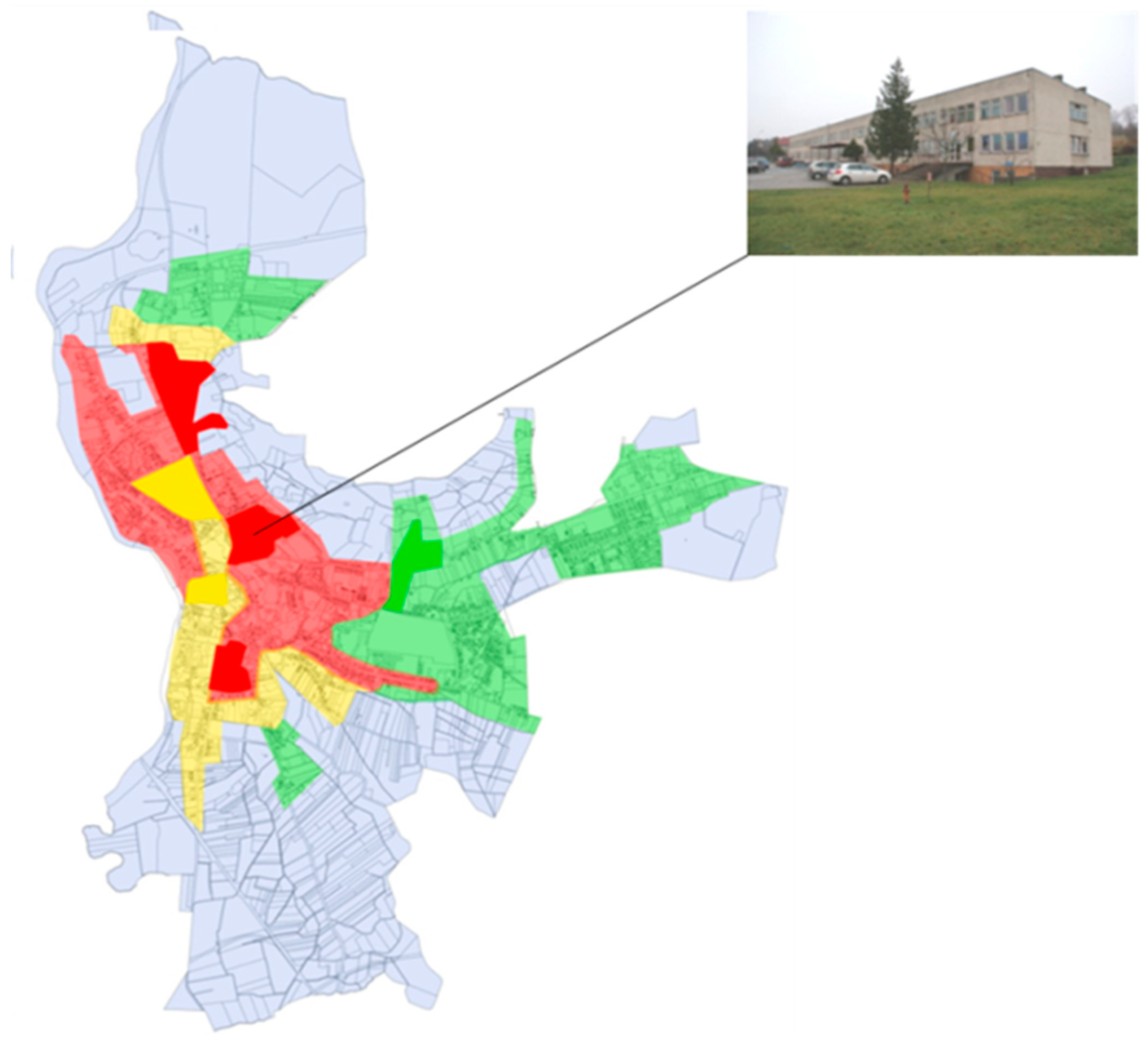
Decision-makers in cities have difficulties in implementing an effective climate policy for their own building resources due to the heterogeneous and dispersed distribution of buildings with low energy classes and different management specifics. Special zones include old towns, pre-war buildings (before 1945), and those built by the end of the 20th century. There is a noticeable shortage of methods for the comprehensive assessment of the emissions of urban complexes, taking into account social, economic, and environmental aspects. Exemplary individual examples of good thermal modernization practices towards low-emission and zero-energy solutions do not solve the problem of the poor-quality urban environment. This article proposes a simple integrated assessment of CO2 emissions of separate urban zones using the example of a medium-sized city in Poland. The adopted ASEET assessment methodology takes into account socio-economic criteria, but above all, the technical and energy criteria of urban development. Sensitive information was collected from users and owners of buildings and gathered in a data matrix. From the inventory data on energy consumption and technical conditions related to socio-economic status, environmental indicators were introduced, which were called critical for their improvement. By analyzing local efficiency indicators Wei of individual development zones, we can influence TWCi, the total indicators for the city. In the case of the studied city of Gubin, the total final energy consumption indicator EKC is 252.68 kWh/m2/year and is 58% lower than the most energy-intensive zone I, for which EKI = 399.6 kWh/m2/year, similar to emission indicators EEj between zones. Therefore, energy efficiency or emission indicators as resultant characteristics of urbanized areas can be treated as sensitive parameters in administrative activities, for example when planning thermal modernization or health risk assessment. The recommended solutions for continuous monitoring of ecological identifiers of urban zones, especially those with the lowest technical status, are to facilitate the creation of own environmental urban policies in the future and directly affect the city’s climate in local and global terms. The environmental data obtained using the ASEET method can be digitized using various IT techniques and then the results can be visualized on a city map in the form of environmental urban mapping with an indication of the GIS system. As a result, simple methodological tools for city managers were indicated. In the authors’ opinion, the ASEET method can serve urban policy, especially energy and climate policy, because the instrument for calculation is a database of indicators from subsequent periods of monitoring one’s own urban development.
Keywords: city climate; environmental indicators; green transformation; sustainable urban planning; urban environment management city climate; environmental indicators; green transformation; sustainable urban planning; urban environment management