Article

Data-Driven Occupancy Profile Identification and Application to the Ventilation Schedule in a School Building


by
Kristina Vassiljeva
1,2,*,
Margarita Matson
1,3,
Andrea Ferrantelli
1,4,5,
Eduard Petlenkov
1,2,
Martin Thalfeldt
1,6 and
Juri Belikov
1,3
1
FinEst Centre for Smart Cities (Finest Centre), Tallinn University of Technology, 19086 Tallinn, Estonia
2
Department of Computer Systems, Tallinn University of Technology, 12618 Tallinn, Estonia
3
Department of Software Science, Tallinn University of Technology, 12618 Tallinn, Estonia
4
Department of Mechanical Engineering, Aalto University, 00076 Espoo, Finland
5
Department of Civil Engineering, Aalto University, 00076 Espoo, Finland
6
Department of Civil Engineering and Architecture, Tallinn University of Technology, 19086 Tallinn, Estonia
*
Author to whom correspondence should be addressed.
Energies 2024, 17(13), 3080; https://doi.org/10.3390/en17133080
Submission received: 16 May 2024 / Revised: 14 June 2024 / Accepted: 18 June 2024 / Published: 21 June 2024
(This article belongs to the Section G: Energy and Buildings)

Abstract

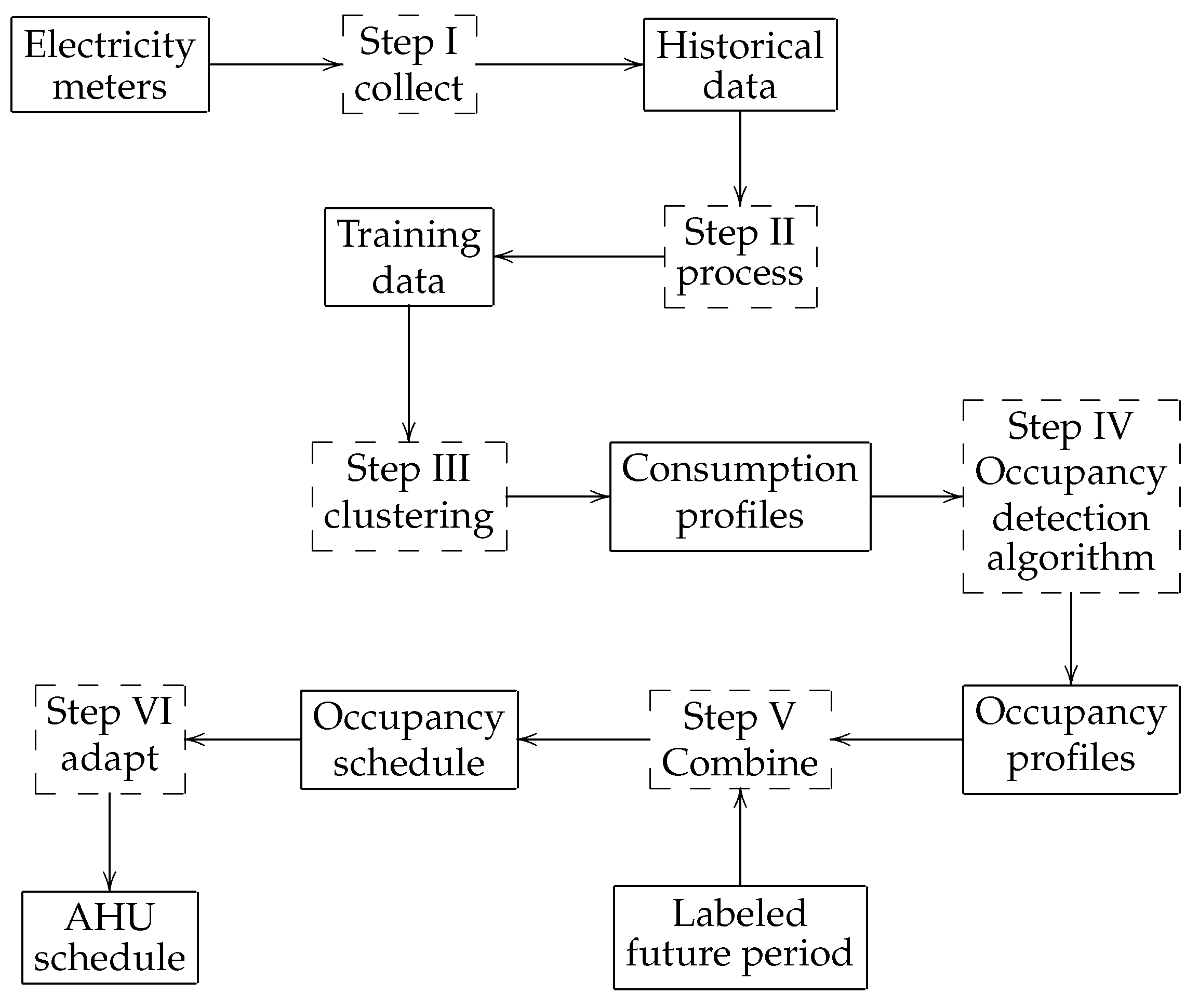
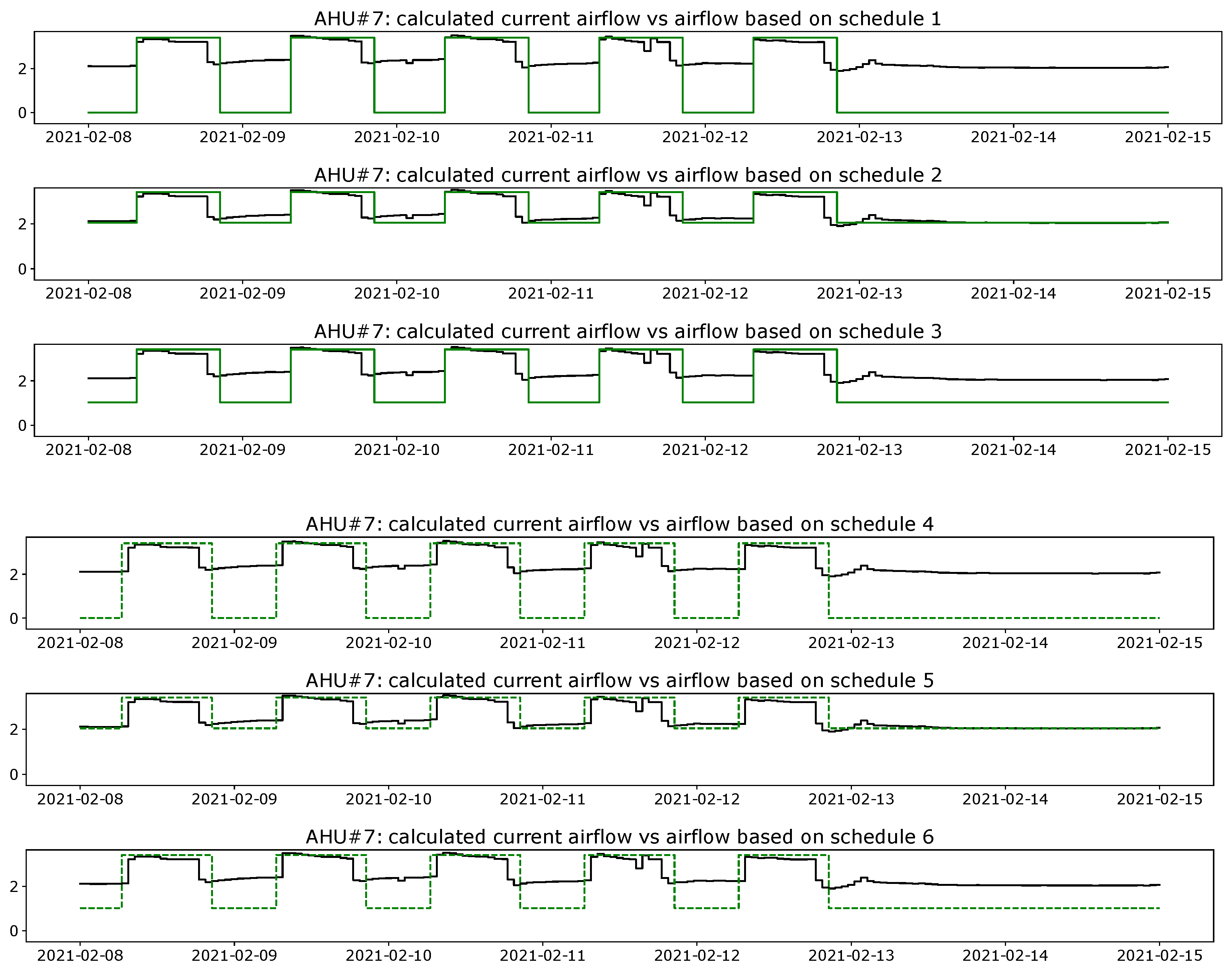
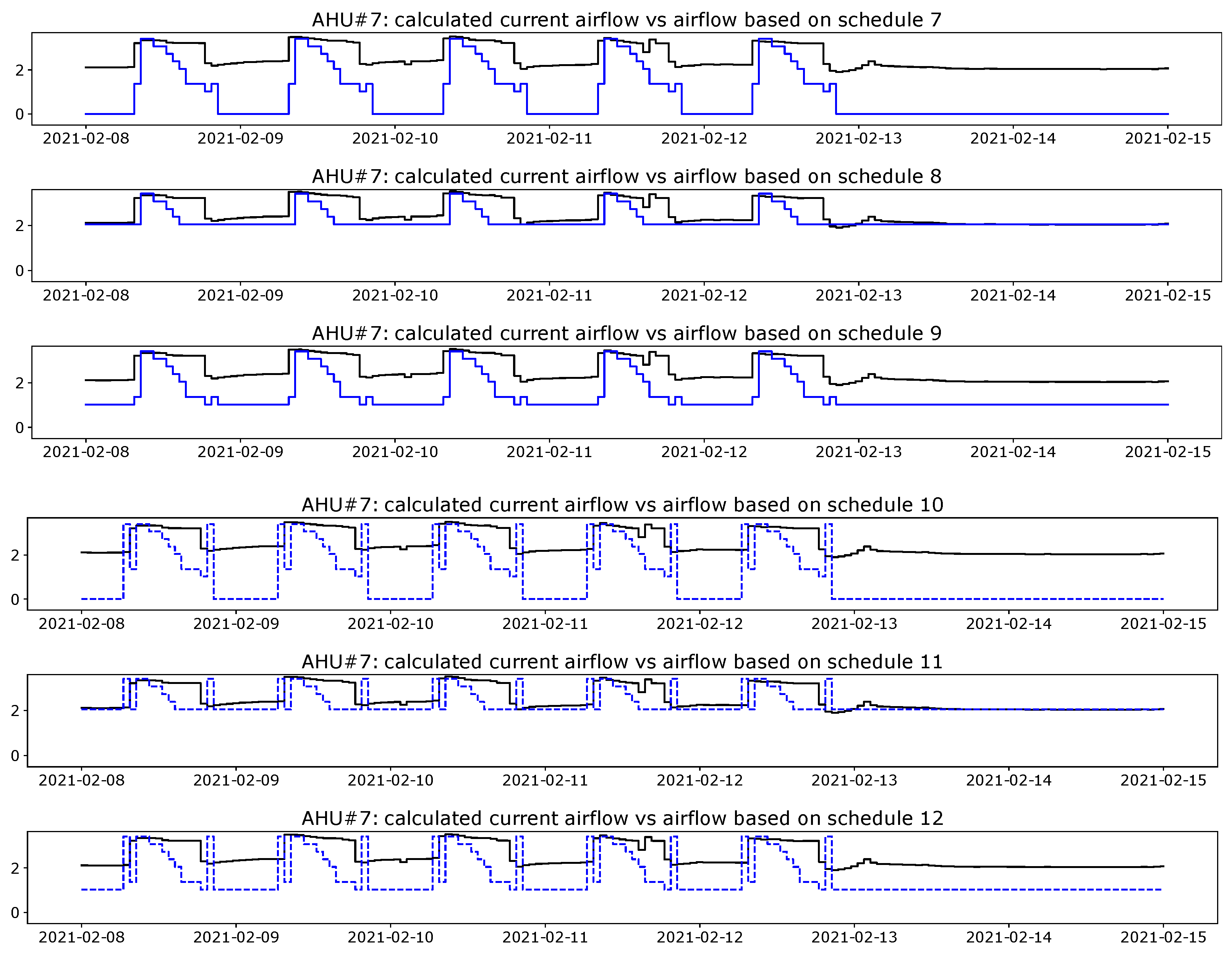
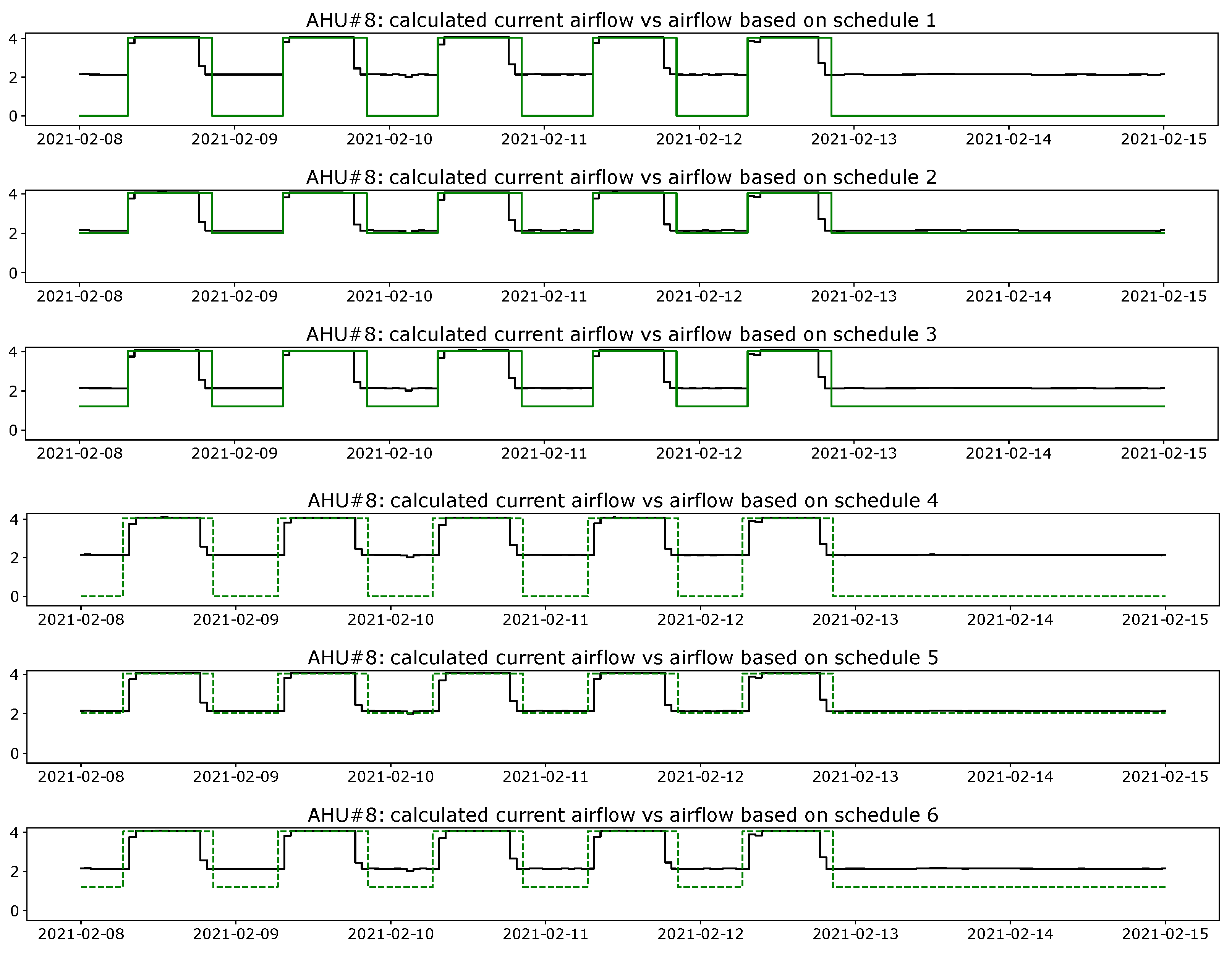
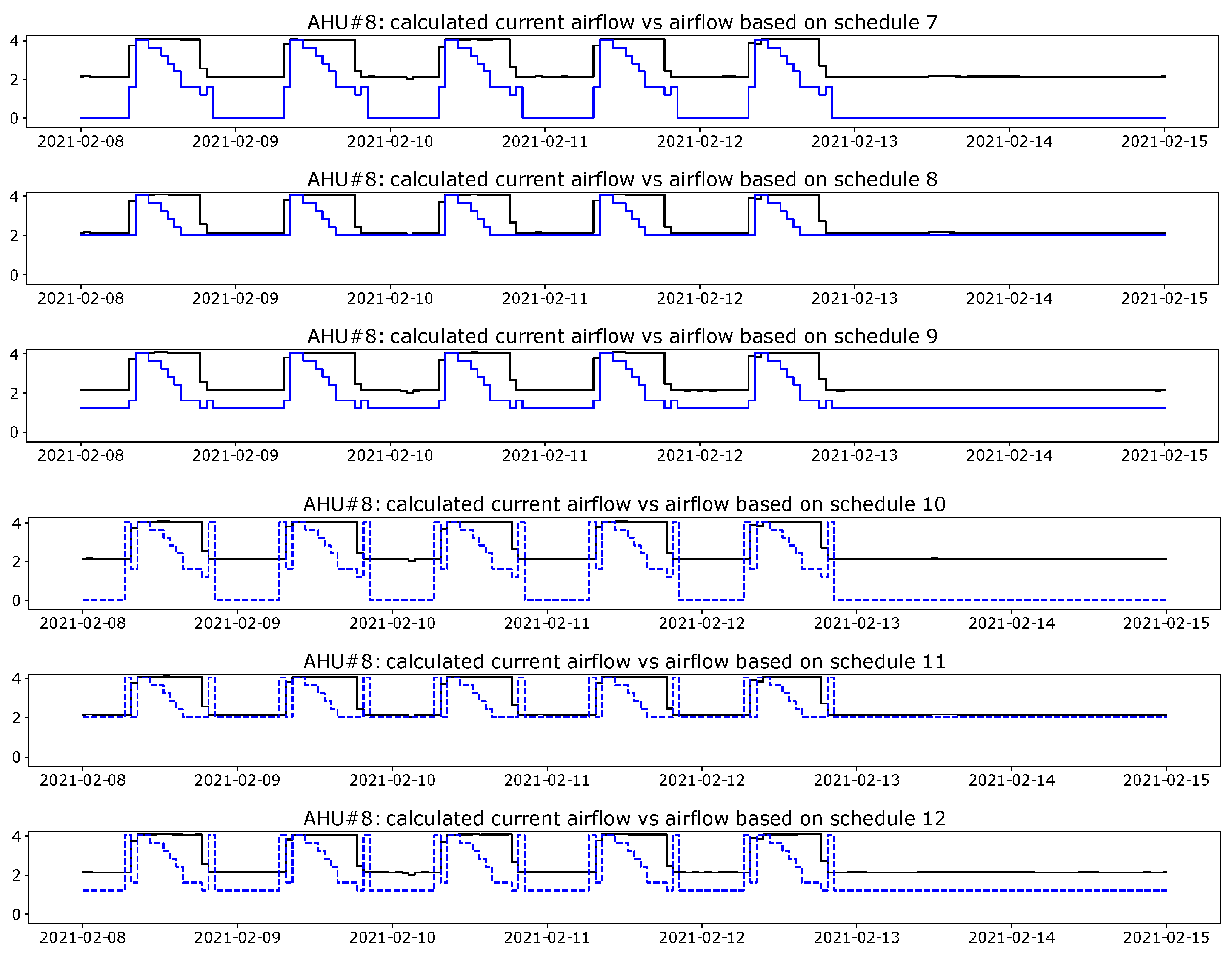
Facing the current sustainability challenges requires reduction in building stock energy usage towards achieving the European Green Deal targets. This can be accomplished by adopting techniques such as fault detection and diagnosis and efficiency optimization. Taking an Estonian school as a case study, an occupancy-based algorithm for scheduling ventilation operations in buildings is here developed starting only from energy use data. The aim is optimizing the system’s operation according to occupancy profiles while maintaining a comfortable indoor climate. By relying only on electricity meters without using carbon dioxide or occupancy sensors, we use the historical data of a school to develop a DBSCAN-based clustering algorithm that generates consumption profiles. A novel occupancy estimation algorithm, based on threshold and time-series methods, then creates 12 occupancy schedules that are either based on classical detection with an on-off method or on occupancy estimation for demand-controlled ventilation. We find that the latter replaces the 60% capacity of current on-off schedules by 30% or even 0%, with energy savings ranging from 3.5% to 66.4%. The corresponding costs are reduced from 18.1% up to 62.6%, while still complying with current national regulations for indoor air quality. Remarkably, our method can immediately be extended to other countries, as it relies only on occupancy schedules that ignore weather and other location-specific factors.
Keywords: AHU; HVAC; occupancy; data clustering; DBSCAN; energy efficiency; optimization AHU; HVAC; occupancy; data clustering; DBSCAN; energy efficiency; optimization