Article

Lithium-Ion Battery Health State Prediction Based on VMD and DBO-SVR

1
School of Energy and Electrical Engineering, Chang’an University, Xi’an 710064, China
2
School of Electrical Engineering, Xi’an Jiaotong University, Xi’an 710049, China
*
Authors to whom correspondence should be addressed.
Energies 2023, 16(10), 3993; https://doi.org/10.3390/en16103993
Submission received: 12 April 2023 / Revised: 8 May 2023 / Accepted: 8 May 2023 / Published: 9 May 2023

Abstract

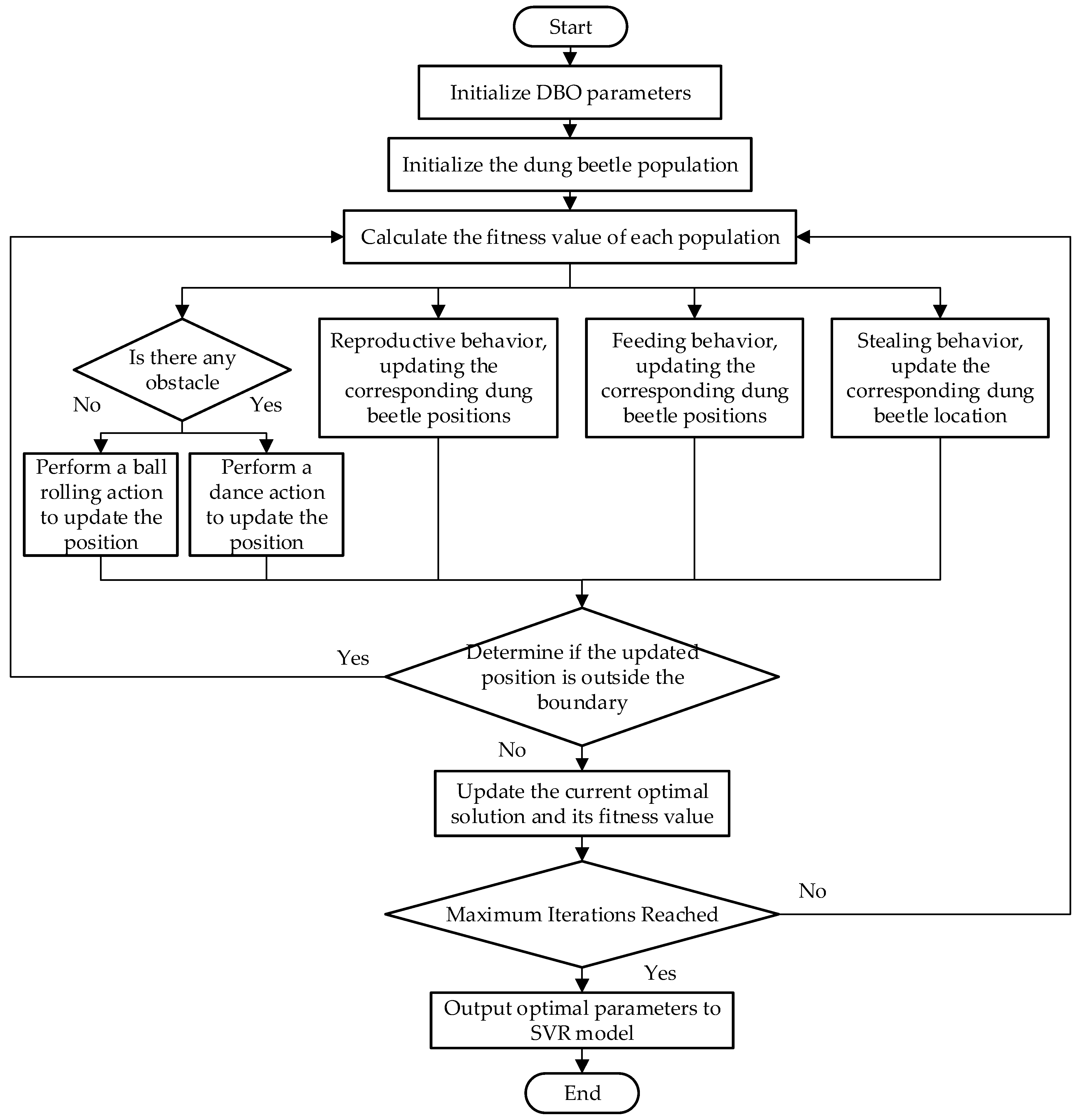
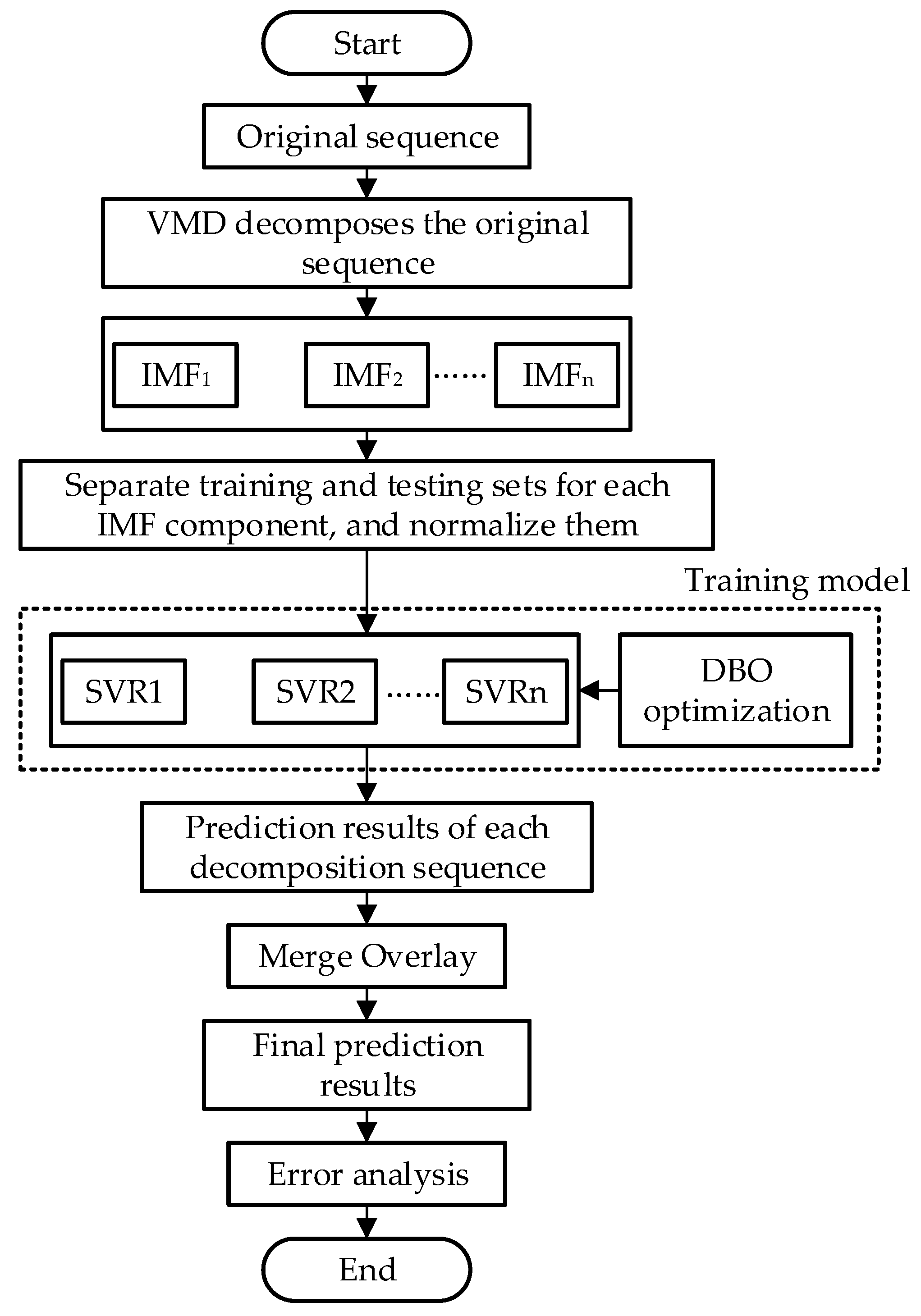
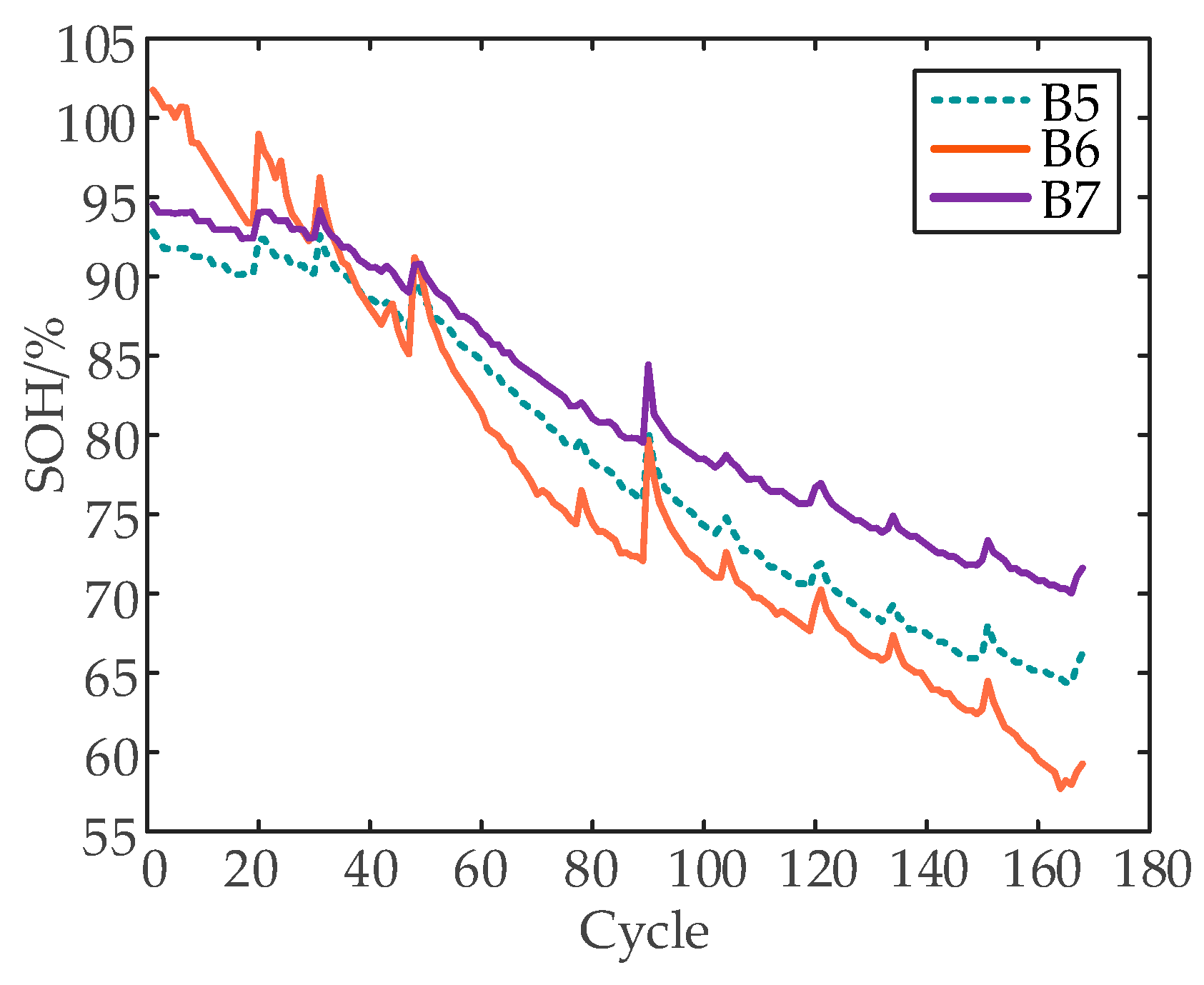
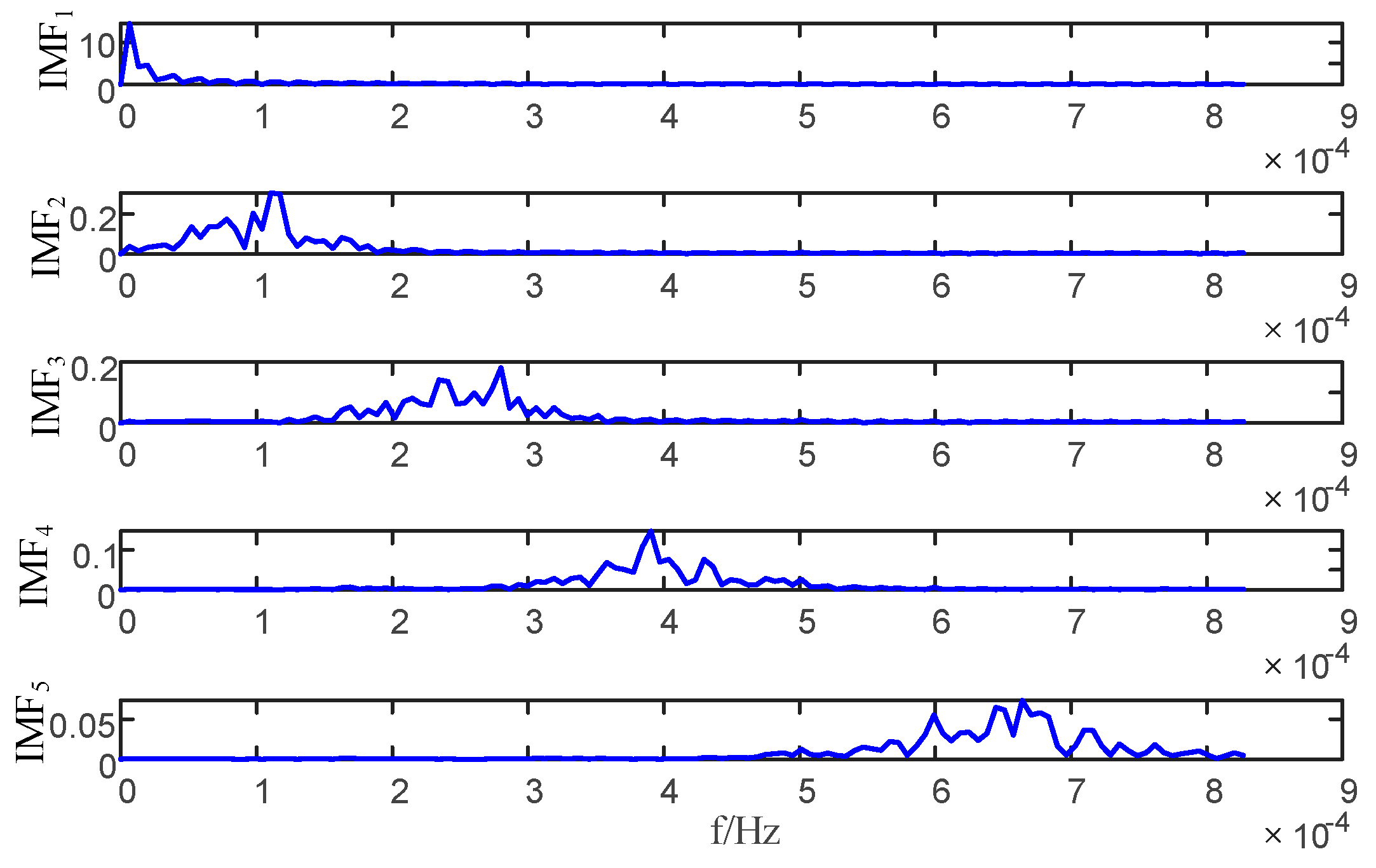
Accurate estimation of the state-of-health (SOH) of lithium-ion batteries is a crucial reference for energy management of battery packs for electric vehicles. It is of great significance in ensuring safe and reliable battery operation while reducing maintenance costs of the battery system. To eliminate the nonlinear effects caused by factors such as capacity regeneration on the SOH sequence of batteries and improve the prediction accuracy and stability of lithium-ion battery SOH, a prediction model based on Variational Modal Decomposition (VMD) and Dung Beetle Optimization -Support Vector Regression (DBO-SVR) is proposed. Firstly, the VMD algorithm is used to decompose the SOH sequence of lithium-ion batteries into a series of stationary mode components. Then, each mode component is treated as a separate subsequence and modeled and predicted directly using SVR. To address the problem of difficult parameter selection for SVR, the DBO algorithm is used to optimize the parameters of the SVR model before training. Finally, the predicted values of each subsequence are added and reconstructed to obtain the final SOH prediction. In order to verify the effectiveness of the proposed method, the VMD-DBO-SVR model was compared with SVR, Empirical Mode Decomposition-Support Vector Regression (EMD-SVR), and VMD-SVR methods for SOH prediction of batteries based on the NASA dataset. Experimental results show that the proposed model has higher prediction accuracy and fitting degree, with prediction errors all within 1% and better robustness.
Keywords: lithium-ion battery; state of health; variational mode decomposition; dung beetle optimization algorithm; support vector regression lithium-ion battery; state of health; variational mode decomposition; dung beetle optimization algorithm; support vector regression