Article

Reservoir Formation Model and Main Controlling Factors of the Carboniferous Volcanic Reservoir in the Hong-Che Fault Zone, Junggar Basin

1
School of Geophysics and Information Technology, China University of Geosciences, Beijing 100083, China
2
School of Energy Resources, China University of Geosciences, Beijing 100083, China
*
Author to whom correspondence should be addressed.
Energies 2020, 13(22), 6114; https://doi.org/10.3390/en13226114
Submission received: 12 October 2020 / Revised: 13 November 2020 / Accepted: 16 November 2020 / Published: 21 November 2020
(This article belongs to the Special Issue Development of Unconventional Reservoirs 2020)

Abstract

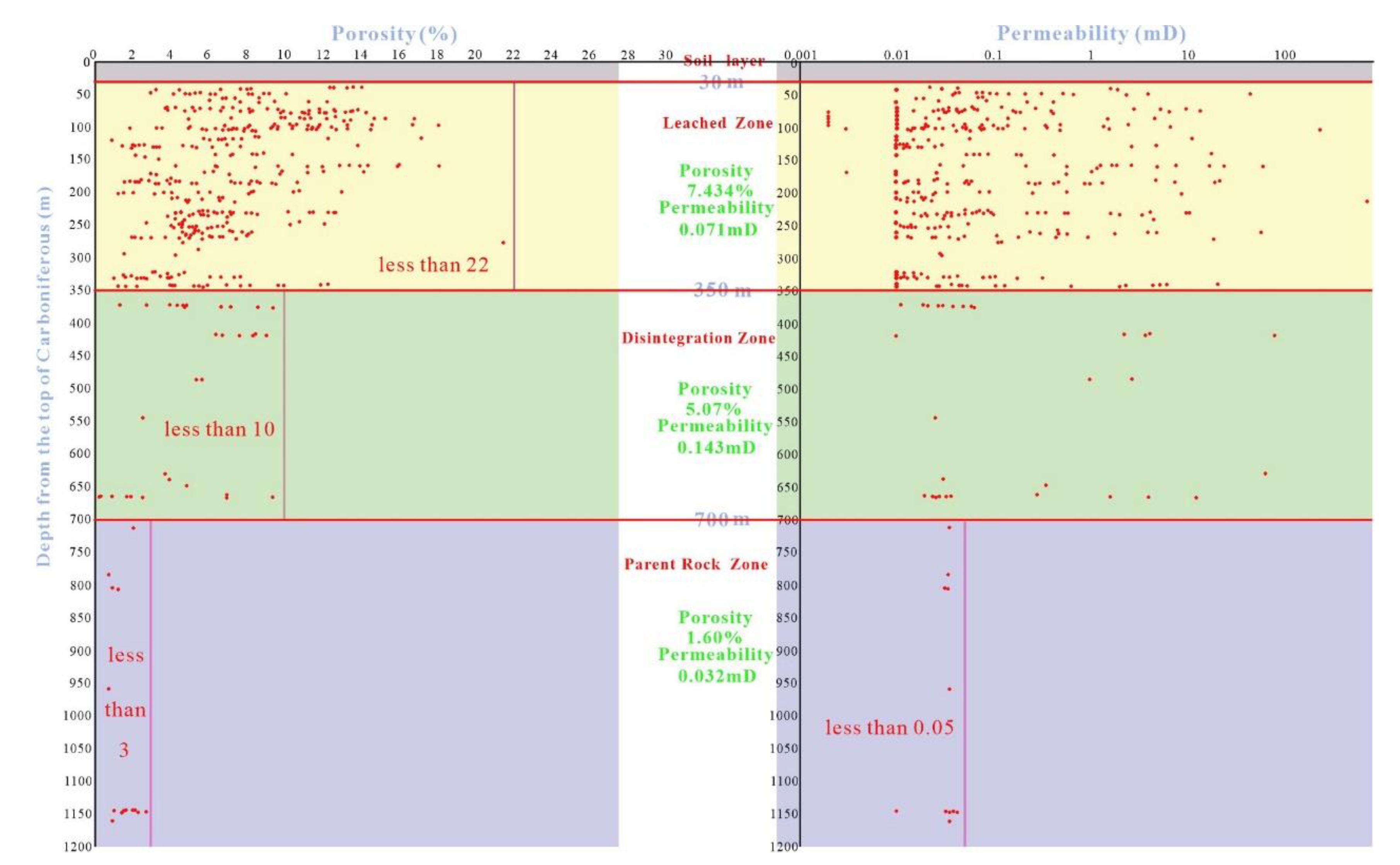
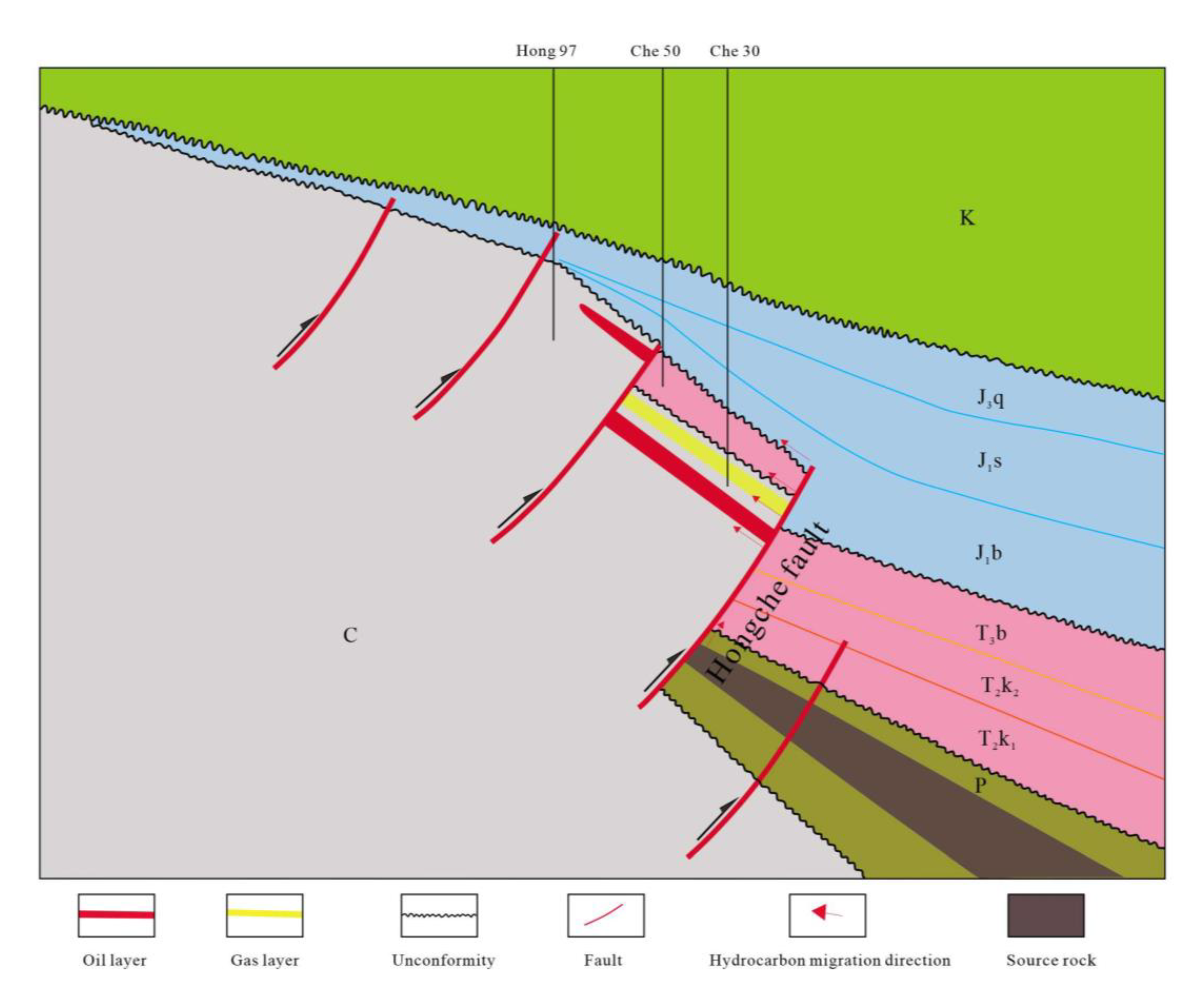
The Hong-Che Fault Zone is one of the important oil and gas enrichment zones in the Junggar Basin, especially in the Carboniferous. In recent five years, it has been proven that the Carboniferous volcanic rock has 140 million tons of oil reserves, and has built the Carboniferous volcanic reservoir with a capacity of million tons. Practice has proven that the volcanic rocks in this area have great potential for oil and gas exploration and development. To date, Carboniferous volcanic reservoirs have been discovered in well areas such as Che 32, Che 47, Che 91, Chefeng 3, Che 210, and Che 471. The study of drilling, logging, and seismic data shows that the Carboniferous volcanic reservoirs in the Hong-Che Fault Zone are mainly distributed in the hanging wall of the fault zone, and oil and gas have mainly accumulated in the high part of the structure. The reservoirs are controlled by faults and lithofacies in the plane and are vertically distributed within 400 m from the top of the Carboniferous. The Carboniferous of the Hong-Che Fault Zone has experienced weathering leaching and has developed a weathering crust. The vertical zonation characteristics of the weathering crust at the top of the Carboniferous in the area of the Che 210 well are obvious. The soil layer, leached zone, disintegration zone, and parent rock developed from top to bottom. Among these reservoirs, the reservoirs with the best physical properties are mainly developed in the leached zone. Based on a comprehensive analysis of the Carboniferous oil and gas reservoirs in areas of the Chefeng 3 and Che 210 wells, it is believed that the formation of volcanic reservoirs in the Hong-Che Fault Zone was mainly controlled by structures and was also controlled by lithofacies, unconformity surfaces, and physical properties.
Keywords: junggar basin; hong-che fault zone; carboniferous; volcanic reservoir; main controlling factors of hydrocarbon accumulation junggar basin; hong-che fault zone; carboniferous; volcanic reservoir; main controlling factors of hydrocarbon accumulation
Graphical Abstract