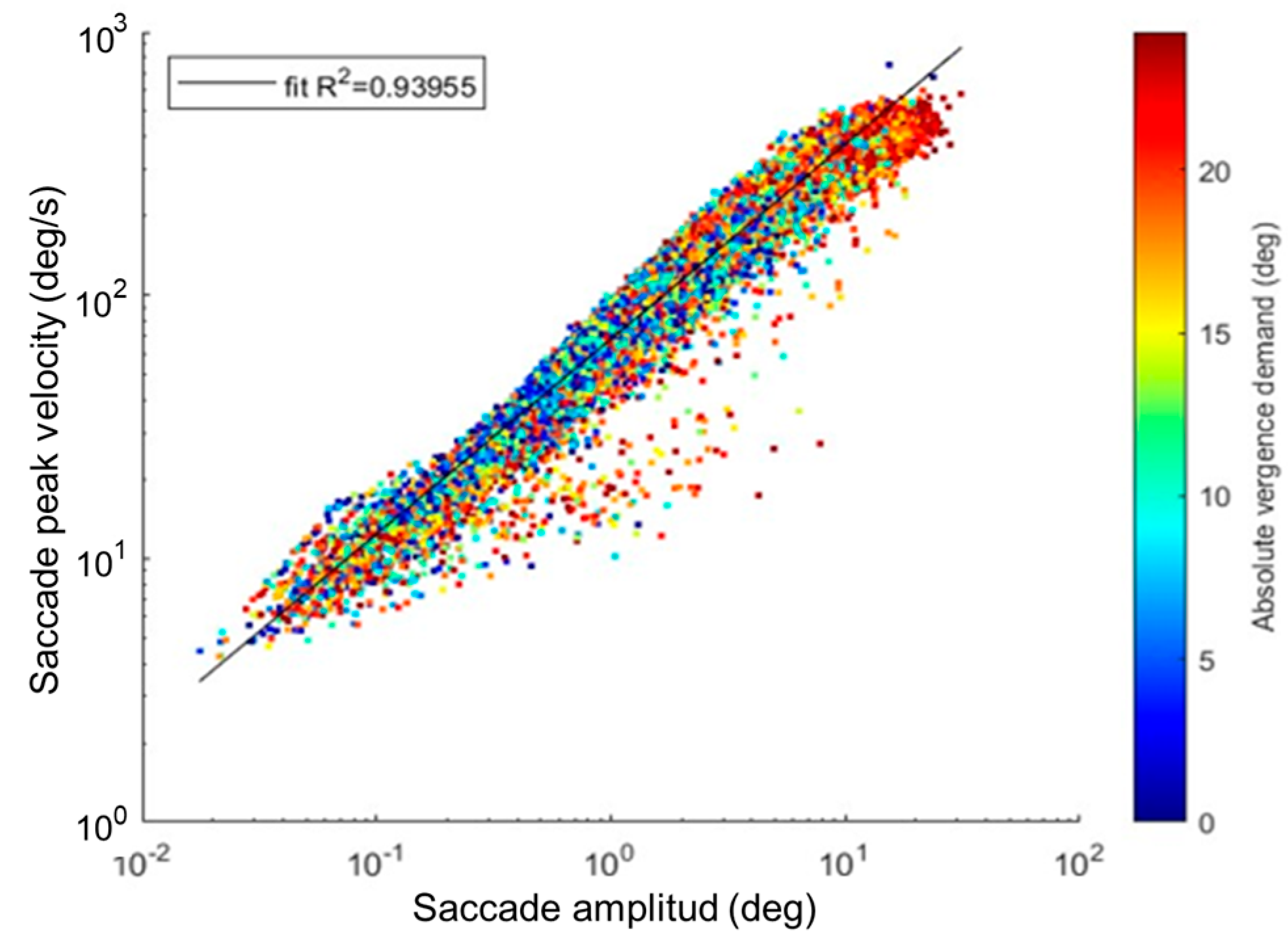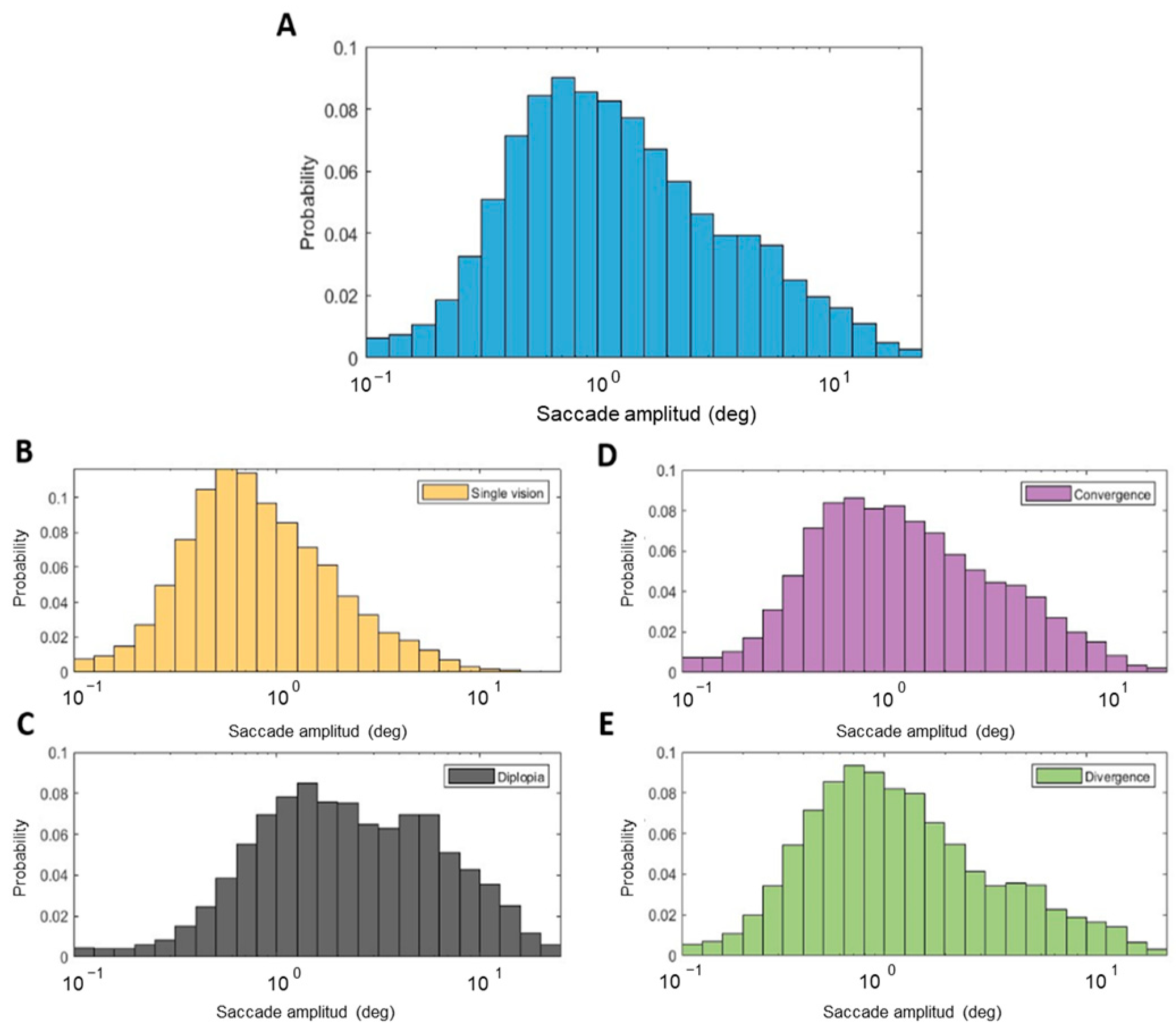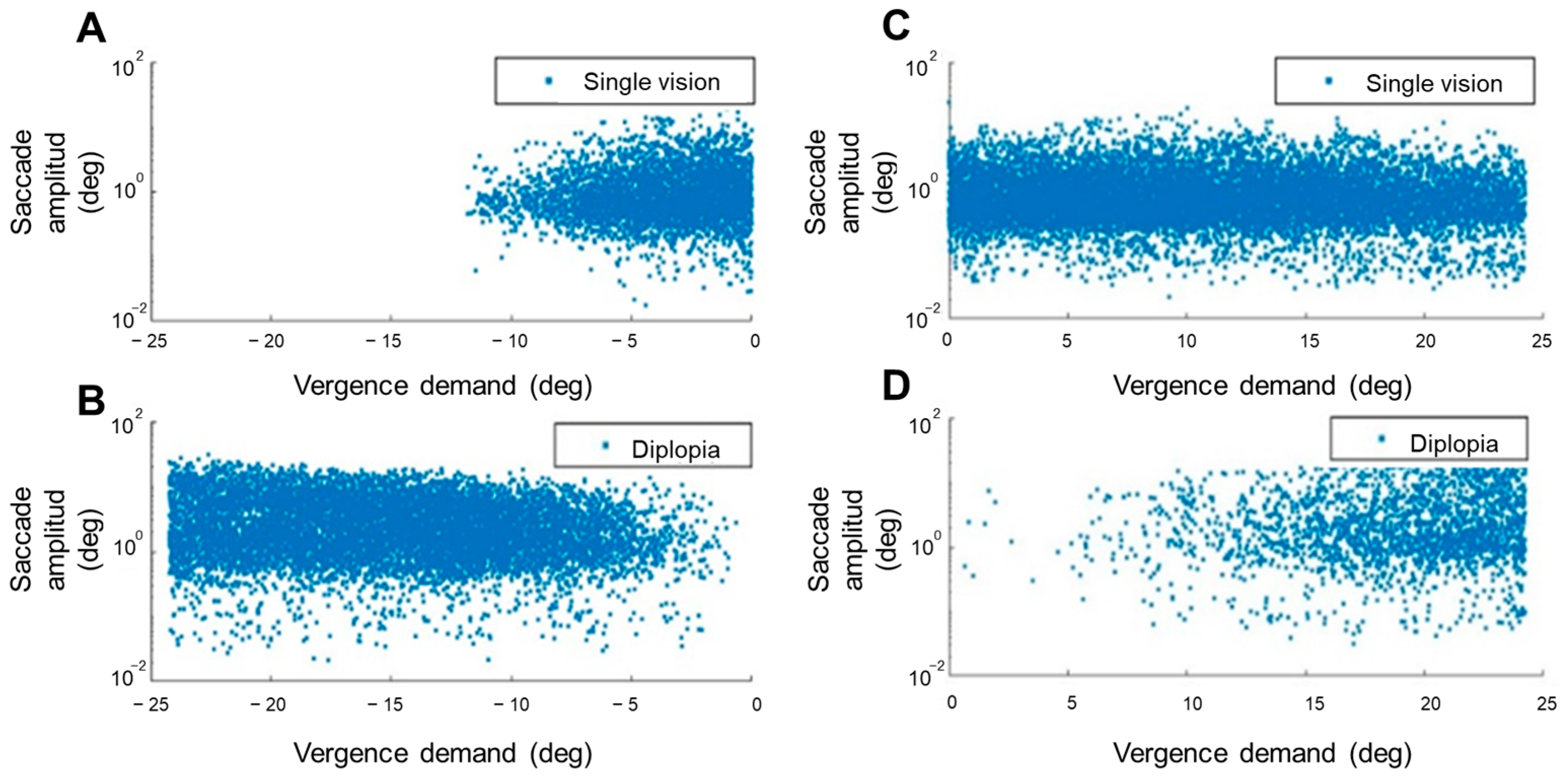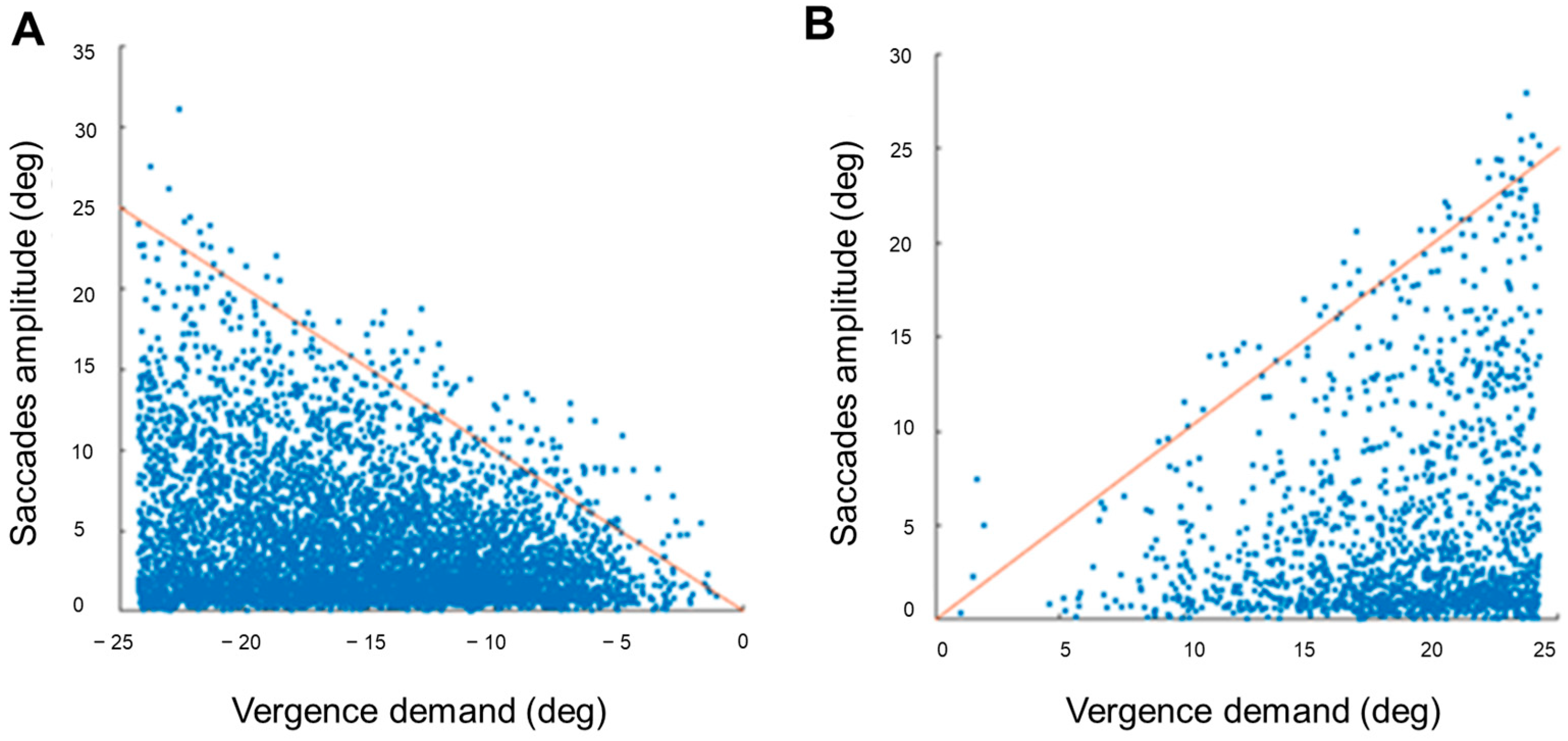

Analysis of Saccade Characteristics During Fusional Vergence Tests in Normal Binocular Vision Participants

Abstract
1. Introduction
2. Materials and Methods
2.1. Participants
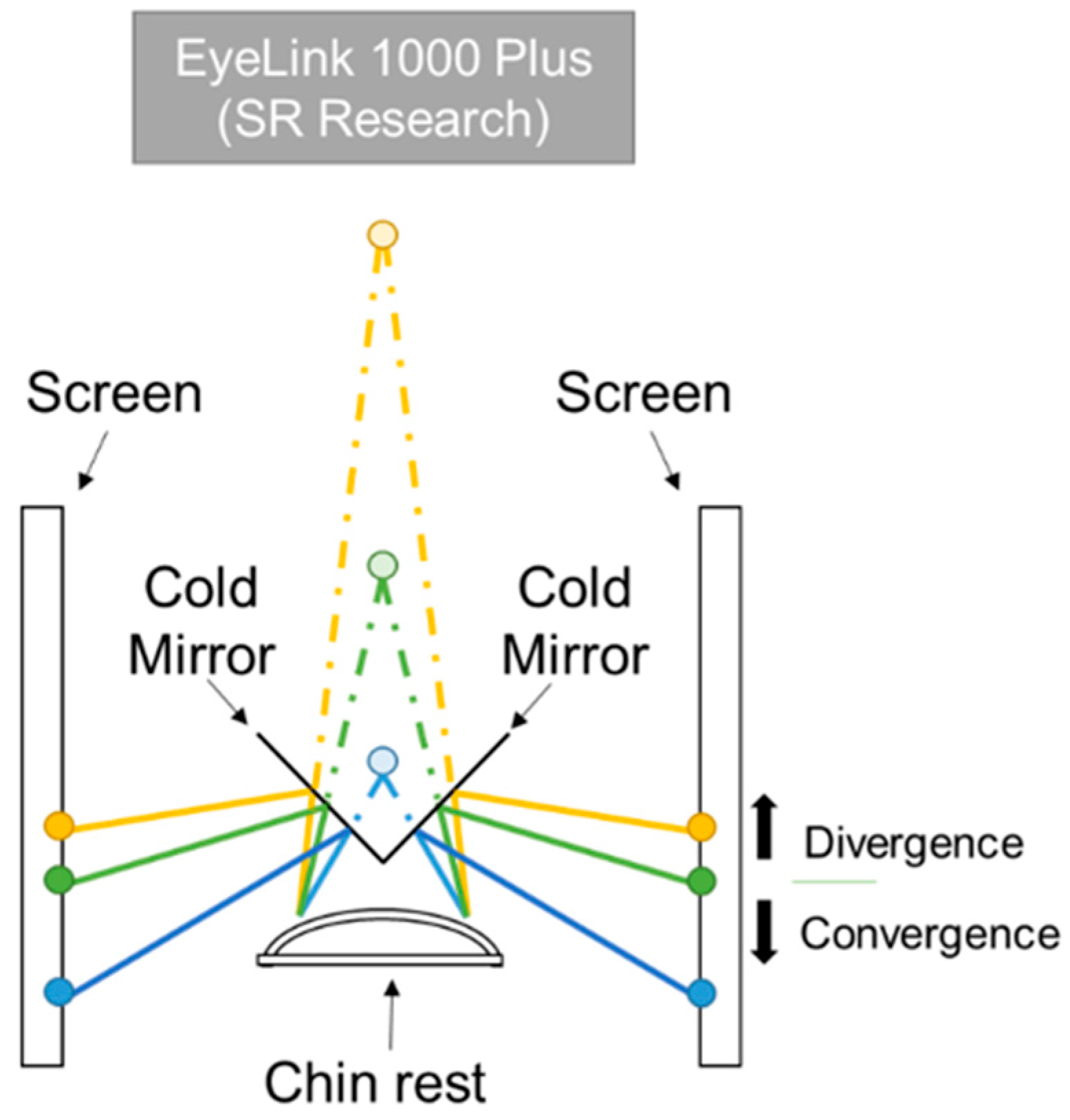
2.2. Equipment and Procedure
2.3. Eye Movements Data Analysis
2.4. Statistical Analysis
3. Results
3.1. Difference Between the Number of Saccades
3.2. Amplitude Distribution
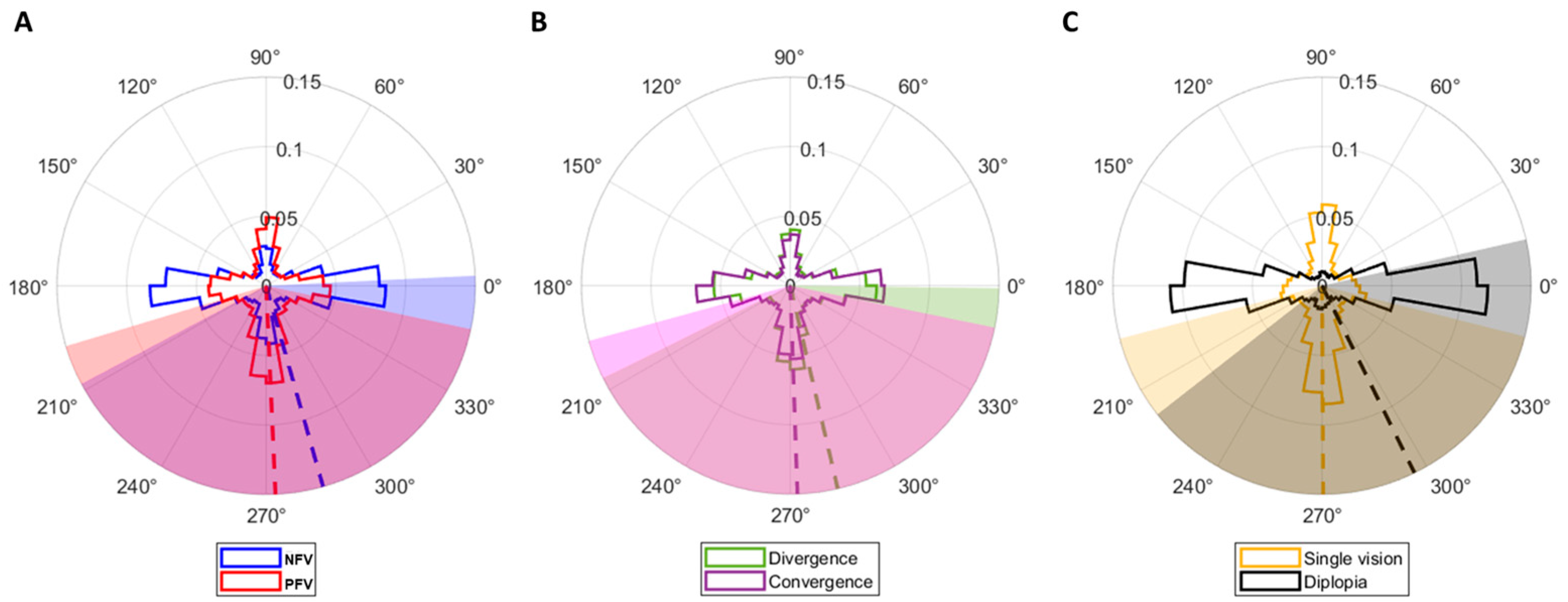
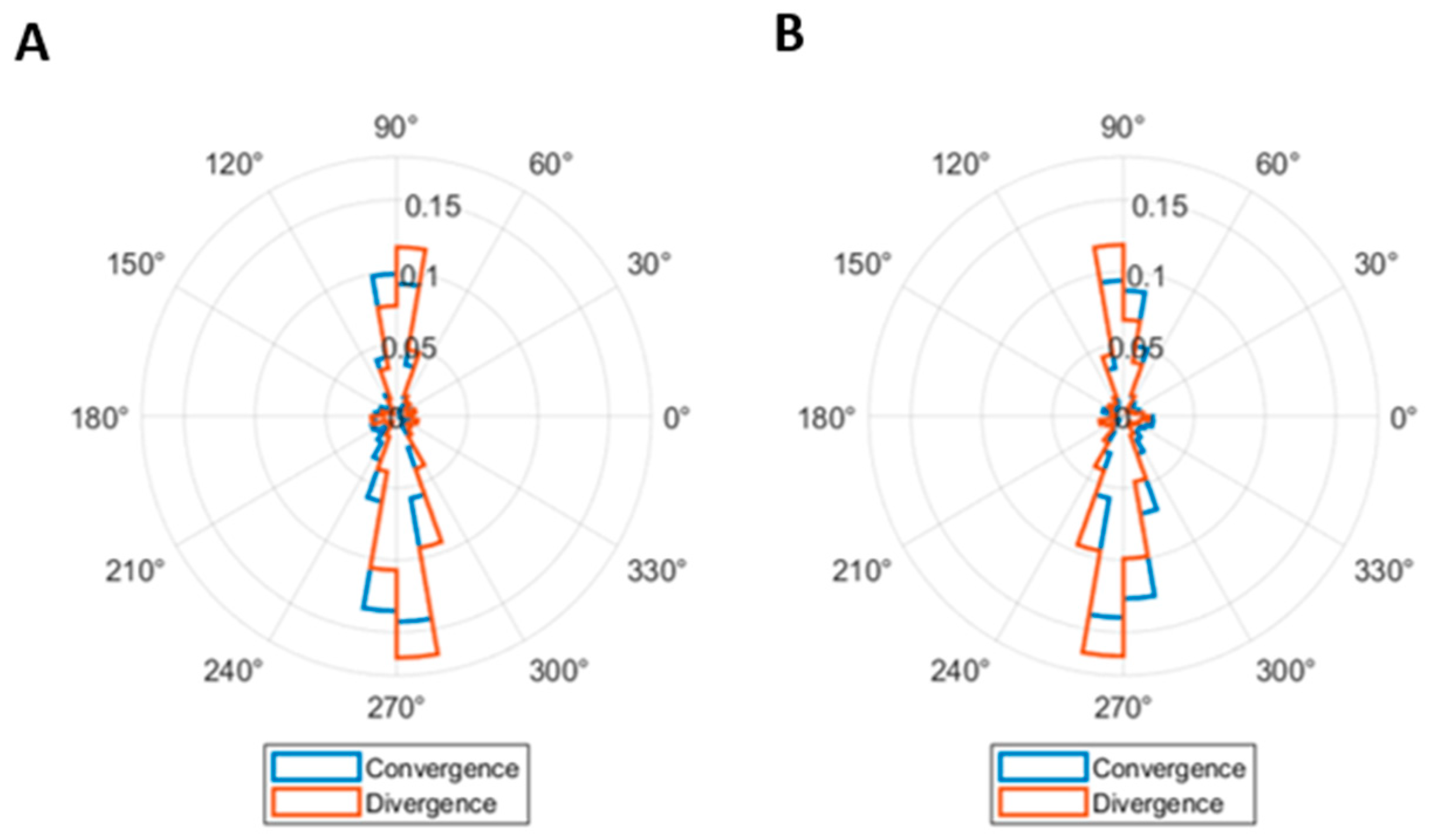
3.3. Direction
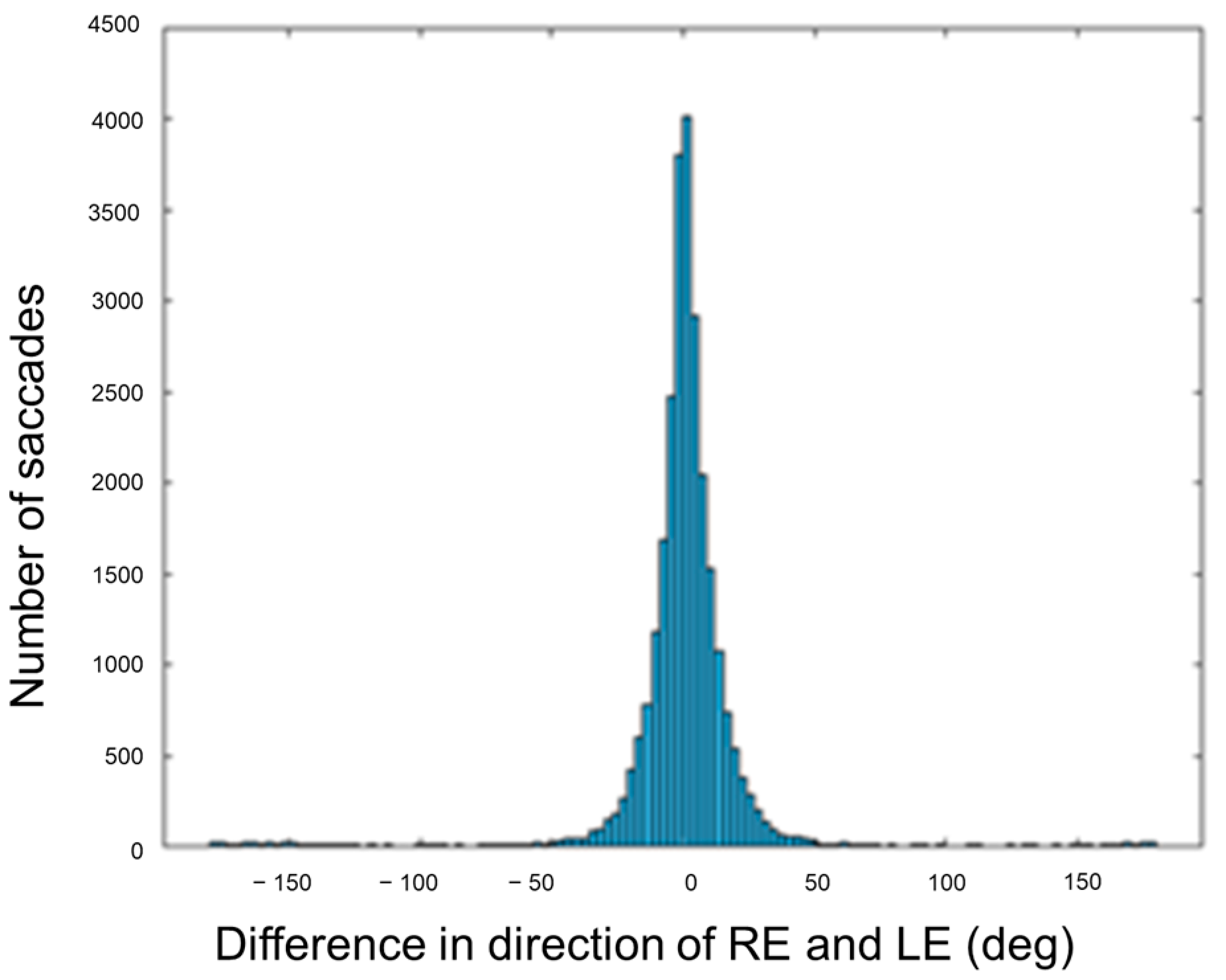
3.4. Direction Conjugacy
4. Discussion
5. Conclusions
Author Contributions
Funding
Institutional Review Board Statement
Informed Consent Statement
Data Availability Statement
Conflicts of Interest
Abbreviations
| NFV | Negative fusional vergence |
| PFV | Positive fusional vergence |
| SD | Standard deviation |
| CISS | Convergence Insufficiency Symptom Survey |
| Δ | Prism diopters |
| cpm | Cycles per minute |
| deg | Degrees |
References
- Scheiman, M.M.; Wick, B. Clinical Management of Binocular Vision. In Heterophoric, Accommodative, and Eye Movement Disorders; Lippincott Williams & Wilkins: Philadelphia, PA, USA, 2014. [Google Scholar]
- Cacho-Martínez, P.; Cantó-Cerdán, M.; Carbonell-Bonete, S.; García-Muñoz, Á. Characterization of Visual Symptomatology Associated with Refractive, Accommodative, and Binocular Anomalies. J. Ophthalmol. 2015, 2015, 895803. [Google Scholar] [CrossRef] [Scilit]
- Howard, I.P. Vergence Eye Movements. In Perceiving in Depth: Volume 1 Basic Mechanisms; Oxford University Press: London, UK, 2012; pp. 475–548. [Google Scholar]
- Stidwill, D.; Fletcher, R. Eye Movements. In Normal Binocular Vision; Blackwell Publising: Oxford, UK, 2011; pp. 119–140. [Google Scholar]
- Elliott, B.D. Assessment of Binocular Vision. In Clinical Procedures in Primary Eye Care; Butterworth Heinemann Elsevier: New York, NY, USA, 2007; pp. 180–184. [Google Scholar]
- Wesson, M.D. Normalization of Prism Bar Vergences. Am. J. Optom. Physiol. Opt. 1982, 59, 628–634. [Google Scholar] [CrossRef] [Scilit]
- Demirkilinc Biler, E.; Guven Yilmaz, S.; Kucukceran, E.; Uretmen, O. The Effect of Convergence and Divergence Stress on near Stereoacuity. Int. Ophthalmol. 2017, 37, 165–168. [Google Scholar] [CrossRef] [Scilit]
- Searle, A.; Rowe, F.J. Vergence Neural Pathways: A Systematic Narrative Literature Review. Neuroophthalmology 2016, 40, 209–218. [Google Scholar] [CrossRef] [Scilit]
- Talasan, H.; Scheiman, M.; Li, X.; Alvarez, T.L. Disparity Vergence Responses before versus after Repetitive Vergence Therapy in Binocularly Normal Controls. J. Vis. 2016, 16, 7. [Google Scholar] [CrossRef] [Scilit]
- Rovira-Gay, C.; Argiles, M.; Mestre, C.; Masdemont-Isern, M.; Pujol, J. Objective Evaluation of Fusional Vergence after a Vision Therapy Protocol in Typical Binocular Vision. Ophthalmic Physiol. Opt. 2025, 45, 1173–1185. [Google Scholar] [CrossRef] [Scilit]
- Scheiman, M.; Mitchell, L.; Cotter, S.; Kulp, M.T.; Cooper, J.; Rouse, M.; Borsting, E.; London, R.; Weensveen, J. A Randomized Clinical Trial of Vision Therapy/Orthoptics versus Pencil Pushups for the Treatment of Convergence Insufficiency in Young Adults. Optom. Vis. Sci. 2005, 82, E583–E595. [Google Scholar] [CrossRef] [Scilit]
- Holmes, J.M. Evaluation and Management of Divergence Insufficiency-Type Esotropia. J. Binocul. Vis. Ocul. Motil. 2022, 72, 230–233. [Google Scholar] [CrossRef] [Scilit] [PubMed]
- Antona, B.; Barrio, A.; Barra, F.; Gonzalez, E.; Sanchez, I. Repeatability and Agreement in the Measurement of Horizontal Fusional Vergences. Ophthalmic Physiol. Opt. 2008, 28, 475–491. [Google Scholar] [CrossRef] [Scilit] [PubMed]
- Feldman, J.M.; Cooper, J.S.; Carniglia, P.; Schiff, F.M.; Skeete, J.N. Comparison of Fusional Ranges Measured by Risley Prisms, Vectograms, and Computer Orthopter. Optom. Vis. Sci. 1989, 66, 375–382. [Google Scholar] [CrossRef] [Scilit] [PubMed]
- Rouse, M.W.; Borsting, E.; Deland, P.N. Reliability of Binocular Vision Measurements Used in the Classification of Convergence Insufficiency. Optom. Vis. Sci. 2002, 79, 254–264. [Google Scholar] [CrossRef] [Scilit]
- Rowe, F.J. Fusional Vergence Measures and Their Significance in Clinical Assessment. Strabismus 2010, 18, 48–57. [Google Scholar] [CrossRef] [Scilit] [PubMed]
- Cercenelli, L.; Fresina, M.; Bortolani, B.; Tiberi, G.; Giannaccare, G.; Campos, E.C.; Marcelli, E. Quantitative Approach for the Analysis of Fusional Convergence Using Eye-Tracking and SacLab Toolbox. J. Healthc. Eng. 2018, 2018, 3271269. [Google Scholar] [CrossRef] [Scilit]
- Rovira-Gay, C.; Mestre, C.; Argiles, M.; Vinuela-Navarro, V.; Pujol, J. Feasibility of Measuring Fusional Vergence Amplitudes Objectively. PLoS ONE 2023, 18, e0284552. [Google Scholar] [CrossRef] [Scilit] [PubMed]
- Scheiman, M.; Talasan, H.; Alvarez, T.L. Objective Assessment of Disparity Vergence after Treatment of Symptomatic Convergence Insufficiency in Children. Optom. Vis. Sci. 2019, 96, 3–16. [Google Scholar] [CrossRef] [Scilit] [PubMed]
- Otero-Millan, J.; Macknik, S.L.; Martinez-Conde, S. Fixational Eye Movements and Binocular Vision. Front. Integr. Neurosci. 2014, 8, 52. [Google Scholar] [CrossRef] [Scilit]
- Mestre, C.; Bedell, H.E.; Díaz-Doutón, F.; Pujol, J.; Gautier, J. Characteristics of Saccades during the near Point of Convergence Test. Vis. Res. 2021, 187, 27–40. [Google Scholar] [CrossRef] [Scilit]
- Coubard, O.A.; Kapoula, Z. Saccades during Symmetrical Vergence. Graefe’s Arch. Clin. Exp. Ophthalmol. 2008, 246, 521–536. [Google Scholar] [CrossRef] [Scilit]
- Martinez-Conde, S.; Macknik, S.L.; Hubel, D.H. The Role of Fixational Eye Movements in Visual Perception. Nat. Rev. Neurosci. 2004, 5, 229–240. [Google Scholar] [CrossRef] [Scilit]
- Martinez-Conde, S. Fixational Eye Movements in Normal and Pathological Vision. In Progress in Brain Research; Martinez-Conde, S., Macknik, S.L., Martinez, L.M., Alonso, J.-M., Tse, P.U., Eds.; Visual Perception; Elsevier: Amsterdam, The Netherlands, 2006; Volume 154, pp. 151–176. [Google Scholar]
- Otero-Millan, J.; Troncoso, X.G.; Macknik, S.L.; Serrano-Pedraza, I.; Martinez-Conde, S. Saccades and Microsaccades during Visual Fixation, Exploration, and Search: Foundations for a Common Saccadic Generator. J. Vis. 2008, 8, 21. [Google Scholar] [CrossRef] [Scilit]
- Rovira-Gay, C.; Argilés, M.; Mestre, C.; Vinuela-Navarro, V.; Pujol, J. Does the Subjective Response during the Measurement of Fusional Reserves Affect the Clinical Diagnosis? Ophthalmic Physiol. Opt. 2024, 44, 1354–1362. [Google Scholar] [CrossRef] [Scilit] [PubMed]
- Scheiman, M.M.; Ciuffreda, K.J.; Thiagarajan, P.; Tannen, B.; Ludlam, D.P. Objective Assessment of Vergence and Accommodation After Vision Therapy for Convergence Insufficiency in a Child: A Case Report. Optom. Vis. Sci. 2014, 2, 7–12. [Google Scholar]
- Scheiman, M.M.; Talasan, H.; Mitchell, G.L.; Alvarez, T.L. Objective Assessment of Vergence after Treatment of Concussion-Related CI: A Pilot Study. Optom. Vis. Sci. 2017, 94, 74–88. [Google Scholar] [CrossRef] [Scilit]
- Scheiman, M.; Yaramothu, C.; Alvarez, T.L. Changes in the Disparity Vergence Main Sequence after Treatment of Symptomatic Convergence Insufficiency in Children. J. Eye Mov. Res. 2019, 12, 1–10. [Google Scholar] [CrossRef] [Scilit] [PubMed]
- Scheiman, M.M.; Alvarez, T.L.; Cotter, S.A.; Kulp, M.T.; Sinnott, L.T.; Plaumann, M.D.; Jhajj, J. Negative Fusional Vergence Is Abnormal in Children with Symptomatic Convergence Insufficiency. Optom. Vis. Sci. 2021, 98, 32–40. [Google Scholar] [CrossRef] [Scilit]
- Alvarez, T.L. A Pilot Study of Disparity Vergence and Near Dissociated Phoria in Convergence Insufficiency Patients Before vs. After Vergence Therapy. Front. Hum. Neurosci. 2015, 9, 419. [Google Scholar] [CrossRef] [Scilit]
- Alvarez, T.L.; Kim, E.H. Analysis of Saccades and Peak Velocity to Symmetrical Convergence Stimuli: Binocularly Normal Controls Compared to Convergence Insufficiency Patients. Investig. Ophthalmol. Vis. Sci. 2013, 54, 4122–4135. [Google Scholar] [CrossRef] [Scilit]
- Jainta, S.; Bucci, M.P.; Wiener-Vacher, S.; Kapoula, Z. Changes in Vergence Dynamics Due to Repetition. Vis. Res. 2011, 51, 1845–1852. [Google Scholar] [CrossRef] [Scilit]
- Yang, Q.; Bucci, M.P.; Kapoula, Z. The Latency of Saccades, Vergence, and Combined Eye Movements in Children and in Adults. Investig. Ophthalmol. Vis. Sci. 2002, 43, 2939–2949. [Google Scholar]
- Engbert, R.; Kliegl, R. Microsaccades Uncover the Orientation of Covert Attention. Vis. Res. 2003, 43, 1035–1045. [Google Scholar] [CrossRef] [Scilit]
- Engbert, R.; Mergenthaler, K. Microsaccades Are Triggered by Low Retinal Image Slip. Proc. Natl. Acad. Sci. USA 2006, 103, 7192–7197. [Google Scholar] [CrossRef] [Scilit]
- Nyström, M.; Holmqvist, K. An Adaptive Algorithm for Fixation, Saccade, and Glissade Detection in Eyetracking Data. Behav. Res. Methods 2010, 42, 188–204. [Google Scholar] [CrossRef] [Scilit] [PubMed]
- Otero-Millan, J.; Castro, J.L.A.; Macknik, S.L.; Martinez-Conde, S. Unsupervised Clustering Method to Detect Microsaccades. J. Vis. 2014, 14, 18. [Google Scholar] [CrossRef] [Scilit]
- Argilés, M.; Gispets, J.; Lupón, N.; Sunyer-Grau, B.; Rovira-Gay, C.; Pérez-Ternero, M.; Berta-Cabañas, M. Impact of Strabismus and Binocular Dysfunctions in the Developmental Eye Movement Test and Test of Visual Perception Skills: A Multicentric and Retrospective Study. J. Optom. 2023, 16, 277–283. [Google Scholar] [CrossRef] [Scilit]
- Convergence Insufficiency Treatment Trial Investigator Group. The Convergence Insufficiency Treatment Trial: Design, Methods, and Baseline Data. Ophthalmic Epidemiol. 2008, 15, 24–36. [Google Scholar] [CrossRef] [Scilit]
- Brainard, D.H. The Psychophysics Toolbox. Spat. Vis. 1997, 10, 433–436. [Google Scholar] [CrossRef] [Scilit] [PubMed]
- Pelli, D.G. The VideoToolbox Software for Visual Psychophysics: Transforming Numbers into Movies. Spat. Vis. 1997, 10, 437–442. [Google Scholar] [CrossRef] [Scilit]
- Kleiner, M.; Brainard, D.; Pelli, D.; Ingling, A.; Murray, R.; Broussard, C. What’s New in Psychtoolbox-3? Perception 2007, 36, 1–16. [Google Scholar]
- Fray, K.J. Fusional Amplitudes: Exploring Where Fusion Falters. Am. Orthopt. J. 2013, 63, 41–54. [Google Scholar] [CrossRef] [Scilit]
- Rosenfield, M.; Ciuffeda, K.J.; Ong, E.; Super, S. Vergence Adaptation and the Order of Clinical Vergence Range Testing. Optom. Vis. Sci. 1995, 72, 219–223. [Google Scholar] [CrossRef] [Scilit]
- Philipp, B. CircStat: A MATLAB Toolbox for Circular Statistics. J. Stat. Softw. 2009, 31, 1–21. [Google Scholar] [CrossRef] [Scilit]
- Agostinelli, C.; Lund, U. R Package: Circular Statistics, Version 0.4-3; R Foundation for Statistical Computing: Vienna, Austria, 2017.
- Hung, G.K.; Zhu, H.; Ciuffreda, K.J. Convergence and Divergence Exhibit Different Response Characteristics to Symmetric Stimuli. Vis. Res. 1997, 37, 1197–1205. [Google Scholar] [CrossRef] [Scilit]
- Satgunam, P.; Gowrisankaran, S.; Fogt, N. The Influence of Vergence Adaptation on Open-Loop Vergence Dynamics. Vis. Res. 2009, 49, 1795–1804. [Google Scholar] [CrossRef] [Scilit] [PubMed]
- Kim, E.H.; Alvarez, T.L. The Frequency of Horizontal Saccades in near and Far Symmetrical Disparity Vergence. Vis. Res. 2012, 63, 9–19. [Google Scholar] [CrossRef] [Scilit] [PubMed]
- Chen, Y.-F.; Lee, Y.Y.; Chen, T.; Semmlow, J.; Alvarez, T. Review: Behaviors, Models, and Clinical Applications of Vergence Eye Movements. J. Med. Biol. Eng. 2010, 30, 1–15. [Google Scholar]
- Schor, C.M. Fixation of Disparity: A Steady State Error of Disparity-Induced Vergence. Am. J. Optom. Physiol. Opt. 1980, 57, 618–631. [Google Scholar] [CrossRef] [Scilit]
- Yuan, W.; Semmlow, J.L. The Influence of Repetitive Eye Movements on Vergence Performance. Vis. Res. 2000, 40, 3089–3098. [Google Scholar] [CrossRef] [Scilit]
- Bahill, A.T.; Stark, L. Overlapping Saccades and Glissades Are Produced by Fatigue in the Saccadic Eye Movement System. Exp. Neurol. 1975, 48, 95–106. [Google Scholar] [CrossRef] [Scilit]
- Erkelens, I.M.; Bobier, W.R. Asymmetries between Convergence and Divergence Reveal Tonic Vergence Is Dependent upon Phasic Vergence Function. J. Vis. 2017, 17, 4. [Google Scholar] [CrossRef] [Scilit]
- Zee, D.S.; Fitzgibbon, E.J.; Optican, L.M. Saccade-Vergence Interactions in Humans. J. Neurophysiol. 1992, 68, 1624–1641. [Google Scholar] [CrossRef] [Scilit]
- Stein, J.F.; Riddell, P.M.; Fowler, S. Disordered Vergence Control in Dyslexic Children. Br. J. Ophthalmol. 1988, 72, 162–166. [Google Scholar] [CrossRef] [Scilit]
- Stein, J.F.; Riddell, P.M.; Fowler, M.S. Fine Binocular Control in Dyslexic Children. Eye 1987, 1, 433–438. [Google Scholar] [CrossRef] [Scilit]
- Bucci, M.P.; Nassibi, N.; Gerard, C.-L.; Bui-Quoc, E.; Seassau, M. Immaturity of the Oculomotor Saccade and Vergence Interaction in Dyslexic Children: Evidence from a Reading and Visual Search Study. PLoS ONE 2012, 7, e33458. [Google Scholar] [CrossRef] [Scilit]
- Alvarez, T.L.; Vicci, V.R.; Alkan, Y.; Kim, E.H.; Gohel, S.; Barrett, A.M.; Chiaravalloti, N.; Biswal, B.B. Vision Therapy in Adults with Convergence Insufficiency: Clinical and Functional Magnetic Resonance Imaging Measures. Optom. Vis. Sci. 2010, 87, E985–E1002. [Google Scholar] [CrossRef] [Scilit] [PubMed]
- Vinuela-Navarro, V.; Goset, J.; Aldaba, M.; Mestre, C.; Rovira-Gay, C.; Cano, N.; Ariza, M.; Delàs, B.; Garolera, M.; Vilaseca, M. Eye Movements in Patients with Post-COVID Condition. Biomed. Opt. Express 2023, 14, 3936. [Google Scholar] [CrossRef] [Scilit]
- Tao, L.; Wang, Q.; Liu, D.; Wang, J.; Zhu, Z.; Feng, L. Eye Tracking Metrics to Screen and Assess Cognitive Impairment in Patients with Neurological Disorders. Neurol. Sci. 2020, 41, 1697–1704. [Google Scholar] [CrossRef] [Scilit] [PubMed]
- Economides, J.R.; Adams, D.L.; Horton, J.C. Variability of Ocular Deviation in Strabismus. JAMA Ophthalmol. 2016, 134, 63–69. [Google Scholar] [CrossRef] [Scilit]
- Niechwiej-Szwedo, E.; Goltz, H.C.; Colpa, L.; Chandrakumar, M.; Wong, A.M.F. Effects of Reduced Acuity and Stereo Acuity on Saccades and Reaching Movements in Adults with Amblyopia and Strabismus. Investig. Ophthalmol. Vis. Sci. 2017, 58, 914–921. [Google Scholar] [CrossRef] [Scilit] [PubMed]
- Ward, L.M.; Kapoula, Z. Differential Diagnosis of Vergence and Saccade Disorders in Dyslexia. Sci. Rep. 2020, 10, 22116. [Google Scholar] [CrossRef] [Scilit]
- Jafarlou, F.; Jarollahi, F.; Ahadi, M.; Sadeghi-Firoozabadi, V.; Haghani, H. Oculomotor Rehabilitation in Children with Dyslexia. Med. J. Islam. Repub. Iran. 2017, 31, 125. [Google Scholar] [CrossRef] [Scilit]
- Gupta, P.; Beylergil, S.; Murray, J.; Jacobs, J.; Kilbane, C.; Shaikh, A.G.; Ghasia, F.F. Effects of Parkinson Disease on Blur-Driven and Disparity-Driven Vergence Eye Movements. J. Neuro-Ophthalmol. 2021, 41, 442. [Google Scholar] [CrossRef] [Scilit]
- Bains, R.A.; Crawford, J.D.; Cadera, W.; Vilis, T. The Conjugacy of Human Saccadic Eye Movements. Vis. Res. 1992, 32, 1677–1684. [Google Scholar] [CrossRef] [Scilit]
- Kenyon, R.V.; Ciuffreda, K.J.; Stark, L. Unequal Saccades during Vergence. Optom. Vis. Sci. 1980, 57, 586–594. [Google Scholar] [CrossRef] [Scilit] [PubMed]
- Erkelens, C.J.; Steinman, R.M.; Collewijn, H. Ocular Vergence under Natural Conditions. II. Gaze Shifts between Real Targets Differing in Distance and Direction. Proc. R. Soc. B Biol. Sci. 1989, 236, 441–465. [Google Scholar] [CrossRef] [Scilit] [PubMed]
- de Brouwer, S.; Missal, M.; Barnes, G.; Lefèvre, P. Quantitative Analysis of Catch-up Saccades during Sustained Pursuit. J. Neurophysiol. 2002, 87, 1772–1780. [Google Scholar] [CrossRef] [Scilit]
- Abdullah, H.; Verkicharla, P.K.; Ballae Ganeshrao, S. Extent of Foveal Fixation with Eye Rotation in Emmetropes and Myopes. J. Optom. 2022, 15, 293–298. [Google Scholar] [CrossRef] [Scilit] [PubMed]



| Test | Median (Number of Saccades) | IQR (Number of Saccades) | |
|---|---|---|---|
| Negative fusional vergence | Repetition 1 | 127.00 | 53.00 |
| Repetition 2 | 122.50 | 58.75 | |
| Repetition 3 | 126.00 | 37.75 | |
| Positive fusional vergence | Repetition 1 | 139.00 | 70.50 |
| Repetition 2 | 141.50 | 59.50 | |
| Repetition 3 | 149.50 | 51.50 | |
| Negative Fusional Vergence | Positive Fusional Vergence | |||
|---|---|---|---|---|
| Divergence | Convergence | Convergence | Divergence | |
| For all saccades | ||||
| Number of saccades | 6028 | 7075 | 6968 | 7413 |
| Median (deg) | 1.26 | 1.89 | 0.71 | 0.88 |
| IQR (deg) | 2.38 | 3.37 | 0.89 | 1.32 |
| For saccades during fusion | ||||
| Number of saccades | 2146 | 1798 | 6165 | 6049 |
| Median (deg) | 0.72 | 0.95 | 0.66 | 0.75 |
| IQR (deg) | 0.90 | 1.28 | 0.78 | 0.96 |
| For saccades during diplopia | ||||
| Number of saccades | 3882 | 5277 | 803 | 1364 |
| Median (deg) | 1.26 | 2.43 | 2.31 | 1.79 |
| IQR (deg) | 2.32 | 3.81 | 4.71 | 3.72 |
Disclaimer/Publisher’s Note: The statements, opinions and data contained in all publications are solely those of the individual author(s) and contributor(s) and not of MDPI and/or the editor(s). MDPI and/or the editor(s) disclaim responsibility for any injury to people or property resulting from any ideas, methods, instructions or products referred to in the content. |
© 2026 by the authors. Licensee MDPI, Basel, Switzerland. This article is an open access article distributed under the terms and conditions of the Creative Commons Attribution (CC BY) license.
Share and Cite
Rovira-Gay, C.; Mestre, C.; Argilés, M.; Pujol, J. Analysis of Saccade Characteristics During Fusional Vergence Tests in Normal Binocular Vision Participants. J. Eye Mov. Res. 2026, 19, 15. https://doi.org/10.3390/jemr19010015
Rovira-Gay C, Mestre C, Argilés M, Pujol J. Analysis of Saccade Characteristics During Fusional Vergence Tests in Normal Binocular Vision Participants. Journal of Eye Movement Research. 2026; 19(1):15. https://doi.org/10.3390/jemr19010015
Chicago/Turabian StyleRovira-Gay, Cristina, Clara Mestre, Marc Argilés, and Jaume Pujol. 2026. "Analysis of Saccade Characteristics During Fusional Vergence Tests in Normal Binocular Vision Participants" Journal of Eye Movement Research 19, no. 1: 15. https://doi.org/10.3390/jemr19010015
APA StyleRovira-Gay, C., Mestre, C., Argilés, M., & Pujol, J. (2026). Analysis of Saccade Characteristics During Fusional Vergence Tests in Normal Binocular Vision Participants. Journal of Eye Movement Research, 19(1), 15. https://doi.org/10.3390/jemr19010015