1. Introduction
In the contemporary context, where the complexity of economic and financial systems directly influences daily life, proper personal financial management has become an essential skill for individual and collective well-being. This need has fostered the development and evolution of key concepts such as financial literacy and financial education, which, while closely related, have distinct theoretical and practical nuances that must be distinguished. The term “literacy” initially refers to the process of acquiring basic reading and writing skills. However, educators like Paulo Freire broadened this concept, arguing that literacy is also an act of critical consciousness that enables individuals to “read the world,” equipping them to question and transform it. From this perspective, literacy implies empowerment, not merely the teaching of technical skills (
Freire, 1968,
1970,
1985).
This pedagogical framework has been useful for understanding the emergence of new types of literacy. One of them is financial literacy, a concept that gained relevance in the late 20th century in response to the growing need for individuals to understand and manage saving, investing, borrowing, and budgeting. Authors such as
Noctor et al. (
1992) defined financial literacy as the ability to make informed financial decisions based on knowledge acquired in family or community contexts. The
OECD (
2005) expanded this definition, incorporating not only expertise but also responsible attitudes and behaviors toward finances. Furthermore, it evaluates the effectiveness of financial education programs and presents the OECD Council Recommendation on Principles and Good Practices for Financial Education and Awareness (
OECD, 2005).
As educational strategies aimed at strengthening citizens’ financial literacy were formalized, a broader concept emerged: financial education. Unlike literacy, financial education is conceived as a structured learning process, both formal and informal, designed to equip individuals with the skills to understand financial products, make informed decisions, and develop sustainable financial behaviors. Formal financial education provides the necessary foundation for teaching individuals how to manage their money effectively, which, according to
Bernheim et al. (
2001), has a positive impact on long-term financial management.
Lusardi and Mitchell (
2007,
2011) have emphasized that this approach involves not only the acquisition of knowledge, but also the evaluation of the processes by which this knowledge is taught and applied. This conceptual development finds support even in historical sources. In a letter from 1787, John Adams warned that many of the economic difficulties of his time were not due to structural flaws, but rather to widespread ignorance about currency, credit, and the circulation of money. This early observation highlights the importance of having basic economic knowledge to participate fully in social and political life (
Adams, 1787).
However, access to financial information, while necessary, is not sufficient in itself. It is essential to develop an appropriate attitude towards money, which is known as financial literacy. Studies have shown that women are more likely to discuss financial matters with their parents, which is associated with a more positive attitude towards financial management (
Edwards et al., 2007). Furthermore, family involvement moderates the relationship between financial knowledge and attitudes towards debt (
Koropp et al., 2013). Similarly, financial education programs for women promote changes in their attitudes, improving their ability to make more informed, sustainable financial decisions that support their families (
Prandini & Baconguis, 2020). This financial literacy directly influences everyday financial decisions, planning capabilities, and, in the long term, economic stability. However, even with knowledge, financial decisions are not always rational.
Financial behavior is influenced by psychological and emotional factors, as explained by
Kahneman (
2011) and
Thaler and Sunstein (
2008), who demonstrate that people do not always make decisions logically but are influenced by cognitive and emotional biases. This is where financial attitude comes into play, a key component that influences how people approach economic decisions, whether in terms of saving, consumption, or investment.
Furthermore, financial advice plays a crucial role in decision-making, as professional guidance helps individuals better understand and manage complex financial matters, as emphasized by
Lusardi and Tufano (
2015). In this sense, financial advice appears to be a useful tool, but its effectiveness ultimately depends on the individual’s financial knowledge and behavior. Financial advice improves decision-making by enhancing confidence (
Streich, 2021), encouraging participation in retirement plans (
Fang et al., 2022), and influencing investment portfolio composition (
Lei, 2018). Additionally, it can be beneficial in the early stages of financial planning (
Allie et al., 2016) and affects a client’s risk tolerance (
Monne et al., 2023).
Often, a lack of education and preparation in these areas leads to financial stress, a growing phenomenon in modern societies. Its consequences are not limited to the economic sphere, but also affect mental health, quality of life, and overall well-being. Financial stress negatively impacts relationships, health, and work performance and is not simply a result of a lack of money; rather, it stems from structural, emotional, and social factors. It can be passed down through generations (
Hubler et al., 2015), decrease productivity (
Sabri & Aw, 2020), be exacerbated by certain types of debt in old age (
Loibl et al., 2020), and affect the sense of purpose in young people (
Goktan et al., 2025). While in some cases it can motivate work effort (
Wei et al., 2024), in general it requires a comprehensive approach that combines financial education, psychosocial support, and life-cycle-sensitive public policies. Therefore, developing strong financial skills is crucial for promoting sustainable financial well-being and greater emotional stability. Financial literacy goes beyond technical knowledge; it encompasses attitudes, behaviors, self-confidence, and social context.
Anders et al. (
2023) show that the family environment has a greater influence on its development than formal education. In small businesses, responsible financial practices enhance sustainability (
Babajide et al., 2021). Furthermore, financial self-efficacy is key to applying knowledge in practice (
Çera et al., 2020;
Rothwell et al., 2016).
Finally, training professionals to work effectively in vulnerable contexts also strengthens financial literacy (
Sherraden et al., 2016). In this regard, evidence suggests that financial literacy is a multidimensional construct that requires support from family, education, and the workplace. These skills and knowledge, acquired through education and experience, constitute an individual’s financial literacy. According to
Sherraden et al. (
2016), financial literacy encompasses not only technical knowledge but also the ability to apply that knowledge in everyday situations. Individuals with higher levels of financial literacy manage their resources more effectively, make sound financial decisions, and adapt more easily to economic changes, thereby strengthening their financial resilience.
García-Santillán et al. (
2024b) state that it not only depends on access to financial services, but also on education, personal confidence, and social support.
Carton et al. (
2024) add that beliefs, habits, and past experiences influence how people cope with uncertainty.
Sakyi-Nyarko et al. (
2022) emphasize that having a bank account, savings capacity, and support networks, such as remittances, improves resilience to crises, especially in rural areas.
For the reasons outlined above, this study examines how interrelated concepts, such as financial education, attitudes, and skills, influence financial behavior and quality of life. The objective is to bridge existing theoretical and empirical gaps by proposing an integrative framework that connects financial literacy, financial counseling, financial stress, financial capabilities, well-being, and financial resilience. In this context, the following question arises: How do financial literacy, financial education, financial attitudes and knowledge, financial behavior, financial counseling, and financial stress relate to financial capabilities, and how do these capabilities, in turn, relate to financial well-being, mediated by individuals’ financial resilience? Therefore, this research seeks to address an important theoretical gap based on the following arguments.
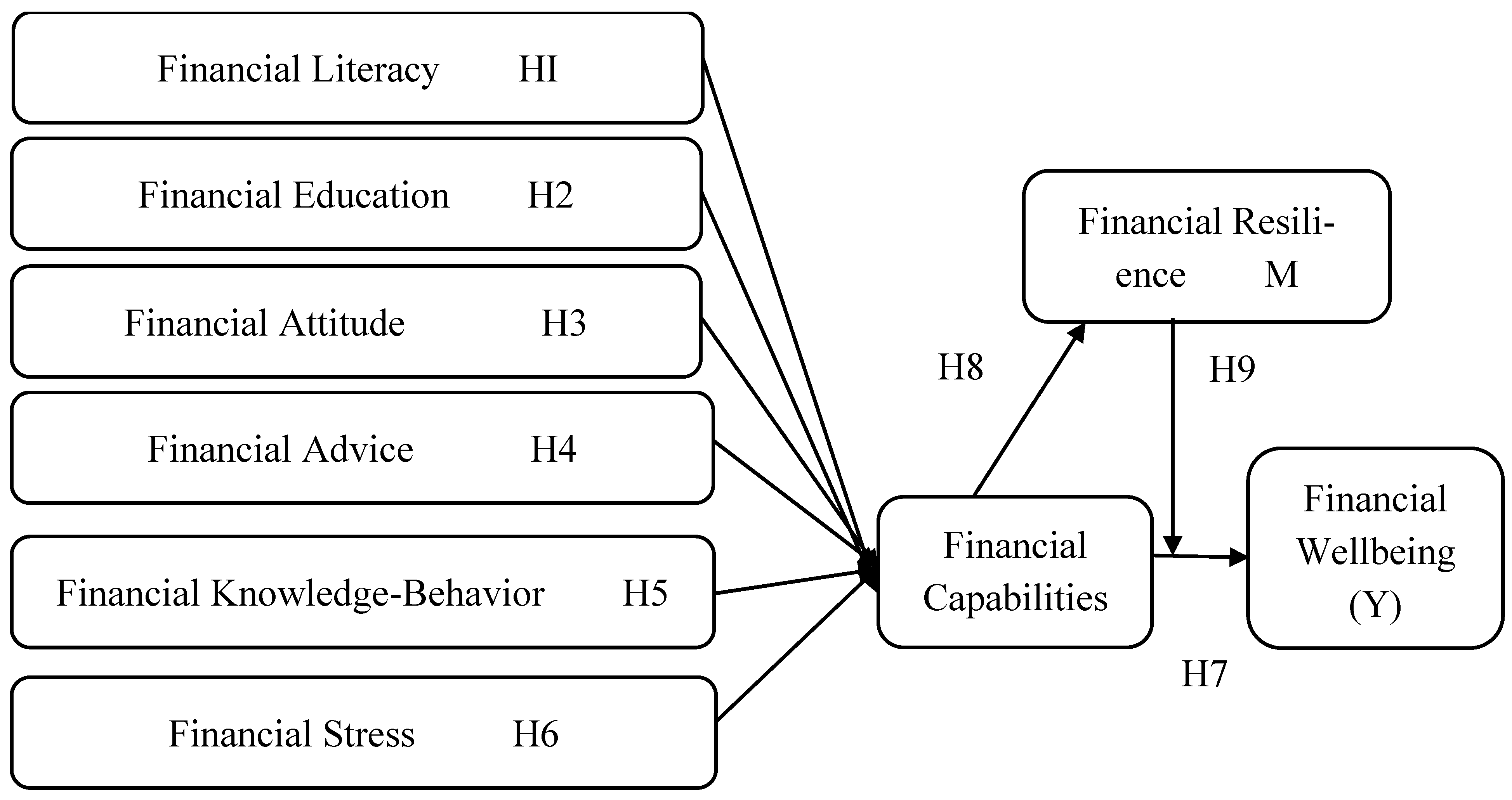
Despite growing interest in financial well-being, the academic literature presents a conceptual fragmentation, treating factors such as financial literacy, attitudes, knowledge, and financial behavior, among others, in isolation, as well as key variables such as financial stress, which also broadens the scope of analysis, providing a more complete view of the phenomenon. This holistic approach is crucial for designing educational interventions and public policies to improve financial well-being, addressing both technical and psychosocial factors that influence individuals’ economic stability. Based on the arguments presented in the literature review regarding the relevant variables, the conceptual model described in
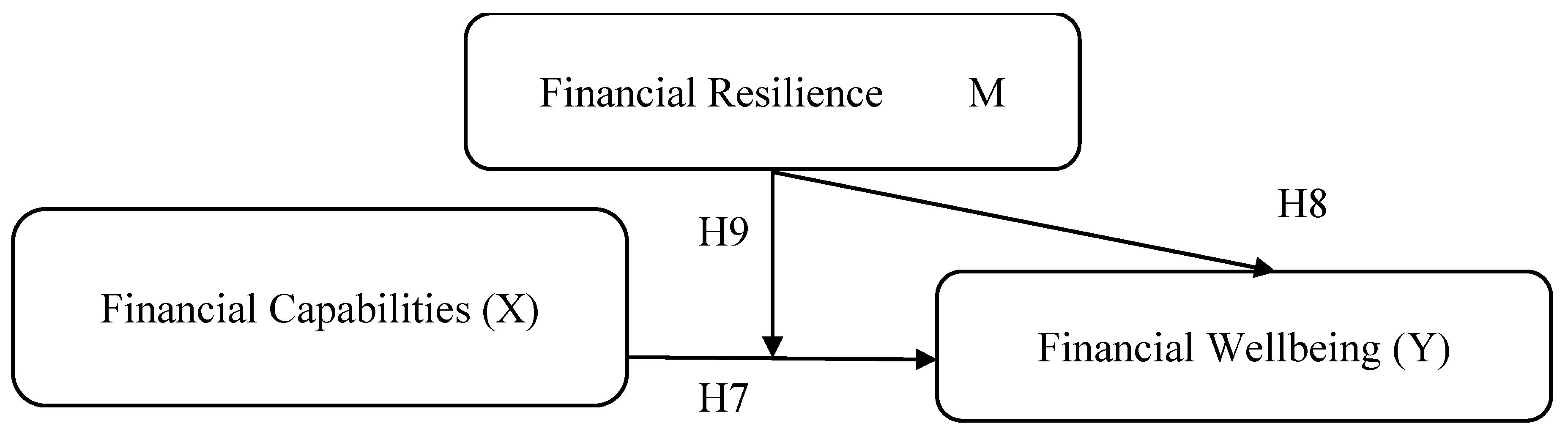
Figure 1 is shown below:
To validate the model shown in
Figure 1, it is divided into two sections: one that examines the relationship between financial literacy (H1), financial education (H2), financial attitude (H3), financial advice (H4), financial knowledge and behavior (H5), and financial stress (H6), and their relationship with financial capabilities. The other section examines the relationships between financial capabilities and financial well-being and financial resilience (H7 and H8), as well as the mediating role of financial resilience in the relationship between financial capabilities and financial well-being (H9).
4. Data Analysis and Discussion
4.1. Reliability
Internal consistency of the instrument was satisfactory. Cronbach’s alpha reached α = 0.925 and McDonald’s omega ω = 0.913, indicating strong reliability of the scales. Normality was assessed using the Kolmogorov–Smirnov and Shapiro–Wilk tests, along with skewness and kurtosis indicators. Although the normality tests were statistically significant (
p < 0.001), skewness and kurtosis values remained within acceptable thresholds (±2 and ±7, respectively), supporting approximate normality of the data (see
Table 3).
Overall, the distributional properties of the variables were considered adequate for subsequent parametric analyses and structural equation modeling.
4.2. Hypothesis Test for H1 to H6
To examine the relationships proposed in hypotheses H1–H6, Pearson correlation analyses were conducted between financial capability and its proposed determinants (see
Table 4).
As shown in
Table 4, financial literacy was positively associated with financial capability (r = 0.364,
p < 0.01), supporting H1. Financial education (r = 0.435,
p < 0.01) and financial attitude (r = 0.566,
p < 0.01) also demonstrated significant positive associations with financial capability, supporting H2 and H3, respectively. Financial advisory exhibited the strongest positive correlation with financial capability (r = 0.586,
p < 0.01), providing support for H4.
Collectively, the dimensions related to financial knowledge and behavior were positively linked to financial capability, supporting H5. In contrast, financial stress showed a significant negative association with financial capability (r = −0.193, p < 0.01), supporting H6.
Overall, the results indicate that higher levels of financial literacy, education, advisory engagement, and positive financial attitudes are associated with greater financial capability, whereas financial stress is inversely related to capability.
4.2.1. Dimensional Assessment of the First Block
A principal component analysis (PCA) was conducted as a preliminary dimensional assessment of the variables included in the first block of the model. The Kaiser–Meyer–Olkin (KMO) measure of sampling adequacy was 0.786, and Bartlett’s test of sphericity was significant (χ
2 = 858.743, df = 21,
p < 0.001), indicating that the data were suitable for component extraction.
Table 5 presents the communalities and component loadings obtained from the PCA.
Two components were extracted, explaining 65.16% of the total variance. The first component accounted for 45.68% of the variance and grouped financial literacy, financial capability, financial advisory, financial education, financial attitude, and financial behavior. The second component explained 19.48% of the variance and was primarily associated with financial stress, suggesting partial structural independence from the remaining variables. Communality values were generally adequate, indicating that most variables were well represented by the extracted components. Overall, the dimensional structure supports the distinction between a financial capability–knowledge cluster and a separate financial stress dimension.
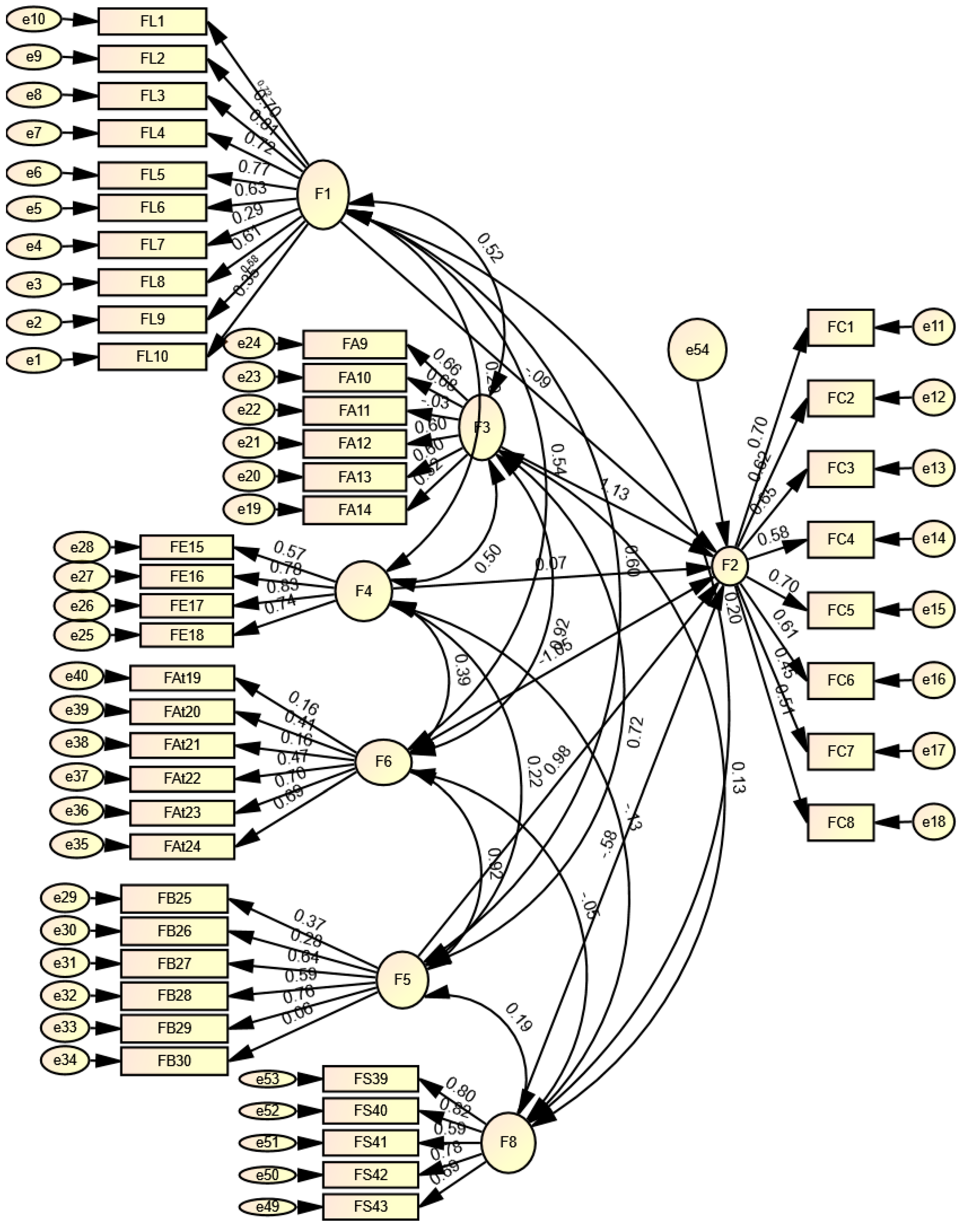
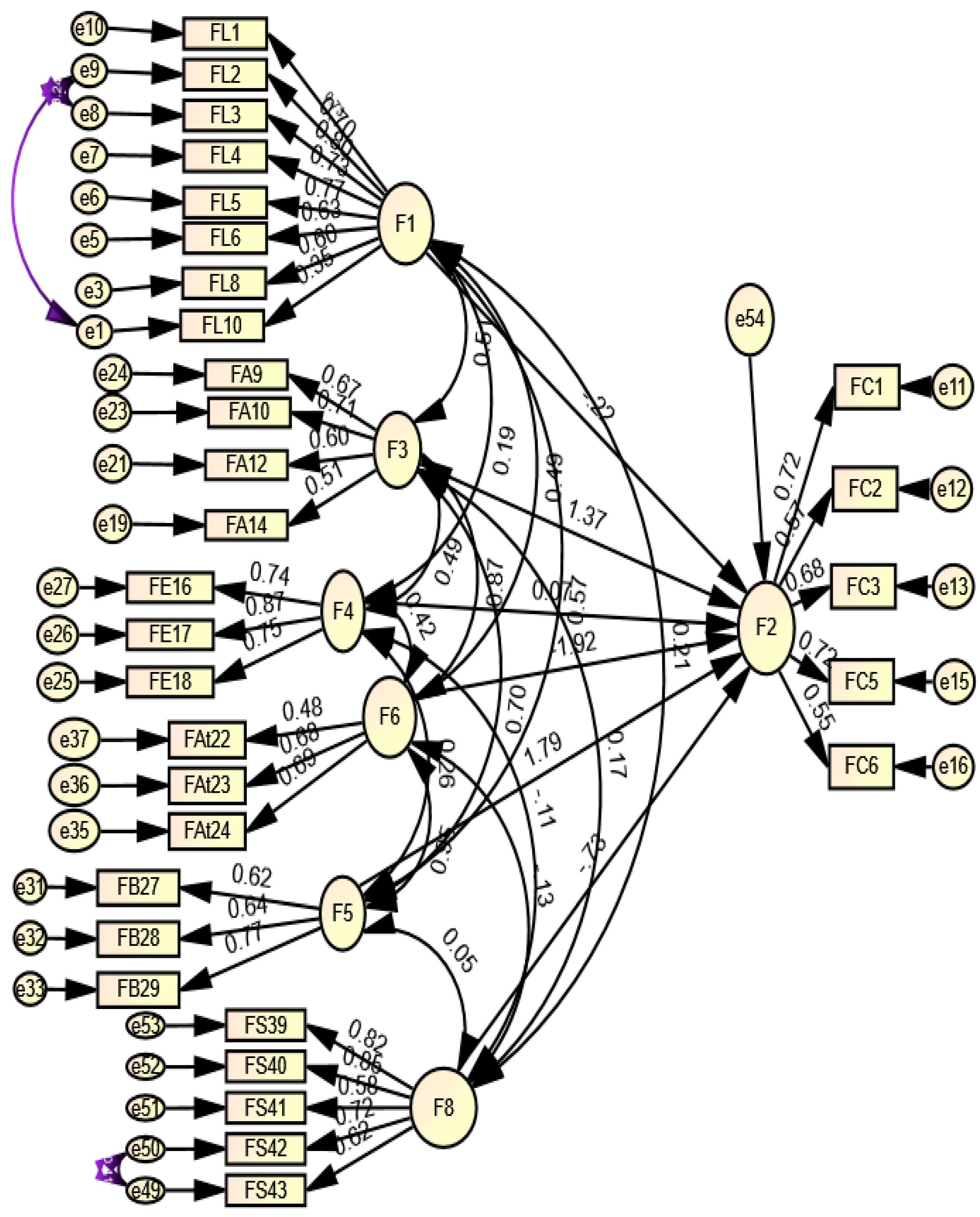
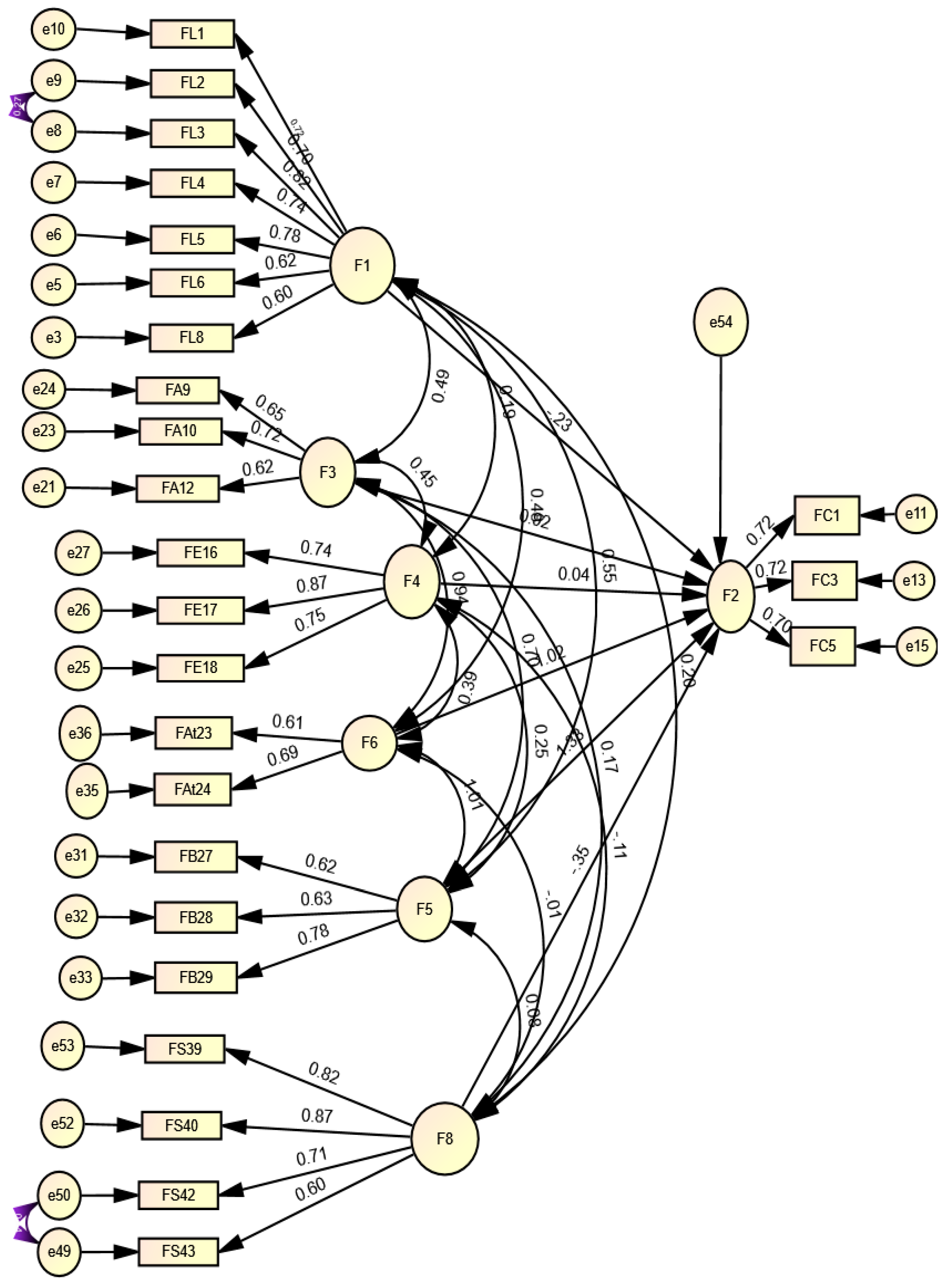
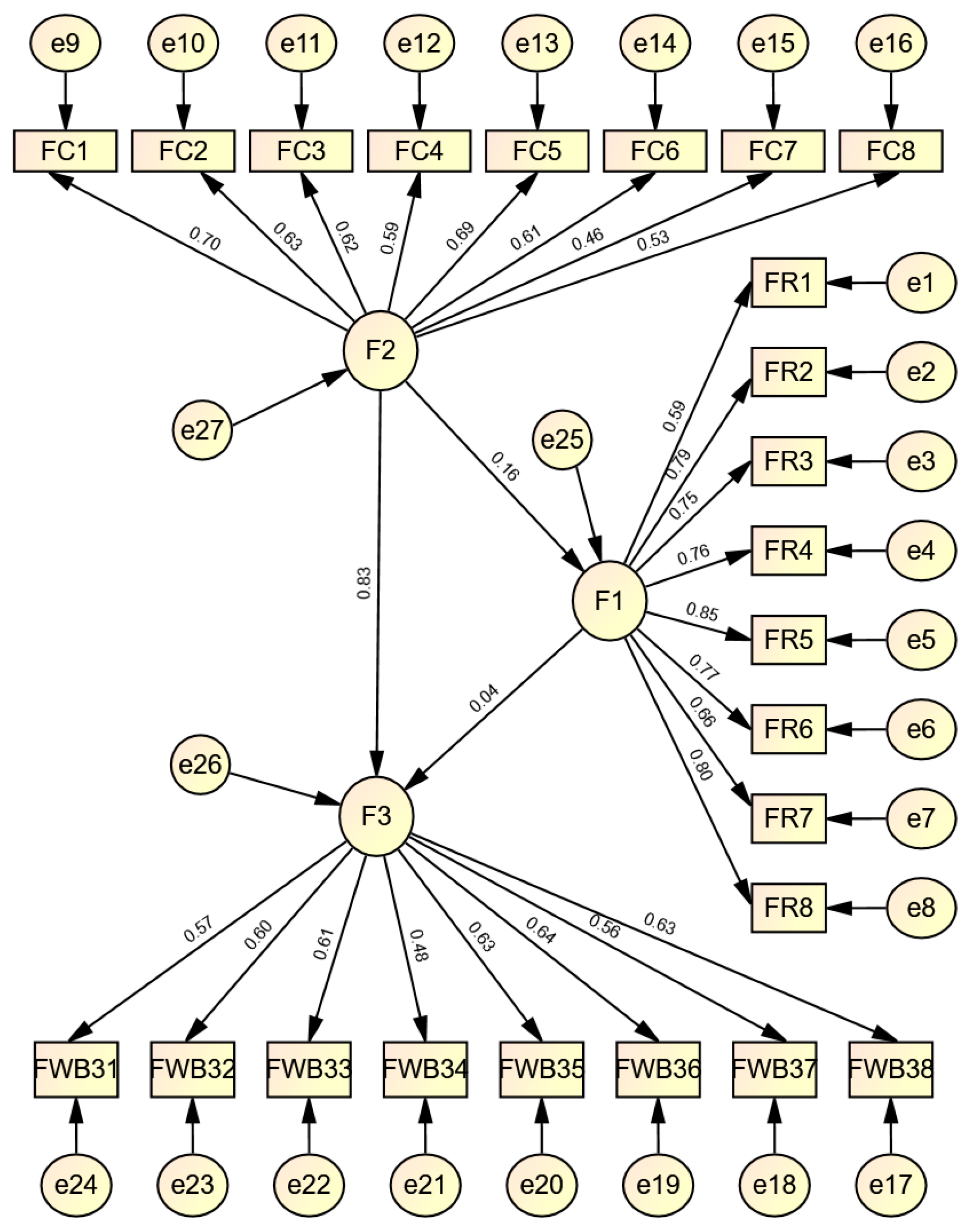
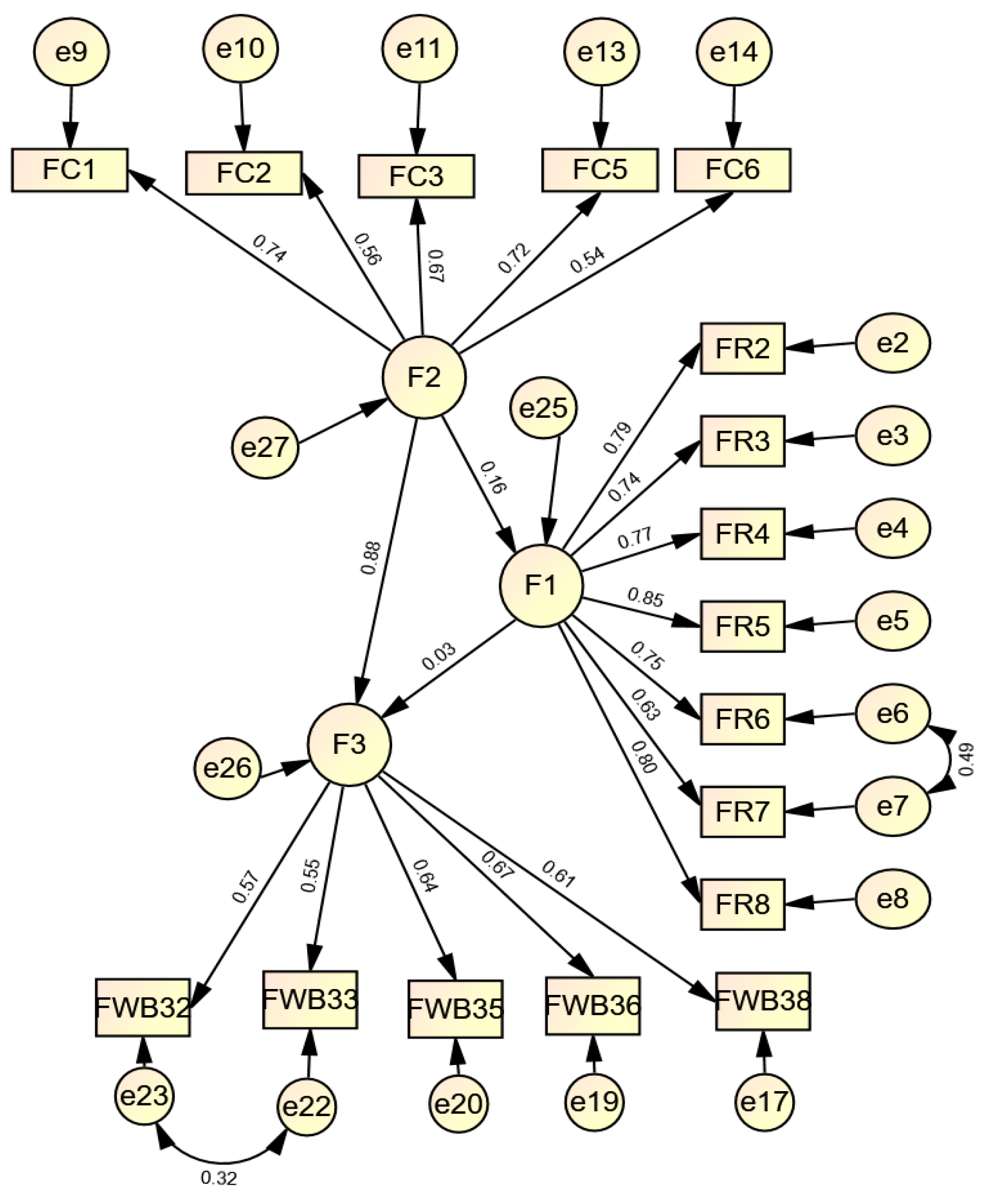
Structural Equation Modeling (SEM) was conducted to examine the proposed relationships among the study variables. The estimated structural models, including the initial, adjusted, and final specifications, are presented in
Figure 2,
Figure 3 and
Figure 4, respectively.
4.2.2. Structural Model—Initial Specification
The initial structural model (Model 1) presented inadequate overall fit. Although the CMIN/DF ratio (3.073) was within the acceptable upper limit, most absolute and incremental fit indices were below recommended thresholds (GFI = 0.699; AGFI = 0.663; CFI = 0.725; TLI = 0.705; IFI = 0.727; NFI = 0.643). The RMR value (0.137) exceeded acceptable limits (<0.08), indicating substantial residual discrepancies. Additionally, the ECVI value (8.41) suggested limited model replicability. Overall, Model 1 did not provide an adequate representation of the observed data (see
Figure 2).
4.2.3. Structural Model—Re-Specified Model
Based on theoretical considerations and modification indices, a first re-specification (Model 2) was conducted. This adjustment resulted in a notable improvement in model fit. The CMIN/DF ratio decreased to 2.583, and incremental fit indices improved substantially (CFI = 0.870; TLI = 0.853; IFI = 0.872). Absolute fit indices also increased (GFI = 0.830; AGFI = 0.794), although they remained slightly below recommended levels. Parsimony indices improved (PGFI = 0.686; PNFI = 0.711), and the ECVI decreased markedly to 3.382, indicating improved potential for replication. Despite these improvements, some indices still fell short of optimal criteria, justifying further refinement. The adjusted structural model is presented in
Figure 3.
Model respecifications were conducted cautiously and based on theoretical justification rather than purely statistical criteria. Suggested modifications were evaluated through modification indices, and only those consistent with the conceptual framework were retained. The final model therefore reflects an empirically improved yet theoretically grounded representation of the proposed relationships.
4.2.4. Structural Model—Final Specification
A second re-specification produced the final model (Model 3), which demonstrated the best overall fit among the competing specifications. The CMIN/DF ratio reached 1.89, indicating excellent absolute fit. The GFI surpassed the 0.90 threshold (0.907), and AGFI approached adequacy (0.88). Incremental fit indices exceeded recommended levels (CFI = 0.945; TLI = 0.934; IFI = 0.945), indicating strong structural consistency. Although NFI (0.891) was slightly below 0.90, it showed substantial improvement compared to previous models. The RMR (0.087) approached acceptable levels. Parsimony indices were satisfactory (PGFI = 0.703; PNFI = 0.748), and the ECVI (1.71) was the lowest among the three models, suggesting superior replicability.
The final model (Model 3) demonstrated the best overall performance across absolute, relative, and parsimonious fit indices. Specifically, CMIN/DF = 1.890 indicated an adequate chi-square adjustment; GFI = 0.907 and AGFI = 0.880 reflected acceptable absolute fit; and incremental indices (CFI = 0.945, TLI = 0.934, IFI = 0.945) approached excellent levels. Although NFI (0.891) and RMR (0.087) were slightly below ideal thresholds, their values improved substantially compared to previous models. Parsimony indicators (PGFI = 0.703; PNFI = 0.748; ECVI = 1.710) further supported the stability and replicability of the final specification. A comparative summary of model performance is presented in
Table 6.
The comparative results presented in
Table 6 confirm that Model 3 provides the best overall representation of the data. In the final specification, the structural paths linking the financial literacy–behavioral components to financial capabilities were examined. Most relationships were positive and statistically significant, indicating that financial literacy, education, advisory orientation, attitude, and financial behavior contribute meaningfully to the development of financial capabilities. In contrast, financial stress showed a weaker and negative association, suggesting that higher perceived stress may undermine capability development. Overall, the results provide empirical support for hypotheses H1–H6.
Pearson correlation analysis was conducted to examine the associations among financial capabilities, financial resilience, and financial well-being. The results are presented in
Table 7.
As shown in
Table 7, financial capabilities are strongly and positively associated with financial well-being (r = 0.679,
p < 0.001), indicating a substantial relationship between individuals’ perceived financial skills and their subjective financial condition. Financial resilience shows a positive but modest association with financial well-being (r = 0.151,
p = 0.004). Additionally, financial capabilities are positively related to financial resilience (r = 0.134,
p = 0.011). Although the magnitude of the latter associations is small, their statistical significance justifies further examination of the potential mediating role of financial resilience in the relationship between financial capabilities and financial well-being.
4.3. Exploratory Assessment of Shared Variance in the Second Block
To explore the underlying structure among financial capability, financial resilience, and financial well-being, an exploratory principal component analysis (PCA) was conducted (see
Figure 5). The Kaiser–Meyer–Olkin (KMO) measure of sampling adequacy was 0.521, slightly above the minimum acceptable threshold (0.50), indicating modest sampling adequacy. Bartlett’s test of sphericity was significant (χ
2 (3) = 233.288,
p < 0.001), suggesting that the correlation matrix was not an identity matrix and that sufficient intercorrelations existed to examine shared variance. The analysis yielded a single component explaining 57.82% of the total variance. Financial capability (0.896) and financial well-being (0.900) loaded strongly on this component, with high communalities (0.803 and 0.811, respectively), indicating substantial shared variance. In contrast, financial resilience exhibited a comparatively low loading (0.348) and communality (0.121), suggesting that it behaves as a relatively independent dimension within the model. The detailed component loadings and variance explained are presented in
Table 8.
Overall, the exploratory results indicate a closer structural association between financial capability and financial well-being than with financial resilience.
Structural Equation Modeling of the Second Block
To further examine the structural relationships among financial capability, financial resilience, and financial well-being, Structural Equation Modeling (SEM) was conducted.
The initial and final structural specifications are presented in
Figure 6 and
Figure 7.
Model fit was evaluated using absolute, incremental, and parsimonious fit indices. The results are summarized in
Table 9.
As shown in
Table 9, Model 2 demonstrates superior fit compared to Model 1. The final specification achieved acceptable absolute fit (CMIN/DF = 2.474; RMSEA = 0.064; RMR = 0.064), good incremental fit (CFI = 0.939; TLI = 0.927; IFI = 0.939; NFI = 0.902), and satisfactory parsimony (PNFI = 0.756; PCFI = 0.787). These results indicate that the refined model provides a robust representation of the structural relationships among the constructs.
4.4. Mediation Analysis (H9)
To evaluate whether financial resilience mediates the relationship between financial capability and financial well-being, a mediation analysis was conducted using regression-based procedures with bootstrap confidence intervals (see
Table 10,
Table 11 and
Table 12).
The results indicate that financial capability significantly predicts financial resilience (B = 0.111, p = 0.011), although the explained variance is modest (R2 = 0.018). When both predictors are included in the model, financial capability maintains a strong and significant effect on financial well-being (B = 0.570, p < 0.001), whereas financial resilience does not reach statistical significance (B = 0.063, p = 0.114). Furthermore, the indirect effect of financial capability on financial well-being through financial resilience is not statistically significant, as the bootstrap confidence interval includes zero. Taken together, these findings indicate that financial capability exerts a direct and substantial effect on financial well-being, while financial resilience does not significantly mediate this relationship in the present sample.
4.5. Discussion
The results largely confirm the theoretical architecture underpinning the proposed model, reinforcing the multidimensional nature of financial capability formation. Financial literacy, financial education, financial attitudes, financial advice, knowledge, and behavior collectively contribute to the strengthening of financial capabilities, which in turn exert a substantial influence on financial well-being. Consistent with
Lusardi and Mitchell (
2014) and
Atkinson and Messy (
2012), financial literacy demonstrates a positive and significant association with financial capabilities. However, the moderate magnitude of the effect suggests that knowledge acquisition, while necessary, is not sufficient to guarantee strong economic competence. This nuance refines evidence reported by
H. Zhang and Xiong (
2020), indicating that contextual and structural variables—such as socioeconomic background, institutional access, and resource availability—may attenuate the translation of literacy into applied capability.
Similarly, financial education exhibits a positive effect aligned with the findings of
Remund (
2010),
Potrich et al. (
2016),
Guerini et al. (
2024), and
Soejono et al. (
2025), who emphasize structured instruction as a determinant of competence. Nonetheless, the moderate effect size supports the argument advanced by
Y. Zhang and Fan (
2024) that formal or extracurricular exposure does not automatically convert into practical mastery unless reinforced through application and advisory mechanisms. Financial attitudes also emerge as a significant determinant, corroborating
Martino and Ventre (
2023) and
Kumar et al. (
2024). In line with
She et al. (
2024) and
Hernandez-Perez and Cruz Rambaud (
2025), psychological disposition and perceived financial control facilitate responsible economic management. However, the results suggest that attitudes operate synergistically with education and advice rather than independently driving substantial capability gains.
One of the most salient findings concerns financial advice, which shows the strongest association with financial capabilities. This result aligns with
Collins (
2012),
Stolper and Walter (
2017),
de Jong and Wagensveld (
2024), and
Mustafa et al. (
2025), who underline the transformative potential of professional guidance. The strength of this relationship suggests that personalized and context-sensitive advice may function as an operational bridge between knowledge and effective financial decision-making. As noted by
Staehelin et al. (
2024), the integration of human interaction and technological tools may further amplify advisory impact, which could explain contextual variability in effect sizes.
Financial stress displays a negative association with financial capabilities, corroborating findings by
Netemeyer et al. (
2018),
O’Neill et al. (
2005),
Joseph and Peetz (
2024), and
Choi et al. (
2025). Although statistically significant, the relatively low magnitude of this effect is consistent with
Sorgente et al. (
2023), who argue that stress and well-being represent related but distinct constructs moderated by coping mechanisms and social support systems.
Regarding financial well-being, the strong positive relationship between financial capabilities and well-being (r = 0.679,
p < 0.001) reinforces arguments advanced by
Kempson et al. (
2017),
Brüggen et al. (
2017),
Saeedi and Nishad (
2024), and
Rai et al. (
2025). These findings confirm that practical competence and effective management skills constitute primary structural drivers of economic satisfaction and perceived stability. In contrast, financial resilience shows a positive yet comparatively weak association with financial well-being (r = 0.151,
p = 0.004), consistent with
Salignac et al. (
2019),
Gerrans (
2020), and
Wheeler and Brooks (
2024). The mediation analysis further indicates that resilience does not significantly mediate the capability–well-being relationship. This result suggests that resilience may function more as a buffering or contextual mechanism than as a structural transmission pathway. In line with
She et al. (
2024) and
Sharma et al. (
2025), the findings indicate that tangible financial skills exert more direct influence on well-being than adaptive coping capacity alone.
4.6. Theoretical Implications
This study contributes to the literature by advancing an integrative framework that positions financial capability as a multidimensional construct shaped by cognitive, behavioral, attitudinal, advisory, and emotional components. Rather than treating literacy, education, or behavior as isolated predictors, the model demonstrates their combined and differentiated contributions within a unified structural system. First, the findings reinforce human capital theory and capability-based approaches by confirming that financial literacy and education constitute foundational inputs for capability development. However, the moderate effect sizes refine existing theory by suggesting diminishing marginal returns of knowledge when not accompanied by applied mechanisms such as advisory support. This nuance extends the work of
Lusardi and Mitchell (
2014) and
Atkinson and Messy (
2012) by highlighting the conditional nature of literacy’s effectiveness.
Second, the prominent role of financial advice introduces an important theoretical refinement: external expertise may act as an accelerator of capability formation. While traditional models emphasize individual knowledge accumulation, these results suggest that relational and institutional dimensions—particularly access to professional guidance—play a central structural role. This supports emerging perspectives that conceptualize financial capability not solely as an individual attribute but as an ecosystem-dependent construct. Third, the findings clarify the conceptual distinction between financial capability, resilience, and well-being. Although resilience is positively associated with well-being, it does not mediate the relationship between capabilities and well-being. This indicates that adaptive coping capacity does not replace structural financial competence. Theoretically, this differentiation helps disentangle constructs that are often conflated in the literature, reinforcing the argument that practical financial skills constitute the primary driver of economic well-being, while resilience may operate as a contextual buffer rather than a transmission mechanism.
Overall, the study consolidates a layered conceptual structure in which knowledge, education, attitudes, advice, and behavior build capability; capability drives well-being; and resilience complements but does not structurally mediate this relationship.
4.7. Practical Implications
From a practical standpoint, the results suggest that policy interventions focused exclusively on financial education may yield limited returns unless integrated with advisory services and behavioral reinforcement mechanisms. The strong association between financial advice and capability underscores the need for hybrid intervention models that combine structured education with personalized guidance. For policymakers, this implies prioritizing accessible advisory ecosystems—particularly for vulnerable or emerging populations—alongside curricular reforms. Financial literacy campaigns should therefore be complemented by institutional support mechanisms that translate knowledge into action.
For financial institutions and service providers, the findings highlight the strategic value of advisory services that incorporate technological tools while preserving personalized interaction. The integration of digital advisory platforms with human-centered support may enhance financial capability formation more effectively than information-based strategies alone.
Finally, the demonstrated link between financial capability and well-being reinforces the relevance of financial competence within the broader sustainability and development agenda. Strengthening individual financial capabilities contributes not only to personal economic stability but also to systemic resilience and inclusive economic growth.
6. Limitations and Future Research
Although this study provides valuable insights into financial well-being and resilience among university students, several limitations should be acknowledged. First, a non-probabilistic sampling method was employed, which limits the generalizability of the findings to other populations and contexts. However, this approach allowed the collection of robust and representative parameters of the studied population and is widely recognized as valid in exploratory research and studies focused on specific populations. Second, data were collected through self-reported questionnaires, which may introduce social desirability biases or perceptual errors. The cross-sectional design also prevents establishing definitive causal relationships between resilience and financial well-being. Additionally, some contextual variables, such as family economic status, prior exposure to financial education, or use of financial services, were not controlled, which could have influenced the observed results.
Despite these limitations, the findings offer meaningful contributions and serve as a foundation for future research. It is recommended to replicate this study with larger and more diverse samples, implement longitudinal designs to examine changes over time, and explore additional mediators and moderators, such as gender, financial education, and digital skills, to better understand the mechanisms affecting students’ financial well-being and resilience.