KRAS in Colorectal Cancer: Tumorigenesis, Surgical Implications and Evolving Treatment Target



1
School of Medicine, Medical Sciences, and Nutrition, University of Aberdeen, Aberdeen AB25 2ZD, UK
2
Department of Medical Oncology, Mayo Clinic, Rochester, MN 55905, USA
3
Aberdeen Royal Infirmary, Aberdeen AB25 2ZN, UK
*
Author to whom correspondence should be addressed.
Curr. Oncol. 2026, 33(9), 514; https://doi.org/10.3390/curroncol33090514
Submission received: 3 July 2026
/
Revised: 14 August 2026
/
Accepted: 27 August 2026
/
Published: 28 August 2026
(This article belongs to the Section Gastrointestinal Oncology)
Simple Summary
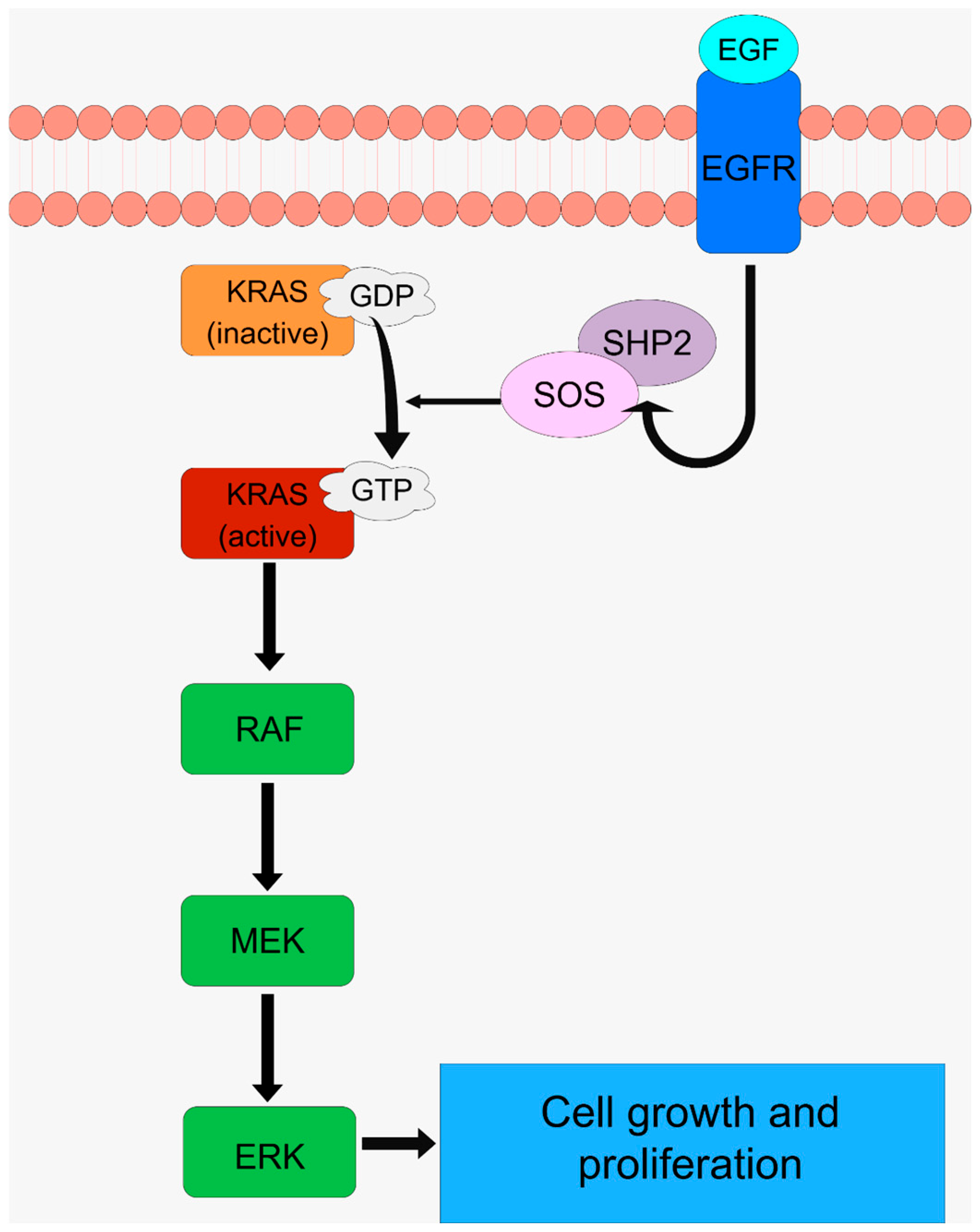
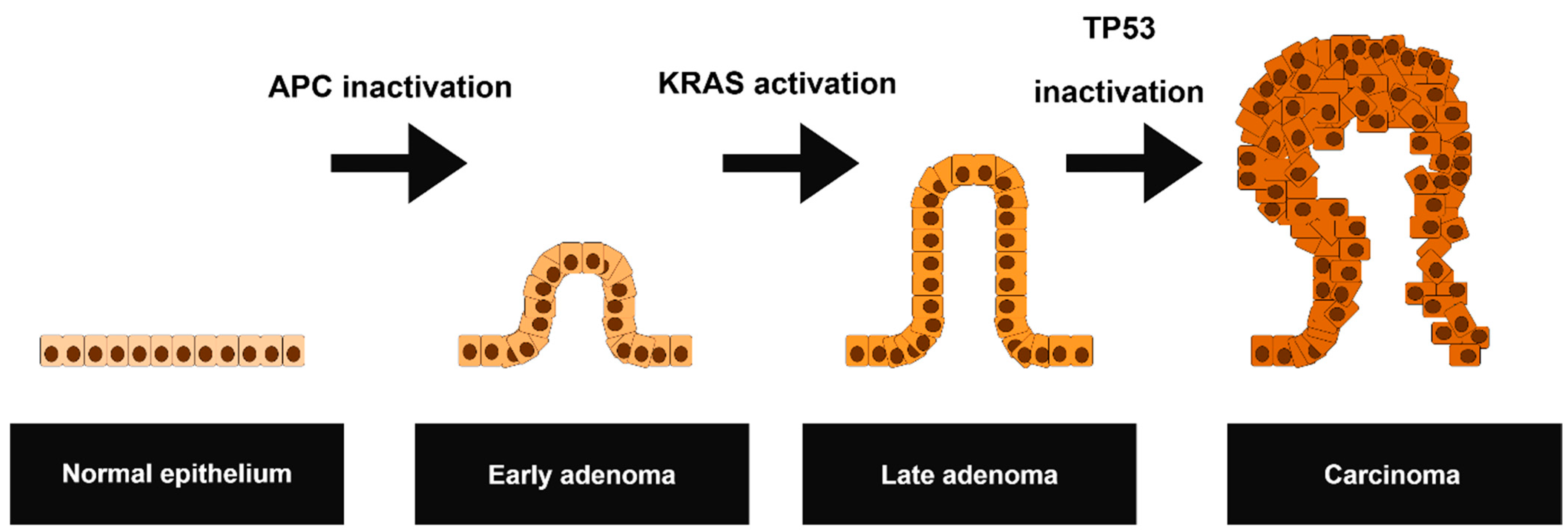
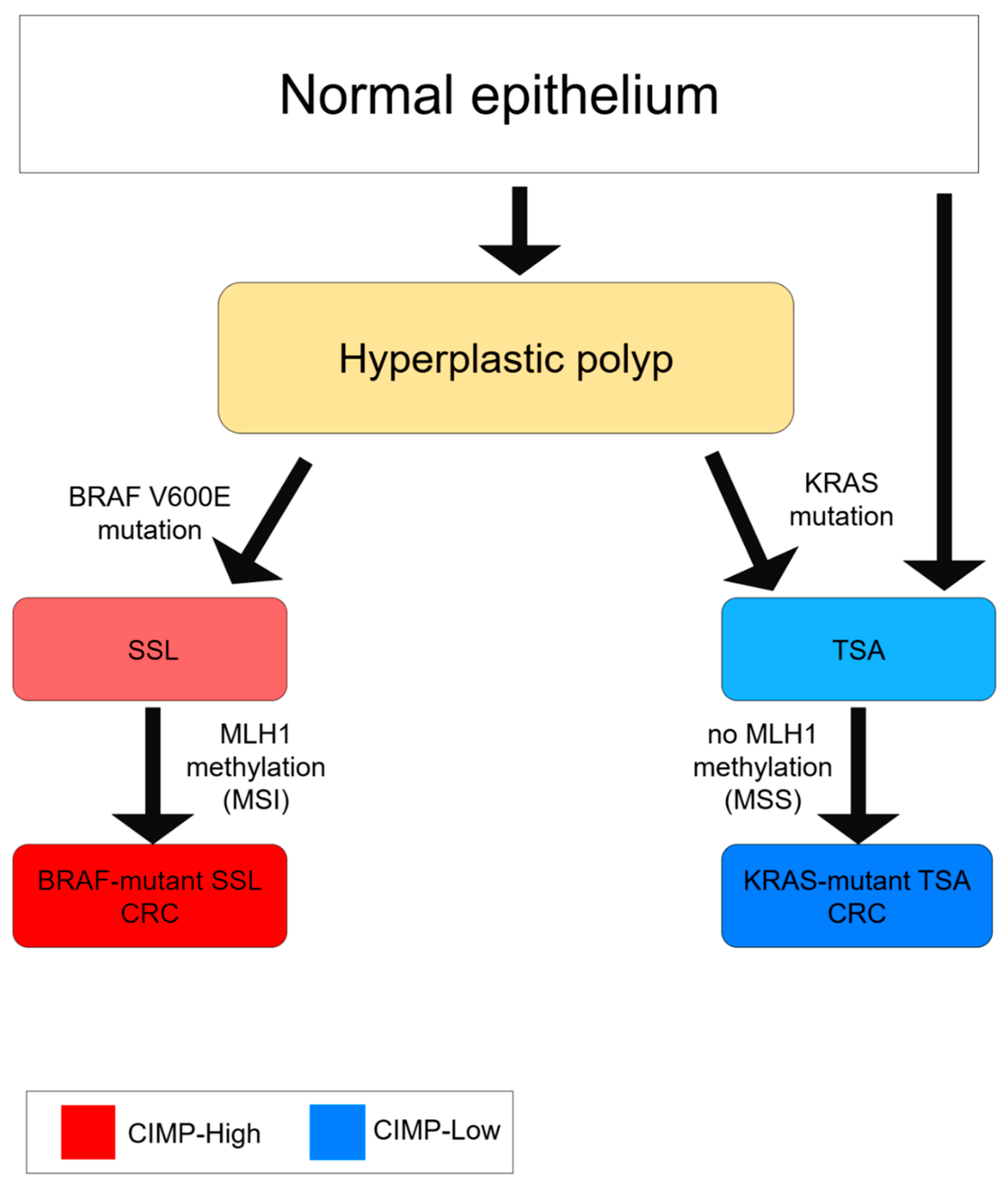
Mutations in the Kirsten rat sarcoma viral oncogene homologue (KRAS) play an important role in colorectal cancer and are linked to higher morbidity and mortality rates while also being historically difficult to treat. This review summarises the pathophysiology which leads the mutation to tumour formation, its impact on disease prognosis, and an up-to-date overview of the drug classes which target the mutation, ranging from the approved use of specific variants to the broader drugs still in preclinical development stages.
Abstract
Purpose: This review aims to provide an updated overview of Kirsten rat sarcoma viral oncogene homologue (KRAS) mutations in colorectal carcinoma (CRC), focusing on their role in tumorigenesis, prognostic implications, and recent advances in targeted therapy. Major findings: KRAS mutations occur in approximately 40% of colorectal cancers and play a central role in tumour initiation and progression through constitutive activation of MAPK pathways. Clinically, KRAS mutations are well established as predictors of resistance to anti-EGFR therapy. Increasing evidence also supports their role as prognostic biomarkers, with KRAS-mutant tumours associated with increased recurrence risk and reduced survival, including in patients undergoing hepatic metastasectomy. Therapeutically, recent advances, most notably KRAS G12C inhibitors and combination strategies targeting upstream or parallel pathways, have expanded treatment options, although efficacy varies across KRAS mutation subtypes. Conclusions: KRAS mutations have important implications for the behaviour, prognosis, and management of colorectal cancer. Integrating KRAS mutational status into clinical decision-making may enable more personalised prognostication and treatment strategies. Continued research is required to broaden effective targeted therapies for the diverse spectrum of KRAS-mutant disease.
Keywords:
colorectal cancer; KRAS; G12C; tumourigenesis; targeted therapy