Growth Differentiation Factor 15 as a Link Between Obesity, Subclinical Atherosclerosis, and Heart Failure: A Systematic Review

 ,
,  , ,
, ,  , ,
, ,  and
and
Abstract
1. Introduction
2. Methods
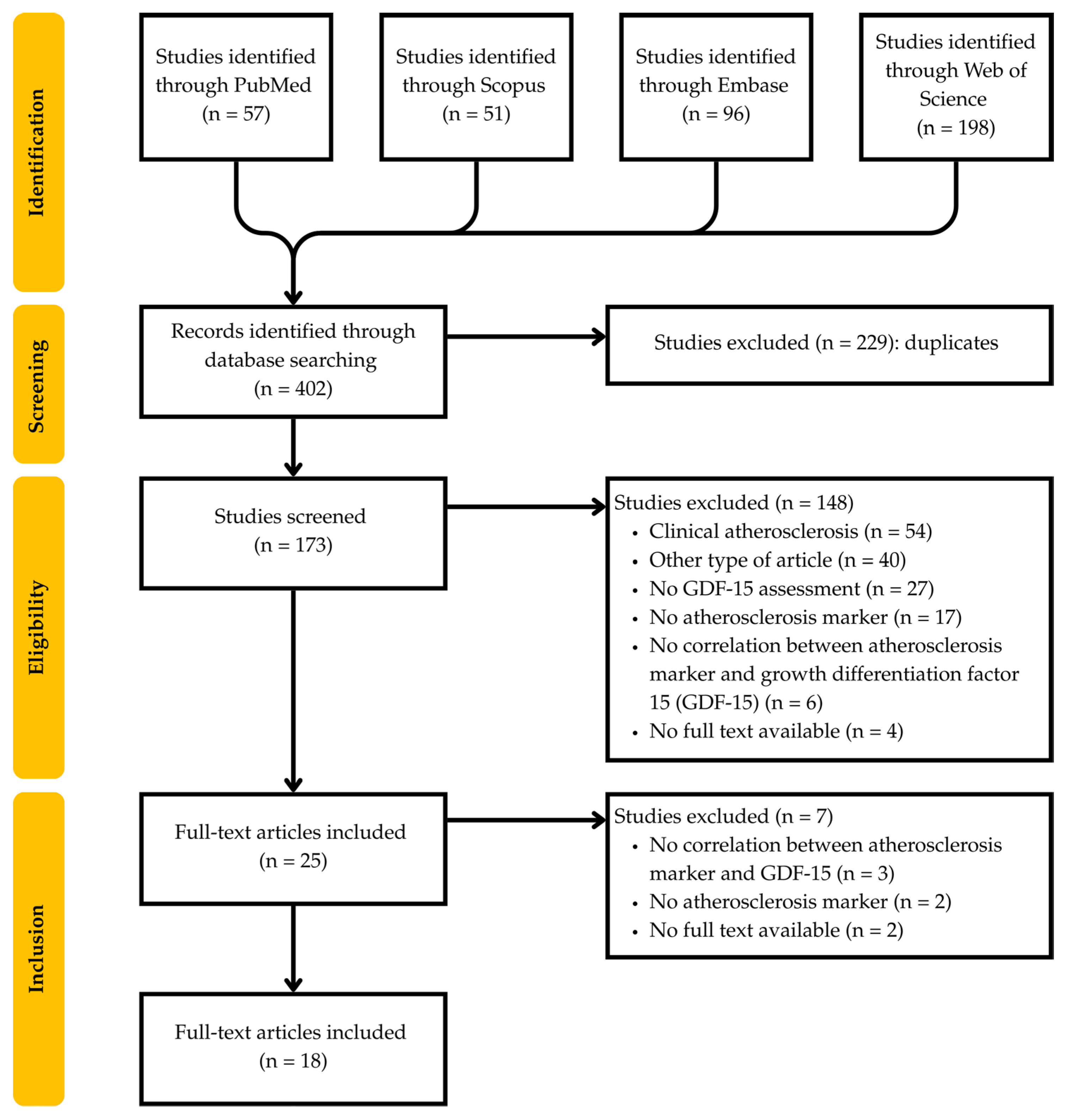
2.1. Research Question and Search Strategy
2.2. Inclusion Criteria
2.3. Exclusion Criteria
2.4. Study Selection
2.5. Data Extraction
2.6. Risk of Bias Assessment
2.7. Strategy of Data Synthesis
3. Results
3.1. Results from Studies
3.1.1. Metabolic Disorders
3.1.2. Chronic Inflammatory Diseases
3.1.3. Human Immunodeficiency Virus (HIV) Cohorts
3.1.4. General Population
3.1.5. Other Diseases
3.2. Effect Direction and Magnitude
3.3. Heterogeneity
3.4. Evidence Gaps
4. Discussion
4.1. GDF-15 Physiopathological Implications
4.1.1. Tissue Expression and Stress Responsiveness
4.1.2. Molecular Regulation
4.1.3. GFRAL-RET Axis and Metabolic Effects
4.2. Diagnostic and Prognostic Role of GDF-15
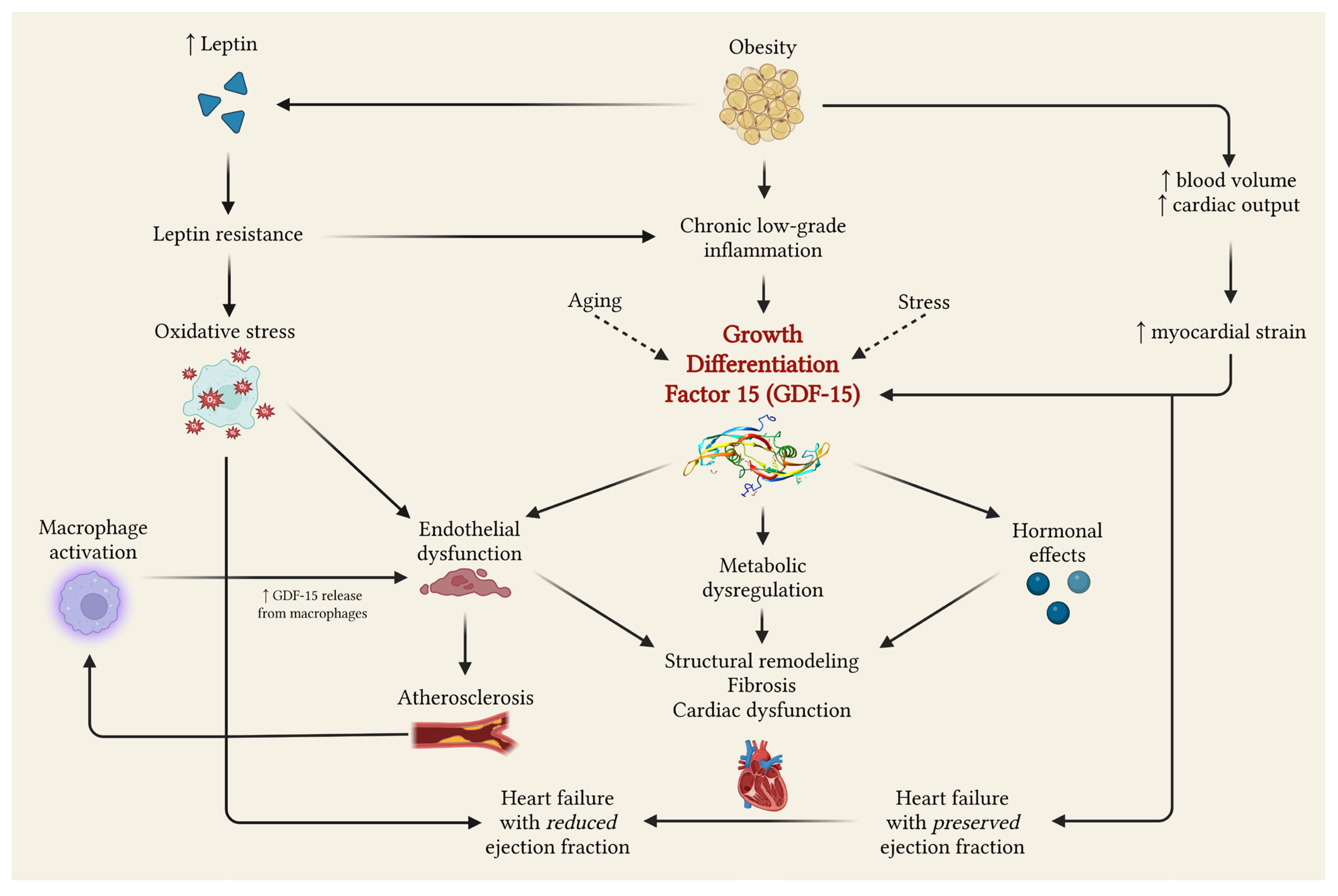
4.3. Possible Mechanisms Between Atherosclerosis, Heart Failure and Obesity
4.4. GDF-15 as Pathophysiological Mediator vs. Risk Biomarker
4.5. Confounders
4.6. Clinical Implications
4.7. Limitations
4.8. Future Perspectives
5. Conclusions
Author Contributions
Funding
Institutional Review Board Statement
Informed Consent Statement
Data Availability Statement
Conflicts of Interest
References
- Asrih, M.; Wei, S.; Nguyen, T.T.; Yi, H.; Ryu, D.; Gariani, K. Overview of Growth Differentiation Factor 15 in Metabolic Syndrome. J. Cell. Mol. Med. 2023, 27, 1157–1167. [Google Scholar] [CrossRef] [Scilit]
- Manta, E.; Iliakis, P.; Fragoulis, C.; Leontsinis, I.; Stamoulopoulos, I.; Chrysohoou, C.; Tsioufis, K. Tracking Pathways Linking Obesity with Heart Failure. Nutrients 2025, 17, 1250. [Google Scholar] [CrossRef] [Scilit]
- Dronkers, J.; Van Veldhuisen, D.J.; Van Der Meer, P.; Meems, L.M.G. Heart Failure and Obesity. J. Am. Coll. Cardiol. 2024, 84, 1666–1677. [Google Scholar] [CrossRef] [Scilit]
- Koskinas, K.C.; Van Craenenbroeck, E.M.; Antoniades, C.; Blüher, M.; Gorter, T.M.; Hanssen, H.; Marx, N.; McDonagh, T.A.; Mingrone, G.; Rosengren, A.; et al. Obesity and Cardiovascular Disease: An ESC Clinical Consensus Statement. Eur. Heart J. 2024, 45, 4063–4098. [Google Scholar] [CrossRef] [Scilit] [PubMed]
- Ng, M.; Fleming, T.; Robinson, M.; Thomson, B.; Graetz, N.; Margono, C.; Mullany, E.C.; Biryukov, S.; Abbafati, C.; Abera, S.F.; et al. Global, Regional, and National Prevalence of Overweight and Obesity in Children and Adults during 1980–2013: A Systematic Analysis for the Global Burden of Disease Study 2013. Lancet 2014, 384, 766–781. [Google Scholar] [CrossRef] [Scilit]
- Vila, G.; Riedl, M.; Anderwald, C.; Resl, M.; Handisurya, A.; Clodi, M.; Prager, G.; Ludvik, B.; Krebs, M.; Luger, A. The Relationship between Insulin Resistance and the Cardiovascular Biomarker Growth Differentiation Factor-15 in Obese Patients. Clin. Chem. 2011, 57, 309–316. [Google Scholar] [CrossRef] [Scilit] [PubMed]
- Desmedt, S.; Desmedt, V.; De Vos, L.; Delanghe, J.R.; Speeckaert, R.; Speeckaert, M.M. Growth Differentiation Factor 15: A Novel Biomarker with High Clinical Potential. Crit. Rev. Clin. Lab. Sci. 2019, 56, 333–350. [Google Scholar] [CrossRef] [Scilit]
- Tian, T.; Liu, M.; Little, P.J.; Strijdom, H.; Weng, J.; Xu, S. Emerging Roles of GDF15 in Metabolic and Cardiovascular Diseases. Research 2025, 8, 0832. [Google Scholar] [CrossRef] [Scilit] [PubMed]
- Li, J.; Hu, X.; Xie, Z.; Li, J.; Huang, C.; Huang, Y. Overview of Growth Differentiation Factor 15 (GDF15) in Metabolic Diseases. Biomed. Pharmacother. 2024, 176, 116809. [Google Scholar] [CrossRef] [Scilit]
- di Candia, A.M.; de Avila, D.X.; Moreira, G.R.; Villacorta, H.; Maisel, A.S. Growth Differentiation Factor-15, a Novel Systemic Biomarker of Oxidative Stress, Inflammation, and Cellular Aging: Potential Role in Cardiovascular Diseases. Am. Heart J. Plus 2021, 9, 100046. [Google Scholar] [CrossRef] [Scilit]
- Pence, B.D. Growth Differentiation Factor-15 in Immunity and Aging. Front Aging 2022, 3, 837575. [Google Scholar] [CrossRef] [Scilit]
- Guo, J.; Zhang, Z. Novel Biomarker Panel Combined with Imaging Parameters for Predicting Cardiovascular Complications in Diabetic Patients: A Retrospective Cohort Study. BMC Cardiovasc. Disord. 2025, 25, 458. [Google Scholar] [CrossRef] [Scilit]
- Page, M.J.; McKenzie, J.E.; Bossuyt, P.M.; Boutron, I.; Hoffmann, T.C.; Mulrow, C.D.; Shamseer, L.; Tetzlaff, J.M.; Akl, E.A.; Brennan, S.E.; et al. The PRISMA 2020 Statement: An Updated Guideline for Reporting Systematic Reviews. BMJ 2021, 372, n71. [Google Scholar] [CrossRef] [Scilit] [PubMed]
- JBI. Manual for Evidence Synthesis; Aromataris, E., Lockwood, C., Porritt, K., Pilla, B., Jordan, Z., Eds.; JBI: Adelaide, Australia, 2024; ISBN 978-0-6488488-2-0. [Google Scholar]
- Carvalho, P.V.D.C.; Caporali, J.F.D.M.; Vieira, É.L.M.; Guimarães, N.S.; Fonseca, M.O.; Tupinambás, U. Evaluation of Inflammatory Biomarkers, Carotid Intima-Media Thickness and Cardiovascular Risk in HIV-1 Treatment-Naive Patients. Rev. Soc. Bras. Med. Trop. 2018, 51, 277–283. [Google Scholar] [CrossRef] [Scilit]
- Garcia, T.; Petrera, A.; Hauck, S.M.; Baber, R.; Wirkner, K.; Kirsten, H.; Pott, J.; Tönjes, A.; Henger, S.; Loeffler, M.; et al. Relationship of Proteins and Subclinical Cardiovascular Traits in the Population-Based LIFE-Adult Study. Atherosclerosis 2024, 398, 118613. [Google Scholar] [CrossRef] [Scilit] [PubMed]
- Girona, J.; Guardiola, M.; Barroso, E.; García-Altares, M.; Ibarretxe, D.; Plana, N.; Ribalta, J.; Amigó, N.; Correig, X.; Vázquez-Carrera, M.; et al. GDF15 Circulating Levels Are Associated with Metabolic-Associated Liver Injury and Atherosclerotic Cardiovascular Disease. Int. J. Mol. Sci. 2025, 26, 2039. [Google Scholar] [CrossRef] [Scilit]
- Gopal, D.M.; Larson, M.G.; Januzzi, J.L.; Cheng, S.; Ghorbani, A.; Wollert, K.C.; Kempf, T.; D’Agostino, R.B.; Polak, J.F.; Ramachandran, V.S.; et al. Biomarkers of Cardiovascular Stress and Subclinical Atherosclerosis in the Community. Clin. Chem. 2014, 60, 1402–1408. [Google Scholar] [CrossRef] [Scilit]
- Guardiola, M.; Girona, J.; Barroso, E.; García-Altares, M.; Ibarretxe, D.; Plana, N.; Ribalta, J.; Correig, X.; Vázquez-Carrera, M.; Masana, L.; et al. The GDF15 3′ UTR Polymorphism Rs1054564 Is Associated with Diabetes and Subclinical Atherosclerosis. Int. J. Mol. Sci. 2024, 25, 11985. [Google Scholar] [CrossRef] [Scilit]
- He, X.; Su, J.; Ma, X.; Lu, W.; Zhu, W.; Wang, Y.; Bao, Y.; Zhou, J. The Association between Serum Growth Differentiation Factor 15 Levels and Lower Extremity Atherosclerotic Disease Is Independent of Body Mass Index in Type 2 Diabetes. Cardiovasc. Diabetol. 2020, 19, 40. [Google Scholar] [CrossRef] [Scilit] [PubMed]
- Kaiser, H.; Wang, X.; Kvist-Hansen, A.; Krakauer, M.; Gørtz, P.M.; McCauley, B.D.; Skov, L.; Becker, C.; Hansen, P.R. Biomarkers of Subclinical Atherosclerosis in Patients with Psoriasis. Sci. Rep. 2021, 11, 21438. [Google Scholar] [CrossRef] [Scilit]
- Kiss, L.Z.; Nyárády, B.B.; Pállinger, É.; Lux, Á.; Jermendy, Á.L.; Csobay-Novák, C.; Soós, P.; Szelid, Z.; Láng, O.; Kőhidai, L.; et al. Association of Growth and Differentiation Factor-15 with Coronary Artery Calcium Score and Ankle-Brachial Index in a Middle-Aged and Elderly Caucasian Population Sample Free of Manifest Cardiovascular Disease. GeroScience 2023, 46, 1343–1350. [Google Scholar] [CrossRef] [Scilit]
- Lind, L.; Wallentin, L.; Kempf, T.; Tapken, H.; Quint, A.; Lindahl, B.; Olofsson, S.; Venge, P.; Larsson, A.; Hulthe, J.; et al. Growth-Differentiation Factor-15 Is an Independent Marker of Cardiovascular Dysfunction and Disease in the Elderly: Results from the Prospective Investigation of the Vasculature in Uppsala Seniors (PIVUS) Study. Eur. Heart J. 2009, 30, 2346–2353. [Google Scholar] [CrossRef] [Scilit] [PubMed]
- Martinez, C.H.; Nelson, J.D.; Murray, S.; Wang, X.; Budoff, M.J.; Dransfield, M.T.; Hokanson, J.E.; Kazerooni, E.A.; Kinney, G.L.; Regan, E.A.; et al. GDF-15 Plasma Levels in Chronic Obstructive Pulmonary Disease Are Associated with Subclinical Coronary Artery Disease. Respir. Res. 2017, 18, 42. [Google Scholar] [CrossRef] [Scilit] [PubMed]
- Royston, L.; Isnard, S.; Perrin, N.; Sinyavskaya, L.; Berini, C.; Lin, J.; Trottier, B.; Baril, J.-G.; Chartrand-Lefebvre, C.; Tremblay, C.; et al. Growth Differentiation Factor-15 as a Biomarker of Atherosclerotic Coronary Plaque: Value in People Living with and without HIV. Front. Cardiovasc. Med. 2022, 9, 964650. [Google Scholar] [CrossRef] [Scilit]
- Tanrıkulu, O.; Sarıyıldız, M.A.; Batmaz, İ.; Yazmalar, L.; Polat, N.; Kaplan, İ.; Çevik, R. Serum GDF-15 Level in Rheumatoid Arthritis: Relationship with Disease Activity and Subclinical Atherosclerosis. Acta Reumatol. Port. 2017, 42, 66–72. [Google Scholar]
- Tektonidou, M.G.; Papassotiriou, I.; Sfikakis, P.P. Growth Differentiation Factor 15 (GDF-15) as Potential Cardiovascular Risk Biomarker in Antiphospholipid Syndrome. Rheumatology 2021, 61, 394–399. [Google Scholar] [CrossRef] [Scilit]
- Ueland, T.; Nkele, I.; Hoel, H.; Lockman, S.; Michelsen, A.E.; Moshomo, T.; Aukrust, P.; Mohammed, T.; Trøseid, M.; Mosepele, M. Markers of Extracellular Matrix Degradation and Inflammasome Activation Are Associated with Carotid Plaques in Virally Suppressed People with HIV in Botswana. AIDS 2025, 39, 22–30. [Google Scholar] [CrossRef] [Scilit]
- Chuang, W.-C.; Chu, C.-H.; Yao, C.-S.; Wei, M.-C.; Hsieh, I.-L.; Liao, C.-M. The Value of Growth Differentiation Factor 15 as a Biomarker for Peripheral Artery Disease in Diabetes Patients. Diabetol. Metab. Syndr. 2025, 17, 31. [Google Scholar] [CrossRef] [Scilit] [PubMed]
- Rohatgi, A.; Patel, P.; Das, S.R.; Ayers, C.R.; Khera, A.; Martinez-Rumayor, A.; Berry, J.D.; McGuire, D.K.; De Lemos, J.A. Association of Growth Differentiation Factor-15 with Coronary Atherosclerosis and Mortality in a Young, Multiethnic Population: Observations from the Dallas Heart Study. Clin. Chem. 2012, 58, 172–182. [Google Scholar] [CrossRef] [Scilit]
- Yilmaz, H.; Çelik, H.T.; Gurel, O.M.; Bilgic, M.A.; Namuslu, M.; Bozkurt, H.; Ayyildiz, A.; Inan, O.; Bavbek, N.; Akcay, A. Increased Serum Levels of GDF-15 Associated with Mortality and Subclinical Atherosclerosis in Patients on Maintenance Hemodialysis. Herz 2015, 40, 305–312. [Google Scholar] [CrossRef] [Scilit]
- Efat, A.; Wahb, R.; Shoeib, S.A.A.; Dawod, A.A.E.; Abd ElHafez, M.A.; Abd ElMohsen, E.A.; Elkholy, A. GDF-15 Is Associated with Atherosclerosis in Adults with Transfusion-dependent Beta-thalassemia. eJHaem 2022, 3, 353–361. [Google Scholar] [CrossRef] [Scilit]
- Adela, R.; Banerjee, S.K. GDF-15 as a Target and Biomarker for Diabetes and Cardiovascular Diseases: A Translational Prospective. J. Diabetes Res. 2015, 2015, 490842. [Google Scholar] [CrossRef] [Scilit]
- Nyárády, B.B.; Kiss, L.Z.; Bagyura, Z.; Merkely, B.; Dósa, E.; Láng, O.; Kőhidai, L.; Pállinger, É. Growth and Differentiation Factor-15: A Link between Inflammaging and Cardiovascular Disease. Biomed. Pharmacother. 2024, 174, 116475. [Google Scholar] [CrossRef] [Scilit] [PubMed]
- Oppong, R.; Orru, V.; Marongiu, M.; Qian, Y.; Sidore, C.; Delitala, A.; Orru, M.; Mulas, A.; Piras, M.G.; Morrell, C.H.; et al. Age-Associated Increase in Growth Differentiation Factor 15 Levels Correlates With Central Arterial Stiffness and Predicts All-Cause Mortality in a Sardinian Population Cohort. J. Am. Heart Assoc. 2025, 14, e036253. [Google Scholar] [CrossRef] [Scilit] [PubMed]
- Wang, D.; Day, E.A.; Townsend, L.K.; Djordjevic, D.; Jørgensen, S.B.; Steinberg, G.R. GDF15: Emerging Biology and Therapeutic Applications for Obesity and Cardiometabolic Disease. Nat. Rev. Endocrinol. 2021, 17, 592–607. [Google Scholar] [CrossRef] [Scilit]
- Ceasovschih, A.; Șorodoc, V.; Covantsev, S.; Balta, A.; Uzokov, J.; Kaiser, S.; Almaghraby, A.; Lionte, C.; Stătescu, C.; Sascău, R.; et al. Electrocardiogram Features in Non-Cardiac Diseases: From Mechanisms to Practical Aspects. J. Multidiscip. Healthc. 2024, 17, 1695–1719. [Google Scholar] [CrossRef] [Scilit]
- Fichtner, K.; Kalwa, H.; Lin, M.-M.; Gong, Y.; Müglitz, A.; Kluge, M.; Krügel, U. GFRAL Is Widely Distributed in the Brain and Peripheral Tissues of Mice. Nutrients 2024, 16, 734. [Google Scholar] [CrossRef] [Scilit] [PubMed]
- Hsu, J.-Y.; Crawley, S.; Chen, M.; Ayupova, D.A.; Lindhout, D.A.; Higbee, J.; Kutach, A.; Joo, W.; Gao, Z.; Fu, D.; et al. Non-Homeostatic Body Weight Regulation through a Brainstem-Restricted Receptor for GDF15. Nature 2017, 550, 255–259. [Google Scholar] [CrossRef] [Scilit]
- Tsai, V.W.W.; Husaini, Y.; Sainsbury, A.; Brown, D.A.; Breit, S.N. The MIC-1/GDF15-GFRAL Pathway in Energy Homeostasis: Implications for Obesity, Cachexia, and Other Associated Diseases. Cell Metab. 2018, 28, 353–368. [Google Scholar] [CrossRef] [Scilit]
- May, B.M.; Pimentel, M.; Zimerman, L.I.; Rohde, L.E. GDF-15 as a Biomarker in Cardiovascular Disease. Arq. Bras. Cardiol. 2021, 116, 494–500. [Google Scholar] [CrossRef] [Scilit]
- Dakota, I.; Wijayanto, M.A.; Nugrahani, A.S.D.; Sunjaya, A.F.; Rachmayanti, S.; Indah, E.Y.; Naomi, N.; Huang, W.; Tristan, C.D.; Fauziah, M.; et al. Diagnostic and Prognostic Implications of Growth Differentiation Factor 15 in Heart Failure with Preserved Ejection Fraction: A Systematic Review and Meta-Analysis. PeerJ 2025, 13, e20168. [Google Scholar] [CrossRef] [Scilit]
- Ortolá, R.; García-Esquinas, E.; Buño-Soto, A.; Sotos-Prieto, M.; Struijk, E.A.; Caballero, F.F.; Lopez-Garcia, E.; Banegas, J.R.; Rodríguez-Artalejo, F. Healthy Dietary Patterns Are Associated with Lower Concentrations of Growth Differentiation Factor 15 in Older Adults. Am. J. Clin. Nutr. 2021, 113, 1619–1626. [Google Scholar] [CrossRef] [Scilit]
- Banerjee, D.; Mani, A. Obesity’s Systemic Impact: Exploring Molecular and Physiological Links to Diabetes, Cardiovascular Disease, and Heart Failure. Front. Endocrinol. 2025, 16, 1681766. [Google Scholar] [CrossRef] [Scilit] [PubMed]
- Echouffo-Tcheugui, J.B.; Daya, N.; Ndumele, C.E.; Matsushita, K.; Hoogeveen, R.C.; Ballantyne, C.M.; Coresh, J.; Shah, A.M.; Selvin, E. Diabetes, GDF-15 and Incident Heart Failure: The Atherosclerosis Risk in Communities Study. Diabetologia 2022, 65, 955–963. [Google Scholar] [CrossRef] [Scilit] [PubMed]
- Liuizė, A.; Mongirdienė, A. TGF-β Isoforms and GDF-15 in the Development and Progression of Atherosclerosis. Int. J. Mol. Sci. 2024, 25, 2104. [Google Scholar] [CrossRef] [Scilit] [PubMed]
- Kittleson, M.M.; Benjamin, E.J.; Blumer, V.; Harrington, J.; Januzzi, J.L.; McMurray, J.J.V.; Vest, A.R. 2025 ACC Scientific Statement on the Management of Obesity in Adults With Heart Failure. J. Am. Coll. Cardiol. 2025, 86, 1953–1975. [Google Scholar] [CrossRef] [Scilit]
- Shahid, I.; Zakaria, F.; Chang, R.; Javed, U.; Amin, Z.M.; Al-Kindi, S.; Nasir, K.; Javed, Z. Obesity and Atherosclerotic Cardiovascular Disease: A Review of Social and Biobehavioral Pathways. Methodist. Debakey Cardiovasc. J. 2025, 21, 23–34. [Google Scholar] [CrossRef] [Scilit]
- Sakamoto, D.; Matsuoka, Y.; Nakatani, D.; Okada, K.; Sunaga, A.; Kida, H.; Sato, T.; Kitamura, T.; Tamaki, S.; Seo, M.; et al. Role and Prognostic Value of Growth Differentiation Factor 15 in Patient of Heart Failure with Preserved Ejection Fraction: Insights from the PURSUIT-HFpEF Registry. Open Heart 2025, 12, e003008. [Google Scholar] [CrossRef] [Scilit]
- Madaudo, C.; Coppola, G.; Parlati, A.L.M.; Corrado, E. Discovering Inflammation in Atherosclerosis: Insights from Pathogenic Pathways to Clinical Practice. Int. J. Mol. Sci. 2024, 25, 6016. [Google Scholar] [CrossRef] [Scilit]
- Rayner, J.J. Obesity and Heart Failure: Exploring the Cardiometabolic Axis. Cardiovasc. Res. 2025, 121, 1173–1186. [Google Scholar] [CrossRef] [Scilit]
- Sawalha, K.; Norgard, N.B.; Drees, B.M.; López-Candales, A. Growth Differentiation Factor 15 (GDF-15), a New Biomarker in Heart Failure Management. Curr. Heart Fail. Rep. 2023, 20, 287–299. [Google Scholar] [CrossRef] [Scilit] [PubMed]
- Takaoka, M.; Tadross, J.A.; Al-Hadithi, A.B.A.K.; Zhao, X.; Villena-Gutiérrez, R.; Tromp, J.; Absar, S.; Au, M.; Harrison, J.; Coll, A.P.; et al. GDF15 Antagonism Limits Severe Heart Failure and Prevents Cardiac Cachexia. Cardiovasc. Res. 2024, 120, 2249–2260. [Google Scholar] [CrossRef] [Scilit] [PubMed]
- Reyes, J.; Yap, G.S. Emerging Roles of Growth Differentiation Factor 15 in Immunoregulation and Pathogenesis. J. Immunol. 2023, 210, 5–11. [Google Scholar] [CrossRef] [Scilit] [PubMed]



| Study | Q1 | Q2 | Q3 | Q4 | Q5 | Q6 | Q7 | Q8 |
|---|---|---|---|---|---|---|---|---|
| Carvalho, 2018 [15] | Y | Y | Y | Y | Y | U | Y | Y |
| Garcia, 2024 [16] | Y | Y | Y | Y | Y | Y | Y | Y |
| Girona, 2025 [17] | Y | Y | Y | Y | Y | Y | Y | Y |
| Gopal, 2014 [18] | Y | Y | Y | Y | Y | Y | Y | Y |
| Guardiola, 2024 [19] | Y | Y | Y | Y | Y | Y | Y | Y |
| He, 2020 [20] | Y | Y | Y | Y | Y | Y | Y | Y |
| Kaiser, 2021 [21] | Y | Y | Y | Y | Y | Y | Y | Y |
| Kiss, 2023 [22] | Y | Y | Y | Y | Y | Y | Y | Y |
| Lind, 2009 [23] | Y | Y | Y | Y | Y | Y | Y | Y |
| Martinez, 2017 [24] | Y | Y | Y | Y | Y | Y | Y | Y |
| Royston, 2022 [25] | Y | Y | Y | Y | Y | Y | Y | Y |
| Tanrikulu, 2017 [26] | Y | Y | Y | Y | U | N | Y | Y |
| Tektonidou, 2022 [27] | Y | Y | Y | Y | Y | Y | Y | Y |
| Ueland, 2025 [28] | Y | Y | Y | Y | Y | Y | Y | Y |
| Study | Q1 | Q2 | Q3 | Q4 | Q5 | Q6 | Q7 | Q8 | Q9 | Q10 | Q11 |
|---|---|---|---|---|---|---|---|---|---|---|---|
| Chuang, 2025 [29] | Y | Y | Y | Y | U | U | Y | U | U | U | Y |
| Rohatgi, 2012 [30] | Y | Y | Y | Y | Y | U | Y | Y | Y | Y | Y |
| Yilmaz, 2015 [31] | Y | Y | Y | Y | Y | Y | Y | Y | U | U | Y |
| Study | Q1 | Q2 | Q3 | Q4 | Q5 | Q6 | Q7 | Q8 | Q9 | Q10 |
|---|---|---|---|---|---|---|---|---|---|---|
| Efat, 2022 [32] | Y | Y | Y | Y | Y | Y | U | Y | Y | Y |
| Study | Population | Atherosclerotic Marker | Results | Conclusion | Key Notes | |||
|---|---|---|---|---|---|---|---|---|
| GDF-15– Atherosclerosis | GDF-15– Obesity/ Metabolic Profile | GDF-15– HF/CV Risk | Other Outcomes | |||||
| Metabolic disorders | ||||||||
| Chuang, 2025 [29] | 174 patients T2DM Taiwan 20–80 y.o. 63.79% males | ABI CAVI | No association Increased baseline GDF-15 → higher risk of PAD. | No association. | Positive association. | Positive association between HF and ABI. SGLT2 inhibitors → lower levels of GDF-15. | GDF-15 serum levels are associated with PAD in patients with T2DM. | Metabolic and vascular stress |
| Girona, 2025 [17] | 156 patients MASLD Spain 39–68 y.o. 46.8% males | CIMT | Positive association. Increased baseline GDF-15 → higher risk of atherosclerotic disease | Positive association with lipid profile. | N/A | Positive association GDF-15 with liver steatosis. | GDF-15 was correlated with atherosclerotic disease and metabolic disturbances. | |
| He, 2020 [20] | 376 patients T2DM China 38–58 y.o. 68.8% males | FIMT | Positive association. | Positive association with BMI. Positive association with HOMA-IR. Positive association with LDL-cholesterol. | N/A | Positive association between GDF-15 and LEAD, in patients with BMI >25 kg/m2. | GDF-15 was associated with LEAD independent of BMI. | |
| Chronic inflammatory diseases | ||||||||
| Martinez, 2017 [24] | 694 patients COPD U.S.A. 52.9% males | CACS | Positive association. | No association with BMI. Positive association with T2DM. Positive association with lipid profile. | Positive association with CV risk score. | Positive association with smoking duration. | GDF-15 can be an independent risk factor for subclinical atherosclerosis in patients with COPD without CVD. | Endothelial dysfunction is the main mechanism. |
| Kaiser, 2021 [21] | 85 patients Psoriasis Germany ≥30 y.o. 71.8% males | CIMT CACS | Positive association. | N/A | Positive association with CVD. Positive association with CV risk score. | N/A | GDF-15 was associated with atherosclerosis disease. | |
| Tanrikulu, 2017 [26] | 82 patients RA Turkey 18–65 y.o. 70.7% males | CIMT | Positive association. | N/A | N/A | Positive association with inflammatory markers. Positive association with disease activity. | GDF-15 could be a marker of atherosclerosis. | |
| Tektonidou, 2022 [27] | 120 patients APS Greece 30.9% males | CIMT | Positive association. | No association. | N/A | N/A | GDF-15 could be a marker of atherosclerosis in patients with APS. | |
| HIV cohorts | ||||||||
| Carvalho, 2018 [15] | 67 patients HIV Brazil 26–41 y.o. 82.1% males | CIMT | No association. | N/A | N/A | Increased prevalence of dyslipidemia. Positive association between BMI and CV risk. Age was risk factor for increased CIMT. | There was no correlation between GDF-15 and CIMT. | Systemic inflammation driven by HIV infection itself or antiretroviral treatment, enhance atherosclerosis. |
| Ueland, 2025 [28] | 393 patients. HIV Africa 30–50 y.o. 54.2% males | CIMT | No association. | N/A | N/A | Positive association with antiretroviral treatment. | No correlation between GDF-15 and atherosclerosis. | |
| Royson, 2022 [25] | 147 patients HIV Canada ≥40 y.o. 86% males | Coronary plaque Total plaque volume (TPV) low attenuation plaque volume (LAPV) | Positive association with TPV. Positive association with LAPV. | N/A | N/A | Increased levels in patients with HIV, independent of the presence of coronary plaque (p < 0.001). Positive correlation between TPV, LAPV and hsCRP in patients with HIV. | GDF-15 levels are independently associated with coronary plaque, both in HIV group and controls. | |
| General population/elderly | ||||||||
| Gopal, 2015 [18] | 3111 patients U.S.A. 46% males | CIMT | Positive association with carotid plaque. | N/A | N/A | Adding GDF-15 to CRP, increase the risk of carotid plaque, but GDF-15 alone is a marker of inflammation. | In patients without CVD, GDF-15 was associated with subclinical atherosclerosis. | Chronic inflammation, aging, genetic variants and CV risk factors stimulate atherosclerosis. |
| Guardiola, 2024 [19] | 153 patients Spain 52.2% males | CIMT | Positive association between GDF-15 variant (rs1054564) and atherosclerotic plaque (p = 0.015). | N/A | N/A | Variant carriers have an increased risk of diabetes (OR = 2.75, p = 0.005). | GDF-15 genetic phenotype could improve the risk stratification of metabolic disturbances and subclinical atherosclerosis development. | |
| Lind, 2009 [23] | 1004 patients Sweeden 70 y.o. 50% males | CIMT | Positive association with carotid plaque. | Positive association. | Positive association with NT-proBNP. | Positive association with CRP. | GDF-15 is an independent biomarker useful in vascular dysfunction assessment. | |
| Garcia, 2024 [16] | 2024 patients Germany 51.3% males | CIMT ABI | No association with ABI. No association with CIMT. Positive association with carotid plaque. | No association. | Positive association with NT-proBNP. | N/A | GDF-15 is correlated with carotid plaque, but not with CIMT. | |
| Kiss, 2023 [22] | 269 patients Hungary 35–85 y.o. 46.5% males | CACS ABI | Positive association. | N/A | N/A | Positive association in elderly. | GDF-15 was associated with subclinical atherosclerosis in elderly patients. | |
| Rohatgi, 2012 [30] | 2564 patients U.S.A. 30–65 y.o. | CACS | Positive association. | No association with BMI. Positive association with hsCRP. Positive association with lipid profile. | Positive association with NT-proBNP. | GDF-15 ≥1800 pg/L is a predictor for all-cause mortality and CV death. | GDF-15 was associated with subclinical atherosclerosis and mortality in a multiethnic population. | |
| Other diseases | ||||||||
| Efat, 2021 [32] | 90 patients Beta-thalassemia Egypt ≥18 y.o. 42.2% males | CIMT | Positive association. GDF-15 and the GDF-15 to CIMT ratio → predictors for subclinical atherosclerosis. | No association with BMI. Positive association with lipid profile. Positive association with inflammatory markers. | N/A | Positive association with history of blood transfusion. GDF-15 ≥1440.01 pg/dL is a predictor for atherosclerosis. | GDF-15 is correlated with CIMT in patients with beta-thalassemia and blood transfusion dependence. | Vascular dysfunction enhances atherosclerosis. |
| Yilmaz, 2014 [31] | 132 patients CKD-HD Turkey 29–84 y.o. 50.75% males | CIMT | Positive association. | No association. Positive association with CRP. Negative association with LDL-cholesterol. | N/A | Positive association with HD. Strong predictor of mortality in HD patients. | GDF-15 was associated with atherosclerosis, malnutrition and inflammation in patients with CKD and HD. | Metabolic, vascular and uremic stress from CKD stimulate atherosclerosis. |
| Study | Statistical Associations | Confounders | Observation |
|---|---|---|---|
| Metabolic disorders | |||
| Chuang, 2025 [29] | ⊗ with ABI (p > 0.05) ⊕ with HF (p = 0.022) | Age, gender, BMI, HTN, hyperlipidemia, HF, stroke, renal disease | Statistical analysis was conducted based on GDF-15’s 50th percentile and not absolute value. |
| Girona, 2025 [17] | ⊕ with CIMT (ρ = 0.321, p < 0.001) ⊕ with lipid profile (VLDL-cholesterol: β = 0.475; LDL-cholesterol: β = 0.217, VLDL-triglyceride: β = 0.478; LDL-triglyceride: β = 0.503; HDL-triglyceride: β = 0.327; p < 0.0001) ⊖ with HDL-cholesterol (β = −0.273, p = 0.007) | Age, insulin therapy, oral antidiabetic therapy, oral hypotensive therapy | In crude analysis, GDF-15 showed a strong positive association with VLDL-cholesterol, VLDL-triglyceride, LDL-triglyceride, a moderate positive association with LDL-cholesterol, HDL-cholesterol, and HDL-triglycerides. After adjustment for confounders, GDF-15 remained independently associated with lipid profile remained positive for VLDL-cholesterol, VLDL-triglyceride, LDL-triglyceride (p < 0.001). |
| He, 2020 [20] | ⊕ with FIMT (ρ = 0.164, p = 0.001) ⊕ with LEAD (OR = 1.389, CI95%: 1.136–2.242, p = 0.007) ⊕ with BMI (ρ = 0.179, p < 0.001) ⊕ with HOMA-IR (ρ = 0.103, p = 0.046) ⊖ with lipid profile (triglyceride: ρ = −0.214, p < 0.001; LDL-cholesterol: ρ = −0.206, p < 0.001, HDL-cholesterol: ρ = −0.142, p = 0.006). | BMI, gender, blood pressure, HbA1c, HOMA-IR, lipid profile, CRP, eGFR | GDF-15 showed a very weak correlation with FIMT and BMI, that remained independently positive after adjustment for confounders (FIMT: β = 0.162, p = 0.002 and BMI: β = 0.193, p < 0.001). GDF-15 showed a moderate association with LEAD in general population, that remained statistically significant after adjustment (OR = 1.419, CI95%: 1.118–1.802, p < 0.05), with a higher risk in patients with BMI >25 kg/m2 (OR = 1.582, CI95%: 1.069–2.341, p < 0.05). |
| Chronic inflammatory diseases | |||
| Martinez, 2017 [24] | ⊕ with CACS (ρ = 0.269, p < 0.0001) ⊗ with BMI (p = 0.32) ⊕ with T2DM (p < 0.001) ⊕ with lipid profile (p = 0.005) | Cardiovascular risk, comorbidities, lung function, biomarkers (NT-proBNP, troponin T, interleukin-6) | Statistical analysis was conducted based on GDF-15 tertiles. GDF-15 showed a weak positive correlation with CACS, that remained positive after adjustment. |
| Kaiser, 2021 [21] | ⊕ with CIMT (ρ = 0.53, p = <0.001) ⊕ with CACS (ρ = 0.40, p = 0.018) ⊕ with carotid plaque (OR = 1.30, CI95%: 1.09–1.61, p = 0.007) | AHA risk score, hs-CRP | Although GDF-15 showed a moderate positive correlation with CIMT, the association was lost after adjustment for confounders. There was a moderate positive correlation between GDF-15 and CACS, that remained independently significant after adjustment, with higher GDF-15 levels associated with coronary atherosclerosis (OR = 1.70, CI95%: 1.34–2.33, p < 0.001). |
| Tanrikulu, 2017 [26] | ⊕ with CIMT (ρ = 0.543, p = 0.001) | - | - |
| Tektonidou, 2022 [27] | ⊕ with CIMT (β = 0.068, p = 0.006) ⊗ with BMI (p = 0.685) | Gender, age, renal function, treatment, adjusted global APS score for cardiovascular diseases | Statistical analysis was conducted based 1200 pg/mL cut-off level. There was a very weak association between GDF-15 and CIMT, that remained independent associated after adjustment for gender, adjusted global APS score for cardiovascular diseases (β = 0.059, CI95%: 0.008–0.110, p = 0.024), and treatment with hydroxychloroquine (β = 0.064, CI95%: 0.015–0.113, p = 0.011) and statins (β = 0.059, CI95%: 0.008–0.110, p = 0.025). After adjustment for age and renal function, the association is no longer statistically significant. |
| HIV cohorts | |||
| Carvalho, 2018 [15] | ⊗ with CIMT | - | - |
| Ueland, 2025 [28] | ⊗ with CIMT | - | - |
| Royston, 2022 [25] | ⊕ with total plaque volume in patients with HIV (ρ = 0.29, p = 0.006) and without HIV (ρ = 0.62, p < 0.001) ⊕ with low attenuation plaque volume in patients with HIV (ρ = 0.30, p = 0.005) and without HIV (ρ = 0.60, p < 0.001) | Age, gender, smoking, HTN, T2DM, BMI, treatment (statins) | After adjustment for confounders, in control group, GDF-15 remain positively associated with coronary atherosclerosis (OR = 35.38, CI95%: 1.19–999, p = 0.04). After adjustment for confounders, in cohort with HIV, GDF-15 no longer correlated with coronary atherosclerosis (OR = 1.37, CI95%: 0.65–2.90, p = 0.67). |
| General population | |||
| Gopal, 2015 [18] | ⊕ with internal carotid artery IMT (β = 0.040, p < 0.0001) ⊕ with carotid plaque (OR = 1.33, CI95%: 1.20–1.48, p < 0.0001) | Age, gender, blood pressure, HTN treatment, total and HDL cholesterol, T2DM, smoking, BMI | There was a crude small association between GDF-15 and carotid plaque that remained independently significant after adjustment for age and gender (OR = 1.48, CI95%: 1.34–1.63, p < 0.0001), and after multivariable analysis (β = 0.04, p < 0.0001), with higher GDF15 levels associated with increased odds of carotid plaque. There was a moderate correlation between GDF-15 and internal carotid artery IMT in crude analysis, that remained independently significant after adjustment for age and gender (β = 0.070, p < 0.0001) and multivariable analysis (OR = 1.33, CI95%: 1.20–1.48, p < 0.0001), with higher GDF15 levels associated with increased odds of carotid atherosclerosis. |
| Guardiola, 2024 [19] | ⊕ with atherosclerotic plaque (OR = 2.44, CI95%: 1.19–5.03, p = 0.015) | Age, gender | There was a strong positive independent association in crude analysis between GDF-15 wild carrier variant and atherosclerotic plaque, that remained statistically significant after adjusting for age (OR = 2.44, CI95%: 1.11–5.37, p = 0.026) and gender (OR = 2.41, CI95%: 1.08–5.37, p = 0.032). |
| Lind, 2009 [23] | ⊕ with CIMT (ρ = 0.11, p < 0.001) ⊕ with carotid plaque (ρ = 0.13, p < 0.001) | BMI, gender, smoking, HTN, waist circumference, T2DM, glucose, lipid profile, CRP, NT-proBNP, eGFR | Although GDF-15 showed a very weak positive correlation with CIMT in crude analysis, the association was lost after adjusting for confounders (p = 0.14). GDF-15 showed a very weak positive correlation with carotid plaque, that remained statistically significant after adjustment for confounders (p = 0.031). |
| Garcia, 2024 [16] | ⊗ with ABI ⊗ with CIMT ⊕ with carotid plaque | Sex, age, BMI, LDL-C, diabetes, smoking status, eGFR and hypertension | GDF-15 showed a positive correlation with carotid plaque, that remained statistically positive after adjustment for confounders (β = 0.39, p < 0.001). |
| Kiss, 2023 [22] | ⊕ with CACS (ρ = 0.339, p < 0.001) ⊕ with ABI (OR = 1.001, p = 0.027) | No confounders specificized. | GDF-15 showed a positive weak correlation with CACS in crude analysis, that remained statistically significant after adjustment for confounders in elderly group (β = 0.148, p = 0.003). GDF-15 showed a small association with ABI in crude analysis, that remained independently significant after adjustment for confounders in elderly group (β = 0.088, p = 0.041). |
| Rohatgi, 2012 [30] | ⊕ with CACS (p < 0.0001) ⊗ with BMI (β = −0.02, p = 0.27) ⊖ with lipid profile (LDL-cholesterol: β = −0.10, p < 0.0001; cholesterol: β = −0.08, p < 0.0001) | Age, gender, black race, HTN, T2DM, smoking, left ventricular mass, lipid profile | There was a positive association between GDF-15 and CACS in crude analysis, that remained statistically significant after adjustment for CRP, NT-proBNP, and cardiac troponin T, GDF-15 ≥1800 ng/L being associated with CAC >10 (OR = 2.1, CI95%: 1.2–3.7, p = 0.01), CAC ≥100 (OR = 2.6, CI95%: 1.4–4.9, p = 0.002). |
| Other diseases | |||
| Efat, 2021 [32] | ⊕ with CIMT (p < 0.001) ⊗ with BMI (ρ = 0.073, p = 577) ⊕ with cholesterol (ρ = 0.365, p = 0.004) | Smoking, ferritin, blood transfusion, lipid profile. | There was a positive association between GDF-15 and CIMT in crude analysis, that remained independently significant after adjustment, GDF-14 ≥1839.89 pg/mL being associated with increased dds of carotid atherosclerosis (OR = 62.143, CI95%: 5.780–66.166, p = 0.001). |
| Yilmaz, 2014 [31] | ⊕ with CIMT (ρ = 0.607, p < 0.001) ⊗ with BMI (ρ = −0.014, p = 0.958) ⊕ with CRP (ρ = 0.250, p < 0.010) ⊖ with LDL-cholesterol (ρ = −0.237, p = 0.020). | Age, CRP, T2DM, gender, albumin, BMI | GDF-15 showed a strong correlation with CIMT in crude analysis, that remained independently significant after adjustment for confounders, GDF-15 being a strong independent predictor for mortality (HR = 5.65, p < 0.01). |
| Study | Limitations |
|---|---|
| Metabolic disorders | |
| Chuang 1, 2025 [29] | The result cannot be generalized to others ethnic groups. SGLT2 inhibitors may interfere with GDF-15. No confounding variables were assessed. |
| Girona 1, 2025 [17] | MASLD was assessed using non-invasive techniques. No information about HF. |
| He 1, 2020 [20] | No evaluation of ABI or symptoms. Body composition differs in Asia compared to other regions, so the results cannot be generalized into general population. No information about BMI, just associations with metabolic profile. No information about HF. |
| Chronic inflammatory diseases | |
| Martinez 1, 2017 [24] | The study did not compare GDF-15 and CACS between obese vs. normal-weight patients. Not all diseases were proved by medical records (patients self-reported history). |
| Kaiser 1, 2021 [21] | No healthy control group included. The patients included had different disease activity and different treatments. No other vascular assessment included. |
| Tanrikulu 1, 2017 [26] | No information about HF. No correlation between GDF-15 and obesity. |
| Tektonidou 1, 2022 [27] | APS is not a frequent disease into general population. |
| HIV cohorts | |
| Carvalho 1, 2018 [15] | Young population, without CVD. Increased prevalence of dyslipidemia could be explained by antiviral therapy. |
| Ueland 1, 2025 [33] | Common CIMT evaluation only. No viremia was assessed during the study. Antiviral therapy duration was not assessed. |
| Royston 1, 2022 [25] | Most of the patients had metabolic syndrome or its components. There was not specified the HIV treatment and its implication into results. |
| General population | |
| Gopal 1, 2015 [18] | The results could be generalized to white populations only. Incomplete atherosclerotic disease evaluation. No information about HF. No information about BMI. |
| Guardiola 1, 2024 [19] | No available data regarding glycemic control status. No information about BMI. No information about HF. |
| Lind 1, 2009 [23] | The results cannot be generalized. Not all CVD were proved by medical records (patients self-reported history such as HF or angina). |
| Garcia 1, 2024 [16] | Large number of proteins assessed with cardiovascular features. No data regarding HF patients, just with NT-proBNP values. |
| Kiss 1, 2023 [22] | The study sample was formed by Caucasian patients, so the result cannot be generalized. No information about HF. No information about metabolic profile and GDF-15. |
| Rohatgi 2, 2012 [30] | Limited statistical power due to young population. Not all diseases were proved by medical records (patients self-reported history). |
| Other diseases | |
| Efat 3, 2021 [32] | Young population, with blood transfusion dependence. |
| Yilmaz 2, 2014 [31] | No assessment of malnutrition, which can interfere with GDF-15. No information about HF. |
Disclaimer/Publisher’s Note: The statements, opinions and data contained in all publications are solely those of the individual author(s) and contributor(s) and not of MDPI and/or the editor(s). MDPI and/or the editor(s) disclaim responsibility for any injury to people or property resulting from any ideas, methods, instructions or products referred to in the content. |
© 2026 by the authors. Published by MDPI on behalf of the Lithuanian University of Health Sciences. Licensee MDPI, Basel, Switzerland. This article is an open access article distributed under the terms and conditions of the Creative Commons Attribution (CC BY) license.
Share and Cite
Alexa, R.-E.; Ceasovschih, A.; Morărașu, B.C.; Asaftei, A.; Constantin, M.; Diaconu, A.-D.; Balta, A.; Haliga, R.E.; Șorodoc, V.; Șorodoc, L. Growth Differentiation Factor 15 as a Link Between Obesity, Subclinical Atherosclerosis, and Heart Failure: A Systematic Review. Medicina 2026, 62, 132. https://doi.org/10.3390/medicina62010132
Alexa R-E, Ceasovschih A, Morărașu BC, Asaftei A, Constantin M, Diaconu A-D, Balta A, Haliga RE, Șorodoc V, Șorodoc L. Growth Differentiation Factor 15 as a Link Between Obesity, Subclinical Atherosclerosis, and Heart Failure: A Systematic Review. Medicina. 2026; 62(1):132. https://doi.org/10.3390/medicina62010132
Chicago/Turabian StyleAlexa, Raluca-Elena, Alexandr Ceasovschih, Bianca Codrina Morărașu, Andreea Asaftei, Mihai Constantin, Alexandra-Diana Diaconu, Anastasia Balta, Raluca Ecaterina Haliga, Victorița Șorodoc, and Laurențiu Șorodoc. 2026. "Growth Differentiation Factor 15 as a Link Between Obesity, Subclinical Atherosclerosis, and Heart Failure: A Systematic Review" Medicina 62, no. 1: 132. https://doi.org/10.3390/medicina62010132
APA StyleAlexa, R.-E., Ceasovschih, A., Morărașu, B. C., Asaftei, A., Constantin, M., Diaconu, A.-D., Balta, A., Haliga, R. E., Șorodoc, V., & Șorodoc, L. (2026). Growth Differentiation Factor 15 as a Link Between Obesity, Subclinical Atherosclerosis, and Heart Failure: A Systematic Review. Medicina, 62(1), 132. https://doi.org/10.3390/medicina62010132