1. Introduction
Periodontal disease is a complex, chronic inflammatory condition that involves the tooth-supporting tissues, including the periodontal ligament, cementum, and alveolar bone [
1,
2]. The World Health Organization (WHO) reports that 60% of adults worldwide suffer from periodontitis, with 24% of them experiencing severe periodontal conditions [
3]. In Indonesia, the prevalence of severe periodontal disease among individuals aged over 15 years is 19.6%, ranking fourth highest in Southeast Asia [
4].
The primary etiological factor of periodontitis is microbial biofilm, which initiates gingival inflammation, bleeding on probing (BoP), attachment loss, and progressive destruction of the alveolar bone. In advanced cases, extensive alveolar bone loss may result in tooth loss, thereby compromising mastication, oral function, and aesthetics [
5]. Alveolar bone, like other bones in the body, undergoes remodeling through osteoclastic resorption and osteoblastic formation. Tooth loss due to periodontitis is often accompanied by irreversible alveolar bone resorption [
6]. Zhao et al. reported that 0.56–1.38 mm of buccal and lingual bone loss can occur within six months following tooth extraction [
7].
Dental implants are a standard tooth replacement option, but the risk of peri-implantitis and associated bone loss often necessitates bone augmentation to ensure implant stability [
8]. One of the most used techniques for this purpose is Guided Bone Regeneration (GBR), which aims to increase bone volume in edentulous and peri-implant areas [
9]. Based on the concept of Guided Tissue Regeneration (GTR), introduced by Nyman et al., GBR has evolved with the development of various graft materials and membranes to support alveolar bone regeneration, incorporating tissue engineering approaches that combine scaffolds, cells, and growth factors [
10]. The gold standard for bone grafting is autogenous bone harvested from the patient; however, its limited availability has led to the development of alternatives, such as allografts, xenografts, and alloplasts. Despite their availability, non-autogenous materials typically lack osteoinductive potential [
9]. Previous studies have explored adding growth factors to scaffolds to enhance bone regeneration [
11,
12,
13]. Common growth factors used in periodontal tissue regeneration include fibroblast growth factor (FGF), platelet-derived growth factor (PDGF), vascular endothelial growth factor (VEGF), bone morphogenic protein (BMP), and Insulin-like growth factor (IGF).
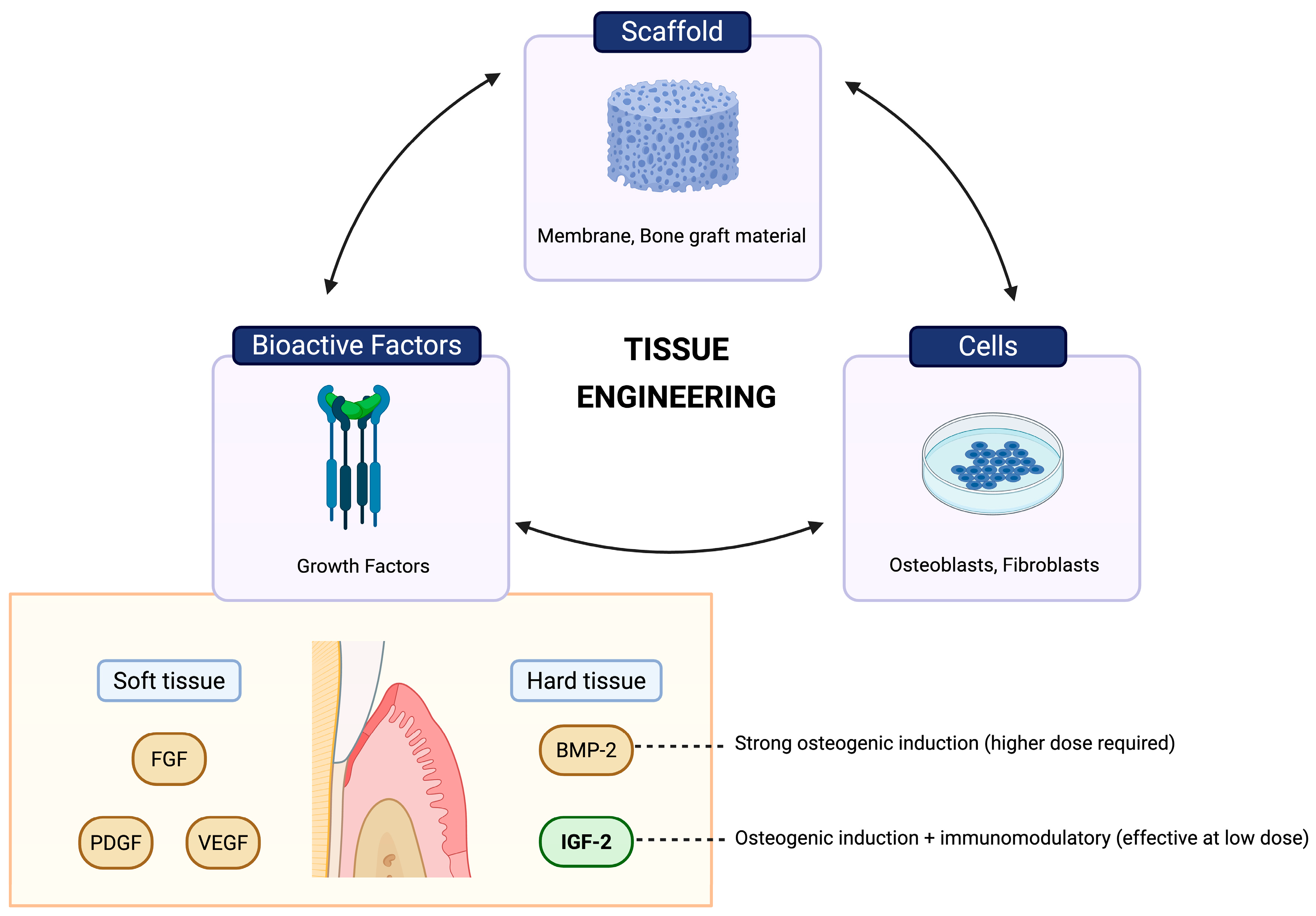
For soft tissue regeneration, FGF, PDGF, and VEGF play essential roles, while BMP and IGF are crucial for bone formation. BMP-2 is the most widely used osteoinductive molecule in clinical practice. However, it requires high doses and may cause side effects, including ectopic bone formation and potential cancer risk, raising concerns about long-term safety and cost [
12]. Another key growth factor in bone regeneration is the IGF family (IGF-1 and IGF-2), which regulates cell proliferation, differentiation, matrix production, and skeletal development. Although IGF-1 and IGF-2 are structurally similar, each plays a distinct role in bone metabolism. IGF-1 is vital after birth for supporting bone growth and tissue repair throughout life. In contrast, IGF-2 is mainly active during embryonic and fetal development, with its expression decreasing significantly after birth. Despite its lower levels in adults, IGF-2 remains essential for regulating stem cell activity, promoting osteogenic differentiation, and modulating inflammation [
13,
14].
Recent studies show that IGF-2 can enhance osteoblast differentiation and bone regeneration while reducing inflammation at low, non-toxic concentrations (5–20 ng/mL) [
13,
14]. This dual regenerative and anti-inflammatory activity makes IGF-2 a promising candidate for alveolar bone healing and periodontal tissue repair [
15]. An overview of periodontal regeneration and the roles of these growth factors is presented in
Figure 1. Given the growing interest in tissue-engineering strategies for periodontal therapy, this systematic review aims to evaluate the current evidence on the effects of IGF-2, alone or in combination with grafts or membrane materials, and to examine its safety, regenerative potential, and limitations for future clinical application in periodontal regeneration.
2. Materials and Methods
This systematic review was conducted in accordance with the Preferred Reporting Items for Systematic Reviews and Meta-Analyses (PRISMA) guidelines [
16]. A comprehensive literature search was performed in Scopus, PubMed, ScienceDirect, Wiley Online Library, and EBSCO, covering publications from January 2015 to May 2025. The search strategy used a combination of Medical Subject Headings (MeSH) and free-text terms related to Insulin-like Growth Factor 2 and periodontal or alveolar bone regeneration, linked with Boolean operators (“AND”, “OR”). The full search strings were:
- -
Scopus, ScienceDirect, Wiley Online Library, and EBSCO: (“Insulin-like Growth Factor 2” OR “IGF-2”) AND (“periodontal regeneration” OR “alveolar bone regeneration”).
- -
PubMed: (“Insulin-Like Growth Factor II” [MeSH] OR “Insulin-like Growth Factor 2” OR “IGF-2”) AND (“periodontal regeneration” OR “alveolar bone regeneration”).
Only peer-reviewed studies published in English and available in full text were included. Gray literature, conference abstracts, preprints, and non-peer-reviewed sources were excluded. The search was last updated on 5 May 2025. The review protocol was prospectively registered in the Open Science Framework (OSF) under ID: osf.io/7vr6e.
The research question was formulated using the PICO framework (Population, Intervention, Comparison, Outcome) to explore the effects of Insulin-like Growth Factor 2 (IGF-2) on periodontal and alveolar bone regeneration compared with other growth factors or no treatment. The detailed PICO criteria used to guide study eligibility are presented in
Table 1.
The study selection process was conducted manually using Microsoft Excel version 16.101.3 (Microsoft Corporation, Redmond, WA, USA). After removing duplicates, four reviewers independently screened the titles and abstracts of all identified studies, followed by full-text evaluation of potentially eligible articles. Any disagreements were resolved through discussion to reach consensus, and a fifth reviewer was consulted when consensus could not be achieved. Additional details related to the population or model (including species, defect characteristics, and sample size), the intervention (such as formulation, dosage, application method, and duration), and outcome measures and main findings will also be recorded.
Given the limited number and substantial heterogeneity of eligible preclinical studies, a quantitative meta-analysis was not performed. Instead, this systematic review was conducted as a qualitative synthesis in accordance with PRISMA guidelines.
The risk of bias in animal and in vitro studies was assessed by three reviewers using SYRCLE (Systematic Review Centre for Laboratory Animal Experimentation) and QUIN (Quality In vitro Studies) risk-of-bias tools, respectively [
17,
18]. The risk-of-bias evaluation, along with all other stages of the review process, including literature screening, full-text assessment, and data extraction, was conducted independently but was not blinded, as the reviewers were aware of the study authors, affiliations, and publication sources.
3. Results
3.1. Research Identification and Selection
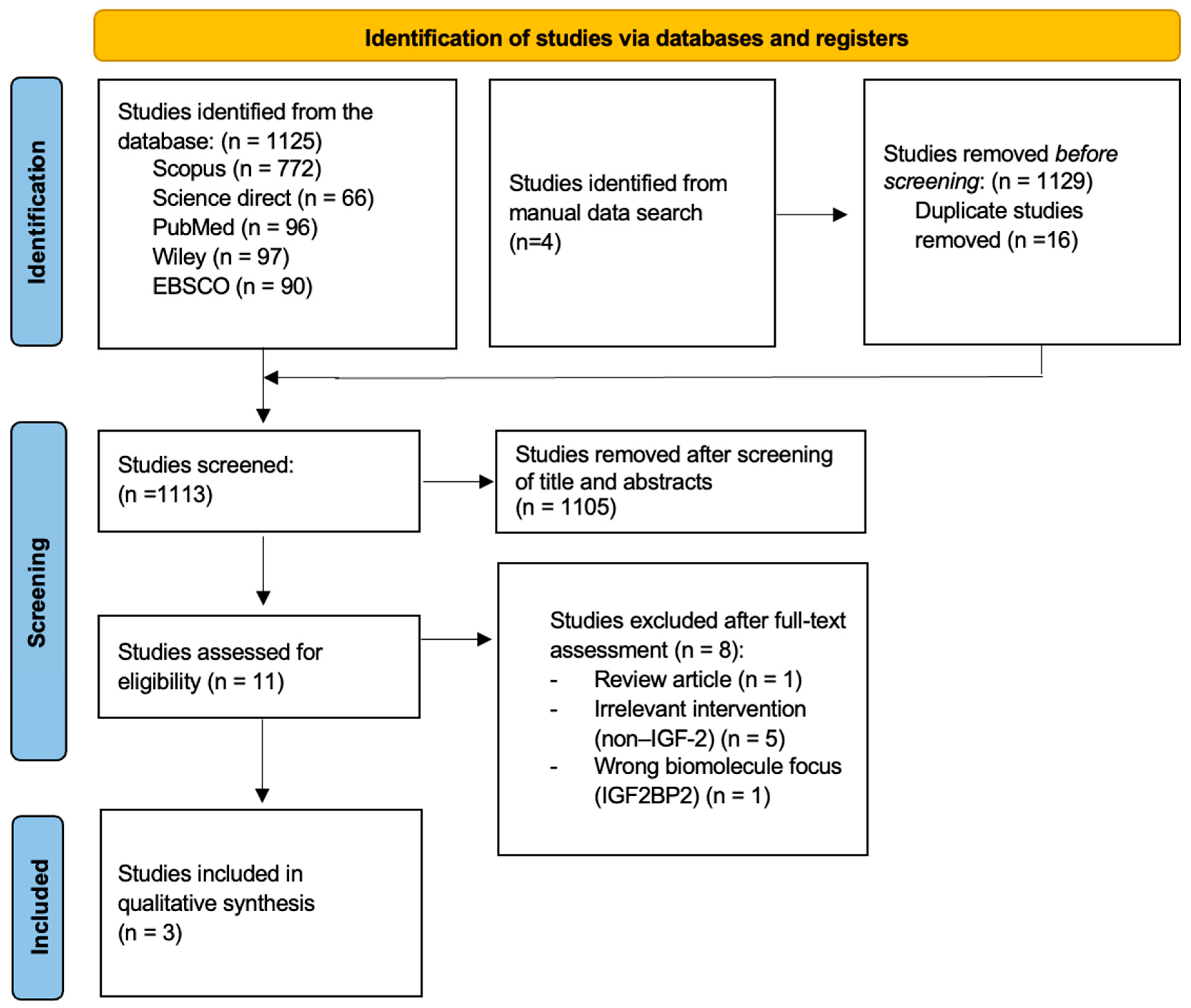
The study selection process followed the PRISMA guidelines, as illustrated in the flowchart in
Figure 2. Research identification began with a comprehensive search across five electronic databases: Scopus, ScienceDirect, PubMed, Wiley, EBSCO, and other relevant sources. The search utilized a combination of keywords such as “IGF-2,” “periodontal regeneration,” and “alveolar bone regeneration.” A total of three studies were included in the final qualitative synthesis.
The literature search across five electronic databases yielded 1125 records, comprising 772 from Scopus, 66 from ScienceDirect, 96 from PubMed, 97 from Wiley, and 90 from EBSCO. An additional four records were identified through a manual search, bringing the total to 1129. After removing 16 duplicate records, 1113 records remained for title and abstract screening. Of these, 1105 records were excluded as they did not meet the inclusion criteria. Eleven full-text articles were assessed for eligibility, and eight were excluded due to an incompatible study design. Consequently, three studies were included in the final qualitative synthesis. These included the studies by Lee et al. [
19], Wang et al. [
20], and Diao et al. [
21], which investigated the regenerative effects of IGF-2 and related molecules on periodontal and alveolar bone using in vitro and in vivo models, as summarized in
Table 2 and
Table 3.
3.2. Risk of Bias Assessment
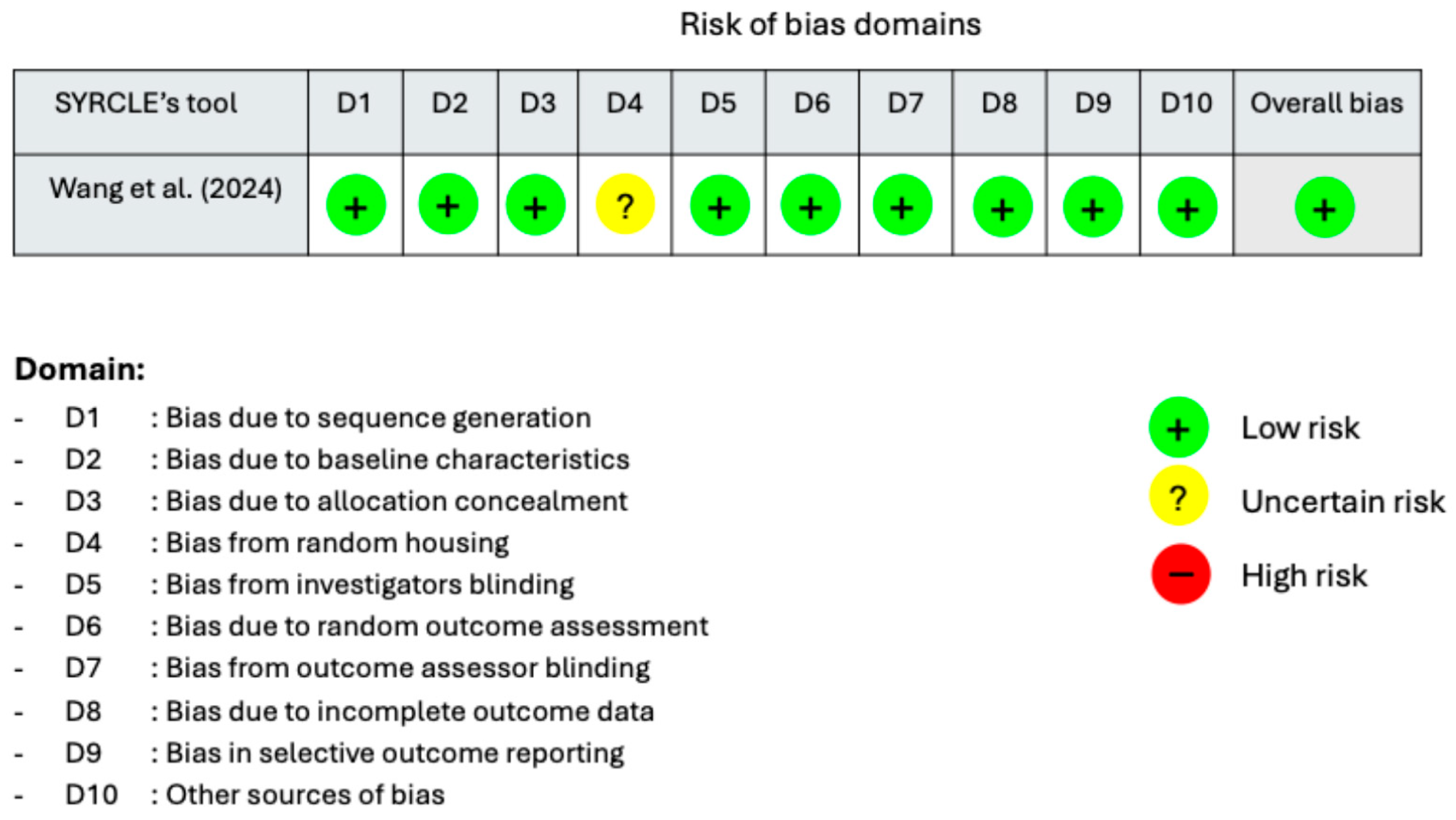
The in vivo studies were evaluated using SYRCLE’s Risk of Bias (RoB) tool, which is adapted from the Cochrane RoB tool and modified to address biases specific to animal intervention studies. This tool comprises ten domains, with judgments categorized as low, unclear, or high risk of bias [
17]. The in vivo studies by Wang et al. [
20] were generally assessed as having a low risk of bias, supported by clearly defined experimental designs and predefined outcomes. However, the study had limitations regarding random housing, which was either unclear or not reported (
Figure 3).
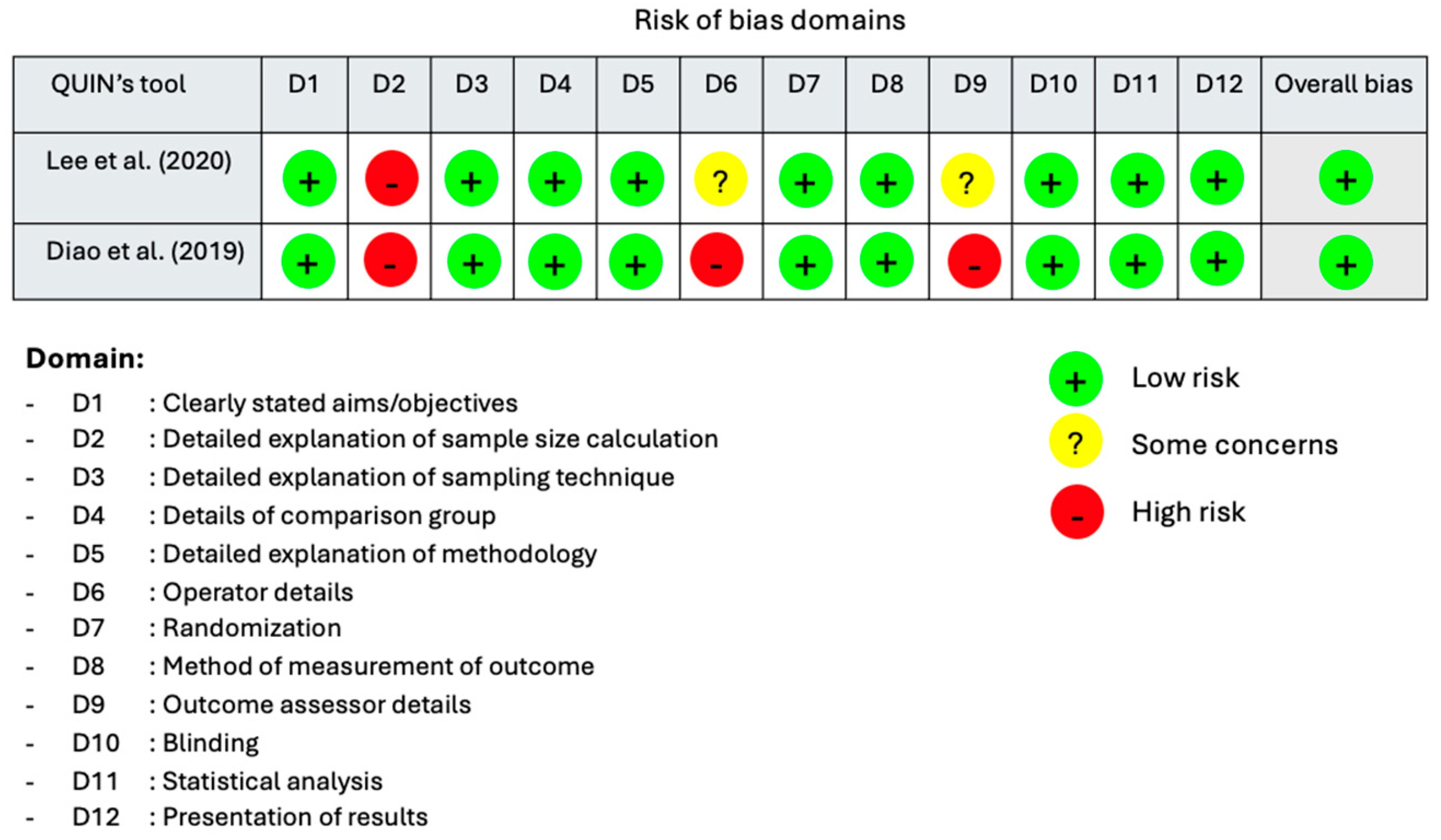
In contrast, the in vitro studies were evaluated using QUIN’s RoB tool, which includes 12 domains. Assessment results were classified as low risk of bias, some concerns, or high risk of bias [
18]. The in vitro studies by Lee et al. [
19] and Diao et al. [
21] were rated as having low risk of bias, although both had limitations in sample size calculation. In Lee et al.’s study, author contributions and assessor details were provided but not described in detail. Conversely, in Diao et al.’s study, these details were not reported at all (
Figure 4).
3.3. Characteristics of Included Studies
The included studies varied in terms of experimental design, species, cell types, interventions, and outcomes measured. Specifically, one study [
20] employed animal models of periodontitis, whereas the others used in vitro cell cultures [
19,
21]. Different cell sources, such as human bone marrow-derived mesenchymal stem cells (hBM-MSCs), stem cells from apical papilla (SCAPs), and periodontal disease models in mice, were evaluated. The primary outcomes assessed included osteogenic differentiation, alveolar bone regeneration, inflammation markers, and osteoclastogenesis [
19,
20,
21].
3.4. In Vivo Studies
Wang et al. [
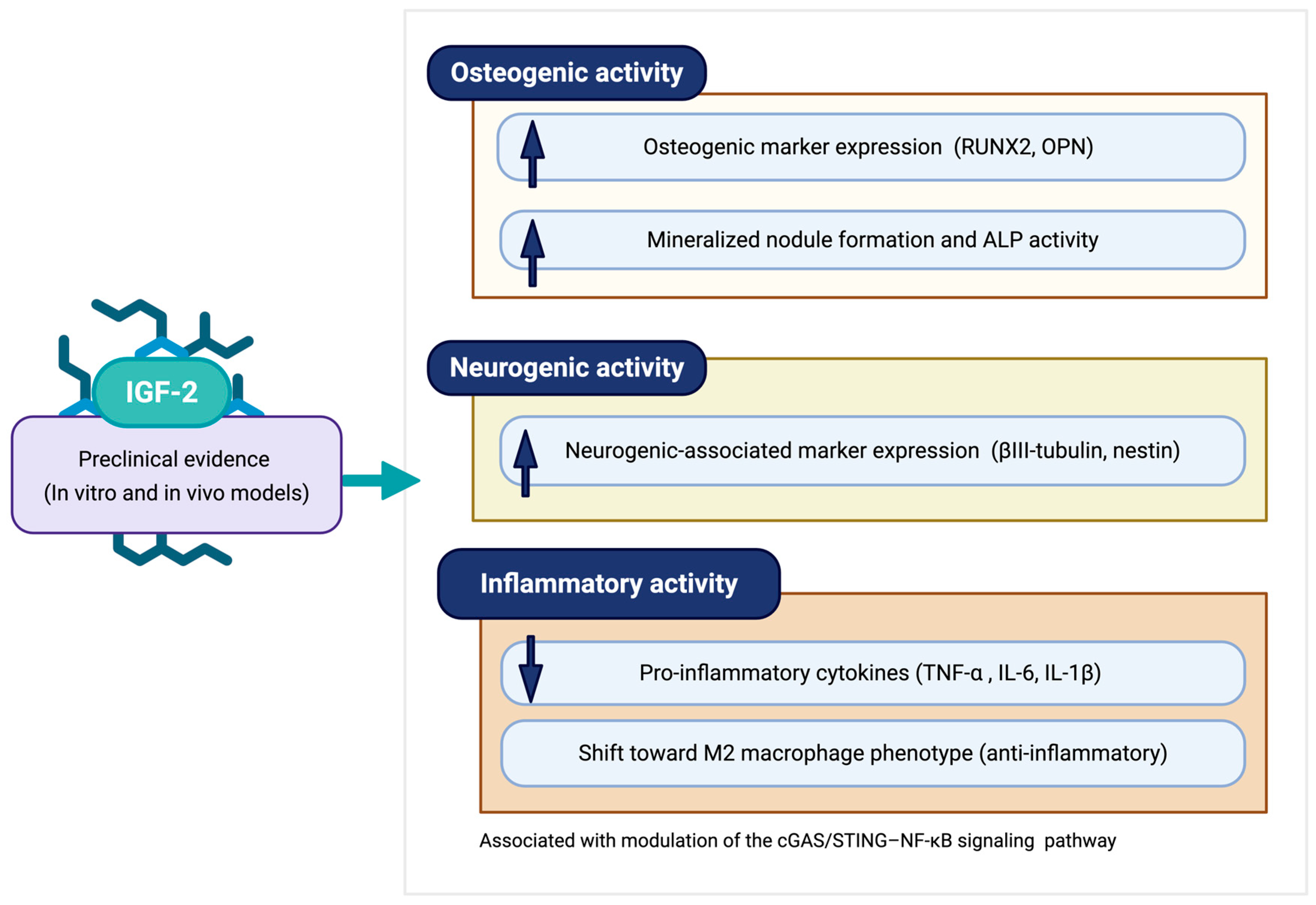
20] reported that local IGF-2 administration in a ligature-induced mouse model of periodontitis was associated with anti-inflammatory and regenerative effects. High-dose IGF-2 (10 ng/mL) reduced levels of pro-inflammatory cytokines IL-1β, IL-6, and TNF-α by approximately 50% (
p < 0.01) and decreased iNOS expression, suggesting attenuation of M1 macrophage polarization. Micro-CT and histological analyses further showed a dose-dependent increase in alveolar bone volume (BV/TV) in IGF-2–treated animals (
p < 0.05), indicating enhanced bone regeneration under experimental conditions. At the molecular level, IGF-2 treatment increased expression of osteogenic markers, including RUNX2 and OPN (40–50%;
p < 0.05), suggesting stimulation of osteogenic activity at the defect site.
Mechanistic findings further indicate that these effects may be associated with modulation of the cGAS/STING–NF-κB signaling pathway in experimental models. The cGAS/STING pathway plays a key role in innate immune responses and has been implicated in inflammation-associated bone loss in periodontal disease. Sustained activation of this pathway is linked to pro-inflammatory macrophage polarization and impaired tissue repair. Additionally, conditioned-medium experiments indicate that IGF-2 exposure may indirectly promote osteogenic differentiation of periodontal ligament fibroblasts under inflammatory conditions, supporting a potential dual role in modulating inflammation and promoting tissue regeneration.
3.5. In Vitro Studies
Lee et al. [
19] investigated the effects of IGF-2 on hBM-MSCs cultured on a DBBM scaffold. IGF-2 supplementation at 10–100 ng/mL significantly improved cell viability compared to untreated controls (
p < 0.05), while preserving normal fibroblast-like morphology. Although ALP activity showed only a mild and statistically insignificant increase at Days 7 and 14 (
p > 0.05), mineralization was significantly enhanced at these time points (
p < 0.05). Additionally, BGLAP expression was upregulated at both concentrations, indicating improved late-stage osteogenic maturation on the scaffold surface.
In contrast, Diao et al. [
21] showed that low-dose IGF-2 (5 ng/mL) significantly promoted osteo-/dentinogenic differentiation in SCAPs, as indicated by higher ALP activity, increased calcium deposits, and enhanced expression of genes involved in mineralized tissue formation. Additionally, IGF-2 upregulated neurogenic markers and stimulated cell proliferation, while proteomic analysis revealed increased secretion of proteins related to osteogenesis, neurogenesis, and cell growth. This indicates a broader regulatory role as a niche-derived factor supporting SCAP function.
Collectively, these findings indicate that IGF-2 may promote regeneration across different mesenchymal stem cell types. Its effects may vary depending on the cell source and microenvironment, with SCAPs showing stronger osteogenic and neurogenic responses, while hBM-MSCs benefit most when combined with a scaffold.
3.6. Suitability for Meta-Analysis
Due to substantial methodological heterogeneity across studies, including differences in cell sources, experimental approaches, measured outcomes, and interventions, a meta-analysis was not feasible. Instead, a narrative synthesis was conducted to integrate and interpret the results qualitatively.
3.7. Concluding Summary of Findings
Collectively, the available evidence suggests that IGF-2 may be associated with periodontal tissue regeneration and the modulation of inflammatory processes under experimental conditions. However, the current body of evidence is limited by the small number of eligible studies and substantial methodological heterogeneity. Consequently, further well-designed, standardized preclinical studies, followed by early-phase clinical investigations, are required before definitive conclusions can be drawn or quantitative synthesis can be undertaken.
4. Discussion
Periodontal regeneration involves the coordinated renewal of alveolar bone, periodontal ligament, and cementum, driven by precisely controlled cellular, molecular, and inflammatory mechanisms. This systematic review highlights the emerging therapeutic potential of IGF-2 as a bioactive molecule that can synergistically influence these mechanisms. Across the included studies, IGF-2 was associated with hard-tissue regenerative outcomes and immune response modulation, suggesting that it may warrant further investigation in the context of periodontal regeneration.
In vitro studies indicate that IGF-2 is associated with increased osteogenic activity in dental-derived stem cells. Specifically, IGF-2 treatment was linked to enhanced mineralized nodule formation and upregulation of osteogenic markers such as BGLAP, RUNX2, and OPN [
19,
21]. These observations suggest a potential role for IGF-2 across multiple stages of osteogenic differentiation. In addition, increased expression of neurogenic-associated markers, including βIII-tubulin and nestin, was reported in SCAPs after IGF-2 exposure [
21,
22]. While these findings point to broader cellular effects, the functional significance of neurogenic marker expression in periodontal regeneration remains uncertain and warrants further investigation.
Evidence from a single in vivo study suggests that IGF-2 administration may be associated with reduced inflammatory activity and enhanced alveolar bone regeneration under experimental periodontitis conditions. Wang et al. reported decreased levels of pro-inflammatory cytokines (TNF-α, IL-6, and IL-1β), suppression of M1 macrophage polarization, and increased bone volume fraction following local IGF-2 treatment [
20]. These effects were accompanied by upregulation of osteogenic markers at the defect site. Mechanistic analyses implicated modulation of the cGAS/STING–NF-κB signaling pathway, suggesting that IGF-2 may influence innate immune signaling rather than exert a nonspecific anti-inflammatory effect [
20,
23]. However, as these findings are derived from a single animal model, their reproducibility and translational relevance remain to be confirmed. Overall, available in vitro and in vivo evidence suggests that IGF-2 may be associated with osteogenic and immunomodulatory effects in experimental models of periodontal disease, although conclusions are limited by the small number of heterogeneous preclinical studies (
Figure 5).
Compared with established growth factors such as PDGF and FGF-2, which are primarily associated with angiogenesis and cellular proliferation, IGF-2 may exert combined osteogenic and immunomodulatory effects in preclinical settings [
24]. Nevertheless, direct comparative evidence is lacking, and conclusions regarding relative efficacy should be interpreted cautiously. Present data do not justify applying these findings to clinical settings.
Several important limitations must be acknowledged. Only three eligible preclinical studies were identified, and substantial heterogeneity was observed in experimental models, cell types, dosing regimens, delivery strategies, and outcome measures. This heterogeneity precluded meta-analysis and limited the ability to draw definitive conclusions. Furthermore, no clinical studies evaluating IGF-2 in periodontal regeneration have been published to date.
Risk-of-bias assessment using the SYRCLE and QUIN tools revealed consistent methodological shortcomings across the included studies. Inadequate reporting of randomization procedures, unclear allocation concealment, lack of blinding, and insufficient sample size justification raise concerns about potential selection, performance, and detection bias. These limitations may have influenced effect estimates and necessitate cautious interpretation of the reported regenerative outcomes.
Future research should prioritize well-designed, adequately powered in vivo studies with standardized methodologies and outcome measures. Early-phase clinical trials will be necessary to evaluate safety, dosing, delivery approaches, and long-term outcomes before IGF-2 can be considered for clinical application. In summary, while preclinical evidence suggests that IGF-2 may be associated with bone regenerative and immunomodulatory processes, the current evidence base remains limited and insufficient to support clinical translation at this stage.
5. Conclusions
Based on available preclinical evidence, IGF-2 is associated with enhanced osteogenic activity, modulation of inflammatory responses, and increased expression of neurogenic markers in experimental models of periodontal and alveolar bone regeneration. However, the current evidence is limited to a small number of heterogeneous in vitro and in vivo studies, with variability in experimental design, cell types, dosing strategies, and outcome measures. Consequently, the findings should be interpreted with caution. Further well-designed, standardized in vivo studies, followed by early-phase clinical investigations, are required to clarify the safety profile, optimal dosage, delivery strategies, and potential clinical relevance of IGF-2 in periodontal regenerative therapy.
Author Contributions
Conceptualization, K.N.K. and N.A.H.; Methodology, K.N.K. and N.A.H.; Software, K.N.K.; Data Curation, K.N.K.; Formal Analysis, K.N.K. and N.A.H.; Investigation, K.N.K.; Validation, Y.S., F.M.T., N.M.N.A. and N.A.H.; Risk of Bias Assessment, F.M.T. and N.A.H.; Writing—Original Draft Preparation, K.N.K.; Writing—Review and Editing, K.N.K., Y.S., F.M.T., N.M.N.A. and N.A.H.; Supervision, Y.S. and N.A.H.; Project Administration, Y.S. and N.A.H.; Funding Acquisition, Y.S., F.M.T. and N.A.H. All authors have read and agreed to the published version of the manuscript.
Funding
The APC is funded by the Faculty of Dentistry, Universitas Indonesia.
Data Availability Statement
Additional data related to this article are available from the corresponding author upon reasonable request.
Acknowledgments
The authors thank the Faculty of Dentistry, Universitas Indonesia, for supporting the publication of this manuscript.
Conflicts of Interest
The authors declare no conflicts of interest.
Abbreviations
The following abbreviations are used in this manuscript:
| ALP | Alkaline phosphatase |
| BGLAP | Bone gamma-carboxyglutamate protein (osteocalcin gene) |
| BMP | Bone morphogenetic protein |
| BoP | Bleeding on probing |
| BV/TV | Bone Volume over Total Volume |
| cGAS | cyclic GMP–AMP synthase |
| DBBM | Deproteinized bovine bone mineral |
| DSPP | Dentin sialo phosphoprotein |
| FGF | Fibroblast growth factor |
| GBR | Guided bone regeneration |
| GTR | Guided tissue regeneration |
| hBM-MSCs | Human bone marrow–derived mesenchymal stem cells |
| IGF | Insulin-like growth factor |
| IL | Interleukin |
| iNOS | Inducible nitric oxide synthase (M1 macrophage marker) |
| M1 | Macrophage pro-inflammatory phenotype |
| M2 | Macrophage anti-inflammatory phenotype |
| MESH | Medical Subject Headings |
| OCN | Osteocalcin |
| OPN | Osteopontin |
| OSF | Open Science Framework |
| PDGF | Platelet-derived growth factor; |
| PICO | Population, intervention, comparison, and outcome |
| PRISMA | Preferred Reporting Items for Systematic Reviews and Meta-Analyses |
| QUIN | Quality assessment tool for in vitro studies |
| RCT | Randomized controlled trial |
| RoB | Risk of bias |
| RUNX2 | Runt-related transcription factor 2 |
| SCAPs | Stem cells from apical papilla |
| STING | Stimulator of interferon genes |
| SYRCLE | Systematic Review Centre for Laboratory Animal Experimentation |
| TNF-α | Tumor necrosis factor-alpha |
| VEGF | Vascular endothelial growth factor |
| WHO | World Health Organization |
References
- Preshaw, P.M.; Tan, K.S. Periodontal Disease Pathogenesis. In Newman and Carranza’s Clinical Periodontology and Implantology, 14th ed.; Newman, M.G., Klokkevold, P.R., Elangovan, S., Kapila, Y., Carranza, F.A., Takei, H., Eds.; Elsevier: Amsterdam, The Netherlands, 2023; pp. 93–114. [Google Scholar]
- Chapple, I.L.C.; Mealey, B.L.; Van Dyke, T.E.; Bartold, P.M.; Dommisch, H.; Eickholz, P.; Geisinger, M.L.; Genco, R.J.; Glogauer, M.; Goldstein, M.; et al. Periodontal Health and Gingival Diseases and Conditions on an Intact and a Reduced Periodontium: Consensus Report of Workgroup 1 of the 2017 World Workshop on the Classification of Periodontal and Peri-Implant Diseases and Conditions. J. Periodontol. 2018, 89, S74–S84. [Google Scholar] [CrossRef]
- World Health Organization. Global Oral Health Status Report: Towards Universal Health Coverage for Oral Health by 2030; World Health Organization: Geneva, Switzerland, 2023.
- Riskesdas 2018 Team. National Report of Basic Health Research (Riskesdas) 2018; Ministry of Health of the Republic of Indonesia: Jakarta, Indonesia, 2019; pp. 204–205.
- Tonetti, M.S.; Greenwell, H.; Kornman, K.S. Staging and Grading of Periodontitis: Framework and Proposal of a New Classification and Case Definition. J. Clin. Periodontol. 2018, 45, S149–S161. [Google Scholar] [CrossRef]
- Tsuchida, S.; Nakayama, T. Recent Clinical Treatment and Basic Research on the Alveolar Bone. J. Biomed. 2023, 11, 843. [Google Scholar] [CrossRef]
- Zhao, L.; Wei, Y.; Xu, T.; Zhang, B.; Hu, W.; Chung, K.H. Changes in Alveolar Process Dimensions Following Extraction of Molars with Advanced Periodontal Disease: A Clinical Pilot Study. Clin. Oral Implant. Res. 2019, 30, 324–335. [Google Scholar] [CrossRef] [PubMed]
- Ramanauskaite, A.; Becker, K.; Cafferata, E.A.; Schwarz, F. Clinical Efficacy of Guided Bone Regeneration in Peri-implantitis Defects. A Network Meta-analysis. Periodontol. 2000 2023, 93, 236–253. [Google Scholar] [CrossRef] [PubMed]
- Buser, D.; Urban, I.; Monje, A.; Kunrath, M.F.; Dahlin, C. Guided Bone Regeneration in Implant Dentistry: Basic Principle, Progress over 35 Years, and Recent Research Activities. Periodontol. 2000 2023, 93, 9–25. [Google Scholar] [CrossRef]
- Nyman, S.; Gottlow, J.; Lindhe, J.; Karring, T.; Wennstrom, J. New attachment formation by guided tissue regeneration. J. Periodontal Res. 1987, 22, 252–254. [Google Scholar] [CrossRef]
- Takayama, T.; Imamura, K.; Yamano, S. Growth Factor Delivery Using a Collagen Membrane for Bone Tissue Regeneration. J. Biomol. 2023, 13, 809. [Google Scholar] [CrossRef]
- Cicciù, M. Growth Factor Applied to Oral and Regenerative Surgery. Int. J. Mol. Sci. 2020, 21, 7752. [Google Scholar] [CrossRef]
- Tamura, I.; Kamada, A.; Goda, S.; Yoshikawa, Y.; Domae, E.; Ikeo, T. Insulin-like Growth Factor-II Promotes Proliferation of Human Periodontal Ligament Fibroblasts via Expression of Early Growth Response Transcription Factors. J. Oral Tissue Eng. 2012, 10, 13–20. [Google Scholar]
- Wang, C.; Li, X.; Dang, H.; Liu, P.; Zhang, B.; Xu, F. Insulin-like growth factor 2 regulates the proliferation and differentiation of rat adipose-derived stromal cells via IGF-1R and IR. Cytotherapy 2019, 21, 619–630. [Google Scholar] [CrossRef]
- Ma, X.X.; Zhou, X.Y.; Feng, M.G.; Ji, Y.T.; Song, F.F.; Tang, Q.C.; He, Q.; Zhang, Y.F. Dual Role of IGF2BP2 in Osteoimmunomodulation during Periodontitis. J. Dent. Res. 2024, 103, 208–217. [Google Scholar] [CrossRef]
- Moher, D.; Liberati, A.; Tetzlaff, J.; Altman, D.G. Preferred Reporting Items for Systematic Reviews and Meta-Analyses: The PRISMA Statement. PLoS Med. 2009, 6, e1000097. [Google Scholar] [CrossRef]
- Hooijmans, C.R.; Rovers, M.M.; de Vries, R.B.M.; Leenaars, M.; Ritskes-Hoitinga, M.; Langendam, M. SYRCLE’s risk of bias tool for animal studies. BMC Med. Res. Methodol. 2014, 14, 43. [Google Scholar] [CrossRef]
- Sheth, V.H.; Shah, N.P.; Jain, R.; Bhanushali, N.; Bhatnagar, V. Development and validation of a risk-of-bias tool for assessing in vitro studies conducted in dentistry: The QUIN. J. Prosthet. Dent. 2024, 131, 1038–1042. [Google Scholar] [CrossRef] [PubMed]
- Lee, H.; Min, S.K.; Park, Y.; Park, J. The role of insulin-like growth factor-2 on the cellular viability and differentiation to the osteogenic lineage and mineralization of stem cells cultured on deproteinized bovine bone mineral. Appl. Sci. 2020, 1, 5471. [Google Scholar] [CrossRef]
- Wang, T.; Tang, Y.; Xia, Y.; Zhang, Q.; Cao, S.; Bie, M.; Kang, F. IGF2 promotes alveolar bone regeneration in murine periodontitis via inhibiting cGAS/STING-mediated M1 macrophage polarization. J. Int. Immunopharmacol. 2024, 132, 111984. [Google Scholar] [CrossRef] [PubMed]
- Diao, S.; Yang, H.; Cao, Y.; Yang, D.; Fan, Z. IGF2 enhanced the osteo-/dentinogenic and neurogenic differentiation potentials of stem cells from apical papilla. J. Oral Rehabil. 2019, 47, 55–56. [Google Scholar] [CrossRef]
- He, P.; Zheng, L.; Zhou, X. IGFs in Dentin Formation and Regeneration: Progress and Remaining Challenges. Stem Cells Int. 2022, 2022, 3737346. [Google Scholar] [CrossRef] [PubMed]
- Anand, D.B.; Ramamurthy, J.; Kannan, B.; Jayaseelan, V.P.; Arumugam, P. Altered expression of insulin-like growth factor 2 mRNA binding protein two is associated with periodontal disease—A case-control analysis. Hum. Gene 2024, 42, 201338. [Google Scholar] [CrossRef]
- Seshima, F.; Bizenjima, T.; Aoki, H.; Imamura, K.; Kita, D.; Irokawa, D.; Matsugami, D.; Kitamura, Y.; Yamashita, K.; Sugito, H.; et al. Periodontal Regenerative Therapy Using rhFGF-2 and Deproteinized Bovine Bone Mineral versus rhFGF-2 Alone: 4-Year Extended Follow-Up of a Randomized Controlled Trial. Biomolecules 2022, 12, 1682. [Google Scholar] [CrossRef] [PubMed]
| Disclaimer/Publisher’s Note: The statements, opinions and data contained in all publications are solely those of the individual author(s) and contributor(s) and not of MDPI and/or the editor(s). MDPI and/or the editor(s) disclaim responsibility for any injury to people or property resulting from any ideas, methods, instructions or products referred to in the content. |
© 2026 by the authors. Published by MDPI on behalf of the Lithuanian University of Health Sciences. Licensee MDPI, Basel, Switzerland. This article is an open access article distributed under the terms and conditions of the Creative Commons Attribution (CC BY) license.




 ,
,