Article

The Evolution of Pulmonary Hypertension and Its Prognostic Implications Post-TAVI—Single Center Experience

by
Luiza Cristina Dumitrof
1,2,*,†,
Igor Nedelciuc
2,
Mihai Roca
1,3,†,
Radu Crișan-Dabija
1,4,
Traian Mihăescu
1 and
Grigore Tinică
1,2
1
Department of Medical Specialties (I and III) or Surgical Specialties (I), University of Medicine and Pharmacy “Grigore T. Popa”, University Street nr 16, 700115 Iaşi, Romania
2
Institute of Cardiovascular Diseases “Prof. Dr. George I.M. Georgescu”, 700503 Iași, Romania
3
Clinical Rehabilitation Hospital, Cardiovascular Rehabilitation Clinic, Pantelimon Halipa Street nr 14, 700661 Iaşi, Romania
4
Pulmonology Department, Clinic of Pulmonary Diseases, 700115 Iasi, Romania
*
Author to whom correspondence should be addressed.
These authors contributed equally to this work.
Medicina 2022, 58(9), 1182; https://doi.org/10.3390/medicina58091182

Submission received: 31 July 2022 / Revised: 25 August 2022 / Accepted: 26 August 2022 / Published: 30 August 2022

Abstract

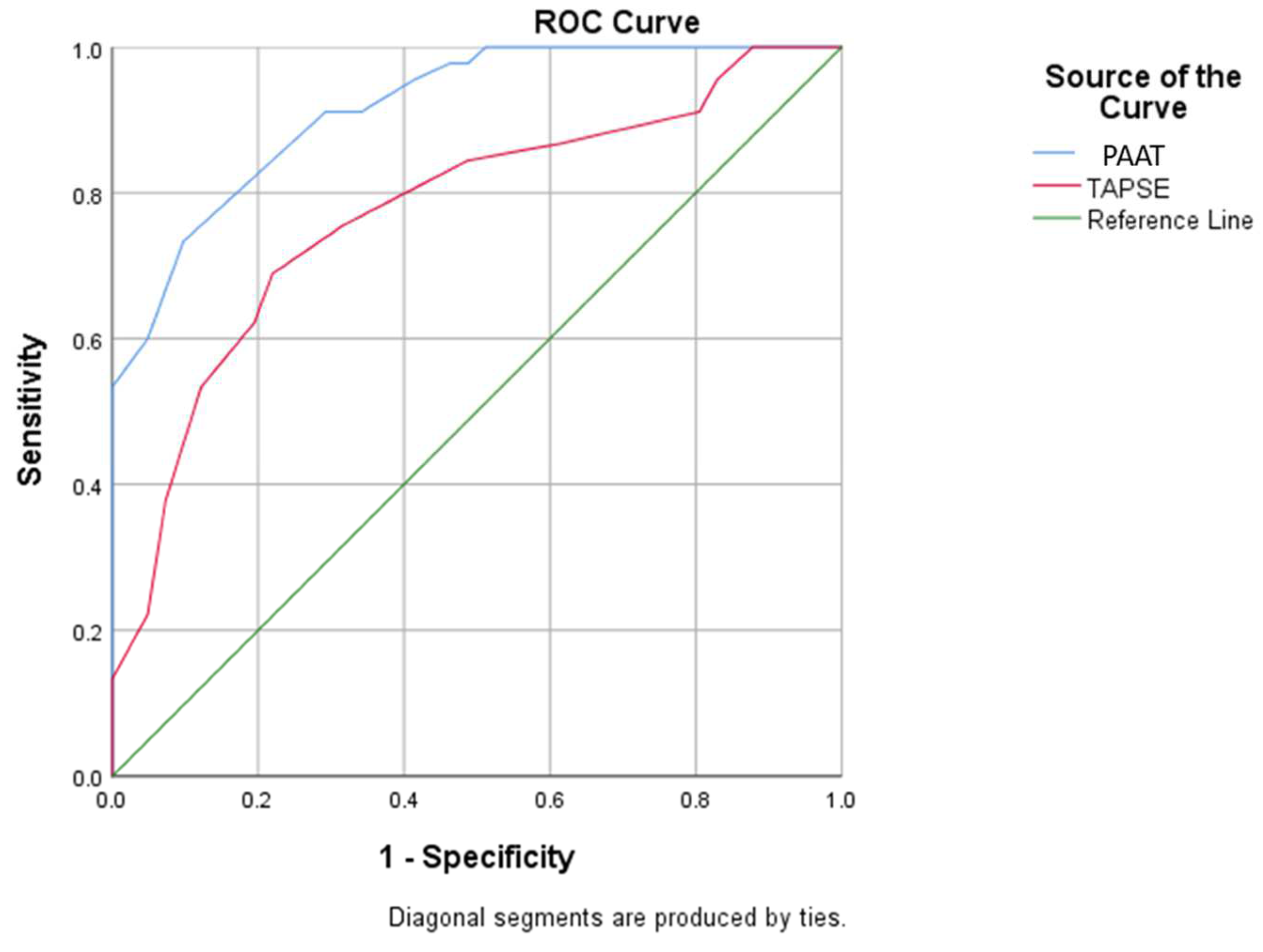
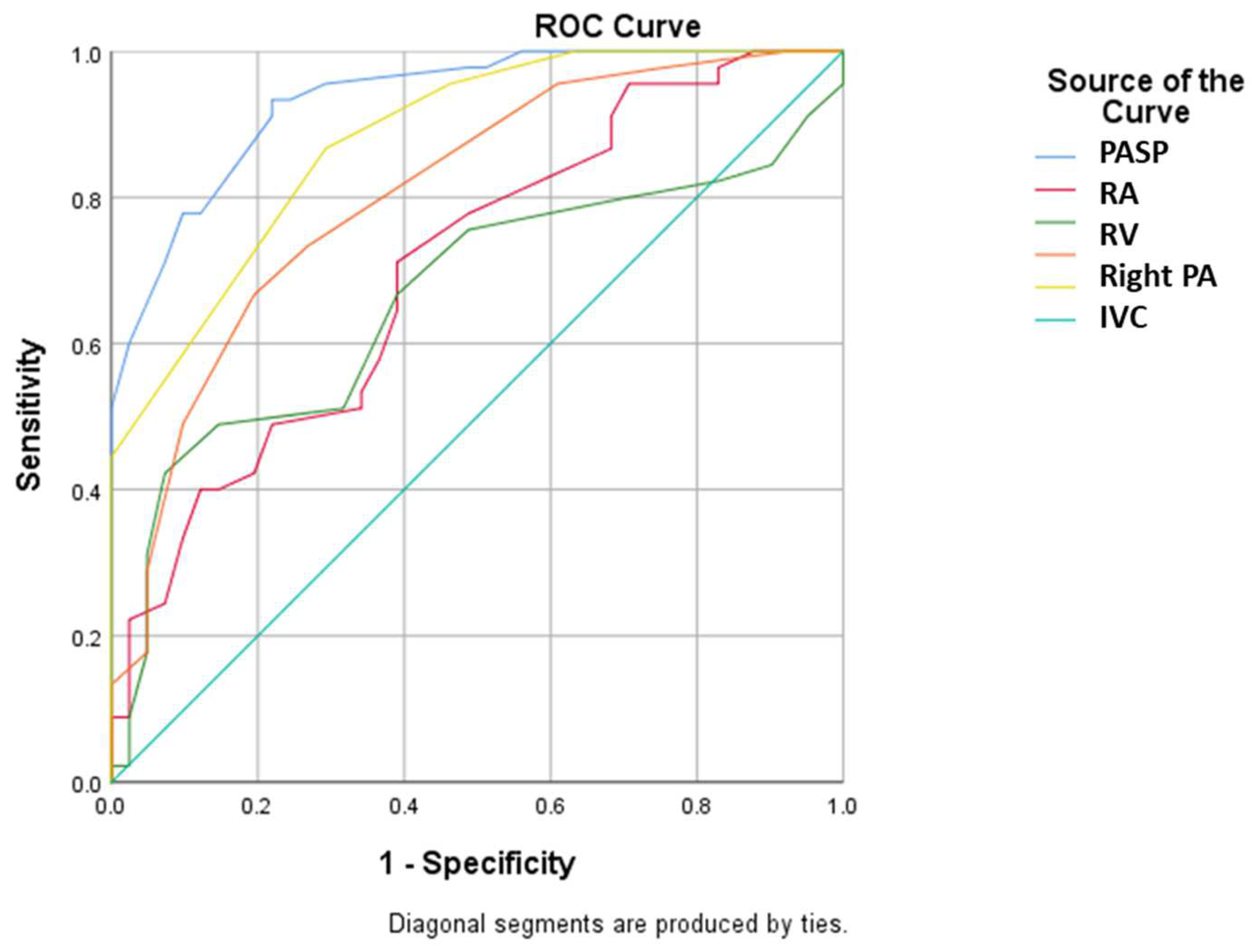
Background and Objectives: Since the first transcatheter aortic valve implantation (TAVI) procedure was performed in 2002, advances in technology and refinement of the method have led to its widespread use in patients with severe aortic stenosis (AS) and high surgical risk. We aim to identify the impact of TAVI on the clinical and functional status of patients with severe AS at the one-month follow-up and to identify potential predictors associated with the evolution of pulmonary hypertension (PH) in this category of patients. Materials and Methods: We conducted a prospective study which included 86 patients diagnosed with severe AS undergoing TAVI treatment. We analyzed demographics, clinical and echocardiographic parameters associated with AS and PH both at enrolment and at the 30-day follow-up. Results: In our study, the decrease of EUROSCORE II score (p < 0.001), improvement of angina (p < 0.001) and fatigue (p < 0.001) as clinical benefits as well as a reduction in NYHA functional class in patients with heart failure (p < 0.001) are prognostic predictors with statistical value. Regression of left ventricular hypertrophy (p = 0.001), increase in the left ventricle ejection fraction (p = 0.007) and improvement of diastolic dysfunction (p < 0.001) are echocardiographic parameters with a prognostic role in patients with severe AS undergoing TAVI. The pulmonary artery acceleration time (PAAT) (p < 0.001), tricuspid annular plane systolic excursion (TAPSE) (p = 0.020), pulmonary arterial systolic pressure (PASP) (p < 0.001) and the TAPSE/PASP ratio (p < 0.001) are statistically significant echocardiographic parameters in our study that assess both PH and its associated prognosis in patients undergoing TAVI. Conclusions: PAAT, TAPSE, PASP and the TAPSE/PASP ratio are independent predictors that allow the assessment of PH and its prognostic implications post-TAVI.
Keywords: transcatheter aortic valve implantation; pulmonary hypertension; aortic stenosis; heart failure transcatheter aortic valve implantation; pulmonary hypertension; aortic stenosis; heart failure