Article

Evaluation of the Shaping Ability of Three Thermally Treated Nickel–Titanium Endodontic Instruments on Standardized 3D-printed Dental Replicas Using Cone-Beam Computed Tomography

by
Laura Orel
1,†,
Oana-Alexandra Velea-Barta
1,*,
Luminita-Maria Nica
2,*,
Andreea-Simona Boscornea-Pușcu
1,†,
Razvan Mihai Horhat
2,
Roxana-Maria Talpos-Niculescu
2,
Cosmin Sinescu
3,
Virgil-Florin Duma
4,
Dan-Dumitru Vulcanescu
5,
Florin Topala
6 and
Meda-Lavinia Negrutiu
3
1
3rd Department, Discipline of Restorative Dentistry and Endodontics, Faculty of Dental Medicine, Victor Babes University of Medicine and Pharmacy, 300041 Timisoara, Romania
2
3rd Department, Discipline of Restorative Dentistry and Endodontics, Faculty of Dental Medicine, TADERP Research Center, Victor Babes University of Medicine and Pharmacy, 300041 Timisoara, Romania
3
1st Department, Discipline of Prosthesis Technology and Dental Materials, Faculty of Dental Medicine, Research Center in Dental Medicine Using Conventional and Alternative Technologies, Victor Babes University of Medicine and Pharmacy, 300070 Timisoara, Romania
4
3OM Optomechatronics Group, Faculty of Engineering, Aurel Vlaicu University of Arad, 310130 Arad, Romania
5
Emergency Hospital for Children Louis Turcanu, 300011 Timisoara, Romania
6
3rd Department, Discipline of Prosthetic Dentistry, Faculty of Dental Medicine, Victor Babes University of Medicine and Pharmacy, 300041 Timisoara, Romania
*
Authors to whom correspondence should be addressed.
These authors contributed equally to this work.
Medicina 2021, 57(9), 901; https://doi.org/10.3390/medicina57090901

Submission received: 30 July 2021 / Revised: 25 August 2021 / Accepted: 26 August 2021 / Published: 29 August 2021
(This article belongs to the Special Issue Research on Dental Biomaterials and Equipment)

Abstract

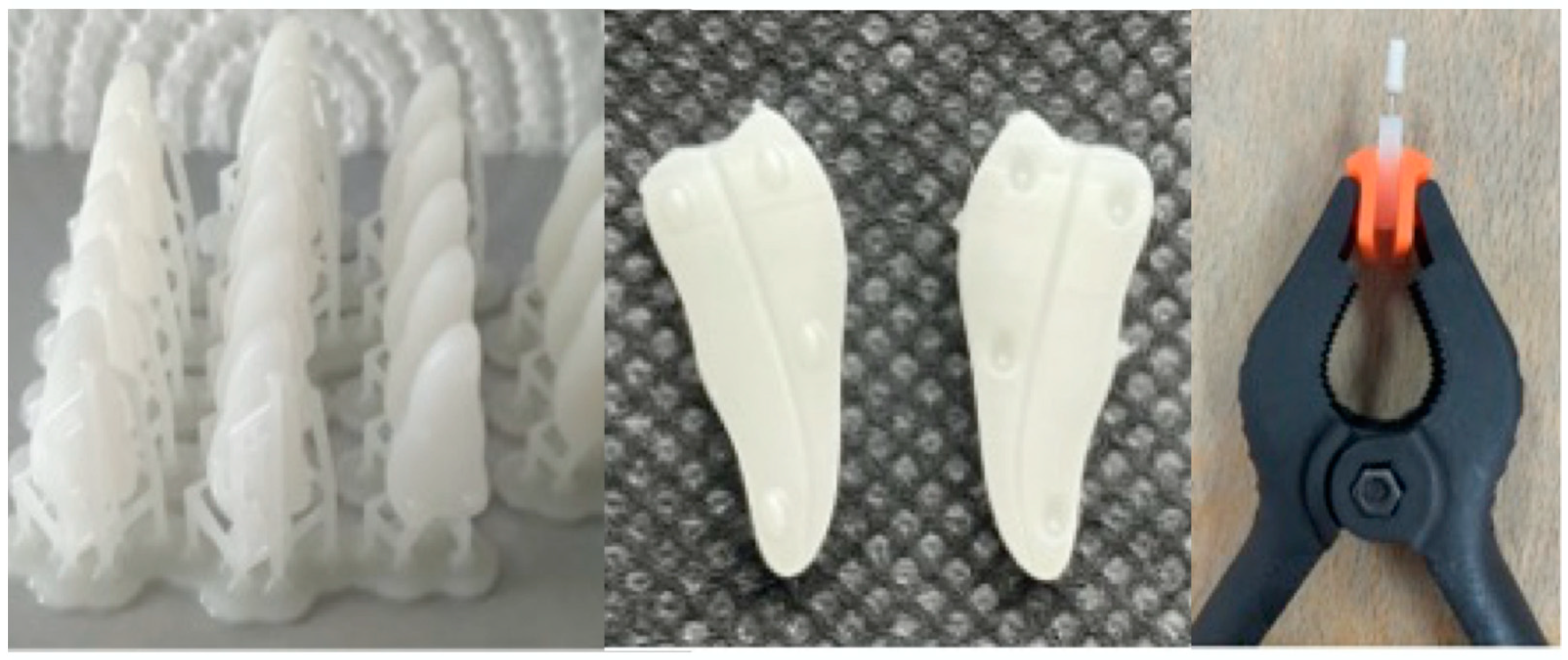
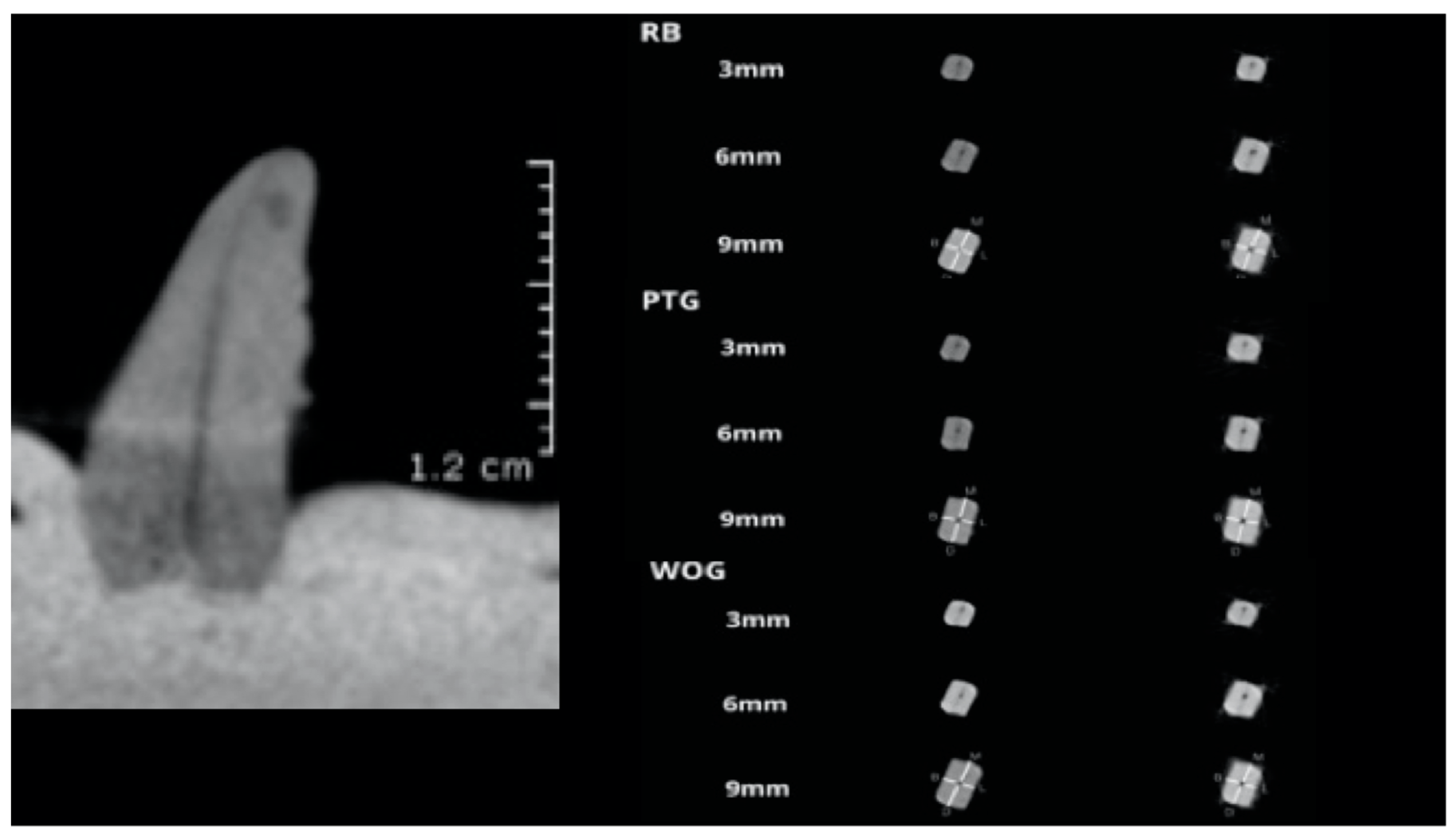
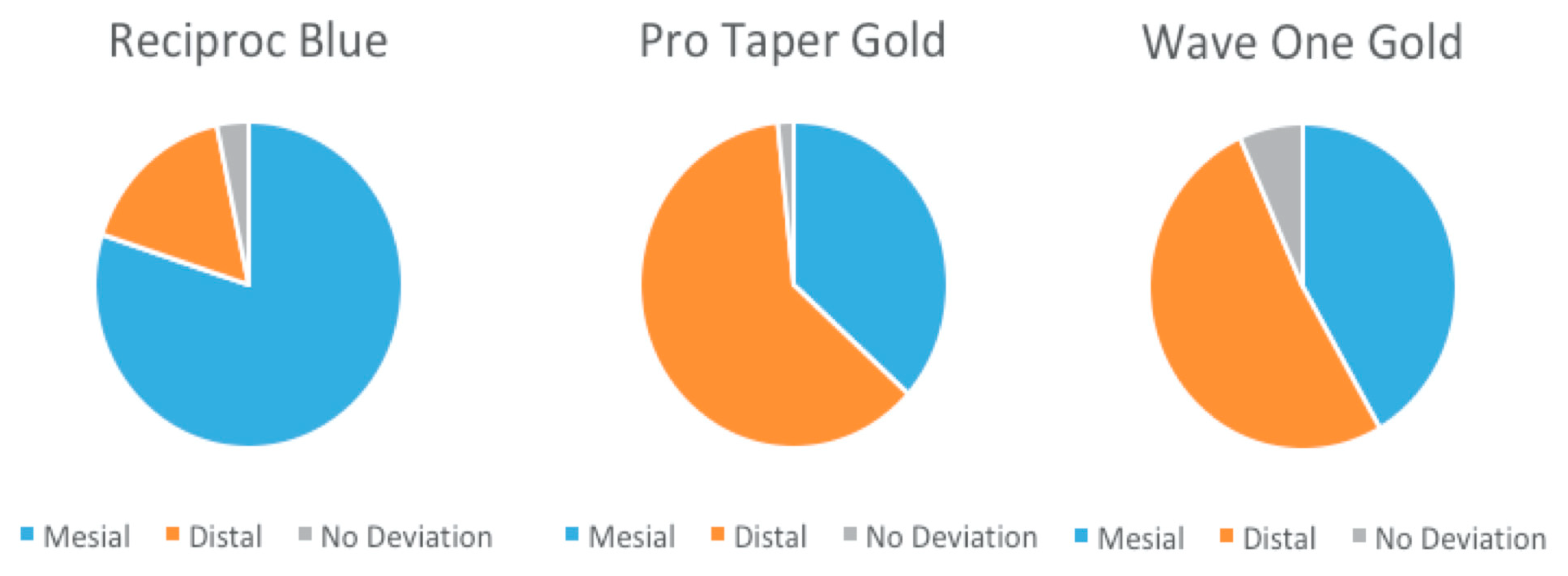
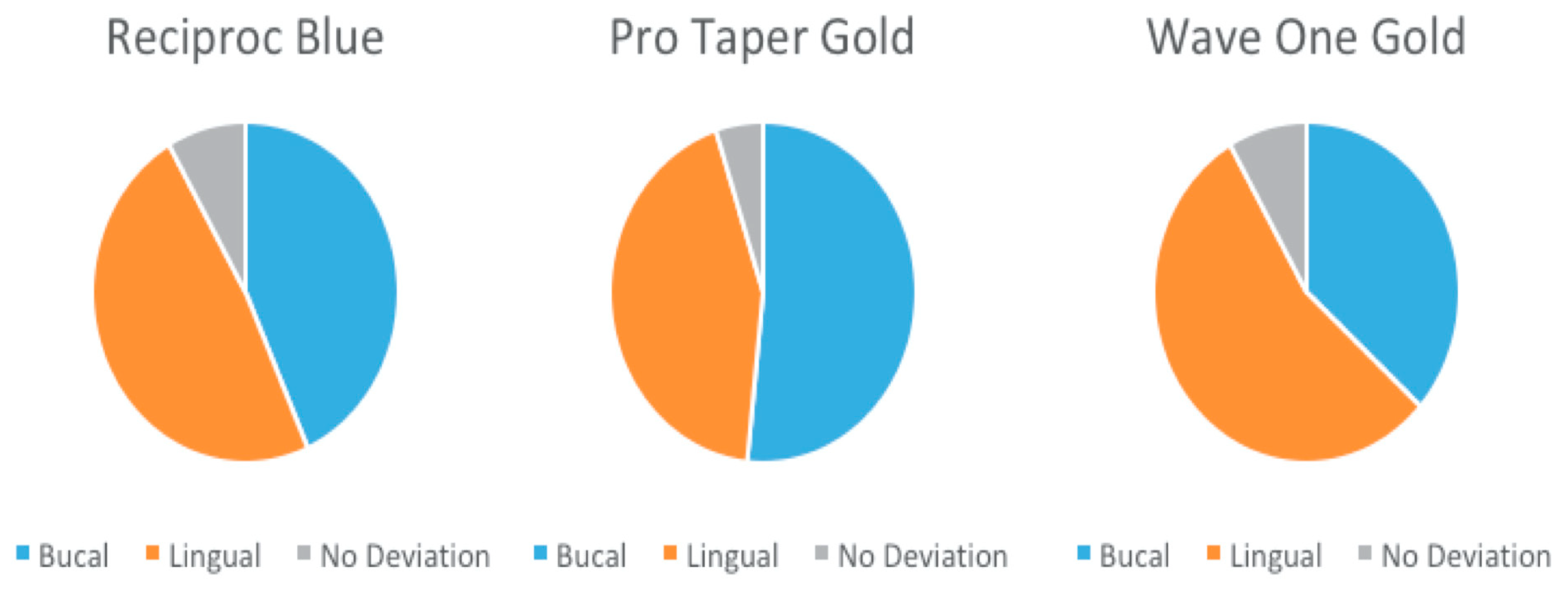
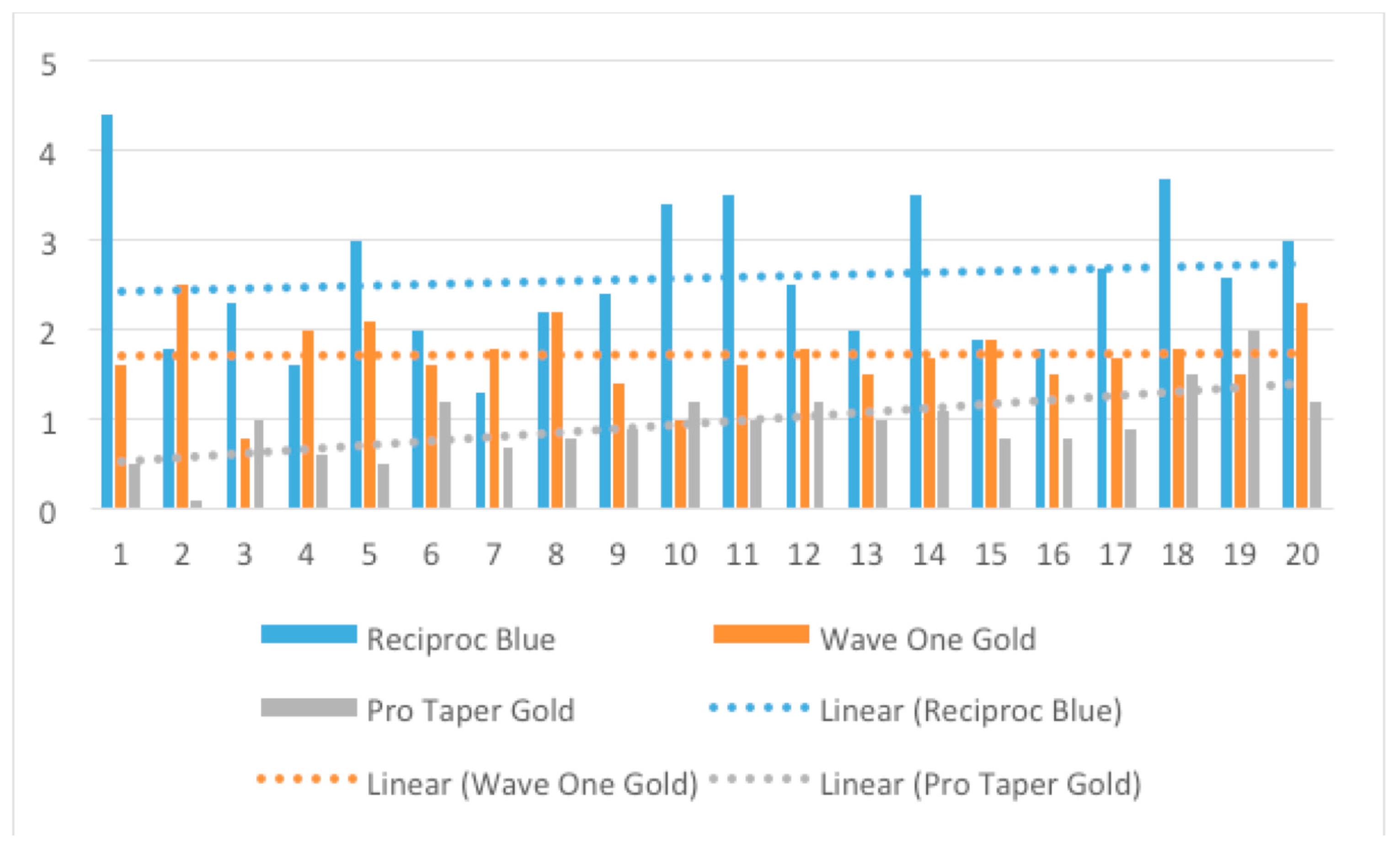
Background and Objectives: The aim of the present study is to compare the efficacy of three root canal preparation systems in the shaping of 3D-printed root canal replicas of single rooted teeth. Materials and Methods: Sixty 3D-printed root canal replicas were produced and divided into three groups, each consisting of twenty samples. Each group was shaped with a different instrument: Reciproc Blue R25/08 (VDW GmbH, Munich, Gemany), WaveOne Gold Primary 25/07 (Dentsply Sirona, Ballaigues, Switzerland), and ProTaper Gold F2 25/08 (Denstply Sirona). To ensure the reproducibility of pre- and post-operative CBCT images of the root canals, the endodontic printed replicas were placed in a mould of silicon impression material. A cone-beam computed tomography (CBCT) software was used to compare pre- and post-instrumentation images collected at three levels of the root canal length: 3, 6, and 9 mm from the apical foramen. The amount of transportation, centring ability, and curvature angle after shaping were evaluated for each system. The results were statistically analysed and compared using one-way analysis of variance (ANOVA). Results: Regarding the transportation of the root canal after shaping, significant differences between groups at 3 mm (p = 0.010721) and 6 mm (p = 0.000046) were recorded in the mesio-distal direction, while in the bucco-lingual significant differences were only observed at 6 mm (p = 0.000554). Reciproc Blue removed more dentin from the mesial and buccal wall of the root canal. When evaluating the centring ability of the three systems, significant differences were observed between the groups at the level of 9 mm (p = 0.037258) in the mesio-distal direction, and at the level of 6 mm (p = 0.038197) in the bucco-lingual direction. Significant differences of the canal curvature angle after shaping were also observed between groups (p = 0.000001). Reciproc Blue straightened the curvature the most, while ProTaper Gold the least. Conclusions: All systems produced minor root canal transportation. No instrument was able to achieve a perfect centring preparation of the root canal. All systems produced a small degree of root canal straightening.
Keywords: 3D-printed dental replicas; endodontic instruments; thermally treated; centring ability; canal transportation; cone-beam computed tomography (CBCT) 3D-printed dental replicas; endodontic instruments; thermally treated; centring ability; canal transportation; cone-beam computed tomography (CBCT)