Article

Similar Allergenicity to Different Artemisia Species Is a Consequence of Highly Cross-Reactive Art v 1-Like Molecules

1
Department of Biosciences, University of Salzburg, 5020 Salzburg, Austria
2
Institute of Immunology, Center for Pathophysiology, Infection and Immunology, Medical University of Vienna, 1090 Vienna, Austria
3
Associated Centers for Molecular Allergology, 04100 Rome, Italy
4
Center for Molecular Allergology, IDI-IRCCS, 00167 Rome, Italy
5
Institute of Pathophysiology and Allergy Research, Center for Pathophysiology, Infectiology and Immunology, Medical University of Vienna, 1090 Vienna, Austria
*
Author to whom correspondence should be addressed.
Authors contributed equally.
Current address: Department of Biological and Medical Sciences, University of British Columbia, Vancouver, BC V6T 1Z3, Canada.
§
Current address: EB House Austria, Research Program for Molecular Therapy of Genodermatoses, Department of Dermatology, University Hospital of the Paracelsus Medical University Salzburg, 5020 Salzburg, Austria.
Medicina 2019, 55(8), 504; https://doi.org/10.3390/medicina55080504

Submission received: 29 June 2019 / Revised: 12 August 2019 / Accepted: 13 August 2019 / Published: 20 August 2019
(This article belongs to the Special Issue Pollen Allergies)

Abstract

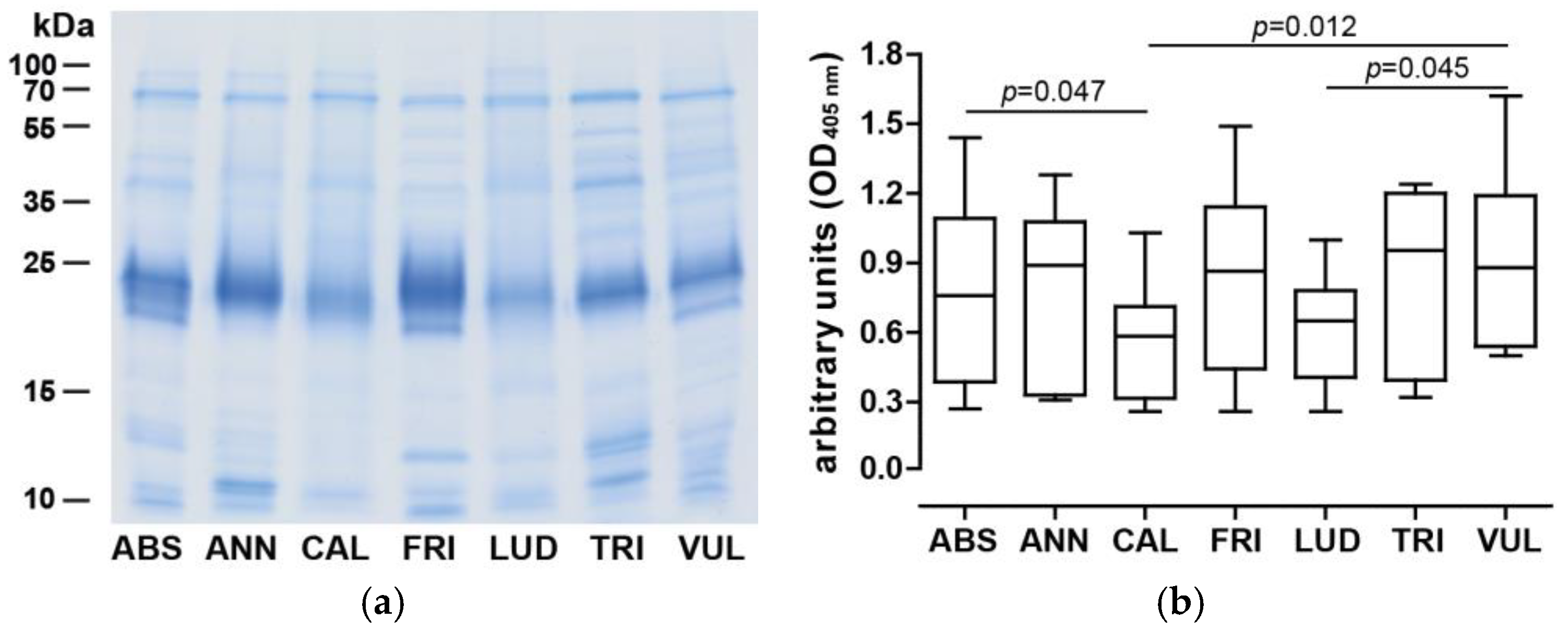
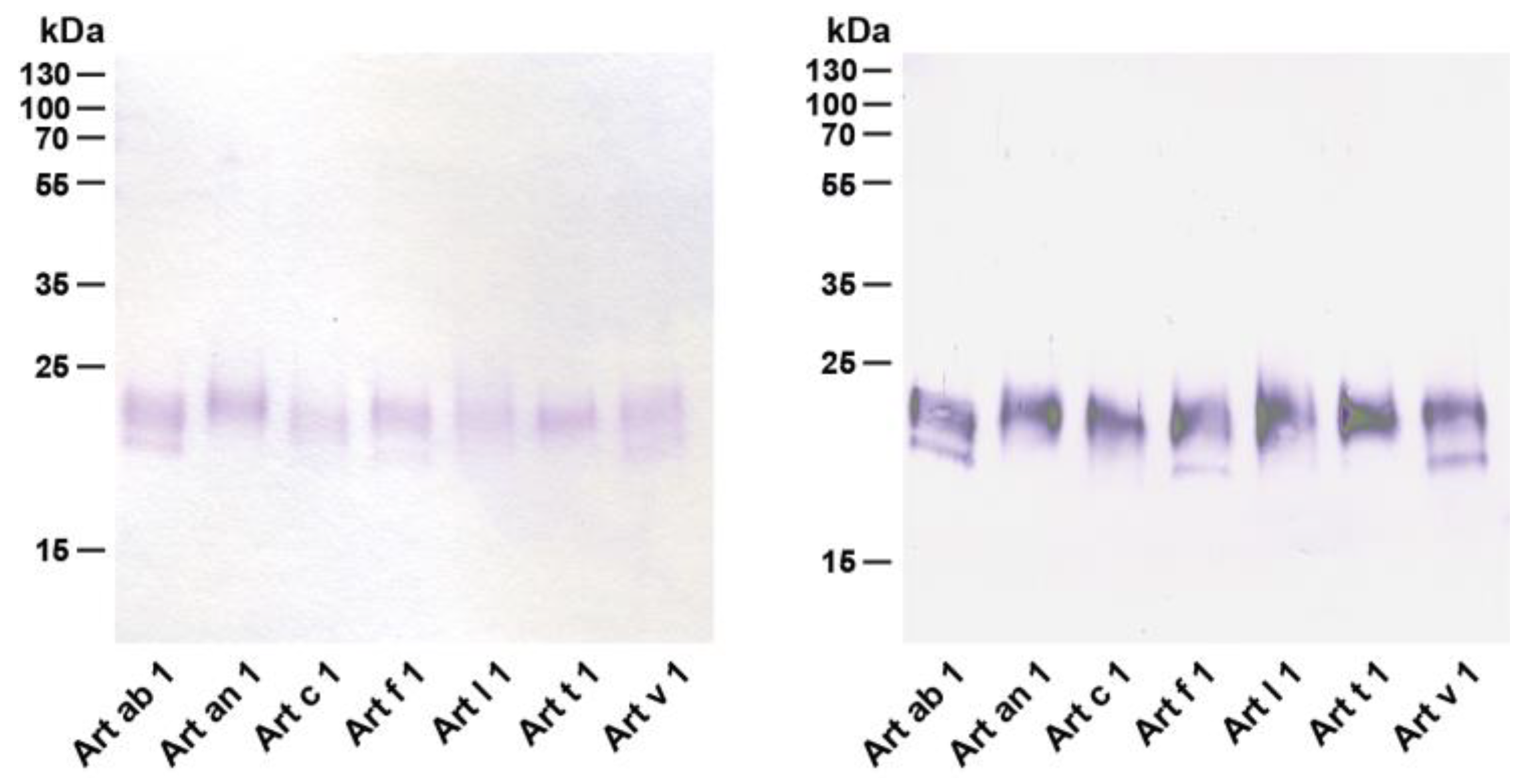
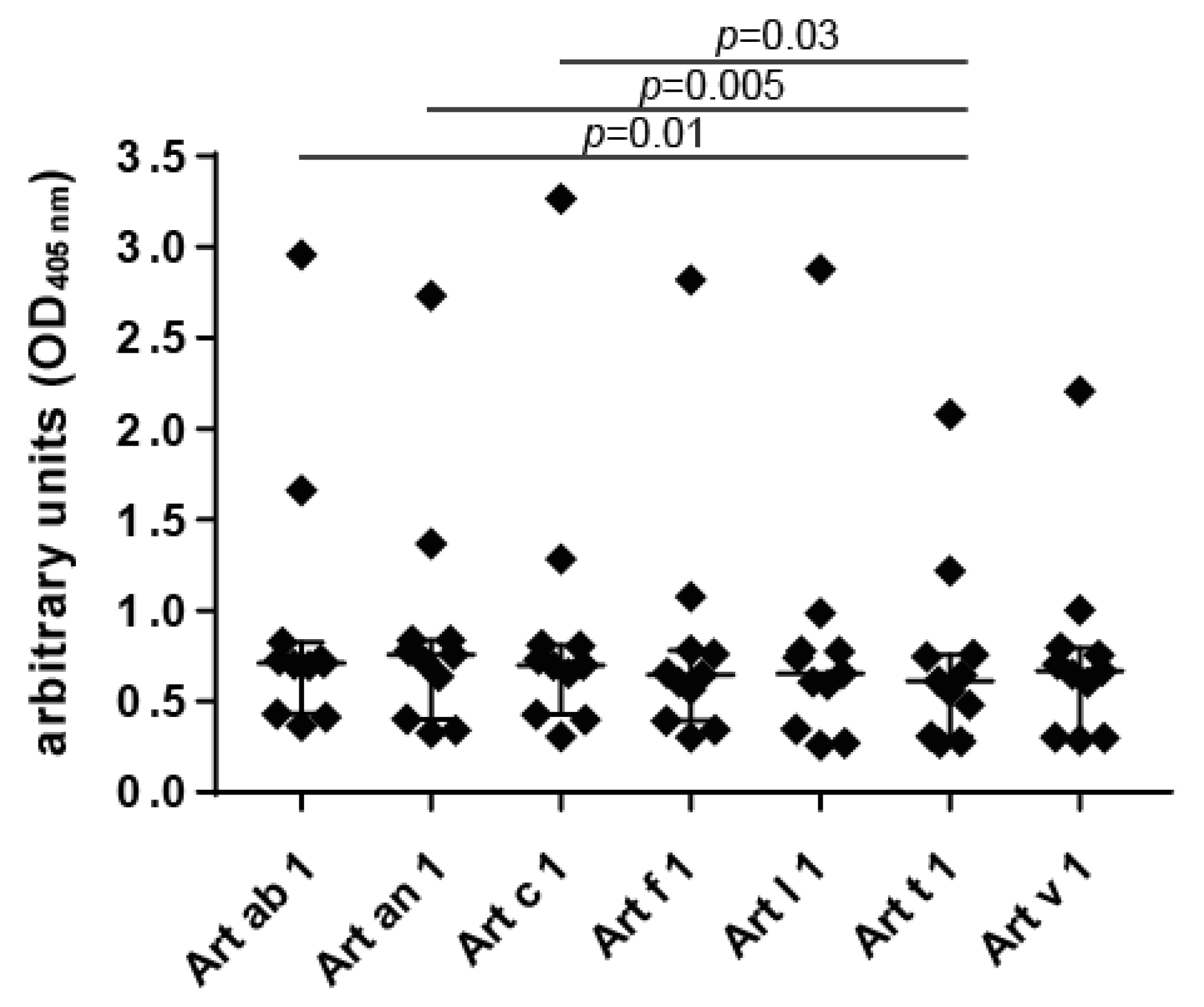
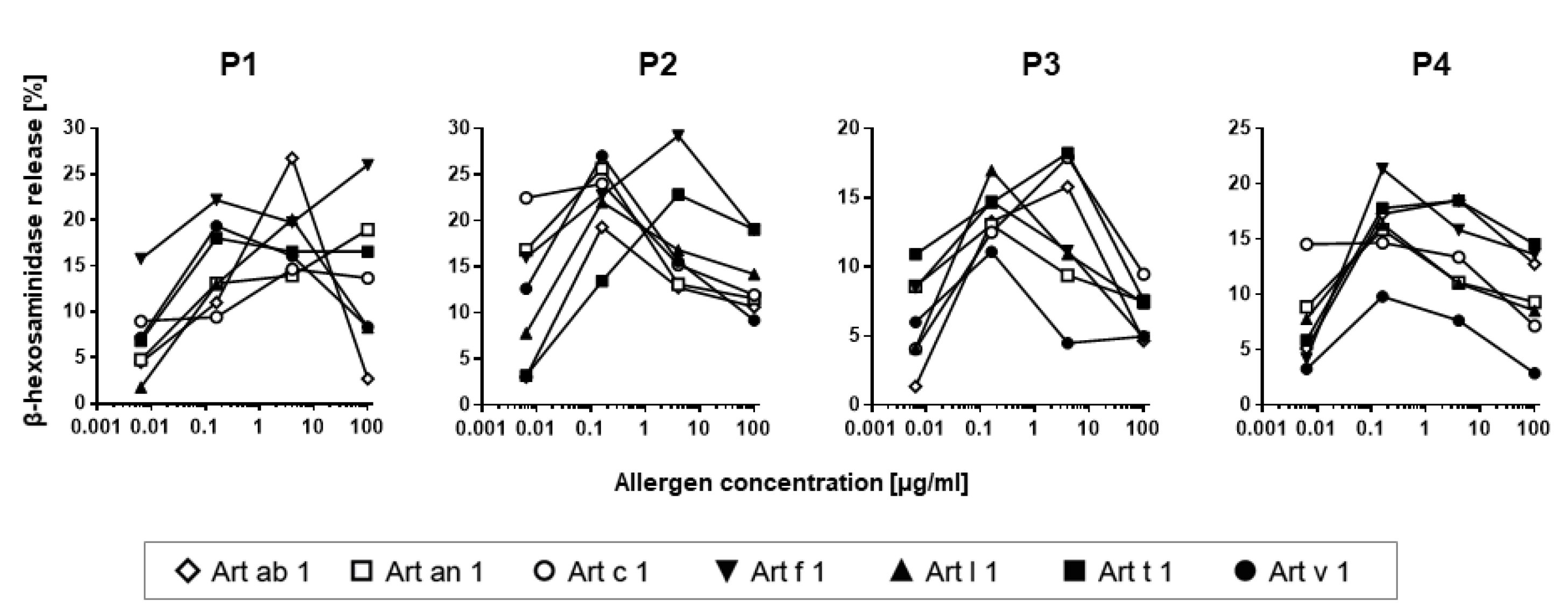
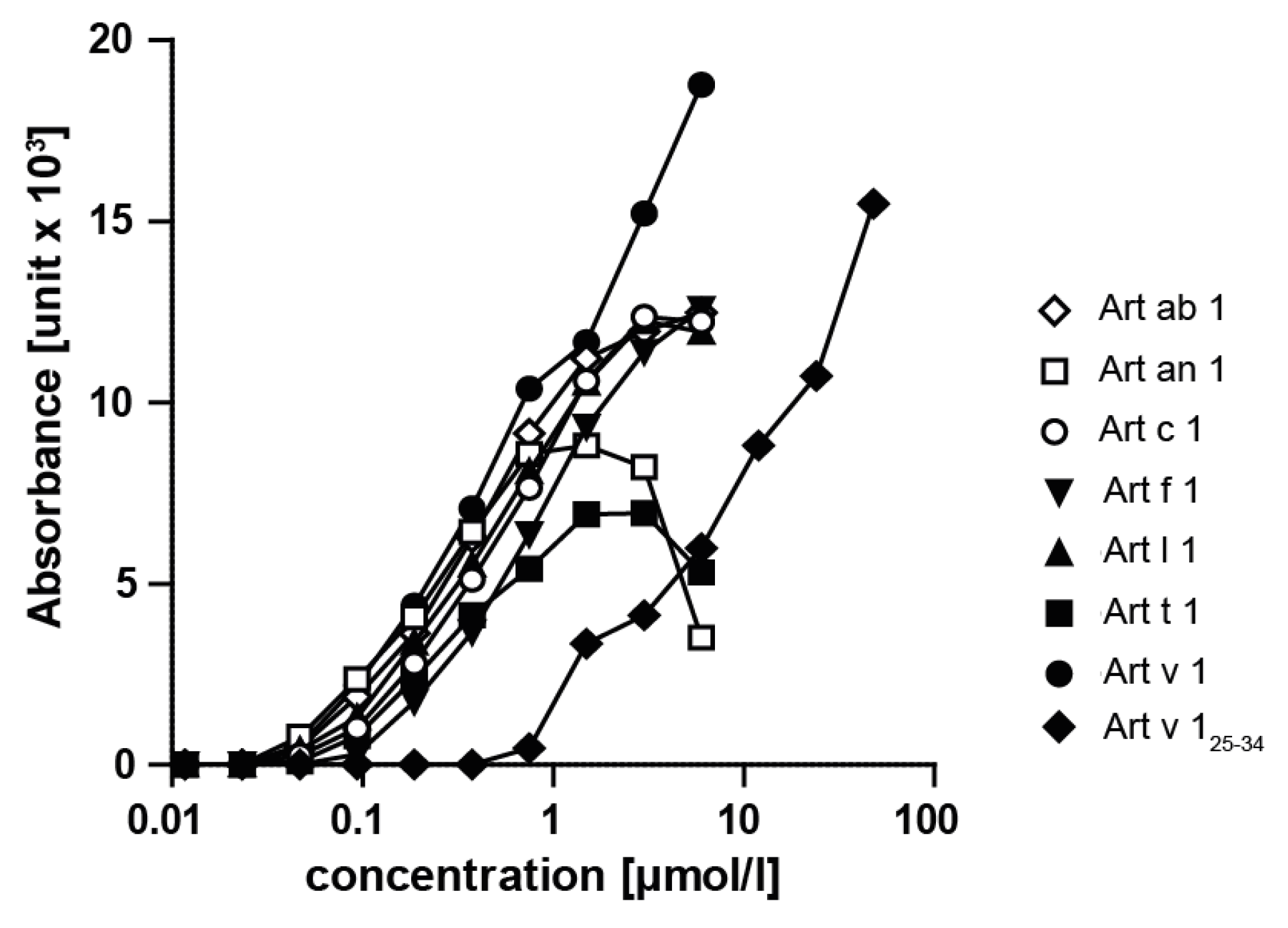
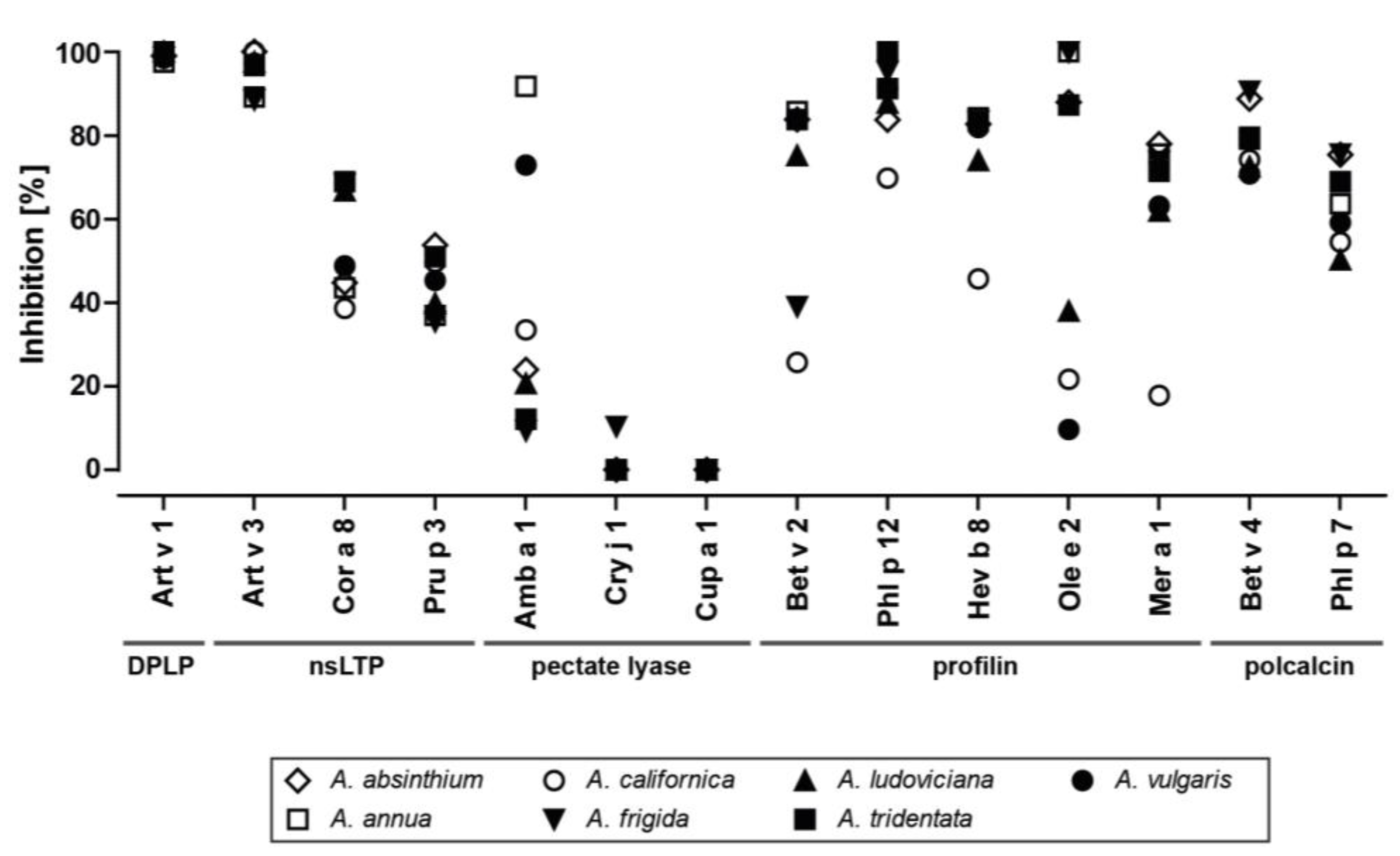
Background and objectives: Pollens of weeds are relevant elicitors of type I allergies. While many Artemisia species occur worldwide, allergy research so far has only focused on Artemisia vulgaris. We aimed to characterize other prevalent Artemisia species regarding their allergen profiles. Materials and Methods: Aqueous extracts of pollen from seven Artemisia species were characterized by gel electrophoresis and ELISA using sera from mugwort pollen-allergic patients (n = 11). The cDNA sequences of defensin–proline-linked proteins (DPLPs) were obtained, and purified proteins were tested in a competition ELISA, in rat basophil mediator release assays, and for activation of Jurkat T cells transduced with an Art v 1-specific TCR. IgE cross-reactivity to other allergens was evaluated using ImmunoCAP and ISAC. Results: The protein patterns of Artemisia spp. pollen extracts were similar in gel electrophoresis, with a major band at 24 kDa corresponding to DPLPs, like the previously identified Art v 1. Natural Art v 1 potently inhibited IgE binding to immobilized pollen extracts. Six novel Art v 1 homologs with high sequence identity and equivalent IgE reactivity were identified and termed Art ab 1, Art an 1, Art c 1, Art f 1, Art l 1, and Art t 1. All proteins triggered mediator release and cross-reacted at the T cell level. The Artemisia extracts contained additional IgE cross-reactive molecules from the nonspecific lipid transfer protein, pectate lyase, profilin, and polcalcin family. Conclusions: Our findings demonstrate that DPLPs in various Artemisia species have high allergenic potential. Therefore, related Artemisia species need to be considered to be allergen elicitors, especially due to the consideration of potential geographic expansion due to climatic changes.
Keywords: allergens; mugwort pollen; Artemisia; Art v 1; IgE cross-reactivity; defensin-like proteins; polyproline-rich protein; allergy; weeds allergens; mugwort pollen; Artemisia; Art v 1; IgE cross-reactivity; defensin-like proteins; polyproline-rich protein; allergy; weeds