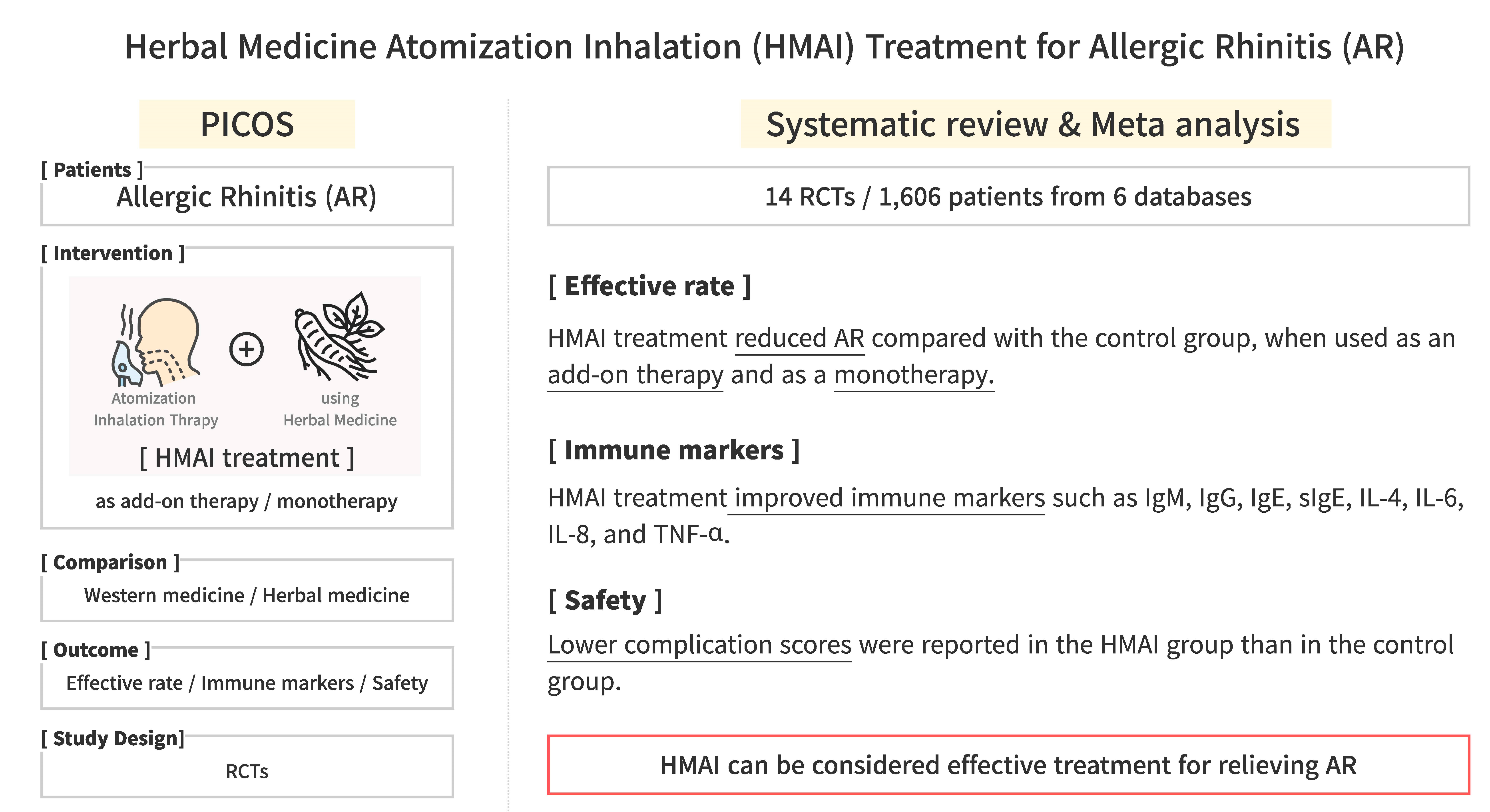
Herbal Inhalation Therapy for Allergic Rhinitis: A Systematic Review and Meta-Analysis

 , , , , ,
Abstract
1. Introduction
2. Materials and Methods
2.1. Inclusion and Exclusion Criteria
2.1.1. Study Types
2.1.2. Participants
2.1.3. Intervention Types and Controls
2.1.4. Outcome Measures
2.2. Literature Searches
2.3. Study Selection
2.4. Data Extraction
2.5. Risk of Bias Assessment
2.6. Data Analysis
2.6.1. Quantitative Synthesis
2.6.2. Sensitivity, Subgroup, and Publication Bias Analyses
2.6.3. Certainty of Evidence
3. Results
3.1. Study Selection
3.2. Study Characteristics
3.3. RoB of Included Studies
3.4. Effects of Interventions by Group and Outcome Measures
3.4.1. Add-On Therapy Design
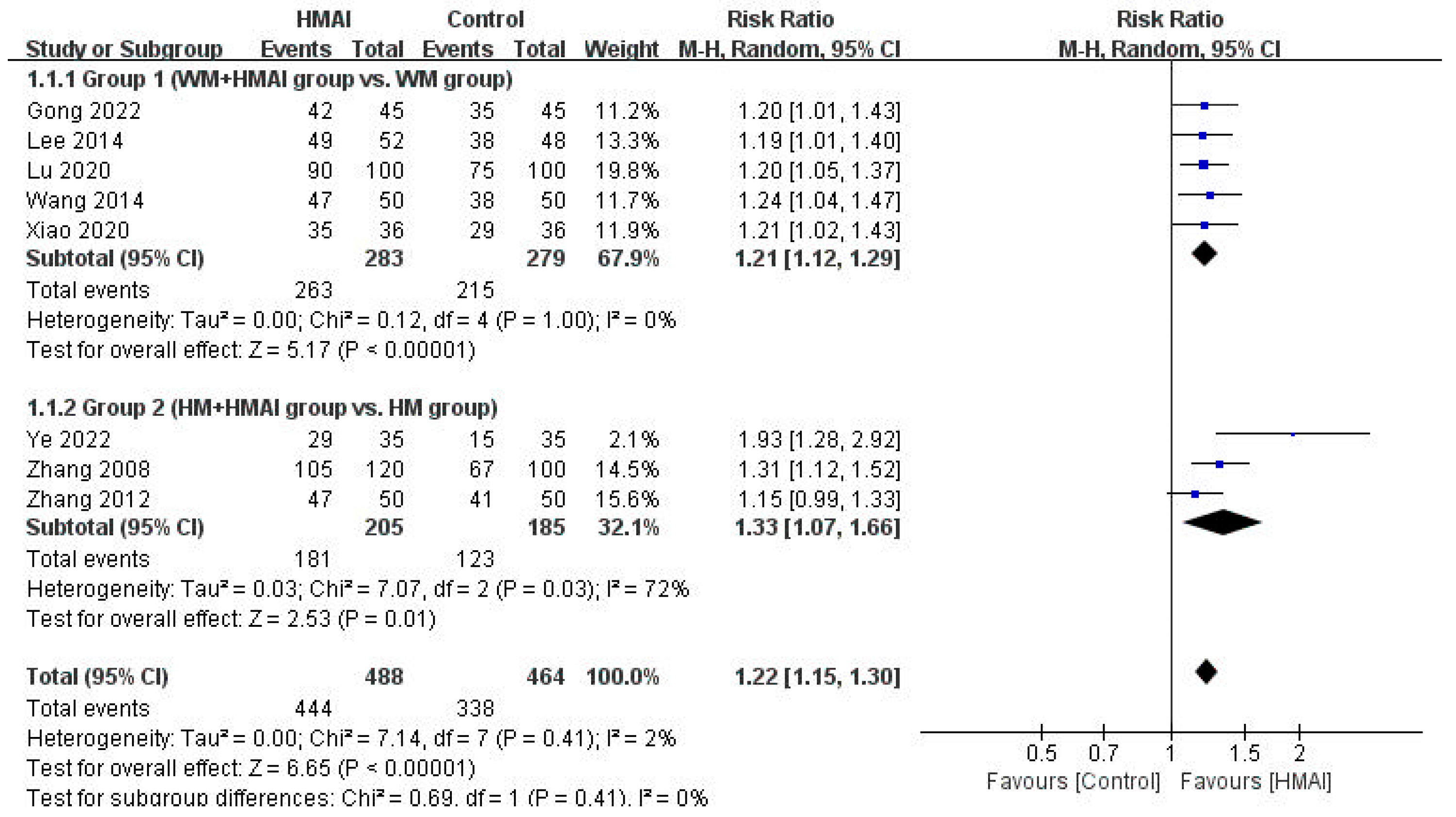
Group 1 (WM + HMAI vs. WM)
Group 2 (HM + HMAI vs. HM)
3.4.2. Monotherapy Design
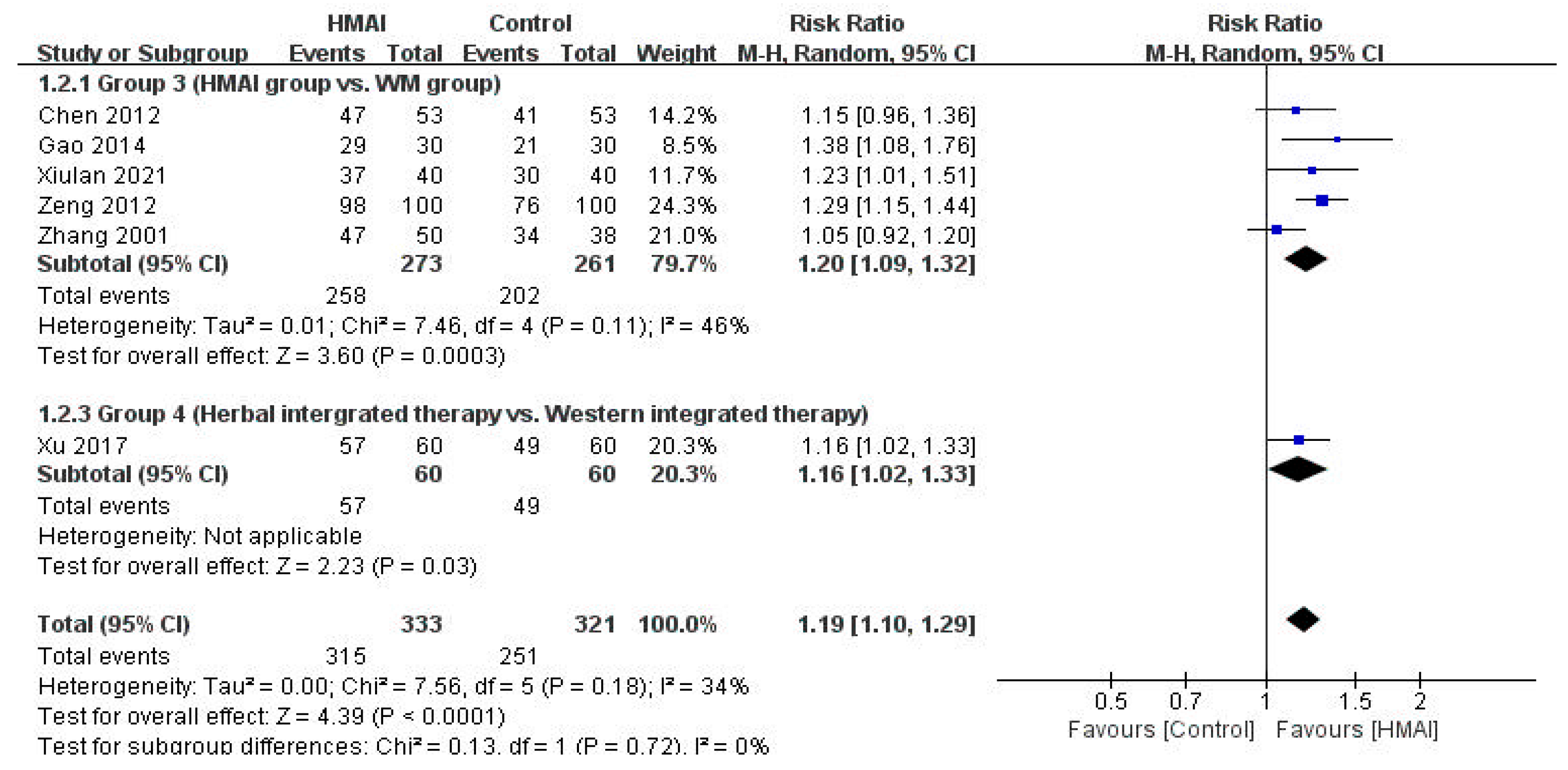
Group 3 (HMAI vs. WM)
Group 4 (Herbal Integrated Therapy Group vs. Western Integrated Therapy Group)
3.5. Adverse Events and Safety
3.6. Certainty of Evidence
4. Discussion
5. Conclusions
Supplementary Materials
Author Contributions
Funding
Institutional Review Board Statement
Informed Consent Statement
Data Availability Statement
Acknowledgments
Conflicts of Interest
Abbreviations
| AR | Allergic Rhinitis |
| CI | Confidence Interval |
| FEM | Fixed-effect Model |
| GRADE | Grading of Recommendations Assessment, Development, and Evaluation |
| HM | Herbal Medicine |
| HMAI | Herbal medicine atomization inhalation |
| Ig | Immunoglobulin |
| IL | Interleukin |
| INSs | Intranasal corticosteroids |
| NF-κB | Nuclear Factor kappa-light-chain-enhancer of activated B cells |
| PRISMA | Preferred Reporting Items for Systematic Reviews and Meta-Analyses |
| RCT | Randomized Controlled Trial |
| REM | Random-effect Model |
| RoB | Cochrane Risk of Bias tool |
| RQLQ | Rhinoconjunctivitis Quality of Life Questionnaire |
| RR | Risk Ratio |
| TCM | Traditional Chinese Medicine |
| TER | Total Effective Rate |
| TNF-α | Tumor necrosis factor-alpha |
| WM | Western medicine |
References
- Bousquet, J.; Khaltaev, N.; Cruz, A.A.; Denburg, J.; Fokkens, W.J.; Togias, A.; Zuberbier, T.; Baena-Cagnani, C.E.; Canonica, G.W.; van Weel, C.; et al. Allergic rhinitis and its impact on asthma (ARIA) 2008 update (in collaboration with the World Health Organization, GA(2)LEN and AllerGen). Allergy 2008, 63 (Suppl. S86), 8–160. [Google Scholar] [CrossRef]
- Yoo, K.H.; Ahn, H.R.; Park, J.K.; Kim, J.W.; Nam, G.H.; Hong, S.K.; Kim, M.J.; Ghoshal, A.G.; Muttalif, A.R.B.A.; Lin, H.C.; et al. Burden of respiratory disease in Korea: An observational study on allergic rhinitis, asthma, COPD, and rhinosinusitis. Allergy Asthma Immunol. Res. 2016, 8, 527–534. [Google Scholar] [CrossRef] [PubMed]
- Brożek, J.L.; Bousquet, J.; Agache, I.; Agarwal, A.; Bachert, C.; Bosnic-Anticevich, S.; Brignardello-Petersen, R.; Canonica, G.W.; Casale, T.; Chavannes, N.H.; et al. Allergic rhinitis and its impact on asthma (ARIA) Guidelines-2016 revision. J. Allergy Clin. Immunol. 2017, 140, 950–958. [Google Scholar] [CrossRef]
- Katelaris, C.H.; Lee, B.W.; Potter, P.C.; Maspero, J.F.; Cingi, C.; Lopatin, A.; Saffer, M.; Xu, G.; Walters, R.D. Prevalence and diversity of allergic rhinitis in regions of the world beyond Europe and North America. Clin. Exp. Allergy 2012, 42, 186–207. [Google Scholar] [CrossRef]
- Seidman, M.D.; Gurgel, R.K.; Lin, S.Y.; Schwartz, S.R.; Baroody, F.M.; Bonner, J.R.; Dawson, D.E.; Dykewicz, M.S.; Hackell, J.M.; Han, J.K.; et al. Clinical practice guideline: Allergic rhinitis. Otolaryngol. Head Neck Surg. 2015, 152, S1–S43. [Google Scholar] [CrossRef]
- Law, S.W.Y.; Wong, A.Y.S.; Anand, S.; Wong, I.C.K.; Chan, E.W. Neuropsychiatric events associated with leukotriene-modifying agents: A systematic review. Drug Saf. 2018, 41, 253–265. [Google Scholar] [CrossRef] [PubMed]
- Licari, A.; Marseglia, G.; Ciprandi, G. New pharmacologic strategies for allergic rhinitis. Curr. Treat. Options Allergy 2016, 3, 495–505. [Google Scholar] [CrossRef]
- Ridolo, E.; Incorvaia, C.; Pucciarini, F.; Makri, E.; Paoletti, G.; Canonica, G.W. Current treatment strategies for seasonal allergic rhinitis: Where are we heading? Clin. Mol. Allergy 2022, 20, 9. [Google Scholar] [CrossRef]
- Nelson, H.S. Allergy immunotherapy: State of the art. Curr. Treat. Options Allergy 2023, 10, 166–183. [Google Scholar] [CrossRef]
- Lee, S.W.; Woo, S.C.; Lyu, Y.R.; Yang, W.K.; Kim, S.H.; Kim, J.H.; Kim, S.Y.; Kang, W.; Jung, I.C.; Kim, T.; et al. Efficacy and safety of Bojungikgi-Tang for persistent allergic rhinitis: A randomized, double-blinded, placebo-controlled, Phase II trial. Healthcare 2024, 12, 1017. [Google Scholar] [CrossRef]
- Luo, Q.; Zhang, C.S.; Yang, L.; Zhang, A.L.; Guo, X.; Xue, C.C.; Lu, C. Potential effectiveness of Chinese herbal medicine Yu Ping Feng San for adult allergic rhinitis: A systematic review and meta-analysis of randomized controlled trials. BMC Complement. Altern. Med. 2017, 17, 485. [Google Scholar] [CrossRef] [PubMed]
- Yan, Y.; Zhang, J.; Liu, H.; Lin, Z.; Luo, Q.; Li, Y.; Ruan, Y.; Zhou, S. Efficacy and safety of the Chinese herbal medicine Xiao-Qing-Long-Tang for allergic rhinitis: A systematic review and meta-analysis of randomized controlled trials. J. Ethnopharmacol. 2022, 297, 115169. [Google Scholar] [CrossRef]
- Kim, E.-H.; Park, H.K.; Lee, B.-W. A study on the fumigation therapy in Waitai Miyao and aromatherapy. J. Korean Med. Class. 2005, 18, 116–125. [Google Scholar]
- Jo, H.R.; Oh, S.; Kim, S.-H.; Sung, W.-S.; Seung-Ug, H.; Kim, E.J. Comparison of the effects of topical nasal application on allergic rhinitis between Korean and western medicine: A systematic review of randomized controlled trials. J. Korean Med. Ophthalmol. Otolaryngol. Dermatol. 2019, 32, 62–89. [Google Scholar]
- Miao, X.; Zhou, J.; Li, J.; Liao, Y.; Zheng, Y. Chinese medicine in inhalation therapy: A review of clinical application and formulation development. Curr. Pharm. Des. 2015, 21, 3917–3931. [Google Scholar] [CrossRef]
- Mohandas, A.; Luo, H.; Ramakrishna, S. An overview on atomization and its drug delivery and biomedical applications. Appl. Sci. 2021, 11, 5173. [Google Scholar] [CrossRef]
- Wang, S.; Tang, Q.; Qian, W.; Fan, Y. Meta-analysis of clinical trials on traditional Chinese herbal medicine for treatment of persistent allergic rhinitis. Allergy 2012, 67, 583–592. [Google Scholar] [CrossRef]
- Yang, S.H.; Yu, C.L. Antiinflammatory effects of Bu-zhong-yi-qi-tang in patients with perennial allergic rhinitis. J. Ethnopharmacol. 2008, 115, 104–109. [Google Scholar] [CrossRef]
- Page, M.J.; McKenzie, J.E.; Bossuyt, P.M.; Boutron, I.; Hoffmann, T.C.; Mulrow, C.D.; Shamseer, L.; Tetzlaff, J.M.; Akl, E.A.; Brennan, S.E.; et al. The PRISMA 2020 statement: An updated guideline for reporting systematic reviews. BMJ 2021, 372, n71. [Google Scholar] [CrossRef] [PubMed]
- Sterne, J.A.C.; Savović, J.; Page, M.J.; Elbers, R.G.; Blencowe, N.S.; Boutron, I.; Cates, C.J.; Cheng, H.Y.; Corbett, M.S.; Eldridge, S.M.; et al. RoB 2: A revised tool for assessing risk of bias in randomised trials. BMJ 2019, 366, l4898. [Google Scholar] [CrossRef] [PubMed]
- Haddaway, N.R.; Page, M.J.; Pritchard, C.C.; McGuinness, L.A. PRISMA2020: An R package and Shiny app for producing PRISMA 2020-compliant flow diagrams, with interactivity for optimised digital transparency and Open Synthesis. Campbell Syst. Rev. 2022, 18, e1230. [Google Scholar] [CrossRef]
- Xiao, J.; Hu, D. The efficacy of modified Cang Er Zi San combined with Ma Huang tang fumigation in treating cold syndrome of allergic rhinitis. Inn. Mong. J. Tradit. Chin. Med. 2020, 39, 87–89. [Google Scholar] [CrossRef]
- Gong, Y.; Wang, H. Clinical study of Xinyisan decoction through nasal nebulization inhalation in the treatment of allergic rhinitis in children with underlying heat in lung meridian. Smart Healthc. 2022, 8, 110–113. [Google Scholar] [CrossRef]
- Lu, L.; Li, R.; Wu, R.; Long, Y.; Zhu, X. Clinical efficacy of acupoint application combined with steam nasal inhalation in the treatment of allergic rhinitis. Chin. J. Clin. Ration. Drug Use 2020, 13, 129–131. [Google Scholar] [CrossRef]
- Wang, H.; Ci, J.; Wang, C.; Guan, H. Clinical Observation on the Efficacy of Traditional Chinese Medicine Nasal Irrigation Combined with Ultrasonic Atomization in the Treatment of Allergic Rhinitis. Zhejiang J. Integr. Trad. Chin. West Med. 2014, 24, 458–459. [Google Scholar]
- Lee, C. Observation on the efficacy of Cang’er powder nasal fumigation combined with western medicine in the treatment of 52 cases of allergic rhinitis. Shanxi Med. J. 2014, 43, 2542–2543. [Google Scholar]
- Ye, J.R.; Chen, W.-Y. Clinical study of oral use of modified Wenfei Zhiliu pills combined with Fructus Xanthii powder fumigation in the treatment of allergic rhinitis of Lung-qi deficiency-cold syndrome. J. Guangzhou Univ. Trad. Chin. Med. 2022, 39, 312–317. [Google Scholar] [CrossRef]
- Zhang, X.; Huang, J. Clinical observation of treatment of children with allergic rhinitis with Xinju atomization. Jilin Med. J. 2012, 33, 2759–2760. [Google Scholar]
- Zhang, M.; Liu, J.; Liu, Y. Clinical observation of 120 cases of allergic rhinitis treated with combined internal Chinese medicine and nasal steam inhalation therapy. J. Pract. Trad. Chin. Med. 2008, 24, 349–350. [Google Scholar]
- Xiulan, Y. Clinical observation on the treatment of allergic rhinitis with Mongolian medicine fumigation therapy. J. Med. Pharm. Chin. Minor. 2021, 27, 42–43. [Google Scholar] [CrossRef]
- Gao, J. Children’s allergic rhinitis treated with ultrasonic nebulization of Jiegen Yuanshen Decotion and Yupingfeng powder. Liaoning J. Trad. Chin. Med. 2014, 41, 2417–2418. [Google Scholar] [CrossRef]
- Zeng, M.; Ye, S.; Han, Z. Children’s allergic rhinitis treated with ultrasonic nebulization of traditional Chinese medicine LXFMB. China Med. Pharm. 2012, 2, 75–76. [Google Scholar]
- Chen, P. 53 Cases of allergic rhinitis treated with Xiaoqinglong decoction combined with nasal fumigation. Henan Trad. Chin. Med. 2012, 32, 1433–1435. [Google Scholar]
- Zhang, B. Clinical observation on the efficacy of ultrasonic atomization inhalation of traditional Chinese medicine decoction in treating 50 cases of allergic rhinitis. Sichuan Trad. Chin. Med. 2001, 19, 67–68. [Google Scholar]
- Xu, Q.; Xu, J.; Sun, D. Clinical observation of Xiangju capsules combined with ultrasonic nebulization of traditional Chinese medicine for treating allergic rhinitis of lung meridian wind-heat type in 60 cases. Zhejiang J. Trad. Chin. Med. 2017, 52, 495. [Google Scholar] [CrossRef]
- Zheng, Z.; Sun, Z.; Zhou, X.; Zhou, Z. Efficacy of Chinese herbal medicine in treatment of allergic rhinitis in children: A meta-analysis of 19 randomized controlled trials. J. Int. Med. Res. 2018, 46, 4006–4018. [Google Scholar] [CrossRef]
- Hong, S.-H.; Jeong, H.-J.; Kim, H.-M. Inhibitory effects of Xanthii fructus extract on mast cell-mediated allergic reaction in murine model. J. Ethnopharmacol. 2003, 88, 229–234. [Google Scholar] [CrossRef]
- Kimura, M.; Suzuki, J.; Yamada, T.; Yoshizaki, M.; Kikuchi, T.; Kadota, S.; Matsuda, S. Anti-inflammatory effect of neolignans newly isolated from the crude drug “Shin-i” (Flos Magnoliae). Planta Med. 1985, 51, 291–293. [Google Scholar] [CrossRef] [PubMed]
- Kim, H.M.; Yi, J.M.; Lim, K.S. Magnoliae Flos inhibits mast cell-dependent immediate-type allergic reactions. Pharmacol. Res. 1999, 39, 107–111. [Google Scholar] [CrossRef] [PubMed]
- Kim, J.H.; Kim, H.S.; Seo, C.S.; Shin, H.K.; Lee, N.H.; Lee, M.Y.; Kim, J.; Kim, H. A Composition Comprising the Angelica Dahurica Bentham et Hooker Extract There of Having Anti-Asthmatic Effect. Patent KR101165718B1, 18 July 2012. [Google Scholar]
- Imai, H.; Osawa, K.; Yasuda, H.; Hamashima, H.; Arai, T.; Sasatsu, M. Inhibition by the essential oils of peppermint and spearmint of the growth of pathogenic bacteria. Microbios 2001, 106 (Suppl. S1), 31–39. [Google Scholar] [PubMed]
- Runnie, I.; Salleh, M.N.; Mohamed, S.; Head, R.J.; Abeywardena, M.Y. Vasorelaxation induced by common edible tropical plant extracts in isolated rat aorta and mesenteric vascular bed. J. Ethnopharmacol. 2004, 92, 311–316. [Google Scholar] [CrossRef]
- Qin, Z.; Xie, L.; Li, W.; Wang, C.; Li, Y. New insights into mechanisms traditional Chinese medicine for allergic rhinitis by regulating inflammatory and oxidative stress pathways. J. Asthma Allergy 2024, 17, 97–112. [Google Scholar] [CrossRef]
- Jeong, K.-T.; Kim, S.-G.; Lee, J.; Park, Y.N.; Park, H.-H.; Park, N.-Y.; Kim, K.-J.; Lee, H.; Lee, Y.J.; Lee, E. Anti-allergic effect of a Korean traditional medicine, Biyeom-Tang on mast cells and allergic rhinitis. BMC Complement. Altern. Med. 2014, 14, 54. [Google Scholar] [CrossRef] [PubMed]
- Ju, Y.S. Ungok Herbology, 2nd ed.; Woosuk Press: Wanju County, Republic of Korea, 2013. [Google Scholar]
- Korean Medicine Standard Clinical Guidelines Development Project Group. Standard Clinical Practice Guidelines for Oriental Medicine Allergic Rhinitis; NICOM: Gyeongsan-si, Republic of Korea, 2021. Available online: https://nikom.or.kr/nckm/module/practiceGuide/view.do?guide_idx=202&menu_idx=14 (accessed on 1 May 2025).
- Baartmans, M.; Kerkhof, E.; Vloemans, J.; Dokter, J.; Nijman, S.; Tibboel, D.; Nieuwenhuis, M. Steam inhalation therapy: Severe scalds as an adverse side effect. Br. J. Gen. Pract. 2012, 62, e473–e477. [Google Scholar] [CrossRef] [PubMed]
- Jarvis, S.; Ind, P.W.; Thomas, C.; Goonesekera, S.; Haffenden, R.; Abdolrasouli, A.; Fiorentino, F.; Shiner, R.J. Microbial contamination of domiciliary nebulisers and clinical implications in chronic obstructive pulmonary disease. BMJ Open Respir. Res. 2014, 1, e000018. [Google Scholar] [CrossRef] [PubMed]
- Luo, L.; Wang, B.; Jiang, J.; Fitzgerald, M.; Huang, Q.; Yu, Z.; Li, H.; Zhang, J.; Wei, J.; Yang, C.; et al. Heavy Metal Contaminations in Herbal Medicines: Determination, Comprehensive Risk Assessments, and Solutions. Front. Pharmacol. 2021, 11, 595335. [Google Scholar] [CrossRef]



| Study | Sample Size ((A):(B)) | Mean Age (Years) (Age Range) | Sex (M:F) | Duration of Illness (Duration Range | (A) Treatment Intervention | (B) Control Intervention | Treatment Period (Days) | Clinical Outcome Measure |
|---|---|---|---|---|---|---|---|---|
| Group 1. WM + HMAI vs. WM | ||||||||
| Xiao et al. (2020) [22] | 72 (36:36) | (A) 40.3 ± 1.3 (B) 41.3 ± 1.2 | (A) 17:19 (B) 16:20 | (A) 4.5 ± 1.32 (0.8–9) years (B) 4.6 ± 1.3 (0.6–9) years | (B) (1) (2) HMAI (Xanthium powder combined with mahuang decoction) | (1) Levocetirizine hydrochloride dispersible tablets 5 mg PO qd | 30 | 1. Effective rate 2. Clinical symptom score 3. Nasal sign |
| Gong et al. (2022) [23] | 90 (45:45) | (A) 5.44 ± 1.97 (B) 5.16 ± 1.71 | (A) 26:19 (B) 25:20 | (A) 2.11 ± 0.71 years (B) 2.32 ± 0.75 years | (B) (1)–(3) (4) HMAI (Xinyisan decoction) | (1) Desloratadine dry suspension 1.25–2.5 mg PO (2) Montelukast sodium chewable tablets 4 mg PO (3) Mometasone furoate nasal spray 50 mg | 14 | 1. Effective rate 2. TCM symptom scores 3. Laboratory indicators (IL-6/IL-8/TNF-α) |
| Lu et al. (2020) [24] | 100 (40:60) | (A) 44.6 ± 6.7 (25–74) (B) 42.6 ± 6.4 (24–71) | (A) 40:60 (B) 42:58 | (A) 5.7 ± 2.6 (1–12) years (B) 5.6 ± 2.4 (1–13) years | (B) (1) and (2) (3) HMAI with acupoint application | (1) Triamcinolone nasal spray (2) Loratadine 10 mg PO | 15 | 1. Effective rate 2. RQLQ 3. Symptom Score 4. Adverse events |
| Wang et al. (2014) [25] | 100 (50:50) | (A) 31.33 ± 10.06 (B) 32.4 ± 11.97 | (A) 24:26 (B) 30:20 | (A) 16.87 ± 12.55 years (B) 15.57 ± 11.89 years | (B) (1)–(2) (3) HMAI (Self-formulated Cangzhi combination) | (1) Loratadine 10 mg PO (2) Budesonide suspension ultrasonic nebulization therapy/Budesonide spray | 60 | 1. Effective rate |
| Lee et al. (2014) [26] | 100 (52:48) | (A) 48.3 (18–78) (B) 46.7 (17–77) | (A) 28:26 (B) 28:20 | (A) 1–15 years (B) 0.8–14 | (B) (1) (2) HMAI (Xanthium powder) 30 min 14 days * If symptoms are severe: Sesame oil with Xanthium sibiricum nasal drops 7 days | (1) Loratadine 10 mg PO 14 days (2) Budesonide nasal spray 30 days | (A) 14 (B) 30 | 1. Effective rate |
| Group 2. HM + HMAI vs. HM | ||||||||
| Ye et al. (2022) [27] | 70 (35:35) | (A) 35.78 ± 11.13 (B) 38.43 ± 11.09 | (A) 20:15 (B) 22:13 | (A) 6 (3–11) years (B) 7 (2–11) years | (B) (1) (2) HMAI (Xanthium powder) | (1) Wenfei Zhiliu Dan PO | 7 | 1. Symptom score 2. Effective rate |
| Zhang et al. (2012) [28] | 100 (50:50) | (A) 4–15 (B) 4–13 | (A) 29:21 (B) 31:19 | (A) 3 months–5 years (B) 3 months–6 years | (B) (1) (2) HMAI (Xinjiu nebulization solution) | (1) OnPaiJiRyuDan or Samryungbeakchul-san or Joaguihwan (or Youguihwan) decoction PO | 7 | 1. Effective rate 2. Relationship between the effectiveness in the treatment group and the TCM syndrome types |
| Zhang et al. (2008) [29] | 220 (120:100) | (A) 28 (13–70) (B) 30 (5–70) | (A) 43:77 (B) 38:62 | (A) 4.3 (3–17) years (B) 3.9 (2–16) years | (B) (1) (2) YuPingFengSan combined with Kyejitang and Xanthium powder HMAI | (1) YuPingFengSan + Kyejitang + Xanthium powder decoction PO | 30 | 1. Effective rate |
| Group 3. HMAI vs. WM | ||||||||
| Xiulan (2021) [30] | 80 (40:40) | 40 (14–66) | 38:42 | 1 month–8 years | (1) Siwei Tumuxiang Decoction HMAI + P.O | (1) Budesonide nebulizer | 21 | 1. Symptom score 2. Effective rate |
| Gao (2014) [31] | 60 (30:30) | 2–12 | 35:25 | NR | (1) HMAI (Jiegeng Yuanshen Tang combined with Yupingfeng San) | (1) Loratadine 5 mg/day atomization inhalation | 7 | 1. Laboratory indicators (ρIL-4, sIgE) 2. Effective rate |
| Zeng et al. (2012) [32] | 100 (45:45) | (A) 1–14 (B) 1–14 | (A) 53/47 (B) 52/48 | NR | (1) HMAI (Cangxin liquid) | (1) (0.9% Uranium chloride 20 mL + gentamicin 80,000 U + dexamethasone 2 mg) Ultrasonic atomization inhalation | 21 | 1. Effective rate |
| Chen (2012) [33] | 106 (53:53) | (A) 33.20 ± 9.56 (19–57) (B) 31.45 ± 9.12 (18–56) | (A) 26/27 (B) 28/25 | (A) (1.5–13) years (B) (1–11) years | (1) Xiaoqinglongtang HMAI + P.O | (1) Loratadine 10 mg PO | 21 | 1. Symptom score 2. Physical sign score 3. Effective rate 4. Recurrence rate |
| Zhang (2001) [34] | 88 (50:38) | 8–56 | 40/48 | 6 months-12 years | (1) HMAI | (1) [mild] Cetirizine 10 mg PO qd [severe] Prednisone 5 mg PO tid (2) Ephedrine nasal drops 2–3 drops tid | 6 | 1. effective rate |
| Group 4. Herbal integrated therapy vs. Western integrated therapy | ||||||||
| Xu et al. (2017) [35] | 120 (60:60) | (A) 30.2 ± 9.1 (15–59) (B) 30.4 ± 9.2 (16–60) | (A) 32/28 (B) 31/29 | T: 2.3 ± 0.4 (1–5) years C: 2.4 ± 0.5 (1–6) years | (1) Oral Xiangju Capsule 42 days (2) Xanthium powder HMAI 10 days | (A) Triamcinolone nasal spray 7 days (B) Loratadine 10 mg PO 7 days | (A) 42 (B) 7 | 1. Effective rate |
| Study | Components of Herbal Medicine (Latin Name) | Treatment Duration/Time/Frequency | Method of Atomization Inhalation |
|---|---|---|---|
| Xiao et al. (2020) [22] | Armeniacae Semen Amarum, Peucedani Radix, Pogostemonis Herba, Platycodi Radix, Stemonae Radix 10 g, Xanthii Fructus 9 g, Magnoliae Flos, Cinnamomi Ramulus, Angelicae Dahuricae Radix, Glycyrrhizae Radix et Rhizoma 6 g, Ephedrae Herba 5 g | 30 days/NR/qd | The herbs were ground, packed in bags, and heated using a traditional Chinese medicine steam machine. Patients were instructed to assume a suitable position and inhale the steam generated from the heated herbs. Care was taken to avoid burns, and patients were advised to inhale deeply to ensure that the steam fully entered the nasal cavity for optimal therapeutic effect. |
| Gong et al. (2022) [23] | Magnoliae Flos 12 g, Angelicae Dahuricae Radix 10 g, Xanthii Fructus 6 g, Menthae Herba 3 g, Coptidis Rhizoma 3 g. | 14 days/NR/bid | The herbs were soaked in water, boiled, and filtered to obtain 10 mL of concentrated decoction, administered via an ultrasonic steam inhaler (WH-2000; Guangdong Yuehua Medical Equipment Factory). |
| Lu et al. (2020) [24] | Astragali Radix 25 g, Atractylodis Rhizoma Alba, Saposhnikoviae Radix, Paeoniae Radix, Zizyphi Fructus, Glycyrrhizae Radix et Rhizoma, Magnoliae Flos each 10 g, Xanthii Fructus 8 g, Cinnamomi Ramulus 6 g. | 15 days/10–20 min/qod | The herbs were soaked in water for 30 min, brought to a boil over high heat, and simmered on low heat for 20 min. The resulting herbal liquid was poured into a thermos. Patients inhaled the steam for 10–20 min, with the nose positioned 15–25 cm away from the rim of the thermos. |
| Wang et al. (2014) [25] | Xanthii Fructus 42 g, Angelicae Dahuricae Radix 31 g, Chrysanthemi Flos 42 g, Acori Graminei Rhizoma 21 g, Rubiae Radix 31 g, Lonicerae Folium et Caulis 83 g. | 60 days/NR/30 days qd and 30 days qod | In this method, 50 mL drug solution was diluted with 450 mL saline, and this solution and used as a nasal rinse once daily. After rinsing, ultrasonic nebulization was administered. |
| Lee (2014) [26] | Xanthii Fructus 100 g, Magnoliae Flos 100 g, Asiasari Radix et Rhizoma 50 g, Angelicae Dahuricae Radix 100 g, Menthae Herba 50 g. | 14 days/30 min/bid | The herbs were ground to fine powder, divided into seven portions, and wrapped in a cloth, placed in a small-mouthed beaker, with hot water added until the herbs were submerged by a two-finger depth. The steam was inhaled for nasal treatment. Once cooled, the herbs were reheated to continue steaming. |
| Ye et al. (2022) [27] | Angelicae Dahuricae Radix 5.5 g, Magnoliae Flos 2.5 g, Xanthii Fructus 1.5 g, Menthae Herba 0.5 g. | 7 days/15 min/qd | The herbs were ground into powder and placed in a non-woven fabric bag. The herb bag was placed in a small container, and boiling water (100 °C) was added until the herbs were submerged by 5 cm. The patient was seated approximately 15 cm away from the container, allowing the steam to treat the nasal cavity. |
| Zhang et al. (2012) [28] | Magnoliae Flos, Angelicae Dahuricae Radix, Angelicae Sinensis Radix, Houttuyniae Herba. | 7 days/15 min/qd or bid | In this method, 10 mL Xin Ju nebulization solution (formulated by the hospital’s pharmacy) was mixed with 10 mL saline and administered via ultrasonic nebulization. |
| Xiulan (2021) [30] | Inulae Radix, Sophorae Radix, Rubus Coreanus Stem, Kaempferiae Rhizoma. | 21 days/15–20 min/bid | In this method, 3–5 g of Siwei Tumuxiang Decoction was poured into a stainless-steel cup with 5–7 cm diameter. After adding 150–200 mL of water, it was simmered over low heat until it boils (approximately 2 min). A wet towel was wrapped around the cup’s rim, and the patient placed their mouth and nose over the cup and inhaled the steam deeply for 5–7 min, while covering their mouth and nose with the towel. When the temperature of the decoction dropped to approximately 50 °C, the decoction was reheated, and the steaming process was repeated thrice for approximately 15–20 min. After the steam treatment, the decoction was consumed. |
| Gao (2014) [31] | Platycodonis Radix, Scrophulariae Radix, Pinelliae Tuber, Zingiberis Rhizoma Recens, Poria Sclerotium, Citri Unshius Pericarpium, Armeniacae Semen, Astragali Radix, Atractylodis Rhizoma Alba, Saposhnikoviae Radix, Glycyrrhizae Radix et Rhizoma. | 7 days/10 min/qd | The herbs were processed in the laboratory using modern equipment to create a brown liquid of high purity and effective concentration, in 100 mL batches, and stored at −20 °C for future use. The treatment group received 20 mL of this liquid for nebulized inhalation. |
| Zeng et al. (2012) [32] | Xanthii Fructus 10 g, Magnoliae Flos 5 g, Angelicae Dahuricae Radix 10 g, Scutellarie Radix 10 g, Astragali Radix 20 g, Menthae Herba 5 g, Cnidii Rhizoma 5 g, Fritillariae Thunbergii Bulbus 10 g, Glycyrrhizae Radix et Rhizoma 5 g, Chrysanthemi Flos 10 g, Glycine Semen Preparata 10 g. | 21 days/10 min/qd | 20 mL of Cang Xin solution via ultrasonic nebulization |
| Chen (2012) [33] | Ephedrae Herba 9 g, Cinnamomi Ramulus 6 g, Asiasari Radix et Rhizoma 3 g, Paeoniae Radix 9 g, Zingiberis Rhizoma 3 g, Pinelliae Tuber 9 g, Schisandrae Fructus 3 g, Glycyrrhizae Radix et Rhizoma 6 g. | 21 days/NR/bid | The decoction was prepared once a day, boiled twice, and divided into two doses for morning and evening use. After preparing the decoction, the residue was re-boiled with water, used for nasal steaming using a small cup, and applied to the nasal area twice a day. |
| Zhang (2001) [34] | Xanthii Fructus, Magnoliae Flos, Angelicae Dahuricae Radix, and Menthae Herba each 10 g, Asiasari Radix et Rhizoma 3 g, Astragali Radix 30 g, Atractylodis Rhizoma Alba, Saposhnikoviae Radix each 15 g. | 6 days/30 min/bid | The herbal ingredients were soaked and decocted for 30 min. Approximately 100 mL of the decoction was filtered to remove the residue, and after cooling, the liquid was placed in the nebulizer. The liquid was atomized into fine particles, and the patient wore a mask over their mouth and nose while performing slightly deeper breathing exercises. |
| Xu et al. (2017) [35] | Angelicae Dahuricae Radix, Magnoliae Flos, Xanthii Fructus, and Menthae Herba each 10 g, Asiasari Radix et Rhizoma 3 g. | 10 days/30 min/bid | The herbs were soaked in clean water for 30 min, and boiled gently with water for approximately 30 min. The resulting liquid (100 mL) was collected, sedimented to remove residue, and allowed to cool. The liquid was subsequently placed in a nebulizer bottle for ultrasonic nebulization therapy. During treatment, patients were instructed to perform slightly deeper breathing exercises. |
| Herbal Medicines (Latin Names) | Frequency of Use |
|---|---|
| Xanthii Fructus, Magnoliae Flos | 10 |
| Angelicae Dahuricae Radix | 9 |
| Menthae Herba, Glycyrrhizae Radix et Rhizoma | 6 |
| Astragali Radix | 5 |
| Asiasari Radix et Rhizoma, Cinnamomi Ramulus, Saposhnikoviae Radix, Atractylodis Rhizoma Alba | 4 |
| Paeoniae Radix | 3 |
| Ephedrae Herba, Armeniacae Semen, Chrysanthemi Flos, Pinelliae Tuber, Platycodonis Radix, Zizyphi Fructus | 2 |
| Rubiae Radix, Pogostemonis Herba, Acori Graminei Rhizoma, Peucedani Radix, Fritillariae Thunbergii Bulbus, Lonicerae Folium et Caulis, Citri Unshius Pericarpium, Cnidii Rhizoma, Poria Sclerotium, Coptidis Rhizoma, Zingiberis Rhizoma Recens, Zingiberis Rhizoma, Stemonae Radix, Glycine Semen Preparata, Scrophulariae Radix, Inulae Radix, Rubus idaeus L., Sophorae Radix, Kaempferiae Rhizoma, Angelicae Sinensis Radix, Houttuyniae Herba, Scutellariae Radix, Schisandrae Fructus | 1 |
| Certainty Assessment | No. of Patients | Effect | Certainty of Evidence | ||||||||
|---|---|---|---|---|---|---|---|---|---|---|---|
| No. of Studies | Study Design | Risk of Bias | Inconsistency | Indirectness | Imprecision | Other Considerations | HMAI | Control | Relative (95% CI) | Absolute (95% CI) | |
| Group 1 | |||||||||||
| 5 | Randomized control trials | serious a | not serious | not serious | not serious | none | 260/284 (91.5%) | 220/284 (77.5%) | RR: 1.18 (1.10–1.27) | 139 more per 1000 (77 more to 209 more) | ⨁⨁⨁◯ Moderate a |
| Group 2 | |||||||||||
| 3 | Randomized control trials | serious a | seriousb | not serious | not serious | none | 181/205 (88.3%) | 123/185 (66.5%) | RR: 1.33 (1.07–1.66) | 219 more per 1000 (47 more to 439 more) | ⨁⨁◯◯ Low a,b |
| Group 3 | |||||||||||
| 5 | Randomized control trials | serious a | serious b | serious c | not serious | none | 260/272 (95.6%) | 199/256 (77.7%) | RR: 1.21 (1.10–1.33) | 163 more per 1000 (78 more to 257 more) | ⨁◯◯◯ Very low a,b,c |
Disclaimer/Publisher’s Note: The statements, opinions and data contained in all publications are solely those of the individual author(s) and contributor(s) and not of MDPI and/or the editor(s). MDPI and/or the editor(s) disclaim responsibility for any injury to people or property resulting from any ideas, methods, instructions or products referred to in the content. |
© 2025 by the authors. Licensee MDPI, Basel, Switzerland. This article is an open access article distributed under the terms and conditions of the Creative Commons Attribution (CC BY) license (https://creativecommons.org/licenses/by/4.0/).
Share and Cite
Shim, S.-S.; Kil, J.-E.; Park, J.; Kim, T.; Leem, J.; Lee, B.-J.; Jung, H.-J.; Kim, K.-I. Herbal Inhalation Therapy for Allergic Rhinitis: A Systematic Review and Meta-Analysis. Pharmaceuticals 2025, 18, 1877. https://doi.org/10.3390/ph18121877
Shim S-S, Kil J-E, Park J, Kim T, Leem J, Lee B-J, Jung H-J, Kim K-I. Herbal Inhalation Therapy for Allergic Rhinitis: A Systematic Review and Meta-Analysis. Pharmaceuticals. 2025; 18(12):1877. https://doi.org/10.3390/ph18121877
Chicago/Turabian StyleShim, Sang-Song, Jung-Eun Kil, Jiwon Park, Taehun Kim, Jungtae Leem, Beom-Joon Lee, Hee-Jae Jung, and Kwan-Il Kim. 2025. "Herbal Inhalation Therapy for Allergic Rhinitis: A Systematic Review and Meta-Analysis" Pharmaceuticals 18, no. 12: 1877. https://doi.org/10.3390/ph18121877
APA StyleShim, S.-S., Kil, J.-E., Park, J., Kim, T., Leem, J., Lee, B.-J., Jung, H.-J., & Kim, K.-I. (2025). Herbal Inhalation Therapy for Allergic Rhinitis: A Systematic Review and Meta-Analysis. Pharmaceuticals, 18(12), 1877. https://doi.org/10.3390/ph18121877