Harnessing Single-Cell RNA-Seq for Computational Drug Repurposing in Cancer Immunotherapy

Abstract
1. Introduction
1.1. Immune Checkpoint Inhibitors: Efficacy and Resistance Mechanisms
1.2. Drug Repurposing to Enhance ICI Efficacy

| Drug Type | Repurposed Drug | Tumor Intrinsic vs. Extrinsic Mechanisms | ClinicalTrials.gov Number (NCT) | Cancer Type | ICI | Phase | Status |
|---|---|---|---|---|---|---|---|
| Metabolic Modulators | |||||||
| AMPK activator and mitochondrial complex I inhibitor | Metformin | Both [9,28,29] | NCT04414540 | Head and Neck Cancer | Pembrolizumab | 2 | Active, not recruiting |
| NCT03800602 | Colorectal Cancer | Nivolumab | 2 | Completed | |||
| NCT03618654 | Head and Neck Cancer | Durvalumab | Early 1 | Completed | |||
| NCT03311308 | Melanoma | Pembrolizumab | 1 | Recruiting | |||
| Statin | Lovastatin | Intrinsic [30,31] | NCT06636734 | Head and Neck Cancer | Pembrolizumab | 2 | Recruiting |
| Hormone modulators | |||||||
| Androgen Receptor Inhibitor | Darolutamide | Intrinsic [32] | NCT07016399 | Triple-Negative Breast Cancer | Pembrolizumab | 2 | Not yet recruiting |
| Aromatase Inhibitors | Anastrozole, Letrozole, or Exemestane | Intrinsic [33] | NCT02648477 | Triple-Negative or Hormone-Receptor Positive Breast Cancer | Pembrolizumab | 2 | Completed |
| Immunomodulators | |||||||
| IDO1 inhibitor | BMS986205 | Both [34] | NCT03854032 | Head and Neck Cancer | Nivolumab | 2 | Active, not recruiting |
| Epacadostat | NCT03358472 | Head and Neck Cancer | Pembrolizumab | 3 | Active, not recruiting | ||
| NCT03322540 | Non-Small Cell Lung Cancer | Pembrolizumab | 2 | Completed | |||
| CSF1R inhibitor | Axatilimab | Extrinsic [35] | NCT07015853 | Triple-Negative Breast Cancer | Pembrolizumab | 2 | Not yet recruiting |
| CXCR4 inhibitor | BL-8040 | Extrinsic [36] | NCT02907099 | Pancreatic Cancer | Pembrolizumab | 2 | Completed |
| Galectin-3 inhibitor | GB1211 | Extrinsic [37] | NCT05913388 | Melanoma, Head and Neck Cancer | Pembrolizumab | 2 | Recruiting |
| CFH inhibitor | GT103 | Extrinsic (tumor-derived) [38] | NCT07017829 | Non-Small Cell Lung Cancer | Pembrolizumab | 2 | Not yet recruiting |
| Cancer vaccine | IMA970A | Extrinsic [39] | NCT06218511 | Hepatocellular carcinoma | Durvalumab | 1 | Recruiting |
| p53MVA | NCT02432963 | Solid Tumors | Pembrolizumab | 1 | Active, not recruiting | ||
| Live biotherapeutic products | |||||||
| Lactobacillus johnsonii | Extrinsic [40,41] | NCT06823323 | Colorectal Cancer | Pembrolizumab | NA | Not yet recruiting | |
| CBM588 (Clostridium butyricum) | Both [41] | NCT06399419 | Kidney Cancer | Nivolumab + Ipilimumab | 1 | Recruiting | |
| Microbial Ecosystem Therapeutic 4, MET4 (30 microbials) | Extrinsic [42] | NCT03686202 | Solid Tumors | ICIs | 1 | Active, not recruiting | |
| Anti-Inflammatory Agents/NSAIDs/COX inhibitors | |||||||
| NSAID | Dicofenac | Intrinsic [9,43] | NCT06731270 | Non-Small Cell Lung Cancer | Multiple | 2 | Recruiting |
| COX inhibitor | Aspirin | Both [9,44,45] | NCT02659384 | Ovarian Cancer | Atezolizumab | 2 | Completed |
| NCT03638297 | Colorectal Cancer | a-PD-1 | 2 | Recruiting | |||
| NCT03396952 | Melanoma | Pembrolizumab + Ipilimumab | 2 | Completed | |||
| COX inhibitor + platelet inhibitor | Clopidogrel/acetylsalicylic acid | Both [44,45,46] | NCT03245489 | Head and Neck Cancer | Pembrolizumab | 1 | Completed |
| Kinase and Receptor Inhibitors | |||||||
| FGFR4 inhibitor | Irpagratinib | Both [47] | NCT07010497 | Hepatocellular Carcinoma | Atezolizumab + Bevacizumab | 2 | Not yet recruiting |
| mTOR inhibitor | nab-rapamycin (ABI-009) | Both [48,49] | NCT03190174 | Multiple | Nivolumab | 1/2 | Completed |
| PI3K- α inhibitor | Alpelisib | Intrinsic [50] | NCT06545682 | Breast Cancer and Melanoma | Pembrolizumab | 1/2 | Recruiting |
| Multi-target tyrosine kinase inhibitor | Lenvatinib | Both [51] | NCT07011849 | Renal Cell Carcinoma | Pembrolizumab | 2 | Not yet recruiting |
| Cabozantinib | Both [52] | NCT06900595 | Adrenocortical Cancer | Cemiplimab | 2 | Not yet recruiting | |
| Cabozantinib | Extrinsic [53] | NCT03468218 | Head and Neck Cancer | Pembrolizumab | 2 | Active, not recruiting | |
| a-VEGFR2 antibody | Ramucirumab | Both [54] | NCT04120454 | Non-Small Cell Lung Cancer | Pembrolizumab | 2 | Completed |
| VEGFR2 inhibitor | Anlotinib | NCT05218629 | Pancreatic Cancer | a-PD-1 | 2 | Recruiting | |
| a-VEGF antibody | Bevacizumab | NCT03141684 | Alveolar Soft Part Sarcoma | Atezolizumab | 2 | Active, not recruiting | |
| a-TNF | Infliximab or Certolizumab | Both [55,56,57] | NCT03293784 | Melanoma | Nivolumab + Ipilimumab | 1 | Completed |
| Anti-helminth drugs | |||||||
| Ivermectin | Both [58] | NCT05318469 | Breast Cancer | Pembrolizumab | 1/2 | Recruiting | |
1.3. Computational Tools for Drug Repurposing
| Resources | Description | Website |
|---|---|---|
| DrugMAP [65] | A comprehensive database providing a molecular interaction atlas and pharmacological information for over 30,000 drugs and candidates, supporting drug discovery and AI-driven network analyses. | https://drugmap.idrblab.net/ (accessed on 21 August 2025) |
| L1000 [66] | A high-throughput, low-cost gene expression profiling method that enables large-scale mapping of cellular responses to genetic and chemical perturbations, expanding the Connectivity Map resource. | https://lincsproject.org/LINCS/tools (accessed on 21 August 2025) |
| DrugSig [67] | A manually curated database of drug response gene signatures from microarray data, designed to facilitate computational drug repositioning by providing comprehensive drug, gene, and target information. | http://biotechlab.fudan.edu.cn/database/drugsig (accessed on 21 August 2025) |
| The Drug Repurposing Hub [68] | A curated collection of over 4700 clinically tested compounds with detailed annotations, designed to enable systematic and large-scale drug repurposing efforts by providing resource for rapid identification of new therapeutic uses. | https://repo-hub.broadinstitute.org/repurposing (accessed on 21 August 2025) |
| DSigDB [69] | A manually curated database of drug and small molecule-related gene sets designed to integrate seamlessly with Gene Set Enrichment Analysis (GSEA), enabling researchers to analyze drug-induced gene expression changes and drug-target interactions. | https://dsigdb.tanlab.org/DSigDBv1.0/ (accessed on 21 August 2025) |
| ChEMBL [70,71] | A comprehensive database that curates and standardizes bioactivity, binding for over a million drug-like compounds and thousands of protein targets to support drug discovery and chemical biology research. | https://www.ebi.ac.uk/chembl/ (accessed on 21 August 2025) |
| DGIDB [72,73] | A comprehensive resource that integrates drug-gene interactions and potential druggable gene categories from multiple sources, enabling researchers to explore therapeutic targets for mutated genes and prioritize candidates for drug development. | https://dgidb.org/ (accessed on 21 August 2025) |
| DrugBank [74] | A comprehensive, searchable database combining detailed drug and target information to support drug discovery and pharmacological research. | https://go.drugbank.com/releases/latest (accessed on 21 August 2025) |
| CMap (Connectivity Map) [64] | A reference collection of gene-expression profiles from human cells treated with bioactive small molecules, enabling discovery of functional connections among drugs, diseases, and genetic perturbations. | https://clue.io/ (accessed on 21 August 2025) |
| Kyoto Encyclopedia of Genes and Genomes (KEGG) [63] | An encyclopedia of genes and genomes that integrates additional information regarding molecular functions and pathways, drugs and disease. | http://www.genome.jp/kegg/ (accessed on 14 October 2025) |
| Tool | Platform | Description | Website |
|---|---|---|---|
| RepurposeDrugs [75] | Web-based | A web platform that combines a comprehensive drug–indication database with machine learning to predict the approval potential of mono- and combination therapies for new disease indications. | https://repurposedrugs.aittokallio.group/ (accessed on 21 August 2025) |
| TxGNN [76] | Web-based | A graph-based AI model for zero-shot drug repurposing that predicts new drug–disease associations, including for diseases with no known treatments, using interpretable reasoning over a medical knowledge graph. | http://txgnn.org/ (accessed on 21 August 2025) |
| DRIE [77] | R | A framework to identify candidate drugs for cancer based on inhibition effect on disease-specific gene regulatory network of KEGG pathways. | |
| SigCom LINCS [78] | Web-based | A webserver offering over a million searchable gene expression signatures from LINCS, GTEx, and GEO to support drug and target discovery through signature similarity and metadata analysis | https://maayanlab.cloud/sigcom-lincs/#/SignatureSearch/UpDown (accessed on 21 August 2025) |
| DRviaSPCN [79] | R | A tool for cancer drug repurposing that prioritizes candidate drugs by analyzing drug-induced sub-pathway crosstalk networks and their influence on tumor pathways. | |
| iLINCS [80] | Web-based | A web platform that integrates large-scale omics data and tools for analysis, visualization, mechanism of action studies, and drug repositioning without requiring programming skills. | http://ilincs2018.ilincs.org/ilincs/ (accessed on 21 August 2025) |
| DrInsight [81] | Python | A method for drug repurposing that uses genome-wide concordantly expressed genes to improve disease-drug matching, outperforming existing methods and enabling comprehensive drug-target network analysis. | |
| SAveRUNNER [82] | R | A network-based tool for drug repurposing that predicts new drug-disease associations by analyzing the proximity of drug targets and disease proteins in the human interactome | |
| DREIMT [83] | Web-based | A web tool that prioritizes immunomodulatory drugs targeting up to 70 immune cell subtypes by integrating thousands of drug profiles and immune gene expression signatures, helping to identify potential therapies based on user-provided gene expression data. | https://dreimt.org/ (accessed on 21 August 2025) |
| DrugCell [84] | Python | An interpretable deep learning model that predicts cancer drug responses by integrating tumor genotypes and drug structures, enabling accurate therapy predictions and the design of synergistic drug combinations. | |
| L1000FWD [85] | Web-based | An interactive web tool for visualizing and exploring over 16,000 drug- and small-molecule-induced gene expression signatures to aid in understanding drug mechanisms of action and discovering novel compound functions. | https://maayanlab.cloud/l1000fwd/ (accessed on 21 August 2025) |
| L1000CDS2 [86] | Web-based | A web-based search engine that prioritizes small molecules predicted to mimic or reverse gene expression signatures, enabling drug prediction and target identification from the LINCS L1000 dataset. | https://maayanlab.cloud/L1000CDS2/#/index (accessed on 21 August 2025) |
| Tool | Platform | Description | Cancer-Focused? |
|---|---|---|---|
| retriever [104] | R | A tool that identifies disease-specific transcriptional drug response profiles from LINCS-L1000 data to predict effective drug combinations for personalized cancer treatment | Yes |
| scDrugPrio [100] | R | A framework that uses scRNA-seq data and drug-target information to build disease network models for prioritizing and ranking drugs in immune-mediated inflammatory diseases | No |
| drexml [101] | Python | A command line tool and package for data-driven drug repurposing that combines mechanistic signal transduction modeling with explainable machine learning to characterize disease-specific regulatory networks and rank drug targets based on their functional impact on disease signaling. | No |
| SuperFeat [105] | Python | An artificial neural network–based framework that learns and scores canonical cellular features from single-cell RNA-seq data to identify disease progression markers and potential drug targets. | Yes Note: Can perform cellular status./feature scoring on all cell types but drug search focuses on malignant cells. |
| scTherapy [99] | R | A machine learning framework that uses single-cell transcriptomics to prioritize personalized multi-target drug combinations selectively targeting cancer cells while sparing normal cells. | Yes |
| DrugReSC [98] | R | A method that leverages single-cell RNA-seq data to identify drugs targeting disease-critical cell subpopulations through transcriptional relationship modeling. | Yes Note: Identifies disease-central cells (not restricted to tumor) but uses LINCS for drug matching. |
| scDrug+ [106] | Python | An integrated pipeline combining single-cell transcriptomics and molecular structure analysis to predict drug responses, including for novel drugs, enabling precision medicine. | Yes |
| ComboSC [103] | R | A pipeline that uses single-cell transcriptomes and bipartite graph optimization to predict personalized synergistic drug combinations, enhancing precision cancer immunotherapy. | No |
| ASGARD [102] | R | A pipeline that accounts for cellular heterogeneity to improve personalized drug recommendations, outperforming bulk-based methods | No |
| scDrug [97] | Python | An integrated workflow that streamlines scRNA-seq analysis and drug response prediction to facilitate tumor subpopulation identification and drug repurposing. | Yes |
| DREEP [107] | R | A tool that predicts drug sensitivity at the single-cell level using transcriptomic data and pharmacogenomic references to guide personalized cancer treatment and drug repurposing. | Yes |
| scDR [108] | R | A method that predicts drug response at single-cell resolution by integrating drug-response genes with scRNA-seq data, enabling prognosis prediction and exploration of drug resistance mechanisms | Yes |
| scDEAL [109] | Python | A deep transfer learning framework that predicts cancer drug responses at the single-cell level by integrating bulk RNA-seq data with scRNA-seq and offers interpretable gene signatures linked to drug resistance. | Yes |
| Beyondcell [110] | R | A method that identifies tumor subpopulations with distinct drug responses from scRNA-seq data and ranks cancer-specific treatments using drug signature enrichment. | Yes |
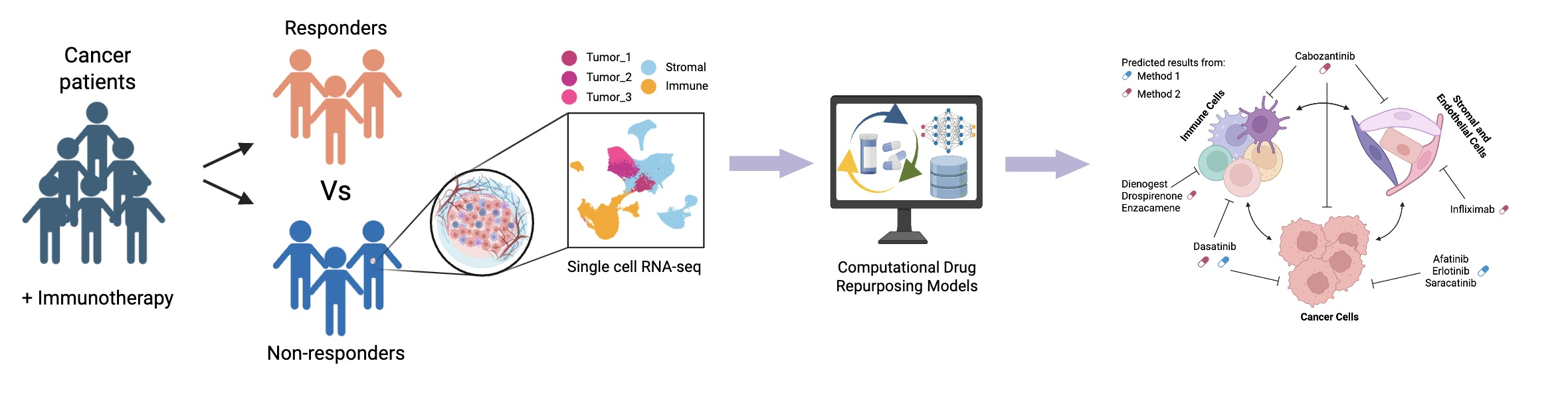
2. Case Study: Two Computational Strategies for Identifying Drug Repurposing Candidates to Enhance ICI Response
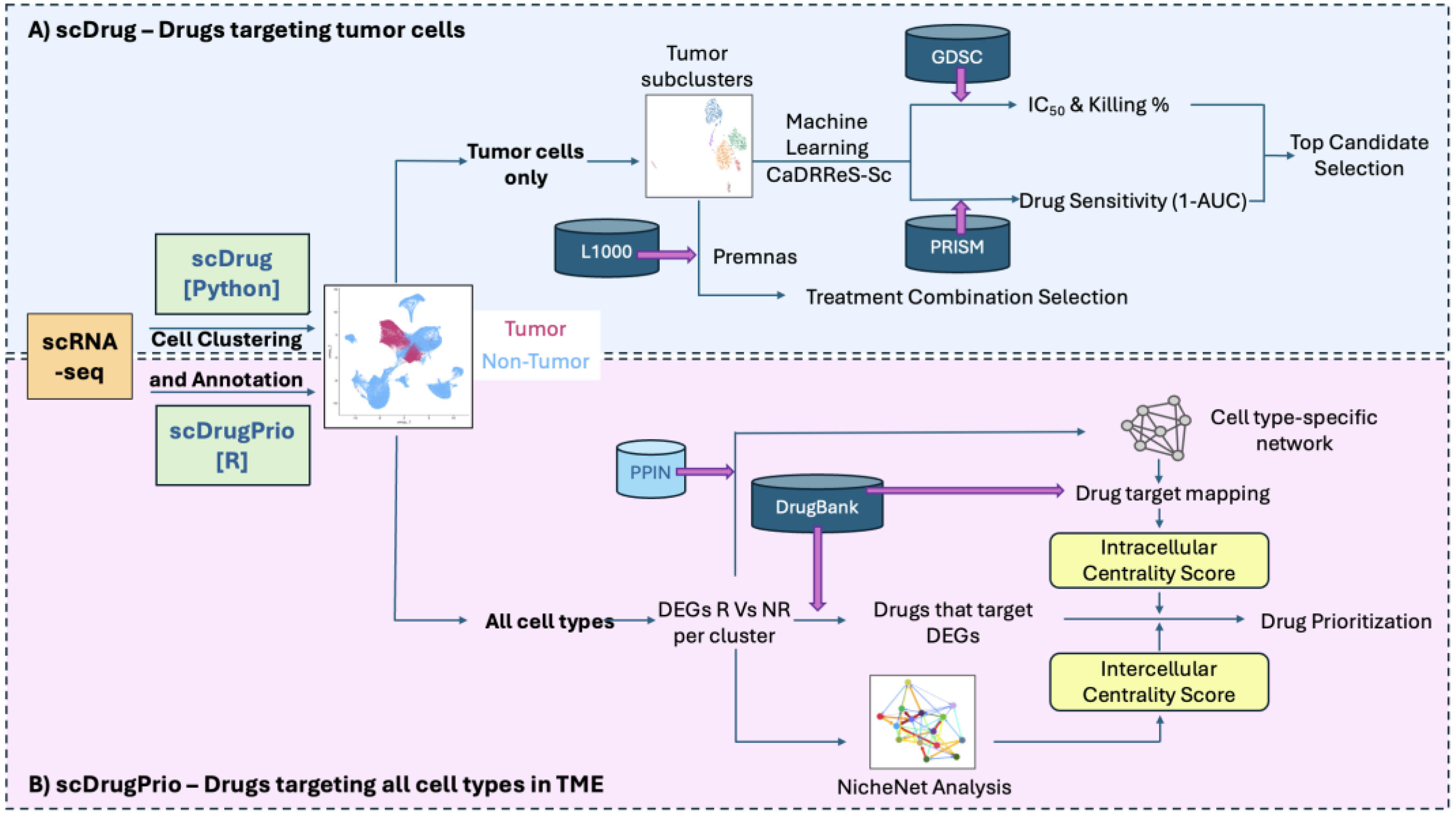
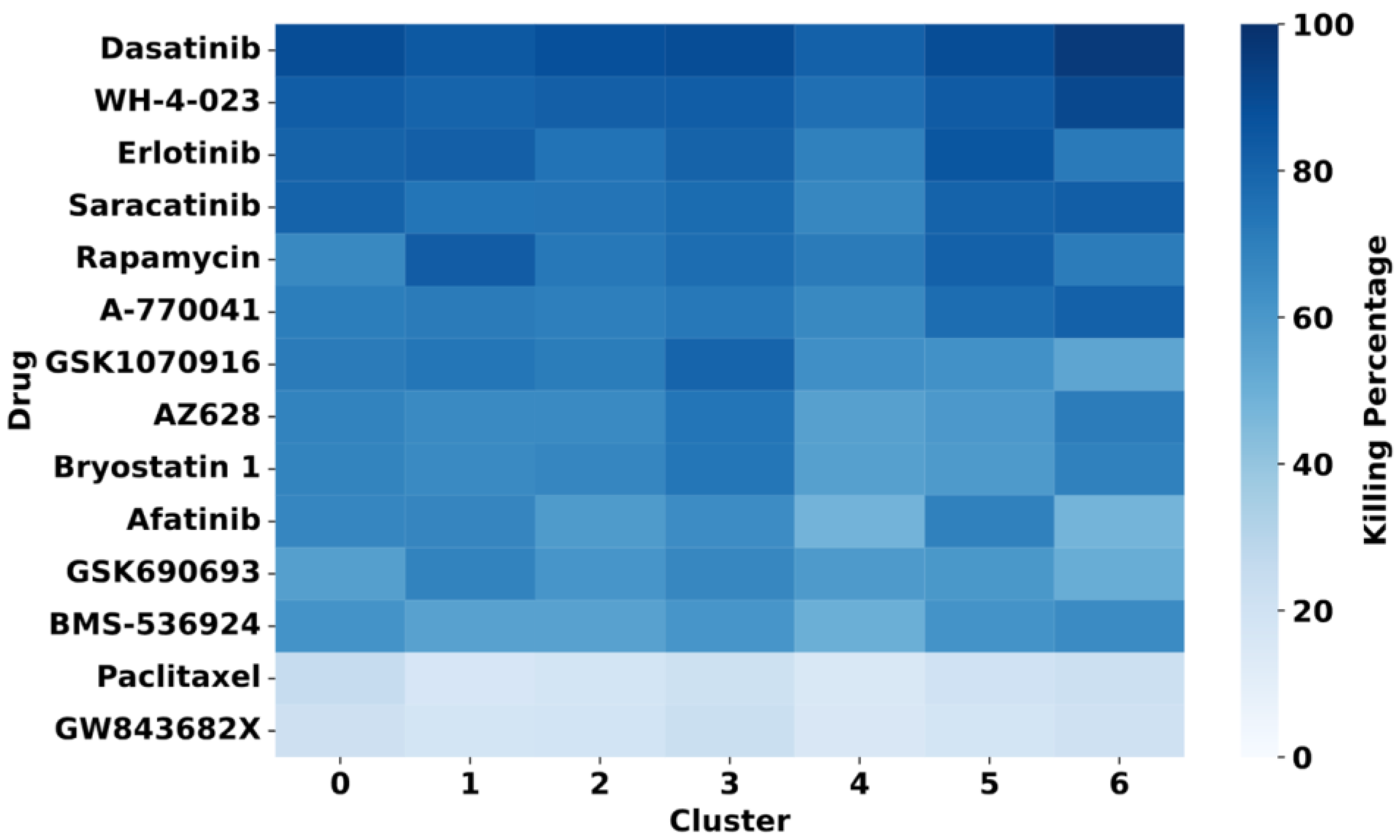
2.1. Method 1: scDrug—Targeting Tumor Cells
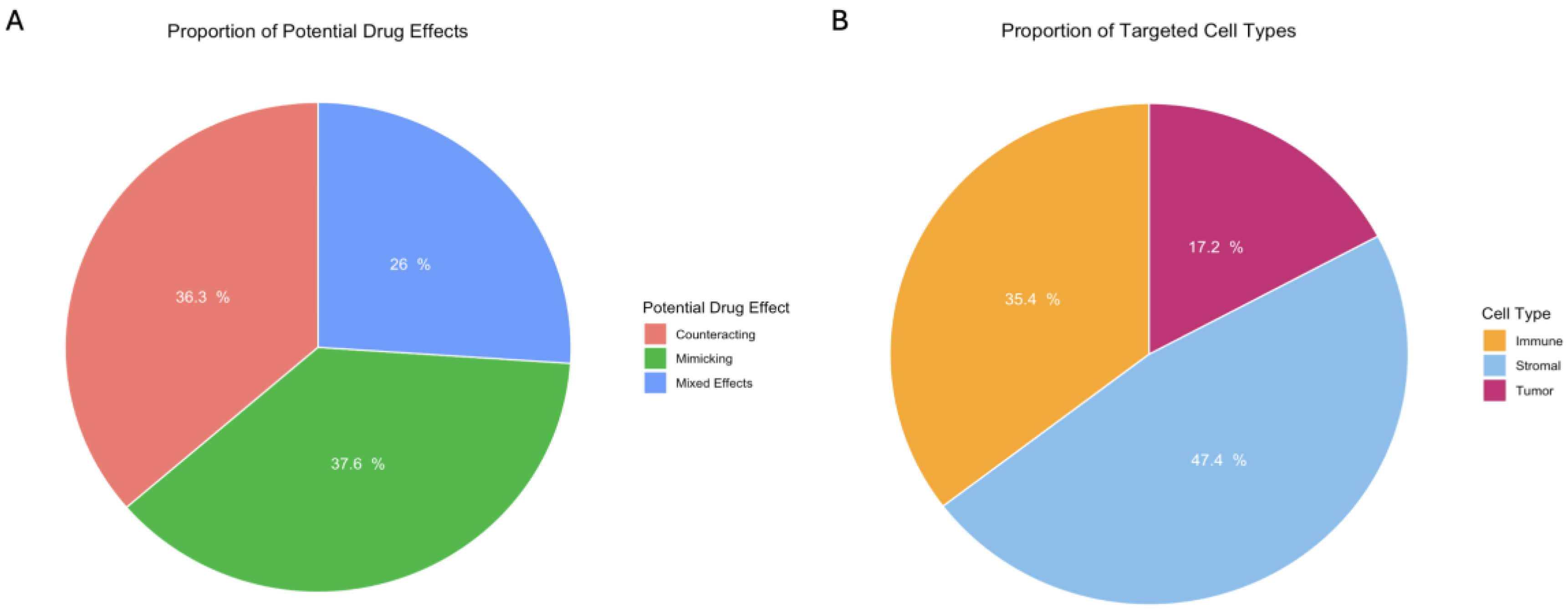
2.2. Method 2: scDrugPrio—Targeting All Cell Types
3. Conclusions and Lessons Learned
Author Contributions
Funding
Data Availability Statement
Conflicts of Interest
Abbreviations
| AUC | Area under the curve |
| AR | Androgen receptor |
| CaDRReS-Sc | Cancer Drug Response prediction using a Recommender System-Single cell |
| CAF | Cancer-associated fibroblast |
| GDSC | Genomics of Drug Sensitivity in Cancer |
| CFH | Complement factor H |
| CTLA-4 | Cytotoxic T-Lymphocyte-Associated Protein 4 |
| DEG | Differentially expressed genes |
| EGFR | Epidermal growth factor receptor |
| ESCC | Esophageal squamous cell carcinoma |
| IC50 | Half maximal inhibitory concentration |
| ICI | Immune checkpoint inhibitors |
| NAT | Neoadjuvant chemo-immunotherapy |
| NR | Non-responder |
| NSCLC | Non-small cell lung cancer |
| ORR | Objective response rate |
| scRNA-seq | Single-cell RNA sequencing |
| TME | Tumor microenvironment |
| TNF | Tumor necrosis factor |
| PD-1 | Programmed Cell Death Protein 1 |
| PD-L1 | Programmed Death-Ligand 1 |
| PPIN | Protein–protein interaction network |
| R | Responder |
Appendix A
| Drug Repurpose Hub Mechanisms of Action | Overlap | Adjusted p-Value | Associated Drugs |
|---|---|---|---|
| Cyclooxygenase inhibitor | 5/75 | 0.0001 | Ketoprofen Propacetamol Bromfenac Nabumetone Mefenamic acid |
| KIT inhibitor | 2/16 | 0.0114 | Dasatinib Lenvatinib |
| PDGFR tyrosine kinase receptor inhibitor | 2/20 | 0.0119 | Dasatinib Lenvatinib |
| VEGFR inhibitor | 2/29 | 0.0188 | Lenvatinib Cabozantinib |
| Phosphodiesterase inhibitor | 2/40 | 0.0282 | Amrinone theobromine |
| Prostaglandin inhibitor | 1/7 | 0.0367 | Grapiprant |
| PKC inhibitor | 1/9 | 0.0367 | Dequalinium |
| Endothelin receptor antagonist | 1/8 | 0.0367 | Ambrisentan |
| CC chemokine receptor antagonist | 1/7 | 0.0367 | Plerixafor |
| RET tyrosine kinase inhibitor | 1/7 | 0.0367 | Cabozantinib |
| Tyrosine kinase inhibitor | 1/8 | 0.0367 | Dasatinib |
| Potassium channel blocker | 1/9 | 0.0367 | Amiodarone |
| FGFR inhibitor | 1/9 | 0.0367 | Lenvatinib |
| Bcr-Abl kinase inhibitor | 1/7 | 0.0367 | Dasatinib |
| src inhibitor | 1/7 | 0.0367 | Dasatinib |
| angiogenesis inhibitor | 1/6 | 0.0367 | Tranilast |
| dihydrofolate reductase inhibitor | 1/10 | 0.0383 | Trimethoprim |
| progesterone receptor agonist | 1/11 | 0.0397 | Dienogest |
| FLT3 inhibitor | 1/12 | 0.0410 | Gilteritinib |
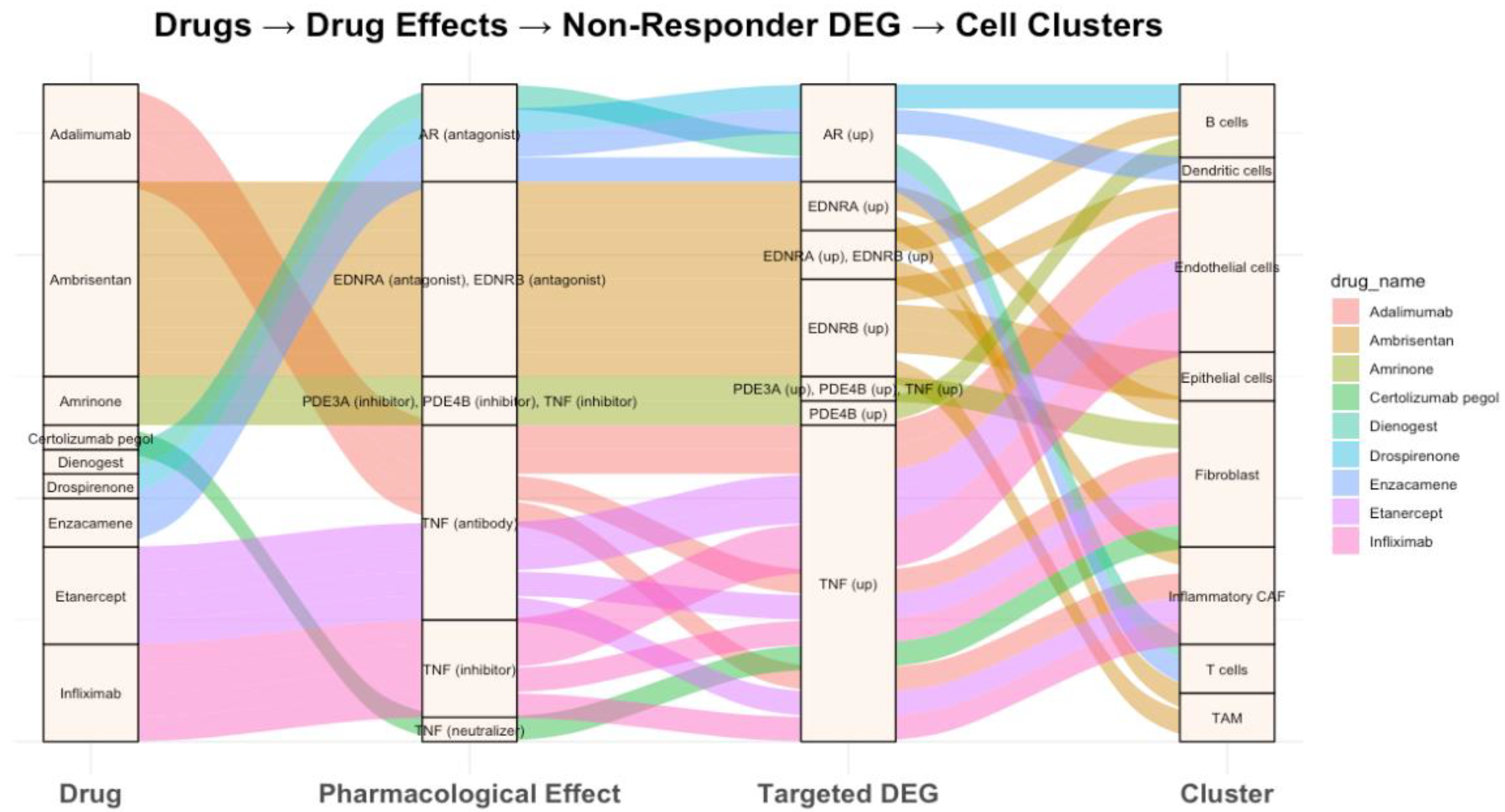
| Drug | DrugBank ID | Pharmacological Effect | Targeted Upregulated DEGs | Cell Type Clusters |
|---|---|---|---|---|
| Drospirenone | DB01395 | PGR (agonist), NR3C2 (antagonist), AR (antagonist) | AR | B cells |
| Dienogest | DB09123 | PGR (agonist), AR (antagonist) | AR | T cells |
| Enzacamene | DB11219 | PGR (antagonist), AR (antagonist) | AR | Dendritic cells, T cells |
| Etanercept | DB00005 | TNF (antibody) | TNF | Endothelial cells, Fibroblast, Cancer-associated fibroblast (CAF) |
| Adalimumab | DB00051 | TNF (antibody) | TNF | Endothelial cells, Fibroblast, CAF |
| Infliximab | DB00065 | TNF (inhibitor) | TNF | Endothelial cells, Fibroblast, CAF |
| Certolizumab pegol | DB08904 | TNF (neutralizer) | TNF | Fibroblast |
| Amrinone | DB01427 | PDE3A (inhibitor), PDE4B (inhibitor), TNF (inhibitor) | PDE4B | B cells |
| Amrinone | DB01427 | PDE3A (inhibitor), PDE4B (inhibitor), TNF (inhibitor) | PDE3A, PDE4B, TNF | Fibroblast |
| Ambrisentan | DB06403 | EDNRA (antagonist), EDNRB (antagonist) | EDNRB | Tumor-associated macrophages (TAM) |
| EDNRA, EDNRB | B cells | |||
| EDNRB | Endothelial cells | |||
| EDNRA | Fibroblast | |||
| EDNRB | Epithelial cells | |||
| EDNRA | TAM | |||
| EDNRA, EDNRB | Inflammatory CAF | |||
| EDNRB | Epithelial cells |
References
- Mao, Y.; Xie, H.; Lv, M.; Yang, Q.; Shuang, Z.; Gao, F.; Li, S.; Zhu, L.; Wang, W. The Landscape of Objective Response Rate of Anti-PD-1/L1 Monotherapy across 31 Types of Cancer: A System Review and Novel Biomarker Investigating. Cancer Immunol. Immunother. 2023, 72, 2483–2498. [Google Scholar] [CrossRef]
- Haslam, A.; Olivier, T.; Prasad, V. How Many People in the Are Eligible for and Respond to Checkpoint Inhibitors: An Empirical Analysis. Int. J. Cancer 2025, 156, 2352–2359. [Google Scholar] [CrossRef] [PubMed]
- Shiravand, Y.; Khodadadi, F.; Kashani, S.M.A.; Hosseini-Fard, S.R.; Hosseini, S.; Sadeghirad, H.; Ladwa, R.; O’Byrne, K.; Kulasinghe, A. Immune Checkpoint Inhibitors in Cancer Therapy. Curr. Oncol. 2022, 29, 3044–3060. [Google Scholar] [CrossRef] [PubMed]
- Yao, L.; Jia, G.; Lu, L.; Bao, Y.; Ma, W. Factors Affecting Tumor Responders and Predictive Biomarkers of Toxicities in Cancer Patients Treated with Immune Checkpoint Inhibitors. Int. Immunopharmacol. 2020, 85, 106628. [Google Scholar] [CrossRef] [PubMed]
- Nagasaki, J.; Ishino, T.; Togashi, Y. Mechanisms of Resistance to Immune Checkpoint Inhibitors. Cancer Sci. 2022, 113, 3303–3312. [Google Scholar] [CrossRef]
- Zhang, C.; Zhang, C.; Wang, H. Immune-Checkpoint Inhibitor Resistance in Cancer Treatment: Current Progress and Future Directions. Cancer Lett. 2023, 562, 216182. [Google Scholar] [CrossRef]
- Alsaafeen, B.H.; Ali, B.R.; Elkord, E. Resistance Mechanisms to Immune Checkpoint Inhibitors: Updated Insights. Mol. Cancer 2025, 24, 20. [Google Scholar] [CrossRef]
- Xia, Y.; Sun, M.; Huang, H.; Jin, W.-L. Drug Repurposing for Cancer Therapy. Signal Transduct. Target. Ther. 2024, 9, 92. [Google Scholar] [CrossRef]
- Al Khzem, A.H.; Gomaa, M.S.; Alturki, M.S.; Tawfeeq, N.; Sarafroz, M.; Alonaizi, S.M.; Al Faran, A.; Alrumaihi, L.A.; Alansari, F.A.; Alghamdi, A.A. Drug Repurposing for Cancer Treatment: A Comprehensive Review. Int. J. Mol. Sci. 2024, 25, 12441. [Google Scholar] [CrossRef]
- Stolfi, C.; Pacifico, T.; Luiz-Ferreira, A.; Monteleone, G.; Laudisi, F. Anthelmintic Drugs as Emerging Immune Modulators in Cancer. Int. J. Mol. Sci. 2023, 24, 6446. [Google Scholar] [CrossRef]
- Park, K. A Review of Computational Drug Repurposing. Transl. Clin. Pharmacol. 2019, 27, 59. [Google Scholar] [CrossRef]
- Crittenden, D.; Gallagher, R.; Milans del Bosch, F.; Fox, D.M.; Kleiman, L.B. Pathways for Non-Manufacturers to Drive Generic Drug Repurposing for Cancer in the U.S. Front. Pharmacol. 2024, 15, 1419772. [Google Scholar] [CrossRef]
- Sharma, V.D.; Bhattaram, V.A.; Krudys, K.; Li, Z.; Marathe, A.; Mehrotra, N.; Wang, X.; Liu, J.; Stier, E.; Florian, J.; et al. Driving Efficiency: Leveraging Model-Informed Approaches in 505(b)(2) Regulatory Actions. J. Clin. Pharmacol. 2024, 64, 1484–1490. [Google Scholar] [CrossRef]
- Korsunsky, I.; Millard, N.; Fan, J.; Slowikowski, K.; Zhang, F.; Wei, K.; Baglaenko, Y.; Brenner, M.; Loh, P.; Raychaudhuri, S. Fast, Sensitive and Accurate Integration of Single-Cell Data with Harmony. Nat. Methods 2019, 16, 1289–1296. [Google Scholar] [CrossRef]
- Zhang, Z.; Zhou, L.; Xie, N.; Nice, E.C.; Zhang, T.; Cui, Y.; Huang, C. Overcoming Cancer Therapeutic Bottleneck by Drug Repurposing. Signal Transduct. Target. Ther. 2020, 5, 113. [Google Scholar] [CrossRef] [PubMed]
- Mohi-ud-din, R.; Chawla, A.; Sharma, P.; Mir, P.A.; Potoo, F.H.; Reiner, Ž.; Reiner, I.; Ateşşahin, D.A.; Sharifi-Rad, J.; Mir, R.H.; et al. Repurposing Approved Non-Oncology Drugs for Cancer Therapy: A Comprehensive Review of Mechanisms, Efficacy, and Clinical Prospects. Eur. J. Med. Res. 2023, 28, 345. [Google Scholar] [CrossRef] [PubMed]
- Ayyar, P.; Subramanian, U. Repurposing—Second Life for Drugs. Pharmacia 2022, 69, 51–59. [Google Scholar] [CrossRef]
- Pinzi, L.; Bisi, N.; Rastelli, G. How Drug Repurposing Can Advance Drug Discovery: Challenges and Opportunities. Front. Drug Discov. 2024, 4, 1460100. [Google Scholar] [CrossRef]
- Walsh, R.J.; Sundar, R.; Lim, J.S.J. Immune Checkpoint Inhibitor Combinations—Current and Emerging Strategies. Br. J. Cancer 2023, 128, 1415–1417. [Google Scholar] [CrossRef]
- Vafaei, S.; Zekiy, A.O.; Khanamir, R.A.; Zaman, B.A.; Ghayourvahdat, A.; Azimizonuzi, H.; Zamani, M. Combination Therapy with Immune Checkpoint Inhibitors (ICIs); a New Frontier. Cancer Cell Int. 2022, 22, 2. [Google Scholar] [CrossRef]
- Birnboim-Perach, R.; Benhar, I. Using Combination Therapy to Overcome Diverse Challenges of Immune Checkpoint Inhibitors Treatment. Int. J. Biol. Sci. 2024, 20, 3911–3922. [Google Scholar] [CrossRef] [PubMed]
- Scharping, N.E.; Menk, A.V.; Whetstone, R.D.; Zeng, X.; Delgoffe, G.M. Efficacy of PD-1 Blockade Is Potentiated by Metformin-Induced Reduction of Tumor Hypoxia. Cancer Immunol. Res. 2017, 5, 9–16. [Google Scholar] [CrossRef] [PubMed]
- Jiang, G.; Shi, L.; Zheng, X.; Zhang, X.; Wu, K.; Liu, B.; Yan, P.; Liang, X.; Yu, T.; Wang, Y.; et al. Androgen Receptor Affects the Response to Immune Checkpoint Therapy by Suppressing PD-L1 in Hepatocellular Carcinoma. Aging 2020, 12, 11466–11484. [Google Scholar] [CrossRef] [PubMed]
- Guan, X.; Polesso, F.; Wang, C.; Sehrawat, A.; Hawkins, R.M.; Murray, S.E.; Thomas, G.V.; Caruso, B.; Thompson, R.F.; Wood, M.A.; et al. Androgen Receptor Activity in T Cells Limits Checkpoint Blockade Efficacy. Nature 2022, 606, 791–796. [Google Scholar] [CrossRef]
- Xiao, X.; Zeng, S.; Li, Y.; Li, L.; Zhang, J. Aspirin Suppressed PD-L1 Expression through Suppressing KAT5 and Subsequently Inhibited PD-1 and PD-L1 Signaling to Attenuate OC Development. J. Oncol. 2022, 2022, 4664651. [Google Scholar] [CrossRef]
- Renner, K.; Bruss, C.; Schnell, A.; Koehl, G.; Becker, H.M.; Fante, M.; Menevse, A.-N.; Kauer, N.; Blazquez, R.; Hacker, L.; et al. Restricting Glycolysis Preserves T Cell Effector Functions and Augments Checkpoint Therapy. Cell Rep. 2019, 29, 135–150.e9. [Google Scholar] [CrossRef]
- Coleman, M.; Mascialino, S.J.; Panjwani, A.; Edwards, E.; Sukhatme, V.V.; Gavegnano, C.; Sukhatme, V.P. Readily Available Drugs and Other Interventions to Potentially Improve the Efficacy of Immune Checkpoint Blockade in Cancer. Front. Immunol. 2024, 14, 1281744. [Google Scholar] [CrossRef]
- Pujalte-Martin, M.; Belaïd, A.; Bost, S.; Kahi, M.; Peraldi, P.; Rouleau, M.; Mazure, N.M.; Bost, F. Targeting Cancer and Immune Cell Metabolism with the Complex I Inhibitors Metformin and IACS-010759. Mol. Oncol. 2024, 18, 1719–1738. [Google Scholar] [CrossRef]
- Galal, M.A.; Al-Rimawi, M.; Hajeer, A.; Dahman, H.; Alouch, S.; Aljada, A. Metformin: A Dual-Role Player in Cancer Treatment and Prevention. Int. J. Mol. Sci. 2024, 25, 4083. [Google Scholar] [CrossRef]
- Xie, L.; Zhu, G.; Shang, J.; Chen, X.; Zhang, C.; Ji, X.; Zhang, Q.; Wei, Y. An Overview on the Biological Activity and Anti-Cancer Mechanism of Lovastatin. Cell. Signal. 2021, 87, 110122. [Google Scholar] [CrossRef]
- Stryjkowska-Góra, A.; Karczmarek-Borowska, B.; Góra, T.; Krawczak, K. Statins and Cancers. Współczesna Onkol. 2015, 3, 167–175. [Google Scholar] [CrossRef] [PubMed]
- Sugawara, T.; Baumgart, S.J.; Nevedomskaya, E.; Reichert, K.; Steuber, H.; Lejeune, P.; Mumberg, D.; Haendler, B. Darolutamide Is a Potent Androgen Receptor Antagonist with Strong Efficacy in Prostate Cancer Models. Int. J. Cancer 2019, 145, 1382–1394. [Google Scholar] [CrossRef] [PubMed]
- Chumsri, S.; Howes, T.; Bao, T.; Sabnis, G.; Brodie, A. Aromatase, Aromatase Inhibitors, and Breast Cancer. J. Steroid Biochem. Mol. Biol. 2011, 125, 13–22. [Google Scholar] [CrossRef]
- Tang, K.; Wu, Y.-H.; Song, Y.; Yu, B. Indoleamine 2,3-Dioxygenase 1 (IDO1) Inhibitors in Clinical Trials for Cancer Immunotherapy. J. Hematol. Oncol. 2021, 14, 68. [Google Scholar] [CrossRef]
- Lv, Q.; Zhang, Y.; Gao, W.; Wang, J.; Hu, Y.; Yang, H.; Xie, Y.; Lv, Y.; Zhang, H.; Wu, D.; et al. CSF1R Inhibition Reprograms Tumor-Associated Macrophages to Potentiate Anti-PD-1 Therapy Efficacy against Colorectal Cancer. Pharmacol. Res. 2024, 202, 107126. [Google Scholar] [CrossRef]
- Ciavattone, N.G.; Bevoor, A.; Farfel, A.; Rehman, A.; Ho, K.K.Y.; Rock, E.C.; Chen, Y.-C.; Luker, K.E.; Humphries, B.A.; Luker, G.D. Inhibiting CXCR4 Reduces Immunosuppressive Effects of Myeloid Cells in Breast Cancer Immunotherapy. Sci. Rep. 2025, 15, 5204. [Google Scholar] [CrossRef]
- Farhad, M.; Rolig, A.S.; Redmond, W.L. The Role of Galectin-3 in Modulating Tumor Growth and Immunosuppression within the Tumor Microenvironment. Oncoimmunology 2018, 7, e1434467. [Google Scholar] [CrossRef]
- Saxena, R.; Gottlin, E.B.; Campa, M.J.; Bushey, R.T.; Guo, J.; Patz, E.F.; He, Y.-W. Complement Factor H: A Novel Innate Immune Checkpoint in Cancer Immunotherapy. Front. Cell Dev. Biol. 2024, 12, 1302490. [Google Scholar] [CrossRef]
- Ruzzi, F.; Riccardo, F.; Conti, L.; Tarone, L.; Semprini, M.S.; Bolli, E.; Barutello, G.; Quaglino, E.; Lollini, P.-L.; Cavallo, F. Cancer Vaccines: Target Antigens, Vaccine Platforms and Preclinical Models. Mol. Asp. Med. 2025, 101, 101324. [Google Scholar] [CrossRef]
- Jia, D.; Wang, Q.; Qi, Y.; Jiang, Y.; He, J.; Lin, Y.; Sun, Y.; Xu, J.; Chen, W.; Fan, L.; et al. Microbial Metabolite Enhances Immunotherapy Efficacy by Modulating T Cell Stemness in Pan-Cancer. Cell 2024, 187, 1651–1665.e21. [Google Scholar] [CrossRef]
- Jia, D.; Wang, L. Modulating Commensal Bacteria to Intervene in Cancer Immunotherapy. Clin. Transl. Med. 2024, 14, e1704. [Google Scholar] [CrossRef] [PubMed]
- Spreafico, A.; Heirali, A.A.; Araujo, D.V.; Tan, T.J.; Oliva, M.; Schneeberger, P.H.H.; Chen, B.; Wong, M.K.; Stayner, L.-A.; Hansen, A.R.; et al. First-in-Class Microbial Ecosystem Therapeutic 4 (MET4) in Combination with Immune Checkpoint Inhibitors in Patients with Advanced Solid Tumors (MET4-IO Trial). Ann. Oncol. 2023, 34, 520–530. [Google Scholar] [CrossRef] [PubMed]
- Choi, S.; Kim, S.; Park, J.; Lee, S.E.; Kim, C.; Kang, D. Diclofenac: A Nonsteroidal Anti-Inflammatory Drug Inducing Cancer Cell Death by Inhibiting Microtubule Polymerization and Autophagy Flux. Antioxidants 2022, 11, 1009. [Google Scholar] [CrossRef] [PubMed]
- Yang, J.; Yamashita-Kanemaru, Y.; Morris, B.I.; Contursi, A.; Trajkovski, D.; Xu, J.; Patrascan, I.; Benson, J.; Evans, A.C.; Conti, A.G.; et al. Aspirin Prevents Metastasis by Limiting Platelet TXA2 Suppression of T Cell Immunity. Nature 2025, 640, 1052–1061. [Google Scholar] [CrossRef]
- Lei, J.; Zhou, Z.; Fang, J.; Sun, Z.; He, M.; He, B.; Chen, Q.; Paek, C.; Chen, P.; Zhou, J.; et al. Aspirin Induces Immunogenic Cell Death and Enhances Cancer Immunotherapy in Colorectal Cancer. Int. Immunopharmacol. 2023, 121, 110350. [Google Scholar] [CrossRef]
- Denslow, A.; Świtalska, M.; Jarosz, J.; Papiernik, D.; Porshneva, K.; Nowak, M.; Wietrzyk, J. Clopidogrel in a Combined Therapy with Anticancer Drugs—Effect on Tumor Growth, Metastasis, and Treatment Toxicity: Studies in Animal Models. PLoS ONE 2017, 12, e0188740. [Google Scholar] [CrossRef]
- Ruan, R.; Li, L.; Li, X.; Huang, C.; Zhang, Z.; Zhong, H.; Zeng, S.; Shi, Q.; Xia, Y.; Zeng, Q.; et al. Unleashing the Potential of Combining FGFR Inhibitor and Immune Checkpoint Blockade for FGF/FGFR Signaling in Tumor Microenvironment. Mol. Cancer 2023, 22, 60. [Google Scholar] [CrossRef]
- Xie, J.; Wang, X.; Proud, C.G. MTOR Inhibitors in Cancer Therapy. F1000Research 2016, 5, 2078. [Google Scholar] [CrossRef]
- Liu, Y.; Feng, M.; Chen, H.; Yang, G.; Qiu, J.; Zhao, F.; Cao, Z.; Luo, W.; Xiao, J.; You, L.; et al. Mechanistic Target of Rapamycin in the Tumor Microenvironment and Its Potential as a Therapeutic Target for Pancreatic Cancer. Cancer Lett. 2020, 485, 1–13. [Google Scholar] [CrossRef]
- Xu, H.; Chen, K.; Shang, R.; Chen, X.; Zhang, Y.; Song, X.; Evert, M.; Zhong, S.; Li, B.; Calvisi, D.F.; et al. Alpelisib Combination Treatment as Novel Targeted Therapy against Hepatocellular Carcinoma. Cell Death Dis. 2021, 12, 920. [Google Scholar] [CrossRef]
- Chen, Y.; Dai, S.; Cheng, C.; Chen, L. Lenvatinib and Immune-Checkpoint Inhibitors in Hepatocellular Carcinoma: Mechanistic Insights, Clinical Efficacy, and Future Perspectives. J. Hematol. Oncol. 2024, 17, 130. [Google Scholar] [CrossRef]
- Su, J.; Zhang, J.; Wu, Y.; Ni, C.; Ding, Y.; Cai, Z.; Xu, M.; Lai, M.; Wang, J.; Lin, S.; et al. Cabozantinib in Combination with Immune Checkpoint Inhibitors for Renal Cell Carcinoma: A Systematic Review and Meta-Analysis. Front. Pharmacol. 2024, 15, 1322473. [Google Scholar] [CrossRef]
- Saba, N.F.; Steuer, C.E.; Ekpenyong, A.; McCook-Veal, A.; Magliocca, K.; Patel, M.; Schmitt, N.C.; Stokes, W.; Bates, J.E.; Rudra, S.; et al. Pembrolizumab and Cabozantinib in Recurrent Metastatic Head and Neck Squamous Cell Carcinoma: A Phase 2 Trial. Nat. Med. 2023, 29, 880–887. [Google Scholar] [CrossRef] [PubMed]
- Zhao, Y.; Guo, S.; Deng, J.; Shen, J.; Du, F.; Wu, X.; Chen, Y.; Li, M.; Chen, M.; Li, X.; et al. VEGF/VEGFR-Targeted Therapy and Immunotherapy in Non-Small Cell Lung Cancer: Targeting the Tumor Microenvironment. Int. J. Biol. Sci. 2022, 18, 3845–3858. [Google Scholar] [CrossRef] [PubMed]
- Chen, A.Y.; Wolchok, J.D.; Bass, A.R. TNF in the Era of Immune Checkpoint Inhibitors: Friend or Foe? Nat. Rev. Rheumatol. 2021, 17, 213–223. [Google Scholar] [CrossRef] [PubMed]
- Scirocchi, F.; Napoletano, C.; Pace, A.; Rahimi Koshkaki, H.; Di Filippo, A.; Zizzari, I.G.; Nuti, M.; Rughetti, A. Immunogenic Cell Death and Immunomodulatory Effects of Cabozantinib. Front. Oncol. 2021, 11, 755433. [Google Scholar] [CrossRef]
- Huang, D.; Xue, J.; Li, S.; Yang, D. Oxaliplatin and Infliximab Synergize to Induce Regression of Colon Cancer. Oncol. Lett. 2017, 11, 755433. [Google Scholar] [CrossRef]
- Draganov, D.; Han, Z.; Rana, A.; Bennett, N.; Irvine, D.J.; Lee, P.P. Ivermectin Converts Cold Tumors Hot and Synergizes with Immune Checkpoint Blockade for Treatment of Breast Cancer. NPJ Breast Cancer 2021, 7, 22. [Google Scholar] [CrossRef]
- Shaker, B.; Ahmad, S.; Lee, J.; Jung, C.; Na, D. In Silico Methods and Tools for Drug Discovery. Comput. Biol. Med. 2021, 137, 104851. [Google Scholar] [CrossRef]
- Tanoli, Z.; Fernández-Torras, A.; Özcan, U.O.; Kushnir, A.; Nader, K.M.; Gadiya, Y.; Fiorenza, L.; Ianevski, A.; Vähä-Koskela, M.; Miihkinen, M.; et al. Computational Drug Repurposing: Approaches, Evaluation of in Silico Resources and Case Studies. Nat. Rev. Drug Discov. 2025, 24, 521–542. [Google Scholar] [CrossRef]
- Dash, R.; Yadav, M.; Biswal, J.; Samanta, S.; Sharma, T.; Mohapatra, S. Drug Repurposing a Compelling Cancer Strategy with Bottomless Opportunities: Recent Advancements in Computational Methods and Molecular Mechanisms. Indian J. Pharmacol. 2023, 55, 322–331. [Google Scholar] [CrossRef] [PubMed]
- To, K.K.W.; Cho, W.C. Drug Repurposing to Circumvent Immune Checkpoint Inhibitor Resistance in Cancer Immunotherapy. Pharmaceutics 2023, 15, 2166. [Google Scholar] [CrossRef] [PubMed]
- Kanehisa, M.; Furumichi, M.; Tanabe, M.; Sato, Y.; Morishima, K. KEGG: New Perspectives on Genomes, Pathways, Diseases and Drugs. Nucleic Acids Res. 2017, 45, D353–D361. [Google Scholar] [CrossRef]
- Lamb, J.; Crawford, E.D.; Peck, D.; Modell, J.W.; Blat, I.C.; Wrobel, M.J.; Lerner, J.; Brunet, J.-P.; Subramanian, A.; Ross, K.N.; et al. The Connectivity Map: Using Gene-Expression Signatures to Connect Small Molecules, Genes, and Disease. Science 2006, 313, 1929–1935. [Google Scholar] [CrossRef]
- Li, F.; Yin, J.; Lu, M.; Mou, M.; Li, Z.; Zeng, Z.; Tan, Y.; Wang, S.; Chu, X.; Dai, H.; et al. DrugMAP: Molecular Atlas and Pharma-Information of All Drugs. Nucleic Acids Res. 2023, 51, D1288–D1299. [Google Scholar] [CrossRef]
- Subramanian, A.; Narayan, R.; Corsello, S.M.; Peck, D.D.; Natoli, T.E.; Lu, X.; Gould, J.; Davis, J.F.; Tubelli, A.A.; Asiedu, J.K.; et al. A Next Generation Connectivity Map: L1000 Platform and the First 1,000,000 Profiles. Cell 2017, 171, 1437–1452.e17. [Google Scholar] [CrossRef]
- Wu, H.; Huang, J.; Zhong, Y.; Huang, Q. DrugSig: A Resource for Computational Drug Repositioning Utilizing Gene Expression Signatures. PLoS ONE 2017, 12, e0177743. [Google Scholar] [CrossRef]
- Corsello, S.M.; Bittker, J.A.; Liu, Z.; Gould, J.; McCarren, P.; Hirschman, J.E.; Johnston, S.E.; Vrcic, A.; Wong, B.; Khan, M.; et al. The Drug Repurposing Hub: A next-Generation Drug Library and Information Resource. Nat. Med. 2017, 23, 405–408. [Google Scholar] [CrossRef]
- Yoo, M.; Shin, J.; Kim, J.; Ryall, K.A.; Lee, K.; Lee, S.; Jeon, M.; Kang, J.; Tan, A.C. DSigDB: Drug Signatures Database for Gene Set Analysis. Bioinformatics 2015, 31, 3069–3071. [Google Scholar] [CrossRef]
- Gaulton, A.; Bellis, L.J.; Bento, A.P.; Chambers, J.; Davies, M.; Hersey, A.; Light, Y.; McGlinchey, S.; Michalovich, D.; Al-Lazikani, B.; et al. ChEMBL: A Large-Scale Bioactivity Database for Drug Discovery. Nucleic Acids Res. 2012, 40, D1100–D1107. [Google Scholar] [CrossRef]
- Bento, A.P.; Gaulton, A.; Hersey, A.; Bellis, L.J.; Chambers, J.; Davies, M.; Krüger, F.A.; Light, Y.; Mak, L.; McGlinchey, S.; et al. The ChEMBL Bioactivity Database: An Update. Nucleic Acids Res. 2014, 42, D1083–D1090. [Google Scholar] [CrossRef]
- Griffith, M.; Griffith, O.L.; Coffman, A.C.; Weible, J.V.; McMichael, J.F.; Spies, N.C.; Koval, J.; Das, I.; Callaway, M.B.; Eldred, J.M.; et al. DGIdb: Mining the Druggable Genome. Nat. Methods 2013, 10, 1209–1210. [Google Scholar] [CrossRef]
- Cannon, M.; Stevenson, J.; Stahl, K.; Basu, R.; Coffman, A.; Kiwala, S.; McMichael, J.F.; Kuzma, K.; Morrissey, D.; Cotto, K.; et al. DGIdb 5.0: Rebuilding the Drug–Gene Interaction Database for Precision Medicine and Drug Discovery Platforms. Nucleic Acids Res. 2024, 52, D1227–D1235. [Google Scholar] [CrossRef] [PubMed]
- Wishart, D.S.; Knox, C.; Guo, A.C.; Cheng, D.; Shrivastava, S.; Tzur, D.; Gautam, B.; Hassanali, M. DrugBank: A Knowledgebase for Drugs, Drug Actions and Drug Targets. Nucleic Acids Res. 2008, 36 (Suppl. S1), D901–D906. [Google Scholar] [CrossRef] [PubMed]
- Ianevski, A.; Kushnir, A.; Nader, K.; Miihkinen, M.; Xhaard, H.; Aittokallio, T.; Tanoli, Z. RepurposeDrugs: An Interactive Web-Portal and Predictive Platform for Repurposing Mono- and Combination Therapies. Brief. Bioinform. 2024, 25, bbae328. [Google Scholar] [CrossRef]
- Huang, K.; Chandak, P.; Wang, Q.; Havaldar, S.; Vaid, A.; Leskovec, J.; Nadkarni, G.N.; Glicksberg, B.S.; Gehlenborg, N.; Zitnik, M. A Foundation Model for Clinician-Centered Drug Repurposing. Nat. Med. 2024, 30, 3601–3613. [Google Scholar] [CrossRef]
- Li, X.; Liao, M.; Wang, B.; Zan, X.; Huo, Y.; Liu, Y.; Bao, Z.; Xu, P.; Liu, W. A Drug Repurposing Method Based on Inhibition Effect on Gene Regulatory Network. Comput. Struct. Biotechnol. J. 2023, 21, 4446–4455. [Google Scholar] [CrossRef]
- Evangelista, J.E.; Clarke, D.J.B.; Xie, Z.; Lachmann, A.; Jeon, M.; Chen, K.; Jagodnik, K.M.; Jenkins, S.L.; Kuleshov, M.V.; Wojciechowicz, M.L.; et al. SigCom LINCS: Data and Metadata Search Engine for a Million Gene Expression Signatures. Nucleic Acids Res. 2022, 50, W697–W709. [Google Scholar] [CrossRef]
- Wu, J.; Li, X.; Wang, Q.; Han, J. DRviaSPCN: A Software Package for Drug Repurposing in Cancer via a Subpathway Crosstalk Network. Bioinformatics 2022, 38, 4975–4977. [Google Scholar] [CrossRef]
- Pilarczyk, M.; Fazel-Najafabadi, M.; Kouril, M.; Shamsaei, B.; Vasiliauskas, J.; Niu, W.; Mahi, N.; Zhang, L.; Clark, N.A.; Ren, Y.; et al. Connecting Omics Signatures and Revealing Biological Mechanisms with ILINCS. Nat. Commun. 2022, 13, 4678. [Google Scholar] [CrossRef]
- Chan, J.; Wang, X.; Turner, J.A.; Baldwin, N.E.; Gu, J. Breaking the Paradigm: Dr Insight Empowers Signature-Free, Enhanced Drug Repurposing. Bioinformatics 2019, 35, 2818–2826. [Google Scholar] [CrossRef] [PubMed]
- Fiscon, G.; Paci, P. SAveRUNNER: An R-Based Tool for Drug Repurposing. BMC Bioinform. 2021, 22, 150. [Google Scholar] [CrossRef] [PubMed]
- Troulé, K.; López-Fernández, H.; García-Martín, S.; Reboiro-Jato, M.; Carretero-Puche, C.; Martorell-Marugán, J.; Martín-Serrano, G.; Carmona-Sáez, P.; Glez-Peña, D.; Al-Shahrour, F.; et al. DREIMT: A Drug Repositioning Database and Prioritization Tool for Immunomodulation. Bioinformatics 2021, 37, 578–579. [Google Scholar] [CrossRef] [PubMed]
- Kuenzi, B.M.; Park, J.; Fong, S.H.; Sanchez, K.S.; Lee, J.; Kreisberg, J.F.; Ma, J.; Ideker, T. Predicting Drug Response and Synergy Using a Deep Learning Model of Human Cancer Cells. Cancer Cell 2020, 38, 672–684.e6. [Google Scholar] [CrossRef]
- Wang, Z.; Lachmann, A.; Keenan, A.B.; Ma’ayan, A. L1000FWD: Fireworks Visualization of Drug-Induced Transcriptomic Signatures. Bioinformatics 2018, 34, 2150–2152. [Google Scholar] [CrossRef]
- Duan, Q.; Reid, S.P.; Clark, N.R.; Wang, Z.; Fernandez, N.F.; Rouillard, A.D.; Readhead, B.; Tritsch, S.R.; Hodos, R.; Hafner, M.; et al. L1000CDS2: LINCS L1000 Characteristic Direction Signatures Search Engine. NPJ Syst. Biol. Appl. 2016, 2, 16015. [Google Scholar] [CrossRef]
- Tang, F.; Barbacioru, C.; Wang, Y.; Nordman, E.; Lee, C.; Xu, N.; Wang, X.; Bodeau, J.; Tuch, B.B.; Siddiqui, A.; et al. MRNA-Seq Whole-Transcriptome Analysis of a Single Cell. Nat. Methods 2009, 6, 377–382. [Google Scholar] [CrossRef]
- Jovic, D.; Liang, X.; Zeng, H.; Lin, L.; Xu, F.; Luo, Y. Single-Cell RNA Sequencing Technologies and Applications: A Brief Overview. Clin. Transl. Med. 2022, 12, e694. [Google Scholar] [CrossRef]
- Li, X.; Wang, C.-Y. From Bulk, Single-Cell to Spatial RNA Sequencing. Int. J. Oral Sci. 2021, 13, 36. [Google Scholar] [CrossRef]
- Zhang, Y.; Wang, D.; Peng, M.; Tang, L.; Ouyang, J.; Xiong, F.; Guo, C.; Tang, Y.; Zhou, Y.; Liao, Q.; et al. Single-cell RNA Sequencing in Cancer Research. J. Exp. Clin. Cancer Res. 2021, 40, 81. [Google Scholar] [CrossRef]
- Huang, D.; Ma, N.; Li, X.; Gou, Y.; Duan, Y.; Liu, B.; Xia, J.; Zhao, X.; Wang, X.; Li, Q.; et al. Advances in Single-Cell RNA Sequencing and Its Applications in Cancer Research. J. Hematol. Oncol. 2023, 16, 98. [Google Scholar] [CrossRef] [PubMed]
- Maggiorani, D.; Le, O.; Lisi, V.; Landais, S.; Moquin-Beaudry, G.; Lavallée, V.P.; Decaluwe, H.; Beauséjour, C. Senescence Drives Immunotherapy Resistance by Inducing an Immunosuppressive Tumor Microenvironment. Nat. Commun. 2024, 15, 2435. [Google Scholar] [CrossRef] [PubMed]
- Kawashima, S.; Togashi, Y. Resistance to Immune Checkpoint Inhibitors and the Tumor Microenvironment. Exp. Dermatol. 2023, 32, 240–249. [Google Scholar] [CrossRef] [PubMed]
- Yang, Y.; Li, S.; To, K.K.W.; Zhu, S.; Wang, F.; Fu, L. Tumor-Associated Macrophages Remodel the Suppressive Tumor Immune Microenvironment and Targeted Therapy for Immunotherapy. J. Exp. Clin. Cancer Res. 2025, 44, 145. [Google Scholar] [CrossRef]
- Dijkstra, K.K.; Vendramin, R.; Karagianni, D.; Witsen, M.; Gálvez-Cancino, F.; Hill, M.S.; Foster, K.A.; Barbè, V.; Angelova, M.; Hynds, R.E.; et al. Subclonal Immune Evasion in Non-Small Cell Lung Cancer. Cancer Cell 2025, 43, P1833–1849.e10. [Google Scholar] [CrossRef]
- Kamatani, T.; Umeda, K.; Iwasawa, T.; Miya, F.; Matsumoto, K.; Mikami, S.; Hara, K.; Shimoda, M.; Suzuki, Y.; Nishino, J.; et al. Clonal Diversity Shapes the Tumour Microenvironment Leading to Distinct Immunotherapy Responses in Metastatic Urothelial Carcinoma. Nat. Commun. 2025, 16, 7995. [Google Scholar] [CrossRef]
- Hsieh, C.-Y.; Wen, J.-H.; Lin, S.-M.; Tseng, T.-Y.; Huang, J.-H.; Huang, H.-C.; Juan, H.-F. ScDrug: From Single-Cell RNA-Seq to Drug Response Prediction. Comput. Struct. Biotechnol. J. 2023, 21, 150–157. [Google Scholar] [CrossRef]
- Liu, C.; Zhang, Y.; Liang, Y.; Zhang, T.; Wang, G. DrugReSC: Targeting Disease-Critical Cell Subpopulations with Single-Cell Transcriptomic Data for Drug Repurposing in Cancer. Brief Bioinform. 2024, 25, bbae490. [Google Scholar] [CrossRef]
- Ianevski, A.; Nader, K.; Driva, K.; Senkowski, W.; Bulanova, D.; Moyano-Galceran, L.; Ruokoranta, T.; Kuusanmäki, H.; Ikonen, N.; Sergeev, P.; et al. Single-Cell Transcriptomes Identify Patient-Tailored Therapies for Selective Co-Inhibition of Cancer Clones. Nat. Commun. 2024, 15, 8579. [Google Scholar] [CrossRef]
- Schäfer, S.; Smelik, M.; Sysoev, O.; Zhao, Y.; Eklund, D.; Lilja, S.; Gustafsson, M.; Heyn, H.; Julia, A.; Kovács, I.A.; et al. ScDrugPrio: A Framework for the Analysis of Single-Cell Transcriptomics to Address Multiple Problems in Precision Medicine in Immune-Mediated Inflammatory Diseases. Genome Med. 2024, 16, 42. [Google Scholar] [CrossRef]
- Esteban-Medina, M.; de la Oliva Roque, V.M.; Herráiz-Gil, S.; Peña-Chilet, M.; Dopazo, J.; Loucera, C. Drexml: A Command Line Tool and Python Package for Drug Repurposing. Comput. Struct. Biotechnol. J. 2024, 23, 1129–1143. [Google Scholar] [CrossRef]
- He, B.; Xiao, Y.; Liang, H.; Huang, Q.; Du, Y.; Li, Y.; Garmire, D.; Sun, D.; Garmire, L.X. ASGARD Is A Single-Cell Guided Pipeline to Aid Repurposing of Drugs. Nat. Commun. 2023, 14, 993. [Google Scholar] [CrossRef] [PubMed]
- Tang, C.; Fu, S.; Jin, X.; Li, W.; Xing, F.; Duan, B.; Cheng, X.; Chen, X.; Wang, S.; Zhu, C.; et al. Personalized Tumor Combination Therapy Optimization Using the Single-Cell Transcriptome. Genome Med. 2023, 15, 105. [Google Scholar] [CrossRef] [PubMed]
- Osorio, D.; Shahrouzi, P.; Tekpli, X.; Kristensen, V.N.; Kuijjer, M.L. Drug Combination Prediction for Cancer Treatment Using Disease-Specific Drug Response Profiles and Single-Cell Transcriptional Signatures. eLife 2025, 14, RP102442. [Google Scholar] [CrossRef]
- Zhong, J.; Yang, J.; Song, Y.; Zhang, Z.; Wang, C.; Tong, R.; Li, C.; Yu, N.; Zou, L.; Liu, S.; et al. SuperFeat: Quantitative Feature Learning from Single-Cell RNA-Seq Data Facilitates Drug Repurposing. Genom. Proteom. Bioinform. 2024, 22, qzae036. [Google Scholar] [CrossRef]
- Sun, Y.-Y.; Hsieh, C.-Y.; Wen, J.-H.; Tseng, T.-Y.; Huang, J.-H.; Oyang, Y.-J.; Huang, H.-C.; Juan, H.-F. ScDrug+: Predicting Drug-Responses Using Single-Cell Transcriptomics and Molecular Structure. Biomed. Pharmacother. 2024, 177, 117070. [Google Scholar] [CrossRef]
- Pellecchia, S.; Viscido, G.; Franchini, M.; Gambardella, G. Predicting Drug Response from Single-Cell Expression Profiles of Tumours. BMC Med. 2023, 21, 476. [Google Scholar] [CrossRef]
- Lei, W.; Yuan, M.; Long, M.; Zhang, T.; Huang, Y.; Liu, H.; Jiang, W. ScDR: Predicting Drug Response at Single-Cell Resolution. Genes 2023, 14, 268. [Google Scholar] [CrossRef]
- Chen, J.; Wang, X.; Ma, A.; Wang, Q.-E.; Liu, B.; Li, L.; Xu, D.; Ma, Q. Deep Transfer Learning of Cancer Drug Responses by Integrating Bulk and Single-Cell RNA-Seq Data. Nat. Commun. 2022, 13, 6494. [Google Scholar] [CrossRef]
- Fustero-Torre, C.; Jiménez-Santos, M.J.; García-Martín, S.; Carretero-Puche, C.; García-Jimeno, L.; Ivanchuk, V.; Di Domenico, T.; Gómez-López, G.; Al-Shahrour, F. Beyondcell: Targeting Cancer Therapeutic Heterogeneity in Single-Cell RNA-Seq Data. Genome Med. 2021, 13, 187. [Google Scholar] [CrossRef]
- Hirsch, L.; Zitvogel, L.; Eggermont, A.; Marabelle, A. PD-Loma: A Cancer Entity with a Shared Sensitivity to the PD-1/PD-L1 Pathway Blockade. Br. J. Cancer 2019, 120, 3–5. [Google Scholar] [CrossRef] [PubMed]
- Ye, Y.; Jing, Y.; Li, L.; Mills, G.B.; Diao, L.; Liu, H.; Han, L. Sex-Associated Molecular Differences for Cancer Immunotherapy. Nat. Commun. 2020, 11, 1779. [Google Scholar] [CrossRef] [PubMed]
- Ji, G.; Yang, Q.; Wang, S.; Yan, X.; Ou, Q.; Gong, L.; Zhao, J.; Zhou, Y.; Tian, F.; Lei, J.; et al. Single-Cell Profiling of Response to Neoadjuvant Chemo-Immunotherapy in Surgically Resectable Esophageal Squamous Cell Carcinoma. Genome Med. 2024, 16, 49. [Google Scholar] [CrossRef] [PubMed]
- Wolf, F.A.; Angerer, P.; Theis, F.J. SCANPY: Large-Scale Single-Cell Gene Expression Data Analysis. Genome Biol. 2018, 19, 15. [Google Scholar] [CrossRef]
- Blondel, V.D.; Guillaume, J.-L.; Lambiotte, R.; Lefebvre, E. Fast Unfolding of Communities in Large Networks. J. Stat. Mech. Theory Exp. 2008, 2008, P10008. [Google Scholar] [CrossRef]
- Hou, R.; Denisenko, E.; Forrest, A.R.R. ScMatch: A Single-Cell Gene Expression Profile Annotation Tool Using Reference Datasets. Bioinformatics 2019, 35, 4688–4695. [Google Scholar] [CrossRef]
- Abugessaisa, I.; Noguchi, S.; Hasegawa, A.; Harshbarger, J.; Kondo, A.; Lizio, M.; Severin, J.; Carninci, P.; Kawaji, H.; Kasukawa, T. FANTOM5 CAGE Profiles of Human and Mouse Reprocessed for GRCh38 and GRCm38 Genome Assemblies. Sci. Data 2017, 4, 170107. [Google Scholar] [CrossRef]
- Suphavilai, C.; Bertrand, D.; Nagarajan, N. Predicting Cancer Drug Response Using a Recommender System. Bioinformatics 2018, 34, 3907–3914. [Google Scholar] [CrossRef]
- Yang, W.; Soares, J.; Greninger, P.; Edelman, E.J.; Lightfoot, H.; Forbes, S.; Bindal, N.; Beare, D.; Smith, J.A.; Thompson, I.R.; et al. Genomics of Drug Sensitivity in Cancer (GDSC): A Resource for Therapeutic Biomarker Discovery in Cancer Cells. Nucleic Acids Res. 2012, 41, D955–D961. [Google Scholar] [CrossRef]
- Yu, C.; Mannan, A.M.; Yvone, G.M.; Ross, K.N.; Zhang, Y.-L.; Marton, M.A.; Taylor, B.R.; Crenshaw, A.; Gould, J.Z.; Tamayo, P.; et al. High-Throughput Identification of Genotype-Specific Cancer Vulnerabilities in Mixtures of Barcoded Tumor Cell Lines. Nat. Biotechnol. 2016, 34, 419–423. [Google Scholar] [CrossRef]
- Hsieh, C.-Y.; Tu, C.-C.; Hung, J.-H. Estimating Intraclonal Heterogeneity and Subpopulation Changes from Bulk Expression Profiles in CMap. Life Sci. Alliance 2022, 5, e202101299. [Google Scholar] [CrossRef]
- Chen, J.; Lan, T.; Zhang, W.; Dong, L.; Kang, N.; Fu, M.; Liu, B.; Liu, K.; Zhang, C.; Hou, J.; et al. Dasatinib Enhances Cisplatin Sensitivity in Human Esophageal Squamous Cell Carcinoma (ESCC) Cells via Suppression of PI3K/AKT and Stat3 Pathways. Arch. Biochem. Biophys. 2015, 575, 38–45. [Google Scholar] [CrossRef]
- Kheraldine, H.; Gupta, I.; Cyprian, F.S.; Vranic, S.; Al-Farsi, H.F.; Merhi, M.; Dermime, S.; Al Moustafa, A.-E. Targeting HER2-Positive Breast Cancer Cells by a Combination of Dasatinib and BMS-202: Insight into the Molecular Pathways. Cancer Cell Int. 2024, 24, 94. [Google Scholar] [CrossRef]
- Kadota, H.; Yuge, R.; Shimizu, D.; Miyamoto, R.; Otani, R.; Hiyama, Y.; Takigawa, H.; Hayashi, R.; Urabe, Y.; Kitadai, Y.; et al. Anti-Programmed Cell Death-1 Antibody and Dasatinib Combination Therapy Exhibits Efficacy in Metastatic Colorectal Cancer Mouse Models. Cancers 2022, 14, 6146. [Google Scholar] [CrossRef] [PubMed]
- Koller, P.; Baran, N.; Harutyunyan, K.; Cavazos, A.; Mallampati, S.; Chin, R.L.; Jiang, Z.; Sun, X.; Lee, H.-H.; Hsu, J.L.; et al. PD-1 Blockade in Combination with Dasatinib Potentiates Induction of Anti-Acute Lymphocytic Leukemia Immunity. J. Immunother. Cancer 2023, 11, e006619. [Google Scholar] [CrossRef] [PubMed]
- Redin, E.; Garmendia, I.; Lozano, T.; Serrano, D.; Senent, Y.; Redrado, M.; Villalba, M.; De Andrea, C.E.; Exposito, F.; Ajona, D.; et al. SRC Family Kinase (SFK) Inhibitor Dasatinib Improves the Antitumor Activity of Anti-PD-1 in NSCLC Models by Inhibiting Treg Cell Conversion and Proliferation. J. Immunother. Cancer 2021, 9, e001496. [Google Scholar] [CrossRef] [PubMed]
- Jia, M.; Yuan, Z.; Yu, H.; Feng, S.; Tan, X.; Long, Z.; Duan, Y.; Zhu, W.; Yan, P. Rapamycin Circumvents Anti PD-1 Therapy Resistance in Colorectal Cancer by Reducing PD-L1 Expression and Optimizing the Tumor Microenvironment. Biomed. Pharmacother. 2024, 176, 116883. [Google Scholar] [CrossRef]
- Yang, J.C.-H.; Gadgeel, S.M.; Sequist, L.V.; Wu, C.-L.; Papadimitrakopoulou, V.A.; Su, W.-C.; Fiore, J.; Saraf, S.; Raftopoulos, H.; Patnaik, A. Pembrolizumab in Combination With Erlotinib or Gefitinib as First-Line Therapy for Advanced NSCLC With Sensitizing EGFR Mutation. Journal of Thoracic Oncology 2019, 14, 553–559. [Google Scholar] [CrossRef]
- Rudin, C.M.; Cervantes, A.; Dowlati, A.; Besse, B.; Ma, B.; Costa, D.B.; Schmid, P.; Heist, R.; Villaflor, V.M.; Spahn, J.; et al. Safety and Clinical Activity of Atezolizumab plus Erlotinib in Patients with Non-Small-Cell Lung Cancer. ESMO Open 2023, 8, 101160. [Google Scholar] [CrossRef]
- Lim, N.; Pavlidis, P. Evaluation of Connectivity Map Shows Limited Reproducibility in Drug Repositioning. Sci. Rep. 2021, 11, 17624. [Google Scholar] [CrossRef]
- Hao, Y.; Stuart, T.; Kowalski, M.H.; Choudhary, S.; Hoffman, P.; Hartman, A.; Srivastava, A.; Molla, G.; Madad, S.; Fernandez-Granda, C.; et al. Dictionary Learning for Integrative, Multimodal and Scalable Single-Cell Analysis. Nat. Biotechnol. 2024, 42, 293–304. [Google Scholar] [CrossRef] [PubMed]
- Browaeys, R.; Saelens, W.; Saeys, Y. NicheNet: Modeling Intercellular Communication by Linking Ligands to Target Genes. Nat. Methods 2020, 17, 159–162. [Google Scholar] [CrossRef] [PubMed]
- Kuleshov, M.V.; Jones, M.R.; Rouillard, A.D.; Fernandez, N.F.; Duan, Q.; Wang, Z.; Koplev, S.; Jenkins, S.L.; Jagodnik, K.M.; Lachmann, A.; et al. Enrichr: A Comprehensive Gene Set Enrichment Analysis Web Server 2016 Update. Nucleic Acids Res. 2016, 44, W90–W97. [Google Scholar] [CrossRef] [PubMed]
- Chen, E.Y.; Tan, C.M.; Kou, Y.; Duan, Q.; Wang, Z.; Meirelles, G.V.; Clark, N.R.; Ma’ayan, A. Enrichr: Interactive and Collaborative HTML5 Gene List Enrichment Analysis Tool. BMC Bioinform. 2013, 14, 128. [Google Scholar] [CrossRef]
- Kuleshov, M.V.; Diaz, J.E.L.; Flamholz, Z.N.; Keenan, A.B.; Lachmann, A.; Wojciechowicz, M.L.; Cagan, R.L.; Ma’ayan, A. ModEnrichr: A Suite of Gene Set Enrichment Analysis Tools for Model Organisms. Nucleic Acids Res. 2019, 47, W183–W190. [Google Scholar] [CrossRef]
- Kanai, O.; Ito, T.; Saito, Z.; Yamamoto, Y.; Fujita, K.; Okamura, M.; Hashimoto, M.; Nakatani, K.; Sawai, S.; Mio, T. Effect of Cyclooxygenase Inhibitor Use on Immunotherapy Efficacy in Non-small Cell Lung Cancer. Thorac. Cancer 2021, 12, 949–957. [Google Scholar] [CrossRef]
- Quandt, Z.; Jacob, S.; Fadlullah, M.Z.H.; Wu, C.; Wu, C.; Huppert, L.; Levine, L.S.; Sison, P.; Tsai, K.K.; Chow, M.; et al. Phase II Trial of Pembrolizumab, Ipilimumab, and Aspirin in Melanoma: Clinical Outcomes and Translational Predictors of Response. BJC Rep. 2024, 2, 46. [Google Scholar] [CrossRef]
- Wu, Z.; Zhang, Y.; Cheng, Y.; Li, J.; Li, F.; Wang, C.; Shi, L.; Qin, G.; Zhan, W.; Cai, Y.; et al. PD-1 Blockade plus COX Inhibitors in DMMR Metastatic Colorectal Cancer: Clinical, Genomic, and Immunologic Analyses from the PCOX Trial. Med 2024, 5, 998–1015.e6. [Google Scholar] [CrossRef]
- Wang, S.-J.; Khullar, K.; Kim, S.; Yegya-Raman, N.; Malhotra, J.; Groisberg, R.; Crayton, S.H.; Silk, A.W.; Nosher, J.L.; Gentile, M.A.; et al. Effect of Cyclo-Oxygenase Inhibitor Use during Checkpoint Blockade Immunotherapy in Patients with Metastatic Melanoma and Non-Small Cell Lung Cancer. J. Immunother. Cancer 2020, 8, e000889. [Google Scholar] [CrossRef]
- Zhang, Y.; Kumar, P.; Adashek, J.J.; Skelton, W.P.; Li, J.; Vosoughi, A.; Chahoud, J.; Manley, B.J.; Spiess, P.E. Adding Cyclooxygenase Inhibitors to Immune Checkpoint Inhibitors Did Not Improve Outcomes in Metastatic Renal Cell Carcinoma. Cells 2022, 11, 2505. [Google Scholar] [CrossRef]
- Wang, X.; Liu, C.; Wen, H.; Duan, X.; Jiao, Y.; Liu, Y.; Chen, M.; Zhu, K.; Mao, X.; Zhou, Q. Effectiveness of Lenvatinib plus Immune Checkpoint Inhibitors in Primary Advanced Hepatocellular Carcinoma beyond Oligometastasis. Clin. Transl. Med. 2023, 13, e1214. [Google Scholar] [CrossRef]
- Yu, G.-T.; Mao, L.; Wu, L.; Deng, W.-W.; Bu, L.-L.; Liu, J.-F.; Chen, L.; Yang, L.-L.; Wu, H.; Zhang, W.-F.; et al. Inhibition of SRC Family Kinases Facilitates Anti-CTLA4 Immunotherapy in Head and Neck Squamous Cell Carcinoma. Cell. Mol. Life Sci. 2018, 75, 4223–4234. [Google Scholar] [CrossRef] [PubMed]
- Voutouri, C.; Panagi, M.; Mpekris, F.; Stylianou, A.; Michael, C.; Averkiou, M.A.; Martin, J.D.; Stylianopoulos, T. Endothelin Inhibition Potentiates Cancer Immunotherapy Revealing Mechanical Biomarkers Predictive of Response. Adv. Ther. 2021, 4, 2000289. [Google Scholar] [CrossRef]
- Kappes, L.; Amer, R.L.; Sommerlatte, S.; Bashir, G.; Plattfaut, C.; Gieseler, F.; Gemoll, T.; Busch, H.; Altahrawi, A.; Al-Sbiei, A.; et al. Ambrisentan, an Endothelin Receptor Type A-Selective Antagonist, Inhibits Cancer Cell Migration, Invasion, and Metastasis. Sci. Rep. 2020, 10, 15931. [Google Scholar] [CrossRef]
- Cho, N.W.; Guldberg, S.M.; Nabet, B.Y.; Yu, J.Z.; Kim, E.J.; Hiam-Galvez, K.J.; Yee, J.L.; DeBarge, R.; Tenvooren, I.; Ashitey, N.A.; et al. T Cells Instruct Immune Checkpoint Inhibitor Therapy Resistance in Tumors Responsive to IL1 and TNFα Inflammation. Cancer Immunol. Res. 2025, 13, 229–244. [Google Scholar] [CrossRef]
- Dmitrieva-Posocco, O.; Dzutsev, A.; Posocco, D.F.; Hou, V.; Yuan, W.; Thovarai, V.; Mufazalov, I.A.; Gunzer, M.; Shilovskiy, I.P.; Khaitov, M.R.; et al. Cell-Type-Specific Responses to Interleukin-1 Control Microbial Invasion and Tumor-Elicited Inflammation in Colorectal Cancer. Immunity 2019, 50, 166–180.e7. [Google Scholar] [CrossRef]
- Parisi, D.; Adasme, M.F.; Sveshnikova, A.; Bolz, S.N.; Moreau, Y.; Schroeder, M. Drug Repositioning or Target Repositioning: A Structural Perspective of Drug-Target-Indication Relationship for Available Repurposed Drugs. Comput. Struct. Biotechnol. J. 2020, 18, 1043–1055. [Google Scholar] [CrossRef]


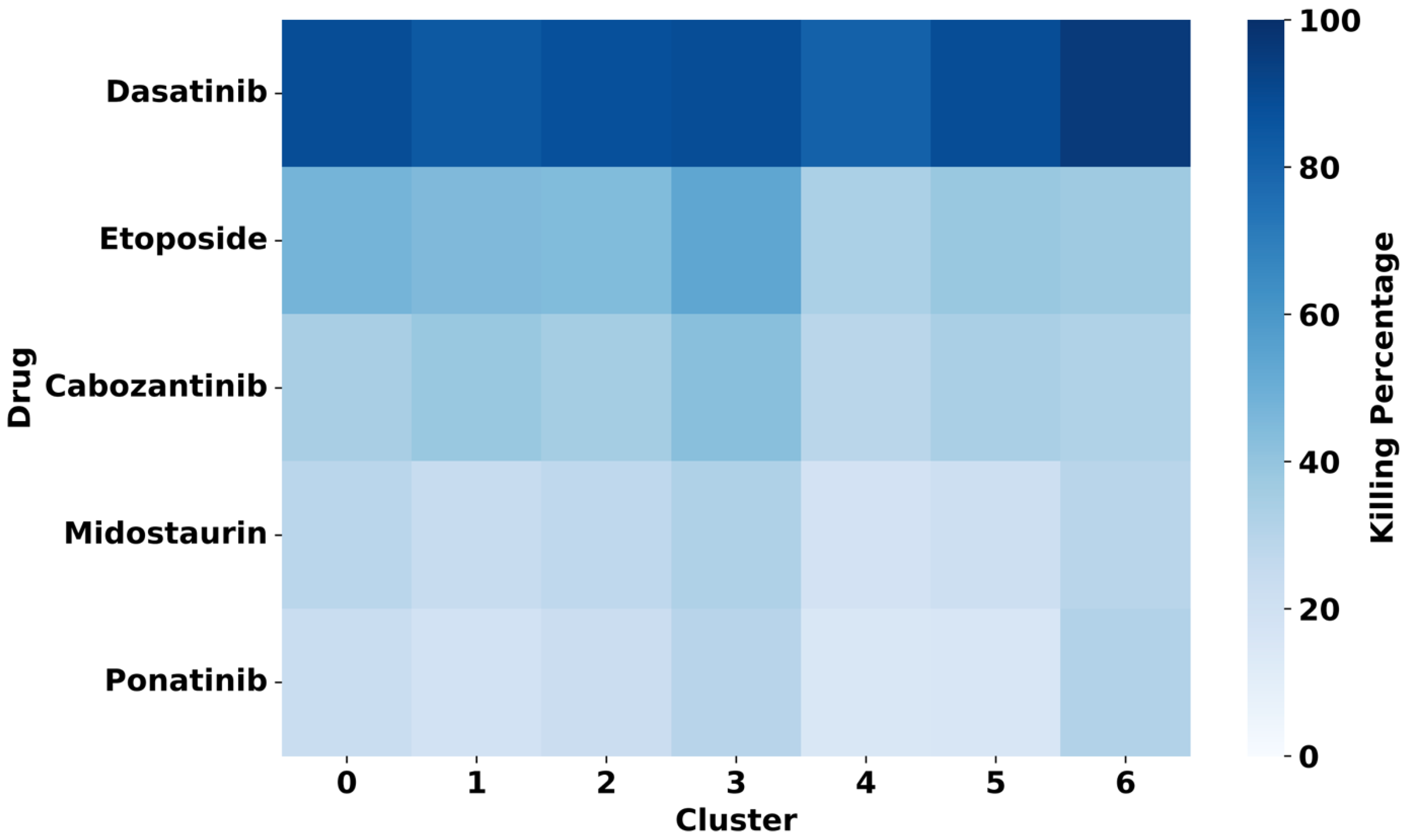
| Drug | DrugBank ID | Pharmacological Effect | Targeted Upregulated DEGs | Cluster |
|---|---|---|---|---|
| Dasatinib | DB01254 | ABL1 (multitarget), SRC (multitarget), EPHA2 (antagonist), LCK (multitarget), YES1 (inhibitor), KIT (antagonist), PDGFRB (antagonist), STAT5B (inhibitor), ABL2 (multitarget), FYN (multitarget) | PDGFRB | T cells Endothelial cells Epithelial cells |
| Cabozantinib | DB08875 | MET (antagonist), KDR (antagonist), RET (antagonist) | KDR | Mast cells Endothelial cells |
| Etoposide | DB00773 | TOP2A (inhibitor), TOP2B (inhibitor) | TOP2A | T cells Fibroblast Endothelial cells Mast cells |
| Midostaurin | DB06595 | PRKCA (antagonist, inhibitor), KDR (antagonist, inhibitor), KIT (antagonist, inhibitor), PDGFRA (antagonist, inhibitor), PDGFRB (antagonist, inhibitor), FLT3 (antagonist, inhibitor) | PDGFRA, FLT3 | Tumor epithelial cells Endothelial cells |
| Ponatinib | DB08901 | ABL1 (inhibitor), BCR (inhibitor), KIT (inhibitor), RET (inhibitor), TEK (inhibitor), FLT3 (inhibitor), FGFR1 (inhibitor), FGFR2 (inhibitor), FGFR3 (inhibitor), FGFR4 (inhibitor), LCK (inhibitor), SRC (inhibitor), LYN (inhibitor), KDR (inhibitor), PDGFRA (inhibitor) | KIT, PDGFRA | Cycling/proliferating epithelial cells |
| LYN, KDR | Cancer-associated fibroblast (CAF) | |||
| FGFR3, KDR, PDGFRA | Mast cells | |||
| FLT3, KDR, PDGFRA | Epithelial cells | |||
| FLT3, KDR, PDGFRA | Endothelial cells | |||
| FLT3, KDR, PDGFRA | B cells |
Disclaimer/Publisher’s Note: The statements, opinions and data contained in all publications are solely those of the individual author(s) and contributor(s) and not of MDPI and/or the editor(s). MDPI and/or the editor(s) disclaim responsibility for any injury to people or property resulting from any ideas, methods, instructions or products referred to in the content. |
© 2025 by the authors. Licensee MDPI, Basel, Switzerland. This article is an open access article distributed under the terms and conditions of the Creative Commons Attribution (CC BY) license (https://creativecommons.org/licenses/by/4.0/).
Share and Cite
Cheng, O.J.; Tran, T.T.T.; Chen, Y.A.; Tan, A.C. Harnessing Single-Cell RNA-Seq for Computational Drug Repurposing in Cancer Immunotherapy. Pharmaceuticals 2025, 18, 1769. https://doi.org/10.3390/ph18111769
Cheng OJ, Tran TTT, Chen YA, Tan AC. Harnessing Single-Cell RNA-Seq for Computational Drug Repurposing in Cancer Immunotherapy. Pharmaceuticals. 2025; 18(11):1769. https://doi.org/10.3390/ph18111769
Chicago/Turabian StyleCheng, Olivia J., T.T.T. Tran, Y. Ann Chen, and Aik Choon Tan. 2025. "Harnessing Single-Cell RNA-Seq for Computational Drug Repurposing in Cancer Immunotherapy" Pharmaceuticals 18, no. 11: 1769. https://doi.org/10.3390/ph18111769
APA StyleCheng, O. J., Tran, T. T. T., Chen, Y. A., & Tan, A. C. (2025). Harnessing Single-Cell RNA-Seq for Computational Drug Repurposing in Cancer Immunotherapy. Pharmaceuticals, 18(11), 1769. https://doi.org/10.3390/ph18111769