Article

Synthesis, Physicochemical Characterization, Biological Evaluation, In Silico and Molecular Docking Studies of Pd(II) Complexes with P, S-Donor Ligands


1
Department of Chemistry, University of Science and Technology, Bannu 28100, Pakistan
2
Department of Chemistry, Quaid-i-Azam University, Islamabad 45320, Pakistan
3
Department of Health and Biological Sciences, Abasyn University, Peshawar 25000, Pakistan
4
Department of Chemistry, Kohat University of Science and Technology, Kohat 26000, Pakistan
5
Department of Chemistry, Islamia College University, Peshawar 25120, Pakistan
6
Department of Chemistry, University of McGill, Montreal, QC H3A 0B8, Canada
7
Department of Pharmaceutical Chemistry, College of Pharmacy, King Saud University, P.O. Box 2457, Riyadh 11451, Saudi Arabia
8
Department of Biochemistry, College of Science, King Saud University, P.O. Box 22452, Riyadh 11451, Saudi Arabia
*
Authors to whom correspondence should be addressed.
Pharmaceuticals 2023, 16(6), 806; https://doi.org/10.3390/ph16060806
Submission received: 12 May 2023 / Revised: 25 May 2023 / Accepted: 26 May 2023 / Published: 29 May 2023
(This article belongs to the Special Issue Structural and Computational-Driven Molecule Design in Drug Discovery)

Abstract

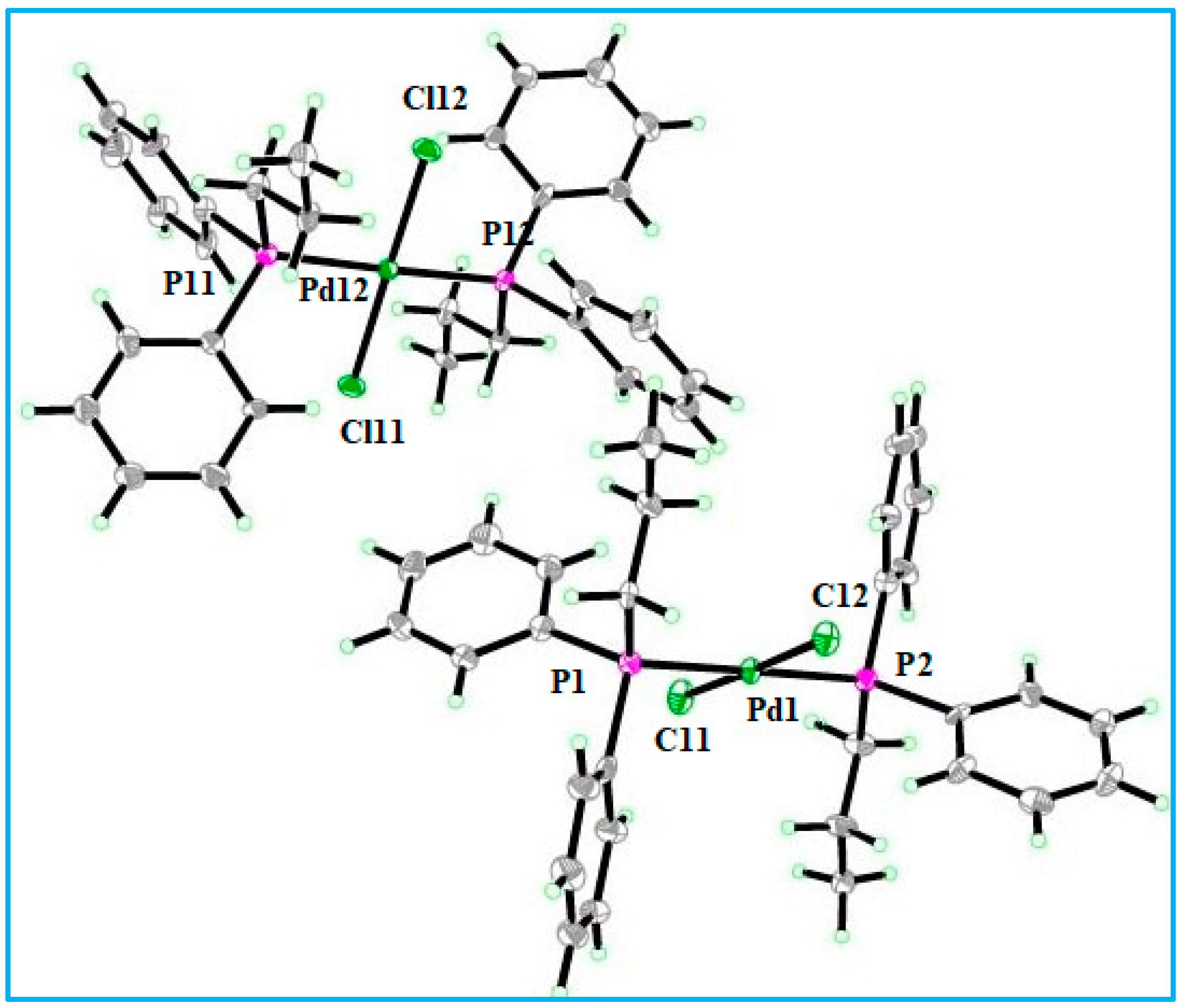
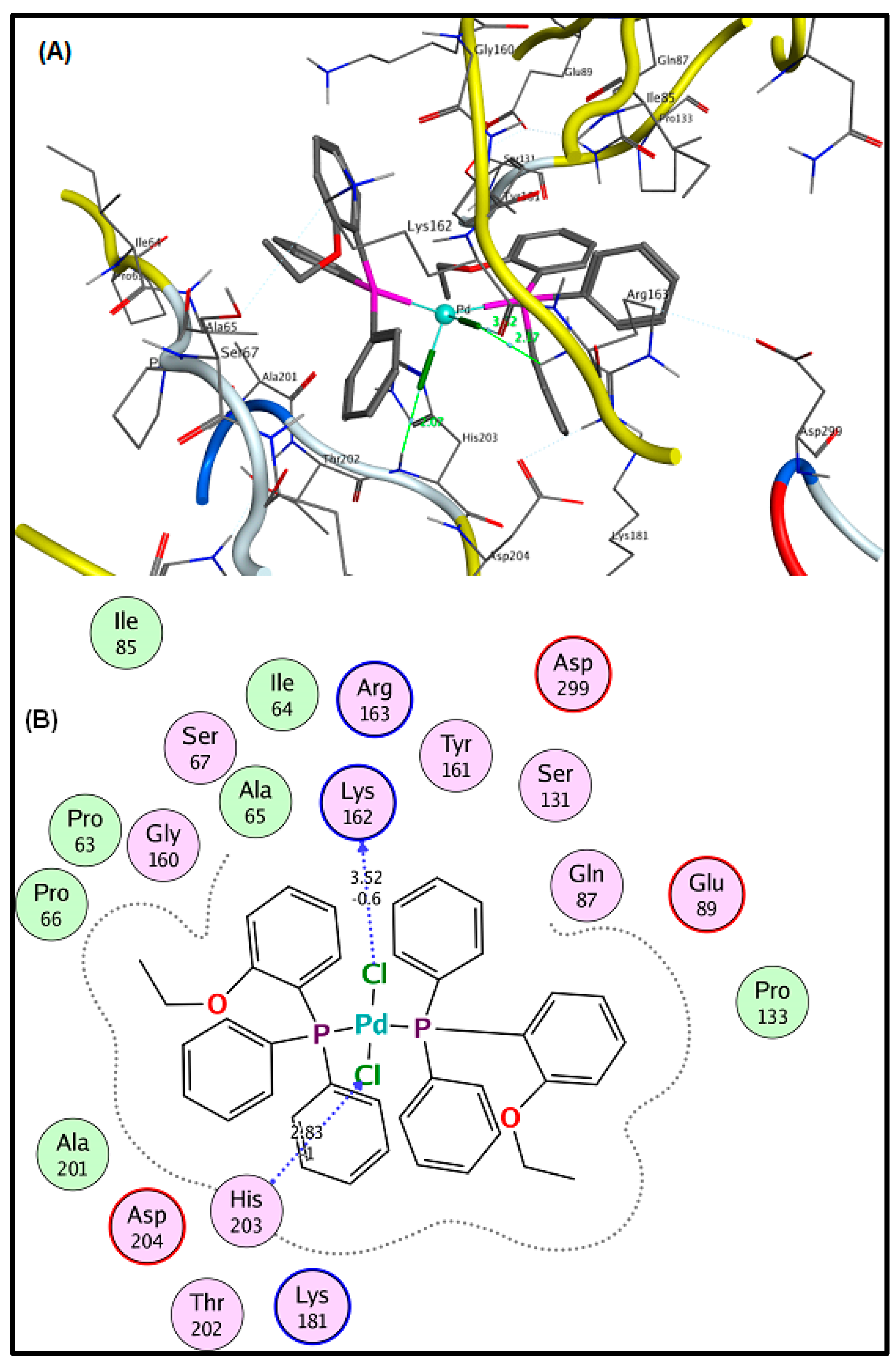
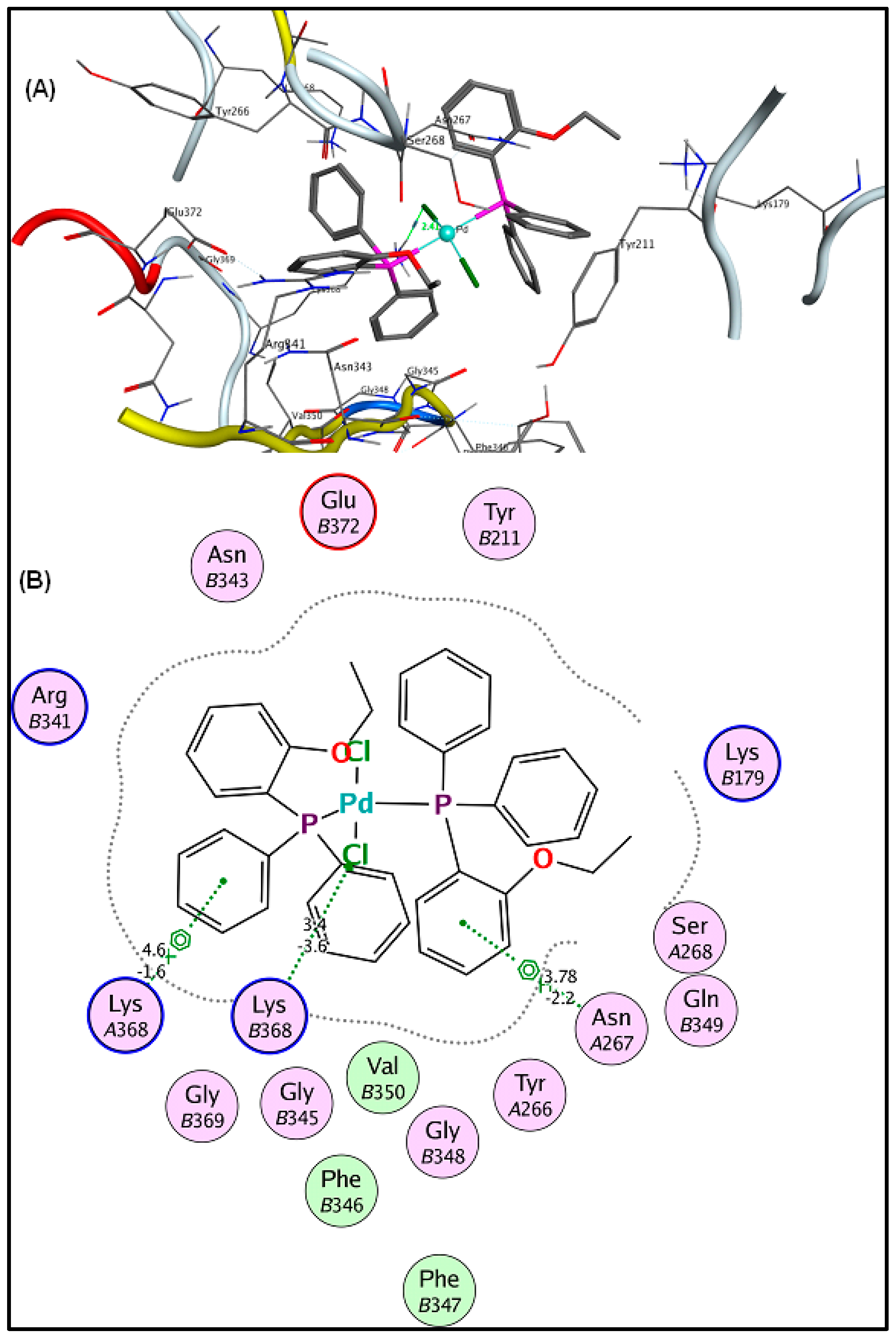
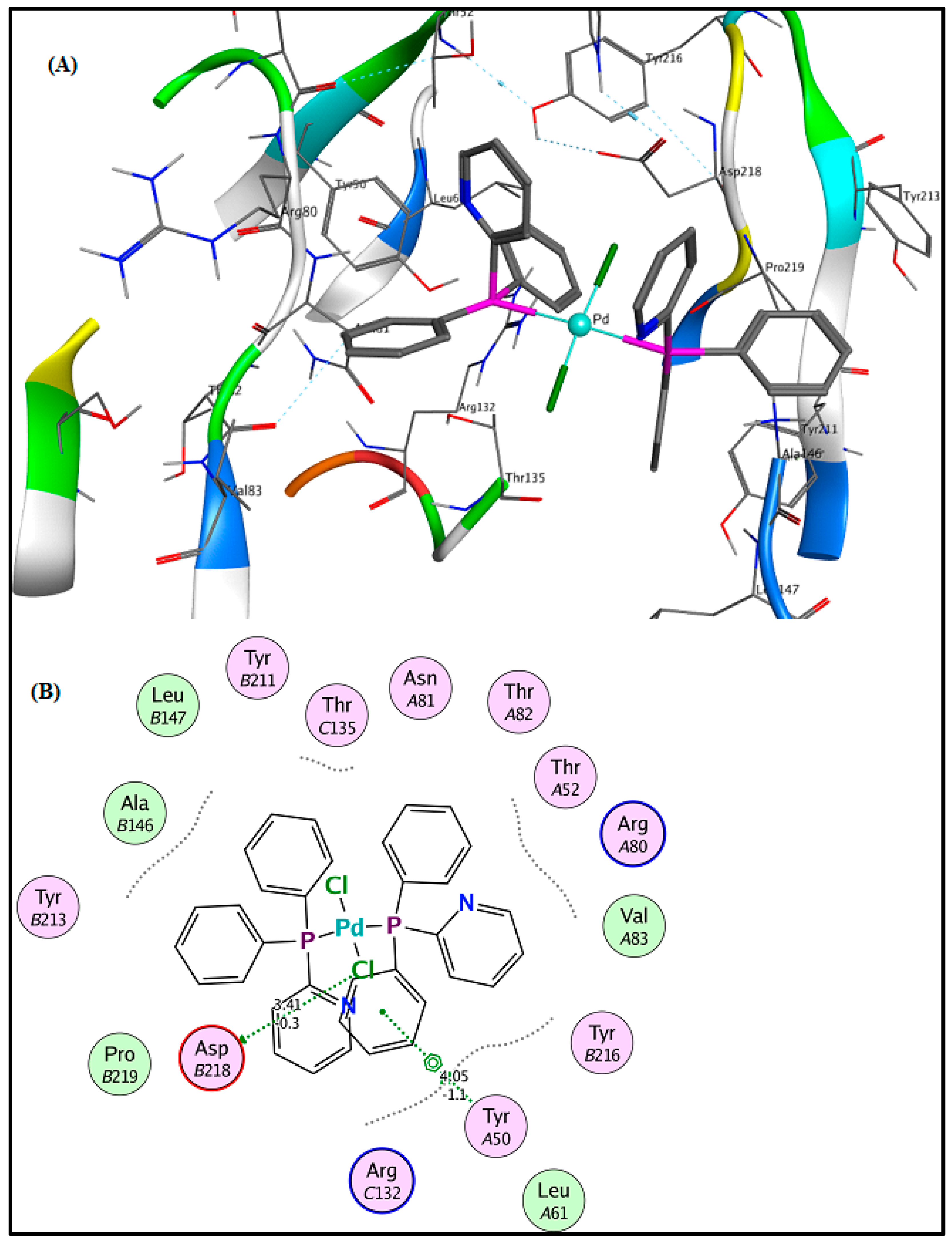
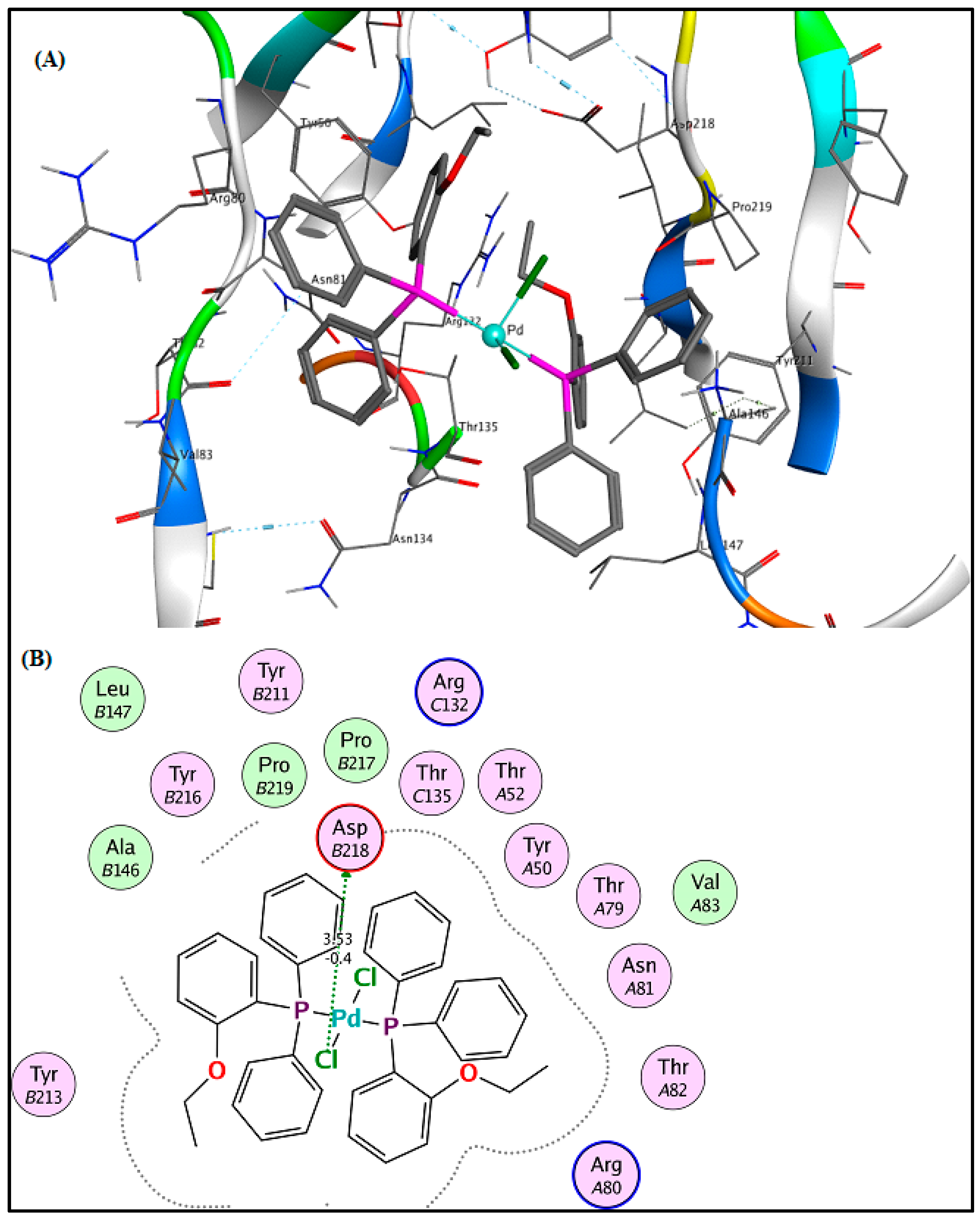
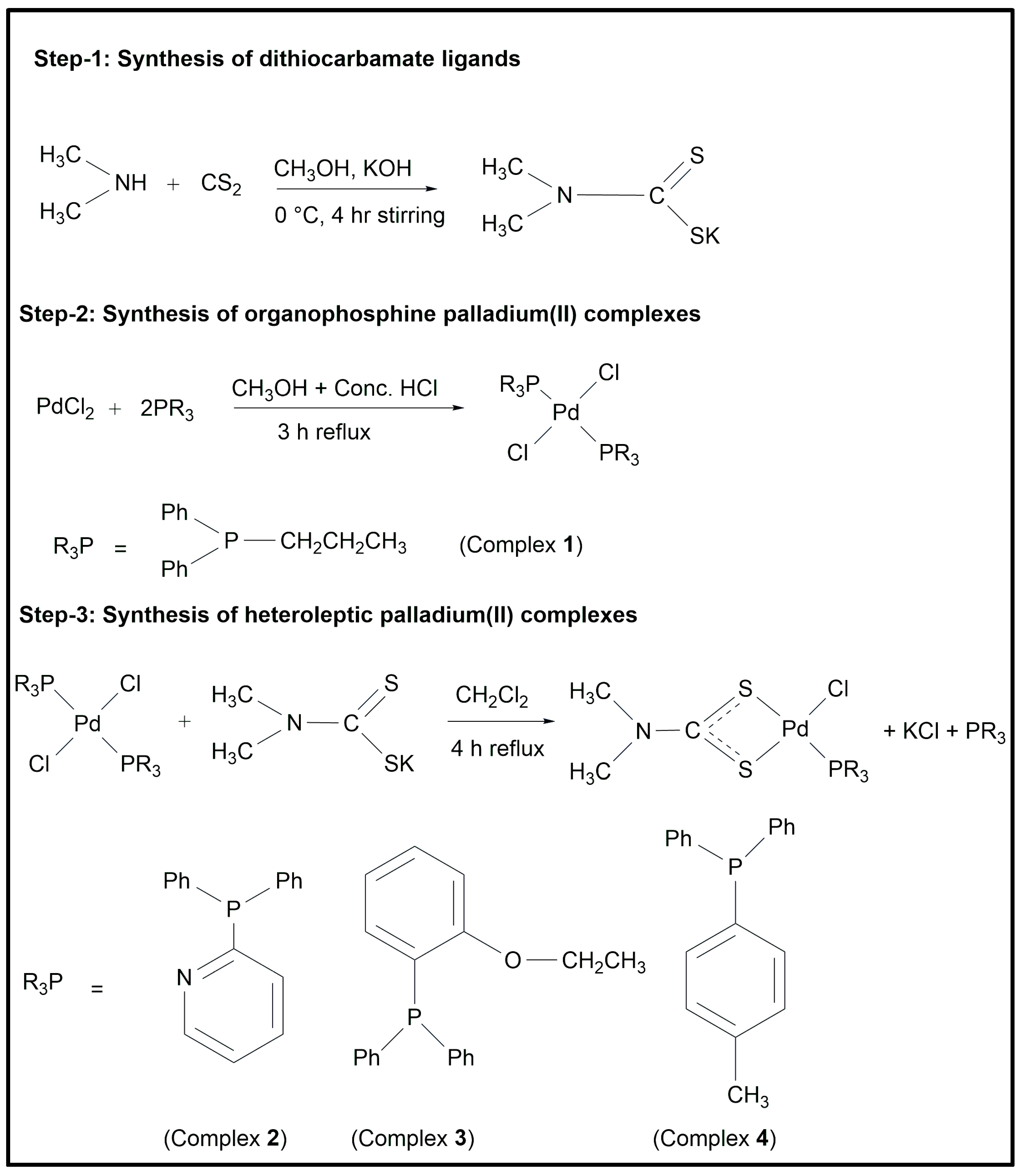
One homoleptic (1) and three heteroleptic (24) palladium(II) complexes were synthesized and characterized by various physicochemical techniques, i.e., elemental analysis, FTIR, Raman spectroscopy, 1H, 13C, and 31P NMR. Compound 1 was also confirmed by single crystal XRD, showing a slightly distorted square planar geometry. The antibacterial results obtained via the agar-well diffusion method for compound 1 were maximum among the screen compounds. All the compounds have shown good to significant antibacterial results against the tested bacterial strains, Escherichia coli, Klebsiella pneumonia, and Staphylococcus aureus, except 2 against Klebsiella pneumonia. Similarly, the molecular docking study of compound 3 has shown the best affinity with binding energy scores of −8.6569, −6.5716, and −7.6966 kcal/mol against Escherichia coli, Klebsiella pneumonia, and Staphylococcus aureus, respectively. Compound 2 has exhibited the highest activity (3.67 µM), followed by compound 3 (4.57 µM), 1 (6.94 µM), and 4 (21.7 µM) against the DU145 human prostate cancer cell line using the sulforhodamine B (SRB) method as compared to cisplatin (>200 µM). The highest docking score was obtained for compounds 2 (−7.5148 kcal/mol) and 3 (−7.0343 kcal/mol). Compound 2 shows that the Cl atom of the compound acts as a chain side acceptor for the DR5 receptor residue Asp B218 and the pyridine ring is involved in interaction with the Tyr A50 residue via arene-H, while Compound 3 interacts with the Asp B218 residue via the Cl atom. The physicochemical parameters determined by the SwissADME webserver revealed that no blood-brain barrier (BBB) permeation is predicted for all four compounds, while gastrointestinal absorption is low for compound 1 and high for the rest of the compounds (24). As concluding remarks based on the obtained in vitro biological results, the evaluated compounds after in vivo studies might be a good choice for future antibiotics and anticancer agents.
Keywords: Pd(II) complexes; X-ray structure; antibacterial activity; antitumor activity; in silico study; molecular docking Pd(II) complexes; X-ray structure; antibacterial activity; antitumor activity; in silico study; molecular docking
Graphical Abstract