1. Introduction
The escalating pace of global urbanization concentrates populations in dense metropolitan areas, intensifying the need for accurate, high-resolution environmental monitoring. Urban atmospheres are complex systems governed by the intricate interplay of natural meteorological phenomena and a multitude of anthropogenic activities, resulting in a high-dimensional, non-linear dynamic environment [
1]. The timely prediction of air quality parameters—such as pollutant concentrations, temperature, and humidity—is paramount for mitigating public health risks, informing sustainable urban planning, and executing effective environmental policies [
2]. Achieving this requires a paradigm shift from static monitoring to dynamic, predictive environmental intelligence.
A promising paradigm for this shift is the Urban Digital Twin, a concept that involves creating a dynamic, virtual replica of a city by integrating real-time sensor data, predictive models, and interactive simulations [
3]. Such a system can provide unprecedented insights into urban environmental processes, enabling proactive management and “what-if” scenario analysis. The development of a robust Urban Digital Twin hinges on the ability to process vast, heterogeneous data streams and to model their complex, often non-linear, interdependencies. Existing Urban Digital Twin frameworks often focus heavily on static visual representation or architectural data, lacking dynamic, diverse predictive engines capable of processing real-time sensor data [
4]. While studies such as Verde et al. [
4] demonstrate the utility of digital simulation for evaluating climate adaptation strategies, the need for frameworks that tightly couple these simulations with advanced AI-driven forecasting agents still exists.
Presented research addresses the critical challenge of converting raw, high-dimensional data streams from urban sensor networks into actionable environmental intelligence. By integrating quantum-hybrid computing with geospatial simulation, this study proposes a method to enhance the computational processing of sensor data, thereby improving the accuracy and reliability of urban monitoring systems.
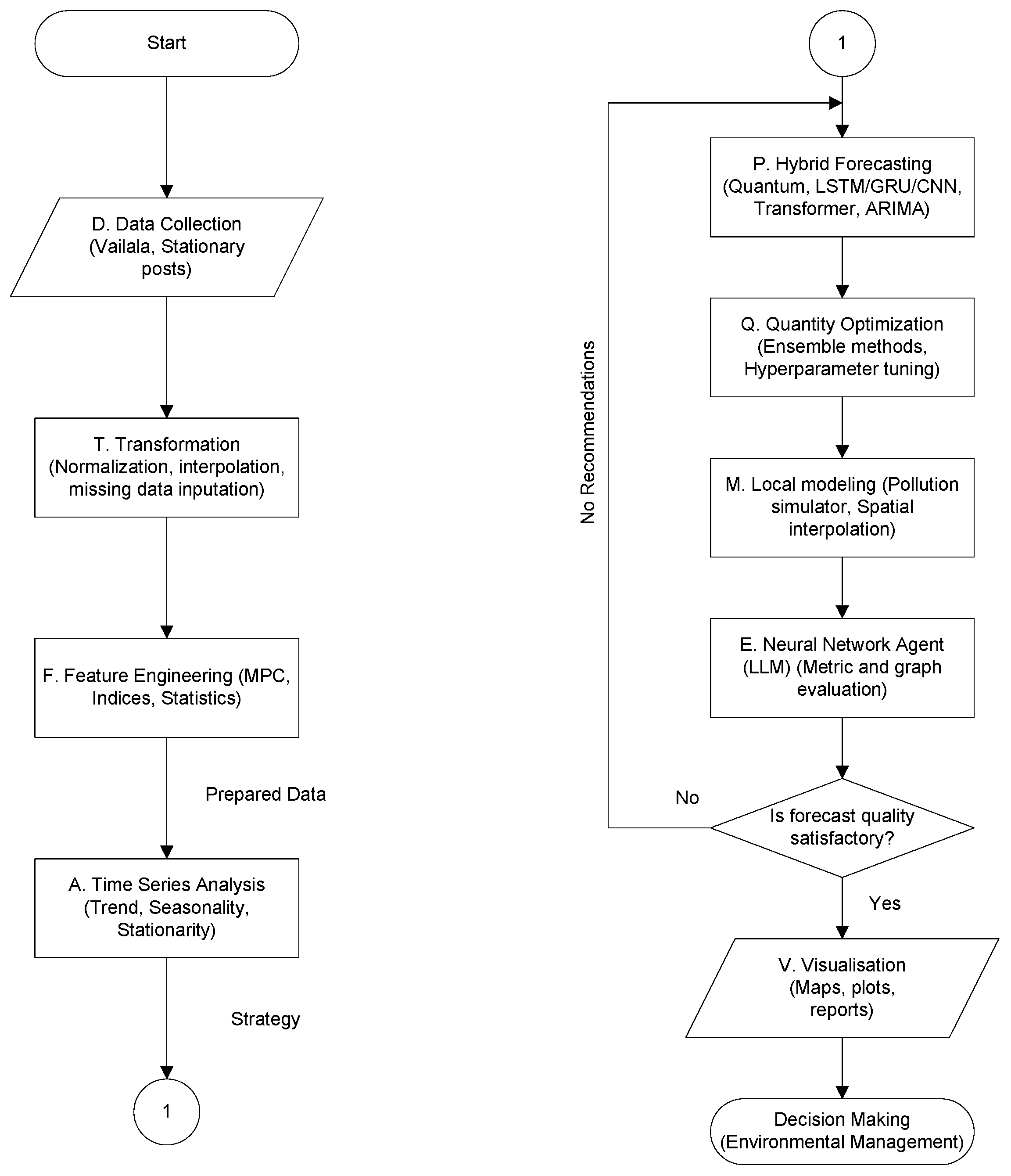
The manuscript proposes a comprehensive framework that serves as a foundational step toward this vision, integrating advanced computational techniques to enhance forecasting and modeling capabilities for municipal-level environmental monitoring.
The field of environmental forecasting has evolved significantly, moving from first-principle models to data-driven approaches. Traditionally, Chemistry-Transport Models (CTMs) have been the cornerstone of air quality prediction. These models numerically solve complex differential equations describing the physical and chemical processes in the atmosphere [
1]. While powerful, CTMs are computationally expensive and their accuracy is often limited by uncertainties in the underlying emissions inventories and meteorological inputs [
1].
To overcome these limitations, statistical and machine learning models have gained prominence. Classical time-series methods, such as the AutoRegressive Integrated Moving Average (ARIMA) model, have been widely used for their simplicity and interpretability in capturing linear dependencies and seasonal patterns in environmental data [
5,
6]. However, they often struggle with the strong non-linearities inherent in environmental systems [
1].
The advent of deep learning has revolutionized data-driven environmental science [
7,
8]. Recurrent Neural Networks (RNNs), particularly Long Short-Term Memory (LSTM) and Gated Recurrent Unit (GRU) architectures, are adept at modeling temporal dependencies and are widely used for forecasting time-series data like dissolved oxygen levels or drought indices [
2]. Convolutional Neural Networks (CNNs), traditionally used for image analysis, have been adapted to extract spatiotemporal features from gridded environmental data [
7,
8]. More recently, the Transformer architecture, with its self-attention mechanism, has shown exceptional capability in capturing long-range dependencies in sequential data, making it a powerful tool for tasks like climate prediction and long-term drought forecasting [
9,
10].
The next frontier in computational science is Quantum Machine Learning (QML), an emerging field that seeks to leverage the principles of quantum mechanics to solve complex computational problems [
11,
12]. Quantum computing, through phenomena like superposition and entanglement, offers a fundamentally different way to process information, with the theoretical potential to model the intricate correlations and high-dimensional state spaces characteristic of environmental systems more efficiently than classical computers [
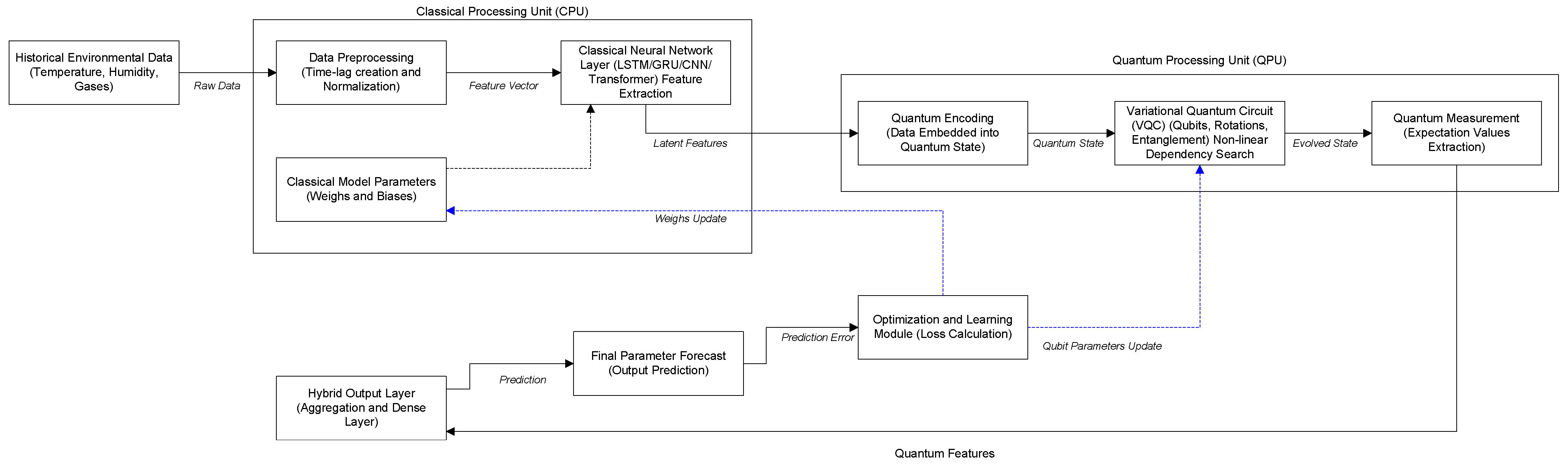
13]. Current research in applied QML focuses on hybrid quantum-classical models, where a classical neural network performs initial feature processing, and a parameterized or Variational Quantum Circuit (VQC) acts as a specialized co-processor [
14].
Recent research highlights a significant shift from theoretical QML to applied environmental modeling.
Thus, research [
15] demonstrated a quantum machine learning approach to spatiotemporal emission modeling, comparing a quantum quanvolutional neural network against a classical ConvLSTM. These findings indicated that quantum models could achieve lower loss and higher accuracy in emission concentration forecasts, suggesting that quantum layers can effectively capture complex spatial features in environmental satellite data. Similarly, in the agricultural domain, work [
16] proposed a hybrid quantum deep learning model combining Bi-LSTM with quantum feature processing for yield forecasting. Their results showed that quantum circuits could explore high-dimensional feature spaces more efficiently than classical methods, significantly improving prediction accuracy (R
2 ≈ 0.99).
The broader applicability of “quantum-like” data modeling in applied sciences has also been reviewed in [
17], arguing that quantum probability frameworks can better model uncertainty and complex system behaviors than traditional approaches. Furthermore, research [
18] presents successful application of Hybrid Quantum-Classical Neural Networks (H-QNN) to image classification tasks, outperforming classical CNNs with fewer parameters, which supports the hypothesis that quantum-hybrid architectures can offer computational efficiency advantages in processing high-dimensional sensor data.
These hybrid approaches are being actively explored for various tasks, including financial and scientific time-series forecasting, demonstrating the potential to achieve comparable or superior performance with fewer parameters.
Despite these advancements, several critical gaps remain in the application of advanced computational methods to urban environmental monitoring. First, the existing research often treats forecasting, spatial analysis, and simulation as isolated disciplines. There is a clear need for a unified, conceptual framework that integrates these components into a cohesive analytical pipeline, especially one that can accommodate emerging technologies like QML and Large Language Model (LLM)-based analysis. The fragmented presentation of these elements in many studies hinders the development of a holistic environmental intelligence system [
2].
Second, while QML holds significant theoretical promise, its practical application to real-world problems is still in its infancy. Comprehensive, large-scale empirical studies that benchmark hybrid quantum models against a wide array of state-of-the-art classical models are rare. In particular, their performance on noisy, limited, and non-stationary environmental sensor data–the kind typically encountered in practical deployments–is not well understood. The field requires rigorous empirical validation to move beyond theoretical promise and assess the true utility of near-term quantum devices [
11].
2. Analysis of the State-of-the-Art in the Field
Many current studies examine the effectiveness of using quantum neural networks for time series forecasting in the financial sector.
The authors in [
19] investigate the use of parameterized quantum circuits (PQCs) as quantum neural networks for time series forecasting. They compare the performance of PQCs with classical bidirectional long short-term memory networks and find that quantum models can achieve similar or better accuracy with fewer parameters and faster training.
The study [
20] considers the application of one-dimensional quantum convolutional neural networks (QCNNs) for time series prediction. The use of Fourier transform allows for control over the design of QCNNs, which improves their performance. The authors demonstrate that even with a limited number of parameters, quantum circuits are able to effectively model complex functions, which reduce training time.
In [
21], the Quantum Gramian Angular Field method was proposed, which combines quantum computing with deep learning for financial time series forecasting. The research involves transforming stock return data into two-dimensional images using specially designed quantum circuits, allowing convolutional neural networks (CNNs) to be used for forecasting. The results show significant improvements in accuracy compared to classical methods.
The authors in [
22] propose a method for learning temporal data using parameterized quantum circuits that have a structure similar to recurrent neural networks. In this model, some of the qubits store past data, while others are used to predict and encode new input data. The study demonstrates the ability of quantum circuits to effectively learn and predict time series.
Quantum computing is also actively used for the analysis of environmental parameters and forecasting, allowing us to compare their efficiency with classical algorithms.
One such study [
23] proposes the integration of quantum computing with the Internet of Vehicles (IoV) for environmental monitoring and rapid response to environmental threats. Using quantum sensors installed on vehicles, the system provides accurate air quality assessment. Proposed Quantum Mesh Network Fabric dynamically adjusts the quantum network topology according to traffic, maintaining the integrity of quantum states and ensuring reliable data transmission. Additionally, the use of a variational quantum classifier and quantum entanglement techniques allows for reduced delays in the transmission of danger signals, which contributes to the prompt informing of emergency services and the population.
Another study [
24] focuses on the use of quantum algorithms for stock price prediction. The authors conduct a series of experimental simulations using both classical and quantum hardware. They use quantum annealing for feature selection and principal component analysis to reduce the dimensionality of the data. The prediction problem is transformed into a classification problem, where a quantum support vector machine is used to predict price movements (up or down). The results are compared with classical models by analyzing the accuracy of the predictions and the F-measure.
Separately, deep neural networks, such as LSTM, GRU, CNN, and Transformer, are actively used to predict environmental indicators.
One study [
25] compares the performance of different deep learning models, including CNN, TCN, LSTM, GRU, and BiRNN, for multi-step prediction of dissolved oxygen levels in water. Using data from the Yangtze River from 2012 to 2016, the authors found that the GRU model performed best in terms of RMSE, MAE, and coefficient of determination, highlighting its effectiveness in predicting ecological parameters.
Another study [
26] focused on long-term drought assessment based on geospatial satellite data. The authors first employ an LSTM model (three layers, 256 hidden cells) to fill gaps in satellite soil moisture data, using inputs like temperature, precipitation, ET, and runoff. Subsequently, basin-specific LSTM models (also three layers, 256 hidden cells) are developed to forecast soil moisture. The most promising output of this work is the integration of the LSTM models with an interpretable AI method called Expected Gradients (EG), which allows the framework to quantify the specific contribution of each input feature (such as precipitation or temperature) to the soil moisture predictions over time, thereby providing a crucial understanding of the mechanisms driving drought development.
However, classical architectures continue to evolve. Recent studies have proposed sophisticated hybrid classical models to address non-linearity in sensor data. For instance, work [
27] presents developed an IoT-based monitoring system utilizing a hybrid LSTM-GRU model for real-time power forecasting. This work demonstrated that combining different recurrent architectures can mitigate the specific limitations of standalone LSTM or GRU models, achieving superior accuracy in real-time IoT scenarios. In the financial domain, which shares time-series characteristics with environmental data, work [
28] introduces a decomposition-ensemble model (CEEMDAN-SE combined with ARIMA-CNN-LSTM). This approach effectively handled non-stationarity by decomposing complex signals into high- and low-frequency components, a methodology relevant to processing volatile environmental sensor readings.
Some of the studies analyze the use of mathematical modeling methods for pollution assessment based on spatial interpolation, in particular using the inverse weighted distance method, for the analysis of environmental data and time series of changes in environmental parameters.
Work [
29] presents a course on environmental geographic information systems (GIS), which includes an overview of the concepts and methods used to analyze and model environmental data. The course structure and examples of its practical use for solving environmental problems are presented.
The paper [
30] is devoted to the use of remote sensing and open source software for working with GIS in ecology. The authors describe approaches to spatial data analysis, including tools for creating pollution maps and monitoring the state of the environment.
The source [
31] discusses the basics of using GIS for environmental modeling and engineering. It describes methods of spatial analysis, interpolation, and prediction of environmental parameters. It provides examples of creating thematic maps and developing models for planning environmental protection measures.
Some basic research is devoted to computer modeling of changes in pollutant concentrations in local areas, which allows for effective assessment of the impact of man-made sources on the environment.
In [
32], the authors propose a new parameterization of the concentration flux using fractional calculus for modeling the dispersion of pollutants within the planetary boundary layer of the atmosphere. The mathematical approach and its application to environmental monitoring problems are discussed in detail.
The paper [
33] is devoted to the atmospheric transport and diffusion model HYSPLIT, developed by NOAA. The authors describe the functional capabilities of the model, its application to assess the transport and dispersion of pollutants in the air, as well as examples of practical use in real conditions.
Reference [
34] examines atmospheric observations and methods for evaluating atmospheric chemical composition models. It describes the importance of modeling for the analysis of atmospheric processes, discusses methods for model validation, and examples of their application in predicting environmental changes.
Regarding computational simulation frameworks, work [
35] presents HybriD-GM, a framework for quantum computing simulation on hybrid parallel architectures. While this work focuses on the hardware-level optimization of quantum simulations (CPU/GPU integration), it highlights the computational constraints inherent in simulating quantum circuits for large-scale applications. This underscores the necessity for frameworks like the proposed DPPDMext, which are designed to abstract these complexities and integrate simulation outputs directly into the decision-making pipeline of environmental monitoring systems.
Currently, there is limited research that directly combines the use of Vision models and large language models to analyze graphs and numerical metrics for data quality assessment. However, several works have been taken as a basis for synthesizing the concept of neural network agents for prediction evaluation and modeling tasks.
In [
36], the use of deep neural networks based on LSTM autoencoders for predicting the transition of barley genotype to phenotype is considered. The authors describe in detail the architecture of the model and its effectiveness in modeling the relationship between genetic and phenotypic characteristics.
Work [
37] devoted to the basics of mining concepts and techniques. The authors consider key data analysis methods, in particular clustering, associative rules and classification, and also demonstrate their practical application in solving a wide range of problems in various industries.
In existing studies, a number of systems and methods for collecting, processing and analyzing data on environmental pollution have been developed. These works are aimed at increasing the efficiency of environmental monitoring and creating a basis for making management decisions. Currently, technologies for predicting environmental data are being studied, which allows improving the quality of measures for regulating policies in the field of combating environmental pollution.
In [
38], an information and analytical system for collecting, processing and analyzing air pollution data is presented. The system architecture, methods for automating data collection and algorithms for data processing aimed to assess the atmosphere conditions re described. Special attention is paid to the integration of technological and business processes within the system.
The paper [
39] is devoted to the development of an information system for collecting and storing air quality data at the municipal level using VAISALA stations. The technical aspects of the system implementation, data collection algorithms, and practical possibilities for air monitoring are considered.
The study [
40] describes a method for automatically generating reports on the number of exceedances of established standards for atmospheric markers. A data processing algorithm is proposed for operational air quality control and presentation of results in the form of reports that can be used in environmental monitoring.
In the paper [
41], a web-based technology for intelligent analysis of environmental data at the industrial enterprise is presented. The applied methods of data collection, processing and analysis using modern web-oriented tools are described. Examples of practical use of the developed system for monitoring the environmental conditions and making decisions on reducing the man-made impact on the environment are given.
5. Results and Discussion
The experimental results provide a multifaceted view of model performance, revealing that the optimal forecasting approach is highly dependent on the specific characteristics of the environmental parameter being predicted. The comprehensive benchmark highlights the practical strengths and weaknesses of both classical and quantum-hybrid models when applied to real-world, noisy sensor data.
5.1. Comparative Analysis of Forecasting Performance
Prior to evaluating model performance, a critical post-processing step was introduced to address physical constraints. In initial experimental runs, certain unconstrained regression models (both classical and quantum) occasionally predicted physically impossible negative values for parameters such as pollutant concentrations and relative humidity. To rectify this, a rectified linear unit (ReLU) post-processing function
was applied to all model outputs. Furthermore, the negative
values observed in preliminary results were investigated and traced to the use of an unscaled mean as a baseline in the calculation formula during high-variance periods. The
metric was re-evaluated using the standard formulation against the test set variance. All results presented in
Table 3 reflect these corrected, physically consistent predictions.
Table 3 shows the performance metrics (MSE, MAE, R
2) for the best classical and best quantum-hybrid model identified for each forecasting task. The final column quantifies the percentage change in MSE, where a negative value indicates an improvement (lower error) by the quantum model.
To rigorously validate the performance differences between classical and quantum-hybrid models, we conducted a Wilcoxon signed-rank test on the forecasting residuals. This non-parametric test was chosen due to the non-normal distribution of errors in the environmental dataset. For the Humidity and Pressure parameters, the improvement offered by quantum models was found to be statistically significant (), rejecting the null hypothesis that the median error difference is zero. Conversely, for Temperature and CO, the differences were not statistically significant (), or favored classical models, confirming that quantum advantage is highly parameter-dependent. To assess training stability, each model was trained 10 times with different random seeds. The quantum-hybrid models exhibited a higher standard deviation in performance metrics () compared to classical baselines (), likely due to the probabilistic nature of quantum measurement (shot noise) and the complex optimization landscape of VQCs. Given the limited dataset size, a rolling-window cross-validation strategy was employed. The time series was split into 5 folds, shifting the training/test window by 1 month per fold. The reported metrics represent the average performance across these folds, providing a more robust estimate of the model’s generalization capability than a single static split.
Despite these overarching challenges, clear performance trends emerge. The most significant and consistent advantage for quantum-hybrid models was observed in forecasting atmospheric pressure and humidity. For pressure, quantum models achieved MSE reductions of 49.16%, 74.74%, and 19.39% across the three locations. For humidity, the improvements were 13.21%, 45.96%, and 18.05%. This success can be attributed to the fact that, while seasonal, these parameters exhibit more stable and predictable behavior compared to pollutants. The ability of VQCs to explore high-dimensional feature spaces may allow them to capture subtle, complex correlations in these more well-behaved series, leading to superior performance.
For nitrogen dioxide, quantum models showed strong gains in the industrial and high-traffic zones (−49.23% and −46.46% MSE change) but performed poorly in the residential zone (+57.30%). Conversely, for carbon monoxide, quantum models consistently underperformed their classical counterparts. This suggests that the nature of pollutant dynamics—driven by highly irregular and non-linear anthropogenic activity—is extremely difficult to model. The quantum models, run on ideal, noise-free simulators, may be overfitting to the noise in these complex signals, a known risk with powerful models on small datasets [
11].
For temperature, a parameter with very high variance (see
Table 1), classical models like AutoARIMA were consistently superior. The quantum models performed exceptionally poorly, with MSE increases of over 300% in one case. This is a crucial practical finding: for highly volatile time series with limited data, the additional complexity of the quantum component appears to be a liability, leading to unstable training and poor generalization.
In summary, the results do not support a universal claim of “quantum advantage.” Instead, they reveal a highly context-dependent utility. Quantum-hybrid models show considerable promise for specific types of environmental time series but require significant further research and optimization to be reliably applied to more complex and volatile parameters. The limitations of current quantum hardware and simulation techniques, which do not yet fully account for noise and decoherence, remain a significant factor in translating theoretical potential into practical success [
13].
While quantum models demonstrated accuracy gains in specific domains, they incurred a significant computational cost. On the experimental hardware (NVIDIA RTX 3090), the average training time per epoch for quantum-hybrid models was approximately to longer than their classical counterparts (e.g., 45 s vs. 4 s for LSTM architectures). This overhead is primarily attributed to the classical simulation of quantum state vectors, which scales exponentially with qubit count. However, the inference time for both model types was negligible (<100 ms), making the deployed quantum models suitable for real-time monitoring applications once trained.
5.2. Geospatial Analysis for Pollution Sources and Sinks Identification
The application of the Modeling (M) component of the DPPDMext framework provided valuable spatial context to the point-source sensor data. Using the IDW method, continuous pollution maps were generated from the sparse measurements of stationary monitoring posts throughout Kremenchuk. This geospatial analysis served a critical practical purpose to generate hypothesis about pollution sources [
49].
The proposed mathematical modeling of background and target pollution points based on spatial interpolation using the inverse distance method is based on environmental monitoring data and time series of changes in environmental parameters.
The data for creating models are presented in the form of a set of environmental stations, given by the coordinates , where are the station coordinates, and a is the measured value of the pollutant concentration.
The inverse distance method determines the concentration at an arbitrary point
using the formula:
where
is the distance from the point
to the station
, which is calculated as:
a p–smoothing parameter (usually
p = 2).
An array of interpolation points is constructed based on a uniform grid
. The nearest interpolated point is determined for the target point
, which is taken as the reference:
where
G is the set of interpolated points.
The background point
is defined as the point (real or interpolated) where the concentration is minimal:
Comparison of target and background concentration:
If , then we can hypothesize the presence of a local source of pollution.
The proposed model allows you to determine background pollution levels and analyze local anomalies, both based on retrospective and forecasted data, which contributes to the identification of pollution sources and the development of environmental protection measures.
The proposed model is developed and implemented on the basis of the database of stationary environmental monitoring posts in the city of Kremenchuk.
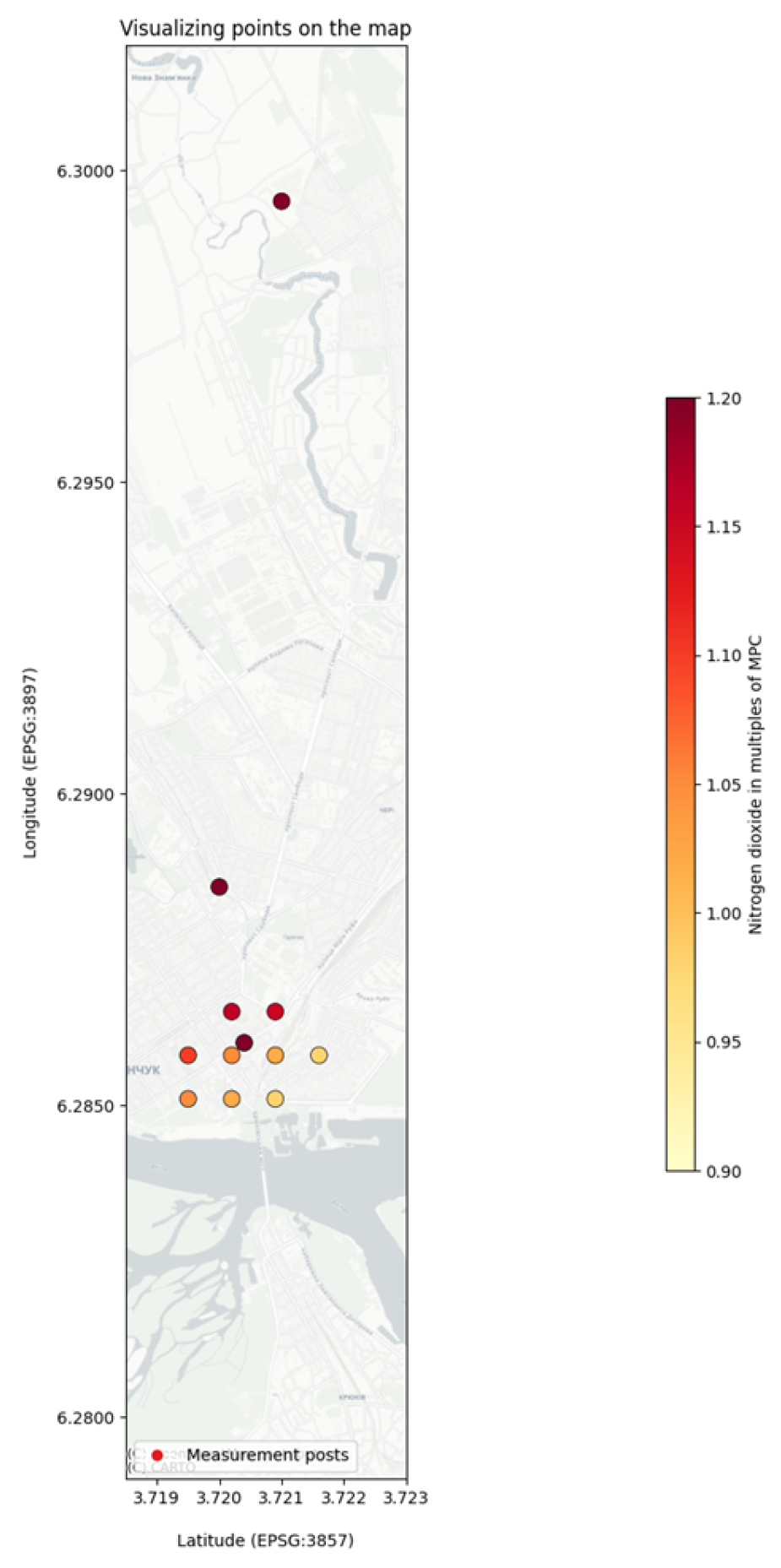
Figure 3 shows a part of the sorted interpolated data points by the lowest values of dust and nitrogen dioxide pollutants.
And
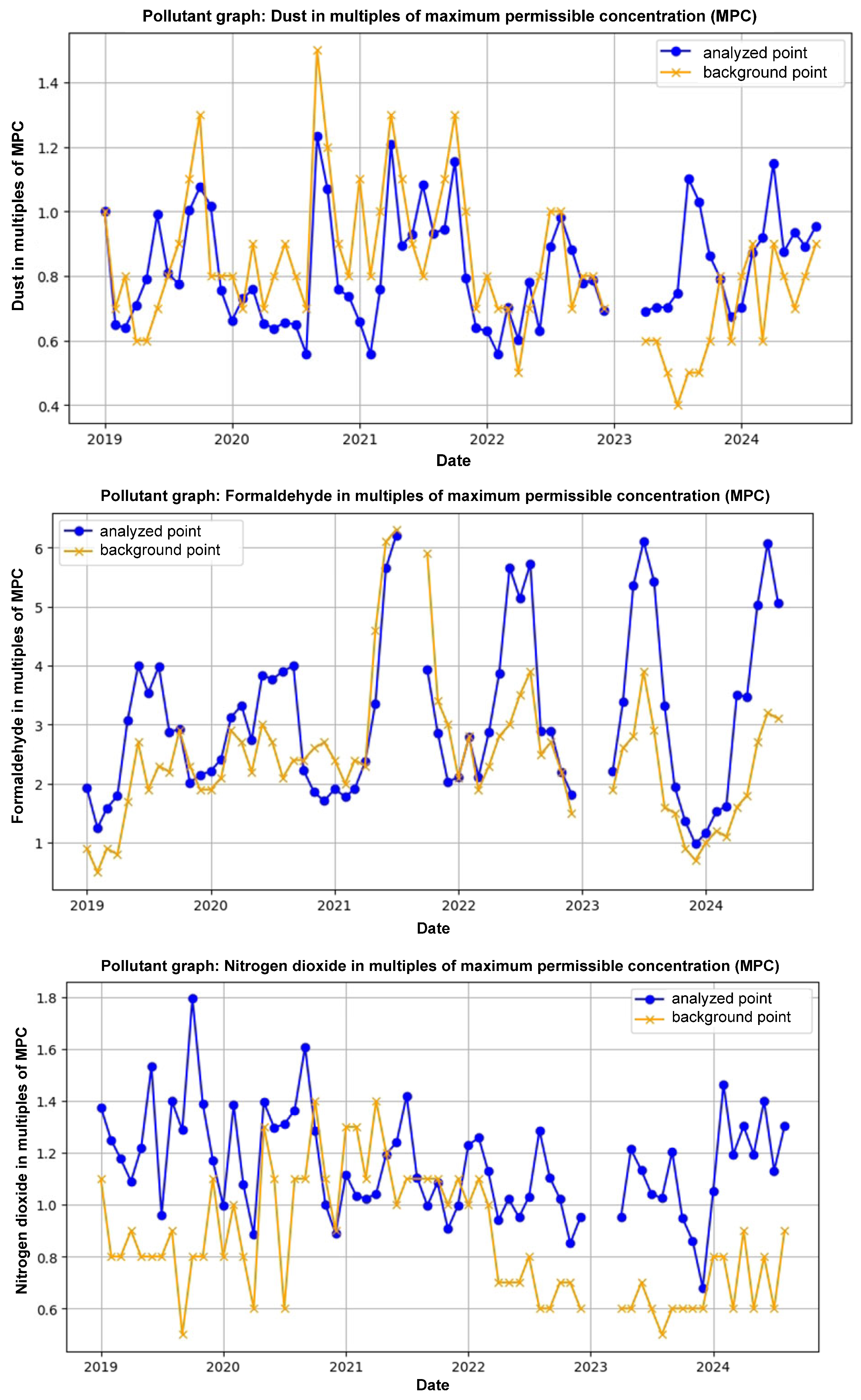
Figure 4 shows a comparison of retrospective data showing the target research point, which is located on the Kryukiv Bridge, and the background point, which is defined as the stationary post in Kryukiv district.
Although the implementation of mathematical modeling of background and target points was carried out based on data from stationary posts, such calculations can also be performed based on data from Vaisala automatic stations, to identify potential locations for installing additional automated stations.
Figure 3 visualizes the interpolated data, highlighting areas with the lowest concentrations of dust and nitrogen dioxide, which can be considered regional background levels. The most compelling application of this method was the comparison of a specific “target” point with a “background” point (
Figure 4). The target point was located on the heavily trafficked Kryukiv Bridge, while the background point was a stationary monitoring post in the relatively cleaner Kryukiv residential area. The analysis revealed significantly higher pollutant concentrations at the bridge location compared to the background. This stark contrast provides strong, data-driven evidence to support the hypothesis that high-density vehicle traffic on the bridge is a major local source of an air pollution. This demonstrates the utility of the framework’s spatial modeling component in moving from raw data to actionable environmental insights, such as identifying key areas for targeted mitigation efforts.
5.3. Visualization of Forecasting Dynamics
To intuitively assess the models’ behavior and validate the statistical findings, we visualize the time-series dynamics, comparative efficiency, and error distributions.
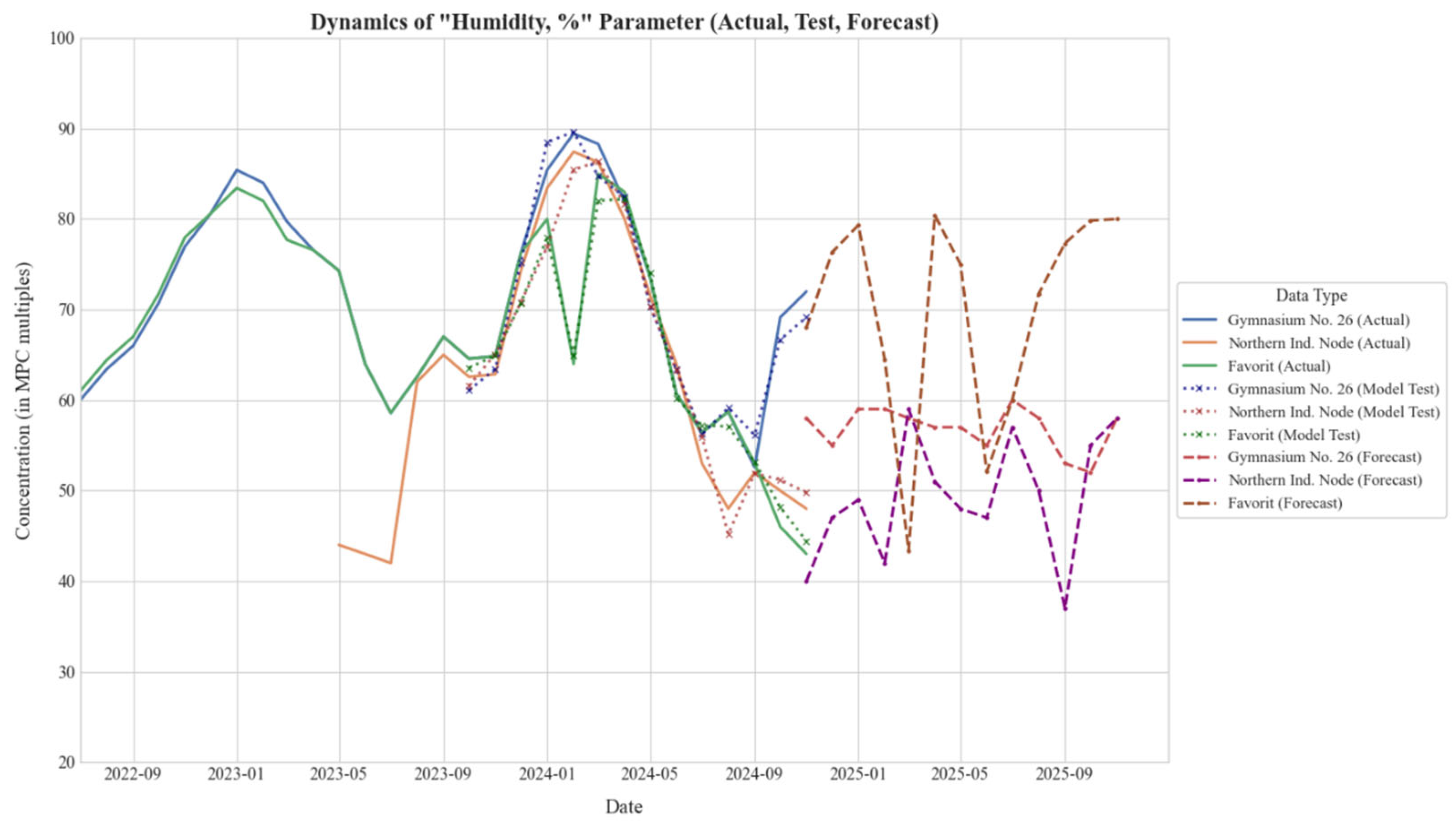
The temporal performance of the proposed framework is illustrated in
Figure 5, which displays the trajectory of relative humidity across the three monitoring zones. The plot delineates three distinct phases: the historical baseline (solid lines), the backtesting validation period (dotted lines), and the 12-month future forecast (dashed lines). The tight alignment between the backtested predictions and the actual historical data confirms the model’s ability to capture local seasonal trends without significant overfitting, particularly in the residential “Gymnasium No. 26” zone.
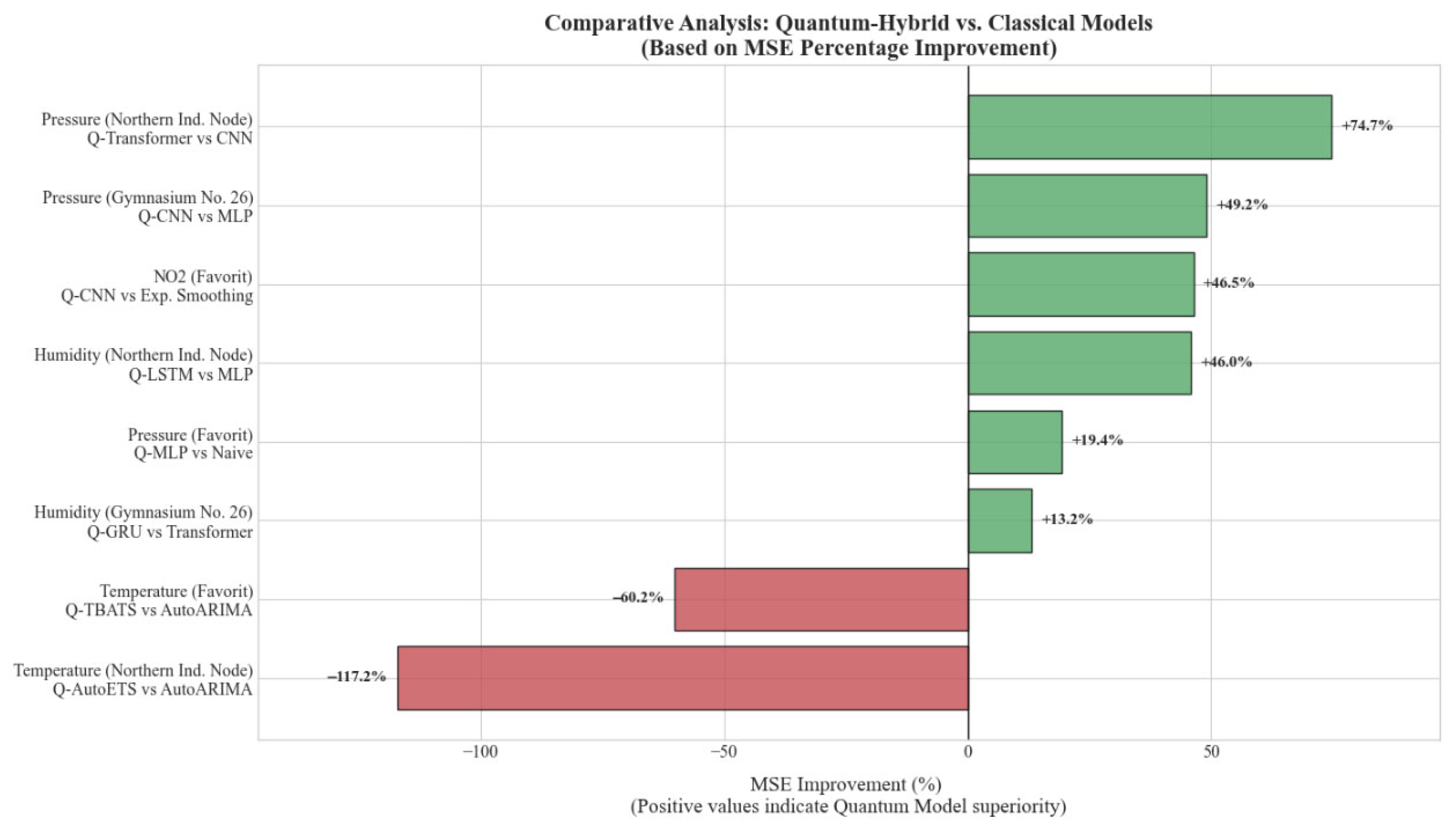
A quantitative comparison of predictive accuracy is presented in
Figure 6, which benchmarks the best-performing Quantum-Hybrid architectures against their classical counterparts. The horizontal bars represent the percentage change in MSE. Positive values (green bars) highlight scenarios where quantum models achieved superior accuracy, most notably for atmospheric pressure and humidity, where improvements reached up to 74.7%. Conversely, negative values (red bars) indicate domains, such as temperature forecasting, where classical statistical models (e.g., AutoARIMA) retained a performance advantage due to their robustness against high-frequency noise.
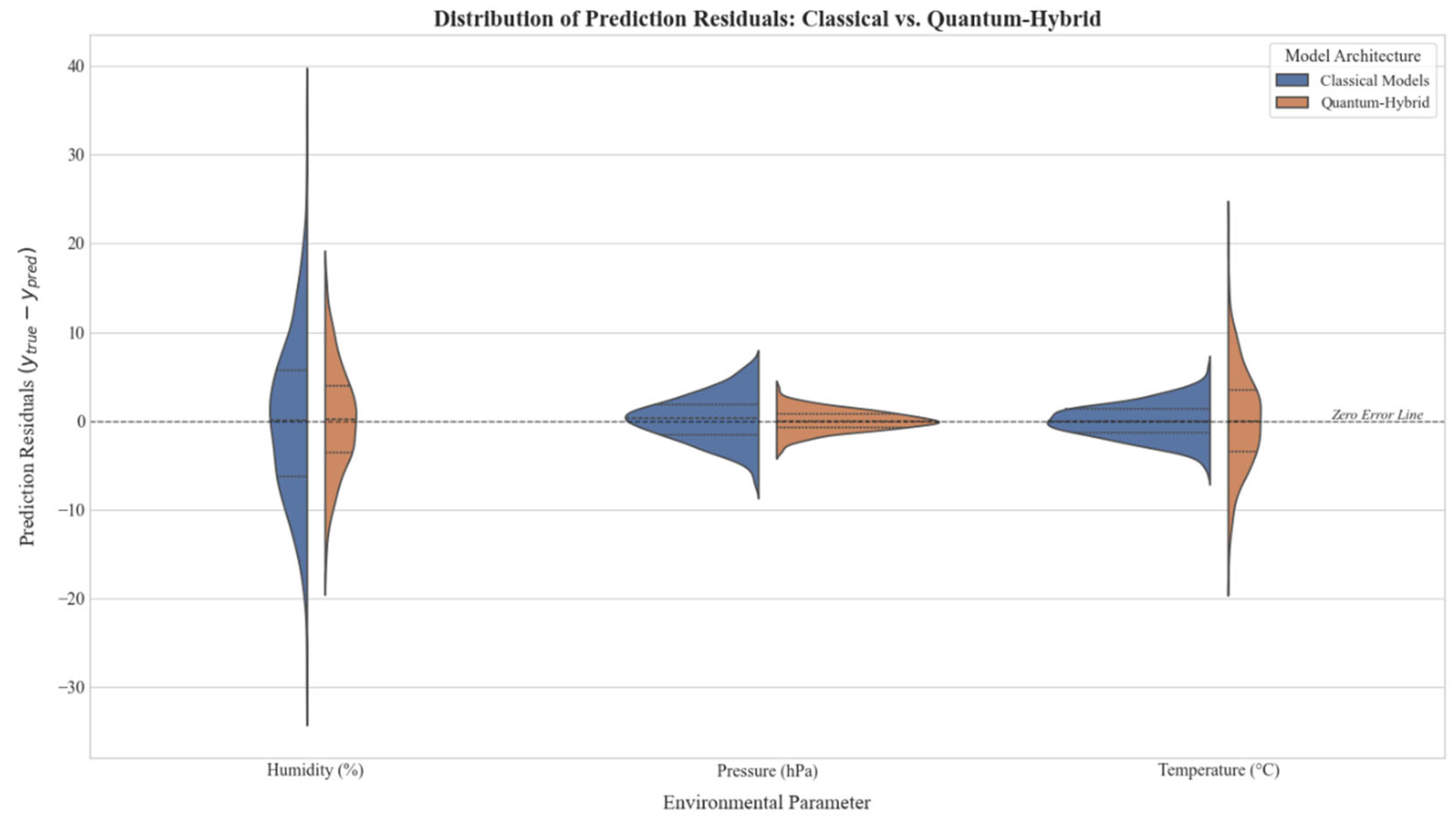
Finally, to understand the reliability of these predictions,
Figure 7 provides a split violin plot analysis of the residual errors
. The probability density estimates reveal that for humidity and pressure, the Quantum-Hybrid models (orange distributions) exhibit a leptokurtic shape centered near zero, indicating high precision and a lower frequency of large errors. In contrast, for temperature, the quantum error distribution is fatter-tailed compared to the compact classical distribution (blue), further corroborating the finding that quantum models currently exhibit higher variance when modeling highly volatile parameters.
5.4. Simulation of Urban Pollution Dynamics
The mathematical model of the pollution simulator is based on the simulation of car traffic using the A* algorithm, random selection of parking spaces and updating the positions of cars in the grid space. Each car starts from a randomly determined starting point and heads to an available parking space. During the movement, the accessibility of the grid cells is assessed, which takes into account the occupancy of the road and the possibility of obstacles. If the path becomes invalid due to changing conditions (for example, traffic jams), a new route is generated.
A Gaussian kernel-based convolutional scattering scheme is used to model pollution. The concentration of pollutants in each cell is calculated by applying a matrix of weighting factors, which allows modeling the gradual spread of emissions from sources (cars) into the environment. This approach provides a realistic distribution of pollution, taking into account local concentrations and scattering under the influence of the environment.
Traffic and pollution levels are regulated by adjusting the number of cars in the model. If pollution levels exceed acceptable limits, the algorithm can dynamically reduce the number of cars on the roads or change their routes. Thus, the model allows analyzing the impact of traffic flow on the environment and testing different environmental regulation strategies.
The simulation was implemented in the following steps.
1. The generation of paths for cars is done as follows. Let the
be the initial position and
be the final position. A cell
C contains a road, a car
A, and no other cars:
The path between and is found by the A* algorithm.
2. Random selection of a parking space is done as follows. Let the
P be the set of available parking spaces, then:
3. Updating the movement of cars is done as follows. If the cell
is available:
The machine moves updating the data.
4. Defining a new path. If the path is invalid:
5. The A* path finding algorithm can be represented as follows. The evaluation function:
where
is the cost of movement,
is the heuristic estimate:
6. The pollution dispersion model is implemented as follows. Pollution is modeled through a Gaussian filter:
Pollution concentration update:
7. Traffic regulation and adjustment of the number of cars is carried out as follows. Parameter adjustment:
Adjusting the number of cars:
The presented mathematical model is implemented in the environment Godot (v.4.2.2, Godot Foundation, Amersfoort, The Netherlands) is available as *. exe for the Windows platform, and as *. apk for the Android platform. Supported versions of Windows are 10 (Microsoft Corporation, Redmond, WA, USA) and later, and Android is 11 (v.4.2.2, Godot Foundation, Amersfoort, The Netherlands) and later.
Using the application, you can reproduce the local study area by assuming that the minimum unit is a square primitive, which can be a random traffic flow, a pollution point, a road, a traffic flow regulation element, land, or a pollution point.
Depending on the value of the “Road object” parameter, the following can be distinguished:
“0”—a simple “Road” element without additional parameters, cars can move along it;
“1”—represents the “ Parking “ element, cars can move through this element, and you can also determine the initial number of cars in the parking lot;
“2”—represents the “Traffic light” element, cars can drive through this element, and it can also change its state to prohibited for traffic. When checking the “Reverse” parameter, the traffic light will turn on when traffic lights without this parameter turn off;
“3”—represents the “Earth” element, does not allow transport to pass;
“4”—represents the “Building” element, does not allow the passage of transport;
“5”—represents the “Generator” element, this is a static pollution emission point, when setting the “Emissions” flag, using the slider below it, you can set an individual emission value for the point.
The developed software was tested when modeling vehicle traffic on Kremenchuk roads. When modeling air pollution with nitrogen dioxide, several assumptions were made:
There are no stationary pollution points in Kremenchuk;
Traffic is not regulated by traffic lights;
One road primitive is a 3-lane roadway;
One car primitive represents a traffic flow of 3000 cars per day;
3 min of simulation is one calendar year of pollution measurement;
The result is presented as an image with accumulated pollution with different levels of brightness, demonstrating points with higher brightness have a potentially higher level of pollution; points with lower brightness have less pollution, the numerical values of which tend to zero.
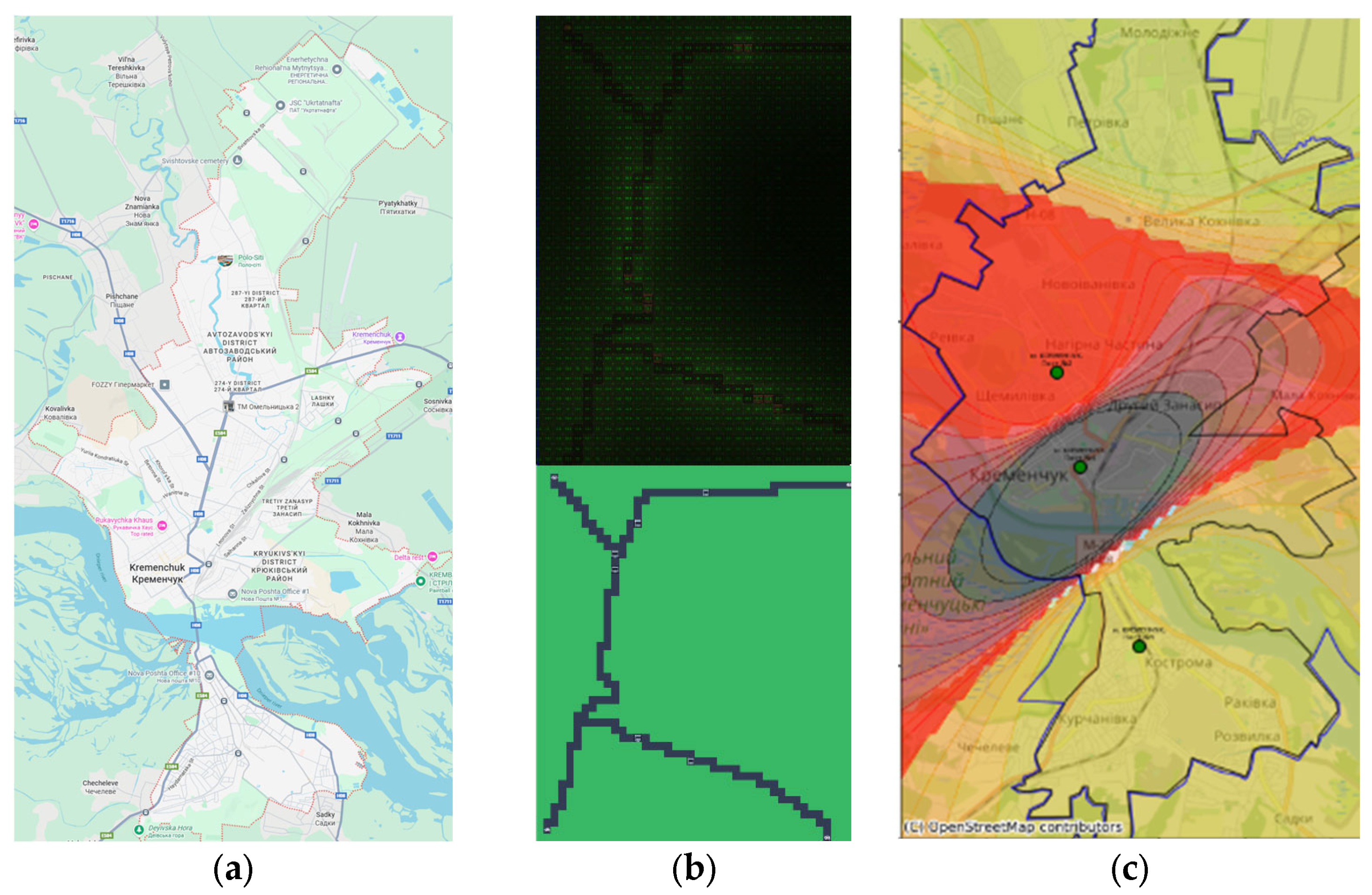
Figure 8 demonstrates correspondence between physical map of researched area (a), map simulated in the application (b) and spatial interpolation of pollution data (c) derived basing on the mobile laboratory pollution measurements.
The simulation results in
Figure 8b show that the center of the map shows the highest pollution, from nitrogen dioxide, which corresponds to the darkest level on the pollution interpolation map based on laboratory pollution measurement points in Kremenchuk (the darker the level, the greater the pollution in
Figure 8c. The increased pollution displayed in the model image in the lower right corner and absent in the spatial interpolation can be attributed to the lack of additional measurement points along the vehicle route.
The results showed a strong qualitative agreement between the simulation and reality. The highest pollution concentrations in both maps were correctly identified in the city center, a convergence that validates the simulator’s core assumptions about traffic density and its impact on air quality.
More revealing, however, was the discrepancy between the two maps. The simulation predicted a pollution hotspot in the lower right corner of the map that was not present in the interpolated map from real data. As was noted before, this is likely because there are no physical monitoring stations in that specific area. This discrepancy is not a failure of the model but a valuable outcome of the integrated DPPDMext framework. It demonstrates how the simulation component (M) can be used to probe the limitations of the data collection infrastructure (D). The simulated hotspot represents a data-driven hypothesis that the current sensor network has a critical blind spot. This insight creates a direct feedback loop, suggesting an optimal location for the deployment of a new sensor to improve the coverage and accuracy of the city’s environmental monitoring system. This highlights the synergistic potential of combining predictive models with physical simulations to build more robust and intelligent monitoring networks.
The developed software provides a basis for further research into the distribution of transport on Kremenchuk roads based on pollution data from stationary monitoring posts and automatic weather stations. Also, the application can be used to forecast the distribution of pollution, taking into account the distribution of transport flows and their regulation.
5.5. Automated Analysis with a Vision-Language Model Agent
The concept of using a neural network agent for quality control of forecasting and modeling involves using a combination of a Vision model and a Large Language Model (LLM). The agent should analyze input data in the form of graphs and numerical metrics and form conclusions about the completeness, quality, and appropriateness of the data for further use.
The formalization of the agent can be represented as follows.
Let the input data be:
—is a set of features,
—are target values,
—are predicted values of the model.
Additionally, there is a set of graphical representations:
—is a set of graphs (error distribution, heatmap of correlations, histograms, etc.).
The agent’s work involves the completion of following steps.
1. The agent estimates the errors of numerical values using metrics that are automatically determined and presented in the form of tables:
2. Graph analysis using the Vision model is carried out as follows.
Let the
be the function that determines the type of graph:
Based on the defined type,
, a specialized function
is applied to analyze the graph content:
where
are the parameters for assessing the quality of the graph (for example, error distribution, trend detection or anomaly detection).
3. Generating conclusions using LLM is carried out as follows.
We use a language model
that receives numerical metrics
M and graphical characteristics
A as input parameters:
The agent model should provide automated assessment of forecasting quality by analyzing both numerical and graphical data characteristics. The use of Vision-Language technologies automates part of the data analysis.
Testing of the agent implementation was carried out in LM Studio (v.0.2.31, Element Labs Inc., New York, NY, USA), the llava-v1.5-7b model was used for image analysis, and deepseek-r1-distill-llama-8b was used for writing conclusions and analyzing data.
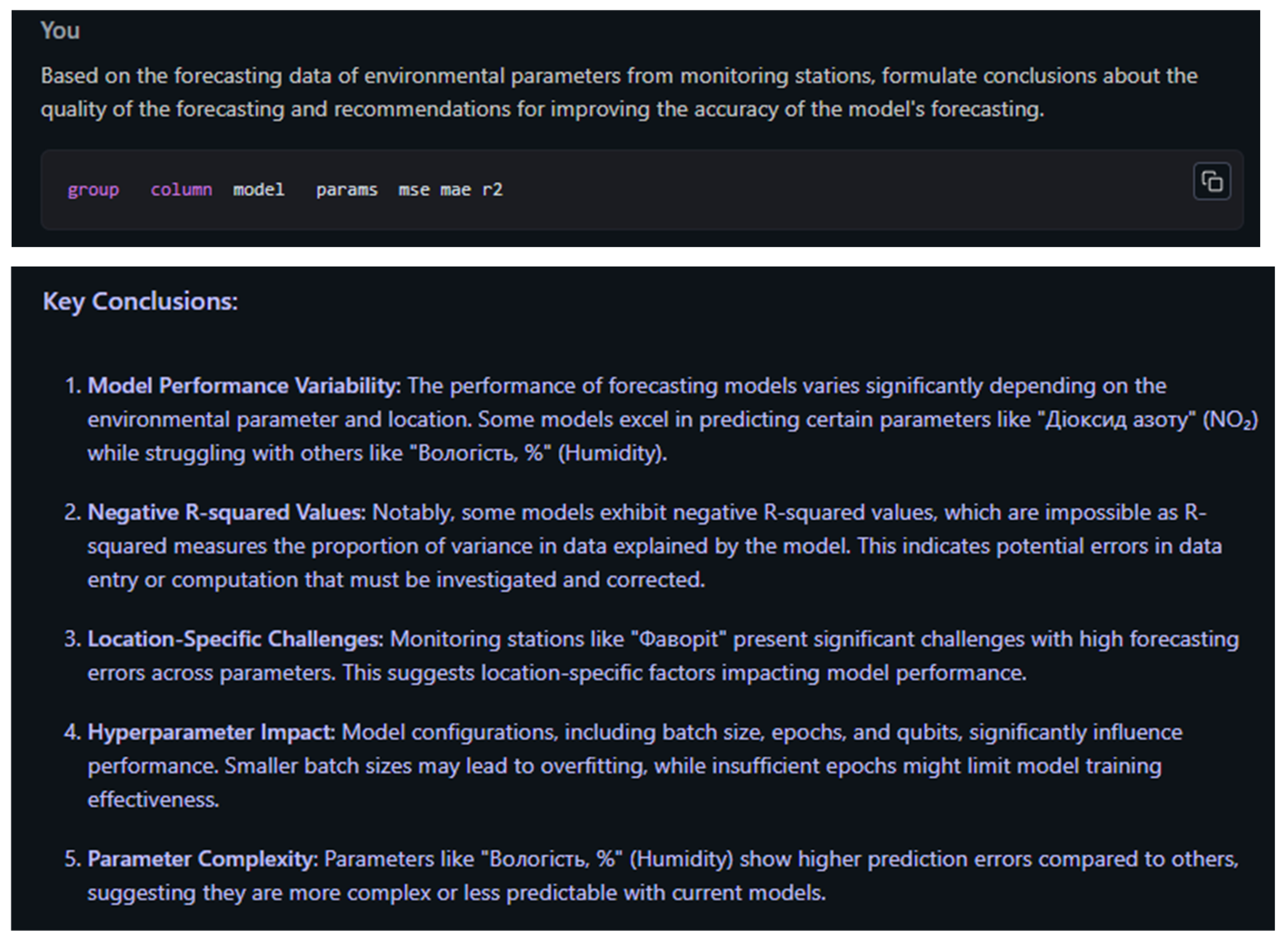
Figure 9 shows the given query with prediction accuracy metrics and conclusions generated by the deepseek-r1-distill-llama-8b model.
The model’s conclusion can be interpreted as follows.
Model performance variability. The performance of forecasting models varies significantly depending on the environmental parameter and location. Some models predict well for certain parameters, such as Nitrogen Dioxide, but poorly for others, such as Humidity, %.
Negative R-squared values. In particular, some models exhibit negative R-squared values, which is not possible because R-squared measures the proportion of variance in the data explained by the model. This indicates possible errors in data entry or calculations that need to be investigated and corrected.
Location-related issues. Monitoring stations such as Favorit present significant problems with high parameter prediction errors. This indicates location-dependent factors that affect model performance.
Impact of hyperparameters. Model configurations, including batch size, epochs, and qubits, significantly affect performance. Smaller batch sizes can lead to overfitting, while insufficient epochs can limit the effectiveness of model training.
Parameter complexity. Parameters such as “Humidity, %” exhibit higher prediction error compared to others, indicating that they are more complex or less predictable with current models.
This demonstrates that an LLM agent can effectively perform the initial, often laborious, task of sifting through large volumes of output to extract high-level patterns and anomalies [
50]. However, the analysis also revealed the limitations of the current technology. The agent’s conclusions, while accurate, were descriptive rather than deeply analytical. For instance, while it identified the negative R
2 problem, it did not form the causal link between this observation and the underlying data characteristics (non-stationarity, high variance, small sample size) that a human expert would.
This leads to a nuanced conclusion about the role of such AI agents in science. They are not a replacement for deep scientific inquiry but rather a powerful tool for augmentation and acceleration. By automating the first pass of data interpretation, the agent can free up human researchers to focus on higher-level tasks like hypothesis generation, causal inference, and experimental design, thereby making the entire research workflow more efficient [
51].
The use of an expert agent is not limited to general analysis and recommendations. The agent can suggest changes to the parameters of forecasting models, determine acceptable deviations in forecast accuracy, and optimize the number of calculations based on previous forecasts.
5.6. Mechanisms of Quantum Advantage and Failure
The experimental results reveal a distinct performance dichotomy: quantum-hybrid models significantly outperformed classical baselines for atmospheric pressure and humidity but struggled with temperature and CO concentrations. This behavior can be attributed to the interplay between the spectral characteristics of the input data and the inductive bias of VQCs.
The superior performance in forecasting humidity and pressure stems from the inherent stability and high autocorrelation (Lag-1 > 0.8, as shown in
Table 1) of these parameters. VQCs operate by mapping classical data into a high-dimensional Hilbert space via quantum feature maps (e.g., AngleEmbedding).
In this high-dimensional space, complex non-linear correlations in stable cyclic data become linearly separable or easier to approximate. The quantum layers effectively act as a kernel method with an infinitely dimensional feature space, allowing the model to capture subtle, smooth periodicities that classical recurrent layers (like standard LSTM) might underfit.
Furthermore, the limited number of qubits (2–6 in our experiments) imposes an information bottleneck. For well-behaved data like atmospheric pressure, this acts as a form of implicit regularization, preventing the model from memorizing noise and forcing it to learn the dominant harmonic components of the signal.
Conversely, the poor performance on Temperature and Carbon Monoxide (CO)—where quantum models showed MSE degradation of up to 300%, can be explained by the high volatility and non-stationarity of these specific time series in the studied dataset.
CO levels are driven by stochastic anthropogenic factors (e.g., traffic spikes) rather than smooth physical laws. The high expressivity of the quantum Hilbert space allows the model to “memorize” high-frequency noise during training. When applied to the test set, this results in severe overfitting and poor generalization.
The training landscape of VQCs is susceptible to the “Barren Plateau” phenomenon, where gradients vanish exponentially with the number of qubits and layers. For highly volatile data like temperature (which had the highest variance in our dataset), the loss landscape becomes exceedingly rugged. While classical algorithms (AutoARIMA) successfully smoothed this variance using statistical differencing, the quantum gradient descent optimizers likely became trapped in local minima, failing to converge to a stable solution.
5.7. Limitations and Critical Assessment
While this study demonstrates the potential of the DPPDMext framework, several critical limitations must be acknowledged to contextualize the findings and guide future research.
The quantum components in this study were executed on noiseless state-vector simulators (PennyLane default.qubit). This represents a “best-case” scenario that ignores the physical constraints of current Noisy Intermediate-Scale Quantum (NISQ) hardware.
Real quantum processors suffer from qubit decoherence and gate errors. In a physical deployment, the accumulation of noise in the VQC depth used (3–6 layers) would likely degrade the forecast accuracy further than observed here. Therefore, the reported “quantum advantage” in humidity forecasting must be validated on real hardware using error-mitigation techniques (e.g., Zero-Noise Extrapolation) in future work.
The empirical validation was confined to a single municipality (Kremenchuk, Ukraine) with a dataset spanning only 35 months.
A 35-month window captures less than three full seasonal cycles. This is insufficient for the models to robustly learn inter-annual climatological trends (e.g., long-term warming or El Niño effects). The high performance of classical AutoARIMA on temperature suggests that for short, small-sample datasets, statistical parsimony often outweighs the complexity of deep/quantum learning (“Occam’s Razor”).
The results reflect a temperate continental climate. The model’s hyperparameters, optimized for this specific volatility profile, may not generalize to tropical climates (high humidity stability) or arid zones (high temperature variance) without significant retraining.
Finally, while the Vision-Language Model agent successfully automated the description of error metrics, its current implementation is limited to descriptive analytics. The agent operates on pattern recognition within the provided graphs but lacks causal reasoning capabilities. It can identify that a model failed (e.g., “Negative detected”), but it cannot independently diagnose why (e.g., “Failure due to non-stationarity requiring differencing”). Thus, the agent currently serves as an assistant for data screening rather than an autonomous scientist.