Semi-Quantitative On-Site Microfluidic Assay to Detect 11-Nor-9-carboxy-delta 9-Tetrahydrocannabinol (THC-COOH) in Urine
 , , , , and
Highlights
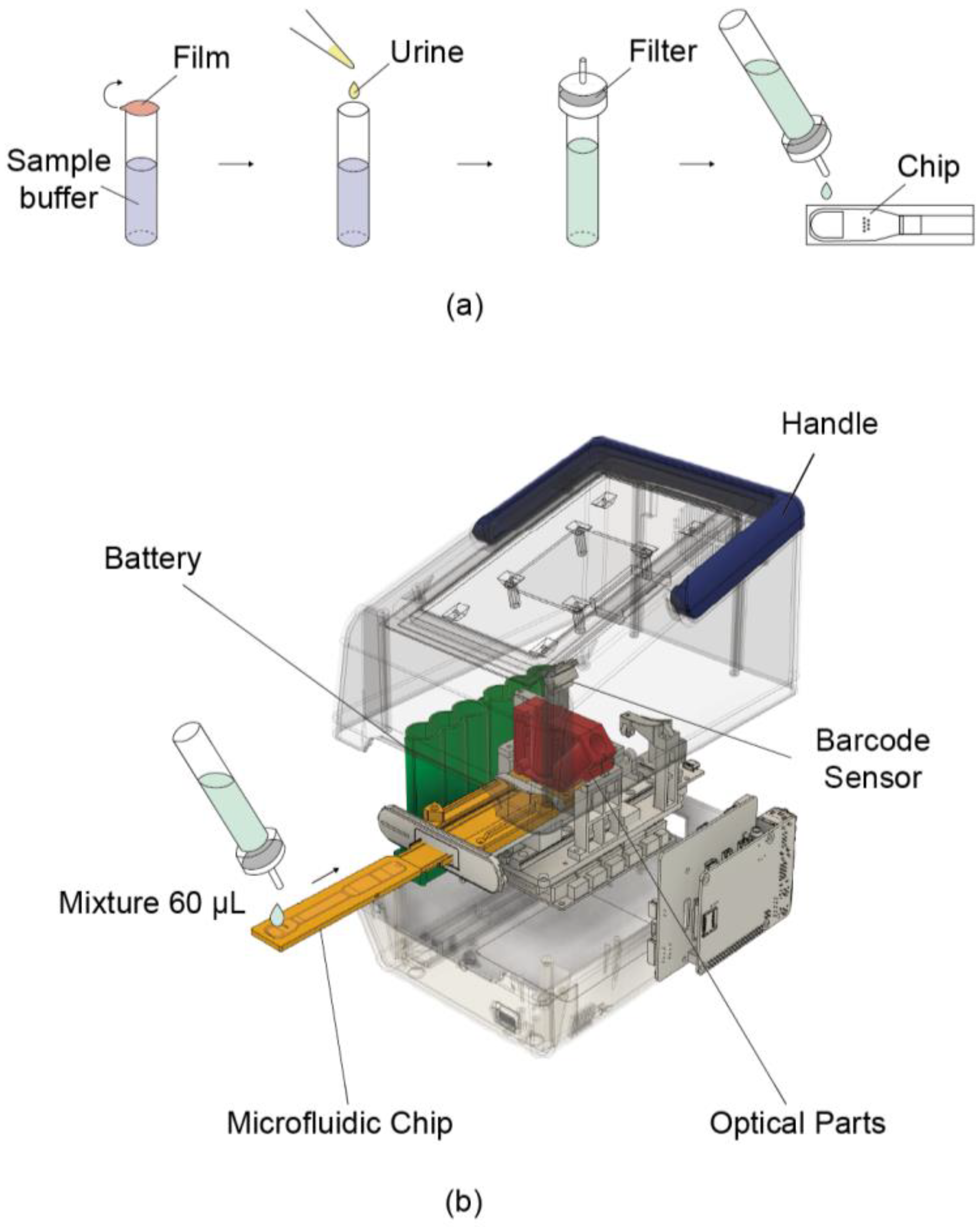
- Developed a portable microfluidic device for rapid (4 min) on-site detection of THC-COOH at a low cutoff of 20 ng/mL.
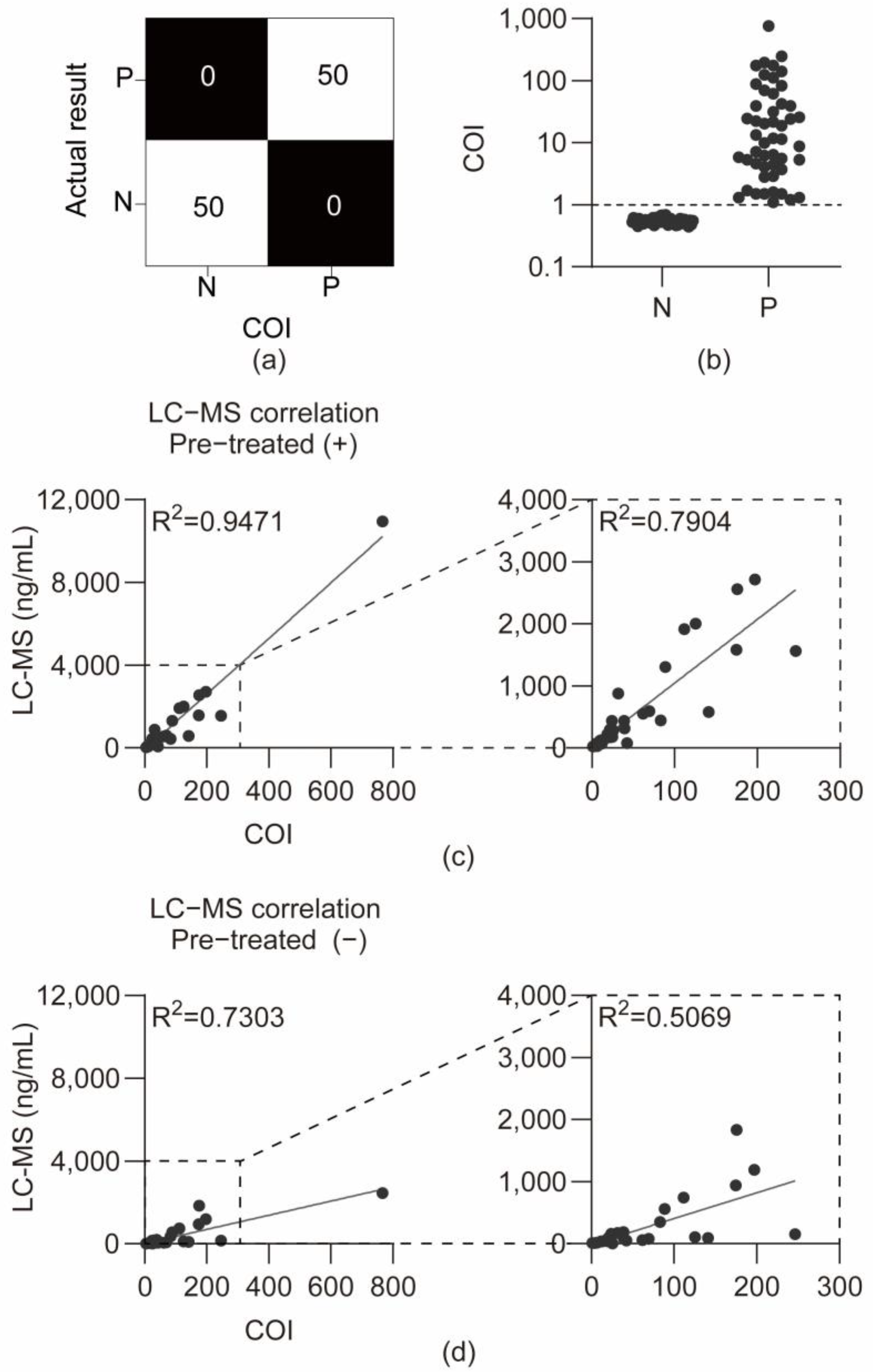
- Device validation using 100 authentic urine samples showed 100% sensitivity/specificity and high correlation (R2 = 0.9471) with LC-MS/MS.
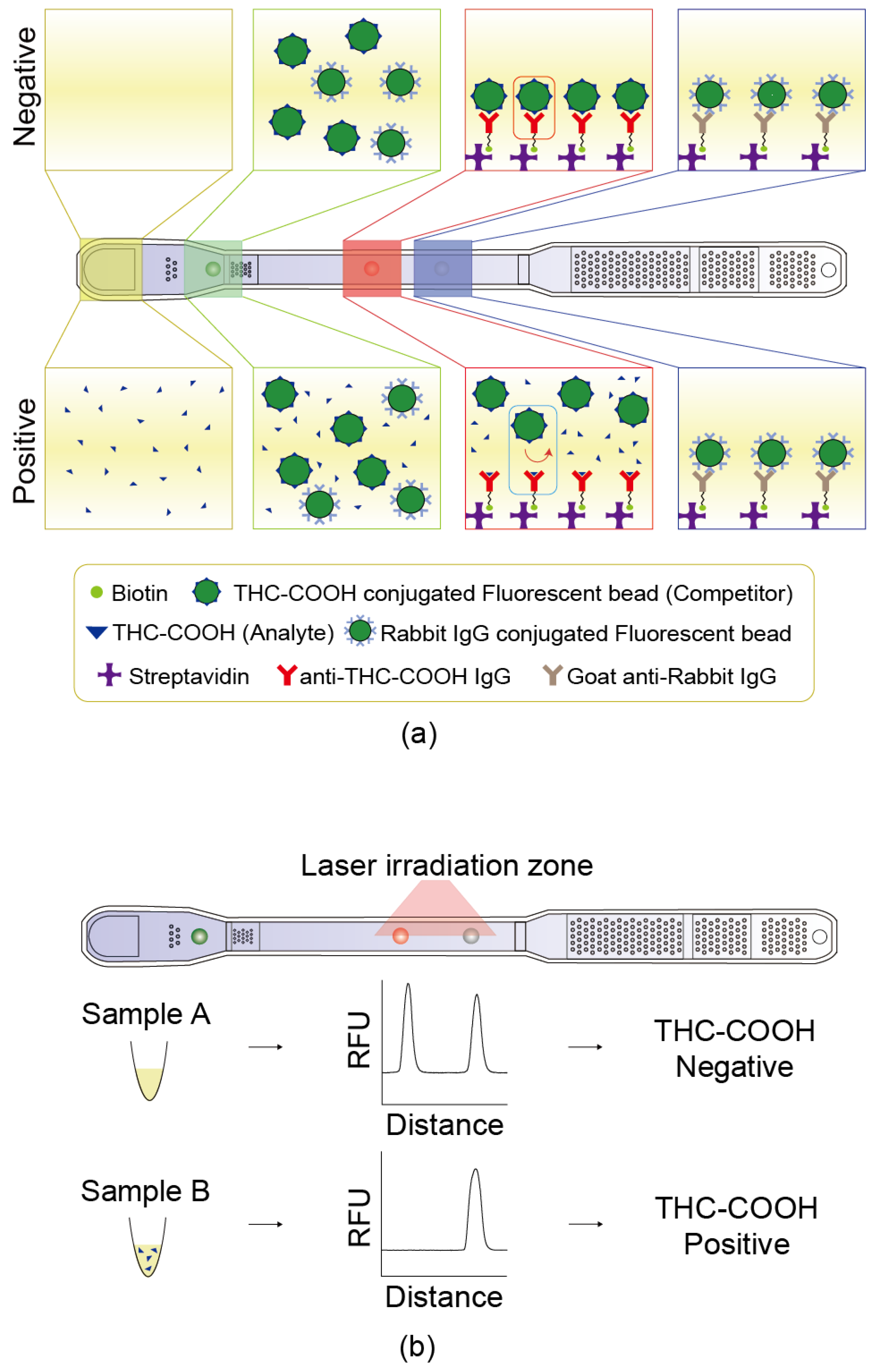
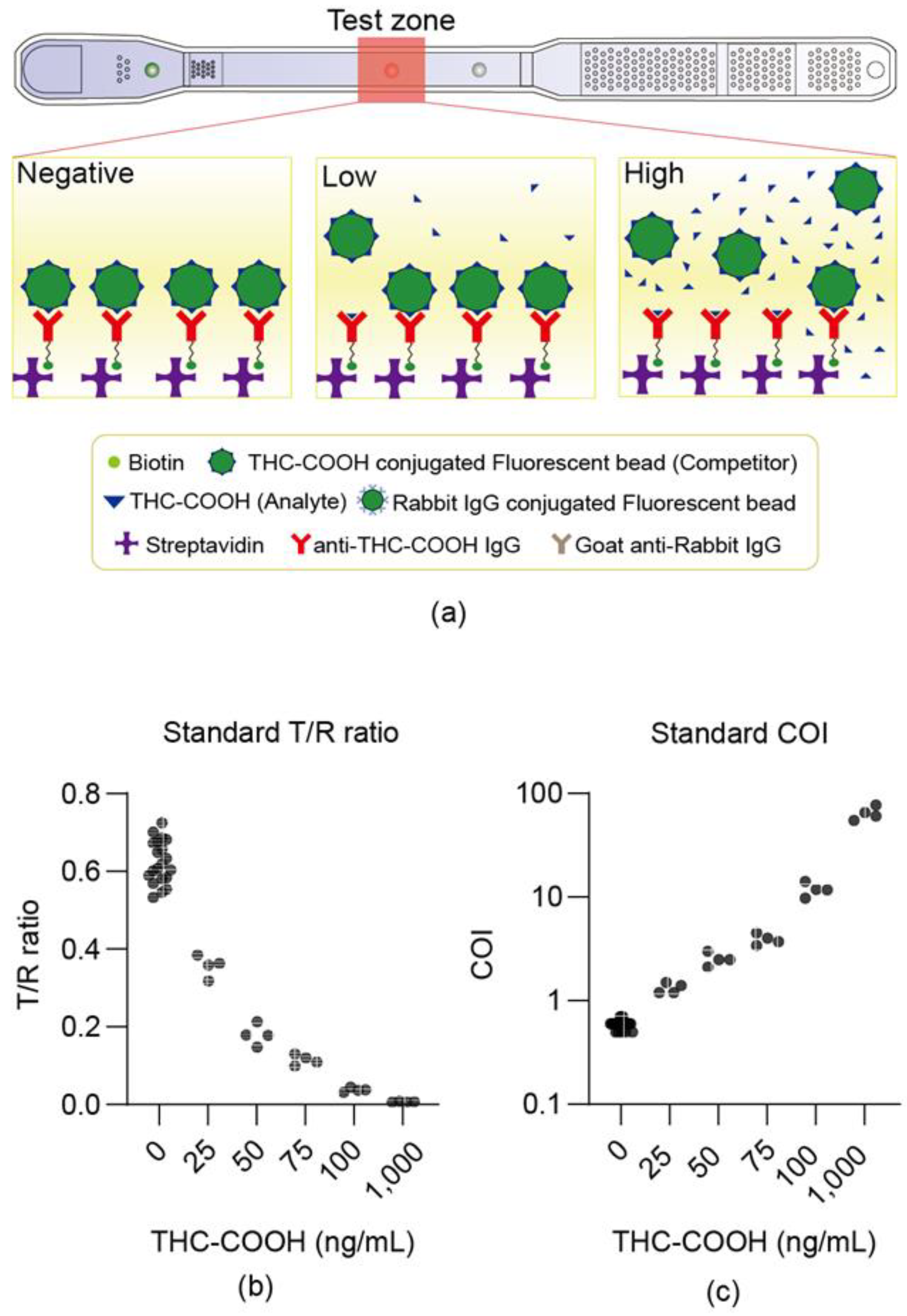
- A test-to-reference (T/R) fluorescence ratio was successfully employed to mitigate urine sample matrix effects and ensure objective, normalized semi-quantitative results.
- The antibodies used in the cartridge were found to recognize both free THC-COOH and its primary glucuronide-conjugated metabolite, eliminating the need for enzymatic hydrolysis pre-treatment.
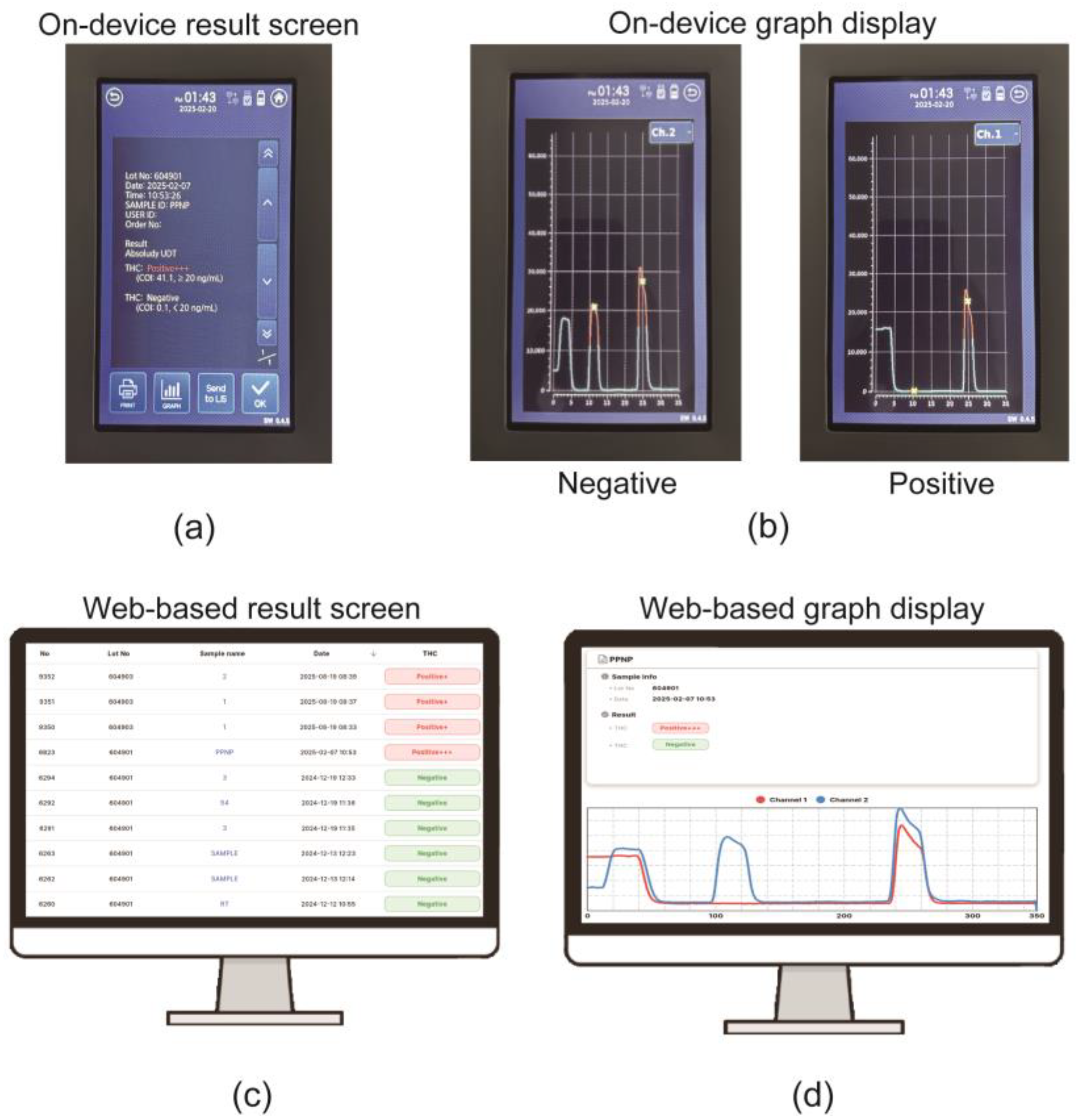
- The device provides objective, numerical readouts and digital data management, which overcomes the critical limitations of subjective visual interpretation and poor data integrity found in conventional rapid kits.
- The system’s design enables future integration of creatinine measurement for urine validity testing, suggesting a pathway to a comprehensive on-site device that fully meets forensic toxicology standards.
Abstract
1. Introduction
2. Materials and Methods
2.1. Microfluidic Cartridge Fabrication
2.1.1. Streptavidin Conjugation
2.1.2. Capture Antibody Immobilization
2.1.3. Detection Antibody–Fluorescent Bead Conjugation
2.1.4. Cartridge Assembly and Channel Formation
2.2. Detection and Analysis
2.2.1. Preparation for Detection
2.2.2. Fluorescence Measurement
2.2.3. Definition of THC-COOH Concentration
2.3. Reliability Evaluation
2.4. Urine Sample Collection and Analysis
2.5. LC-MS/MS Quantitative Analysis
2.5.1. Chemicals and Reagents
2.5.2. Method Development
2.5.3. Urine Sample Preparation and THC-COOH Extraction
2.5.4. Method Validation and Sample Analysis
2.6. Correlation of Absol Device Analysis with LC-MS/MS Results
3. Results
3.1. Reliability and Precision Evaluation Under Laboratory-Developed Test Protocol
3.2. Field Applicability Test Results
3.3. Correlation Between LC-MS/MS Concentrations and COI Values
3.4. Reader Configuration
4. Discussion
5. Conclusions
Supplementary Materials
Author Contributions
Funding
Institutional Review Board Statement
Informed Consent Statement
Data Availability Statement
Acknowledgments
Conflicts of Interest
Abbreviations
| BSAI | Bovine Serum Albumin |
| COI | Cutoff Index |
| CV | Coefficient of Variation |
| EDC | 1-ethyl-3-(3-dimethylaminopropyl) carbodiimide |
| GC-MS/MS | Gas Chromatography-Tandem Mass Spectrometry |
| IS | Internal Standard |
| LC-MS/MS | Liquid Chromatography–Tandem Mass Spectrometry |
| LDT | Laboratory-Developed Test |
| LFA | Lateral Flow Assay |
| LOB | Limit of Blank |
| LOD | Limit of Detection |
| MES | 2-(N-morpholino)-ethanesulfonic acid |
| MRM | Multiple Reaction Monitoring |
| NFS | National Forensic Service |
| NHS | N-hydroxysuccinimide |
| PBS | Phosphate-Buffered Saline |
| PMMA | Polymethyl methacrylate |
| POCT | Point-of-Care Testing |
| QC | Quality Control |
| RF | Radio Frequency |
| SCCM | Standard Cubic Centimeters per Minute |
| SVT | Specimen validity testing |
| THC | Tetrahydrocannabinol |
| THC-COOH | 11-nor-9-carboxy-delta-9-tetrahydrocannabinol |
| WHO | World Health Organization |
References
- United Nations Office on Drugs and Crime (UNODC). World Drug Report 2025: Special Points of Interest; United Nations Publication: Vienna, Austria, 2025; Available online: https://www.unodc.org/documents/data-and-analysis/WDR_2025/WDR25_Special_points_of_interest.pdf (accessed on 23 October 2025).
- United Nations Office on Drugs and Crime (UNODC). International Drug Control Conventions: Schedules/Tables and Control Regimes. Prepared by the Secretariat to the Governing Bodies, July 2019. Available online: https://www.unodc.org/documents/commissions/CND/Scheduling_Resource_Material/Scheduling_Control_Regimes.pdf (accessed on 23 October 2025).
- United Nations. Single Convention on Narcotic Drugs, 1961, as Amended by the 1972 Protocol; United Nations: New York, NY, USA, 1972; Available online: https://www.unodc.org/pdf/convention_1961_en.pdf (accessed on 23 October 2025).
- United Nations. UN Commission Reclassifies Cannabis, Yet Still Considered Harmful. UN News, 2 December 2020. Available online: https://news.un.org/en/story/2020/12/1079132 (accessed on 23 October 2025).
- United Nations Office on Drugs and Crime (UNODC). Herbal Cannabis for Medical Use: A Spectrum of Regulatory Approaches. In World Drug Report 2023; United Nations Publication: Vienna, Austria, 2023; Booklet 3, Chapter 3; Available online: https://www.unodc.org/res/WDR-2023/WDR23_B3_CH3_Medical_Cannabis.pdf (accessed on 23 October 2025).
- MacCoun, R.J.; Mello, M.M. Half-Baked—The Retail Promotion of Marijuana Edibles. N. Engl. J. Med. 2015, 372, 989–991. [Google Scholar] [CrossRef] [Scilit] [PubMed]
- Conerney, C.; Steinmetz, F.; Wakefield, J.; Loveridge, S. Cannabis and children: Risk mitigation strategies for edibles. Front. Psychiatry 2024, 15, 1285784. [Google Scholar] [CrossRef] [Scilit] [PubMed]
- Sewell, R.A.; Poling, J.; Sofuoglu, M. The effect of cannabis compared with alcohol on driving. Am. J. Addict. 2009, 18, 185–193. [Google Scholar] [CrossRef] [Scilit] [PubMed]
- Sexton, B.F.; Tunbridge, R.J.; Brook-Carter, N.; Jackson, P.G.; Wright, K.; Stark, M.M.; Englehart, K. The Influence of Cannabis on Driving; TRL Report 477; Transport Research Laboratory: Crowthorne, UK, 2000; Available online: https://www.csdp.org/research/TRL477.pdf (accessed on 23 October 2025).
- Ramaekers, J.G.; Robbe, H.W.; O’Hanlon, J.F. Marijuana, alcohol and actual driving performance. Hum. Psychopharmacol. Clin. Exp. 2000, 15, 551–558. [Google Scholar] [CrossRef] [Scilit]
- Simpson, H.M.; Mayhew, D.R.; Warren, R.A. Epidemiology of road accidents involving young adults: Alcohol, drugs and other factors. Drug Alcohol Depend. 1982, 10, 35–63. [Google Scholar] [CrossRef] [Scilit] [PubMed]
- Quest Diagnostics. Drug Testing Index™ and Industry Insights. 2023. Available online: https://filecache.mediaroom.com/mr5mr_questdiagnostics/203782/%7B39b94bbf-1685-4fe5-a0c2-8487bfddb90e%7D_2023_DrugTestingIndex_FINAL2.pdf (accessed on 23 October 2025).
- National Institute on Drug Abuse (NIDA). Drug Testing. 2024. Available online: https://nida.nih.gov/research-topics/drug-testing (accessed on 23 October 2025).
- Finn, É.R.; Huffman, J.; Calvert, M.; Skogerboe, K. Can the results be trusted? Assessing the reliability of in-home drug tests for the detection of THC in urine. Seattle Univ. Undergrad. Res. J. 2024, 8, 12. Available online: https://scholarworks.seattleu.edu/suurj/vol8/iss1/12 (accessed on 23 October 2025).
- Huestis, M.A.; Henningfield, J.E.; Cone, E.J. Blood cannabinoids. I. Absorption of THC and formation of 11-OH-THC and THCCOOH during and after smoking marijuana. J. Anal. Toxicol. 1992, 16, 276–282. [Google Scholar] [CrossRef] [Scilit] [PubMed]
- United Nations Office on Drugs and Crime (UNODC). Recommended Methods for the Identification and Analysis of Cannabis and Cannabis Products: Manual for Use by National Drug Analysis Laboratories. United Nations Publication: Vienna, Austria, 2009. Available online: https://www.unodc.org/documents/scientific/ST-NAR-40-Ebook_1.pdf (accessed on 13 November 2025).
- Chung, S.; Yun, H.; Kamm, R.D. Nanointerstice-driven microflow. Small 2009, 5, 609–613. [Google Scholar] [CrossRef] [Scilit] [PubMed]
- Bae, H.; Lee, D.; Kim, H.; Jee, Y.S.; Kim, J.; Min, B.; Park, Y.-N.; Seo, J.-S.; Lee, J.; Lee, S.; et al. Quantitative microfluidic assay to measure neutralizing and total antibodies for SARS-CoV-2. Sens. Actuators B Chem. 2024, 403, 135093. [Google Scholar] [CrossRef] [Scilit]
- U.S. Department of Health and Human Services. Mandatory Guidelines for Federal Workplace Drug Testing Programs. Fed. Regist. 2017, 82, 7920–7970. [Google Scholar]
- Quest Diagnostics. Test Detail: Drug Monitoring, Marijuana Metabolite, Screen, Urine. (Test Code 39358). [Online]. Available online: https://testdirectory.questdiagnostics.com/test/test-detail/39358/drug-monitoring-marijuana-metabolite-screen-urine?p=r&cc=MASTER (accessed on 12 November 2025).
- National Treatment Court Resource Center. The Marijuana Detection Window: Determining the Length of Time Cannabinoids Will Remain Detectable in Urine Following Smoking; U.S. Department of Justice: Washington, DC, USA, 2020; Available online: https://ntcrc.org/wp-content/uploads/2020/06/DCRVolume5.1-2_The_Marijuana_Detection_Window.pdf (accessed on 12 November 2025).
- Shin, M.H.; Park, M.; Lee, H.; Kim, S.; Kim, S.-C.; Lee, S.; Heo, S.; Kim, E. Development and validation of a screening method for Δ9-tetrahydrocannabinol and 11-nor-9-carboxy-Δ9-tetrahydrocannabinol in urine using liquid chromatography–tandem mass spectrometry. Forensic Sci. Int. 2019, 303, 109997. [Google Scholar] [CrossRef] [Scilit]
- Murphy, B.M.; He, X.; Dandy, D.; Henry, C.S. Competitive Immunoassays for Simultaneous Detection of Metabolites and Proteins Using Micromosaic Patterning. Anal. Chem. 2008, 80, 444–450. [Google Scholar] [CrossRef] [Scilit] [PubMed]
- Huestis, M.A. Human cannabinoid pharmacokinetics. Chem. Biodivers. 2007, 4, 1770–1804. [Google Scholar] [CrossRef] [Scilit] [PubMed]
- Castaneto, M.S.; Okano, C.K.; Gorbet, J.C.; Ochikubo, J.T.; Martin, T.M. Urinary 11-nor-9-carboxy-9-tetrahydrocannabinol (THC-COOH) concentration in US military specimens analyzed at the Forensic Toxicology Drug Testing Laboratory, Oahu, Hawaii (2012–2016). In Proceedings of the Joint Society of Forensic Toxicologists/International Association of Forensic Toxicologists Meeting, Boca Raton, FL, USA, 8 January 2018. [Google Scholar]
- Barr, D.B.; Wilder, L.C.; Caudill, S.P.; Gonzalez, A.J.; Needham, L.L.; Pirkle, J.L. Urinary creatinine concentrations in the U.S. population: Implications for urinary biologic monitoring measurements. Environ. Health Perspect. 2005, 113, 192–200. [Google Scholar] [CrossRef] [Scilit] [PubMed]
- Lee, J.-H.; Ahn, R.-M. Relevance of gender, age and the body mass index to changes in urinary creatinine concentration in Korean adults. J. Environ. Health Sci. 2010, 36, 215–221. [Google Scholar] [CrossRef] [Scilit]
- Smith, M.L.; Barnes, A.J.; Huestis, M.A. Identifying new cannabis use with urine creatinine-normalized THCCOOH concentrations and time intervals between specimen collections. J. Anal. Toxicol. 2009, 33, 185–189. [Google Scholar] [CrossRef] [Scilit]
- To-Figueras, J.; Sala, M.; Otero, R.; Barrot, C.; Santiago-Silva, M.; Rodamilans, M.; Herrero, C.; Grimalt, J.; Sunyer, J. Metabolism of hexachlorobenzene in humans: Association between serum levels and urinary metabolites in a highly exposed population. Environ. Health Perspect. 1997, 105, 78–83. [Google Scholar] [CrossRef] [PubMed]
- World Health Organization, Office of Occupational Health. Biological Monitoring of Chemical Exposure in the Workplace: Guidelines; World Health Organization: Geneva, Switzerland, 1996; Volume 1, Available online: https://iris.who.int/bitstream/handle/10665/41856/WHO_HPR_OCH_96.1.pdf (accessed on 13 November 2025).


Disclaimer/Publisher’s Note: The statements, opinions and data contained in all publications are solely those of the individual author(s) and contributor(s) and not of MDPI and/or the editor(s). MDPI and/or the editor(s) disclaim responsibility for any injury to people or property resulting from any ideas, methods, instructions or products referred to in the content. |
© 2025 by the authors. Licensee MDPI, Basel, Switzerland. This article is an open access article distributed under the terms and conditions of the Creative Commons Attribution (CC BY) license (https://creativecommons.org/licenses/by/4.0/).
Share and Cite
Jung, Y.; Choi, I.; Bae, H.; Seo, J.; Kim, S.; Lee, S.; Lee, J.; Jeong, Y.; Kim, J.; Chung, H.; et al. Semi-Quantitative On-Site Microfluidic Assay to Detect 11-Nor-9-carboxy-delta 9-Tetrahydrocannabinol (THC-COOH) in Urine. Sensors 2025, 25, 7115. https://doi.org/10.3390/s25237115
Jung Y, Choi I, Bae H, Seo J, Kim S, Lee S, Lee J, Jeong Y, Kim J, Chung H, et al. Semi-Quantitative On-Site Microfluidic Assay to Detect 11-Nor-9-carboxy-delta 9-Tetrahydrocannabinol (THC-COOH) in Urine. Sensors. 2025; 25(23):7115. https://doi.org/10.3390/s25237115
Chicago/Turabian StyleJung, YeJi, Isaac Choi, Hyunjun Bae, Joonseok Seo, Sunchun Kim, Sangki Lee, Jeongmin Lee, Yohan Jeong, Juhyung Kim, Heesun Chung, and et al. 2025. "Semi-Quantitative On-Site Microfluidic Assay to Detect 11-Nor-9-carboxy-delta 9-Tetrahydrocannabinol (THC-COOH) in Urine" Sensors 25, no. 23: 7115. https://doi.org/10.3390/s25237115
APA StyleJung, Y., Choi, I., Bae, H., Seo, J., Kim, S., Lee, S., Lee, J., Jeong, Y., Kim, J., Chung, H., Kim, H., & Chung, S. (2025). Semi-Quantitative On-Site Microfluidic Assay to Detect 11-Nor-9-carboxy-delta 9-Tetrahydrocannabinol (THC-COOH) in Urine. Sensors, 25(23), 7115. https://doi.org/10.3390/s25237115