Article

Effects of High-Load Bench Press Training with Different Blood Flow Restriction Pressurization Strategies on the Degree of Muscle Activation in the Upper Limbs of Bodybuilders

1
School of P.E. and Sports, Beijing Normal University, Beijing 100875, China
2
College of Physical Education, China University of Mining and Technology, Xuzhou 221116, China
3
College of Physical Education (Main Campus), Zhengzhou University, Zhengzhou 450052, China
4
School of Sports Science, Jishou University, Jishou 416000, China
*
Authors to whom correspondence should be addressed.
These authors contributed equally to this work.
Sensors 2024, 24(2), 605; https://doi.org/10.3390/s24020605
Submission received: 11 December 2023 / Revised: 29 December 2023 / Accepted: 5 January 2024 / Published: 17 January 2024

Abstract

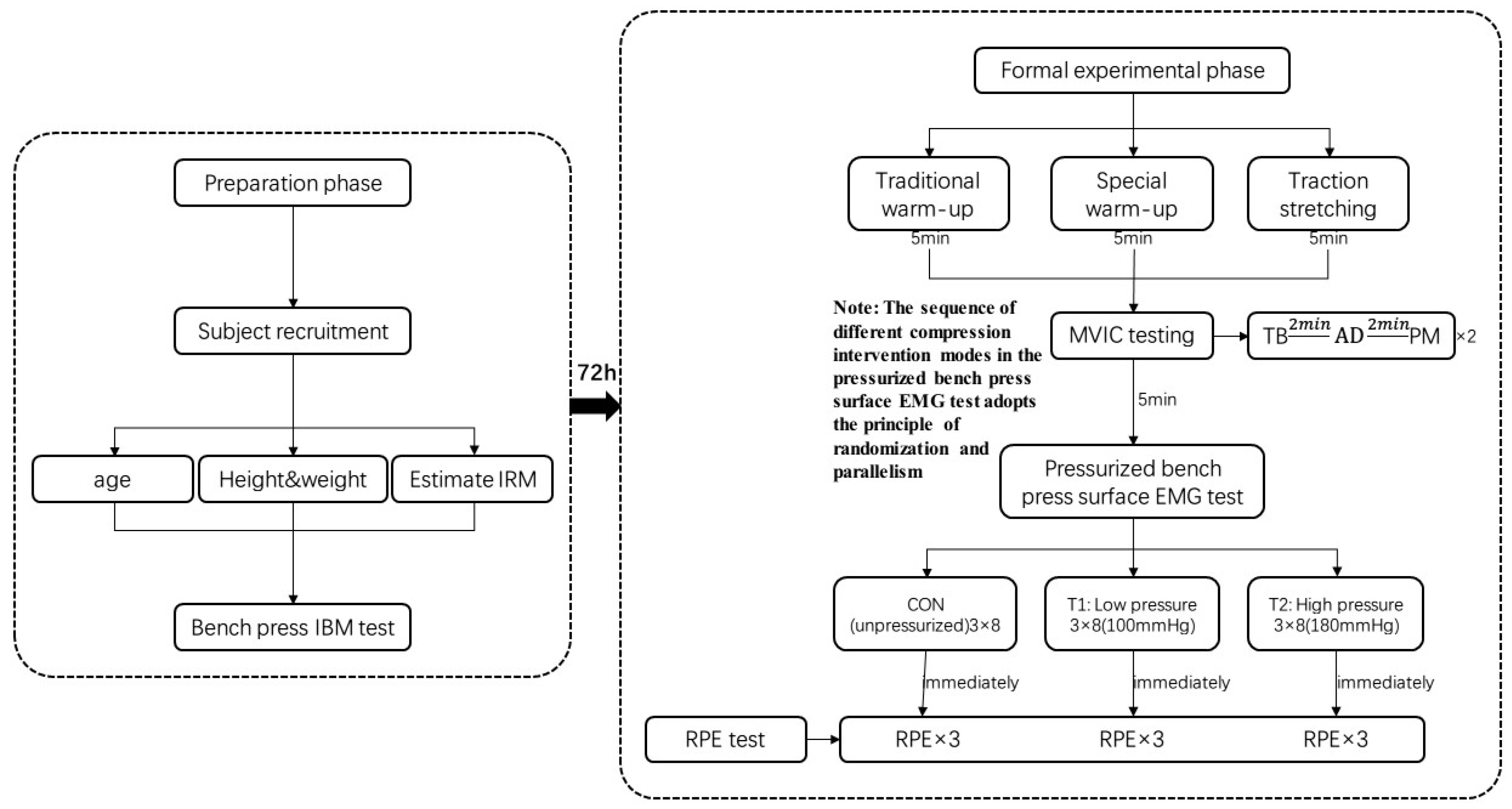
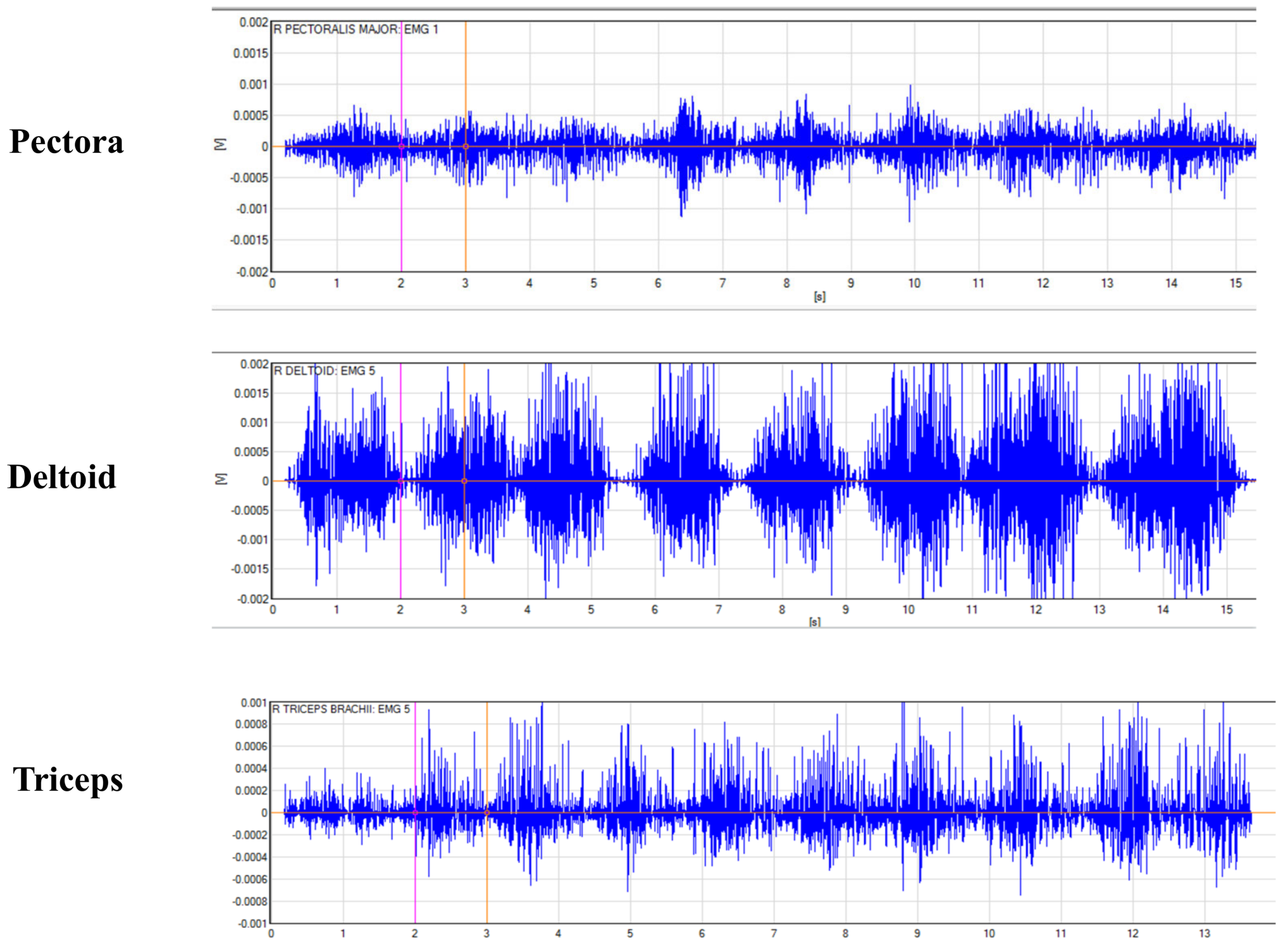
Background: The aim of this study was to investigate the effects of different pressurization modes during high-load bench press training on muscle activation and subjective fatigue in bodybuilders. Methods: Ten bodybuilders participated in a randomized, self-controlled crossover experimental design, performing bench press training under three different pressurization modes: T1 (low pressure, high resistance), T2 (high pressure, high resistance), and C (non-pressurized conventional). Surface EMG signals were recorded from the pectoralis major, deltoid, and triceps muscles using a Delsys Trigno wireless surface EMG during bench presses. Subjective fatigue was assessed immediately after the training session. Results: (1) Pectoralis major muscle: The muscle activation degree of the T1 group was significantly higher than that of the blank control group during the bench press (p < 0.05). The muscle activation degree of the T2 group was significantly higher than that of the C group during the bench press (p < 0.05). In addition, the muscle activation degree of the T2 group was significantly higher than that of the T1 group during the first group bench press (p < 0.05). (2) Deltoid muscle: The muscle activation degree of the T2 group during the third group bench press was significantly lower than the index values of the first two groups (p < 0.05). The muscle activation degree in the experimental group was significantly higher than that in the C group (p < 0.05). The degree of muscle activation in the T2 group was significantly higher than that in the T1 group during the first bench press (p < 0.05). (3) Triceps: The muscle activation degree of the T1 group was significantly higher than the index value of the third group during the second group bench press (p < 0.05), while the muscle activation degree of the T2 group was significantly lower than the index value of the first two groups during the third group bench press (p < 0.05). The degree of muscle activation in all experimental groups was significantly higher than that in group C (p < 0.05). (5) RPE index values in all groups were significantly increased (p < 0.05). The RPE value of the T1 group was significantly higher than that of the C group after bench press (p < 0.05). The RPE value of the T1 group was significantly higher than that of the C group after bench press (p < 0.05). In the third group, the RPE value of the T1 group was significantly higher than that of the C and T2 groups (p = 0.002) (p < 0.05). Conclusions: The activation of the pectoralis major, triceps brachii, and deltoid muscles is significantly increased by high-intensity bench press training with either continuous or intermittent pressurization. However, continuous pressurization results in a higher level of perceived fatigue. The training mode involving high pressure and high resistance without pressurization during sets but with 180 mmHg occlusion pressure and pressurization during rest intervals yields the most pronounced overall effect on muscle activation.
Keywords: blood flow restriction; bench press; upper-extremity muscle groups; muscle activation level blood flow restriction; bench press; upper-extremity muscle groups; muscle activation level