Precipitation and Soil Moisture Spatio-Temporal Variability and Extremes over Vietnam (1981–2019): Understanding Their Links to Rice Yield


Abstract
1. Introduction
2. Study Area, Data and Method
2.1. Study Area
2.2. Data
2.2.1. Vietnam Rice Statistics
2.2.2. Precipitation
2.2.3. Soil Moisture
2.3. Methods
2.3.1. Independent Component Analysis
2.3.2. Standardized Precipitation Indices
2.3.3. Standardized Anomalies
3. Results and Discussion
3.1. Spatio-Temporal Variability Analysis
3.1.1. Spatio-Temporal Variability of Precipitation
3.1.2. Spatio-Temporal Variability of Soil Moisture
3.2. Drought Conditions Reflected by Spatio-Temporal Patterns of SPI
3.3. The Link between Soil Moisture Variability with Rice Yield
4. Conclusions
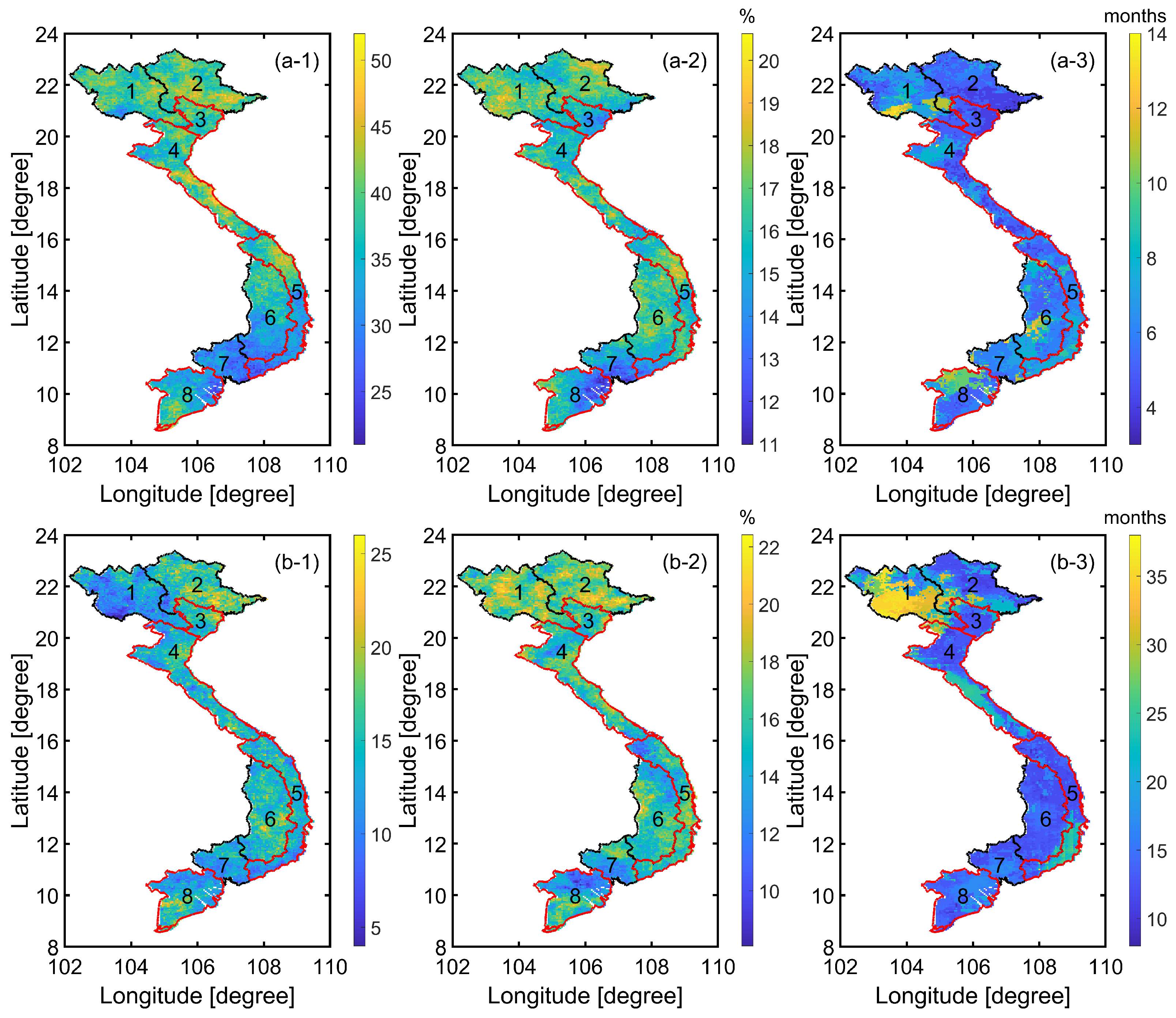
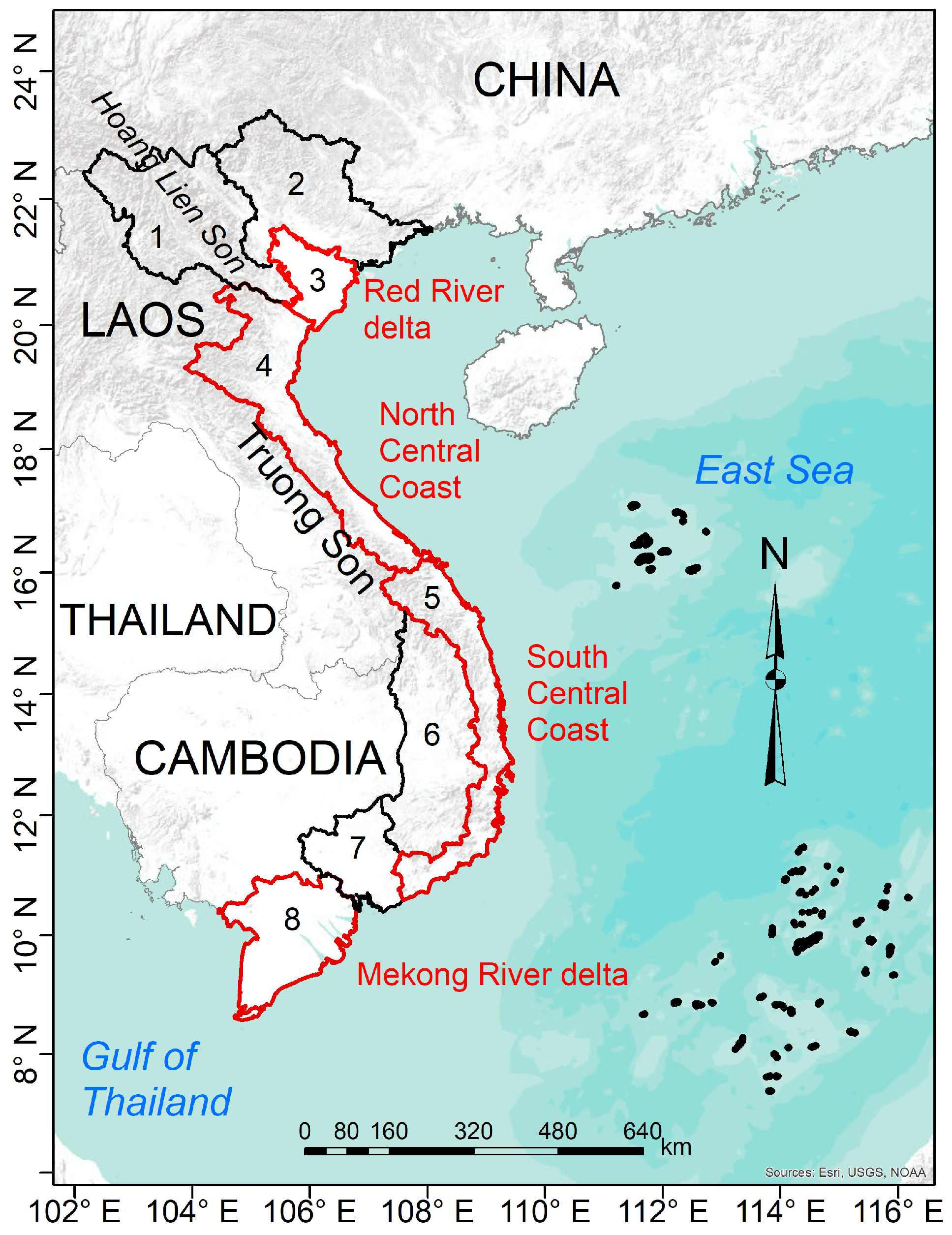
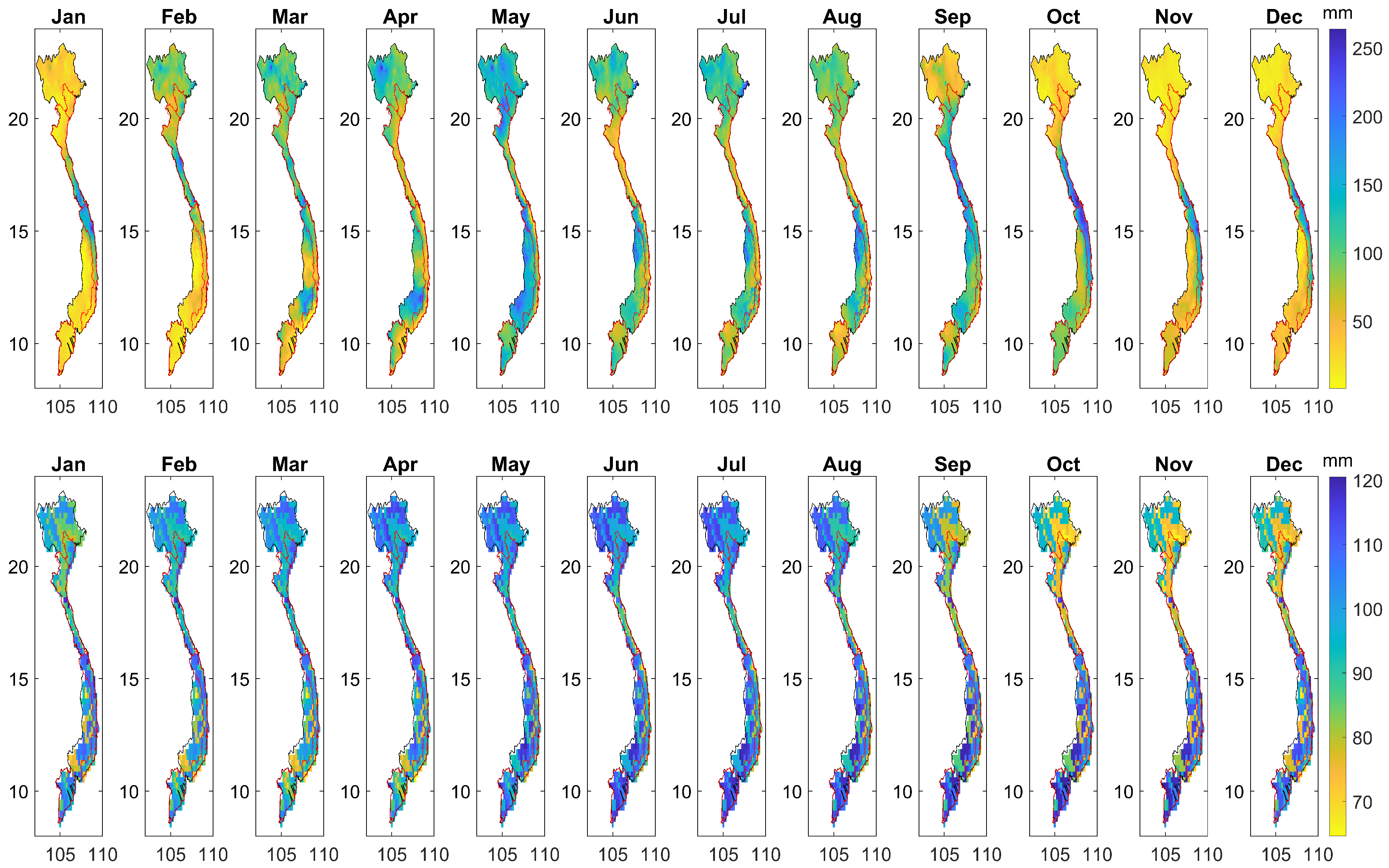
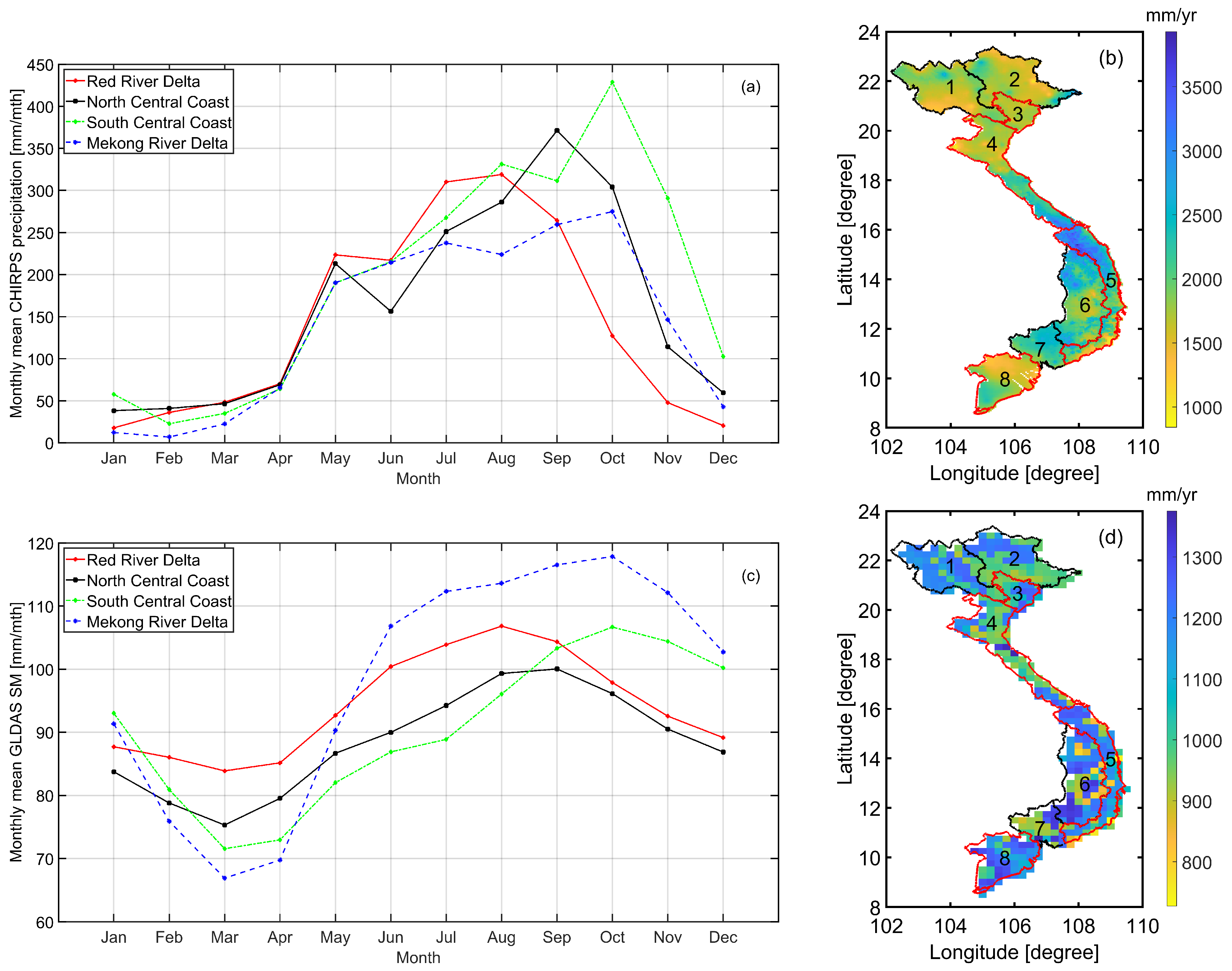
- The spatio-temporal variability of the CHIRPS precipitation confirmed that the rainy season lasts from April/May until September/October, which starts and ends earlier in the northern part (latitude above 20 N) around February and September, respectively, with July–August receiving the highest amount of precipitation over most parts of the country. Areal mean precipitation computed over the four main rice producing areas indicates different peaks of precipitation, in which the months with the highest amount of precipitation were later from north to south.
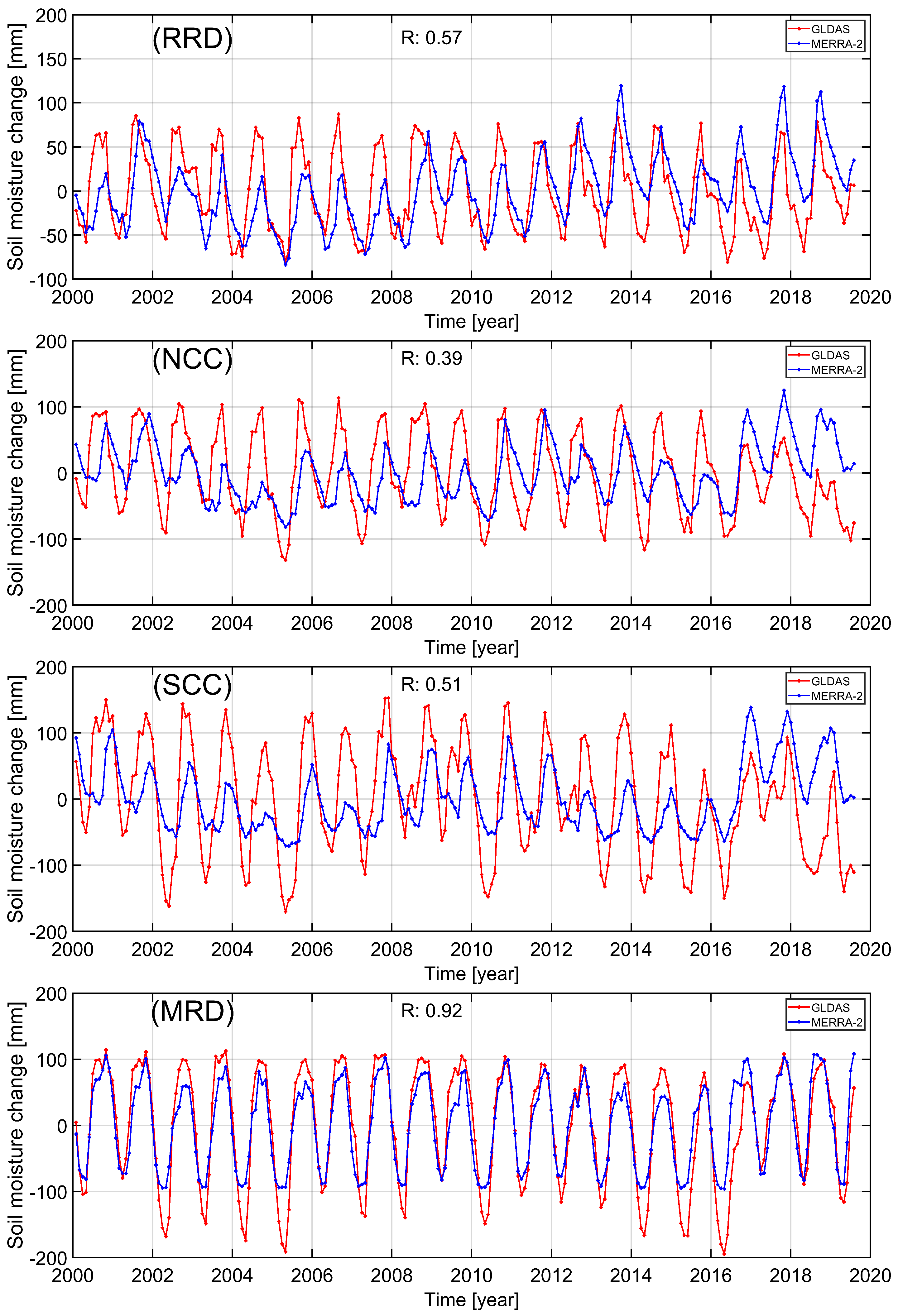
- An agreement between monthly CHIRPS precipitation and monthly GLDAS soil moisture was found in which the wetter period in terms of soil moisture over the northern and NCC areas was between February and August, while that over the southern and SCC areas started later in May every year. Similarly, the same peaks (i.e., months) of the highest monthly precipitation and soil moisture were found between the four main rice producing areas. However, the spatial patterns of annual mean precipitation and soil moisture disagreed, which can be attributed to different factors other than precipitation affecting the amount of moisture in soil layers, e.g., temperature, irrigation, and drainage systems, which are inconsistent between areas.
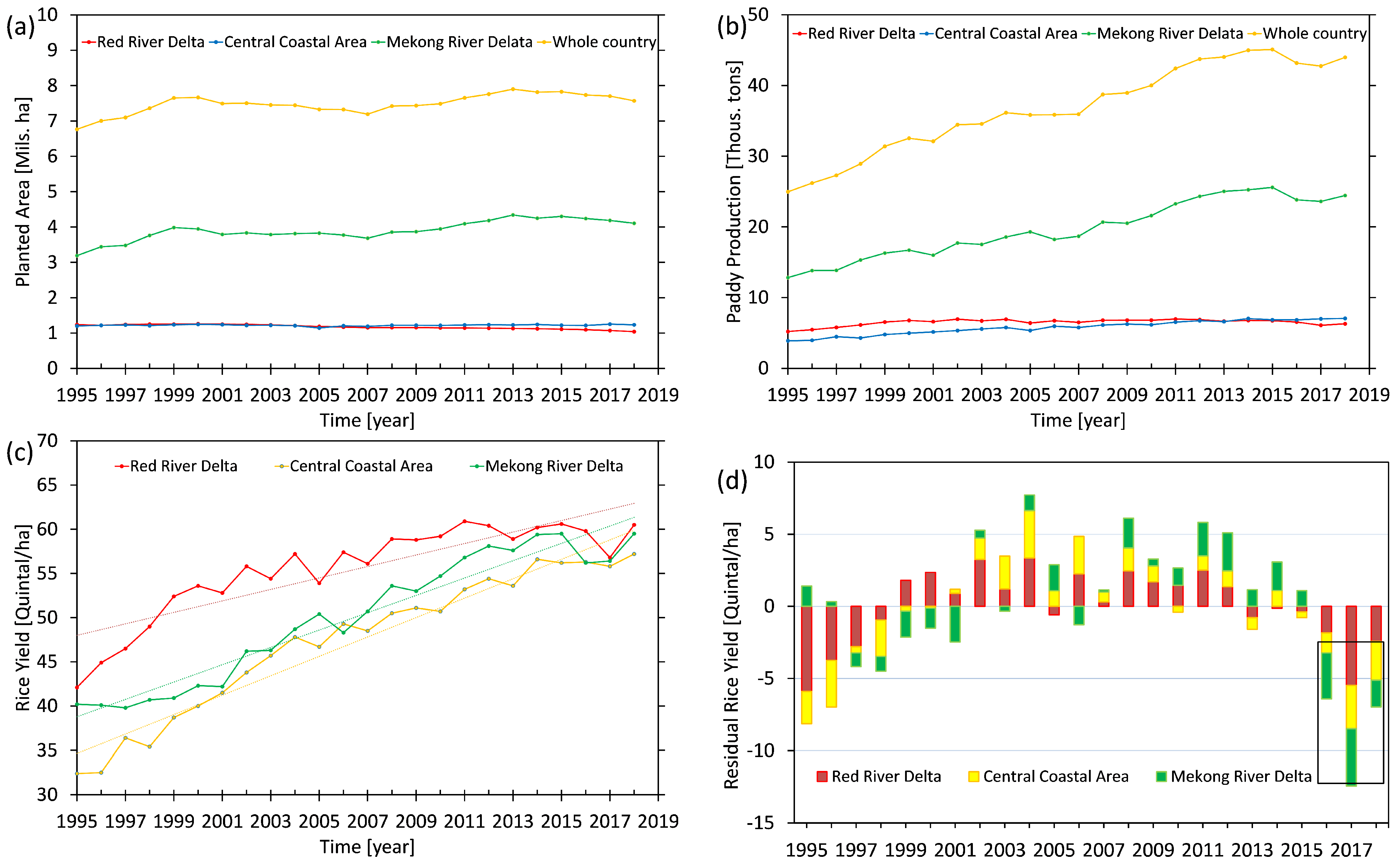
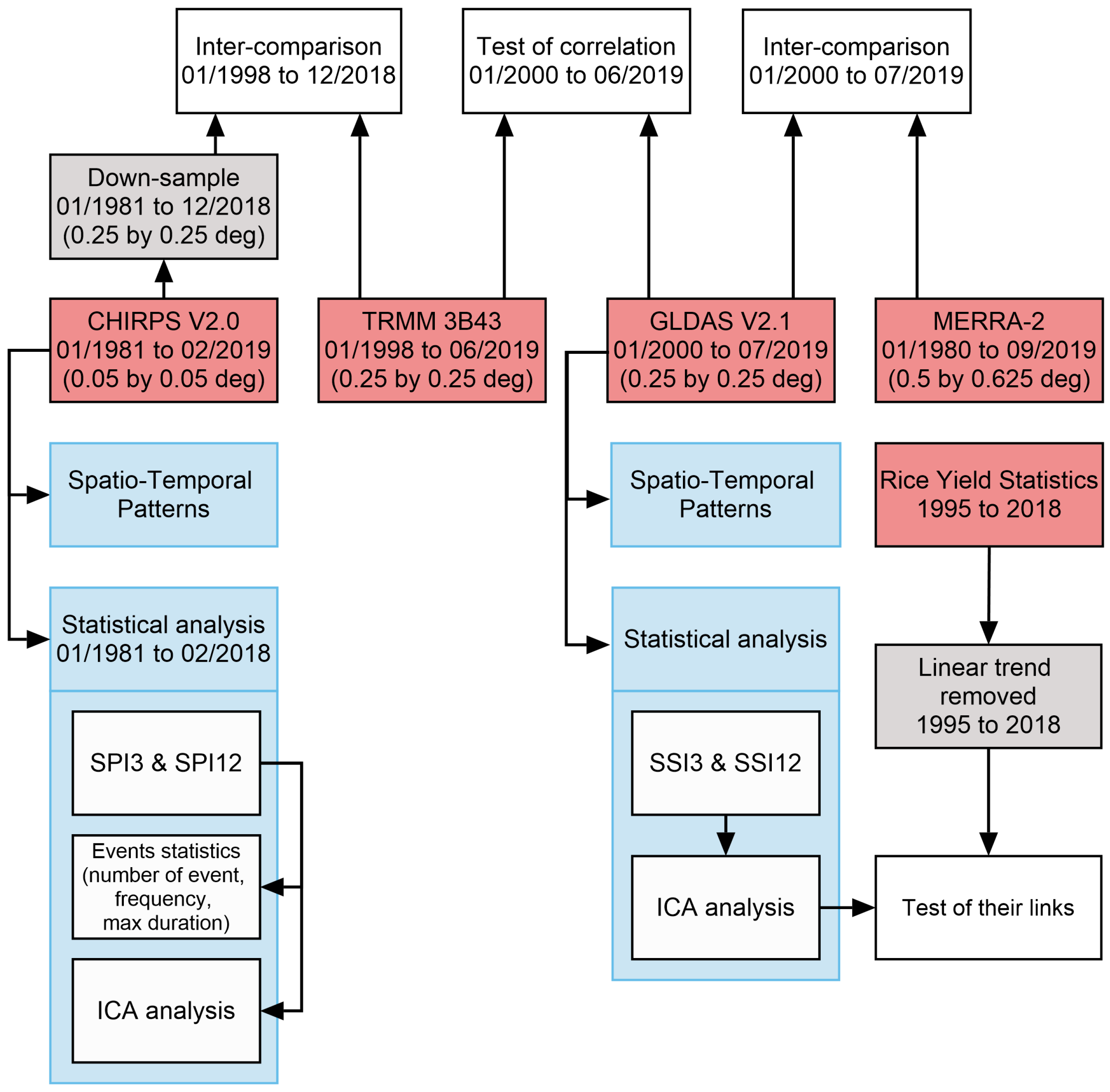
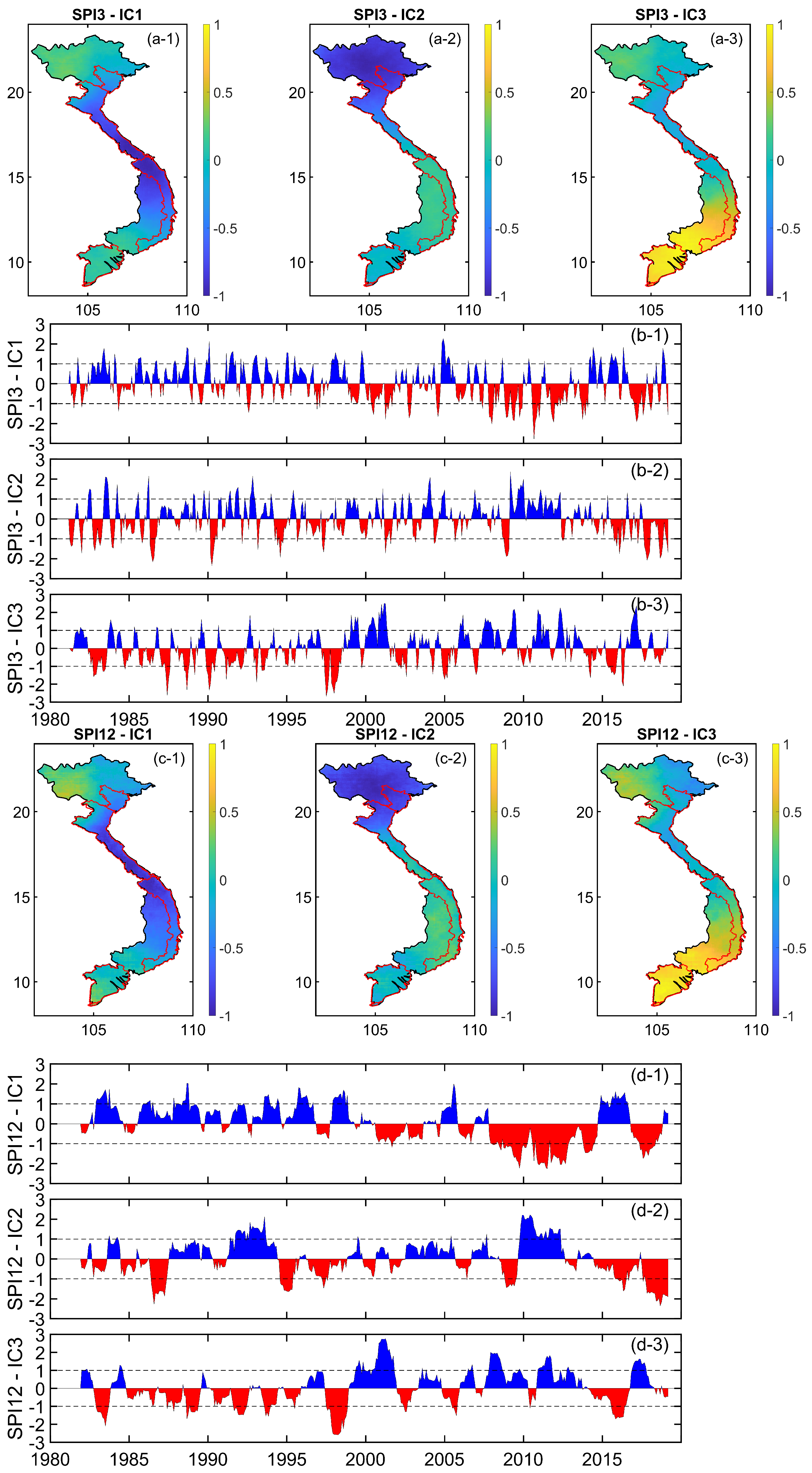
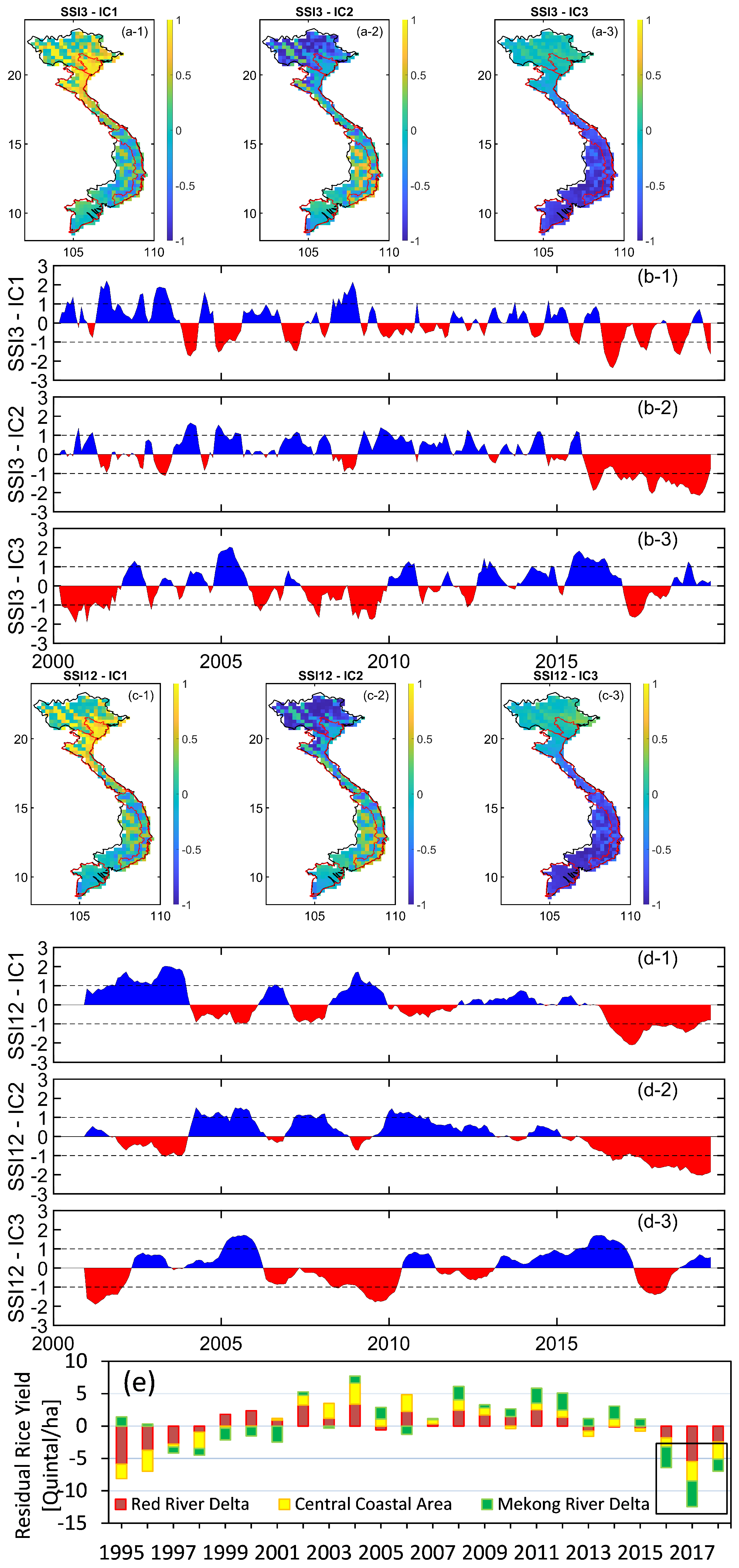
- The drought conditions were assessed by the 3-month and 12-month SPI and the impacts of climate extremes on rice yield were assessed via the 3-month and 12-month SSI, both with the ICA analysis. The results showed that the SPI is useful for capturing climate extremes and that SSI is useful in identifying the influences of climate extremes on rice production in Vietnam. During the 2016–2018 period, there existed a reduction in the residual rice yield that was consistent with a decrease in soil moisture, particularly in the first two ICA decomposed leading components.
- Given that precipitation and, to a large extent, soil moisture control plant growth, their increase or decrease due to the impacts of climate extremes are bound to affect all crop growth and production. This study, although specific to rice production, could be undertaken for any crop. The limitation, however, is that access to in situ soil moisture and, to some extent, precipitation products in many countries is challenging. In this scenario, the method was restricted to the use of satellite and/or hydrological model products.
Author Contributions
Funding
Institutional Review Board Statement
Informed Consent Statement
Data Availability Statement
Acknowledgments
Conflicts of Interest
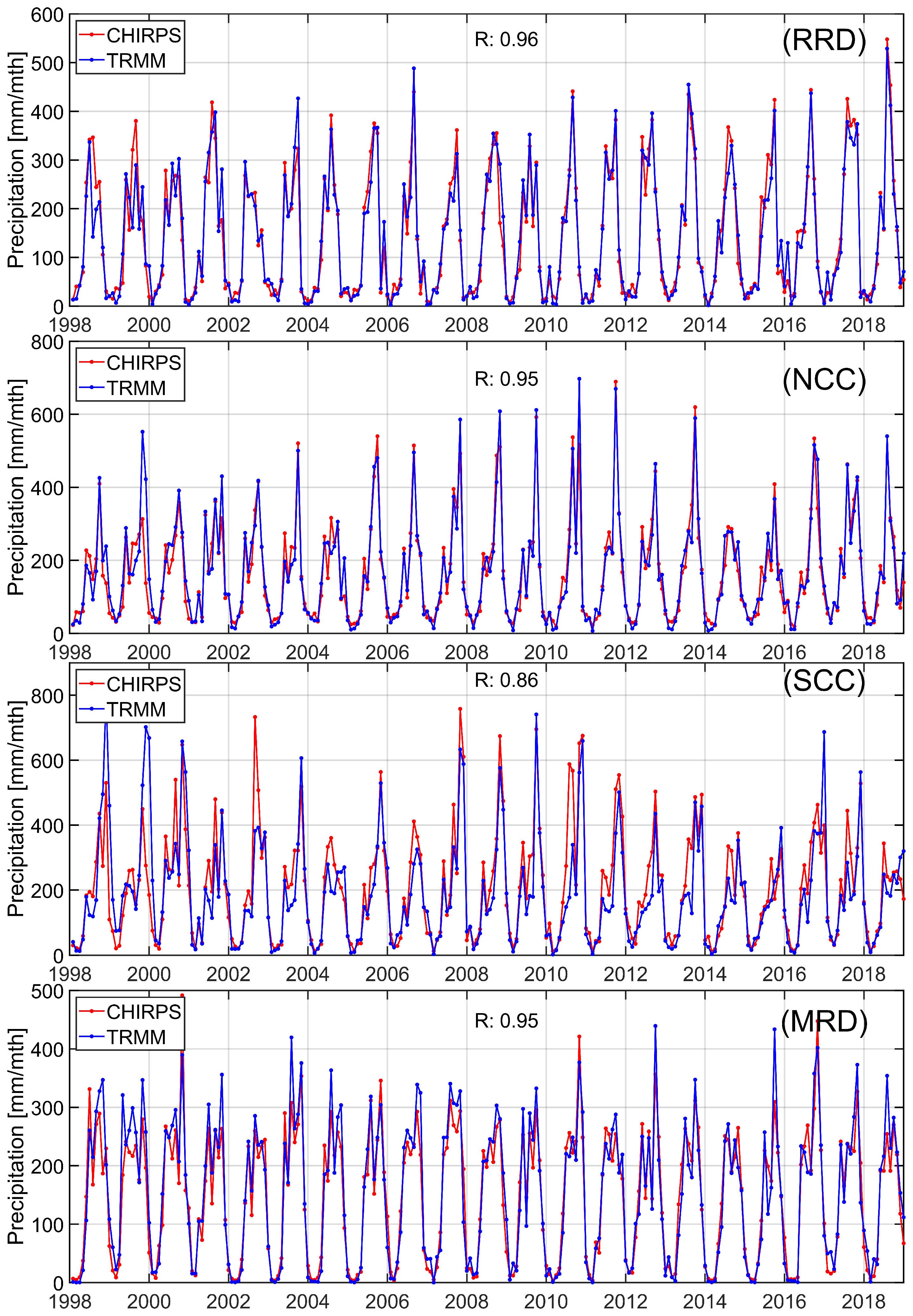
Appendix A. Consistency between CHIRPS and TRMM Precipitations

Appendix B. Consistency between GLDAS and MERRA-2 Soil Moisture Products

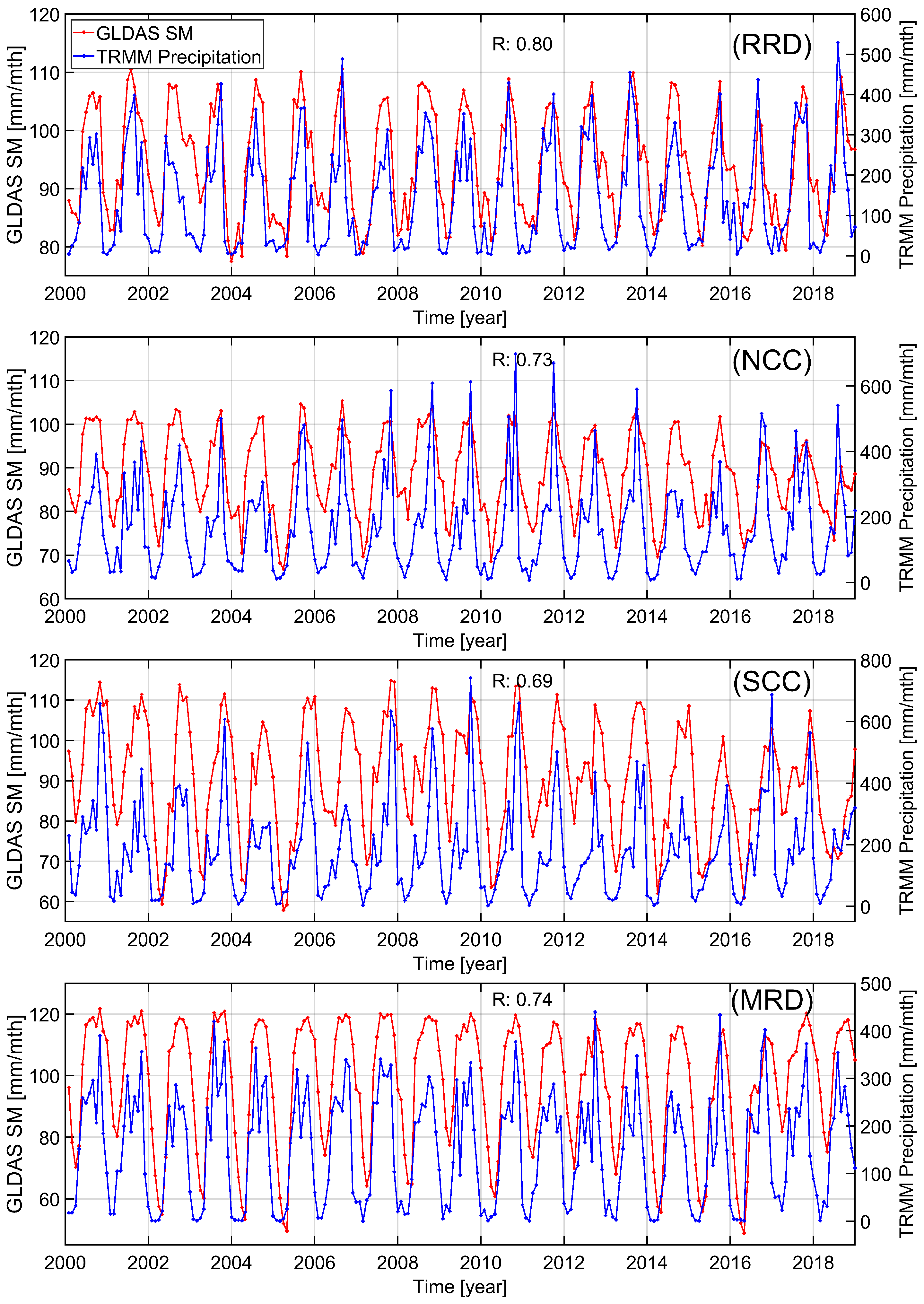
Appendix C. Correlation between Precipitation and Soil Moisture Products

References
- Pham, H.T.; Awange, J.; Kuhn, M.; Nguyen, B.V.; Bui, L.K. Enhancing Crop Yield Prediction Utilizing Machine Learning on Satellite-Based Vegetation Health Indices. Sensors 2022, 22, 719. [Google Scholar] [CrossRef] [Scilit]
- Dam, T.H.T.; Amjath-Babu, T.S.; Zander, P.; Müller, K. Paddy in saline water: Analysing variety-specific effects of saline water intrusion on the technical efficiency of rice production in Vietnam. Outlook Agric. 2019, 48, 237–245. [Google Scholar] [CrossRef] [Scilit]
- Kompas, T.; Che, T.N.; Nguyen, H.T.M.; Nguyen, H.Q. Productivity, Net Returns, and Efficiency: Land and Market Reform in Vietnamese Rice Production. Land Econ. 2012, 88, 478–495. [Google Scholar] [CrossRef] [Scilit]
- Ho, T.M.H.; Phan, V.T.; Le, N.Q.; Nguyen, Q.T. Extreme climatic events over Vietnam from observational data and RegCM3 projections. Clim. Res. 2011, 49, 87–100. [Google Scholar] [CrossRef] [Scilit]
- Nguyen, T.M.; Tran, T.T.; Roger, A.P.; Christopher, L.C.; Giovanni, L. A Modified Kain–Fritsch Scheme and Its Application for the Simulation of an Extreme Precipitation Event in Vietnam. Mon. Weather Rev. 2009, 137, 766–789. [Google Scholar] [CrossRef] [Scilit]
- Uga, Y.; Sugimoto, K.; Ogawa, S.; Rane, J.; Ishitani, M.; Hara, N.; Kitomi, Y.; Inukai, Y.; Ono, K.; Kanno, N.; et al. Control of root system architecture by DEEPER ROOTING 1 increases rice yield under drought conditions. Nat. Genet. 2013, 45, 1097–1102. [Google Scholar] [CrossRef] [Scilit] [PubMed]
- Le, P.V.V.; Pham, H.V.; Bui, L.K.; Tran, A.N.; Pham, C.V.; Nguyen, G.V.; Tran, P.A. Responses of groundwater to precipitation variability and ENSO in the Vietnamese Mekong Delta. Hydrol. Res. 2021, 52, 1280–1293. [Google Scholar] [CrossRef] [Scilit]
- Bui, L.K.; Le, P.V.V.; Dao, P.D.; Long, N.Q.; Pham, H.V.; Tran, H.H.; Xie, L. Recent land deformation detected by Sentinel-1A InSAR data (2016–2020) over Hanoi, Vietnam, and the relationship with groundwater level change. GISci. Remote Sens. 2021, 58, 161–179. [Google Scholar] [CrossRef] [Scilit]
- Le, P.V.V.; Phan-Van, T.; Mai, K.V.; Tran, D.Q. Space–time variability of drought over Vietnam. Int. J. Climatol. 2019, 39, 5437–5451. [Google Scholar] [CrossRef] [Scilit]
- Nguyen-Thi, H.A.; Matsumoto, J.; Ngo-Duc, T.; Endo, N. A climatological study of tropical cyclone rainfall in Vietnam. Sci. Online Lett. Atmos. 2012, 8, 41–44. [Google Scholar] [CrossRef] [Scilit]
- Nguyen-Xuan, T.; Ngo-Duc, T.; Kamimera, H.; Trinh-Tuan, L.; Matsumoto, J.; Inoue, T.; Phan-Van, T. The Vietnam Gridded Precipitation (VnGP) Dataset: Construction and Validation. Sola 2016, 12, 291–296. [Google Scholar] [CrossRef] [Scilit]
- Mai, K.V.; Redmond, G.; McSweeney, C.; Tran, T. Evaluation of dynamically downscaled ensemble climate simulations for Vietnam. Int. J. Climatol. 2014, 34, 2450–2463. [Google Scholar] [CrossRef] [Scilit]
- Phan, V.T.; Ngo-Duc, T.; Ho, T.M.H. Seasonal and interannual variations of surface climate elements over Vietnam. Clim. Res. 2009, 40, 49–60. [Google Scholar] [CrossRef] [Scilit]
- Chen, T.C.; Tsay, J.D.; Yen, M.C.; Matsumoto, J. Interannual variation of the late fall rainfall in central Vietnam. J. Clim. 2012, 25, 392–413. [Google Scholar] [CrossRef] [Scilit]
- Ngo-Duc, T.; Matsumoto, J.; Kamimera, H.; Bui, H.H. Monthly adjustment of Global Satellite Mapping of Precipitation (GSMaP) data over the VuGia–ThuBon River Basin in Central Vietnam using an artificial neural network. Hydrol. Res. Lett. 2013, 7, 85–90. [Google Scholar] [CrossRef] [Scilit]
- Vu, T.M.; Raghavan, S.V.; Liong, S.Y. SWAT use of gridded observations for simulating runoff - A Vietnam river basin study. Hydrol. Earth Syst. Sci. 2012, 16, 2801–2811. [Google Scholar] [CrossRef] [Scilit]
- Yen, M.C.; Chen, T.C.; Hu, H.L.; Tzeng, R.Y.; Duc Tu, D.; Thi Tan Thanh, N.; Wong, C.J. Interannual variation of the fall rainfall in central Vietnam. J. Meteorol. Soc. Jpn. 2011, 89, 259–270. [Google Scholar] [CrossRef] [Scilit]
- Do, Q.V.; Do, H.X.; Do, N.C.; Ngo, A.L. Changes in precipitation extremes across Vietnam and its relationships with teleconnection patterns of the northern hemisphere. Water 2020, 12, 1646. [Google Scholar] [CrossRef] [Scilit]
- Le, M.H.; Kim, H.; Moon, H.; Zhang, R.; Lakshmi, V.; Nguyen, L.B. Assessment of drought conditions over Vietnam using standardized precipitation evapotranspiration index, MERRA-2 re-analysis, and dynamic land cover. J. Hydrol. Reg. Stud. 2020, 32, 100767. [Google Scholar] [CrossRef] [Scilit]
- Chen, C.F.; Son, N.T.; Chang, L.Y.; Chen, C.C. Monitoring of soil moisture variability in relation to rice cropping systems in the Vietnamese Mekong Delta using MODIS data. Appl. Geogr. 2011, 31, 463–475. [Google Scholar] [CrossRef] [Scilit]
- Trinh, H.L.; Zen’Kov, I.V.; Anishchenko, Y.A.; Ragozina, M.A.; Fedorov, V.A. Remote sensing techniques for soil moisture monitoring using landsat data in thach Ha district with open mining operation in Vietnam. Ecol. Ind. Russ. 2017, 21, 42–47. [Google Scholar] [CrossRef]
- Bhowmik, A.K.; Costa, A.C. A Geostatistical Approach to the Seasonal Precipitation Effect on Boro Rice Production in Bangladesh. Int. J. Geosci. 2012, 3, 443–462. [Google Scholar] [CrossRef]
- Zheng, X.; Wang, M.; Wang, Y.; Shen, R.; Gou, J.; Li, J.; Jin, J.; Li, L. Impacts of soil moisture on nitrous oxide emission from croplands: A case study on the rice-based agro-ecosystem in Southeast China. Chemosphere Glob. Chang. Sci. 2000, 2, 207–224. [Google Scholar] [CrossRef] [Scilit]
- Ahmad, M.D.; Masih, I.; Turral, H. Diagnostic analysis of spatial and temporal variations in crop water productivity: A field scale analysis of the rice-wheat cropping system of Punjab. J. Appl. Irrig. Sci. 2004, 39, 43–63. [Google Scholar]
- Tao, F.; Yokozawa, M.; Hayashi, Y.; Lin, E. Future climate change, the agricultural water cycle, and agricultural production in China. Agric. Ecosyst. Environ. 2003, 95, 203–215. [Google Scholar] [CrossRef] [Scilit]
- Stuecker, M.F.; Tigchelaar, M.; Kantar, M.B. Climate variability impacts on rice production in the Philippines. PLoS ONE 2018, 13, e0201426. [Google Scholar] [CrossRef] [Scilit]
- Vu-Thanh, H.; Ngo-Duc, T.; Phan-Van, T. Evolution of meteorological drought characteristics in Vietnam during the 1961–2007 period. Theor. Appl. Climatol. 2014, 118, 367–375. [Google Scholar] [CrossRef] [Scilit]
- Nguyen, Q.D.; Renwick, J.; McGregor, J. Variations of surface temperature and rainfall in Vietnam from 1971 to 2010. Int. J. Climatol. 2013, 34, 249–264. [Google Scholar] [CrossRef] [Scilit]
- Sterling, E.J.; Hurley, M.M.; Le, D.M.; Powzyk, J.A. Vietnam: A Natural History; Yale University Press: London, UK, 2006; pp. 1–423. [Google Scholar]
- Funk, C.; Peterson, P.; Landsfeld, M.; Pedreros, D.; Verdin, J.; Shukla, S.; Husak, G.; Rowland, J.; Harrison, L.; Hoell, A.; et al. The climate hazards infrared precipitation with stations - A new environmental record for monitoring extremes. Sci. Data 2015, 2, 150066. [Google Scholar] [CrossRef] [Scilit]
- Huffman, G.J.; Adler, R.F.; Bolvin, D.T.; Gu, G.; Nelkin, E.J.; Bowman, K.P.; Hong, Y.; Stocker, E.F.; Wolff, D.B. The TRMM Multisatellite Precipitation Analysis (TMPA): Quasi-global, multiyear, combined-sensor precipitation estimates at fine scales. J. Hydrometeorol. 2007, 8, 38–55. [Google Scholar] [CrossRef] [Scilit]
- Kummerow, C.; Barnes, W.; Kozu, T.; Shiue, J.; Simpson, J. The Tropical Rainfall Measuring Mission (TRMM) sensor package. J. Atmos. Ocean. Technol. 1998, 15, 809–817. [Google Scholar] [CrossRef] [Scilit]
- Kummerow, C.; Simpson, J.; Thiele, O.; Barnes, W.; Chang, A.T.C.; Stocker, E.; Adler, R.F.; Hou, A.; Kakar, R.; Wentz, F.; et al. The status of the tropical rainfall measuring mission (TRMM) after two years in orbit. J. Appl. Meteorol. 2000, 39, 1965–1982. [Google Scholar] [CrossRef] [Scilit]
- Chen, F.; Mitchell, K.; Schaake, J.; Xue, Y.; Pan, H.L.; Koren, V.; Duan, Q.Y.; Ek, M.; Betts, A. Modeling of land surface evaporation by four schemes and comparison with FIFE observations. J. Geophys. Res. Atmos. 1996, 101, 7251–7268. [Google Scholar] [CrossRef] [Scilit]
- Koren, V.; Schaake, J.; Mitchell, K.; Duan, Q.Y.; Chen, F.; Baker, J.M. A parameterization of snowpack and frozen ground intended for NCEP weather and climate models. J. Geophys. Res. Atmos. 1999, 104, 19569–19585. [Google Scholar] [CrossRef] [Scilit]
- Rodell, M.; Houser, P.; Jambor, U.; Gottschalck, J.; Mitchell, K.; Meng, C.J.; Arsenault, K.; Cosgrove, B.; Radakovich, J.; Bosilovich, M.; et al. The Global Land Data Assimilation System. Bull. Am. Meteorol. Soc. 2004, 85, 381–394. [Google Scholar] [CrossRef] [Scilit]
- Gelaro, R.; McCarty, W.; Suárez, M.J.; Todling, R.; Molod, A.; Takacs, L.; Randles, C.A.; Darmenov, A.; Bosilovich, M.G.; Reichle, R.; et al. The modern-era retrospective analysis for research and applications, version 2 (MERRA-2). J. Clim. 2017, 30, 5419–5454. [Google Scholar] [CrossRef] [Scilit]
- Rienecker, M.M.; Suarez, M.J.; Gelaro, R.; Todling, R.; Bacmeister, J.; Liu, E.; Bosilovich, M.G.; Schubert, S.D.; Takacs, L.; Kim, G.K.; et al. MERRA: NASA’s modern-era retrospective analysis for research and applications. J. Clim. 2011, 24, 3624–3648. [Google Scholar] [CrossRef] [Scilit]
- Khandu.; Forootan, E.; Schumacher, M.; Awange, J.L.; Schmied, H. Exploring the influence of precipitation extremes and human water use on total water storage (TWS) changes in the Ganges-Brahmaputra-Meghna River Basin. Water Resour. Res. 2016, 52, 2240–2258. [Google Scholar] [CrossRef] [Scilit]
- Koster, R.D.; Suarez, M.J. Energy and Water Balance Calculations in the Mosaic LSM. NASA Technical Memorandum, 104606, 60 pp; Technical Report; NASA’s Goddard Space Flight Center (GSFC): Greenbelt, MD, USA, 1996. [Google Scholar]
- Dai, Y.; Zeng, X.; Dickinson, R.E.; Baker, I.; Bonan, G.B.; Bosilovich, M.G.; Denning, A.S.; Dirmeyer, P.A.; Houser, P.R.; Niu, G.; et al. The common land model. Bull. Am. Meteorol. Soc. 2003, 84, 1013–1023. [Google Scholar] [CrossRef] [Scilit]
- Liang, X.; Lettenmaier, D.P.; Wood, E.F.; Burges, S.J. A simple hydrologically based model of land surface water and energy fluxes for general circulation models. J. Geophys. Res. 1994, 99, 14415–14428. [Google Scholar] [CrossRef] [Scilit]
- Bi, H.; Ma, J.; Zheng, W.; Zeng, J. Comparison of soil moisture in GLDAS model simulations and in situ observations over the Tibetan Plateau. J. Geophys. Res. 2016, 121, 2658–2678. [Google Scholar] [CrossRef] [Scilit]
- Spennemann, P.C.; Rivera, J.A.; Celeste Saulo, A.; Penalba, O.C. A comparison of GLDAS soil moisture anomalies against standardized precipitation index and multisatellite estimations over South America. J. Hydrometeorol. 2015, 16, 158–171. [Google Scholar] [CrossRef] [Scilit]
- Vreugdenhil, M.; Dorigo, W.; Broer, M.; Haas, P.; Eder, A.; Hogan, P.; Bloeschl, G.; Wagner, W. Towards a high-density soil moisture network for the validation of SMAP in Petzenkirchen, Austria. In Proceedings of the 2013 IEEE International Geoscience and Remote Sensing Symposium (IGARSS), Melbourne, VIC, Australia, 21–26 July 2013; pp. 1865–1868. [Google Scholar] [CrossRef] [Scilit]
- Reichle, R.H.; Draper, C.S.; Liu, Q.; Girotto, M.; Mahanama, S.P.P.; Koster, R.D.; De Lannoy, G.J.M. Assessment of MERRA-2 land surface hydrology estimates. J. Clim. 2017, 30, 2937–2960. [Google Scholar] [CrossRef] [Scilit]
- Xu, L.; Chen, N.; Zhang, X.; Moradkhani, H.; Zhang, C.; Hu, C. In-situ and triple-collocation based evaluations of eight global root zone soil moisture products. Remote Sens. Environ. 2021, 254, 112248. [Google Scholar] [CrossRef] [Scilit]
- Jolliffe, I.T. Principal Component Analysis and Factor Analysis. In Principal Component Analysis; Springer: New York, NY, USA, 1986; pp. 115–128. [Google Scholar] [CrossRef] [Scilit]
- Jolliffe, I.T. Principal Component Analysis. In Springer Series in Statistics, 2nd ed.; Springer: New York, NY, USA, 2002; p. 488. [Google Scholar] [CrossRef] [Scilit]
- Preisendorfer, R.W. Principal Component Analysis in Meteorology and Oceanography; Development in Atmospheric Science; Elsevier: Amsterdam, The Netherlands, 1988. [Google Scholar]
- Cardoso, J.F. High-order contrasts for independent component analysis. Neural Comput. 1999, 11, 157–192. [Google Scholar] [CrossRef] [Scilit]
- Comon, P. Independent component analysis, A new concept? Signal Process. 1994, 36, 287–314. [Google Scholar] [CrossRef] [Scilit]
- Hyvärinen, A. Fast and robust fixed-point algorithms for independent component analysis. IEEE Trans. Neural Netw. 1999, 10, 626–634. [Google Scholar] [CrossRef] [Scilit]
- Hyvärinen, A.; Oja, E. Independent component analysis: Algorithms and applications. Neural Netw. 2000, 13, 411–430. [Google Scholar] [CrossRef] [Scilit]
- Hannachi, A.; Unkel, S.; Trendafilov, N.T.; Jolliffe, I.T. Independent component analysis of climate data: A new look at EOF rotation. J. Clim. 2009, 22, 2797–2812. [Google Scholar] [CrossRef] [Scilit]
- Cardoso, J.F.; Souloumiac, A. Blind beamforming for non-Gaussian signals. IEE Proc. Part F Radar Signal Process. 1993, 140, 362–370. [Google Scholar] [CrossRef] [Scilit]
- Edwards, D.C.; McKee, T.B. Characteristics of 20th Century Drought in the United States at Multiple Time Scales; Technical Report; Colorado State University, Department of Atmospheric Science Climatology: Fort Collins, CO, USA, 1997. [Google Scholar]
- McKee, T.B.; Doesken, N.J.; Kleist, J. The relationship of drought frequency and duration to time scale. In Proceedings of the Eighth Conference on Applied Climatology. American Meteorological Society, Anaheim, CA, USA, 17–22 January 1993; pp. 179–184. [Google Scholar]
- Awange, J.L.; Mpelasoka, F.; Goncalves, R.M. When every drop counts: Analysis of Droughts in Brazil for the 1901–2013 period. Sci. Total Environ. 2016, 566–567, 1472–1488. [Google Scholar] [CrossRef] [Scilit]
- Agutu, N.O.; Awange, J.L.; Zerihun, A.; Ndehedehe, C.E.; Kuhn, M.; Fukuda, Y. Assessing multi-satellite remote sensing, reanalysis, and land surface models’ products in characterizing agricultural drought in East Africa. Remote Sens. Environ. 2017, 194, 287–302. [Google Scholar] [CrossRef] [Scilit]
- Awange, J.L.; Khandu.; Schumacher, M.; Forootan, E.; Heck, B. Exploring hydro-meteorological drought patterns over the Greater Horn of Africa (1979–2014) using remote sensing and reanalysis products. Adv. Water Resour. 2016, 94, 45–59. [Google Scholar] [CrossRef] [Scilit]
- Lloyd-Hughes, B.; Saunders, M.A. A drought climatology for Europe. Int. J. Climatol. 2002, 22, 1571–1592. [Google Scholar] [CrossRef] [Scilit]
- Szalai, S.; Szinell, C. Comparison of two drought indices for drought monitoring in Hungary—A case study. In Drought and Drought Mitigation in Europe. Advances in Natural and Technological Hazards Research; Vogt, J.V., Somma, F., Eds.; Springer: Dordrecht, The Netherlands, 2000; Volume 14, pp. 161–166. [Google Scholar] [CrossRef] [Scilit]
- Hayes, M.J.; Svoboda, M.D.; Wilhite, D.A.; Vanyarkho, O.V. Monitoring the 1996 Drought Using the Standardized Precipitation Index. Bull. Am. Meteorol. Soc. 1999, 80, 429–438. [Google Scholar] [CrossRef] [Scilit]
- Quiring, S.M. Developing objective operational definitions for monitoring drought. J. Appl. Meteorol. Climatol. 2009, 48, 1217–1229. [Google Scholar] [CrossRef] [Scilit]
- Guenang, G.M.; Mkankam Kamga, F. Computation of the standardized precipitation index (SPI) and its use to assess drought occurrences in Cameroon over recent decades. J. Appl. Meteorol. Climatol. 2014, 53, 2310–2324. [Google Scholar] [CrossRef] [Scilit]
- Guttman, N.B. Accepting the standardized precipitation index: A calculation algorithm. J. Am. Water Resour. Assoc. 1999, 35, 311–322. [Google Scholar] [CrossRef] [Scilit]
- Hahn, G.J.; Shapiro, S.S. Statistical Models in Engineering; Wiley: Hoboken, NJ, USA, 1994; pp. 1–376. [Google Scholar]
- Wilks, D.S. Statistical Methods in the Atmospheric Sciences, 4th ed.; Elsevier: Amsterdam, The Netherlands, 2019; pp. 1–840. [Google Scholar] [CrossRef] [Scilit]
- Awange, J.L.; Aluoch, J.; Ogallo, L.A.; Omulo, M.; Omondi, P. Frequency and severity of drought in the Lake Victoria region (Kenya) and its effects on food security. Clim. Res. 2007, 33, 135–142. [Google Scholar] [CrossRef] [Scilit]
- Awange, J.L.; Ogalo, L.; Bae, K.; Were, P.; Omondi, P.; Omute, P.; Omullo, M. Falling Lake Victoria water levels: Is climate a contributing factor? Clim. Chang. 2008, 89, 281–297. [Google Scholar] [CrossRef] [Scilit]
- Awange, J.L.; Saleem, A.; Sukhadiya, R.M.; Ouma, Y.O.; Kexiang, H. Physical dynamics of Lake Victoria over the past 34 years: (1984–2018): Is the lake dying? Sci. Total Environ. 2019, 658, 199–218. [Google Scholar] [CrossRef] [Scilit] [PubMed]
- Cammalleri, C.; Vogt, J.V.; Bisselink, B.; De Roo, A. Comparing soil moisture anomalies from multiple independent sources over different regions across the globe. Hydrol. Earth Syst. Sci. 2017, 21, 6329–6343. [Google Scholar] [CrossRef] [Scilit]
- Bouvet, A.; Toan, T.L.; Lam-Dao, N. Monitoring of the Rice Cropping System in the Mekong Delta Using ENVISAT/ASAR Dual Polarization Data. IEEE Trans. Geosci. Remote Sens. 2009, 47, 517–526. [Google Scholar] [CrossRef] [Scilit]
- Panthi, J.; Dahal, P.; Shrestha, M.L.; Aryal, S.; Krakauer, N.Y.; Pradhanang, S.M.; Lakhankar, T.; Jha, A.K.; Sharma, M.; Karki, R. Spatial and temporal variability of rainfall in the Gandaki River Basin of Nepal Himalaya. Climate 2015, 3, 210–226. [Google Scholar] [CrossRef] [Scilit]
- Dippner, J.W.; Nguyen, K.V.; Hein, H.; Ohde, T.; Loick, N. Monsoon-induced upwelling off the Vietnamese coast. Ocean. Dyn. 2007, 57, 46–62. [Google Scholar] [CrossRef] [Scilit]
- Vu, T.M.; Mishra, A.K. Spatial and temporal variability of Standardized Precipitation Index over Indochina Peninsula. Cuad. Investig. Geogr. 2016, 42, 221–232. [Google Scholar] [CrossRef] [Scilit]
- Cho, E.; Choi, M. Regional scale spatio-temporal variability of soil moisture and its relationship with meteorological factors over the Korean peninsula. J. Hydrol. 2014, 516, 317–329. [Google Scholar] [CrossRef] [Scilit]
- Simons, G.; Bastiaanssen, W.; Ngô, L.A.; Hain, C.R.; Anderson, M.; Senay, G. Integrating global satellite-derived data products as a pre-analysis for hydrological modelling studies: A case study for the Red River Basin. Remote Sens. 2016, 8, 279. [Google Scholar] [CrossRef] [Scilit]
- Vu, T.M.; Raghavan, S.V.; Pham, M.D.; Liong, S.Y. Investigating drought over the Central Highland, Vietnam, using regional climate models. J. Hydrol. 2015, 526, 265–273. [Google Scholar] [CrossRef] [Scilit]




| Category | Dataset | Temporal Resolution | Spatial Resolution | Time Period | References |
|---|---|---|---|---|---|
| Vietnam rice statistics | Annually | Areal aggregation | 1995–2018 | ||
| Precipitation | CHIRPS | Monthly | January 1981–February 2019 | [30] | |
| TRMM | Monthly | January 1998–June 2019 | [31,32,33] | ||
| Soil moisture | GLDAS | Monthly | January 2000–July 2019 | [34,35,36] | |
| MERRA-2 | Monthly | January 1980–September 2019 | [37,38] |
| SPI | Drought Category | Probability % |
|---|---|---|
| ≥2 | Extremely wet | 2.3 |
| 1.50 to 1.99 | Severely wet | 4.4 |
| 1.00 to 1.49 | Moderately wet | 9.2 |
| 0 to 0.99 | Mildly wet | 34.1 |
| 0 to | Mild drought | 34.1 |
| to | Moderate drought | 9.2 |
| to | Severe drought | 4.4 |
| ≤−2 | Extreme drought | 2.3 |
Publisher’s Note: MDPI stays neutral with regard to jurisdictional claims in published maps and institutional affiliations. |
© 2022 by the authors. Licensee MDPI, Basel, Switzerland. This article is an open access article distributed under the terms and conditions of the Creative Commons Attribution (CC BY) license (https://creativecommons.org/licenses/by/4.0/).
Share and Cite
Bui, L.K.; Awange, J.; Vu, D.T. Precipitation and Soil Moisture Spatio-Temporal Variability and Extremes over Vietnam (1981–2019): Understanding Their Links to Rice Yield. Sensors 2022, 22, 1906. https://doi.org/10.3390/s22051906
Bui LK, Awange J, Vu DT. Precipitation and Soil Moisture Spatio-Temporal Variability and Extremes over Vietnam (1981–2019): Understanding Their Links to Rice Yield. Sensors. 2022; 22(5):1906. https://doi.org/10.3390/s22051906
Chicago/Turabian StyleBui, Luyen K., Joseph Awange, and Dinh Toan Vu. 2022. "Precipitation and Soil Moisture Spatio-Temporal Variability and Extremes over Vietnam (1981–2019): Understanding Their Links to Rice Yield" Sensors 22, no. 5: 1906. https://doi.org/10.3390/s22051906
APA StyleBui, L. K., Awange, J., & Vu, D. T. (2022). Precipitation and Soil Moisture Spatio-Temporal Variability and Extremes over Vietnam (1981–2019): Understanding Their Links to Rice Yield. Sensors, 22(5), 1906. https://doi.org/10.3390/s22051906