Article

Large-Area and Low-Cost Force/Tactile Capacitive Sensor for Soft Robotic Applications
by
Amir Pagoli
1,*,
Frédéric Chapelle
1,
Juan-Antonio Corrales-Ramon
2,
Youcef Mezouar
1 and
Yuri Lapusta
1
1
Institut Pascal, Université Clermont Auvergne, Clermont Auvergne INP, CNRS, 63000 Clermont-Ferrand, France
2
CiTIUS (Centro Singular de Investigación en Tecnoloxías Intelixentes), Universidade de Santiago de Compostela, 15782 Santiago de Compostela, Spain
*
Author to whom correspondence should be addressed.
Sensors 2022, 22(11), 4083; https://doi.org/10.3390/s22114083
Submission received: 19 April 2022 / Revised: 12 May 2022 / Accepted: 24 May 2022 / Published: 27 May 2022
(This article belongs to the Special Issue Soft Robotics and Sensors)

Abstract

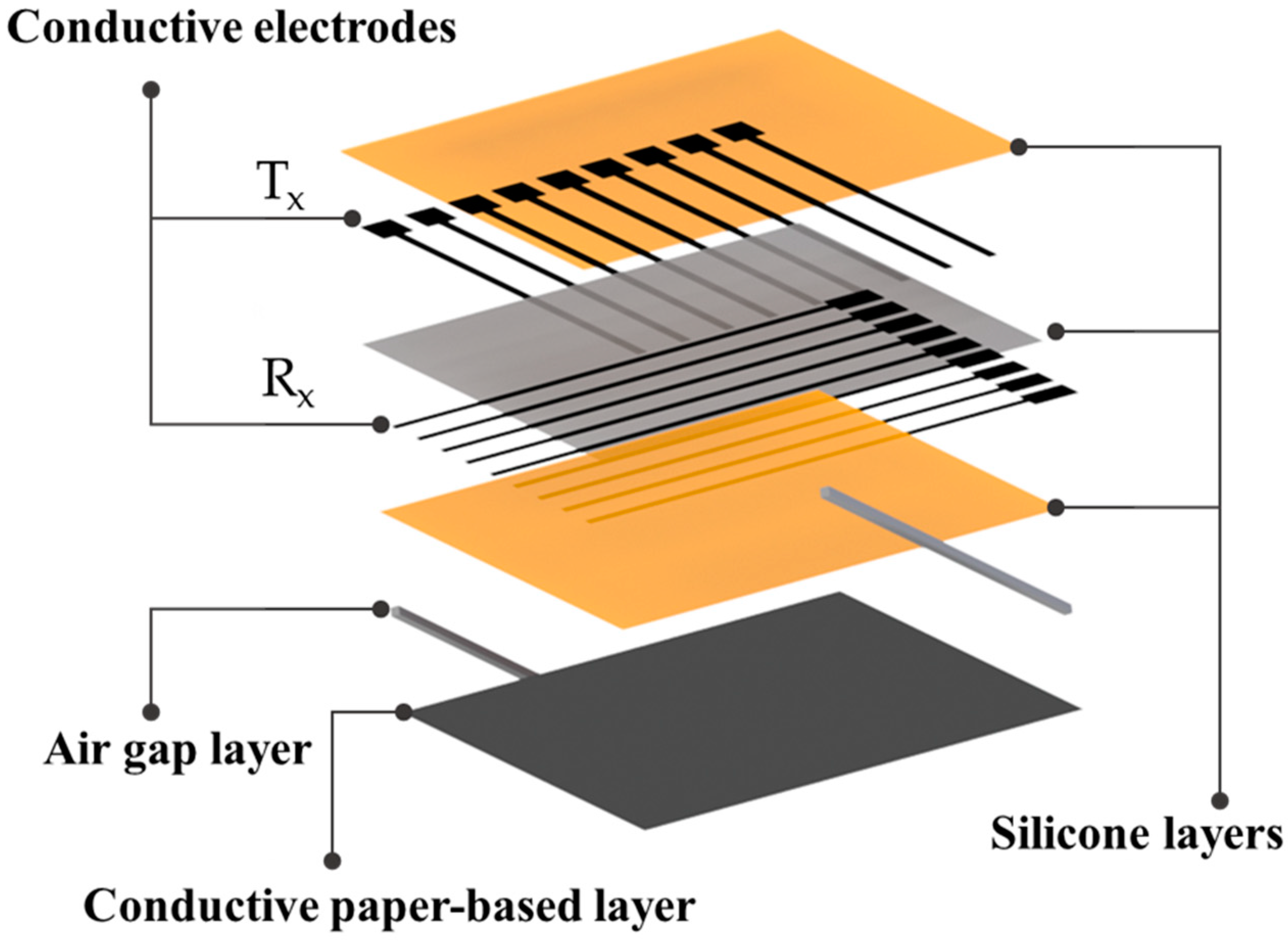
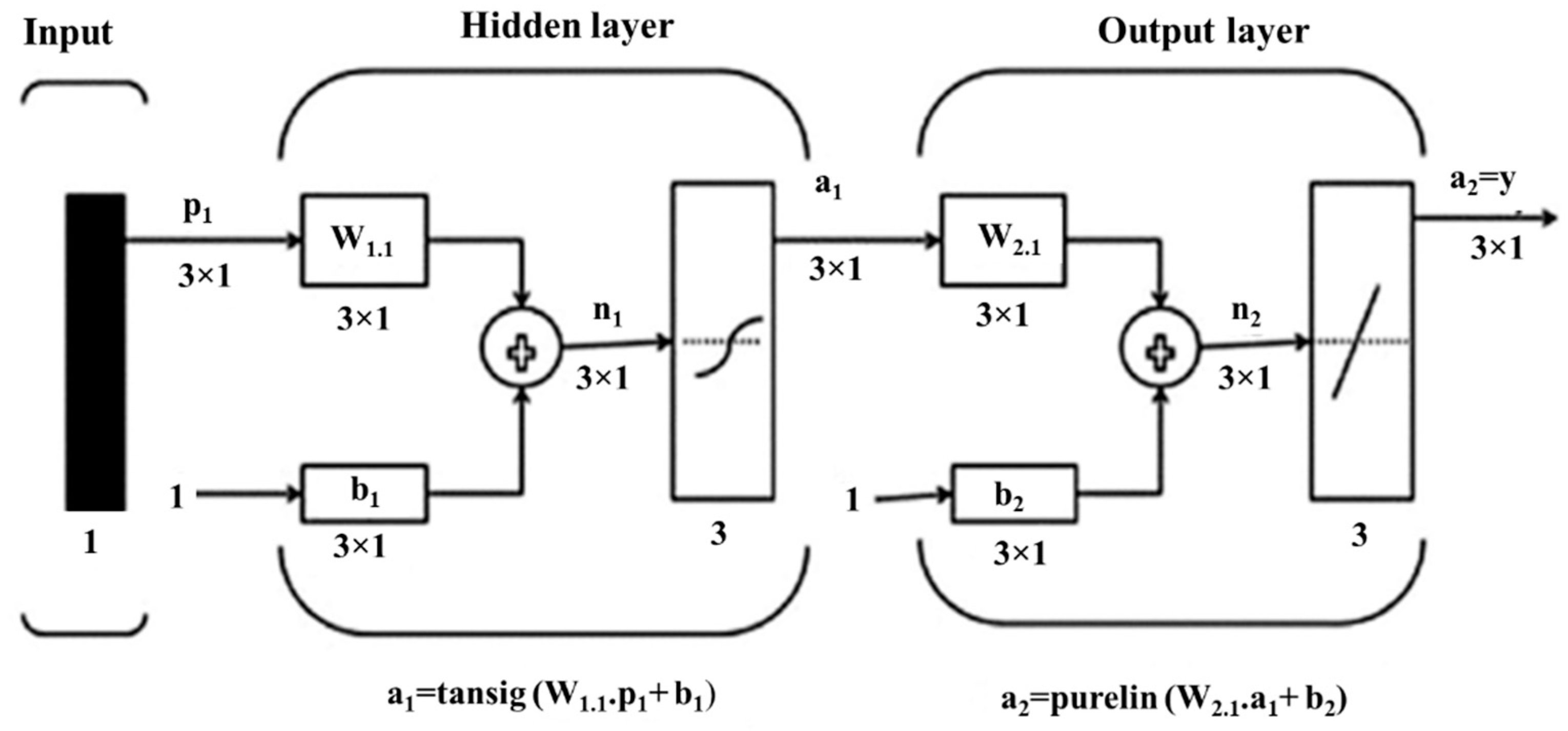
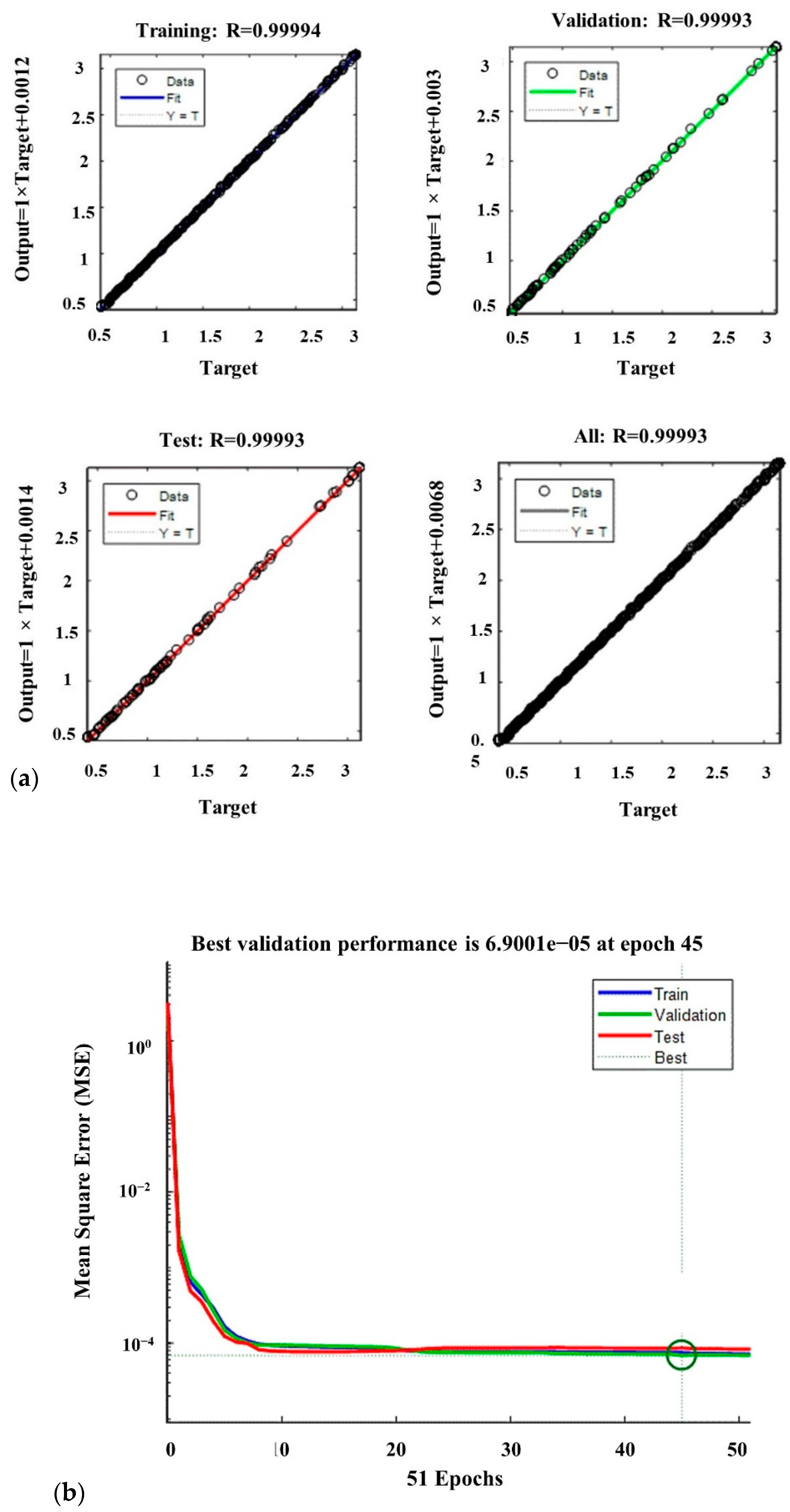
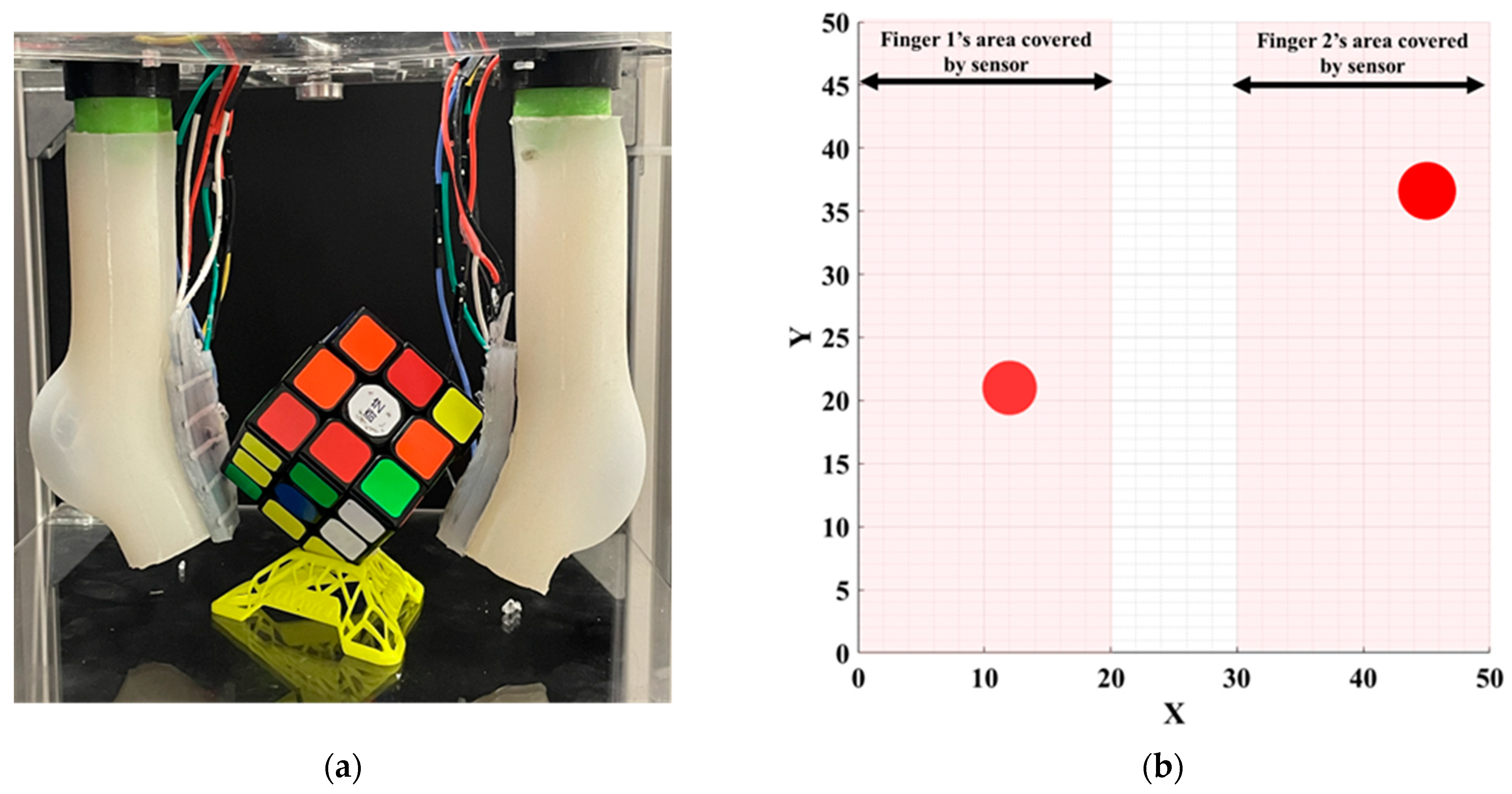
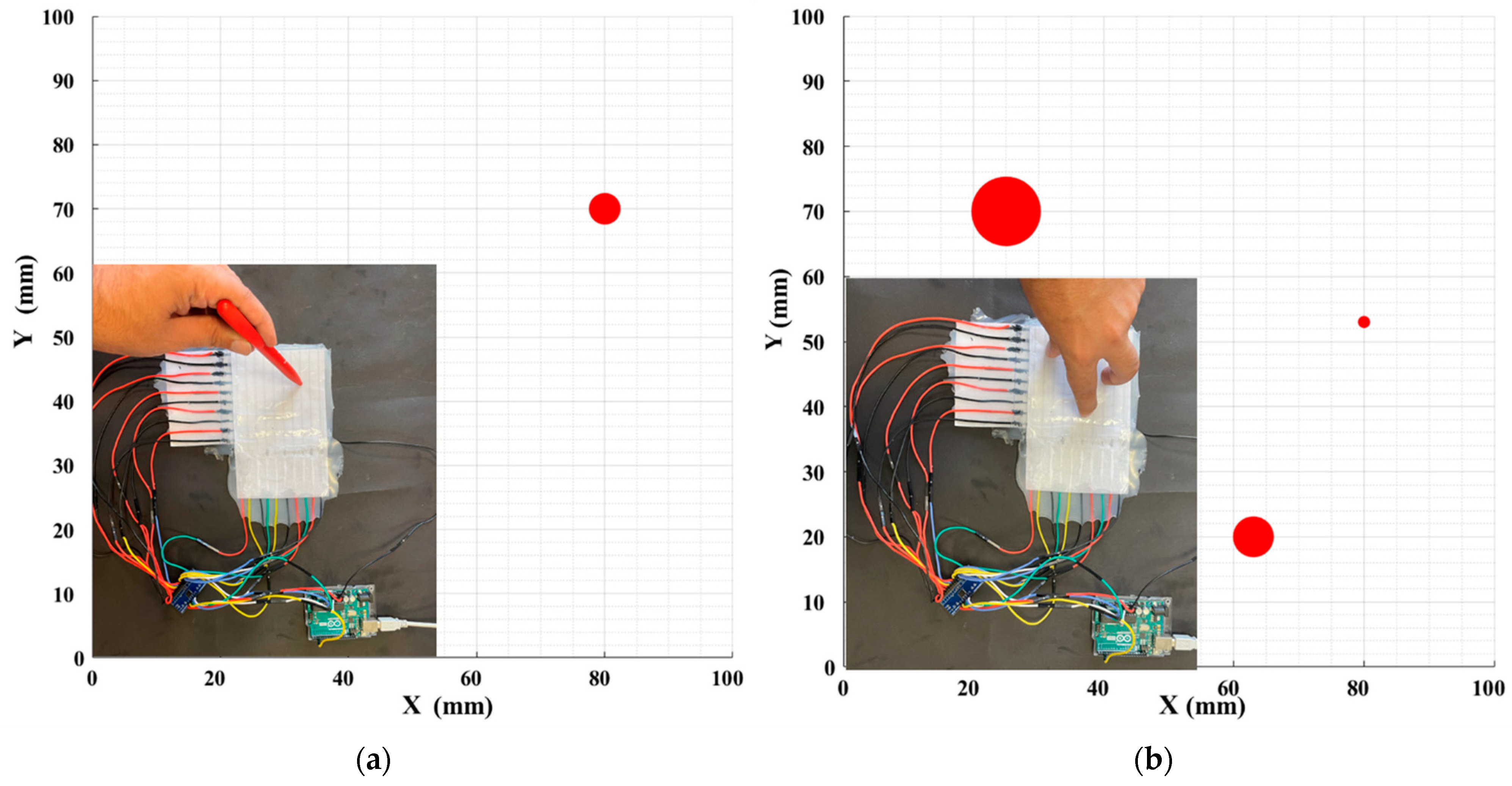
This paper presents a novel design and development of a low-cost and multi-touch sensor based on capacitive variations. This new sensor is very flexible and easy to fabricate, making it an appropriate choice for soft robot applications. Materials (conductive ink, silicone, and control boards) used in this sensor are inexpensive and easily found in the market. The proposed sensor is made of a wafer of different layers, silicone layers with electrically conductive ink, and a pressure-sensitive conductive paper sheet. Previous approaches like e-skin can measure the contact point or pressure of conductive objects like the human body or finger, while the proposed design enables the sensor to detect the object’s contact point and the applied force without considering the material conductivity of the object. The sensor can detect five multi-touch points at the same time. A neural network architecture is used to calibrate the applied force with acceptable accuracy in the presence of noise, variation in gains, and non-linearity. The force measured in real time by a commercial precise force sensor (ATI) is mapped with the produced voltage obtained by changing the layers’ capacitance between two electrode layers. Finally, the soft robot gripper embedding the suggested tactile sensor is utilized to grasp an object with position and force feedback signals.
Keywords: soft sensor; tactile sensor; capacitive sensor; calibration; neural network; soft robot; soft pneumatic actuator soft sensor; tactile sensor; capacitive sensor; calibration; neural network; soft robot; soft pneumatic actuator