Article

Functional Stability of the Common Bean (Phaseolus vulgaris L.) Nodule Microbiome in Semi-Arid Regions


by
Cinthya Judith Ortega-Esparza
1,
Erika Nava-Reyna
2,*,
María del Rosario Jacobo-Salcedo
2,
Oscar Martín Antunez-Ocampo
3,
Cristina García-De la Peña
4,
Ricardo Trejo-Calzada
1 and
Aurelio Pedroza-Sandoval
1
1
Unidad Regional Universitaria de Zonas Áridas, Universidad Autónoma Chapingo, Bermejillo ZC 35230, Durango, Mexico
2
Centro Nacional de Investigación Disciplinaria en Relación Agua, Suelo, Planta, Atmósfera, Instituto Nacional de Investigaciones Forestales, Agrícolas y Pecuarias, Gómez Palacio ZC 35140, Durango, Mexico
3
Centro de Investigación Regional Pacifico Sur, Campo Experimental Iguala, Instituto Nacional de Investigaciones Forestales, Agrícolas y Pecuarias, Iguala de la Independencia ZC 40000, Guerrero, Mexico
4
Facultad de Ciencias Biológicas, Universidad Juárez del Estado de Durango, Gómez Palacio ZC 35010, Durango, Mexico
*
Author to whom correspondence should be addressed.
Diversity 2026, 18(6), 374; https://doi.org/10.3390/d18060374
Submission received: 23 March 2026 / Revised: 8 May 2026 / Accepted: 15 June 2026 / Published: 17 June 2026
(This article belongs to the Special Issue Rhizosphere Microbial Community Diversity)

Abstract

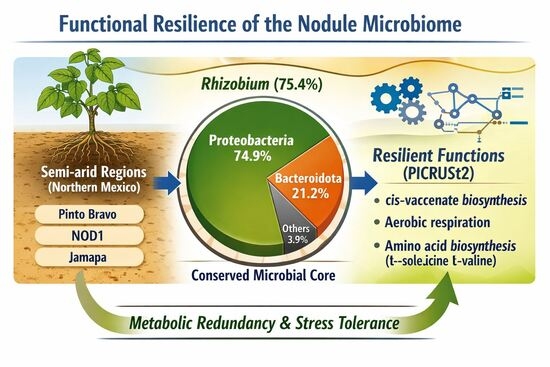
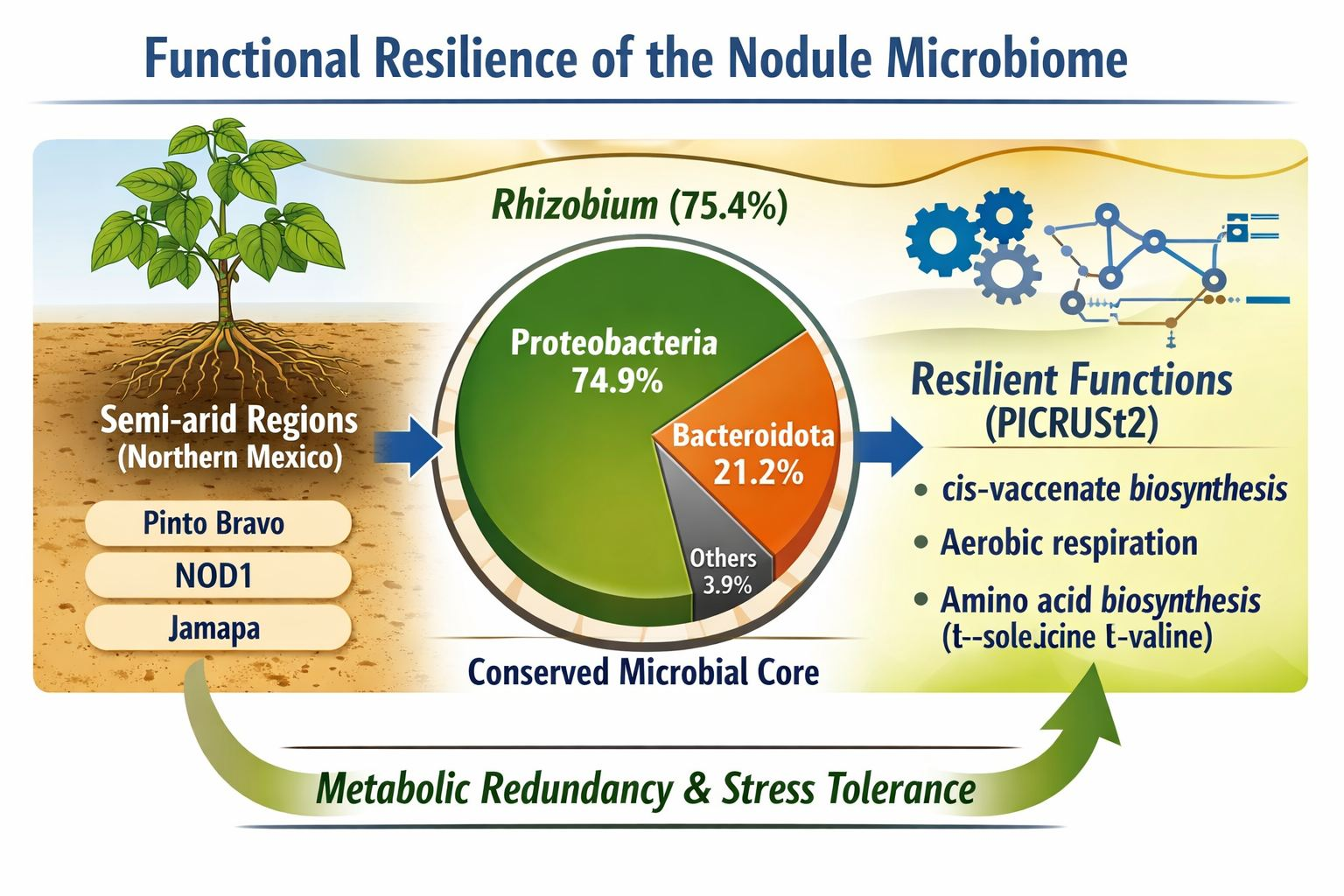
Common bean (Phaseolus vulgaris L.) is a strategic crop whose sustainable production depends on symbiosis with nitrogen-fixing bacteria. However, the composition and functional potential of the nodule microbiome in varieties adapted to semi-arid regions, such as northern Mexico, remain poorly documented. Therefore, this study evaluated the influence of host genotype on nodule-associated bacterial communities in three improved varieties (Pinto Bravo, NOD1, and Jamapa) under conventional management, using high-throughput sequencing of the V3–V4 regions of the 16S rRNA gene. Alpha and beta diversity analyses showed no significant differences among varieties, indicating a similar nodular microbiome regardless of genotype. At the phylum level, Proteobacteria and Bacteroidota predominated, suggesting a conserved microbial core. At the genus level, Rhizobium was the most abundant taxon, while non-rhizobial genera such as Acinetobacter and the JC017 lineage were also detected. Functional prediction using PICRUSt2 revealed conserved metabolic profiles, with dominant pathways associated with amino acid biosynthesis, carbon metabolism, aerobic respiration, and fatty acid biosynthesis, indicating metabolic redundancy linked to tolerance to osmotic, thermal, and oxidative stress. The results suggest that under semi-arid conditions, the symbiotic interaction is governed by mechanisms at the host species level (P. vulgaris), which ensure the recruitment of a functional core microbiome, whereas intraspecific variation among improved varieties may influence the recruitment of specific accessory taxa.

Graphical Abstract

1. Introduction

The common bean (P. vulgaris L.) is one of the most important grain legumes for human consumption and plays a central role in global food security due to its high protein, mineral content, and low cost, making it an accessible source of nutrients, especially in developing countries [1].
According to data from the Food and Agriculture Organization (FAO), in 2023 the global bean production reached approximately 28.5 million tons [2], where Mexico is one of the world’s leading bean producers and is also recognized as the center of origin and domestication of this crop [3]. Moreover, in Mexico, beans are grown in virtually all regions under a wide variety of climatic and soil conditions, mainly in the states of Zacatecas, Sinaloa, and Durango, and they are an essential part of the Mexican diet as a staple food and nutritional supplement [4].
Despite its wide geographical distribution, a significant proportion of bean production in Mexico occurs under arid and semi-arid conditions, where limited water availability, high temperatures, and low soil fertility are limiting factors for crop growth and productivity [5]. Several studies conducted in semi-arid regions of the country have shown that climatic and edaphic variables have a decisive influence on the physiological and productive performance of beans, highlighting the vulnerability of the crop to environmental stress and the need for strategies to promote its adaptation [6,7]. In this restrictive environmental context, the symbiotic interactions between beans and associated microorganisms take on special relevance.
Similarly to other legumes, common beans establish symbiotic relationships with various soil microorganisms, forming a specialized microbiome that contributes to plant growth, improves nutrient absorption, increases stress tolerance, and participates in pathogen resistance [8]. Furthermore, P. vulgaris belongs to a highly promiscuous cross-inoculation group, able to form nodules with many rhizobial species and even non-classical rhizobia [9]. This promiscuity accounts for the high taxonomic diversity of its microsymbionts worldwide, many of which exhibit low nitrogen-fixing efficiency; this potentially explains the suboptimal biological nitrogen fixation (BNF) often observed in this crop. These findings underscore the fact that many nodule-associated partners have functions that remain to be fully elucidated, emphasizing the critical importance of selecting effective, locally adapted inoculant strains [10,11], which could have other mechanisms that promote their growth, such as the synthesis of phytohormones (indole-3-acetic acid, cytokinins, and gibberellins), production of siderophores with antagonistic activity against phytopathogens, and solubilization of phosphates and other mineral nutrients [12,13]. Additionally, the symbiosis between bacteria and legumes constitutes an intensely studied biological model, where plant growth-promoting bacteria have been widely documented, as Rhizobium, Bacillus, Azospirillum, Pseudomonas, and Serratia [14,15,16,17]. For example, it has been demonstrated that genera such as Rhizobium and Azospirillum increase the nitrogen supply to the host plant through root colonization and the exchange of nitrogenous compounds for photosynthates within root nodules [18,19,20].
Even though the symbiosis between bacteria and legumes has been widely studied, recent evidence suggests that the composition and structure of microbial communities associated with plants do not depend exclusively on soil microbiota; instead, they are strongly influenced by the plant host [21]. Conversely, other studies report a substrate-dependent pattern that remains consistent regardless of the genotype [22]. Studies on the assembly of the microbiome in crops have shown that the selection made by the host, determined by its genetic identity, acts as a filter that influences the diversity, structure, and complexity of the associated microbial communities [23]. Hence, elucidating the mechanisms underlying specific symbiotic interactions between host plants and their associated microbiomes remains a major challenge, yet it is essential for the development of strategies aimed at enhancing crop productivity [8]. In this context, next-generation sequencing (NGS)-based analyses of nodule-associated microbiomes offer valuable insights into the microbial factors that may account for differences in symbiotic efficiency and performance. Moreover, the use of this technology revealed that microbial diversity in legume root nodules is greater than previously documented [24,25]. Nevertheless, information on the specificity of nodular bacterial communities associated with improved common bean varieties remains limited, particularly under restrictive environmental conditions [26].
The aim of this study was to characterize the taxonomic composition and functional potential of the bacterial communities associated with the root nodules of improved common bean varieties, grown under conventional management in the semi-arid region of northern Mexico. The specific objectives were to assess rhizobial specificity across genotypes and to infer the main potential metabolic functions defining the nodule microbiome.

2. Materials and Methods

2.1. Seed Material and Field Management Description

Three improved varieties of common bean: pinto (PIN), dull-black (NGO), and Jamapa (JAM), derived from double and multiple biparental crosses involving genetically diverse parental genotypes representing the Durango (pinto bravo) [27], Mesoamerica (dull black) [28], and Antigua bean races (Jamapa) [29], were selected. The main characteristics of these varieties are summarized in Table 1.
The three bean varieties were established in a completely randomized design in a plot consisting of two rows 5 m in length, with a spacing of 0.81 m between rows. Manual hoeing and hand weeding were performed for weed control. During the first weeding, the crop was fertilized with a 35-50-00 (N–P2O5–K2O) fertilizer rate. At the onset of flowering, a foliar fertilizer application of UAN 32 (6 L ha−1) and MaxiGrow Excel (60 mL ha−1) was carried out. Dimethoate was applied on three occasions for the control of insect pests (Diabrotica undecimpunctata, Peridroma saucia, and Agrotis ipsilon). Prior to sowing, the crop received an initial irrigation, followed by four supplemental irrigations to prevent severe water stress in the plants [30].

2.2. Sampling and Nodule Conservation

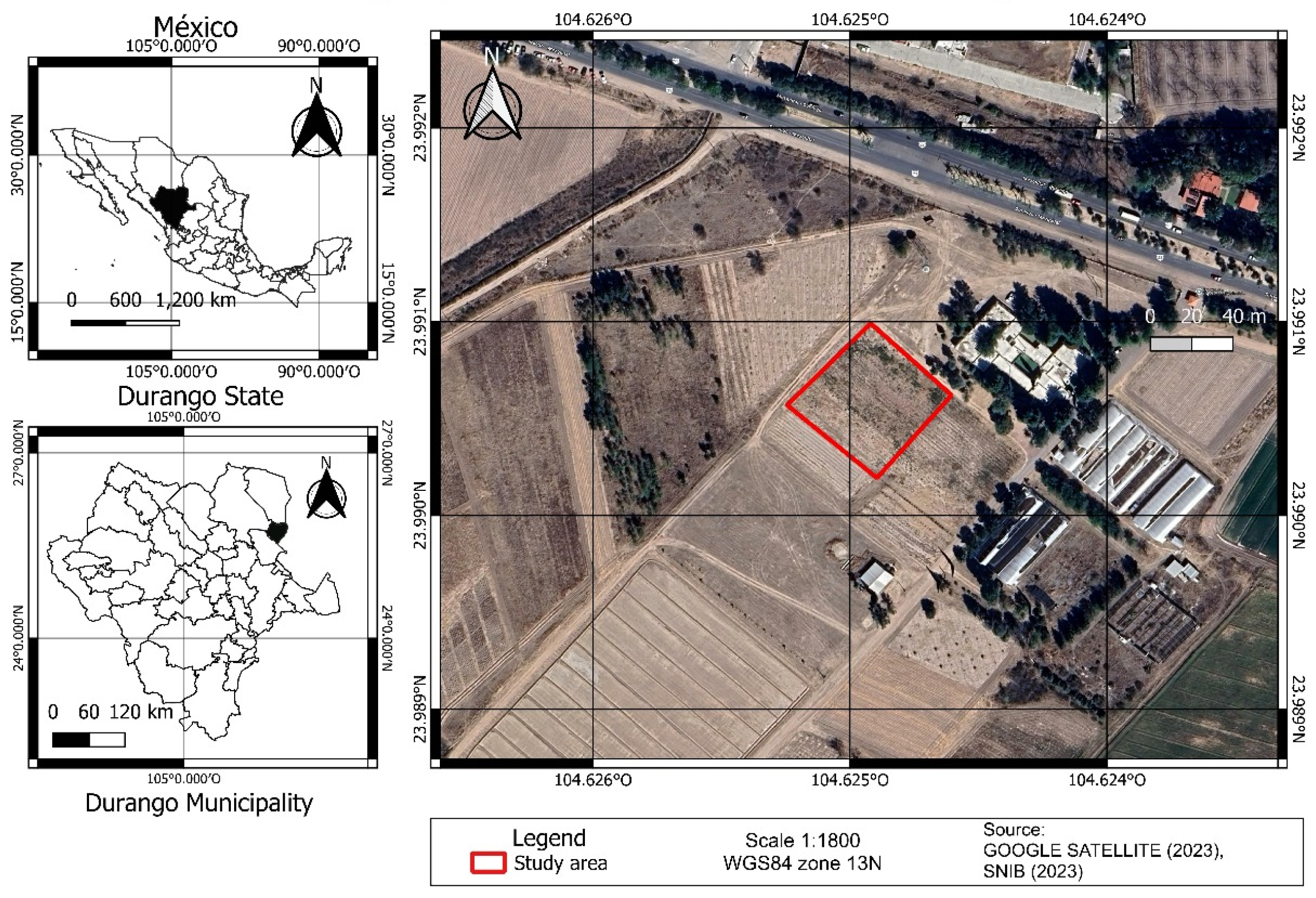
Samples were collected from improved common bean plants cultivated in the main bean-producing region of Durango, located in semiarid northern Mexico. The location of the study area is shown in Figure 1. To evaluate the effect of genotype on microbial community composition, all seed materials were grown under uniform field conditions at the Valle del Guadiana experimental station of the North Central Regional Research Center (CIRNOC), National Institute of Forestry, Agricultural and Livestock Research (INIFAP) (23°59′25.0″ N, 104°37′22.3″ W; 1880 m a.s.l.).
Nodule sampling was performed during the flowering/fruiting stage at the sixth week after emergence. Five plants of three improved bean varieties were selected completely at random. They were extracted from the soil taking special care not to damage the roots; excess soil was removed, and all visible nodules were collected in transparent vials that contained moisture absorber drying silica beads. The samples were then sent to the National Center for Disciplinary Research in Water, Soil, Plant, and Atmosphere Relations (CENID-RASPA) of INIFAP for subsequent analysis.

2.3. Nodules Washing and Selection of Viable Nodules for DNA Extraction

For each variety, approximately 15 visible nodules collected from five plants were surface sterilized. Subsequently, four independent subsamples were prepared per variety, each consisting of six undamaged nodules of uniform size (approximately 2 mm in diameter), pink-pigmented and similar external appearance, for washing and bacterial isolation. The nodules were immersed in 70% ethanol (v/v) for 1 min, rinsed, and soaked in a 6% sodium hypochlorite solution (v/v) for 3 min. Following the soak, they were rinsed six times with sterile distilled water to completely eliminate the sodium hypochlorite.
Once sterile, the nodules were crushed with sterile forceps on a Petri dish, and 2.5 mL of distilled water was added to macerate them. From the maceration product, 100 µL was taken and resuspended in 750 µL of BashingBead lysis buffer in a ZR BashingBead lysis tube (Zymo Research™, Irvine, CA, USA), for total nodule microbiome DNA extraction.

2.4. DNA Extraction, Amplification, and Sequencing of the Nodule Bacteriome

Genomic DNA was extracted from the samples using the Xpedition™ ZymoBIOMICS DNA MiniPrep kit (Zymo Research™). Extractions were carried out inside a UV-sterilized laminar flow cabinet under stringent aseptic conditions. Sample processing was conducted at Novogene Corporation, Inc. (Davis, CA, USA), where the V3–V4 hypervariable region of the 16S rRNA gene was amplified with primers 341F (CCTAYGGGRBGCASCAG) and 806R (GGACTACNNGGTATCTAAT).
PCR amplification was performed in reactions containing 15 µL of Phusion® High-Fidelity PCR Master Mix (New England Biolabs, Ipswich, MA, USA), 2 µM of each primer, and approximately 10 ng of template DNA. The cycling conditions included an initial denaturation step at 98 °C for 1 min, followed by 30 cycles of denaturation at 98 °C for 10 s, annealing at 50 °C for 30 s, and extension at 72 °C for 30 s.
PCR products were mixed with an equal volume of 1× loading buffer containing SYBR Green and visualized by electrophoresis on a 2% agarose gel. Amplicons were pooled in equimolar proportions (1:1) and purified using a Qiagen Gel Extraction Kit (Qiagen, Hilden, Germany). Sequencing libraries were prepared using the TruSeq® DNA PCR-Free Sample Preparation Kit (Illumina, San Diego, CA, USA) according to the manufacturer’s instructions, incorporating index adapters. Library integrity and concentration were evaluated using a Qubit® 2.0 Fluorometer (Thermo Scientific, Waltham, MA, USA) and an Agilent Bioanalyzer 2100 system. Finally, libraries were sequenced on an Illumina NovaSeq platform to generate 250 bp paired-end reads.

2.5. Bioinformatics Analysis

Bioinformatic processing was carried out in Quantitative Insights Into Microbial Ecology (QIIME2, version 2023.5.1) within a Linux–Ubuntu operating system [31]. Sequence quality control, chimera removal, and inference of amplicon sequence variants (ASVs) were performed using the DADA2 pipeline [32,33]. Taxonomic classification was assigned against the Greengenes2 reference database [34]. ASVs identified at the species level were subsequently validated through comparison with the National Center for Biotechnology Information (NCBI) database using BLAST (version Blast+ 2.16.0), applying strict criteria of 100% query coverage, E-value ≤ 0.0, and ≥98% sequence identity.
The relative abundance of predominant bacterial taxa was visualized through heatmaps constructed with Morpheus (Broad Institute, Cambridge, MA, USA). To enable comparison of nodule-associated microbiota among the three bean species, sequencing depth was normalized by rarefaction across samples. Based on the rarefied dataset, four alpha diversity indices were estimated: observed ASVs (richness), Shannon diversity (heterogeneity), Pielou’s evenness (equitability), and Faith’s phylogenetic diversity (PD), the latter providing a measure of the biodiversity that incorporates phylogenetic relationships. Differences among species were evaluated using the Kruskal–Wallis test, with significance defined at p < 0.05.
For beta diversity analyses, four dissimilarity metrics were calculated to capture different aspects of community assembly: Jaccard distance (presence/absence-based), Bray–Curtis dissimilarity (abundance-based), unweighted UniFrac (phylogenetic lineage composition), and weighted UniFrac (incorporating both phylogeny and relative abundance). Jaccard and Bray–Curtis values range from 0 (identical communities) to 1 (completely distinct communities). Statistical differences in microbial community structure among varieties were assessed for each beta diversity matrix using Permutational Multivariate Analysis of Variance (PERMANOVA) with 999 permutations. Principal Coordinates Analysis (PCoA) plots were generated using the Emperor plugin within QIIME2 to visualize the clustering patterns.
Functional prediction of the bacterial communities was conducted with PICRUSt2 (version 2.5.2) [35], which infers metagenomic functional profiles from 16S rRNA gene data based on phylogenetic relationships. Analyses were executed on a Linux–Ubuntu system following established workflows [35,36]. ASVs generated in QIIME2 were aligned to reference genomes from the IMG/M and KEGG Orthology (KO) databases using HMMER for hidden Markov model searches and EPA-NG for phylogenetic placement. Phylogenetic placements were processed with GAPPA to reconstruct a reference tree.
Predicted gene family abundances were normalized by 16S rRNA gene copy number to reduce phylogenetic bias. The Nearest Sequenced Taxon Index (NSTI) was calculated to evaluate prediction accuracy; NSTI values closer to zero indicate greater reliability of functional inference based on 16S rRNA sequences. Functional pathway abundances were obtained from the MetaCyc database [37] using the file path_abun_unstrat.tsv.gz. Relative pathway abundances were computed across samples, and functional profiles were visualized in RStudio (version 2025.05.1).

3. Results

3.1. Influence of Genotype in Nodule Microbial Communities

The mean number of reads for Pinto Bravo, dull black (NOD1), and Jamapa lines is presented in Table 2, with values of 191,983.5, 172,982.25, 193,458.25, respectively. In total, 2,233,696 reads were obtained across the three varieties, including 767,934 for Pinto Bravo, 773,833 for Jamapa, and 691,929 for NOD1 (Table S1). All rarefaction curves reached a clear plateau (asymptote) well before the maximum sequencing depth of 2.0 × 10⁵ reads (Figure S1).
Based on these sequencing results, a comparable number of taxa was detected across varieties at different taxonomic levels. All sequences were uploaded to the National Center for Biotechnology Information for public knowledge (BioProject: PRJNA1437770).
Consistent with these results, alpha and beta diversity metrics are shown in Table 3, where no significant differences were detected among the analyzed varieties, indicating a similar microbial community structure regardless of genotype.
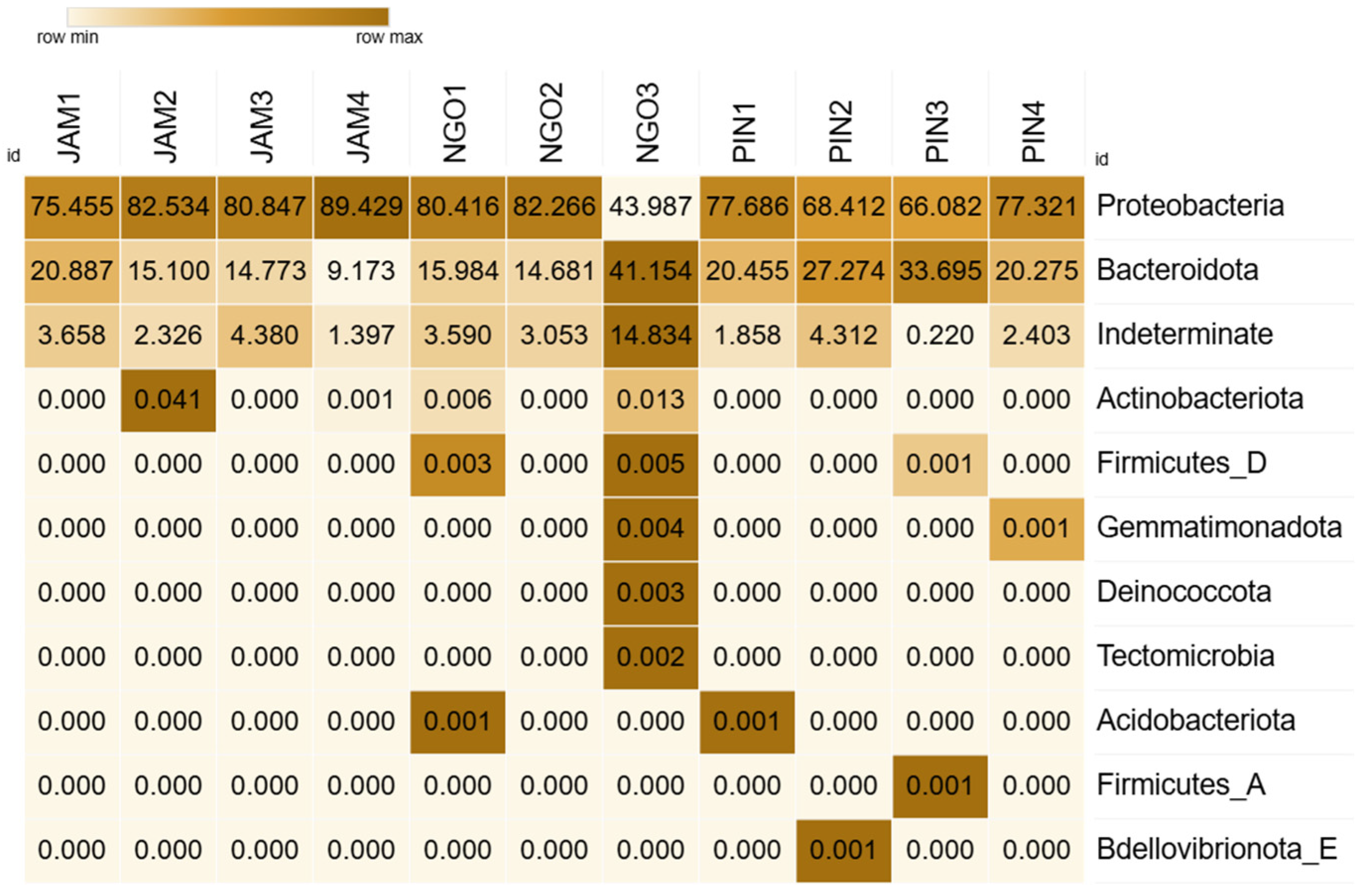
Figure 2 shows the relative abundance at the phylum level, where Proteobacteria (74.94%) and Bacteroidota (21.22%) predominated across all varieties, with Proteobacteria consistently representing the most abundant phyla.
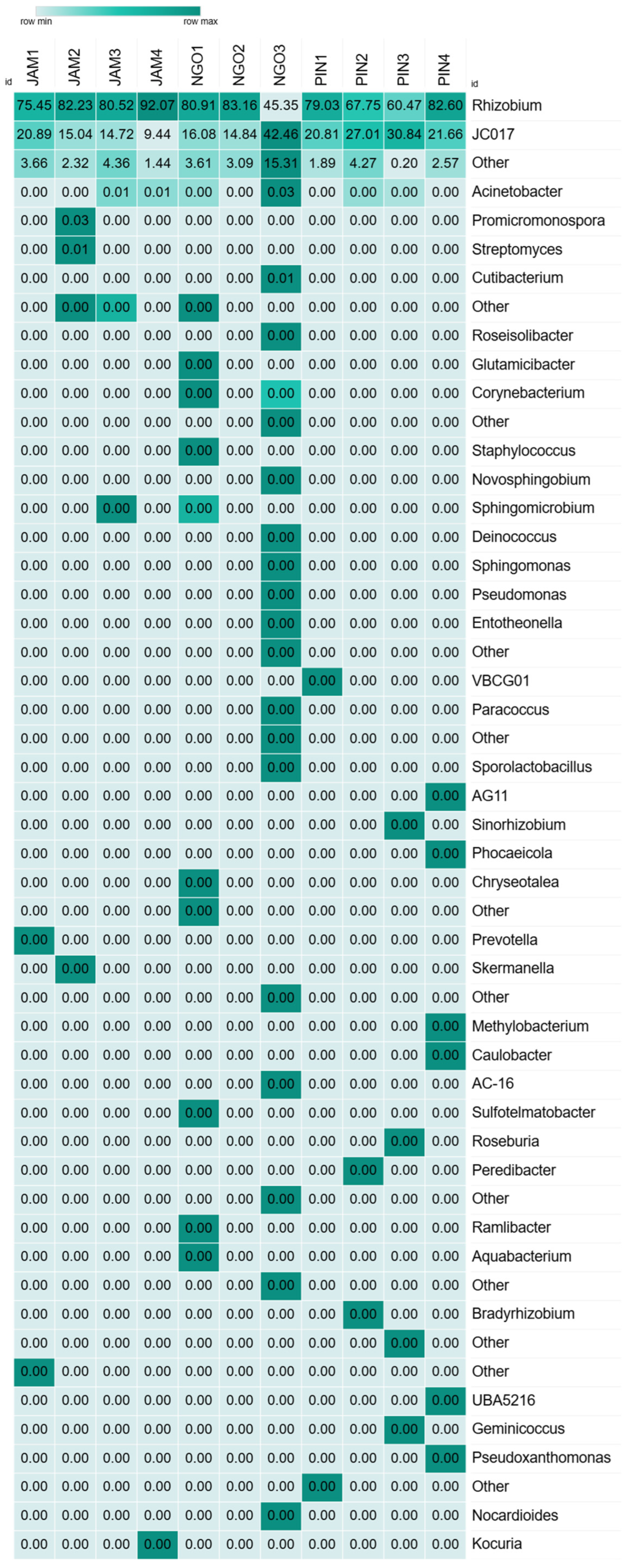
At the genus level, Figure 3 presents the relative abundance of bacterial genera, where Rhizobium (75.41%) was identified as the most abundant taxon across all samples. Additionally, other genera such as Acinetobacter and members of the JC017 lineage were also detected.

3.2. Metabolic Profiles Inference

The NSTI values are included in Table 4 and range from 0.011 to 0.033, with an average of 0.023, indicating high phylogenetic similarity between the ASVs and their closest reference genomes.
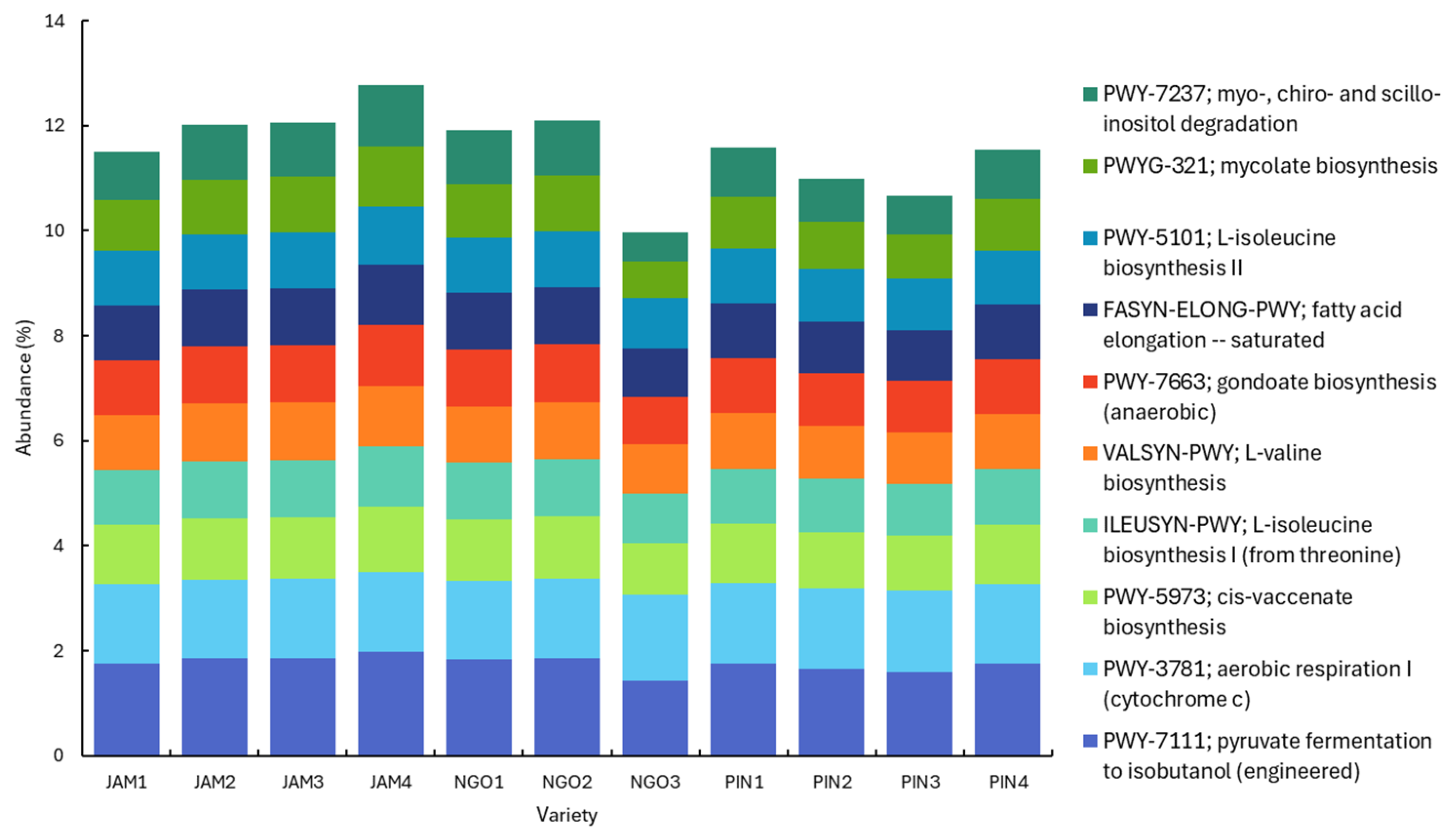
The functional metabolic profile is illustrated in Figure 4, where the most abundant pathways correspond to the pyruvate fermentation to isobutanol ( x ¯ = 27.02%), Aerobic respiration I (cytochrome c) ( x ¯ = 23.72%), cis-vaccenate biosynthesis ( x ¯ = 17.29%), L-isoleucine biosynthesis ( x ¯ = 16.23%), and L-valine biosynthesis ( x ¯ = 16.23%). Overall, the functional profiles were similar across the three varieties, with no notable differences in pathway abundance.

4. Discussion

4.1. Plasticity of Nodule Communities Across Semi-Arid Environments

The application of a starter nitrogen dose (35 kg N ha−1) and subsequent fertilization with UAN 32 at flowering stage in this study aligns with conventional management practices for common bean in semi-arid regions of northern Mexico [38], where soil N availability is often a limiting factor for initial crop establishment. According to Edje et al. [39], nitrogen applications around 40 kg N ha−1 can enhance yields without detrimental effects on the nitrogen fixation process, whereas inhibitory effects are typically reported at significantly higher concentrations, such as 100 kg N ha−1 [40]. While certain genotypes may exhibit sensitivity at lower doses [41], the strategy of ‘starter nitrogen’ is essential in arid ecosystems to meet the plant’s nutritional requirements before the onset of active biological nitrogen fixation (BNF), seeking a balance between available soil N and symbiotic activity [42]. Furthermore, research has indicated that high NO3 concentrations do not necessarily inhibit nodule formation in common bean [43]. In these environments, BNF efficiency is highly variable due to the complex interactions between host genotype, rhizobial strains, and environmental stressors such as high temperatures and drought [44].
The predominance of the phyla Proteobacteria and Bacteroidota across all analyzed varieties suggests a conserved and potentially essential role for these taxa in plant-associated microbial interactions within improved legume varieties, indicating a high degree of community interconnectivity. Consistent with the long-established literature on legume endosymbiosis [31,32,33,34,35,36,37,38,39,40,41,42,43,44,45,46,47,48], Proteobacteria was the most dominant taxonomic group across all samples. However, our results reveal a complex assembly that extends beyond classical nitrogen-fixing lineages. While Alphaproteobacteria—the class containing most traditional rhizobial genera—predominated, we also observed a significant representation of Gammaproteobacteria. The presence of these diverse Proteobacterial groups, including several non-classical rhizobial genera, underscores the role of the common bean as a host for a multi-taxa microbial consortium rather than a single-species symbiosis [49]. The presence of not only nitrogen-fixing rhizobia but also a diverse assemblage of non-rhizobial nodule-associated bacteria (NAB) is linked to plant growth-promoting traits, such as siderophore production, phytohormone (auxin) synthesis, and hydrolytic enzyme activity [50].
In addition, Bacteroidota is among one of the most prevalent phyla in soil ecosystems and includes several plant growth-promoting bacteria (PGPB), particularly within the legume rhizosphere [45]. In the present study, Bacteroidota represented the second most abundant phylum in common bean nodule bacteriome. Members of this phylum have been linked to carbon cycling processes, notably organic matter mineralization and nitrite oxidation in legume-based cropping systems [51,52].
Although a higher number of genera was identified in the NOD1 variety compared to PIN and JAM, this difference in richness did not result in significant shifts in the overall community structure, according to beta-diversity indices. The additional taxa observed in NOD1 were characterized by very low relative abundances, representing a rare biosphere that likely exerts minimal influence on the core symbiotic functions. This is further supported by the functional inference data, which showed high stability across all genotypes. Taxonomic composition at the genus level showed that Rhizobium was the dominant genus across all samples (Figure 3). This genus has been extensively documented through both culture-dependent isolations and high-throughput sequencing approaches in root nodules of Phaseolus vulgaris and other leguminous species [53,54,55], as was reported in this research with Rhizobium as the most abundant species in all samples. The composition and relative abundance of Rhizobium species are often heterogeneous, reflecting the combined influence of multiple abiotic and biotic factors, and are frequently shaped by host plant genotype [56]. Additionally, the non-rhizobial genus Acinetobacter has been reported in legume nodules, where it contributes to plant development through phosphate solubilization and indole acetic acid production [57,58].
The common bean is a promiscuous host, nodulated by various rhizobial species and diverse non-rhizobial bacteria across different continents and agroecosystems [10,11,59,60]. This suggests that while the host species (Phaseolus vulgaris) permits a broad range of partners, there is a lack of strong fine-scale specificity among its varieties [59]. In the present research, varietal differences in Alpha and beta diversity in the nodule bacteriome were minor or non-significant under identical soil and management conditions in a semi-arid field. This is consistent with previous root and rhizosphere studies where soil substrate characteristics dominate over host genotype [61,62].
Such patterns indicate that the host plant exerts selective filtering on the bacterial community during the establishment of the symbiotic relationship under local management and climate, a process governed by host-mediated recruitment mechanisms [63,64].
Furthermore, the assembly of the nodular bacteriome in semi-arid conditions appears to be predominantly governed by species-specific traits, such as root exudate profiles and nodulation signaling pathways, while varietal effects likely play a secondary or marginal role in shaping these microbial communities [50,51].
Moreover, in arid and semi-arid regions, the soil microbiome is strongly shaped by environmental stressors, particularly drought and salinity [65]. Soil water availability is a key determinant of microbial survival, activity, and diversity in these ecosystems. Water deficit modifies soil physicochemical properties by increasing solute concentrations and promoting soil compaction, thereby reducing pore connectivity and limiting microbial habitat and function [66]. Zhou et al. [67] reported that rhizospheric microbial communities associated with different legume species in arid environments are predominantly composed of members of the orders Rhizobiales, Xanthomonadales, Burkholderiales, Sphingomonadales, Solirubrobacterales, and Nitrosomonadales. Their findings indicate that drought stress is a crucial driver of bacterial community specificity, selecting for taxa capable of persisting under low-moisture conditions across multiple host plants. Most of these orders belong to the phylum Proteobacteria, which was likewise the dominant phylum detected in the present study.
On the other hand, salinity represents an additional major selective factor affecting soil microbial communities, mainly through osmotic imbalance and ion toxicity, both of which constrain microbial growth and metabolic activity. Consequently, salinity acts as a strong filter in plant-mediated rhizosphere microbiome assembly, favoring microbial groups that contribute to improved plant tolerance to salt stress [68]. In the analysis made by Ben Gaied et al. [65], authors report that under saline conditions, legume rhizospheres are primarily dominated by members of the phyla Proteobacteria, Actinobacteriota, Chloroflexi, and Planctomycetes. Despite these advances, most studies to date have focused on natural or unmanaged ecosystems. In contrast, agricultural legumes exposed to combined drought and salinity stress remain comparatively understudied, particularly regarding the structure and function of nodulating microbial communities.
On the other hand, although the use of dimethoate to ensure crop survival is a standard practice in the region’s conventional management [30], there are some reports of its potential to reduce the diversity of bacteria communities in nodules of other plant species, [69] but its specific impact on Phaseolus vulgaris nodulation remains unknown. Furthermore, according to Bawa et al. [69], several bacterial taxa can utilize or degrade organophosphate esters (OPEs) such as dimethoate. In the rhizosphere, this process can shift the community composition toward degrader populations, potentially displacing typical plant-beneficial groups. Therefore, future studies are essential to unravel the mechanisms by which this insecticide impacts nodule formation and symbiotic signaling in Phaseolus vulgaris.

4.2. Predicted Functional Profiles: Adaptive Metabolism Under Abiotic Stress

The functional prediction analysis performed with PICRUSt2 revealed that the dominant metabolic pathways in the nodule-associated microbial communities of the three improved common bean varieties under conventional management in semi-arid northern Mexico were highly conserved, with no significant differences detected in either taxonomic diversity (alpha and beta) or functional profiles. Although conventional fertilization practices in the region may influence nodulation and N-cycle functions [70], the prevalence of core pathways related to amino acid biosynthesis (e.g., branched-chain amino acids), central carbon metabolism, aerobic respiration, and fatty acid biosynthesis suggests a metabolically robust and functionally redundant microbiome, as shown in Figure 4. These functions are closely linked to microbial tolerance to environmental stress, particularly osmotic and oxidative stress typical of semi-arid regions [71,72]. Amino acid biosynthesis pathways likely contribute to the production of osmoprotective compounds, such as proline and trehalose, which are essential for maintaining cellular homeostasis under water-limited conditions [73,74,75,76,77,78], while the prominence of flexible energy metabolism pathways indicates an enhanced capacity to cope with fluctuations in oxygen and nutrient availability within the nodular niche [79,80,81,82]. Additionally, fatty-acid elongation enrichment is consistent with membrane-stabilizing adaptation under semiarid stress, which indirectly supports stress tolerance to high temperature and desiccation conditions [79,83,84,85].
The functional profiles generated via PICRUSt2 reflect the total genomic potential predicted from 16S rRNA sequences, prioritizing central metabolic and biosynthetic pathways over niche-specific symbiosis genes [86]. In this study, the dominance of pathways such as amino acid biosynthesis, carbon metabolism, and fatty acid biosynthesis mirrors findings in other legume systems, such as horse gram nodules, where broad core functions often overshadow explicit ‘nif’ or ‘nod’ categories [87]. This pattern is further influenced by the presence of non-rhizobial endophytes and rhizosphere-derived taxa within the nodules, whose ‘housekeeping’ genes contribute significantly to the overall metabolic pool [88,89].
Furthermore, while structure-derived tools qualitatively reflect functional patterns, their quantitative alignment with real-time biological activity is limited [90]. Specific traits like biological nitrogen fixation (BNF) can be underrepresented, particularly under management systems involving inorganic N or high-input pesticides, which can shift microbial selection toward stress tolerance and copiotrophic metabolism rather than specialized symbiosis [89,91,92]. In the semi-arid conditions of our study site, environmental stressors like drought likely favor the enrichment of functions related to amino acid and fatty acid metabolism, supporting cellular resilience and plant growth promotion under fluctuating oxygen and nutrient availability [87]. Consequently, the observed functional landscape reflects a specialized consortium adapted to the energetic and environmental demands of the host plant in a semi-arid ecosystem.
Together, these findings suggest that the bean nodule microbiome possesses a functional potential adapted to semi-arid environments. The high degree of metabolic redundancy observed in pathways associated with osmotic adjustment and energy metabolism indicates that environmental filtering and host selection may favor the maintenance of a stable core of stress-resilient genetic traits regardless of host variety. Although these functional profiles are inferred from 16S rRNA, representing genetic potential rather than active transcriptional expression or protein activity, the NSTI values were very low. This indicates a high degree of genomic relatedness between the taxa in samples and the reference genomes used for the inference, thereby increasing the confidence of the PICRUSt2 analysis.

5. Conclusions

The three improved common bean varieties grown under conventional management in semi-arid northern Mexico exhibited remarkably similar nodule-associated microbial assemblages, with no significant variation in alpha or beta diversity, nor in predicted metabolic functions. The microbiome was consistently dominated by Proteobacteria and Bacteroidota, with Rhizobium remaining the most abundant genus, highlighting the presence of a conserved symbiotic core across genotypes. Functional inference indicated a high degree of metabolic redundancy, particularly in pathways associated with osmotic adjustment through the accumulation of osmoprotective compounds; this likely enhances the resilience of the nodule microbiome to the low water potential characteristic of semi-arid soils. Furthermore, redundancy was observed in central energy metabolism and lipid biosynthesis, both of which are linked to environmental stress tolerance. Overall, these findings indicate that host species-level filtering and environmental pressures play a more decisive role than varietal differences in shaping the structure and functional potential of the common bean nodule microbiome in semiarid agroecosystems under conventional high-N and pesticide management.

Supplementary Materials

The following supporting information can be downloaded at: https://www.mdpi.com/article/10.3390/d18060374/s1, Table S1: Denoising statistics for bacterial communities across improved Phaseolus vulgaris varieties. Denoising metrics include the number of input, filtered, denoised, and non-chimeric sequences obtained through the DADA2 pipeline; Figure S1: Rarefaction curves of bacterial communities in bean nodules. The curves represent the number of observed Amplicon Sequence Variants (ASVs) as a function of the number of sequences per sample. NGO—NOD1; JAM—Jamapa; PIN—Pinto Bravo. The plateaus reached by all curves indicate that the sequencing depth was sufficient to capture the majority of the taxonomic diversity present in the samples.

Author Contributions

Conceptualization, R.T.-C. and E.N.-R.; Investigation, C.J.O.-E., O.M.A.-O. and E.N.-R.; Formal analysis, C.J.O.-E., C.G.-D.l.P., M.d.R.J.-S. and E.N.-R.; Writing—Original Draft Preparation, C.J.O.-E.; Visualization, C.J.O.-E. and E.N.-R.; Writing—Review and Editing, R.T.-C., A.P.-S., M.d.R.J.-S. and E.N.-R.; Supervision, E.N.-R.; Project Administration, O.M.A.-O. and E.N.-R.; Funding Acquisition, O.M.A.-O. All authors have read and agreed to the published version of the manuscript.

Funding

This research was funded by Ministry of Science, Humanities, Technology, and Innovation (SECIHTI) through the project No. 13385237350: “Agrodiversity of Native Beans in the State of Guerrero: A Strategy for Food Security in the Face of Climate Change”. The publication of this paper was also supported by the Instituto Nacional de Investigaciones Forestales, Agrícolas y Pecuarias (INIFAP).

Institutional Review Board Statement

Not applicable.

Data Availability Statement

The following supporting information can be downloaded from the National Center for Biotechnology Information for public knowledge as BioProject: PRJNA1437770.

Acknowledgments

The authors thank SECIHTI for the grant awarded to C.J.O.-E. for her master’s degree.

Conflicts of Interest

The authors declare no conflicts of interest.

Correction Statement

This article has been republished with a minor correction to the Funding statement. This change does not affect the scientific content of the article.

References

  1. De Ron, A.M.; González, A.M.; Paula Rodiño, A.; Santalla, M.; Godoy, L.; Papa, R. Historia del cultivo de la judía: Su evolución más allá de las áreas de origen y domesticación. Arbor 2016, 192, a317. [Google Scholar] [CrossRef] [Scilit]
  2. FAOSTAT. Worldwide Dry Bean Production in 2023. Food and Agriculture Organization of the United Nations (FAO). 2025. Available online: https://www.fao.org/faostat/en/#data/QCL/metadata (accessed on 5 May 2026).
  3. Bitocchi, E.; Nanni, L.; Bellucci, E.; Rossi, M.; Giardini, A.; Zeuli, P.S.; Logozzo, G.; Stougaard, J.; McClean, P.; Attene, G.; et al. Mesoamerican origin of the common bean (Phaseolus vulgaris L.) is revealed by sequence data. Proc. Natl. Acad. Sci. USA 2012, 109, E788–E796. [Google Scholar] [CrossRef] [Scilit] [PubMed]
  4. García-Urióstegui, A.; García-Nava, J.R.; Uscanga-Mortera, E.; García-Esteva, A.; Kohashi-Shibata, J.; Garcia de los Santos, G. Yield, biomass and phenology of the cross between wild and domesticated beans. Rev. Mex. Cienc. Agrícolas 2025, 16, 1–11. [Google Scholar]
  5. Karavidas, I.; Ntatsi, G.; Vougeleka, V.; Karkanis, A.; Ntanasi, T.; Saitanis, C.; Agathokleous, E.; Ropokis, A.; Sabatino, L.; Tran, F.; et al. Agronomic Practices to Increase the Yield and Quality of Common Bean (Phaseolus vulgaris L.): A Systematic Review. Agronomy 2022, 12, 271. [Google Scholar] [CrossRef] [Scilit]
  6. Cid-Ríos, J.Á.; Acosta-Gallegos, J.A.; Echavarría-Cháirez, F.G.; Bañuelos-Valenzuela, R.; Prado-García, A.A. Identification of Bean Lines (Phaseolus vulgaris) with Low Genotype–Environment Interactions Under Rainfed in Two Semiarid Sites of North-Central Mexico. Agronomy 2025, 15, 1160. [Google Scholar] [CrossRef] [Scilit]
  7. Servin-Palestina, M.; López-Cruz, I.L.; Zegbe-Domínguez, J.A.; Ruiz-García, A.; Salazar-Moreno, R.; Medina-García, G. Spatiotemporal Uncertainty and Sensitivity Analysis of the SIMPLE Model Applied to Common Beans for Semi-Arid Climate of Mexico. Agronomy 2022, 12, 1813. [Google Scholar] [CrossRef] [Scilit]
  8. Bender, F.R.; Alves, L.C.; da Silva, J.F.M.; Ribeiro, R.A.; Pauli, G.; Nogueira, M.A.; Hungria, M. Microbiome of Nodules and Roots of Soybean and Common Bean: Searching for Differences Associated with Contrasting Performances in Symbiotic Nitrogen Fixation. Int. J. Mol. Sci. 2022, 23, 12035. [Google Scholar] [CrossRef] [Scilit] [PubMed]
  9. Efstathiadou, E.; Ntatsi, G.; Savvas, D.; Tampakaki, A.P. Genetic characterization at the species and symbiovar level of indigenous rhizobial isolates nodulating Phaseolus vulgaris in Greece. Sci. Rep. 2021, 11, 8674. [Google Scholar] [CrossRef] [Scilit] [PubMed]
  10. Ramírez, M.D.A.; España, M.; Sekimoto, H.; Okazaki, S.; Yokoyama, T.; Ohkama-Ohtsu, N. Genetic Diversity and Characterization of Symbiotic Bacteria Isolated from Endemic Phaseolus Cultivars Located in Contrasting Agroecosystems in Venezuela. Microbes Environ. 2021, 36, ME20157. [Google Scholar] [CrossRef] [Scilit] [PubMed]
  11. Moura, F.T.; Ribeiro, R.A.; Helene, L.C.F.; Nogueira, M.A.; Hungria, M. So many rhizobial partners, so little nitrogen fixed: The intriguing symbiotic promiscuity of common bean (Phaseolus vulgaris L.). Symbiosis 2022, 86, 169–185. [Google Scholar] [CrossRef] [Scilit]
  12. Dutta, P.; Muthukrishnan, G.; Gopalasubramaiam, S.K.; Dharmaraj, R.; Karuppaiah, A.; Loganathan, K.; Periyasamy, K.; Pillai, M.A.; Upamanya, G.K.; Boruah, S.; et al. Plant growth-promoting rhizobacteria (PGPR) and its mechanisms against plant diseases for sustainable agriculture and better productivity. Biocell 2022, 46, 1843–1859. [Google Scholar] [CrossRef] [Scilit]
  13. Santoyo, G.; Urtis-Flores, C.A.; Loeza-Lara, P.D.; Orozco-Mosqueda, M.d.C.; Glick, B.R. Rhizosphere Colonization Determinants by Plant Growth-Promoting Rhizobacteria (PGPR). Biology 2021, 10, 475. [Google Scholar] [CrossRef] [Scilit] [PubMed]
  14. El-Esawi, M.A.; Ali, H.M.; Hatamleh, A.A.; Al-Dosary, M.A.; El-Ballat, E.M. Multi-functional PGPR Serratia liquefaciens confers enhanced resistance to lead stress and bacterial blight in soybean (Glycine max L.). Curr. Plant Biol. 2024, 40, 100403. [Google Scholar] [CrossRef] [Scilit]
  15. Rodríguez-Sahagún, A.; Velasco-Jiménez, A.; Castellanos-Hernández, O.; Acevedo-Hernández, G.; Clarenc Aarland, R. Bacterias rizosféricas con beneficios potenciales en la agricultura. Rev. TERRA Latinoam. 2020, 38, 333–345. [Google Scholar] [CrossRef] [Scilit]
  16. Okon, Y.; Labandera-Gonzales, C.; Lage, M.; Lage, P. Agronomic Applications of Azospirillum and Other PGPR. In Biological Nitrogen Fixation; Wiley: Hoboken, NJ, USA, 2015; pp. 925–936. [Google Scholar] [CrossRef] [Scilit]
  17. Rocha, R.; Lopes, T.; Fidalgo, C.; Alves, A.; Cardoso, P.; Figueira, E. Bacteria Associated with the Roots of Common Bean (Phaseolus vulgaris L.) at Different Development Stages: Diversity and Plant Growth Promotion. Microorganisms 2023, 11, 57. [Google Scholar] [CrossRef] [Scilit] [PubMed]
  18. Banjare, U.; Patel, A.K.; Pandey, A.K.; Kumar, S.; Singh, R.K.; Masurkar, P.; Singh, R.K.; Gupta, S.K. Biochemical and Molecular Evaluation of Rhizobium spp. and its Growth Promotion Studies with Lentil (Lens culinaris Medik. L.). J. Pure Appl. Microbiol. 2023, 17, 155–166. [Google Scholar] [CrossRef] [Scilit]
  19. Alla, A.; Microbiology, B.M.C.; Hemida, M.; Alla, A.; Nafady, N.A.; Hassan, A.A.; Bashandy, S.R. Isolation and characterization of non-rhizobial bacteria and arbuscular mycorrhizal fungi from legumes. BMC Microbiol. 2024, 24, 454. [Google Scholar] [CrossRef] [Scilit] [PubMed]
  20. Giri, B.R.; Chattaraj, S.; Rath, S.; Pattnaik, M.M.; Mitra, D.; Thatoi, H. Unveiling the Molecular Mechanism of Azospirillum in Plant Growth Promotion. Bacteria 2025, 4, 36. [Google Scholar] [CrossRef] [Scilit]
  21. Hnini, M.; Aurag, J. Prevalence, diversity and applications potential of nodules endophytic bacteria: A systematic review. Front. Microbiol. 2024, 15, 1386742. [Google Scholar] [CrossRef] [Scilit] [PubMed]
  22. Barraza, A.; Vizuet-de-Rueda, J.C.; Alvarez-Venegas, R. Highly diverse root endophyte bacterial community is driven by growth substrate and is plant genotype-independent in common bean (Phaseolus vulgaris L.). PeerJ 2020, 8, e9423. [Google Scholar] [CrossRef] [Scilit] [PubMed]
  23. Xiong, C.; Zhu, Y.; Wang, J.; Singh, B.; Han, L.; Shen, J.; Li, P.; Wang, G.; Wu, C.; Ge, A.; et al. Host selection shapes crop microbiome assembly and network complexity. New Phytol. 2021, 229, 1091–1104. [Google Scholar] [CrossRef] [Scilit] [PubMed]
  24. Favero, V.O.; Carvalho, R.H.; Motta, V.M.; Leite, A.B.C.; Coelho, M.R.R.; Xavier, G.R.; Rumjanek, N.G.; Urquiaga, S. Bradyrhizobium as the Only Rhizobial Inhabitant of Mung Bean (Vigna radiata) Nodules in Tropical Soils: A Strategy Based on Microbiome for Improving Biological Nitrogen Fixation Using Bio-Products. Front. Plant Sci. 2021, 11, 602645. [Google Scholar] [CrossRef] [Scilit] [PubMed]
  25. Somasundaram, A.; Parthasarathy, S.; Tharumasivam, S.V.; Thirumurthy, P.; Vijayalakshmi, S.; Chelliah, R.; Barathikannan, K.; Oh, D.-H. Isolation of Metagenomic DNA from Root Nodules BT-Plant Microbiome Engineering; Dharumadurai, D., Narayanan, A.S., Eds.; Springer: New York, NY, USA, 2025; pp. 229–236. [Google Scholar] [CrossRef] [Scilit]
  26. Tapia-García, E.Y.; Hernández-Trejo, V.; Guevara-Luna, J.; Rojas-Rojas, F.U.; Arroyo-Herrera, I.; Meza-Radilla, G.; Vásquez-Murrieta, M.S.; Estrada-de los Santos, P. Plant growth-promoting bacteria isolated from wild legume nodules and nodules of Phaseolus vulgaris L. trap plants in central and southern Mexico. Microbiol. Res. 2020, 239, 126522. [Google Scholar] [CrossRef] [Scilit] [PubMed]
  27. Rosales Serna, R.; Acosta Gallegos, J.A.; Ibarra Perez, F.J.; Cuellar Robles, E.I. Pinto Bravo: A new dry bean variety for the Semiarid Mexican Highlands. Rev. Mex. Cienc. Agric. 2011, 2, 985–991. [Google Scholar]
  28. Rosales-Serna, R.; Flores-Gallardo, H. NOD 1: Variedad de frijol negro opaco con semilla redonda y mejor calidad para el mercado. Rev. Fitotec. Mex. 2023, 46, 85. [Google Scholar] [CrossRef] [Scilit]
  29. Rosales-Serna, R.; Acosta-Gallegos, J.A.; Muruaga-Martínez, J.S.; Hernández-Casillas, J.M.; Esquivel-Esquivel, G.; Pérez-Herrera, P. Variedades Mejoradas de frijol del Instituto Nacional de Investigaciones Forestales, Agricolas y Pecuarias; Instituto Nacional de Investigaciones Forestales, Agrícolas y Pecuarias (INIFAP): Chapingo, Mexico, 2004. [Google Scholar]
  30. Mena-Covarrubias, J.M.; Velázquez-Valle, R. Manejo Integrado de Plagas y Enfermedades de Frijol en Zacatecas; Folleto Técnico No. 24; Instituto Nacional de Investigaciones Forestales, Agrícolas y Pecuarias (INIFAP): Zacatecas, Mexico, 2010. [Google Scholar]
  31. Bolyen, E.; Rideout, J.R.; Dillon, M.R.; Bokulich, N.A.; Abnet, C.C.; Al-Ghalith, G.A.; Alexander, H.; Alm, E.J.; Arumugam, M.; Asnicar, F.; et al. Reproducible, interactive, scalable and extensible microbiome data science using QIIME 2. Nat. Biotechnol. 2019, 37, 852–857. [Google Scholar] [CrossRef] [Scilit] [PubMed]
  32. Callahan, B.J.; McMurdie, P.J.; Rosen, M.J.; Han, A.W.; Johnson, A.J.A.; Holmes, S.P. DADA2: High-resolution sample inference from Illumina amplicon data. Nat. Methods 2016, 13, 581–583. [Google Scholar] [CrossRef] [Scilit] [PubMed]
  33. Callahan, B.J.; McMurdie, P.J.; Holmes, S.P. Exact sequence variants should replace operational taxonomic units in marker-gene data analysis. ISME J. 2017, 11, 2639–2643. [Google Scholar] [CrossRef] [Scilit] [PubMed]
  34. McDonald, D.; Jiang, Y.; Balaban, M.; Cantrell, K.; Zhu, Q.; Gonzalez, A.; Morton, J.T.; Nicolaou, G.; Parks, D.H.; Karst, S.M.; et al. Greengenes2 unifies microbial data in a single reference tree. Nat. Biotechnol. 2024, 42, 715–718. [Google Scholar] [CrossRef] [Scilit] [PubMed]
  35. Douglas, G.M.; Maffei, V.J.; Zaneveld, J.R.; Yurgel, S.N.; Brown, J.R.; Taylor, C.M.; Huttenhower, C.; Langille, M.G.I. PICRUSt2 for prediction of metagenome functions. Nat. Biotechnol. 2020, 38, 685–688. [Google Scholar] [CrossRef] [Scilit] [PubMed]
  36. Langille, M.G.I.; Zaneveld, J.; Caporaso, J.G.; McDonald, D.; Knights, D.; Reyes, J.A.; Clemente, J.C.; Burkepile, D.E.; Vega Thurber, R.L.; Knight, R.; et al. Predictive functional profiling of microbial communities using 16S rRNA marker gene sequences. Nat. Biotechnol. 2013, 31, 814–821. [Google Scholar] [CrossRef] [Scilit] [PubMed]
  37. Caspi, R.; Billington, R.; Keseler, I.M.; Kothari, A.; Krummenacker, M.; Midford, P.E.; Ong, W.K.; Paley, S.; Subhraveti, P.; Karp, P.D. The MetaCyc database of metabolic pathways and enzymes—A 2019 update. Nucleic Acids Res. 2020, 48, D445–D453. [Google Scholar] [CrossRef] [Scilit] [PubMed]
  38. Sierra-Zurita, D.; Flores-Gallardo, H.; Rosales-Serna, R.; Santana-Espinoza, S. Uso de Fertilizantes Sólidos y Líquidos para la Producción de Frijol en Durango; Instituto Nacional de Investigaciones Forestales, Agrícolas y Pecuarias (INIFAP): Durango, Mexico, 2023. [Google Scholar]
  39. Edje, O.T.; Mughogho, L.K.; Ayonoadu, U.W.U. Responses of Dry Beans to Varying Nitrogen Levels 1. Agron. J. 1975, 67, 251–255. [Google Scholar] [CrossRef] [Scilit]
  40. Akter, Z.; Pageni, B.B.; Lupwayi, N.Z.; Balasubramanian, P.M. Biological nitrogen fixation by irrigated dry bean (Phaseolus vulgaris L.) genotypes. Can. J. Plant Sci. 2018, 98, 1159–1167. [Google Scholar] [CrossRef] [Scilit]
  41. Graham, P.H. Some problems and potentials of field beans (Phaseolus vulgaris L.) in Latin America. Field Crops Res. 1978, 1, 295–317. [Google Scholar] [CrossRef] [Scilit]
  42. University of Minnesota Extension. Understanding Nitrogen in Soils; University of Minnesota Extension: St Paul, MN, USA, 2021. [Google Scholar]
  43. Nanjareddy, K.; Blanco, L.; Arthikala, M.; Affantrange, X.A.; Sánchez, F.; Lara, M. Nitrate regulates rhizobial and mycorrhizal symbiosis in common bean (Phaseolus vulgaris L.). J. Integr. Plant Biol. 2014, 56, 281–298. [Google Scholar] [CrossRef] [Scilit] [PubMed]
  44. Wilker, J.; Navabi, A.; Rajcan, I.; Marsolais, F.; Hill, B.; Torkamaneh, D.; Pauls, K.P. Agronomic Performance and Nitrogen Fixation of Heirloom and Conventional Dry Bean Varieties Under Low-Nitrogen Field Conditions. Front. Plant Sci. 2019, 10, 952. [Google Scholar] [CrossRef] [Scilit] [PubMed]
  45. Pang, Z.; Fallah, N.; Weng, P.; Zhou, Y.; Tang, X.; Tayyab, M.; Liu, Y.; Liu, Q.; Xiao, Y.; Hu, C.; et al. Sugarcane–Peanut Intercropping System Enhances Bacteria Abundance, Diversity, and Sugarcane Parameters in Rhizospheric and Bulk Soils. Front. Microbiol. 2022, 12, 815129. [Google Scholar] [CrossRef] [Scilit] [PubMed]
  46. Mataranyika, P.N.; Bez, C.; Venturi, V.; Chimwamurombe, P.M.; Uzabakiriho, J.D. Rhizospheric, seed, and root endophytic-associated bacteria of drought-tolerant legumes grown in arid soils of Namibia. Heliyon 2024, 10, e36718. [Google Scholar] [CrossRef] [Scilit] [PubMed]
  47. Tian, J.; Bu, L.; Zhang, M.; Yuan, J.; Zhang, Y.; Wei, G.; Wang, H. Soil bacteria with distinct diversity and functions mediates the soil nutrients after introducing leguminous shrub in desert ecosystems. Glob. Ecol. Conserv. 2021, 31, e01841. [Google Scholar] [CrossRef] [Scilit]
  48. Klūga, A.; Dubova, L.; Alsiņa, I.; Rostoks, N. Alpha-, gamma- and beta-proteobacteria detected in legume nodules in Latvia, using full-length 16S rRNA gene sequencing. Acta Agric. Scand. Sect. B-Soil Plant Sci. 2023, 73, 127–141. [Google Scholar] [CrossRef] [Scilit]
  49. Etesami, H. Root nodules of legumes: A suitable ecological niche for isolating non-rhizobial bacteria with biotechnological potential in agriculture. Curr. Res. Biotechnol. 2022, 4, 78–86. [Google Scholar] [CrossRef] [Scilit]
  50. Martínez-Hidalgo, P.; Humm, E.A.; Still, D.W.; Shi, B.; Pellegrini, M.; de la Roca, G.; Veliz, E.; Maymon, M.; Bru, P.; Huntemann, M.; et al. Medicago root nodule microbiomes: Insights into a complex ecosystem with potential candidates for plant growth promotion. Plant Soil 2022, 471, 507–526. [Google Scholar] [CrossRef] [Scilit]
  51. Cai, S.; Zhao, X. Responses of bacterial communities and nitrogen-cycling microbiomes to the conversion from cereals to legumes in the rice-based system. Appl. Soil Ecol. 2024, 195, 105241. [Google Scholar] [CrossRef] [Scilit]
  52. Adnan, M.; Wahid, F.; Fahad, S.; Arif, M.; Shi, S.; He, X. Mycorrhizae and soil health. In Improving Soil Health; Burleigh Dodds Science Publishing Limited: Cambridge, UK, 2022; pp. 65–84. [Google Scholar]
  53. Hossain, M.S.; DeLaune, P.B.; Gentry, T.J. Microbiome analysis revealed distinct microbial communities occupying different sized nodules in field-grown peanut. Front. Microbiol. 2023, 14, 1075575. [Google Scholar] [CrossRef] [Scilit] [PubMed]
  54. El Attar, I.; Taha, K.; El Bekkay, B.; El Khadir, M.; Thami Alami, I.; Aurag, J. Screening of stress tolerant bacterial strains possessing interesting multi-plant growth promoting traits isolated from root nodules of Phaseolus vulgaris L. Biocatal. Agric. Biotechnol. 2019, 20, 101225. [Google Scholar] [CrossRef] [Scilit]
  55. Shamseldin, A.; Velázquez, E. The promiscuity of Phaseolus vulgaris L. (common bean) for nodulation with rhizobia: A review. World J. Microbiol. Biotechnol. 2020, 36, 63. [Google Scholar] [CrossRef] [Scilit] [PubMed]
  56. Mendoza-Suárez, M.; Andersen, S.U.; Poole, P.S.; Sánchez-Cañizares, C. Competition, Nodule Occupancy, and Persistence of Inoculant Strains: Key Factors in the Rhizobium-Legume Symbioses. Front. Plant Sci. 2021, 12, 690567. [Google Scholar] [CrossRef] [Scilit] [PubMed]
  57. Hakim, S.; Mirza, B.S.; Imran, A.; Zaheer, A.; Yasmin, S.; Mubeen, F.; Mclean, J.E.; Mirza, M.S. Illumina sequencing of 16S rRNA tag shows disparity in rhizobial and non-rhizobial diversity associated with root nodules of mung bean (Vigna radiata L.) growing in different habitats in Pakistan. Microbiol. Res. 2020, 231, 126356. [Google Scholar] [CrossRef] [Scilit] [PubMed]
  58. Zhao, L.; Xu, Y.; Lai, X. Antagonistic endophytic bacteria associated with nodules of soybean (Glycine max L.) and plant growth-promoting properties. Braz. J. Microbiol. 2018, 49, 269–278. [Google Scholar] [CrossRef] [Scilit] [PubMed]
  59. Kawaka, F.; Makonde, H.; Dida, M.; Opala, P.; Ombori, O.; Maingi, J.; Muoma, J. Genetic diversity of symbiotic bacteria nodulating common bean (Phaseolus vulgaris) in western Kenya. PLoS ONE 2018, 13, e0207403. [Google Scholar] [CrossRef] [Scilit] [PubMed]
  60. Zinga, M.K.; Jaiswal, S.K.; Dakora, F.D. Presence of diverse rhizobial communities responsible for nodulation of common bean (Phaseolus vulgaris) in South African and Mozambican soils. FEMS Microbiol. Ecol. 2017, 93, fiw236. [Google Scholar] [CrossRef] [Scilit] [PubMed]
  61. Park, H.E.; Nebert, L.; King, R.M.; Busby, P.; Myers, J.R. Influence of organic plant breeding on the rhizosphere microbiome of common bean (Phaseolus vulgaris L.). Front. Plant Sci. 2023, 14, 1251919. [Google Scholar] [CrossRef] [Scilit] [PubMed]
  62. Osogo, A.K.; Muyekho, F.; Were, H.; Okoth, P. Deciphering common bean (Phaseolus vulgaris L.) microbiome assemblages reveal mechanistic insights into host-pathogen-microbiome interactions. Genomics 2025, 117, 111064. [Google Scholar] [CrossRef] [Scilit] [PubMed]
  63. Chen, L.; Liu, Y. The Function of Root Exudates in the Root Colonization by Beneficial Soil Rhizobacteria. Biology 2024, 13, 95. [Google Scholar] [CrossRef] [Scilit] [PubMed]
  64. Dollete, D.; Lumactud, R.A.; Carlyle, C.N.; Szczyglowski, K.; Hill, B.; Thilakarathna, M.S. Effect of drought stress on symbiotic nitrogen fixation, soil nitrogen availability and soil microbial diversity in forage legumes. Plant Soil 2024, 495, 445–467. [Google Scholar] [CrossRef] [Scilit]
  65. Ben Gaied, R.; Brígido, C.; Sbissi, I.; Tarhouni, M. Sustainable Strategy to Boost Legumes Growth under Salinity and Drought Stress in Semi-Arid and Arid Regions. Soil Syst. 2024, 8, 84. [Google Scholar] [CrossRef] [Scilit]
  66. Mickan, B.S.; Abbott, L.K.; Solaiman, Z.M.; Mathes, F.; Siddique, K.H.M.; Jenkins, S.N. Soil disturbance and water stress interact to influence arbuscular mycorrhizal fungi, rhizosphere bacteria and potential for N and C cycling in an agricultural soil. Biol. Fertil. Soils 2019, 55, 53–66. [Google Scholar] [CrossRef] [Scilit]
  67. Zhou, Z.; Yu, M.; Ding, G.; Gao, G.; He, Y. Diversity and structural differences of bacterial microbial communities in rhizocompartments of desert leguminous plants. PLoS ONE 2020, 15, e0241057. [Google Scholar] [CrossRef] [Scilit] [PubMed]
  68. Yang, Y.; Liu, L.; Singh, R.P.; Meng, C.; Ma, S.; Jing, C.; Li, Y.; Zhang, C. Nodule and Root Zone Microbiota of Salt-Tolerant Wild Soybean in Coastal Sand and Saline-Alkali Soil. Front. Microbiol. 2020, 11, 2178. [Google Scholar] [CrossRef] [Scilit] [PubMed]
  69. Bawa, Y.M.; Kalimullah, S.; Wagini, N.H. The Effects of Pesticide Application on Soil Microbiota and Weed Dynamics in Cowpea Cropping Systems. UMYU Sci. 2025, 4, 150–159. [Google Scholar] [CrossRef] [Scilit]
  70. Li, R.; Ren, C.; Wu, L.; Zhang, X.; Mao, X.; Fan, Z.; Cui, W.; Zhang, W.; Wei, G.; Shu, D. Fertilizing-induced alterations of microbial functional profiles in soil nitrogen cycling closely associate with crop yield. Environ. Res. 2023, 231, 116194. [Google Scholar] [CrossRef] [Scilit] [PubMed]
  71. Hu, L.; Zhou, K.; Ren, G.; Yang, S.; Liu, Y.; Zhang, Z.; Li, Y.; Gong, X.; Ma, F. Myo-inositol mediates reactive oxygen species-induced programmed cell death via salicylic acid-dependent and ethylene-dependent pathways in apple. Hortic. Res. 2020, 7, 138. [Google Scholar] [CrossRef] [Scilit] [PubMed]
  72. Xiong, Y.; Li, M.; Zhang, X.; Lei, X.; Yang, S.; Han, H.; Qu, Y. The study of physiological response mechanism and metabolomics on B. chinensis under drought. BMC Plant Biol. 2025, 25, 1270. [Google Scholar] [CrossRef] [Scilit] [PubMed]
  73. Abuzahrah, S.S.; Baeshen, M.N.; Alkaladi, A.; Bataweel, N.M.; Alhejen, A.M.; Abdelkader, H. Exploring the taxonomic and functional diversity of marine benthic micro-Eukaryotes along the Red Sea coast of Jeddah city. Saudi J. Biol. Sci. 2022, 29, 103342. [Google Scholar] [CrossRef] [Scilit] [PubMed]
  74. Pholchan, M.; Thassana, J.; Muangprom, K. The Variability in Soil Community and Its Enzymatic Function to Plant Promotion after Biochar Addition. TEEJ 2025, 39, 19–30. [Google Scholar]
  75. Wu, K.; Liang, X.; Zhang, X.; Yang, G.; Wang, H.; Xia, Y.; Ishfaq, S.; Ji, H.; Qi, Y.; Guo, W. Metabolomics analysis reveals enhanced salt tolerance in maize through exogenous Valine-Threonine-Isoleucine-Aspartic acid application. Front. Plant Sci. 2024, 15, 1374142. [Google Scholar] [PubMed]
  76. López, C.M.; Alseekh, S.; Torralbo, F.; Martínez Rivas, F.J.; Fernie, A.R.; Amil-Ruiz, F.; Alamillo, J.M. Transcriptomic and metabolomic analysis reveals that symbiotic nitrogen fixation enhances drought resistance in common bean. J. Exp. Bot. 2023, 74, 3203–3219. [Google Scholar] [CrossRef] [Scilit] [PubMed]
  77. Torralbo, F.; López, C.M.; Alseekh, S.; Martínez-Rivas, F.J.; Reyes, M.R.; Fernie, A.R.; Alamillo, J.M. The source of nitrogen conditions transcriptomic responses to water deficit in common bean roots. Plant Physiol. Biochem. 2025, 228, 110264. [Google Scholar] [CrossRef] [Scilit] [PubMed]
  78. Nishu, S.D.; No, J.H.; Wee, G.N.; Lee, T.K. A Drought-Activated Bacterial Symbiont Enhances Legume Resilience Through Coordinated Amino Acid Metabolism. Microorganisms 2026, 14, 114. [Google Scholar] [CrossRef] [Scilit] [PubMed]
  79. Lee, Y.; Cho, G.; Kim, D.-R.; Kwak, Y.-S. Analysis of Endophytic Bacterial Communities and Investigation of Core Taxa in Apple Trees. Plant Pathol. J. 2023, 39, 397–408. [Google Scholar] [CrossRef] [Scilit] [PubMed]
  80. Miranda-Molina, A.; Alvarez, L.; Antunez-Mojica, M.; Velasco-Bejarano, B. Reviewing Glycosyl-Inositols: Natural Occurrence, Biological Roles, and Synthetic Techniques. ChemBioChem 2025, 26, e202400823. [Google Scholar] [CrossRef] [Scilit] [PubMed]
  81. Rocha, G.; Le Queré, A.; Medina, A.; Cuéllar, A.; Contreras, J.L.; Carreño, R.; Bustillos, R.; Muñoz-Rojas, J.; Villegas, M.d.C.; Chaintreuil, C.; et al. Diversity and phenotypic analyses of salt- and heat-tolerant wild bean Phaseolus filiformis rhizobia native of a sand beach in Baja California and description of Ensifer aridi sp. nov. Arch. Microbiol. 2020, 202, 309–322. [Google Scholar] [CrossRef] [Scilit] [PubMed]
  82. Poole, P.S.; Ledermann, R. Maintaining osmotic balance in legume nodules. J. Exp. Bot. 2022, 73, 8–10. [Google Scholar] [CrossRef] [Scilit] [PubMed]
  83. Zhao, Y.; Qin, L.; Tan, D.; Wu, D.; Wu, X.; Fan, Q.; Bai, C.; Yang, J.; Xie, J.; He, Y. Fatty acid metabolites of Dendrobium nobile were positively correlated with representative endophytic fungi at altitude. Front. Microbiol. 2023, 14, 1128956. [Google Scholar] [CrossRef] [Scilit] [PubMed]
  84. Zhukov, A.V.; Shumskaya, M. Very-long-chain fatty acids (VLCFAs) in plant response to stress. Funct. Plant Biol. 2020, 47, 695–703. [Google Scholar] [CrossRef] [Scilit] [PubMed]
  85. Peralta, H.; Aguilar, A.; Díaz, R.; Mora, Y.; Martínez-Batallar, G.; Salazar, E.; Vargas-Lagunas, C.; Martínez, E.; Encarnación, S.; Girard, L.; et al. Genomic studies of nitrogen-fixing rhizobial strains from Phaseolus vulgaris seeds and nodules. BMC Genom. 2016, 17, 711. [Google Scholar] [CrossRef] [Scilit] [PubMed]
  86. Pereira, W.J.; Conde, D.; Perron, N.; Schmidt, H.W.; Dervinis, C.; Venado, R.E.; Ané, J.-M.; Kirst, M. Investigating biological nitrogen fixation via single-cell transcriptomics. J. Exp. Bot. 2025, 76, 931–949. [Google Scholar] [CrossRef] [Scilit] [PubMed]
  87. Evangilene, S.; Uthandi, S. A 16S rRNA amplicon approach to the structural and functional diversity of bacterial communities associated with horse gram crop for drought mitigation and sustainable productivity. J. Appl. Microbiol. 2022, 133, 3777–3789. [Google Scholar] [CrossRef] [Scilit] [PubMed]
  88. Mus, F.; Crook, M.B.; Garcia, K.; Costas, A.G.; Geddes, B.A.; Kouri, E.D.; Paramasivan, P.; Ryu, M.H.; Oldroyd, G.E.D.; Poole, P.S.; et al. Symbiotic nitrogen fixation and the challenges to its extension to nonlegumes. Appl. Environ. Microbiol. 2016, 82, 3698–3710. [Google Scholar] [CrossRef] [Scilit] [PubMed]
  89. Zhou, X.; Liu, X.; Liu, M.; Liu, W.; Xu, J.; Li, Y. Comparative evaluation of 16S rRNA primer pairs in identifying nitrifying guilds in soils under long-term organic fertilization and water management. Front. Microbiol. 2024, 15, 1424795. [Google Scholar] [CrossRef] [Scilit] [PubMed]
  90. Kavamura, V.N.; Hayat, R.; Clark, I.M.; Rossmann, M.; Mendes, R.; Hirsch, P.R.; Mauchline, T.H. Inorganic Nitrogen Application Affects Both Taxonomical and Predicted Functional Structure of Wheat Rhizosphere Bacterial Communities. Front. Microbiol. 2018, 9, 1074. [Google Scholar] [CrossRef] [Scilit] [PubMed]
  91. Fierer, N.; Lauber, C.L.; Ramirez, K.S.; Zaneveld, J.; Bradford, M.A.; Knight, R. Comparative metagenomic, phylogenetic and physiological analyses of soil microbial communities across nitrogen gradients. ISME J. 2012, 6, 1007–1017. [Google Scholar] [CrossRef] [Scilit] [PubMed]
  92. Zhu, S.; Vivanco, J.M.; Manter, D.K. Nitrogen fertilizer rate affects root exudation, the rhizosphere microbiome and nitrogen-use-efficiency of maize. Appl. Soil Ecol. 2016, 107, 324–333. [Google Scholar] [CrossRef] [Scilit]
Figure 1. Geographical location of the study area.
Diversity 18 00374 g001
Figure 2. Relative abundance at the phylum level in the bacterial communities of nodules from improved bean varieties. PIN—Pinto bravo; NGO—NOD1; JAM—Jamapa. Samples (columns) and genera (rows) are organized by hierarchical clustering based on [Métrica] distances, with the resulting dendrograms shown at the top and side, respectively.
Diversity 18 00374 g002
Figure 3. Relative abundance of bacterial genera in root nodules across improved Phaseolus vulgaris varieties.
Diversity 18 00374 g003
Figure 4. Profile of the ten most abundant functional metabolic pathways in root nodules of three improved Phaseolus vulgaris varieties. Varieties are identified as follows: PIN (Pinto Bravo), NGO (NOD1), and JAM (Jamapa). Pathway abundance was predicted based on PICRUSt2 analysis of 16S rRNA gene sequences.
Diversity 18 00374 g004
Table 1. Improved bean varieties selected for analysis.
RegionType of BeanIDDescriptionReference
DurangoPinto BravoPINGrowth habit II, cycle ≈ 90–95 days, large pinto grain with slow darkening, tolerant to anthracnose and rust.[27]
NOD1NGOGrowth habit II, cycle ≈ 95–100 days, small to medium black opaque grain, tolerant to anthracnose, rust and common bacterial blight.[28]
JamapaJAMGrowth habit III, cycle ≈ 90–100 days, small black grain, widely adapted traditional variety.[29]
Table 2. Taxonomic richness identified in the bacterial communities of nodules from improved bean varieties.
VarietyPhylumClassOrderFamilyGenusSpeciesLatinized
Pinto Bravo46899186
Jamapa45777123
NOD1810182022349
Table 3. Alpha and beta diversity metrics of bacterial communities in root nodules across improved Phaseolus vulgaris varieties.
IndexHp
Alpha diversity 1
Observed features2.3550.307
Shannon1.4160.492
Evenness2.2270.328
Faith0.5750.749
Beta diversity 2
Bray–Curtis1.280.346
Jaccard1.2150.121
Unweighted UniFrac0.9430.626
Weighted UniFrac1.350.31
1 Statistical significance for alpha diversity was determined using Kruskal–Wallis tests. 2 Beta diversity was assessed via PERMANOVA. The H value corresponds to the test statistics in each case, and p values indicate statistical significance (p < 0.05). Observed features—Number of unique Amplicon Sequence Variants (richness); Shannon—Index measuring both richness and evenness; Evenness—Pielou’s index, indicating how numerically equal the community is; Faith—Faith’s phylogenetic diversity, representing the sum of the phylogenetic branch lengths; Bray–Curtis—Taxonomic dissimilarity based on ASV abundance; Jaccard—Jaccard distance (presence/absence-based); Unweighted UniFrac—Phylogenetic distance based on the presence/absence of lineages; Weighted Unifrac—incorporating both phylogeny and relative abundance.
Table 4. Weighted Nearest Taxon Index (NSTI) values for bacterial communities across improved Phaseolus vulgaris varieties.
Sample IDWeighted NSTI 1
JAM10.0232
JAM20.0175
JAM30.0176
JAM40.0112
NGO10.0186
NGO20.0172
NGO30.0422
PIN10.0225
PIN20.0288
PIN30.0327
PIN40.0223
1 The weighted NSTI values represent the average phylogenetic distance between the ASVs in the samples and the available sequenced genomes, serving as a measure of the accuracy of functional predictions.
Disclaimer/Publisher’s Note: The statements, opinions and data contained in all publications are solely those of the individual author(s) and contributor(s) and not of MDPI and/or the editor(s). MDPI and/or the editor(s) disclaim responsibility for any injury to people or property resulting from any ideas, methods, instructions or products referred to in the content.