Review

May the Diversity of Epiphytic Lichens Be Used in Environmental Forensics?


Department of Life Sciences, University of Siena, I-53100 Siena, Italy
Diversity 2019, 11(3), 36; https://doi.org/10.3390/d11030036
Submission received: 9 February 2019 / Revised: 27 February 2019 / Accepted: 28 February 2019 / Published: 5 March 2019
(This article belongs to the Special Issue Lichen Diversity and Biomonitoring)

Abstract

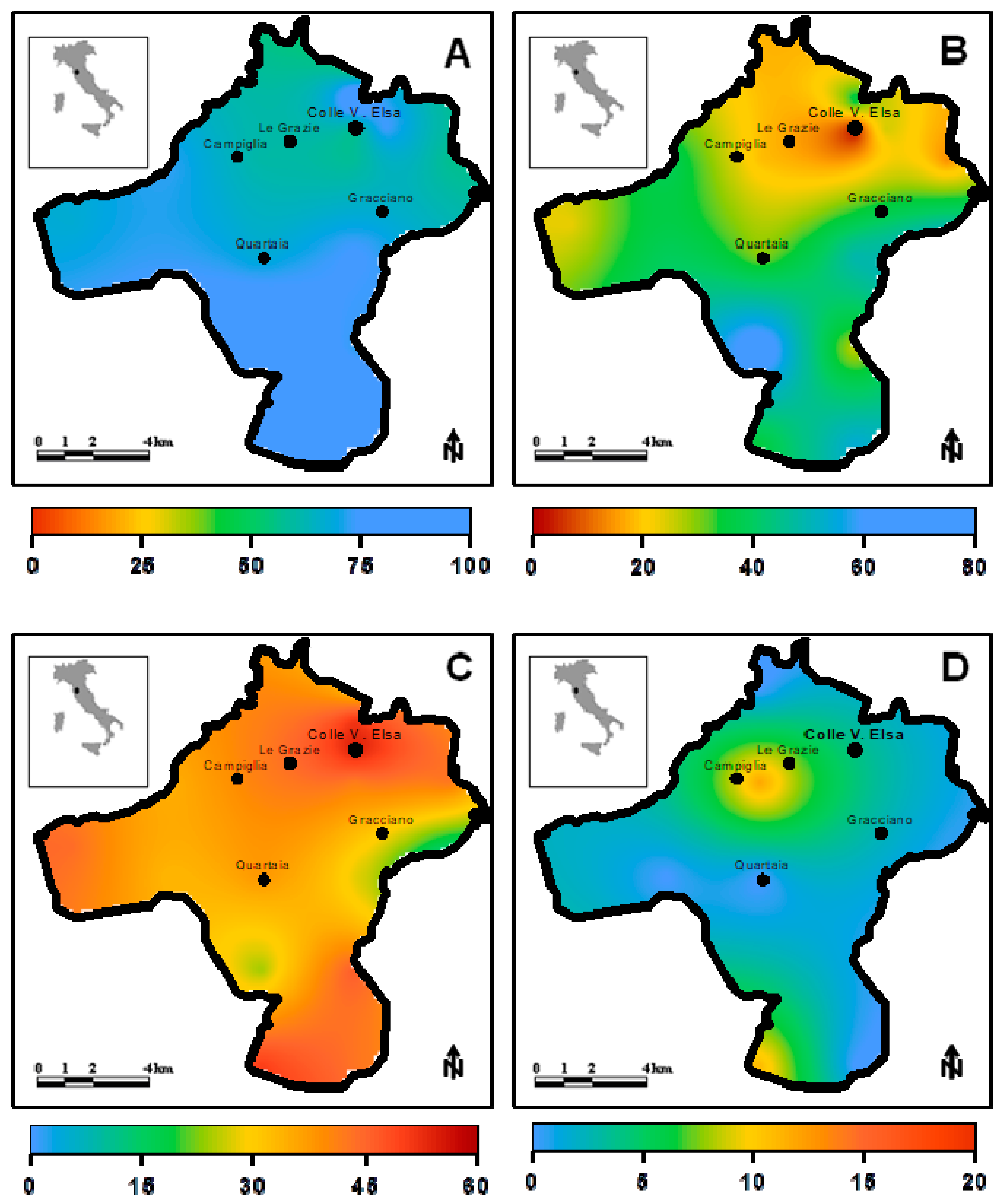
Epiphytic (tree inhabiting) lichens, well-known biomonitors of atmospheric pollution, have a great potential for being used in environmental forensics. Monitoring changes in biodiversity is a useful method for evaluating the quality of an ecosystem. Lichen species occurring within an area show measurable responses to environmental changes, and lichen biodiversity counts can be taken as reliable estimates of environmental quality, with high values corresponding to unpolluted or low polluted conditions and low values to polluted ones. Lichen diversity studies may be very useful in the framework of environmental forensics, since they may highlight the biological effects of pollutants and constitute the base for epidemiological studies. It is thus of paramount importance that great care is taken in the interpretation of the results, especially in the context of a rapidly changing environment and facing global change scenarios. For this reason, it seems advisable to produce several zonal maps, each based on different species groups, and each interpreted in a different way. This exercise could also be a valid support in the framework of a sensitivity analysis, to support or reject the primary results. In addition, a clear and formal expression of the overall uncertainty of the outputs is absolutely necessary.
Keywords: air pollution; biodiversity; bioindicators; biomonitoring; environment; uncertainty air pollution; biodiversity; bioindicators; biomonitoring; environment; uncertainty