Ginsenoside-Mediated Ferroptosis Regulation: Bidirectional Effects and Therapeutic Potential in Diseases


Abstract
1. Introduction
2. The Regulation of Ferroptosis by Ginsenosides in Diseases
2.1. Diseases Characterized by Malignant Cellular Proliferation
2.1.1. Glioblastoma
2.1.2. Hepatocellular Carcinoma (HCC)
2.1.3. Gallbladder Cancer (GBC)
2.1.4. Renal Cell Carcinoma (RCC)
2.1.5. Colorectal Cancer (CRC)
2.1.6. Multiple Myeloma (MM)
2.2. Non-Malignant Diseases Characterized by Abnormal Cellular Activation and Proliferation
Liver Fibrosis
2.3. Diseases Characterized by Cellular Injury and Degeneration
2.3.1. Acute Liver Injury (ALI)
2.3.2. Hypoxic–Ischemic Brain Damage (HIBD)
2.3.3. Subarachnoid Hemorrhage (SAH)
2.3.4. Myocardial Ischemia–Reperfusion (MI/R)
2.3.5. High-Altitude Pulmonary Edema (HAPE)
2.3.6. Chronic Obstructive Pulmonary Disease (COPD)
2.3.7. Ulcerative Colitis (UC)
2.3.8. Neurodegenerative Disease (NDDs)
2.3.9. Sepsis
3. An Integrative Framework: Core Intrinsic Mechanisms of Ginsenoside-Regulated Ferroptosis and Disease-Specific Downstream Pathways
4. Summary and Prospect
5. Materials and Methods
Author Contributions
Funding
Institutional Review Board Statement
Informed Consent Statement
Data Availability Statement
Conflicts of Interest
Abbreviations
| TCM | Traditional Chinese medicine |
| NSCLC | Non-small cell lung cancer |
| PD-L1 | Programmed Death-Ligand 1 |
| circ-0003074 | circular RNA 0003074 |
| miR-516b-5p | MicroRNA-516b-5p |
| KPNA4 | Karyopherin Alpha 4 |
| PCD | Programmed cell death |
| GSH | Glutathione |
| MDA | Malondialdehyde |
| ROS | Reactive oxygen species |
| GPX4 | Glutathione peroxidase 4 |
| HSCs | Hepatic stellate cells |
| GRg5 | Ginsenoside Rg5 |
| GRb1 | Ginsenoside Rb1 |
| GRg3 | Ginsenoside Rg3 |
| NR3C1 | Nuclear receptor subfamily 3, group C, member 1 |
| HSPB1 | Heat shock protein family B (small) member 1 |
| NCOA4 | Nuclear receptor coactivator 4 |
| HCC | Hepatocellular carcinoma |
| GRK1 | Ginsenoside RK1 |
| FSP1 | Ferroptosis suppressor protein 1 |
| GCK | Ginsenoside compound K |
| PI3K | Phosphatidylinositol 3-kinase |
| AKT | Protein kinase B |
| FOXO1 | Forkhead Box O1 |
| SLC7A11 | Solute family 7-member 11 |
| GBC | Gallbladder cancer |
| CD8+T | CD8-positive T |
| ERS | Endoplasmic reticulum stress |
| circFOXP1 | Circular RNA FOXP1 |
| miR-447a | MicroRNA-447a |
| RCC | Renal cell carcinoma |
| GRh4 | Ginsenoside Rh4 |
| NRF2 | Nuclear factor erythroid 2-related factor 2 |
| CRC | Colorectal cancer |
| GRh3 | Ginsenoside Rh3 |
| GSDMD | Gasdermin D |
| Stat3 | Signal Transducer and Activator of Transcription 3 |
| p53 | Tumor Protein p53 |
| MM | Multiple myeloma |
| SIRT2 | Sirtuin 2 |
| FTH1 | Ferritin heavy chain 1 |
| ACSL4 | Long-chain acyl-CoA synthase 4 |
| α-SMA | α-smooth muscle actin |
| ECM | Extracellular matrix |
| BECN1 | Beclin-1 |
| DNMT3B | DNA methyltransferase 3B |
| GRh2 | Ginsenoside Rh2 |
| IRF1 | Interferon regulatory factor 1 |
| HK2 | Hexokinase 2 |
| LPCAT3 | Lysophosphatidylcholine Acyltransferase 3 |
| ALOX | Arachidonate Lipoxygenase |
| ALI | Acute liver injury |
| AREs | Antioxidant response elements |
| LPS | Lipopolysaccharide |
| HO-1 | Heme oxygenase-1 |
| SQSTM1/p62 | Sequestosome 1 |
| LC3A/B | Microtubule-associated protein 1 light chain 3A/B |
| GRd | Ginsenoside Rd |
| CCl4 | Carbon tetrachloride |
| cGAS | Cyclic GMP-AMP Synthase |
| STING | Stimulator of Interferon Genes |
| HIBD | Hypoxic–ischemic brain injury |
| SAH | Subarachnoid hemorrhage |
| TfR | Transferrin receptor |
| DHODH | Dihydroorotate dehydrogenase |
| EBI | Early brain injury |
| MI | Myocardial ischemia |
| PCI | Percutaneous coronary intervention |
| TAC | Transverse aortic coarctation |
| MI/R | Myocardial ischemia–reperfusion |
| Keap1 | Kelch-like ECH-associated protein 1 |
| GRe | Ginsenoside Re |
| HAPE | High-altitude pulmonary edema |
| TFRC | Transferrin receptor |
| COPD | Chronic obstructive pulmonary disease |
| GRg1 | Ginsenoside Rg1 |
| PERK | Protein kinase R-like endoplasmic reticulum kinase |
| ATF4 | Activating transcription factor 4 |
| UC | Ulcerative colitis |
| 5-ASA | 5-aminosalicylic acid |
| DSS | Dextran sulfate sodium |
| NDDs | Neurodegenerative disease |
| AD | Alzheimer’s disease |
| PD | Parkinson’s disease |
| AIM2 | melanoma 2 |
| DMT1 | Divalent metal transporter 1 |
| CLP | Cecal ligation and perforation |
| SI-MD | Sepsis-induced myocardial dysfunction |
| BIM | Bcl-2 interacting mediator of cell death |
| PUMA | p53 upregulated modulator of apoptosis |
| FAK | Focal adhesion kinase |
| SI-AKI | Sepsis-induced acute kidney injury |
| CoQ10-NAD(P)H | Coenzyme Q10-Nicotinamide Adenine Dinucleotide (Phosphate) Hydrogen |
References
- Zhang, X.; Qiu, H.; Li, C.; Cai, P.; Qi, F. The positive role of traditional Chinese medicine as an adjunctive therapy for cancer. Biosci. Trends 2021, 15, 283–298. [Google Scholar] [CrossRef] [Scilit]
- Yu, J.; Zhong, B.; Xiao, Q.; Du, L.; Hou, Y.; Sun, H.-S.; Lu, J.-J.; Chen, X. Induction of programmed necrosis: A novel anti-cancer strategy for natural compounds. Pharmacol. Ther. 2020, 214, 107593. [Google Scholar] [CrossRef] [Scilit]
- Li, M.; Meng, Z.; Yu, S.; Li, J.; Wang, Y.; Yang, W.; Wu, H. Baicalein ameliorates cerebral ischemia-reperfusion injury by inhibiting ferroptosis via regulating GPX4/ACSL4/ACSL3 axis. Chem.-Biol. Interact. 2022, 366, 110137. [Google Scholar] [CrossRef] [Scilit]
- Tam, J.P.; Nguyen, G.K.T.; Loo, S.; Wang, S.; Yang, D.; Kam, A. Ginsentides: Cysteine and Glycine-rich Peptides from the Ginseng Family with Unusual Disulfide Connectivity. Sci. Rep. 2018, 8, 16201. [Google Scholar] [CrossRef] [Scilit]
- Yin, X.; Hu, H.; Shen, X.; Li, X.; Pei, J.; Xu, J. Ginseng Omics for Ginsenoside Biosynthesis. Curr. Pharm. Biotechnol. 2021, 22, 570–578. [Google Scholar] [CrossRef] [Scilit]
- Fan, W.; Fan, L.; Wang, Z.; Mei, Y.; Liu, L.; Li, L.; Yang, L.; Wang, Z. Rare ginsenosides: A unique perspective of ginseng research. J. Adv. Res. 2024, 66, 303–328. [Google Scholar] [CrossRef] [Scilit]
- Lee, J.-I.; Park, K.S.; Cho, I.-H. Panax ginseng: A candidate herbal medicine for autoimmune disease. J. Ginseng Res. 2019, 43, 342–348. [Google Scholar] [CrossRef] [Scilit] [PubMed]
- Im, D.-S. Pro-Resolving Effect of Ginsenosides as an Anti-Inflammatory Mechanism of Panax ginseng. Biomolecules 2020, 10, 444. [Google Scholar] [CrossRef] [Scilit]
- Cong, Z.; Zhao, Q.; Yang, B.; Cong, D.; Zhou, Y.; Lei, X.; Zhang, X. Ginsenoside Rh3 Inhibits Proliferation and Induces Apoptosis of Colorectal Cancer Cells. Pharmacology 2019, 105, 329–338. [Google Scholar] [CrossRef] [Scilit] [PubMed]
- Shin, K.K.; Yi, Y.-S.; Kim, J.K.; Kim, H.; Hossain, M.A.; Kim, J.-H.; Cho, J.Y. Korean Red Ginseng Plays an Anti-Aging Role by Modulating Expression of Aging-Related Genes and Immune Cell Subsets. Molecules 2020, 25, 1492. [Google Scholar] [CrossRef] [Scilit]
- Jiang, Z.; Yang, Y.; Yang, Y.; Zhang, Y.; Yue, Z.; Pan, Z.; Ren, X. Ginsenoside Rg3 attenuates cisplatin resistance in lung cancer by downregulating PD-L1 and resuming immune. Biomed. Pharmacother. 2017, 96, 378–383. [Google Scholar] [CrossRef] [Scilit]
- Wang, T.; Zhang, C.; Wang, S. Ginsenoside Rg3 inhibits osteosarcoma progression by reducing circ_0003074 expression in a miR-516b-5p/KPNA4-dependent manner. J. Orthop. Surg. Res. 2021, 16, 724. [Google Scholar] [CrossRef] [Scilit]
- Jiang, X.; Stockwell, B.R.; Conrad, M. Ferroptosis: Mechanisms, biology and role in disease. Nat. Rev. Mol. Cell Biol. 2021, 22, 266–282. [Google Scholar] [CrossRef] [Scilit] [PubMed]
- Dixon, S.J.; Lemberg, K.M.; Lamprecht, M.R.; Skouta, R.; Zaitsev, E.M.; Gleason, C.E.; Patel, D.N.; Bauer, A.J.; Cantley, A.M.; Yang, W.S.; et al. Ferroptosis: An Iron-Dependent Form of Nonapoptotic Cell Death. Cell 2012, 149, 1060–1072. [Google Scholar] [CrossRef] [Scilit]
- Bedoui, S.; Herold, M.J.; Strasser, A. Emerging connectivity of programmed cell death pathways and its physiological implications. Nat. Rev. Mol. Cell Biol. 2020, 21, 678–695. [Google Scholar] [CrossRef] [Scilit]
- Li, J.; Cao, F.; Yin, H.L.; Huang, Z.J.; Lin, Z.T.; Mao, N.; Sun, B.; Wang, G. Ferroptosis: Past, present and future. Cell Death Dis. 2020, 11, 88. [Google Scholar] [CrossRef] [Scilit] [PubMed]
- Wu, K.; Fei, L.; Wang, X.; Lei, Y.; Yu, L.; Xu, W.; Chen, J.; Zhu, E.; Zhong, M.; Huang, M.; et al. ZIP14 is involved in iron deposition and triggers ferroptosis in diabetic nephropathy. Metallomics 2022, 14, mfac034. [Google Scholar] [CrossRef] [Scilit] [PubMed]
- Liu, L.; Yang, S.; Wang, H. α-Lipoic acid alleviates ferroptosis in the MPP+-induced PC12 cells via activating the PI3K/Akt/Nrf2 pathway. Cell Biol. Int. 2020, 45, 422–431. [Google Scholar] [CrossRef] [Scilit]
- Chen, X.; Kang, R.; Kroemer, G.; Tang, D. Broadening horizons: The role of ferroptosis in cancer. Nat. Rev. Clin. Oncol. 2021, 18, 280–296. [Google Scholar] [CrossRef] [Scilit]
- Dixon, S.J.; Stockwell, B.R. The role of iron and reactive oxygen species in cell death. Nat. Chem. Biol. 2013, 10, 9–17. [Google Scholar] [CrossRef] [Scilit]
- Lei, G.; Zhang, Y.; Koppula, P.; Liu, X.; Zhang, J.; Lin, S.H.; Ajani, J.A.; Xiao, Q.; Liao, Z.; Wang, H.; et al. The role of ferroptosis in ionizing radiation-induced cell death and tumor suppression. Cell Res. 2020, 30, 146–162. [Google Scholar] [CrossRef] [Scilit]
- Nakamura, T.; Naguro, I.; Ichijo, H. Iron homeostasis and iron-regulated ROS in cell death, senescence and human diseases. Biochim. Biophys. Acta (BBA)-Gen. Subj. 2019, 1863, 1398–1409. [Google Scholar] [CrossRef] [Scilit] [PubMed]
- Feng, H.; Stockwell, B.R. Unsolved mysteries: How does lipid peroxidation cause ferroptosis? PLoS Biol. 2018, 16, e2006203. [Google Scholar] [CrossRef] [Scilit] [PubMed]
- Agmon, E.; Solon, J.; Bassereau, P.; Stockwell, B.R. Modeling the effects of lipid peroxidation during ferroptosis on membrane properties. Sci. Rep. 2018, 8, 5155. [Google Scholar] [CrossRef] [Scilit] [PubMed]
- Lei, G.; Zhuang, L.; Gan, B. Targeting ferroptosis as a vulnerability in cancer. Nat. Rev. Cancer 2022, 22, 381–396. [Google Scholar] [CrossRef] [Scilit]
- Zhang, C.; Liu, X.; Jin, S.; Chen, Y.; Guo, R. Ferroptosis in cancer therapy: A novel approach to reversing drug resistance. Mol. Cancer 2022, 21, 47. [Google Scholar] [CrossRef] [Scilit]
- Li, H.; Sun, Y.; Yao, Y.; Ke, S.; Zhang, N.; Xiong, W.; Shi, J.; He, C.; Xiao, X.; Yu, H.; et al. USP8-governed GPX4 homeostasis orchestrates ferroptosis and cancer immunotherapy. Proc. Natl. Acad. Sci. USA 2024, 121, e2315541121, Correction in Proc. Natl. Acad. Sci. USA 2024, 121, e2409669121. https://doi.org/10.1073/pnas.2409669121. [Google Scholar] [CrossRef] [Scilit]
- Fu, Y.; Zhou, X.; Wang, L.; Fan, W.; Gao, S.; Zhang, D.; Ling, Z.; Zhang, Y.; Ma, L.; Bai, F.; et al. Salvianolic acid B attenuates liver fibrosis by targeting Ecm1 and inhibiting hepatocyte ferroptosis. Redox Biol. 2024, 69, 103029. [Google Scholar] [CrossRef] [Scilit]
- Ryan, S.K.; Zelic, M.; Han, Y.; Teeple, E.; Chen, L.; Sadeghi, M.; Shankara, S.; Guo, L.; Li, C.; Pontarelli, F.; et al. Microglia ferroptosis is regulated by SEC24B and contributes to neurodegeneration. Nat. Neurosci. 2022, 26, 12–26. [Google Scholar] [CrossRef] [Scilit]
- Wang, X.; Chen, T.; Chen, S.; Zhang, J.; Cai, L.; Liu, C.; Zhang, Y.; Wu, X.; Li, N.; Ma, Z.; et al. STING aggravates ferroptosis-dependent myocardial ischemia-reperfusion injury by targeting GPX4 for autophagic degradation. Signal Transduct. Target. Ther. 2025, 10, 136. [Google Scholar] [CrossRef] [Scilit]
- Zhang, C.-Y.; Jiang, Z.-M.; Ma, X.-F.; Li, Y.; Liu, X.-Z.; Li, L.-L.; Wu, W.-H.; Wang, T. Saikosaponin-d Inhibits the Hepatoma Cells and Enhances Chemosensitivity Through SENP5-Dependent Inhibition of Gli1 SUMOylation Under Hypoxia. Front. Pharmacol. 2019, 10, 1039. [Google Scholar] [CrossRef] [Scilit]
- Jia, X.; Dang, S.; Cheng, Y.; Zhang, X.; Li, M.; Li, Y.; Li, S. Effects of Saikosaponin-D on syndecan-2, matrix metalloproteinases and tissue inhibitor of metalloproteinases-2 in rats with hepatocellular carcinoma. J. Tradit. Chin. Med. 2012, 32, 415–422. [Google Scholar] [CrossRef] [Scilit]
- Zhang, G.; Hu, J.; Li, A.; Zhang, H.; Guo, Z.; Li, X.; You, Z.; Wang, Y.; Jing, Z. Ginsenoside Rg5 inhibits glioblastoma by activating ferroptosis via NR3C1/HSPB1/NCOA4. Phytomedicine 2024, 129, 155631. [Google Scholar] [CrossRef] [Scilit] [PubMed]
- Jiang, Y.; Yu, Y.; Pan, Z.; Wang, Z.; Sun, M. Ginsenoside RK1 Induces Ferroptosis in Hepatocellular Carcinoma Cells through an FSP1-Dependent Pathway. Pharmaceuticals 2024, 17, 871. [Google Scholar] [CrossRef] [Scilit] [PubMed]
- Chen, J.; Wang, Z.; Fu, J.; Cai, Y.; Cheng, H.; Cui, X.; Sun, M.; Liu, M.; Zhang, X. Ginsenoside compound K induces ferroptosis via the FOXO pathway in liver cancer cells. BMC Complement. Med. Ther. 2024, 24, 174. [Google Scholar] [CrossRef] [Scilit]
- Ye, Z.; Ding, J.; Huang, J.; Hu, Z.; Jin, F.; Wu, K. Ginsenoside Rg3 activates the immune function of CD8+ T cells via circFOXP1-miR-4477a-PD-L1 axis to induce ferroptosis in gallbladder cancer. Arch. Pharmacal Res. 2024, 47, 793–811. [Google Scholar] [CrossRef] [Scilit] [PubMed]
- Zhao, H.; Ding, R.; Han, J. Ginsenoside Rh4 Facilitates the Sensitivity of Renal Cell Carcinoma to Ferroptosis via the NRF2 Pathway. Arch. Esp. Urol. 2024, 77, 119–128. [Google Scholar] [CrossRef] [Scilit]
- Wu, Y.; Pi, D.; Zhou, S.; Yi, Z.; Dong, Y.; Wang, W.; Ye, H.; Chen, Y.; Zuo, Q.; Ouyang, M. Ginsenoside Rh3 induces pyroptosis and ferroptosis through the Stat3/p53/NRF2 axis in colorectal cancer cells. Acta Biochim. Biophys. Sin. 2023, 55, 587–600. [Google Scholar] [CrossRef] [Scilit]
- Ying, Q.; Lou, J.; Zheng, D. Ginsenoside Rh4 inhibits the malignant progression of multiple myeloma and induces ferroptosis by regulating SIRT2. Clin. Exp. Pharmacol. Physiol. 2023, 50, 757–765. [Google Scholar] [CrossRef] [Scilit]
- Muir, M.; Gopakumar, S.; Traylor, J.; Lee, S.; Rao, G. Glioblastoma multiforme: Novel therapeutic targets. Expert Opin. Ther. Targets 2020, 24, 605–614. [Google Scholar] [CrossRef] [Scilit]
- Gao, X.-F.; Zhang, J.-J.; Gong, X.-J.; Li, K.-K.; Zhang, L.-X.; Li, W. Ginsenoside Rg5: A Review of Anticancer and Neuroprotection with Network Pharmacology Approach. Am. J. Chin. Med. 2022, 50, 2033–2056. [Google Scholar] [CrossRef] [Scilit]
- Cui, Y.; Su, Y.; Deng, L.; Wang, W. Ginsenoside-Rg5 Inhibits Retinoblastoma Proliferation and Induces Apoptosis through Suppressing BCL2 Expression. Chemotherapy 2018, 63, 293–300. [Google Scholar] [CrossRef] [Scilit]
- Liu, Y.; Fan, D. The Preparation of Ginsenoside Rg5, Its Antitumor Activity against Breast Cancer Cells and Its Targeting of PI3K. Nutrients 2020, 12, 246. [Google Scholar] [CrossRef] [Scilit]
- Liu, Y.; Fan, D. Ginsenoside Rg5 induces G2/M phase arrest, apoptosis and autophagy via regulating ROS-mediated MAPK pathways against human gastric cancer. Biochem. Pharmacol. 2019, 168, 285–304. [Google Scholar] [CrossRef] [Scilit]
- Vogel, A.; Meyer, T.; Sapisochin, G.; Salem, R.; Saborowski, A. Hepatocellular carcinoma. Lancet 2022, 400, 1345–1362. [Google Scholar] [CrossRef] [Scilit]
- Xia, S.; Pan, Y.; Liang, Y.; Xu, J.; Cai, X. The microenvironmental and metabolic aspects of sorafenib resistance in hepatocellular carcinoma. eBioMedicine 2020, 51, 102610. [Google Scholar] [CrossRef] [Scilit]
- Jiang, Y.; Yu, Y.; Pan, Z.; Glandorff, C.; Sun, M. Ferroptosis: A new hunter of hepatocellular carcinoma. Cell Death Discov. 2024, 10, 136. [Google Scholar] [CrossRef] [Scilit]
- Oh, J.-M.; Lee, J.; Im, W.-T.; Chun, S. Ginsenoside Rk1 Induces Apoptosis in Neuroblastoma Cells Through Loss of Mitochondrial Membrane Potential and Activation of Caspases. Int. J. Mol. Sci. 2019, 20, 1213. [Google Scholar] [CrossRef] [Scilit]
- Lu, H.; Yin, H.; Qu, L.; Ma, X.; Fu, R.; Fan, D. Ginsenoside Rk1 regulates glutamine metabolism in hepatocellular carcinoma through inhibition of the ERK/c-Myc pathway. Food Funct. 2022, 13, 3793–3811. [Google Scholar] [CrossRef] [Scilit]
- Du, N.; Song, D.; Sun, X.; Ren, H.; Zhang, Y. Ginsenoside Rk1 inhibits the malignant progression of lung cancer by inactivating the INSR/PI3K/AKT pathway. Tissue Cell 2025, 95, 102880. [Google Scholar] [CrossRef] [Scilit]
- Wu, H.; Qu, L.; Bai, X.; Zhu, C.; Liu, Y.; Duan, Z.; Liu, H.; Fu, R.; Fan, D. Ginsenoside Rk1 induces autophagy-dependent apoptosis in hepatocellular carcinoma by AMPK/mTOR signaling pathway. Food Chem. Toxicol. 2024, 186, 114587. [Google Scholar] [CrossRef] [Scilit]
- Li, Q.; Sun, H.; Liu, S.; Tang, J.; Liu, S.; Yin, P.; Mi, Q.; Liu, J.; Yu, L.; Bi, Y. Ginsenoside Rk1 inhibits HeLa cell proliferation through an endoplasmic reticulum signaling pathway. J. Ginseng Res. 2023, 47, 645–653. [Google Scholar] [CrossRef] [Scilit] [PubMed]
- Chen, J.; Si, M.; Wang, Y.; Liu, L.; Zhang, Y.; Zhou, A.; Wei, W. Ginsenoside metabolite compound K exerts anti-inflammatory and analgesic effects via downregulating COX2. Inflammopharmacology 2018, 27, 157–166. [Google Scholar] [CrossRef] [Scilit]
- Bai, C.; Zhao, J.; Su, J.; Chen, J.; Cui, X.; Sun, M.; Zhang, X. Curcumin induces mitochondrial apoptosis in human hepatoma cells through BCLAF1-mediated modulation of PI3K/AKT/GSK-3β signaling. Life Sci. 2022, 306, 120804. [Google Scholar] [CrossRef] [Scilit]
- Zhang, X.; Zhang, S.; Sun, Q.; Jiao, W.; Yan, Y.; Zhang, X. Compound K Induces Endoplasmic Reticulum Stress and Apoptosis in Human Liver Cancer Cells by Regulating STAT3. Molecules 2018, 23, 1482. [Google Scholar] [CrossRef] [Scilit]
- You, L.; Cha, S.; Kim, M.-Y.; Cho, J.Y. Ginsenosides are active ingredients in Panax ginseng with immunomodulatory properties from cellular to organismal levels. J. Ginseng Res. 2021, 46, 711–721. [Google Scholar] [CrossRef] [Scilit] [PubMed]
- Wan, Y.; Liu, D.; Xia, J.; Xu, J.-F.; Zhang, L.; Yang, Y.; Wu, J.-J.; Ao, H. Ginsenoside CK, rather than Rb1, possesses potential chemopreventive activities in human gastric cancer via regulating PI3K/AKT/NF-κB signal pathway. Front. Pharmacol. 2022, 13, 977539. [Google Scholar] [CrossRef] [Scilit]
- Waller, G.C.; Sarpel, U. Gallbladder Cancer. Surg. Clin. N. Am. 2024, 104, 1263–1280. [Google Scholar] [CrossRef] [Scilit]
- Zhu, Y.; Wang, A.; Zhang, S.; Kim, J.; Xia, J.; Zhang, F.; Wang, D.; Wang, Q.; Wang, J. Paclitaxel-loaded ginsenoside Rg3 liposomes for drug-resistant cancer therapy by dual targeting of the tumor microenvironment and cancer cells. J. Adv. Res. 2022, 49, 159–173. [Google Scholar] [CrossRef] [Scilit] [PubMed]
- Barry, K.C.; Hsu, J.; Broz, M.L.; Cueto, F.J.; Binnewies, M.; Combes, A.J.; Nelson, A.E.; Loo, K.; Kumar, R.; Rosenblum, M.D.; et al. A natural killer–dendritic cell axis defines checkpoint therapy–responsive tumor microenvironments. Nat. Med. 2018, 24, 1178–1191. [Google Scholar] [CrossRef] [Scilit]
- Wu, K.; Huang, J.; Xu, T.; Ye, Z.; Jin, F.; Li, N.; Lv, B. MicroRNA-181b blocks gensenoside Rg3-mediated tumor suppression of gallbladder carcinoma by promoting autophagy flux via CREBRF/CREB3 pathway. Am. J. Transl. Res. 2019, 11, 5776–5787. [Google Scholar]
- Wu, K.; Huang, J.; Li, N.; Xu, T.; Cai, W.; Ye, Z. Antitumor effect of ginsenoside Rg3 on gallbladder cancer by inducing endoplasmic reticulum stress-mediated apoptosis in vitro and in vivo. Oncol. Lett. 2018, 16, 5687–5696. [Google Scholar] [CrossRef] [Scilit]
- Ljungberg, B.; Albiges, L.; Abu-Ghanem, Y.; Bedke, J.; Capitanio, U.; Dabestani, S.; Fernández-Pello, S.; Giles, R.H.; Hofmann, F.; Hora, M.; et al. European Association of Urology Guidelines on Renal Cell Carcinoma: The 2022 Update. Eur. Urol. 2022, 82, 399–410. [Google Scholar] [CrossRef] [Scilit]
- Zheng, Q.; Li, P.; Zhou, X.; Qiang, Y.; Fan, J.; Lin, Y.; Chen, Y.; Guo, J.; Wang, F.; Xue, H.; et al. Deficiency of the X-inactivation escaping gene KDM5C in clear cell renal cell carcinoma promotes tumorigenicity by reprogramming glycogen metabolism and inhibiting ferroptosis. Theranostics 2021, 11, 8674–8691. [Google Scholar] [CrossRef] [Scilit]
- Deng, X.; Zhao, J.; Qu, L.; Duan, Z.; Fu, R.; Zhu, C.; Fan, D. Ginsenoside Rh4 suppresses aerobic glycolysis and the expression of PD-L1 via targeting AKT in esophageal cancer. Biochem. Pharmacol. 2020, 178, 114038. [Google Scholar] [CrossRef] [Scilit]
- Jiang, H.; Ma, P.; Duan, Z.; Liu, Y.; Shen, S.; Mi, Y.; Fan, D. Ginsenoside Rh4 Suppresses Metastasis of Gastric Cancer via SIX1-Dependent TGF-β/Smad2/3 Signaling Pathway. Nutrients 2022, 14, 1564. [Google Scholar] [CrossRef] [Scilit]
- Li, F.; Aljahdali, I.A.M.; Zhang, R.; Nastiuk, K.L.; Krolewski, J.J.; Ling, X. Kidney cancer biomarkers and targets for therapeutics: Survivin (BIRC5), XIAP, MCL-1, HIF1α, HIF2α, NRF2, MDM2, MDM4, p53, KRAS and AKT in renal cell carcinoma. J. Exp. Clin. Cancer Res. 2021, 40, 254. [Google Scholar] [CrossRef] [Scilit]
- Sung, H.; Ferlay, J.; Siegel, R.L.; Laversanne, M.; Soerjomataram, I.; Jemal, A.; Bray, F. Global Cancer Statistics 2020: GLOBOCAN Estimates of Incidence and Mortality Worldwide for 36 Cancers in 185 Countries. CA Cancer J. Clin. 2021, 71, 209–249. [Google Scholar] [CrossRef] [Scilit]
- Benson, A.B.; Venook, A.P.; Al-Hawary, M.M.; Cederquist, L.; Chen, Y.-J.; Ciombor, K.K.; Cohen, S.; Cooper, H.S.; Deming, D.; Engstrom, P.F.; et al. NCCN Guidelines Insights: Colon Cancer, Version 2.2018. J. Natl. Compr. Cancer Netw. 2018, 16, 359–369. [Google Scholar] [CrossRef] [Scilit]
- Rajkumar, S.V. Multiple myeloma: Every year a new standard? Hematol. Oncol. 2019, 37, 62–65. [Google Scholar] [CrossRef] [Scilit]
- Rodriguez-Otero, P.; Paiva, B.; San-Miguel, J.F. Roadmap to cure multiple myeloma. Cancer Treat. Rev. 2021, 100, 102284. [Google Scholar] [CrossRef] [Scilit]
- Bai, X.; Fu, R.; Duan, Z.; Liu, Y.; Zhu, C.; Fan, D. Ginsenoside Rh4 alleviates antibiotic-induced intestinal inflammation by regulating the TLR4-MyD88-MAPK pathway and gut microbiota composition. Food Funct. 2021, 12, 2874–2885. [Google Scholar] [CrossRef] [Scilit]
- Lin, L.; Li, X.; Li, Y.; Lang, Z.; Li, Y.; Zheng, J. Ginsenoside Rb1 induces hepatic stellate cell ferroptosis to alleviate liver fibrosis via the BECN1/SLC7A11 axis. J. Pharm. Anal. 2023, 14, 100902. [Google Scholar] [CrossRef] [Scilit]
- Lang, Z.; Yu, S.; Hu, Y.; Tao, Q.; Zhang, J.; Wang, H.; Zheng, L.; Yu, Z.; Zheng, J. Ginsenoside Rh2 promotes hepatic stellate cell ferroptosis and inactivation via regulation of IRF1-inhibited SLC7A11. Phytomedicine 2023, 118, 154950. [Google Scholar] [CrossRef] [Scilit]
- Xia, Z.; Wang, Y.; Zhao, Q.; Deng, M.; Li, C.; Zeng, Y.; Xu, J.; Ying, H.; Zhu, D.; Zhang, X.; et al. Ginsenoside RK1 Promotes Hepatic Stellate Cell Glycolysis-Mediated Ferroptosis by Activating the HK2/ACSL4/LPCAT3/ALOX5 Signaling Pathway. J. Agric. Food Chem. 2025, 73, 17205–17218. [Google Scholar] [CrossRef] [Scilit] [PubMed]
- Shan, G.-Y.; Shi, Y.-P.; Zhang, Y.-X.; Wan, H.; Gao, Z.-C.; Li, H.-J. Ginsenoside Rg5 ameliorates lipopolysaccharide (LPS)-induced acute liver injury via interfering Autophagy/Nrf2/Ferroptosis signal axis. Phytomedicine 2025, 144, 156941. [Google Scholar] [CrossRef] [Scilit] [PubMed]
- Li, Y.; Yu, P.; Fu, W.; Wang, S.; Zhao, W.; Ma, Y.; Wu, Y.; Cui, H.; Yu, X.; Fu, L.; et al. Ginsenoside Rd Inhibited Ferroptosis to Alleviate CCl4-Induced Acute Liver Injury in Mice via cGAS/STING Pathway. Am. J. Chin. Med. 2022, 51, 91–105. [Google Scholar] [CrossRef] [Scilit] [PubMed]
- Zhang, M.; Lin, W.; Tao, X.; Zhou, W.; Liu, Z.; Zhang, Z.; Jin, S.; Zhang, H.; Teng, C.; Zhu, J.; et al. Ginsenoside Rb1 inhibits ferroptosis to ameliorate hypoxic-ischemic brain damage in neonatal rats. Int. Immunopharmacol. 2023, 121, 110503. [Google Scholar] [CrossRef] [Scilit]
- Jiang, G.-Y.; Yang, H.-R.; Li, C.; Liu, N.; Ma, S.-J.; Jin, B.-X.; Yan, C.; Gong, H.-D.; Li, J.-Y.; Yan, H.-C.; et al. Ginsenoside Rd alleviates early brain injury by inhibiting ferroptosis through cGAS/STING/DHODH pathway after subarachnoid hemorrhage. Free Radic. Biol. Med. 2024, 228, 299–318. [Google Scholar] [CrossRef] [Scilit]
- Zhong, G.; Chen, J.; Li, Y.; Han, Y.; Wang, M.; Nie, Q.; Xu, M.; Zhu, Q.; Chang, X.; Wang, L. Ginsenoside Rg3 attenuates myocardial ischemia/reperfusion-induced ferroptosis via the keap1/Nrf2/GPX4 signaling pathway. BMC Complement. Med. Ther. 2024, 24, 247. [Google Scholar] [CrossRef] [Scilit]
- Ye, J.; Lyu, T.-J.; Li, L.-Y.; Liu, Y.; Zhang, H.; Wang, X.; Xi, X.; Liu, Z.-J.; Gao, J.-Q. Ginsenoside Re attenuates myocardial ischemia/reperfusion induced ferroptosis via miR-144-3p/SLC7A11. Phytomedicine 2023, 113, 154681. [Google Scholar] [CrossRef] [Scilit]
- He, Y.; Wang, Y.; Duan, H.; Huang, D.; Jia, N.; Shen, Z.; Wang, Z.; Wang, M.; Zhao, T. Pharmacological targeting of ferroptosis in hypoxia-induced pulmonary edema: Therapeutic potential of ginsenoside Rg3 through activation of the PI3K/AKT pathway. Front. Pharmacol. 2025, 16, 1644436. [Google Scholar] [CrossRef] [Scilit] [PubMed]
- Tan, W.; Liang, Z.; Tan, X.; Tan, G. Ginsenoside Rg1 improves cigarette smoke-induced ferroptosis in COPD by regulating PERK/ATF4 axis to inhibit endoplasmic reticulum stress. Biochem. Biophys. Res. Commun. 2024, 739, 150946. [Google Scholar] [CrossRef] [Scilit] [PubMed]
- Zhao, X.; Yuan, W.; Yang, L.; Yan, F.; Cui, D. Ginsenoside Rh2 suppresses ferroptosis in ulcerative colitis by targeting specific protein 1 by upregulating microRNA-125a-5p. Eur. J. Med. Res. 2024, 29, 450. [Google Scholar] [CrossRef] [Scilit]
- Kong, L.; Liu, Y.; Li, J.; Wang, Y.; Ji, P.; Shi, Q.; Han, M.; Xu, H.; Li, W.; Li, W. Ginsenoside Rg1 alleviates chronic inflammation-induced neuronal ferroptosis and cognitive impairments via regulation of AIM2-Nrf2 signaling pathway. J. Ethnopharmacol. 2024, 330, 118205. [Google Scholar] [CrossRef] [Scilit]
- Lin, L.Q.; Mao, F.K.; Lin, J.; Guo, L.; Yuan, W.R.; Wang, B.Y. Ginsenoside Rg1 induces ferroptosis by regulating the focal adhesion kinase/protein kinase B-forkhead box O3A signaling pathway and alleviates sepsis-induced myocardial damage. J. Physiol. Pharmacol. 2024, 75, 389–401. [Google Scholar] [CrossRef] [Scilit]
- Guo, J.; Wang, R.; Min, F. Ginsenoside Rg1 ameliorates sepsis-induced acute kidney injury by inhibiting ferroptosis in renal tubular epithelial cells. J. Leukoc. Biol. 2022, 112, 1065–1077. [Google Scholar] [CrossRef] [Scilit] [PubMed]
- Devaraj, E.; Perumal, E.; Subramaniyan, R.; Mustapha, N. Liver fibrosis: Extracellular vesicles mediated intercellular communication in perisinusoidal space. Hepatology 2021, 76, 275–285. [Google Scholar] [CrossRef] [Scilit]
- Dhar, D.; Baglieri, J.; Kisseleva, T.; A Brenner, D. Mechanisms of liver fibrosis and its role in liver cancer. Exp. Biol. Med. 2020, 245, 96–108. [Google Scholar] [CrossRef] [Scilit]
- Roehlen, N.; Crouchet, E.; Baumert, T.F. Liver Fibrosis: Mechanistic Concepts and Therapeutic Perspectives. Cells 2020, 9, 875. [Google Scholar] [CrossRef] [Scilit]
- Xia, J.; Ma, S.; Zhu, X.; Chen, C.; Zhang, R.; Cao, Z.; Chen, X.; Zhang, L.; Zhu, Y.; Zhang, S.; et al. Versatile ginsenoside Rg3 liposomes inhibit tumor metastasis by capturing circulating tumor cells and destroying metastatic niches. Sci. Adv. 2022, 8, eabj1262. [Google Scholar] [CrossRef] [Scilit]
- Ren, B.; Feng, J.; Yang, N.; Guo, Y.; Chen, C.; Qin, Q. Ginsenoside Rg3 attenuates angiotensin II-induced myocardial hypertrophy through repressing NLRP3 inflammasome and oxidative stress via modulating SIRT1/NF-κB pathway. Int. Immunopharmacol. 2021, 98, 107841. [Google Scholar] [CrossRef] [Scilit] [PubMed]
- Li, W.; Wang, J.-Q.; Zhou, Y.-D.; Hou, J.-G.; Liu, Y.; Wang, Y.-P.; Gong, X.-J.; Lin, X.-H.; Jiang, S.; Wang, Z. Rare Ginsenoside 20(R)-Rg3 Inhibits D-Galactose-Induced Liver and Kidney Injury by Regulating Oxidative Stress-Induced Apoptosis. Am. J. Chin. Med. 2020, 48, 1141–1157. [Google Scholar] [CrossRef] [Scilit]
- Xiaodan, S.; Ying, C. Role of ginsenoside Rh2 in tumor therapy and tumor microenvironment immunomodulation. Biomed. Pharmacother. 2022, 156, 113912. [Google Scholar] [CrossRef] [Scilit] [PubMed]
- Lin, Z.; Xie, R.; Zhong, C.; Huang, J.; Shi, P.; Yao, H. Recent progress (2015–2020) in the investigation of the pharmacological effects and mechanisms of ginsenoside Rb1, a main active ingredient in Panax ginseng Meyer. J. Ginseng Res. 2021, 46, 39–53. [Google Scholar] [CrossRef] [Scilit] [PubMed]
- Hong, Y.; Fan, D. Ginsenoside Rk1 induces cell cycle arrest and apoptosis in MDA-MB-231 triple negative breast cancer cells. Toxicology 2019, 418, 22–31. [Google Scholar] [CrossRef] [Scilit]
- Miao, Z.; Tian, W.; Ye, Y.; Gu, W.; Bao, Z.; Xu, L.; Sun, G.; Li, C.; Tu, Y.; Chao, H.; et al. Hsp90 induces Acsl4-dependent glioma ferroptosis via dephosphorylating Ser637 at Drp1. Cell Death Dis. 2022, 13, 548. [Google Scholar] [CrossRef] [Scilit]
- Hu, Y.; Lang, Z.; Li, X.; Lin, L.; Li, Y.; Zhang, R.; Zheng, J.; Yu, Z. Ginsenoside Rg3 promotes hepatic stellate cell ferroptosis by epigenetically regulating ACSL4 to suppress liver fibrosis progression. Phytomedicine 2023, 124, 155289. [Google Scholar] [CrossRef] [Scilit]
- Chen, S.; He, Z.; Xie, W.; Chen, X.; Lin, Z.; Ma, J.; Liu, Z.; Yang, S.; Wang, Y. Ginsenoside Rh2 attenuates CDAHFD-induced liver fibrosis in mice by improving intestinal microbial composition and regulating LPS-mediated autophagy. Phytomedicine 2022, 101, 154121. [Google Scholar] [CrossRef] [Scilit]
- Gupta, G.; Bhat, A.A.; Goyal, A.; Singla, N.; Gupta, S.; Sharma, S.; Bhatt, S.; Dua, K. Exploring ACSL4/LPCAT3/ALOX15 and SLC7A11/GPX4/NFE2L2 as Potential Targets in Ferroptosis-Based Cancer Therapy. Futur. Med. Chem. 2023, 15, 1209–1212. [Google Scholar] [CrossRef] [Scilit]
- Kerins, M.J.; Ooi, A. The Roles of NRF2 in Modulating Cellular Iron Homeostasis. Antioxid. Redox Signal. 2018, 29, 1756–1773. [Google Scholar] [CrossRef] [Scilit]
- Kaghazchi, B.; Um, I.H.; Elshani, M.; Read, O.J.; Harrison, D.J. Spatial Analysis of NQO1 in Non-Small Cell Lung Cancer Shows Its Expression Is Independent of NRF1 and NRF2 in the Tumor Microenvironment. Biomolecules 2022, 12, 1652. [Google Scholar] [CrossRef] [Scilit] [PubMed]
- Zhao, T.; Yu, Z.; Zhou, L.; Wang, X.; Hui, Y.; Mao, L.; Fan, X.; Wang, B.; Zhao, X.; Sun, C. Regulating Nrf2-GPx4 axis by bicyclol can prevent ferroptosis in carbon tetrachloride-induced acute liver injury in mice. Cell Death Discov. 2022, 8, 380. [Google Scholar] [CrossRef] [Scilit]
- Yamashita, S.-I.; Sugiura, Y.; Matsuoka, Y.; Maeda, R.; Inoue, K.; Furukawa, K.; Fukuda, T.; Chan, D.C.; Kanki, T. Mitophagy mediated by BNIP3 and NIX protects against ferroptosis by downregulating mitochondrial reactive oxygen species. Cell Death Differ. 2024, 31, 651–661. [Google Scholar] [CrossRef] [Scilit] [PubMed]
- Yang, N.; Liang, G.; Lin, J.; Zhang, S.; Lin, Q.; Ji, X.; Chen, H.; Li, N.; Jin, S. Ginsenoside Rd therapy improves histological and functional recovery in a rat model of inflammatory bowel disease. Phytother. Res. 2020, 34, 3019–3028. [Google Scholar] [CrossRef] [Scilit]
- Jung, E.; Pyo, M.-K.; Kim, J. Pectin-Lyase-Modified Ginseng Extract and Ginsenoside Rd Inhibits High Glucose-Induced ROS Production in Mesangial Cells and Prevents Renal Dysfunction in db/db Mice. Molecules 2021, 26, 367. [Google Scholar] [CrossRef] [Scilit] [PubMed]
- Wan, X.; Jin, X.; Wu, X.; Dong, D.; Yang, H.; Tan, R.; Sun, Y.; Liu, X.; Sun, K.; Wu, W.; et al. Ginsenoside Rd reduces cell proliferation of non-small cell lung cancer cells by p53-mitochondrial apoptotic pathway. Heliyon 2024, 10, e32483. [Google Scholar] [CrossRef] [Scilit]
- Wu, G.; Chen, Z.; Wang, P.; Zhao, M.; Fujino, M.; Zhang, C.; Zhou, W.; Hirano, S.-I.; Li, X.-K.; Zhao, L. Hydrogen inhalation protects hypoxic–ischemic brain damage by attenuating inflammation and apoptosis in neonatal rats. Exp. Biol. Med. 2019, 244, 1017–1027. [Google Scholar] [CrossRef] [Scilit]
- Guo, Y.; Wang, L.-P.; Li, C.; Xiong, Y.-X.; Yan, Y.-T.; Zhao, L.-Q.; Li, S.-D.; Sun, J.; Luo, H.-Y.; Xian, C.J. Effects of Ginsenoside Rb1 on Expressions of Phosphorylation Akt/Phosphorylation mTOR/Phosphorylation PTEN in Artificial Abnormal Hippocampal Microenvironment in Rats. Neurochem. Res. 2018, 43, 1927–1937. [Google Scholar] [CrossRef] [Scilit]
- Claassen, J.; Park, S. Spontaneous subarachnoid haemorrhage. Lancet 2022, 400, 846–862. [Google Scholar] [CrossRef] [Scilit]
- Hu, S.; Fei, Y.; Jin, C.; Yao, J.; Ding, H.; Wang, J.; Liu, C. Ginsenoside Rd enhances blood-brain barrier integrity after cerebral ischemia/reperfusion by alleviating endothelial cells ferroptosis via activation of NRG1/ErbB4-mediated PI3K/Akt/mTOR signaling pathway. Neuropharmacology 2024, 251, 109929. [Google Scholar] [CrossRef] [Scilit] [PubMed]
- Zeng, J.-J.; Shi, H.-Q.; Ren, F.-F.; Zhao, X.-S.; Chen, Q.-Y.; Wang, D.-J.; Wu, L.-P.; Chu, M.-P.; Lai, T.-F.; Li, L. Notoginsenoside R1 protects against myocardial ischemia/reperfusion injury in mice via suppressing TAK1-JNK/p38 signaling. Acta Pharmacol. Sin. 2023, 44, 1366–1379. [Google Scholar] [CrossRef] [Scilit] [PubMed]
- Li, L.; Wang, Y.; Guo, R.; Li, S.; Ni, J.; Gao, S.; Gao, X.; Mao, J.; Zhu, Y.; Wu, P.; et al. Ginsenoside Rg3-loaded, reactive oxygen species-responsive polymeric nanoparticles for alleviating myocardial ischemia-reperfusion injury. J. Control. Release 2020, 317, 259–272. [Google Scholar] [CrossRef] [Scilit]
- Cui, J.; Chen, Y.; Yang, Q.; Zhao, P.; Yang, M.; Wang, X.; Mang, G.; Yan, X.; Wang, D.; Tong, Z.; et al. Protosappanin A Protects DOX-Induced Myocardial Injury and Cardiac Dysfunction by Targeting ACSL4/FTH1 Axis-Dependent Ferroptosis. Adv. Sci. 2024, 11, e2310227. [Google Scholar] [CrossRef] [Scilit]
- Chen, D.; Duan, H.; Zou, C.; Yang, R.; Zhang, X.; Sun, Y.; Luo, X.; Lv, D.; Chen, P.; Shen, Z.; et al. 20(R)-ginsenoside Rg3 attenuates cerebral ischemia–reperfusion injury by mitigating mitochondrial oxidative stress via the Nrf2/HO-1 signaling pathway. Phytother. Res. 2024, 38, 1462–1477. [Google Scholar] [CrossRef] [Scilit]
- Woods, P.; Alcock, J. High-altitude pulmonary edema. Evol. Med. Public Health 2021, 9, 118–119. [Google Scholar] [CrossRef] [Scilit]
- Huang, D.; Wang, Y.; Pei, C.; Zhang, X.; Shen, Z.; Jia, N.; Zhao, S.; Li, G.; Wang, Z. Pre-treatment with notoginsenoside R1 from Panax notoginseng protects against high-altitude-induced pulmonary edema by inhibiting pyroptosis through the NLRP3/caspase-1/GSDMD pathway. Biomed. Pharmacother. 2024, 180, 117512. [Google Scholar] [CrossRef] [Scilit]
- Shen, Z.; Huang, D.; Jia, N.; Zhao, S.; Pei, C.; Wang, Y.; Wu, Y.; Wang, X.; Shi, S.; Wang, F.; et al. Protective effects of Eleutheroside E against high-altitude pulmonary edema by inhibiting NLRP3 inflammasome-mediated pyroptosis. Biomed. Pharmacother. 2023, 167, 115607. [Google Scholar] [CrossRef] [Scilit]
- Yang, J.; Li, S.; Wang, L.; Du, F.; Zhou, X.; Song, Q.; Zhao, J.; Fang, R. Ginsenoside Rg3 Attenuates Lipopolysaccharide-Induced Acute Lung Injury via MerTK-Dependent Activation of the PI3K/AKT/mTOR Pathway. Front. Pharmacol. 2018, 9, 850. [Google Scholar] [CrossRef] [Scilit] [PubMed]
- Li, L.; Zhong, X.; Zheng, A.; JianKun, C.; A Budukadeer, A.; Aini, P.; Tuerxun, M.; Yasen, M.; Ma, T.; Ren, J.; et al. Prevalence and Risk Factors of Chronic Obstructive Pulmonary Disease in Kashi Region, Northwestern China. Int. J. Chronic Obstr. Pulm. Dis. 2021, 16, 655–663. [Google Scholar] [CrossRef] [Scilit]
- Yu, Y.; Yang, A.; Yu, G.; Wang, H. Endoplasmic Reticulum Stress in Chronic Obstructive Pulmonary Disease: Mechanisms and Future Perspectives. Biomolecules 2022, 12, 1637. [Google Scholar] [CrossRef] [Scilit]
- Mao, R.; Yang, Y.; Zheng, L.; Liang, X.; Jia, Y.; Shao, Y. Role of circPSEN1 in carbon black and cadmium co-exposure induced autophagy-dependent ferroptosis in respiratory epithelial cells. Environ. Pollut. 2024, 346, 123562. [Google Scholar] [CrossRef] [Scilit]
- Park, E.-J.; Park, Y.-J.; Lee, S.J.; Lee, K.; Yoon, C. Whole cigarette smoke condensates induce ferroptosis in human bronchial epithelial cells. Toxicol. Lett. 2019, 303, 55–66. [Google Scholar] [CrossRef] [Scilit] [PubMed]
- Yoshida, M.; Minagawa, S.; Araya, J.; Sakamoto, T.; Hara, H.; Tsubouchi, K.; Hosaka, Y.; Ichikawa, A.; Saito, N.; Kadota, T.; et al. Involvement of cigarette smoke-induced epithelial cell ferroptosis in COPD pathogenesis. Nat. Commun. 2019, 10, 3145. [Google Scholar] [CrossRef] [Scilit]
- Tang, B.-L.; Liu, Y.; Zhang, J.-L.; Lu, M.-L.; Wang, H.-X. Ginsenoside Rg1 ameliorates hypoxia-induced pulmonary arterial hypertension by inhibiting endothelial-to-mesenchymal transition and inflammation by regulating CCN1. Biomed. Pharmacother. 2023, 164, 114920. [Google Scholar] [CrossRef] [Scilit]
- Hong, J.; Gwon, D.; Jang, C.-Y. Ginsenoside Rg1 suppresses cancer cell proliferation through perturbing mitotic progression. J. Ginseng Res. 2021, 46, 481–488. [Google Scholar] [CrossRef] [Scilit]
- Liu, L.; Zhang, Y.; Wang, L.; Liu, Y.; Chen, H.; Hu, Q.; Xie, C.; Meng, X.; Shen, X. Scutellarein alleviates chronic obstructive pulmonary disease through inhibition of ferroptosis by chelating iron and interacting with arachidonate 15-lipoxygenase. Phytother. Res. 2023, 37, 4587–4606, Correction in Phytother. Res. 2024, 38, 1717–1718. https://doi.org/10.1002/ptr.8080. [Google Scholar] [CrossRef] [Scilit]
- Le Berre, C.; Honap, S.; Peyrin-Biroulet, L. Ulcerative colitis. Lancet 2023, 402, 571–584. [Google Scholar] [CrossRef] [Scilit] [PubMed]
- Liu, J.; Di, B.; Xu, L.-L. Recent advances in the treatment of IBD: Targets, mechanisms and related therapies. Cytokine Growth Factor Rev. 2023, 71–72, 1–12. [Google Scholar] [CrossRef] [Scilit] [PubMed]
- Murray, A.; Nguyen, T.M.; Parker, C.E.; Feagan, B.G.; MacDonald, J.K. Oral 5-aminosalicylic acid for induction of remission in ulcerative colitis. Cochrane Database Syst. Rev. 2020, 8, CD000543. [Google Scholar] [PubMed]
- Long, D.; Mao, C.; Huang, Y.; Xu, Y.; Zhu, Y. Ferroptosis in ulcerative colitis: Potential mechanisms and promising therapeutic targets. Biomed. Pharmacother. 2024, 175, 116722. [Google Scholar] [CrossRef] [Scilit]
- Xu, M.; Tao, J.; Yang, Y.; Tan, S.; Liu, H.; Jiang, J.; Zheng, F.; Wu, B. Ferroptosis involves in intestinal epithelial cell death in ulcerative colitis. Cell Death Dis. 2020, 11, 86. [Google Scholar] [CrossRef] [Scilit]
- Ge, G.; Yan, Y.; Cai, H. Ginsenoside Rh2 Inhibited Proliferation by Inducing ROS Mediated ER Stress Dependent Apoptosis in Lung Cancer Cells. Biol. Pharm. Bull. 2017, 40, 2117–2124. [Google Scholar] [CrossRef] [Scilit]
- Li, C.; Gao, H.; Feng, X.; Bi, C.; Zhang, J.; Yin, J. Ginsenoside Rh2 impedes proliferation and migration and induces apoptosis by regulating NF-κB, MAPK, and PI3K/Akt/mTOR signaling pathways in osteosarcoma cells. J. Biochem. Mol. Toxicol. 2020, 34, e22597. [Google Scholar] [CrossRef] [Scilit] [PubMed]
- Marogianni, C.; Sokratous, M.; Dardiotis, E.; Hadjigeorgiou, G.M.; Bogdanos, D.; Xiromerisiou, G. Neurodegeneration and Inflammation—An Interesting Interplay in Parkinson’s Disease. Int. J. Mol. Sci. 2020, 21, 8421. [Google Scholar] [CrossRef] [Scilit] [PubMed]
- Mittal, M.; Siddiqui, M.R.; Tran, K.; Reddy, S.P.; Malik, A.B. Reactive Oxygen Species in Inflammation and Tissue Injury. Antioxid. Redox Signal. 2014, 20, 1126–1167. [Google Scholar] [CrossRef] [Scilit]
- Urrutia, P.J.; Bórquez, D.A.; Núñez, M.T. Inflaming the Brain with Iron. Antioxidants 2021, 10, 61. [Google Scholar] [CrossRef] [Scilit]
- Do Van, B.; Gouel, F.; Jonneaux, A.; Timmerman, K.; Gelé, P.; Pétrault, M.; Bastide, M.; Laloux, C.; Moreau, C.; Bordet, R.; et al. Ferroptosis, a newly characterized form of cell death in Parkinson’s disease that is regulated by PKC. Neurobiol. Dis. 2016, 94, 169–178. [Google Scholar] [CrossRef] [Scilit] [PubMed]
- Yang, S.-J.; Wang, J.-J.; Cheng, P.; Chen, L.-X.; Hu, J.-M.; Zhu, G.-Q. Ginsenoside Rg1 in neurological diseases: From bench to bedside. Acta Pharmacol. Sin. 2022, 44, 913–930. [Google Scholar] [CrossRef] [Scilit]
- Schlapbach, L.J.; Watson, R.S.; Sorce, L.R.; Argent, A.C.; Menon, K.; Hall, M.W.; Akech, S.; Albers, D.J.; Alpern, E.R.; Balamuth, F.; et al. International Consensus Criteria for Pediatric Sepsis and Septic Shock. JAMA 2024, 331, 665–674. [Google Scholar] [CrossRef] [Scilit]
- He, S.; Ye, H.; Wang, Q.; He, Y.; Liu, X.; Song, J.; Zhao, C.; Hu, Y.; Luo, L.; Guo, Y.; et al. Ginsenoside Rb1 targets to HO-1 to improve sepsis by inhibiting ferroptosis. Free Radic. Biol. Med. 2024, 226, 13–28. [Google Scholar] [CrossRef] [Scilit]
- Li, N.; Jiang, W.; Wang, W.; Xiong, R.; Wu, X.; Geng, Q. Ferroptosis and its emerging roles in cardiovascular diseases. Pharmacol. Res. 2021, 166, 105466. [Google Scholar] [CrossRef] [Scilit]
- Shaukat, A.; Shaukat, I.; Rajput, S.A.; Shukat, R.; Hanif, S.; Jiang, K.; Zhang, T.; Akhtar, M.; Shaukat, I.; Ma, X.; et al. Ginsenoside Rb1 protects from Staphylococcus aureus-induced oxidative damage and apoptosis through endoplasmic reticulum-stress and death receptor-mediated pathways. Ecotoxicol. Environ. Saf. 2021, 219, 112353. [Google Scholar] [CrossRef] [Scilit] [PubMed]
- Piao, X.M.; Huo, Y.; Kang, J.P.; Mathiyalagan, R.; Zhang, H.; Yang, D.U.; Kim, M.; Yang, D.C.; Kang, S.C.; Wang, Y.P. Diversity of Ginsenoside Profiles Produced by Various Processing Technologies. Molecules 2020, 25, 4390. [Google Scholar] [CrossRef] [Scilit] [PubMed]
- Liu, Z.; Pan, H.; Zhang, Y.; Zheng, Z.; Xiao, W.; Hong, X.; Chen, F.; Peng, X.; Pei, Y.; Rong, J.; et al. Ginsenoside-Rg1 attenuates sepsis-induced cardiac dysfunction by modulating mitochondrial damage via the P2X7 receptor-mediated Akt/GSK-3β signaling pathway. J. Biochem. Mol. Toxicol. 2021, 36, e22885. [Google Scholar] [CrossRef] [Scilit] [PubMed]
- Lu, M.-L.; Wang, J.; Sun, Y.; Li, C.; Sun, T.-R.; Hou, X.-W.; Wang, H.-X. Ginsenoside Rg1 attenuates mechanical stress-induced cardiac injury via calcium sensing receptor-related pathway. J. Ginseng Res. 2021, 45, 683–694. [Google Scholar] [CrossRef] [Scilit]
- Skurk, C.; Maatz, H.; Kim, H.-S.; Yang, J.; Abid, R.; Aird, W.C.; Walsh, K. The Akt-regulated Forkhead Transcription Factor FOXO3a Controls Endothelial Cell Viability through Modulation of the Caspase-8 Inhibitor FLIP. J. Biol. Chem. 2004, 279, 1513–1525. [Google Scholar] [CrossRef] [Scilit]
- Wang, X.; Wang, Y.; Kong, M.; Yang, J. MiR-22-3p suppresses sepsis-induced acute kidney injury by targeting PTEN. Biosci. Rep. 2020, 40, BSR20200527. [Google Scholar] [CrossRef] [Scilit]
- Guo, J.; Wang, R.; Liu, D. Bone Marrow-Derived Mesenchymal Stem Cells Ameliorate Sepsis-Induced Acute Kidney Injury by Promoting Mitophagy of Renal Tubular Epithelial Cells via the SIRT1/Parkin Axis. Front. Endocrinol. 2021, 12, 639165. [Google Scholar] [CrossRef] [Scilit]
- Sureshbabu, A.; Patino, E.; Ma, K.C.; Laursen, K.; Finkelsztein, E.J.; Akchurin, O.; Muthukumar, T.; Ryter, S.W.; Gudas, L.; Choi, A.M.K.; et al. RIPK3 promotes sepsis-induced acute kidney injury via mitochondrial dysfunction. JCI Insight 2018, 3, e98411. [Google Scholar] [CrossRef] [Scilit]
- Zhang, Z.; Yang, K.; Mao, R.; Zhong, D.; Xu, Z.; Xu, J.; Xiong, M. Ginsenoside Rg1 inhibits oxidative stress and inflammation in rats with spinal cord injury via Nrf2/HO-1 signaling pathway. NeuroReport 2021, 33, 81–89. [Google Scholar] [CrossRef] [Scilit]
- Guo, X.; Zhang, J.; Liu, M.; Zhao, G.C. Protective effect of ginsenoside Rg1 on attenuating anti-GBM glomerular nephritis by activating NRF2 signalling. Artif. Cells Nanomed. Biotechnol. 2019, 47, 2972–2979. [Google Scholar] [CrossRef] [Scilit] [PubMed]
- Koppula, P.; Lei, G.; Zhang, Y.; Yan, Y.; Mao, C.; Kondiparthi, L.; Shi, J.; Liu, X.; Horbath, A.; Das, M.; et al. A targetable CoQ-FSP1 axis drives ferroptosis- and radiation-resistance in KEAP1 inactive lung cancers. Nat. Commun. 2022, 13, 2206. [Google Scholar] [CrossRef] [Scilit] [PubMed]
- Guo, J.; Chen, L.; Ma, M. Ginsenoside Rg1 Suppresses Ferroptosis of Renal Tubular Epithelial Cells in Sepsis-induced Acute Kidney Injury via the FSP1-CoQ10- NAD(P)H Pathway. Curr. Med. Chem. 2024, 31, 2119–2132. [Google Scholar] [CrossRef] [Scilit] [PubMed]



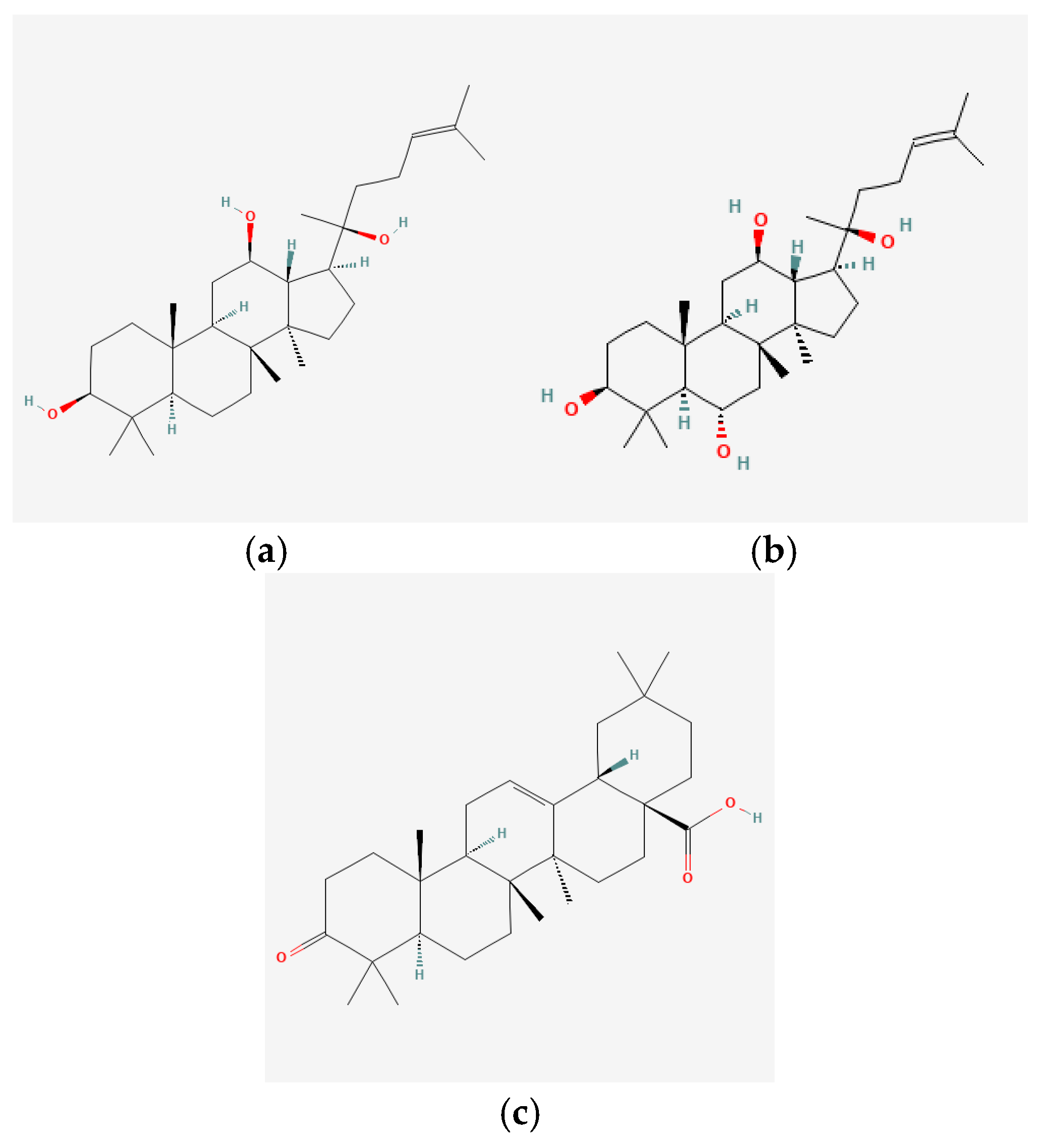
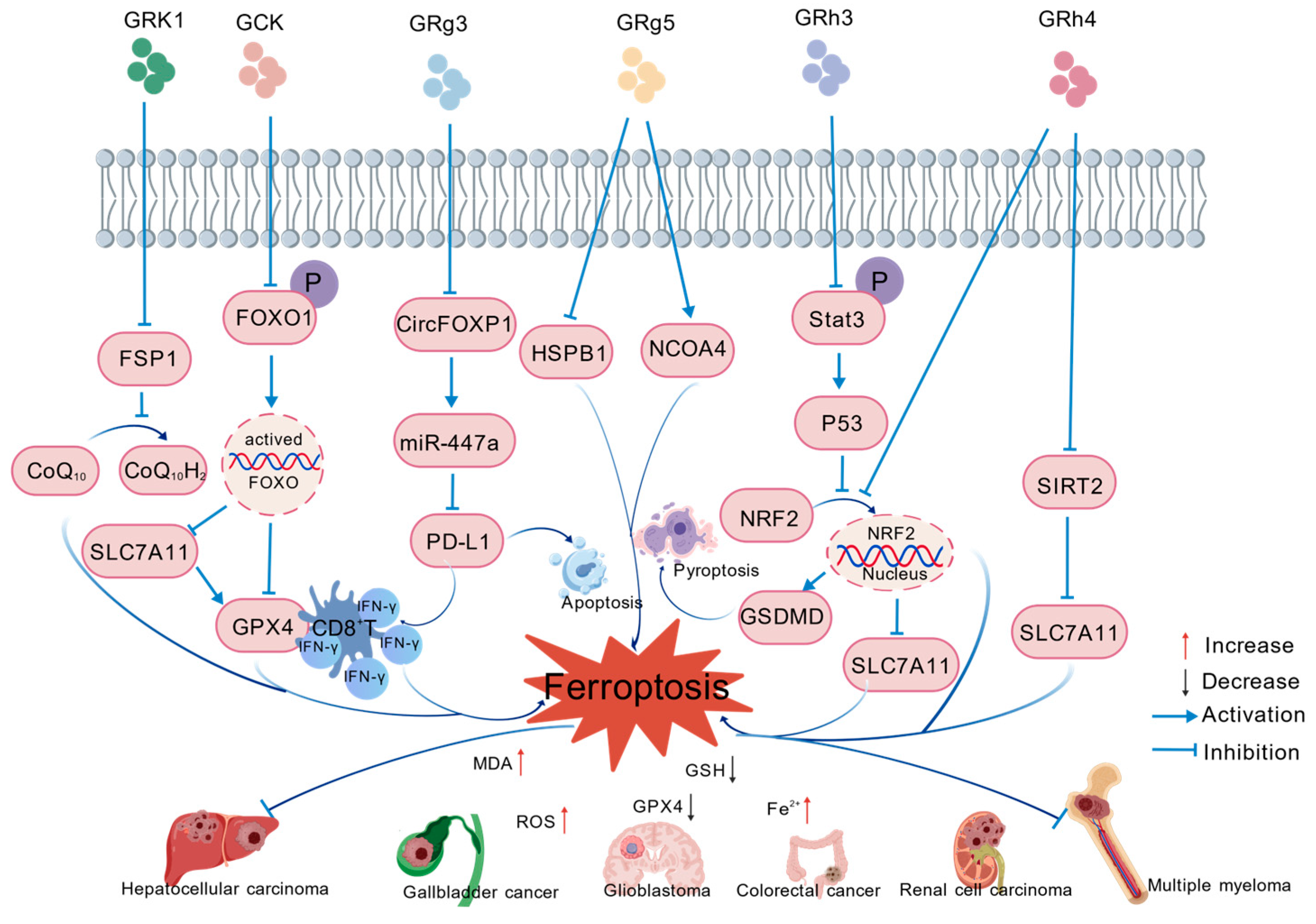
| Ginsenoside Components | Structure | Target | Models | Dose and Time | Cancer |
|---|---|---|---|---|---|
| Rg5 |  | NR3C1/HSPB1/NCOA4 axis | Glioma stem cells | 200 nM; 24 h | Glioblastoma [33] |
| CK | 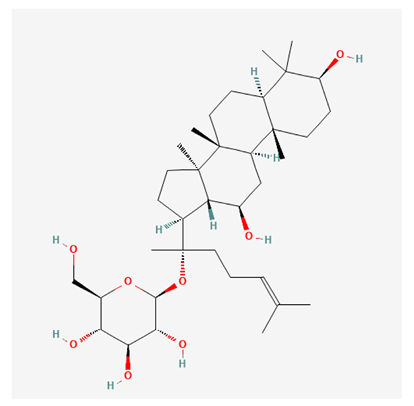 | FOXO pathway | SK-Hep-1 cellHepG2 cell | 40 μM; 48 h | HCC [34,35] |
| HepG2-xenografted tumor-bearing nude mice | 5/10/20 mg/kg/d; until the tumor volume reaches 1500 mm3 | ||||
| RK1 |  | FSP1 | HepG2 cell andHep3B cell | 20 μM; 24 h | |
| Rg3 |  | circFOXP1/miR-447a/PD-L1 axis | CBC cell | 100 μM; 72 h | GBC [36] |
| Rh4 |  | NRF2 pathway | 786-O cell and ACH cell | 100 μM; 24 h | RCC [37] |
| Rh3 |  | Stat3/p53/NRF2 axis | HCT116 cell andHT29 cell | 40 μM; 48 h | CRC [38] |
| BALB/c nude mice | 20 mg/kg/d; 21 d | ||||
| Rh4 |  | SIRT2 pathway | NCI-H929 cell | 100 μM; 24 h | MM [39] |
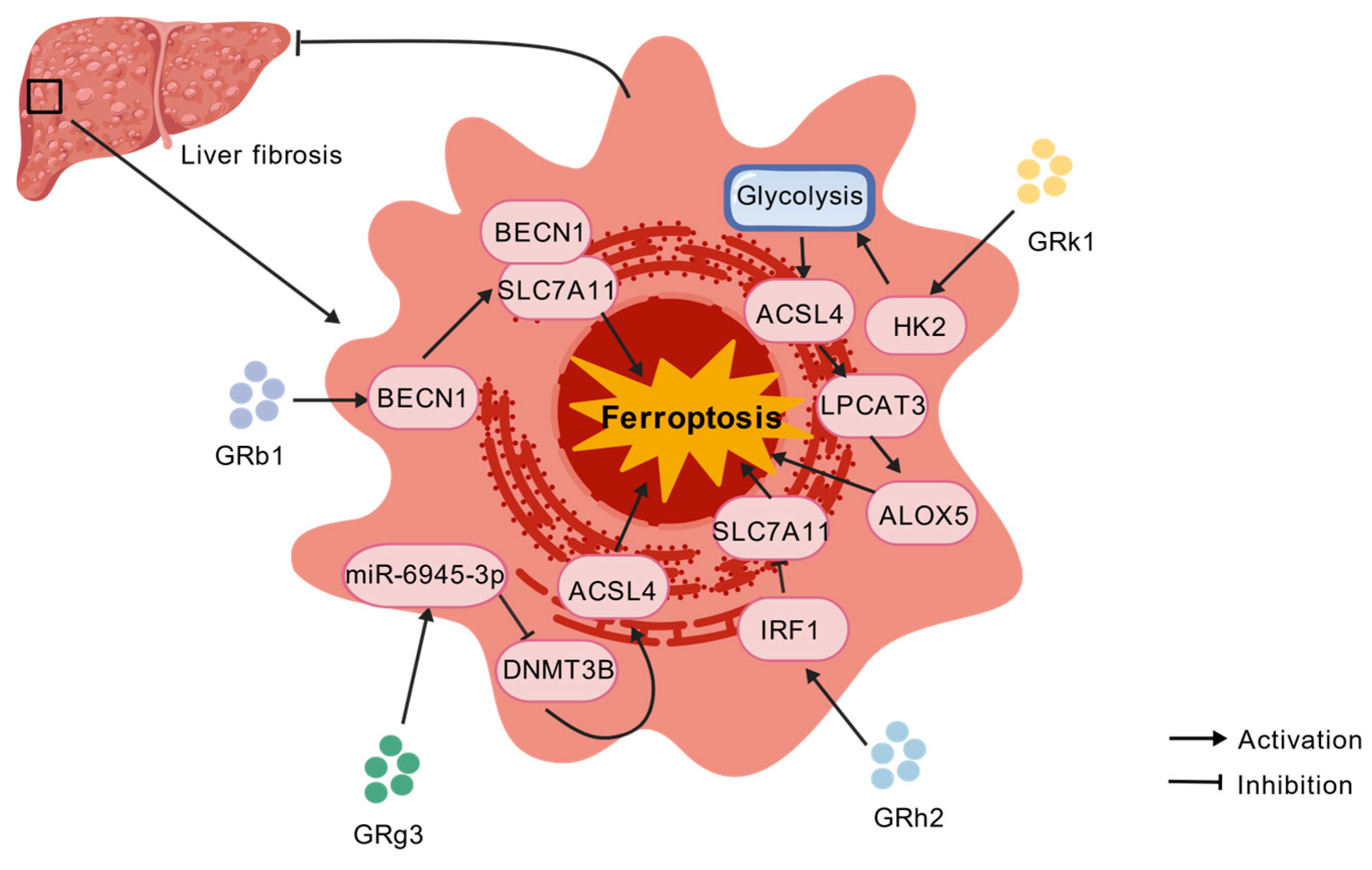
| Ginsenoside Components | Structure | Target | Model | Dose and Time | Disease |
|---|---|---|---|---|---|
| Rg3 |  | ACSL4 [71] | HSCs | 20/40 μM; 24 h | liver fibrosis |
| C57BL/6 male mice | 10/20 mg/kg/d; oral gavage; once daily for 8 consecutive weeks | ||||
| Rb1 |  | BECN1/SLC7A11 axis [73] | HSC cell and LX-2 cell | 10/20 μM; 24 h | |
| C57BL/6J male mice | 10/20 mg/kg/d; oral gavage; once daily for 8 consecutive weeks | ||||
| Rh2 |  | IRF1/SLC7A11 axis [74] | Primary HSC cell | 10/20 μM; 24 h | |
| C57BL/6J male mice | 5/10 mg/kg/d; oral gavage; once daily for 8 consecutive weeks | ||||
| Rk1 |  | HK2/ACSL4/LPCAT3/ALOX5 pathway [75] | HSC-T6 cell and LX-2 cell | 50 μM; 24 h | |
| C57BL/6J male mice | 10/20 mg/kg/d; oral gavage; once daily for 6 consecutive weeks |
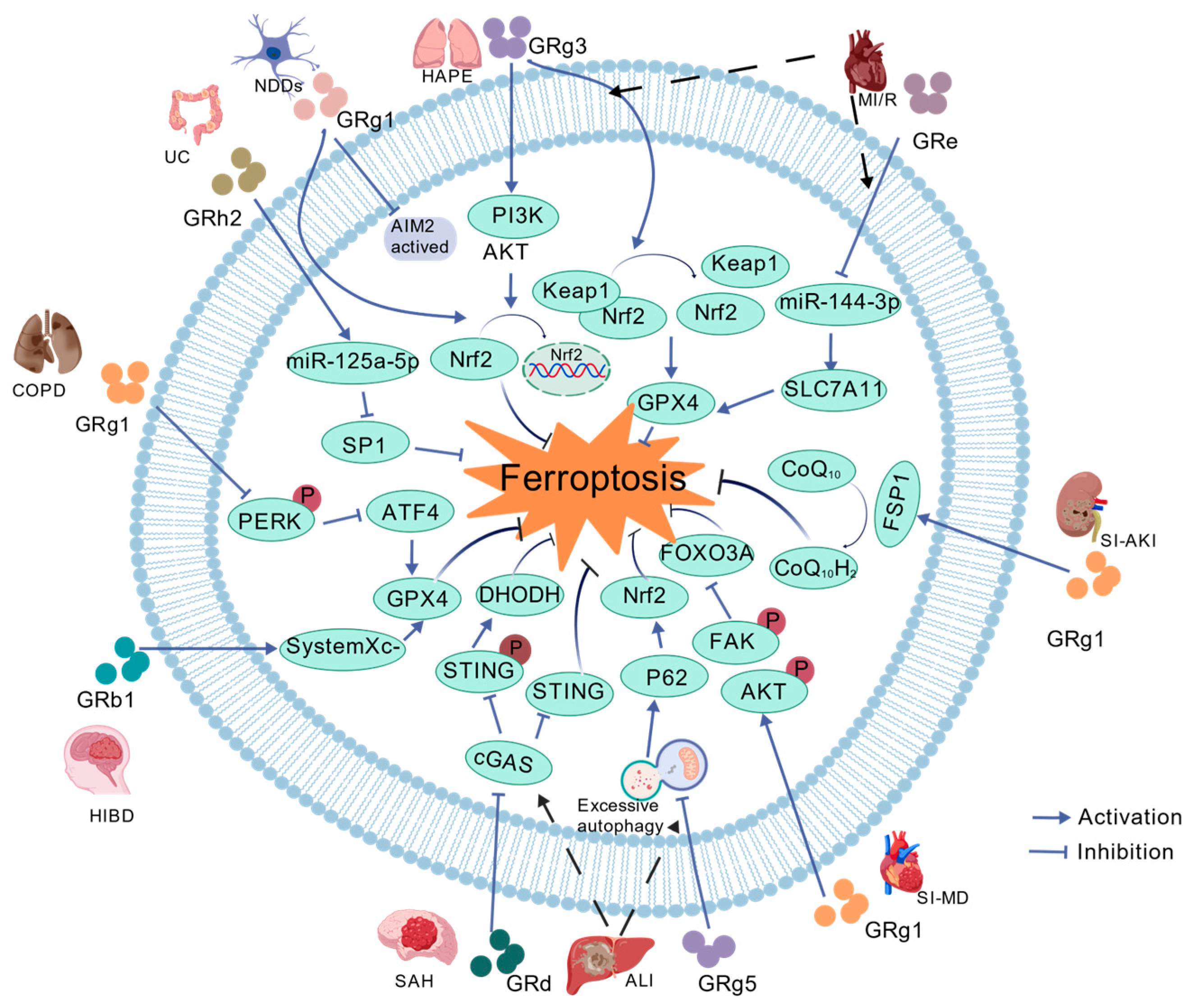
| Ginsenoside Components | Structure | Target | Models | Dose and Time | Diseases |
|---|---|---|---|---|---|
| Rg5 |  | autophagy/NRF2/ferroptosis axis [76] | HpG2 cell | 0.2/1/5 μM; 24 h | ALI |
| C57BL/6 male mice (induced by LPS) | 15/30 mg/kg (intraperitoneal injection; once daily for 3 consecutive days | ||||
| Rd |  | cGAS/STING pathway [77] | C57BL/6 male mice (induced by CCl4) | 10/20 mg/kg; intraperitoneally injection; Twice (1 h before CCl4 and 1 h before sacrifice) | ALI |
| Rb1 | 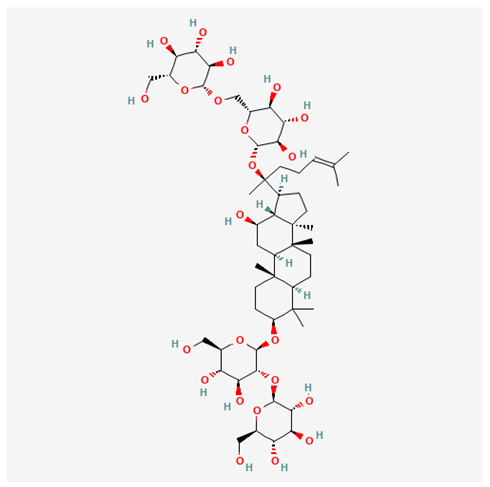 | System Xc-GSH-GPX4 axis [78] | PC12 cell | 1 mg/L; simultaneously with modeling treatment (after 12 h of hypoxia, followed by 2 h of subsequent culture) | HIBD |
| neonatal SD rats | 20 mg/kg/d; intraperitoneally injection; for 3 consecutive days | ||||
| Rd | 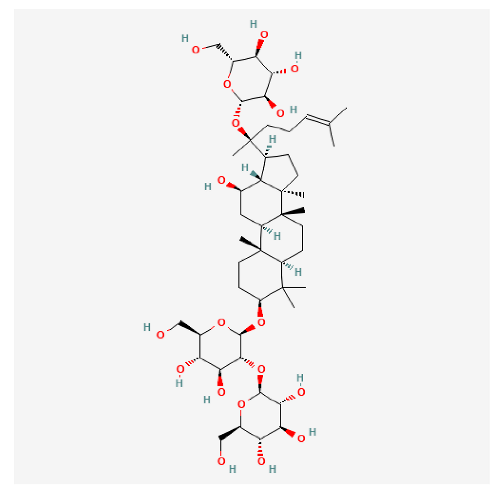 | cGAS/STING/DHODH pathway [79] | HT22 cell | 10 μM; once; simultaneously with modeling treatment | SAH |
| SD male rats | 60 mg/kg; intraperitoneal injection; twice (30 min before SAH and 1 h after SAH) | ||||
| Rg3 |  | keap1/NRF2/GPX4 pathway | H9C2 cell | 5/10/20 μM; 24 h | MI/R [80,81] |
| C57BL/6 male mice | 5/10/20 mg/kg; oral gavage; once daily for 7 consecutive days | ||||
| Re |  | miR-144-3p/SLC7A11 pathway | WKY female rats | 150 mg/kg/d; oral gavage; once daily for 5 consecutive days | |
| Rg3 |  | PI3K/AKT pathway | C57BL/6 male mice | 15/30 mg/kg/d; intraperitoneally injection; once daily for 3 consecutive days | HAPE [82] |
| Rg1 |  | PERK/ATF4 axis [83] | BEAS-2B cell | 40 μM; 24 h | COPD |
| C57BL/6 male mice | 10/20 mg/kg/d; oral gavage; once daily for 4 consecutive weeks | ||||
| Rh2 |  | miR-125a-5p [84] | NCM460 cell | 5/10 μM; pretreatment for 30 min, followed by subsequent treatment for 24 h | UC |
| C57BL/6J male mice | 50 mg/kg; oral gavage; once daily for 7 consecutive days | ||||
| Rg1 |  | AIM2-NRF2 pathway [85] | HT22 cell | 10 μM; 24 h | NDDs |
| C57BL/6J male mice | 5/10/20 mg/kg/d; intraperitoneally injection; once daily for 3 consecutive weeks | ||||
| Rg1 |  | FAK/AKT-FOXO3A pathway [86] | H9C2 cell | 25 μM; 6 h (post-LPS treatment) | SI-MD |
| C57BL/6J male mice | 35/70 mg/kg/d; intraperitoneally injection; once daily for 6 consecutive weeks | ||||
| FSP1-CoQ10-NAD(P)H pathway [87] | HK-2 cell | 150 μM; 24 h | SI-AKI | ||
| SD male rats | 50 mg/kg; intraperitoneal injection; twice (0.5 h and 12 h postoperatively) |
| The Core Mechanism of Ferroptosis | Ginsenoside/Specific Regulatory Mechanisms | Downstream Pathway/Effect | Disease Model | Outcome |
|---|---|---|---|---|
| Regulation of Iron Metabolism | Rg5: Binds to NR3C1, upregulates NCOA4, promotes ferritinophagy, and releases labile iron | Activation of NR3C1/HSPB1/NCOA4 axis | Glioblastoma | Promotion |
| Rg3: Activates PI3K/AKT, upregulates iron storage proteins, downregulates transferrin receptor (TFRC), reduces iron uptake | PI3K/AKT pathway | HAPE | Inhibition | |
| Rb1: Targets HO-1, inhibits heme catabolism, reduces iron release | Inhibition of HO-1 | Sepsis | Inhibition | |
| Regulation of Redox Homeostasis | Rg5: Modulates autophagic flux (p62/LC3), restores NRF2 activity, scavenges ROS | Activation of p62/NRF2 axis (upregulation of HO-1, GPX4, FTH1) | ALI | Inhibition |
| Rg3: Activates Keap1/NRF2/GPX4 pathway, scavenges mitochondrial ROS | Keap1/NRF2/GPX4 axis | MI/R | Inhibition | |
| Rh4: Inhibits NRF2 transcriptional activity, abrogates antioxidant defense | Inhibition of NRF2 (downregulation of GPX4) | RCC | Promotion | |
| CK: Inhibits PI3K/AKT, activates FOXO, downregulates SLC7A11/GPX4 | PI3K/AKT inhibition and FOXO activation | HCC | Promotion | |
| Rb1: Activates System Xc−-GSH-GPX4 axis, enhances cystine uptake and glutathione synthesis | System Xc−-GSH-GPX4 axis | HIBD | Inhibition | |
| Rh2: Activates IRF1, transcriptionally inhibits SLC7A11, impairs cystine uptake | IRF1/SLC7A11 axis | Liver fibrosis | Promotion | |
| Re: Inhibits miR-144-3p, derepresses SLC7A11, restores cystine uptake | miR-144-3p/SLC7A11 axis | MI/R | Inhibition | |
| Rg1: Inhibits PERK/ATF4 pathway, alleviates ER stress, restores GPX4 expression | PERK/ATF4 axis | COPD | Inhibition | |
| Rg1: Activates FSP1-CoQ10-NAD(P)H pathway, enhances GPX4-independent antioxidant defense | FSP1-CoQ10-NAD(P)H axis | SI-AKI | Inhibition | |
| Lipid Metabolism Remodeling | Rg3: Epigenetic regulation (inhibition of DNMT3B), demethylates ACSL4 promoter, increases substrates for lipid peroxidation | miR-6945-3p/DNMT3B/ACSL4 axis | Liver fibrosis | Promotion |
| RK1: Binds to and stabilizes HK2, activates ACSL4/LPCAT3/ALOX5 axis, promotes lipid peroxidation | HK2/ACSL4/LPCAT3/ALOX5 axis | Liver fibrosis | Promotion | |
| Rh4: Inhibits SIRT2, upregulates ACSL4 while downregulating SLC7A11/GPX4/FTH1 (multi-target) | SIRT2 inhibition (ACSL4↑, SLC7A11/GPX4/FTH1↓) | MM | Promotion | |
| Autophagy and Lysosomal Pathways | Rb1: Activates BECN1, promotes BECN1-SLC7A11 complex formation, enhances autophagy-dependent ferroptosis | BECN1/SLC7A11 axis | Liver fibrosis | Promotion |
| Crosstalk Between Inflammation and Cell Death | Rg3: Inhibits circFOXP1/miR-447a/PD-L1 axis, restores CD8+ T cell function, induces immune-mediated ferroptosis | circFOXP1/miR-447a/PD-L1 axis | GBC | Promotion |
| Rd: Inhibits cGAS/STING pathway, attenuates inflammation-driven mitochondrial damage | cGAS/STING pathway | ALI | Inhibition | |
| Rd: Inhibits cGAS/STING/DHODH pathway, preserves mitochondrial function | cGAS/STING/DHODH axis | SAH | Inhibition | |
| Rg1: Inhibits AIM2 inflammasome while activating NRF2, downregulates iron uptake proteins (DMT1/TfR), upregulates GPX4/FSP1 | AIM2 inhibition + NRF2 activation | NDDs | Inhibition | |
| Rg1: Activates FAK/AKT, inhibits FOXO3A, reduces apoptosis and inflammation | FAK/AKT-FOXO3A axis | SI-MD | Inhibition | |
| Other/Multi-Target Integration | Rh3: Modulates Stat3/p53/NRF2 axis, concurrently induces ferroptosis and pyroptosis | Stat3/p53/NRF2 axis | CRC | Promotion |
| RK1: Directly inhibits FSP1, blocks CoQ10 regeneration, disrupts membrane antioxidant capacity | FSP1 inhibition | HCC | Promotion | |
| Rh2: Activates miR-125a-5p, targets and inhibits transcription factor SP1, attenuates colonic ferroptosis | miR-125a-5p/SP1 axis | UC | Inhibition |
Disclaimer/Publisher’s Note: The statements, opinions and data contained in all publications are solely those of the individual author(s) and contributor(s) and not of MDPI and/or the editor(s). MDPI and/or the editor(s) disclaim responsibility for any injury to people or property resulting from any ideas, methods, instructions or products referred to in the content. |
© 2026 by the authors. Licensee MDPI, Basel, Switzerland. This article is an open access article distributed under the terms and conditions of the Creative Commons Attribution (CC BY) license.
Share and Cite
Wang, Y.; Song, M.; Li, S.; Ren, H.; Liu, S.; Zhang, H. Ginsenoside-Mediated Ferroptosis Regulation: Bidirectional Effects and Therapeutic Potential in Diseases. Int. J. Mol. Sci. 2026, 27, 3172. https://doi.org/10.3390/ijms27073172
Wang Y, Song M, Li S, Ren H, Liu S, Zhang H. Ginsenoside-Mediated Ferroptosis Regulation: Bidirectional Effects and Therapeutic Potential in Diseases. International Journal of Molecular Sciences. 2026; 27(7):3172. https://doi.org/10.3390/ijms27073172
Chicago/Turabian StyleWang, Yuanyuan, Mengxue Song, Shuai Li, Huizhen Ren, Shuang Liu, and Hui Zhang. 2026. "Ginsenoside-Mediated Ferroptosis Regulation: Bidirectional Effects and Therapeutic Potential in Diseases" International Journal of Molecular Sciences 27, no. 7: 3172. https://doi.org/10.3390/ijms27073172
APA StyleWang, Y., Song, M., Li, S., Ren, H., Liu, S., & Zhang, H. (2026). Ginsenoside-Mediated Ferroptosis Regulation: Bidirectional Effects and Therapeutic Potential in Diseases. International Journal of Molecular Sciences, 27(7), 3172. https://doi.org/10.3390/ijms27073172