1. Introduction
Small non-coding RNAs play an important role in the regulation of metabolism in plants, animals, and fungi [
1,
2]. To maintain cell homeostasis under stress conditions, plants employ several mechanisms [
3], including regulating the transcription of hypoxia-sensitive genes and post-transcriptionally regulating gene expression by binding to messenger RNA (mRNA) and either inhibiting protein synthesis or triggering mRNA degradation. At low oxygen concentrations (below 2%), essential adaptive responses are triggered through microRNAs (miRNAs) [
4], which are the endogenous small non-coding RNAs that regulate the expression of target genes at the post-transcriptional level. A large number of plant miRNAs are involved in abiotic and biotic stresses, acting through RNA silencing, including miR775A, whose induction has been demonstrated under hypoxia [
4].
The discovery of miRNAs has provided new insights into cellular regulatory processes. Several studies show that perfectly matched miRNAs are neither necessary nor sufficient for detecting all functional miRNA-target interactions [
5,
6]. Most plant miRNAs exhibited perfect or near-perfect complementarity to their target mRNAs, but complementarity may not be the sole determining factor for effective protein translation suppression. Furthermore, several plant miRNAs, such as
Arabidopsis miR398, have multiple targets [
6]. Due to the partial overlap of the roles of various coexpressed miRNAs, functional studies of a specific miRNA can best be achieved by knocking down the corresponding miRNA. This technology was made possible by the discovery of the target mimic
INDUCED BY PHOSPHATE STARVATION1 (IPS1) in
Arabidopsis [
7] and was subsequently developed into a powerful technology called Short Tandem Target Mimic (STTM) [
8]. STTMs contain a single pair of miRNA-binding motifs connected by a 48-nucleotide spacer, which forms a short stretch of unpaired nucleotides, thereby increasing the stability of STTM structures. The complete complementarity between miRNAs and artificial miRNA binding sites, as well as the stability of STTMs, enables this technology to knock down any miRNA, resulting in loss of function [
9].
Many plant miRNA targets are believed to play an important role in plant adaptation to hypoxic conditions [
10]. Nineteen families of hypoxia-related miRNAs have been identified [
11]. MiRNA775A (miR775A) is a representative of the hypoxia-dependent miRNA family in plant cells [
4], one of the targets of which is
GALACTOSYLTRANSFERASE 9 (GALT9). Proteins of the GALT family are involved in cell wall remodelling [
12]. MiRNA775A is directly repressed by the transcription factor ELONGATED HYPOCOTYL 5 (HY5). HY5 is a key regulator of photomorphogenesis, binding to light-responsive elements in promoters that regulate
MICRORNA (
MIR) genes. Genetic analysis confirmed that HY5 negatively regulates leaf size through HY5-miRNA775A-GALT9 [
13].
The glycerol-3-phosphate acyltransferase gene (
Z. mays, LOC100285746) has also been identified as a target of miRNA775A [
14,
15]. Members of this protein family include several N-acetyltransferases (GNATs): aminoglycoside N-acetyltransferases, histone N-acetyltransferases (HATs), serotonin N-acetyltransferases, arginine/ornithine N-succinyltransferase, etc. [
16]. Glycerol-3-phosphate acyltransferase is involved in the metabolism of glycerophospholipids and phosphoglycerides, the alpha-glycerophosphate pathway. Polyunsaturation of long-chain acyl-CoA regulates hypoxia sensitivity in plants by modulating the dynamics of acyl-CoA-binding protein [
17]. Lipids also mediate signalling during plant responses to biotic and abiotic stress [
18,
19]. The involvement of miRNAs in plant responses to hypoxia was further confirmed by experiments in which mitochondrial respiration was inhibited [
4].
In a previous study, we showed that miR775A regulates the expression of two aldolase genes that are important in the adaptive response of cellular metabolism to hypoxia [
20]. It was previously established that miR775A regulates the aldolase reaction of glycolysis during hypoxia via RNA interference. It forms an RNA-interfering complex with the major isoenzyme of cytoplasmic fructose-1,6-bisphosphate aldolase, thereby reducing its transcript levels during hypoxia [
20]. Under oxygen-deficient conditions, plant cells experience an energy crisis because they cannot use the classical electron transport chain. As a result, glycolysis becomes the primary metabolic pathway, partially compensating for the ATP deficit. Therefore, studying miR775A is relevant to its role in regulating plant metabolism under hypoxic conditions.
Understanding the role of miR775A in the regulation of energy and constructive metabolism is crucial for assessing its significance in plant adaptation to hypoxia. The observed lack of coordination between the isoenzyme composition of maize aldolase under hypoxic stress, mediated by miR775A [
20], may have significant implications for plant adaptation. Induction of the ALDO2 isoenzyme in maize leaves during hypoxia helps maintain the required level of glycolysis; however, a decrease in miR775A levels under hypoxia may negatively affect the cellular metabolic response.
A true assessment of the contribution of miR775A to the regulation of adaptive responses is possible by creating a mutant plant line with reduced levels of the corresponding mature miRNA.
A. tumefaciens-mediated plant transformation is the most common method for transforming monocots and dicots [
21]. This study aimed to generate a modified
A. tumefaciens EHA105 strain containing the antisense sequence anti-miR775A and to obtain a knockdown line of
Z. mays plants with reduced levels of mature miR775A to elucidate its function in plant metabolism and adaptation to hypoxic stress.
3. Discussion
The miRNA 775A studied belongs to the group of hypoxia-dependent miRNAs and participates in plant adaptation to low-oxygen conditions [
4]. Under hypoxia, the corresponding free miRNA accumulates, indicating its involvement in stress response [
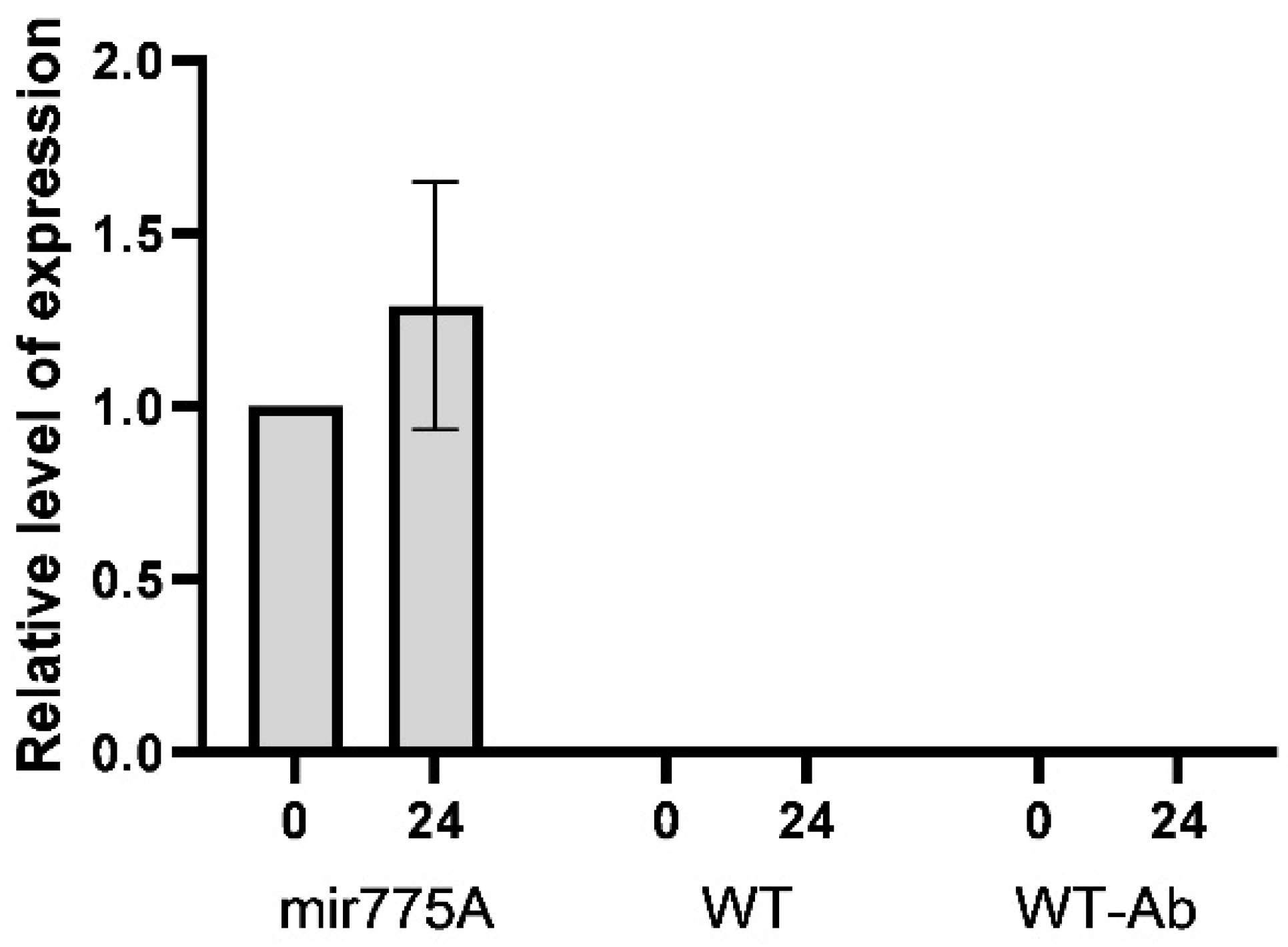
15]. To study the role of miRNA775A in maize’s adaptive response to hypoxic conditions, Agrobacterium-mediated transformation was used to generate knockdown plants with reduced mature miR775A levels.
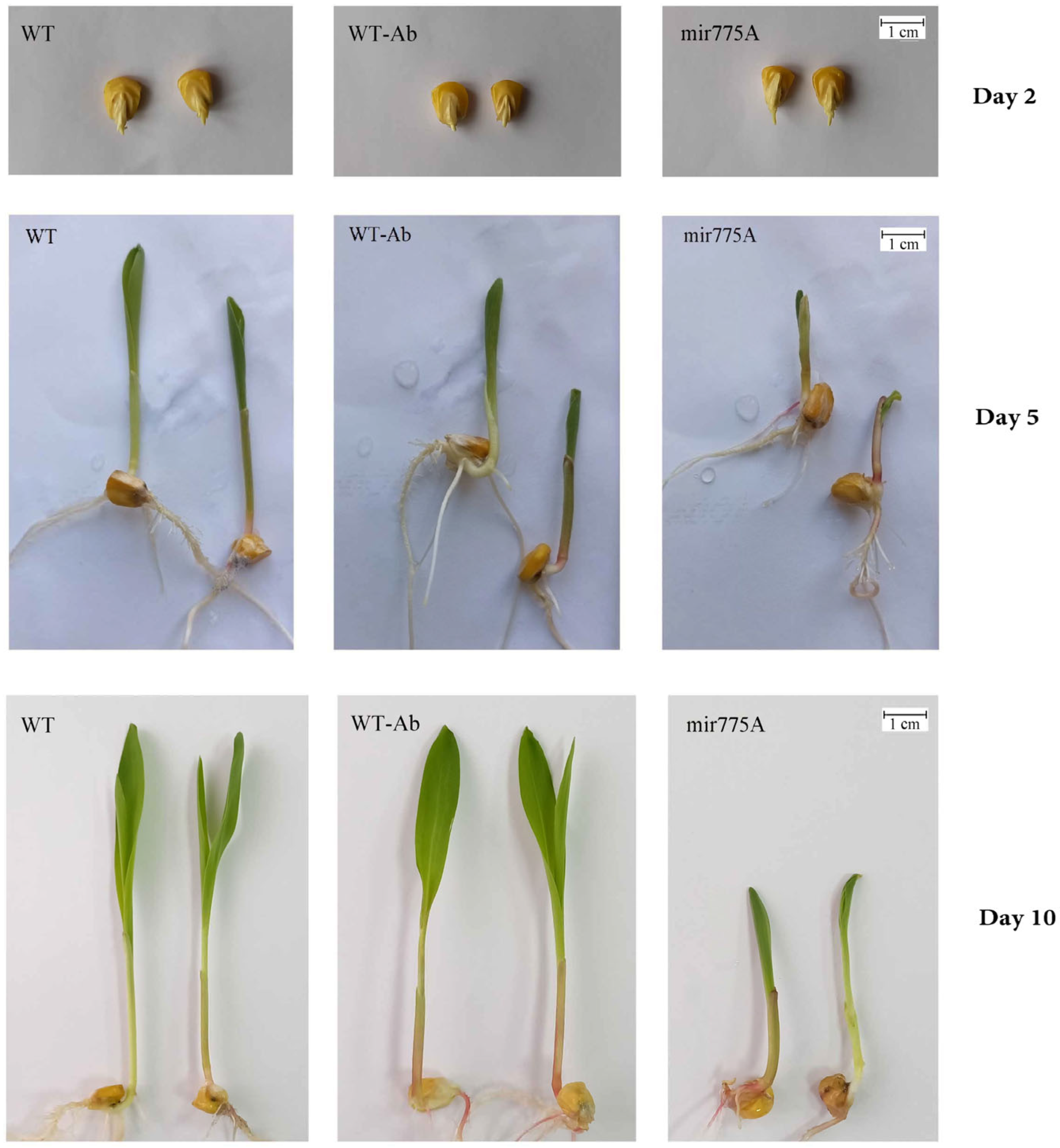
The obtained results from the germination assessment of the original and modified maize seeds (
Table 1) allowed us to identify phenotype differences. The smaller size of the mir775A maize seedlings is due to the involvement of mature miR775A in the control of GALT family proteins, which modulate cell wall formation, as previously demonstrated [
12]. Furthermore, on the tenth day of development, the unfolding of the first leaves was observed in WT seedlings and plants treated with the original
Agrobacterium with an empty vector pBl121, which was virtually absent in mir775A plants (
Figure 1). The morphological differences between the knockdown plants and the control groups may be due to impaired GALT9 function, which is responsible for cell wall modelling and elongation [
12] and lipid metabolism [
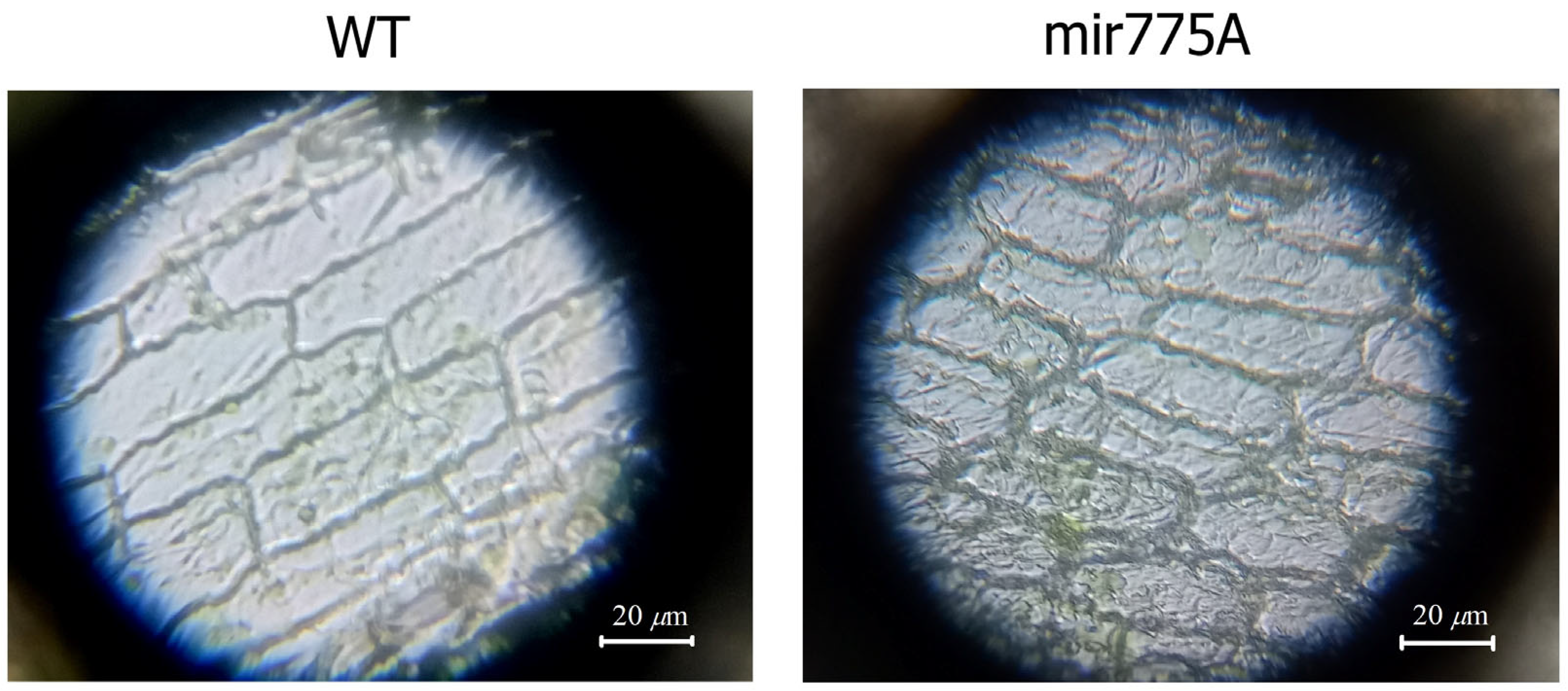
15]. A reduction in the size of epidermal cells in mir775A maize leaves compared to the WT plant (
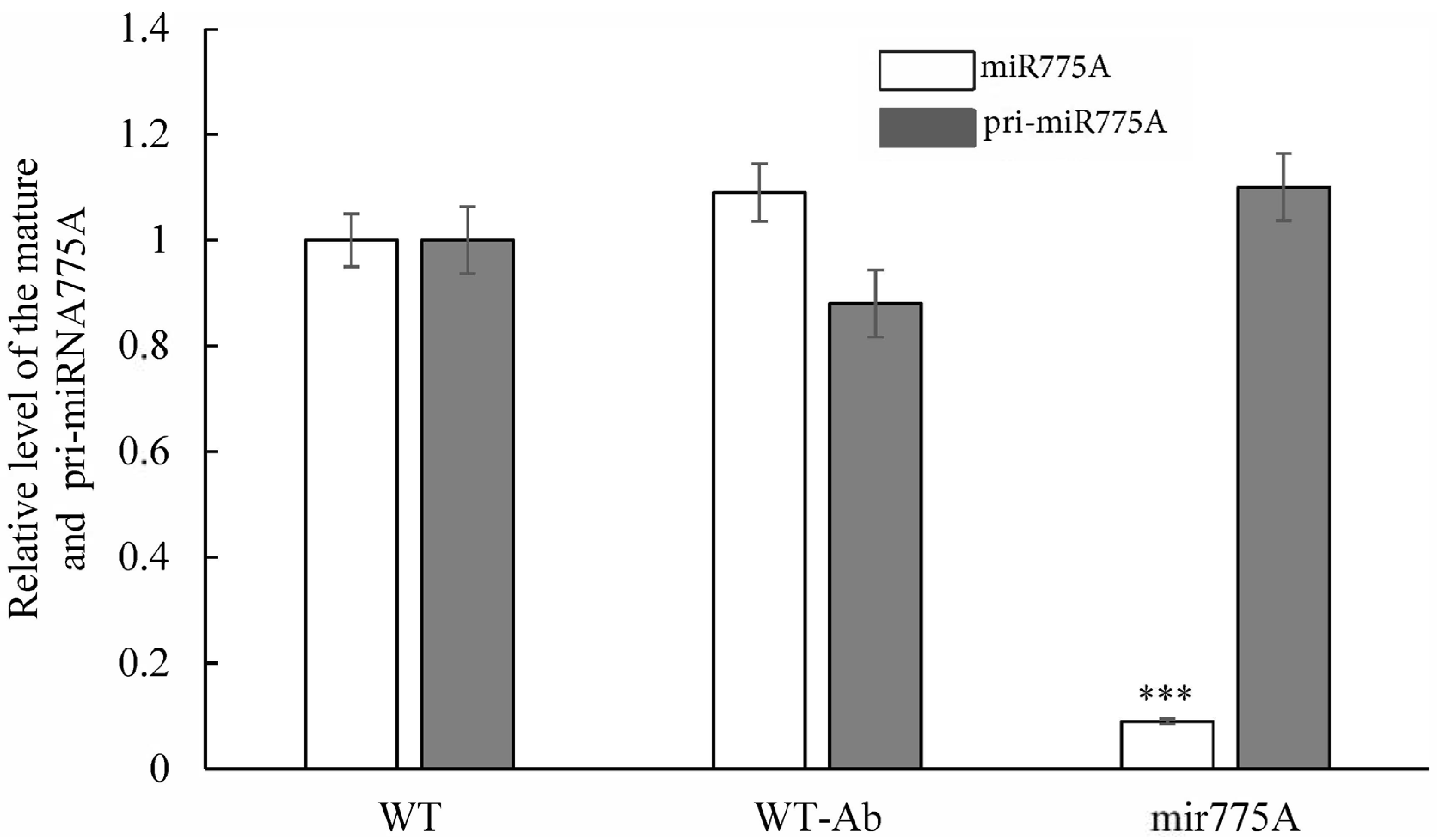
Figure 2) confirms impaired GALT9 function with reduced miR775A levels in the cells, which is consistent with the active function of anti-miR775A in the experimental plant cells. Knockdown plants showed a significant reduction in mature miR775A levels compared to WT and WT-Ab, but levels of its precursor were stable in both WT and mir775A plant cells (
Figure 3).
The observed increase in aldolase activity in WT-Ab maize plants may be associated with intensified glycolytic processes in plant cells in the presence of
A. tumefaciens and with the redirection of metabolites into the shikimate pathway [
22].
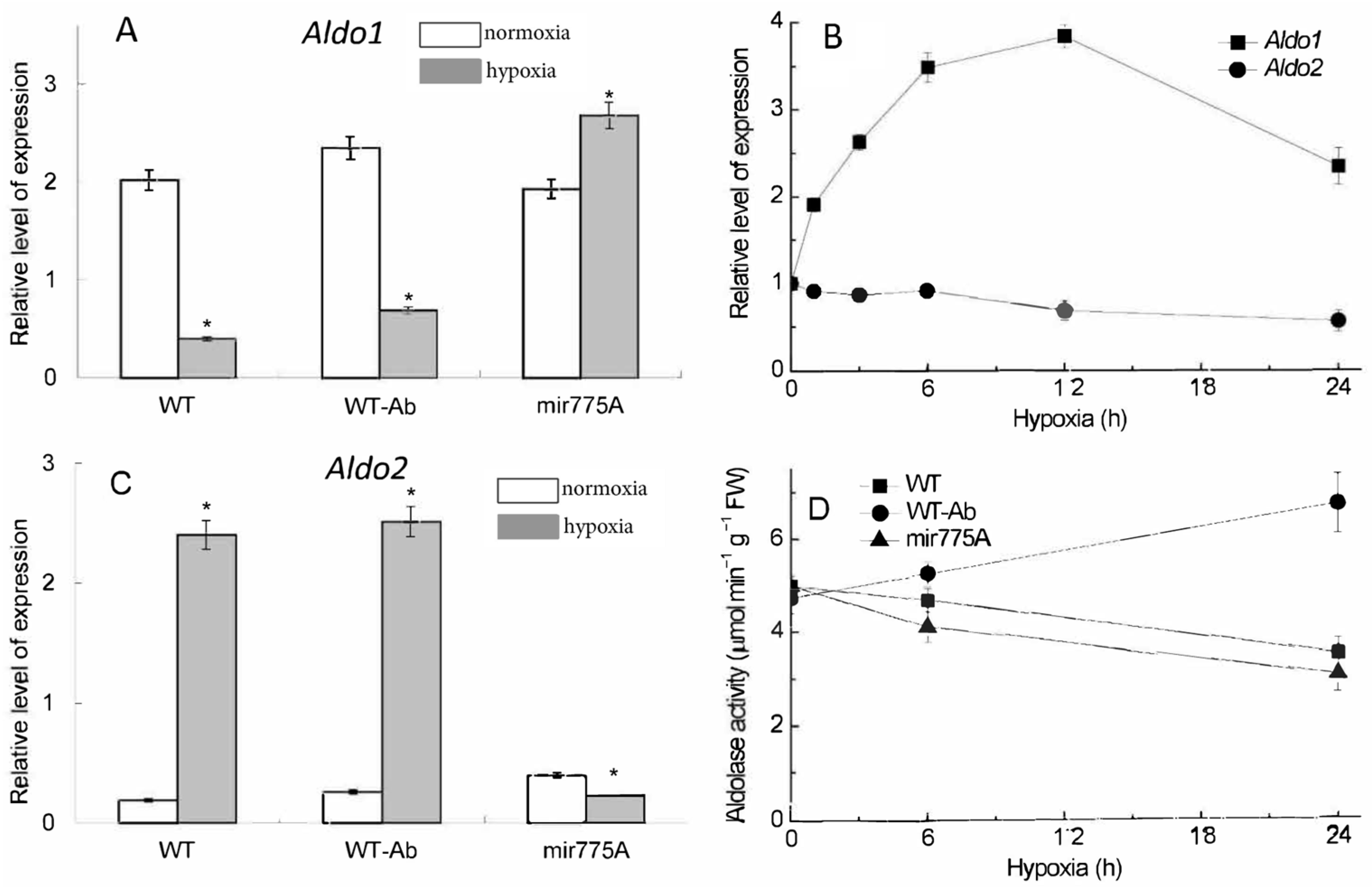
The increase in
Aldo2 gene transcripts in maize leaves under hypoxia is likely due to the need to synthesize a form of the enzyme that is more functional under hypoxic conditions to maintain the rate of glycolysis, the main source of ATP under oxygen deficiency. This change in the aldolase gene mRNA content in mir775A maize leaves is associated with the presence of an active anti-mir775A system, which ensures the degradation of mature miR775A and, consequently, the absence of an inhibitory effect on the
Aldo1 gene. Maintenance of the glycolytic metabolism under hypoxic conditions requires the activation of Aldo2 isoenzyme and the inhibition of Aldo1, which is absent in knockdowns. This is in a good agreement with our data on the mechanism of suppression of aldolase activity by RNA interference [
20]. Therefore, the obtained miR775A knockdown maize plants confirm the importance of this miRNA in the regulation of cytosolic fructose-1,6-bisphosphate aldolase, which plays a crucial role in organizing the glycolytic pathway in maize cells under hypoxia by switching the transcriptional activity of the genes encoding two isoforms of this enzyme.
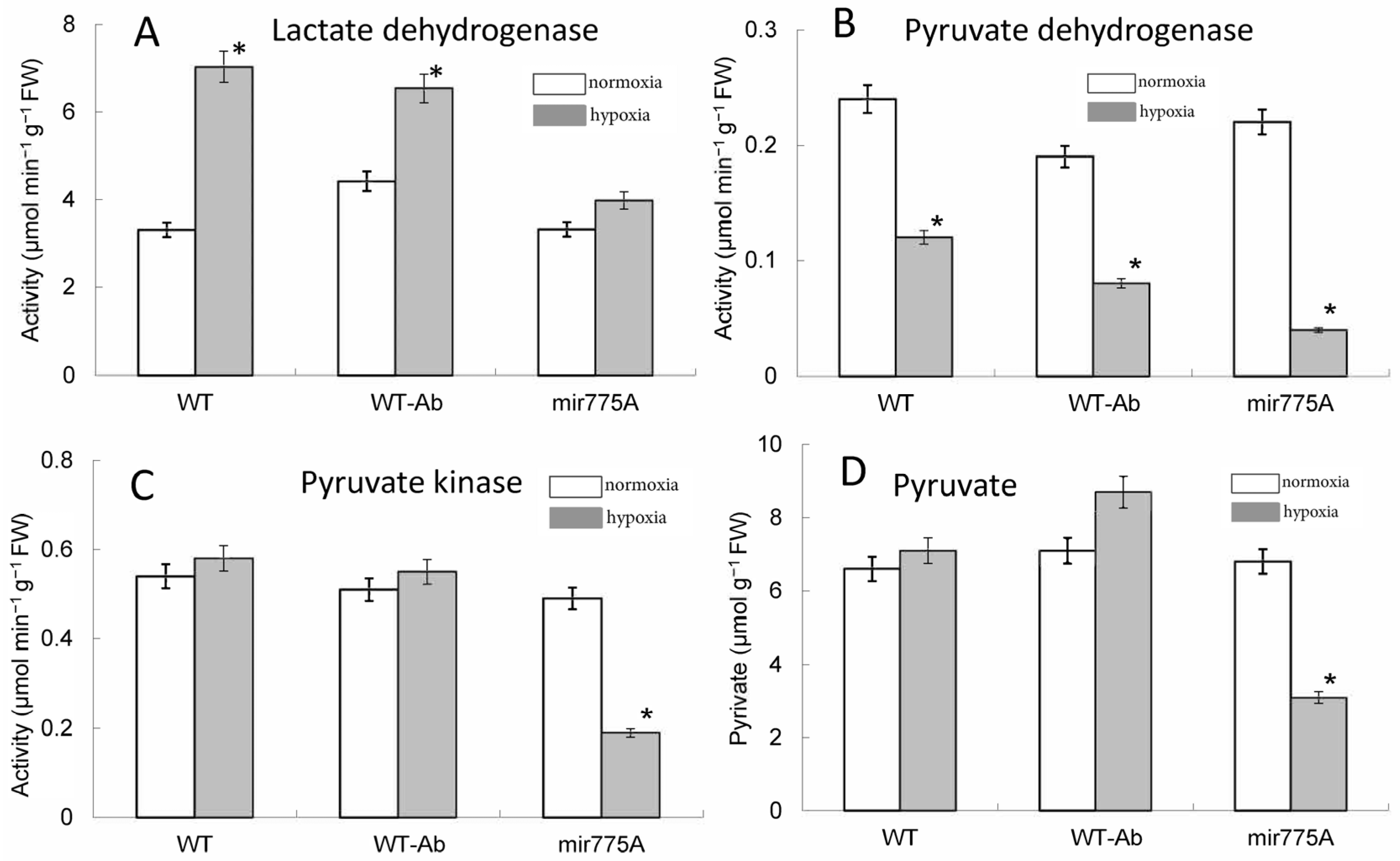
The data on the activity of pyruvate-metabolizing enzymes and on pyruvate content (
Figure 7) revealed that under hypoxic conditions, mitochondrial oxidative metabolism is significantly inhibited, which includes a decrease in the rate of pyruvate metabolism by mitochondria via the PDH complex. The observed increase in LDH activity in WT and WT-Ab plants indicates the intensified fermentation, which is important under hypoxic conditions to maintain glycolysis and regenerate NADH, while in the mir775A plants, the glycolytic flux is inhibited, as seen from the absence of LDH increase. This may be due to the suppression of the
Aldo2 isoenzyme in the mir775A plants. The Aldo1 isoenzyme is likely less tolerant to hypoxic conditions, exhibiting reduced catalytic activity, and pyruvate levels in mir775A plants are lower than in WT. Consequently, there is no change in LDH activity in mir775A plants. The results of measuring the activity of PDH complex (
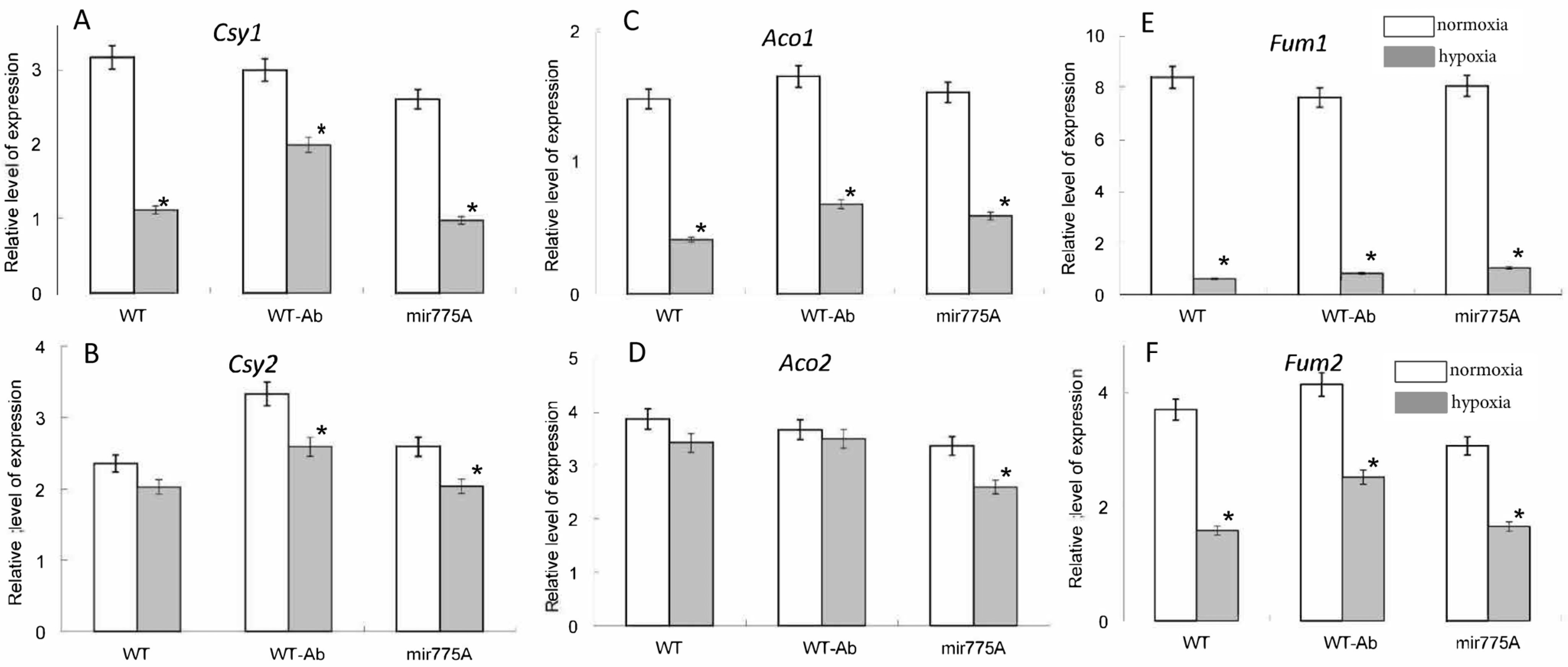
Figure 7B) and of the expression of citrate synthase, aconitase and fumarase (
Figure 6) confirm that hypoxia has a pronounced effect on mitochondrial metabolism, which is primarily due to a lack of oxygen for the operation of the mitochondrial respiratory chain. The effect of miR775 downregulation on the activity of the pyruvate metabolizing enzymes and on the expression of the cytosolic form of aconitase is minor as compared to the effect on aldolase isozymes, and can be an indirect consequence of the alteration in glycolytic metabolism caused by this miRNA. The lack of reorganization of the Aldo1 and Aldo2 isoenzymes in hypoxic knockdown maize plants leads to reduced pyruvate production, which affects LDH activity and the need for intensive NADH regeneration. Consequently, the lack of coordination between Aldo1 and Aldo2 in the mir775A plant line is a key parameter in the control of the glycolytic pathway during hypoxia, a key component of the adaptive response of cellular metabolism.
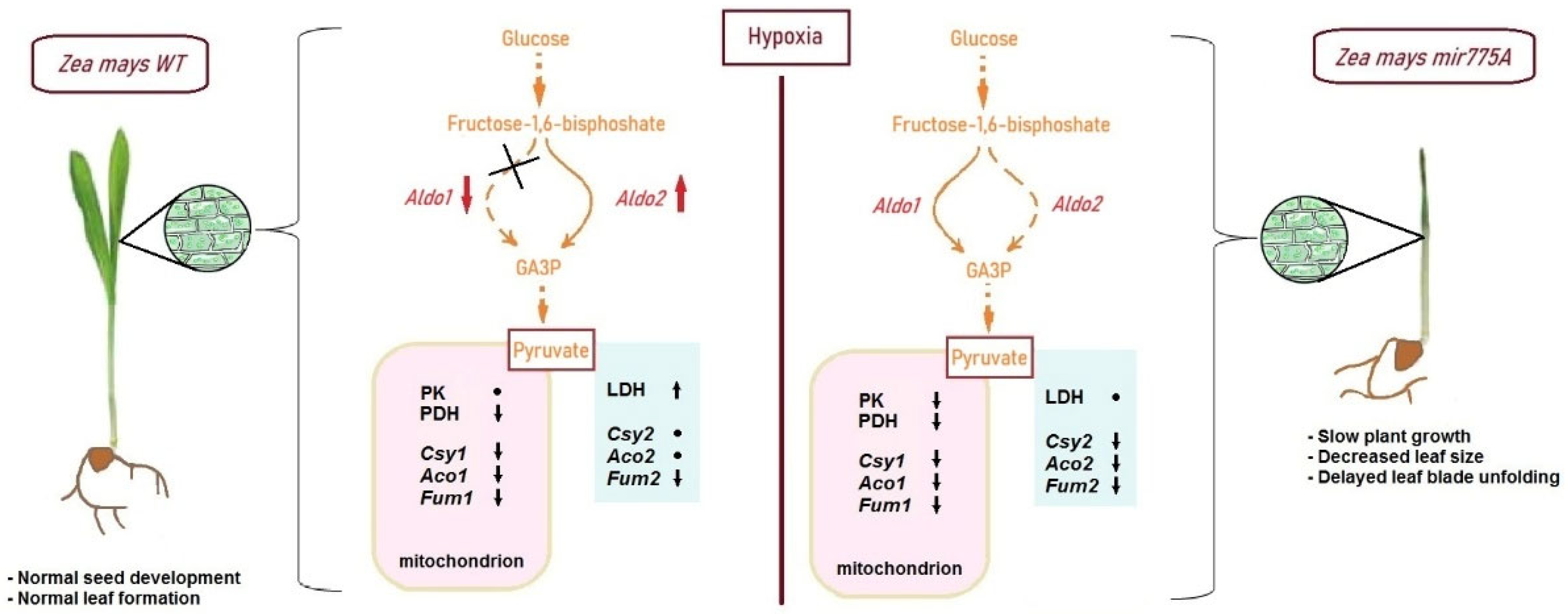
We conclude that our study of knockdown maize plants with hypoxia-dependent miR775A revealed its involvement in the regulation of glycolytic metabolism. A decrease in the mature miR775A level in knockdown plants leads to a decrease in the rate of glycolysis, manifested by a decrease in pyruvate levels, which occurs due to a decrease in its synthesis in the pyruvate kinase reaction. In WT plants, the switch to
Aldo2 mediated by miR775A maintains pyruvate levels. Activation of LDH with decreased mitochondrial enzyme function is necessary for maintaining cellular energy status and NADH regeneration (
Figure 8). In knockdown plants, the Aldo1 isoenzyme, which is likely less tolerant to hypoxia, remains more active, leading to a decrease in glycolytic flux and pyruvate levels. This effect may also be associated with the efflux of phosphoenolpyruvate to the shikimate pathway [
22], activated by hypoxia, as evidenced by the reduced pyruvate kinase activity in mir775A plants. Consequently, low pyruvate levels do not promote an increase in LDH activity in knockdown plants. This can be explained by the limitation in switching of the aldolase reaction to the second isoenzyme, which was shown to maintain glycolytic metabolism under low oxygen conditions [
20]. Consequently, in knockdown maize plants with hypoxia-dependent miR775A, the intensity of the aldolase reaction is reduced due to dysregulation of the cytosolic isoenzymes encoded by the genes
Aldo1 and
Aldo2 (
Figure 8).
4. Materials and Methods
4.1. Object of Investigation
The seeds of maize (Zea mays L., cv. Voronezhskaya-76) were obtained from the Voronezh branch of the All-Russian Research Institute of Maize, Voronezh, Russia. Voronezhskaya-76 is an old, historical maize cultivar bred in the early 1940s at the All-Russian Research Institute of Maize, known for its hardiness and good yield, producing vigorous plants with several ears per stalk. The transformed plants in this study were created by the authors, as described below. Maize plants were grown hydroponically under 12 h of daylight at an intensity of 90 μmol quanta m−2 s−1 at 25 °C. The leaves of 14-day-old plants were used to monitor the effects of hypoxia on enzyme activities and gene expression.
4.2. Construction of Anti-miR775A
To create a specific anti-miR775A construct, STTM technology for the inactivation of endogenous miRNAs in
Arabidopsis was used [
9]. The anti-miR775A construct for
Zea mays consists of two non-cleavable binding sites for miR775A with a three-nucleotide insertion between the 10th and 11th nucleotides, connected by a 48-nucleotide spacer, which is a loop region. BamH1 restriction sites are incorporated at the 5′ and 3′ ends. Five additional nucleotides are also present at the 5′ and 3′ ends, which are necessary for the successful use of specially designed primers to generate double-stranded anti-miR775A during the polymerase chain reaction (
Supplementary Figure S1).
4.3. Generation of a Transformed E. coli Line
The antisense construct anti-miR775A, and the pBl121 vector were digested with BamHI restriction endonuclease (SibEnzyme, Russia). The restriction mixture was incubated for 14 h at 37 °C. The antisense construct and vector were purified from the reaction mixture using the Cleanup Standard kit (Eurogen, Moscow, Russia), according to the manufacturer’s protocol, and used for the ligation reaction. The mixture volume was 20 µL, and the reaction was carried out using T4 DNA ligase (Eurogen, Moscow, Russia) at 14 °C for 16 h. The ligation mixture was used to transform competent E. coli HB101 cells.
The vector was cloned into
E. coli cells. For this, competent
HB101 cells (100 µL) were transformed with the vector (10 µL) using the heat-shock method according to the standard protocol [
23]. Transformants were plated on Petri dishes containing Luria-Bertani (LB) agar supplemented with tetracycline (50 µg/mL). Clones containing the vector with the insert were added to 5 mL of LB medium supplemented with tetracycline. The culture was incubated at 37 °C for 18 h.
The result was identified by electrophoresis in a 2% agarose gel (
Supplementary Figure S2). In addition to antibiotic-resistant screening of the resulting colonies, selective PCR was performed using anti-miR775A primers. The transformed
E. coli HB101 colonies were grown in liquid LB medium to produce biomass and subsequently used to extract the recombinant vector.
4.4. Generation of a Transformed A. tumefaciens Line
Plasmid DNA was isolated from E. coli bacterial cells using the Cleanup Standard kit (Eurogen, Moscow, Russia) according to the manufacturer’s protocol. The resulting vector containing the target gene was used to transform competent A. tumefaciens EHA105 cells by heat shock, following the standard protocol. Transformants were plated on Petri dishes containing YEP agar supplemented with rifampicin (50 µg/mL) and tetracycline (50 µg/mL). Clones containing the vector with the insert were added to 5 mL of liquid YEP medium containing tetracycline (50 µg/mL). The culture was incubated at 28 °C for 72 h.
In addition to antibiotic resistance screening, selective PCR targeting anti-miR775A was performed. PCR electrophoresis was performed on a 2% agarose gel (
Supplementary Figure S3).
4.5. Generation of a Z. mays Plant Line with miR775A Knockdown
A. tumefaciens EHA105, containing the anti-miR775A antisense sequence, was used to generate a
Zea mays plant line (mir775A) with a knockdown of the corresponding miRNA using the seed-piercing protocol [
24]. The plants transformed with the original pBl121 vector without the anti-miR775A construct (WT-Ab) and the WT plants were used as controls. Each test group contained 100 seeds. After transformation, plants were grown hydroponically at 22 °C and a 10 h photoperiod with a light intensity of 90 μmol quanta m
−2 s
−1. The T0 generation was used in the experiments.
4.6. Creating Hypoxic Conditions
Low oxygen concentrations in the environment were achieved by submerging whole plants in distilled water for 24 h [
25,
26,
27]. The plants not immersed in water were used as the control group. To prevent photosynthetic oxygen production, both plant groups were kept in darkness for 24 h before the experiment, as described earlier [
20]. To set up the hypoxia experiment, 50 maize seeds were taken for each plant variant (WT, WT-Ab, and mir775A) to determine enzymatic activity and gene expression.
4.7. Isolation of Total mRNA
Guanidine thiocyanate-phenol-chloroform extraction was used to isolate total RNA [
28], with LiCl as the precipitant [
29]. Qualitative nucleic acid analysis was performed by electrophoresis in a 1% agarose gel and stained with ethidium bromide.
4.8. Reverse Transcription
To obtain cDNA, reverse transcription was performed using the MMLV kit (SibEnzyme, Novosibirsk, Russia) with a specific probe developed by us for miR775A and Oligo(dT)
15 for mRNA. For this purpose, 100 ng of nucleic acids were collected from each fraction. The reverse transcription parameters for mRNA were according to the manufacturer’s recommendations; for miR775A, the following were used: incubation at 16 °C for 30 min, at 42 °C for 30 min, and at 85 °C for 5 min [
15].
4.9. Real-Time Polymerase Chain Reaction
Real-time polymerase chain reaction with gene-specific primers was performed using the AmpliSence reagent kit (Helicon, Moscow, Russia). To assess transcript-level dynamics, the elongation factor Ef-1α gene served as the reference gene [
30,
31]. Relative gene transcript levels were determined using the 2
−ΔΔCT method [
32]. Gene expression levels were calculated relative to the 18S rRNA gene transcript level, which was set to 1. To demonstrate differences between WT and the transgene, the expression of genes encoding mitochondrial and extramitochondrial isoenzymes of aldolase (
Aldo1 and
Aldo 2), citrate synthase (
Csy1 and
Csy2) and aconitase (
Aco1 and
Aco2) was measured.
The nucleotide composition of the primers was for miR775A: forward 5′-CACTGATTCGATGTCTAG-3′; reverse 5′-GTGCAGGGTCCGAGGT-3′. The amplification parameters were as follows: pre-denaturation at 95 °C for 5 min, cycle—95 °C for 30 s, 58 °C for 30 s, 72 °C for 30 s (detection), and final elongation—72 °C for 10 min. For anti-miR775A: forward 5′-TTTAATGGTTCCTGGCACTG-3′; reverse 5′-GTGGAGGAACCTTCGATGTC-3′. The amplification parameters were as follows: pre-denaturation 95 °C for 5 min, cycle—95 °C for 30 s, 55 °C for 30 s, 72 °C for 30 s (detection), final elongation 72 °C for 10 min.
For pri-miR775A: forward 5′-CACTGATTCGATGTCTAG-3′; reverse Oligo-dT
(15) [
33,
34]. For
Aldo1 (LOC100286050): forward—5′-AAGCCCGAAGACACCGATCT-3′; reverse—5′-AAGCAACAGATTTCGCGGTG-3′; for
Aldo2 (LOC100272913): forward—5′-GTGCCAACAACCTCTACGT-3′; reverse—5′-TCTGTTGTGTTGGCACAGG-3′. For M13: forward 5′-GTTGTAAAACGACGGCCAGTG-3′; reverse 5′-AGCGGATAACAATTTCACACAGGA-3′ (Eurogen, Moscow, Russia). Amplification parameters were as follows: pre-denaturation 95 °C for 5 min, cycle—95 °C for 30 s, 58 °C for 30 s, 72 °C for 30 s (detection), final elongation 72 °C for 10 min.
For Csy1 (LOC100279573): forward 5′-TTTCTTTCGCAGCGGCTCTA-3′, reverse 5′-TGGATCCTTGGGCAAATGCT-3′; for Csy2 (LOC100275174): forward 5′-AATGGGTTAGCTGGGCCACT-3′, reverse 5′-AGTGGATCCTCGGGCAAATG-3′. Amplification parameters were as follows: pre-denaturation 95 °C, 5 min, cycle—95 °C, 30 s, 58 °C, 30 s, 72 °C, 30 s (detection), final elongation 72 °C, 10 min.
For Aco1 (LOC100304277): forward 5′-TGGAAGGAGATGCTGTCAGT-3′, reverse 5′-CGTATAGCGCCATCCACATG-3′; for Aco2 (LOC100281040): forward 5′-CAAGTTCTTCAGCCTTCCGG-3′, reverse 5′-GCAAGGTCTACAACTGCTGG-3′. For Fum1 (LOC103652742): forward 5′-GATTACTTCGATCATTGAGGT-3′, reverse 5′-ACCAGAACTCGCGGATGTGGC-3′; for Fum2 (LOC103633973): forward 5′-AGGGCGGTCAGAAGTATGTG-3′, reverse 5′-CAACTTCAAGCTGAATCCTTTCAA-3′. Amplification parameters were as follows: pre-denaturation 95 °C, 5 min, cycle—95 °C, 30 s, 60 °C, 30 s, 72 °C, 30 s (detection), final elongation 72 °C, 10 min.
4.10. Measurement of Enzyme Activities and Pyruvate Concentration
The extraction medium for enzymes from maize leaves contained 50 mM Tris-HCl (pH 7.8), 1 mM EDTA, 3 mM MgCl2, and 0.3 M sucrose, at a volume of 10 mL per 1 g of plant material. All procedures were carried out at 0–4 °C to prevent enzyme degradation. After sample preparation, the mixture was centrifuged (Eppendorf Centrifuge 5805R, Sigma-Aldrich, St. Louis, MO, USA) for 5 min at 3000× g at 4 °C, and the supernatant was used for further studies. To isolate the cytosolic and mitochondrial fractions, differential centrifugation was performed at 14,000× g for 20 min. The supernatant was used to determine the activity of cytoplasmic enzymes. The pellet was dissolved in 1 mL of sucrose-free isolation medium and used to measure PDH activity. The activities of studied enzymes were measured using an SF-2000 spectrophotometer (OKB Spektr, St. Petersburg, Russia). The amount of enzyme that formed 1 μmol of the corresponding product in 1 min at 25 °C was taken as a unit of enzymatic activity. All chemicals were from Sigma-Aldrich (St. Louis, MO, USA).
Fructose-1,6-bisphosphate aldolase (EC 4.1.2.13) activity was measured at 240 nm by the formation of aldehyde in 50 mM Tris-HCl, pH 7.5, 1 mM EDTA, 3.5 mM hydrazine sulfate, 1.2 mM fructose-1,6-bisphosphate [
35].
Lactate dehydrogenase (EC 1.1.1.27) activity was determined as the rate of NAD
+ reduction at 340 nm. The reaction medium contained 50 mM Tris-HCl buffer, pH 7.4, 0.5 mM NAD
+, and 2.5 mM sodium lactate [
36].
Pyruvate dehydrogenase (EC 1.2.4.1) activity was determined as the rate of NADH oxidation at 340 nm. The reaction medium contained 50 mM Tris-HCl buffer, pH 8.0, 2.5 mM NAD
+, 0.2 mM thiamine chloride, 0.13 mM coenzyme A, 2.5 mM cysteine, and 2 mM sodium pyruvate [
37].
Pyruvate kinase (EC 2.7.1.40) activity was measured using an auxiliary reaction in the presence of one enzyme unit of PDH. The reaction medium contained 50 mM Tris-HCl buffer, pH 7.7, 2.5 mM NAD+, 0.2 mM thiamine chloride, 0.13 mM coenzyme A, 2.5 mM cysteine, 3 mM phosphoenolpyruvate, 1 mM MgCl2, and 1 unit of PDH (Sigma Aldrich, St. Louis, MO, USA).
The concentration of pyruvate was determined by an enzymatic method with LDH at 340 nm using the commercial kit PYRUVATE UV-ABRIS+ (NPF ABRIS+, St. Petersburg, Russia).
4.11. Statistical Data Processing
A total of three plant transformations were conducted. Each transformed plant variant was initially analyzed for morphological parameters and transformation control, followed by a study of enzyme activity, gene expression, and pyruvate content. The data were subjected to two-way analysis of variance (ANOVA) using STATISTICA data analysis software version 9.0 (Statsoft Wipro, East Brunswick, NJ, USA). The results are presented as mean values and standard deviations (SD). Statistically significant differences are discussed at
p < 0.05 [
38]. Asterisks represent significant differences according to one-way ANOVA analysis at
p < 0.05 (Tukey’s multi-comparison). Electrophoregrams and the images of plants represent the data from typical experiments repeated three to four times.