Molecular Mechanisms and Targeted Intervention Strategies of Calcium Overload in Ischemic Stroke

Abstract
1. Introduction
2. Calcium Homeostasis and Calcium Overload
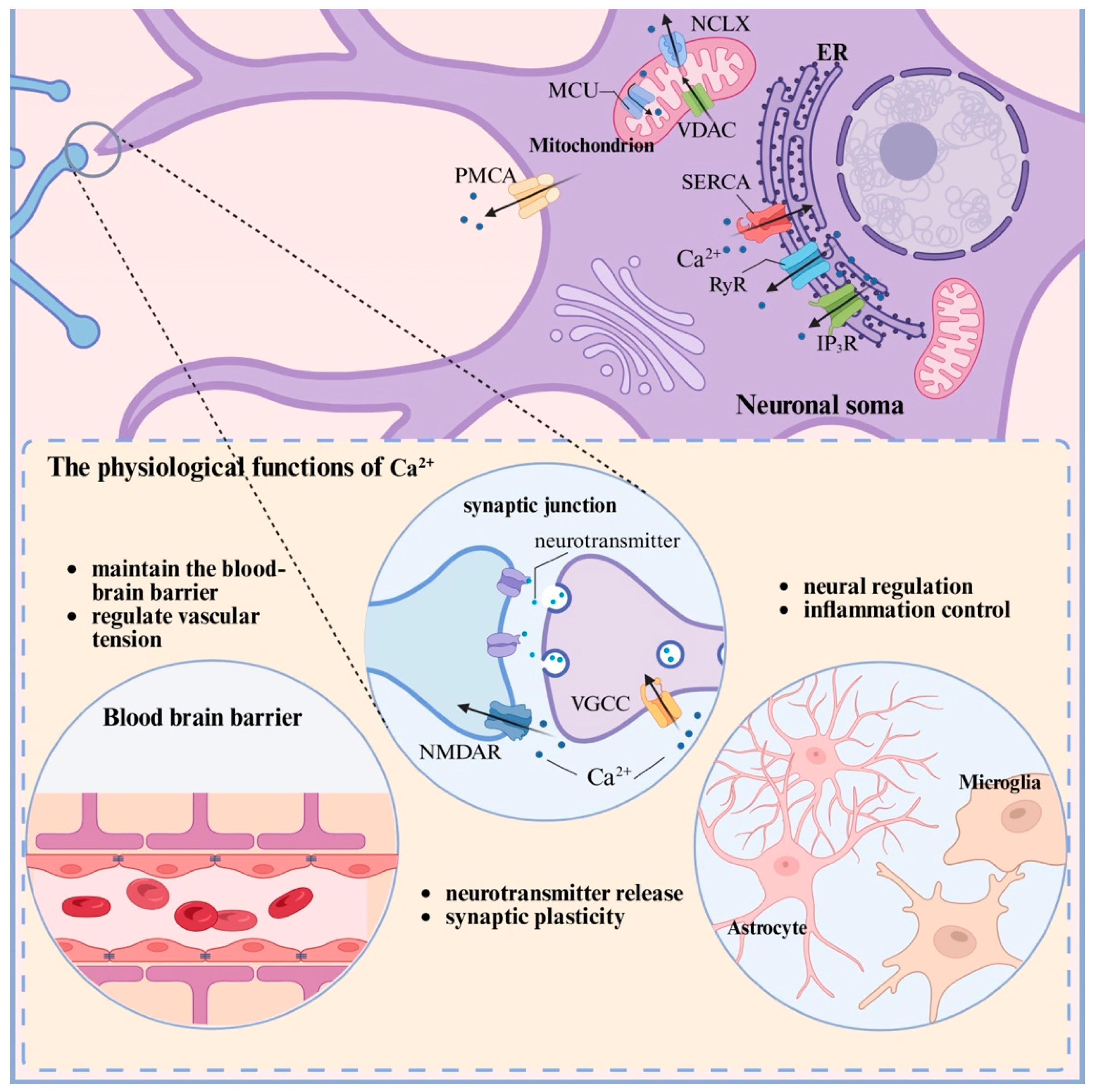
2.1. Maintenance of Normal Calcium Homeostasis
2.2. The Functional Characteristics of Ca2+
2.3. Calcium Overload Mechanism
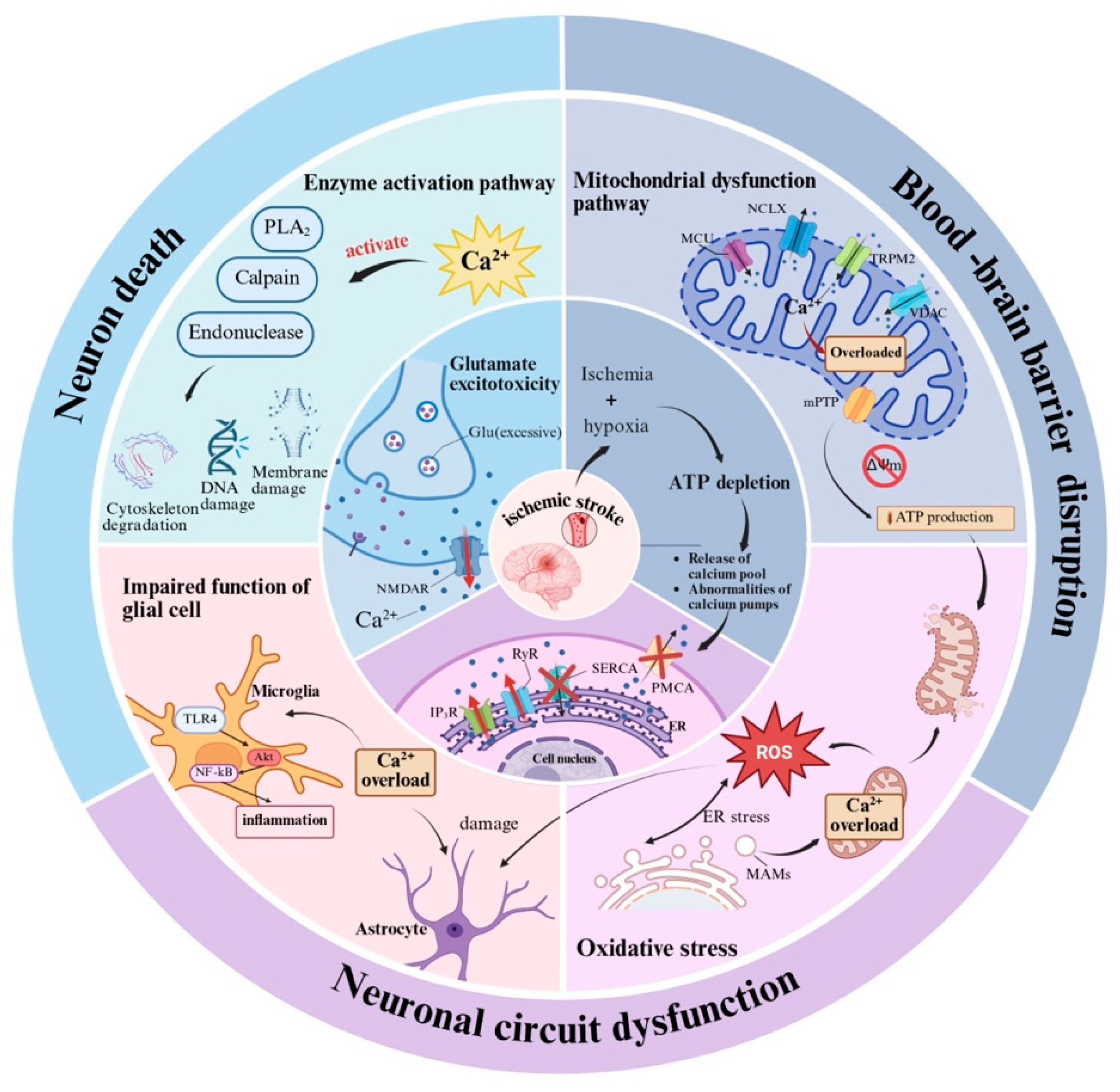
3. The Pathological Role of Calcium Overload in Ischemic Stroke
3.1. Calcium Overload Mediates Neuronal Apoptosis
3.2. Calcium Overload Induces Oxidative Stress and Free Radical Burst
3.3. Calcium Overload Leads to Mitochondrial Collapse and Energy Depletion
3.4. Calcium-Dependent Protease Activation and Cytoskeletal Disintegration
3.5. Calcium Overload Disrupts the Function of Non-Neuronal Cells
3.5.1. Astrocytes
3.5.2. Microglia
3.5.3. Vascular Endothelial Cells
3.5.4. Pericytes
3.6. Cascade Damage Caused by ER Calcium Overload
4. The Spatiotemporal Evolution of Calcium Overload
4.1. The Relationship Between Calcium Overload Mechanisms and Ischemic Du Ration Dynamics
4.2. Distinct Profiles of Calcium Overload in Ischemic Core Versus Penumbra: Implications for Tissue Fate
5. Intervention Strategies for Calcium Overload
5.1. Intervention Strategies Targeting Enzymes
- (1)
- Calpain inhibitors. Pharmacological inhibition of calpain activity, exemplified by agents such as calpeptin, alleviates neuroinflammatory responses while simultaneously promoting vascular regeneration and blood supply in ischemic areas [73]. Such intervention mitigates BBB dysfunction and reduces neuronal damage, including neuronal protection in the hippocampus [74]. Although calpain-targeted intervention holds broad therapeutic potential, no calpain-specific inhibitors have yet received clinical approval.
- (2)
- Intervention in the CaM/CaMKII/DRP1 pathway. The calcium chelator BAPTA-AM effectively counteracts the elevated intracellular Ca2+ concentration induced by methylmercury (MeHg). By blocking this pathway, BAPTA-AM restores mitochondrial dynamic balance and attenuates apoptotic cell death [49].
- (3)
- TLK2 kinase inhibition. Targeting TLK2 kinase with small-molecule inhibitors such as promethazine (PMZ) can reduce calcium overload-induced neuronal death by suppressing TLK2 kinase activity. Corresponding therapeutic effects can also be achieved by inhibiting its downstream effectors, notably through myosin IIA inhibitors. For instance, blebbistatin can inhibit myosin IIA function, alleviate TLK2-mediated nuclear membrane rupture, or interfere with the binding of LC8 to TLK2, which can also weaken the formation of TLK2-Myosin IIA complexes, thereby inhibiting cell death [50].
- (4)
- Modulation of the Wnt/Ca2+ signaling pathway. Genistein (Gen) can block the calcium release pathway and reduce calcium overload by downregulating the expression of Wnt5a, Frizzled-2, p-CaMKII and IP3R. Additionally, Gen can up-regulate the expression of SOD1/SOD2 and lower the levels of ROS and MDA, resulting in reduced oxidative damage [22].
- (5)
- PI3K/AKT pathway activation. The compound 6′-O-caffeyl arbutin (CA) can activate the PI3K/AKT pathway, upregulate the anti-apoptotic protein Bcl-2, inhibit Bax expression, and reduce the ratio of Bax/Bcl-2. This regulation decreases the activation of CASP3; concurrently, CA can reduce the phosphorylation of p-IκBα and P65, decrease the release of inflammatory factors, and indirectly alleviate the abnormal opening of calcium channels [56].
5.2. Intervention Strategies Targeting Mitochondria
5.3. Intervention Strategies for ER
5.4. Targeting the Glutamate System
5.5. Targeting TRP Channels
5.6. Calcium Channel Blockers (CCBs)
5.7. Other Intervention Targets
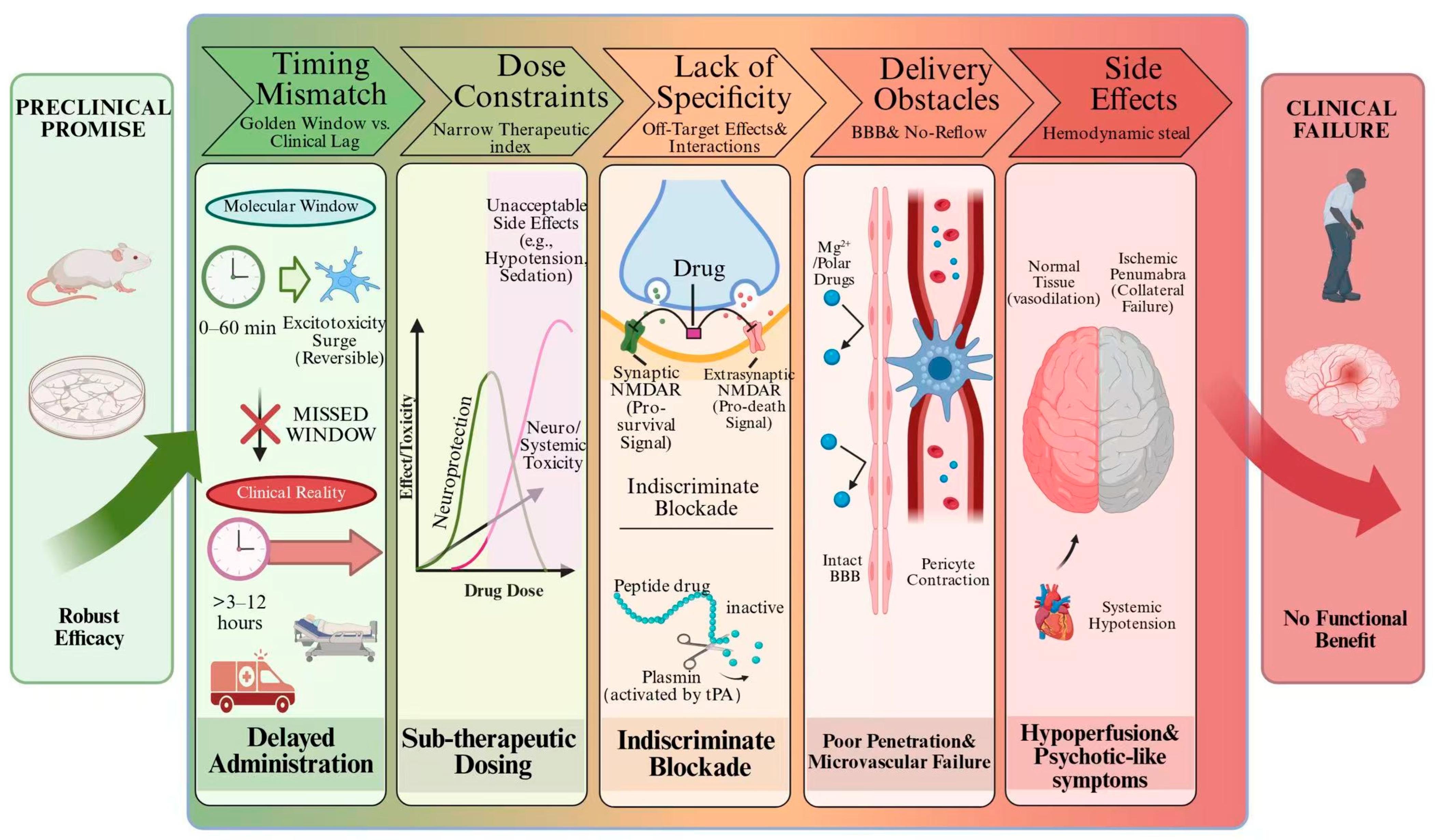
5.8. The Predicament of Clinical Transformation
- Timing: Severe Mismatch of the Therapeutic Window
- Dose: narrow therapeutic window and dose-limiting toxicity
- Specificity: disruption of physiological function and complex drug interactions
- Drug delivery and BBB penetration: failure to reach the target
- Side effects: systemic actions counterbalance local neuroprotection
6. Expectations
7. Conclusions
Author Contributions
Funding
Institutional Review Board Statement
Informed Consent Statement
Data Availability Statement
Acknowledgments
Conflicts of Interest
Abbreviations
| Abbreviation | Full Term | Abbreviation | Full Term |
| 2-APB | 2-Aminoethoxyindophenyl Borate | BBB | Blood–Brain Barrier |
| CA | 6′-O-Caffeyl Arbutin | cAMP | Cyclic Adenosine Monophosphate |
| CaM | Calmodulin | CaMKII | Ca2XCalmodulin-Dependent Protein Kinase II |
| CASP3 | Caspase-3 | CCB | Calcium Channel Blocker |
| CM-EM-137 | CRAC Channel Inhibitor Compound | COX | Cytochrome c Oxidase |
| CRAC | Calcium Release-Activated Calcium Channel | CREB | cAMP Response Element-Binding Protein |
| CSD | Cortical Spreading Depolarization | CX3CR1 | CX3C Chemokine Receptor 1 |
| DAMPs | Damage-Associated Molecular Patterns | DRP1 | Dynamin-Related Protein 1 |
| EGCG | Epigallocatechin Gallate | EIF2α | Eukaryotic Initiation Factor 2 Alpha |
| ER | Endoplasmic Reticulum | ESCAPE-NA1 | Endovascular Stroke Therapy Followed by Neures |
| esNMDAR | Extrasynaptic N-Methyl-D-Aspartate Receptor | FAST-MAG | Field Administration of Stroke Therapy—Magn |
| GABA | Gamma-Aminobutyric Acid | Gen | Genistein |
| GLT-1 | Glutamate Transporter-1 | GluN2A | N-Methyl-D-Aspartate Receptor Subunit 2A |
| GluN2B | N-Methyl-D-Aspartate Receptor Subunit 2B | GPCR | G Protein-Coupled Receptor |
| GRP75 | Glucose-Regulated Protein 75 | GSK3β | Glycogen Synthase Kinase 3 Beta |
| GsMTx4 | Grammostola spatulata Mechanotoxin 4 | GYR | Glycine-Arginine-Tyrosine Peptide |
| IL-1β | Interleukin 1 Beta | iNOS | Inducible Nitric Oxide Synthase |
| INWEST | Intravenous Nimodipine West European Stroke | IS | Ischemic Stroke |
| JNK | c-Jun N-Terminal Kinase | KXA | Kuaxiong Aerosol |
| MALT1 | Mucosa-Associated Lymphoid Tissue Lymphom | MAMs | Mitochondria-Associated Membranes |
| MCU | Mitochondrial Calcium Uniporter | mGluR | Metabotropic Glutamate Receptor |
| MICU1 | Mitochondrial Calcium Uptake 1 | mPTP | Mitochondrial Permeability Transition Pore |
| NCLX | NaXCa2XExchanger | NIHSS | National Institutes of Health Stroke Scale |
| NMDAR | N-Methyl-D-Aspartate Receptor | NO | Nitric Oxide |
| NOX | NADPH Oxidase | nNOS | Neuronal Nitric Oxide Synthase |
| NVU | Neurovascular Unit | OGD/R | Oxygen-Glucose Deprivation/Reoxygenation |
| Orai1 | Calcium Release-Activated Calcium Channel Pre | P2X7 | Purineric Receptor P2X7 |
| PDE2 | Phosphodiesterase 2 | PERK | Protein Kinase R-Like Endoplasmic Reticulum F |
| Piezo1 | Piezo-Type Mechanosensitive Ion Channel Comp | PKA | Protein Kinase A |
| PLA2 | Phospholipase A2 | PMCA | Plasma Membrane Ca2XATPase |
| PMZ | Promethazine | RIPostC | Remote Ischemic Postconditioning |
| RODIN | Randomized Study of Nelonenadaz for Ischemic | ROS | Reactive Oxygen Species |
| Ru265 | Ruthenium-Based MCU Inhibitor | SAINT II | Stroke-Acute Ischemic NXY Treatment II Trial |
| SERCA | Sarco/Endoplasmic Reticulum Ca2XATPase | SOD1 | Superoxide Dismutase 1 |
| SOD2 | Superoxide Dismutase 2 | SOCE | Store-Operated Calcium Entry |
| STM1 | Stromal Interaction Molecule 1 | TAT | Trans-Activator of Transcription Peptide |
| t-PA | Tissue Plasminogen Activator | TLK2 | Tousled-Like Kinase 2 |
| TLR4 | Toll-Like Receptor 4 | TNF-α | Tumor Necrosis Factor Alpha |
| TrkB | Tropomyosin Receptor Kinase B | TRP | Transient Receptor Potential |
| TRPC6 | Transient Receptor Potential Canonical 6 | TRPM2 | Transient Receptor Potential Melastatin 2 |
| TRPM4 | Transient Receptor Potential Melastatin 4 | TRPV4 | Transient Receptor Potential Vanilloid 4 |
| UPR | Unfolded Protein Response | VDAC | Voltage-Dependent Anion Channel |
| VENUS | Very Early Nimodipine Use in Stroke Trial | VGCC | Voltage-Gated Calcium Channel |
| ZO-1 | Zonula Occludens-1 |
References
- Millenaar, D.; Ragoschke-Schumm, A.; Fehlmann, T.; Raible, M.; Lochner, P.; Böhm, M.; Fassbender, K.; Keller, A.; Mahfoud, F.; Ukena, C. Ischemic Stroke-A Scientometric Analysis. Front. Neurol. 2022, 13, 893121. [Google Scholar] [CrossRef]
- Golubnitschaja, O.; Polivka, J.; Potuznik, P.; Pesta, M.; Stetkarova, I.; Mazurakova, A.; Lackova, L.; Kubatka, P.; Kropp, M.; Thumann, G.; et al. The paradigm change from reactive medical services to 3PM in ischemic stroke: A holistic approach utilising tear fluid multi-omics, mitochondria as a vital biosensor and AI-based multi-professional data interpretation. EPMA J. 2024, 15, 1–23. [Google Scholar] [CrossRef]
- Pacinella, G.; Ciaccio, A.M.; Tuttolomondo, A. Molecular Links and Clinical Effects of Inflammation and Metabolic Background on Ischemic Stroke: An Update Review. J. Clin. Med. 2024, 13, 7515. [Google Scholar] [CrossRef]
- Brauer, M.; Roth, G.A.; Aravkin, A.Y.; Zheng, P.; Abate, K.H.; Abate, Y.H.; Abbafati, C.; Abbasgholizadeh, R.; Abbasi, M.A.; Abbasian, M.; et al. Global burden and strength of evidence for 88 risk factors in 204 countries and 811 subnational locations, 1990-2021: A systematic analysis for the Global Burden of Disease Study 2021. Lancet 2024, 403, 2162–2203, Correction in Lancet 2024, 404, 244. [Google Scholar] [CrossRef] [PubMed]
- Rajan, S.S.; Yamal, J.-M.; Wang, M.; Saver, J.L.; Jacob, A.P.; Gonzales, N.R.; Ifejika, N.; Parker, S.A.; Ganey, C.; Gonzalez, M.O.; et al. A Prospective Multicenter Analysis of Mobile Stroke Unit Cost-Effectiveness. Ann. Neurol. 2025, 97, 209–221. [Google Scholar] [CrossRef] [PubMed]
- Mizoguchi, T.; Maki, A.; Nakase, Y.; Okita, M.; Minami, Y.; Fukunaga, M.; Itoh, M. Neurological function is restored post-ischemic stroke in zebrafish, with aging exerting a deleterious effect on its pathology. Brain Res. Bull. 2025, 221, 111225. [Google Scholar] [CrossRef] [PubMed]
- Martin, S.S.; Aday, A.W.; Allen, N.B.; Almarzooq, Z.I.; Anderson, C.A.M.; Arora, P.; Avery, C.L.; Baker-Smith, C.M.; Bansal, N.; Beaton, A.Z.; et al. 2025 Heart Disease and Stroke Statistics: A Report of US and Global Data from the American Heart Association. Circulation 2025, 151, e41–e660, Correction in Circulation 2025, 151, e1096. [Google Scholar] [CrossRef]
- Jia, J.; Jiao, W.; Wang, G.; Wu, J.; Huang, Z.; Zhang, Y. Drugs/agents for the treatment of ischemic stroke: Advances and perspectives. Med. Res. Rev. 2024, 44, 975–1012. [Google Scholar] [CrossRef]
- Sharma, R.; Lee, K. Advances in treatments for acute ischemic stroke. bmj 2025, 389, e076161. [Google Scholar] [CrossRef]
- Zhao, K.; Wang, P.; Tang, X.; Chang, N.; Shi, H.; Guo, L.; Wang, B.; Yang, P.; Zhu, T.; Zhao, X. The mechanisms of minocycline in alleviating ischemic stroke damage and cerebral ischemia-reperfusion injury. Eur. J. Pharmacol. 2023, 955, 175903. [Google Scholar] [CrossRef]
- Li, Y.-W.; Liu, Y.; Luo, S.-Z.; Huang, X.-J.; Shen, Y.; Wang, W.-S.; Lang, Z.-C. The significance of calcium ions in cerebral ischemia-reperfusion injury: Mechanisms and intervention strategies. Front. Mol. Biosci. 2025, 12, 1585758. [Google Scholar] [CrossRef] [PubMed]
- Jha, B.K.; Bhattacharyya, R. A Comprehensive Fuzzy Model for Understanding Neuronal Calcium Distribution in Presence of VGCC, Na+/Ca2+ Exchanger, Buffer, and ER Fluxes. Cell Biochem. Biophys. 2024, 82, 1367–1379. [Google Scholar] [CrossRef] [PubMed]
- Pikor, D.; Hurła, M.; Słowikowski, B.; Szymanowicz, O.; Poszwa, J.; Banaszek, N.; Drelichowska, A.; Jagodziński, P.P.; Kozubski, W.; Dorszewska, J. Calcium Ions in the Physiology and Pathology of the Central Nervous System. Int. J. Mol. Sci. 2024, 25, 13133. [Google Scholar] [CrossRef] [PubMed]
- Rahi, V.; Kaundal, R.K. Exploring the intricacies of calcium dysregulation in ischemic stroke: Insights into neuronal cell death and therapeutic strategies. Life Sci. 2024, 347, 122651. [Google Scholar] [CrossRef]
- Hu, J.; Zhu, Y.; Pang, Z.; Li, X.; Zhang, H.; Li, X.; Gao, Y.; Wang, Y.; Li, P.; Zhou, Q. Low hydrostatic pressure promotes functional homeostasis of nucleus pulposus cells through the TRPV4/CRT/FA complex axis. Front. Med. 2025, 12, 1531907. [Google Scholar] [CrossRef]
- Parajuli, B.; Doi, H.; Shigetomi, E.; Suzuki, H.; Saito, K.; Sawada, K.; Koizumi, S. Development of a label-free Ca2+ image sensor to visualize extracellular Ca2+ dynamics in the biological samples. Biosens. Bioelectron. 2025, 287, 117729. [Google Scholar] [CrossRef]
- Zhang, Y.; Zhang, G.; Chen, X. Elevated Calcium after Acute Ischemic Stroke Predicts Severity and Prognosis. Mol. Neurobiol. 2024, 61, 266–275. [Google Scholar] [CrossRef]
- Vijay Prabhu, S.N.; Tripathi, B.K.; Agarwal, Y.; Kabi, B.C.; Kumar, R. Association of serum calcium levels with clinical severity of ischemic stroke at the time of admission as defined by NIHSS score: A cross-sectional, observational study. J. Fam. Med. Prim. Care 2022, 11, 6427–6432. [Google Scholar] [CrossRef]
- Meng, K.; Lei, X.; He, D. Association between serum calcium and in-hospital mortality in intensive care unit patients with cerebral infarction: A cohort study. Front. Neurol. 2024, 15, 1428868. [Google Scholar] [CrossRef]
- Lu, Y.; Ma, X.; Tazmini, K.; Yang, M.; Zhou, X.; Wang, Y. Admission Serum Calcium Level and Short-Term Mortality After Acute Ischemic Stroke: A Secondary Analysis Based on a Norwegian Retrospective Cohort. Front. Neurol. 2022, 13, 889518. [Google Scholar] [CrossRef]
- Fang, S.; Huang, W.; Qu, X.; Chai, W. The mitochondria as a potential therapeutic target in cerebral I/R injury. Front. Neurosci. 2024, 18, 1500647. [Google Scholar] [CrossRef] [PubMed]
- Li, L.; Liu, S.; Wang, M.; Li, M.; Liu, Y.; Chen, H.; Chen, J.; Tao, W.; Huang, L.; Zhao, S. Gen inhibiting the Wnt/Ca2+ signaling pathway alleviates cerebral ischemia/reperfusion injury. Sci. Rep. 2025, 15, 4661. [Google Scholar] [CrossRef] [PubMed]
- Tang, J.; Duan, W.; Deng, P.; Li, H.; Liu, C.; Duan, Y.; Feng, M.; Xu, S. Cadmium disrupts mitochondrial distribution and activates excessive mitochondrial fission by elevating cytosolic calcium independent of MCU-mediated mitochondrial calcium uptake in its neurotoxicity. Toxicology 2021, 453, 152726. [Google Scholar] [CrossRef] [PubMed]
- Peggion, C.; Barazzuol, L.; Poggio, E.; Calì, T.; Brini, M. Ca2+ signalling: A common language for organelles crosstalk in Parkinson’s disease. Cell Calcium 2023, 115, 102783. [Google Scholar] [CrossRef]
- Zhu, H.; Zhou, H. Novel Insight into the Role of Endoplasmic Reticulum Stress in the Pathogenesis of Myocardial Ischemia-Reperfusion Injury. Oxidative Med. Cell. Longev. 2021, 2021, 5529810. [Google Scholar] [CrossRef]
- Loh, K.W.Z.; Liu, C.; Soong, T.W.; Hu, Z. β subunits of voltage-gated calcium channels in cardiovascular diseases. Front. Cardiovasc. Med. 2023, 10, 1119729. [Google Scholar] [CrossRef]
- Zhu, M.-L.; Zhang, J.; Guo, L.-J.; Yue, R.-Z.; Li, S.-S.; Cui, B.-Y.; Guo, S.; Niu, Q.-Q.; Yu, Y.-N.; Wang, H.-H.; et al. Amorphous selenium inhibits oxidative stress injury of neurons in vascular dementia rats by activating NMDAR pathway. Eur. J. Pharmacol. 2023, 955, 175874. [Google Scholar] [CrossRef]
- Shkryl, V.M. Endoplasmic Reticulum Calcium Signaling in Hippocampal Neurons. Biomolecules 2024, 14, 1617. [Google Scholar] [CrossRef]
- Díaz-Piña, D.A.; Rivera-Ramírez, N.; García-López, G.; Díaz, N.F.; Molina-Hernández, A. Calcium and Neural Stem Cell Proliferation. Int. J. Mol. Sci. 2024, 25, 4073. [Google Scholar] [CrossRef]
- Pathiriparambath, M.S.R.; Joseph, M.; Manog, M.; Thomas, V.; Tharayil, H.; Nair, L.V. Glutamic Acid Modified Gold Nanorod Sensor for the Detection of Calcium ions in Neuronal Cells. Chembiochem 2024, 25, e202400009. [Google Scholar] [CrossRef]
- Shiratori-Hayashi, M.; Tsuda, M. IP3R1-dependent astrocyte calcium signaling in chronic itch. Neurosci. Res. 2023, 187, 40–44. [Google Scholar] [CrossRef]
- Choi, S.; Shin, H.; Hyun, S.Y.; Chung, G.; Kim, S.K. STIM1-Dependent Calcium Signaling in Astrocytes Controls Glutamate Accumulation and Ischemic Brain Injury During Acute Stroke in Mice. GLIA 2026, 74, e70110. [Google Scholar] [CrossRef]
- Liang, X.; Cao, C.; Liu, N.; Chen, D.; Liu, T.; Ma, H.; Liu, J.; Wu, T.; Niu, J. Induced neural stem cells ameliorate blood-brain barrier injury by modulating the calcium signaling pathway of astrocyte in cerebral ischemia-reperfusion rats. Front. Cell Dev. Biol. 2025, 13, 1611226. [Google Scholar] [CrossRef] [PubMed]
- Cho, J.; Lee, S.; Kook, Y.H.; Park, J.; Do Heo, W.; Lee, C.J.; Kim, H.-I. Optogenetic calcium modulation in astrocytes enhances post-stroke recovery in chronic capsular infarct. Sci. Adv. 2025, 11, eadn7577. [Google Scholar] [CrossRef] [PubMed]
- Granzotto, A.; McQuade, A.; Chadarevian, J.P.; Davtyan, H.; Sensi, S.L.; Parker, I.; Blurton-Jones, M.; Smith, I.F. ER and SOCE Ca2+ signals are not required for directed cell migration in human iPSC-derived microglia. Cell Calcium 2024, 123, 102923. [Google Scholar] [CrossRef] [PubMed]
- Martus, D.; Williams, S.K.; Pichi, K.; Mannebach-Götz, S.; Kaiser, N.; Wardas, B.; Fecher-Trost, C.; Meyer, M.R.; Schmitz, F.; Beck, A.; et al. Cavβ3 Contributes to the Maintenance of the Blood-Brain Barrier and Alleviates Symptoms of Experimental Autoimmune Encephalomyelitis. Arterioscler. Thromb. Vasc. Biol. 2024, 44, 1833–1851. [Google Scholar] [CrossRef]
- Zong, P.; Feng, J.; Li, C.X.; Jellison, E.R.; Yue, Z.; Miller, B.; Yue, L. Activation of endothelial TRPM2 exacerbates blood-brain barrier degradation in ischemic stroke. Cardiovasc. Res. 2024, 120, 188–202. [Google Scholar] [CrossRef]
- Fu, H.; Yu, Y.; Wang, S.; Xu, P.; Sun, Y.; Li, J.; Ge, X.; Pan, S. Piezo1 disrupts blood-brain barrier via CaMKII/Nrf2 in ischemic stroke. Cell. Mol. Life Sci. 2025, 82, 259. [Google Scholar] [CrossRef]
- Gao, H.-M.; Chen, H.; Cui, G.-Y.; Hu, J.-X. Damage mechanism and therapy progress of the blood-brain barrier after ischemic stroke. Cell Biosci. 2023, 13, 196. [Google Scholar] [CrossRef]
- Sonobe, T.; Kakinuma, Y. Non-neuronal cell-derived acetylcholine, a key modulator of the vascular endothelial function in health and disease. Front. Cardiovasc. Med. 2024, 11, 1388528. [Google Scholar] [CrossRef]
- Segal, S.S. Cell-to-cell communication coordinates blood flow control. Hypertension 1994, 23, 1113–1120. [Google Scholar] [CrossRef] [PubMed]
- Negri, S.; Scolari, F.; Vismara, M.; Brunetti, V.; Faris, P.; Terribile, G.; Sancini, G.; Berra-Romani, R.; Moccia, F. GABAA and GABAB Receptors Mediate GABA-Induced Intracellular Ca2+ Signals in Human Brain Microvascular Endothelial Cells. Cells 2022, 11, 3860. [Google Scholar] [CrossRef] [PubMed]
- Korte, N.; Ilkan, Z.; Pearson, C.L.; Pfeiffer, T.; Singhal, P.; Rock, J.R.; Sethi, H.; Gill, D.; Attwell, D.; Tammaro, P. The Ca2+-gated channel TMEM16A amplifies capillary pericyte contraction and reduces cerebral blood flow after ischemia. J. Clin. Invest. 2022, 132, e154118. [Google Scholar] [CrossRef]
- Garbincius, J.F.; Elrod, J.W. Mitochondrial calcium exchange in physiology and disease. Physiol. Rev. 2022, 102, 893–992. [Google Scholar] [CrossRef] [PubMed]
- Zong, P.; Feng, J.; Yue, Z.; Li, Y.; Wu, G.; Sun, B.; He, Y.; Miller, B.; Yu, A.S.; Su, Z.; et al. Functional coupling of TRPM2 and extrasynaptic NMDARs exacerbates excitotoxicity in ischemic brain injury. Neuron 2022, 110, 1944–1958. [Google Scholar] [CrossRef]
- Xie, D.; Zhang, P.; You, S.; Shen, Y.; Xu, W.; Zhan, C.; Zhang, J. Salidroside derivative SHPL-49 attenuates glutamate excitotoxicity in acute ischemic stroke via promoting NR2A-CAMKIIα-Akt/CREB pathway. Phytomedicine 2024, 134, 155583. [Google Scholar] [CrossRef]
- Zhang, X.; Zheng, Y.; Wang, Z.; Zhang, G.; Yang, L.; Gan, J.; Jiang, X. Calpain: The regulatory point of cardiovascular and cerebrovascular diseases. Biomed. Pharmacother. 2024, 179, 117272. [Google Scholar] [CrossRef]
- Sharma, P.; Sharma, B.; Kharkwal, H.; Ghildiyal, S.; Patil, V.M. Selective inhibition of T-type calcium channel preserves ischemic pre-conditioning mediated neuroprotection during cerebral ischemia reperfusion injury in diabetic mice. Metab. Brain Dis. 2024, 40, 33. [Google Scholar] [CrossRef]
- Kong, L.; Yang, H.; Yang, J.; Jiang, L.; Xu, B.; Yang, T.; Liu, W. Role of calcium overload-mediated disruption of mitochondrial dynamics in offspring neurotoxicity due to methylmercury exposure during pregnancy and lactation. Ecotoxicol. Environ. Saf. 2025, 291, 117835. [Google Scholar] [CrossRef]
- Li, Y.; Huang, H.; Gao, J.; Lu, J.; Kang, G.; Ge, Y.; Jiang, W.; Cai, X.; Zhang, G.; Liu, L. A TLK2-mediated calcium-driven cell death pathway links neuronal degeneration to nuclear envelope disruption. Nat. Commun. 2025, 16, 3419. [Google Scholar] [CrossRef]
- Zhou, M.; Zhang, T.; Zhang, X.; Zhang, M.; Gao, S.; Zhang, T.; Li, S.; Cai, X.; Li, J.; Lin, Y. Effect of Tetrahedral Framework Nucleic Acids on Neurological Recovery via Ameliorating Apoptosis and Regulating the Activation and Polarization of Astrocytes in Ischemic Stroke. ACS Appl. Mater. Interfaces 2022, 14, 37478–37492. [Google Scholar] [CrossRef] [PubMed]
- Shen, Z.; Xiang, M.; Chen, C.; Ding, F.; Wang, Y.; Shang, C.; Xin, L.; Zhang, Y.; Cui, X. Glutamate excitotoxicity: Potential therapeutic target for ischemic stroke. Biomed. Pharmacother. 2022, 151, 113125. [Google Scholar] [CrossRef] [PubMed]
- Zhang, H.; Xie, W.; Feng, Y.; Wei, J.; Yang, C.; Luo, P.; Yang, Y.; Zhao, P.; Jiang, X.; Liang, W.; et al. Stromal Interaction Molecule 1-Mediated Store-Operated Calcium Entry Promotes Autophagy Through AKT/Mammalian Target of Rapamycin Pathway in Hippocampal Neurons After Ischemic Stroke. Neuroscience 2023, 514, 67–78. [Google Scholar] [CrossRef] [PubMed]
- Zhou, Y.; Qiu, T.; Wang, T.; Yu, B.; Xia, K.; Guo, J.; Liu, Y.; Ma, X.; Zhang, L.; Zou, J.; et al. Research progress on the role of mitochondria in the process of hepatic ischemia-reperfusion injury. Gastroenterol. Rep. 2024, 12, goae066. [Google Scholar] [CrossRef]
- Kadier, T.; Zhang, Y.-G.; Jing, Y.-X.; Weng, Z.-Y.; Liao, S.-S.; Luo, J.; Ding, K.; Cao, C.; Chen, R.; Meng, Q.-T. MCU inhibition protects against intestinal ischemia-reperfusion by inhibiting Drp1-dependent mitochondrial fission. Free Radic. Biol. Med. 2024, 221, 111–124. [Google Scholar] [CrossRef]
- Shi, Z.-Q.; Wen, X.; Wu, X.-R.; Peng, H.-Z.; Qian, Y.-L.; Zhao, Y.-L.; Luo, X.-D. 6′-O-caffeoylarbutin of Vaccinium dunalianum alleviated ischemic stroke through the PI3K/AKT/NF-κB pathway. Phytomedicine 2025, 139, 156505. [Google Scholar] [CrossRef]
- Novorolsky, R.J.; Kasheke, G.D.S.; Hakim, A.; Foldvari, M.; Dorighello, G.G.; Sekler, I.; Vuligonda, V.; Sanders, M.E.; Renden, R.B.; Wilson, J.J.; et al. Preserving and enhancing mitochondrial function after stroke to protect and repair the neurovascular unit: Novel opportunities for nanoparticle-based drug delivery. Front. Cell Neurosci. 2023, 17, 1226630. [Google Scholar] [CrossRef]
- Zhang, X.-H.; Li, Y.; Jin, C.-Y.; Zhang, J.-L.; Yan, Y.-P.; Guo, J.-X.; Lu, X.; Pang, H.-Q.; Zhao, Y.-J. Role of mitochondrial metabolism in ischemic stroke and natural products intervention. Mol. Biol. Rep. 2025, 52, 568. [Google Scholar] [CrossRef]
- Pisani, D.F.; Blondeau, N. Deciphering the brain glucose metabolism: A gateway to innovative stroke therapies. J. Cereb. Blood Flow Metab. 2025, 45, 1635–1653. [Google Scholar] [CrossRef]
- Chen, W.; Li, M.; Lei, X.; Cheng, Y.; Wu, X.; Sun, X.; Wu, Y.; Li, Z.; Luo, G.; Wei, M. Remote ischemic postconditioning alleviates cerebral ischemic injury through SERCA2/endoplasmic reticulum stress-mediated apoptosis. Microsc. Res. Tech. 2024, 87, 424–433. [Google Scholar] [CrossRef]
- Zong, P.; Li, C.; Feng, J.; Yue, Z.; Legere, N.; Yu, A.S.; Shah, F.; Perez, A.; Li, Z.; Jellison, E.; et al. TRPM2 overactivation drives hyperlipidemia-induced dysfunction of myeloid cells and neurovascular units. Cell Rep. Med. 2025, 6, 101998. [Google Scholar] [CrossRef] [PubMed]
- Shui, X.; Chen, J.; Fu, Z.; Zhu, H.; Tao, H.; Li, Z. Microglia in Ischemic Stroke: Pathogenesis Insights and Therapeutic Challenges. J. Inflamm. Res. 2024, 17, 3335–3352. [Google Scholar] [CrossRef] [PubMed]
- Shrouder, J.J.; Calandra, G.M.; Filser, S.; Varga, D.P.; Besson-Girard, S.; Mamrak, U.; Dorok, M.; Bulut-Impraim, B.; Seker, F.B.; Gesierich, B.; et al. Continued dysfunction of capillary pericytes promotes no-reflow after experimental stroke in vivo. Brain J. Neurol. 2024, 147, 1057–1074. [Google Scholar] [CrossRef] [PubMed]
- Wang, J.; Xu, J.; Dong, Y.; Su, Z.; Su, H.; Cheng, Q.; Liu, X. ADP-ribose transferase PARP16 mediated-unfolded protein response contributes to neuronal cell damage in cerebral ischemia/reperfusion. FASEB J. 2023, 37, e22788. [Google Scholar] [CrossRef]
- Yu, X.; Dang, L.; Dhar, A.; Zhang, R.; Xu, F.; Spasojevic, I.; Sheng, H.; Yang, W. Activation of ATF6 Signaling Confers Long-Term Beneficial Effects in Young and Aged Mice After Permanent Stroke. Transl. Stroke Res. 2025, 16, 1799–1810. [Google Scholar] [CrossRef]
- Lu, D.; Liu, Y.; Huang, H.; Hu, M.; Li, T.; Wang, S.; Shen, S.; Wu, R.; Cai, W.; Lu, T.; et al. Melatonin Offers Dual-Phase Protection to Brain Vessel Endothelial Cells in Prolonged Cerebral Ischemia-Recanalization Through Ameliorating ER Stress and Resolving Refractory Stress Granule. Transl. Stroke Res. 2023, 14, 910–928. [Google Scholar] [CrossRef]
- Peng, Y.; Zhou, L.; Jin, Y.; Wu, D.; Chen, N.; Zhang, C.; Liu, H.; Li, C.; Ning, R.; Yang, X.; et al. Calcium bridges built by mitochondria-associated endoplasmic reticulum membranes: Potential targets for neural repair in neurological diseases. Neural Regen. Res. 2025, 20, 3349–3369. [Google Scholar] [CrossRef]
- Jia, Z.; Li, H.; Xu, K.; Li, R.; Yang, S.; Chen, L.; Zhang, Q.; Li, S.; Sun, X. MAM-mediated mitophagy and endoplasmic reticulum stress: The hidden regulators of ischemic stroke. Front. Cell Neurosci. 2024, 18, 1470144. [Google Scholar] [CrossRef]
- Liu, Y.; Jin, W.; Zhou, H.; Wang, X.; Ren, H.; Yang, X.; Luo, K.; Dou, X. Role of mitochondrial Ca2+ in stroke: From molecular mechanism to treatment strategy (Review). Mol. Med. Rep. 2025, 32, 271. [Google Scholar] [CrossRef]
- Rehman, S.; Nadeem, A.; Akram, U.; Sarwar, A.; Quraishi, A.; Siddiqui, H.; Malik, M.A.J.; Nabi, M.; Ul Haq, I.; Cho, A.; et al. Molecular Mechanisms of Ischemic Stroke: A Review Integrating Clinical Imaging and Therapeutic Perspectives. Biomedicines 2024, 12, 812. [Google Scholar] [CrossRef]
- Deng, X.; Zhao, M.; Zhang, E.; Wei, L.; Gao, X.; Zhang, D.; Huang, Y. New insights into acute ischemic stroke from the perspective of spatial omics. Theranostics 2025, 15, 7902–7924. [Google Scholar] [CrossRef] [PubMed]
- Li, Y.; Schappell, L.E.; Polizu, C.; DiPersio, J.; Tsirka, S.E.; Halterman, M.W.; Nadkarni, N.A. Evolving Clinical-Translational Investigations of Cerebroprotection in Ischemic Stroke. J. Clin. Med. 2023, 12, 6715. [Google Scholar] [CrossRef] [PubMed]
- Tan, Q.; Wang, X.; Xu, W.; Song, K.; Xiong, Y.; Jiang, Z.; Li, J.; Yu, Y.; Ye, W.; Shen, Z.; et al. Calpain inhibition as a novel therapeutic strategy for aortic dissection with acute lower extremity ischemia. Mol. Med. 2025, 31, 144. [Google Scholar] [CrossRef] [PubMed]
- Madias, M.I.; Stessman, L.N.; Warlof, S.J.; Kudryashev, J.A.; Kwon, E.J. Spatial Measurement and Inhibition of Calpain Activity in Traumatic Brain Injury with an Activity-Based Nanotheranostic Platform. ACS Nano 2024, 18, 25565–25576. [Google Scholar] [CrossRef]
- Chukai, Y.; Sudo, T.; Fukuda, T.; Tomita, H.; Sugano, E.; Ozaki, T. Proteolysis of mitochondrial calpain-13 in cerebral ischemia-reperfusion injury. Biochem. Biophys. Rep. 2024, 39, 101768. [Google Scholar] [CrossRef]
- Poudel, P.; Shapovalov, I.; Panday, S.K.; Nouri, K.; Davies, P.L.; Greer, P.A.; Alexov, E. In Silico Screening for Small Molecules to Alter Calpain Proteolysis through Modulating Conformation Changes Induced by Heterodimerization. J. Chem. Inf. Model. 2025, 65, 5528–5543. [Google Scholar] [CrossRef]
- Xu, P.; Swain, S.; Novorolsky, R.J.; Garcia, E.; Huang, Z.; Snutch, T.P.; Wilson, J.J.; Robertson, G.S.; Renden, R.B. The mitochondrial calcium uniporter inhibitor Ru265 increases neuronal excitability and reduces neurotransmission via off-target effects. Br. J. Pharmacol. 2024, 181, 3503–3526. [Google Scholar] [CrossRef]
- Bigham, N.P.; Novorolsky, R.J.; Davis, K.R.; Zou, H.; MacMillan, S.N.; Stevenson, M.J.; Robertson, G.S.; Wilson, J.J. Supramolecular delivery of dinuclear ruthenium and osmium MCU inhibitors. Inorg. Chem. Front. 2024, 11, 5064–5079. [Google Scholar] [CrossRef]
- Zhang, X.; Liu, H.; Shi, Y.; Liu, Z.; Wang, Y.; Chen, S.; Yan, X.; Xu, R.; Ma, J.; Chen, Q.; et al. OPTN ameliorates chondrocyte apoptosis in temporomandibular joint osteoarthritis by modulating ER-mitochondria Ca2+ transfer. Int. Immunopharmacol. 2025, 157, 114796. [Google Scholar] [CrossRef]
- Wen, B.; Xu, K.; Huang, R.; Jiang, T.; Wang, J.; Chen, J.; Chen, J.; He, B. Preserving mitochondrial function by inhibiting GRP75 ameliorates neuron injury under ischemic stroke. Mol. Med. Rep. 2022, 25, 165. [Google Scholar] [CrossRef]
- Jara, C.; Torres, A.K.; Park-Kang, H.S.; Sandoval, L.; Retamal, C.; Gonzalez, A.; Ricca, M.; Valenzuela, S.; Murphy, M.P.; Inestrosa, N.C.; et al. Curcumin Improves Hippocampal Cell Bioenergetics, Redox and Inflammatory Markers, and Synaptic Proteins, Regulating Mitochondrial Calcium Homeostasis. Neurotox. Res. 2025, 43, 3. [Google Scholar] [CrossRef] [PubMed]
- Rozenfeld, M.; Azoulay, I.S.; Ben Kasus Nissim, T.; Stavsky, A.; Melamed, M.; Stutzmann, G.; Hershfinkel, M.; Kofman, O.; Sekler, I. Essential role of the mitochondrial Na+/Ca2+ exchanger NCLX in mediating PDE2-dependent neuronal survival and learning. Cell Rep. 2022, 41, 111772. [Google Scholar] [CrossRef] [PubMed]
- Kodippili, K.; Hakim, C.H.; Burke, M.J.; Yue, Y.; Teixeira, J.A.; Zhang, K.; Yao, G.; Babu, G.J.; Herzog, R.W.; Duan, D. SERCA2a overexpression improves muscle function in a canine Duchenne muscular dystrophy model. Mol. Ther. Methods Clin. Dev. 2024, 32, 101268. [Google Scholar] [CrossRef] [PubMed]
- Liao, Y.; Zhang, Q.; Shi, Q.; Liu, P.; Zhong, P.; Guo, L.; Huang, Z.; Peng, Y.; Liu, W.; Zhang, S.; et al. Neuroserpin alleviates cerebral ischemia-reperfusion injury by suppressing ischemia-induced endoplasmic reticulum stress. Neural Regen. Res. 2026, 21, 333–345. [Google Scholar] [CrossRef]
- Song, T.; Li, J.; Xia, Y.; Hou, S.; Zhang, X.; Wang, Y. 1,25-D3 ameliorates ischemic brain injury by alleviating endoplasmic reticulum stress and ferroptosis: Involvement of vitamin D receptor and p53 signaling. Cell Signal 2024, 122, 111331. [Google Scholar] [CrossRef]
- Zhang, Y.-Y.; Peng, J.-J.; Chen, D.; Liu, H.-Q.; Yao, B.-F.; Peng, J.; Luo, X.-J. Telaprevir Improves Memory and Cognition in Mice Suffering Ischemic Stroke via Targeting MALT1-Mediated Calcium Overload and Necroptosis. ACS Chem. Neurosci. 2023, 14, 3113–3124. [Google Scholar] [CrossRef]
- Yu, S.P.; Jiang, M.Q.; Shim, S.S.; Pourkhodadad, S.; Wei, L. Extrasynaptic NMDA receptors in acute and chronic excitotoxicity: Implications for preventive treatments of ischemic stroke and late-onset Alzheimer’s disease. Mol. Neurodegener. 2023, 18, 43. [Google Scholar] [CrossRef]
- Tortella, L.; Santini, I.; Lozano, N.; Kostarelos, K.; Cellot, G.; Ballerini, L. Graphene Oxide Nanosheets Hamper Glutamate Mediated Excitotoxicity and Protect Neuronal Survival in an in vitro Stroke Model. Chemistry 2023, 29, e202301762. [Google Scholar] [CrossRef]
- Park, D.-J.; Kang, J.-B.; Koh, P.-O. Epigallocatechin gallate improves neuronal damage in animal model of ischemic stroke and glutamate-exposed neurons via modulation of hippocalcin expression. PLoS ONE 2024, 19, e0299042. [Google Scholar] [CrossRef]
- Kang, J.-B.; Park, D.-J.; Koh, P.-O. Retinoic Acid Prevents the Neuronal Damage Through the Regulation of Parvalbumin in an Ischemic Stroke Model. Neurochem. Res. 2023, 48, 487–501. [Google Scholar] [CrossRef]
- Binkle-Ladisch, L.; Pironet, A.; Zaliani, A.; Alcouffe, C.; Mensching, D.; Haferkamp, U.; Willing, A.; Woo, M.S.; Erdmann, A.; Jessen, T.; et al. Identification and development of TRPM4 antagonists to counteract neuronal excitotoxicity. iScience 2024, 27, 111425. [Google Scholar] [CrossRef]
- Yang, X.-M.; Yu, H.; Li, J.-X.; Li, N.; Li, C.; Xu, D.-H.; Zhang, H.; Fang, T.-H.; Wang, S.-J.; Yan, P.-Y.; et al. Excitotoxic Storms of Ischemic Stroke: A Non-neuronal Perspective. Mol. Neurobiol. 2024, 61, 9562–9581. [Google Scholar] [CrossRef] [PubMed]
- Zong, P.; Lin, Q.; Feng, J.; Yue, L. A Systemic Review of the Integral Role of TRPM2 in Ischemic Stroke: From Upstream Risk Factors to Ultimate Neuronal Death. Cells 2022, 11, 491. [Google Scholar] [CrossRef] [PubMed]
- Chen, H.-J.; Chen, Y.-F.; Chen, J.-F.; Qian, K.; Zhu, Y.-Y.; Fang, L.; Zhang, Y.; Yang, T.; Wang, G.-W.; Huang, P.-T. Kuanxiong Aerosol Attenuates Ischemic Stroke Injury via Modulation of the TRPV1 Channel. Chin. J. Integr. Med. 2025, 32, 12–24. [Google Scholar] [CrossRef] [PubMed]
- Shekhar, S.; Liu, Y.; Wang, S.; Zhang, H.; Fang, X.; Zhang, J.; Fan, L.; Zheng, B.; Roman, R.J.; Wang, Z.; et al. Novel Mechanistic Insights and Potential Therapeutic Impact of TRPC6 in Neurovascular Coupling and Ischemic Stroke. Int. J. Mol. Sci. 2021, 22, 2074. [Google Scholar] [CrossRef]
- Huang, Q.; Wang, X.; Lin, X.; Zhang, J.; You, X.; Shao, A. The Role of Transient Receptor Potential Channels in Blood-Brain Barrier Dysfunction after Ischemic Stroke. Biomed. Pharmacother. 2020, 131, 110647. [Google Scholar] [CrossRef]
- Qiu, J.; Wang, Y.-H.; Wang, X.-M.; Chen, H.-S. PI3Kδ inhibition alleviates the brain injury during cerebral ischemia reperfusion via suppressing pericyte contraction in a TNF-α dependent manner. Exp. Neurol. 2024, 375, 114728. [Google Scholar] [CrossRef]
- Dragoni, S.; Moccia, F.; Bootman, M.D. The Roles of Transient Receptor Potential (TRP) Channels Underlying Aberrant Calcium Signaling in Blood-Retinal Barrier Dysfunction. Cold Spring Harb. Perspect. Biol. 2025, 17, a041763. [Google Scholar] [CrossRef]
- Yu, L.; Liu, L.; Kang, Y.; Chen, Y.; Lv, Y.; Zhang, Y.; Mou, X.; Cai, Y. Mild photothermal activation of TRPV1 pathway for enhanced calcium ion overload therapy of hepatocellular carcinoma. Int. J. Biol. Macromol. 2024, 282, 137192. [Google Scholar] [CrossRef]
- Yazğan, B.; Yazğan, Y.; Nazıroğlu, M. Alpha-lipoic acid modulates the diabetes mellitus-mediated neuropathic pain via inhibition of the TRPV1 channel, apoptosis, and oxidative stress in rats. J. Bioenerg. Biomembr. 2023, 55, 179–193. [Google Scholar] [CrossRef]
- Pichardo-Rojas, D.; Pichardo-Rojas, P.S.; Cornejo-Bravo, J.M.; Serrano-Medina, A. Memantine as a neuroprotective agent in ischemic stroke: Preclinical and clinical analysis. Front. Neurosci. 2023, 17, 1096372. [Google Scholar] [CrossRef] [PubMed]
- Dai, F.; Hu, C.; Li, X.; Zhang, Z.; Wang, H.; Zhou, W.; Wang, J.; Geng, Q.; Dong, Y.; Tang, C. Cav3.2 channel regulates cerebral ischemia/reperfusion injury: A promising target for intervention. Neural Regen. Res. 2024, 19, 2480–2487. [Google Scholar] [CrossRef] [PubMed]
- Poore, C.P.; Yang, J.; Wei, S.; Fhu, C.K.; Bichler, Z.; Wang, J.; Soong, T.W.; Liao, P. Enhanced isradipine sensitivity in vascular smooth muscle cells due to hypoxia-induced Cav1.2 splicing and RbFox1/Fox2 downregulation. FEBS J. 2024, 291, 4265–4285. [Google Scholar] [CrossRef] [PubMed]
- Kecskés, S.; Menyhárt, Á.; Bari, F.; Farkas, E. Nimodipine augments cerebrovascular reactivity in aging but runs the risk of local perfusion reduction in acute cerebral ischemia. Front. Aging Neurosci. 2023, 15, 1175281. [Google Scholar] [CrossRef]
- Bernard, P.J.; Bellili, D.; Ismaili, L. Calcium channel blockers’ contribution to overcoming Current drug discovery challenges in Alzheimer’s disease. Expert Opin. Drug Discov. 2024, 19, 21–32. [Google Scholar] [CrossRef]
- Tian, S.; Ma, C.; Zhu, Y.; Xu, Q.; Wu, J.; Qiu, Y.; Liang, T.; Ren, G.; Huang, Z.; Sun, X.; et al. A light-addressable potentiometric sensor-based extracellular calcium dynamic monitoring and imaging platform for cellular calcium channel drug evaluation. Biosens. Bioelectron. 2025, 267, 116814. [Google Scholar] [CrossRef]
- Zhou, R.; Lin, K.; Leng, C.; Zhou, M.; Zhang, J.; Li, Y.; Liu, Y.; Ye, X.; Xu, X.; Sun, B.; et al. Chebulic Acid Prevents Hypoxia Insult via Nrf2/ARE Pathway in Ischemic Stroke. Nutrients 2022, 14, 5390. [Google Scholar] [CrossRef]
- Sequeira, E.; Pierce, M.L.; Akasheh, D.; Sellers, S.; Gerwick, W.H.; Baden, D.G.; Murray, T.F. Epicortical Brevetoxin Treatment Promotes Neural Repair and Functional Recovery after Ischemic Stroke. Mar. Drugs 2020, 18, 374. [Google Scholar] [CrossRef]
- Viejo, L.; Rubio-Alarcón, M.; Arribas, R.L.; Moreno-Castro, M.; Pérez-Marín, R.; Braun-Cornejo, M.; Estrada-Valencia, M.; de Los Ríos, C. Synthesis and Biological Assessment of 4,1-Benzothiazepines with Neuroprotective Activity on the Ca2+ Overload for the Treatment of Neurodegenerative Diseases and Stroke. Molecules 2021, 26, 4473. [Google Scholar] [CrossRef]
- Pomytkin, I.; Krasil’nikova, I.; Bakaeva, Z.; Surin, A.; Pinelis, V. Excitotoxic glutamate causes neuronal insulin resistance by inhibiting insulin receptor/Akt/mTOR pathway. Mol. Brain 2019, 12, 112. [Google Scholar] [CrossRef]
- Krasil’nikova, I.; Surin, A.; Sorokina, E.; Fisenko, A.; Boyarkin, D.; Balyasin, M.; Demchenko, A.; Pomytkin, I.; Pinelis, V. Insulin Protects Cortical Neurons Against Glutamate Excitotoxicity. Front. Neurosci. 2019, 13, 1027. [Google Scholar] [CrossRef]
- Kearns, K.N.; Liu, L.; Soldozy, S.; Sharifi, K.A.; Shaffrey, M.E.; Park, M.S.; Tvrdik, P. Microglia Modulate Cortical Spreading Depolarizations After Ischemic Stroke: A Narrative Review. Neurocrit. Care 2022, 37, 133–138. [Google Scholar] [CrossRef]
- Dhir, N.; Medhi, B.; Prakash, A.; Goyal, M.K.; Modi, M.; Mohindra, S. Pre-clinical to Clinical Translational Failures and Current Status of Clinical Trials in Stroke Therapy: A Brief Review. Curr. Neuropharmacol. 2020, 18, 596–612. [Google Scholar] [CrossRef]
- Ikonomidou, C.; Turski, L. Why did NMDA receptor antagonists fail clinical trials for stroke and traumatic brain injury? Lancet Neurol. 2002, 1, 383–386. [Google Scholar] [CrossRef]
- Lee, J.S.; Kang, H.G.; Ahn, S.H.; Song, T.-J.; Shin, D.-I.; Bae, H.-J.; Kim, C.H.; Heo, S.H.; Cha, J.-K.; Lee, Y.B.; et al. Nelonemdaz and Patients with Acute Ischemic Stroke and Mechanical Reperfusion: The RODIN Randomized Clinical Trial. JAMA Netw. Open 2025, 8, e2456535. [Google Scholar] [CrossRef] [PubMed]
- Saver, J.L.; Starkman, S. Magnesium in Clinical Stroke; University of Adelaide Press: Adelaide, Australia, 2011. [Google Scholar]
- Saver, J.L.; Kidwell, C.; Eckstein, M.; Starkman, S. Prehospital Neuroprotective Therapy for Acute Stroke. Stroke 2004, 35, e106–e108. [Google Scholar] [CrossRef] [PubMed]
- Ospel, J.M.; Goyal, M.; Menon, B.K.; Almekhlafi, M.A.; Zerna, C.; Nogueira, R.G.; McTaggart, R.A.; Demchuk, A.M.; Poppe, A.Y.; Rempel, J.L.; et al. Factors Influencing Nerinetide Effect on Infarct Volume in Patients Without Alteplase in the Randomized ESCAPE-NA1 Trial. Stroke 2024, 56, 14–21. [Google Scholar] [CrossRef] [PubMed]
- Hill, M.D.; Goyal, M.; Menon, B.K.; Nogueira, R.G.; McTaggart, R.A.; Demchuk, A.M.; Poppe, A.Y.; Buck, B.H.; Field, T.S.; Dowlatshahi, D.; et al. Efficacy and safety of nerinetide for the treatment of acute ischaemic stroke (ESCAPE-NA1): A multicentre, double-blind, randomised controlled trial. Lancet 2020, 395, 878–887. [Google Scholar] [CrossRef]
- Shuaib, A.; Lees, K.R.; Lyden, P.; Grotta, J.; Davalos, A.; Davis, S.M.; Diener, H.-C.; Ashwood, T.; Wasiewski, W.W.; Emeribe, U. NXY-059 for the treatment of acute ischemic stroke. N. Engl. J. Med. 2007, 357, 562–571. [Google Scholar] [CrossRef]
- Ghozy, S.; Reda, A.; Varney, J.; Elhawary, A.S.; Shah, J.; Murry, K.; Sobeeh, M.G.; Nayak, S.S.; Azzam, A.Y.; Brinjikji, W.; et al. Neuroprotection in Acute Ischemic Stroke: A Battle Against the Biology of Nature. Front. Neurol. 2022, 13, 870141. [Google Scholar] [CrossRef]
- Minnerup, J.; Sutherland, B.A.; Buchan, A.M.; Kleinschnitz, C. Neuroprotection for stroke: Current status and future perspectives. Int. J. Mol. Sci. 2012, 13, 11753–11772. [Google Scholar] [CrossRef] [PubMed]
- Woods, J.J.; Nemani, N.; Shanmughapriya, S.; Kumar, A.; Zhang, M.; Nathan, S.R.; Thomas, M.; Carvalho, E.; Ramachandran, K.; Srikantan, S.; et al. A Selective and Cell-Permeable Mitochondrial Calcium Uniporter (MCU) Inhibitor Preserves Mitochondrial Bioenergetics after Hypoxia/Reoxygenation Injury. ACS Cent. Sci. 2019, 5, 153–166. [Google Scholar] [CrossRef] [PubMed]
- Novorolsky, R.J.; Nichols, M.; Kim, J.S.; Pavlov, E.V.; Woods, J.J.; Wilson, J.J.; Robertson, G.S. The cell-permeable mitochondrial calcium uniporter inhibitor Ru265 preserves cortical neuron respiration after lethal oxygen glucose deprivation and reduces hypoxic/ischemic brain injury. J. Cereb. Blood Flow Metab. 2020, 40, 1172–1181. [Google Scholar] [CrossRef] [PubMed]
- Zhang, X.; Xin, P.; Yoast, R.E.; Emrich, S.M.; Johnson, M.T.; Pathak, T.; Benson, J.C.; Azimi, I.; Gill, D.L.; Monteith, G.R.; et al. Distinct pharmacological profiles of ORAI1, ORAI2, and ORAI3 channels. Cell Calcium 2020, 91, 102281. [Google Scholar] [CrossRef]
- Kwon, J.; An, H.; Sa, M.; Won, J.; Shin, J.I.; Lee, C.J. Orai1 and Orai3 in Combination with Stim1 Mediate the Majority of Store-operated Calcium Entry in Astrocytes. Exp. Neurobiol. 2017, 26, 42–54. [Google Scholar] [CrossRef]
- Al-Hosni, R.; Kaye, R.; Choi, C.S.; Tammaro, P. The TMEM16A channel as a potential therapeutic target in vascular disease. Curr. Opin. Nephrol. Hypertens. 2024, 33, 161–169. [Google Scholar] [CrossRef]
- Xu, F.; Xin, Q.; Ren, M.; Shi, P.; Wang, B. Inhibition of piezo1 prevents chronic cerebral hypoperfusion-induced cognitive impairment and blood brain barrier disruption. Neurochem. Int. 2024, 175, 105702. [Google Scholar] [CrossRef]
- Cisneros-Mejorado, A.J.; Pérez-Samartín, A.; Domercq, M.; Arellano, R.O.; Gottlieb, M.; Koch-Nolte, F.; Matute, C. P2X7 Receptors as a Therapeutic Target in Cerebrovascular Diseases. Front. Mol. Neurosci. 2020, 13, 92. [Google Scholar] [CrossRef]
- Wilmes, M.; Pinto Espinoza, C.; Ludewig, P.; Stabernack, J.; Liesz, A.; Nicke, A.; Gelderblom, M.; Gerloff, C.; Falzoni, S.; Tolosa, E.; et al. Blocking P2X7 by intracerebroventricular injection of P2X7-specific nanobodies reduces stroke lesions. J. Neuroinflamm. 2022, 19, 256. [Google Scholar] [CrossRef]
- Eyo, U.B.; Miner, S.A.; Ahlers, K.E.; Wu, L.-J.; Dailey, M.E. P2X7 receptor activation regulates microglial cell death during oxygen-glucose deprivation. Neuropharmacology 2013, 73, 311–319. [Google Scholar] [CrossRef]
- Muir, K.W.; Lees, K.R.; Ford, I.; Davis, S. Magnesium for acute stroke (Intravenous Magnesium Efficacy in Stroke trial): Randomised controlled trial. Lancet 2004, 363, 439–445. [Google Scholar] [CrossRef] [PubMed]
- Hatamian, S.; Abdi, A.; Asl, F.S.S.; Tafazolimoghadam, A.; Tavasol, A.; Nejad, S.A.M.; Madadi, R.; Tajabadi, Z.; Dehghani, M.; Ahmadpoor, N.; et al. Examining the therapeutic potential and side effects of calcium channel blockers in mortality and morbidity of patients with stroke: A systematic review of pre-clinical and clinical studies. IBRO Neurosci. Rep. 2025, 18, 222–243. [Google Scholar] [CrossRef] [PubMed]
- Muir, K.W.; Lees, K.R. A randomized, double-blind, placebo-controlled pilot trial of intravenous magnesium sulfate in acute stroke. Stroke 1995, 26, 1183–1188. [Google Scholar] [CrossRef] [PubMed]
- Rex, N.B.; Ospel, J.M.; McDonough, R.V.; Kashani, N.; Rinkel, L.A.; Buck, B.H.; Rempel, J.; McTaggart, R.A.; Nogueira, R.G.; Poppe, A.Y.; et al. Nerinetide Reduces Early Infarct Growth Among Stroke Patients Undergoing EVT Without Intravenous Alteplase. Stroke Vasc. Interv. Neurol. 2024, 4, e001034. [Google Scholar] [CrossRef] [PubMed]
- Sun, F.; Zhou, J.; Chen, X.; Yang, T.; Wang, G.; Ge, J.; Zhang, Z.; Mei, Z. No-reflow after recanalization in ischemic stroke: From pathomechanisms to therapeutic strategies. J. Cereb. Blood Flow Metab. 2024, 44, 857–880. [Google Scholar] [CrossRef]
- Hu, J.; Nan, D.; Lu, Y.; Niu, Z.; Ren, Y.; Qu, X.; Huang, Y.; Jin, H. Microcirculation No-Reflow Phenomenon after Acute Ischemic Stroke. Eur. Neurol. 2023, 86, 85–94. [Google Scholar] [CrossRef]
- Carlson, A.P.; Hänggi, D.; Macdonald, R.L.; Shuttleworth, C.W. Nimodipine Reappraised: An Old Drug with a Future. Curr. Neuropharmacol. 2020, 18, 65–82. [Google Scholar] [CrossRef]
- Khan, S.; Khan, M.M.; Badruddeen; Ahmad, U.; Akhtar, W.; Islam, A. Exploring NMDAR pathways in ischemic stroke: Implications for neurotoxic and neuroprotective mechanisms and therapeutic strategies. Naunyn-Schmiedeberg’s Arch. Pharmacol. 2025, 398, 15173–15208. [Google Scholar] [CrossRef]
- Egunlusi, A.O.; Joubert, J. NMDA Receptor Antagonists: Emerging Insights into Molecular Mechanisms and Clinical Applications in Neurological Disorders. Pharmaceuticals 2024, 17, 639. [Google Scholar] [CrossRef]
- Sasmita, P.K.; Javier, R.M.; Shenelo, S.A.; Danika, A.; Geson, A.D.; Bramantyo, B.B. The long-term neuroprotective effects of calcium (Ca2+) modulation in ischemic stroke: A systematic review from animal models. Explor. Neuroprot. Ther. 2025, 5, 1004127. [Google Scholar] [CrossRef]



| Cell Type | Target/Mechanism | Pathological Effect | Intervention Strategy |
|---|---|---|---|
| Neuron | NMDAR (GluN2B subtype): Excessive activation of glutamate → increased calcium influx. | Calcium overload → activates Calpain, CaMKII-DRP1, and TLK2 → mitochondrial division, nuclear membrane rupture, and apoptosis. | Telaprevir (inhibits GluN2B); Memantine (eNMDAR antagonist) EGCG (up-regulates hippocalcin to reduce calcium toxicity). |
| TRPM2-esNMDAR coupling: Prolongs calcium influx. | Amplify excitotoxicity and exacerbate neuronal death. | TRPM2 inhibitors (ACA/TAT-M2). | |
| Astrocyte | Downregulation of GLT-1: Disorder of glutamate reuptake. | Accumulation of glutamate in the synaptic cleave → prolongs neuronal excitotoxicity. | SHPL-49 (up-regulated GLT-1); s-GO reduces glutamic acid release. |
| Calcium overload and ROS synergy: Oxygen-glucose deprivation/reoxygenation (OGD/R) induces injury. | Aggravate the destruction of NVUs. | tFNA inhibits calcium overload and ROS. | |
| Microglial cell | TLR4/AKT/NF-κB pathway: Calcium influx activates the inflammatory response. | Release IL-6 and TNF-α → Disrupt the BBB; Recruit immune cells. | Inhibit the TLR4 pathway; The absence of CX3CR1 alleviates calcium influx. |
| SOCE-mediated calcium overload: driving pathological activation. | Aggravate neuroinflammation and neuronal damage. | CRAC channel inhibitor | |
| Vascular endothelial cell | Cavβ3 regulation: Affects tight junctions and BBB permeability. | Calcium signal disorder → disruption of the BBB → brain edema. | Target Cavβ3 to maintain BBB integrity. |
| TRPM2 overactivation: Endothelial calcium overload. | Intensify the dysfunction of NVUs. | TRPM2 inhibitors |
| Target/Mechanism | Pathological Effect | Intervention Strategy |
|---|---|---|
| Calpain system | Disrupt the ZO-1 of the BBB and increase permeability; Mediate the excessive activation of NMDA receptors; Cutting neuroprotective proteins such as TRPC6 and TrkB exacerbates neuronal death. | Calpeptin (a Calpain inhibitor) alleviates neuroinflammation and promotes vascular regeneration. |
| Ca2+/CaM-CaMKII-DRP1 pathway | Activating DRP1 phosphorylation induces excessive mitochondrial division, leading to energy metabolism disorders, increased ROS and neuronal apoptosis. | BAPTA-AM (calcium chelating agent) blocks the pathway and restores mitochondrial dynamic balance. |
| TLK2 kinase | TLK2 activation → nuclear membrane rupture and abnormal mitosis of neurons (mitotic disaster), and triggering apoptosis. | Promethazine (TLK2 inhibitor) or Blebbistatin (myosin IIA inhibitor) alleviates nuclear membrane rupture. |
| Wnt/Ca2+ signaling pathway | Activate PLC → IP3 → intracellular calcium release → CaMKII amplification → calpain activation, oxidative stress and apoptosis. | Gen down-regulates Wnt5a/Frizzled-2/p-CaMKII/IP3R; Upregulating SOD1/SOD2 alleviates oxidative damage. |
| PI3K/AKT pathway | Calcium overload inhibits PI3K/AKT, upregulates the ratio of Bax/Bcl-2, and activates apoptosis of CASP3. | CA activates PI3K/AKT, inhibits Bax and reduces the release of inflammatory factors. |
| Mitochondrial MCU gating imbalance | Reduction of calcium influx threshold; Insufficient phosphorylation of NCLX → mitochondrial calcium overload → inhibition of the respiratory chain, induction of mitochondrial ROS and mPTP opening. | Ru265 (MCU blocker); Bay 60-7550 (Activate PKA → Phosphorylate NCLX); Nanotechnology delivery (such as TAT/GYR peptide targeting mitochondria). |
| ER SERCA dysfunction | Decrease in SERCA pump activity → ER calcium depletion → cytoplasmic calcium accumulation → activation of UPR to promote apoptosis; Calcium flows to mitochondria → mitochondrial calcium overload. | RIPostC up-regulates the expression of SERCA2; SERCA2a gene therapy Neuroserpin inhibits the PERK-EIF2α pathway. |
| Glutamate-NMDA receptor | Glutamate accumulation in the synaptic cleft → excessive activation of the GluN2B subtype → calcium overload → mitochondrial dysfunction and apoptosis. | Telaprevir (inhibits phosphorylation of GluN2B); Memantine (eNMDAR antagonist) SHPL-49 (up-regulates GLT-1 in astrocytes and enhances glutamate clearance). |
| TRP channel (TRPM2/TRPV1) | TRPM2 activation → calcium overload in endothelial cells → disruption of the BBB; TRPV1 overactivation →Ca2+ -dependent cytotoxicity. | ACA/TAT-M2 peptide (TRPM2 inhibitor); KXA (down-regulating TRPV1). Hyperforin extract and resveratrol (inhibits TRPC6 degradation). |
| Energy metabolism disorders and membrane pump deactivation | Calcium overload → inhibition of oxidative phosphorylation → ATP depletion → inactivation of PMCA/SERCA/Na+/K+-ATPase → a vicious cycle of calcium overload. | Insulin pretreatment reduces calcium influx; Target mitochondrial energy metabolism (such as regulating NAD+ levels). |
| Category | Target/Strategy | Specific Drug/Example | Preclinical Findings | Clinical Outcomes and Key Reasons for Failure |
|---|---|---|---|---|
| Agents That Have Undergone Clinical Testing | L-type CCB | Nimodipine | Inhibits VGCCs and reduces reperfusion injury in animal models. | INWEST, VENUS and other trials showed no benefit or even worsened outcomes [104,113]. Key reasons: 1. Timing—delayed administration (typically >6 h) missed the critical window for early calcium overload. 2. Specificity—non-selective blockade interfered with normal neuronal signaling and cerebral autoregulation. 3. Side effects—systemic hypotension induced “steal phenomenon” in the ischemic penumbra, exacerbating injury. |
| NMDA receptor antagonist | Aptiganel, Selfotel, Nelonemdaz | Blockade of NMDA receptor-mediated Ca2+ influx reduces infarct volume in animal models [114]. | Aptiganel and Selfotel were terminated due to psychiatric side effects (hallucinations, agitation) and increased mortality. Nelonemdaz failed to improve outcome in the RODIN trial [115]. Key reasons: 1. Timing—clinical administration occurred after the glutamate peak. 2. Specificity—early agents non-selectively blocked both synaptic and esNMDARs, interfering with physiological survival signaling. 3. Side effects—severe neuropsychiatric toxicity. | |
| Magnesium ion | Magnesium Sulfate | Acts as a natural calcium antagonist; competitively inhibits NMDA receptors and MCU; neuroprotective in animal models. | Large-scale trials (FAST-MAG, IMAGES) did not improve functional outcomes [116,117]. Key reasons: 1. BBB penetration—polar molecule with limited ability to cross an intact BBB and reach therapeutic concentrations in brain parenchyma. 2. Timing—even ultra-early administration (e.g., FAST-MAG) may still miss the critical window of the molecular cascade. | |
| PSD-95 uncoupling agent | Nerinetide (NA-1) | Disrupts the NMDAR–PSD95–nNOS death signaling pathway, reducing infarct size without affecting physiological signaling in animal models. | ESCAPE-NA1 trial was neutral overall, but a beneficial effect was observed in the subgroup not treated with alteplase [118,119]. Key reasons:1. Drug interaction—plasmin generated during tPA thrombolysis degraded the peptide drug Nerinetide. 2. Specificity challenge—revealed unpredictable pharmacokinetics in complex clinical settings. | |
| Free radical scavenger | NXY-059 | Attenuates oxidative stress and indirectly influences calcium-related injury in animal models. | SAINT II trial failed to meet its primary endpoint [120,121,122]. Key reason: Poor BBB penetration limited access to intracranial targets. | |
| Novel Targets at Preclinical Stage | MCU inhibitor | Ru360, Ru265 | Specifically blocks mitochondrial Ca2+ uptake, prevents mitochondrial Calcium overload, ROS burst and mPTP opening; protects neurons without affecting cytosolic Ca2+ signals in animal models [77,123,124]. | Not yet entered clinical trials. Considered a promising next-generation neuroprotective strategy targeting “delayed calcium dysregulation”. Ru265 shows neuroprotective efficacy; pro-convulsant effects at higher doses warrant caution (lower doses appear safer). |
| Astrocytic SOCE inhibitor | STIM1/Orai1 inhibitor (e.g., GSK-7975A [125]) | Inhibits aberrant Ca2+ influx following ER store depletion in astrocytes; corrects reversal of glutamate transporters and attenuates excitotoxicity [32,126]. | Not yet entered clinical trials. Targeting non-neuronal cells for indirect neuroprotection may avoid side effects of direct neuronal blockade. Main drawback: current inhibitors (e.g., GSK-7975A) lack sufficient selectivity, may partially affect Orai3 or other Ca2+ channels, leading to potential off-target effects and safety concerns. | |
| Pericyte TMEM16A inhibitor | Ani9 | Inhibits ischemia-induced Ca2+-dependent chloride channel TMEM16A in pericytes; relieves capillary rigor and improves microvascular “no-reflow” without causing systemic hypotension [43,127]. | Not yet entered clinical trials. Addresses a key clinical problem—post-recanalization microcirculatory failure—with a novel strategy. Main drawbacks: although Ani9 is relatively selective for TMEM16A, its in vivo pharmacokinetics (brain penetration, half-life, long-term safety) remain insufficiently optimized; lacks large-scale multicenter validation and human safety data. | |
| Endothelial Piezo1 inhibitor | Genetic interventions or small-molecule inhibitors | Blocks mechanosensitive Piezo1 channel; inhibits CaMKII/calpain pathway activation; preserves tight junctions; attenuates edema and hemorrhagic transformation [38,128]. | Not yet entered clinical trials. Directly targets a key mechanism of BBB injury during reperfusion. Limitations: limited selectivity (not fully specific for Piezo1, may affect other mechanosensitive channels); insufficient brain penetration and long-term safety data; genetic approaches (e.g., knockout) are difficult to translate clinically; overall translational hurdles remain substantial. | |
| Microglial P2X7 receptor inhibitor | Various small-molecule inhibitors | Inhibits ATP–P2X7–NLRP3 inflammasome axis; reduces pro-inflammatory cytokine release and aberrant Ca2+ waves; attenuates neuroinflammation in animal models [129,130,131]. | Not yet advanced to pivotal stroke trials. Major challenge: suppressing excessive inflammation without compromising microglial physiological surveillance and reparative functions. |
Disclaimer/Publisher’s Note: The statements, opinions and data contained in all publications are solely those of the individual author(s) and contributor(s) and not of MDPI and/or the editor(s). MDPI and/or the editor(s) disclaim responsibility for any injury to people or property resulting from any ideas, methods, instructions or products referred to in the content. |
© 2026 by the authors. Licensee MDPI, Basel, Switzerland. This article is an open access article distributed under the terms and conditions of the Creative Commons Attribution (CC BY) license.
Share and Cite
Jiang, Y.; Wang, G.; Jiang, S.; Wang, Y.; Tian, Q.; Li, M. Molecular Mechanisms and Targeted Intervention Strategies of Calcium Overload in Ischemic Stroke. Int. J. Mol. Sci. 2026, 27, 2279. https://doi.org/10.3390/ijms27052279
Jiang Y, Wang G, Jiang S, Wang Y, Tian Q, Li M. Molecular Mechanisms and Targeted Intervention Strategies of Calcium Overload in Ischemic Stroke. International Journal of Molecular Sciences. 2026; 27(5):2279. https://doi.org/10.3390/ijms27052279
Chicago/Turabian StyleJiang, Yuwei, Guijun Wang, Shengming Jiang, Youjun Wang, Qi Tian, and Mingchang Li. 2026. "Molecular Mechanisms and Targeted Intervention Strategies of Calcium Overload in Ischemic Stroke" International Journal of Molecular Sciences 27, no. 5: 2279. https://doi.org/10.3390/ijms27052279
APA StyleJiang, Y., Wang, G., Jiang, S., Wang, Y., Tian, Q., & Li, M. (2026). Molecular Mechanisms and Targeted Intervention Strategies of Calcium Overload in Ischemic Stroke. International Journal of Molecular Sciences, 27(5), 2279. https://doi.org/10.3390/ijms27052279