Evaluation of Intravenous Lipid Emulsion as an Adjunctive Antidote in Experimental Fentanyl Toxicity: Comparison with Naloxone in a Rat Model
 , ,
, , 
 , ,
, ,  ,
,
Abstract
1. Introduction
2. Results
2.1. Monitoring of Heart Rate and Respiratory Rate
2.1.1. Heart Rate
2.1.2. Respiratory Rate
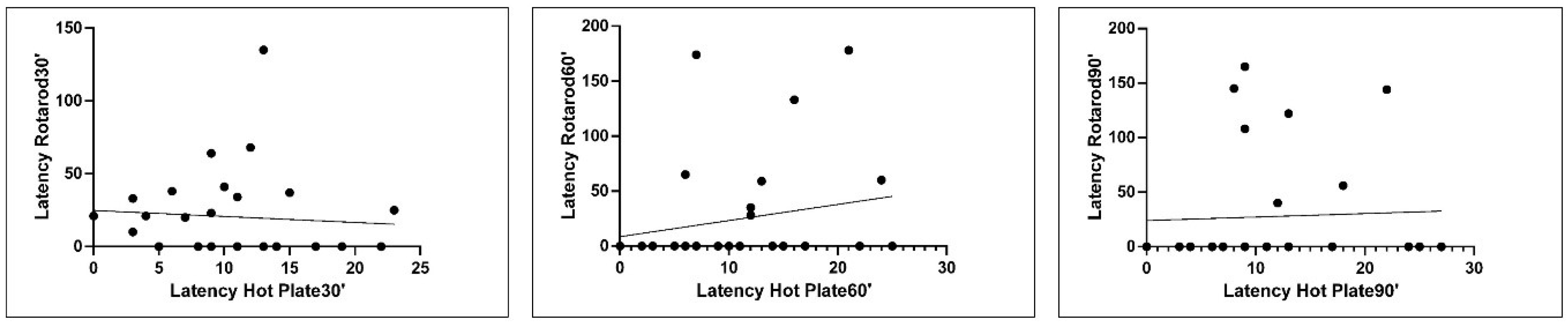
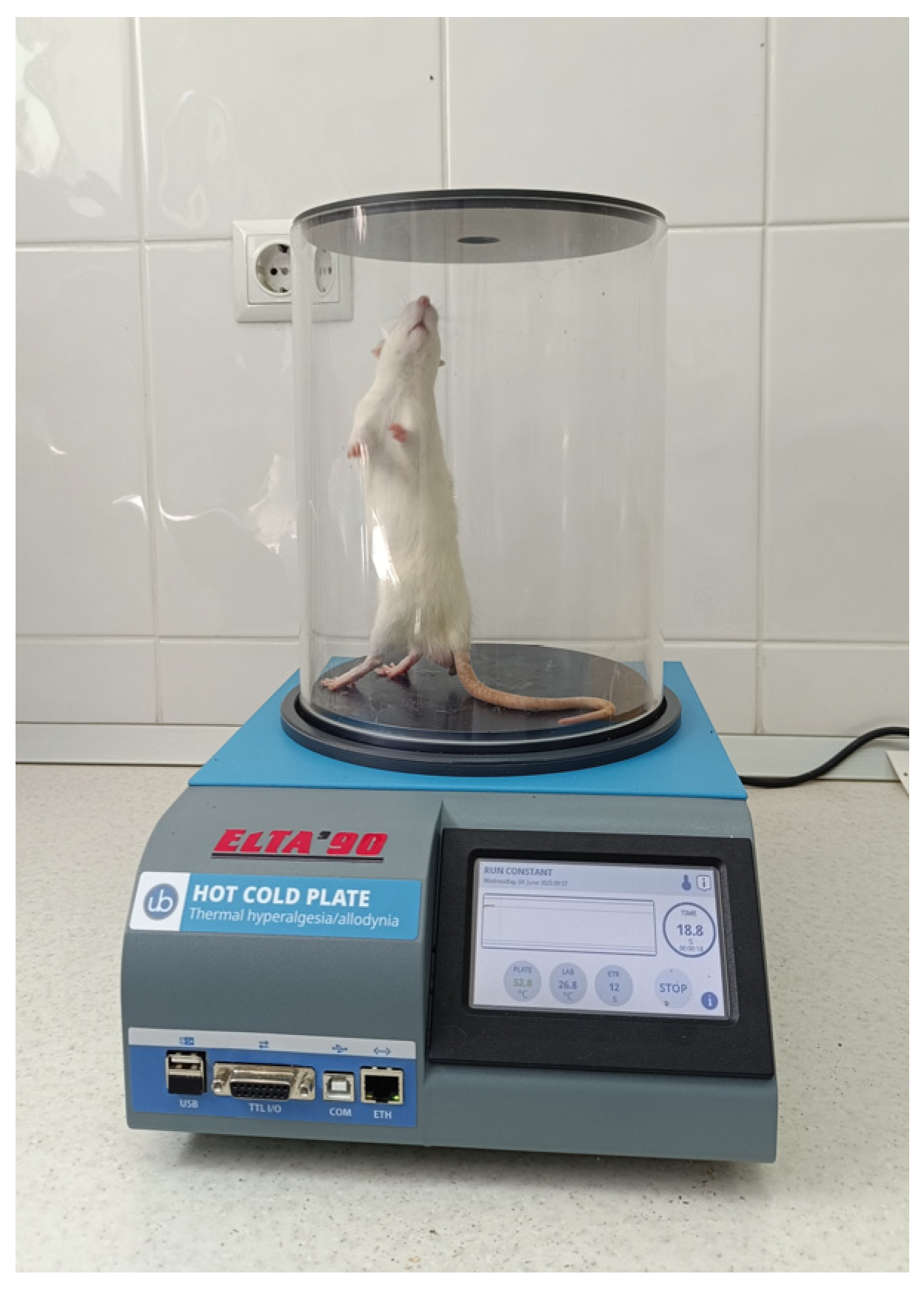
2.2. Hot Plate Test
2.2.1. Latency to Jump
2.2.2. Jump Frequency
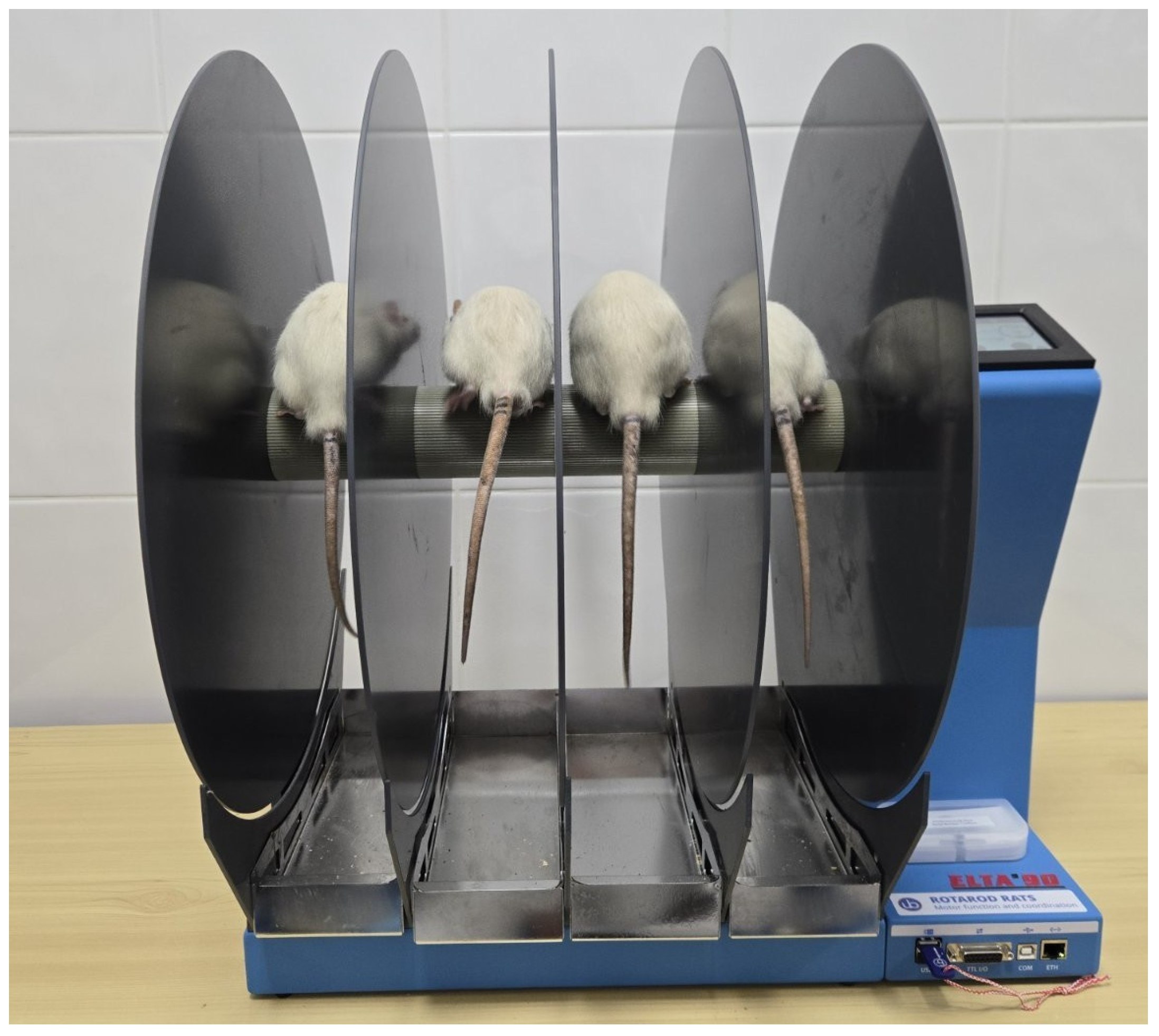
2.3. Rota-Rod Test
2.4. Open Field Test (OFT)
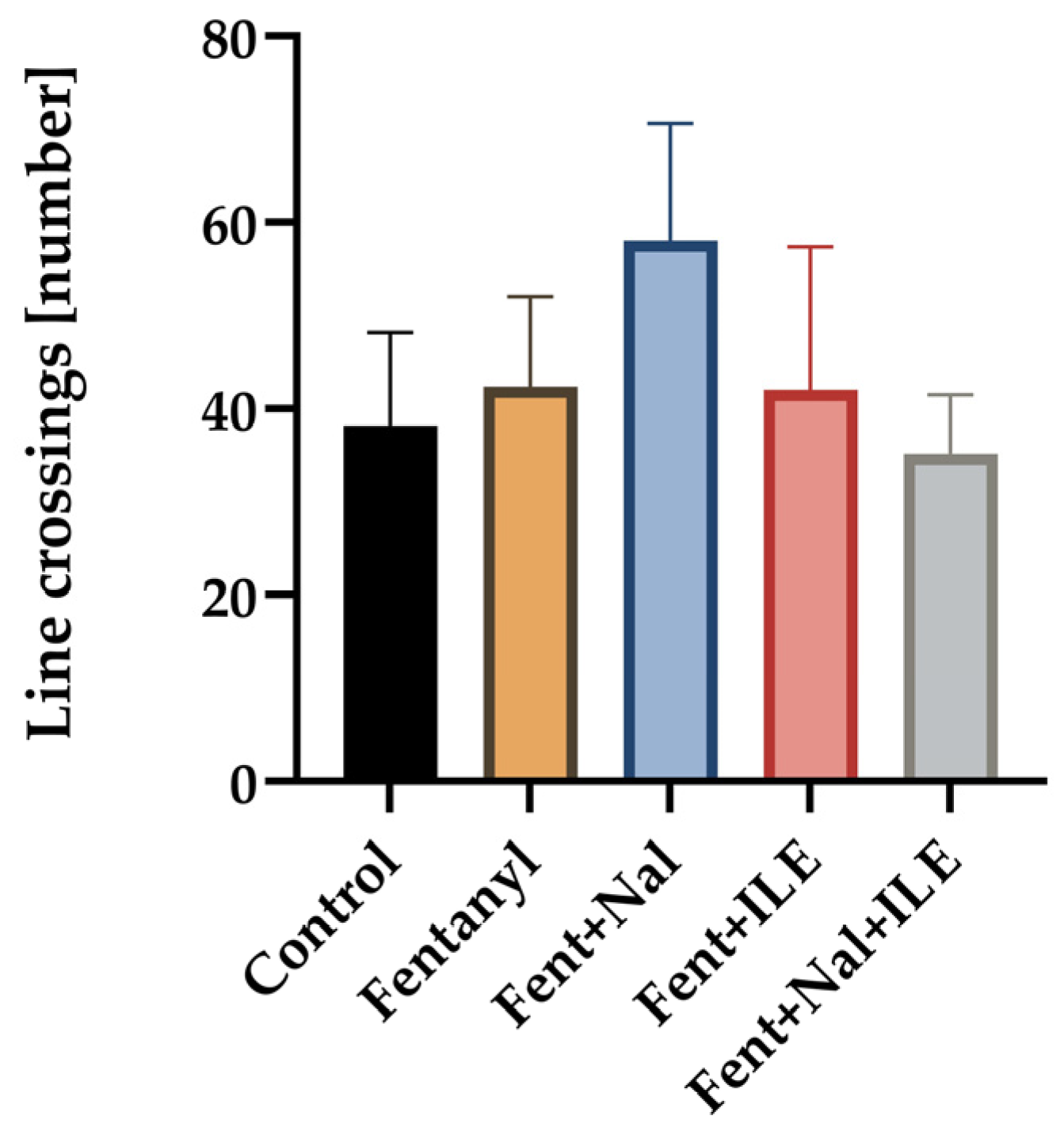
2.4.1. Line Crossings
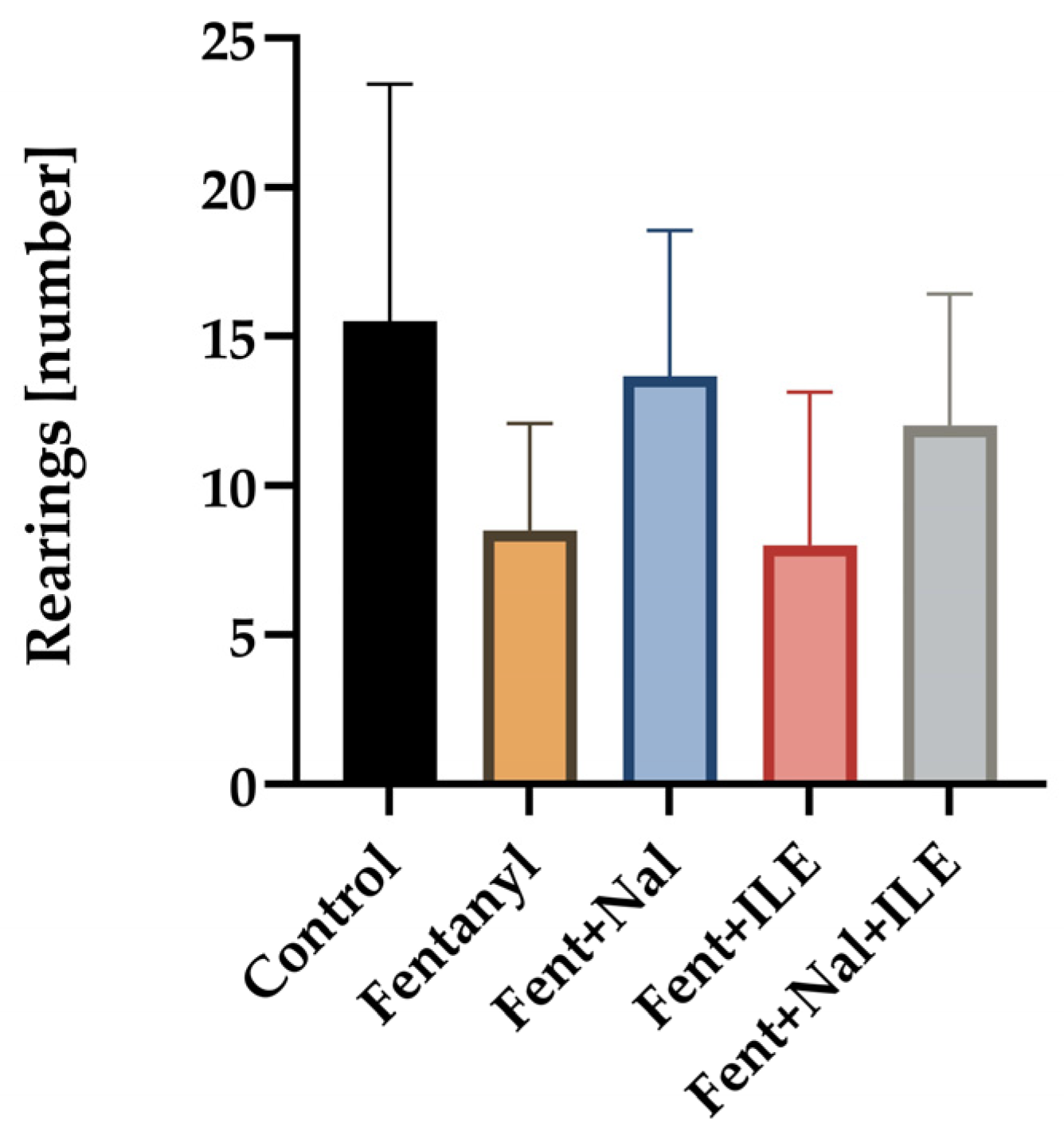
2.4.2. Rearing
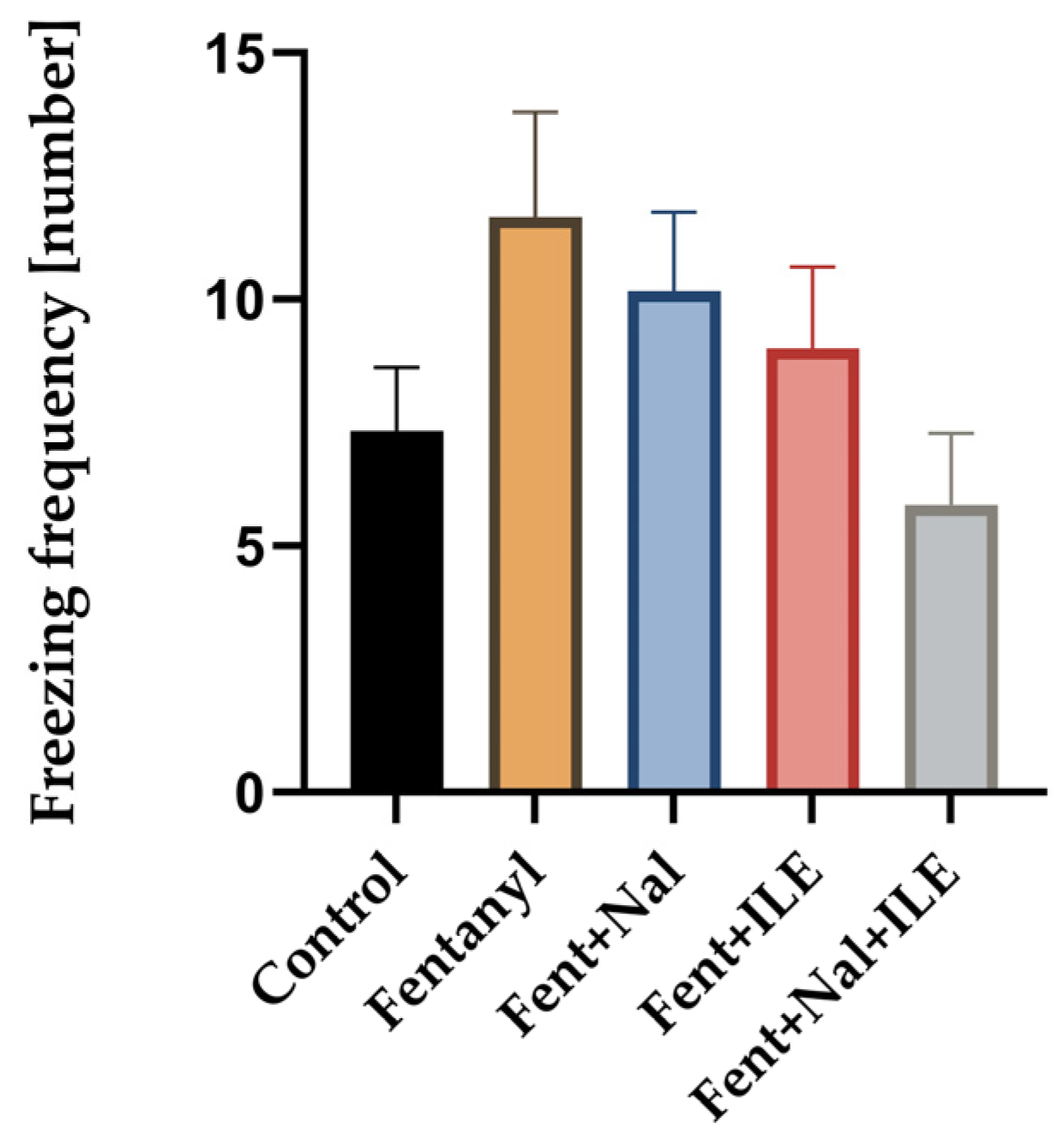
2.4.3. Freezing Frequency
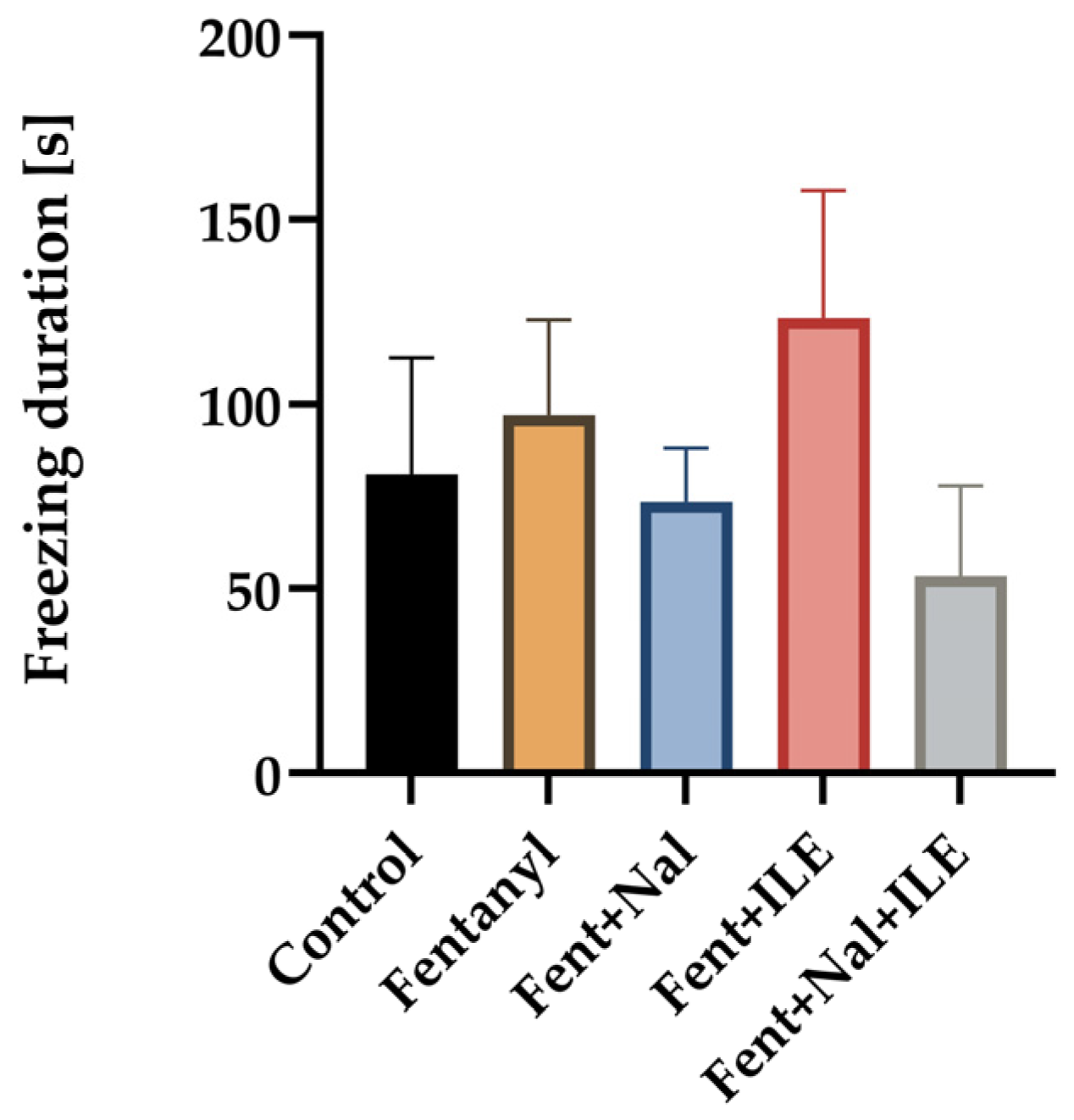
2.4.4. Freezing Duration
3. Discussion
4. Materials and Methods
4.1. Materials
- Fentanyl-Richter® injection solution (50 µg/mL, 2 mL; Gedeon Richter Plc., Budapest, Hungary);
- Naloxon WZF® injection solution (0.4 mg/mL; Warsaw Pharmaceutical Works Polfa S.A., Warsaw, Poland);
- Diazepam injection solution (5 mg/mL; Sopharma AD, Sofia, Bulgaria);
- Intralipid® 20% (500 mL; Fresenius Kabi AB, Uppsala, Sweden);
- 0.9% Sodium Chloride Solution (Normal Saline) (500 mL; B. Braun Melsungen AG, Melsungen, Germany);
- Rota-Rod Apparatus for Rats (Ugo Basile, Model 47750, Gemonio, Italy);
- Hot/Cold Plate Analgesia Apparatus (Ugo Basile, Gemonio, Italy);
- Electrocardiograph (ECG) Monitor (Bionet Co., Ltd., Model BM3, Seoul, Republic of Korea).
- 120 healthy male Wistar rats.
4.2. Methods
- Group I (control group) received saline (1.5 mL/kg);
- Group II received fentanyl (0.05 mg/kg);
- Group III received fentanyl (0.05 mg/kg) and naloxone (1.0 mg/kg);
- Group IV received fentanyl (0.05 mg/kg) and Intralipid® 20% (1.5 mL/kg);
- Group V received fentanyl (0.05 mg/kg) in combination with naloxone (1.0 mg/kg) and Intralipid® 20% (1.5 mL/kg).
4.2.1. Monitoring of Heart Rate and Respiratory Rate
4.2.2. Hot Plate Test
4.2.3. Rota-Rod Test
4.2.4. Open Field Test
- Line crossings: number of crossings between adjacent squares with all four paws;
- Rearings: number of instances in which the animal stood on its hind limbs, with or without support;
- Freezing frequency: number of immobility episodes;
- Freezing duration: total duration of immobility episodes.
4.2.5. Statistical Analysis
5. Conclusions
Author Contributions
Funding
Institutional Review Board Statement
Informed Consent Statement
Data Availability Statement
Conflicts of Interest
Abbreviations
| CNS | Central Nervous System |
| ILE | Intravenous Lipid Emulsion |
| OFT | Open Field Test |
References
- Williamson, J.; Kermanizadeh, A. A Review of Toxicological Profile of Fentanyl—A 2024 Update. Toxics 2024, 12, 690. [Google Scholar] [CrossRef]
- Stoeva-Grigorova, S.; Radeva-Ilieva, M.; Karkkeselyan, N.; Dragomanova, S.; Kehayova, G.; Dimitrova, S.; Petrova, M.; Zlateva, S.; Marinov, P. Historical perspectives and emerging trends in fentanyl use: Part 1—Pharmacological profile. Pharmacia 2025, 72, 1–9. [Google Scholar] [CrossRef]
- Stoeva-Grigorova, S.; Radeva-Ilieva, M.; Karkkeselyan, N.; Dragomanova, S.; Kehayova, G.; Dimitrova, S.; Petrova, M.; Zlateva, S.; Marinov, P. Historical perspectives and emerging trends in fentanyl use: Part 2—Overdose and misuse. Pharmacia 2025, 72, 1–13. [Google Scholar] [CrossRef]
- Ozcan, M.S.; Weinberg, G. Intravenous lipid emulsion for the treatment of drug toxicity. J. Intensive Care Med. 2014, 29, 59–70. [Google Scholar] [CrossRef] [PubMed]
- Fettiplace, M.R.; Weinberg, G. Lipid emulsion for xenobiotic overdose: PRO. Br. J. Clin. Pharmacol. 2023, 89, 1708–1718. [Google Scholar] [CrossRef] [PubMed]
- Jaffal, K.; Chevillard, L.; Mégarbane, B. Lipid Emulsion to Treat Acute Poisonings: Mechanisms of Action, Indications, and Controversies. Pharmaceutics 2023, 15, 1396. [Google Scholar] [CrossRef] [PubMed]
- Behnoush, A.H.; Alizadeh, N.; Emami, M.; Bazmi, E.; Alimohamadi, Y.; Behnoush, B. Effects of Intravenous Lipid Emulsion Administration in Acute Tramadol Poisoning: A Randomized Controlled Trial. J. Emerg. Med. 2024, 66, 154–162. [Google Scholar] [CrossRef] [PubMed]
- Yarabanova, I.; Dragomanova, S.; Stoeva-Grigorova, S.; Hvarchanova, N.; Kehayova, G.; Radeva-Ilieva, M.; Stoychev, E.; Dimitrova, S.; Zlateva, S.; Marinov, P. Experimental assessment of intravenous lipid emulsion in the management of acute fentanyl poisoning. Pharmacia 2026, 73, e189383. [Google Scholar] [CrossRef]
- Hoegberg, L.C.G.; Bania, T.C.; Lavergne, V.; Bailey, B.; Turgeon, A.F.; Thomas, S.H.L.; Morris, M.; Miller-Nesbitt, A.; Mégarbane, B.; Magder, S.; et al. Systematic review of the effect of intravenous lipid emulsion therapy for local anesthetic toxicity. Clin. Toxicol. 2016, 54, 167–193. [Google Scholar] [CrossRef] [PubMed]
- Obert, D.P.; Park, G.H.; Strong, K.; Schreier, D.R.; Korn, E.; Troyas, C.; Vincent, K.F.; Solt, K. Repeated high-dose fentanyl administration in rats reveals minimal tolerance to unconsciousness, bradycardia, muscle rigidity, and respiratory depression. Anesthesiology 2024, 142, 465–475. [Google Scholar] [CrossRef] [PubMed]
- Flacke, J.; Flacke, W.; Bloor, B.; Olewine, S. Effects of fentanyl, naloxone, and clonidine on hemodynamics and plasma catecholamine levels in dogs. Anesth. Analg. 1983, 62, 305–313. [Google Scholar] [CrossRef]
- Vazquez, J.; Seaman, R.; Caldron, D.; Collins, G. Naloxone reversal of the cardiorespiratory depressant effects of opioids and mixtures of opioids and stimulants in rats. Front. Pharmacol. 2025, 16, 1654791. [Google Scholar] [CrossRef] [PubMed]
- Partownavid, P.; Umar, S.; Rahman, S.; Sharma, S.; Eghbali, M. Intralipid fails to rescue bupivacaine-induced cardiotoxicity in the presence of the opioid antagonist naloxone. Circulation 2012, 126, A220. [Google Scholar] [CrossRef]
- Freise, K.; Newbound, G.; Tudan, C.; Clark, T. Naloxone reversal of an overdose of a novel, long-acting transdermal fentanyl solution in laboratory Beagles. J. Vet. Pharmacol. Ther. 2012, 35, 45–51. [Google Scholar] [CrossRef] [PubMed]
- Tikhomirov, M.; Jajor, P.; Śniegocki, T.; Poźniak, B. Predicting the efficacy of opioid sequestration by intravenous lipid emulsion using biologically relevant in vitro models of drug distribution. Sci. Rep. 2022, 12, 18683. [Google Scholar] [CrossRef] [PubMed]
- Fleischmann, T.; Jirkof, P.; Henke, J.; Arras, M.; Cesarovic, N. Injection anaesthesia with fentanyl–midazolam–medetomidine in adult female mice: Importance of antagonization and perioperative care. Lab. Anim. 2016, 50, 264–274. [Google Scholar] [CrossRef] [PubMed]
- Voronkov, M.; Nikonov, G.; Ataiants, J.; Isakulyan, L.; Stefanut, C.; Cernea, M.; Abernethy, J. Modifying naloxone to reverse fentanyl-induced overdose. Int. J. Pharm. 2021, 611, 121326. [Google Scholar] [CrossRef] [PubMed]
- Averick, S.E.; Kassick, A.J.; Song, D.; Zhang, B.; Vigliaturo, J.; Luengas, D.; Silva-Ortiz, P.; Pravetoni, M.; Raleigh, M.D. Evaluating the rate of reversal of fentanyl-induced respiratory depression using a novel long-acting naloxone nanoparticle, cNLX-NP. Front. Psychiatry 2024, 15, 1366186. [Google Scholar] [CrossRef] [PubMed]
- Haouzi, P.; Guck, D.; McCann, M.; Sternick, M.; Sonobe, T.; Tubbs, N. Severe hypoxemia prevents spontaneous and naloxone-induced breathing recovery after fentanyl overdose in awake and sedated rats. Anesthesiology 2020, 132, 1138–1150. [Google Scholar] [CrossRef] [PubMed]
- Dunn, C.; Bird, S.; Gaspari, R. Intralipid fat emulsion decreases respiratory failure in a rat model of parathion exposure. Acad. Emerg. Med. 2012, 19, 5. [Google Scholar] [CrossRef] [PubMed]
- Le Bars, D.; Gozariu, M.; Cadden, S.W. Animal Models of Nociception. Pharmacol. Rev. 2001, 53, 597–652. [Google Scholar] [CrossRef]
- Sutcliffe, K.J.; A Corey, R.; Alhosan, N.; Cavallo, D.; Groom, S.; Santiago, M.; Bailey, C.; Charlton, S.J.; Sessions, R.B.; Henderson, G.; et al. Interaction With the Lipid Membrane Influences Fentanyl Pharmacology. Adv. Drug Alcohol Res. 2022, 2, 10280. [Google Scholar] [CrossRef] [PubMed]
- Kim, H.K.; Nelson, L.S. Reversal of Opioid-Induced Ventilatory Depression Using Low-Dose Naloxone (0.04 mg): A Case Series. J. Med. Toxicol. 2016, 12, 107–110. [Google Scholar] [CrossRef] [PubMed]
- Weinberg, G.L. Lipid emulsion infusion: Resuscitation for local anesthetic and other drug overdose. Anesthesiology 2012, 117, 180–187. [Google Scholar] [CrossRef] [PubMed]
- Dimitrova, S.; Dragomanova, S.; Kehayova, G. Intravenous Lipid Emulsions in Anticonvulsants’ Toxicity. Sci. Pharm. 2024, 92, 37. [Google Scholar] [CrossRef]
- Fettiplace, M.R.; Weinberg, G. The Mechanisms Underlying Lipid Resuscitation Therapy. Reg. Anesth. Pain. Med. 2018, 43, 138–149. [Google Scholar] [CrossRef] [PubMed]
- Bilvanisi, S.; Gülen, M.; Sabak, M.; Demiryürek, Ş.; Demiryürek, A. Intravenous lipid emulsion therapy in drug overdose and poisoning: An updated review. Eurasian J. Med. 2024, 56, 205–212. [Google Scholar] [CrossRef] [PubMed]
- Cave, G.; Harvey, M.; Graudins, A. Intravenous Lipid Emulsion as Antidote: A Summary of Published Human Experience. Emerg. Med. Australas. 2011, 23, 123–141. [Google Scholar] [CrossRef] [PubMed]
- Levine, M.; Hoffman, R.S.; Lavergne, V.; Stork, C.M.; Graudins, A.; Chuang, R.; Stellpflug, S.J.; Morris, M.; Miller-Nesbitt, A.; Gosselin, S.; et al. Systematic review of the effect of intravenous lipid emulsion therapy for non-local anesthetics toxicity. Clin. Toxicol. 2016, 54, 194–221, Correction in Clin. Toxicol. 2016, 54, 297. [Google Scholar] [CrossRef] [PubMed]
- Hill, R.; Santhakumar, R.; Dewey, W.; Kelly, E.; Henderson, G. Fentanyl Depression of Respiration: Comparison with Heroin and Morphine. Br. J. Pharmacol. 2020, 177, 254–266. [Google Scholar] [CrossRef] [PubMed]
- Patocka, J.; Wu, W.; Oleksak, P.; Jelinkova, R.; Nepovimova, E.; Spicanova, L.; Springerova, P.; Alomar, S.; Long, M.; Kuca, K. Fentanyl and Its Derivatives: Pain-Killers or Man-Killers? Heliyon 2024, 10, e28795. [Google Scholar] [CrossRef] [PubMed]
- Haouzi, P.; Tubbs, N. Effects of Fentanyl-Induced Muscle Rigidity on Respiratory Mechanics. J. Appl. Physiol. 2022, 132, 1407–1422. [Google Scholar] [CrossRef] [PubMed]
- Prut, L.; Belzung, C. The open field as a paradigm to measure the effects of drugs on anxiety-like behaviors: A review. Eur. J. Pharmacol. 2003, 463, 3–33. [Google Scholar] [CrossRef] [PubMed]
- Martin, W.R. Naloxone. Ann. Intern. Med. 1976, 85, 765–768. [Google Scholar] [CrossRef] [PubMed]
- Saari, T.I.; Strang, J.; Dale, O. Clinical Pharmacokinetics and Pharmacodynamics of Naloxone. Clin. Pharmacokinet. 2024, 63, 397–422. [Google Scholar] [CrossRef] [PubMed]
- Rothschild, L.; Bern, S.; Oswald, S.; Weinberg, G. Intravenous Lipid Emulsion in Clinical Toxicology. Scand. J. Trauma Resusc. Emerg. Med. 2010, 18, 51. [Google Scholar] [CrossRef] [PubMed]
- Miner, N.B.; Schutzer, W.E.; Zarnegarnia, Y.; Janowsky, A.; Torralva, R. Fentanyl causes naloxone-resistant vocal cord closure. Drug Alcohol Depend. 2021, 227, 108974. [Google Scholar] [CrossRef] [PubMed]
- Hiranita, T.; Ho, N.P.; France, C.P. Comparison of the μ-opioid receptor antagonists methocinnamox and naloxone to reverse and prevent the ventilatory depressant effects of fentanyl, carfentanil, 3-methylfentanyl, and heroin in male rats. J. Pharmacol. Exp. Ther. 2024, 391, 4–17. [Google Scholar] [CrossRef] [PubMed]
- European Parliament and Council. Directive 2010/63/EU of the European Parliament and of the Council of 22 September 2010 on the Protection of Animals Used for Scientific Purposes. Off. J. Eur. Union 2010, L276, 33–79. Available online: https://eur-lex.europa.eu/legal-content/EN/TXT/?uri=CELEX:32010L0063 (accessed on 22 June 2026).
- Serdyuk, S.E.; Gmiro, V.E. Phenylephrine potentiates the anticonvulsant effect and neutralizes the sedative effect of diazepam in rats upon combined intragastric administration. Bull. Exp. Biol. Med. 2014, 158, 234–237. [Google Scholar] [CrossRef] [PubMed]
- Eddy, N.B.; Leimbach, D. Synthetic Analgesics. II. Dithienylbutenyl- and Dithienylbutylamines. J. Pharmacol. Exp. Ther. 1953, 107, 385–393. [Google Scholar] [CrossRef] [PubMed]
- University of California, San Francisco, Institutional Animal Care and Use Committee (IACUC). Standard Procedure—Rota Rod Test; UCSF IACUC: San Francisco, CA, USA, 2025; Available online: https://iacuc.ucsf.edu/content/rota-rod-test (accessed on 26 January 2026).
- Ugo Basile SRL. RotaRod for Rats; Ugo Basile SRL: Gemonio, Italy, 2025; Available online: https://ugobasile.com/products/categories/motory-coordination/rotarod-for-rats (accessed on 26 January 2026).
- Dunham, N.W.; Miya, T.S. A note on a simple apparatus for detecting neurological deficit in rats and mice. J. Am. Pharm. Assoc. (Sci. Ed.) 1957, 46, 208–209. [Google Scholar] [CrossRef] [PubMed]
- Võikar, V.; Stanford, S.C. The Open Field Test. In Psychiatric Vulnerability, Mood, and Anxiety Disorders: Tests and Models in Mice and Rats; Harro, J., Ed.; Neuromethods; Humana Press: New York, NY, USA, 2023; Volume 190, pp. 9–29. [Google Scholar] [CrossRef]



| Time (min) | Key Findings | Interpretation |
|---|---|---|
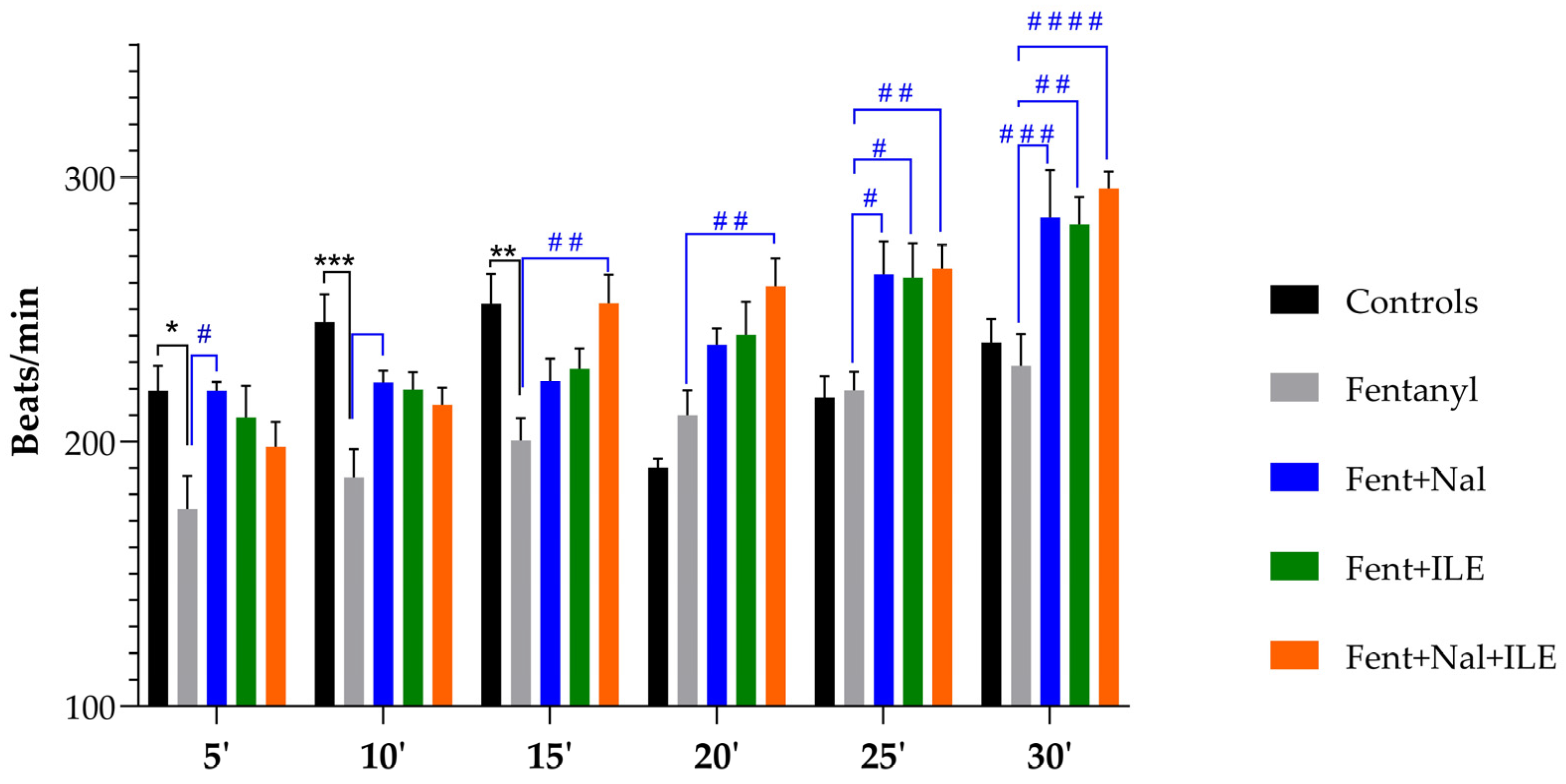
| 5 min | A statistically significant difference was observed between the control and fentanyl groups (p = 0.0130), indicating a rapid onset of fentanyl-induced alterations in heart rate. No significant differences were detected between the control group and any of the treatment groups: fentanyl + naloxone, fentanyl + ILE, and combination therapy (fentanyl + naloxone + ILE). Similarly, no difference was observed between fentanyl and fentanyl + ILE (p = 0.0945), although a trend toward significance was noted. | The antagonistic effects of the interventions are not yet fully expressed at this early stage. |
| 10 min | The fentanyl group remained significantly different from the control group (p = 0.0004). No statistically significant differences were observed between fentanyl and the treatment groups. Although the fentanyl + naloxone group showed a numerical difference compared with the fentanyl group, this did not reach statistical significance (p = 0.0771). | An early phase of pharmacological counteraction. |
| 15 min | Fentanyl continued to differ significantly from the control group (p = 0.0024). In contrast, the combination therapy group (fentanyl + naloxone + ILE) no longer differed from control (p > 0.9999), while remaining significantly different from fentanyl (p = 0.0023). | A near-complete recovery of the combination therapy group. Combination therapy demonstrated restoration of heart rate to control values within 15 min. |
| 20 min | The fentanyl group no longer differed significantly from the control group, indicating the first evidence of spontaneous recovery toward baseline values. At the same time, all therapeutic groups remained significantly different from the control group (p < 0.01 to p < 0.0001), with the combination therapy demonstrating the most pronounced effect (p < 0.0001). Notably, only the combination therapy group differed significantly from the fentanyl group (p = 0.0051). | The first evidence of spontaneous recovery of heart rate was observed in the fentanyl group. Combination therapy demonstrated the strongest treatment effect at this time point. |
| 25 min | All treatment groups differed significantly from both the control and fentanyl groups (p < 0.05), with no significant differences observed between treatment groups | Comparable efficacy of all therapeutic groups at this stage. |
| 30 min | The absence of a significant difference between the fentanyl and control groups persisted (p = 0.9685). In contrast, all treatment groups remained significantly different from both the control and fentanyl groups (p < 0.05 to p < 0.0001), with no significant differences between the therapeutic approaches. | Heart rate in the fentanyl group remained comparable with that of the control group, whereas all treatment groups remained above control values. |
| Time (min) | Key Findings | Interpretation |
|---|---|---|
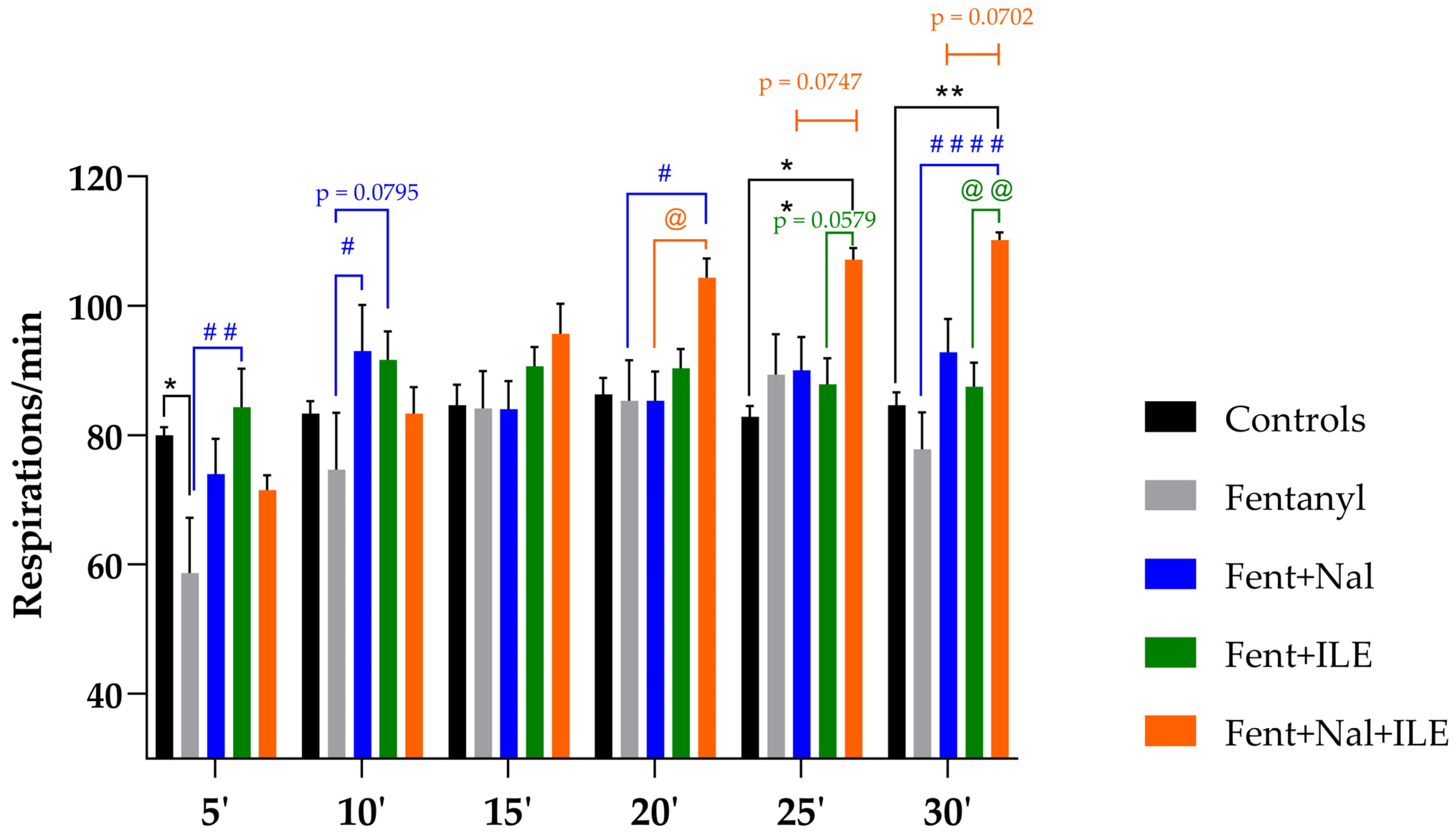
| 5 min | At 5 min, a significant reduction in respiratory rate was observed in the fentanyl group compared with the control group (p = 0.0128). ILE demonstrated a statistically significant improvement compared with fentanyl (p = 0.0014), whereas naloxone did not reach statistical significance. Combination therapy also showed no significant effect at this stage | Early pronounced respiratory depressant effect; ILE was associated with the earliest detectable therapeutic impact on respiratory depression |
| 10 min | Naloxone demonstrated a significant improvement compared with fentanyl (p = 0.0474), whereas the ILE group showed a numerical improvement that did not reach statistical significance (p = 0.0795). At this time point, the fentanyl group no longer differed significantly from the control group, indicating the first evidence of spontaneous recovery toward baseline respiratory function. | The first evidence of spontaneous recovery of respiratory rate was observed in the fentanyl group. Naloxone-mediated reversal became more apparent at this time point, consistent with its mechanism of action as a μ-opioid receptor antagonist. |
| 15 min | No statistically significant differences were observed between groups | A transitional phase characterized by partial attenuation of fentanyl effects and convergence of therapeutic responses |
| 20 min | More distinct differences emerged The combination therapy group (fentanyl + naloxone + ILE) demonstrated a significantly higher respiratory rate compared with fentanyl group (p = 0.0361) and also exceeded the effect of naloxone alone At this time point, the fentanyl group no longer exhibited a significant difference from the control group, suggesting the initial signs of recovery towards baseline values. The combination therapy group showed a notably higher respiratory rate in comparison to the fentanyl group (p = 0.0361) and also surpassed the effects observed with naloxone alone. The absence of a significant difference between the fentanyl and control groups persisted at this time point. | Respiratory recovery in the fentanyl group was maintained, whereas combination therapy produced a more pronounced therapeutic effect than fentanyl alone and naloxone. |
| 25 min | Combination therapy resulted in a significantly higher respiratory rate compared with control (p = 0.0028) and ILE (p = 0.0313) | A potential overcompensatory response, possibly reflecting reactive hyperventilation. |
| 30 min | The most notable differences were evident at this specific time point. Combination therapy continued to demonstrate significantly greater efficacy compared to all other groups, including fentanyl (p < 0.0001), ILE (p = 0.0067), and the control group (p = 0.0015). | A maximal cumulative effect resulting from the combined intervention, while spontaneous recovery of the fentanyl group had already been established at earlier time points. |
Disclaimer/Publisher’s Note: The statements, opinions and data contained in all publications are solely those of the individual author(s) and contributor(s) and not of MDPI and/or the editor(s). MDPI and/or the editor(s) disclaim responsibility for any injury to people or property resulting from any ideas, methods, instructions or products referred to in the content. |
© 2026 by the authors. Licensee MDPI, Basel, Switzerland. This article is an open access article distributed under the terms and conditions of the Creative Commons Attribution (CC BY) license.
Share and Cite
Kehayova, G.; Yarabanova, I.; Stoeva-Grigorova, S.; Hvarchanova, N.; Radeva-Ilieva, M.; Stoychev, E.; Dragomanova, S.; Dimitrova, S.; Zlateva, S.; Marinov, P. Evaluation of Intravenous Lipid Emulsion as an Adjunctive Antidote in Experimental Fentanyl Toxicity: Comparison with Naloxone in a Rat Model. Int. J. Mol. Sci. 2026, 27, 5983. https://doi.org/10.3390/ijms27135983
Kehayova G, Yarabanova I, Stoeva-Grigorova S, Hvarchanova N, Radeva-Ilieva M, Stoychev E, Dragomanova S, Dimitrova S, Zlateva S, Marinov P. Evaluation of Intravenous Lipid Emulsion as an Adjunctive Antidote in Experimental Fentanyl Toxicity: Comparison with Naloxone in a Rat Model. International Journal of Molecular Sciences. 2026; 27(13):5983. https://doi.org/10.3390/ijms27135983
Chicago/Turabian StyleKehayova, Gabriela, Ivanesa Yarabanova, Stanila Stoeva-Grigorova, Nadezhda Hvarchanova, Maya Radeva-Ilieva, Elitsa Stoychev, Stela Dragomanova, Simeonka Dimitrova, Snezha Zlateva, and Petko Marinov. 2026. "Evaluation of Intravenous Lipid Emulsion as an Adjunctive Antidote in Experimental Fentanyl Toxicity: Comparison with Naloxone in a Rat Model" International Journal of Molecular Sciences 27, no. 13: 5983. https://doi.org/10.3390/ijms27135983
APA StyleKehayova, G., Yarabanova, I., Stoeva-Grigorova, S., Hvarchanova, N., Radeva-Ilieva, M., Stoychev, E., Dragomanova, S., Dimitrova, S., Zlateva, S., & Marinov, P. (2026). Evaluation of Intravenous Lipid Emulsion as an Adjunctive Antidote in Experimental Fentanyl Toxicity: Comparison with Naloxone in a Rat Model. International Journal of Molecular Sciences, 27(13), 5983. https://doi.org/10.3390/ijms27135983