Cetyl All-Trans-Retinoate as a Lipidic ATRA Prodrug with Enhanced Anticancer and Chemosensitizing Activity

 , , and
Abstract
1. Introduction
2. Results and Discussion
2.1. Synthesis of Esters of All-Trans-Retinoic Acid (ATRA)
2.2. Prediction of Physicochemical Properties and Biological Activity
2.3. Cytotoxicity of ATRA and Its Esters Towards Selected Cell Lines
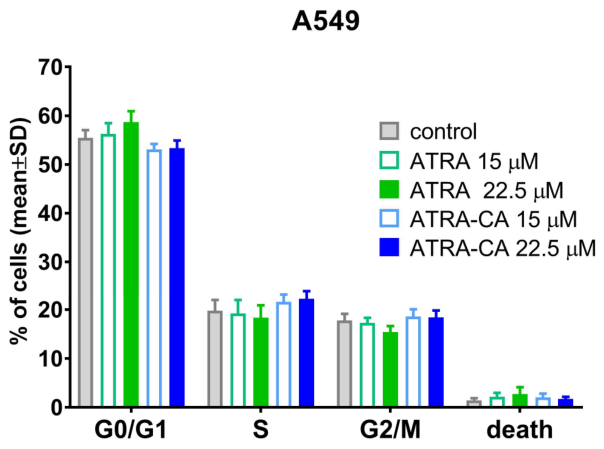
2.4. Cell Cycle Analysis of Lung Cancer Cells After Incubation with ATRA and ATRA-CA
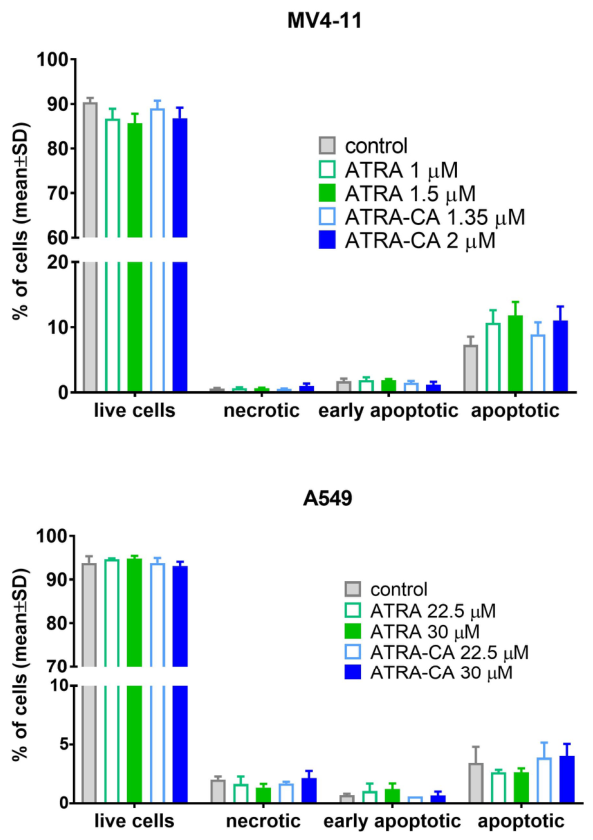
2.5. Cell Death Determination of Lung Cancer Cells After Incubation with ATRA and ATRA-CA
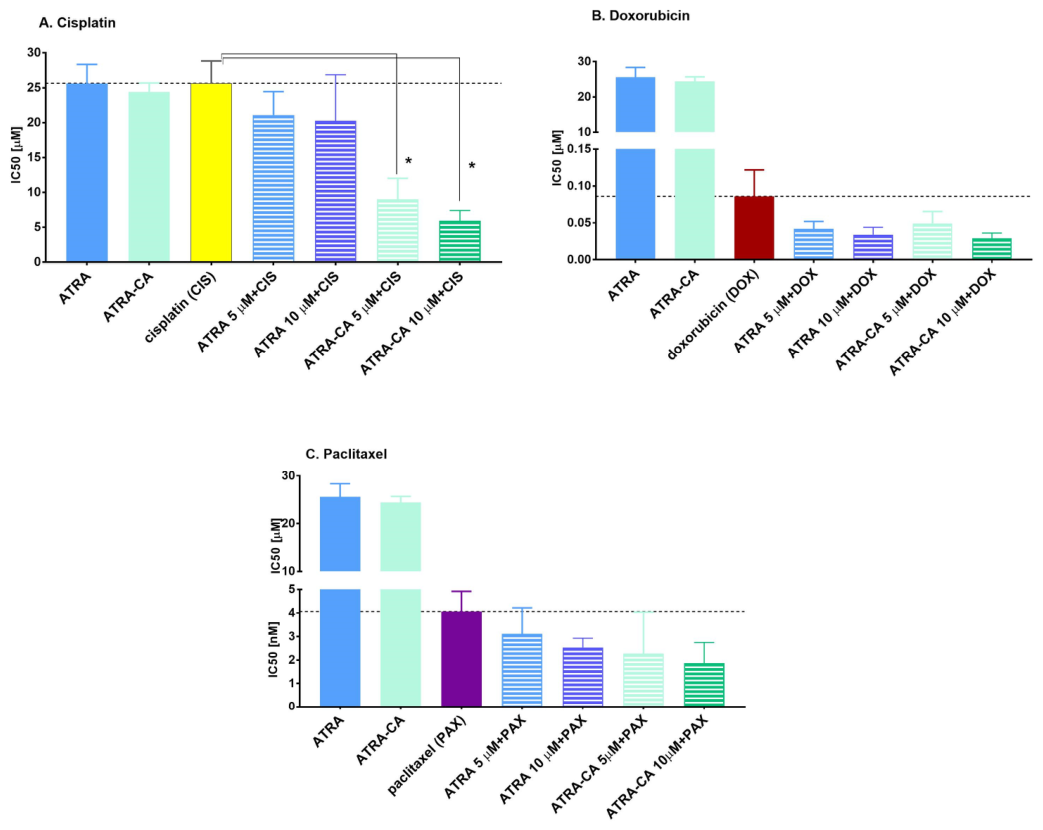
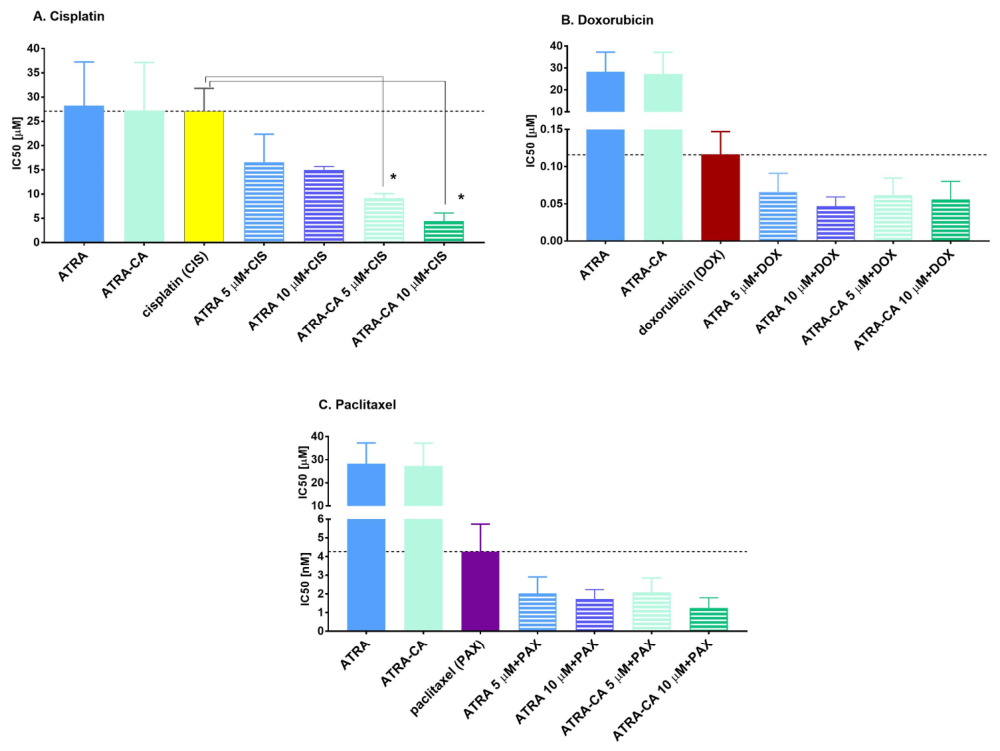
2.6. Antiproliferative Activity of ATRA and ATRA-CA in Combination with Cytostatics
2.6.1. Combination with Cisplatin
2.6.2. Combination with Doxorubicin
2.6.3. Combination with Paclitaxel
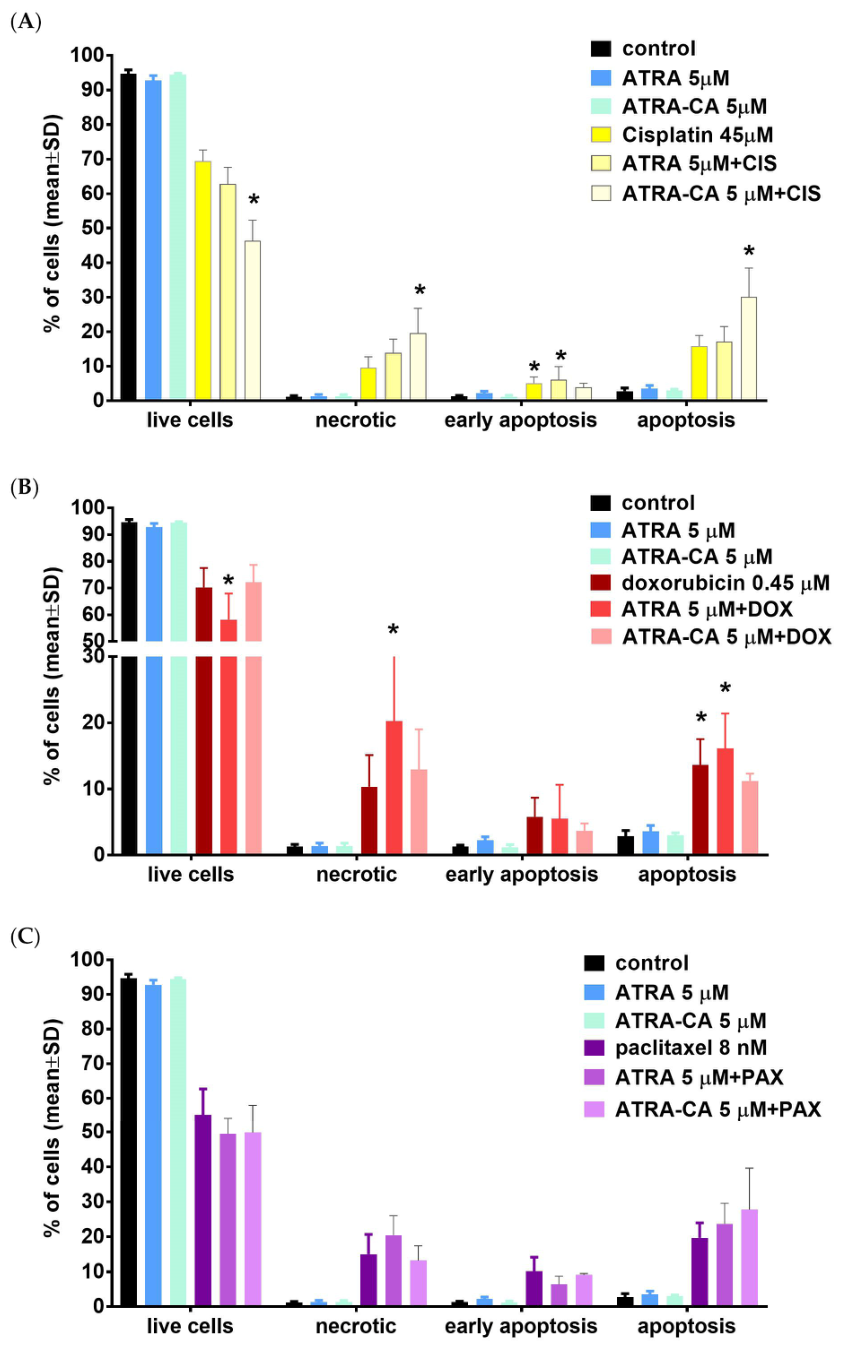
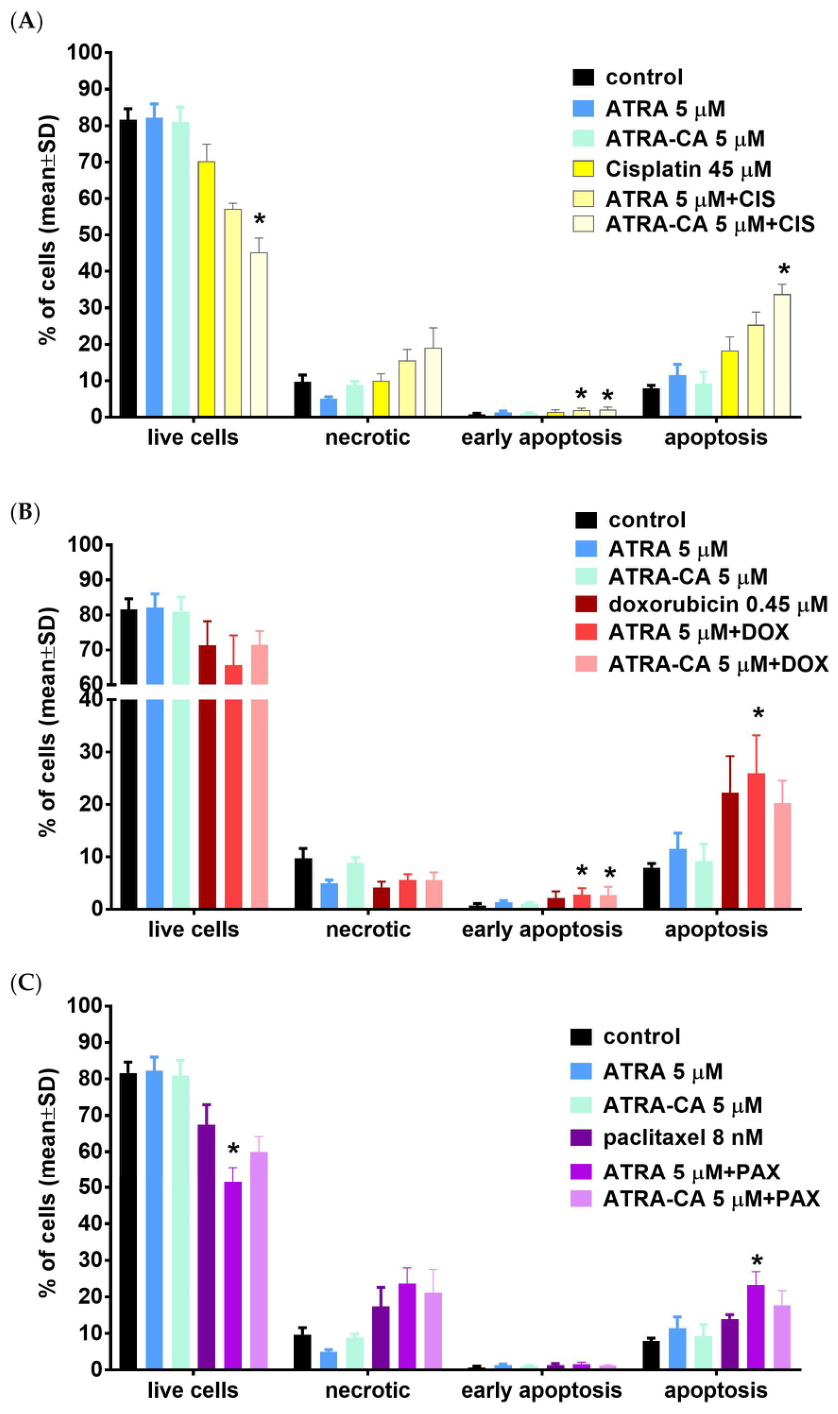
2.6.4. Determination of Influence of ATRA and ATRA-CA in Combination with Cytostatic on Cell Death
3. Materials and Methods
3.1. Substrates
3.2. Methods of Analysis
3.3. Synthesis of Ester Derivatives of All-Trans-Retinoic Acid
3.3.1. Cetyl-All-Trans-Retinate (ATRA-CA)
3.3.2. Stearyl-All-Trans-Retinate (ATRA-SA)
3.3.3. Oleyl-All-Trans-Retinate (ATRA-OA)
3.4. Hydrolytic Stability of Synthesized Cetyl-All-Trans-Retinate (ATRA-CA)
3.5. Drug Nature and in Silico Pharmacokinetics and Toxicological Profile
3.6. Biological Studies
3.6.1. Cell Lines and Cultured Mediums
3.6.2. Determination of Antiproliferative Activity
3.6.3. Determination of Antiproliferative Activity of ATRA and ATRA-CA in Combination with Cytostatics
3.6.4. Cell Cycle Analysis of Lung Cancer Cells After Incubation with ATRA and ATRA-CA
3.6.5. Cell Death Determination by Annexin V and PI or DAPI Staining
Monotherapy: After Incubation with ATRA and ATRA-CA
Combination Therapy: After Incubation with ATRA or ATRA-CA and with Cytostatics
3.7. Statistical Analysis
4. Conclusions
Supplementary Materials
Author Contributions
Funding
Data Availability Statement
Conflicts of Interest
Abbreviations
| A549 | lung cancer |
| AGS | gastric cancer |
| AML | acute myeloid leukemia |
| APL | acute promyelocytic leukemia |
| ATO | arsenic trioxide |
| ATRA | all-trans-retinoic acid, tretinoin |
| ATRA-CA | cetyl-all-trans-retinate |
| ATRA-OA | oleyl-all-trans-retinate |
| ATRA-SA | stearyl-all-trans-retinate |
| BBB | blood–brain barrier |
| CA-ol | cetyl alcohol |
| CI | combination index |
| CIS | cisplatin |
| COSY, HSQC | correlation spectroscopy |
| DAPI | 4′,6-diamidino-2-phenylindole |
| DCC | N,N′-dicyclohexylcarbodiimide |
| DMAP | 4-(N,N-dimethylamino)pyridine |
| DOX | doxorubicin |
| ELSD | evaporative light scattering detector |
| ESI-MS | mass spectrometry |
| HBA | hydrogen bond acceptor |
| HBD | hydrogen bond donor |
| HT-29 | colon cancer |
| IC50 | half maximal inhibitory concentration |
| logP | octanol-water partition coefficient |
| MCF-7 | hormone receptor-positive breast cancer |
| MDA-MB-468 | triple-negative breast cancer |
| MTBE | methyl tert-butyl ether |
| MV4-11 | leukemia |
| NMR | nuclear magnetic resonance |
| OA-ol | oleyl alcohol |
| OTC | organic cation transporter |
| Pa | probability of being active |
| PASS | Prediction of Activity Spectra for Substance |
| PAX | paclitaxel |
| Pi | probability of being inactive |
| PI | propidium iodide |
| RARs | retinoic acid receptors |
| RAS | retinoic acid syndrome |
| RXRs | retinoid X receptors |
| SA-ol | stearyl alcohol |
| SAR s | structure–activity relationship |
| SD | standard deviation |
| SI s | electivity index |
| TPSA | topological polar surface area |
References
- Blomhoff, R.; Blomhoff, H.K. Overview of Retinoid Metabolism and Function. J. Neurobiol. 2006, 66, 606–630. [Google Scholar] [CrossRef] [PubMed]
- Stevison, F.; Jing, J.; Tripathy, S.; Isoherranen, N. Chapter Eleven—Role of Retinoic Acid-Metabolizing Cytochrome P450s, CYP26, in Inflammation and Cancer. In Advances in Pharmacology; Hardwick, J.P., Ed.; Academic Press: Cambridge, MA, USA, 2015; Volume 74, pp. 373–412. [Google Scholar]
- Liang, C.; Qiao, G.; Liu, Y.; Tian, L.; Hui, N.; Li, J.; Ma, Y.; Li, H.; Zhao, Q.; Cao, W.; et al. Overview of All-Trans-Retinoic Acid (ATRA) and Its Analogues: Structures, Activities, and Mechanisms in Acute Promyelocytic Leukaemia. Eur. J. Med. Chem. 2021, 220, 113451. [Google Scholar] [CrossRef] [PubMed]
- Chomienne, C.; Balitrand, N.; Cost, H.; Degos, L.; Abita, J.P. Structure-Activity Relationships of Aromatic Retinoids on the Differentiation of the Human Histiocytic Lymphoma Cell Line U-937. Leuk. Res. 1986, 10, 1301–1305. [Google Scholar] [CrossRef] [PubMed]
- Barnard, J.H.; Collings, J.C.; Whiting, A.; Przyborski, S.A.; Marder, T.B. Synthetic Retinoids: Structure-Activity Relationships. Chemistry 2009, 15, 11430–11442. [Google Scholar] [CrossRef] [PubMed]
- Ravandi, F.; Stone, R. Acute Promyelocytic Leukemia: A Perspective. Clin. Lymphoma Myeloma Leuk. 2017, 17, 543–544. [Google Scholar] [CrossRef] [PubMed]
- Lippman, S.M.; Kessler, J.F.; Meyskens, F.L. Retinoids as Preventive and Therapeutic Anticancer Agents (Part I). Cancer Treat. Rep. 1987, 71, 391–405. [Google Scholar] [PubMed]
- Tallman, M.S.; Andersen, J.W.; Schiffer, C.A.; Appelbaum, F.R.; Feusner, J.H.; Ogden, A.; Shepherd, L.; Willman, C.; Bloomfield, C.D.; Rowe, J.M.; et al. All-Trans-Retinoic Acid in Acute Promyelocytic Leukemia. N. Engl. J. Med. 1997, 337, 1021–1028, Erratum in N. Engl. J. Med. 1997, 337, 1639. [Google Scholar] [CrossRef] [PubMed]
- Lo-Coco, F.; Avvisati, G.; Vignetti, M.; Thiede, C.; Orlando, S.M.; Iacobelli, S.; Ferrara, F.; Fazi, P.; Cicconi, L.; Di Bona, E.; et al. Retinoic Acid and Arsenic Trioxide for Acute Promyelocytic Leukemia. N. Engl. J. Med. 2013, 369, 111–121. [Google Scholar] [CrossRef] [PubMed]
- Iyer, S.G.; Elias, L.; Stanchina, M.; Watts, J. The Treatment of Acute Promyelocytic Leukemia in 2023: Paradigm, Advances, and Future Directions. Front. Oncol. 2022, 12, 1062524. [Google Scholar] [CrossRef] [PubMed]
- Sallmon, H.; Hoene, V.; Weber, S.C.; Dame, C. Differentiation of Human SH-SY5Y Neuroblastoma Cells by All-Trans Retinoic Acid Activates the Interleukin-18 System. J. Interferon Cytokine Res. 2010, 30, 55–58. [Google Scholar] [CrossRef] [PubMed]
- Bouriez, D.; Giraud, J.; Gronnier, C.; Varon, C. Efficiency of All-Trans Retinoic Acid on Gastric Cancer: A Narrative Literature Review. Int. J. Mol. Sci. 2018, 19, 3388. [Google Scholar] [CrossRef] [PubMed]
- Hunsu, V.O.; Facey, C.O.B.; Fields, J.Z.; Boman, B.M. Retinoids as Chemo-Preventive and Molecular-Targeted Anti-Cancer Therapies. Int. J. Mol. Sci. 2021, 22, 7731. [Google Scholar] [CrossRef] [PubMed]
- Rezaie, H.; Alipanah-Moghadam, R.; Jeddi, F.; Clark, C.C.T.; Aghamohammadi, V.; Nemati, A. Combined Dandelion Extract and All-Trans Retinoic Acid Induces Cytotoxicity in Human Breast Cancer Cells. Sci. Rep. 2023, 13, 15074. [Google Scholar] [CrossRef] [PubMed]
- Zhu, Y.-H.; Ye, N.; Tang, X.-F.; Khan, M.I.; Liu, H.-L.; Shi, N.; Hang, L.-F. Synergistic Effect of Retinoic Acid Polymeric Micelles and Prodrug for the Pharmacodynamic Evaluation of Tumor Suppression. Front. Pharmacol. 2019, 10, 447. [Google Scholar] [CrossRef] [PubMed]
- Hansen, L.A.; Sigman, C.C.; Andreola, F.; Ross, S.A.; Kelloff, G.J.; De Luca, L.M. Retinoids in Chemoprevention and Differentiation Therapy. Carcinogenesis 2000, 21, 1271–1279. [Google Scholar] [CrossRef]
- Adedoyin, A.; Stiff, D.D.; Smith, D.C.; Romkes, M.; Bahnson, R.C.; Day, R.; Hofacker, J.; Branch, R.A.; Trump, D.L. All-Trans-Retinoic Acid Modulation of Drug-Metabolizing Enzyme Activities: Investigation with Selective Metabolic Drug Probes. Cancer Chemother. Pharmacol. 1998, 41, 133–139. [Google Scholar] [CrossRef] [PubMed]
- Trump, D.L.; Smith, D.C.; Stiff, D.; Adedoyin, A.; Day, R.; Bahnson, R.R.; Hofacker, J.; Branch, R.A. A Phase II Trial of All-Trans-Retinoic Acid in Hormone-Refractory Prostate Cancer: A Clinical Trial with Detailed Pharmacokinetic Analysis. Cancer Chemother. Pharmacol. 1997, 39, 349–356. [Google Scholar] [CrossRef] [PubMed]
- Koskela, K.; Pelliniemi, T.-T.; Pulkki, K.; Remes, K. Treatment of Multiple Myeloma with All-Trans Retinoic Acid Alone and in Combination with Chemotherapy: A Phase I/II Trial. Leuk. Lymphoma 2004, 45, 749–754. [Google Scholar] [CrossRef] [PubMed]
- Gallagher, R.E. Retinoic Acid Resistance in Acute Promyelocytic Leukemia. Leukemia 2002, 16, 1940–1958. [Google Scholar] [CrossRef] [PubMed]
- Patatanian, E.; Thompson, D.F. Retinoic Acid Syndrome: A Review. J. Clin. Pharm. Ther. 2008, 33, 331–338. [Google Scholar] [CrossRef] [PubMed]
- Szuts, E.Z.; Harosi, F.I. Solubility of Retinoids in Water. Arch. Biochem. Biophys. 1991, 287, 297–304. [Google Scholar] [CrossRef] [PubMed]
- Abdelaal, M.R.; Soror, S.H.; Elnagar, M.R.; Haffez, H. Revealing the Potential Application of EC-Synthetic Retinoid Analogues in Anticancer Therapy. Molecules 2021, 26, 506. [Google Scholar] [CrossRef] [PubMed]
- Giuli, M.V.; Hanieh, P.N.; Giuliani, E.; Rinaldi, F.; Marianecci, C.; Screpanti, I.; Checquolo, S.; Carafa, M. Current Trends in ATRA Delivery for Cancer Therapy. Pharmaceutics 2020, 12, 707. [Google Scholar] [CrossRef] [PubMed]
- Stella, V.J. Prodrugs: Some Thoughts and Current Issues. J. Pharm. Sci. 2010, 99, 4755–4765. [Google Scholar] [CrossRef] [PubMed]
- Rautio, J.; Kumpulainen, H.; Heimbach, T.; Oliyai, R.; Oh, D.; Järvinen, T.; Savolainen, J. Prodrugs: Design and Clinical Applications. Nat. Rev. Drug Discov. 2008, 7, 255–270. [Google Scholar] [CrossRef] [PubMed]
- Christensen, M.S.; Pedersen, P.J.; Andresen, T.L.; Madsen, R.; Clausen, M.H. Isomerization of All-(E)-Retinoic Acid Mediated by Carbodiimide Activation—Synthesis of ATRA Ether Lipid Conjugates. Eur. J. Org. Chem. 2010, 2010, 719–724. [Google Scholar] [CrossRef]
- Durand, E.; Jacob, R.F.; Sherratt, S.; Lecomte, J.; Baréa, B.; Villeneuve, P.; Mason, R.P. The Nonlinear Effect of Alkyl Chain Length in the Membrane Interactions of Phenolipids: Evidence by X-Ray Diffraction Analysis. Eur. J. Lipid Sci. Technol. 2017, 119, 1600397. [Google Scholar] [CrossRef]
- Matsumoto, A.; Adachi, H.; Terashima, I.; Uesono, Y. Escaping from the Cutoff Paradox by Accumulating Long-Chain Alcohols in the Cell Membrane. J. Med. Chem. 2022, 65, 10471–10480. [Google Scholar] [CrossRef] [PubMed]
- di Martino, O.; Welch, J.S. Retinoic Acid Receptors in Acute Myeloid Leukemia Therapy. Cancers 2019, 11, 1915. [Google Scholar] [CrossRef] [PubMed]
- Dong, X.; Peng, S.; Ling, Y.; Huang, B.; Tu, W.; Sun, X.; Li, Q.; Fang, Y.; Wu, J. ATRA Treatment Slowed P-Selectin-Mediated Rolling of Flowing HL60 Cells in a Mechano-Chemical-Dependent Manner. Front. Immunol. 2023, 14, 1148543. [Google Scholar] [CrossRef] [PubMed]
- Kirkham, J.K.; Liu, Y.-C.; Foy, S.G.; Ma, J.; Gheorghe, G.; Furtado, L.V.; Popescu, M.I.; Klco, J.M.; Karol, S.E.; Blackburn, P.R. Clinical and Genomic Characterization of an ATRA-Insensitive Acute Promyelocytic Leukemia Variant with a FNDC3B::RARB Fusion. Genes. Chromosomes Cancer 2023, 62, 617–623. [Google Scholar] [CrossRef] [PubMed]
- Yang, T.Y.; Shi, X.Y.; Li, S.L.; Zhao, Z.J.; Wang, J.Y.; Yu, P.P.; Li, H.L.; Wang, R.; Chen, Z. Targeting DHODH Reveals Therapeutic Opportunities in ATRA-Resistant Acute Promyelocytic Leukemia. Biomed. Pharmacother. 2023, 166, 115314. [Google Scholar] [CrossRef] [PubMed]
- Qi, H.; Ratnam, M. Synergistic Induction of Folate Receptor Beta by All-Trans Retinoic Acid and Histone Deacetylase Inhibitors in Acute Myelogenous Leukemia Cells: Mechanism and Utility in Enhancing Selective Growth Inhibition by Antifolates. Cancer Res. 2006, 66, 5875–5882. [Google Scholar] [CrossRef] [PubMed]
- Li, D.B.; Li, H.J.; Cheng, C.; Li, G.P.; Yuan, F.F.; Mi, R.H.; Wang, X.J.; Li, D.; Fan, R.H.; Wei, X.D. All-Trans Retinoic Acid Enhanced the Antileukemic Efficacy of ABT-199 in Acute Myeloid Leukemia by Downregulating the Expression of S100A8. Int. Immunopharmacol. 2022, 112, 109182. [Google Scholar] [CrossRef] [PubMed]
- Osmond, B.; Facey, C.O.B.; Zhang, C.; Boman, B.M. HOXA9 Overexpression Contributes to Stem Cell Overpopulation That Drives Development and Growth of Colorectal Cancer. Int. J. Mol. Sci. 2022, 23, 6799. [Google Scholar] [CrossRef] [PubMed]
- Patrad, E.; Niapour, A.; Farassati, F.; Amani, M. Combination Treatment of All-Trans Retinoic Acid (ATRA) and γ-Secretase Inhibitor (DAPT) Cause Growth Inhibition and Apoptosis Induction in the Human Gastric Cancer Cell Line. Cytotechnology 2018, 70, 865–877. [Google Scholar] [CrossRef] [PubMed]
- Lim, S.-J.; Gutiérrez-Puente, Y.; Tari, A.M. N-(4-Hydroxyphenyl)-Retinamide Selectively Increases All-TRANS Retinoic Acid Inhibitory Effects in HER2/NEU-Overexpressing Breast Cancer Cells. Tumour Biol. 2002, 23, 279–286. [Google Scholar] [CrossRef] [PubMed]
- Abdullah, S.A.; Hassan, S.A.; Al-Shammari, A.M. Anticancer Activity of Retinoic Acid against Breast Cancer Cells Derived from an Iraqi Patient. J. Taibah Univ. Med. Sci. 2023, 18, 579–586. [Google Scholar] [CrossRef] [PubMed]
- Qu, Y.; Han, B.; Yu, Y.; Yao, W.; Bose, S.; Karlan, B.Y.; Giuliano, A.E.; Cui, X. Evaluation of MCF10A as a Reliable Model for Normal Human Mammary Epithelial Cells. PLoS ONE 2015, 10, e0131285. [Google Scholar] [CrossRef] [PubMed]
- Vale, N.; Silva, S.; Duarte, D.; Crista, D.M.A.; Pinto da Silva, L.; Esteves da Silva, J.C.G. Normal Breast Epithelial MCF-10A Cells to Evaluate the Safety of Carbon Dots. RSC Med. Chem. 2021, 12, 245–253. [Google Scholar] [CrossRef] [PubMed]
- Warrell, R.P.; de The, H.; Wang, Z.-Y.; Degos, L. Acute Promyelocytic Leukemia. N. Engl. J. Med. 1993, 329, 177–189. [Google Scholar] [CrossRef] [PubMed]
- Altucci, L.; Wilhelm, E.; Gronemeyer, H. Leukemia: Beneficial Actions of Retinoids and Rexinoids. Int. J. Biochem. Cell Biol. 2004, 36, 178–182. [Google Scholar] [CrossRef] [PubMed]
- Altucci, L.; Gronemeyer, H. The Promise of Retinoids to Fight against Cancer. Nat. Rev. Cancer 2001, 1, 181–193. [Google Scholar] [CrossRef] [PubMed]
- Altucci, L.; Gronemeyer, H. Decryption of the Retinoid Death Code in Leukemia. J. Clin. Immunol. 2002, 22, 117–123. [Google Scholar] [CrossRef] [PubMed]
- Altucci, L.; Rossin, A.; Hirsch, O.; Nebbioso, A.; Vitoux, D.; Wilhelm, E.; Guidez, F.; De Simone, M.; Schiavone, E.M.; Grimwade, D.; et al. Rexinoid-Triggered Differentiation and Tumor-Selective Apoptosis of Acute Myeloid Leukemia by Protein Kinase A–Mediated Desubordination of Retinoid X Receptor. Cancer Res. 2005, 65, 8754–8765. [Google Scholar] [CrossRef] [PubMed]
- Bushue, N.; Wan, Y.-J.Y. Retinoid Pathway and Cancer Therapeutics. Adv. Drug Deliv. Rev. 2010, 62, 1285–1298. [Google Scholar] [CrossRef] [PubMed]
- Jin, Y.; Teh, S.S.; Lau, H.L.N.; Xiao, J.B.; Mah, S.H. Retinoids as Anti-Cancer Agents and Their Mechanisms of Action. Am. J. Cancer Res. 2022, 12, 938–960. [Google Scholar] [CrossRef] [PubMed]
- Chou, T.C.; Talalay, P. Quantitative Analysis of Dose-Effect Relationships: The Combined Effects of Multiple Drugs or Enzyme Inhibitors. Adv. Enzym. Regul. 1984, 22, 27–55. [Google Scholar] [CrossRef] [PubMed]
- Thiruchenthooran, V.; Świtalska, M.; Maciejewska, G.; Palko-Łabuz, A.; Bonilla-Vidal, L.; Wietrzyk, J.; Souto, E.B.; Sánchez-López, E.; Gliszczyńska, A. Multifunctional Indomethacin Conjugates for the Development of Nanosystems Targeting Cancer Treatment. Int. J. Nanomed. 2024, 19, 12695–12718. [Google Scholar] [CrossRef] [PubMed]
- Available online: https://www.molinspiration.com/ (accessed on 1 March 2026).
- Available online: http://biosig.unimelb.edu.au/pkcsm/ (accessed on 1 March 2026).
- Pires, D.E.V.; Blundell, T.L.; Ascher, D.B. pkCSM: Predicting Small-Molecule Pharmacokinetic and Toxicity Properties Using Graph-Based Signatures. J. Med. Chem. 2015, 58, 4066–4072. [Google Scholar] [CrossRef] [PubMed]
- Gliszczyńska, A.; Switalska, M.; Wietrzyk, J.; Wawrzeńczyk, C. Synthesis of a Natural Gamma-Butyrolactone from Nerylacetone by Acremonium Roseum and Fusarium Oxysporum Cultures. Nat. Prod. Commun. 2011, 6, 367–370. [Google Scholar] [CrossRef]
- Gliszczyńska, A.; Gładkowski, W.; Świtalska, M.; Wietrzyk, J.; Szumny, A.; Gębarowska, E.; Wawrzeńczyk, C. Dehalogenation Activity of Selected Fungi Toward δ-Iodo-γ-Lactone Derived from Trans,Trans-Farnesol. Chem. Biodivers. 2016, 13, 477–482. [Google Scholar] [CrossRef] [PubMed]
- Nevozhay, D. Cheburator Software for Automatically Calculating Drug Inhibitory Concentrations from in Vitro Screening Assays. PLoS ONE 2014, 9, e106186. [Google Scholar] [CrossRef] [PubMed]



| Compound | LogP | TPSA (Å2) | Area (Å2) | Volume (Å3) | Ovality | HBA | HBD | Molecular Weight (g/mol) |
|---|---|---|---|---|---|---|---|---|
| ATRA | 5.80 | 37.30 | 380.18 | 354.33 | 1.57 | 2 | 1 | 300.44 |
| ATRA-CA | 9.93 | 26.30 | 703.77 | 649.65 | 1.94 | 2 | 0 | 524.87 |
| ATRA-SA | 10.07 | 26.30 | 743.87 | 686.28 | 1.98 | 2 | 0 | 552.93 |
| ATRA-OA | 10.01 | 26.30 | 738.22 | 682.30 | 1.97 | 2 | 0 | 550.91 |
| Activity | ATRA | ATRA-CA | ATRA-SA | ATRA-OA | ||||
|---|---|---|---|---|---|---|---|---|
| Pa | Pi | Pa | Pi | Pa | Pi | Pa | Pi | |
| All-trans-retinyl-palmitate hydrolase inhibitor | 0.972 | 0.001 | 0.988 | 0.000 | 0.988 | 0.000 | 0.991 | 0.000 |
| CYP2J substrate | 0.988 | 0.001 | 0.977 | 0.001 | 0.977 | 0.001 | 0.982 | 0.001 |
| CYP4A substrate | 0.427 | 0.024 | 0.956 | 0.001 | 0.956 | 0.001 | 0.969 | 0.001 |
| BRAF expression inhibitor | 0.337 | 0.018 | 0.950 | 0.000 | 0.950 | 0.000 | 0.949 | 0.000 |
| G-protein-coupled receptor kinase inhibitor | 0.966 | 0.002 | 0.945 | 0.003 | 0.945 | 0.003 | 0.956 | 0.002 |
| Antineoplastic | 0.874 | 0.005 | 0.811 | 0.010 | 0.811 | 0.010 | 0.803 | 0.011 |
| Apoptosis agonist | 0.899 | 0.004 | 0.878 | 0.005 | 0.878 | 0.005 | 0.884 | 0.005 |
| Anticarcinogenic | 0.811 | 0.005 | 0.777 | 0.006 | 0.777 | 0.006 | 0.807 | 0.005 |
| Chemoprotective | 0.751 | 0.003 | 0.728 | 0.003 | 0.730 | 0.005 | 0.723 | 0.003 |
| Chemopreventive | 0.793 | 0.004 | 0.730 | 0.005 | 0.730 | 0.002 | 0.771 | 0.004 |
| Parameters | ATRA-CA | ATRA-SA | ATRA-OA |
|---|---|---|---|
| Absorption | |||
| Caco-2 permeability (log Papp in 10−6 cm/s) | 1.382 | 1.373 | 1.385 |
| Intestine absorption (% Absorbed) | 89.555 | 88.868 | 89.374 |
| P-glycoprotein substrate | no | no | no |
| P-glycoprotein inhibitor I | no | no | no |
| P-glycoprotein inhibitor II | yes | yes | yes |
| Distribution | |||
| VDss human (log L/kg) | −0.057 | −0.19 | −0.207 |
| BBB permeability (log BB) | 0.885 | 0.922 | 0.912 |
| CNS permeability (log PS) | −1.299 | −1.19 | −1.136 |
| Metabolism | |||
| CYP2D6 | yes | no | no |
| CYP3A4 | yes | yes | yes |
| Excretion | |||
| Total clearance (log mL/min/kg) | 1.524 | 1.557 | 1.534 |
| Renal OTC substrate | no | no | no |
| Toxicity | |||
| AMES toxicity | no | no | no |
| Max tol. dose human (log mg/kg/day) | 0.175 | 0.112 | 0.907 |
| Oral rat acute toxicity (LD50 mol/kg) | 1.872 | 1.937 | 1.632 |
| Compound | Cell Lines IC50 [µM] | ||||||
|---|---|---|---|---|---|---|---|
| MV4-11 | A549 | HT-29 | AGS | MDA-MB-468 | MCF-7 | MCF-10A | |
| ATRA | 1.1 ± 0.1 | 14.1 ± 5.1 | 11.1 ± 5.2 | 21.8 ± 3.5 | 78.2 ± 15.1 | 22 ± 13.6 | 52.6 ± 20.4 |
| CA-ol | 53.3 ± 8.9 | 33.7 ± 1.2 | 30.6 ± 2.5 | 72.6 ± 15.8 | 112.2 ± 2 | 99.2 ± 4.5 | 107.9 ± 3.7 |
| SA-ol | 75.3 ± 17.3 | 109.2 ± 11.4 | 43.2 ± 0.3 | 178.1 ± 73.3 | 271.3 ± 133.2 | 129.5 ± 16.2 | 350.5 ± 32.2 |
| OA-ol | 62.2 ± 2.1 | 119.3 ± 34 | 80.2 ± 27.4 | 107.7 ± 4.5 | 345.1 ± 20.8 | 131.6 ± 36.3 | 307.8 ± 59.3 |
| ATRA-CA | 1.3 ± 0.7 | 12.9 ± 6.3 | 8.5 ± 1.2 | 8.78 ± 1.2 | 23.1 ± 1.8 | 8.3 ± 3 | 72.4 ± 39.1 |
| ATRA-SA | 112.7 ± 29.3 | 168.9 ± 79.3 | 364.5 ± 149.4 | 179.8 ± 101.7 | 496.8 ± 112.7 | 197 ± 91.7 | 396.2 ± 140.5 |
| ATRA-OA | 30.9 ± 10.0 | 65.9 ± 17.3 | 88.9 ± 18.6 | 93.6 ± 7.8 | 102.4 ± 5.8 | 91.4 ± 19 | 135.6 ± 27.1 |
| Compound | Cell Lines/Calculated Selectivity Index SI | |||||
|---|---|---|---|---|---|---|
| MV4-11 | A549 | HT-29 | AGS | MDA-MB-468 | MCF-7 | |
| ATRA | 48.7 | 3.72 | 4.76 | 2.41 | 0.67 | 2.39 |
| CA-ol | 2.02 | 3.2 | 3.53 | 1.49 | 0.96 | 1.09 |
| SA-ol | 4.65 | 3.21 | 8.11 | 1.97 | 1.29 | 2.71 |
| OA-ol | 4.95 | 2.58 | 3.84 | 2.86 | 0.89 | 2.34 |
| ATRA-CA | 54.03 | 5.56 | 8.52 | 8.25 | 3.13 | 8.68 |
| ATRA-SA | 3.51 | 2.35 | 1.09 | 2.2 | 0.8 | 2.01 |
| ATRA-OA | 4.38 | 2.06 | 1.53 | 1.45 | 1.32 | 1.48 |
| Cytostatic | Index CI | |||||||
|---|---|---|---|---|---|---|---|---|
| A549 | MCF-7 | |||||||
| +ATRA | +ATRA-CA | +ATRA | +ATRA-CA | |||||
| 5 µM | 10 µM | 5 µM | 10 µM | 5 µM | 10 µM | 5 µM | 10 µM | |
| CIS | 1.18 | 1.66 | 0.63 | 0.88 | 0.9 | 1.19 | 0.58 | 0.61 |
| DOX | 0.78 | 1.13 | 0.89 | 1.1 | 0.85 | 0.95 | 0.82 | 1.03 |
| PAX | 1.11 | 1.4 | 1.1 | 1.23 | 0.73 | 1.06 | 0.76 | 0.85 |
Disclaimer/Publisher’s Note: The statements, opinions and data contained in all publications are solely those of the individual author(s) and contributor(s) and not of MDPI and/or the editor(s). MDPI and/or the editor(s) disclaim responsibility for any injury to people or property resulting from any ideas, methods, instructions or products referred to in the content. |
© 2026 by the authors. Licensee MDPI, Basel, Switzerland. This article is an open access article distributed under the terms and conditions of the Creative Commons Attribution (CC BY) license.
Share and Cite
Moroz, P.; Muciek, K.; Świtalska, M.; Wietrzyk, J.; Lazar, Z.; Gliszczyńska, A. Cetyl All-Trans-Retinoate as a Lipidic ATRA Prodrug with Enhanced Anticancer and Chemosensitizing Activity. Int. J. Mol. Sci. 2026, 27, 5982. https://doi.org/10.3390/ijms27135982
Moroz P, Muciek K, Świtalska M, Wietrzyk J, Lazar Z, Gliszczyńska A. Cetyl All-Trans-Retinoate as a Lipidic ATRA Prodrug with Enhanced Anticancer and Chemosensitizing Activity. International Journal of Molecular Sciences. 2026; 27(13):5982. https://doi.org/10.3390/ijms27135982
Chicago/Turabian StyleMoroz, Paweł, Klaudia Muciek, Marta Świtalska, Joanna Wietrzyk, Zbigniew Lazar, and Anna Gliszczyńska. 2026. "Cetyl All-Trans-Retinoate as a Lipidic ATRA Prodrug with Enhanced Anticancer and Chemosensitizing Activity" International Journal of Molecular Sciences 27, no. 13: 5982. https://doi.org/10.3390/ijms27135982
APA StyleMoroz, P., Muciek, K., Świtalska, M., Wietrzyk, J., Lazar, Z., & Gliszczyńska, A. (2026). Cetyl All-Trans-Retinoate as a Lipidic ATRA Prodrug with Enhanced Anticancer and Chemosensitizing Activity. International Journal of Molecular Sciences, 27(13), 5982. https://doi.org/10.3390/ijms27135982