


Abstract
Neonicotinoids are among the most widely used classes of insecticides worldwide. However, growing evidence links their exposure to metabolic disturbances, including DNA damage, endocrine disruption, and hepatic dysfunction. In this study, transcriptomic analyses were applied to investigate the gene expression changes induced by two neonicotinoids, clothianidin and thiacloprid. Our results revealed distinct treatment-driven transcriptional signatures, characterized by the upregulation of gene sets enriched in pathways associated with mitochondrial regulation, neuronal signaling, and neurodegeneration-related molecular processes, alongside the downregulation of genes involved in core metabolic processes. In addition, neonicotinoid exposure modulated gene sets associated with xenobiotic detoxification, immune response, cell proliferation, and cell adhesion. Notably, clothianidin and thiacloprid induced compound-specific transcriptional profiles, despite sharing a common mechanism of action. Furthermore, combined exposure resulted in gene expression patterns that differed from those observed with individual treatments. Together, these findings demonstrate that neonicotinoids can elicit divergent molecular responses, highlighting the importance of compound-specific toxicological assessment in non-target species.
1. Introduction
Neonicotinoid insecticides were introduced in the 1990s, when several organisms had already developed or were developing resistance to existing organophosphate, carbamate, and pyrethroid insecticides [1]. Currently, seven neonicotinoid compounds are available on the market: imidacloprid, nitenpyram, acetamiprid, thiamethoxam, thiacloprid, clothianidin, and dinotefuran [2]. The term neonicotinoids was proposed by Izuru Yamamoto to designate compounds structurally analogous to nicotine [3]. Nowadays, this class constitutes the most commercially available group of insecticides globally [4].
Neonicotinoids are among the fastest-growing classes of insecticides worldwide and are currently registered in more than 120 countries for use in approximately 140 crops [2,5]. Two of the main insecticides of this class are clothianidin (Sumitomo Chemical Takeda Agro Co./Bayer CropScience) and thiacloprid (Bayer CropScience). Both compounds were patented in the 1980s and introduced to the market in the 2000s. While clothianidin is classified as broad-spectrum insecticide, with more potent insecticidal activity when compared to other neonicotinoids, thiacloprid is considered less toxic to non-target species, with greater specific activity [6,7].
In general, the mechanism of action of neonicotinoids is based on their agonist activity at postsynaptic nicotinic acetylcholine receptors (nAChRs) [8,9], being more specific for insect nAChRs compared to mammalian and other vertebrate receptors [10,11,12,13]. This agonist activity promotes the neuronal depolarization and membrane hyperexcitation of insect neuronal membranes, resulting in paralysis and subsequent death [14].
Based on the properties of neonicotinoids and evidence obtained from animal studies, the World Health Organization (WHO) has classified them as moderately hazardous (class II) [6]. Even so, neonicotinoids continue to be used for insect control in a variety of settings, such as agriculture, commerce, households, and veterinary environments [12,14]. However, recently, the European Commission banned the use of neonicotinoid products due to their possible relationship with Colony Collapse Disorder (CCD), characterized by the sudden abandonment of hives by bees [8,9].
Added to this, several studies have already demonstrated that pesticides are harmful both to agricultural workers and to consumers through food and beverages [10,11], and they may be associated with various pathologies such as metabolic diseases [13,15] and immunotoxicity [16,17,18,19,20,21]. Other studies have also linked different pesticides to endocrine and reproductive disorders [22,23,24,25,26,27,28], neurotoxicity [29,30,31], hepatotoxicity [32], DNA damage [33], cancer [34,35], and gut microbiota dysfunction [36]. Consequently, these characteristics make it important to understand how these compounds can modulate the cell transcriptional profile.
2. Results
2.1. Multivariate Analysis Reveals Treatment-Driven Transcriptomic Signature
After filtering lowly expressed genes, 14,165 genes were retained for downstream analyses, corresponding to approximately 50% of the annotated transcriptome. To evaluate global transcriptional patterns across treatments, a principal component analysis (PCA) was performed using normalized expression values.
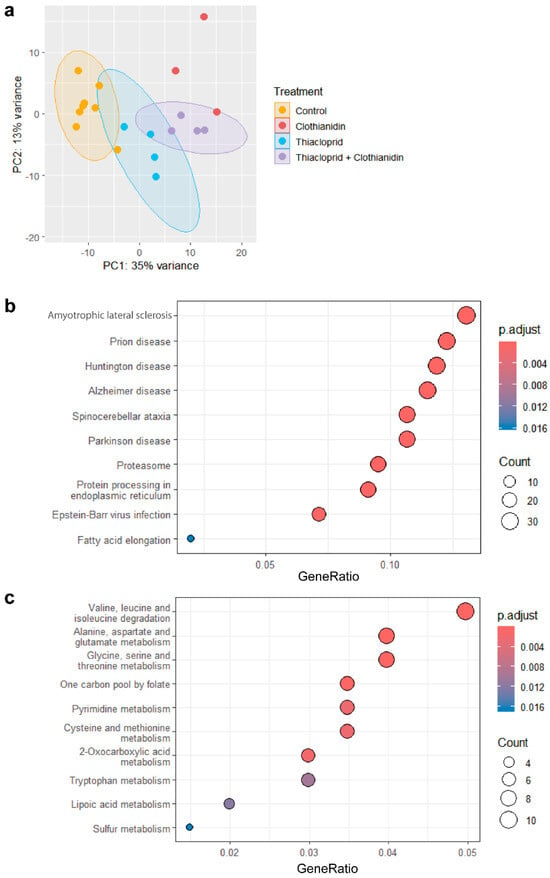
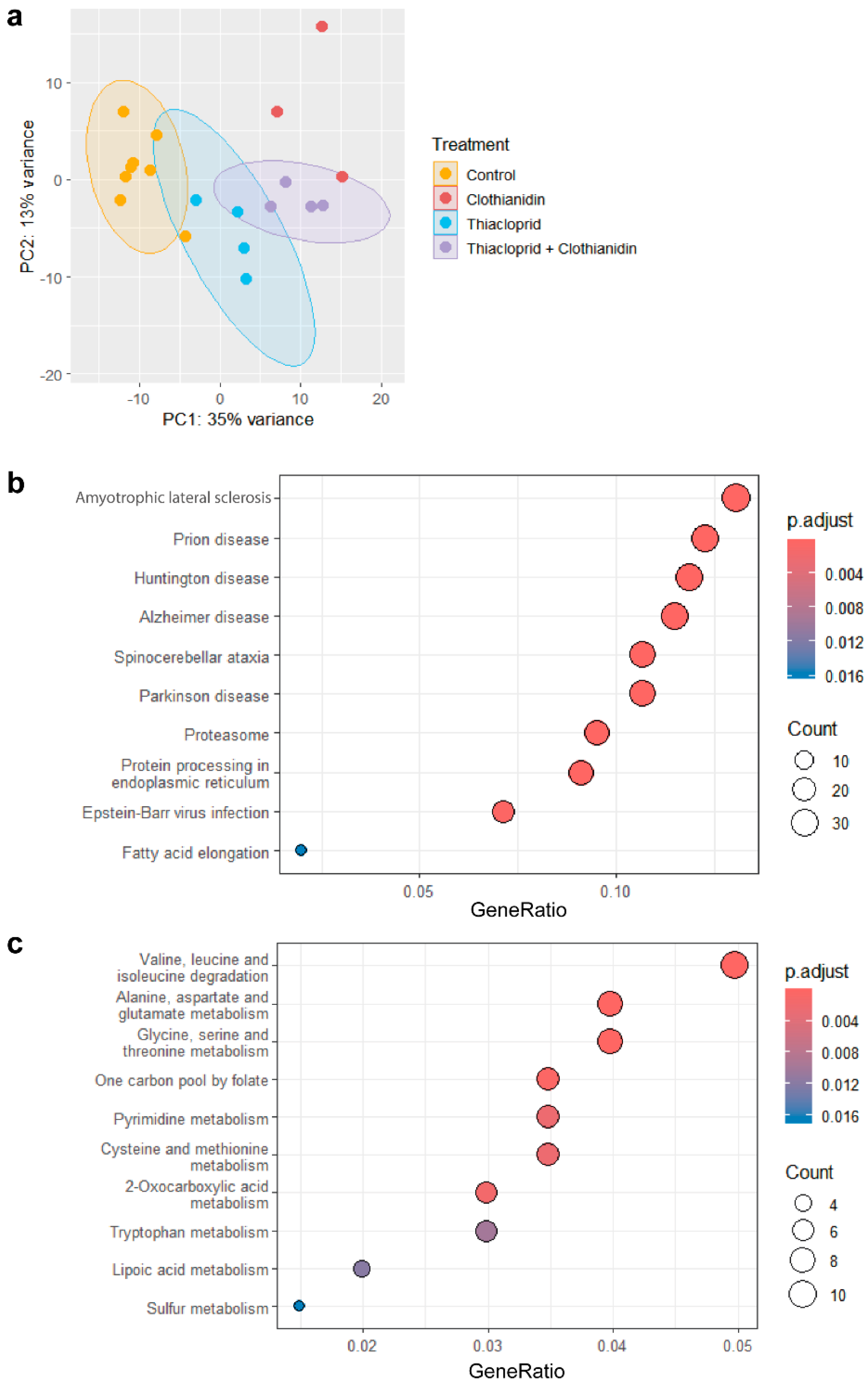
The PCA revealed a clear separation among treatment groups (Figure 1a). PC1 explained 35% of the variation and primarily separated control samples from insecticide treatment groups, indicating a broad transcriptional response to neonicotinoid exposure. PC2 accounted for 13% of the variance and distinguished between individual treatments, suggesting that, although both neonicotinoids induced partially overlapping transcriptional responses, each compound also elicited distinct gene expression signatures.
Figure 1.
Multivariate transcriptomic analysis and functional enrichment associated with principal component 2 (PC2). (a) A principal component analysis (PCA) plot showing the distribution of control, thiacloprid, clothianidin, and mixture-treated samples based on variance-stabilized transcriptomic profiles. Samples clustering closer together exhibit more similar global gene expression patterns, whereas separation along principal components reflects transcriptomic divergence between treatment groups. PC2 was associated with treatment-related variation and was therefore selected for downstream correlation analyses. Group differences were confirmed by a PERMANOVA (R2 = 0.38; F = 3.07; p = 0.001), and an analysis of multivariate dispersion (betadisper) indicated no significant differences in within-group variability (p = 0.56). (b) A KEGG pathway enrichment analysis of the top 500 genes positively correlated with PC2. (c) A KEGG pathway enrichment analysis of the top 500 genes negatively correlated with PC2. Enrichment significance was determined using the Benjamini–Hochberg false discovery rate correction (adjusted p < 0.05).
To statistically validate group differences, a PERMANOVA was conducted, confirming that treatment significantly influenced the global transcriptomic profile (R2 = 0.38, F = 3.07, and p = 0.001). An analysis of multivariate dispersion (betadispersion) showed no significant differences among groups (p = 0.56), indicating that the observed separation was driven by differences in group centroids rather than heterogeneity within groups. Together, these findings indicate that neonicotinoid exposure promotes consistent and treatment-dependent transcriptomic remodeling across samples.
To investigate biological processes associated with PC2, genes showing the strongest positive and negative correlations with this component were subjected to KEGG enrichment analysis. The top ten genes positively correlated with PC2 were significantly enriched in pathways annotated in KEGG as neurodegeneration-related pathways, including amyotrophic lateral sclerosis, Alzheimer’s disease, and Parkinson’s disease (Figure 1b). Although these pathway annotations are disease-oriented, they comprise conserved molecular modules involved in mitochondrial function, oxidative metabolism, protein homeostasis and neuronal signaling. These findings suggest that PC2 captures transcriptional programs associated with neuronal and mitochondrial regulation under neonicotinoid exposure.
Conversely, the top ten genes negatively correlated with PC2 were enriched in metabolic pathways, including amino acid metabolism, one-carbon metabolism, and sulfur metabolism (Figure 1c). Collectively, these findings suggest that PC2 reflects a balance between neuronal-related and core metabolic transcriptional programs under neonicotinoid exposure.
2.2. KEGG Enrichment of Genes Modulated by Distinct Treatments
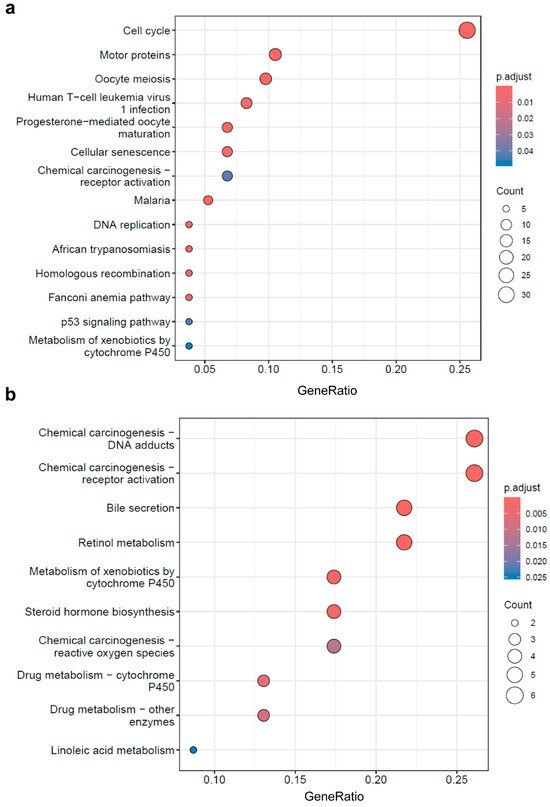
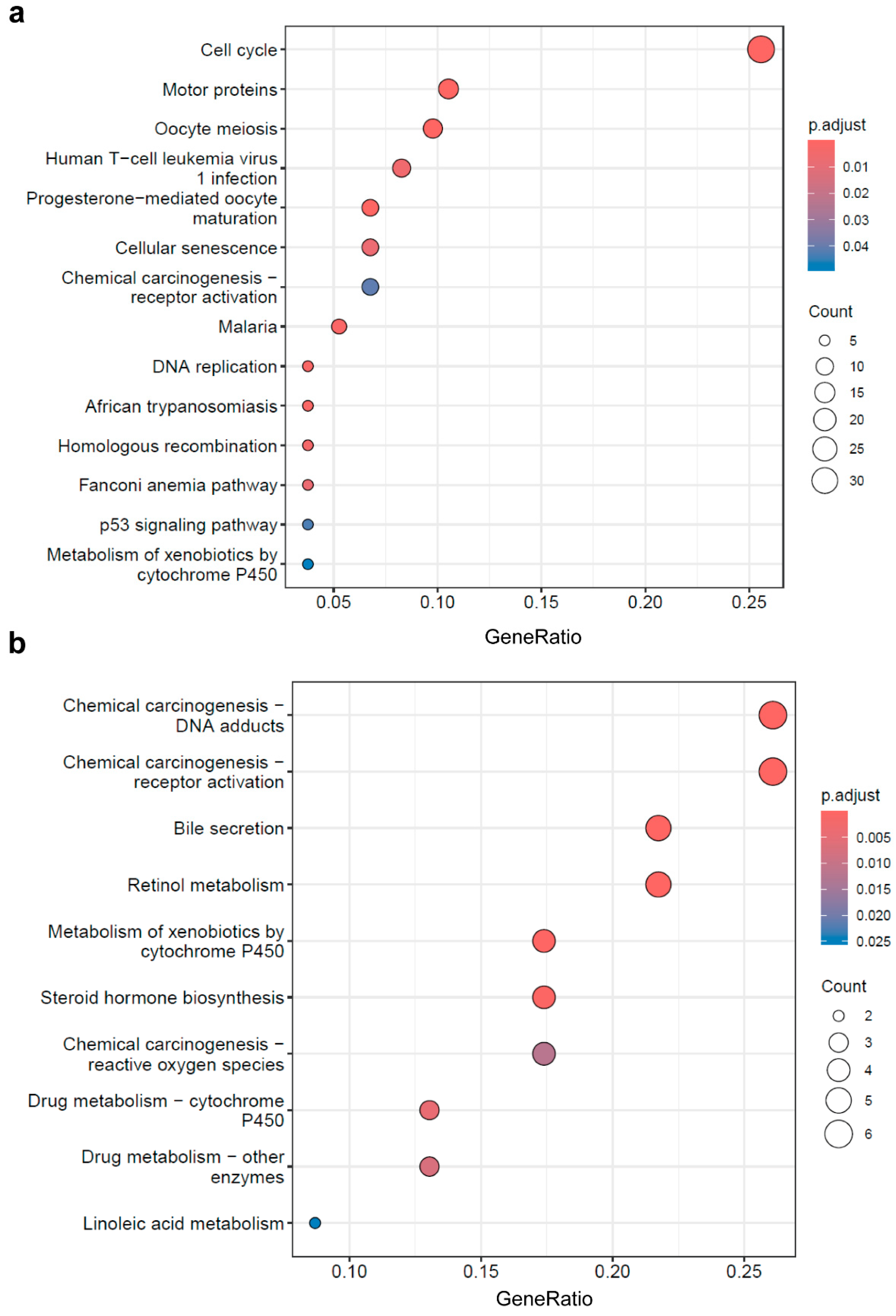
To investigate functional signatures associated with each treatment, KEGG enrichment analysis was performed using differentially expressed genes (DEGs) identified for clothianidin, thiacloprid, and their combined treatment. For clothianidin-treated animals, enriched pathways included the cell cycle, cellular senescence, DNA replication, p53 signaling, chemical carcinogenesis receptor activation, and metabolism of xenobiotics induced by cytochrome P450 (CYP450) (Figure 2a). These annotations suggest the modulation of gene sets involved in cell cycle regulation and xenobiotic processing.
Figure 2.
A KEGG pathway enrichment analysis of differentially expressed genes in response to neonicotinoid exposure. (a) Significantly enriched pathways identified in clothianidin-treated samples. (b) Significantly enriched pathways identified in thiacloprid-treated samples. The x-axis represents the GeneRatio, indicating the proportion of differentially expressed genes associated with each pathway. Dot size corresponds to the number of genes mapped to each pathway (count), and color indicates the adjusted p-value (Benjamini–Hochberg correction, adjusted p < 0.05).
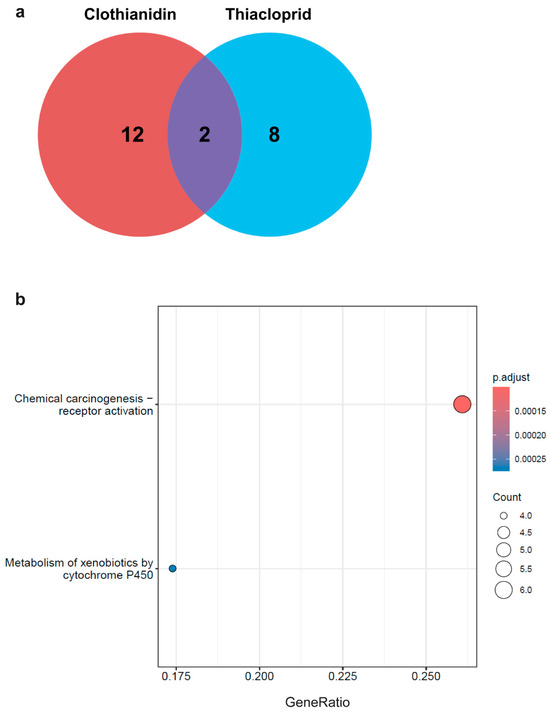
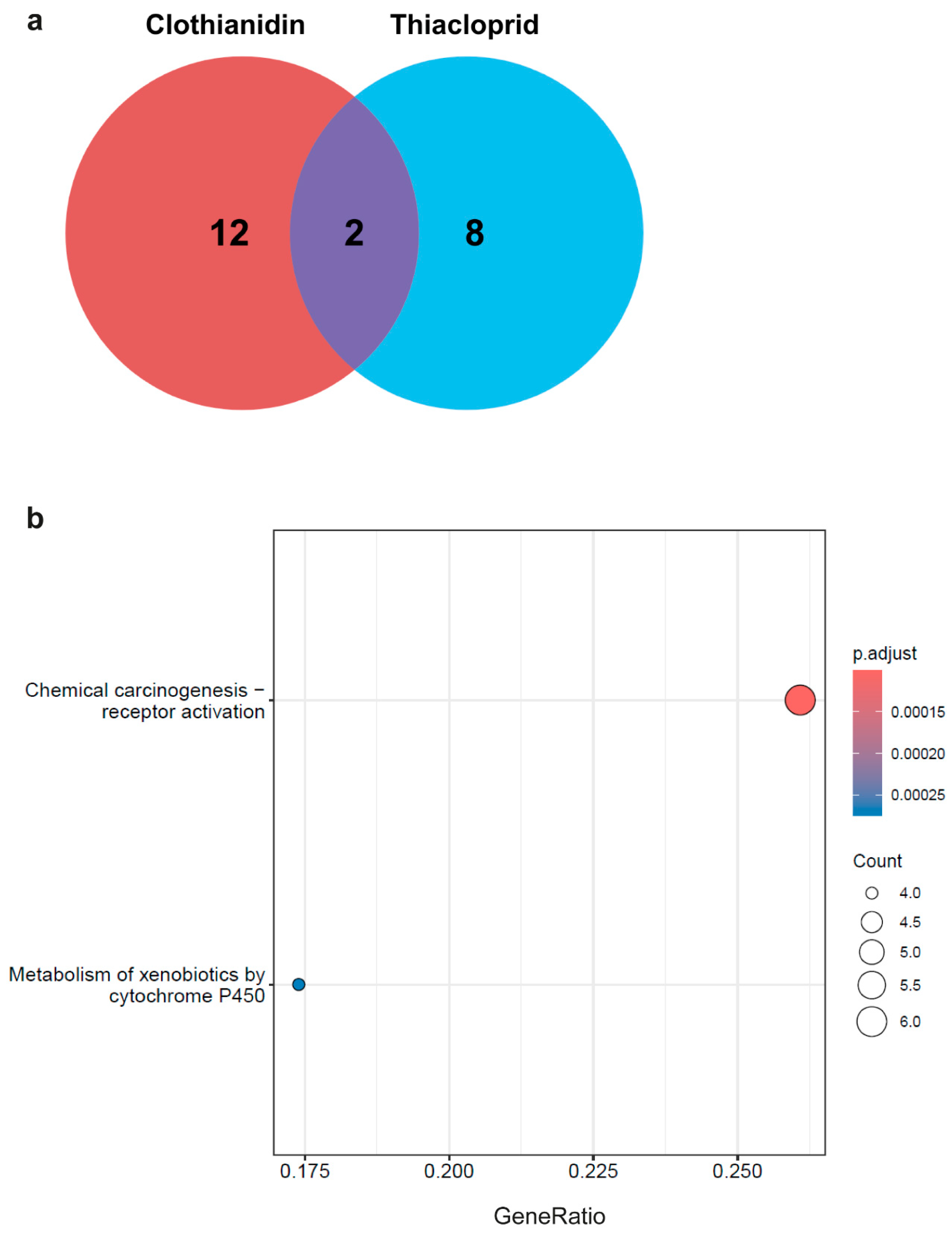
Thiacloprid treatment resulted in an enrichment in pathways related to chemical carcinogenesis (DNA adducts and receptor activation), drug metabolism, steroid hormone biosynthesis, and xenobiotic metabolism mediated by cytochrome P450 enzymes (Figure 2b), indicating the transcriptional modulation of genes involved in cell cycle regulation and detoxification-associated pathways. To evaluate shared functional responses between treatments, a Venn diagram was constructed to identify overlapping KEGG pathways (Figure 3a). Two pathways were commonly enriched across treatments: chemical carcinogenesis receptor activation and metabolism of xenobiotics mediated by CYP450 (Figure 3b). This overlap indicates that both neonicotinoids modulate conserved gene sets associated with xenobiotic sensing and metabolic processing.
Figure 3.
Shared KEGG pathway enrichment between neonicotinoid treatment. (a) A Venn diagram showing the number of significantly enriched KEGG pathways (adjusted p < 0.05) singularly or commonly identified in clothianidin- and thiacloprid-treated samples. (b) A dot plot representing KEGG pathways enriched in both treatments. The x-axis indicates the GeneRatio, reflecting the proportion of genes associated with each pathway relative to the total number of differentially expressed genes. Dot size corresponds to the number of genes mapped to each pathway (count), and color represents the adjusted p-value (Benjamini–Hochberg correction).
2.3. Treatments Induce Distinct Patterns of Gene Expression
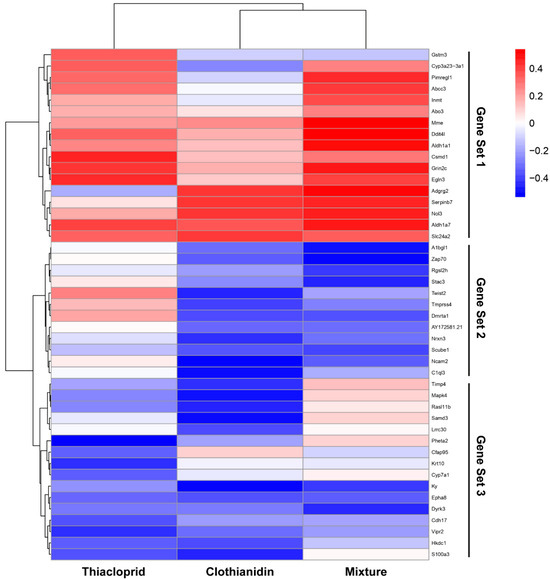
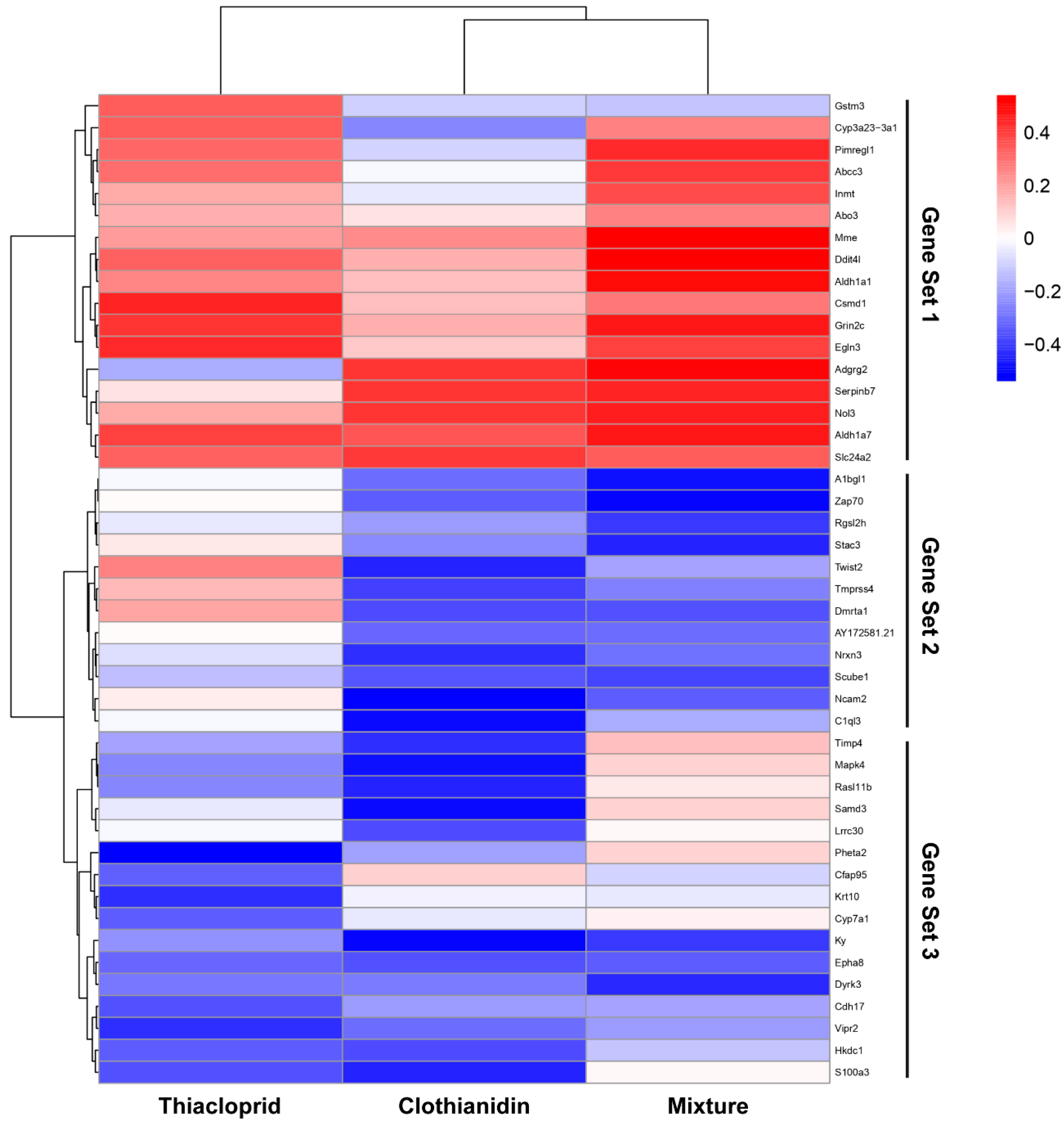
To further characterize treatment-associated transcriptional patterns, a correlation heatmap was generated using Spearman’s correlation coefficients based on the thirty most strongly modulated genes from each treatment group (Figure 4). Hierarchical clustering revealed distinct groups of genes exhibiting coordinated expression responses across neonicotinoid exposures.
Figure 4.
A correlation heatmap between gene expressions patterns and treatments using Spearman’s correlation coefficient. Warmer colors indicate positive correlations between gene expression levels and treatment conditions, whereas cooler colors indicate negative correlations. Genes with similar correlation profiles across treatments were grouped by hierarchical clustering using Ward’s method, allowing for the identification of coregulated expression patterns and treatment-associated transcriptional signatures.
Gene set 1 was predominantly composed of genes associated with detoxification and cell proliferation and displayed strong positive correlations with all treatments, indicating coordinated transcriptional activation. Thiacloprid induced broad upregulation across this cluster, whereas clothianidin showed stronger associations with proliferation-related genes. The mixture treatment produced a similar activation profile, suggesting the partial convergence of transcriptional response between individual and combined exposures.
Gene set 2 consisted mainly of genes related to immune response, cell proliferation, and cell adhesion and generally exhibited weak or negative correlations with treatments, suggesting transcriptional repression. Clothianidin and the mixture treatment showed the strongest negative correlation within this cluster, whereas thiacloprid induced comparatively weaker effects. These findings indicate that distinct neonicotinoids may differentially modulate pathways associated with immune and cellular regulatory processes.
Finally, Gene set 3 included genes associated with cytoskeleton organization and cell proliferation and showed an overall downregulation following exposure to individual insecticides. In contrast, the mixture treatment produced weaker or partially reversed correlation patterns, suggesting that combined exposure induces transcriptional responses distinct from those elicited by either compound alone. Although formal interaction models were not applied in this study, these findings support the possibility that co-exposure modifies the regulation of specific gene networks compared to single-compound treatments.
3. Discussion
The present study aimed to investigate whether neonicotinoid insecticides sharing the same mechanism of action exhibit similar toxicological effects based on toxicotranscriptomic analyses. Clothianidin and thiacloprid were selected as model neonicotinoids for this study. Interestingly, despite sharing the same mechanism of action, namely agonism in nAChRs, distinct responses were observed rather than a common toxicological pathway.
From an agricultural perspective, understanding pesticide stress biology extends beyond target pest control, encompassing broader ecological consequences for non-target species and crop-associated organisms. Pesticide exposure can trigger conserved molecular stress pathways, including xenobiotic metabolism, oxidative stress signaling, and transcriptional reprogramming, responses that have been characterized across distinct insecticide classes with different modes of action [37]. In parallel, insecticide exposure has been shown to modulate post-transcriptional regulatory networks, including miRNA-mediated gene regulation, which may affect development, reproduction, and metabolic homeostasis in non-target organisms [38]. These molecular frameworks are relevant to crop-associated toxicological responses, as they highlight how chemically distinct compounds can converge on shared stress biology while simultaneously eliciting compound-specific transcriptional signatures, as observed in the present study.
Although designed as a selective insecticide, clothianidin has been associated with cytotoxic effects in non-target species [11], including disturbances in cell cycle regulation and the activation of stress response pathways. Experimental evidence indicates that exposure to neonicotinoids can induce cell cycle arrest, commonly at the G1/S or G2/M checkpoints, potentially mediated by DNA damage [39] and the subsequent activation of p53 signaling [40]. The p53 pathway plays a central role in regulating genes involved in cell cycle progression [41] and cytoskeletal dynamics, including motor proteins such as kinesins and dyneins, whose dysfunction may impair mitotic processes [42,43,44,45]. Moreover, sustained p53 activation is closely linked to the induction of cellular senescence [46], characterized by irreversible growth arrest and a pro-inflammatory secretory phenotype.
Studies on neonicotinoids, including clothianidin, demonstrate increased oxidative stress and mitochondrial dysfunction, characterized by elevated reactive oxygen species (ROS) production, the loss of mitochondrial membrane potential, and the activation of apoptotic signaling pathways [18,47,48,49], which are well-known upstream triggers of p53 activation and cellular senescence. These findings suggest a mechanistic axis involving cellular stress, the disruption of cell cycle control, the impairment of motor proteins, and the activation of p53 signaling, although further studies are required to clarify these interactions in human-relevant systems.
Interestingly, neonicotinoid insecticides undergo relatively conserved biotransformation in mammals, primarily involving phase I oxidative reactions mediated by cytochrome P450 enzymes, followed by phase II conjugation pathways [26]. A key metabolic feature is the biotransformation of thiamethoxam into clothianidin, a pathway consistently demonstrated in both experimental [50,51] and environmental studies [52,53]. Clothianidin itself may undergo further metabolism, including denitration and conjugation reactions [54]. However, its relative persistence [55] contributes to its frequent detection in environmental matrices [56] and human biomonitoring samples [57]. Therefore, the formation of clothianidin represents a toxicologically relevant metabolic route, as it may prolong systemic exposure to biologically active neonicotinoid-derived compounds.
In addition, thiacloprid has been increasingly associated with hepatic metabolic disturbances that may impact pathways such as bile secretion, retinol metabolism, and steroid hormone biosynthesis. Experimental and omics-based studies indicate that thiacloprid exposure disrupts hepatic metabolic pathways, including bile acid and cholesterol metabolism, as demonstrated by multiomics analyses showing altered bile acid homeostasis and liver injury [58,59]. These processes are closely linked to hepatobiliary transport systems, including ATP-binding cassette (ABC) transporters, which play a central role in bile secretion and xenobiotic excretion [60]. Disruption of these systems may impair bile flow and promote the hepatic accumulation of toxic intermediates. In parallel, the modulation of retinol metabolism has been reported following neonicotinoid exposure [61,62,63], potentially interfering in enzymes such as retinol dehydrogenases, retinal oxidases [62] and cytochrome P450 isoforms responsible for retinoic acid synthesis and degradation [64,65]. Such alterations may affect vitamin A homeostasis and downstream signaling pathways.
Furthermore, neonicotinoids, including thiacloprid, have been shown to exert endocrine-disrupting effects through multiple mechanisms [66,67,68], potentially affecting steroid hormone biosynthesis through interference with steroidogenic enzymes and nuclear receptor signaling pathways [69,70]. Although further studies are required to elucidate these interactions in humans, these data support a mechanistic framework in which thiacloprid exposure may disrupt liver function and systemic homeostasis through coordinated effects on bile secretion, retinoid metabolism, and steroidogenesis.
Clothianidin and thiacloprid modulated gene sets enriched in KEGG pathways annotated as chemical carcinogenesis-related processes. These pathways include molecular modules associated with oxidative stress responses, xenobiotic metabolism, DNA damage signaling, and cellular stress regulation. These early molecular events are frequently represented in carcinogenesis-related Adverse Outcome Pathway (AOP) frameworks. Experimental studies indicate that neonicotinoids can induce oxidative stress and mitochondrial dysfunction, resulting in the excessive production of ROS [18,48,71] and oxidative DNA damage, including double-strand breaks marked by γH2AX [72,73,74]. These early key events are central to carcinogenesis AOPs, as they trigger the activation of the p53 pathway, which regulates cell cycle arrest, DNA repair, and apoptosis in response to genotoxic stress [75,76]. Persistent or improperly repaired DNA damage may lead to genomic instability, a hallmark of cancer, particularly when error-prone repair mechanisms are engaged [77,78,79].
In parallel, the modulation of xenobiotic-metabolizing enzymes, such as cytochrome P450s, can influence the metabolic activation of procarcinogens, representing a molecular initiating event in several chemical carcinogenesis AOPs [80,81]. These enzymes convert inert compounds into reactive intermediates capable of inducing DNA damage and initiating cell transformation [82]. Within this framework, sustained oxidative stress and dysregulated stress response signaling may shift cellular outcomes from protective apoptosis toward survival with accumulated mutations, potentially contributing to molecular environments associated with cellular transformation [83,84].
Even though direct epidemiological evidence linking neonicotinoids to cancer incidence in humans remains limited, the convergence of biomonitoring, endocrine disruption, and genotoxicity data supports a biologically plausible framework in which chronic exposure to clothianidin and thiacloprid may contribute to molecular processes associated with cellular stress and toxicological responses. Epidemiological and biomonitoring studies indicate that human exposure to neonicotinoid insecticides is widespread [85,86] and may be associated with endocrine disruption [87] and pathways relevant to chemical carcinogenesis [88]. Large-scale exposure assessments have detected neonicotinoid metabolites in human urine across different populations, supporting continuous low-level exposure [89,90].
4. Materials and Methods
4.1. Data Source and Experimental Design
Publicly available RNA sequencing data were retrieved from the Gene Expression Omnibus (GEO) database under accession number GSE153986 [58]. The original study evaluated liver transcriptomic responses in five-week-old female Wistar rats treated with neonicotinoid insecticides thiacloprid and clothianidin and their combination. Animals were treated by oral gavage for 28 days using a repeated-dose administration protocol. Test compounds were suspended in 0.5% aqueous carboxymethyl-cellulose and administered at a dosing volume of 7.5 mL/kg body weight. Control animals received vehicle only (0.5% of aqueous carboxymethyl-cellulose in deionized water). Experimental groups included the control (n = 8), thiacloprid-treated (n = 4), clothianidin-treated (n = 4), and combined treatment groups (n = 4).
Total RNA sequencing was performed in the original study using the TruSeq Stranded total RNA Sample Preparation Kit (Illumina, San Diego, CA, USA) with 100 ng RNA per sample. Sequencing was conducted on the Illumina NovaSeq 6000 platform, generating approximately 50–160 million paired-end 100 bp reads per sample. Raw sequencing quality was assessed using FastQC version 0.11.5, and adapter trimming was performed using Skewer version 0.2.2. Reads were aligned to the rat reference genome (Rnor_5.0) using STAR version 2.5.2b [58].
Raw sequencing data were downloaded and processed in R Studio (version 4.3.1), and downstream analyses were conducted using BioConductor packages. Batch effect assessment was performed through exploratory multivariate analyses, including PCA and dispersion analyses. No evident clustering patterns suggestive of a technical batch effect were observed among samples.
4.2. Differential Gene Expression Analysis
Differential gene expression analysis was conducted using the DESeq2 package (version 1.42.1), which models count data based on the negative binomial distribution and applies shrinkage estimation for dispersion and fold change parameters [91]. Normalization was conducted using the median of ratios method implemented in DESeq2 to account for sequencing depth and RNA composition biases.
For each comparison, a generalized linear model was fitted to estimate log2 fold changes between the control and treatment groups. Pairwise comparisons were performed between: thiacloprid vs. control, clothianidin vs. control, and combined treatment (mix of thiacloprid and clothianidin) vs. control. Statistical significance was evaluated using the Wald test. The resulting p-values were adjusted for multiple tests using the Benjamin–Hochberg (BH) false discovery rate (FDR) correction. Genes were considered significantly differentially expressed when they met the following criteria: adjusted p-value (padj) < 0.05 and absolute log2 fold change (|log2FC|) ≥ 1. These thresholds were selected based on commonly adopted criteria in transcriptomic studies to balance statistical significance and biological relevance. Both upregulated and downregulated genes were retained for downstream functional enrichment analyses.
4.3. Gene Filtering
To ensure the inclusion of reliably expressed genes in downstream analyses, a filtering step was applied prior to PCA. Genes were retained if they presented at least 10 raw counts in a minimum of three samples. Genes not meeting this criterion were excluded from further analyses.
4.4. Principal Component Analysis (PCA)
Variance stabilizing transformation (VST) counts were obtained using the DESeq2 package to reduce heteroscedasticity. Principal component analysis was performed to estimate global transcriptomic variations among treatment groups. The contribution of principal component 2 (PC2) was further investigated to assess treatment-related changes in transcriptional signatures.
To statistically evaluate differences in global gene expression profiles among groups, a permutational multivariate analysis of variance (PERMANOVA) was conducted using Bray–Curtis dissimilarity matrices with 999 permutations. The homogeneity of the dispersion was assessed prior to the PERMANOVA to ensure that significant differences were not driven by unequal group dispersion.
For gene ranking associated with principal component 2 (PC2), loadings were extracted from the PCA performed using the plotPCA function in DESeq2 based on the VST count. Genes were ranked according to their loading magnitude, and the top 500 positively and negatively associated genes were selected for subsequent enrichment analyses.
In the final step, genes significantly correlated with PC2 were identified using correlation analysis. Significant correlations were defined as r ≥ 0.4 and padj < 0.05, controlling for multiple testing using the BH procedure. The correlation coefficient was estimated for each gene across the samples (control and treatment groups).
4.5. Functional Enrichment Analysis with KEGG Pathway
Functional enrichment analysis was performed using the clusterProfiler package (version 4.10.1) [92]. Differentially expressed genes were converted from ENSEMBL identifiers to ENTREZ IDs using the org.Rn.eg.db (version 3.18.0) annotation database [93] with genome-wide annotation for rats.
Kyoto Encyclopedia of Genes and Genomes (KEGG) pathway [94] enrichment analysis was executed using the enrichKEGG function. Pathways with padj < 0.05 were considered significantly enriched. Separate enrichment analyses were conducted for: upregulated genes, downregulated genes, PC2-positive genes, and PC2-negative genes. Finally, shared enriched pathways between thiacloprid and clothianidin treatments were identified using set intersection analyses.
4.6. Visualization and Statistical Analysis of Differential Gene Expression
Dot plots of enriched KEGG pathways were generated with the clusterProfiler method and visualization function [92]. Gene selection for the heatmap was based on the log2 fold change (log2FC) and adjusted p-values calculated using the Benjamini–Hochberg method. The top 30 most strongly modulated genes (up- or downregulated) for each treatment were selected for visualization. In the second step, genes lacking valid SYMBOL or ENSEMBL annotation were removed. Genes overlapping between treatments were merged to simplify visualization. Finally, the heatmap was generated using the pheatmap package (version 1.0.13) with hierarchical clusterization (Ward’s method). All statistical analyses were performed in R Studio, and graphical representations were generated using the ggplot2 package (version 4.0.1).
5. Conclusions
In summary, it was demonstrated that despite sharing the same mechanism of action, clothianidin and thiacloprid induce distinct patterns of gene expression modulation. While clothianidin predominantly modulated gene sets associated with cell cycle regulation, motor proteins and cellular senescence, thiacloprid predominantly affected pathways related to bile secretion and metabolic processes. Both pesticides commonly modulated gene sets enriched in pathways related to xenobiotic metabolism, cellular stress responses, and chemical carcinogenesis-associated molecular processes.
Importantly, these findings are supported by a robust and integrative analytical framework based on publicly available RNA-seq data, including multivariate analysis (PCA and PERMANOVA), differential gene expression with stringent thresholds (adjusted p-value and |log2FC|), functional enrichment, and correlation-based approaches. Therefore, these results reinforce the importance of evaluating pesticides in non-target species, highlighting that compounds sharing similar mechanisms of action may still induce distinct responses depending on exposure conditions.
The present study was based on the reanalysis of publicly available transcriptomic data, and no independent validation assays, such as RT-qPCR, protein-level analyses, or the use of oxidative stress biomarkers, were performed. Therefore, the observed transcriptomic signatures and pathway enrichment results should be interpreted as molecular associations and functional trends rather than direct evidence of pathological outcomes. In addition, formal interaction analyses or combined toxicity models were not employed for the mixed exposure group. Future studies integrating transcriptomics with functional and biochemical validation approaches are necessary to further clarify the biological relevance of these molecular alterations.
Author Contributions
G.C.-M.: data curation, formal analysis, methodology, investigation, writing—original draft. F.M.C.: writing—original draft. M.D.A.: conceptualization, writing—review and editing. All authors have read and agreed to the published version of the manuscript.
Funding
Fernanda Mocellin Conte and Marcelo Dutra Arbo are the recipients of Conselho Nacional de Desenvolvimento Científico e Tecnológico (CNPq, Brazil) fellowships.
Institutional Review Board Statement
Not applicable.
Informed Consent Statement
Not applicable.
Data Availability Statement
The datasets analyzed throughout this study are publicly available in the Gene Expression Omnibus (GEO) repository under accession number GSE153986 [57]. All the bioinformatic scripts used for data processing and analysis for this work are available from the corresponding author upon reasonable request.
Conflicts of Interest
The authors declare no conflict of interest.
References
- Elbert, A.; Haas, M.; Springer, B.; Thielert, W.; Nauen, R. Applied Aspects of Neonicotinoid Uses in Crop Protection. Pest Manag. Sci. 2008, 64, 1099–1105. [Google Scholar] [CrossRef] [Scilit]
- Jeschke, P.; Nauen, R.; Schindler, M.; Elbert, A. Overview of the Status and Global Strategy for Neonicotinoids. J. Agric. Food Chem. 2011, 59, 2897–2908. [Google Scholar] [CrossRef] [Scilit]
- Jeschke, P.; Nauen, R. Neonicotinoids—From Zero to Hero in Insecticide Chemistry. Pest Manag. Sci. 2008, 64, 1084–1098. [Google Scholar] [CrossRef] [Scilit]
- Anderson, J.C.; Dubetz, C.; Palace, V.P. Neonicotinoids in the Canadian Aquatic Environment: A Literature Review on Current Use Products with a Focus on Fate, Exposure, and Biological Effects. Sci. Total Environ. 2015, 505, 409–422. [Google Scholar] [CrossRef] [Scilit] [PubMed]
- Nauen, R.; Bielza, P.; Denholm, I.; Gorman, K. Age-Specific Expression of Resistance to a Neonicotinoid Insecticide in the Whitefly Bemisia Tabaci. Pest Manag. Sci. 2008, 64, 1106–1110. [Google Scholar] [CrossRef] [Scilit] [PubMed]
- Singh, T.B.; Kaur, M.; Tyagi, D.; Ahmad, I.; Kaur, G.; Afzal, S.M.; Jauhar, M. An Evidence Based Comprehensive Review on Thiacloprid, a Pesticide Residue, Induced Toxicity: Unveiling Hazard to Human Health. Environ. Toxicol. Pharmacol. 2024, 110, 104532. [Google Scholar] [CrossRef] [Scilit] [PubMed]
- Tomizawa, M.; Casida, J.E. NEONICOTINOID INSECTICIDE TOXICOLOGY: Mechanisms of Selective Action. Annu. Rev. Pharmacol. Toxicol. 2005, 45, 247–268. [Google Scholar] [CrossRef] [Scilit]
- Henry, M.; Béguin, M.; Requier, F.; Rollin, O.; Odoux, J.-F.; Aupinel, P.; Aptel, J.; Tchamitchian, S.; Decourtye, A. A Common Pesticide Decreases Foraging Success and Survival in Honey Bees. Science 2012, 336, 348–350. [Google Scholar] [CrossRef] [Scilit]
- Whitehorn, P.R.; O’Connor, S.; Wackers, F.L.; Goulson, D. Neonicotinoid Pesticide Reduces Bumble Bee Colony Growth and Queen Production. Science 2012, 336, 351–352. [Google Scholar] [CrossRef] [Scilit]
- Damalas, C.A.; Eleftherohorinos, I.G. Pesticide Exposure, Safety Issues, and Risk Assessment Indicators. Int. J. Environ. Res. Public Health 2011, 8, 1402–1419. [Google Scholar] [CrossRef] [Scilit]
- Kim, K.-H.; Kabir, E.; Jahan, S.A. Exposure to Pesticides and the Associated Human Health Effects. Sci. Total Environ. 2017, 575, 525–535. [Google Scholar] [CrossRef] [Scilit]
- Nagata, K.; Song, J.-H.; Shono, T.; Narahashi, T. Modulation of the Neuronal Nicotinic Acetylcholine Receptor-Channel by the Nitromethylene Heterocycle Imidacloprid1. J. Pharmacol. Exp. Ther. 1998, 285, 731–738. [Google Scholar] [CrossRef] [Scilit]
- Foley, K.P.; Zlitni, S.; Denou, E.; Duggan, B.M.; Chan, R.W.; Stearns, J.C.; Schertzer, J.D. Long Term but Not Short Term Exposure to Obesity Related Microbiota Promotes Host Insulin Resistance. Nat. Commun. 2018, 9, 4681. [Google Scholar] [CrossRef] [Scilit]
- Buckingham, S.D.; Lapied, B.; Le Corronc, H.; Grolleau, F.; Sattelle, D.B. Imidacloprid Actions on Insect Neuronal Acetylcholine Receptors. J. Exp. Biol. 1997, 200, 2685–2692. [Google Scholar] [CrossRef] [Scilit]
- Jin, C.; Luo, T.; Fu, Z.; Jin, Y. Chronic Exposure of Mice to Low Doses of Imazalil Induces Hepatotoxicity at the Physiological, Biochemical, and Transcriptomic Levels. Environ. Toxicol. 2018, 33, 650–658. [Google Scholar] [CrossRef] [Scilit] [PubMed]
- Cestonaro, L.V.; Garcia, S.C.; Nascimento, S.; Gauer, B.; Sauer, E.; Göethel, G.; Peruzzi, C.; Nardi, J.; Fão, N.; Piton, Y.; et al. Biochemical, Hematological and Immunological Parameters and Relationship with Occupational Exposure to Pesticides and Metals. Env. Sci. Pollut. Res. 2020, 27, 29291–29302. [Google Scholar] [CrossRef] [Scilit]
- Cestonaro, L.V.; Macedo, S.M.D.; Piton, Y.V.; Garcia, S.C.; Arbo, M.D. Toxic Effects of Pesticides on Cellular and Humoral Immunity: An Overview. Immunopharmacol. Immunotoxicol. 2022, 44, 816–831. [Google Scholar] [CrossRef] [Scilit] [PubMed]
- Cestonaro, L.V.; Crestani, R.P.; Conte, F.M.; Piton, Y.V.; Schmitz, F.; Ferreira, F.S.; Wyse, A.T.S.; Garcia, S.C.; Arbo, M.D. Immunomodulatory Effect of Imidacloprid on Macrophage RAW 264.7 Cells. Environ. Toxicol. Pharmacol. 2023, 101, 104190. [Google Scholar] [CrossRef] [Scilit]
- Cestonaro, L.V.; da Silva, A.C.G.; Garcia, S.C.; Valadares, M.C.; Arbo, M.D. Mitochondrial Impairment Related to the Immunotoxicity of the Herbicides Clomazone, Glyphosate and Sulfentrazone in THP-1 Cells. Toxicol. Res. 2024, 13, tfae005. [Google Scholar] [CrossRef] [Scilit] [PubMed]
- Cestonaro, L.V.; Conte, A.M.; Goldoni, F.C.; Quintão, N.L.M.; Garcia, S.C.; Santin, J.R.; Arbo, M.D. In Vitro Immunotoxic Evaluation of Herbicides in RAW 264.7 Cells. J. Toxicol. Environ. Health Part A 2025, 88, 433–446. [Google Scholar] [CrossRef] [Scilit]
- Conte, A.M.; Conte, F.M.; Cestonaro, L.V.; Ribeiro, M.F.N.; da Silva, R.F.; De Faveri, R.; Benvenutti, L.; Garcia, S.C.; Santin, J.R.; Ligabue-Braun, R.; et al. Flumetralin Based Plant Growth Regulator Used in Tobacco Cultivation Induces Immune and Cytotoxicity in Vitro. Toxicol. Res. 2025, 14, tfaf118. [Google Scholar] [CrossRef] [Scilit]
- Jin, Y.; Liu, J.; Wang, L.; Chen, R.; Zhou, C.; Yang, Y.; Liu, W.; Fu, Z. Permethrin Exposure during Puberty Has the Potential to Enantioselectively Induce Reproductive Toxicity in Mice. Environ. Int. 2012, 42, 144–151. [Google Scholar] [CrossRef] [Scilit]
- Jin, Y.; Pan, X.; Cao, L.; Ma, B.; Fu, Z. Embryonic Exposure to Cis-Bifenthrin Enantioselectively Induces the Transcription of Genes Related to Oxidative Stress, Apoptosis and Immunotoxicity in Zebrafish (Danio Rerio). Fish Shellfish Immunol. 2013, 34, 717–723. [Google Scholar] [CrossRef] [Scilit]
- Hocine, L.; Merzouk, H.; Merzouk, S.A.; Ghorzi, H.; Youbi, M.; Narce, M. The Effects of Alpha-Cypermethrin Exposure on Biochemical and Redox Parameters in Pregnant Rats and Their Newborns. Pestic. Biochem. Physiol. 2016, 134, 49–54. [Google Scholar] [CrossRef] [Scilit]
- Cremonese, C.; Piccoli, C.; Pasqualotto, F.; Clapauch, R.; Koifman, R.J.; Koifman, S.; Freire, C. Occupational Exposure to Pesticides, Reproductive Hormone Levels and Sperm Quality in Young Brazilian Men. Reprod. Toxicol. 2017, 67, 174–185. [Google Scholar] [CrossRef] [Scilit] [PubMed]
- Samtani, R.; Sharma, N.; Garg, D. Effects of Endocrine-Disrupting Chemicals and Epigenetic Modifications in Ovarian Cancer: A Review. Reprod. Sci. 2018, 25, 7–18. [Google Scholar] [CrossRef] [Scilit] [PubMed]
- Nascimento, S.; Göethel, G.; Gauer, B.; Sauer, E.; Nardi, J.; Cestonaro, L.; Correia, D.; Peruzzi, C.; Mota, L.; Machry, R.V.; et al. Exposure to Environment Chemicals and Its Possible Role in Endocrine Disruption of Children from a Rural Area. Environ. Res. 2018, 167, 488–498. [Google Scholar] [CrossRef] [Scilit]
- Bernieri, T.; Rodrigues, D.; Barbosa, I.R.; Ardenghi, P.G.; Basso da Silva, L. Occupational Exposure to Pesticides and Thyroid Function in Brazilian Soybean Farmers. Chemosphere 2019, 218, 425–429. [Google Scholar] [CrossRef] [Scilit]
- Li, P.; Ann, J.; Akk, G. Activation and Modulation of Human A4β2 Nicotinic Acetylcholine Receptors by the Neonicotinoids Clothianidin and Imidacloprid. J. Neurosci. Res. 2011, 89, 1295–1301. [Google Scholar] [CrossRef] [Scilit] [PubMed]
- Tonietto, B.D.; Laurentino, A.O.M.; Costa-Valle, M.T.; Cestonaro, L.V.; Antunes, B.P.; Sates, C.; dos Santos, N.G.; Dallegrave, E.; Garcia, S.C.; Leal, M.B.; et al. Imidacloprid-Based Commercial Pesticide Causes Behavioral, Biochemical, and Hematological Impairments in Wistar Rats. Environ. Toxicol. Pharmacol. 2022, 94, 103924. [Google Scholar] [CrossRef] [Scilit]
- Honatel, K.F.; Arbo, B.D.; Leal, M.B.; da Silva Júnior, F.M.R.; Garcia, S.C.; Arbo, M.D. An Update of the Impact of Pesticide Exposure on Memory and Learning. Discov. Toxicol. 2024, 1, 11. [Google Scholar] [CrossRef] [Scilit]
- Conte, F.M.; Cestonaro, L.V.; Piton, Y.V.; Guimarães, N.; Garcia, S.C.; Dias da Silva, D.; Arbo, M.D. Toxicity of Pesticides Widely Applied on Soybean Cultivation: Synergistic Effects of Fipronil, Glyphosate and Imidacloprid in HepG2 Cells. Toxicol. Vitr. 2022, 84, 105446. [Google Scholar] [CrossRef] [Scilit]
- Arbo, M.D.; Garcia, S.C.; Sarpa, M.; Da Silva Junior, F.M.R.; Nascimento, S.N.; Garcia, A.L.H.; Da Silva, J. Brazilian Workers Occupationally Exposed to Different Toxic Agents: A Systematic Review on DNA Damage. Mutat. Res./Genet. Toxicol. Environ. Mutagen. 2022, 879–880, 503519. [Google Scholar] [CrossRef] [Scilit] [PubMed]
- Zhao, B.; Shen, H.; Liu, F.; Liu, S.; Niu, J.; Guo, F.; Sun, X. Exposure to Organochlorine Pesticides Is an Independent Risk Factor of Hepatocellular Carcinoma: A Case–Control Study. J. Expo. Sci. Env. Epidemiol. 2012, 22, 541–548. [Google Scholar] [CrossRef] [Scilit] [PubMed]
- VoPham, T.; Bertrand, K.A.; Hart, J.E.; Laden, F.; Brooks, M.M.; Yuan, J.-M.; Talbott, E.O.; Ruddell, D.; Chang, C.-C.H.; Weissfeld, J.L. Pesticide Exposure and Liver Cancer: A Review. Cancer Causes Control 2017, 28, 177–190. [Google Scholar] [CrossRef] [Scilit]
- Yuan, X.; Pan, Z.; Jin, C.; Ni, Y.; Fu, Z.; Jin, Y. Gut Microbiota: An Underestimated and Unintended Recipient for Pesticide-Induced Toxicity. Chemosphere 2019, 227, 425–434. [Google Scholar] [CrossRef] [Scilit] [PubMed]
- Yang, Z.; Wang, H.; Chen, S.; Song, M.; Sun, W.; Chen, S.; Zhang, C.; Wu, J. Novel Isoxazoline Insecticides Featuring a “1-Pyrazole-2-Cyano” Motif and Acting on the PxRDL Receptor. Pestic. Biochem. Physiol. 2026, 219, 107015. [Google Scholar] [CrossRef] [Scilit]
- Song, J.; Li, W.; Gao, L.; Yan, Q.; Zhang, X.; Liu, M.; Zhou, S. miR-276 and miR-182013-5p Modulate Insect Metamorphosis and Reproduction via Dually Regulating Juvenile Hormone Acid Methyltransferase. Commun. Biol. 2024, 7, 1604. [Google Scholar] [CrossRef] [Scilit]
- Calderón-Segura, M.E.; Gómez-Arroyo, S.; Villalobos-Pietrini, R.; Martínez-Valenzuela, C.; Carbajal-López, Y.; Calderón-Ezquerro, M.D.C.; Cortés-Eslava, J.; García-Martínez, R.; Flores-Ramírez, D.; Rodríguez-Romero, M.I.; et al. Evaluation of Genotoxic and Cytotoxic Effects in Human Peripheral Blood Lymphocytes Exposed In Vitro to Neonicotinoid Insecticides News. J. Toxicol. 2012, 2012, 612647. [Google Scholar] [CrossRef] [Scilit]
- Wang, X.; Martínez, M.-A.; Dai, M.; Chen, D.; Ares, I.; Romero, A.; Castellano, V.; Martínez, M.; Rodríguez, J.L.; Martínez-Larrañaga, M.-R.; et al. Permethrin-Induced Oxidative Stress and Toxicity and Metabolism. A Review. Environ. Res. 2016, 149, 86–104. [Google Scholar] [CrossRef] [Scilit]
- Abbas, T.; Dutta, A. P21 in Cancer: Intricate Networks and Multiple Activities. Nat. Rev. Cancer 2009, 9, 400–414. [Google Scholar] [CrossRef] [Scilit]
- Moore, A.; Wordeman, L. The Mechanism, Function and Regulation of Depolymerizing Kinesins during Mitosis. Trends Cell Biol. 2004, 14, 537–546. [Google Scholar] [CrossRef] [Scilit]
- Zhu, C.; Zhao, J.; Bibikova, M.; Leverson, J.D.; Bossy-Wetzel, E.; Fan, J.-B.; Abraham, R.T.; Jiang, W. Functional Analysis of Human Microtubule-Based Motor Proteins, the Kinesins and Dyneins, in Mitosis/Cytokinesis Using RNA Interference. Mol. Biol. Cell 2005, 16, 3187–3199. [Google Scholar] [CrossRef] [Scilit] [PubMed]
- Vicente, J.J.; Wordeman, L. Mitosis, Microtubule Dynamics and the Evolution of Kinesins. Exp. Cell Res. 2015, 334, 61–69. [Google Scholar] [CrossRef] [Scilit] [PubMed]
- Giannakakou, P.; Sackett, D.L.; Ward, Y.; Webster, K.R.; Blagosklonny, M.V.; Fojo, T. P53 Is Associated with Cellular Microtubules and Is Transported to the Nucleus by Dynein. Nat. Cell Biol. 2000, 2, 709–717. [Google Scholar] [CrossRef] [Scilit] [PubMed]
- Campisi, J. Aging, Cellular Senescence, and Cancer. Annu. Rev. Physiol. 2013, 75, 685–705. [Google Scholar] [CrossRef] [Scilit] [PubMed]
- Liu, T.; Wang, X.; You, X.; Chen, D.; Li, Y.; Wang, F. Oxidative Stress and Gene Expression of Earthworm (Eisenia Fetida) to Clothianidin. Ecotoxicol. Environ. Saf. 2017, 142, 489–496. [Google Scholar] [CrossRef] [Scilit]
- Xu, X.; Wang, X.; Yang, Y.; Ares, I.; Martínez, M.; Lopez-Torres, B.; Martínez-Larrañaga, M.-R.; Wang, X.; Anadón, A.; Martinez, M.-A. Neonicotinoids: Mechanisms of Systemic Toxicity Based on Oxidative Stress-Mitochondrial Damage. Arch. Toxicol. 2022, 96, 1493–1520. [Google Scholar] [CrossRef] [Scilit]
- Cheng, W.; Zhang, Z.; Zhang, Z.-B.; Zhao, G.; Wang, Y. Clothianidin Exposure Induces Cell Apoptosis via Mitochondrial Oxidative Damage. Environ. Toxicol. 2025, 40, 574–582. [Google Scholar] [CrossRef] [Scilit]
- Benzidane, Y.; Touinsi, S.; Motte, E.; Jadas-Hécart, A.; Communal, P.-Y.; Leduc, L.; Thany, S.H. Effect of Thiamethoxam on Cockroach Locomotor Activity Is Associated with Its Metabolite Clothianidin. Pest Manag. Sci. 2010, 66, 1351–1359. [Google Scholar] [CrossRef] [Scilit]
- Fan, Y.; Shi, X. Characterization of the Metabolic Transformation of Thiamethoxam to Clothianidin in Helicoverpa Armigera Larvae by SPE Combined UPLC–MS/MS and Its Relationship with the Toxicity of Thiamethoxam to Helicoverpa Armigera Larvae. J. Chromatogr. B 2017, 1061–1062, 349–355. [Google Scholar] [CrossRef] [Scilit]
- Yang, Y.; Qin, S.; Wang, X.; Cao, J.; Li, J. Dissipation Behavior and Acute Dietary Risk Assessment of Thiamethoxam and Its Metabolite Clothianidin on Spinach. Molecules 2022, 27, 2209. [Google Scholar] [CrossRef] [Scilit]
- Tian, F.; Qiao, C.; Wang, C.; Pang, T.; Guo, L.; Li, J.; Pang, R.; Xie, H. The Fate of Thiamethoxam and Its Main Metabolite Clothianidin in Peaches and the Wine-Making Process. Food Chem. 2022, 382, 132291. [Google Scholar] [CrossRef] [Scilit]
- Yang, Y.; Su, L.; Huang, Y.; Zhang, X.; Li, C.; Wang, J.; Fan, L.; Wang, S.; Zhao, Y.H. Bio-Uptake, Tissue Distribution and Metabolism of a Neonicotinoid Insecticide Clothianidin in Zebrafish. Environ. Pollut. 2022, 292, 118317. [Google Scholar] [CrossRef] [Scilit]
- Borsuah, J.F.; Messer, T.L.; Snow, D.D.; Comfort, S.D.; Mittelstet, A.R. Literature Review: Global Neonicotinoid Insecticide Occurrence in Aquatic Environments. Water 2020, 12, 3388. [Google Scholar] [CrossRef] [Scilit]
- Luo, Z.; Li, Z.-F.; Lin, Z.-Y.; Fu, Z.-Q.; Han, F.-L.; Li, E.-C. Impact of Clothianidin Exposure on the Growth, Metabolism, and Neurological Function of Penaeus Vannamei. Stress. Biol. 2025, 5, 67. [Google Scholar] [CrossRef] [Scilit]
- Wrobel, S.A.; Bury, D.; Hayen, H.; Koch, H.M.; Brüning, T.; Käfferlein, H.U. Human Metabolism and Urinary Excretion of Seven Neonicotinoids and Neonicotinoid-like Compounds after Controlled Oral Dosages. Arch. Toxicol. 2022, 96, 121–134. [Google Scholar] [CrossRef] [Scilit]
- Alarcan, J.; Sprenger, H.; Waizenegger, J.; Lichtenstein, D.; Luckert, C.; Marx-Stoelting, P.; Lampen, A.; Braeuning, A. Transcriptomics Analysis of Hepatotoxicity Induced by the Pesticides Imazalil, Thiacloprid and Clothianidin Alone or in Binary Mixtures in a 28-Day Study in Female Wistar Rats. Arch. Toxicol. 2021, 95, 1039–1053. [Google Scholar] [CrossRef] [Scilit]
- Han, B.; Li, J.; Li, S.; Liu, Y.; Zhang, Z. Effects of Thiacloprid Exposure on Microbiota–Gut–Liver Axis: Multiomics Mechanistic Analysis in Japanese Quails. J. Hazard. Mater. 2023, 442, 130082. [Google Scholar] [CrossRef] [Scilit]
- Saad, A.B.; Bruneau, A.; Mareux, E.; Lapalus, M.; Delaunay, J.-L.; Gonzales, E.; Jacquemin, E.; Aït-Slimane, T.; Falguières, T. Molecular Regulation of Canalicular ABC Transporters. Int. J. Mol. Sci. 2021, 22, 2113. [Google Scholar] [CrossRef] [Scilit]
- Gauthier, M.; Aras, P.; Paquin, J.; Boily, M. Chronic Exposure to Imidacloprid or Thiamethoxam Neonicotinoid Causes Oxidative Damages and Alters Carotenoid-Retinoid Levels in Caged Honey Bees (Apis Mellifera). Sci. Rep. 2018, 8, 16274. [Google Scholar] [CrossRef] [Scilit]
- Hanna, C.; Boily, M.; Jumarie, C. Pesticides Inhibit Retinoic Acid Catabolism in PLHC-1 and ZFL Fish Hepatic Cell Lines. Chem. Res. Toxicol. 2022, 35, 1045–1058. [Google Scholar] [CrossRef] [Scilit]
- Fu, R.; Zheng, H.; Gao, H.; Mao, L.; Wu, C.; Zhu, L.; Liu, X.; Zhang, L. Visual Toxicity of Imidacloprid in Zebrafish: Unraveling the Pathways from Ocular Morphology to Behavior via Phototransduction Dysregulation. J. Hazard. Mater. 2026, 501, 140693. [Google Scholar] [CrossRef] [Scilit]
- Casida, J.E. Neonicotinoid Metabolism: Compounds, Substituents, Pathways, Enzymes, Organisms, and Relevance. J. Agric. Food Chem. 2011, 59, 2923–2931. [Google Scholar] [CrossRef] [Scilit]
- Ross, A.C.; Zolfaghari, R. Cytochrome P450s in the Regulation of Cellular Retinoic Acid Metabolism. Annu. Rev. Nutr. 2011, 31, 65–87. [Google Scholar] [CrossRef] [Scilit]
- Mikolić, A.; Karačonji, I.B. Imidacloprid as Reproductive Toxicant and Endocrine Disruptor: Investigations in Laboratory Animals. AIHT 2018, 69, 103–108. [Google Scholar] [CrossRef] [Scilit]
- Zhang, C.; Schilirò, T.; Gea, M.; Bianchi, S.; Spinello, A.; Magistrato, A.; Gilardi, G.; Nardo, G.D. Molecular Basis for Endocrine Disruption by Pesticides Targeting Aromatase and Estrogen Receptor. Int. J. Environ. Res. Public Health 2020, 17, 5664. [Google Scholar] [CrossRef] [Scilit]
- Hartman, C.; Legoff, L.; Capriati, M.; Lecuyer, G.; Kernanec, P.-Y.; Tevosian, S.; D’Cruz, S.C.; Smagulova, F. Epigenetic Effects Promoted by Neonicotinoid Thiacloprid Exposure. Front. Cell Dev. Biol. 2021, 9, 691060. [Google Scholar] [CrossRef] [Scilit]
- Mnif, W.; Hassine, A.I.H.; Bouaziz, A.; Bartegi, A.; Thomas, O.; Roig, B. Effect of Endocrine Disruptor Pesticides: A Review. Int. J. Environ. Res. Public Health 2011, 8, 2265–2303. [Google Scholar] [CrossRef] [Scilit]
- Beg, M.A.; Beg, M.A.; Zargar, U.R.; Zughaibi, T.; Abuzenadah, A.M.; Sheikh, I.A. Neonicotinoids and the Androgen Receptor: Structural Dynamics and Potential Signaling Disruption. Biology 2026, 15, 126. [Google Scholar] [CrossRef] [Scilit]
- Honatel, K.F.; Conte, A.M.; Garcia, S.C.; Arbo, B.D.; Arbo, M.D. Cytotoxicity Induced by Three Commercial Neonicotinoid Insecticide Formulations in Differentiated Human Neuroblastoma SH-SY5Y Cells. Toxicol. Res. 2024, 13, tfae171. [Google Scholar] [CrossRef] [Scilit]
- Şenyildiz, M.; Kilinc, A.; Ozden, S. Investigation of the Genotoxic and Cytotoxic Effects of Widely Used Neonicotinoid Insecticides in HepG2 and SH-SY5Y Cells. Toxicol. Ind. Health 2018, 34, 375–383. [Google Scholar] [CrossRef] [Scilit]
- Atlı Şekeroğlu, Z.; Şekeroğlu, V.; Aydın, B.; Kontaş Yedier, S.; İlkun, E. Clothianidin Induces DNA Damage and Oxidative Stress in Bronchial Epithelial Cells. Environ. Mol. Mutagen. 2020, 61, 647–655. [Google Scholar] [CrossRef] [Scilit]
- Ma, Y.; Wang, Q. Neonicotinoid-Induced Cytotoxicity: Insights into Cellular Mechanisms and Health Risks. Toxics 2025, 13, 576. [Google Scholar] [CrossRef] [Scilit]
- Robles, A.I.; Harris, C.C. P53-Mediated Apoptosis and Genomic Instability Diseases. Acta Oncol. 2001, 40, 696–701. [Google Scholar] [CrossRef] [Scilit]
- Reinhardt, H.C.; Schumacher, B. The P53 Network: Cellular and Systemic DNA Damage Responses in Aging and Cancer. Trends Genet. 2012, 28, 128–136. [Google Scholar] [CrossRef] [Scilit]
- Attardi, L.D. The Role of P53-Mediated Apoptosis as a Crucial Anti-Tumor Response to Genomic Instability: Lessons from Mouse Models. Mutat. Res.—Fundam. Mol. Mech. Mutagen. 2005, 569, 145–157. [Google Scholar] [CrossRef] [Scilit]
- Williams, A.B.; Schumacher, B. P53 in the DNA-Damage-Repair Process. Cold Spring Harb. Perspect. Med. 2016, 6, a026070. [Google Scholar] [CrossRef] [Scilit]
- Abuetabh, Y.; Wu, H.H.; Chai, C.; Al Yousef, H.; Persad, S.; Sergi, C.M.; Leng, R. DNA Damage Response Revisited: The P53 Family and Its Regulators Provide Endless Cancer Therapy Opportunities. Exp. Mol. Med. 2022, 54, 1658–1669. [Google Scholar] [CrossRef] [Scilit]
- Shimada, T. Inhibition of Carcinogen-Activating Cytochrome P450 Enzymes by Xenobiotic Chemicals in Relation to Antimutagenicity and Anticarcinogenicity. Toxicol. Res. 2017, 33, 79–96. [Google Scholar] [CrossRef]
- Reed, L.; Arlt, V.M.; Phillips, D.H. The Role of Cytochrome P450 Enzymes in Carcinogen Activation and Detoxication: An in Vivo–in Vitro Paradox. Carcinogenesis 2018, 39, 851–859. [Google Scholar] [CrossRef] [Scilit] [PubMed]
- Abu-Bakar, A.; Tan, B.H.; Halim, H.; Ramli, S.; Pan, Y.; Ong, C.E. Cytochromes P450: Role in Carcinogenesis and Relevance to Cancers. Curr. Drug Metab. 2022, 23, 355–373. [Google Scholar] [CrossRef] [Scilit]
- Vinken, M. The Adverse Outcome Pathway Concept: A Pragmatic Tool in Toxicology. Toxicology 2013, 312, 158–165. [Google Scholar] [CrossRef] [Scilit]
- Jacobs, M.N.; Colacci, A.; Corvi, R.; Vaccari, M.; Aguila, M.C.; Corvaro, M.; Delrue, N.; Desaulniers, D.; Ertych, N.; Jacobs, A.; et al. Chemical Carcinogen Safety Testing: OECD Expert Group International Consensus on the Development of an Integrated Approach for the Testing and Assessment of Chemical Non-Genotoxic Carcinogens. Arch. Toxicol. 2020, 94, 2899–2923. [Google Scholar] [CrossRef] [Scilit]
- Zhang, D.; Lu, S. Human Exposure to Neonicotinoids and the Associated Health Risks: A Review. Environ. Int. 2022, 163, 107201. [Google Scholar] [CrossRef] [Scilit]
- Duan, Y.; Sun, Z.; Zhang, X.; Wang, P.; Liang, Y.; Zhou, Q.; Jiang, G. Human Exposure to Neonicotinoid Insecticides: Safe or Not? J. Environ. Sci. 2026, 163, 348–375. [Google Scholar] [CrossRef] [Scilit]
- Zhang, B.; Wang, Z.; Zhang, J.; Dai, Y.; Ding, J.; Zhou, X.; Qi, X.; Wu, C.; Zhou, Z. Prenatal Exposure to Neonicotinoid Insecticides, Fetal Endocrine Hormones and Birth Size: Findings from SMBCS. Environ. Int. 2024, 193, 109111. [Google Scholar] [CrossRef] [Scilit] [PubMed]
- Ji, K.; Rong, Y.; Zhang, Z.; Chen, Y.; Hu, R.; Chu, Y.; Tang, Y.; Qian, L.; Yang, C. Neonicotinoids and Human Health: Environmental Fate, Toxicity Mechanisms, and Future Directions. Pestic. Biochem. Physiol. 2025, 215, 106636. [Google Scholar] [CrossRef] [Scilit]
- Harada, K.H.; Tanaka, K.; Sakamoto, H.; Imanaka, M.; Niisoe, T.; Hitomi, T.; Kobayashi, H.; Okuda, H.; Inoue, S.; Kusakawa, K.; et al. Biological Monitoring of Human Exposure to Neonicotinoids Using Urine Samples, and Neonicotinoid Excretion Kinetics. PLoS ONE 2016, 11, e0146335. [Google Scholar] [CrossRef] [Scilit] [PubMed]
- Wrobel, S.A.; Doherty, D.M.; Koch, H.M.; Käfferlein, H.U.; Bury, D.; Slattery, C.; Coggins, M.A.; Connolly, A. Characterising Neonicotinoid Insecticide Exposures among the Irish Population Using Human Biomonitoring. Int. J. Hyg. Environ. Health 2025, 268, 114610. [Google Scholar] [CrossRef] [Scilit]
- Love, M.I.; Huber, W.; Anders, S. Moderated Estimation of Fold Change and Dispersion for RNA-Seq Data with DESeq2. Genome Biol. 2014, 15, 550. [Google Scholar] [CrossRef] [Scilit] [PubMed]
- Yu, G.; Wang, L.-G.; Han, Y.; He, Q.-Y. clusterProfiler: An R Package for Comparing Biological Themes Among Gene Clusters. OMICS A J. Integr. Biol. 2012, 16, 284–287. [Google Scholar] [CrossRef] [Scilit]
- Org.Rn.Eg.Db. Available online: http://bioconductor.org/packages/org.Rn.eg.db/ (accessed on 21 February 2026).
- Kanehisa, M.; Goto, S. KEGG: Kyoto Encyclopedia of Genes and Genomes. Nucleic Acids Res. 2000, 28, 27–30. [Google Scholar] [CrossRef] [Scilit] [PubMed]
Disclaimer/Publisher’s Note: The statements, opinions and data contained in all publications are solely those of the individual author(s) and contributor(s) and not of MDPI and/or the editor(s). MDPI and/or the editor(s) disclaim responsibility for any injury to people or property resulting from any ideas, methods, instructions or products referred to in the content. |
© 2026 by the authors. Licensee MDPI, Basel, Switzerland. This article is an open access article distributed under the terms and conditions of the Creative Commons Attribution (CC BY) license.