Development and In Vitro Evaluation of [64Cu]Cu-NOTA-TP-PSMA, a Novel Radiotheranostic Agent Against Prostate Cancer

 and
and
Abstract
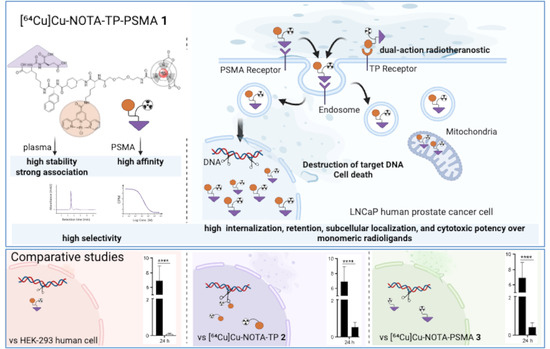
1. Introduction
2. Results
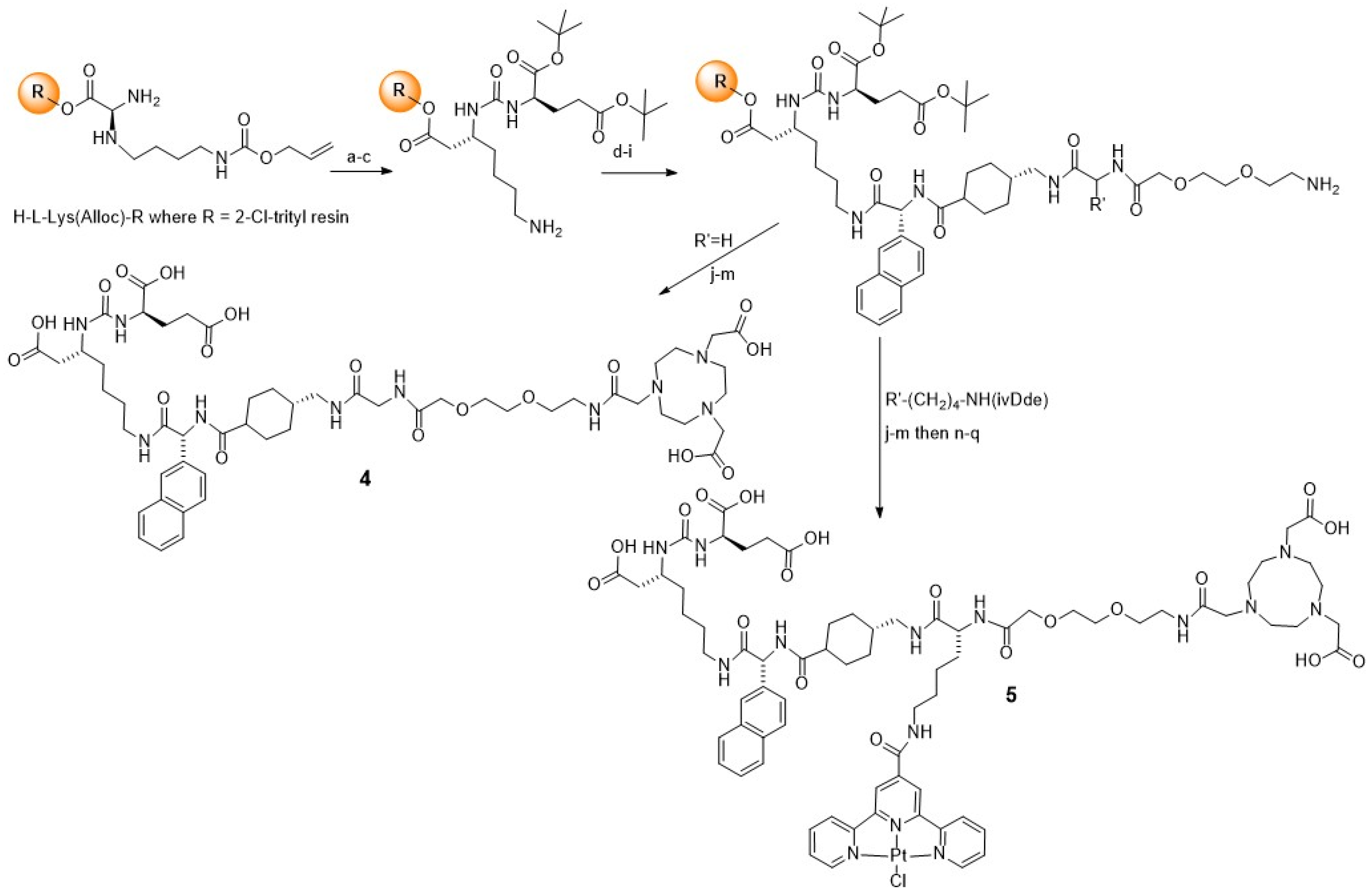
2.1. Synthesis, Radiolabling and Characterization of 64Cu-NOTA-TP-PSMA
2.2. Stability of 64Cu-NOTA-TP-PSMA
2.3. Competitive Binding Assay
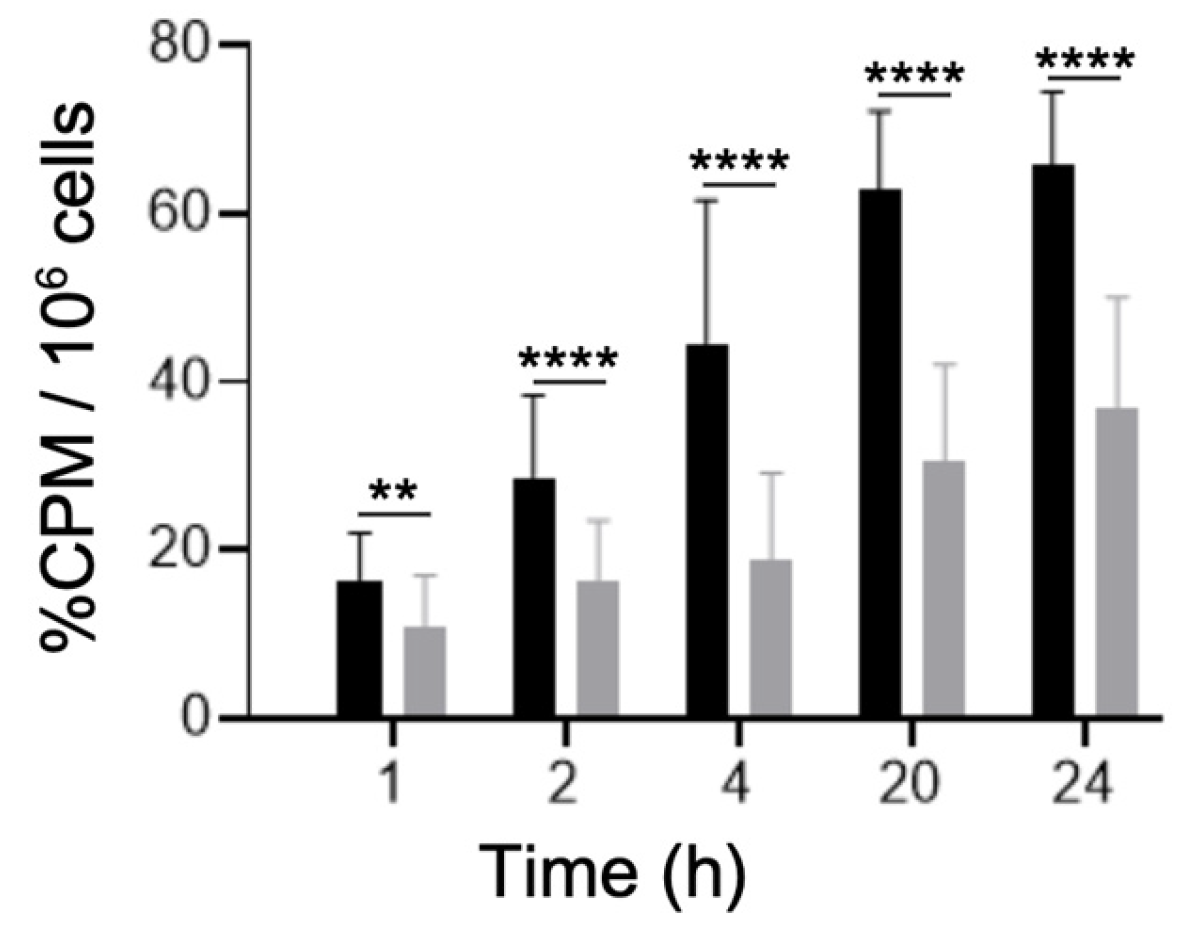
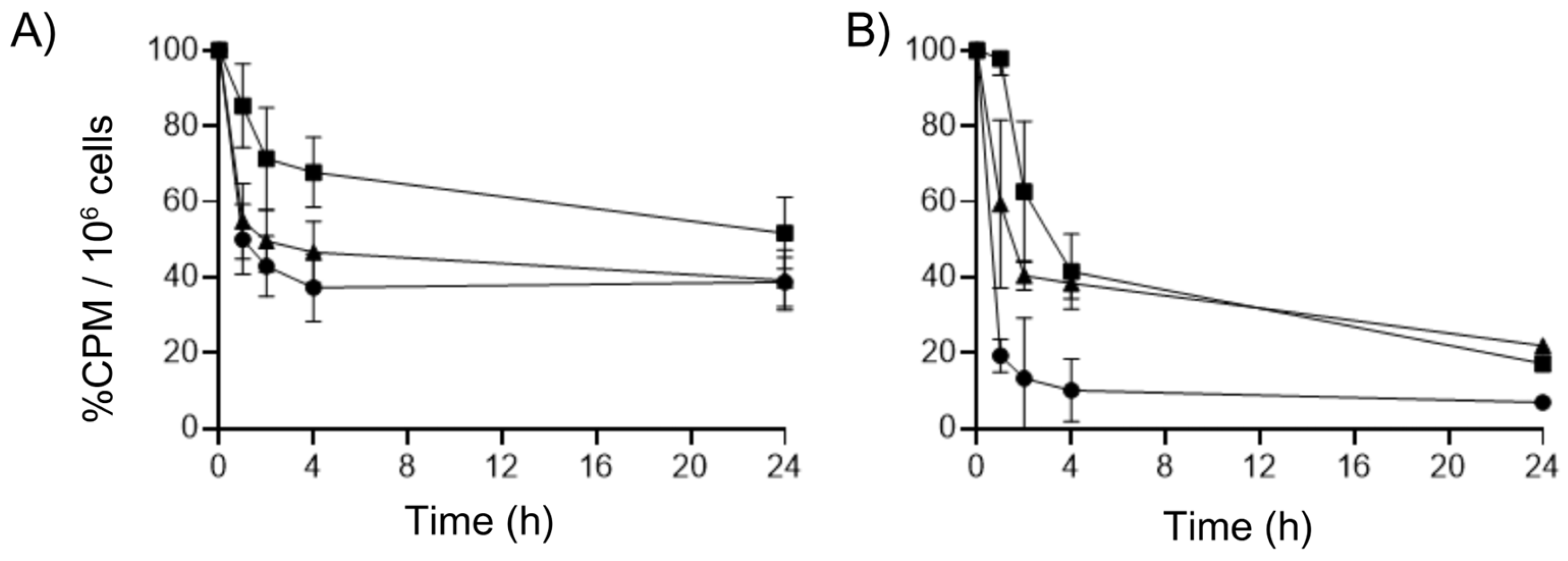
2.4. Kinetics of Cellular Uptake, Internalization, and Efflux
2.5. Nuclear Localization
2.6. Cytotoxicity
3. Discussion
4. Materials and Methods
4.1. Synthesis, Radiolabeling, and Characterization
4.2. Stability Studies
4.3. Cell Culture
4.4. Competition Affinity Binding Assays in LNCaP Cells
4.5. Cellular Uptake, Internalization, and Efflux Studies in LNCaP Cells
4.6. Subcellular Localization
4.7. Cytotoxicity Assay in LNCaP and HEK-293 Cells
4.8. Data Analysis
5. Conclusions
Supplementary Materials
Author Contributions
Funding
Institutional Review Board Statement
Data Availability Statement
Acknowledgments
Conflicts of Interest
Abbreviations
| 225Ac | Actinium-225 |
| 68Ga | Gallium-68 |
| 77Lu | Lutetium-177 |
| LD | Linear dichroism |
| BSA | Bovine serum albumin |
| CH3CN | Acetonitrile |
| CPM | Counts per minute |
| Cu(OAc)2 | Copper(II) acetate |
| CuCl2 | Copper(II) chloride |
| DCM | Dichloromethane |
| DIPEA | N,N-diisopropylethylamine |
| DMSO | Dimethyl sulfoxide |
| DNA | Deoxyribonucleic acid |
| DSC | N,N′-Disuccinimidyl carbonate |
| EC50 | Half-maximal effective concentration |
| EDC | 1-(3-Dimethylaminopropyl)-3-ethylcarbodiimide hydrochloride |
| EMEM | Eagle’s minimum essential medium |
| ESI-Q-Tof | Electrospray ionization quadrupole time-of-flight |
| FBS | Fetal bovine serum |
| FDA | Food and Drug Administration |
| Fmoc | Fluorenylmethyloxycarbonyl |
| G4 | G-quadruplex |
| HATU | O-(7-azabenzotriazol-1-yl)-N,N,N′,N′-tetramethyluronium hexafluorophosphate |
| HEK-293 | Human embryonic kidney 293 cells |
| HEPES | 4-(2-Hydroxyethyl)-1-piperazineethanesulfonic acid |
| HPLC | High-performance liquid chromatography |
| IC50 | Half-maximal inhibitory concentration |
| iTLC | Instant thin-layer chromatography |
| ivDde | 1-(4,4-Dimethyl-2,6-dioxocyclohexylidene)ethyl |
| LC/MS/MS | Liquid chromatography tandem mass spectrometry |
| LEEs | Low-energy electrons |
| LET | Linear energy transfer |
| LNCaP | Lymph Node Carcinoma of the Prostate |
| MBq | Megabecquerel |
| MBq/nmol | Megabecquerel per nanomole |
| mCRPC | Metastatic castration-resistant prostate cancer |
| MeOH | Methanol |
| NOTA | 2,2′,2″-(1,4,7-triazacyclononane-1,4,7-triyl)triacetic acid |
| PBS | Phosphate-buffered saline |
| PCa | Prostate cancer |
| PEG | Polyethylene glycol |
| PET | Positron emission tomography |
| PSA | Prostate-specific antigen |
| PSMA | Prostate-specific membrane antigen |
| RLT | Radioligand therapy |
| RNA | Ribonucleic acid |
| ROS | Reactive oxygen species |
| RPMI-1640 | Roswell Park Memorial Institute 1640 medium |
| Rt | Retention time |
| SD | standard deviation |
| SPPS | Solid-phase peptide synthesis |
| TACN | Triazacyclononane |
| TFA | Trifluoroacetic acid |
| TFE | Trifluoroethanol |
| TIPS | Triisopropylsilane |
| TP | Terpyridine–platinum |
References
- Varaprasad, G.L.; Gupta, V.K.; Prasad, K.; Kim, E.; Tej, M.B.; Mohanty, P.; Verma, H.K.; Raju, G.S.R.; Bhaskar, L.; Huh, Y.S. Recent Advances and Future Perspectives in the Therapeutics of Prostate Cancer. Exp. Hematol. Oncol. 2023, 12, 80. [Google Scholar] [CrossRef] [Scilit] [PubMed]
- Bill-Axelson, A.; Holmberg, L.; Garmo, H.; Rider, J.R.; Taari, K.; Busch, C.; Nordling, S.; Häggman, M.; Andersson, S.-O.; Spångberg, A.; et al. Radical prostatectomy or watchful waiting in early prostate cancer. N. Engl. J. Med. 2014, 370, 932–942. [Google Scholar] [CrossRef] [Scilit] [PubMed]
- Jacobs, S.C. Spread of Prostatic Cancer to Bone. Urology 1983, 21, 337–344. [Google Scholar] [CrossRef] [Scilit] [PubMed]
- Grypari, I.M.; Zolota, V.; Tzelepi, V. Radical or not-so-radical prostatectomy: Do surgical margins matter? Cancers 2022, 14, 13. [Google Scholar] [CrossRef] [Scilit]
- Siegel, R.L.; Miller, K.D.; Fuchs, H.E.; Jemal, A. Cancer Statistics, 2021. CA Cancer J. Clin. 2021, 71, 7–33. [Google Scholar] [CrossRef] [Scilit]
- Chung, Y.; Hong, S.K. Evaluating Prostate Cancer Diagnostic Methods: The Role and Relevance of Digital Rectal Examination in Modern Era. Investig. Clin. Urol. 2025, 66, 181–187. [Google Scholar] [CrossRef] [Scilit]
- Heidenreich, A.; Bellmunt, J.; Bolla, M.; Joniau, S.; Mason, M.; Matveev, V.; Mottet, N.; Schmid, H.P.; van der Kwast, T.; Wiegel, T.; et al. EAU Guidelines on Prostate Cancer. Part I: Screening, Diagnosis, and Treatment of Clinically Localised Disease. Actas Urológicas Españolas (Engl. Ed.) 2011, 35, 501–514. [Google Scholar] [CrossRef] [Scilit]
- Pugliese, D.; Palermo, G.; Totaro, A.; Bassi, P.F.; Pinto, F. Clinical, Pathological and Molecular Prognostic Factors in Prostate Cancer Decision-Making Process. Urologia 2016, 83, 14–20. [Google Scholar] [CrossRef] [Scilit]
- Belkahla, S.; Nahvi, I.; Biswas, S.; Nahvi, I.; Ben Amor, N. Advances and Development of Prostate Cancer, Treatment, and Strategies: A Systemic Review. Front. Cell Dev. Biol. 2022, 10, 991330. [Google Scholar] [CrossRef] [Scilit]
- Kratochwil, C.; Afshar-Oromieh, A.; Kopka, K.; Haberkorn, U.; Giesel, F.L. Current Status of Prostate-Specific Membrane Antigen Targeting in Nuclear Medicine: Clinical Translation of Chelator Containing Prostate-Specific Membrane Antigen Ligands into Diagnostics and Therapy for Prostate Cancer. Semin. Nucl. Med. 2016, 46, 405–418. [Google Scholar] [CrossRef] [Scilit]
- Perner, S.; Hofer, M.D.; Kim, R.; Shah, R.B.; Li, H.; Möller, P.; Hautmann, R.E.; Gschwend, J.E.; Kuefer, R.; Rubin, M.A. Prostate-Specific Membrane Antigen Expression as a Predictor of Prostate Cancer Progression. Hum. Pathol. 2007, 38, 696–701. [Google Scholar] [CrossRef] [Scilit] [PubMed]
- Machulkin, A.E.; Petrov, S.A.; Bodenko, V.; Larkina, M.S.; Plotnikov, E.; Yuldasheva, F.; Tretyakova, M.; Bezverkhniaia, E.; Zyk, N.Y.; Stasyuk, E.; et al. Synthesis and Preclinical Evaluation of Urea-Based Prostate-Specific Membrane Antigen-Targeted Conjugates Labeled with 177Lu. ACS Pharmacol. Transl. Sci. 2024, 7, 1457–1473. [Google Scholar] [CrossRef] [Scilit] [PubMed]
- Milot, M.-C.; Bélissant-Benesty, O.; Dumulon-Perreault, V.; Ait-Mohand, S.; Geha, S.; Richard, P.O.; Rousseau, É.; Guérin, B. Theranostic 64Cu-DOTHA2-PSMA Allows Low Toxicity Radioligand Therapy in Mice Prostate Cancer Model. Front. Oncol. 2023, 13, 1073491. [Google Scholar] [CrossRef] [Scilit]
- Debnath, S.; Zhou, N.; McLaughlin, M.; Rice, S.; Pillai, A.K.; Hao, G.; Sun, X. PSMA-Targeting Imaging and Theranostic Agents—Current Status and Future Perspective. Int. J. Mol. Sci. 2022, 23, 1158. [Google Scholar] [CrossRef] [Scilit]
- Weitzer, F.; Pernthaler, B.; Plhak, E.; Riedl, R.; Aigner, R.M. Diagnostic Value of Two-Time Point [68Ga]Ga-PSMA-11 PET/CT in the Primary Staging of Untreated Prostate Cancer. Sci. Rep. 2023, 13, 8297. [Google Scholar] [CrossRef] [Scilit]
- Kratochwil, C.; Fendler, W.P.; Eiber, M.; Hofman, M.S.; Emmett, L.; Calais, J.; Osborne, J.R.; Iravani, A.; Koo, P.; Lindenberg, L.; et al. Joint EANM/SNMMI Procedure Guideline for the Use of 177Lu-Labeled PSMA-Targeted Radioligand-Therapy (177Lu-PSMA-RLT). Eur. J. Nucl. Med. Mol. Imaging 2023, 50, 2830–2845. [Google Scholar] [CrossRef] [Scilit]
- Hennrich, U.; Eder, M. [177Lu]Lu-PSMA-617 (PluvictoTM): The First FDA-Approved Radiotherapeutical for Treatment of Prostate Cancer. Pharmaceuticals 2022, 15, 1292. [Google Scholar] [CrossRef] [Scilit]
- Feuerecker, B.; Tauber, R.; Knorr, K.; Heck, M.; Beheshti, A.; Seidl, C.; Bruchertseifer, F.; Pickhard, A.; Gafita, A.; Kratochwil, C.; et al. Activity and Adverse Events of Actinium-225-PSMA-617 in Advanced Metastatic Castration-Resistant Prostate Cancer After Failure of Lutetium-177-PSMA. Eur. Urol. 2021, 79, 343–350. [Google Scholar] [CrossRef] [Scilit]
- Peters, S.M.B.; Hofferber, R.; Privé, B.M.; de Bakker, M.; Gotthardt, M.; Janssen, M.; de Lange, F.; Muselaers, C.H.J.; Mehra, N.; Witjes, J.A.; et al. [68Ga]Ga-PSMA-11 PET Imaging as a Predictor for Absorbed Doses in Organs at Risk and Small Lesions in [177Lu]Lu-PSMA-617 Treatment. Eur. J. Nucl. Med. Mol. Imaging 2022, 49, 1101–1112. [Google Scholar] [CrossRef] [Scilit]
- Ma, T.-Z.; Liu, L.-Y.; Zeng, Y.-L.; Ding, K.; Zhang, H.; Liu, W.; Cao, Q.; Xia, W.; Xiong, X.; Wu, C.; et al. G-Quadruplex-Guided Cisplatin Triggers Multiple Pathways in Targeted Chemotherapy and Immunotherapy. Chem. Sci. 2024, 15, 9756–9774. [Google Scholar] [CrossRef] [Scilit]
- Zhang, C.; Xu, C.; Gao, X.; Yao, Q. Platinum-Based Drugs for Cancer Therapy and Anti-Tumor Strategies. Theranostics 2022, 12, 2115–2132. [Google Scholar] [CrossRef] [Scilit] [PubMed]
- Eskandari, A.; Kundu, A.; Ghosh, S.; Suntharalingam, K. A Triangular Platinum(II) Multinuclear Complex with Cytotoxicity Towards Breast Cancer Stem Cells. Angew. Chem. Int. Ed. Engl. 2019, 58, 12059–12064. [Google Scholar] [CrossRef] [Scilit] [PubMed]
- Capriotti, G.; Piccardo, A.; Giovannelli, E.; Signore, A. Targeting Copper in Cancer Imaging and Therapy: A New Theragnostic Agent. J. Clin. Med. 2022, 12, 223. [Google Scholar] [CrossRef] [Scilit] [PubMed]
- Benfante, V.; Stefano, A.; Ali, M.; Laudicella, R.; Arancio, W.; Cucchiara, A.; Caruso, F.; Cammarata, F.P.; Coronnello, C.; Russo, G.; et al. An Overview of In Vitro Assays of 64Cu-, 68Ga-, 125I-, and 99mTc-Labelled Radiopharmaceuticals Using Radiometric Counters in the Era of Radiotheranostics. Diagnostics 2023, 13, 1210. [Google Scholar] [CrossRef] [Scilit]
- Khosravifarsani, M.; Ait-Mohand, S.; Paquette, B.; Sanche, L.; Guérin, B. High Cytotoxic Effect by Combining Copper-64 with a NOTA–Terpyridine Platinum Conjugate. J. Med. Chem. 2021, 64, 6765–6776. [Google Scholar] [CrossRef] [Scilit]
- Khosravifarsani, M.; Ait-Mohand, S.; Paquette, B.; Sanche, L.; Guérin, B. Design, Synthesis, and Cytotoxicity Assessment of [64Cu]Cu-NOTA-Terpyridine Platinum Conjugate: A Novel Chemoradiotherapeutic Agent with Flexible Linker. Nanomaterials 2021, 11, 2154. [Google Scholar] [CrossRef] [Scilit]
- Pouliot, F.; Saad, F.; Rousseau, E.; Richard, P.O.; Zamanian, A.; Probst, S.; Lévesque, É.; Castonguay, V.; Marcoux, N.; Lodde, M.; et al. 3TMPO Investigators. Intrapatient Intermetastatic Heterogeneity Determined by Triple-Tracer PET Imaging in mCRPC Patients and Correlation to Survival: The 3TMPO Cohort Study. J. Nucl. Med. 2024, 65, 1710–1717. [Google Scholar] [CrossRef] [Scilit]
- Mulati, Y.; Shen, Q.; Tian, Y.; Chen, Y.; Yao, K.; Yu, W.; Cui, Y.; Shi, X.; He, Z.; Zhang, Q.; et al. Characterizing PSMA Heterogeneity in Prostate Cancer and Identifying Clinically Actionable Tumor Associated Antigens in PSMA Negative Cases. Sci. Rep. 2025, 15, 23902. [Google Scholar] [CrossRef] [Scilit]
- Wurzer, A.; Kunert, J.-P.; Fischer, S.; Felber, V.; Beck, R.; de Rose, F.; D’Alessandria, C.; Weber, W.; Wester, H.-J. Synthesis and Preclinical Evaluation of 177Lu-Labeled Radiohybrid PSMA Ligands for Endoradiotherapy of Prostate Cancer. J. Nucl. Med. 2022, 63, 1489–1495. [Google Scholar] [CrossRef] [Scilit]
- Benešová, M.; Schäfer, M.; Bauder-Wüst, U.; Afshar-Oromieh, A.; Kratochwil, C.; Mier, W.; Haberkorn, U.; Kopka, K.; Eder, M. Preclinical Evaluation of a Tailor-Made DOTA-Conjugated PSMA Inhibitor with Optimized Linker Moiety for Imaging and Endoradiotherapy of Prostate Cancer. J. Nucl. Med. 2015, 56, 914–920. [Google Scholar] [CrossRef] [Scilit]
- Eder, M.; Schäfer, M.; Bauder-Wüst, U.; Hull, W.-E.; Wängler, C.; Mier, W.; Haberkorn, U.; Eisenhut, M. 68Ga-Complex Lipophilicity and the Targeting Property of a Urea-Based PSMA Inhibitor for PET Imaging. Bioconjug. Chem. 2012, 23, 688–697. [Google Scholar] [CrossRef] [Scilit] [PubMed]
- Benešová, M.; Bauder-Wüst, U.; Schäfer, M.; Klika, K.D.; Mier, W.; Haberkorn, U.; Kopka, K.; Eder, M. Linker Modification Strategies To Control the Prostate-Specific Membrane Antigen (PSMA)-Targeting and Pharmacokinetic Properties of DOTA-Conjugated PSMA Inhibitors. J. Med. Chem. 2016, 59, 1761–1775. [Google Scholar] [CrossRef] [Scilit] [PubMed]
- Goodman, O.B.; Barwe, S.P.; Ritter, B.; McPherson, P.S.; Vasko, A.-J.; Keen, J.H.; Nanus, D.M.; Bander, N.H.; Rajasekaran, A.K. Interaction of Prostate Specific Membrane Antigen with Clathrin and the Adaptor Protein Complex-2. Int. J. Oncol. 2007, 31, 1199–1203. [Google Scholar] [CrossRef] [Scilit] [PubMed]
- Suntharalingam, K.; Mendoza, O.; Duarte, A.A.; Mann, D.J.; Vilar, R. A Platinum Complex That Binds Non-Covalently to DNA and Induces Cell Death via a Different Mechanism than Cisplatin. Metallomics. 2013, 5, 514–523. [Google Scholar] [CrossRef] [Scilit]
- Li, C.; Xu, F.; Zhao, Y.; Zheng, W.; Zeng, W.; Luo, Q.; Wang, Z.; Wu, K.; Du, J.; Wang, F. Platinum(II) Terpyridine Anticancer Complexes Possessing Multiple Mode of DNA Interaction and EGFR Inhibiting Activity. Front. Chem. 2020, 8, 210. [Google Scholar] [CrossRef] [Scilit]
- Liu, H.; Rajasekaran, A.K.; Moy, P.; Xia, Y.; Kim, S.; Navarro, V.; Rahmati, R.; Bander, N.H. Constitutive and Antibody-Induced Internalization of Prostate-Specific Membrane Antigen1. Cancer Res. 1998, 58, 4055–4060. [Google Scholar]
- Sheehan, B.; Neeb, A.; Buroni, L.; Paschalis, A.; Riisnaes, R.; Gurel, B.; Gil, V.; Miranda, S.; Crespo, M.; Guo, C.; et al. Prostate-Specific Membrane Antigen Expression and Response to DNA Damaging Agents in Prostate Cancer. Clin. Cancer Res. 2022, 28, 3104–3115. [Google Scholar] [CrossRef] [Scilit]
- Santos, J.F.; Laere, C.V.; Silva, C.D.; Cassells, I.; Fernandes, C.; Raposinho, P.; Belchior, A.; Pinto, C.I.G.; Mendes, F.; Cawthorne, C.; et al. Mitochondria-Tropic Radioconjugates to Enhance the Therapeutic Potential of Terbium-161. EJNMMI Radiopharm. Chem. 2025, 10, 18. [Google Scholar] [CrossRef] [Scilit]
- Matthias, J.; Engelhardt, J.; Schäfer, M.; Bauder-Wüst, U.; Meyer, P.T.; Haberkorn, U.; Eder, M.; Kopka, K.; Hell, S.W.; Eder, A.-C. Cytoplasmic Localization of Prostate-Specific Membrane Antigen Inhibitors May Confer Advantages for Targeted Cancer Therapies. Cancer Res. 2021, 81, 2234–2245. [Google Scholar] [CrossRef] [Scilit]
- Kratochwil, C.; Giesel, F.L.; Stefanova, M.; Benešová, M.; Bronzel, M.; Afshar-Oromieh, A.; Mier, W.; Eder, M.; Kopka, K.; Haberkorn, U. PSMA-Targeted Radionuclide Therapy of Metastatic Castration-Resistant Prostate Cancer with 177Lu-Labeled PSMA-617. J. Nucl. Med. 2016, 57, 1170–1176. [Google Scholar] [CrossRef] [Scilit]
- Afshar-Oromieh, A.; Malcher, A.; Eder, M.; Eisenhut, M.; Linhart, H.G.; Hadaschik, B.A.; Holland-Letz, T.; Giesel, F.L.; Kratochwil, C.; Haufe, S.; et al. PET Imaging with a [68Ga]Gallium-Labelled PSMA Ligand for the Diagnosis of Prostate Cancer: Biodistribution in Humans and First Evaluation of Tumour Lesions. Eur. J. Nucl. Med. Mol. Imaging 2013, 40, 486–495. [Google Scholar] [CrossRef] [Scilit] [PubMed]
- McMillan, D.D.; Maeda, J.; Bell, J.J.; Genet, M.D.; Phoonswadi, G.; Mann, K.A.; Kraft, S.L.; Kitamura, H.; Fujimori, A.; Yoshii, Y.; et al. Validation of 64Cu-ATSM Damaging DNA via High-LET Auger Electron Emission. J. Radiat. Res. 2015, 56, 784–791. [Google Scholar] [CrossRef] [Scilit] [PubMed]
- Pouget, J.-P.; Navarro-Teulon, I.; Bardiès, M.; Chouin, N.; Cartron, G.; Pèlegrin, A.; Azria, D. Clinical Radioimmunotherapy—The Role of Radiobiology. Nat. Rev. Clin. Oncol. 2011, 8, 720–734. [Google Scholar] [CrossRef] [Scilit] [PubMed]
- Nickoloff, J.A.; Sharma, N.; Taylor, L. Clustered DNA Double-Strand Breaks: Biological Effects and Relevance to Cancer Radiotherapy. Genes 2020, 11, 99. [Google Scholar] [CrossRef] [Scilit]
- Li, Y.; Cheng, M.; Hao, J.; Wang, C.; Jia, G.; Li, C. Terpyridine–Cu(Ii) Targeting Human Telomeric DNA to Produce Highly Stereospecific G-Quadruplex DNA Metalloenzyme. Chem. Sci. 2015, 6, 5578–5585. [Google Scholar] [CrossRef] [Scilit]
- Gracheva, N.; Carzaniga, T.S.; Schibli, R.; Braccini, S.; van der Meulen, N.P. 165Er: A new candidate for Auger electron therapy and its possible cyclotron production from natural holmium targets. Appl. Radiat. Isot. 2020, 159, 109079. [Google Scholar] [CrossRef] [Scilit]
- Randhawa, P.; Olson, A.P.; Chen, S.; Gower-Fry, K.L.; Hoehr, C.; Engle, J.W.; Ramogida, C.F.; Radchenko, V. Meitner-Auger Electron Emitters for Targeted Radionuclide Therapy: Mercury-197m/g and Antimony-119. Curr Radiopharm. 2021, 14, 394–419. [Google Scholar] [CrossRef] [Scilit]
- Yang, Y.; Guo, F.-F.; Chen, C.-F.; Li, Y.-L.; Liang, H.; Chen, Z.-F. Antitumor Activity of Synthetic Three Copper(II) Complexes with Terpyridine Ligands. J. Inorg. Biochem. 2023, 240, 112093. [Google Scholar] [CrossRef] [Scilit]
- Uma, V.; Kanthimathi, M.; Weyhermuller, T.; Nair, B.U. Oxidative DNA Cleavage Mediated by a New Copper (II) Terpyridine Complex: Crystal Structure and DNA Binding Studies. J. Inorg. Biochem. 2005, 99, 2299–2307. [Google Scholar] [CrossRef] [Scilit]
- Zhang, S.; Wang, X.; Gao, X.; Chen, X.; Li, L.; Li, G.; Liu, C.; Miao, Y.; Wang, R.; Hu, K. Radiopharmaceuticals and Their Applications in Medicine. Sig Transduct. Target. Ther. 2025, 10, 1. [Google Scholar] [CrossRef] [Scilit]
- Gafita, A.; Marcus, C.; Kostos, L.; Schuster, D.M.; Calais, J.; Hofman, M.S. Predictors and Real-World Use of Prostate-Specific Radioligand Therapy: PSMA and Beyond. Am. Soc. Clin. Oncol. Educ. Book. 2022, 42, 1–17. [Google Scholar] [CrossRef] [Scilit]
- McCarthy, D.W.; Shefer, R.E.; Klinkowstein, R.E.; Bass, L.A.; Margeneau, W.H.; Cutler, C.S.; Anderson, C.J.; Welch, M.J. Efficient production of high specific activity 64Cu using a biomedical cyclotron. Nucl. Med. Biol. 1997, 24, 35–43. [Google Scholar] [CrossRef] [Scilit]
- Guérin, B.; Ait-Mohand, S.; Tremblay, M.-C.; Dumulon-Perreault, V.; Fournier, P.; Bénard, F. Total Solid-Phase Synthesis of NOTA-Functionalized Peptides for PET Imaging. Org. Lett. 2010, 12, 280–283. [Google Scholar] [CrossRef] [Scilit]




| Entry | PSMA Ligand | IC50 (nM) |
|---|---|---|
| entry 1 | natCu-NOTA-PSMA | 40.8 ± 14.9 |
| entry 2 | natCu-NOTA-TP-PSMA | 30.6 ± 16.6 |
| Entry | Radioconjugate | Uptake | Internalization |
|---|---|---|---|
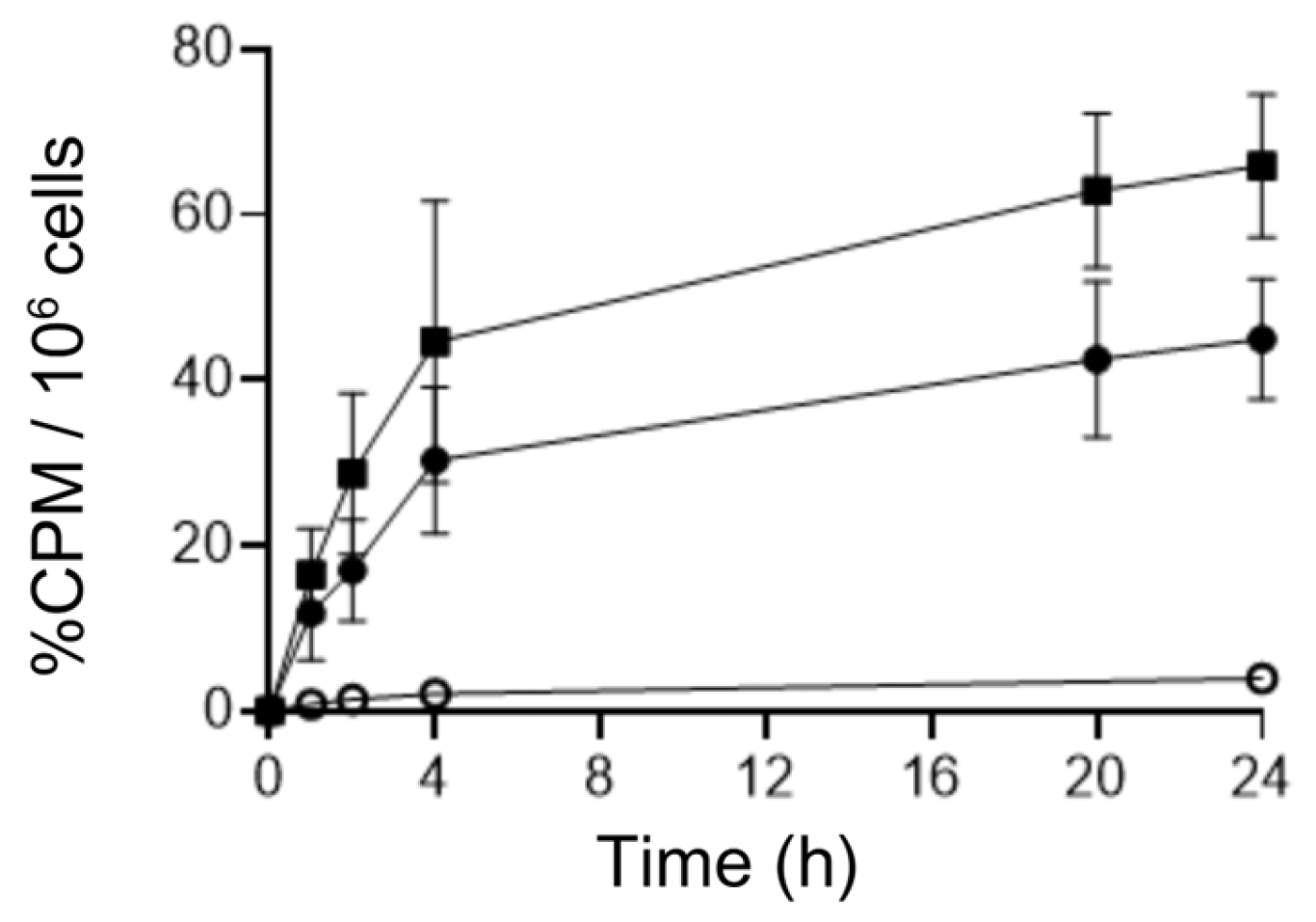
| 1 | [64Cu]Cu-NOTA-TP-PSMA 1 | 65.9 ± 8.6 | 44.9 ± 7.3 |
| 2 | [64Cu]Cu-NOTA-TP 2 | 39.5 ± 8.0 | 36.1 ± 9.2 |
| 3 | [64Cu]Cu-NOTA-PSMA 3 | 22.8 ± 1.2 | 16.7 ± 1.6 |
| Entry | Compound | 24 h | 48 h | 72 h | |||
|---|---|---|---|---|---|---|---|
| LNCaP | HEK293 | LNCaP | HEK293 | LNCaP | HEK293 | ||
| 1 | [64Cu]Cu-NOTA-TP-PSMA 1 | 10 ± 2 | >250 | 24 ± 6 | >250 | 24 ± 8 | N/A |
| 2 | [64Cu]Cu-NOTA-TP 2 | 53 ± 4 | N/A | 47 ± 4 | N/A | 278 ± 5 | N/A |
| 3 | [64Cu]Cu-NOTA-PSMA 3 | 159 ± 7 | 204 ± 7 | 103 ± 16 | 195 ± 10 | 93 ± 14 | 149 ± 6 |
| 4 | natCu-NOTA-TP-PSMA | 18,504 ± 4 | 42,199 ± 8 | 17,780 ± 6 | 23,402 ± 8 | 16,693 ± 4 | 17,647 ± 4 |
| 5 | Cisplatin | 81,006 ± 14 | 31,257 ± 3 | 30,412 ± 6 | 41,023 ± 7 | 22,859 ± 5 | 27,481 ± 11 |
Disclaimer/Publisher’s Note: The statements, opinions and data contained in all publications are solely those of the individual author(s) and contributor(s) and not of MDPI and/or the editor(s). MDPI and/or the editor(s) disclaim responsibility for any injury to people or property resulting from any ideas, methods, instructions or products referred to in the content. |
© 2025 by the authors. Licensee MDPI, Basel, Switzerland. This article is an open access article distributed under the terms and conditions of the Creative Commons Attribution (CC BY) license (https://creativecommons.org/licenses/by/4.0/).
Share and Cite
Talebian, H.; Ait-Mohand, S.; Ignatius Arokia Doss, P.M.; Sanche, L.; Guérin, B. Development and In Vitro Evaluation of [64Cu]Cu-NOTA-TP-PSMA, a Novel Radiotheranostic Agent Against Prostate Cancer. Int. J. Mol. Sci. 2025, 26, 11651. https://doi.org/10.3390/ijms262311651
Talebian H, Ait-Mohand S, Ignatius Arokia Doss PM, Sanche L, Guérin B. Development and In Vitro Evaluation of [64Cu]Cu-NOTA-TP-PSMA, a Novel Radiotheranostic Agent Against Prostate Cancer. International Journal of Molecular Sciences. 2025; 26(23):11651. https://doi.org/10.3390/ijms262311651
Chicago/Turabian StyleTalebian, Hoda, Samia Ait-Mohand, Prenitha Mercy Ignatius Arokia Doss, Léon Sanche, and Brigitte Guérin. 2025. "Development and In Vitro Evaluation of [64Cu]Cu-NOTA-TP-PSMA, a Novel Radiotheranostic Agent Against Prostate Cancer" International Journal of Molecular Sciences 26, no. 23: 11651. https://doi.org/10.3390/ijms262311651
APA StyleTalebian, H., Ait-Mohand, S., Ignatius Arokia Doss, P. M., Sanche, L., & Guérin, B. (2025). Development and In Vitro Evaluation of [64Cu]Cu-NOTA-TP-PSMA, a Novel Radiotheranostic Agent Against Prostate Cancer. International Journal of Molecular Sciences, 26(23), 11651. https://doi.org/10.3390/ijms262311651