Review

The Role of Extracellular Vesicles in Atopic Dermatitis

by
Catherine Harvey-Seutcheu
,
Georgina Hopkins
and
Lucy C. Fairclough
*
School of Life Sciences, University of Nottingham, Nottingham NG7 2RD, UK
*
Author to whom correspondence should be addressed.
These authors contributed equally to this work.
Int. J. Mol. Sci. 2024, 25(6), 3255; https://doi.org/10.3390/ijms25063255
Submission received: 9 February 2024 / Revised: 6 March 2024 / Accepted: 11 March 2024 / Published: 13 March 2024
(This article belongs to the Special Issue Molecular Mechanisms and Treatment of Allergic Reactions)

Abstract

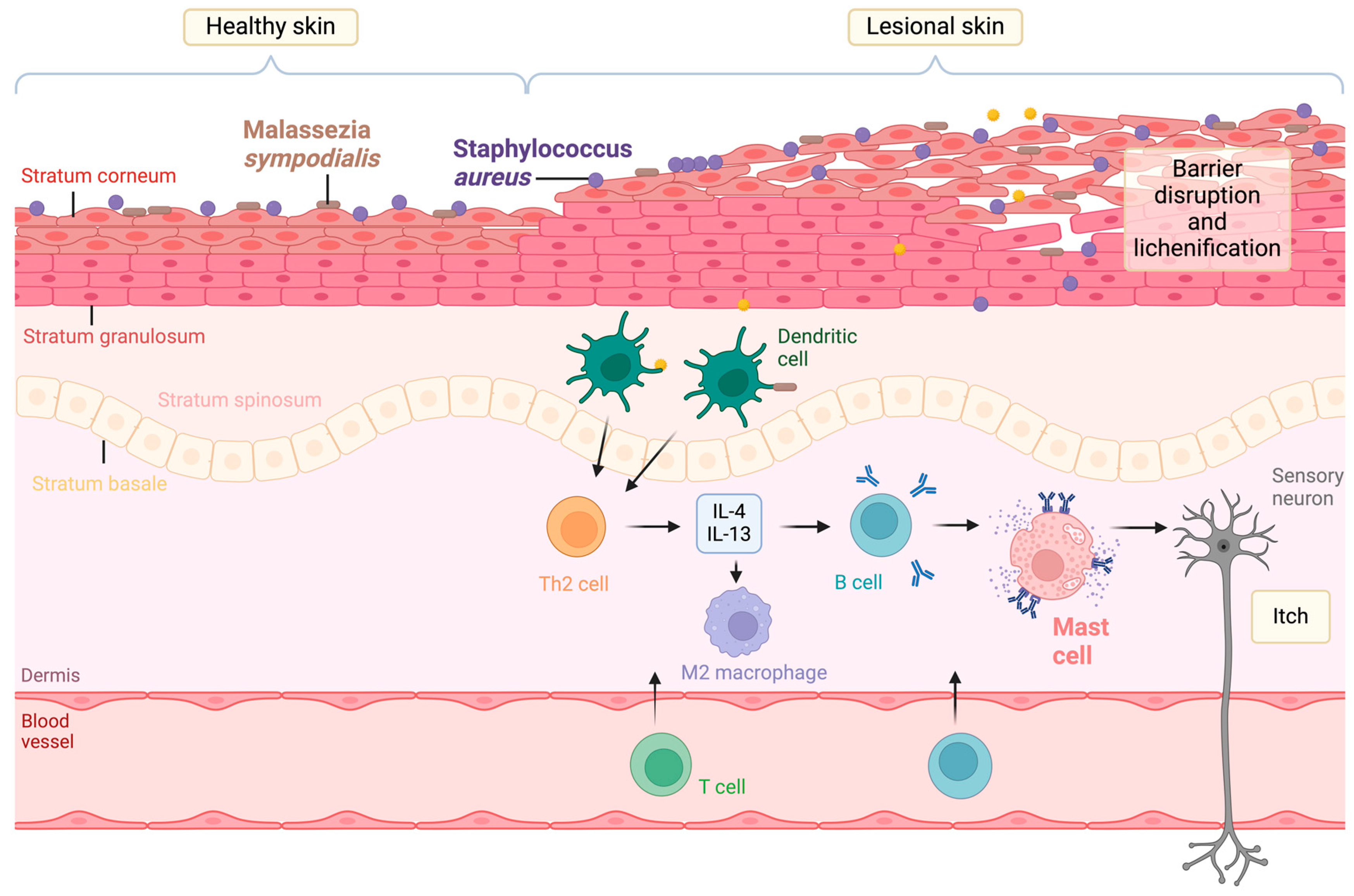
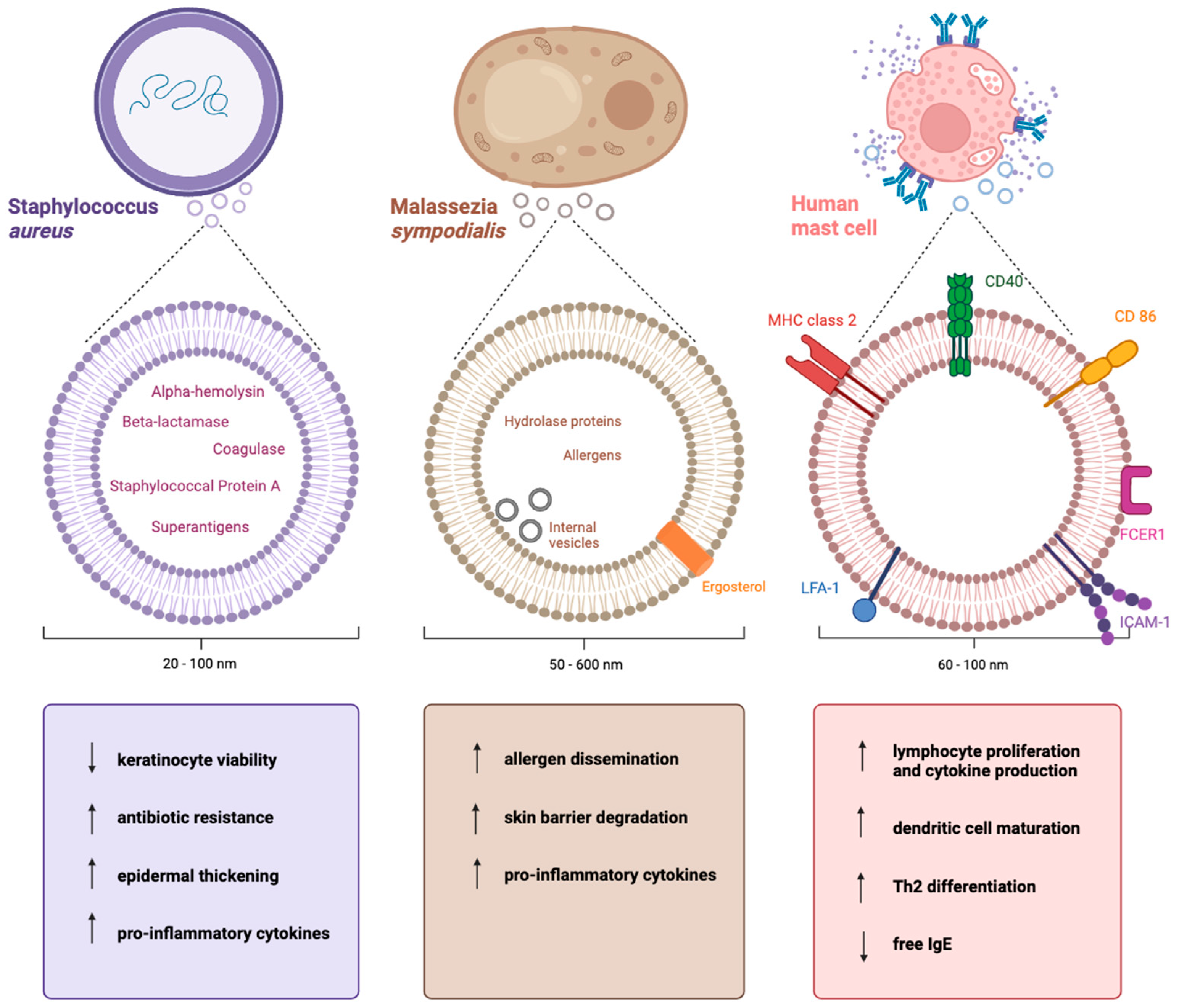
Atopic dermatitis, or eczema, is the most common chronic skin disorder, characterized by red and pruritic lesions. Its etiology is multifaceted, involving an interplay of factors, such as the allergic immune response, skin barrier dysfunction, and dysbiosis of the skin microbiota. Recent studies have explored the role of extracellular vesicles (EVs), which are lipid bilayer-delimitated particles released by all cells, in atopic dermatitis. Examination of the available literature identified that most studies investigated EVs released by Staphylococcus aureus, which were found to impact the skin barrier and promote the release of cytokines that contribute to atopic dermatitis development. In addition, EVs released by the skin fungus, Malassezia sympodialis, were found to contain allergens, suggesting a potential contribution to allergic sensitization via the skin. The final major finding was the role of EVs released by mast cells, which were capable of activating various immune cells and attenuating the allergic response. While research in this area is still in its infancy, the studies examined in this review provide encouraging insights into how EVs released from a variety of cells play a role in both contributing to and protecting against atopic dermatitis.
Keywords: extracellular vesicles; atopic dermatitis; allergic sensitization; Staphylococcus aureus; Malassezia sympodialis; mast cells extracellular vesicles; atopic dermatitis; allergic sensitization; Staphylococcus aureus; Malassezia sympodialis; mast cells