Article

Mechanisms of NMDA Receptor Inhibition by Sepimostat—Comparison with Nafamostat and Diarylamidine Compounds


by
Arseniy S. Zhigulin
and
Oleg I. Barygin
*
Sechenov Institute of Evolutionary Physiology and Biochemistry of RAS, 44, Toreza Prospekt, 194223 Saint Petersburg, Russia
*
Author to whom correspondence should be addressed.
Int. J. Mol. Sci. 2023, 24(21), 15685; https://doi.org/10.3390/ijms242115685
Submission received: 27 September 2023 / Revised: 21 October 2023 / Accepted: 24 October 2023 / Published: 27 October 2023
(This article belongs to the Special Issue Natural Products and Synthetic Compounds for Drug Development)

Abstract

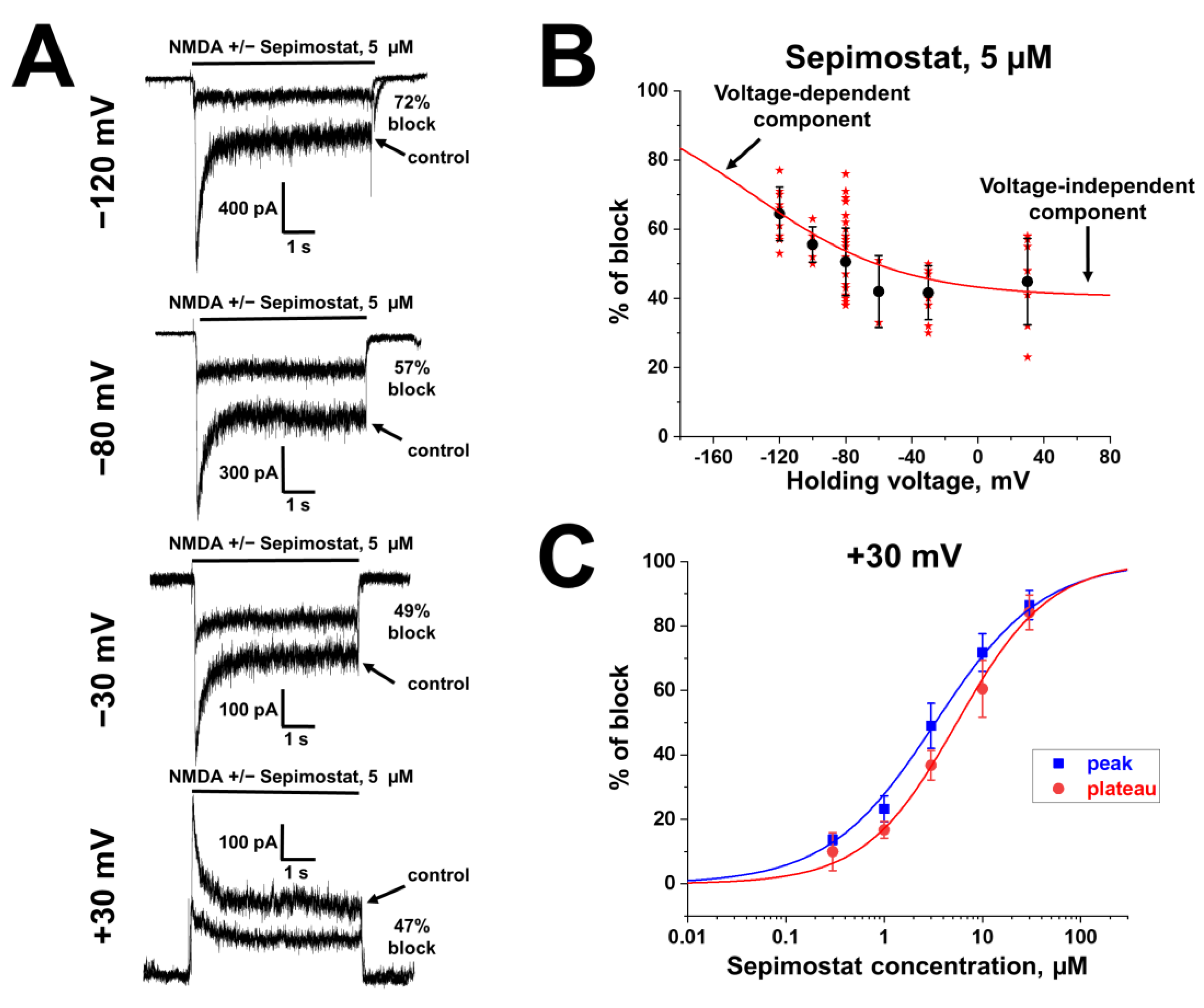
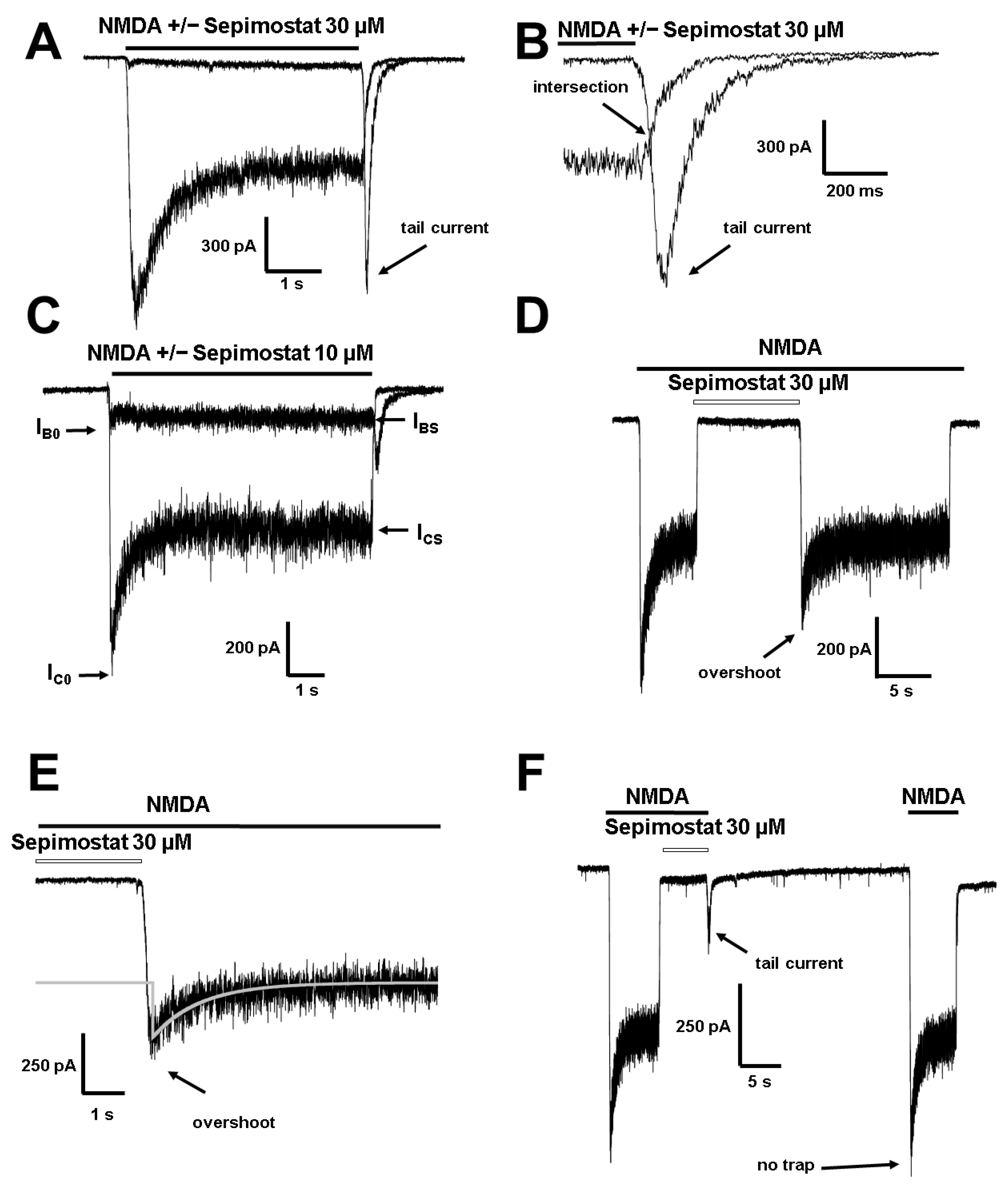
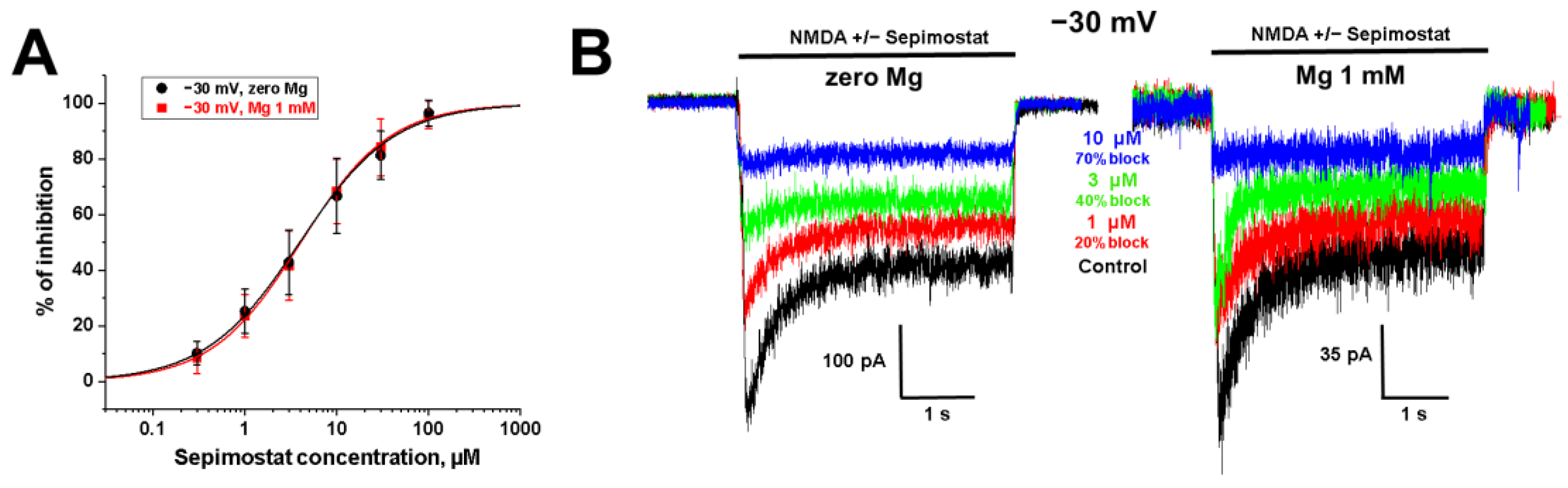
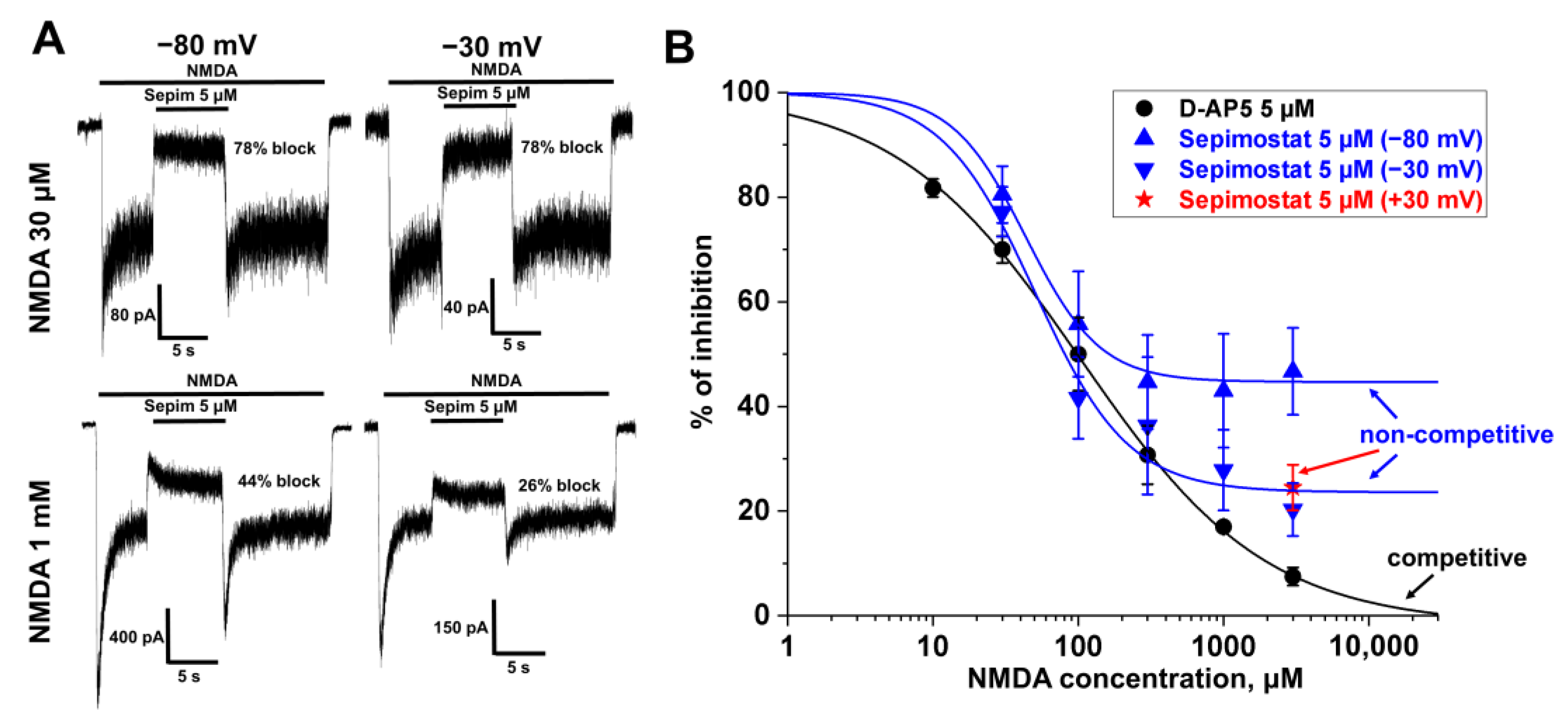
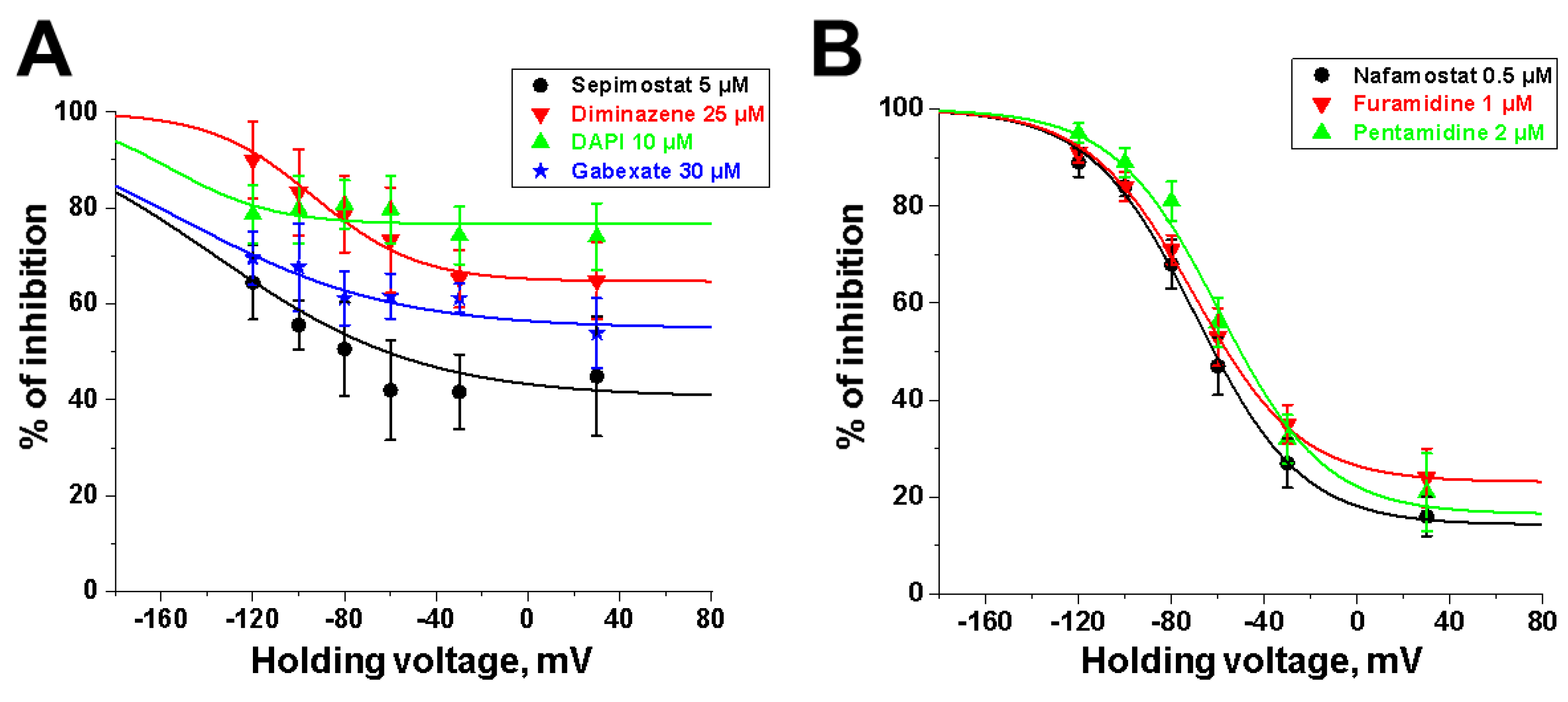
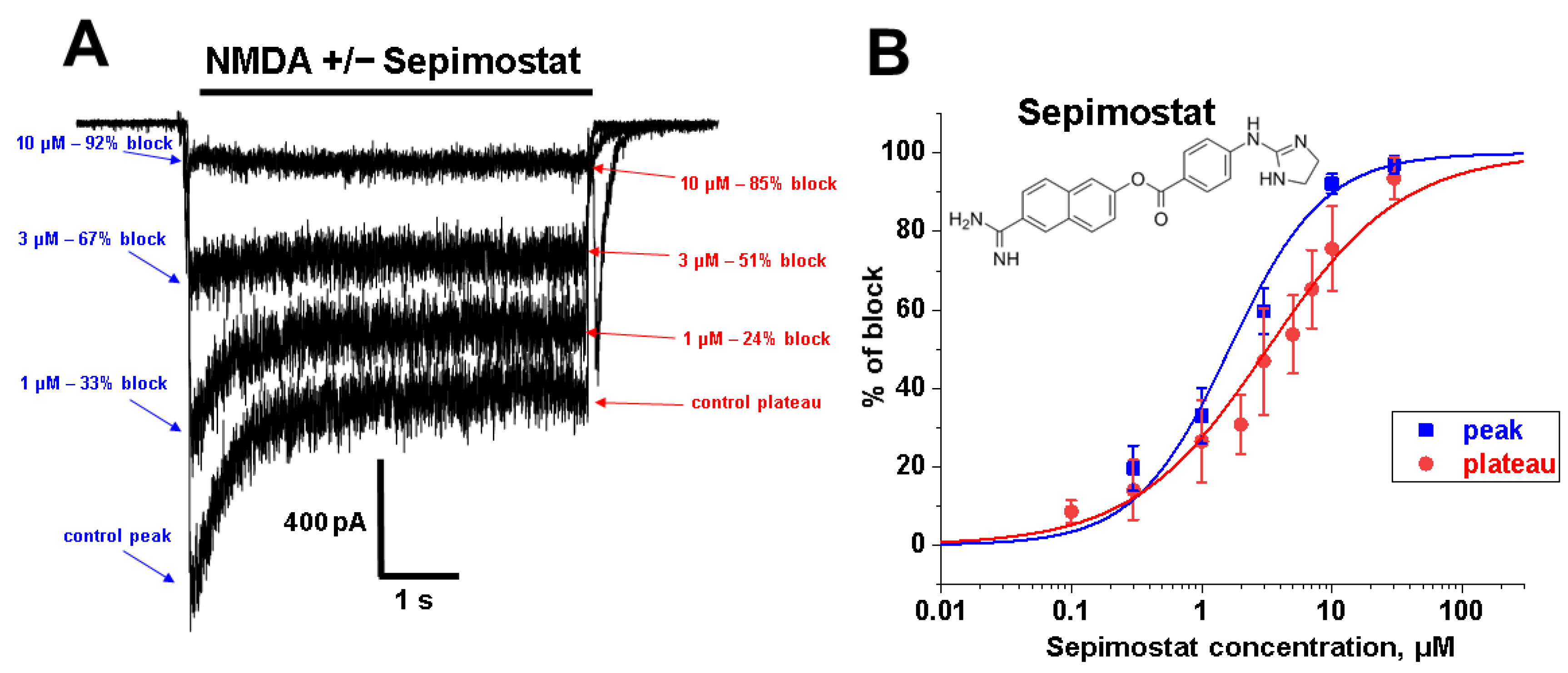
N-methyl-D-aspartate (NMDA) receptors are inhibited by many amidine and guanidine compounds. In this work, we studied the mechanisms of their inhibition by sepimostat—an amidine-containing serine protease inhibitor with neuroprotective properties. Sepimostat inhibited native NMDA receptors in rat hippocampal CA1 pyramidal neurons with IC50 of 3.5 ± 0.3 µM at −80 mV holding voltage. It demonstrated complex voltage dependence with voltage-independent and voltage-dependent components, suggesting the presence of shallow and deep binding sites. At −80 mV holding voltage, the voltage-dependent component dominates, and we observed pronounced tail currents and overshoots evidencing a “foot-in-the-door” open channel block. At depolarized voltages, the voltage-independent inhibition by sepimostat was significantly attenuated by the increase of agonist concentration. However, the voltage-independent inhibition was non-competitive. We further compared the mechanisms of the action of sepimostat with those of structurally-related amidine and guanidine compounds—nafamostat, gabexate, furamidine, pentamidine, diminazene, and DAPI—investigated previously. The action of all these compounds can be described by the two-component mechanism. All compounds demonstrated similar affinity to the shallow site, which is responsible for the voltage-independent inhibition, with binding constants in the range of 3–30 µM. In contrast, affinities to the deep site differed dramatically, with nafamostat, furamidine, and pentamidine being much more active.
Keywords: NMDA receptors; pharmacological modulation; patch clamp; sepimostat; nafamostat; gabexate; pentamidine; diminazene; guanidines; diarylamidines NMDA receptors; pharmacological modulation; patch clamp; sepimostat; nafamostat; gabexate; pentamidine; diminazene; guanidines; diarylamidines