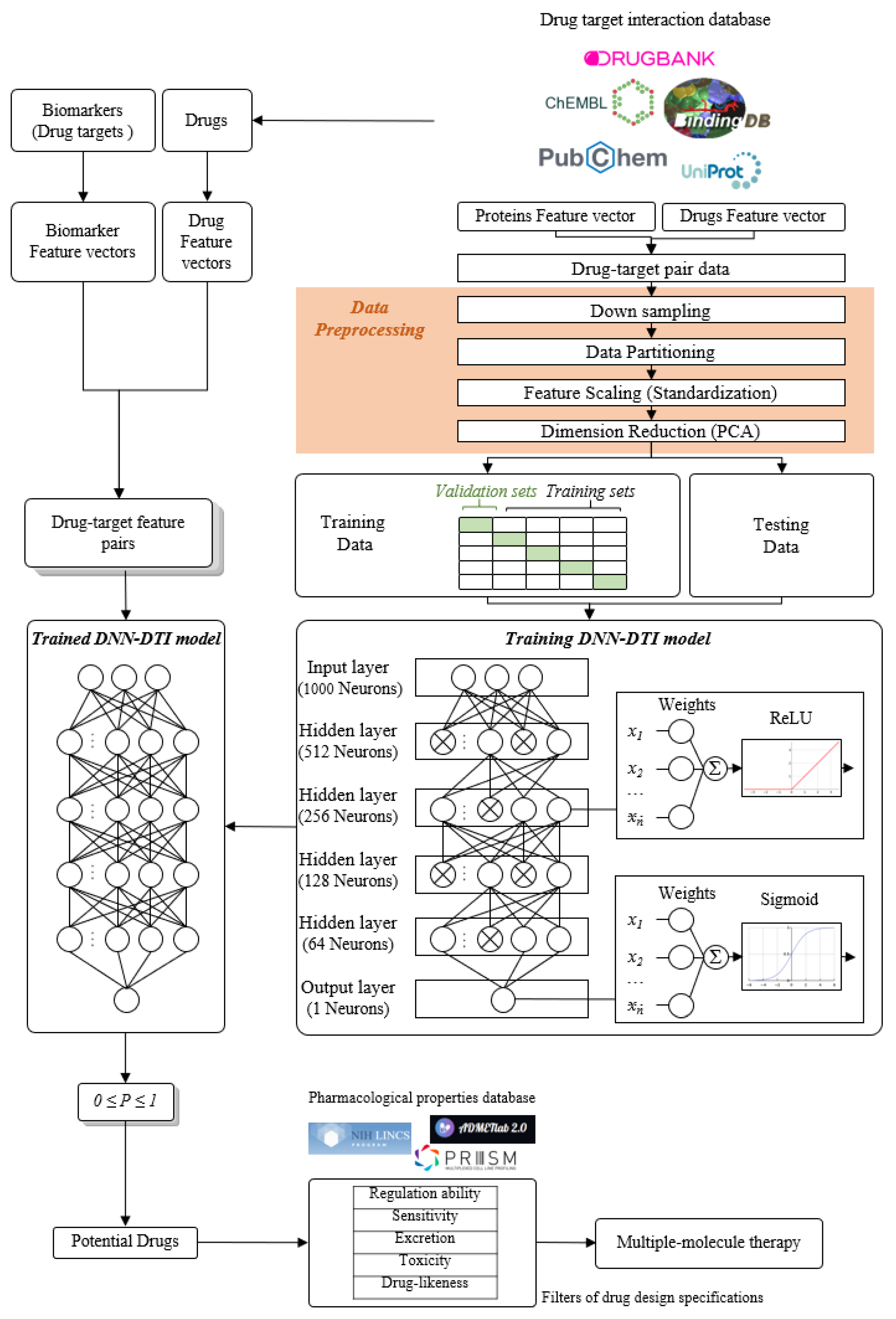
Repurposing Multiple-Molecule Drugs for COVID-19-Associated Acute Respiratory Distress Syndrome and Non-Viral Acute Respiratory Distress Syndrome via a Systems Biology Approach and a DNN-DTI Model Based on Five Drug Design Specifications
Abstract
Share and Cite
Ting, C.-T.; Chen, B.-S. Repurposing Multiple-Molecule Drugs for COVID-19-Associated Acute Respiratory Distress Syndrome and Non-Viral Acute Respiratory Distress Syndrome via a Systems Biology Approach and a DNN-DTI Model Based on Five Drug Design Specifications. Int. J. Mol. Sci. 2022, 23, 3649. https://doi.org/10.3390/ijms23073649
Ting C-T, Chen B-S. Repurposing Multiple-Molecule Drugs for COVID-19-Associated Acute Respiratory Distress Syndrome and Non-Viral Acute Respiratory Distress Syndrome via a Systems Biology Approach and a DNN-DTI Model Based on Five Drug Design Specifications. International Journal of Molecular Sciences. 2022; 23(7):3649. https://doi.org/10.3390/ijms23073649
Chicago/Turabian StyleTing, Ching-Tse, and Bor-Sen Chen. 2022. "Repurposing Multiple-Molecule Drugs for COVID-19-Associated Acute Respiratory Distress Syndrome and Non-Viral Acute Respiratory Distress Syndrome via a Systems Biology Approach and a DNN-DTI Model Based on Five Drug Design Specifications" International Journal of Molecular Sciences 23, no. 7: 3649. https://doi.org/10.3390/ijms23073649
APA StyleTing, C.-T., & Chen, B.-S. (2022). Repurposing Multiple-Molecule Drugs for COVID-19-Associated Acute Respiratory Distress Syndrome and Non-Viral Acute Respiratory Distress Syndrome via a Systems Biology Approach and a DNN-DTI Model Based on Five Drug Design Specifications. International Journal of Molecular Sciences, 23(7), 3649. https://doi.org/10.3390/ijms23073649