Article

Glyceraldehyde-Derived Pyridinium Evokes Renal Tubular Cell Damage via RAGE Interaction


by
Ami Sotokawauchi
1,
Nobutaka Nakamura
1,
Takanori Matsui
1,
Yuichiro Higashimoto
2 and
Sho-ichi Yamagishi
3,*
1
Department of Pathophysiology and Therapeutics of Diabetic Vascular Complications, Kurume University School of Medicine, Kurume 830-0011, Japan
2
Department of Chemistry, Kurume University School of Medicine, Kurume 830-0011, Japan
3
Division of Diabetes, Metabolism, and Endocrinology, Department of Medicine, Showa University School of Medicine, Tokyo 142-8666, Japan
*
Author to whom correspondence should be addressed.
Int. J. Mol. Sci. 2020, 21(7), 2604; https://doi.org/10.3390/ijms21072604
Submission received: 2 March 2020 / Revised: 6 April 2020 / Accepted: 8 April 2020 / Published: 9 April 2020

Abstract

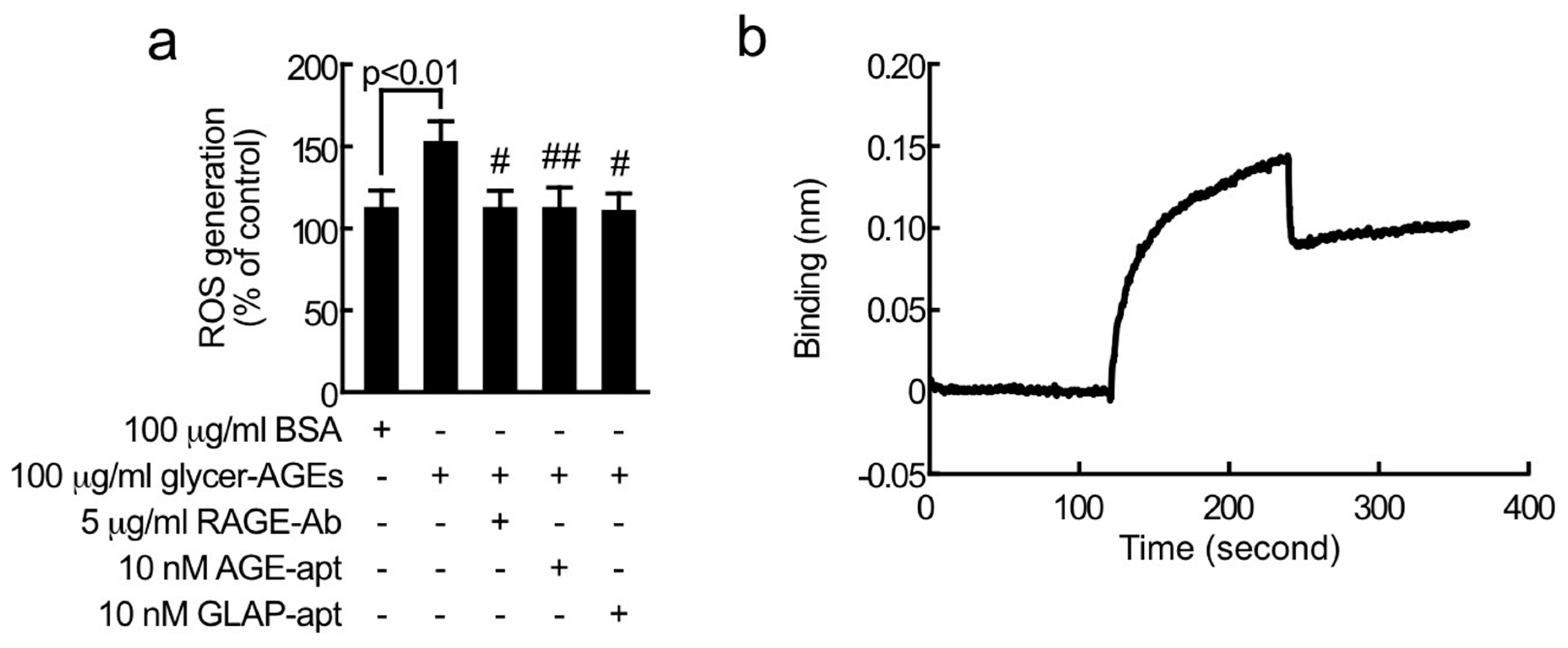
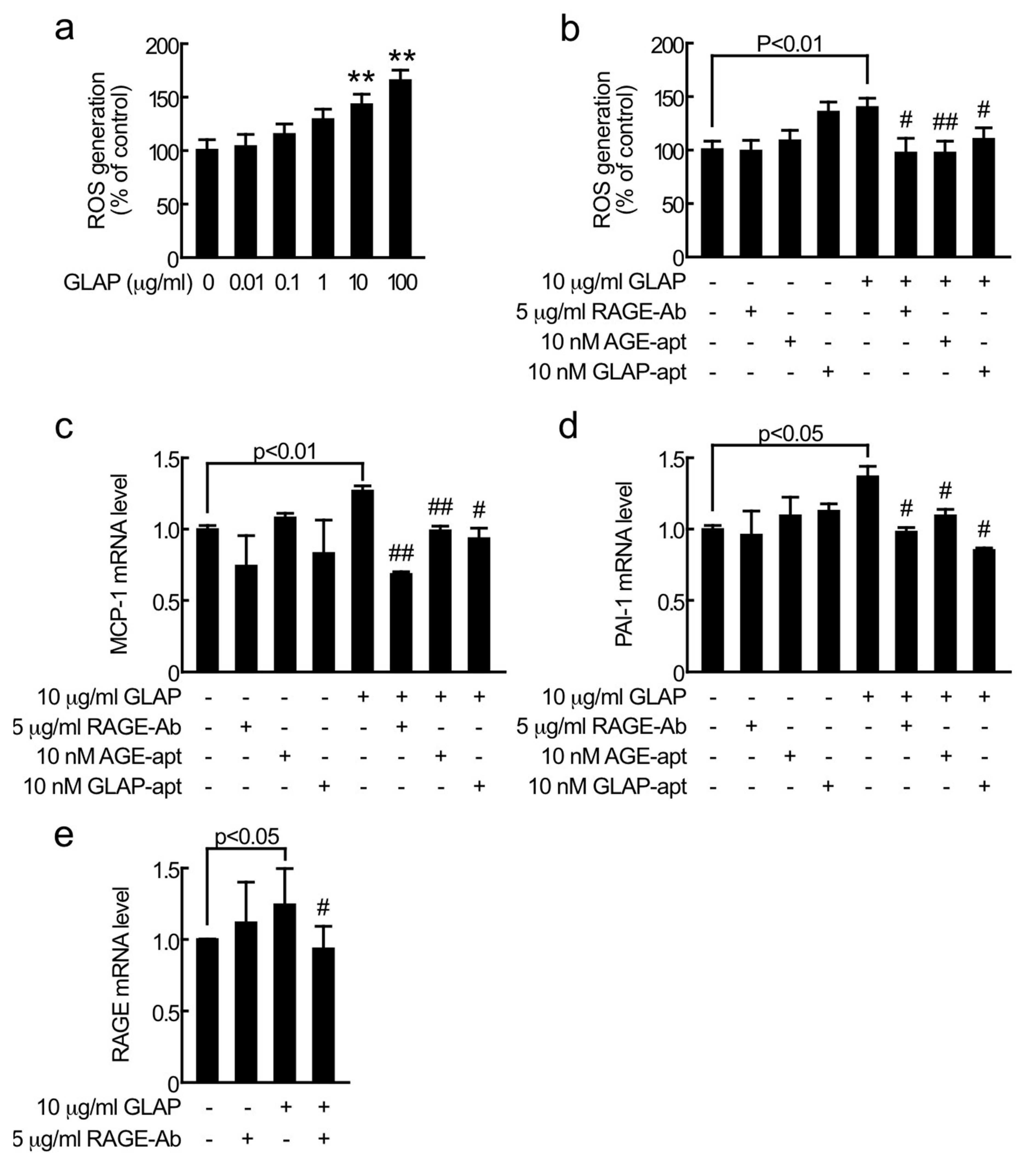
Glyceraldehyde-derived advanced glycation end products (glycer-AGEs) contribute to proximal tubulopathy in diabetes. However, what glycer-AGE structure could evoke tubular cell damage remains unknown. We first examined if deleterious effects of glycer-AGEs on reactive oxygen species (ROS) generation in proximal tubular cells were blocked by DNA-aptamer that could bind to glyceraldehyde-derived pyridinium (GLAP) (GLAP-aptamer), and then investigated whether and how GLAP caused proximal tubular cell injury. GLAP-aptamer and AGE-aptamer raised against glycer-AGEs were prepared using a systemic evolution of ligands by exponential enrichment. The binding affinity of GLAP-aptamer to glycer-AGEs was measured with a bio-layer interferometry. ROS generation was evaluated using fluorescent probes. Gene expression was analyzed by reverse transcription-polymerase chain reaction (RT-PCR). GLAP-aptamer bound to glycer-AGEs with a dissociation constant of 7.7 × 10⁻⁵ M. GLAP-aptamer, glycer-AGE-aptamer, or antibodies directed against receptor for glycer-AGEs (RAGE) completely prevented glycer-AGE- or GLAP-induced increase in ROS generation, MCP-1, PAI-1, or RAGE gene expression in tubular cells. Our present results suggest that GLAP is one of the structurally distinct glycer-AGEs, which may mediate oxidative stress and inflammatory reactions in glycer-AGE-exposed tubular cells. Blockade of the interaction of GLAP-RAGE by GLAP-aptamer may be a therapeutic target for proximal tubulopathy in diabetic nephropathy.
Keywords: GLAP; RAGE; diabetic nephropathy; proximal tubular cells GLAP; RAGE; diabetic nephropathy; proximal tubular cells