

Designing Smart Biomaterials for Tissue Engineering


Abstract
1. Introduction
2. Tissue Engineering
Extracellular Matrix (ECM)
3. Designing Smart Biomaterials
4. Importance of Smart Biomaterials in TE
5. Concluding Remarks
Acknowledgments
Conflicts of Interest
References
- Wichterle, O.; Lim, D. Hydrophilic Gels for Biological Use. Nature 1960, 185, 117–118. [Google Scholar] [CrossRef] [Scilit]
- Kwon, I.C.; Bae, Y.H.; Kim, S.W. Electrically Erodible Polymer Gel for Controlled Release of Drugs. Nature 1991, 354, 291–293. [Google Scholar] [CrossRef] [Scilit] [PubMed]
- Hoffman, A.S. Hydrogels for biomedical applications. Adv. Drug Deliv. Rev. 2002, 43, 3–13. [Google Scholar] [CrossRef] [Scilit]
- Shi, D. Introduction to Biomaterials; Tsinghua University Press and World Scientific Publishing Co. Pte. Ltd.: Beijing, China, 2006; pp. 143–210. ISBN 981-256-627-9. [Google Scholar]
- Khan, F.; Ahmad, S.R. Polysaccharides and Their Derivatives for Versatile Tissue Engineering Application. Macromol. Biosci. 2013, 13, 395–421. [Google Scholar] [CrossRef] [Scilit] [PubMed]
- Tare, R.S.; Khan, F.; Tourniaire, G.; Morgan, S.M.; Bradley, M.; Oreffo, R.O.C. A microarray approach to the identification of polyurethanes for the isolation of human skeletal progenitor cells and augmentation of skeletal cell growth. Biomaterials 2009, 30, 1045–1055. [Google Scholar] [CrossRef] [Scilit] [PubMed]
- Medine, C.N.; Lucendo-Villarin, B.; Storck, C.; Wang, F.; Szkolnicka, D.; Khan, F.; Pernagallo, S.; Black, J.R.; Marriage, H.M.; Ross, J.A.; et al. Developing high-fidelity hepatotoxicity models from pluripotent stem cells. Stem Cells Trans. Med. 2013, 2, 505–509. [Google Scholar] [CrossRef] [Scilit] [PubMed]
- Mystkowska, J.; Mazurek-Budzynska, M.; Piktel, E.; Niemirowicz, K.; Karalus, W.; Deptula, P.; Pogoda, K.; Lysik, D.; Dabrowski, J.R.; Rokicki, G.; et al. Assessment of aliphatic poly(ester-carbonate-urea-urethane)s potential as materials for biomedical application. J. Polym. Res. 2017, 24, 144. [Google Scholar] [CrossRef] [Scilit]
- Khan, F.; Valere, S.; Fuhrmann, S.; Arrighi, V.; Bradley, M. Synthesis and cellular compatibility of multi-block biodegradable poly(ε-caprolactone)-based polyurethanes. J. Mater. Chem. B Mater. Biol. Med. 2013, 1, 2590–2600. [Google Scholar] [CrossRef] [Scilit]
- Liu, W.G.; Griffith, M.; Li, F. Alginate microsphere-collagen composite hydrogels for ocular drug delivery and implantation. J. Mater. Sci. Mater. Med. 2008, 19, 3365–3371. [Google Scholar] [CrossRef] [Scilit] [PubMed]
- Khan, F.; Tare, R.S.; Kanczler, J.M.; Oreffo, R.O.; Bradley, M. Strategies for Cell Manipulation and Skeletal Tissue Engineering Using High-Throughput Polymer Blend Formulation and Microarray Techniques. Biomaterial 2010, 31, 2216–2228. [Google Scholar] [CrossRef] [Scilit] [PubMed]
- Khan, F.; Smith, J.O.; Kanczler, J.M.; Tare, R.S.; Oreffo, R.O.C.; Bradley, M. Discovery and Evaluation of a Functional Ternary Polymer Blend for Bone Repair: Translation from a Microarray to a Clinical Model. Adv. Funct. Mater. 2013, 23, 2850–2862. [Google Scholar] [CrossRef] [Scilit]
- Yang, F.; Wang, Y.; Zhang, Z.; Hsu, B.; Jabs, E.W.; Elisseeff, J.H. The study of abnormal bone development in the Apert syndrome Fgfr2+/S252W mouse using a 3D hydrogel culture model. Bone 2008, 43, 55–63. [Google Scholar] [CrossRef] [Scilit] [PubMed]
- Eljarrat-Binstock, E.; Orucov, F.; Frucht-Pery, J.; Pe’er, J.; Domb, A.J. Methylprednisolone delivery to the back of the eye using hydrogel iontophoresis. J. Ocul. Pharm. Ther. 2008, 24, 344–350. [Google Scholar] [CrossRef] [Scilit] [PubMed]
- Weigel, T.; Schinkel, G.; Lendlein, A. Design and preparation of polymeric scaffolds for tissue engineering. Expert Rev. Med. Devices 2006, 3, 835–851. [Google Scholar] [CrossRef] [Scilit] [PubMed]
- Khan, F.; Ahmad, S.R. Biomimetic Polysaccharides and Derivatives for Cartilage Tissue Regeneration. In Biomimetics: Advancing Nanobiomaterials and Tissue Engineering; Ramalingam, M., Wang, X., Chen, G., Ma, P., Cui, F.Z., Eds.; Scrivener Publishing, Wiley: Austin, TX, USA, 2013; pp. 1–22. ISBN 978-1-118-46962-0. [Google Scholar]
- Khan, F.; Tanaka, M.; Ahmad, S.R. Fabrication of Polymeric Biomaterials: A Strategy for Tissue Engineering and Medical Devices. J. Mater. Chem. B Mater. Biol. Med. 2015, 3, 8224–8249. [Google Scholar] [CrossRef] [Scilit]
- Tsang, V.L.; Bhatia, S.N. Fabrication of three-dimensional tissues. Adv. Biochem. Eng. Biotechnol. 2007, 103, 189–205. [Google Scholar] [PubMed]
- Vince, D.G.; Hunt, J.A.; Williams, D.F. Quantitative assessment of the tissue response to implanted biomaterials. Biomaterials 1991, 12, 731–736. [Google Scholar] [CrossRef] [Scilit]
- Smith, J.O.; Tayton, E.R.; Khan, F.; Aarvold, A.; Cook, R.B.; Goodship, A.; Bradley, M.; Oreffo, R.O.C. Large animal in vivo evaluation of a binary blend polymer scaffold for skeletal tissue-engineering strategies; translational issues. J. Tissue Eng. Regen. Med. 2017, 11, 1065–1076. [Google Scholar] [CrossRef] [Scilit] [PubMed]
- Rosso, F.; Marino, G.; Giordano, A.; Barbaris, M.; Parmeggiani, D.; Barbarisi, A. Smart materials as scaffolds for tissue engineering. J. Cell. Physiol. 2005, 203, 465–470. [Google Scholar] [CrossRef] [Scilit] [PubMed]
- Jones, P.L.; Schmidhauser, C.; Bissell, M.J. Regulation of gene expression and cell function by extracellular matrix. Crit. Rev. Eukaryot. Gene Expr. 1993, 3, 137–154. [Google Scholar] [PubMed]
- Juliano, R.L.; Haskill, S. Signal transduction from the extracellular matrix. J. Cell Biol. 1993, 120, 577–585. [Google Scholar] [CrossRef] [Scilit] [PubMed]
- Birkedal-Hansen, H. Proteolytic remodeling of extracellular matrix. Curr. Opin. Cell Biol. 1995, 7, 728–735. [Google Scholar] [CrossRef] [Scilit]
- Lutolf, M.P.; Hubbell, J.A. Synthetic biomaterials as instructive extracellular microenvironments for morphogenesis in tissue engineering. Nat. Biotechnol. 2005, 23, 47–55. [Google Scholar] [CrossRef] [Scilit] [PubMed]
- Lee, C.H.; Singla, A.; Lee, Y. Biomedical applications of collagen. Int. J. Pharm. 2001, 221, 1–22. [Google Scholar] [CrossRef] [Scilit]
- Yannas, I.V. Natural materials. In Biomaterials Science: An Introduction to Materials in Medicine; Ratner, B.D., Hoffman, A.S., Schoen, F.J., Lemons, J.E., Eds.; Academic Press: New York, NY, USA, 1996; pp. 84–94. ISBN 0-12-582463-7. [Google Scholar]
- Coviello, T.; Matricardi, P.; Marianecci, C.; Alhaique, F. Polysaccharide hydrogels for modified release formulations. J. Control. Release 2007, 119, 5–24. [Google Scholar] [CrossRef] [Scilit] [PubMed]
- Spicer, A.P.; Tien, J.Y. Hyaluronan and morphogenesis. Birth Defects Res. C Embryo Today 2004, 72, 89–108. [Google Scholar] [CrossRef] [Scilit] [PubMed]
- Waddell, D.D.; Bricker, D.C. Hylan G-F 20 tolerability with repeat treatment in a large orthopedic practice: A retrospective review. J. Surg. Orthop. Adv. 2006, 15, 53–59. [Google Scholar] [PubMed]
- Waddell, D.D.; Bricker, D.C. Clinical experience with the effectiveness and tolerability of hylan G-F 20 in 1047 patients with osteoarthritis of the knee. J. Knee Surg. 2006, 19, 19–27. [Google Scholar] [CrossRef] [Scilit] [PubMed]
- Kemper, F.; Gebhardt, U.; Meng, T.; Murray, C. Tolerability and shortterm effectiveness of hylan G-F 20 in 4253 patients with osteoarthritis of the knee in clinical practice. Curr. Med. Res. Opin. 2005, 21, 1261–1269. [Google Scholar] [CrossRef] [Scilit] [PubMed]
- Shi, C.; Zhu, Y.; Ran, X.; Wang, M.; Su, Y.; Cheng, T. Therapeutic potential of chitosan and its derivatives in regenerative medicine. J. Surg. Res. 2006, 133, 185–192. [Google Scholar] [CrossRef] [Scilit] [PubMed]
- Khor, E.; Lim, L.Y. Implantable applications of chitin and chitosan. Biomaterials 2003, 24, 2339–2349. [Google Scholar] [CrossRef] [Scilit]
- Gutowska, A.; Jeong, B.; Jasionowski, M. Injectable gels for tissue engineering. Anat. Rec. 2001, 263, 342–349. [Google Scholar] [CrossRef] [Scilit] [PubMed]
- Yoshida, R.; Uchida, K.; Kaneko, Y.; Sakai, K.; Kikuchi, A.; Sakurai, Y.; Okano, T. Comb-type grafted hydrogels with rapid de-swelling response to temperature changes. Nature 1995, 374, 240–242. [Google Scholar] [CrossRef] [Scilit]
- Lee, S.H.; Oh, J.M.; Son, J.S.; Lee, J.W.; Kim, B.S.; Khang, G.; Han, D.K.; Kim, J.H.; Lee, H.B.; Kim, M.S. Controlled preparation of poly(ethylene glycol) and poly(L-lactide) block copolymers in the presence of a monomer activator. J. Polym. Sci. Part A Polym. Chem. 2009, 47, 5917–5922. [Google Scholar] [CrossRef] [Scilit]
- Ehrick, J.D.; Stokes, S.; Bachas-Daunert, S.; Moschou, E.A.; Deo, S.K.; Bachas, L.G.; Daunert, S. Chemically tunable lensing of stimuli-responsive hydrogel microdomes. Adv. Mater. 2007, 19, 4024–4027. [Google Scholar] [CrossRef] [Scilit]
- Satarkar, N.S.; Hilt, J.Z. Hydrogel nanocomposites as remote-controlled biomaterials. Acta Biomater. 2008, 4, 11–16. [Google Scholar] [CrossRef] [Scilit] [PubMed]
- Khan, F.; Tare, R.S.; Oreffo, R.O.C.; Bradley, M. Versatile biocompatible polymer hydrogels: Scaffolds for cell growth. Angew. Chem. Int. Ed. 2009, 48, 978–982. [Google Scholar] [CrossRef] [Scilit] [PubMed]
- Anderson, D.G.; Burdick, J.A.; Langer, R. Materials science: Smart biomaterials. Science 2004, 305, 1923–1924. [Google Scholar] [CrossRef] [Scilit] [PubMed]
- Ito, H.; Steplewski, A.; Alabyeva, T.; Fertala, A. Testing the utility of rationally engineered recombinant collagen-like proteins for applications in tissue engineering. J. Biomed. Mater. Res. A 2006, 76, 551–560. [Google Scholar] [CrossRef] [Scilit] [PubMed]
- Ghosh, K.; Ren, X.D.; Shu, X.Z.; Prestwich, G.D.; Clark, R.F.A. Fibronectin functional domains coupled to hyaluronan stimulate adult human dermal fibroblast responses critical for wound healing. Tissue Eng. 2006, 12, 601–613. [Google Scholar] [CrossRef] [Scilit] [PubMed]
- Nagapudi, K.; Brinkman, W.T.; Thomas, B.S.; Park, J.O.; Srinivasarao, M.; Wright, E.; Conticello, V.P.; Chaikof, E.L. Viscoelastic and mechanical behavior of recombinant protein elastomers. Biomaterials 2005, 26, 4695–4706. [Google Scholar] [CrossRef] [Scilit] [PubMed]
- Hersel, U.; Dahmen, C.; Kessler, H. RGD modified polymers: Biomaterials for stimulated cell adhesion and beyond. Biomaterials 2003, 24, 4385–4415. [Google Scholar] [CrossRef] [Scilit]
- Koss, K.M.; Unsworth, L.D. Neural tissue engineering: Bioresponsive nanoscaffolds using engineered self-assembling peptides. Acta Biomater. 2016, 44, 2–15. [Google Scholar] [CrossRef] [Scilit] [PubMed]
- Kyle, S.; Felton, S.; McPherson, M.J.; Aggeli, A.; Ingham, E. Rational molecular design of complementary self-assembling peptide hydrogels. Adv. Healthc. Mater. 2012, 1, 640–645. [Google Scholar] [CrossRef] [Scilit] [PubMed]
- Kyle, S.; Aggeli, A.; Ingham, E.; McPherson, M.J. Recombinant self-assembling peptides as biomaterials for tissue engineering. Biomaterials 2010, 31, 9395–9405. [Google Scholar] [CrossRef] [Scilit] [PubMed]
- Kyle, S.; Aggeli, A.; Ingham, E.; McPherson, M.J. Production of self-assembling biomaterials for tissue engineering. Trends Biotechnol. 2009, 27, 423–433. [Google Scholar] [CrossRef] [Scilit] [PubMed]
- Hutmacher, D.W. Regenerative medicine will impact, but not replace, the medical device industry. Expert Rev. Med. Devices 2006, 3, 409–412. [Google Scholar] [CrossRef] [Scilit] [PubMed]
- Boisseau, P. Nanomedicine, European Technology Platform., ETP Nanomedicine, NANOMEDICINE 2020, Contribution of Nanomedicine to Horizon 2020, NANOMED2020; ETP Nanomedicine: Grenoble, France, May 2013; p. 7. [Google Scholar]
- Boyan, B.D.; Schwartz, Z. Regenerative medicine: Are calcium phosphate ceramics ‘smart’ biomaterials? Nat. Rev. Rheumatol. 2011, 7, 8–9. [Google Scholar] [CrossRef] [Scilit] [PubMed]
- Furth, M.E.; Atala, A.; Van Dyke, M.E. Smart biomaterials design for tissue engineering and regenerative medicine. Biomaterials 2007, 28, 5068–5073. [Google Scholar] [CrossRef] [Scilit] [PubMed]
- Mieszawska, A.J.; Kaplan, D.L. Smart biomaterials-regulating cell behavior through signaling molecules. BMC Biol. 2010, 8, 59. [Google Scholar] [CrossRef] [Scilit] [PubMed]
- Yuan, H.; Fernandes, H.; Habibovic, P.; de Boer, J.; Barradas, A.M.; Walsh, W.R.; van Blitterswijk, C.A.; De Bruijn, J.D. Smart biomaterials and osteoinductivity. Nat. Rev. Rheumatol. 2011, 7, c1. [Google Scholar] [CrossRef] [Scilit] [PubMed]
- Yamato, M.; Konno, C.; Utsumi, M.; Kikuchi, A.; Okano, T. Thermally responsive polymer-grafted surfaces facilitate patterned cell seeding and co-culture. Biomaterials 2002, 23, 561–567. [Google Scholar] [CrossRef] [Scilit]
- Cao, Y.; Ibarra, C.; Vacanti, C. Preparation and use of thermoresponsive polymers. In Tissue Engineering: Methods and Protocols; Morgan, J.R., Yarmush, M.L., Eds.; Humana Press: New York, NY, USA, 2006; pp. 75–84. ISBN 978-1-59259-602-7. [Google Scholar]
- Stile, R.A.; Shull, K.R.; Healy, K.E. Axisymmetric Adhesion Test to Examine the Interfacial Interactions between Biologically-Modified Networks and Models of the Extracellular Matrix. Langmuir 2003, 19, 1853–1860. [Google Scholar] [CrossRef] [Scilit]
- Stayton, P.S.; El-Sayed, M.E.; Murthy, N.; Bulmus, V.; Lackey, C.; Cheung, C.; Hoffman, A.S. ´Smart´ delivery systems for biomolecular therapeutics. Orthod. Craniofac. Res. 2005, 8, 219–225. [Google Scholar] [CrossRef] [Scilit] [PubMed]
- Kollarigowda, R.H.; Fedele, C.; Rianna, C.; Calabuig, A.; Manikas, A.C.; Pagliarulo, V.; Ferraro, P.; Cavalli, S.; Netti, P.A. Light-responsive polymer brushes: Active topographic cues for cell culture applications. Polym. Chem. 2017, 8, 3271–3278. [Google Scholar] [CrossRef] [Scilit]
- Cao, Z.; Bian, Q.; Chen, Y.; Liang, F.; Wang, G. Light-Responsive Janus-Particle-Based Coatings for Cell Capture and Release. ACS Macro Lett. 2017, 6, 1124–1128. [Google Scholar] [CrossRef] [Scilit]
- Zhao, X.; Kim, J.; Cezar, C.A.; Huebsch, N.; Lee, K.; Bouhadir, K. Active scaffolds for on-demand drug and cell delivery. Proc. Natl. Acad. Sci. USA 2011, 108, 67–72. [Google Scholar] [CrossRef] [Scilit] [PubMed]
- Sundaresan, V.; Menon, J.U.; Rahimi, M.; Nguyen, K.T.; Wadajkar, A.S. Dual-responsive polymer-coated iron oxide nanoparticles for drug delivery and imaging applications. Int. J. Pharm. 2014, 466, 1–7. [Google Scholar] [CrossRef] [Scilit] [PubMed]
- Wang, Z.; Sheng, R.; Luo, T.; Sun, J.; Cao, A. Synthesis and self-assembly of diblock glycopolypeptide analogues PMAgala-b-PBLG as multifunctional biomaterials for protein recognition, drug delivery and hepatoma cell targeting. Polym. Chem. 2017, 8, 472–484. [Google Scholar] [CrossRef] [Scilit]
- Kloxin, A.M.; Kasko, A.M.; Salinas, C.N.; Anseth, K.S. Photodegradable hydrogels for dynamic tuning of physical and chemical properties. Science 2009, 324, 59–63. [Google Scholar] [CrossRef] [Scilit] [PubMed]
- Santini, J.T., Jr.; Cima, M.J.; Langer, R. A controlled-release microchip. Nature 1999, 397, 335–338. [Google Scholar] [CrossRef] [Scilit] [PubMed]
- Li, H.F.; Qiu, K.J.; Zhou, F.Y.; Li, L.; Zheng, Y.F. Design and development of novel antibacterial Ti-Ni-Cu shape memory alloys for biomedical application. Sci. Rep. 2016, 6, 37475. [Google Scholar] [CrossRef] [Scilit] [PubMed]
- Kloxin, A.M.; Benton, J.A.; Anseth, K.S. In situ elasticity modulation with dynamic substrates to direct cell phenotype. Biomaterials 2010, 31, 1–8. [Google Scholar] [CrossRef] [Scilit] [PubMed]
- Guvendiren, M.; Burdick, J.A. Stiffening hydrogels to probe short- and long-term cellular responses to dynamic mechanics. Nat. Commun. 2012, 3, 792. [Google Scholar] [CrossRef] [Scilit] [PubMed]
- Gillette, B.M.; Jensen, J.A.; Wang, M.; Tchao, J.; Sia, S.K. Dynamic hydrogels: Switching of 3D microenvironments using two component naturally derived extracellular matrices. Adv. Mater. 2010, 22, 686–691. [Google Scholar] [CrossRef] [Scilit] [PubMed]
- Jiang, F.X.; Yurke, B.; Schloss, R.S.; Firestein, B.L.; Langrana, N.A. The relationship between fibroblast growth and the dynamic stiffnesses of a DNA crosslinked hydrogel. Biomaterials 2010, 31, 1199–1212. [Google Scholar] [CrossRef] [Scilit] [PubMed]
- Hillel, A.T.; Unterman, S.; Nahas, Z.; Reid, B.; Coburn, J.M.; Axelman, J.; Chae, J.J.; Guo, Q.; Trow, R.; Thomas, A.; et al. Photoactivated composite biomaterial for soft tissue restoration in rodents and in humans. Sci. Transl. Med. 2011, 3, 93ra67. [Google Scholar] [CrossRef] [Scilit] [PubMed]
- Lee, T.T.; García, J.R.; Paez, J.I.; Singh, A.; Phelps, F.A.; Weis, S.; Shafiq, Z.; Shekaran, A.; Campo, A.; García, A.J. Light-triggered in vivo activation of adhesive peptides regulates cell adhesion, inflammation and vascularization of biomaterials. Nat. Mater. 2015, 14, 352–360. [Google Scholar] [CrossRef] [Scilit] [PubMed]
- Epstein-Barash, H.; Orbey, G.; Polat, B.E.; Ewoldt, R.H.; Feshitan, J.; Langer, R.; Borden, M.A.; Kohane, D.S. A microcomposite hydrogel for repeated on-demand ultrasound-triggered drug delivery. Biomaterials 2010, 31, 5208–5217. [Google Scholar] [CrossRef] [Scilit] [PubMed]
- Lendlein, A.; Behl, M.; Hiebl, B.; Wischke, C. Shape-memory polymers as a technology platform for biomedical applications. Expert Rev. Med. Devices 2010, 7, 357–379. [Google Scholar] [CrossRef] [Scilit] [PubMed]
- Serrano, M.C.; Ameer, G.A. Recent insights into the biomedical applications of shape-memory polymers. Macromol. Biosci. 2012, 12, 1156–1171. [Google Scholar] [CrossRef] [Scilit] [PubMed]
- Lendlein, A.; Langer, R. Biodegradable, elastic shape memory polymers for potential biomedical applications. Science 2002, 296, 1673–1676. [Google Scholar] [CrossRef] [Scilit] [PubMed]
- Hannula, S.-P.; Soderberg, O.; Jamsa, T.; Lindroos, V.K. Shape memory alloys for biomedical applications. Adv. Sci. Technol. 2006, 49, 109–118. [Google Scholar] [CrossRef] [Scilit]
- Nespoli, A.; Villa, E.; Bergo, L.; Rizzacasa, A.; Passaretti, F. DSC and three-point bending test for the study of the thermo-mechanical history of NiTi and NiTi-based orthodontic archwires-The material point of view. J. Therm. Anal. Calorimet. 2015, 120, 1129–1138. [Google Scholar] [CrossRef] [Scilit]
- Rosso, F.; Giordano, A.; Barbarisi, M.; Barbarisi, A. From cell–ECM interactions to tissue engineering. J. Cell. Physiol. 2004, 199, 174–180. [Google Scholar] [CrossRef] [Scilit] [PubMed]
- Hutmacher, D.W.; Schantz, J.T.; Lam, C.X.; Tan, K.C.; Lim, T.C. State of the art and future directions of scaffold-based bone engineering from a biomaterials perspective. J. Tissue Eng. Regen. Med. 2007, 1, 245–260. [Google Scholar] [CrossRef] [Scilit] [PubMed]
- Karageorgiou, V.; Kaplan, D. Porosity of 3D biomaterial scaffolds and osteogenesis. Biomaterials 2005, 26, 5474–5491. [Google Scholar] [CrossRef] [Scilit] [PubMed]
- Tanaka, M.; Sato, K.; Kitakami, E.; Kobayashi, S.; Hoshiba, T.; Fukushima, K. Design of biocompatible and biodegradable polymers based on intermediate water concept. Polym. J. 2015, 47, 114–121. [Google Scholar] [CrossRef] [Scilit]
- Tanaka, M.; Motomura, T.; Kawada, M.; Anzai, T.; Yuu, K.; Shiroya, T.; Shimura, K.; Onishi, M.; Akira, M. Blood compatible aspects of poly(2-methoxyethylacrylate) (PMEA)—relationship between protein adsorption and platelet adhesion on PMEA surface. Biomaterials 2000, 21, 1471–1481. [Google Scholar] [CrossRef] [Scilit]
- Bag, M.A.; Valenzuela, L.M. Impact of the Hydration States of Polymers on Their Hemocompatibility for Medical Applications: A Review. Int. J. Mol. Sci. 2017, 18, 1422. [Google Scholar] [CrossRef] [Scilit] [PubMed]
- Hoshiba, T.; Nikaido, M.; Tanaka, M. Characterization of the Attachment Mechanisms of Tissue-Derived Cell Lines to Blood-Compatible Polymers. Adv. Healthc. Mater. 2014, 3, 775–784. [Google Scholar] [CrossRef] [Scilit] [PubMed]
- Hoshiba, T.; Nemoto, E.; Sato, K.; Maruyama, H.; Endo, C.; Tanaka, M. Promotion of Adipogenesis of 3T3-L1 Cells on Protein Adsorption-Suppressing Poly(2-methoxyethyl acrylate) Analogous. Biomacromolecules 2016, 17, 3808–3815. [Google Scholar] [CrossRef] [Scilit] [PubMed]
- Hoshiba, T.; Orui, T.; Endo, C.; Sato, K.; Yoshihiro, A.; Minagawa, Y.; Tanaka, M. Adhesion-based simple capture and recovery of circulating tumor cells using a blood-compatible and thermo-responsive polymer-coated substrate. RSC Adv. 2016, 6, 89103–89112. [Google Scholar] [CrossRef] [Scilit]
- Sato, K.; Kobayashi, S.; Sekishita, A.; Wakui, M.; Tanaka, M. Synthesis and Thrombogenicity Evaluation of Poly(3-methoxypropionic acid vinyl ester): A Candidate for Blood-Compatible Polymers. Biomacromolecules 2017, 18, 1609–1616. [Google Scholar] [CrossRef] [Scilit] [PubMed]
- Fukushima, K.; Inoue, Y.; Haga, Y.; Ota, T.; Honda, K.; Sato, C.; Tanaka, M. Monoether-tagged Biodegradable Polycarbonate Preventing Platelet Adhesion and Demonstrating Adhesion of Vascular Cells: A Promising Material for Resorbable Vascular Grafts and Stents. Biomacromolecules 2017, 18, 3834–3843. [Google Scholar] [CrossRef] [Scilit] [PubMed]
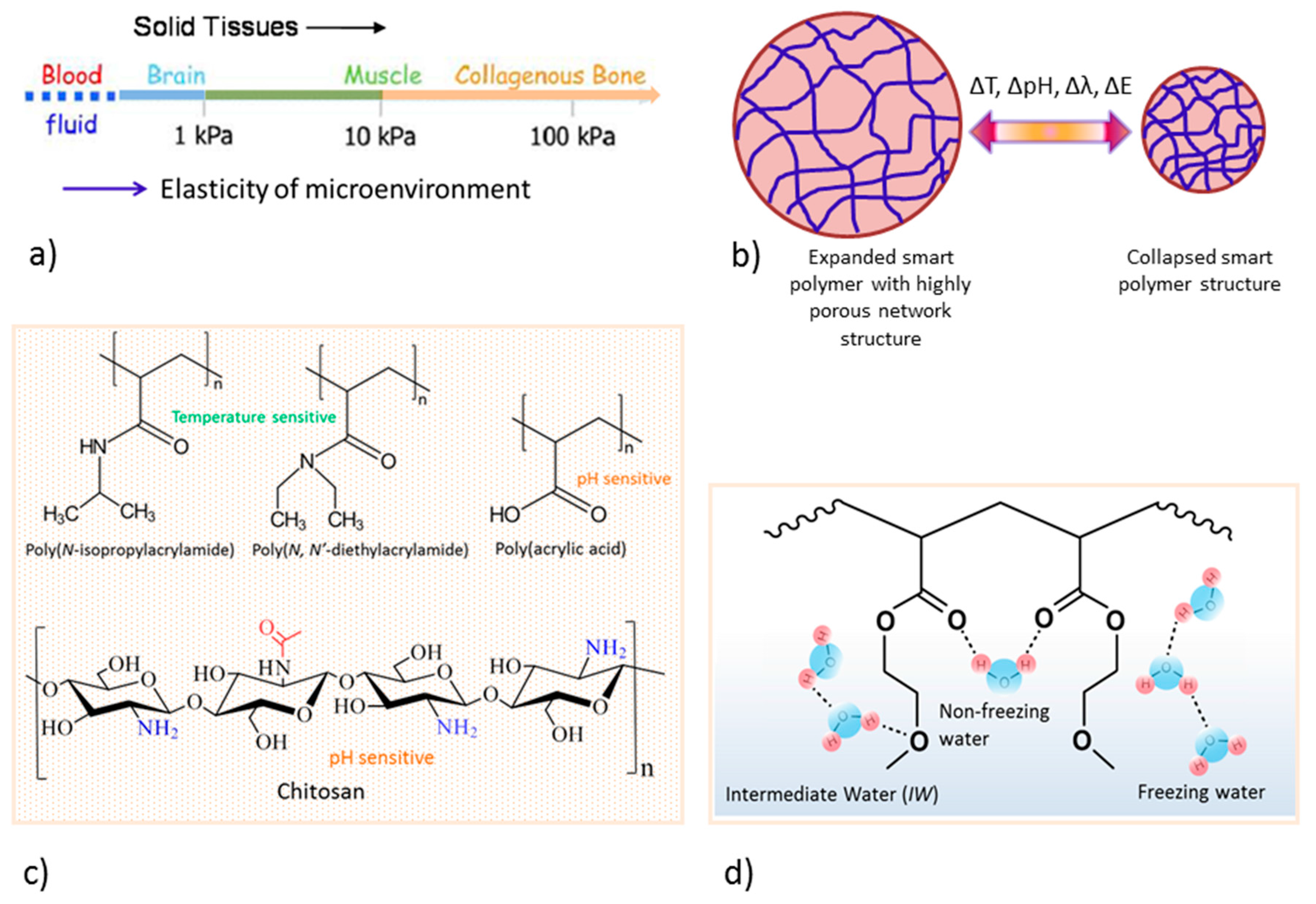
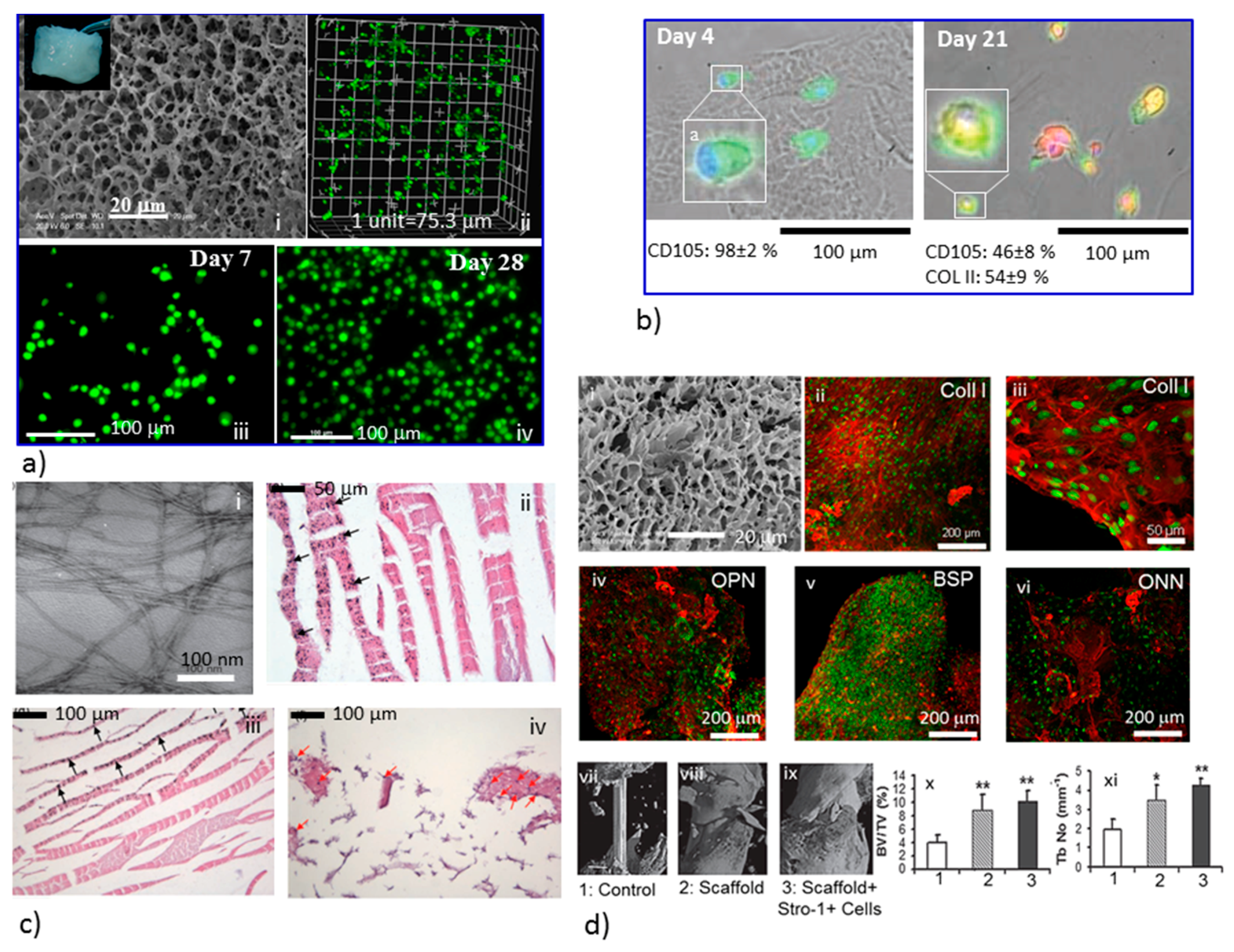

| Examples of Smart Biomaterials | External Stimuli | Applications |
|---|---|---|
| Poly(N-isopropylacrylamide) | Temperature | Patterned cells seeding and co-culture [56]. |
| Pluronics® (poly(ethylene oxide)-poly(propylene oxide)-poly(ethylene oxide)) | Temperature | Tissue engineering processes (new cartilage formation [57]. |
| PNIPAm-Arg-Gly-Asp (RGD) | Temperature | Controlling osteoblast adhesion and proliferation [58]. |
| Poly(2-propylacrylic acid) | pH | Protein/DNA intercellular delivery [59]. |
| Chitosan/Polyethyleneimine (CS/PEI) blend | pH | Scaffolds for cellular functioning and cartilage tissue engineering [40]. |
| Self-assembling peptide | Temperature and pH | Neural tissue engineering [46]. |
| Self-assembling peptide | Temperature and pH | Peptide (P11-4) supported primary human dermal fibroblasts growth and proliferation [47]. |
| Azobenzene-containing polymer brushes | Light | Human umbilical vein endothelial cells [60]. |
| Spiropyran-containing polymer brushes/graft copolymer | Light | Cell capture and release [61]. |
| Poly(2-acrylamido-2-methyl-propane sulphonic acid-co-N-butylmethacrylate) | Electric field | Controlled delivery of drug and cells [62]. |
| Poly(N-isopropylacrylamide-acrylamide-chitosan) (PAC)-coated magnetic nanoparticles (MNPs) | Magnetic field, temperature, and pH | Human dermal fibroblasts and normal prostate epithelial cells culture and cancer drug delivery [63]. |
| Poly(6-O-methacryloyl-d-galactopyranose)-SS-poly(γ-benzyl-l-glutamate) (PMAgala-SS-PBLG) | Redox reaction | DOX delivery and human hepatoma cell receptor targeting [64]. |
| Poly(ethylene-glycol)-Poly(acrylate) | Light | Human mesenchymal stem cells growth, proliferation, and chondrogenic differentiation [65]. |
| Gold membrane microchip | Electrochemical | Controlled release in implants [66]. |
| Antibacterial Ti-Ni-Cu shape memory alloys | Temperature | Cellular compatible (e.g., L929 and MG63) [67]. |
© 2017 by the authors. Licensee MDPI, Basel, Switzerland. This article is an open access article distributed under the terms and conditions of the Creative Commons Attribution (CC BY) license (http://creativecommons.org/licenses/by/4.0/).
Share and Cite
Khan, F.; Tanaka, M. Designing Smart Biomaterials for Tissue Engineering. Int. J. Mol. Sci. 2018, 19, 17. https://doi.org/10.3390/ijms19010017
Khan F, Tanaka M. Designing Smart Biomaterials for Tissue Engineering. International Journal of Molecular Sciences. 2018; 19(1):17. https://doi.org/10.3390/ijms19010017
Chicago/Turabian StyleKhan, Ferdous, and Masaru Tanaka. 2018. "Designing Smart Biomaterials for Tissue Engineering" International Journal of Molecular Sciences 19, no. 1: 17. https://doi.org/10.3390/ijms19010017
APA StyleKhan, F., & Tanaka, M. (2018). Designing Smart Biomaterials for Tissue Engineering. International Journal of Molecular Sciences, 19(1), 17. https://doi.org/10.3390/ijms19010017

