Review

Milk—A Nutrient System of Mammalian Evolution Promoting mTORC1-Dependent Translation

Department of Dermatology, Environmental Medicine and Health Theory, University of Osnabrück, Osnabrück D-49090, Germany
Int. J. Mol. Sci. 2015, 16(8), 17048-17087; https://doi.org/10.3390/ijms160817048
Submission received: 18 May 2015 / Revised: 16 July 2015 / Accepted: 20 July 2015 / Published: 27 July 2015
(This article belongs to the Special Issue Gene-Nutrient Interactions)

Abstract

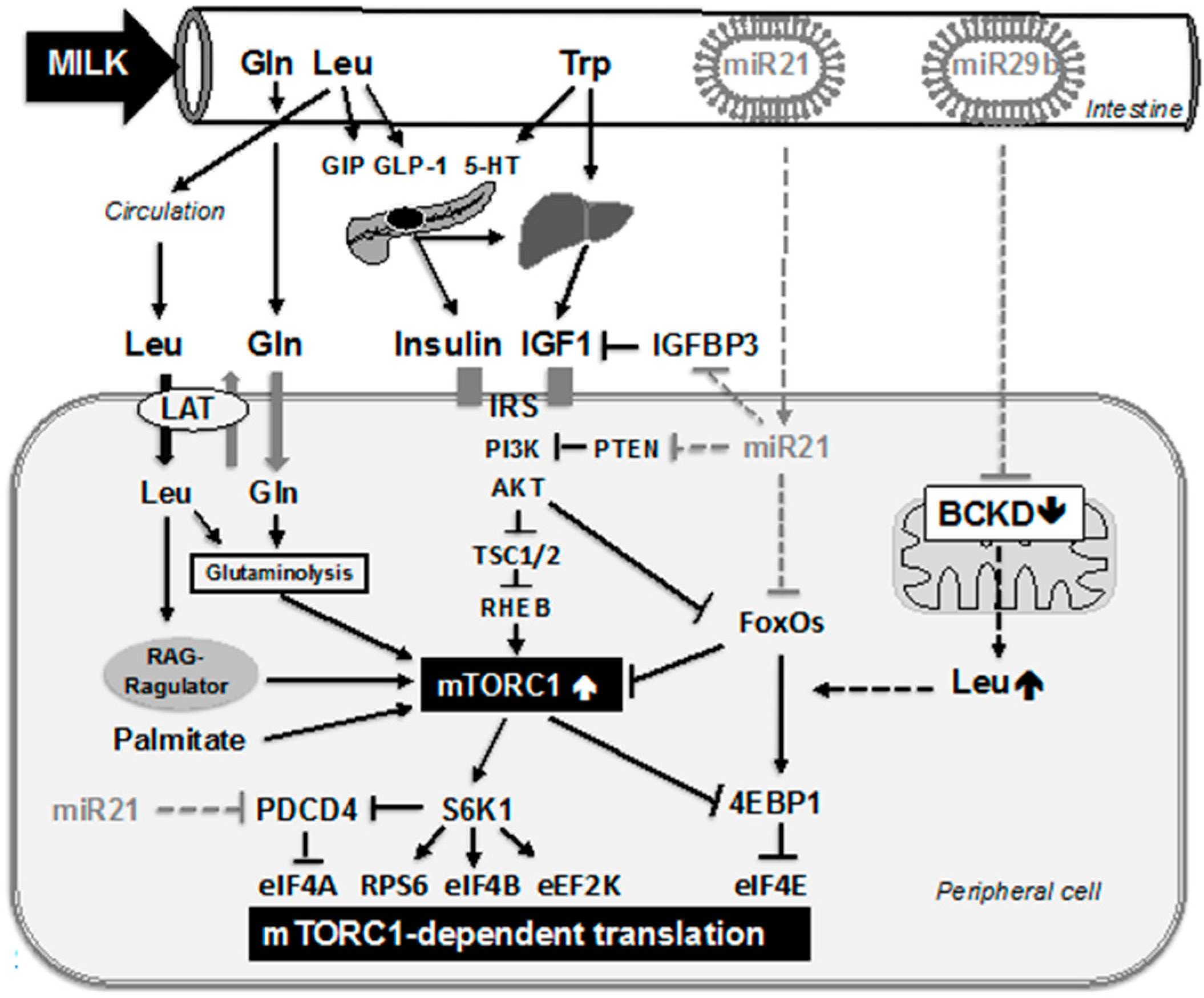
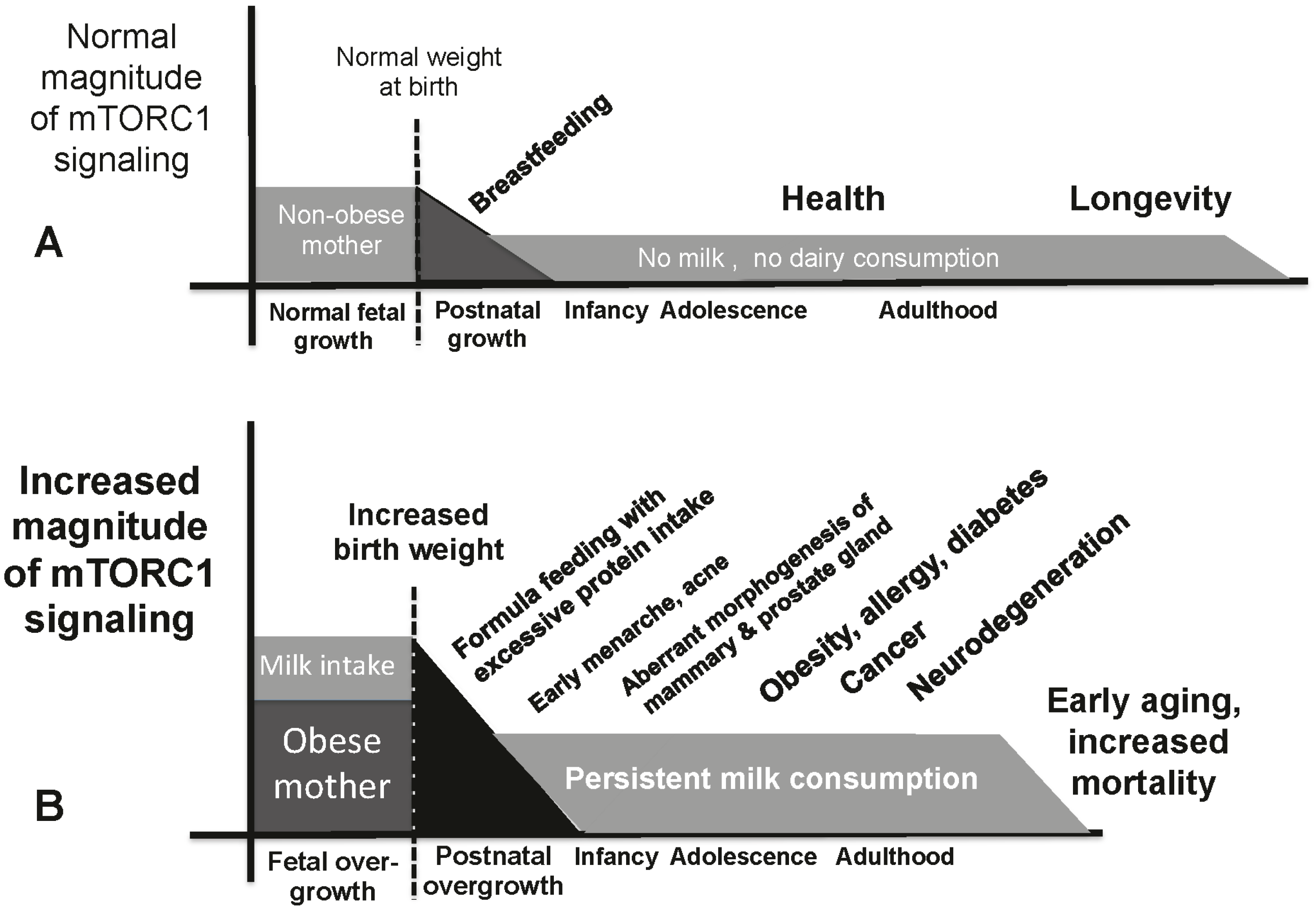
Based on own translational research of the biochemical and hormonal effects of cow’s milk consumption in humans, this review presents milk as a signaling system of mammalian evolution that activates the nutrient-sensitive kinase mechanistic target of rapamycin complex 1 (mTORC1), the pivotal regulator of translation. Milk, a mammary gland-derived secretory product, is required for species-specific gene-nutrient interactions that promote appropriate growth and development of the newborn mammal. This signaling system is highly conserved and tightly controlled by the lactation genome. Milk is sufficient to activate mTORC1, the crucial regulator of protein, lipid, and nucleotide synthesis orchestrating anabolism, cell growth and proliferation. To fulfill its mTORC1-activating function, milk delivers four key metabolic messengers: (1) essential branched-chain amino acids (BCAAs); (2) glutamine; (3) palmitic acid; and (4) bioactive exosomal microRNAs, which in a synergistical fashion promote mTORC1-dependent translation. In all mammals except Neolithic humans, postnatal activation of mTORC1 by milk intake is restricted to the postnatal lactation period. It is of critical concern that persistent hyperactivation of mTORC1 is associated with aging and the development of age-related disorders such as obesity, type 2 diabetes mellitus, cancer, and neurodegenerative diseases. Persistent mTORC1 activation promotes endoplasmic reticulum (ER) stress and drives an aimless quasi-program, which promotes aging and age-related diseases.
Keywords: aging; amino acids; ER stress; exosomes; diseases of civilization; microRNAs; milk signaling; mTORC1; quasi-program; translation aging; amino acids; ER stress; exosomes; diseases of civilization; microRNAs; milk signaling; mTORC1; quasi-program; translation