Article

Comparison of Selected Pro-Health Biologically Active Chemical Compounds in Salviae herba from Selected Species


by
Mirosława Chwil
1,
Jarmila Neugebauerová
2,
Renata Matraszek-Gawron
1,* and
Tadeusz Paszko
3
1
Department of Botany and Plant Physiology, University of Life Sciences in Lublin, Akademicka 15 Street, 20-950 Lublin, Poland
2
Department of Vegetable Growing and Floriculture, Faculty of Horticulture, Mendel University in Brno, Valtická 337 Street, 691 44 Lednice, Czech Republic
3
Department of Chemistry, University of Life Sciences in Lublin, Akademicka 15 Street, 20-950 Lublin, Poland
*
Author to whom correspondence should be addressed.
Molecules 2026, 31(9), 1425; https://doi.org/10.3390/molecules31091425
Submission received: 7 March 2026 / Revised: 10 April 2026 / Accepted: 18 April 2026 / Published: 26 April 2026

Abstract

Pharmaceutical, cosmetic, and food industries have contributed to the increasing interest in herbal phytochemicals. Salvia, a multifunctional culinary herb, meets phytotherapeutic requirements in the treatment of heartburn, excessive sweating, flatulence, and mouth, throat, and skin inflammatory conditions. Salviae folium is used in conductive education, i.e., a unique rehabilitation method for individuals with neurological and motor disorders designed to help in learning to perform activities independently. The comparative analysis of bioactive chemical compounds in S. officinalis, S. officinalis subsp. lavandulifolia, and S. sclarea herb showed that S. officinalis had the highest concentration of exogenous amino acids (53 mg·g−1 DW), with a predominance of lecithin and phenylalanine, and endogenous amino acids were dominated by aspartic and glutamic acids. S. officinalis subsp. lavandulifolia was the richest source of omega-3, omega-6, and omega-9 fatty acids, followed by S. officinalis and S. sclarea. The vitamin C content was 4.9 (S. sclarea)–14.4 mg·100 g−1 DW (S. officinalis). Phenolic acids were dominated by rosmarinic acid (S. officinalis > S. officinalis sub. lavandulifolia > S. sclarea) and ferulic acid (S. officinalis > S. sclarea > S. officinalis sub. lavandulifolia). Salvia sclarea is a rich source of p-coumaric acid. Among non-phenolic organic acids, the highest content of quinic and malic acids was found in S. sclarea and S. officinalis, respectively. The level of o-dihydroxyphenols was 2140 (S. officinalis)-2222 mg CAE·100·g−1 DW (S. sclarea). The flavonoid content was 610 (S. officinalis subsp. lavandulifolia)-347 mg RU·100 g−1 DW (S. sclarea). Flavonoids, flavonols, and flavanones were dominated by apigenin, kaempferol, and hesperidin, respectively. These metabolites may be potential components in phytotherapeutic products.

1. Introduction

Global herbal medicine is currently developing due to the growing consumer demand for products containing health-enhancing phytochemicals [1,2,3,4,5,6,7]. Various herbal products are available on the market: pharmaceuticals, nutraceuticals, functional foods, dietary supplements, cosmetic ingredients, and medications [2,3,8]. The popularity of herbs is growing due to their effectiveness, non-toxic nature, and minimal side effects [8].

1.1. Development of Herbal Medicine

The public awareness of the activity and therapeutic properties of phytochemicals as well as their application as part of innovative methods used in modern medical healthcare practices is increasing [7]. As a result, the popularity of herbal products and medications as well as public awareness are on the increase in many countries in Europe, mainly in Poland [9,10,11,12], Romania [13], Great Britain [14,15], Belarus [16], Ukraine Mattalia et al. 2022 [13], Lithuania [16,17,18,19,20], and Northern Cyprus [21]. Increasing interest has also been reported in Asia, e.g., in India [22,23,24], Pakistan [25], Saudi Arabia [6,26,27], Turkey [İDUĞ 2023 [28], in Africa (Nigeria) [29], Australia [30], and North America (Canada and the United States) [31,32].
The needs of modern medicine as well as pharmaceutical and cosmetic industries have contributed to a significant increase in the interest in traditional medicine and the use of active chemical compounds derived from various species of herbs, including the genus Salvia. Many Salvia species are investigated in experimental studies in various biological and clinical models to identify their pharmacological effects in the phytotherapy of many diseases [22,33,34].

1.2. Application of Salvia officinalis, S. officinalis subsp. lavandulifolia, and Salvia sclarea in Phytotherapy

Salvia officinalis L., S. officinalis subsp. lavandulifolia, and Salvia sclarea L. have long been used as valuable medicinal plants in traditional medicine in many countries [35]. Various raw materials, i.e., Salviae folium, Salviae herba, and Salviae rhizoma derived from e.g., S. officinalis [11,36,37,38,39,40,41,42], S. officinalis subsp. lavandulifolia [43,44,45], and S. sclarea [46,47,48,49,50,51,52,53,54,55] are commonly used in phytotherapy.

1.2.1. Salvia officinalis L.

Described by Hippocrates, S. officinalis was used in ancient Greece [56]. At present, the species is used as part of phytotherapy in many diseases. A mouthwash with S. officinalis extract was documented to alleviate aphthous symptoms, mitigate pain, and reduce the size of ulcers in gingivitis [57]. It also reduced oral discomfort in cancer patients undergoing palliative oncological treatment [40]. Lozenges containing 1893 mg of S. officinalis extract and 4000 mg of Echinacea purpurea extract used once daily for 4 days relieved sore throat symptoms [58].
Flavonoids, sterols, volatile oils, saponins, and carbohydrates derived from S. officinalis herb inhibited the growth of Helicobacter pylori. The most potent antibacterial and anti-inflammatory effects were exerted by ethanol extracts at a concentration of 3.9 μg·ml−1 and essential oils applied at 15.6 μg·ml−1 (in vitro, in silico). The metabolites were dominated by (%) eucalyptol (50.1), carnosic acid (37.7), epirosmanol (20.7), camphor (17.8), 12-O-methylcarnosol (6.2), and carnosol (3.3) [42]. Anti-inflammatory, antioxidant, and chemopreventive properties were exhibited by manool isolated from S. officinalis; it regulated signalling pathways and prevented colon carcinogenesis [59]. Additionally, an 8-week treatment with S. officinalis extract at a dose of 330 mg/day reduced the body mass index (BMI) and blood pressure and improved markers of insulin resistance in patients with euglycemia and PCOS [60].
Rosmarinic acid from S. officinalis has been documented to exert neuroprotective and antioxidant effects and prevent the formation of β-amyloid plaques, which are key agents in the pathogenesis of Alzheimer’s disease [56]. Hydroalcoholic extracts and essential oils obtained from leaves of this species had a positive effect on the memory of patients with this disease [34]. Also in Alzheimer’s disease, the active chemical compounds from S. officinalis in combination with curcumin, a low-fat diet, NuAD-Trail, and soy lecithin proved beneficial; they were more effective than the allopathic treatment alone [61,62].

1.2.2. Salvia officinalis subsp. lavandulifolia (Vahl) Gams

S. officinalis subsp. lavandulifolia is an important medicinal plant with a long tradition of use in folk medicine for treatment of many diseases [63]. The medicinal use of this plant is based on its content (%) of 1,8-cineole (24.3–34), camphor (23.5–28.8), camphene (4.9–6.4), and α-pinene (4.3–6.6) [45]. In some countries, e.g., Spain, sage is cultivated on a large scale for extraction of its essential oil and manufacture of other products to be used in pharmaceutical, cosmetic, and food industries. S. officinalis subsp. lavandulifolia is used in phytotherapy as infusions, chewing preparations, and mouthwashes [44,63]. It has analgesic, antitussive, antimigraine, antispasmodic, sedative, and antioxidant properties [43,63]. Additionally, it exhibits antibacterial activity against Staphylococcus aureus. The minimal inhibitory concentration (MIC) of linalool, camphor, α-pinene, linalyl acetate, and essential oil against this skin pathogen is in the range of 2.5–10 mg·ml−1. Biologically active compounds and essential oil from this species have high antioxidant activity exceeding 30 mg·ml−1 (determined with the use of 1,1-diphenyl-2-picrylhydrazyl (DPPH)), which indicates antiseptic activity (in vitro) [43]. The antifungal activity of these compounds against Botrytis cinerea and Candida albicans has also been evidenced [44,45].

1.2.3. Salvia sclarea L.

Salvia sclarea L. is used in folk medicine for treatment of various diseases, e.g., gingivitis and aphthous stomatitis. In periodontitis, ethanol S. sclarea extracts have been shown to reduce the levels of IL-1β, IL-6, TNF-α, and the number of inflammatory cells, increase the number of fibroblasts, and alleviate inflammation symptoms. The dominant rosmarinic acid in the extract has antioxidant and anti-inflammatory activity; therefore, it may be a potential therapeutic agent in periodontal diseases [64].
Diterpenoids, i.e., aethiopinone and salvipisone, isolated from S. sclarea hairy roots exhibited high cytotoxic activity against HL-60 and NALM-6 leukaemia cells (in vitro). These compounds induced apoptosis via the caspase-3 pathway in a concentration-dependent manner. The high efficacy of the S. sclarea diterpenoids against drug-resistant leukaemia cells suggests that they may be used for treatment in drug-resistant patients [47].
Linalyl (50.4%) and linalyl acetate (50.4%) dominate in the essential oil of S. sclarea cultivated in Iran. Linalyl acetate can be used as part of complementary phytotherapy for diabetes [52]. Essential oil from S. sclarea grown in Ukraine was effective against common bacterial pathogens: Enterococcus faecalis, Escherichia coli, Staphylococcus aureus, and Streptococcus pyogenes and against Candida albicans yeast. The high levels of linalool (39%) and linalyl acetate (45.5%) were shown to be involved in its antimicrobial properties. S. sclarea can be used in the pharmaceutical industry and for preservation of food and cosmetic products [65].
Many investigations have been conducted in various biological models in the field of phytotherapy and the application of the species in the pharmaceutical, cosmetic, and food industries and as functional food, dietary supplements, nutraceuticals, herbal medications, and other food and cosmetic products. However, the literature does not provide a comparative analysis of the chemical profile (especially the profile of bioactive compounds with pro-health activity in humans) of the herb of S. officinalis, S. officinalis sub. lavandulifolia, and S. sclarea grown in the South Moravian region of the Czech Republic (Lednice). Therefore, an attempt was made to supplement this information.
The aim of the study was to determine the content of selected metabolites: (i) total protein, (ii) total fat, (iii) ash, (iv) vitamin C, (v) total flavonoids, (vi) phenolic acids, (vii) malic acid, (viii) quinic acid, and (ix) orto-dihydroxyphenols. Additionally, qualitative and quantitative analysis was performed to detect (x) fatty acids, (xi) amino acids, (xii) phenolic acids, and (xii) flavonoids in the herb of Salvia officinalis L., Salvia officinalis sub. lavandulifolia (Vahl) Gams, and Salvia sclarea L. A comparative analysis of these parameters was carried out and dominant bioactive compounds with pro-health effects on the human organism were identified.

2. Results

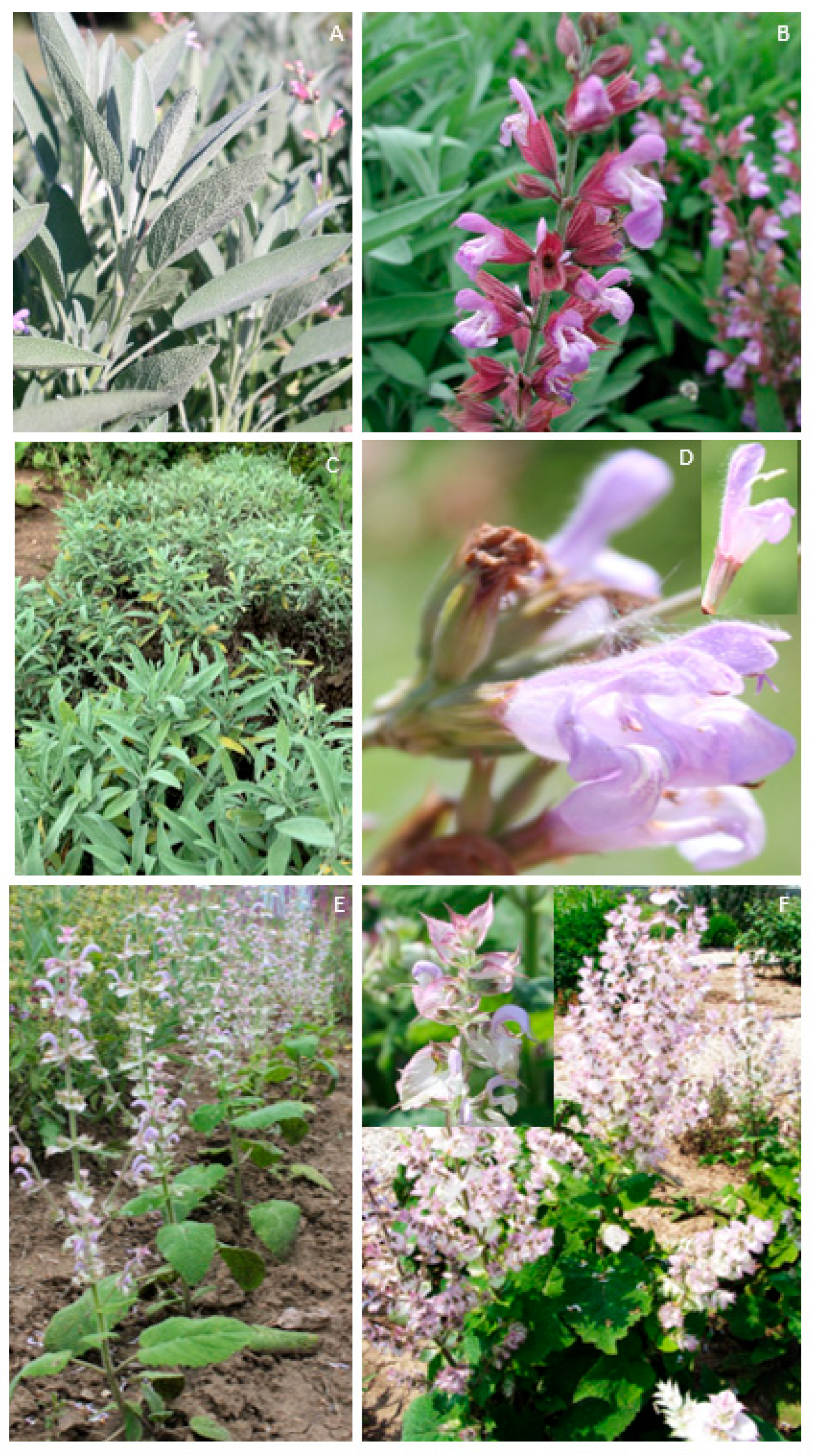
A comparative analysis of selected bioactive chemical compounds was carried out in Salvia herba raw material from S. officinalis, S. officinalis subsp. lavandulifolia, and Salvia sclarea in the early flowering phase (Figure 1A–F).

2.1. Protein, Fat, Ash Content, and Moisture in Salviae Herba Samples

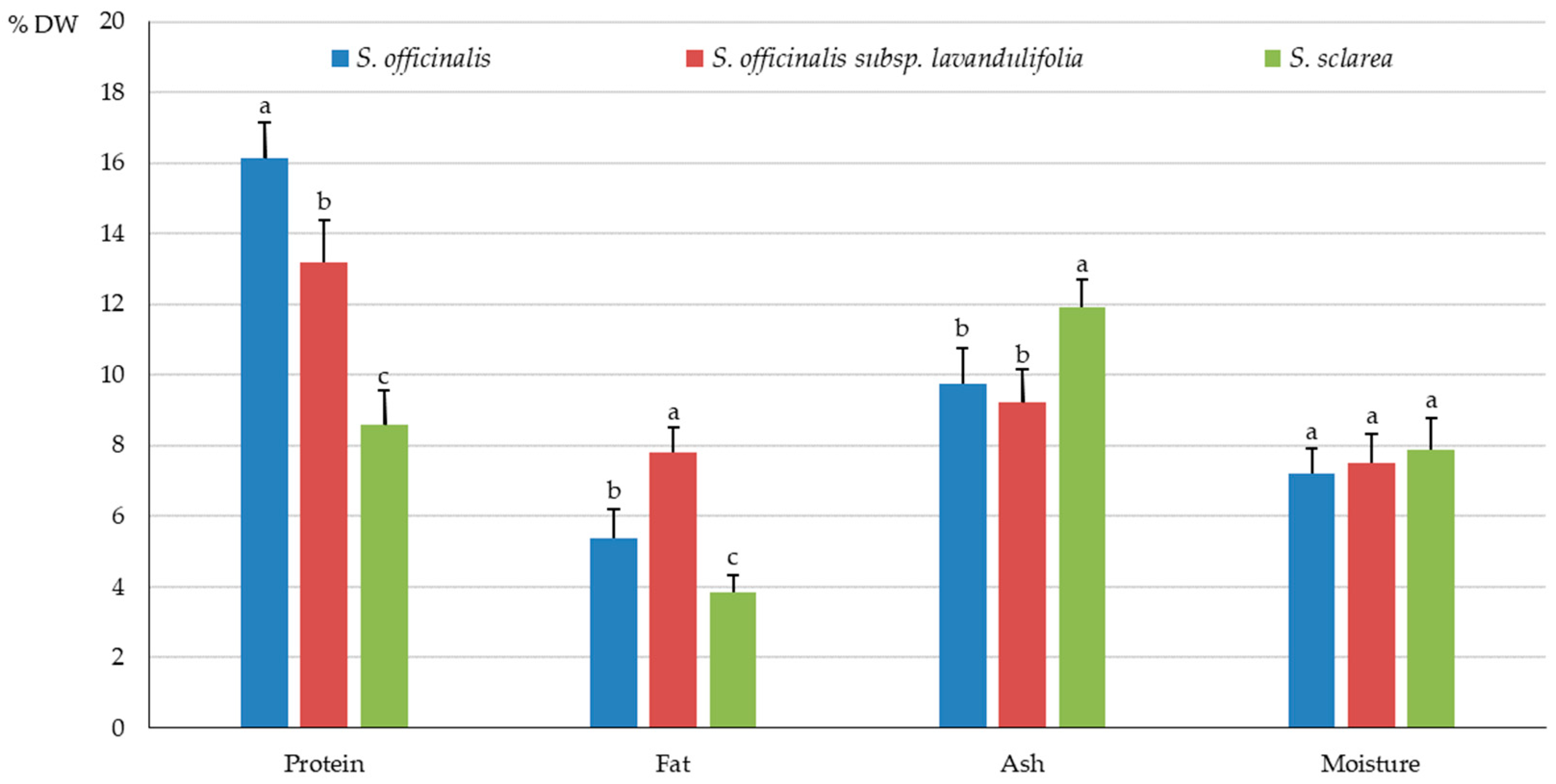
The highest value of total protein in the herb of the analysed Salvia species was recorded in S. officinalis (16.14 ± %), followed by S. officinalis subsp. lavandulifolia (13.17%) and S. sclarea (8.57%). The highest total fat content was found in the herb of S. officinalis subsp. lavandulifolia (7.80%), a moderate level was detected in S. officinalis (5.39%), and the lowest amount was found in S. sclarea (3.84%). The ash content was similar in the herb of S. officinalis subsp. lavandulifolia and S. officinalis (9.24 and 9.76%, respectively), but it was crucially lower than in S. sclarea (11.49%). The moisture content in the herb samples varied slightly between the species from 7.22% (S. officinalis) to 7.89% (S. sclarea) (Figure 2).

2.2. Protein Amino Acids

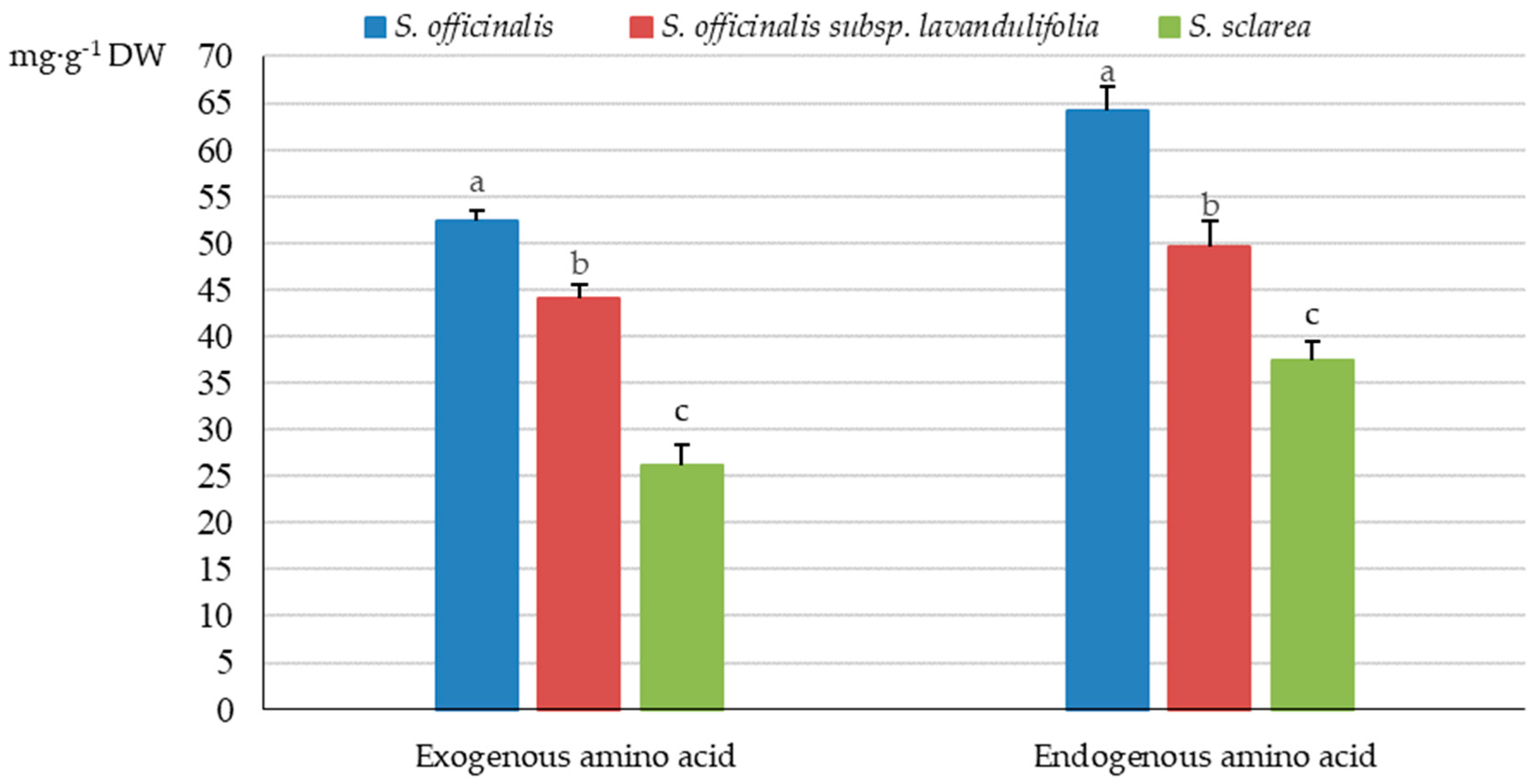
In the analysed taxa, the highest total protein amino acid content was determined in the herb of S. officinalis (116.50 mg·g−1 DW); it was approximately 20% and 46% lower in S. officinalis subsp. lavandulifolia (93.5 mg·g−1 DW) and S. sclarea (63.4 mg·g−1 DW), respectively (Figure 3).

2.2.1. Exogenous Amino Acids

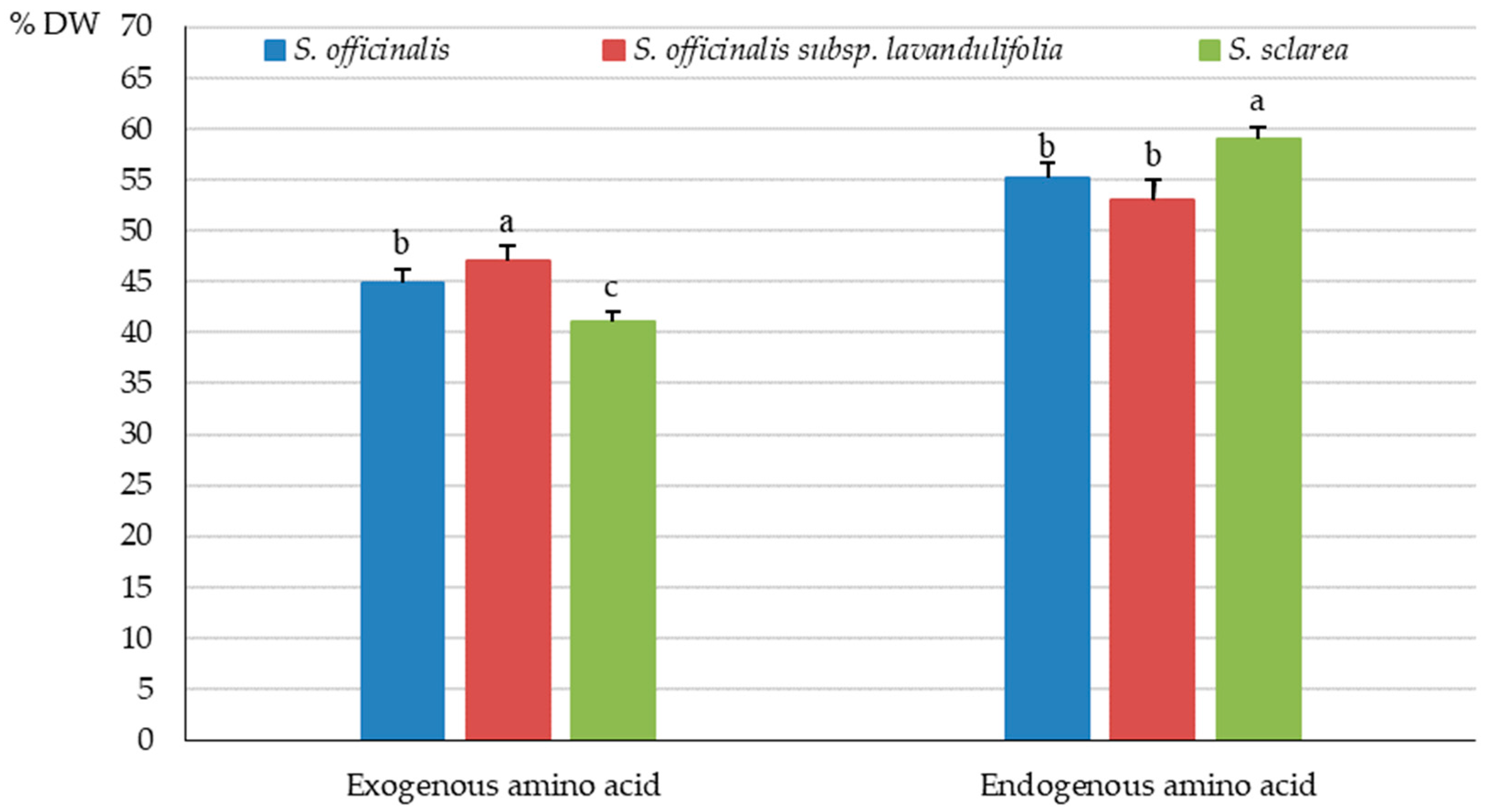
The analysis of the protein amino acid group in the Salvia taxa showed the highest content of exogenous amino acids in S. officinalis (52.27 mg·g−1 DW), moderate amounts in S. officinalis subsp. lavandulifolia (43.97 mg·g−1 DW), and the lowest levels in S. sclarea (26.05 mg·g−1 DW) (Figure 3), which accounted for 44.79, 47.03, and 41.09% of the total amino acid pool, respectively (Figure 4). The proportion of endogenous amino acids in the total pool present in the herb of the studied taxa exceeded the percent content of exogenous amino acids and was 58.91% in S. sclarea, 55.13% in S. officinalis, and 52.97% in S. officinalis subsp. lavandulifolia (Figure 4).
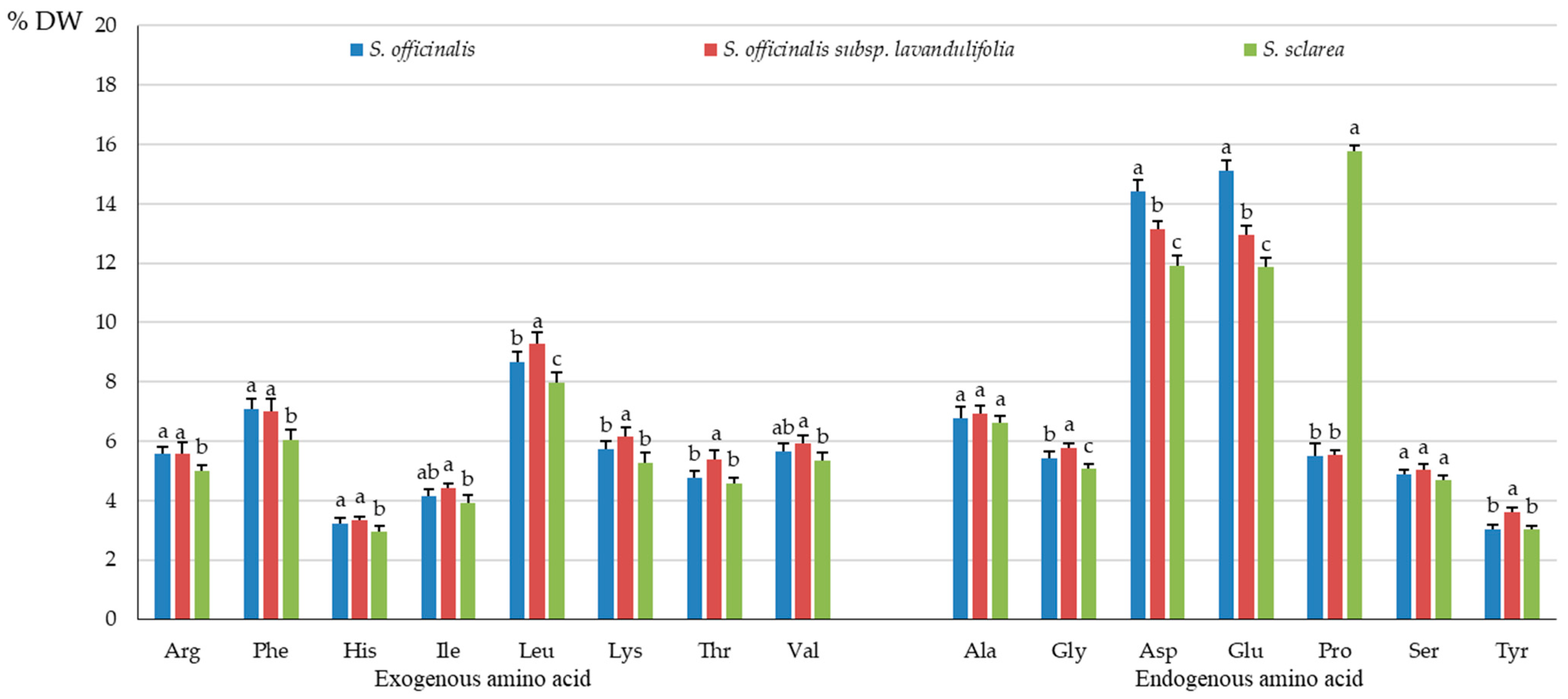
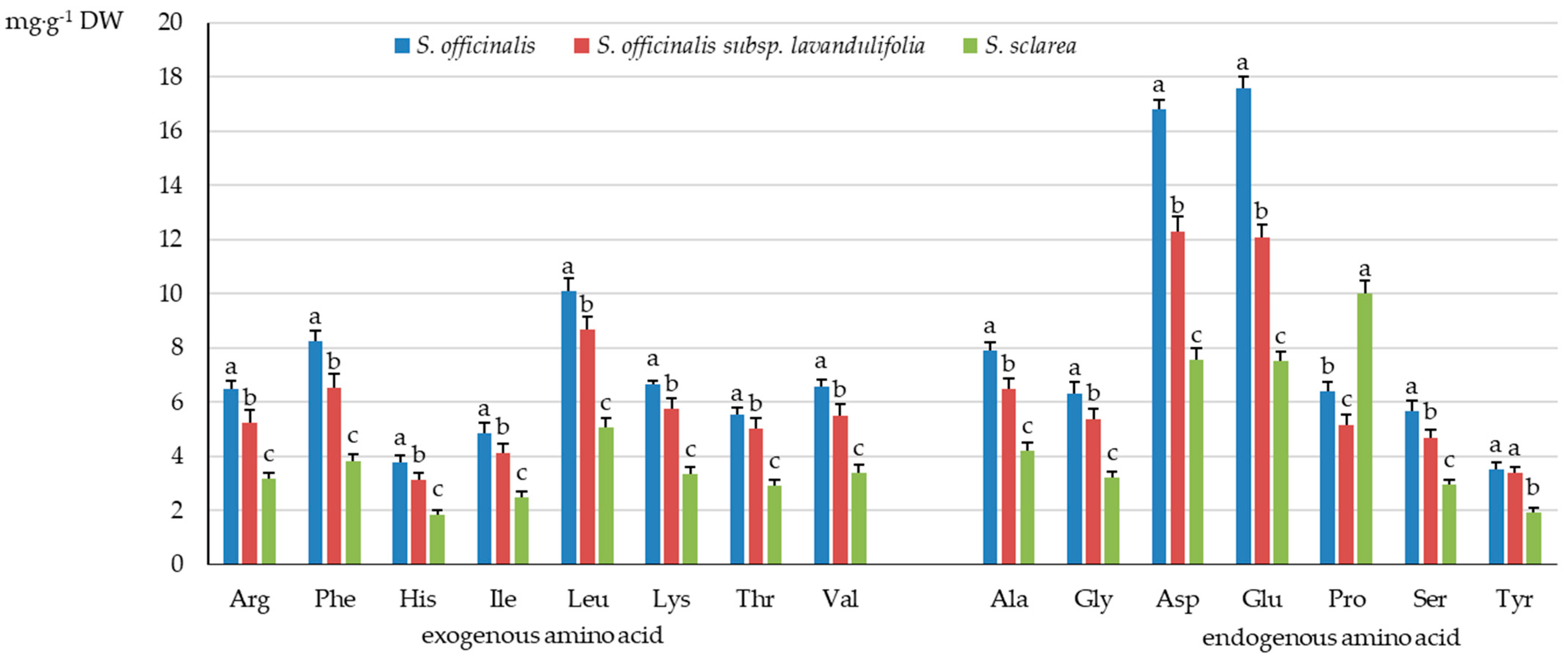
Similar groups of exogenous protein amino acids dominated in the herb of S. officinalis subsp. lavandulifolia, S. officinalis, and S. sclarea. The content of each exogenous amino acid differed considerably between the analysed samples of all three Salviae herba raw materials and was the lowest in S. sclarea, moderate in S. officinalis subsp. lavandulifolia, and the highest in S. officinalis. The highest concentration among the exogenous amino acids in the three analysed taxa was determined for the aliphatic amino acid leucine (Leu), which ranged from 5.06 to 10.10 mg·g−1 DW. The second most abundant amino acid was aromatic amono-acid phenylalanine (Phe) with the content ranging from approximately 3.84 to 8.25 mg·g−1 DW, followed by valine (Val) from the same group as leucine with a concentration between 3.39 and 6.59 mg·g−1 DW (Figure 5).
The percentage share of the content of these three dominant exogenous amino acids, i.e., Leu, Phe, and Val, in the total pool of protein amino acids in the Salvia herba accounted for 7.98 (S. sclarea)–9.27% (S. officinalis subsp. lavandulifolia), 6.06 (S. sclarea)–7.08% (S. officinalis), and 5.35 (S. sclarea)–5.9% (S. officinalis subsp. lavandulifolia), respectively (Figure 6).
The two exogenous amino acids with the lowest level recorded in the Salviae herba were isoleucine (Ile) (2.49–4.85 mg·g−1 DW) and histidine (His) (1.86–3.77 mg·g−1 DW) (Figure 5) with the percentage share of its content in the range of 3.93–4.42% and 2.93–3.34%, respectively (Figure 6). The percentage share of Ile and His in S. officinalis subsp. lavandulifolia and S. officinalis was comparable but remarkably exceeded the values recorded in S. sclarea.

2.2.2. Endogenous Protein Amino Acids

As in the case of the exogenous amino acids, the S. officinalis subsp. lavandulifolia herb was characterised by markedly higher content of endogenous amino acids than in S. sclarea and a notably lower level than in S. officinalis. Only the proline (Pro) level in S. officinalis (6.40 mg·g−1 DW) exceeded its content in S. officinalis subsp. lavandulifolia (5.17 mg·g−1 DW), but was lower than in S. sclarea (10.00 mg·g−1 DW). The tyrosine (Tyr) contents in the herb of S. officinalis subsp. lavandulifolia and S. officinalis were similar (3.38 and 3.52 mg·g−1 DW) but higher than in the S. sclarea herb (1.91 mg·g−1 DW) (Figure 5).
In the group of endogenous amino acids, the highest values ranging from 7.52 to 17.60 mg·g−1 DW were determined for glutamic acid (Glu). A slightly lower concentration was exhibited by aspartic acid (Asp) ranging from 7.55 to 16.80 mg·g−1 DW, followed by alanine (Ala) with the level ranging from 4.20 to 7.90 mg·g−1 DW (Figure 5). These dominant endogenous amino acids Glu and Asp accounted for 11.86 (S. sclarea)–15.11% (S. officinalis) and 11.91 (S. sclarea)–14.42% (S. officinalis) of the total pool of protein amino acids, respectively, and proline constituted 5.5–15.8% (Figure 6). The two endogenous amino acids with the lowest level recorded in the Salviae herba were serine (Ser) (2.96–5.67 mg·g−1 DW) and tyrosine (Tyr) (1.91–3.52 mg·g−1 DW) (Figure 5), with the percentage value range of 4.67 (S. sclarea)–5.03% (S. officinalis subsp. lavandulifolia) and 3.01 (S. sclarea)–3.62% (S. officinalis subsp. lavandulifolia), respectively (Figure 6).
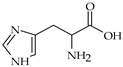
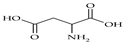
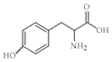
The nomenclature, abbreviations, symbols, and linear and structural formulas of fifteen amino acids identified in the Salviae herba of the three analysed taxa are presented in Table 1.

2.3. Fatty Acid Profile

2.3.1. Saturated Fatty Acids (SFAs), Monounsaturated Fatty Acids (MUFAs), and Polyunsaturated Fatty Acids (PUFAs)

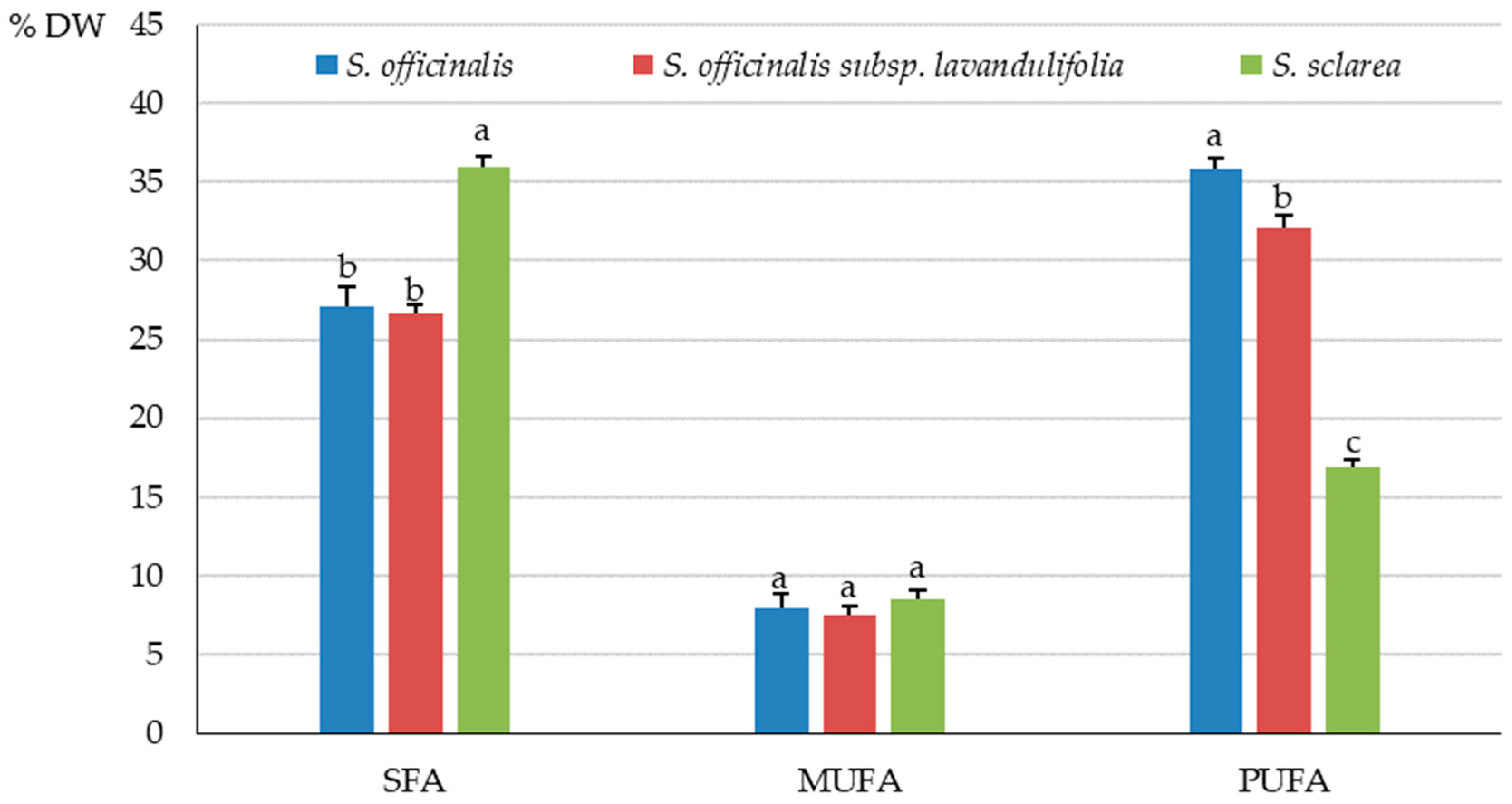
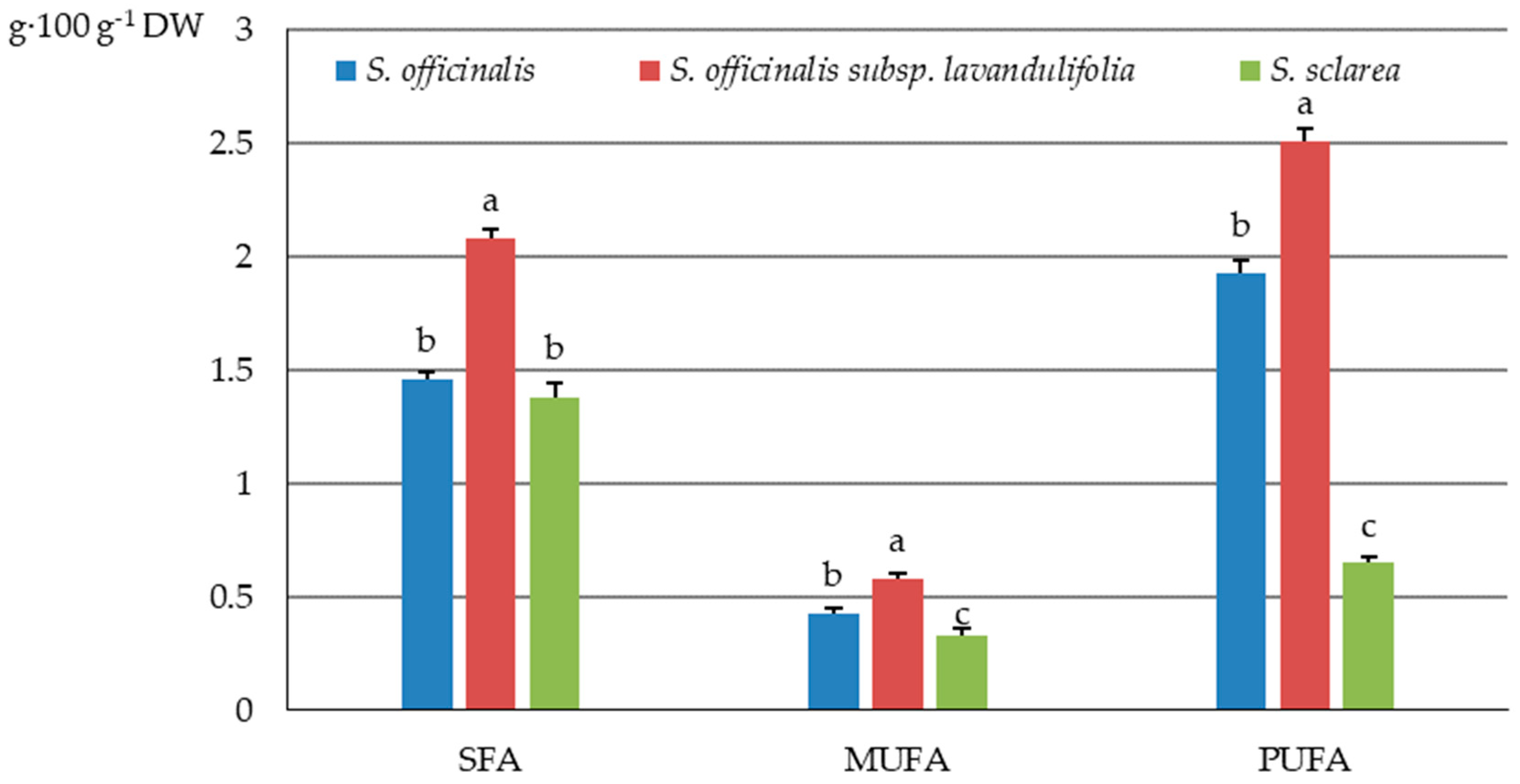
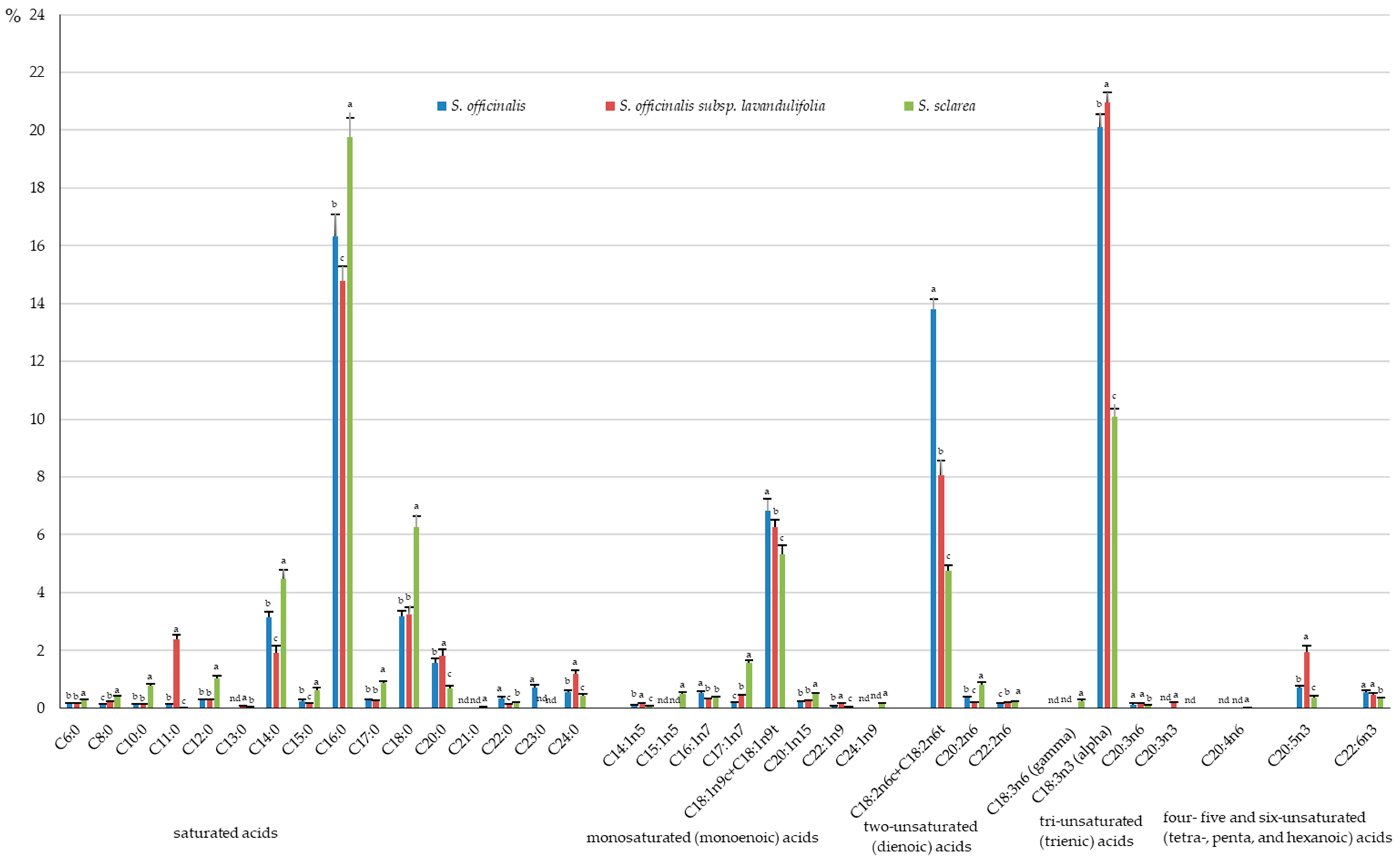
The highest content of SFAs, MUFAs, and PUFAs was determined in the S. officinalis subsp. lavandulifolia herb (2.08, 0.58, and 2.51 g·100 g−1 DW, respectively), followed by S. officinalis (1.46, 0.43, and 1.93 g·100 g−1 DW) and S. sclarea (1.38, 0.33, and 0.65 g·100 g−1 DW) (Figure 7).
The fatty acids identified in the S. sclarea herb were represented by 36% of SFAs in the total pool of fat extracted from samples of these taxa; they considerably exceeded the level in S. officinalis (27.2%) and S. officinalis subsp. lavandulifolia (26.7%). The percentage share of MUFAs in the total pool of fat did not differ markedly, and their value ranged from 7.5% (S. officinalis subsp. lavandulifolia) to 8.5% (S. sclarea). The percentage share of PUFAs in the herb of S. officinalis subsp. lavandulifolia (32%) notably exceeded those recorded in S. sclarea (17%), but was lower than in S. officinalis (36%) (Figure 8).

2.3.2. Omega Fatty Acid Family

Omega-3 Fatty Acids
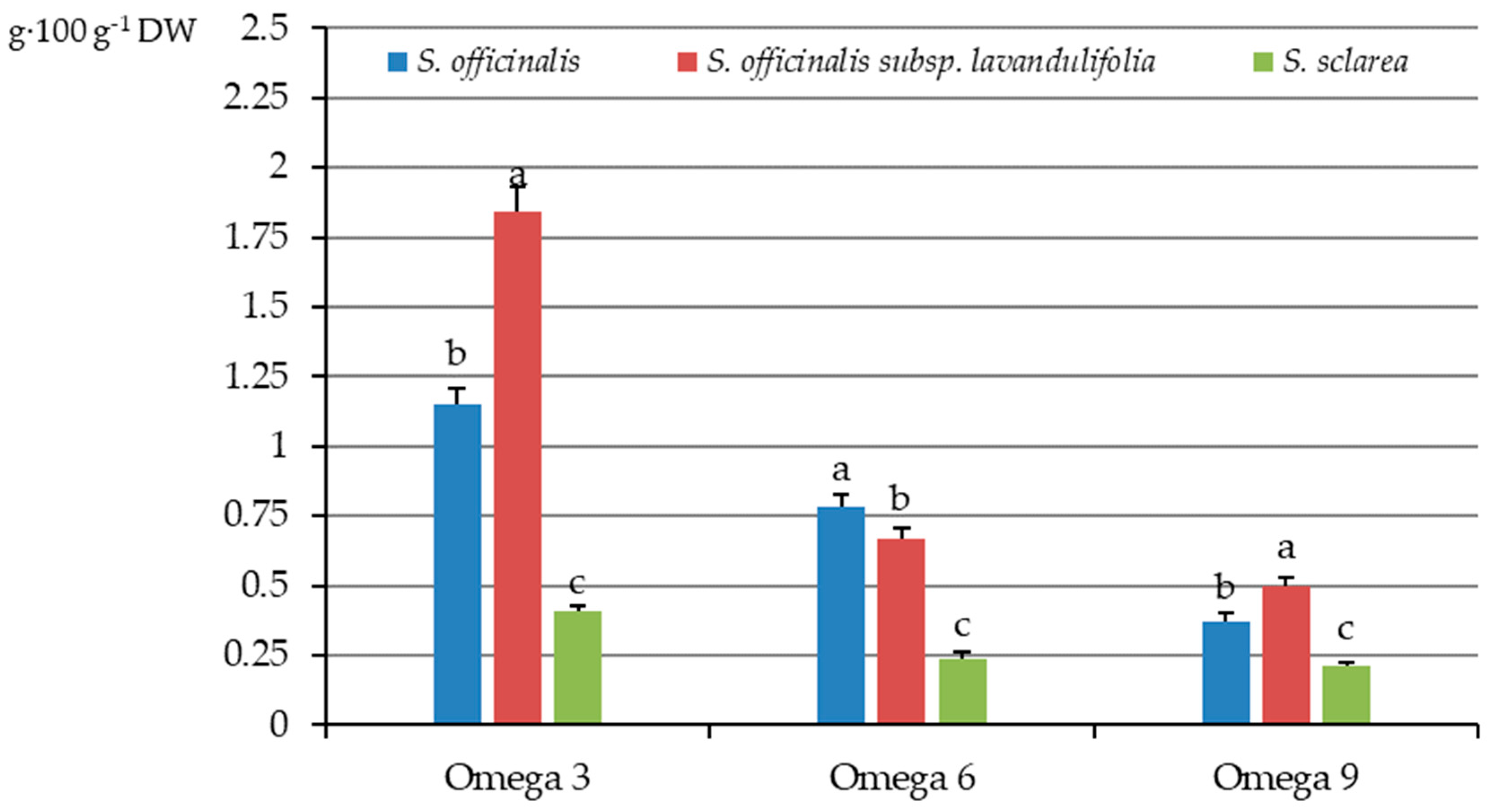
Among the three main groups of fatty acids (omega-3, omega-6, and omega-9) omega-3 acids, with the first double bond located at the third carbon from the methyl end of the carbon chain, were the most abundant in the analysed samples of the three Salviae herba types. The highest content of this fatty acid group was found in the herb of S. officinalis subsp. lavandulifolia (1.84 g·100 g−1 DW), a moderate level was determined in S. officinalis (1.15 g·100 g−1 DW), and the lowest amount was found in S. sclarea (0.41 g·100 g−1 DW), with a significant drop between the taxa by approximately 38 and 78%, respectively (Figure 9).
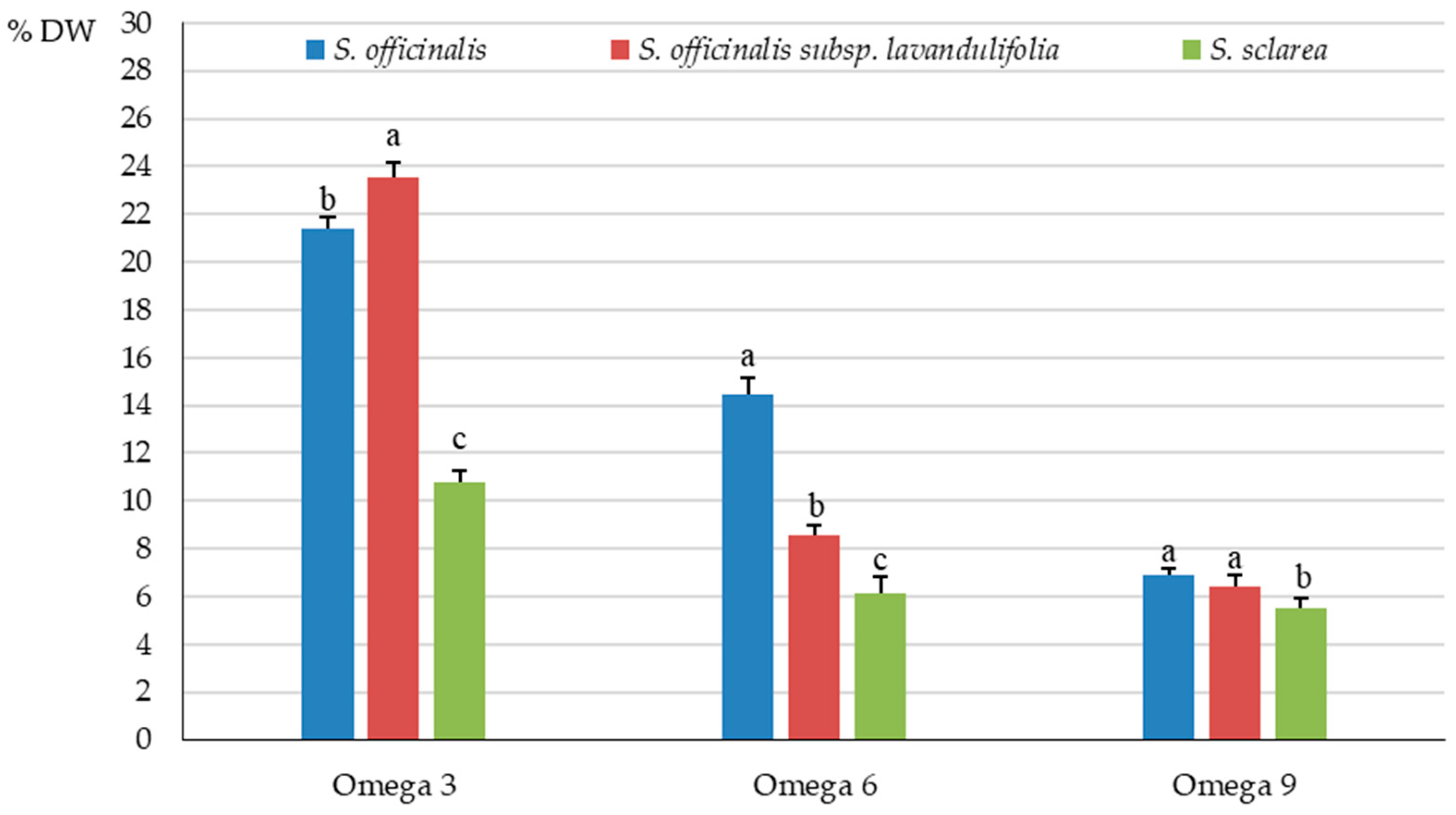
A similar tendency was shown for the percentage share of omega 3 acids in the total pool of fats. The value of this parameter in S. officinalis (21.4%) considerably exceeded that in S. sclarea (10.8%) but was distinctly lower than in S. officinalis subsp. lavandulifolia (23.6%) (Figure 10).
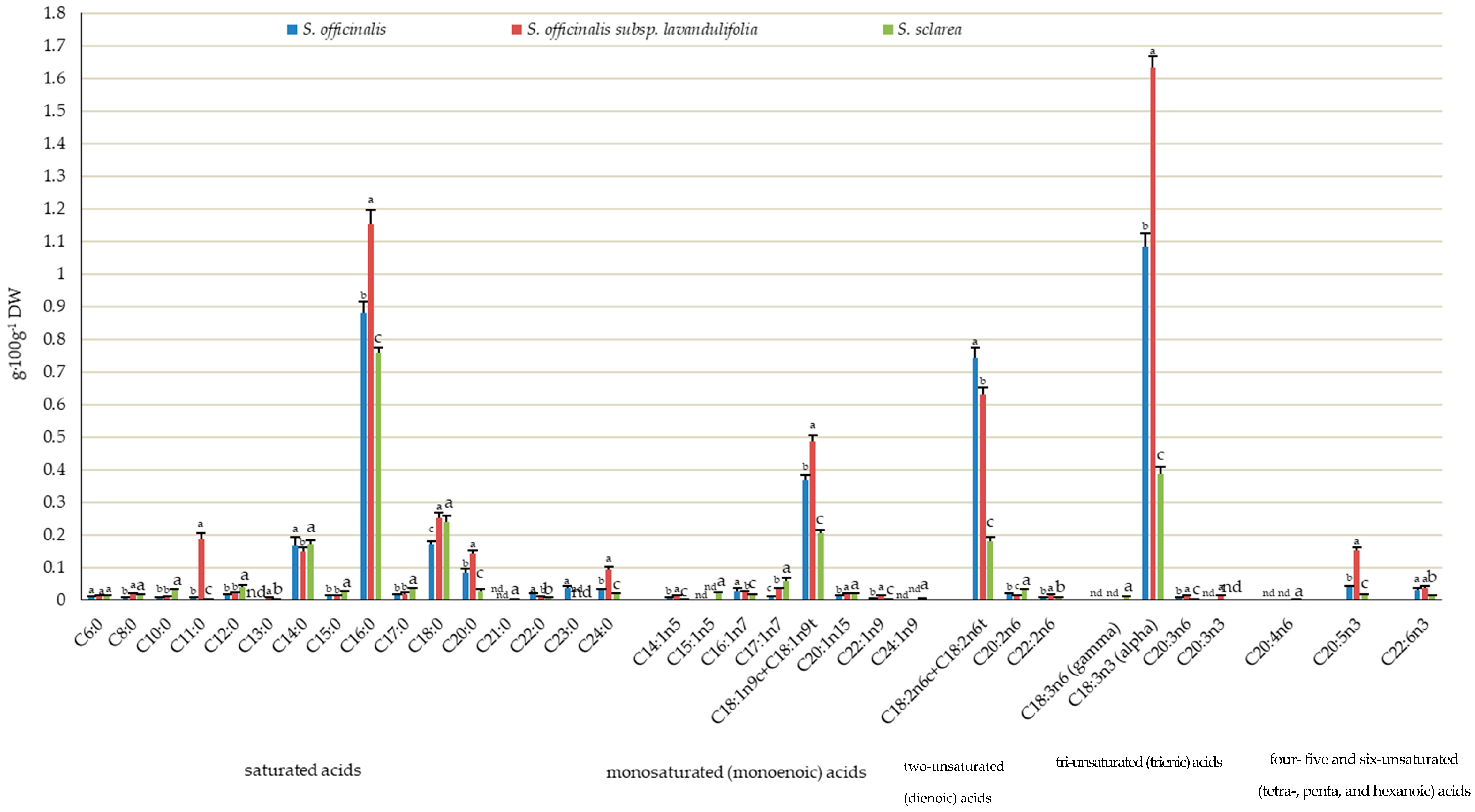
The qualitative analysis of the composition of omega-3 polyunsaturated fatty acids (PUFAs) allowed separation and identification of the following compounds in the herb of the three taxa: α-linolenic acid (C18:3n3 alpha), EPA timnodonic acid (C20:5n3), and DHA cervonic acid (22:6n3). The content of each of these acids differed markedly between the taxa, being the lowest in S. sclarea and the highest in S. officinalis subsp. lavandulifolia with the range of 0.037–1.634, 0.014–0.153, and 0.013–0.037 g·100 g−1 DW, respectively. A representative of the omega-3 group, i.e., Z-11,14,17-eicosatrienoic acid C20:3n3 (0.013 g·100 g−1 DW), was identified only in the herb of S. officinalis subsp. lavandulifolia (Figure 11), with the percentage share of 0.17% in the total pool of fat (Figure 12). The percentage share of α-linolenic acid, EPA, and DHA in the total pool of fat extracted from each taxon oscillated between 10.1 (S. sclarea) and 21.0% (S. officinalis subsp. lavandulifolia), 0.4 (S. sclarea) and 2% (S. officinalis subsp. lavandulifolia), and 0.3 (S. sclarea) and 0.6% (S. officinalis), respectively (Figure 12).
Omega-6 Fatty Acids
Omega-6 acids, from the class of PUFAs, which have the first double bond located at the sixth carbon from the methyl end of the carbon chain, were the second abundant group of omega fatty acids. The highest content of these fatty acids was determined in S. officinalis (0.78 g·100 g−1 DW), an intermediate level was detected in S. officinalis subsp. lavandulifolia (0.67 g·100 g−1 DW), and the lowest content was found S. sclarea (0.24 g·100 g−1 DW), with a significant percentage drop by 14 and 69%, respectively (Figure 9). A similar tendency was found for the percentage share of omega-6 acids in the total pool of fats in each of the three taxa, with the value of this parameter of 14.45, 8.58, and 6.14%, respectively (Figure 10).
The following omega-6 acids were identified in the Salviae herba of the three analysed taxa: Z-11,14-eicosadienoic acid C20:2n6 (0.014 g·100 g−1 DW in S. officinalis subsp. lavandulifolia–0.031 g·100 g−1 DW in S. sclarea), 13,16-docosadienoic acid C22:2n6 (0.008 in S. officinalis and S. sclarea–0.015 in S. officinalis subsp. lavandulifolia), DGLA Dihomo-γ-linolenic acid 20:3n6 (0.003 g·100 g−1 DW in S. sclarea–0.012 g·100 g−1 DW in S. officinalis subsp. lavandulifolia), and the sum of Z-9,12-octadecadienoic (linoleic) and E-9,12-octadecadienoic (linoelaidic) acids C18:2n6c + C18:2n6t (0.182 g·100 g−1 DW in S. sclarea–0.744 g·100 g−1 DW in S. officinalis) (Figure 11). The range of the percentage share of omega-6 fatty acids in the total pool of fat extracted from the individual taxa of Salviae herba was as follows: Z-11,14-eicosadienoic acid C20:2n6 from 0.18% in S. officinalis subsp. lavandulifolia to 0.8% in S. sclarea, Z-13,16-docosadienoic acid C22:2n6 from 0.15% in S. officinalis to 0.22% in S. sclarea, DGLA 20:3n6 from 0.09% in S. sclarea to 0.15% in S. officinalis subsp. lavandulifolia, and the sum of linoleic and linoelaidic acids C18:2n6c + C18:2n6t from 4.75% in S. sclarea to 13.81% in S. officinalis (Figure 12). Additionally, γ-linolenic acid (C18:3n6 gamma, GLA) (0.01 g·100 g−1 DW) and arachidonic acid (C20:4n6) (0.001 g·100 g−1 DW) were identified only in the herb of S. sclarea, with their percentage share in the total pool of fat ranging from 0.25 to 0.03%, respectively (Figure 11 and Figure 12). Omega-3 and omega 6-acids, contrary to mono-unsaturated omega-9, constitute a group of essential polyunsaturated fatty acids (EFAs), which cannot be synthesised in the human organism.
Omega-9 Fatty Acids
Among the three examined taxa, the S. officinalis subsp. lavandulifolia herb was characterised by the highest content (0.50 g·100 g−1 DW) of omega-9 fatty acids with one double bond located at the ninth carbon from the methyl end of the carbon chain, followed by a moderate level of these acids detected in S. officinalis (0.37 g·100 g−1 DW), and the lowest content in S. sclarea (0.21 g·100 g−1 DW), with a significant drop by approximately 26 and 58%, respectively (Figure 9). The percentage share of omega 9 acids in the total pool of fats was quite similar in the herb of S. officinalis (6.9%) and S. officinalis subsp. lavandulifolia (6.4%) and markedly higher than in S. sclarea (5.5%) (Figure 10).
Considering the qualitative analysis of the composition of omega-9 fatty acids, the sum of oleic and elaidic acids (C18:1n9c + C18:1n9t) as well as eruic acid (C22:1n9) were identified in all the examined Salviae herba samples, and their content, with the lowest value in S. sclarea and the highest in S. officinalis subsp. lavandulifolia, was in the range from 0.204 to 0.488 g·100 g−1 and from 0.002 to 0.012 g·100 g−1 DW, respectively (Figure 11). In S. sclarea, the family of omega 9 acids was also represented by nervonic acid C24:1n9, with the content of 0.005 g·100 g−1 DW and the percentage share in the total pool of fat 0.14% (Figure 11 and Figure 12). The range of the percentage share of the sum of oleic and elaidic acids (C18:1n9c + C18:1n9t) as well as eruic acid (C22:1n9) in the total pool of fat ranged from 5.32% (S. sclarea) to 6.82% (S. officinalis) and from 0.04% (S. sclarea) to 0.15% (S. officinalis subsp. lavandulifolia) (Figure 12).
Omega-5 Fatty Acids
In addition to the three main groups of fatty acids mentioned above, one fatty acid from the omega-5 family, i.e., myristoleic acid Z-9-tetradecenoic acid (C14:1n5), was detected in the samples all of the three Salviae herba types at concentrations between 0.002 (S. sclarea) and 0.012 g·100 g−1 DW (S. officinalis subsp. lavandulifolia) and the range of the percentage share in the total pool of fat from 0.06% to 0.15% (Figure 11 and Figure 12). Another omega-5 fatty acid, Z-10-pentadecenoic acid (C15:1n5), was identified only in the herb of S. sclarea (0.51 g·100 g−1 DW) (Figure 11), with the percentage share in the total pool of fat 0.51% (Figure 12).
Omega-7 Fatty Acids
Palmitoleic acid (C16:1n7) and Z-10-heptadecenoic acid (C17:1n7) from the omega-7 family were detected in the analysed material with the level ranging from 0.014 g·100 g−1 DW (S. sclarea) to 0.029 g·100 g−1 DW (S. officinalis) and from 0.010 (S. officinalis) to 0.06 g·100 g−1 DW (S. sclarea), respectively (Figure 11). The percentage share of these acids in the total pool of fat was in the range from 0.29% (S. officinalis subsp. lavandulifolia) to 0.54% (S. officinalis) and from 0.19% (S. officinalis) to 1.56% (S. sclarea), respectively (Figure 12).

2.3.3. Qualitative and Quantitative Composition of Fatty Acids

Saturated Fatty Acid (SFAs)
The analyses showed the presence of 14 saturated fatty acids in the herb of S. officinalis subsp. lavandulifolia and S. officinalis and 15 SFAs in S. sclarea. The SFAs were dominated by palmitic acid (C16:0), stearic acid (C18:0), myristic acid (C14:0), arachidic acid (C20:0), and lignoceric acid (C24:0). The content of these acids was within the range of 0.759–1.152 g·100 g−1 DW, 0.17–0.25 g·100 g−1 DW, 0.15–0.17 g·100 g−1 DW, 0.026–0.143 g·100 g−1 DW, and 0.017–0.094 g·100 g−1 DW, respectively. The highest content of palmitic, arachidic, and lignoceric acids was found in S. officinalis subsp. lavandulifolia, while the lowest level was detected in S. sclarea, with statistically confirmed changes between the three taxa. The level of stearic acid was notably lower in S. officinalis than in S. officinalis subsp. lavandulifolia and S. sclarea. In turn, the myristic acid content in the S. officinalis and S. sclarea herb highly exceeded that found in S. officinalis subsp. lavandulifolia (Figure 11). The percentage share of the content of palmitic acid (C16:0), stearic acid (C18:0), myristic acid (C14:0), arachidic acid (C20:0), and lignoceric acid (C24:0) in the total pool of fat extracted from each taxon of Salviae herba was 14.8–19.8%, 3.2–6.3%, 1.9–4.5%, 0.7–1.8%, and 0.4–1.2%, respectively. The lowest percentage share of palmitic and myristic acids in the total pool of fat was shown in the S. officinalis subsp. lavandulifolia herb, while the highest level was found in S. sclarea. The opposite tendency was recorded in the case of arachidic and lignoceric acids. In turn, the value of this parameter for stearic acid in S. officinalis subsp. lavandulifolia and S. officinalis was markedly lower than in S. sclarea (Figure 12). The S. officinalis subsp. lavandulifolia herb was characterised by extremely higher content of undecanoic acid C11:0 and its high share in the total pool of fat (0.187 g·100 g−1 DW g and 2.40%), compared to S. officinalis (0.0065 mg·100 g−1 and 0.12%) and S. sclarea (0.001 g·100 g−1 DW and 0.03%) (Figure 11 and Figure 12). In the group of saturated fatty acids present in the other taxa, the S. officinalis subsp. lavandulifolia herb did not contain heneicosylic (C21:0) and tricosanoic (C23:0) acids. Tridecanoic acid (C13:0) and heneicosylic acid were not detected in S. officinalis, and no tricosanoic acid was found in S. sclarea (Figure 11 and Figure 12).
Mono-Unsaturated (Monoenoic) Fatty Acids
Six monoenoic acids were detected in the first two taxa, and eight acids from this group were found in S. sclarea. The highest levels were determined in the case of the sum of oleic and elaidic acids C18:1n9c+C18:1n9t (0.204 g·100 g−1 DW in S. sclarea–0.488 g·100 g−1 DW in S. officinalis subsp. lavandulifolia), Z-10-heptadecenoic acid C17:1n7 (0.01 in S. officinalis –0.06 g·100 g−1 DW in S. sclarea), palmitoleic acid C16:1n-7 (0.014 g·100 g−1 DW in S. sclarea–0.029 g·100 g−1 DW in S. officinalis), and Z-5-eicosenoic acid C20:1n15 (0.011 in S. officinalis–0.019 in S. sclarea and S. officinalis subsp. lavandulifolia), with the following range of the percentage share of these acids in the total pool of fat: 5.32–6.25%, 0.19–1.56%, 0.29–0.54%, and 0.20–0.49% (Figure 11 and Figure 12). The values of the sum of oleic and elaidic acids as well as Z-10-heptadecenoic acid and palmitoleic acid varied significantly between the three taxa, and the content of Z-5-eicosenoic acid in S. officinalis subsp. lavandulifolia and S. sclarea markedly exceeded the values found in S. officinalis. Among the monounsaturated fatty acids that were detected in S. sclarea, 10-pentadecenoic acid (C24:1n9) and nervonic acid (C15:1n5) were absent in the herb of S. officinalis subsp. lavandulifolia and S. officinalis (Figure 11 and Figure 12).
Two-Unsaturated (Dienoic) Fatty Acids
Three dienoic acids were detected, with the highest concentrations of the sum of linoleic and linoelaidic acids C18:2n6c + C18:2n6t (0.182 g·100 g−1 DW in S. sclarea–0.744 g·100 g−1 DW in S. officinalis), an intermediate level of Z-11,14-eicosadienoic acid C20:2n6 (0.014 in S. officinalis subsp. lavandulifolia–0.031 g·100 g−1 DW in S. sclarea), and the lowest content of 13,16-docosadienoic acid C22:2n6 (0.008 g·100 g−1 in S. officinalis and S. sclarea–0.015 g·100 g−1 DW in S. officinalis subsp. lavandulifolia), with the following range of the percentage share of these acids in the total pool of fat: from 4.8% (S. sclarea) to 13.8% (S. officinalis), from 0.18% (S. officinalis subsp. lavandulifolia) to 0.8% (S. sclarea), and from 0.15% (S. officinalis) to 0.22% (S. sclarea) (Figure 11 and Figure 12).
Tri-Unsaturated (Trienoic) Fatty Acids
Additionally, four trienoic acids with a dominance of α-linolenic acid (C18:3n3 alpha) (10–20%) were identified. In each of the three examined taxa, α-linolenic acid C18:3n3 alpha and Dihomo-γ-linolenic acid (DGLA) 20:3n6 were detected with the content between 0.387 g·100 g−1 DW (S. sclarea) and 1.634 g·100 g−1 (S. officinalis subsp. lavandulifolia) and from 0.003 (S. sclarea) to 0.012 g·100 g−1 DW (S. officinalis subsp. lavandulifolia), respectively. The range of the percentage share of these acids in the total pool of fat was 10.07–20.95% and 0.09–0.15%. Among trienoic acids present in S. sclarea, no γ-linolenic acid (C18:3n6, GLA) was detected in the herb of S. officinalis subsp. lavandulifolia and S. officinalis, while Z-11,14,17-eicosatrienoic acid (C20:3n3) was not contained in S. officinalis and S. sclarea (Figure 11 and Figure 12).
Four- Five and Six-Unsaturated (Tetra-, Penta-, and Hexanoic) Acids
Arachidonic acid C20:4n6, which represents tetraenoic acids, was identified only in S. officinalis (0.001 g·100 g−1 DW), while pentaenoic timnodonic acid EPA (C20:5n3) with the range from 0.014 g·100 g−1 (S. sclarea) to 0.153 g·100 g−1 DW (S. officinalis subsp. lavandulifolia) and hexaenoic DHA cervonic acid (C22:6n3) with the range from 0.013 g·100 g−1 DW (S. sclarea) to 0.037 g·100 g−1 DW (S. officinalis subsp. lavandulifolia) were detected in all the three analysed taxa (Figure 11). The ranges of the percentage share of the two aforementioned acids in the total pool of fat extracted from each taxon of Salviae herba were 0.37–1.96% and 0.33–0.57% (Figure 11 and Figure 12).
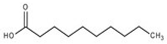
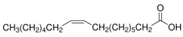
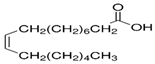
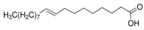
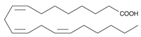
The nomenclature, abbreviations, symbols, and linear and structural formulas of the SFAs, MUFAs, and PUFAs identified in the Salviae herba are presented in Table 2, Table 3 and Table 4.

2.4. Vitamin C

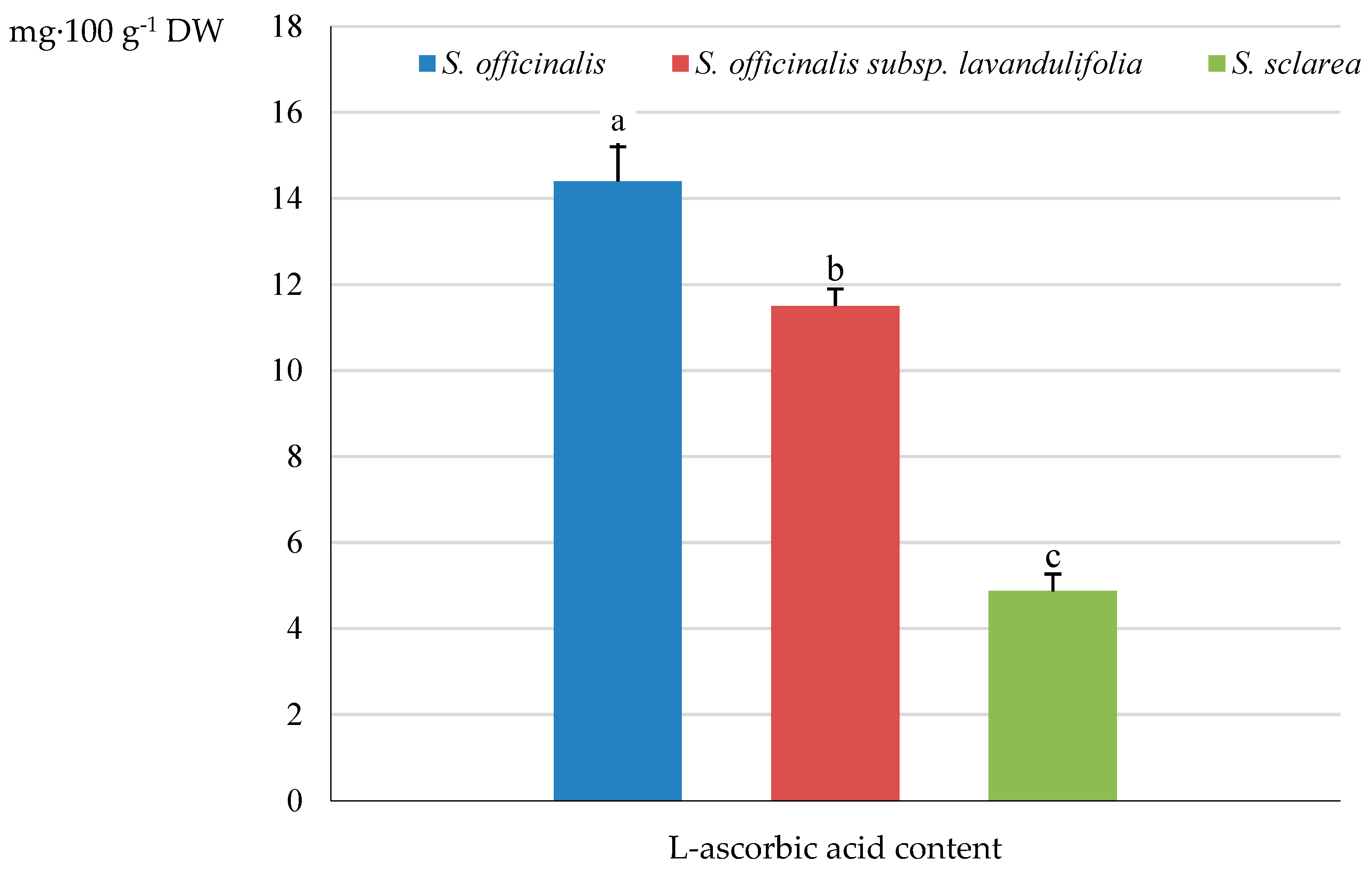
The highest content of L-ascorbic acid from the group of unsaturated polyhydroxy alcohols was determined in the herb of S. officinalis (14.43 mg·100 g−1 DW), followed by an approximately 21% lower level in S. officinalis subsp. lavandulifolia (11.52 mg·100 g−1 DW) and a 66% lower value in S. sclarea (4.87 mg·100 g−1 DW) (Figure 13).

2.5. Polyphenolic Compounds

Polyphenolic compounds include very diverse groups in terms of biological functions, properties, and structure: phenolic acids, lignans, flavonoids (flavonols, flavanols, flavones, isoflavones, flavanones, anthocyanins, and chalcones), xanthones, anthraquinones, stilbenes, naphthoquinones, tannins, nitrogen compounds, and terpenoids.

2.5.1. Cinnamic Acid Derivates

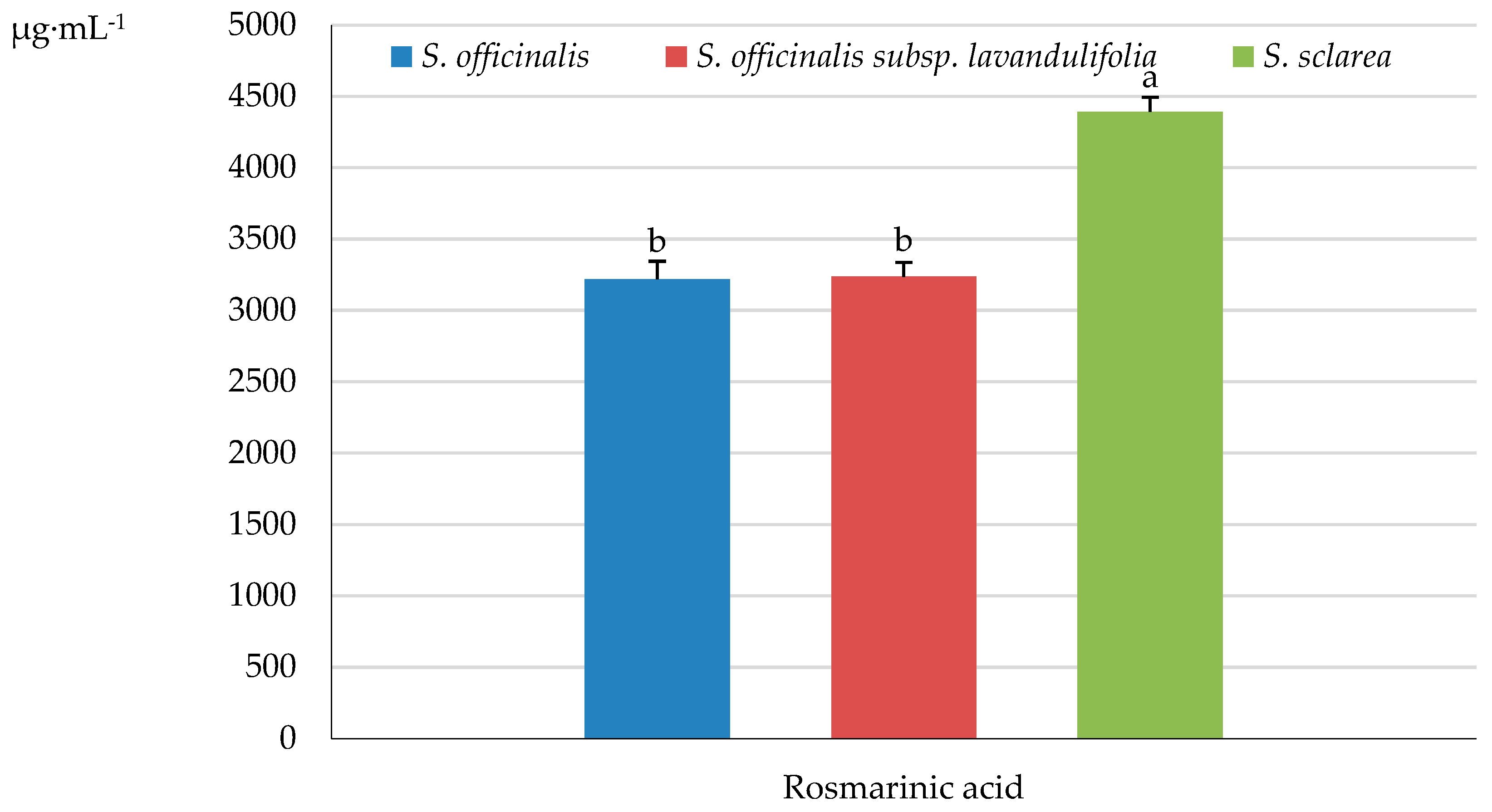
Rosmarinic acid was recognised as the most abundant phenolic compound in the Salvia samples (stem + leaves + inflorescence), with the highest level of this frequently occurring ester of caffeic acid and 3,4-dihydroxyphenyl lactic acid found in S. sclarea (4392.06 μg·mL−1), moderate amounts determined in S. officinalis subsp. lavandulifolia (3236.63 μg·mL−1), and the lowest content detected in S. officinalis (3218.87 μg·mL−1) (Figure 14 and Figure 15).
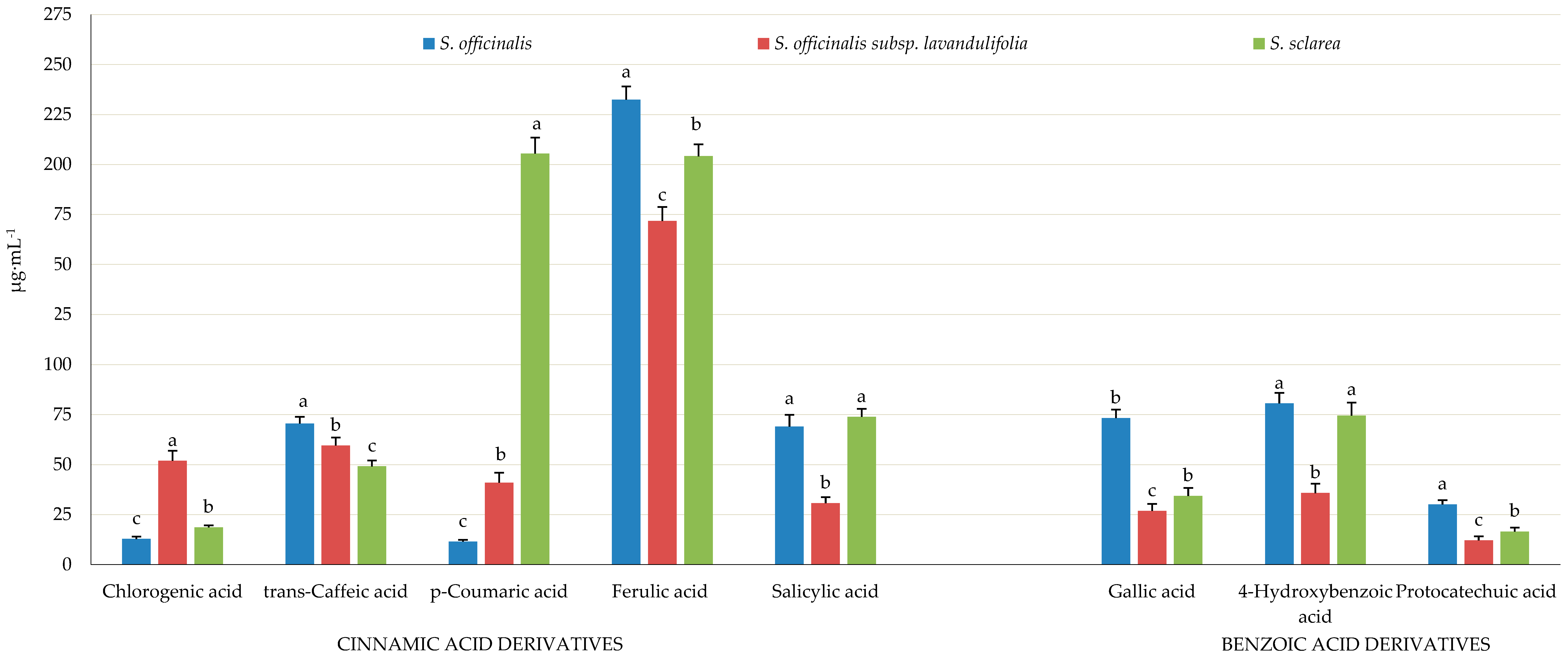
The content of the most common hydroxy derivatives of cinnamic acid, i.e., p-coumaric acid (4-hydroxycinnamic acid, 4-HCA), caffeic acid (3,4-dihydroxycinnamic acid, 3,4-dHCA), and ferulic acid (4-hydroxy-3-methoxycinnamic acid), differed notably between the examined taxa and oscillated from 11.57 (S. officinalis) to 205.53 μg·mL−1 (S. sclarea), from 49.16 (S. sclarea) to 70.53 μg·mL−1 (S. officinalis), and from 171.78 (S. officinalis subsp. lavandulifolia) to 232.43 μg·mL−1(S. officinalis), respectively. The lowest content of chlorogenic acid, also known as 5-O-caffeoylquinic acid, which is an ester formed from cinnamic acids and quinic acid was found in S. officinalis (12.83 μg·mL−1), followed by a markedly increased level in S. sclarea (18.6 μg·mL−1) and S. officinalis subsp. lavandulifolia (51.92 μg·mL−1). The level of salicylic acid synthesised from E-cinnamic acid by decarboxylation to benzoic acid and further 2-hydroxylation of benzoic acid was similar in S. officinalis and S. sclarea (69.07 and 73.93 μg·mL−1, respectively) and notably exceeded the content determined in S. officinalis subsp. lavandulifolia (30.95 μg·mL−1) (Figure 15).

2.5.2. Benzoic Acid Derivatives

The amount of gallic acid (3,4,5-trihydroxybenzoic acid) and 4-hydroxybenzoic acid in the Salvia samples (stem + leaves + inflorescence) was the lowest in S. officinalis (26.93 and 35.81 μg·mL−1, respectively), moderate in S. sclarea (34.32 and 74.51 μg·mL−1), and the highest in S. officinalis subsp. lavandulifolia (73.32 and 80.67 μg·mL−1), while the content of protocatechuic acid (3,4-dihydroxybenzoic) exhibited the following order: S. officinalis (30.15 μg·mL−1) > S. sclarea (16.56 μg·mL−1) > S. officinalis subsp. lavandulifolia (12.17 μg·mL−1) (Figure 15).

2.6. Coumarins and Phenol Aldehyde

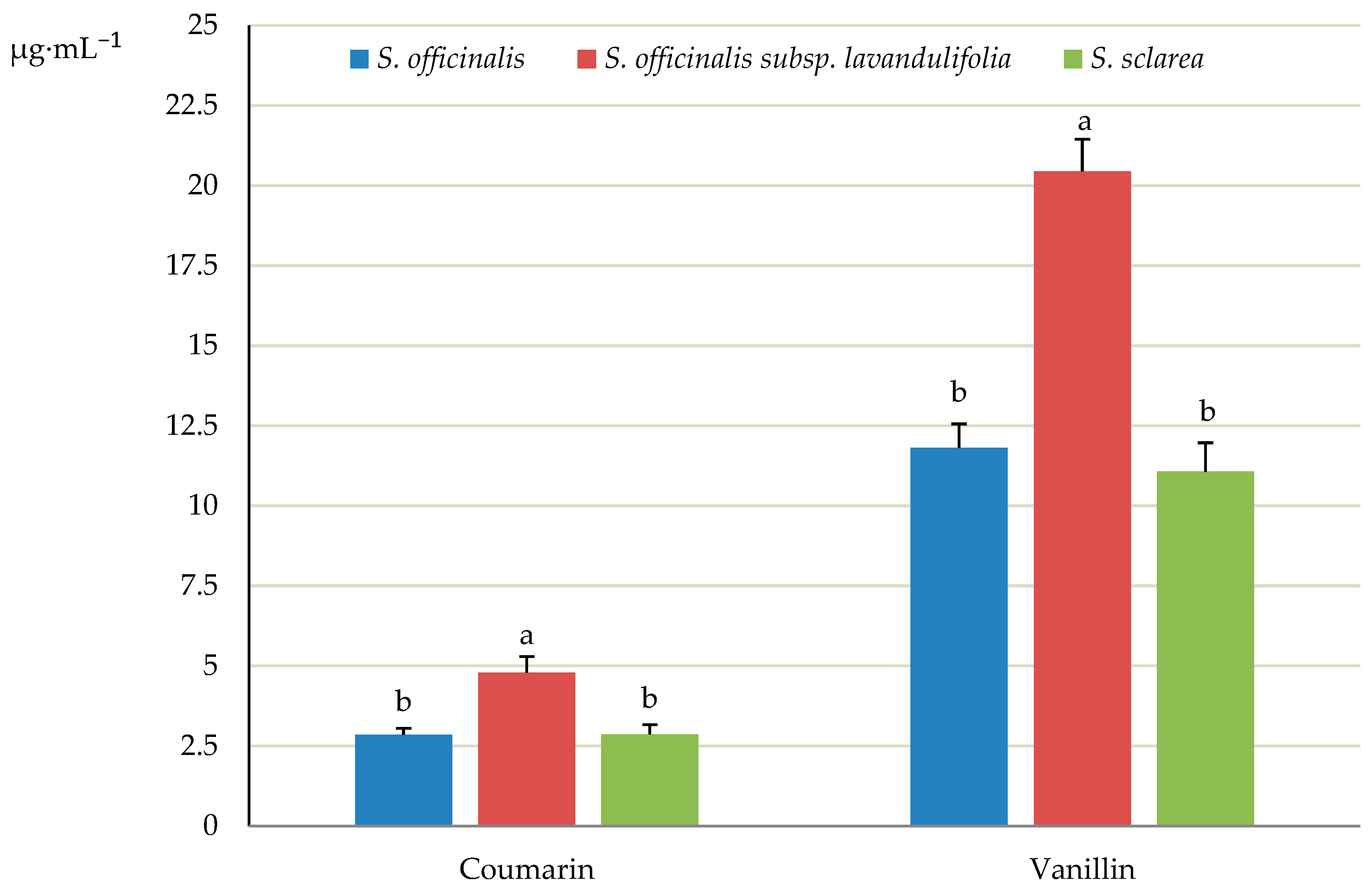
The levels of the phenolic aldehyde vanillin (4-hydroxy-3-methoxybenzaldehyde) and coumarin (1-Benzopyran-2-one) were quite similar in S. officinalis (11.82 and 2.85 μg·mL−1, respectively) and S. sclarea (11.07 and 2.87 μg·mL−1) and lower than in S. officinalis subsp. lavandulifolia (20.45 and 4.79 μg·mL−1) (Figure 16).

2.7. Non-Phenolic Organic Acids

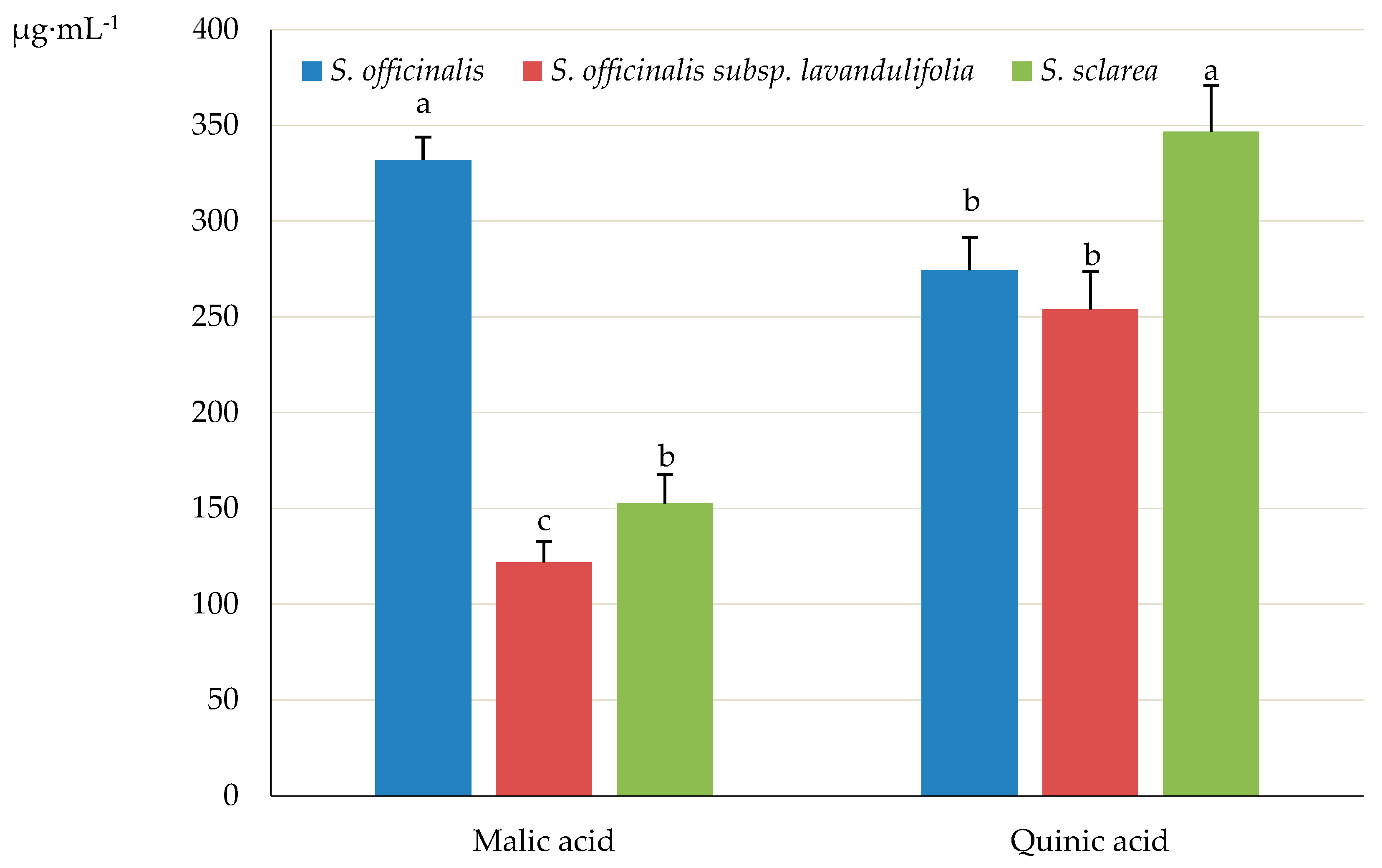
The content of malic and quinic acids in the Salvia samples (stem + leaves + inflorescence), ranging from 121.89 (S. officinalis subsp. lavandulifolia) to 331.95 (S. officinalis) μg·mL−1 and from 253.84 (S. officinalis subsp. lavandulifolia) to 346.69 μg·mL−1 (S. sclarea), differed significantly between the three taxa (Figure 17).

2.8. Ortho-Dihydroxyphenols

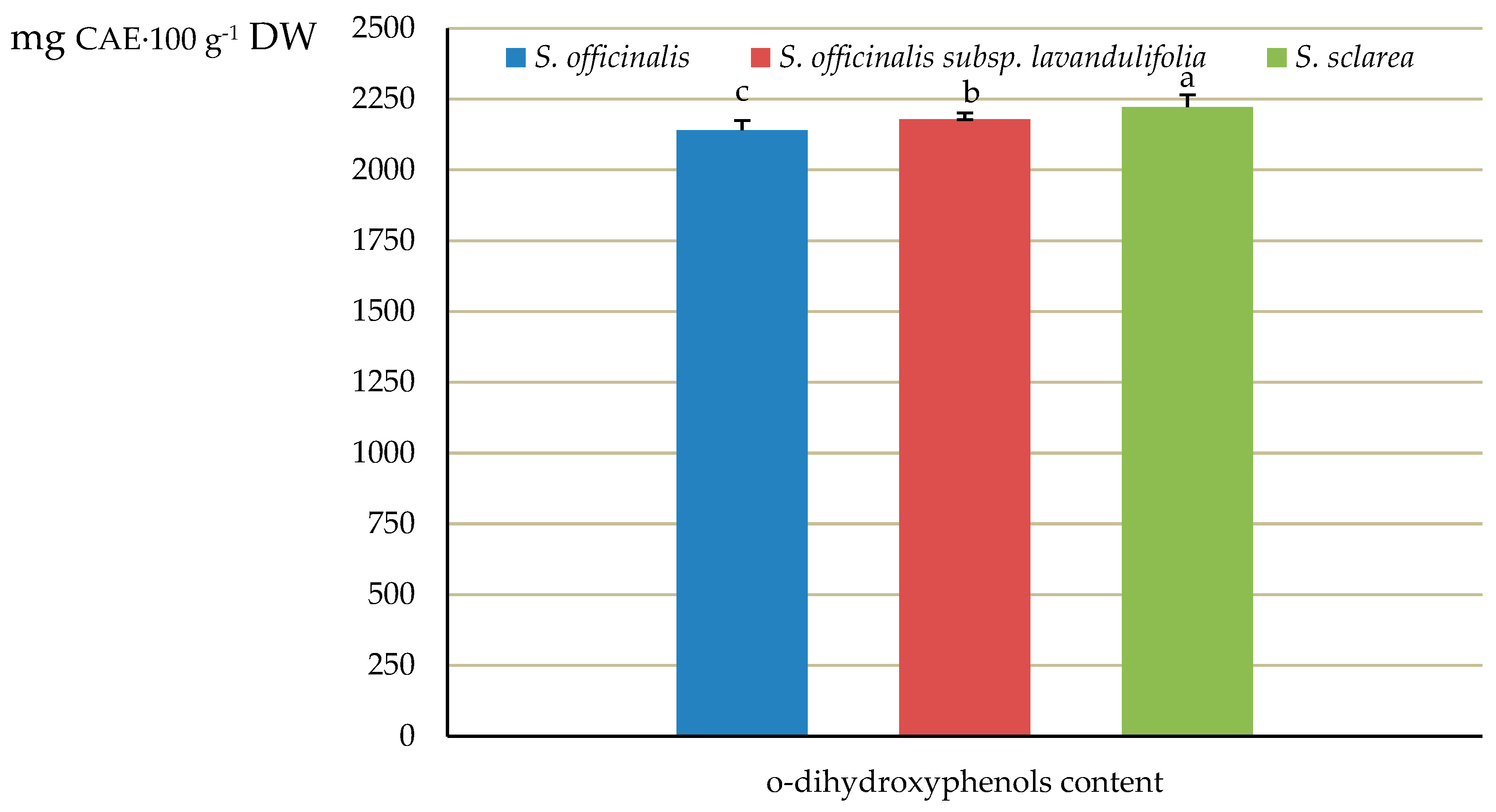
The total levels of o-dihydroxyphenols in the analysed Salviae herba samples varied notably between the three analysed taxa, with the highest concentration in S. sclarea (2222 mg·100 g−1 DW calculated as caffeic acid equivalents, CAE), an intermediate level in S. officinalis subsp. lavandulifolia (2179 mg·100 g−1 DW), and the lowest content in S. officinalis (2140 mg·100 g−1 DW) (Figure 18).

2.9. Flavonoids

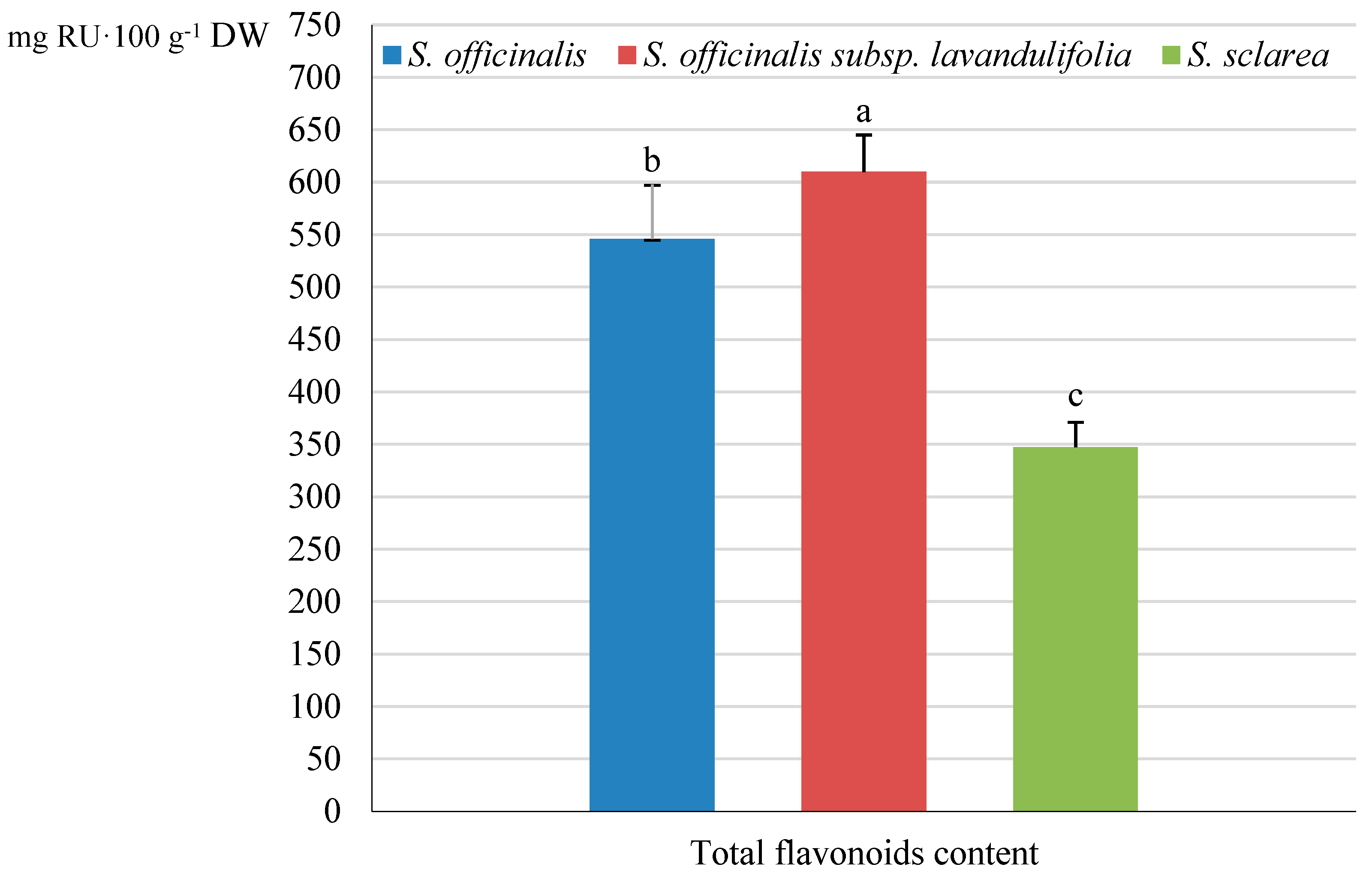
The highest flavonoid level in the analysed Salviae herba was detected in S. officinalis subsp. lavandulifolia (610 mg·100 g−1 calculated as rutin equivalents), with a considerably lower value of this parameter by approximately 10.5% in S. officinalis (546 mg RU·100 g−1 DW) and by 43% in S. sclarea (347 mg RU·100 g−1 DW) (Figure 19).

2.9.1. Flavones

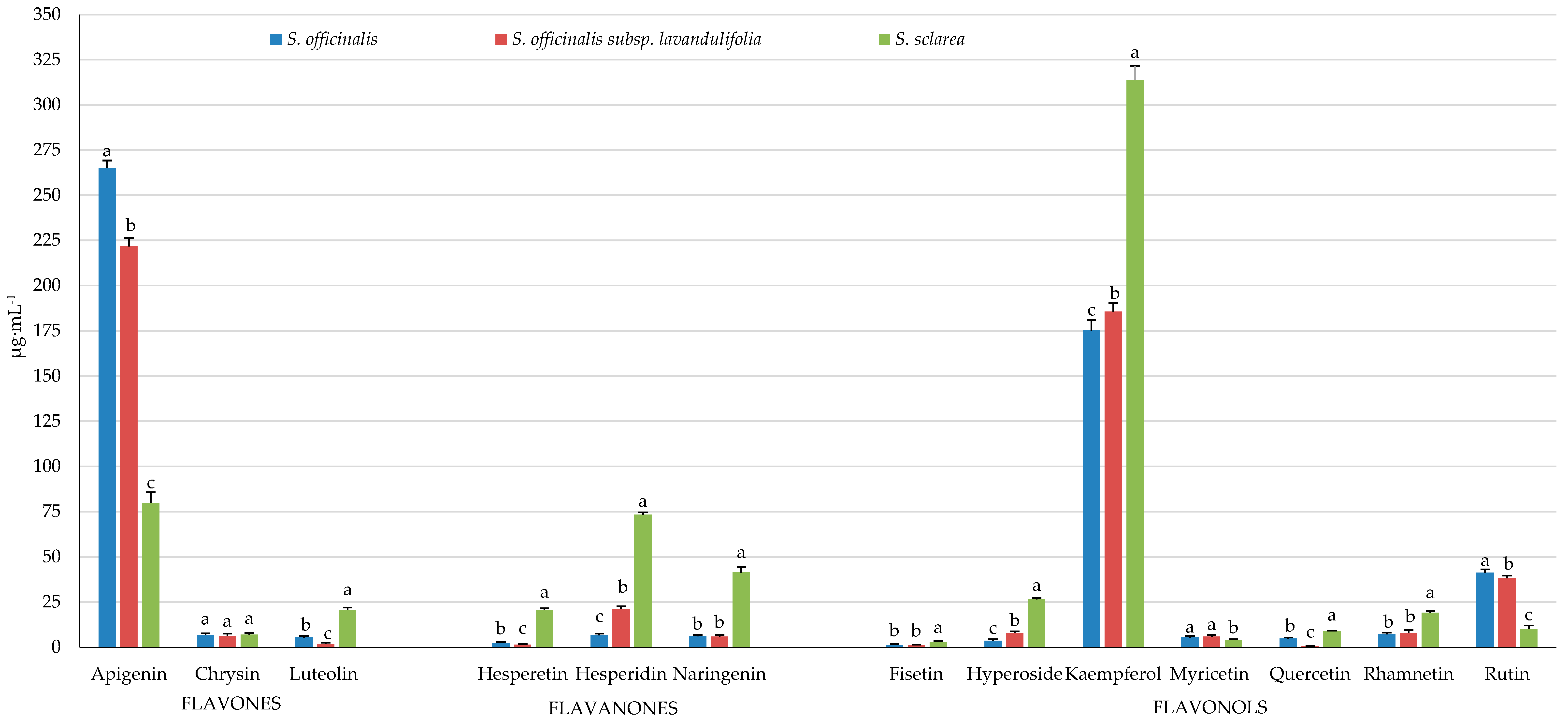
The dominant flavone in the samples (stem + leaves + inflorescence) of the analysed taxa was apigenin, with the highest level in S. officinalis (265 μg·mL−1), followed by S. officinalis subsp. lavandulifolia (222 μg·mL−1) and S. sclarea (80 μg·mL−1). The luteolin content increased notably in the following order: S. officinalis subsp. lavandulifolia (1.82 μg·mL−1) < S. officinalis (5.39 μg·mL−1) < S. sclarea (20.60 μg·mL−1). The chrysin content in the examined taxa was similar and oscillated within 6.23–6.89 μg·mL−1 (Figure 20).

2.9.2. Flavanones

The samples of S. sclarea (stem + leaves + inflorescence) were the richest source of flavanones of the three analysed taxa. The range of hesperetin and hesperidin content fluctuated between 1.39 (S. officinalis subsp. lavandulifolia) and 20.38 μg·mL−1 DW (S. sclarea) and from 6.58 (S. officinalis) to 73.35 μg·mL−1 DW (S. sclarea), respectively. The level of naringenin in S. officinalis subsp. lavandulifolia and S. officinalis was comparable (approximately 6.00 μg·mL−1 DW), but it was distinctly lower than in S. sclarea (41.30 μg·mL−1 DW) (Figure 20).

2.9.3. Flavonols

Kaempferol and rutin were the dominant flavonols in the samples (stem + leaves + inflorescence) of the analysed three taxa, with the content range from 175.32 (S. officinalis) to 313.64 μg·mL−1 (S. sclarea) and from 10.03 (S. sclarea) to 41.17 (S. officinalis), respectively. Fisetin was recognised as the most abundant flavonol, with the level ranging between 1.11 (S. officinalis subsp. lavandulifolia) and 2.89 μg·mL−1 (S. sclarea). The content range of the other flavonols in the of the examined taxa was as follows (in μg·mL−1): hyperoside from 3.57 (S. officinalis) to 26.37 (S. sclarea), rhamnetin from 7.04 (S. officinalis) to 19.04 (S. sclarea), quercetin from 0.46 (S. officinalis subsp. lavandulifolia) to 8.76 (S. sclarea), and myricetin from 3.83 (S. sclarea) to 5.86 μg·mL−1 (S. officinalis subsp. lavandulifolia). Therefore, the highest level of flavonols, except for rutin and myricetin, was found in S. sclarea, which contained the lowest level of these two flavonols (Figure 20).

3. Discussion

3.1. Ash

The ash content in the S. officinalis herb (9.24% DW) determined in the present study was similar to that in the aboveground parts of this species described in the literature (8.76; 9.10% DW) [66,67] and leaves (9.10; 9.87; 12.59%) [66,68,69], but it was higher than its content in Salviae folium from common sage (2.17% DW) reported by [70]. The ash content determined in S. sclarea (11.9% DW) in the present study was lower than that reported in Salviae herba (18.39% DW) from this species [67] and similar to the content in Salvae folium (12.59% DW) [68]. Simultaneously, the ash content in the herb of the three taxa from the genus Salvia exceeded the value of this parameter reported by other authors analysing Salviae hispanicae semen (chia seeds) (7.7% DW) [71].

3.2. Protein

In the present study, the protein content in the S. sclarea herb (8.57%) was lower than that reported in the literature for this species (14.49% DW) [67]. The total protein content in the S. officinalis herb (16.14% DW) obtained in this study was higher than the amounts detected in its aboveground parts (6.86–7.13, 9.38, and 15.28% DW) by other authors [67,69,72], but higher (17.07%) and lower (15.28% DW) than that recorded in the leaves of this species by Darwish et al. [68] and Draz et al. [70], respectively. The three Salvia taxa analysed in the present study exhibited significantly higher crude protein content in the herb than the S. hispanica species (5.73 g·100 g−1 DW) studied by Peiretti and Gai [71].
As shown by Grancieri et al. [73] protein isolated from S. hispanica seeds and protein fractions: albumin, globulin, glutelin, and prolamin digested in simulated gastrointestinal conditions in the inflammatory process reduced p-NF-κB (phospho-nuclear factor kappa B), iNOS (inducible nitric oxide synthase enzyme), p-JNK (phospho c-Jun N-terminal kinases), and AP-1, which is a sequence-specific transcriptional activator composed of members of the Jun and Fos families. They also reduced the NF-κB translocation to nuclei. Furthermore, protein and glutein inhibited the production of prostaglandins, TNF-α (tumour necrosis factor α), MCP-1 (monocyte chemoattractant protein-1), IL-6 and IL-10, nitric oxide release, reduced the generation of reactive oxygen species, NF-κB translocation to nuclei, and the expression of iCAM (intercellular adhesion molecule 1) and LOX-1 (low-density lipoprotein receptor-1), and limited lipid accumulation. As a result, protein fractions limited the levels of markers involved in the induction of pro-inflammatory processes and atherosclerosis in macrophages (in silico, in vitro) [73]. Albumin and globulin peptides from S. hispanica seeds exhibited strong antiradical activity against 2,2-diphenyl-1-picrylhydrazyl (DPPH) and 2,2′-azino-bis(3-ethylbenzothiazoline-6-sulphonic acid) (ABTS) and inhibited the angiotensin-converting enzyme (ACE; EC 3.4.15.1) activity to a great extent. These fractions exerted strong chelation ability [74]. Furthermore, lectin isolated from S. sclarea seeds recognised the abnormal O-glycan called the Tn antigen defined as the monosaccharide N-acetylgalactosamine linked to serine or threonine GalNAca-O-Ser/Thr, which is a specific marker in many human carcinomas [75].

3.3. Amino Acids

Amino acids play a key role in the successful cultivation of medicinal and aromatic plants, especially under environmental stress [76]. They are used by plants for many different purposes, including the synthesis of substances with high biological activity, the generation of energy, and the biosynthesis of proteins [77]. Approximately 20 amino acids are involved in early stages of each protein synthesis in a cell [76,77], who investigated growth characteristics and changes in the active ingredients of Salvia mirzayanii essential oil, have suggested that foliar application of amino acids stimulates metabolic processes, thus improving quantitative and qualitative yield. Amino acids directly regulate vital function and plant structure. They are recognised as biostimulants crucial in the synthesis of secondary metabolites, including hormone-derived ones. Amino acids in plants enhance mRNA transcription, activate hormones responsible for reproductive growth, stimulate the formation of chlorophyll, carotenoids, and carbohydrate, improve the essential oil profile, and increase the uptake and transport of elements [78].

3.3.1. Exogenous Amino Acids

In the present study, eight protein amino acids were classified as exogenous. Their content ranged from 26.05 mg·g−1 DW (S. sclarea) to 52.27 mg·g−1 DW (S. officinalis), which constituted 41–47% of the total amino acid pool. Leucine: 5.06 mg·g−1 (S. sclarea)–10.1 mg·g−1 (S. officinalis), phenylalanine: 3.87 mg·g−1 (S. sclarea)–8.25 mg·g−1 (S. officinalis), and lysine: 3.34 (S. sclarea)–6.67 mg·g−1 (S. officinalis) were the predominant amino acids. This is consistent with the results reported by Laftouhi et al. [72], who found the highest amounts of leucine and phenylalanine in S. officinalis leaves, and with the investigations of lectin proteins in S. sclarea seeds conducted by Medeiros et al. [75], in which phenylalanine and leucine ranked second and fourth, respectively. Darwish et al. [68] reported the dominance of exogenous amino acids: lysine, phenylalanine + tyrosine, leucine, and valine in S. officinalis leaves. A study conducted by Koshevoi [79] indicated phenylalanine, isoleucine, and leucine as the dominant exogenous amino acids in S. officinalis leaves. The profile of exogenous amino acids determined in the present study is consistent with the results reported by Vovk et al. [80]. These researchers reported the highest concentrations of leucine, phenylalanine, and isoleucine in Salvia flos. Leucine was the dominant exogenous amino acid in the three taxa of the Salvia genus analysed in the present study. Supplementation with leucine-rich protein is one of the methods for preventing sarcopenia [81]. It also exerts a beneficial effect on muscle strength, volume, and function and reduces inflammation, ultimately improving the health status in patients with cerebral palsy [82]. Furthermore, leucine increases lean body mass [83]. The anticatalytic effect of leucine is a consequence of the intra-systemic synthesis of beta-hydroxy-β-methylbutyrate in skeletal muscle and liver, which inhibits protein degradation in skeletal muscles. In healthy individuals, approximately 60% of dietary leucine is metabolised after several hours, with around 5% (2–10% range) being converted to HMB [84,85]. Leucine also exerts an anabolic effect, supporting muscle tissue growth through activation of the mTOR (mammalian target of rapamycin) signalling pathway responsible for initiating muscle protein synthesis, with the synergistic participation of the AMP-activated protein kinase (AMPK) catabolic signalling pathway that coordinates cell growth, autophagy, and metabolism [86,87,88]. Human muscle cells sense a rise in leucine and/or essential amino acids to trigger mTOR activation with the involvement of hVps34 and MAP43K kinases [89,90]. Leucine sensor leucyl-tRNA synthetase (LARS) and stress response protein 2 (Sestrin2) are involved in the leucine-sensing process and the activation of RagB/RagD [91].
Phenylalanine, the second most abundant amino acid identified in Salvia herb in the present study, is a precursor of neurotransmitters (adrenaline, dopamine), enzymes, and hormones (thyroxine) [92,93,94,95]. It exhibits neurological and dermatological benefits and is crucial for melanin synthesis. It was revealed that amino acid transporter SLC16A10 enhances melanogenesis by promoting the uptake of phenylalanine, and upregulation SLC16A10 is likely responsible for melasma and the UVB-induced hyperpigmentation [96]. L-phenylalanine administered orally or topically to the skin, in combination with exposure to UVA light, alleviates the symptoms of vitiligo, regulates melanogenesis, inhibits tyrosinase activity, and consequently reduces serum levels of tyrosine, which limits its uptake [97]. Upon conversion into L-tyrosine with the involvement of the enzyme phenylalanine hydroxylase (PAH) and its cofactor tetrahydrobiopterin, phenylalanine is involved in the synthesis of the noradrenaline and dopamine crucial for the proper functioning of the brain and the nervous system [92,93]. Phenylalanine is recommended in the treatment of some types of depression, schizophrenia, and Parkinson’s disease [98,99,100,101,102]. The metabolism pathway of this amino acid (increased Phe levels in blood) seems to be the most important pathway in attention deficit hyperactivity disorder (ADHD) [95]. Phe antagonises G-protein coupled receptors for gamma-aminobutyric acid (GABAB receptors) involved in analgesia, cardiovascular regulation, and depression, suppressing their inhibitory effects [103,104]. Phenylalanine is an ingredient of some artificial sweeteners i.e., aspartame (L-aspartyl-L-phenylalanine methyl ester). It tends to decrease appetite [105].
In the present study, the content of valine, i.e., another exogenous amino acid, in the herb of the analysed taxa ranked third in S. sclarea (3.39 mg·g−1 DW) and fourth in S. officinalis subsp. lavandulifolia (5.52 mg·g−1 DW) and S. officinalis (6.59 mg·g−1 DW). This is consistent with reports on this amino acid in aboveground parts of sage [72] and with the content of lectins in S. sclarea seeds reported elsewhere [75]. It has been shown that low blood valine levels are associated with a high risk of hip fractures [106]. The results obtained in the present study are in agreement with other reports [107]. Valine enhances the respiration rates of complex I (NADH/ubiquinone oxidoreductase), II (succinate dehydrogenase), and IV (cytochrome c oxidase), but does not change the activity of complex III (cytochrome c reductase) [108]. The role of this amino acid in regulating complex I is well documented in T-cell acute lymphoblastic leukaemia [109]. Valine treatment improved the oxygen consumption rate (OCR) and the extracellular acidification rate (ECAR) in the C2C12 mouse cell line probably as a result of extreme oxidation of fatty acids, which inactivate pyruvate dehydrogenase blocking the process of glycolysis. Branched-chain amino acids (BCAAs) are able to sustain oxidative phosphorylation and enhance ATP generation during oxidative stress; this is important for muscle tissue, which is susceptible to high risk of oxidative stress [108].

3.3.2. Endogenous Amino Acids

The present results show that the group of endogenous amino acids in the S. officinalis and S. officinalis subsp. lavandulifolia herb was dominated (mg·g−1 DW) by glutamic acid (17.60 and 12.10) and aspartic acid (16.80 and 12.30, respectively), followed by alanine (7.90 and 6.49), glycine (6.32 and 5.39), proline (5.40 and 5.18), serine (5.67 and 4.70), and tyrosine (3.53 and 3.38 mg·g−1 DW, respectively). As shown by Laftouhi et al. [72], S. officinalis leaves did not contain alanine, asparagine, and glutamine when grown in normal conditions and various climatic disturbances or tyrosine in plants growing at increasing temperature and decreasing precipitation, while serine, proline, and glycine were the dominant endogenous amino acids. The content of the dominant exogenous amino acids determined by these researchers in unchanged growth conditions was 2.42 (Ser), 4.06 (Pro) and 5.54-fold (Gly) lower than that obtained in the present study and amounted to 2.34, 1.33 and 1.14 mg·g−1 DW; in the stress conditions, it ranged from 1.63 to 0.45, from 1.03 to 0.51, and from 0.45 to 0.12 mg·g−1 DW, respectively. Similarly to our studies, Myha et al. [110] recognised glutamic acid (10.8 mg·g−1 DW) and aspartic acid (9.7 mg·g−1 DW) as the dominant non-essential amino acids in S. officinalis leaves. The levels of Asp, Glu, Ala, Ser, Gly, and Tyr reported by these authors were 1.73, 1.63, 1.49, 1.67, 1.29, and 1.26 times lower, respectively, and the amount of Pro was 1.8-fold higher than that in the present study. In S. officinalis leaves, Darwish et al. [68] found that glycine (10.2), glutamic acid (8.3), alanine (7.5), and aspartic acid (5.3 mg·g−1 DW) were the dominant endogenous amino acids. The content of Gly was 1.6-fold higher and the level of the other amino acids was 2.10 (Glu), 1.05 (Ala), 3.17 (Asp), 2.26 (Ser), 2.34 (Tyr), and 64-fold (Pro) lower than the values determined in the present study. Other investigations demonstrated that tyrosine, serine, glutamic acid, and aspartic acid were the dominant non-essential amino acids in sage leaves [79,80]. The group of endogenous amino acids in the S. sclarea herb analysed in the present study was dominated by proline (10.00) and glutamic and aspartic acids (7.52 and 7.55), followed by alanine (4.20), glycine (93.32), serine (2.96), and tyrosine (1.99 mg·g−1 DW). As reported in the literature [75,111], in the lectin isolated from nutmeg sage, glycine was the most abundant endogenous amino acid, followed by aspartic acid, serine, alanine, glycine, and tyrosine. The least abundant was proline, which was classified as the dominant amino acid in the herb of this species in the present study. Except for aspartic acid and serine in S. officinalis and proline in S. sclarea and S. officinalis, the content of endogenous amino acids in the herb of the three Salvia taxa analysed in this study was lower than that reported by Myha et al. [110] in Salvia grandiflora, who recognised glutamic acid (18.4) and aspartic acid (14.4) as the dominant acids and reported high content of alanine (8.6), glycine (7.7), serine (5.5), proline (5.3), and tyrosine (5.2 mg·g−1 DW).
The results of the present study of non-essential amino acids in the herb of the Salvia taxa are also consistent with the report by Siahbalaei and Kavoosi [107], who found that aspartic acid, glycine, glutamic acid, alanine, and serine were the dominant endogenous amino acids in extracts from several plant species representing the families Lamiaceae and Apiaceae. Both exogenous and endogenous amino acids prevented the oxidation of glucose, lipids, and proteins and had antiamylase and antiglucosidase activity. These compounds are highly important due to their health-enhancing biological activity.

3.4. Lipids

The total fat content in the S. sclarea herb (3.84% DW) shown in the present study was approximately two-fold higher than that determined by other authors in aboveground parts (1.99% DW) [67] and 1.83, 2.45, and 7.65 times lower than that found in the flowers (7.04), leaves (9.42), and seeds (29.38% DW) of this species, respectively [112]. In turn, the content of total fat determined in the S. officinalis herb (5.39% DW) in the present study was 1.3 (4.06% DW), 1.6 (3.46% DW), and 2.8-fold (1.35% DW) higher, respectively, than the level of this component recorded by Dziadek et al. [67], Darwish et al. [68], and Laftouhi et al. [72]. In contrast, it was 1.2 (6.25% DW) and 1.6 (8.55% DW) times lower than the amounts determined in the leaves of this species by Todorova et al. [69] and Draz et al. [70]. The three Salvia taxa analysed in the present study were characterised by a higher crude fat level than in S. hispanica (1.67% DW) investigated by Dziadek et al. [67].

3.5. Fatty Acids

3.5.1. Saturated Fatty Acids

Palmitic acid (C16:0) dominated the saturated fatty acid class. Its highest content, accounting for 19.77% of the total fatty acid pool, was recorded in S. sclarea (0.75 g·100 g−1 DW), and the lowest level of 1.15 g·100 g−1 DW (14.77%) was found in S. officinalis subsp. lavandulifolia. In this fatty acid class, stearic acid (C18:0) and myristic acid (C14:0) ranked second and third. This is consistent with the results reported by Kara et al. [112], who found the highest percentage of palmitic acid (16.06, 11.37, and 6.24%) and stearic acid (5.37, 6.48, and 1.86%) in S. sclarea leaves, flowers, and seeds, respectively, and myristic acid in leaves (4.83%) and flowers (0.86%). Similarly, the aboveground parts of S. euphratica var. leiocalycina, S. euphratica var. euphratica, and S. pseudoeuphratica exhibited the highest content of palmitic acid (16.23, 11.53, and 29.45 μg·mg−1, respectively) and stearic acid (12.06, 31.58, and 7.48 μg·mg−1, respectively) [113]. In Salvae herba of eleven different taxa, palmitic acid (3.80–8.66%) and stearic acid (1.22–2.90%) were the most abundant in the fatty acid pool [114]. In the human organism, palmitic acid constitutes 20–30% of total fatty acids. It is produced endogenously through lipogenesis or is supplied with food [115]. This acid has many biological functions, sometimes controversial, at the cellular level [115,116,117]. This component of cell membranes and secretory and transport lipids regulates the palmitoylation of proteins, palmitoylated signalling molecules, and palmitoylethanolamide biosynthesis [115,116,117]. In the cell, palmitic acid is converted into phospholipids, diacylglycerol, and ceramides, which activate various signalling pathways and Toll-like receptors (TLR4) via lipopolysaccharide, while the metabolic products activate various protein kinases C, endoplasmic reticulum stress, and reactive oxygen species (ROS). Consequently, palmitic acid was reported to enhance TLR4-induced signalling [118]. Additionally, it reduced the expression of the sarcoplasmic/endoplasmic reticulum calcium ATPase pump, regulating insulin resistance in human endothelial cell lines [119]. Palmitic and stearic acids induced apoptosis in granulosa cells and testicular Leydig cells, consequently modulating reproductive system abnormalities in females and males, respectively [120,121].
In the present study, the content of stearic acid (C18:0) was within the range of 3.16 (S. officinalis)–6.25 g·100 g−1 DW (S. sclarea). At the cellular level, this acid participates in the structure of triglycerides, waxes, and glycolipids and is responsible for membrane integrity. It was reported to regenerate damaged mitochondria and enhance the β-oxidation of fatty acids [122]. It also reduced the permeability and stiffness of the stratum corneum of the epidermis, and this property was useful for development of moisturising cosmetic formulations [123,124,125,126]. Stearic acid reduced postprandial lipaemia in humans [127,128]. It also exerted a neuroprotective effect on cortical neurons, increased the activity of antioxidant enzymes, activated PPARγ, and enhanced the synthesis of new proteins [129]. It lowered HDL levels, compared to other saturated fatty acids, and ensured a favourable ratio of total cholesterol to HDL cholesterol [130]. Additionally, it inhibited proliferation and induced apoptosis in breast cancer cells and implicated protein kinase C in the signalling cascade. Upon dietary intake, it exerted a preventive effect on breast cancer in individuals at high risk of the disease [131].
In the present study, the content of myristic acid (C14:0) ranged from 1.92 (S. officinalis subsp. lavandulifolia) to 4.47 g·100 g−1 DW (S. sclarea). This acid has been found to exert an analgesic and anti-inflammatory effect in macrophages through the involvement of IL-10 [132]. The concentration of myristic acid at birth determines the development of atopic dermatitis, and this mechanism is regulated by the FADS3rs174449 gene and is one of the protection methods [133]. Present in amniotic fluid, colostrum, and milk, it stimulates the appetite in newborns more strongly than other fatty acids [134]. It has been evidenced that myristic acid conjugated with the MC-DA7R peptide is effective in drug delivery to glioma cells (in vitro and in vivo) [135]. It stimulated the expression of apolipoprotein CIII (ApoCIII) and APOC3 mRNA in HepG2 cells and increased the TG concentration and triglyceride-rich lipoprotein (TRL) metabolism in plasma. This indicates that limited dietary intake of myristic acid may be part of a supportive therapy in cardiovascular diseases [136].

3.5.2. Unsaturated Fatty Acids

The present study showed the dominance of α-linolenic acid (C18:3n3 alpha) in the group of omega-3 fatty acids, cis-11,14-eicosadienoic acid (C20:2n6) in the omega-6 family, and the sum of oleic acid and elaidic acids in the omega-9 class in the herb of the three taxa. This is consistent with the results reported by Darwish et al. [68], in which α-linolenic acid (omega 3), α-linoleic acid (omega 6), and oleic acid (omega 9) dominated in S. officinalis leaves. The aboveground parts of other Salvia species exhibited the dominance of α-linolenic and linoleic acids [113,114]. α-Linoleic acid is a precursor of the synthesis of eicosapentaenoic acid (EPA, 20:5n-3) and docosahexaenoic acid (DHA, 22:6n-3); despite the low conversion rate of <8% and <4%, respectively, it has therapeutic effects in many diseases [137,138]. Omega-3 fatty acids contained in S. sclarea essential oil participated in the eicosanoid synthesis pathway, stabilised mood, and had an anxiolytic effect in a mouse model [139]. Omega-3 fatty acids: α-linolenic, docosahexaenoic, and eicosapentaenoic acids in food products have a protective role against metabolic disorders [140].
In the present study, the concentration of cis-11,14-eicosadienoic acid (C20:2n6) (omega 6) ranged from 0.18 (S. officinalis subsp. Lavandulifolia) to 0.80 g·100 g−1 DW (S. sclarea). It was found that polyunsaturated fatty acids: cis-11,14-eicosadienoic acid (C20:2n6), cis-13,16-docosadienoic acid (C22:2N6), docosatetraenoic acid (C22:4n6), γ-linolenic acid (C18:3n6 gamma, GLA), and guanosine-5′-triphosphate in the brainstem of hypertensive rats induced metabolic disorders and, consequently, reduced PUFA biosynthesis [141].
In the present study, the omega 9 fatty acid group was dominated by the sum of elaidic and oleic acids. It was found that elaidic acid increased the activity of cholesterol ester transfer protein, thus increasing the LDL cholesterol concentration and reducing the HDL cholesterol level [142]. Elaidic acid had an impact on the metastatic potential of colorectal cancer (CRC) cells, which has important implications for therapy [143]. Direct effects of OA and EA on the expression of target myokines and adipokines were reported. OA, but not EA, induced IL-6 expression in skeletal muscle cells, but inhibited resistin gene expression and increased adiponectin gene expression in adipocytes in a dose-dependent manner. EA decreased IL-15 gene expression and induced TNF-α expression in skeletal muscle cells; these are novel mechanisms by which Z- and E-monounsaturated fats may regulate systemic functions [144].

3.6. Ascorbic Acid

Our results indicated that, among the analysed taxa, S. officinalis could be considered as the best source of vitamin C; hence the suggestions of using the herb as a food supplement, especially for the elderly and vegetarians. S. sclarea turned out to be the poorest source of ascorbate. The ascorbic acid contents determined in the herb of the three Salvia taxa (S. sclarea 4.9 < S. officinalis subsp. lavandulifolia 11.5 < S. officinalis 14.4 mg·100 g−1 DW) were significantly lower than the range found in the leaves (40.28–51.36) and stems (20.3–24.32 mg·100 g−1 DW) of two sage species, i.e., Salvia tesquicola (dry-steppe sage) and Salvia verticillata (lilac sage) grown in Tatarstan and Crimea, Kazan, Russian Federation, respectively [145]. The biosynthesis of ascorbic acid takes place in photosynthetic organisms. Intensive photosynthesis corresponds with increased ascorbic acid biosynthesis, and it was found that the higher concentration of ascorbate strongly positively correlates with antioxidant activity and protective function [78,146]. Vitamin C is a well-known preeminent non-enzymatic antioxidant; the reduction of the oxidised form of vitamin E promotes its penetration through cell membranes [146]. Ascorbate is one of the principal antioxidants taken in the diet. Dietary supplementation with antioxidant compounds eliminates the adverse effects of oxidative stress, thus preventing stress-related diseases [147]. Vitamin C supports the proper functions of the nervous, circulatory, and immune systems. It is one of the most powerful antioxidants in the brain, playing a key role in its health. It is required for the synthesis of collagen, which determines the structural integrity of connective tissue membranes (meninges) surrounding the brain and blood vessels. Therefore, ascorbate not only seals and strengthens blood vessels by increasing endothelial synthesis and type IV collagen deposition, but also supports the integrity of the blood–brain barrier, which defends the brain against inflammation and toxins [148,149]. The protective role of ascorbic acid in the process of neuroinflammation and oxidative damage to neurons leading to neurological conditions, i.e., such neurodegenerative and psychiatric diseases as Parkinson’s, Alzheimer’s, and Huntington’s diseases, multiple and amyotrophic sclerosis, anxiety, depression, and schizophrenia, has been documented [150,151,152]. As reported by Orywal et al. [149] the neuroprotective role of vitamin C is also associated with the removal of beta-amyloid plaques and regulation of the concentration of metal ions in the brain, especially prevention of excessive iron accumulation, thus limiting the risk of oxidative stress. Ascorbate participates in neuron repair, promoting the formation of the extracellular matrix. The documented regulation of mood, cognitive functions, and motor control by ascorbic acid is associated with its involvement in the production of neurotransmitters: serotonin, norepinephrine, and dopamine [149]. Research results suggest that, as a cofactor for the biosynthesis of amidated opioid peptides, ascorbic acid can be safely and effectively used in adjunctive therapy for relief of acute and chronic (including cancer-related) pain in specific patient groups [153]. The effect of vitamin C on the immune system is related to increased interferon production and enhanced T and B lymphocyte activity as well as protection against oxidative stress, whose level increases during infection [154,155]. Based on these results, it may be suggested that the dietary intake of sage ensures adequate vitamin C levels and offers the associated health benefits, e.g., improvement of immunity, support for the circulatory system, reduction in the risk of neurodegenerative diseases, and enhancement of overall brain health [148,149,154].

3.7. O-Dihydroxyphenols

In the present study, the species were ranked as follows in terms of the total content of o-dihydroxyphenols (mg CAE·100 g−1 DW): S. officinalis subsp. lavandulifolia (2140.2) < S. officinalis (2178.6) < S. sclarea (2221.5). It is well documented that ortho-dihydroxy (catechol) groups on one ring and para-dihydroxy groups on the other ring determine their powerful antioxidant effects [156]. These groups are the most important structural features involved in the high antioxidant activity of phenolic compounds. The presence of o-dihydroxy groups determines the biological activity of many other compounds as well, e.g., miltirone (an abietane-type diterpene quinone), i.e., a compound from Salvia miltiorrhiza roots exerting antioxidant, anti-inflammatory, anti-plasmodial, anti-trypanosomal, and anti-tumour effects, atuntzensin A, the flavone luteolin, and the flavonoid 7-O-methyl luteolin with anti-inflammatory, antibacterial, anti-tumour, anti-oxidant, and anti-viral activity, and the flavonoid eupafolin, which is a major biologically active component extracted from Salvia plebeian with anticonvulsive, antinoceptive, antioxidant, anti-inflammatory, and anti-tumour properties [157,158,159,160]. Similarly, rutin (also known as rutoside), which is a flavonoid glycoside combining the flavonol quercetin and the disaccharide rutinose, and the flavonoid isoquercitrin possessing ortho-dihydroxy phenyl groups exhibit a number of pharmacological activities, e.g., neuroprotective, cytoprotective, anti-inflammatory, antioxidant, anticarcinogenic, vasoprotective, and cardioprotective effects [161,162].

3.8. Phenolic Acids

In the present study, the phenolic acids identified in the herb of the analysed taxa were dominated by rosmarinic acid (3218.87 in S. officinalis–4392.06 μg·mL−1 in S. sclarea). The content of this acid in samples from commercially available S. officinalis shoots [163] and leaves [164] was 482 and 2210 μg·g−1 DW, respectively. In turn the rosmarinic acid content in the aboveground parts of S. officinalis determined in other studies was 13,680.22–18,378.00 μg·g−1 DW; 30,084.65 mg·kg−1 [165,166], while in S. sclarea stems 5961 μg·g−1 DW [164]. In a study conducted by Shekarchi et al. [167], the content of rosmarinic acid in the aboveground parts of S. officinalis was 39.3 mg·g−1. Onder et al. [168] reported that rosmarinic acid (5.137 mg·g−1) was the predominant phenolic acid in the aboveground parts of S. sclarea.
Rosmarinic acid, a derivative of caffeic acid formed from phenylalanine via an ester bond with 3,4-dihydroxyphenyllactic acid derived from tyrosine, is one of the main secondary metabolites in the non-volatile fraction of extracts of many species of the genus Salvia [169,170,171,172]. The biosynthesis of rosmarinic acid in explant calli (in vitro) increased after the addition of L-phenylalanine (10.00 mg·L−1) and L-tyrosine (10.00 mg·L−1) as components to the nutrient medium. This indicated the possibility of using precursors to optimise the biosynthesis of selected secondary metabolites [173]. Rosmarinic acid is a component of many food, pharmaceutical, and cosmetic products. In addition, it has a wide range of pharmacological properties, e.g., antiviral [174], antibacterial [175,176], anti-inflammatory [177,178], antidiabetic [179,180,181], antiapoptotic [182,183], and anti-inflammatory [184,185] effects. It also exhibits hepatoprotective [186], neuroprotective [187,188], chemopreventive [189], anticancer [184,190,191], and antioxidant [192,193,194] activity. Given its high antioxidant capacity, rosmarinic acid has been used as a nutraceutical compound in the food industry [171] and a therapeutic agent in many diseases. It exerted antipruritic effects and alleviated inflammation in allergic contact dermatitis in mice through inhibition of the mast cell-dependent MRGPRX2/PLCγ1 signalling pathway. This indicates that the acid can be used in the treatment of pruritus and skin inflammation [195]. Additionally, rosmarinic acid alleviated atopic dermatitis symptoms via suppression of IKK-β [196]. It reduced skin inflammation and pruritus and regulated the MRGPRX2-PLCγ1-PKC-NF-κB signalling pathway and the expression of the MRGPRX2 receptor, thereby alleviating symptoms in ACD patients [195]. Furthermore, rosmarinic acid limited oxidative stress and inflammation through activation of the Nrf2/HO-1 signalling pathway in keratinocytes and reduced the serum level of inflammatory markers, mast cell infiltration, IFN-γ/TNF-α-induced chemokine production in keratinocytes, and the level of inflammatory cytokines [197]. The anticancer activity of rosmarinic acid resulted from the activation of apoptotic pathways and inhibition of the MMP-2 and MMP-9 enzymes involved in metastasis. It reduced the expression of NF-κB and STAT3 pro-inflammatory pathways, thus preventing cancer progression and attenuating oxidative damage. It also inhibited cancer cell proliferation, induced apoptosis, and prevented metastasis in various types of cancers. This confirms that rosmarinic acid can be used in the prophylaxis and complementary therapy of cancer in combination with conventional treatment methods [198].
In the present study, ferulic acid (4-hydroxy-3-methoxy cinnamic acid) ranked second among the phenolic acids detected in the three taxa: S. officinalis (232.43 μg·mL−1), S. officinalis subsp. lavandulifolia (171.78 μg·mL−1), and S. sclarea (204.17 μg·mL−1). The reported in the literature content of this acid in the aboveground parts of S. officinalis [165] was 312.43 μg·g−1, while in S. sclarea herb 60.80 and 126.00 μg·g−1 [199,200]. Ferulic acid has antiviral [201,202], antibacterial [203], antifungal [204], photoprotective [205,206,207], antioxidant [208,209], and anti-inflammatory [210,211] effects. In topical formulations, ferulic acid improves stability and bioavailability in the therapy of skin disorders [212]. Moreover, it can be an effective photoprotective cosmetic ingredient [213]. Ferulic acid nanoparticles accelerated wound healing in diabetic patients [214]. In combination with berberine, ferulic acid served as a promoter of cellular clearance through the expression of Sirt1 and AMPK, thereby promoting longevity [215]. As a strong antioxidant, this acid can be used in the phytotherapy of many oxidative stress-related diseases, e.g., Alzheimer’s disease [216,217,218], diabetes [217,219,220,221], atherosclerosis [222,223], hypertension [224], and cancer [225,226,227].

3.9. Flavonoids

In the present study, the flavonoids found in the Salvae herba of the analysed taxa were dominated by apigenin in S. officinalis (265.14 μg·mL−1) and S. officinalis subs. lavandulifolia (221.60 μg·mL−1) and by kaempferol in S. sclarea (313.64 μg·mL−1). The health-enhancing potential of apigenin in various biological models was reflected in its antibacterial [228,229], antiviral [230,231], antifungal [232], antioxidant [159,168,233,234], anti-inflammatory [235,236,237], photoprotective [238,239], healing [240,241,242], anticancer [243,244], anti-apoptotic [245,246,247,248], antiangiogenic [249,250,251], antiproliferative [247,250,252], immunomodulatory [250,253,254], and neuroprotective [188,255,256], activity. Furthermore, it has been documented that apigenin has the following effects: anti-diabetic [257,258], anti-obesity [259,260], cardioprotective [261,262,263], antidepressant [264,265,266], anti-insomnia [267], and anti-dementia [268] activity and supports the therapy of Alzheimer’s disease [269,270]. This indicates that apigenin has a promising future. Supplementation with this compound may have pro-health effects in many diseases.
Kaempferol was determined in the present study to range from 175.32 (S. officinalis) to 313.64 μg·mL−1 (S. sclarea). The value of this parameter in these species reported by Dziadek et al. [67] was 2.21 and 2.71 mg∙100 g−1 DW, respectively. The kaempferol content in various extracts of S. officinalis leaves was in the range of 1.90–3.4 mg·L−1 [271]. As reported by Kharazian [272], the total percentage share in the pool of identified polyphenolic compounds in S. sclarea leaves was 7.60%. Kaempferol, i.e., a naturally occurring aglycone dietary flavonoid, is present in various plants [273]. Alrumaihi et al. [274] presented the multidirectional biological effects of kaempferol in the treatment of pathogenic conditions, i.e., modulation of inflammation and other biological activities. Kaempferol and epicatechin inhibited the growth of Helicobacter pylori in a concentration-dependent manner [275]. As reported by Gao et al. [276], kaempferol in combination with azithromycin alleviated Staphylococcus aureus-induced osteomyelitis through inhibition of ERK1/2 and SAPK phosphorylation. Shao et al. [277] showed that kaempferol had antifungal activity against Candida albicans through inhibition of the expression of CDR1, CDR2, and MDR1. Kaempferol has been documented to act against Giardia duodenalis-induced gardiasis through its proapoptotic effect on G. duodenalis trophozoites, causing DNA synthesis disorders without oxidative stress or damage to chromatin structure and cytoskeletal structures [278]. Kaempferol interacts with pleiotropic proteins in humans, acts as one of the modulators of the immune system, and participates in the prevention of hepatocellular carcinoma as an antioxidant [273]. Kaempferol has been confirmed to be effective in inhibiting ovarian, breast, and lung cancer, which is related to the mechanisms of anti-inflammatory and antioxidant action. It induces apoptosis in cancer cells and inhibits the growth and relocation of cancer cells [279]. Kaempferol exhibits anti-inflammatory properties and improved inflammatory markers. The problem of its poor bioavailability has been solved with the use of nanotechnology [280]. Kaempferol exerted anti-inflammatory effects in Helicobacter pylori infection associated with gastric carcinogenesis. It inhibited the translocation of CagA and VacA proteins and reduced the expression of pro-inflammatory cytokines (TNF-α, IL-1β, and IL-8) [281]. Additionally, it reduced CD3 T cell infiltration and the expression of genes of the key pro-inflammatory cytokines, including interleukin (IL)-6, IL-17A, and tumour necrosis factor (TNF)-α, in psoriatic skin lesions. Its potential as an active chemical compound in psoriasis therapy requires further investigation [282].

3.10. Quinic Acid

In the present study, quinic acid was identified in the three species at a concentration in the range from 253.84 μg·mL−1 (S. officinalis subsp. lavandulifolia) to 346.69 μg·mL−1 (S. sclarea). As indicated by literature reports, the content of this acid in sage leaves constituted 1.19% of the total amount of compounds [283]. Quinic acid is present in many edible fruits and plants. Under the influence of the gastrointestinal microflora, it is converted into essential tryptophan and nicotinamide. It increases their biosynthesis, thus strengthening DNA and reducing NF-kB, and induces antioxidant metabolism in the human organism [284]. Quinic acid was reported to have antibacterial effects on Gram-negative bacteria: Escherichia coli and Klebsiella pneumonia and Gram-negative bacteria: Staphylococcus aureus and S. pyogenes [285]. This property is associated with the regulation of ribosome function and amino acyl-tRNA synthesis, modification of fatty acids and glycerophospholipids, and disruption of the oxidative phosphorylation pathway resulting in membrane fluidity [286]. Quinic acid with high water solubility exhibited the highest antioxidant activity in the DMPD method, compared to other methods [285]. It increased the activity of the antioxidant enzyme superoxide dismutase (SOD) and the level of oxidative stress markers and glutathione (GSH). It also inhibited the level of malondialdehyde (MDA) in the SH-SY5Y (neuroblastoma) cell line and increased the levels of catalase (CAT) and glutathione peroxidase (GPx). Quinic acid reduced the expression of inflammatory interleukin-1β (IL-1β) and tumour necrosis factor α (TNF-α) in SH-SY5Y cells. It protected nerve cells against damage through inhibition of oxidative stress and inflammation, thereby preventing oxidative stress-related diseases [287]. It reduced the symptoms of neuroinflammation through regulation of the activation of the pro-inflammatory mediator and the phosphorylation of extracellular signal-regulated kinase (ERK) in astrocytes [288]. It counteracted brain oxidative stress and neuroinflammation induced by a high-fat diet by regulation of the inflammatory DR3/IKK/NF-κB signalling pathway via tryptophan metabolites [289]. Quinic acid had an antidiabetic effect, as it stimulated insulin secretion through mobilisation of Ca2+ from intracellular reserves and increasing the NAD(P)H/NAD(P)+ ratio [286]. Its anticancer effect consisted in increasing the apoptosis of oral cancer cells (SCC-4) by inhibition of the expression of antiapoptotic genes and cyclin D1 as well as cell proliferation [290]. The acid inhibited the activator protein 1 (AP-1) and PKC signalling pathways and downregulated the expression of matrix metallopeptidase 9 (MMP-9) [286]. Quinic acid derivatives can be used in the fight against dengue virus infection [291].

4. Future Research

Future studies are recommended to determine the concentration of active chemical ingredients in Salvia herb, taking into account their toxicity and drug–drug interactions, and elucidate the molecular mechanisms of their promising therapeutic action. There is a strong demand for future clinical studies confirming the potential antioxidant, anti-inflammatory, and many other properties of sage and its bioactive components, which should be considered in future therapeutic research in humans. Moreover, in the search for such new potential bioactive compounds of natural origin that can effectively and safely support conventional therapies of acute and chronic diseases, further studies focused on specific natural active substances should be based in greater detail on taxonomy and phylogenetic analysis, taking into account related species or taxa from the same clades, which may also contain the compounds analysed in the present study.

5. Material and Methods

5.1. Plant Material

The study was conducted using Salviae herba from S. officinalis L., S. officinalis subsp. lavandulifolia (Vahl) Gams, and S. sclarea L. The plants were cultivated on an experimental plot (48.7994442 N, 16.7985236 E) of Mendel University in Brno, Faculty of Horticulture, Department of Vegetable Growing and Floriculture, in Lednice, a town located in the South Moravian region of the Czech Republic. The plant material was collected manually from each taxon in the initial flowering phase in the second decade of June 2024. The plants were randomly selected from the entire surface of the plot. The collected Salviae herba raw material was dried in standardised conditions (40 °C). The dried material was ground in a laboratory mill IKA A 11 Basic (IKA Werke GmbH & Co. KG, Staufen, Germany), and samples were taken to determine the content of selected chemical compounds [292,293]. The solvents and chemicals used for the analyses were of liquid chromatography, gas chromatography or analytical grade.

5.2. Moisture

The moisture content in the Salviae herba samples collected from S. officinalis, S. officinalis subsp. lavandulifolia, and S. sclarea was determined with the gravimetric method using a Radwag AS 310.X2 PLUS analytical balance (Radwag, Radom, Poland), with a readability of d = 0.0001 g and a maximum weighing range of 310 g. Samples weighing 2 g were placed in glass laboratory vessels with a glass lid and dried in a Memmert UFE 500 type laboratory dryer (Memmert, Lilienthal, Germany) to constant weight at 105 °C. The dry mass of a given sample was calculated in % by dividing the weight of the residue after drying by the weight of the sample × 100 [294].
Dry   weight   ( % ) = w e i g h t   o f   s a m p l e   d r i e d   a t   105   ° C   g × 100 s a m p l e   w e i g h t   b e f o r e   d r y i n g   ( g )

5.3. Determination of Ash Content

The percentage weight of ash in the Salviae herba samples collected from S. sclarea, S. officinalis, and S. officinalis subsp. lavandulifolia was calculated using the gravimetric method. Samples weighing 2 g were placed in quartz crucibles, dried, carbonised, and incinerated at 550 °C in a muffle furnace FCF 12SHM (Czylok, Jastrzębie Zdrój, Poland). After cooling, the weight of the residue was determined. The ash weight (%) was calculated by dividing the weight of the residue by the weight of the sample × 100 [295].
%   ash   weight = s a m p l e   w e i g h t   a f t e r   i c i n e r a t i o n   a t   550   ° C   g × 100 s a m p l e   w e i g h t   b e f o r e   i c i n e r a t i o n   ( g )

5.4. Determination of Total Nitrogen and Protein Content

The total nitrogen content in the Salviae herba of S. officinalis L., S. officinalis subsp. lavandulifolia, and S. sclarea was determined using the Kjeldahl method [296]. This method consists in conversion of organic nitrogen compounds into ammonium sulphate using concentrated sulphuric acid in the presence of a copper catalyst, alkalisation of the solution, distillation, and titration of the ammonia bound by boric acid with hydrochloric acid. Mineralisation of the plant material was performed using a Tecator Digestor Auto 20 mineraliser (FOSS, Hilleroed, Denmark). The distillation and titration processes were carried out using an automatic KD310-A-1015 KjelROC Analyser (OPSIS Liquid LINE, Furulund, Sweden), sodium hydroxide at a concentration of 40%, a receiving acid solution for automatic titration—boric acid 1% with a solution of bromocresol green and methyl red as an indicator.
The percentage nitrogen content was calculated automatically according to the formula:
%   nitrogen   =   T B × N × 14,007 × 100 s a m p l e   w e i g h t   ( m g )
where T and B are volumes (mL) of acid used to titrate the sample and the blank, and N (Eq/L) is the normality of boric acid.
The total protein content was calculated by multiplying the nitrogen content by the protein coefficient of 6.25 [297].

5.5. Qualitative and Quantitative Analysis of Amino Acids

The composition of amino acids in the Salviae herba raw material collected from S. sclarea, S. officinalis, and S. officinalis subsp. lavandulifolia was determined according to the method developed by Davies and Thomas [298]. Plant material samples (n = 3) were placed in an INGOS hydrolyser thimble (Prague, Czech Republic) and flooded with 6M HCl. After closing the valve, the solution was saturated with nitrogen and hydrolysis was carried out at 110 °C for 20 h. The content of the thimble after hydrolysis was cooled and filtered through a G-4 funnel. The hydrolysate was evaporated on a RVO 400 SD vacuum evaporator at 50 °C, washed with 1 mL of distilled water, and evaporated again. The dry residue from the vacuum flask was dissolved in 5 mL of citrate buffer pH 2.2. The sample was dosed onto a 35 cm long column with a diameter of 5 mm filled with ion exchange resin. The separation of amino acids was carried out using an AAA 400 amino acid analyser at a temperature of T1 = 60 °C and T2 = 63 °C. Individual amino acids were derivatised into coloured amino acid-ninhydrin complexes. They were identified using a photometric detector at a wavelength of 570 nm or 440 nm (for proline). The measurement was recorded as a chromatogram using the CHROMuLAN software v0.79 (INGOS, Prague, Czech Republic).

5.6. Determination of Fat Content

The total fat content was determined with the Soxtec™ approach based on the classic Soxhlet method, i.e., an innovative liquid-solid solvent extraction technique using the Randall immersion method [299]. The samples were ground separately in a stainless-steel grinder, dried in a Memmert UFE 500 laboratory dryer (Memmert, Lilienthal, Germany) at 103 C, weighed into extraction thimbles, and placed in the Soxtec Avanti® extraction unit (Tecator, Buchi, Switzerland). The extraction vessels were weighed, filled with n-hexane, and the soluble material was extracted in a two-step process, followed by a solvent recovery phase. Next, the extraction vessels with fat were dried in a Memmert UFE 500 type laboratory dryer (Memmert, Lilienthal, Germany) and weighed. The fat content (%) was calculated based on the known fat weight and sample weight using the formula:
%   fat   =   W 3 W 2 × 100 % W 1
W1—dry sample weight (g); W2—extraction vessel weight (g); W3—extraction vessel weight with fat (g).

5.7. Qualitative and Quantitative Analysis of Fatty Acids

The qualitative and quantitative analysis of fatty acids in the Salviae herba obtained from S. sclarea, S. officinalis, and S. officinalis subsp. lavandulifolia consisted of the three following steps: saponification, esterification of fatty acids, separation and drying, and chromatographic separation. This analysis was performed in accordance with ISO 12966-1:2014 [300]. In the first step, an approximately 100-mg fat sample was collected using an automatic pipette. A methanolic solution of potassium hydroxide was used in the saponification process, and a methanolic solution of boron trifluoride was added in the esterification process. The separation process was carried out with the use of hexane and a saturated sodium chloride solution. The hexane layer was collected in a glass vial and dried over anhydrous sodium sulphate. The chromatographic analysis was carried out using a Varian 450-GC (Temecula, CA, USA) gas chromatograph equipped with a 1177 Split/Splitless injector at 250 °C with a Select™ Biodiesel for FAME capillary column (30 m; 0.32 mm; 0.25 μm). The stationary phase included Select Biodiesel for FAME Fused Silica, a column oven with an initial temperature of 100 °C and a final temperature of 240 °C, and a FID detector (temperature 270 °C). The helium carrier gas flow rate was 1.5 mL/min. The results were calculated using the Galaxie™ Chromatography Data System v1.9.3 software controlling the CP-8400 autosampler.

5.8. Determination of Ascorbic Acid Content

Crushed samples weighing 2.5 g were transferred to 50-mL volumetric flasks. After addition of approximately 40 mL of metaphosphoric acid at a concentration of 20 g·L−1, the content was shaken for extraction and then made up to a volume of 50 mL. Immediately after the extraction, 20 mL of the extract was transferred into a 100 mL beaker, 10 mL of a cysteine solution was added, and the mixture was stirred on a magnetic stirrer. By adding a solution of trisodium phosphate at a concentration of 200 g·L−1, the pH value was adjusted to pH 7.00–7.20 using a Mettler Toledo FiveEasy PLUS FP20 pH meter (Mettler-Toledo, Warsaw, Poland). After mixing with a solution of concentrated metaphosphoric acid at a concentration of 200 g·L−1, the pH was lowered to 2.50–2.80. The content of the beaker was added quantitatively to 50-mL volumetric flasks and made up with deionised water to the mark. After filtering through a fluted filter and a syringe filter, it was dosed onto the column. The determination was carried out on a Shimadzu chromatograph with a DAD detector (Shimadzu, Kyoto, Japan). The mobile phase was a 0.1 M phosphoric acid solution with pH 2.80. A Gemini C18 column 150 × 4.4 mm with a grain diameter of 5 μm was used at a temperature of 20 °C. Vitamin C was determined using the external standard method at a wavelength of 245 mn PN-EN 14130:2004 [301].

5.9. Polyphenolic Compounds

The content of polyphenolic acids, ortho-dihydroxyphenols, and flavonoids was determined in the Salviae herba.

5.9.1. Content of Total Ortho-Dihydroxyphenols

The determination of the content of total ortho-dihydroxyphenols involved the extraction of active substances contained in the analysed material and measurement of the absorbance of the solutions at a wavelength of λ = 725 nm [302]. The extraction process consisted in dissolving a 0.5-g sample in anhydrous methanol (50 mL). Next, 1 mL of the extract was placed in a 25-mL flask, and 2 mL of methanol, 10 mL of deionised water, and 2 mL of Folin–Ciocalteu were added. After three minutes, 1 mL of 10% Na2CO3 was added and, after mixing, the sample was allowed to stand for 30 min. After this time, the flask was filled with deionised water to the mark and measurements were performed spectrophotometrically using a Shimadzu 1800 device (Shimadzu Corp., Kyoto, Japan). A series of standard solutions for the calibration curve were prepared from a stock solution of caffeic acid (concentration: 1.00 mg·ml−1).

5.9.2. Total Flavonoid Content

The total content of flavonoids in the Salviae herba collected from S. sclarea, S. officinalis, and S. officinalis subsp. lavandulifolia was determined in stock, test, and reference solutions [303]. The stock solution was prepared in the first step, i.e., an aliquoted sample of the raw material was transferred into a flask and 20 mL of acetone, 2 mL of hydrochloric acid, and 1 mL of methenamine solution were added. The mixture was kept in a boiling water bath under a reflux condenser for 30 min. The hydrolysate was filtered into a volumetric flask (100 mL) and supplemented with acetone. After placing 20 mL of the solution in the separatory funnel, 20 mL of water was added and the content was extracted with 15 mL of ethyl acetate and three times with 10 mL. Combined organic layers were washed twice with water (40 mL each), filtered into a volumetric flask (50 mL), and supplemented with ethyl acetate.
Next, the test solution was prepared as follows: 2 mL of an aluminium chloride solution (20 g·l−1) was added to 10 mL of the stock solution and supplemented with a mixture (1:19) of acetic acid with methanol to 25 mL.
To prepare the reference solution, 10 mL of the stock solution supplemented with a mixture (1:19) of acetic acid with methanol to 25.0 mL was used. After 45 min, the absorption of the solutions was measured at 425 nm using the reference solution for comparison. The percentage of flavonoids was calculated as quercetin equivalent according to the formula:
%   flavonoids   =   A × k m
where A is the absorption of the test solution, k is the conversion factor for quercetin (k = 0.875), and m is the raw material aliquot (g).

5.10. Qualitative and Quantitative Analysis of Phenolic Acids and Flavonoids

5.10.1. Sample Preparation Procedure

Samples (300 mg) of finely ground dried plant material with 3 mL of methanol in a glass vial were sonicated in an ultrasonic bath (Polsonic Instrument SONIC-2, 250 W (Polsonic, Poland)) at 40 °C for 60 min. After centrifugation at 2600 rpm for 10 min using a MPW 341 centrifuge (MPW Med. Instruments, Warsaw, Poland), the supernatant was filtered and subjected to LC/MS analysis.

5.10.2. HPLC Measurements

The chromatographic measurements were performed on a LC/MS system consisting of a UHPLC chromatograph (UltiMate 3000, Dionex, Sunnyvale, CA, USA), a linear trap quadrupole-Orbitrap mass spectrometer (Q-Exactive from Thermo Fisher Scientific, San Jose, CA, USA), and an ESI source. A Kinetex column (4.6 × 100 mm, 2.6 μm) (Phenomenex, Torrance, CA, USA) was used for chromatographic separation performed using gradient elution. 25 mM formic acid in water was mobile phase A, and 25 mM formic acid in acetonitrile was mobile phase B. The gradient program started at 5% B increasing to 95% for 45 min and the next isocratic elution followed (95% B) for 15 min. The total run time was 60 min at the mobile phase flow rate of 0.4 mL/min. In the course of each run, PDA spectra in the range of 190–600 nm and MS spectra in the range of 100–1000 m/z were collected continuously.
The ESI was operated in negative polarity modes in the following specific conditions: spray voltage—3.5 kV; sheath gas—40 arbitrary units; auxiliary gas—10 arbitrary units; sweep gas—10 arbitrary units; and capillary temperature—320 °C. Nitrogen (>99.98%) was used as sheath, auxiliary, and sweep gas. The scan cycle used a full-scan event at the resolution of 70,000.

5.11. Statistical Analysis

The significance of differences in the levels of the compounds in the chemical profiles in three Salviae herba taxa (n = 3), i.e., ash, protein, fat, ascorbic acid, flavonoids, and ortho-dihydroxyphenols, and the qualitative and quantitative analysis of protein amino acids, fatty acids, phenolic acids, flavonoids, malic acid, and quinic acid were analysed statistically using the integrated statistical and analytical software package SAS 9.2 and Statistica 6.0. The analysis of variance (ANOVA) and Tukey’s comparison tests were performed at the significance level of α = 0.05.

6. Conclusions

Among the three analysed Salvia herbs, S. sclarea was characterised by the lowest content of total protein (8.57%) and fat (3.84%), while the highest levels of these compounds were found in S. officinalis subsp. lavandulifolia (16.14% and 7.80%, respectively). In terms of the content of exogenous protein amino acids, the species were ranked as follows (mg·g−1 DW): S. sclarea (26.1) < S. officinalis subsp. lavandulifolia (44.0) < S. officinalis (53.3). Leucine, phenylalanine, and valine were the dominant exogenous amino acids in the Salviae herba and they were far less abundant in S. sclarea than in the other two taxa. S. officinalis subsp. lavandulifolia was the richest source of saturated (SFA) and unsaturated (MUFA, PUFA) fatty acids. SFAs were dominated by palmitic, stearic, myristic, arachidic, and lignoceric acids. In the group of MUFAs, the sum of oleic and elaidic acids was the most abundant in the herb of the three examined taxa. The range of the content of essential PUFAs was as follows (g·100 g−1 DW): omega-3 0.41–1.84, omega-6 0.78–0.24, and omega-9 0.37–0.21. S. officinalis subsp. lavandulifolia was the richest source of omega-3 and omega-9 acids, while omega-6 acids were the most abundant in S. officinalis. S. sclarea was shown to be the poorest source of these fatty acids. The omega-3 family was dominated by α-linolenic acid together with eicosapentaenoic acid and docosahexaenoic acid. In the omega-6 class, the sum of linoleic and linoelaidic acids was the most abundant together with Z-11,14-eicosadienoic acid, 13,16-docosadienoic acid, and dihomo-γ-linolenic acid, while the omega-9 group was dominated by the sum of oleic and elaidic acids as well as eruic acid. There were differences among the three examined taxa in the qualitative composition of SFAs in the case of tridecanoic acid, heneicosylic acid, and tricosanoic acid. The first acid was detected only in S. officinalis subsp. lavandulifoila, the second in S. sclarea, and the third in S. officinalis. In the MUFA family, the presence of 10-pentadecenoic acid and nervonic acid was shown only in the herb of S. sclarea. In the PUFA group, γ-linolenic acid and arachidonic acid were present only in S. sclarea, while Z-11,14,17-eicosatrienoic acid was detected only in S. officinalis subsp. lavandulifolia. The highest content of rosmarinic acid, i.e., the most abundant of all the phenolic compounds, was found in S. sclarea, while its level in the other two taxa was comparable. Considering the content of the most common hydroxy derivatives of cinnamic acid, the lowest level of p-coumaric acid was recorded in S. officinalis, caffeic acid in S. sclarea, and ferulic acid in S. officinalis subsp. lavandulifolia, while their highest levels were determined in S. sclarea, S. officinalis subsp. lavandulifolia, and S. officinalis, respectively. S. officinalis was characterised by the lowest content of chlorogenic acid, whereas moderate and the highest levels of this acid were determined in S. sclarea and S. officinalis subsp. lavandulifolia, respectively. The levels of salicylic acid were similar in S. officinalis and S. sclarea and markedly exceeded those found in S. officinalis subsp. lavandulifolia. The content of vanillin and coumarin in S. officinalis and S. sclarea were similar and lower than in S. officinalis subsp. lavandulifolia. Considering benzoic acid derivatives, the lowest amount of gallic acid was found in S. officinalis, and its highest content was determined in S. officinalis subsp. lavandulifolia, while the opposite tendency was found for the content of protocatechuic acid. Among the three taxa, the lowest content of non-phenolic organic acids, i.e., malic and quinic acids, was recorded in S. officinalis subsp. lavandulifolia, while their highest level was detected in S. officinalis. S. officinalis subsp. lavandulifolia (11.52 mg·100 g−1 DW) was a considerably richer source of vitamin C than S. sclarea (4.87 mg·100 g−1 DW) but poorer than S. officinalis (14.43 mg·100 g−1 DW). The total level of o-dihydroxyphenols in the S. officinalis subsp. lavandulifolia herb (2179 mg CAE·100 g−1 DW) was notably higher than in S. officinalis (2140 mg·100 g−1 DW) but lower than in S. sclarea (2222 mg CAE·100 g−1 DW). The highest level of flavonoids was detected in S. officinalis subsp. lavandulifolia (610 mg RU·100 g−1 DW), but the lowest content of these metabolites, which can be used as components of potential phytotherapy products, was found in S. sclarea (347 mg RU·100 g−1 DW). Considering the flavonoid subclasses, within the flavone group, S. sclarea contained far less apigenin and more luteolin than S. officinalis subsp. lavandulifoila and S. officinalis, but the chrysin content was comparable in all these taxa. The contents of flavanones (hesperetin, hesperidin, and naringenin) determined in S. sclarea notably exceeded their level found in the other two taxa. Within the subclass of flavonols, S. sclarea was characterised by substantially higher content of fisetin, hyperoside, kaempferol, quercetin, and rhamnetin and substantially lower levels of myricetin and rutin than S. officinalis subsp. lavandulifoila and S. officinalis. The rich chemical profile in Salviae herba, including amino acids, contributes not only to protein structural functions but also to nitrogen metabolism, enzyme synthesis, and immune stimulation, thereby supporting regenerative and metabolic processes in the human organism upon ingestion. The presence of polyunsaturated fatty acids has an impact on the composition of membrane phospholipids as well as the regulation of lipid metabolism and the activity of pro-inflammatory cytokines, which is associated with a reduction in inflammatory responses. Furthermore, phenolic acids, flavonoids, and other identified phenolic compounds exhibit potent antioxidant and anti-inflammatory activities through inhibition of reactive oxygen species and modulation of pro-inflammatory pathways via suppression of cytokine expression. The chemical profile of Salviae herba supports its use as a phytotherapeutic raw material with potential applications in management of chronic inflammation, metabolic disorders, and oxidative stress, owing to the antioxidant, anti-inflammatory, and metabolism-modulating properties of the bioactive compounds contained in the analysed Salvia taxa.

Author Contributions

Conceptualization, M.C. and J.N.; experimental design, M.C., T.P. and J.N.; methodology, M.C. and J.N.; software and statistical analysis, M.C. and R.M.-G.; validation, M.C.; formal analysis, M.C., T.P., J.N. and R.M.-G.; investigation, M.C., R.M.-G. and J.N.; resources, M.C.; data curation, M.C.; writing—original draft preparation, M.C., R.M.-G. and J.N.; writing—review and editing, M.C., T.P., J.N. and R.M.-G.; visualization, M.C., R.M.-G. and J.N.; supervision, M.C.; graphic design, M.C., R.M.-G. and J.N. All authors have read and agreed to the published version of the manuscript.

Funding

The research was supported by the Ministry of Science and Higher Education of Poland as part of the statutory activities of the University of Life Sciences in Lublin.

Institutional Review Board Statement

Not applicable.

Informed Consent Statement

Not applicable.

Data Availability Statement

The data presented in this study are available in this article.

Conflicts of Interest

The authors declare no conflicts of interest.

References

  1. Laird, S.A.; Laird, S.; Burningham, M. The botanical medicine industry. In The Commercial Use of Biodiversity: Access to Genetic Resources and Benefit-Sharing, 2nd ed.; Tenkate, K., Larid, S.A., Eds.; Chapter 4; Routledge: Abingdon, UK, 2019; pp. 78–116. [Google Scholar] [CrossRef]
  2. Ravi, S.; Bharadvaja, N. Market analysis of medicinal plants in India. Curr. Pharm. Biotechnol. 2019, 20, 1172–1180. [Google Scholar] [CrossRef] [PubMed]
  3. Banwo, K.; Olojede, A.O.; Adesulu-Dahunsi, A.T.; Verma, D.K.; Thakur, M.; Tripathy, S.; Singh, S.; Patel, A.R.; Gupta, A.K.; Aguilar, C.N.; et al. Functional importance of bioactive compounds of foods with potential health benefits: A review on recent trends. Food Biosci. 2021, 43, 101320. [Google Scholar] [CrossRef]
  4. Barkat, M.A.; Goyal, A.; Barkat, H.A.; Salauddin, M.; Pottoo, F.H.; Anwer, E.T. Herbal medicine: Clinical perspective and regulatory status. Comb. Chem. High Throughput Screen 2021, 24, 1573–1582. [Google Scholar] [CrossRef]
  5. Varshney, N.; Jain, D.; Janmeda, P.; Mitra, D. Role of medicinal plants in pharmaceutical sector: An overview. Glob. J. Biosci. Biotechnol. 2021, 10, 18–24. [Google Scholar]
  6. Al Harbi, A.; Haseeb, A.; Elrggal, M.E.; Bahabri, S.T.; Alzahrani, T.S.; Alotaibi, M.M.; Elnaem, M.H.; Ahmed, N.J.; Nasrullah, M.Z.; Bannan, D.F.; et al. The public knowledge, attitude, and practice of using herbal medicines in Makkah province. Arch. Pharm. Pract. 2022, 13, 35–39. [Google Scholar] [CrossRef]
  7. Hossain, C.M.; Gera, M.; Ali, K.A. Current status and challenges of herbal drug development and regulatory aspect: A global perspective. Asian J. Pharm. Clin. Res. 2022, 15, 31–41. [Google Scholar] [CrossRef]
  8. Bhattacharjee, B.; Sandhanam, K.; Ghose, S.; Barman, D.; Sahu, R.K. Market overview of herbal medicines for lifestyle diseases. In Role of Herbal Medicines: Management of Lifestyle Diseases, 1st ed.; Dhara, A.K., Mandal, S.C., Eds.; Springer Nature: Singapore, 2024; pp. 597–614. [Google Scholar] [CrossRef]
  9. Bosak, M.; Słowik, A. Use of complementary and alternative medicine among adults with epilepsy in a University Epilepsy Clinic in Poland. Epilepsy Behav. 2019, 98, 40–44. [Google Scholar] [CrossRef]
  10. Kasprzycka, K.; Kurzawa, M.; Kucharz, M.; Godawska, M.; Oleksa, M.; Stawowy, M.; Słupinska-Borowka, K.; Sznek, W.; Gisterek, I.; Boratyn-Nowicka, A.; et al. Complementary and alternative medicine use in hospitalized cancer patients—Study from Silesia, Poland. Int. J. Environ. Res. Public Health 2022, 19, 1600. [Google Scholar] [CrossRef]
  11. Melnyk, N.; Vlasova, I.; Skowrońska, W.; Bazylko, A.; Piwowarski, J.P.; Granica, S. Current knowledge on interactions of plant materials traditionally used in skin diseases in Poland and Ukraine with human skin microbiota. Int. J. Mol. Sci. 2022, 23, 9644. [Google Scholar] [CrossRef] [PubMed]
  12. Rybicka, M.; Zhao, J.; Piotrowicz, K.; Ptasnik, S.; Mitka, K.; Kocot-Kępska, M.; Hui, K.K. Promoting whole person health: Exploring the role of traditional Chinese medicine in Polish healthcare. J. Integr. Med. 2023, 21, 509–517. [Google Scholar] [CrossRef] [PubMed]
  13. Mattalia, G.; Stryamets, N.; Balázsi, Á.; Molnár, G.; Gliga, A.; Pieroni, A.; Sõukand, R.; Reyes-García, V. Hutsuls’ perceptions of forests and uses of forest resource in Ukrainian and Romanian Bukovina. Int. For. Rev. 2022, 24, 393–410. [Google Scholar] [CrossRef]
  14. Lazarou, R.; Heinrich, M. Herbal medicine: Who cares? The changing views on medicinal plants and their roles in British lifestyle. Phytother. Res. 2019, 33, 2409–2420. [Google Scholar] [CrossRef]
  15. Zahn, R.; Perry, N.; Perry, E.; Mukaetova-Ladinska, E.B. Use of herbal medicines: Pilot survey of UK users’ views. Complement. Ther. Med. 2019, 44, 83–90. [Google Scholar] [CrossRef] [PubMed]
  16. Prakofjewa, J.; Sartori, M.; Šarka, P.; Kalle, R.; Pieroni, A.; Sõukand, R. Knowledge in motion: Temporal dynamics of wild food plant use in the Polish-Lithuanian-Belarusian border region. J. Ethnobiol. Ethnomed. 2024, 20, 65. [Google Scholar] [CrossRef]
  17. Trumbeckaite, S.; Dauksiene, J.; Bernatoniene, J.; Janulis, V. Knowledge, attitudes, and usage of apitherapy for disease prevention and treatment among undergraduate pharmacy students in Lithuania. Evid. Based Complement. Alternat. Med. 2015, 2015, 172502. [Google Scholar] [CrossRef]
  18. Pranskuniene, Z.; Ratkeviciute, K.; Simaitiene, Z.; Pranskunas, A.; Bernatoniene, J. Ethnobotanical study of cultivated plants in Kaišiadorys district, Lithuania: Possible trends for new herbal based medicines. Evid. Based Complement. Alternat. Med. 2019, 2019, 3940397. [Google Scholar] [CrossRef]
  19. Pranskuniene, Z.; Bajoraite, R.; Simaitiene, Z.; Bernatoniene, J. Home gardens as a source of medicinal, herbal and food preparations: Modern and historical approaches in Lithuania. App. Sci. 2021, 11, 9988. [Google Scholar] [CrossRef]
  20. Pranskuniene, Z.; Balciunaite, R.; Simaitiene, Z.; Bernatoniene, J. Herbal medicine uses for respiratory system disorders and possible trends in new herbal medicinal recipes during COVID-19 in pasvalys district, Lithuania. Int. J. Environ. Res. Public Health 2022, 19, 8905. [Google Scholar] [CrossRef] [PubMed]
  21. Ünlüyol, D.; Gökçekuş, H.; Kassem, Y.; Tezer, M.; Meriçli, F.; Yavuz, D.Ö. Complementary and alternative medicines in Northern Cyprus: Public awareness, patterns of use, and attitudes. Healthcare 2023, 11, 977. [Google Scholar] [CrossRef]
  22. Sen, S.; Chakraborty, R. Revival, modernization and integration of Indian traditional herbal medicine in clinical practice: Importance, challenges and future. J. Tradit. Complement. Med. 2017, 7, 234–244. [Google Scholar] [CrossRef]
  23. Niveditha, A.S.; Geetha, R.V. Knowledge and awareness of natural anticarcinogenic herbs among the general population. Drug Invent. Today 2020, 14, 1245–1248. [Google Scholar]
  24. Singh, G.; Sahu, P.; Sharma, A.; Butool, B.; Sarkar, R.; Mishra, R.; Soni, R. Public awareness about the usage of medicinal herbs found in the kitchen and their potential against COVID-19 disease. Plant Arch. 2022, 22, 288–296. [Google Scholar] [CrossRef]
  25. Hussain, T.; Ishtiaq, M. Public awareness and bio-management of COVID-19 by four medicinal herbs in district Bhimber, Azad Kashmir, Pakistan: Public awareness and bio-management of COVID-19 by four medicinal herbs. Proc. Pak. Acad. Sci. B. Life Environ. Sci. 2021, 58, 69–76. [Google Scholar]
  26. Zaidi, S.F.; Saeed, S.A.; Khan, M.A.; Khan, A.; Hazazi, Y.; Otayn, M.; Rabah, M.; Daniyal, M. Public knowledge, attitudes, and practices towards herbal medicines; a cross-sectional study in Western Saudi Arabia. BMC Complement. Med. Ther. 2022, 22, 326. [Google Scholar] [CrossRef]
  27. Alhindi, Y.Z.; Habib, A.A.; Alhusini, R.H.; Bahha, A.S.; Alqurashi, A.E.; Almatani, R.S.; Alharbi, B.; Alharthy, M.H.; Alharbi, F.R.; Sendi, O.; et al. Beliefs about the use of herbs before and after COVID-19: A cross-sectional study in Saudi Arabia. Cureus 2023, 15, 49624. [Google Scholar] [CrossRef] [PubMed]
  28. İduğ, T. Herbal food supplements usage awareness of university students: Example of Echinacea and St. John’s Wort. Int. J. Agric. Environ. Food Sci. 2023, 7, 792–797. [Google Scholar] [CrossRef]
  29. Chidimma, E.A.D.; Tom, C.I. Public awareness and attitude towards herbal medicine campaigns for the prevention and treatment of sexually transmitted diseases in South-East Nigeria. Int. J. Sci. Res. Publ. 2018, 8, 366–373. [Google Scholar] [CrossRef]
  30. Bhuyan, D.J.; Dissanayake, I.H.; Jaye, K.; Chang, D. Traditional and complementary medicine in Australia: Clinical practice, research, education, and regulation. Int. J. Ayurveda Res. 2022, 3, 16–29. [Google Scholar] [CrossRef]
  31. Job, K.M.; Kiang, T.K.; Constance, J.E.; Sherwin, C.M.; Enioutina, E.Y. Herbal medicines: Challenges in the modern world. Part 4. Canada and United States. Expert Rev. Clin. Pharmacol. 2016, 9, 1597–1609. [Google Scholar] [CrossRef]
  32. Rashrash, M.; Schommer, J.C.; Brown, L.M. Prevalence and predictors of herbal mdicine use among adults in the United States. J. Patient Exp. 2017, 4, 108–113. [Google Scholar] [CrossRef]
  33. Ghorbani, A.; Esmaeilizadeh, M. Pharmacological properties of Salvia officinalis and its components. J. Tradit. Complement. Med. 2017, 7, 433–440. [Google Scholar] [CrossRef]
  34. Oresanya, I.O.; Orhan, I.E. Deciphering neuroprotective effect of Rosmarinus officinalis L. (syn. Salvia rosmarinus Spenn.) through preclinical and clinical studies. Curr. Drug Targets 2024, 25, 330–352. [Google Scholar] [CrossRef]
  35. Jiang, Y.; Zhang, L.; Rupasinghe, H.V. Antiproliferative effects of extracts from Salvia officinalis L. and Saliva miltiorrhiza Bunge on hepatocellular carcinoma cells. Biomed. Pharmacother. 2017, 85, 57–67. [Google Scholar] [CrossRef]
  36. Grzegorczyk, I.; Królicka, A.; Wysokińska, H. Establishment of Salvia officinalis L. hairy root cultures for the production of rosmarinic acid. Z. Naturforsch C. J. Biosci. 2006, 61, 351–356. [Google Scholar] [CrossRef]
  37. Kianbakht, S.; Abasi, B.; Perham, M.; Hashem Dabaghian, F. Antihyperlipidemic effects of Salvia officinalis L. leaf extract in patients with hyperlipidemia: A randomized double-blind placebo-controlled clinical trial. Phytother. Res. 2011, 25, 1849–1853. [Google Scholar] [CrossRef] [PubMed]
  38. Garcia, C.S.C.; Ely, M.R.; Wasum, R.A.; Zoppa, B.C.A.; Wollheim, C.; Neves, G.Â.; Angeli, V.W.; de Souza, K.C.B. Assessment of Salvia officinalis (L.) hydroalcoholic extract for possible use in cosmetic formulation as inhibitor of pathogens in the skin. Rev. Ciênc. Farm. Básica Apl. 2012, 33, 509–514. [Google Scholar]
  39. Jurca, T.; Baldea, I.; Filip, G.A.; Olteanu, D.; Clichici, S.; Pallag, A.; Vicaş, L.; Marian, E.; Micle, O.; Crivii, C.B.; et al. Phytocomplex consisting of Tropaeolum majus L. and Salvia officinalis L. extracts alleviates the inflammatory response of dermal fibroblasts to bacterial lipopolysaccharides. Oxid. Med. Cell Longev. 2020, 2020, 8516153. [Google Scholar] [CrossRef] [PubMed]
  40. Monsen, R.E.; Herlofson, B.B.; Gay, C.; Fjeld, K.G.; Hove, L.H.; Malterud, K.E.; Saghaug, E.; Slaaen, J.; Sundal, T.; Tollisen, A.; et al. Mouth rinse based on a tea solution of Salvia officinalis for oral discomfort in palliative cancer care: A randomized controlled trial. Support. Care Cancer 2021, 29, 4997–5007. [Google Scholar] [CrossRef]
  41. Mot, M.D.; Gavrilaș, S.; Lupitu, A.I.; Moisa, C.; Chambre, D.; Tit, D.M.; Bogdan, M.A.; Bodescu, A.M.; Copolovici, L.; Copolovici, D.M.; et al. Salvia officinalis L. essential oil: Characterization, antioxidant properties, and the effects of aromatherapy in adult patients. Antioxidants 2022, 11, 808. [Google Scholar] [CrossRef]
  42. Alomar, H.A.; Elkady, W.M.; Abdel-Aziz, M.M.; Ibrahim, T.A.; Fathallah, N. Anti-Heliobacter pylori and anti-inflammatory potential of Salvia officinalis metabolites: In vitro and in silico studies. Metabolites 2023, 13, 136. [Google Scholar] [CrossRef]
  43. Öztürk, G.; Demirci, B.; Demirci, F. Evaluation of the chemical composition and biological activities of Salvia officinalis subsp. lavandulifolia (Vahl) Gams essential oil. Nat. Volatiles Essent. Oils 2018, 5, 1–6. [Google Scholar]
  44. Rabilu, S.A.; Agyemang, E.D.; Farkas, B. Antifungal activity of Salvia officinalis subsp. lavandulifolia and Salvia officinalis subsp. major aqueous extracts against Botrytis cinerea. J. Cent. Eur. Agric. 2021, 22, 420–428. [Google Scholar] [CrossRef]
  45. Dosoky, N.S.; Poudel, A.; Satyal, P.; Setzer, W.N. Volatile composition and enantiomeric distribution of spanish sage (Salvia officinalis subsp. lavandulifolia [Vahl] Gams) from Spain. Nat. Prod. Commun. 2022, 17, 1934578X221139402. [Google Scholar] [CrossRef]
  46. Fiore, G.; Nencini, C.; Cavallo, F.; Capasso, A.; Bader, A.; Giorgi, G.; Micheli, L. In vitro antiproliferative effect of six Salvia species on human tumor cell lines. Phytother. Res. 2006, 20, 701–703. [Google Scholar] [CrossRef]
  47. Różalski, M.; Kuźma, Ł.; Wysokińska, H.; Krajewska, U. Cytotoxic and proapoptotic activity of diterpenoids from in vitro cultivated Salvia sclarea roots. Studies on the leukemia cell lines. Z. Naturforsch. C. J. Biosci. 2006, 61, 483–488. [Google Scholar] [CrossRef] [PubMed]
  48. Kuźma, Ł.; Różalski, M.; Walencka, E.; Różalska, B.; Wysokińska, H. Antimicrobial activity of diterpenoids from hairy roots of Salvia sclarea L.: Salvipisone as a potential anti-biofilm agent active against antibiotic resistant Staphylococci. Phytomedicine 2007, 14, 31–35. [Google Scholar] [CrossRef] [PubMed]
  49. Kuźma, L.; Bruchajzer, E.; Wysokińska, H. Diterpenoid production in hairy root culture of Salvia sclarea L. Z. Naturforsch. C J. Biosci. 2008, 63, 621–624. [Google Scholar] [CrossRef]
  50. Cui, H.; Zhang, X.; Zhou, H.; Zhao, C.; Lin, L. Antimicrobial activity and mechanisms of Salvia sclarea essential oil. Bot. Stud. 2015, 56, 16. [Google Scholar] [CrossRef] [PubMed]
  51. Aćimović, M.; Kiprovski, B.; Rat, M.; Sikora, V.; Popović, V.; Koren, A.; Brdar-Jokanović, M. Salvia sclarea: Chemical composition and biological activity. J. Agron. Technol. Eng. Manag. 2018, 1, 18–28. [Google Scholar]
  52. Raafat, K.; Habib, J. Phytochemical compositions and antidiabetic potentials of Salvia sclarea L. Essential Oils. J. Oleo Sci. 2018, 67, 1015–1025. [Google Scholar] [CrossRef]
  53. Wong, J.; Chiang, Y.F.; Shih, Y.H.; Chiu, C.H.; Chen, H.Y.; Shieh, T.M.; Wang, K.L.; Huang, T.C.; Hong, Y.H.; Hsia, S.M. Salvia sclarea L. essential oil extract and its antioxidative phytochemical sclareol inhibit oxytocin-induced uterine hypercontraction dysmenorrhea model by inhibiting the Ca2+-MLCK-MLC20 signaling cascade: An ex vivo and in vivo study. Antioxidants 2020, 9, 991. [Google Scholar] [CrossRef]
  54. Zhussupova, A.; Zhumaliyeva, G.; Ogay, V.; Issabekova, A.; Ross, S.A.; Zhusupova, G.E. Immunomodulatory effects of plant extracts from Salvia deserta Schang. and Salvia sclarea L. Plants 2022, 11, 2690. [Google Scholar] [CrossRef]
  55. Kačániová, M.; Vukovic, N.L.; Čmiková, N.; Galovičová, L.; Schwarzová, M.; Šimora, V.; Kowalczewski, P.Ł.; Kluz, M.I.; Puchalski, C.; Bakay, L.; et al. Salvia sclarea essential oil chemical composition and biological activities. Int. J. Mol. Sci. 2023, 24, 5179. [Google Scholar] [CrossRef] [PubMed]
  56. Zdrojewicz, Z.; Pypno, D.; Bugaj, B.; Cabała, K.; Waracki, M. Applications of Salvia in treating cognitive disorders and Alzheimer’s disease. Post. Fitot. 2015, 4, 263–267. [Google Scholar]
  57. Fawzi, M.; Kamel, Z.; Farhan, S. Anti-inflammatory effect of sage (Salvia officinalis) extracts on oral health. Iraqi Dent. J. 2017, 39, 1–6. [Google Scholar] [CrossRef]
  58. Weishaupt, R.; Buchkov, A.; Kolev, E.; Klein, P.; Schoop, R. Reduction of viral load in patients with acute sore throats: Results from an observational clinical trial with Echinacea/Salvia Lozenges. Complement. Med. Res. 2023, 30, 299–306. [Google Scholar] [CrossRef]
  59. Nicolella, H.D.; Fernandes, G.; Ozelin, S.D.; Rinaldi-Neto, F.; Ribeiro, A.B.; Furtado, R.A.; Senedese, J.M.; Esperandim, T.R.; Veneziani, R.C.S.; Tavares, D.C. Manool, a diterpene from Salvia officinalis, exerts preventive effects on chromosomal damage and preneoplastic lesions. Mutagenesis 2021, 36, 177–185. [Google Scholar] [CrossRef]
  60. Amini, L.; Mojab, F.; Jahanfar, S.; Sepidarkish, M.; Raoofi, Z.; Maleki-Hajiagha, A. Efficacy of Salvia officinalis extract on the prevention of insulin resistance in euglycemic patients with polycystic ovary syndrome: A double-blinded placebo-controlled clinical trial. Complement. Ther. Med. 2020, 48, 102245. [Google Scholar] [CrossRef] [PubMed]
  61. Ahmad, S.; Ahmed, S.B.; Khan, A.; Wasim, M.; Tabassum, S.; Haider, S.; Ahmed, F.; Batool, Z.; Khaliq, S.; Rafiq, H.; et al. Natural remedies for Alzheimer’s disease: A systematic review of randomized controlled trials. Metab. Brain Dis. 2023, 38, 17–44. [Google Scholar] [CrossRef]
  62. Ertas, A.; Yigitkan, S.; Orhan, I.E. A focused review on cognitive improvement by the genus Salvia L. (Sage)-from ethnopharmacology to clinical evidence. Pharmaceuticals 2023, 16, 171. [Google Scholar] [CrossRef]
  63. Martínez-Francés, V.; Hahn, E.; Ríos, S.; Rivera, D.; Reich, E.; Vila, R.; Cañigueral, S. Ethnopharmacological and chemical characterization of Salvia species used in valencian traditional herbal preparations. Front. Pharmacol. 2017, 8, 467. [Google Scholar] [CrossRef] [PubMed]
  64. Kostić, M.; Kitić, D.; Petrović, M.B.; Jevtović-Stoimenov, T.; Jović, M.; Petrović, A.; Živanović, S. Anti-inflammatory effect of the Salvia sclarea L. ethanolic extract on lipopolysaccharide-induced periodontitis in rats. J. Ethnopharmacol. 2017, 199, 52–59. [Google Scholar] [CrossRef] [PubMed]
  65. Shanaida, M.; Hudz, N.; Białoń, M.; Kryvtsowa, M.; Svydenko, L.; Filipska, A.; Wieczorek, P.P. Chromatographic profiles and antimicrobial activity of the essential oils obtained from some species and cultivars of the mentheae tribe (Lamiaceae). Saudi J. Biol. Sci. 2021, 28, 6145–6152. [Google Scholar] [CrossRef]
  66. Khalil, E.; Esoh, R.; Rababah, T.; Almajwal, A.; Alu‘datt, M.H. Minerals, proximate composition and their correlations of medicinal plants from Jordan. J. Med. Plant Res. 2012, 6, 5757–5762. [Google Scholar]
  67. Dziadek, K.; Kopeć, A.; Dziadek, M.; Sadowska, U.; Cholewa-Kowalska, K. The changes in bioactive compounds and antioxidant activity of chia (Salvia hispanica L.) herb under storage and different drying conditions: A comparison with other species of sage. Molecules 2022, 27, 1569. [Google Scholar] [CrossRef]
  68. Darwish, A.; Hamad, G.; Sohaimy, S. Nutrients and constituents relevant to antioxidant, antimicrobial and anti-breast cancer properties of Salvia officinalis L. Int. J. Biochem. Res. Rev. 2018, 23, 1–13. [Google Scholar] [CrossRef]
  69. Todorova, M.; Grigorova, S.; Gjorgovska, N. Effects of sage (Salvia officinalis L.) supplementation in hen diets on laying productivity, egg quality, and biochemical parameters. Acta Fytotech. Zootech. 2024, 27, 143–150. [Google Scholar] [CrossRef]
  70. Draz, S.N.; Ali, A.M.F.; Hussein, K.E.; Afifi, A.K.S. A comparative study between green tea (Camellia sinensis) and common sage (Salvia officinalis) (chemical composition and active compounds). Menoufia J. Agric. Biotech. 2021, 6, 11–21. [Google Scholar] [CrossRef]
  71. Peiretti, P.G.; Gai, F. Fatty acid and nutritive quality of chia (Salvia hispanica L.) seeds and plant during growth. Anim. Feed Sci. Technol. 2009, 148, 267–275. [Google Scholar] [CrossRef]
  72. Laftouhi, A.; Eloutassi, N.; Ech-Chihbi, E.; Kara, M.; Assouguem, A.; Ali, E.A.; Fidan, H.; Rais, Z.; Taleb, A.; Beniken, M.; et al. Impact of climatic disturbances on the chemical compositions and metabolites of Salvia officinalis. Open Chem. 2023, 21, 20230115. [Google Scholar] [CrossRef]
  73. Grancieri, M.; Martino, H.S.D.; de Mejia, E.G. Chia (Salvia hispanica L.) seed total protein and protein fractions digests reduce biomarkers of inflammation and atherosclerosis in macrophages in vitro. Mol. Nutr. Food Res. 2019, 63, e1900021. [Google Scholar] [CrossRef]
  74. Orona-Tamayo, D.; Valverde, M.E.; Nieto-Rendón, B.; Paredes-López, O. Inhibitory activity of chia (Salvia hispanica L.) protein fractions against angiotensin I-converting enzyme and antioxidant capacity. LWT—Food Sci. Technol. 2015, 64, 236–242. [Google Scholar] [CrossRef]
  75. Medeiros, A.; Bianchi, S.; Calvete, J.J.; Balter, H.; Bay, S.; Robles, A.; Cantacuzène, D.; Nimtz, M.; Alzari, P.M.; Osinaga, E. Biochemical and functional characterization of the Tn-specific lectin from Salvia sclarea seeds. Eur. J. Biochem. 2000, 267, 1434–1440. [Google Scholar] [CrossRef]
  76. Bahadour, M.; Aboutalebi Jahromi, A.; Behroznam Jahromi, B.; Rowshan, V. Growth characteristics and changes in the active ingredients of Salvia mirzayanii essential oil under foliar application of humic acid and amino acid. J. Med. Plants By-Prod. 2023, 13, 560–569. [Google Scholar] [CrossRef]
  77. Farruggia, D.; Di Miceli, G.; Licata, M.; Leto, C.; Salamone, F.; Novak, J. Foliar application of various biostimulants produces contrasting response on yield, essential oil and chemical properties of organically grown sage (Salvia officinalis L.). Front. Plant Sci. 2024, 15, 1397489. [Google Scholar] [CrossRef] [PubMed]
  78. Khammar, A.A.; Moghaddam, M.; Asgharzade, A.; Sourestani, M.M. Nutritive composition, growth, biochemical traits, essential oil content and compositions of Salvia officinalis L. grown in different nitrogen levels in soilless culture. J. Soil. Sci. Plant Nutr. 2021, 21, 3320–3332. [Google Scholar] [CrossRef]
  79. Koshevoi, O.N. Amino-acid and monosaccharide compositions of Salvia officinalis leaves. Chem. Nat. Compd. 2011, 47, 492–493. [Google Scholar] [CrossRef]
  80. Vovk, G.V.; Koshovyi, O.M.; Komissarenko, A.M. The amino-acid and monosaccharide composition of a dry extract from Salvia officinalis leaves obtained by complex processing. News Pharm. 2016, 1, 33–35. [Google Scholar] [CrossRef]
  81. Oh, G.S.; Lee, J.H.; Byun, K.; Kim, D.I.; Park, K.D. Effect of intake of leucine-rich protein supplement in parallel with resistance exercise on the body composition and function of healthy adults. Nutrients 2022, 14, 4501. [Google Scholar] [CrossRef]
  82. Theis, N.; Brown, M.A.; Wood, P.; Waldron, M. Leucine supplementation increases muscle strength and volume, reduces inflammation, and affects wellbeing in adults and adolescents with cerebral palsy. J. Nutr. 2021, 151, 59–64. [Google Scholar] [CrossRef]
  83. Kang, Y.; Kim, N.; Choi, Y.J.; Lee, Y.; Yun, J.; Park, S.J.; Park, Y.K. Supplementation increases lean body mass in healthy Korean adults aged 50 years and older: A randomized, double-blind, placebo-controlled trial. Nutrients 2020, 12, 1816. [Google Scholar] [CrossRef]
  84. Holeček, M. Beta-hydroxy-beta-methylbutyrate supplementation and skeletal muscle in healthy and muscle-wasting conditions. J. Cachexia Sarcopenia Muscle (JCSM) 2017, 8, 529–541. [Google Scholar] [CrossRef]
  85. Kaczka, P.; Michalczyk, M.M.; Jastrząb, R.; Gawelczyk, M.; Kubicka, K. Mechanism of action and the effect of Beta-Hydroxy-Beta-Methylbutyrate (HMB) supplementation on different types of physical performance—A systematic review. J. Hum. Kinet. 2019, 68, 211–222. [Google Scholar] [CrossRef]
  86. Wang, X.J.; Yang, X.; Wang, R.X.; Jiao, H.C.; Zhao, J.P.; Song, Z.G.; Lin, H. Leucine alleviates dexamethasone-induced suppression of muscle protein synthesis via synergy involvement of mTOR and AMPK pathways. Biosci. Rep. 2016, 36, 00346. [Google Scholar] [CrossRef]
  87. Zhang, B.; Chu, L.; Liu, H.; Xie, C.; Qiao, S.; Zeng, X. Leucine supplementation in a chronically protein-restricted diet enhances muscle weight and postprandial protein synthesis of skeletal muscle by promoting the mTOR pathway in adult rats. Engineering 2017, 3, 760–765. [Google Scholar] [CrossRef]
  88. Zhao, Y.; Cholewa, J.; Shang, H.; Yang, Y.; Ding, X.; Liu, S.; Xia, Z.; Zanchi, N.E.; Wang, Q. Exercise may promote skeletal muscle hypertrophy via enhancing leucine-sensing: Preliminary evidence. Front. Physiol. 2021, 12, 741038. [Google Scholar] [CrossRef] [PubMed]
  89. Byfield, M.P.; Murray, J.T.; Backer, J.M. hVps34 is a nutrient-regulated lipid kinase required for activation of p70 S6 kinase. J. Biol. Chem. 2005, 280, 33076–33082. [Google Scholar] [CrossRef]
  90. Drummond, M.J.; Rasmussen, B. Leucine-enriched nutrients and the regulation of mammalian target of rapamycin signalling and human skeletal muscle protein synthesis. Curr. Opin. Clin. Nutr. Metab. Care 2008, 11, 222–226. [Google Scholar] [CrossRef] [PubMed]
  91. Zhao, Y.; Cholewa, J.; Shang, H.; Yang, Y.; Ding, X.; Wang, Q.; Su, Q.; Zanchi, N.E.; Xia, Z. Advances in the role of leucine-sensing in the regulation of protein synthesis in aging skeletal muscle. Front. Cell Dev. Biol. 2021, 9, 646482. [Google Scholar] [CrossRef] [PubMed]
  92. Rodrigues, M.L.; Signor, A.; Neu, D.H. Importance of aromatic amino acids phenylalanine and tyrosine in fish nutrition. Ciênc. Anim. 2019, 29, 71–83. [Google Scholar]
  93. Akram, M.; Daniyal, M.; Ali, A.; Zainab, R.; Muhammad, S.; Shah, A.; Munir, N.; Tahir, I.M. Role of phenylalanine and its metabolites in health and neurological disorders. In Synucleins—Biochemisty and Role in Diseases; Surguchov, A., Ed.; Chapter 5; IntechOpen: London, UK, 2020; pp. 1–13. [Google Scholar] [CrossRef]
  94. Dratman, M.B.; Martin, J.V. The many faces of thyroxine. AIMS Neurosci. 2020, 7, 17–29. [Google Scholar] [CrossRef]
  95. Yang, J.; Yan, B.; Zhao, B.; Fan, Y.; He, X.; Yang, L.; Ma, Q.; Zheng, J.; Wang, W.; Bai, L.; et al. Assessing the causal effects of human serum metabolites on 5 major psychiatric disorders. Schizophr. Bull. 2020, 46, 804–813. [Google Scholar] [CrossRef]
  96. Luo, L.; Zeng, H.; Hu, Y.; Jiang, L.; Fu, C.; Huang, J.; Chen, J.; Zeng, Q. The amino acid transporter SLC16A10 promotes melanogenesis by facilitating the transportation of phenylalanine. Exp. Dermatol. 2024, 33, 15165. [Google Scholar] [CrossRef]
  97. Farishian, R.A.; Writtaker, J.H. Phenylalanine lowers melanin synthesis in mammalian melanocytes by reducing tyrosinase uptake: Implications for pigment reduction in phenylketonuria. J. Investig. Dermatol. 1980, 74, 85–89. [Google Scholar] [CrossRef]
  98. Hirayama, M.; Tsunoda, M.; Yamamoto, M.; Tsuda, T.; Ohno, K. Serum tyrosine-to-phenylalanine ratio is low in Parkinson’s disease. J. Park. Dis. 2016, 6, 423–443. [Google Scholar] [CrossRef]
  99. Teraishi, T.; Kajiwara, M.; Hori, H.; Sasayama, D.; Hidese, S.; Matsuo, J.; Ishida, I.; Kajiwara, Y.; Ozeki, Y.; Ota, M.; et al. 13C-phenylalanine breath test and serum biopterin in schizophrenia, bipolar disorder and major depressive disorder. J. Psychiatr. Res. 2018, 99, 142–150. [Google Scholar] [CrossRef]
  100. Moreno Adaro, O.F.; Berríos Bravo, C.; Guevara, M.A.; Mesones, G.; Sabina, L.; Mulet, D.; Okasova, A.; Andrada, R.; Gargiulo, Á.J.M.; Gargiulo, M.M.L.; et al. Comparative effect between antidepressants and D-phenylalanine, a phenethylamine precursor, in an animal model of depression. Arch. Psychiatry Res. 2023, 59, 219–224. [Google Scholar] [CrossRef]
  101. Li, S.; Song, H.; Yu, C. Causal association between phenylalanine and Parkinson’s disease: A two-sample bidirectional mendelian randomization study. Front. Genet. 2024, 15, 1322551. [Google Scholar] [CrossRef] [PubMed]
  102. Shebl, N.; El-Jaafary, S.; Saeed, A.A.; Elkafrawy, P.; El-Sayed, A.; Shamma, S.; Elnemr, R.; Mekky, J.; Mohamed, L.A.; Kittaneh, O.; et al. Metabolomic profiling reveals altered phenylalanine metabolism in Parkinson’s disease in an Egyptian cohort. Front. Mol. Biosci. 2024, 11, 1341950. [Google Scholar] [CrossRef] [PubMed]
  103. Olianas, M.C.; Ambu, R.; Garau, L.; Onali, P. Allosteric modulation of GABA(B) receptor function in human frontal cortex. Neurochem. Int. 2005, 46, 149–158. [Google Scholar] [CrossRef]
  104. Jembrek, M.J.; Vlainic, J. GABA receptors: Pharmacological potential and pitfalls. Curr. Pharm. Des. 2015, 21, 4943–4959. [Google Scholar] [CrossRef]
  105. Maler, V.; Goetz, V.; Tardieu, M.; El Khalil, A.; Alili, J.M.; Meunier, P.; Maillot, F.; Labarthe, F. Aspartame and Phenylketonuria: An analysis of the daily phenylalanine intake of aspartame-containing drugs marketed in France. Orphanet J. Rare Dis. 2023, 18, 142. [Google Scholar] [CrossRef] [PubMed]
  106. Grahnemo, L.; Eriksson, A.L.; Nethander, M.; Johansson, R.; Lorentzon, M.; Mellström, D.; Pettersson-Kymmer, U.; Ohlsson, C. Low circulating valine associate with high risk of hip fractures. J. Clin. Endocrinol. Metab. 2023, 108, 1384–1393. [Google Scholar] [CrossRef] [PubMed]
  107. Siahbalaei, R.; Kavoosi, G. In vitro antidiabetic activity of free amino acids and protein amino acid extracts from four Iranian medicinal plants. Iran. J. Sci. Technol. Trans. Sci. 2021, 45, 443–454. [Google Scholar] [CrossRef]
  108. Sharma, S.; Zhang, X.; Azhar, G.; Patyal, P.; Verma, A.; Kc, G.; Wei, J.Y. Valine improves mitochondrial function and protects against oxidative stress. Biosci. Biotechnol. Biochem. 2024, 88, 168–176. [Google Scholar] [CrossRef]
  109. Thandapani, P.; Kloetgen, A.; Witkowski, M.T.; Glytsou, C.; Lee, A.K.; Wang, E.; Wang, J.; LeBoeuf, S.E.; Avrampou, K.; Papagiannakopoulos, T.; et al. Valine tRNA levels and availability regulate complex I assembly in leukaemia. Nature 2022, 601, 428–433. [Google Scholar] [CrossRef]
  110. Myha, M.; Koshovyi, O.; Gamulya, O.; Ilina, T.; Borodina, N.; Vlasova, I. Phytochemical study of Salvia grandiflora and Salvia officinalis leaves for establishing prospects for use in medical and pharmaceutical practice. ScienceRise Pharm. Sci. 2020, 1, 23–28. [Google Scholar] [CrossRef]
  111. Piller, V.; Piller, F.; Cartron, J.P. Isolation and characterization of an N-acetylgalactosamine specific lectin from Salvia sclarea seeds. J. Biol. Chem. 1986, 261, 14069–14075. [Google Scholar] [CrossRef]
  112. Kara, Y.; Kocak, A.; Citil, O.B.; Tulukcu, E. A comparative study of the fatty acid composition and lipid content of Salvia sclarea. Chem. Nat. Compd. 2010, 46, 612–614. [Google Scholar] [CrossRef]
  113. Emre, I.; Kursat, M. Biochemical parameters and antioxidant property of three Salvia L. taxa endemic in Turkey. Braz. J. Biol. 2021, 82, 239539. [Google Scholar] [CrossRef]
  114. Bagci, E.; Vural, M.; Dirmenci, T.; Bruehl, L.; Aitzetmüllerd, K. Fatty acid and tocochromanol patterns of some Salvia L. species. Z. Naturforsch. C J. Biosci. C 2004, 59, 305–309. [Google Scholar] [CrossRef]
  115. Carta, G.; Murru, E.; Banni, S.; Manca, C. Palmitic acid: Physiological role, metabolism, and nutritional implications. Front. Physiol. 2017, 8, 902. [Google Scholar] [CrossRef]
  116. German, J.B. Dietary lipids from an evolutionary perspective: Sources, structures and functions. Matern. Child Nutr. 2011, 7, 2–16. [Google Scholar] [CrossRef]
  117. Innis, S.M. Palmitic acid in early human development. Crit. Rev. Food Sci. Nutr. 2016, 56, 1952–1959. [Google Scholar] [CrossRef]
  118. Korbecki, J.; Bajdak-Rusinek, K. The effect of palmitic acid on inflammatory response in macrophages: An overview of molecular mechanisms. Inflamm. Res. 2019, 68, 915–932. [Google Scholar] [CrossRef]
  119. Vazquez-Jimenez, J.G.; Chavez-Reyes, J.; Romero-Garcia, T.; Zarain-Herzberg, A.; Valdes-Flores, J.; Galindo-Rosales, J.M.; Rueda, A.; Guerrero-Hernandez, A.; Olivares-Reyes, J.A. Palmitic acid but not palmitoleic acid induces insulin resistance in a human endothelial cell line by decreasing SERCA pump expression. Cell. Signal. 2016, 28, 53–59. [Google Scholar] [CrossRef]
  120. Mu, Y.M.; Yanase, T.; Nishi, Y.; Tanaka, A.; Saito, M.; Jin, C.H.; Mukasa, C.; Okabe, T.; Nomura, M.; Goto, K.; et al. Saturated FFAs, palmitic acid and stearic acid, induce apoptosis in human granulosa cells. Endocrinology 2001, 142, 3590–3597. [Google Scholar] [CrossRef] [PubMed]
  121. Lu, Z.H.; Mu, Y.M.; Wang, B.A.; Li, X.L.; Lu, J.M.; Li, J.Y.; Pan, C.Y.; Yanase, T.; Nawata, H. Saturated free fatty acids, palmitic acid and stearic acid, induce apoptosis by stimulation of ceramide generation in rat testicular Leydig cell. Biochem. Biophys. Res. Commun. 2003, 303, 1002–1007. [Google Scholar] [CrossRef] [PubMed]
  122. Shen, X.; Miao, S.; Zhang, Y.; Guo, X.; Li, W.; Mao, X.; Zhang, Q. Stearic acid metabolism in human health and disease. Clin. Nutr. 2024, 44, 222–238. [Google Scholar] [CrossRef]
  123. Mukherjee, S.; Edmunds, M.; Lei, X.; Ottaviani, M.F.; Ananthapadmanabhan, K.P.; Turro, N.J. Original Contribution: Stearic acid delivery to corneum from a mild and moisturizing cleanser. J. Cosmet. Dermatol. 2010, 9, 202–210. [Google Scholar] [CrossRef] [PubMed]
  124. Ananthapadmanabhan, K.P.; Mukherjee, S.; Chandar, P. Stratum corneum fatty acids: Their critical role in preserving barrier integrity during cleansing. Int. J. Cosmet. Sci. 2013, 35, 337–345. [Google Scholar] [CrossRef] [PubMed]
  125. Pereira-Leite, C.; Bom, M.; Ribeiro, A.; Almeida, C.; Rosado, C. Exploring stearic-acid-based nanoparticles for skin applications—Focusing on stability and cosmetic benefits. Cosmetics 2023, 10, 99. [Google Scholar] [CrossRef]
  126. Schafer, N.; Balwierz, R.; Biernat, P.; Ochędzan-Siodłak, W.; Lipok, J. Natural ingredients of transdermal drug delivery systems as permeation enhancers of active substances through the stratum corneum. Mol. Pharm. 2023, 20, 3278–3297. [Google Scholar] [CrossRef]
  127. Sanders, T.A.; Oakley, F.R.; Cooper, J.A.; Miller, G.J. Influence of a stearic acid–rich structured triacylglycerol on postprandial lipemia, factor VII concentrations, and fibrinolytic activity in healthy subjects. Am. J. Clin. Nutr. 2001, 73, 715–721. [Google Scholar] [CrossRef] [PubMed]
  128. Sanders, T.A.; Berry, S.E. Influence of stearic acid on postprandial lipemia and hemostatic function. Lipids 2005, 40, 1221–1227. [Google Scholar] [CrossRef]
  129. Wang, Z.J.; Liang, C.L.; Li, G.M.; Yu, C.Y.; Yin, M. Stearic acid protects primary cultured cortical neurons against oxidative stress. Acta Pharmacol. Sin. 2007, 28, 315–326. [Google Scholar] [CrossRef]
  130. Mensink, R.P. Effects of stearic acid on plasma lipid and lipoproteins in humans. Lipids 2005, 40, 1201–1205. [Google Scholar] [CrossRef]
  131. Evans, L.M.; Cowey, S.L.; Siegal, G.P.; Hardy, R.W. Stearate preferentially induces apoptosis in human breast cancer cells. Nutr. Cancer 2009, 61, 746–753. [Google Scholar] [CrossRef]
  132. Alonso-Castro, A.J.; Serrano-Vega, R.; Perez Gutierrez, S.; Isiordia-Espinoza, M.A.; Solorio-Alvarado, C.R. Myristic acid reduces skin inflammation and nociception. J. Food Biochem. 2022, 46, 14013. [Google Scholar] [CrossRef]
  133. Tanjung, C.; Harris, C.P.; Demmelmair, H.; Dwitya, S.; Munasir, Z.; Sudoyo, H.; Standl, M.; Sjarif, D.R.; Koletzko, B. Novel interactions of myristic acid and FADS3 variants predict atopic dermatitis among Indonesian infants. Nutrients 2022, 14, 4676. [Google Scholar] [CrossRef]
  134. Gutiérrez-García, A.G.; Contreras, C.M.; Díaz-Marte, C. Myristic acid in amniotic fluid produces appetitive responses in human newborns. Early Hum. Dev. 2017, 115, 32–37. [Google Scholar] [CrossRef]
  135. Ying, M.; Wang, S.; Zhang, M.; Wang, R.; Zhu, H.; Ruan, H.; Ran, D.; Chai, Z.; Wang, X.; Lu, W. Myristic acid-modified DA7R peptide for whole-process glioma-targeted drug delivery. ACS Appl. Mater. Interfaces 2018, 10, 19473–19482. [Google Scholar] [CrossRef] [PubMed]
  136. Olivieri, O.; Speziali, G.; Castagna, A.; Pattini, P.; Udali, S.; Pizzolo, F.; Liesinger, L.; Gindlhuber, J.; Tomin, T.; Schittmayer, M.; et al. The positive association between plasma myristic acid and ApoCIII concentrations in cardiovascular disease patients is supported by the effects of myristic acid in HepG2 cells. J. Nutr. 2020, 150, 2707–2715. [Google Scholar] [CrossRef]
  137. Yuan, S.; Li, X.; Morange, P.E.; Bruzelius, M.; Larsson, S.C.; Invent Consortium. Plasma phospholipid fatty acids and risk of venous thromboembolism: Mendelian randomization investigation. Nutrients 2022, 14, 3354. [Google Scholar] [CrossRef]
  138. Zhu, P.; Fan, L.; Yan, X.; Li, J. Advances of α-linolenic acid: Sources, extraction, biological activity and its carrier. Trends Food Sci. Technol. 2024, 152, 104676. [Google Scholar] [CrossRef]
  139. Gross, M.; Nesher, E.; Tikhonov, T.; Raz, O.; Pinhasov, A. Chronic food administration of Salvia sclarea oil reduces animals’ anxious and dominant behavior. J. Med. Food. 2013, 16, 216–222. [Google Scholar] [CrossRef]
  140. Saini, R.K.; Prasad, P.; Sreedhar, R.V.; Naidu, K.A.; Shang, X.; Keum, Y.S. Omega-3 polyunsaturated fatty acids (PUFAs): Emerging plant and microbial sources, oxidative stability, bioavailability, and health benefits-a review. Antioxidants 2021, 10, 1627. [Google Scholar] [CrossRef]
  141. Zhou, W.; Zhu, B.; Kou, F.; Qi, S.; Lv, C.; Cheng, Y.; Wei, H. Targeted metabolic profiling and PRM analysis of proteins revealed impaired polyunsaturated fatty acid metabolism and GTP metabolism in the brainstem of spontaneously hypertensive rats. J. Proteome Res. 2021, 20, 3305–3314. [Google Scholar] [CrossRef]
  142. Iino, T.; Toh, R.; Nagao, M.; Shinohara, M.; Harada, A.; Murakami, K.; Irino, Y.; Nishimori, M.; Yoshikawa, S.; Seto, Y.; et al. Effects of elaidic acid on HDL cholesterol uptake capacity. Nutrients 2021, 13, 3112. [Google Scholar] [CrossRef] [PubMed]
  143. Ohmori, H.; Fujii, K.; Kadochi, Y.; Mori, S.; Nishiguchi, Y.; Fujiwara, R.; Kishi, S.; Sasaki, T.; Kuniyasu, H. Elaidic acid, a trans-fatty acid, enhances the metastasis of colorectal cancer cells. Pathobiology 2017, 84, 144–151. [Google Scholar] [CrossRef] [PubMed]
  144. Granados, N.; Amengual, J.; Ribot, J.; Palou, A.; Bonet, M.L. Distinct effects of oleic acid and its trans-isomer elaidic acid on the expression of myokines and adipokines in cell models. Br. J. Nutr. 2011, 105, 1226–1234. [Google Scholar] [CrossRef]
  145. Bimenyindavyi, E.; Timofeeva, O.A. Phenolics and ascorbic contents in two sage (Salvia sps. L) species. J. Exp. Biol. Agric. Sci. 2020, 8, 286–291. [Google Scholar] [CrossRef]
  146. Smirnoff, N.; Wheeler, G.L. The ascorbate biosynthesis pathway in plants is known, but there is a way to go with understanding control and functions. J. Exp. Bot. 2024, 75, 2604–2630. [Google Scholar] [CrossRef] [PubMed]
  147. Afonso, A.F.; Pereira, O.R.; Cardoso, S.M. Salvia species as nutraceuticals: Focus on antioxidant, antidiabetic and anti-obesity properties. Appl. Sci. 2021, 11, 9365. [Google Scholar] [CrossRef]
  148. May, J.M.; Harrison, F.E. Role of vitamin C in the function of the vascular endothelium. Antioxid. Redox Signal. 2013, 19, 2068–2083. [Google Scholar] [CrossRef] [PubMed]
  149. Orywal, K.; Socha, K.; Iwaniuk, P.; Kaczyński, P.; Farhan, J.A.; Zoń, W.; Łozowicka, B.; Perkowski, M.; Mroczko, B. Vitamins in the prevention and support therapy of neurodegenerative diseases. Int. J. Mol. Sci. 2025, 26, 1333. [Google Scholar] [CrossRef]
  150. Kocot, J.; Luchowska-Kocot, D.; Kiełczykowska, M.; Musik, I.; Kurzepa, J. Does Vitamin C influence neurodegenerative diseases and psychiatric disorders? Nutrients 2017, 9, 659. [Google Scholar] [CrossRef] [PubMed]
  151. Rai, S.N.; Singh, P.; Steinbusch, H.W.M.; Vamanu, E.; Ashraf, G.; Singh, M.P. The role of vitamins in neurodegenerative disease: An update. Biomedicines 2021, 9, 1284. [Google Scholar] [CrossRef]
  152. Kumar, R.R.; Singh, L.; Thakur, A.; Singh, S.; Kumar, B. Role of vitamins in neurodegenerative diseases: A review. CNS Neurol. Disord. Drug Targets 2022, 21, 766–773. [Google Scholar] [CrossRef]
  153. Carr, A.C.; McCall, C. The role of vitamin C in the treatment of pain: New insights. J. Transl. Med. 2017, 15, 77. [Google Scholar] [CrossRef]
  154. Jafari, D.; Esmaeilzadeh, A.; Mohammadi-Kordkhayli, M.; Rezaei, N. Vitamin C and the immune system. In Nutrition and Immunity, 1st ed.; Mahmoudi, M., Rezaei, N., Eds.; Chapter 4; Springer: Cham, Switzerland, 2019; pp. 81–102. [Google Scholar] [CrossRef]
  155. Suebsaard, P.; Charerntantanakul, W. Rutin, α-tocopherol, and l-ascorbic acid up-regulate type I interferon-regulated gene and type I and II interferon expressions and reduce inflammatory cytokine expressions in monocyte-derived macrophages infected with highly pathogenic porcine reproductive and respiratory syndrome virus. Vet. Immunol. Immunopathol. 2021, 235, 110231. [Google Scholar] [CrossRef]
  156. Moazzen, A.; Öztinen, N.; Ak-Sakalli, E.; Koşar, M. Structure-antiradical activity relationships of 25 natural antioxidant phenolic compounds from different classes. Heliyon 2022, 8, 10467. [Google Scholar] [CrossRef] [PubMed]
  157. Guo, L.; Duan, L.; Dong, X.; Dou, L.L.; Zhou, P.; Li, P.; Liu, E.H. Metabolic profile of miltirone in rats by high performance liquid chromatography/quadrupole time-of-flight mass spectrometry. J. Pharm. Biomed. Anal. 2015, 107, 473–479. [Google Scholar] [CrossRef] [PubMed]
  158. Miraj, S.; Kiani, S. A review study of therapeutic effects of Salvia officinalis L. Pharm. Lett. 2016, 8, 299–303. [Google Scholar]
  159. Poulios, E.; Giaginis, C.; Vasios, G.K. Current state of the art on the antioxidant activity of sage (Salvia spp.) and its bioactive components. Planta Med. 2020, 86, 224–238. [Google Scholar] [CrossRef]
  160. Jean, W.H.; Huang, C.T.; Hsu, J.H.; Chiu, K.M.; Lee, M.Y.; Shieh, J.S.; Lin, T.Y.; Wang, S.J. Anticonvulsive and neuroprotective effects of eupafolin in rats are associated with the inhibition of glutamate overexcitation and upregulation of the Wnt/β-Catenin signaling pathway. ACS Chem. Neurosci. 2022, 13, 1594–1603. [Google Scholar] [CrossRef]
  161. Miura, K.; Kikuzaki, H.; Nakatani, N. Antioxidant activity of chemical components from sage (Salvia officinalis L.) and thyme (Thymus vulgaris L.) measured by the oil stability index method. J. Agric. Food Chem. 2002, 50, 1845–1851. [Google Scholar] [CrossRef]
  162. Mervić, M.; Bival Štefan, M.; Kindl, M.; Blažeković, B.; Marijan, M.; Vladimir-Knežević, S. Comparative antioxidant; anti-acetylcholinesterase and anti-α-glucosidase activities of Mediterranean Salvia species. Plants 2022, 11, 625. [Google Scholar] [CrossRef]
  163. Santos-Gomes, P.C.; Seabra, R.M.; Andrade, P.B.; Fernandes-Ferreira, M. Phenolic antioxidant compounds produced by in vitro shoots of sage (Salvia officinalis L.). Plant Sci. 2002, 162, 981–987. [Google Scholar] [CrossRef]
  164. Kan, Y.; Gökbulut, A.L.P.E.R.; Kartal, M.; Konuklugil, B.E.L.M.A.; Yılmaz, G. Development and validation of a LC method for the analysis of phenolic acids in Turkish Salvia species. Chromatographia 2007, 66, 147–152. [Google Scholar] [CrossRef]
  165. Farhat, M.B.; Landoulsi, A.; Chaouch-Hamada, R.; Sotomayor, J.A.; Jordán, M.J. Characterization and quantification of phenolic compounds and antioxidant properties of Salvia species growing in different habitats. Ind. Crop. Prod. 2013, 49, 904–914. [Google Scholar] [CrossRef]
  166. Habán, M.; Habánová, M.; Holovičová, M.; Ražná, K. Rosmarinic acid content in selected varieties of sage (Salvia officinalis L.). J. Cent. Eur. Agric. 2019, 20, 305–320. [Google Scholar] [CrossRef]
  167. Shekarchi, M.; Hajimehdipoor, H.; Saeidnia, S.; Gohari, A.R.; Hamedani, M.P. Comparative study of rosmarinic acid content in some plants of Labiatae family. Pharmacogn. Mag. 2012, 8, 37–41. [Google Scholar] [CrossRef]
  168. Onder, A.; Izgi, M.N.; Cinar, A.S.; Zengin, G.; Yilmaz, M.A. The characterization of phenolic compounds via LC-ESI-MS/MS, antioxidant, enzyme inhibitory activities of Salvia absconditiflora, Salvia sclarea, and Salvia palaestina: A comparative analysis. S. Afr. J. Bot. 2022, 150, 313–322. [Google Scholar] [CrossRef]
  169. Luo, C.; Zou, L.; Sun, H.; Peng, J.; Gao, C.; Bao, L.; Ji, R.; Jin, Y.; Sun, S. A review of the anti-inflammatory effects of rosmarinic acid on inflammatory diseases. Front. Pharmacol. 2020, 11, 153. [Google Scholar] [CrossRef]
  170. Dahchour, A. Anxiolytic and antidepressive potentials of rosmarinic acid: A review with a focus on antioxidant and anti-inflammatory effects. Pharmacol. Res. 2022, 184, 106421. [Google Scholar] [CrossRef] [PubMed]
  171. Noor, S.; Mohammad, T.; Rub, M.A.; Raza, A.; Azum, N.; Yadav, D.K.; Hassan, M.I.; Asiri, A.M. Biomedical features and therapeutic potential of rosmarinic acid. Arch. Pharm. Res. 2022, 45, 205–228. [Google Scholar] [CrossRef]
  172. Pizani, R.S.; Viganó, J.; de Souza Mesquita, L.M.; Contieri, L.S.; Sanches, V.L.; Chaves, J.O.; Souza, M.C.; da Silva, L.C.; Rostagno, M.A. Beyond aroma: A review on advanced extraction processes from rosemary (Rosmarinus officinalis) and sage (Salvia officinalis) to produce phenolic acids and diterpenes. Trends Food Sci. Technol. 2022, 127, 245–262. [Google Scholar] [CrossRef]
  173. Duran, R.E. In vitro callus culture of Salvia officinalis L. and the effect of some amino acids on rosmarinic acid accumulation. Osman. Korkut Ata Üniv. Fen Biliml. Enstitüsü Derg. 2024, 7, 1970–1981. [Google Scholar] [CrossRef]
  174. Amer, A.A.; Kassem, S.H.; Hussein, M.A. Chemical composition, antioxidant, cytotoxic, antiviral, and lung-protective activities of Salvia officinalis L. ethanol extract herb growing in Sinai, Egypt. Beni-Suef Univ. J. Basic. Appl. Sci. 2024, 13, 39. [Google Scholar] [CrossRef]
  175. Pavić, V.; Jakovljević, M.; Molnar, M.; Jokić, S. Extraction of carnosic acid and carnosol from sage (Salvia officinalis L.) leaves by supercritical fluid extraction and their antioxidant and antibacterial activity. Plants 2019, 8, 16. [Google Scholar] [CrossRef]
  176. Mokhtari, R.; Kazemi Fard, M.; Rezaei, M.; Moftakharzadeh, S.A.; Mohseni, A. Antioxidant, antimicrobial activities, and characterization of phenolic compounds of thyme (Thymus vulgaris L.), sage (Salvia officinalis L.), and thyme–sage mixture extracts. J. Food Qual. 2023, 2023, 2602454. [Google Scholar] [CrossRef]
  177. Boufadi, M.Y.; Keddari, S.; Moulai-Hacene, F.; Sara, C.H.A.A. Chemical composition, antioxidant and anti-inflammatory properties of Salvia officinalis extract from Algeria. Pharmacogn. J. 2021, 13, 506–515. [Google Scholar] [CrossRef]
  178. Margetts, G.; Kleidonas, S.; Zaibi, N.S.; Zaibi, M.S.; Edwards, K.D. Evidence for anti-inflammatory effects and modulation of neurotransmitter metabolism by Salvia officinalis L. BMC Complement. Med. Ther. 2022, 22, 131. [Google Scholar] [CrossRef]
  179. Mahdizadeh, R.; Moein, S.; Soltani, N.; Malekzadeh, K.; Mahmoodreza, M. Study the molecular mechanism of Salvia species in prevention of diabetes. Int. J. Pharm. Sci. Res. 2018, 9, 4512–4521. [Google Scholar] [CrossRef]
  180. Adımcılar, V.; Kalaycıoğlu, Z.; Aydoğdu, N.; Dirmenci, T.; Kahraman, A.; Erim, F.B. Rosmarinic and carnosic acid contents and correlated antioxidant and antidiabetic activities of 14 Salvia species from Anatolia. J. Pharm. Biomed. Anal. 2019, 175, 112763. [Google Scholar] [CrossRef]
  181. Rashed, A.A.; Rathi, D.N.G. Bioactive components of Salvia and their potential antidiabetic properties: A review. Molecules 2021, 26, 3042. [Google Scholar] [CrossRef] [PubMed]
  182. Bahri, S.; Mies, F.; Ben Ali, R.; Mlika, M.; Jameleddine, S.; Mc Entee, K.; Shlyonsky, V. Rosmarinic acid potentiates carnosic acid induced apoptosis in lung fibroblasts. PLoS ONE 2017, 12, 0184368. [Google Scholar] [CrossRef]
  183. Irtegun Kandemir, S.; Fidan, H.S.; Yener, I.; Mete, N.; Ertas, A.; Topcu, G.; Kolak, U. Investigation of cytotoxic and apoptotic effects of 63 compounds obtained from Salvia species: Promising anticancer agents. J. Food Biochem. 2022, 46, 14226. [Google Scholar] [CrossRef] [PubMed]
  184. Brindisi, M.; Bouzidi, C.; Frattaruolo, L.; Loizzo, M.R.; Tundis, R.; Dugay, A.; Deguin, B.; Cappello, A.R.; Cappello, M.S. Chemical profile, antioxidant, anti-inflammatory, and anti-cancer effects of Italian Salvia rosmarinus Spenn. methanol leaves extracts. Antioxidants 2020, 9, 826. [Google Scholar] [CrossRef]
  185. Oliveira, C.S.; Barbosa, F.L.; Ehrenfried, C.A.; Rodrigues, T.E.B.; Salvador, M.J.; Zampronio, A.R.; Stefanello, M.É.A. Chemical constituents and anti-inflammatory, antinociceptive, and antioxidant activities of Salvia melissiflora aerial parts. Rev. Bras. Farmacogn. 2024, 34, 350–357. [Google Scholar] [CrossRef]
  186. Elufioye, T.O.; Habtemariam, S. Hepatoprotective effects of rosmarinic acid: Insight into its mechanisms of action. Biomed. Pharmacother. 2019, 112, 108600. [Google Scholar] [CrossRef]
  187. Ayoub, I.M.; George, M.Y.; Menze, E.T.; Mahmoud, M.; Botros, M.; Essam, M.; Ashmawy, I.; Shendi, P.; Hany, A.; Galal, M.; et al. Insights into the neuroprotective effects of Salvia officinalis L. and Salvia microphylla Kunth in the memory impairment rat model. Food Funct. 2022, 13, 2253–2268. [Google Scholar] [CrossRef]
  188. Faridzadeh, A.; Salimi, Y.; Ghasemirad, H.; Kargar, M.; Rashtchian, A.; Mahmoudvand, G.; Karimi, M.A.; Zerangian, N.; Jahani, N.; Masoudi, A.; et al. Neuroprotective potential of aromatic herbs: Rosemary, sage, and lavender. Front. Neurosci. 2022, 16, 909833. [Google Scholar] [CrossRef]
  189. Abdelmoez, A.; Raslan, H.; Hassan, N.; Zahran, A.; Hussein, A.M. Evaluation of Salvia rosmarinus and Coriandrum sativum as chemopreventive agents in induced oral squamous cell carcinoma (an experimental study). Alex. Dental J. 2025, 50, 108–114. [Google Scholar] [CrossRef]
  190. Russo, A.; Formisano, C.; Rigano, D.; Senatore, F.; Delfine, S.; Cardile, V.; Sergio Rosselli, S.; Bruno, M. Chemical composition and anticancer activity of essential oils of Mediterranean sage (Salvia officinalis L.) grown in different environmental conditions. Food Chem. Toxicol. 2013, 55, 42–47. [Google Scholar] [CrossRef]
  191. Zhao, J.; Xu, L.; Jin, D.; Xin, Y.; Tian, L.; Wang, T.; Zhao, D.; Wang, Z.; Wang, J. Rosmarinic acid and related dietary supplements: Potential applications in the prevention and treatment of cancer. Biomolecules 2022, 12, 1410. [Google Scholar] [CrossRef] [PubMed]
  192. Musolino, V.; Macrì, R.; Cardamone, A.; Tucci, L.; Serra, M.; Lupia, C.; Maurotti, S.; Mare, R.; Nucera, S.; Guarnieri, L.; et al. Salvia rosmarinus spenn. (Lamiaceae) hydroalcoholic extract: Phytochemical analysis, antioxidant activity and in vitro evaluation of fatty acid accumulation. Plants 2023, 12, 3306. [Google Scholar] [CrossRef] [PubMed]
  193. Baptista, A.; Menicucci, F.; Brunetti, C.; dos Santos Nascimento, L.B.; Pasquini, D.; Alderotti, F.; Detti, C.; Ferrini, F.; Gori, A. Unlocking the hidden potential of rosemary (Salvia rosmarinus Schleid): New insights into phenolics, terpenes, and antioxidants of Mediterranean cultivars. Plants 2024, 13, 3395. [Google Scholar] [CrossRef]
  194. Hashempour, H.; Abedi-Ghobadloo, P. Screening of Salvia L. species from Iran for antioxidant activity and evaluation of rosmarinic acid content to meet highly active extract. J. Med. Plants By-Prod. 2024, 13, 1118–1128. [Google Scholar] [CrossRef]
  195. Ding, Y.; Ma, T.; Zhang, Y.; Zhao, C.; Wang, C.; Wang, Z. Rosmarinic acid ameliorates skin inflammation and pruritus in allergic contact dermatitis by inhibiting mast cell-mediated MRGPRX2/PLCγ1 signaling pathway. Int. Immunopharmacol. 2023, 117, 110003. [Google Scholar] [CrossRef] [PubMed]
  196. Lee, J.; Jung, E.; Koh, J.; Kim, Y.S.; Park, D. Effect of rosmarinic acid on atopic dermatitis. J. Dermatol. 2008, 35, 768–771. [Google Scholar] [CrossRef]
  197. Shim, K.S.; Kim, H.J.; Ji, K.Y.; Jung, D.H.; Park, S.H.; Song, H.K.; Kim, T.; Kim, K.M. Rosmarinic acid ameliorates dermatophagoides farinae extract-induced atopic dermatitis-like skin inflammation by activating the Nrf2/HO-1 signaling pathway. Int. J. Mol. Sci. 2024, 25, 12737. [Google Scholar] [CrossRef] [PubMed]
  198. Kowalczyk, A.; Tuberoso, C.I.G.; Jerković, I. The role of rosmarinic acid in cancer prevention and therapy: Mechanisms of antioxidant and anticancer activity. Antioxidants 2024, 13, 1313. [Google Scholar] [CrossRef]
  199. Zengin, G.; Senkardes, I.; Mollica, A.; Picot-Allain, C.M.N.; Bulut, G.; Dogan, A.; Mahomoodally, M.F. New insights into the in vitro biological effects, in silico docking and chemical profile of clary sage—Salvia sclarea L. Comput. Biol. Chem. 2018, 75, 111–119. [Google Scholar] [CrossRef]
  200. Hanganu, D.; Olah, N.K.; Pop, C.E.; Vlase, L.; Oniga, I.; Ciocarlan, N.; Matei, A.; Puşcaş, C.M.; Silaghi-Dumitrescu, R.; Benedec, D. Evaluation of polyphenolic profile and antioxidant activity for some Salvia species. Farmacia 2019, 67, 801–805. [Google Scholar] [CrossRef]
  201. Mao, J.L.; Wang, L.; Chen, S.J.; Yan, B.; Xun, L.Y.; Li, R.C.; Wang, P.C.; Zhao, Q.T. Design, synthesis, antiviral activities of ferulic acid derivatives. Front. Pharmacol. 2023, 14, 1133655. [Google Scholar] [CrossRef]
  202. Verzola, M.M.S.A.; de Almeida Marques, D.P.; da Silva, E.B.; Serafim, M.S.M.; Ferreira, R.S.; Fajtová, P.; Kohlhoff, M.; O’Donoghue, A.J.; Maltarollo, V.G.; Coelho-dos-Reis, J.G.A.; et al. Synthesis of indole-based ferulic acid derivatives and in vitro evaluation of antiviral activity against SARS-CoV-2. Med. Chem. Res. 2023, 32, 2256–2267. [Google Scholar] [CrossRef]
  203. Wijayanti, E.D.; Safitri, A.; Siswanto, D.; Triprisila, L.F.; Fatchiyah, F. Antimicrobial activity of ferulic acid in Indonesian purple rice through toll-like receptor signaling. Makara J. Sci. 2021, 25, 247–257. [Google Scholar] [CrossRef]
  204. De Morais, M.C.; Perez-Castillo, Y.; Silva, V.R.; de Souza Santos, L.; Soares, M.B.P.; Bezerra, D.P.; de Castro, R.D.; de Sousa, D.P. Cytotoxic and antifungal amides derived from ferulic acid: Molecular docking and mechanism of action. Biomed. Res. Int. 2021, 2021, 3598000. [Google Scholar] [CrossRef] [PubMed]
  205. Peres, D.D.A.; Sarruf, F.D.; de Oliveira, C.A.; Velasco, M.V.R.; Baby, A.R. Ferulic acid photoprotective properties in association with UV filters: Multifunctional sunscreen with improved SPF and UVA-PF. J. Photochem. Photobiol. B 2018, 185, 46–49. [Google Scholar] [CrossRef] [PubMed]
  206. Dubey, A.; Sharma, A.; Verma, S. Ferulic acid surface modified silica polymer nanocomposites (SMS/FA) for antioxidant and antifungal activities. Mater. Today Proc. 2020, 26, 3003–3008. [Google Scholar] [CrossRef]
  207. Larionov, E.A.; Larionova, V.M.; Kozlova, E.M. A UV spectroscopic study of the photoprotective properties of troxerutin, ferulic acid, and aqueous extracts of Melissa officinalis and Mentha piperita. Russ. J. Appl. Chem. 2022, 95, 1823–1828. [Google Scholar] [CrossRef]
  208. Alam, M.A. Anti-hypertensive effect of cereal antioxidant ferulic acid and its mechanism of action. Front. Nutr. 2019, 6, 121. [Google Scholar] [CrossRef]
  209. Mancuso, A.; Cristiano, M.C.; Pandolfo, R.; Greco, M.; Fresta, M.; Paolino, D. Improvement of ferulic acid antioxidant activity by multiple emulsions: In vitro and in vivo evaluation. Nanomaterials 2021, 11, 425. [Google Scholar] [CrossRef]
  210. Zhou, Z.; Shi, T.; Hou, J.; Li, M. Ferulic acid alleviates atopic dermatitis-like symptoms in mice via its potent anti-inflammatory effect. Immunopharmacol. Immunotoxicol. 2020, 42, 156–164. [Google Scholar] [CrossRef]
  211. Liu, Y.; Shi, L.; Qiu, W.; Shi, Y. Ferulic acid exhibits anti-inflammatory effects by inducing autophagy and blocking NLRP3 inflammasome activation. Mol. Cell. Toxicol. 2022, 18, 509–519. [Google Scholar] [CrossRef]
  212. Cavalcanti, G.R.; Duarte, F.I.; Converti, A.; de Lima, Á.A. Activity in topical formulations: Technological and scientific prospecting. Curr. Pharm. Des. 2021, 27, 2289–2298. [Google Scholar] [CrossRef] [PubMed]
  213. Dragan, M.; Stan, C.D.; Iacob, A.T.; Dragostin, O.; Profire, L. Ferulic acid: Potential therapeutic applications. Rev. Med. Chir. Soc. Med. Nat. Iaşi. 2018, 122, 388–395. [Google Scholar]
  214. Raj, N.D.; Singh, D. A critical appraisal on ferulic acid: Biological profile, biopharmaceutical challenges and nano formulations. Health Sci. Rev. 2022, 5, 100063. [Google Scholar] [CrossRef]
  215. DiNicolantonio, J.J.; McCarty, M.F.; Assanga, S.I.; Lujan, L.L.; O’Keefe, J.H. Ferulic acid and berberine, via Sirt1 and AMPK, may act as cell cleansing promoters of healthy longevity. Open Heart 2022, 9, 001801. [Google Scholar] [CrossRef] [PubMed]
  216. Arınmış, K.N.; Kıyan, H.T.; Ozturk, A.A. Preparation, characterization, antioxidant activities, and determination of anti-Alzheimer effects of PLGA-based DDSs containing ferulic acid. ACS Omega 2024, 9, 11321–11338. [Google Scholar] [CrossRef]
  217. Khatun, M.M.; Bhuia, M.S.; Chowdhury, R.; Sheikh, S.; Ajmee, A.; Mollah, F.; Hasan, M.S.A.; Coutinho, H.D.M.; Islam, M.T. Potential utilization of ferulic acid and its derivatives in the management of metabolic diseases and disorders: An insight into mechanisms. Cell. Signal. 2024, 121, 111291. [Google Scholar] [CrossRef]
  218. Singh, G.; Kumar, S.; Panda, S.R.; Kumar, P.; Rai, S.; Verma, H.; Singh, Y.P.; Kumar, S.; Srikrishna, S.; Naidu, V.G.M.; et al. Design, synthesis, and biological evaluation of ferulic acid-piperazine derivatives targeting pathological hallmarks of Alzheimer’s disease. ACS Chem. Neurosci. 2024, 15, 2756–2778. [Google Scholar] [CrossRef]
  219. Ahmad, M.F.; Aziz, T.; Naseem, N.; Shadab, G.H.A.; Ahsan, H.; Younus, H.; Ola, M.S.; Siddiqui, W.A. Beneficial effects of ferulic acid in streptozotocin-induced diabetic neuropathy in male Wistar rats. Nutrire 2024, 49, 8. [Google Scholar] [CrossRef]
  220. Kumar, M.; Kaushik, D.; Shubham, S.; Kumar, A.; Kumar, V.; Oz, E.; Brennan, C.; Zeng, M.; Proestos, C.; Çadırcı, K.; et al. Ferulic acid: Extraction, estimation, bioactivity and applications for human health and food. J. Sci. Food Agric. 2024, 105, 4168–4177. [Google Scholar] [CrossRef] [PubMed]
  221. Singh, S.S.B.; Patil, K.N. SIRT1/AMPK-mediated pathway: Ferulic acid from sugar beet pulp mitigating obesity-induced diabetes-linked complications and improving metabolic health. Biochim. Biophys. Acta Mol. Cell. Biol. Lipids 2024, 1869, 159511. [Google Scholar] [CrossRef]
  222. Gu, Y.; Zhang, Y.; Li, M.; Huang, Z.; Jiang, J.; Chen, Y.; Chen, J.; Jia, Y.; Zhang, L.; Zhou, F. Ferulic acid ameliorates atherosclerotic injury by modulating gut microbiota and lipid metabolism. Front. Pharmacol. 2021, 12, 621339. [Google Scholar] [CrossRef] [PubMed]
  223. Hong, K.; Wang, J.; Kang, X.; Xue, H.; Gao, Y.; Liang, H.; Huang, W.; Zhan, J.; You, Y. Ferulic acid and protocatechuic acid alleviate atherosclerosis by promoting UCP1 expression to inhibit the NLRP3-IL-1β signaling pathway. Food Funct. 2025, 16, 40–53. [Google Scholar] [CrossRef]
  224. Zhao, Y.; Wang, H.; Zhao, J.; Wang, X.; Wang, Y.; Li, W.; Song, T.; Hao, G.; Fu, X.; Gu, X. Renal protective effect of sodium ferulate on pulmonary hypertension patients undergoing computed tomography pulmonary angiography. Pulm. Circ. 2020, 10, 2045894020903953. [Google Scholar] [CrossRef]
  225. Bao, X.; Li, W.; Jia, R.; Meng, D.; Zhang, H.; Xia, L. Molecular mechanism of ferulic acid and its derivatives in tumor progression. Pharmacol. Rep. 2023, 75, 891–906. [Google Scholar] [CrossRef] [PubMed]
  226. Chen, S.; Zhao, D.; Luan, C.; Zheng, J.; Liu, W.; Feng, Z.; Luo, R.; Han, X.; Wang, D. Ferulic acid induces autophagy and apoptosis in colon cancer CT26 cells via the MAPK pathway. Molecules 2023, 28, 6014. [Google Scholar] [CrossRef]
  227. Abdulal, Z.A.; Altahhan, M.Y.; Qindil, A.F.; Al-Juhani, A.M.; Alatawi, M.A.; Hassan, H.M.; Al-Gayyar, M.M. Ferulic acid inhibits tumor proliferation and attenuates inflammation of hepatic tissues in experimentally induced HCC in rats. J. Investig. Med. 2024, 72, 900–910. [Google Scholar] [CrossRef] [PubMed]
  228. Cha, S.; Kim, G.U.; Cha, J.D. Synergistic antimicrobial activity of apigenin against oral pathogens. Int. J. Eng. Res. Sci. 2016, 2, 27–37. [Google Scholar]
  229. Zhu, L.; Zhang, H.; Zhang, X.; Xia, L.; Zhang, J. Research progress on antisepsis effect of apigenin and its mechanism of action. Heliyon 2023, 9, 22290. [Google Scholar] [CrossRef]
  230. Selim, S.; Albqmi, M.; Alanazi, A.; Alruwaili, Y.; Al-Sanea, M.M.; Alnusaire, T.S.; Almuhayawi, M.S.; Jaouni, S.K.A.; Hussein, S.; Warrad, M.; et al. Antiviral activities of olive oil apigenin and taxifolin against SARS-CoV-2 RNA-dependent RNA polymerase (RdRP): In silico, pharmacokinetic, ADMET, and in-vitro approaches. Cogent. Food Agric. 2023, 9, 2236828. [Google Scholar] [CrossRef]
  231. Chatterjee, S.; Pyne, N.; Paul, S. In silico screening of flavonoids unearthed apigenin and epigallocatechin gallate, possessing antiviral potentiality against Delta and Omicron variants of SARS-CoV-2. Nucleus 2024, 67, 359–369. [Google Scholar] [CrossRef]
  232. Jaffer, N.T.; Hasan, R.M.A.; Taqa, G.A.A. Effects of apigenin and shell nano-additives on antifungal behaviour and roughness of the soft prosthesis lining. Cell. Mol. Biol. 2023, 69, 37–42. [Google Scholar] [CrossRef]
  233. Alghamdi, A.; Almuqbil, M.; Alrofaidi, M.A.; Burzangi, A.S.; Alshamrani, A.A.; Alzahrani, A.R.; Kamal, M.; Imran, M.; Alshehri, S.; Mannasaheb, B.A.; et al. Potential antioxidant activity of apigenin in the obviating stress-mediated depressive symptoms of experimental mice. Molecules 2022, 27, 9055. [Google Scholar] [CrossRef]
  234. Zafar, A.; Alruwaili, N.K.; Imam, S.S.; Alsaidan, O.A.; Ahmed, M.M.; Yasir, M.; Warsi, M.H.; Alquraini, A.; Ghoneim, M.M.; Alshehri, S. Development and optimization of hybrid polymeric nanoparticles of apigenin: Physicochemical characterization, antioxidant activity and cytotoxicity evaluation. Sensors 2022, 22, 1364. [Google Scholar] [CrossRef] [PubMed]
  235. Yoon, J.H.; Kim, M.Y.; Cho, J.Y. Apigenin: A therapeutic agent for treatment of skin inflammatory diseases and cancer. Int. J. Mol. Sci. 2023, 24, 1498. [Google Scholar] [CrossRef] [PubMed]
  236. Alamri, Z.Z. Apigenin attenuates indomethacin-induced gastric ulcer in rats: Emphasis on antioxidant, anti-inflammatory, anti-apoptotic, and TGF-β1 enhancing activities. Naunyn. Schmiedebergs. Arch. Pharmacol. 2024, 397, 8803–8814. [Google Scholar] [CrossRef]
  237. Olasehinde, T.A.; Olaokun, O.O. Apigenin and inflammation in the brain: Can apigenin inhibit neuroinflammation in preclinical models? Inflammopharmacology 2024, 32, 3099–3108. [Google Scholar] [CrossRef] [PubMed]
  238. Sánchez-Marzo, N.; Pérez-Sánchez, A.; Ruiz-Torres, V.; Martínez-Tébar, A.; Castillo, J.; Herranz-López, M.; Barrajón-Catalán, E. Antioxidant and photoprotective activity of apigenin and its potassium salt derivative in human keratinocytes and absorption in Caco-2 cell monolayers. Int. J. Mol. Sci. 2019, 20, 2148. [Google Scholar] [CrossRef]
  239. Monadi, T.; Mohajer, Z.; Soltani, A.; Khazeei Tabari, M.A.; Manayi, A.; Azadbakht, M. The influence of apigenin on cellular responses to radiation: From protection to sensitization. BioFactors 2025, 51, 2113. [Google Scholar] [CrossRef]
  240. Lorusso, F.; Scarano, A.; Fulle, S.; Valbonetti, L.; Mancinelli, R.; Di Filippo, E.S. Effectiveness of apigenin, resveratrol, and curcumin as adjuvant nutraceuticals for calvarial bone defect healing: An in vitro and histological study on rats. Nutrients 2023, 15, 1235. [Google Scholar] [CrossRef]
  241. Li, K.; Wu, L.; Jiang, J. Apigenin accelerates wound healing in diabetic mice by promoting macrophage M2-type polarization via increasing miR-21 expression. Mol. Cell. Biochem. 2024, 479, 3119–3127. [Google Scholar] [CrossRef]
  242. Sreekumar, S.; Vijayan, V.; Gangaraj, K.P.; Kiran, M.S. Apigenin self-assembled collagen biomatrix for reprogramming the obese wound microenvironment for its management and repair. ACS Appl. Bio Mater. 2024, 7, 1317–1335. [Google Scholar] [CrossRef] [PubMed]
  243. Medhat, A.M.; Azab, K.S.; Said, M.M.; El Fatih, N.M.; El Bakary, N.M. Antitumor and radiosensitizing synergistic effects of apigenin and cryptotanshinone against solid Ehrlich carcinoma in female mice. Tumor Biol. 2017, 39, 1010428317728480. [Google Scholar] [CrossRef]
  244. Oh, H.M.; Cho, C.K.; Lee, N.H.; Son, C.G. Experimental evidence for anti-metastatic actions of apigenin: A mini review. Front. Oncol. 2024, 14, 1380194. [Google Scholar] [CrossRef]
  245. Das, S.; Das, J.; Samadder, A.; Boujedaini, N.; Khuda-Bukhsh, A.R. Apigenin-induced apoptosis in A375 and A549 cells through selective action and dysfunction of mitochondria. Exp. Biol. Med. 2012, 237, 1433–1448. [Google Scholar] [CrossRef] [PubMed]
  246. Ghițu, A.; Schwiebs, A.; Radeke, H.H.; Avram, S.; Zupko, I.; Bor, A.; Pavel, I.Z.; Dehelean, C.A.; Oprean, C.; Bojin, F.; et al. A comprehensive assessment of apigenin as an antiproliferative, proapoptotic, antiangiogenic and immunomodulatory phytocompound. Nutrients 2019, 11, 858. [Google Scholar] [CrossRef]
  247. Noorian, M.; Chamani, E.; Salmani, F.; Rezaei, Z.; Khorsandi, K. Effects of doxorubicin and apigenin on chronic myeloid leukemia cells (K562) in vitro: Anti-proliferative and apoptosis induction assessments. Nat. Prod. Res. 2023, 37, 3335–3343. [Google Scholar] [CrossRef]
  248. Ma, Y.; Bao, M.; Peng, Y.; Gao, J.; Bao, J. Eco-friendly nanoparticles synthesized from Salvia sclarea ethanol extract protect against STZ-induced diabetic nephropathy in rats via antioxidant, anti-inflammatory, and apoptosis mechanisms. J. Oleo. Sci. 2024, 73, 1057–1067. [Google Scholar] [CrossRef]
  249. Fu, J.; Zeng, W.; Chen, M.; Huang, L.; Li, S.; Li, Z.; Pan, Q.; Lv, S.; Yang, X.; Wang, Y.; et al. Apigenin inhibits angiogenesis and tumor growth by suppressing HIF-1α expression in non-small cell lung cancer. Chem. Biol. Interact. 2022, 361, 109966. [Google Scholar] [CrossRef]
  250. Ghiƫu, A.; Pavel, I.Z.; Avram, S.; Kis, B.; Minda, D.; Dehelean, C.A.; Buda, V.; Folescu, R.; Danciu, C. An in vitro-in vivo evaluation of the antiproliferative and antiangiogenic effect of flavone apigenin against SK-MEL-24 human melanoma cell line. Anal. Cell. Pathol. 2021, 2021, 5552664. [Google Scholar] [CrossRef]
  251. Zhang, W.; Zhuang, X.; Wu, C.; Jin, Y.; Xing, J.; Hou, M.; Yang, W.; Feng, Q.; Wang, H. Apigenin inhibits tumor angiogenesis by hindering microvesicle biogenesis via ARHGEF1. Cancer Lett. 2024, 596, 216961. [Google Scholar] [CrossRef]
  252. Liu, X.; Zhao, T.; Shi, Z.; Hu, C.; Li, Q.; Sun, C. Synergism antiproliferative effects of apigenin and naringenin in NSCLC cells. Molecules 2023, 28, 4947. [Google Scholar] [CrossRef] [PubMed]
  253. Kasiri, N.; Ghannadian, S.M.; Hosseini, R.; Ahmadi, L.; Rahmati, M.; Ashtari, F.; Pourazar, A.; Eskandari, N. comparative analysis of apigenin-3 acetate versus apigenin and methyl-prednisolone in inhibiting proliferation and gene expression of Th1 cells in multiple sclerosis. Cell J. 2023, 25, 307–316. [Google Scholar] [CrossRef]
  254. Samir, A.; Abdeltawab, R.; Stein, U.; Thabit, S.; El Tayebi, H.M. 42P Apigenin: An immunomodulatory nutraceutical overriding PD-L1 inhibitors by halting AKT/mTOR pathway in triple-negative breast cancer (TNBC). ESMO Open 2023, 8, 101008. [Google Scholar] [CrossRef]
  255. dos Santos, C.C.; Carreira, R.B.; Dourado, N.S.; de Araújo, F.M.; de Almeida, M.M.A.; de Souza, V.M.; Soares, J.R.P.; do Nascimento, R.P.; de Oliveira, J.V.R.; Victor, M.M.; et al. Neuroprotection induced by apigenin. In Natural Molecules in Neuroprotection and Neurotoxicity, 1st ed.; de Oliveira, M.R., Ed.; Academic Press: Cambridge, MA, USA, 2024; pp. 1241–1262. [Google Scholar] [CrossRef]
  256. Wasim, M.; Zia, S.R.; Ahmad, S. Molecular docking analysis reveals the promising role of apigenin as a potential treatment for neurological disorders. Clin. Neuropharmacol. 2024, 47, 176–180. [Google Scholar] [CrossRef]
  257. Barky, A.; Ezz, A.; Mohammed, T. The potential role of apigenin in diabetes mellitus. Int. J. Clin. Case Rep. Rev. 2020, 3, 32. [Google Scholar]
  258. Miao, L.; Zhang, H.; Cheong, M.S.; Zhong, R.; Garcia-Oliveira, P.; Prieto, M.A.; Cheng, K.W.; Wang, M.; Cao, H.; Nie, S.; et al. Anti-diabetic potential of apigenin, luteolin, and baicalein via partially activating PI3K/Akt/Glut-4 signaling pathways in insulin-resistant HepG2 cells. Food Sci. Hum. Wellness 2023, 12, 1991–2000. [Google Scholar] [CrossRef]
  259. Qadi, H.H.; Bendary, M.A.; Almaghrabi, S.Y.; Zaher, M.A.F.; Karami, M.M.; Alsehli, A.M.; Babateen, O.; Arbaeen, A.F.; Burzangi, A.S.; Bazuhair, M.A. Exploring the therapeutic potential of apigenin in obesity-associated fibrinolytic dysfunction: Insights from an animal study. Cureus 2023, 15, 40943. [Google Scholar] [CrossRef]
  260. Hsu, M.C.; Chen, C.H.; Wang, M.C.; Chen, W.H.; Hu, P.A.; Guo, B.C.; Chang, R.W.; Wang, C.H.; Lee, T.S. Apigenin targets fetuin-A to ameliorate obesity-induced insulin resistance. Int. J. Biol. Sci. 2024, 20, 1563–1577. [Google Scholar] [CrossRef]
  261. Thomas, S.D.; Jha, N.K.; Jha, S.K.; Sadek, B.; Ojha, S. Pharmacological and molecular insight on the cardioprotective role of apigenin. Nutrients 2023, 15, 385. [Google Scholar] [CrossRef] [PubMed]
  262. Tomou, E.M.; Papakyriakopoulou, P.; Skaltsa, H.; Valsami, G.; Kadoglou, N.P. Bio-actives from natural products with potential cardioprotective properties: Isolation, identification, and pharmacological actions of apigenin, quercetin, and silibinin. Molecules 2023, 28, 2387. [Google Scholar] [CrossRef] [PubMed]
  263. Sharifiaghdam, Z.; Amini, S.M.; Dalouchi, F.; Behrooz, A.B.; Azizi, Y. Apigenin-coated gold nanoparticles as a cardioprotective strategy against doxorubicin-induced cardiotoxicity in male rats via reducing apoptosis. Heliyon 2023, 9, 14024. [Google Scholar] [CrossRef]
  264. Al-Yamani, M.J.; Asdaq, S.M.B.; Alamri, A.S.; Alsanie, W.F.; Alhomrani, M.; Alsalman, A.J.; Mohaini, M.A.; Hawaj, M.A.A.; Alanazi, A.A.; Alanzi, K.D.; et al. The role of serotonergic and catecholaminergic systems for possible antidepressant activity of apigenin. Saudi J. Biol. Sci. 2022, 29, 11–17. [Google Scholar] [CrossRef]
  265. Amin, F.; Ibrahim, M.A.A.; Rizwan-ul-Hasan, S.; Khaliq, S.; Gabr, G.A.; Muhammad Khan, A.; Sidhom, P.A.; Tikmani, P.; Shawky, A.M.; Ahmad, S.; et al. Interactions of apigenin and safranal with the 5HT1A and 5HT2A receptors and behavioral effects in depression and anxiety: A molecular docking, lipid-mediated molecular dynamics, and in vivo analysis. Molecules 2022, 27, 8658. [Google Scholar] [CrossRef] [PubMed]
  266. Alizadeh, A.; Pourfallah-Taft, Y.; Khoshnazar, M.; Safdari, A.; Komari, S.V.; Zanganeh, M.; Sami, N.; Valizadeh, M.; Faridzadeh, A.; Alijanzadeh, D.; et al. Flavonoids against depression: A comprehensive review of literature. Front. Pharmacol. 2024, 15, 1411168. [Google Scholar] [CrossRef]
  267. Kramer, D.J.; Johnson, A.A. Apigenin: A natural molecule at the intersection of sleep and aging. Front. Nutr. 2024, 11, 1359176. [Google Scholar] [CrossRef] [PubMed]
  268. Qi, S.; Li, Z.; Bai, L.; Yuan, K.; Sun, S.; Ye, J.; Wang, M. Effect of apigenin on learning and memory ability of senile dementia mice. Rev. Cient. Fac. Cienc. Vet. 2020, 30, 2573–2581. [Google Scholar]
  269. Allemailem, K.S.; Almatroudi, A.; Alharbi, H.O.A.; AlSuhaymi, N.; Alsugoor, M.H.; Aldakheel, F.M.; Khan, A.A.; Rahmani, A.H. Apigenin: A bioflavonoid with a promising role in disease prevention and treatment. Biomedicines 2024, 12, 1353. [Google Scholar] [CrossRef]
  270. Gaur, K.; Siddique, Y.H. Effect of apigenin on neurodegenerative diseases. CNS Neurol. Disord. Drug. Targets 2024, 23, 468–475. [Google Scholar] [CrossRef]
  271. Generalić, I.; Skroza, D.; Šurjak, J.; Možina, S.S.; Ljubenkov, I.; Katalinić, A.; Simat, V.; Katalinić, V. Seasonal variations of phenolic compounds and biological properties in sage (Salvia officinalis L.). Chem. Biodivers. 2012, 9, 441–457. [Google Scholar] [CrossRef]
  272. Kharazian, N. Identification of flavonoids in leaves of seven wild growing Salvia L. (Lamiaceae) species from Iran. Prog. Biol. Sci. 2013, 3, 81–98. [Google Scholar] [CrossRef]
  273. Sharma, N.; Biswas, S.; Al-Dayan, N.; Alhegaili, A.S.; Sarwat, M. Antioxidant role of kaempferol in prevention of hepatocellular carcinoma. Antioxidants 2021, 10, 1419. [Google Scholar] [CrossRef]
  274. Alrumaihi, F.; Almatroodi, S.A.; Alharbi, H.O.A.; Alwanian, W.M.; Alharbi, F.A.; Almatroudi, A.; Rahmani, A.H. Pharmacological potential of kaempferol, a flavonoid in the management of pathogenesis via modulation of inflammation and other biological activities. Molecules 2024, 29, 2007. [Google Scholar] [CrossRef] [PubMed]
  275. Escandón, R.A.; Del Campo, M.; López-Solis, R.; Obreque-Slier, E.; Toledo, H. Antibacterial effect of kaempferol and (−)-epicatechin on Helicobacter pylori. Eur. Food Res. Technol. 2016, 242, 1495–1502. [Google Scholar] [CrossRef]
  276. Gao, L.; Tang, Z.; Li, T.; Wang, J. Combination of kaempferol and azithromycin attenuates Staphylococcus aureus-induced osteomyelitis via anti-biofilm effects and by inhibiting the phosphorylation of ERK1/2 and SAPK. Pathog. Dis. 2021, 79, ftab048. [Google Scholar] [CrossRef]
  277. Shao, J.; Zhang, M.; Wang, T.; Li, Y.; Wang, C. The roles of CDR1, CDR2, and MDR1 in kaempferol-induced suppression with fluconazole-resistant Candida albicans. Pharm. Biol. 2016, 54, 984–992. [Google Scholar] [CrossRef]
  278. Argüello-García, R.; Calzada, F.; García-Hernández, N.; Chávez-Munguía, B.; Velázquez-Domínguez, J.A. Ultrastructural and proapoptotic-like effects of kaempferol in Giardia duodenalis trophozoites and bioinformatics prediction of its potential protein target. Mem. Inst. Oswaldo Cruz 2020, 115, 200127. [Google Scholar] [CrossRef]
  279. Shahbaz, M.; Imran, M.; Alsagaby, S.A.; Naeem, H.; Al Abdulmonem, W.; Hussain, M.; Abdelgawad, M.A.; El-Ghorab, A.H.; Ghoneim, M.M.; El-Sherbiny, M.; et al. Anticancer, antioxidant, ameliorative and therapeutic properties of kaempferol. Int. J. Food Prop. 2023, 26, 1140–1166. [Google Scholar] [CrossRef]
  280. Alam, W.; Khan, H.; Shah, M.A.; Cauli, O.; Saso, L. Kaempferol as a dietary anti-inflammatory agent: Current therapeutic standing. Molecules 2020, 25, 4073. [Google Scholar] [CrossRef] [PubMed]
  281. Yeon, M.J.; Lee, M.H.; Kim, D.H.; Yang, J.Y.; Woo, H.J.; Kwon, H.J.; Moon, C.; Kim, S.H.; Kim, J.B. Anti-inflammatory effects of kaempferol on Helicobacter pylori—Induced inflammation. Biosci. Biotechnol. Biochem. 2019, 83, 166–173. [Google Scholar] [CrossRef]
  282. Liu, C.; Liu, H.; Lu, C.; Deng, J.; Yan, Y.; Chen, H.; Wang, Y.; Liang, C.L.; Wei, J.; Han, L.; et al. Kaempferol attenuates imiquimod-induced psoriatic skin inflammation in a mouse model. Clin. Exp. Immunol. 2019, 198, 403–415. [Google Scholar] [CrossRef]
  283. Roby, M.H.H.; Sarhan, M.A.; Selim, K.A.H.; Khalel, K.I. Evaluation of antioxidant activity, total phenols and phenolic compounds in thyme (Thymus vulgaris L.), sage (Salvia officinalis L.), and marjoram (Origanum majorana L.) extracts. Ind. Crops Prod. 2013, 43, 827–831. [Google Scholar] [CrossRef]
  284. Pero, R.W.; Lund, H.; Leanderson, T. Antioxidant metabolism induced by quinic acid. Increased urinary excretion of tryptophan and nicotinamide. Phytother. Res. 2009, 23, 335–346. [Google Scholar] [CrossRef]
  285. Ercan, L.; Doğru, M. Antioxidant and antimicrobial capacity of quinic acid. Bitlis Eren Üniversitesi Fen Bilim. Derg. 2022, 11, 1018–1025. [Google Scholar] [CrossRef]
  286. Benali, T.; Bakrim, S.; Ghchime, R.; Benkhaira, N.; El Omari, N.; Balahbib, A.; Taha, D.; Zengin, G.; Hasan, M.M.; Bibi, S.; et al. Pharmacological insights into the multifaceted biological properties of quinic acid. Biotechnol. Genet. Eng. Rev. 2024, 40, 3408–3437. [Google Scholar] [CrossRef]
  287. Wang, Y.; Wang, Y.; Zhao, T.; Li, M.; Wang, Y.; Cao, J.; Liu, Y.; Wang, Z.; Cheng, G. Protective effect of que zui tea on d-galactose-induced oxidative stress damage in mice via regulating SIRT1/Nrf2 signaling pathway. Molecules 2024, 29, 1384. [Google Scholar] [CrossRef]
  288. Park, Y.; Paing, Y.M.M.; Cho, N.; Kim, C.; Yoo, J.; Choi, J.W.; Lee, S.H. Quinic acid alleviates behavior impairment by reducing neuroinflammation and MAPK activation in LPS-treated mice. Biomol. Therap. 2024, 32, 309. [Google Scholar] [CrossRef]
  289. Li, S.; Cai, Y.; Guan, T.; Zhang, Y.; Huang, K.; Zhang, Z.; Cao, W.; Guan, X. Quinic acid alleviates high-fat diet-induced neuroinflammation by inhibiting DR3/IKK/NF-κB signaling via gut microbial tryptophan metabolites. Gut Microbes 2024, 16, 2374608. [Google Scholar] [CrossRef]
  290. Singh, A.; Chauhan, S.S.; Tripathi, V. Quinic acid attenuates oral cancer cell proliferation by downregulating cyclin D1 Expression and Akt signaling. Pharmacogn. Mag. 2018, 14, 14–19. [Google Scholar] [CrossRef]
  291. Zanello, P.R.; Koishi, A.C.; Rezende Júnior, C.d.O.; Oliveira, L.A.; Pereira, A.A.; de Almeida, M.V.; dos Santos, C.N.D.; Bordignon, J. Quinic acid derivatives inhibit dengue virus replication in vitro. Virol. J. 2015, 12, 223. [Google Scholar] [CrossRef]
  292. Calín-Sánchez, Á.; Lipan, L.; Cano-Lamadrid, M.; Kharaghani, A.; Masztalerz, K.; Carbonell-Barrachina, Á.A.; Figiel, A. Comparison of traditional and novel drying techniques and its effect on quality of fruits, vegetables and aromatic herbs. Foods 2020, 9, 1261. [Google Scholar] [CrossRef]
  293. Tan, C.H.; Hii, C.L. Guideline and selection of dryers for herbs, spices, and medicinal plants. In Drying of Herbs, Spices, and Medicinal Plants, 1st ed.; Hii, C.L., Shirkole, S.S., Eds.; Chapter 2; CRC Press: Boca Raton, FL, USA, 2023; pp. 11–28. [Google Scholar] [CrossRef]
  294. Nielsen, S.S. Determination of moisture content. In Food Analysis Laboratory Manual, 2nd ed.; Nielsen, S.S., Ed.; Chapter 3; Springer: New York, NY, USA, 2010; pp. 17–27. [Google Scholar] [CrossRef]
  295. Harris, G.K.; Marshall, M.R. Ash analysis. In Food Analysis; Nielsen, S.S., Ed.; Springer International Publishing: Cham, Switzerland, 2017; pp. 287–297. [Google Scholar] [CrossRef]
  296. Sáez-Plaza, P.; Michałowski, T.; Navas, M.J.; Asuero, A.G.; Wybraniec, S. An overview of the Kjeldahl method of nitrogen determination. Part I. Early history, chemistry of the procedure, and titrimetric finish. Crit. Rev. Anal. Chem. 2013, 43, 178–223. [Google Scholar] [CrossRef]
  297. Rabie, A.L.; Wells, J.D.; Dent, L.K. The nitrogen content of pollen protein. J. Apic. Res. 1983, 22, 119–123. [Google Scholar] [CrossRef]
  298. Davies, M.G.; Thomas, A.J. An investigation of hydrolytic techniques for the amino acid analysis of foodstuffs. J. Sci. Food Agric. 1973, 24, 1525–1540. [Google Scholar] [CrossRef]
  299. Anderson, S. Soxtec: Its principles and applications. In Oil Extraction and Analysis, 1st ed.; Andreson, S., Ed.; Chapter 2; Imprint AOCS Publishing: New York, NY, USA, 2019; pp. 11–24. [Google Scholar] [CrossRef]
  300. ISO 12966-1:2014; Animal and Vegetable Fats and Oils: Gas Chromatography of Fatty Acids Methyl Esters. Part 1. Guidelines on Modern Gas Chromatography of Fatty Acid Methyl Esters. ISO: Geneva, Switzerland, 2014.
  301. PN-EN 14130:2004; Foodstuffs—Determination of Vitamin C by HPLC. Polish Committee for Standardization: Warsaw, Poland, 2004.
  302. Singelton, V.L.; Rossi, J.A. Colorimetry of total phenolics with phosphomolybilic-phosphotungstic acid reagents. Am. J. Enol. Vitic. 1965, 16, 144–158. [Google Scholar] [CrossRef]
  303. Lamaison, J.L.C.; Carnet, A. Teneurs en principaux flavonoids des fleurs de Crataegeus monogyna Jacq et de Crataegeus laevigata (Poiret D.C) en function de la vegetation. Pharm. Acta Helv. 1990, 65, 315–320. [Google Scholar]
Figure 1. (AF). S. officinalis (A,B), S. officinalis subsp. lavandulifolia (C,D), and S. sclarea (E,F), (A,C,E)—aboveground parts, (B)—inflorescence, (D)—flowers, (F)—plants in full bloom.
Molecules 31 01425 g001
Figure 2. Percent content of protein, fat, ash, and moisture in the dry matter of Salviae herba of S. officinalis, S. officinalis subsp. lavandulifolia, and S. sclarea. Notes: Means of each parameter followed by the same letter do not differ at a significance level of α = 0.05. Vertical bars represent the standard deviations of the means.
Molecules 31 01425 g002
Figure 3. Content of exogenous and endogenous protein amino acids in the Salviae herba of S. officinalis, S. officinalis subsp. lavandulifolia, and S. sclarea. Notes: Means for exo- and endogenous amino acids followed by the same letter do not differ at a significance level of α = 0.05. Vertical bars represent the standard deviations of the means.
Molecules 31 01425 g003
Figure 4. Percentage share of the content of exogenous and endogenous amino acids in the total pool of protein amino acids in the Salviae herba of S. officinalis, S. officinalis subsp. lavandulifolia, and S. sclarea. Notes: Means for exo- and endogenous amino acids followed by the same letter do not differ at a significance level of α = 0.05. Vertical bars represent the standard deviations of the means.
Molecules 31 01425 g004
Figure 5. Content of each exogenous and endogenous amino acid in the Salviae herba of S. officinalis, S. officinalis subsp. lavandulifolia, and S. sclarea. Notes: Means of each amino acid followed by the same letter do not differ at a significance level of α = 0.05. Vertical bars represent the standard deviations of the means.
Molecules 31 01425 g005
Figure 6. Percentage share of the content of each exogenous and endogenous amino acid in the total pool of protein amino acids in the Salvia herba of S. officinalis, S. officinalis subsp. lavandulifolia, and S. sclarea. Notes: Means of each amino acid followed by the same letter do not differ at a significance level of α = 0.05. Vertical bars represent the standard deviations of the means.
Molecules 31 01425 g006
Figure 7. Content of saturated fatty acids (SFAs), mono unsaturated fatty acids (MUFAs), and polyunsaturated fatty acids (PUFAs) in the Salviae herba of S. officinalis, S. officinalis subsp. lavandulifolia, and S. sclarea. Notes: For each fatty acid group, means followed by the same letter do not differ at a significance level of α = 0.05. Vertical bars represent the standard deviations of the means.
Molecules 31 01425 g007
Figure 8. Percentage share of saturated fatty acids (SFAs), mono unsaturated fatty acids (MUFAs), and polyunsaturated fatty acids (PUFAs) in the total pool of fat extracted from Salviae herba of each taxa of S. officinalis, S. officinalis subsp. lavandulifolia, and S. sclarea. Notes: For each fatty acid group, means followed by the same letter do not differ at a significance level of α = 0.05. Vertical bars represent the standard deviations of the means.
Molecules 31 01425 g008
Figure 9. Content of omega 3, omega 6, and omega 9 acids in Salviae herba. Notes: In each fatty acid group, means followed by the same letter do not differ at a significance level of α = 0.05. Vertical bars represent the standard deviations of the means.
Molecules 31 01425 g009
Figure 10. Percentage share of omega 3, omega 6, and omega 9 acids in the pool of fat extracted from each Salviae herba taxon. Notes: In each fatty acid group, means followed by the same letter do not differ at a significance level of α = 0.05. Vertical bars represent the standard deviations of the means.
Molecules 31 01425 g010
Figure 11. Content of fatty acids in Salviae herba. Notes: C6:0 (caproic acid), C8:0 (caprylic acid), C10:0 (capric acid), C11:0 (undecanoic acid), C12:0 (lauric acid), C13:0 (tridecanoic acid), C14:0 (myristic acid), C15:0 (pentadecylic acid), C16:0 (palmitic acid), C17:0 (margaric acid), C18:0 (stearic acid), C20:0 (arachidic acid), C21:0 (heneicosylic acid), C22:0 (behenic acid), C23:0 (tricosylic acid), C24:0 (lignoceric acid), C14:1n5 (myristoleic acid), C15:1n5 (10(Z)-pentadecenoic acid), C16:1n7 (palmitoleic acid), C17:1n7 ((10Z)-10-heptadecenoic acid), C18:1n9c (oleic acid), C18:1n9t (elaidic acid), C20:1n15 ((5Z)-eicosenoic acid), C22:1n9 (eruic acid), C24:1n9 (nervonic acid), C18:2n6c (linoleic acid), C18:2n6t (linoelaidic acid), C20:2n6 (n-6 eicosadienoic acid), C22:2n6 (13,16-docosadienoate acid), C18:3n6 gamma (GLA, γ-linolenic acid), C18:3n3 alpha (ALA, α-linolenic acid), C20:3n6 (DGLA, dihomo-γ-linolenic acid), C20:3n3 (Z-11,14,17-eicosatrienoic acid), C20:4n6 (arachidonic acid), C20:5n3 (EPA, timnodonic acid), C22:6n-3 (DHA, cervonic acid). Means of each fatty acid followed by the same letter do not differ at a significance level of α = 0.05. nd—not determined.
Molecules 31 01425 g011
Figure 12. Percentage share of fatty acids in the total pool of fat extracted from the Salviae herba of the studied taxa. Notes: C6:0 (caproic acid), C8:0 (caprylic acid), C10:0 (capric acid), C11:0 (undecanoic acid), C12:0 (lauric acid), C13:0 (tridecanoic acid), C14:0 (myristic acid), C15:0 (pentadecylic acid), C16:0 (palmitic acid), C17:0 (margaric acid), C18:0 (stearic acid), C20:0 (arachidic acid), C21:0 (heneicosylic acid), C22:0 (behenic acid), C23:0 (tricosylic acid), C24:0 (lignoceric acid), C14:1n5 (myristoleic acid), C15:1n5 (10(Z)-pentadecenoic acid), C16:1n7 (palmitoleic acid), C17:1n7 ((10Z)-10-heptadecenoic acid), C18:1n9c (oleic acid), C18:1n9t (elaidic acid), C20:1n15 ((5Z)-eicosenoic acid), C22:1n9 (eruic acid), C24:1n9 (nervonic acid), C18:2n6c (linoleic acid), C18:2n6t (linoelaidic acid), C20:2n6 (n-6 eicosadienoic acid), C22:2n6 (13,16-docosadienoate acid), C18:3n6 gamma (GLA, γ-linolenic acid), C18:3n3 alpha (ALA, α-linolenic acid), C20:3n6 (DGLA, Dihomo-γ-linolenic acid), C20:3n3 (Z-11,14,17-eicosatrienoic acid), C20:4n6 (arachidonic acid), C20:5n3 (EPA, timnodonic acid), C22:6n-3 (DHA, cervonic acid). Means of each fatty acid followed by the same letter do not differ at a significance level of α = 0.05. nd—not determined.
Molecules 31 01425 g012
Figure 13. Content of vitamin C in Salviae herba samples. Notes: Means followed by the same letter do not differ at a significance level of α = 0.05. Vertical bars represent the standard deviations of the means.
Molecules 31 01425 g013
Figure 14. Content of rosmarinic acid in Salviae herba samples. Notes: Means followed by the same letter do not differ at a significance level of α = 0.05. Vertical bars represent the standard deviations of the means.
Molecules 31 01425 g014
Figure 15. Content of other selected phenolic compounds in Salviae herba samples. Notes: For each compound, means followed by the same letter do not differ at a significance level of α = 0.05. Vertical bars represent the standard deviations of the means.
Molecules 31 01425 g015
Figure 16. Content of coumarin and vanillin in Salviae samples. Notes: Means followed by the same letter do not differ at a significance level of α = 0.05. Vertical bars represent the standard deviations of the means.
Molecules 31 01425 g016
Figure 17. Content of selected non-phenolic organic acids in Salviae samples. Notes: Means followed by the same letter do not differ at a significance level of α = 0.05. Vertical bars represent the standard deviations of the means.
Molecules 31 01425 g017
Figure 18. Content of o-dihydroxyphenols in Salviae herba samples (calculated as caffeic acid equivalents, CAE). Notes: Means followed by the same letter do not differ at a significance level of α = 0.05. Vertical bars represent the standard deviations of the means.
Molecules 31 01425 g018
Figure 19. Total flavonoid content in Salviae herba samples (calculated as rutin equivalents). Notes: Means followed by the same letter do not differ at a significance level of α = 0.05. Vertical bars represent the standard deviations of the means.
Molecules 31 01425 g019
Figure 20. Content of selected flavonoids in Salviae herba samples. Notes: For each flavonoid, means followed by the same letter do not differ at a significance level of α = 0.05. Vertical bars represent the standard deviations of the means.
Molecules 31 01425 g020
Table 1. Nomenclature, abbreviations, symbols, and formulas of amino acids contained in Salviae herba.
Trivial NameIUPAC Name:
Systematic:
AbbreviationSymbolMolecular FormulaLinear Chemical FormulaStructural Chemical Formula
Arginine(S)-2-Amino-5-guanidinopentanoic acidArgRC6H14N4O2HN=C(NH2)-NH-(CH2)3-CH(NH2)-COOHMolecules 31 01425 i001
Phenylalanine(2S)-2-amino-3-phenylpropanoic acidPheFC9H11NO2C6H5CH2CH(NH2)CO2HMolecules 31 01425 i002
Histidine(2S)-2-amino-3-(1H-imidazol-5-yl)propanoic acidHisHC6H9N3O2NH-CH=N-CH=C-CH2-CH(NH2)-COOHMolecules 31 01425 i003
Isoleucine(2S,3S)-2-amino-3-methylpentanoic acidIleIC6H13NO2C2H5CH(CH3)CH(NH2)CO2HMolecules 31 01425 i004
Leucine(2S)-2-amino-4-methylpentanoic acidLeuLC6H13NO2(CH3)2CHCH2CH(15NH2)CO2HMolecules 31 01425 i005
Lysine(2S)-2,6-diaminohexanoic acidLysLC6H14N2O2H2N-(CH2)4-CH(NH2)-COOHMolecules 31 01425 i006
Threonine(2S,3R)-2-amino-3-hydroxybutanoic acidThrTC4H9NO3CH3CH(OH)CH(15NH2)CO2HMolecules 31 01425 i007
Valine(2S)-2-amino-3-methylbutanoic acidValVC5H11NO2(CH3)2CHCH(NH2)CO2HMolecules 31 01425 i008
Alanine2-aminopropanoic acidAlaAC3H7NO2CH3CH(NH2)COOHMolecules 31 01425 i009
Glycine2-Aminopropanoic acidGlyGC2H5NO2NH2CH2COOHMolecules 31 01425 i010
Aspartic acid2-Aminobutanedioic acidAspDC4H7NO4HO2CCH2CH(NH2)CO2HMolecules 31 01425 i011
Glutamic acid2-Aminopentanedioic acidGluEC5H9NO4HO2CCH2CH2CH(NH2)CO2HMolecules 31 01425 i012
ProlinePyrrolidine-2-carboxylic acidProPC5H9NO2HO2CCH(NH[CH2)3Molecules 31 01425 i013
Serine(2S)-2-amino-3-hydroxypropanoic acidSerSC3H7NO3HOCH2CH(15NH2)CO2HMolecules 31 01425 i014
Tyrosine(2S)-2-amino-3-(4-hydroxyphenyl)propanoic acidTyrYC9H11NO34-(OH)C6H4CH2CH(15NH2)CO2HMolecules 31 01425 i015
Table 2. Nomenclature, abbreviations, and formulas of saturated fatty acids (SFAs) contained in the herb of the analysed Salvia species.
Trivial NameIUPAC Name:
Systematic:
AbbreviationMolecular FormulaLinear Chemical
Formula
Structural Chemical
Formula
Caproic acidHexanoic acidC6:0C6H12O2CH3(CH2)4COOHMolecules 31 01425 i016
Caprylic acidOctanoic acidC8:0C8H16O2CH3(CH2)6COOHMolecules 31 01425 i017
Capric acidDecanoic acidC10:0C10H20OCH3(CH2)8COOHMolecules 31 01425 i018
Hendecanoic acidUndecanoic acidC11:0C11H22O2CH3(CH2)9COOHMolecules 31 01425 i019
Lauric acidDodecanoic acidC12:0C10H20O2CH3(CH2)10COOHMolecules 31 01425 i020
Tridecylic acidTridecanoid acidC13:0C13H26OCH3(CH2)11CO2HMolecules 31 01425 i021
Myristic acidTetradecanoic acidC14:0C14H28O2CH3(CH2)12COOHMolecules 31 01425 i022
Pentadecylic acidPentadecanoic acidC15:0C15H30O2CH3(CH2)13COOHMolecules 31 01425 i023
Palmitic acidHexadecanoic acidC16:0C16H32O2CH3(CH2)14COOHMolecules 31 01425 i024
Margaric acidHeptadecanoic acidC17:0C17H34O2CD3(CD2)14CD2COOHMolecules 31 01425 i025
Stearic acidOctadecanoic acidC18:0C18H36O2CH3(CH2)16COOHMolecules 31 01425 i026
Arachidic acidEicosanoic acidC20:0C18H36O2CH3(CH2)18COOHMolecules 31 01425 i027
Heneicosylic acidHeneicosanoic acidC21:0C21H42O2CH3(CH2)19COOHMolecules 31 01425 i028
Behenic acidDocosanoic acidC22:0C22H44O2CH3(CH2)20COOHMolecules 31 01425 i029
Tricosylic acidTricosanoic acidC23:0C23H46O2CH3(CH2)21COOHMolecules 31 01425 i030
Lignoceric acidTetracosanoic acidC24:0C24H48O2CH3(CH2)22COOHMolecules 31 01425 i031
Explanation: nd—not determined.
Table 3. Nomenclature, abbreviations, and formulas of monounsaturated fatty acids (MUFAs) contained in the herb of the analysed Salvia species.
Trivial NameIUPAC Name:
Systematic:
AbbreviationOmegaMolecular FormulaLinear Chemical
Formula
Structural Chemical
Formula
Myristoleic acid (9Z)-tetradec-9-enoic acidC14:1n5Omega-5C14H26O2CH3(CH2)3CH=CH(CH2)7COOHMolecules 31 01425 i032
cis-10-pentadecenoic acid(10Z)-pentadec-10-enoic acidC15:1n5Omega-5C15H28O2CH3(CH2)4CH=CH
(CH2)8COOH
Molecules 31 01425 i033
Palmitoleic acid(9Z)-hexadec-9-enoic acidC16:1n7Omega-7C16H30O2CH3(CH2)5CH=CH(CH2)7COOHMolecules 31 01425 i034
cis-10-heptadecenoic acid(10Z)-heptadec-10-enoic acidC17:1n7Omega-7C17H32O2CH3(CH2)15COOHMolecules 31 01425 i035
Oleic acid (9Z)-octadec-9-enoic acidC18:1n9cOmega-9C18H34O2CH3(CH2)7CH=CH(CH2)7COOHMolecules 31 01425 i036
Elaidic acid (9E)-octadec-9-enoic acid
C18:1n9tOmega-9C18H34O2CH3(CH2)7CH=CH(CH2)7COOHMolecules 31 01425 i037
cis-5-eicosenoic acid(5Z)-eicos-5-enoic acidC20:1n15Omega-9C20H38O2CH3(CH2)7CH=CH(CH2)9COOHMolecules 31 01425 i038
Erucic acid(13Z)-docos-13-enoic acidC22:1n9Omega-9C22H42O2CH3(CH2)7CH=CH(CH2)11COOHMolecules 31 01425 i039
Nervonic acid (15Z)-tetracos-15-enoic acidC24:1n9omega-9C24H46O2CH3(CH2)7CH=CH(CH2)13COOHMolecules 31 01425 i040
Table 4. Nomenclature, abbreviations, and formulas of polyunsaturated fatty acids (PUFAs) contained in the herb of the analysed Salvia species.
Trivial NameIUPAC Name:
Systematic:
AbbreviationOmegaMolecular FormulaLinear Chemical
Formula
Structural Chemical
Formula
Linoleic acid(9Z,12Z)-octadeca-9,12-dienoic acidC18:2n6cOmega 6C18H32O2CH3(CH2)4CH=CHCH2CH=CH(CH2)7COOHMolecules 31 01425 i041
Linoelaidic acid (9E,12E)-octadeca-9,12-dienoic acidC18:2n6tOmega-6C18H32O2CH3(CH2)4CH=CHCH2CH=CH(CH2)7COOHMolecules 31 01425 i042
(all-cis)-11,14-eicosadienoic acid(11Z,14Z)-eicosa-11,14-dienoic acidC20:2n6Omega-6C20H36O2CH3(CH2)4(CH=CHCH2)2(CH2)8COOHMolecules 31 01425 i043
(all-cis)-13,16-docosadienoic acid(13Z,16Z)-docosa-13,16-dienoic acidC22:2n6Omega-6C22H40O2CH3(CH2)4(CH=CHCH2)2(CH2)8COOHMolecules 31 01425 i044
GLA
γ-linolenic acid
(6Z,9Z,12Z)-octadeca-6,9,12-trienoic acidC18:3n6 (gamma)Omega-6C18H30O2CH3(CH2)4CH=CHCH2CH=CHCH2CH=CH(CH2)4COOH (all cis)Molecules 31 01425 i045
α-linolenic acid(9Z,12Z,15Z)-octadeca-9,12,15-trienoic acidC18:3n3 (alpha)Omega-3C18H30OCH3(CH2CH=CH)3(CH2)7COOHMolecules 31 01425 i046
DGLA. Dihomo-γ-linolenic acid(8Z,11Z,14Z)-eicosa-8,11,14-trienoic acid20:3n6Omega-6C20H34O2CH3(CH2)3(CH2CH=CH)3(CH2)6COOHMolecules 31 01425 i047
(all-cis)-11,14,17-eicosatrienoic acid (11Z,14Z,17Z)-eicosa-11,14,17-trienoic acidC20:3n3Omega-3C21H36O2CH3(CH2)2CH=CHCH2CH=CHCH2CH=CH(CH2)9COOHMolecules 31 01425 i048
Arachidonic
acid
(5Z,8Z,11Z,14Z)-eicosa-5,8,11,14-tetraenoic acidC20:4n6Omega-6C20H32O2CH3(CH2)4(CH=CHCH2)4CH2CH2COOHMolecules 31 01425 i049
EPA. Timnodonic acid(5Z,8Z,11Z,14Z,17Z)-eicosa-5,8,11,14,17-pentaenoic acidC20:5n3Omega-3C20H30O2CH3(CH2CH=CH)5(CH2)3COOHMolecules 31 01425 i050
DHA. Cervonic acid(4Z,7Z,10Z,13Z,16Z,19Z)-docosa-4,7,10,13,16,19-hexaenoic acidC22:6n3Omega-3C22H32O2CH3(CH2CHCH)6CH2CH2COOHMolecules 31 01425 i051
Disclaimer/Publisher’s Note: The statements, opinions and data contained in all publications are solely those of the individual author(s) and contributor(s) and not of MDPI and/or the editor(s). MDPI and/or the editor(s) disclaim responsibility for any injury to people or property resulting from any ideas, methods, instructions or products referred to in the content.