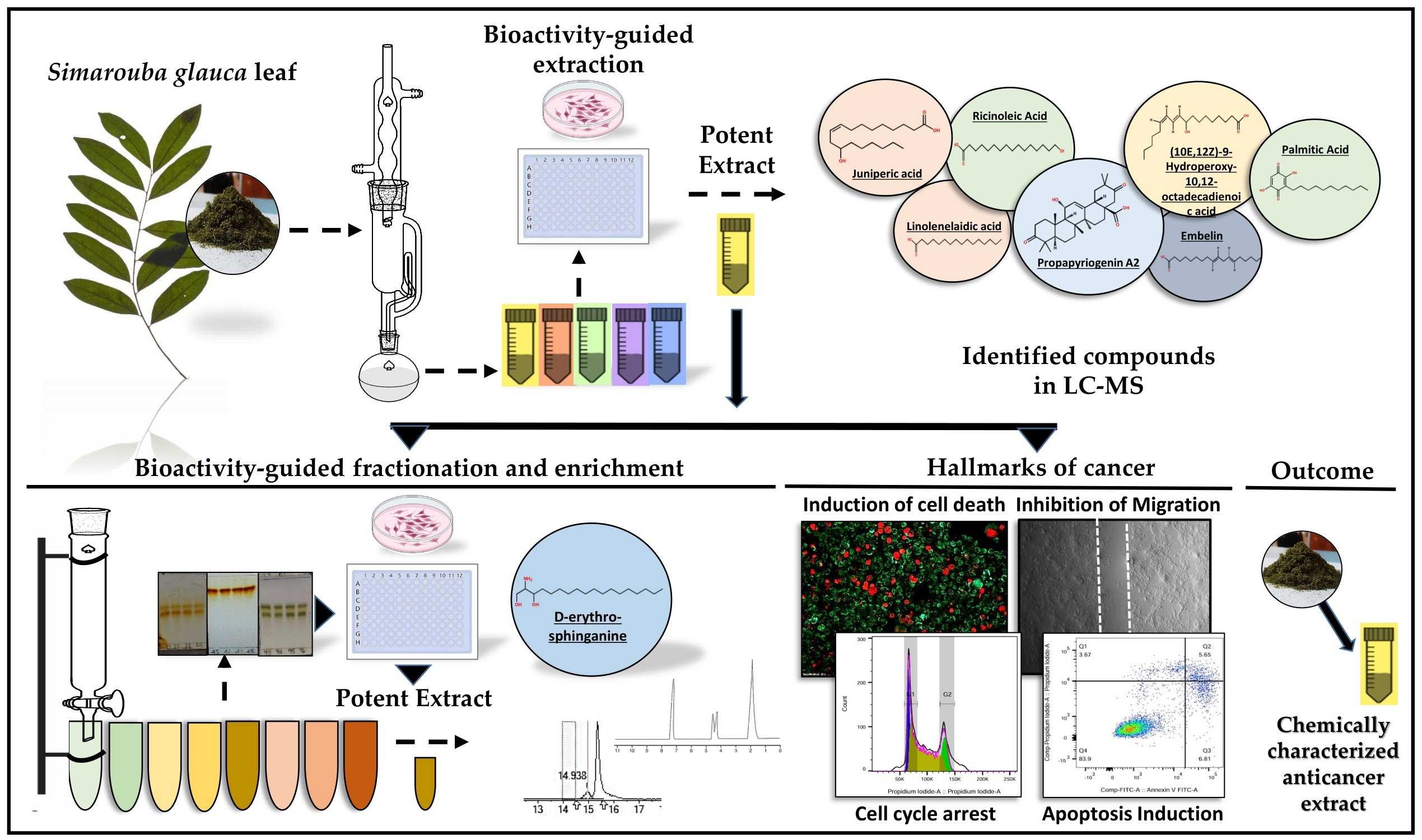
Bioactivity-Guided Fractionation, Characterization, and Mechanistic Insights of Anticancer Agents from Simarouba glauca DC. Leaves
 , and
, and
Abstract
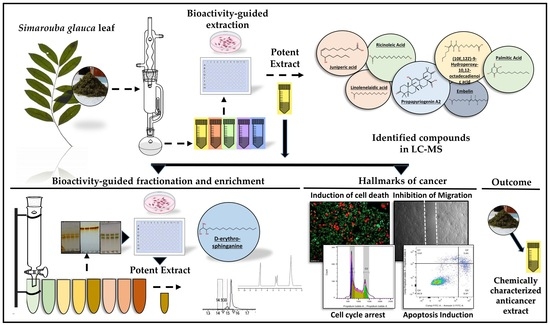
1. Introduction
2. Results
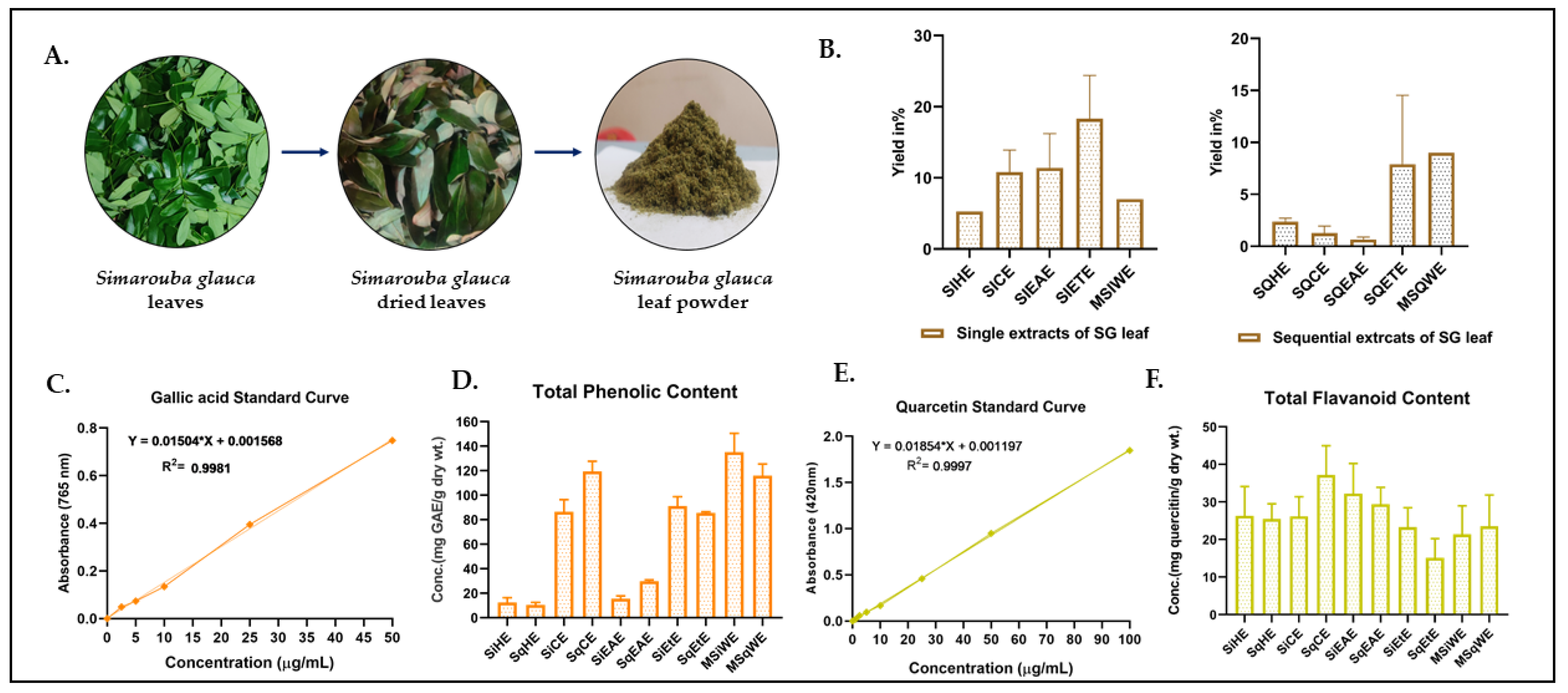
2.1. Yield and Phytochemical Characterization of S. glauca Leaf Extracts
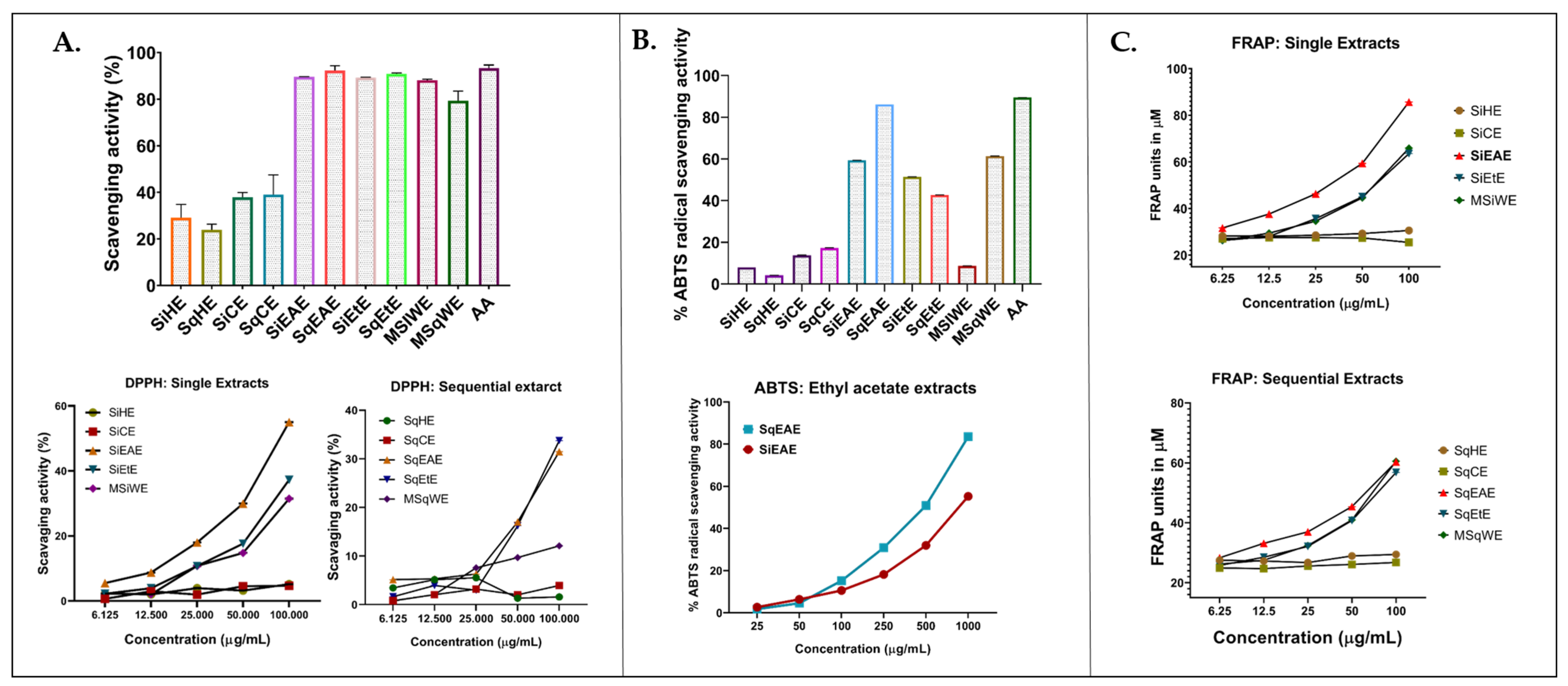
2.2. Antioxidant Potential of S. glauca Leaf Extracts
2.3. Cytotoxicity Assessment of the Extracts Generated from S. glauca Leaves
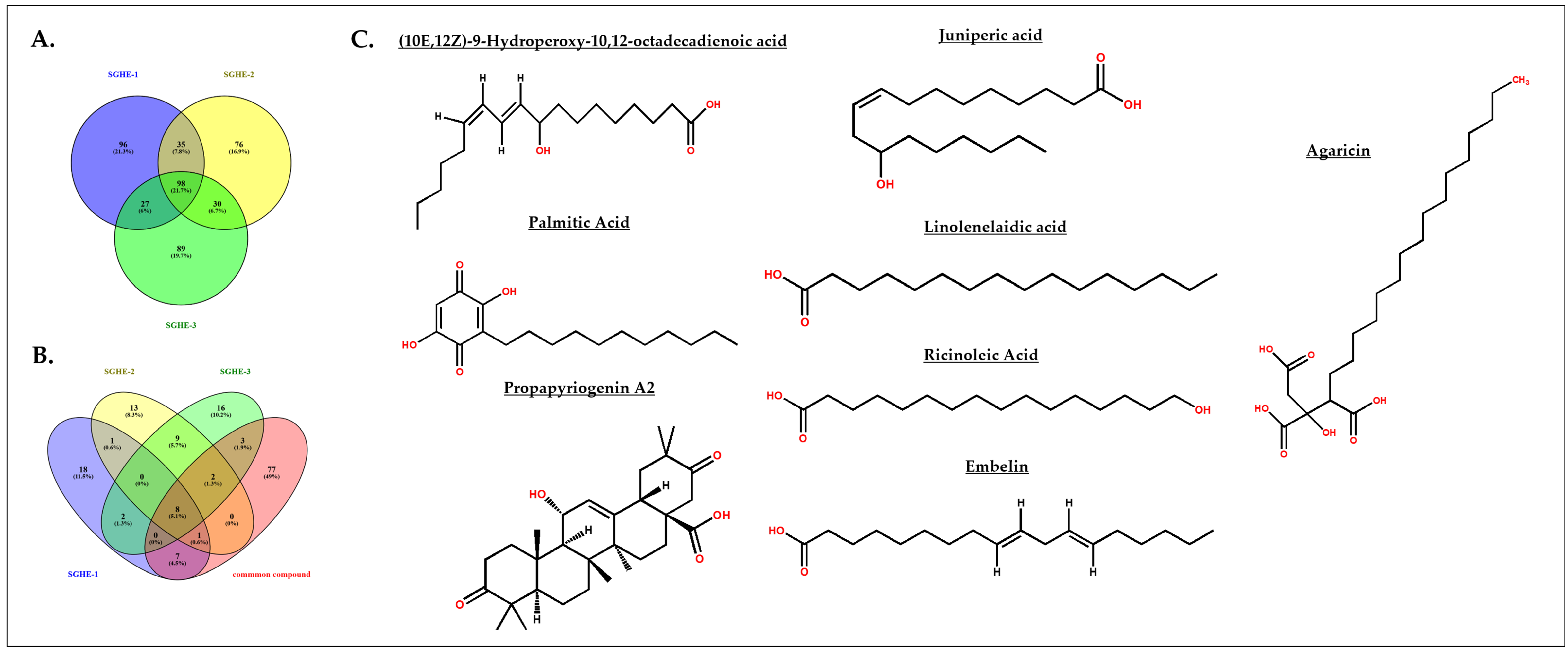
2.4. Characterization of the Hexane Extract Exhibiting Potent Cytotoxicity by LC-HRMS
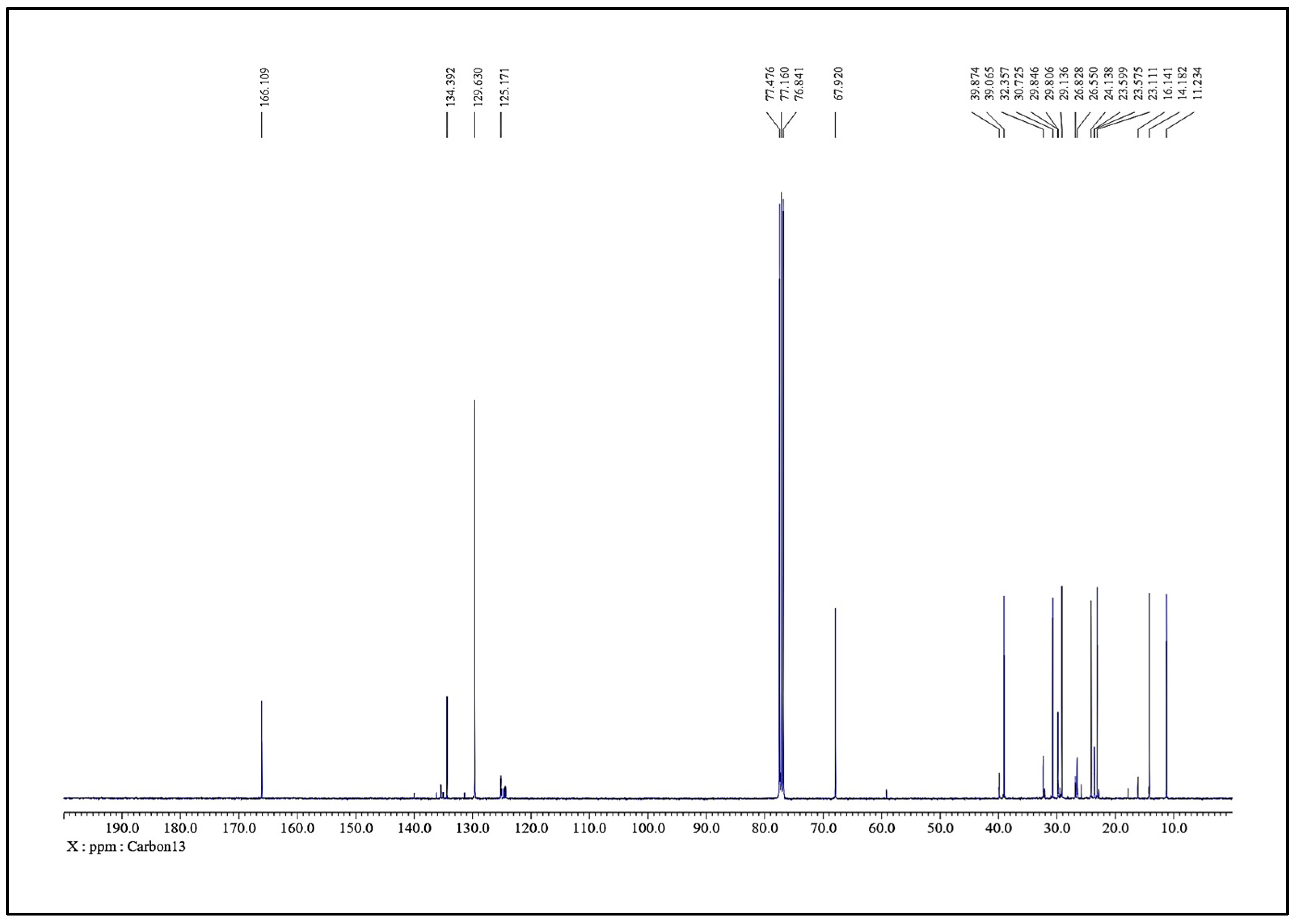
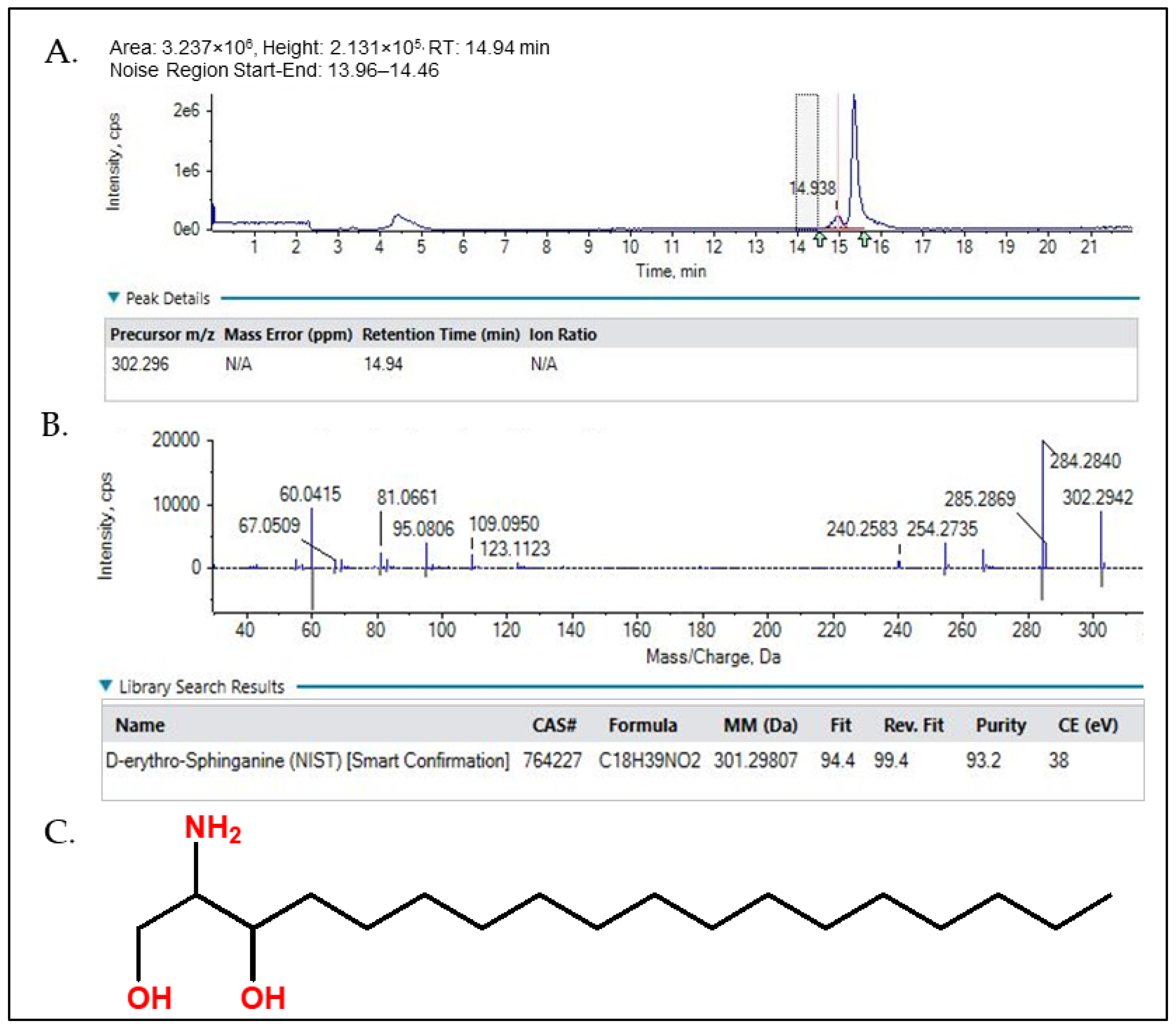
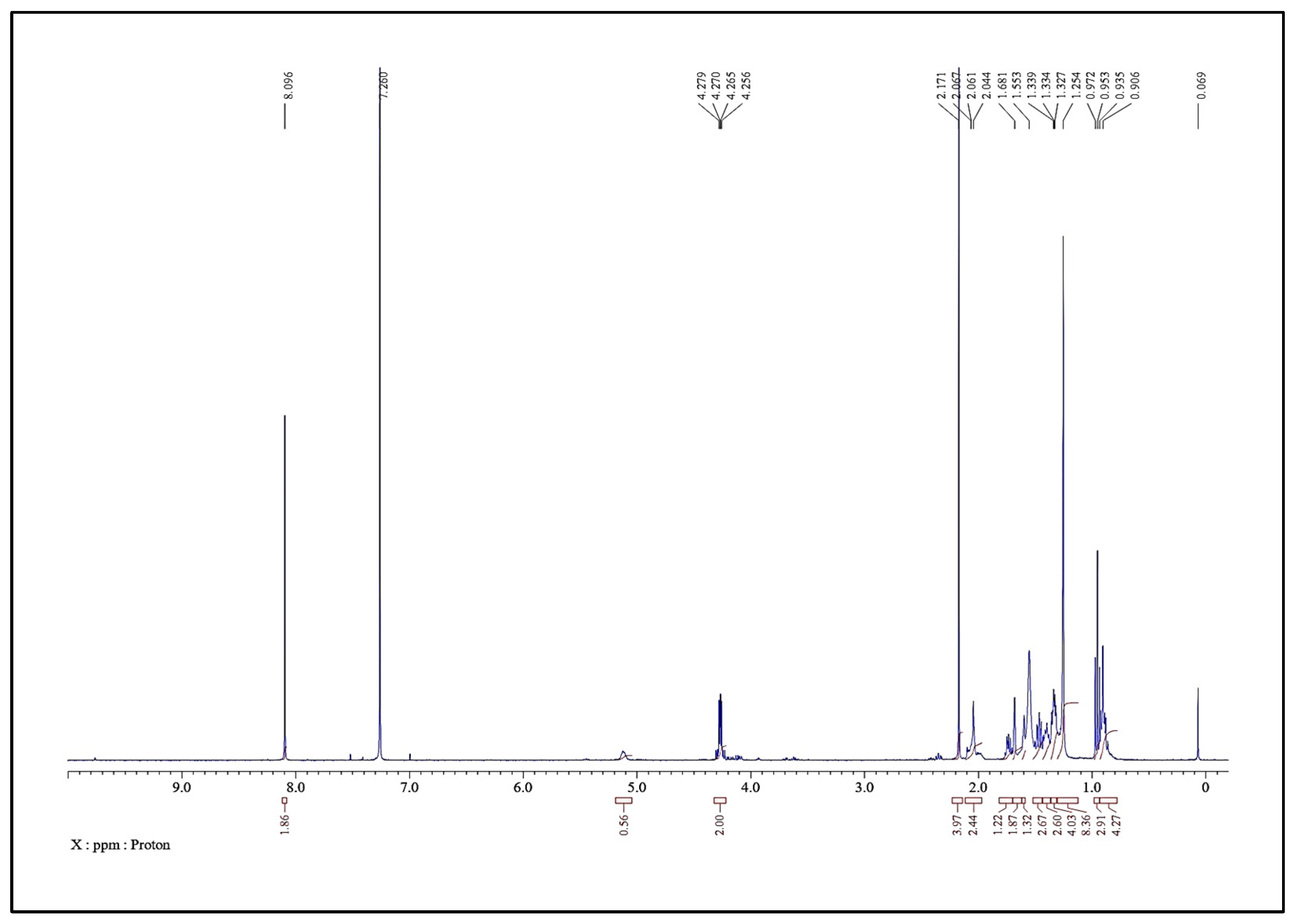
2.5. Bioactivity Guided Fractionation and Enrichment with Chemical Characterization of Active Fraction
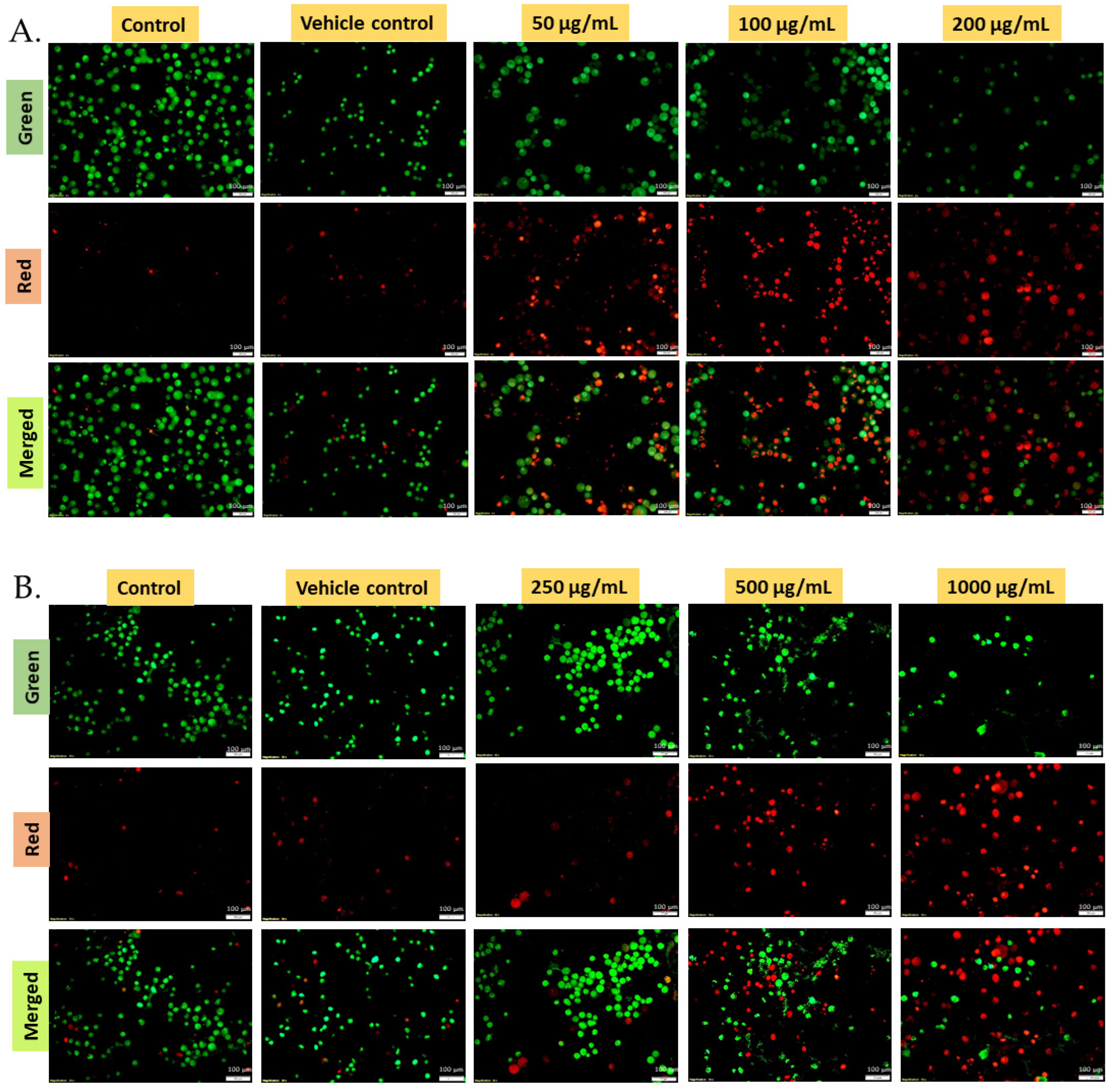
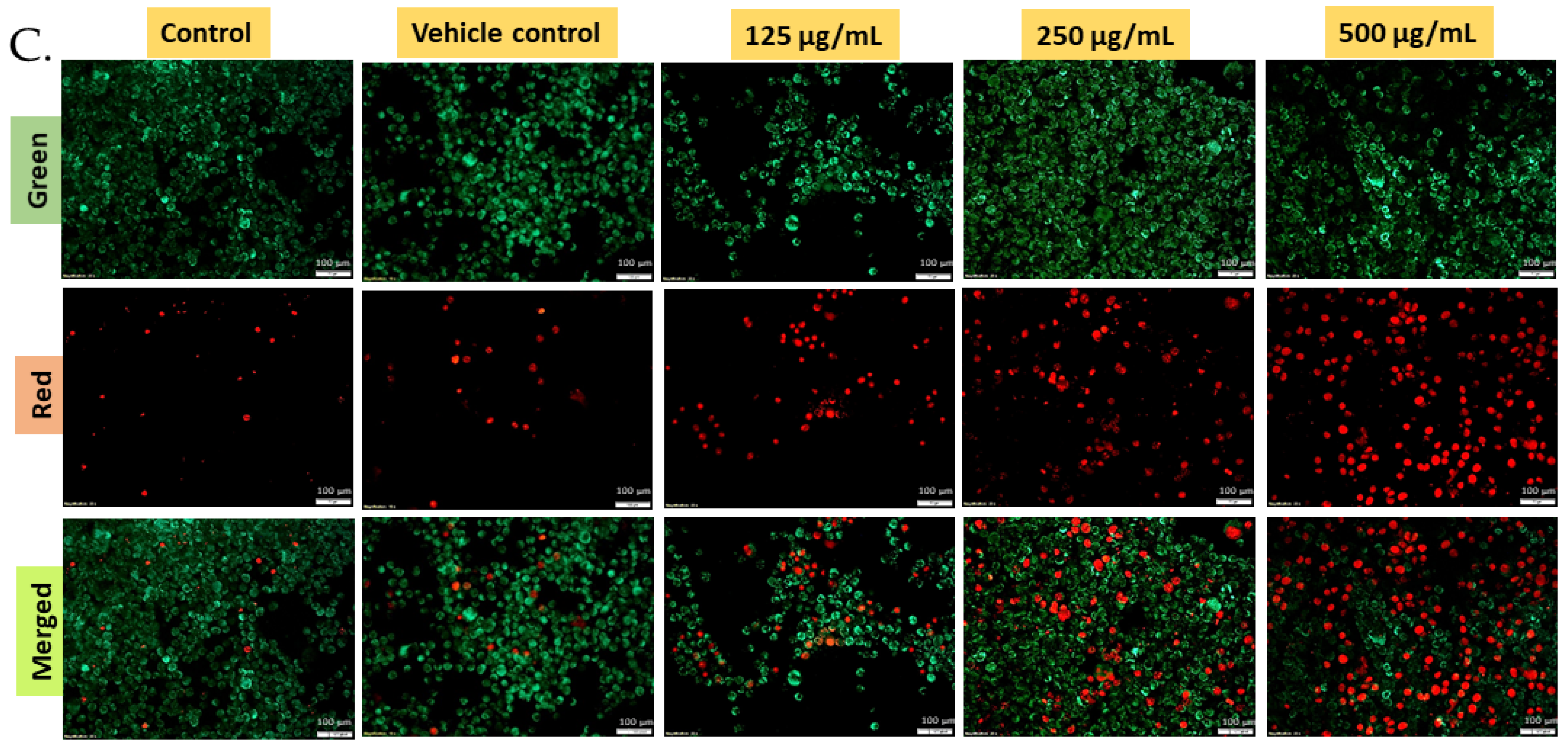
2.6. Treatment of Cancer Cells with S. glauca Leaf Hexane Extract Induced Death—Analysis by Live–Dead Staining Assay
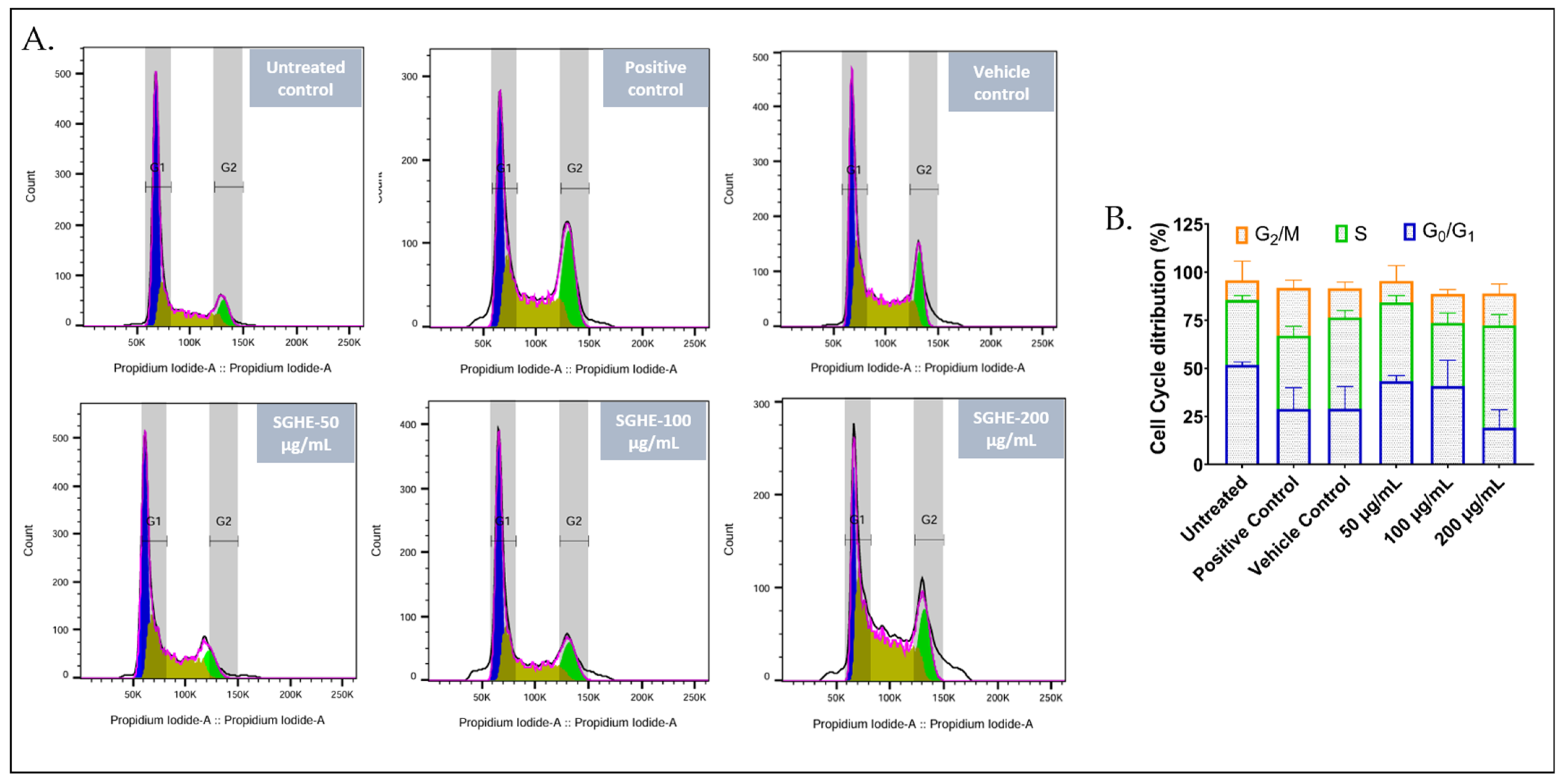
2.7. Treatment of Cancer Cells with S. glauca Hexane Extract Arrested the Progression of the Cell Cycle by Promoting the Accumulation of Cells in the G2/M Phase
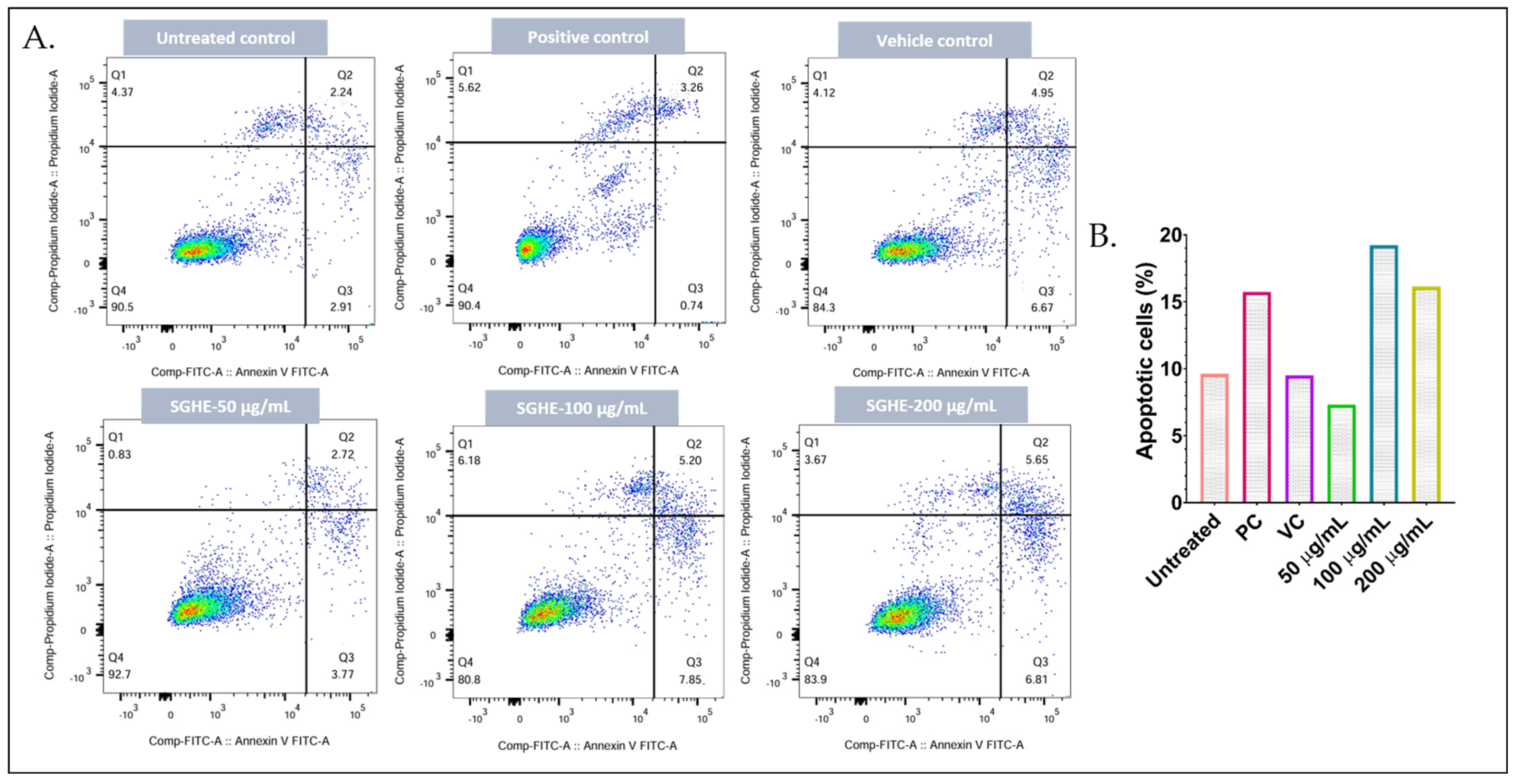
2.8. S. glauca Hexane Extract Induced Apoptosis in CAL-27 Cells
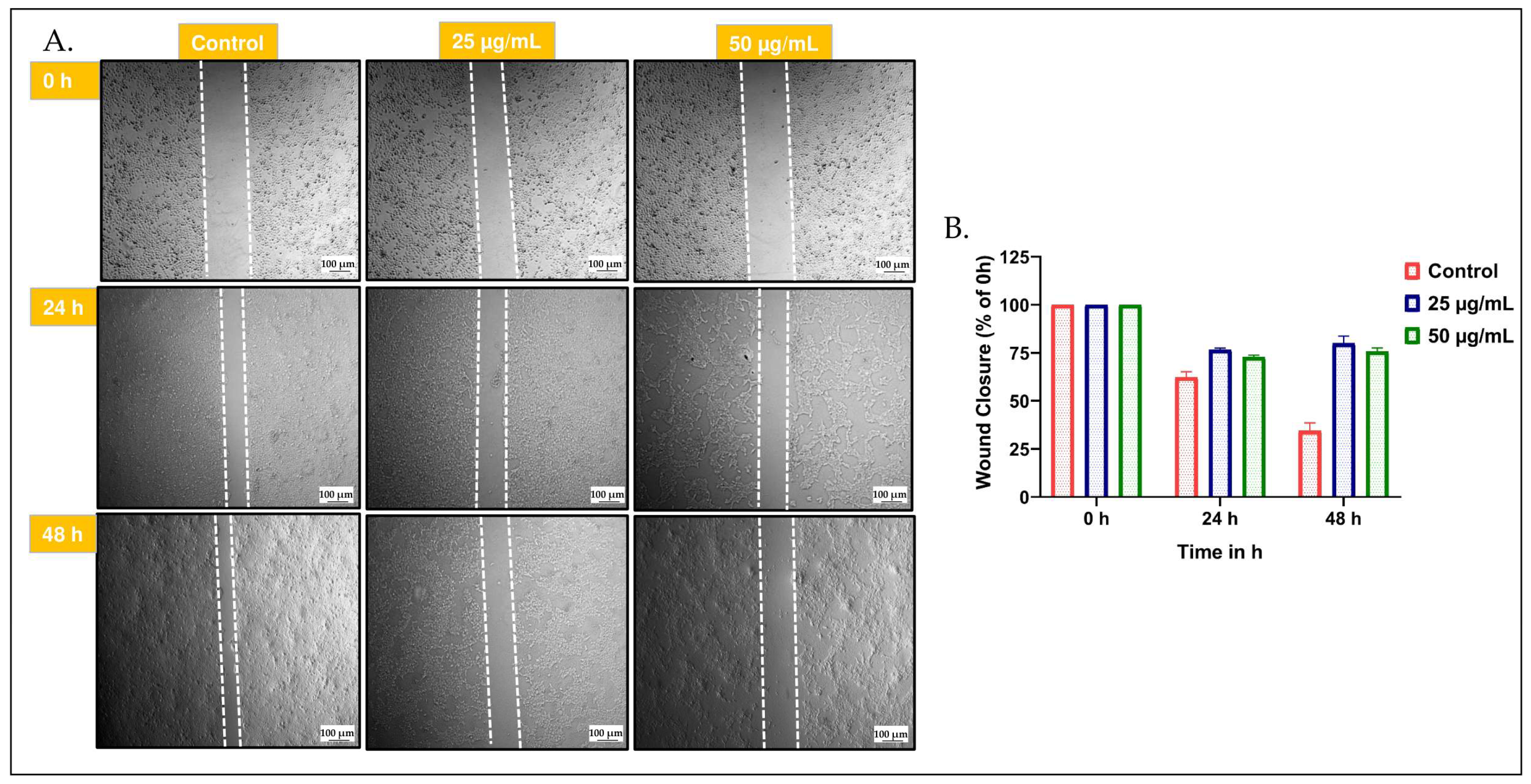
2.9. CAL-27 Cells Exposed to S. glauca Hexane Extract Exhibited Retarded Migration
3. Discussion
4. Materials and Methods
4.1. Plant Material Collection
Preparation and Extraction of S. glauca Leaves
4.2. Analysis of Phytochemicals
4.2.1. Determination of Total Phenolic Content (TPC)
4.2.2. Quantification of Total Flavonoid Content (TFC)
4.2.3. RP-HPLC
4.3. Antioxidant Activity
4.3.1. DPPH Free-Radical Scavenging Assay
4.3.2. ABTS
4.3.3. Ferric Reducing Antioxidant Potential (FRAP)
4.4. Bioactivity Guided Fractionation
4.5. LC-MS Analysis
4.6. Bioactivity Guided Fractionation and Enrichment
4.6.1. Structural Characterization of Active Fraction
4.6.2. Bioactivity Examination of Active Fraction vs. Standard
4.7. Determination of the Impact of the Most Potent S. glauca Hexane Fraction on Cell Death Induction by Acridine Orange and Ethidium Bromide
4.8. Flow Cytometry Analysis
4.9. Migration Assay
4.10. Statistical Analyses
5. Conclusions
Supplementary Materials
Author Contributions
Funding
Institutional Review Board Statement
Data Availability Statement
Acknowledgments
Conflicts of Interest
Abbreviations
| OSCC | Oral Squamous Cell Carcinoma |
| SiHE | Single hexane extract |
| SqHE | Sequential hexane extract |
| SGHE | Simarouba glauca hexane extract |
| SiCE | Single chloroform extract |
| SqCE | Sequential chloroform extract |
| SiEAE | Single ethyl acetate extract |
| SqEAE | Sequential ethyl acetate extract |
| SiEtE | Single ethanol extract |
| SqEtE | Sequential ethanol extract |
| MSiWE | Macerated single water extract |
| MSqWE | Macerated sequential water extract |
| TPC | Total Phenolic Content |
| TFC | Total Flavonoid Content |
| FRAP | Ferric ion Reduction Antioxidant Power |
| DPPH | 2,2-diphenyl-1-picrylhydrazyl |
| ABTS | 2,2′-azinobis-(3-ethylbenzothiazoline-6-sulfonic acid) |
| MTT | 3-(4,5-dimethylthiazol-2-yl)-2,5-diphenyltetrazolium bromide |
| RT | Retention time |
| ROS | Reactive Oxygen Species |
| ANT | Adenine nucleotide translocase |
References
- Ferlay, J.E.M.; Lam, F.; Laversanne, M.; Colombet, M.; Mery, L.; Piñeros, M.; Znaor, A.; Soerjomataram, I.; Bray, F. Global Cancer Observatory: Cancer Today. 2024. Available online: https://gco.iarc.who.int/today (accessed on 26 July 2025).
- Jena, D.; Padhi, B.K.; Zahiruddin, Q.S.; Ballal, S.; Kumar, S.; Bhat, M.; Sharma, S.; Kumar, M.R.; Rustagi, S.; Gaidhane, A.M.; et al. Estimation of burden of cancer incidence and mortality in India: Based on global burden of disease study 1990–2021. BMC Cancer 2024, 24, 1278. [Google Scholar] [CrossRef] [Scilit] [PubMed]
- Anand, U.; Dey, A.; Chandel, A.K.S.; Sanyal, R.; Mishra, A.; Pandey, D.K.; De Falco, V.; Upadhyay, A.; Kandimalla, R.; Chaudhary, A.; et al. Cancer chemotherapy and beyond: Current status, drug candidates, associated risks and progress in targeted therapeutics. Genes Dis. 2023, 10, 1367–1401. [Google Scholar] [CrossRef] [Scilit] [PubMed]
- Davis, C.C.; Choisy, P. Medicinal plants meet modern biodiversity science. Curr. Biol. 2024, 34, R158–R173. [Google Scholar] [CrossRef] [Scilit] [PubMed]
- Iqbal, J.; Abbasi, B.A.; Mahmood, T.; Kanwal, S.; Ali, B.; Shah, S.A.; Khalil, A.T. Plant-derived anticancer agents: A green anticancer approach. Asian Pac. J. Trop. Biomed. 2017, 7, 1129–1150. [Google Scholar] [CrossRef] [Scilit]
- Dehelean, C.A.; Marcovici, I.; Soica, C.; Mioc, M.; Coricovac, D.; Iurciuc, S.; Cretu, O.M.; Pinzaru, I. Plant-Derived Anticancer Compounds as New Perspectives in Drug Discovery and Alternative Therapy. Molecules 2021, 26, 1109. [Google Scholar] [CrossRef] [Scilit]
- Fridlender, M.; Kapulnik, Y.; Koltai, H. Plant derived substances with anti-cancer activity: From folklore to practice. Front. Plant Sci. 2015, 6, 799. [Google Scholar] [CrossRef] [Scilit]
- Singh, L.; Garg, S. Medicinal Potential of Laxmi Taru (Simarouba glauca DC). Dev Sanskriti Interdiscip. Int. J. 2021, 18, 40–45. [Google Scholar] [CrossRef] [Scilit]
- Jose, A.; Kannan, E.; Kumar, P.R.; Madhunapantula, S. Therapeutic Potential of Phytochemicals Isolated from Simarouba glauca DC for Inhibiting Cancers: A Review. Syst. Rev. Pharm. 2018, 10, 73–80. [Google Scholar] [CrossRef] [Scilit]
- Subburaj, V.; Kuppuswamy, U.; Sankar, V. Phyto-chemicals and Spectral Characterization of Novel Glaucarubinone Quassinoid from Simarouba glauca Leaves: In vitro Anti-proliferative Potential against Breast Adenocarcinoma Cell line. J. Young Pharm. 2025, 17, 89–96. [Google Scholar] [CrossRef] [Scilit]
- Haleshappa, R.; Patil, S.J.; Siddalinga Murthy, K. Phytochemical analysis, in vitro evaluation of antioxidant and free radical scavenging activity of Simarouba glauca seeds. Adv. Pharmacol. Pharm. 2021, 9, 1–8. [Google Scholar] [CrossRef] [Scilit]
- Pawar, K.R.; Janavale, G.B.; Wagh, S.G.; Panche, A.N.; Daspute, A.A.; Pohare, M.B.; Harke, S.N. Phytochemical analysis of Simarouba glauca DC., and comparison of its bioactivity. Asian J. Immunol. 2019, 2, 78–88. [Google Scholar]
- Mugaranja, K.P.; Kulal, A. Alpha glucosidase inhibition activity of phenolic fraction from Simarouba glauca: An in-vitro, in-silico and kinetic study. Heliyon 2020, 6, e04392. [Google Scholar] [CrossRef] [Scilit] [PubMed]
- Vieira, I.J.C.; Braz-Filho, R. Quassinoids: Structural diversity, biological activity and synthetic studies. Stud. Nat. Prod. Chem. 2006, 33, 433–492. [Google Scholar]
- Showalter, H.H. Progress in the synthesis of canthine alkaloids and ring-truncated congeners. J. Nat. Prod. 2013, 76, 455–467. [Google Scholar] [CrossRef] [Scilit]
- Vikas, B.; Akhil, B.S.; Suja, S.R.; Sujathan, K. An Exploration of Phytochemicals from Simaroubaceae. Asian Pac. J. Cancer Prev. APJCP 2017, 18, 1765–1767. [Google Scholar]
- Patil, S.; Murthy, K. Phytochemicals, antioxidant profile and GCMS analysis of ethanol extract of Simarouba glauca seeds. Asian J. Biol. Life Sci. 2020, 9, 379–385. [Google Scholar]
- Aljawobaei, W.; Thippeswamy, N.; Ali, S.S.M.; Achur, R. Evaluation of in vitro anti-inflammatory and antioxidant activities of Simarouba glauca leaf extract. Plant Sci. Today 2025, 12, 1–9. [Google Scholar] [CrossRef] [Scilit]
- Ramasamy, S.P.; Rajendran, A.; Pallikondaperumal, M.; Sundararajan, P.; Husain, F.M.; Khan, A.; Hakeem, M.J.; Alyousef, A.A.; Albalawi, T.; Alam, P. Broad-spectrum antimicrobial, antioxidant, and anticancer studies of leaf extract of Simarouba glauca DC in vitro. Antibiotics 2022, 11, 59. [Google Scholar] [CrossRef] [Scilit]
- Rivero-Cruz, J.; Lezutekong, R.; Echeverri, T.; Ito, A.; Mi, Q.; Chai, H.-B.; Soejarto, D.; Cordell, G.; Pezzuto, J.; Swanson, S.; et al. Cytotoxic constituents of the twigs of Simarouba glauca collected from a plot in Southern Florida. Phytother. Res. PTR 2005, 19, 136–140. [Google Scholar] [CrossRef] [Scilit]
- Mathew, S.E.; Ramavarma, S.K.; Babu, T.D.; Kuzhivelil, B.T.; Raghavamenon, A.C. Preliminary assessment on phytochemical composition, cytotoxic and antitumor efficacy of Simarouba glauca DC. Leaf methanolic extract. Ann. Phytomed 2019, 8, 121–126. [Google Scholar] [CrossRef] [Scilit]
- Jose, A.; Chaitanya, M.V.N.L.; Kannan, E.; Madhunapantula, S.V. Tricaproin Isolated From Simarouba glauca Inhibits the Growth of Human Colorectal Carcinoma Cell Lines by Targeting Class-1 Histone Deacetylases. Front. Pharmacol. 2018, 9, 127. [Google Scholar] [CrossRef] [Scilit]
- Karthikeyan, S.; Hoti, S.L.; Nazeer, Y.; Hegde, H.V. Glaucarubinone sensitizes KB cells to paclitaxel by inhibiting ABC transporters via ROS-dependent and p53-mediated activation of apoptotic signaling pathways. Oncotarget 2016, 7, 42353–42373. [Google Scholar] [CrossRef] [Scilit] [PubMed]
- Umesh, T.G. In vitro antioxidant potential, Free radical scavenging and Cytotoxic activity of Simirouba gluaca Leaves. Int. J. Pharm. Pharm. Sci. 2015, 7, 411–416. [Google Scholar]
- De Menezes, B.B.; Frescura, L.M.; Duarte, R.; Villetti, M.A.; Da Rosa, M.B. A critical examination of the DPPH method: Mistakes and inconsistencies in stoichiometry and IC50 determination by UV–Vis spectroscopy. Anal. Chim. Acta 2021, 1157, 338398. [Google Scholar] [CrossRef] [Scilit] [PubMed]
- Nouioura, G.; El Fadili, M.; El Barnossi, A.; Loukili, E.H.; Laaroussi, H.; Bouhrim, M.; Giesy, J.P.; Aboul-Soud, M.A.M.; Al-Sheikh, Y.A.; Lyoussi, B.; et al. Comprehensive analysis of different solvent extracts of Ferula communis L. fruit reveals phenolic compounds and their biological properties via in vitro and in silico assays. Sci. Rep. 2024, 14, 8325. [Google Scholar] [CrossRef] [Scilit]
- Freshney, R.I. Culture of Animal Cells: A Manual of Basic Technique and Specialized Applications; John Wiley & Sons: Hoboken, NJ, USA, 2015. [Google Scholar]
- Adeosun, W.B.; Bodede, O.; Prinsloo, G. Effect of Different Climatic Regions and Seasonal Variation on the Antibacterial and Antifungal Activity, and Chemical Profile of Helichrysum aureonitens Sch. Bip. Metabolites 2022, 12, 758. [Google Scholar] [CrossRef] [Scilit]
- Ribeiro, D.; Camilo, C.; Nonato, C.; Rodrigues, F.; de Menezes, I.R.; Ribeiro-Filho, J.; Xiao, J.; Souza, M.; da Costa, J.G. Influence of seasonal variation on phenolic content and in vitro antioxidant activity of Secondatia floribunda A. DC. (Apocynaceae). Food Chem. 2020, 315, 126277. [Google Scholar] [CrossRef] [Scilit]
- Liu, W.; Yin, D.; Li, N.; Hou, X.; Wang, D.; Li, D.; Liu, J. Influence of Environmental Factors on the Active Substance Production and Antioxidant Activity in Potentilla fruticosa L. and Its Quality Assessment. Sci. Rep. 2016, 6, 28591. [Google Scholar] [CrossRef] [Scilit]
- Alharbi, S.A.; Abdelsalam, K.E.A.; Asad, M.; Alrouji, M.; Ibrahim, M.A.; Almuhanna, Y. Assessment of the anti-cancer potential of Ephedra foeminea leaf extract on MDA-MB-231, MCF-7, 4 T1, and MCF-10 breast cancer cell lines: Cytotoxic, apoptotic and oxidative assays. Saudi Pharm. J. 2024, 32, 101960. [Google Scholar] [CrossRef] [Scilit]
- Liu, K.; Liu, P.C.; Liu, R.; Wu, X. Dual AO/EB staining to detect apoptosis in osteosarcoma cells compared with flow cytometry. Med. Sci. Monit. Basic Res. 2015, 21, 15–20. [Google Scholar] [CrossRef] [Scilit]
- Wu, F.; Shi, X.; Zhang, R.; Tian, Y.; Wang, X.; Wei, C.; Li, D.; Li, X.; Kong, X.; Liu, Y. Regulation of proliferation and cell cycle by protein regulator of cytokinesis 1 in oral squamous cell carcinoma. Cell Death Dis. 2018, 9, 564. [Google Scholar] [CrossRef] [Scilit]
- Fleifel, D.; Cook, J.G. G1 Dynamics at the Crossroads of Pluripotency and Cancer. Cancers 2023, 15, 4559. [Google Scholar] [CrossRef] [Scilit]
- Park, C.; Cha, H.J.; Lee, H.; Hwang-Bo, H.; Ji, S.Y.; Kim, M.Y.; Hong, S.H.; Jeong, J.W.; Han, M.H.; Choi, S.H.; et al. Induction of G2/M Cell Cycle Arrest and Apoptosis by Genistein in Human Bladder Cancer T24 Cells through Inhibition of the ROS-Dependent PI3k/Akt Signal Transduction Pathway. Antioxidants 2019, 8, 327. [Google Scholar] [CrossRef] [Scilit] [PubMed]
- Matthews, H.K.; Bertoli, C.; de Bruin, R.A.M. Cell cycle control in cancer. Nat. Rev. Mol. Cell Biol. 2022, 23, 74–88. [Google Scholar] [CrossRef] [Scilit] [PubMed]
- Prasad Tharanga Jayasooriya, R.G.; Dilshara, M.G.; Neelaka Molagoda, I.M.; Park, C.; Park, S.R.; Lee, S.; Choi, Y.H.; Kim, G.Y. Camptothecin induces G(2)/M phase arrest through the ATM-Chk2-Cdc25C axis as a result of autophagy-induced cytoprotection: Implications of reactive oxygen species. Oncotarget 2018, 9, 21744–21757. [Google Scholar] [CrossRef] [Scilit] [PubMed]
- Shettar, P.S.; Hiremath, M.B. GC-MS analysis and anti-oxidant activity of bioactive compounds of Simarouba glauca leaf extracts. Nat. Prod. Res. 2024, 39, 5481–5490. [Google Scholar] [CrossRef] [Scilit]
- Rodríguez De Luna, S.L.; Ramírez-Garza, R.E.; Serna Saldívar, S.O. Environmentally Friendly Methods for Flavonoid Extraction from Plant Material: Impact of Their Operating Conditions on Yield and Antioxidant Properties. Sci. World J. 2020, 2020, 6792069. [Google Scholar] [CrossRef] [Scilit]
- Louanas, H.; Baira, F.; Hammoutene, D.; Lakikza, I.; Aouni, S.I.; Boublia, A.; Ernst, B.; Ahad, A.; Hachemi, N.; Benguerba, Y. Unraveling the role of solvent polarity in modulating phenolic compounds in olive oil antioxidant activity via DFT analysis. Comput. Theor. Chem. 2025, 1253, 115459. [Google Scholar] [CrossRef] [Scilit]
- Jose, A.; Kannan, E.; Madhunapantula, S. Anti-proliferative potential of phytochemical fractions isolated from Simarouba glauca DC leaf. Heliyon 2020, 6, e03836. [Google Scholar] [CrossRef] [Scilit]
- Kumar, N.; Goel, N. Phenolic acids: Natural versatile molecules with promising therapeutic applications. Biotechnol. Rep. 2019, 24, e00370. [Google Scholar] [CrossRef] [Scilit]
- Santhosh, S.K.; Venugopal, A.; Radhakrishnan, M.C. Study on the phytochemical, antibacterial and antioxidant activities of Simarouba glauca. South Indian J. Biol. Sci. 2016, 2, 119–124. [Google Scholar] [CrossRef] [Scilit]
- Rudraswamy, S.; Hommerhalli, J.S.P.; Kenganora, M.; Doggalli, N. Antioxidant activity, total phenolic, flavonoid content in Simarouba glauca leaves-An In vitro study. Int. J. Pharm. Res. 2021, 13, 3245–3251. [Google Scholar]
- Ma, Y.; Li, X.; Hou, L.-X.; Wei, A.-Z. Extraction solvent affects the antioxidant, antimicrobial, cholinesterase and HepG2 human hepatocellular carcinoma cell inhibitory activities of Zanthoxylum bungeanum pericarps and the major chemical components. Ind. Crops Prod. 2019, 142, 111872. [Google Scholar] [CrossRef] [Scilit]
- Mishra, T.; Saima; Banik, B.K. Quassinoids as Promising Anti-cancer Agents. Curr. Med. Chem. 2024, 32, 5433–5473. [Google Scholar] [CrossRef] [Scilit]
- Joshi, R.K. Bioactive usual and unusual triterpenoids derived from natural sources used in traditional medicine. Chem. Biodivers. 2023, 20, e202200853. [Google Scholar] [CrossRef] [Scilit]
- Wu, G.; Xu, L.; Lin, N.; Liu, B. UCN-01 induces S and G2/M cell cycle arrest through the p53/p21waf1or CHK2/CDC25C pathways and can suppress invasion in human hepatoma cell lines. BMC Cancer 2013, 13, 167. [Google Scholar] [CrossRef] [Scilit]
- Chung, T.-W.; Lin, S.-C.; Su, J.-H.; Chen, Y.-K.; Lin, C.-C.; Chan, H.-L. Sinularin induces DNA damage, G2/M phase arrest, and apoptosis in human hepatocellular carcinoma cells. BMC Complement. Altern. Med. 2017, 17, 62. [Google Scholar] [CrossRef] [Scilit]
- Ling, T.; Boyd, L.; Rivas, F. Triterpenoids as Reactive Oxygen Species Modulators of Cell Fate. Chem. Res. Toxicol. 2022, 35, 569–584. [Google Scholar] [CrossRef] [Scilit]
- Su, C.-C.; Yu, C.-C.; Shih, Y.-W.; Liu, K.-L.; Chen, H.-W.; Wu, C.-C.; Yang, Y.-C.; Yeh, E.-L.; Li, C.-C. Protective effect of alpha-linolenic acid on human oral squamous cell carcinoma metastasis and apoptotic cell death. Nutrients 2023, 15, 4992. [Google Scholar] [CrossRef] [Scilit]
- Settacomkul, R.; Sangpairoj, K.; Phuagkhaopong, S.; Meemon, K.; Niamnont, N.; Sobhon, P.; Vivithanaporn, P. Ethanolic extract of Halymenia durvillei induced G2/M arrest and altered the levels of cell cycle regulatory proteins of MDA-MB-231 triple-negative breast cancer cells. Res. Pharm. Sci. 2023, 18, 279–291. [Google Scholar] [CrossRef] [Scilit]
- An, B.C.; Kwak, S.H.; Ahn, J.Y.; Won, H.Y.; Kim, T.H.; Ryu, Y.; Chung, M.J. Identification of Bioactive Substances Derived from the Probiotic-Induced Bioconversion of Lagerstroemia speciosa Pers. Leaf Extract That Have Beneficial Effects on Diabetes and Obesity. Microorganisms 2024, 12, 1848. [Google Scholar] [CrossRef] [Scilit] [PubMed]
- Chávez, E.; Buelna-Chontal, M.; Macías-López, A.; Hernández-Esquivel, L.; Correa, F.; Pavón, N. Interaction of Agaric Acid with the Adenine Nucleotide Translocase Induces Mitochondrial Oxidative Stress. Biochem. Res. Int. 2020, 2020, 5253108. [Google Scholar] [CrossRef] [Scilit] [PubMed]
- Gudkova, O.; Demchenko, A.G.; Shvets, A.; Kuryakov, V.; Sedyakina, N.; Lyundup, A.; Feldman, N.; Gromovykh, T.; Lutsenko, S. Biological Activity of Agaricinic Acid Nanoparticles against Human Hepatoma HepG2 Cells. Bull. Exp. Biol. Med. 2020, 169, 508–511. [Google Scholar] [CrossRef] [Scilit] [PubMed]
- Ali, A.; Emad, N.A.; Sultana, N.; Ali, H.; Jahan, S.; Aqil, M.; Mujeeb, M.; Sultana, Y. Medicinal potential of embelin and its nanoformulations: An update on the molecular mechanism and various applications. Iran. J. Basic Med. Sci. 2024, 27, 1228–1242. [Google Scholar]
- Ko, J.-H.; Lee, S.-G.; Yang, W.M.; Um, J.-Y.; Sethi, G.; Mishra, S.; Shanmugam, M.; Ahn, K. The Application of Embelin for Cancer Prevention and Therapy. Molecules 2018, 23, 621. [Google Scholar] [CrossRef] [Scilit]
- Zhao, B.; Tomoda, Y.; Mizukami, H.; Makino, T. 9-Oxo-(10E,12E)-octadecadienoic acid, a cytotoxic fatty acid ketodiene isolated from eggplant calyx, induces apoptosis in human ovarian cancer (HRA) cells. J. Nat. Med. 2015, 69, 296–302. [Google Scholar] [CrossRef] [Scilit]
- Lin, X.M.; Liu, S.B.; Luo, Y.H.; Xu, W.T.; Zhang, Y.; Zhang, T.; Xue, H.; Zuo, W.B.; Li, Y.N.; Lu, B.X.; et al. 10-HDA Induces ROS-Mediated Apoptosis in A549 Human Lung Cancer Cells by Regulating the MAPK, STAT3, NF-κB, and TGF-β1 Signaling Pathways. BioMed Res. Int. 2020, 2020, 3042636. [Google Scholar] [CrossRef] [Scilit]
- Alkan, H.F.; Altea-Manzano, P.; Fendt, S.-M. Palmitic acid: Enabling the tumor’s nerves. Cell Metab. 2022, 34, 7–9. [Google Scholar] [CrossRef] [Scilit]
- Wang, X.; Zhang, C.; Bao, N. Molecular mechanism of palmitic acid and its derivatives in tumor progression. Front. Oncol. 2023, 13, 1224125. [Google Scholar] [CrossRef] [Scilit]
- Song, P.; Jiang, Q.; Wu, X.; Bu, L.; Xie, W.; Wei, W.; Xing, X.; Guo, J. Palmitic acid and palmitoylation in cancer: Understanding, insights, and challenges. The Innov. 2025, 6, 100918. [Google Scholar] [CrossRef] [Scilit]
- Majumder, M.; Debnath, S.; Gajbhiye, R.L.; Saikia, R.; Gogoi, B.; Samanta, S.K.; Das, D.K.; Biswas, K.; Jaisankar, P.; Mukhopadhyay, R. Ricinus communis L. fruit extract inhibits migration/invasion, induces apoptosis in breast cancer cells and arrests tumor progression in vivo. Sci. Rep. 2019, 9, 14493. [Google Scholar] [CrossRef] [Scilit]
- Vieira, C.; Fetzer, S.; Sauer, S.; Evangelista, S.; Averbeck, B.; Kress, M.; Reeh, P.; Cirillo, R.; Lippi, A.; Maggi, C.; et al. Pro- and anti-inflammatory actions of ricinoleic acid: Similarities and differences with capsaicin. Naunyn-Schmiedeberg’s Arch. Pharmacol. 2001, 364, 87–95. [Google Scholar] [CrossRef] [Scilit]
- Pabiś, S.; Kula, J. Synthesis and Bioactivity of (R)-Ricinoleic Acid Derivatives: A Review. Curr. Med. Chem. 2016, 23, 4037–4056. [Google Scholar] [CrossRef] [Scilit]
- Rizvi, N.B.; Fatima, A.; Busquets, R.; Khan, M.R.; Ashraf, S.; Khan, M.S.; Oz, F. Effect of the media in the Folin-Ciocalteu assay for the analysis of the total phenolic content of olive products. Food Anal. Methods 2023, 16, 1627–1634. [Google Scholar] [CrossRef] [Scilit]
- Mohammed, E.A.; Abdalla, I.G.; Alfawaz, M.A.; Mohammed, M.A.; Al Maiman, S.A.; Osman, M.A.; Yagoub, A.E.A.; Hassan, A.B. Effects of extraction solvents on the total phenolic content, total flavonoid content, and antioxidant activity in the aerial part of root vegetables. Agriculture 2022, 12, 1820. [Google Scholar] [CrossRef] [Scilit]
- Lorigooini, Z.; Jamshidi-kia, F.; Hosseini, Z. Chapter 4—Analysis of aromatic acids (phenolic acids and hydroxycinnamic acids). In Recent Advances in Natural Products Analysis; Sanches Silva, A., Nabavi, S.F., Saeedi, M., Nabavi, S.M., Eds.; Elsevier: Amsterdam, The Netherlands, 2020; pp. 199–219. [Google Scholar]
- Cheng, J.; Zhou, C.; Xie, Y.; Wang, M.; Zhou, C.; Li, X.; Du, Y.; Lu, F. A new method for simultaneous determination of 14 phenolic acids in agricultural soils by multiwavelength HPLC-PDA analysis. RSC Adv. 2022, 12, 14939–14944. [Google Scholar] [CrossRef] [Scilit] [PubMed]
- Devi, G.V.Y.; Nagendra, A.H.; Shenoy, P.S.; Chatterjee, K.; Venkatesan, J. Isolation and purification of fucoidan from Sargassum ilicifolium: Osteogenic differentiation potential in mesenchymal stem cells for bone tissue engineering. J. Taiwan Inst. Chem. Eng. 2022, 136, 104418. [Google Scholar] [CrossRef] [Scilit]
- Hussen, E.M.; Endalew, S.A. In vitro antioxidant and free-radical scavenging activities of polar leaf extracts of Vernonia amygdalina. BMC Complement. Med. Ther. 2023, 23, 146. [Google Scholar] [CrossRef] [Scilit]
- Verrillo, M.; Cozzolino, V.; Spaccini, R. Antioxidant features of humic products by ABTS assay. In Immunosenescence: Methods and Protocols; Springer: New York, NY, USA, 2024; pp. 223–227. [Google Scholar]
- Shi, L.; Liu, Z.; Viejo, C.G.; Ahmadi, F.; Dunshea, F.R.; Suleria, H.A. Comparison of phenolic composition in Australian-grown date fruit (Phoenix dactylifera L.) seeds from different varieties and ripening stages. Food Res. Int. 2024, 181, 114096. [Google Scholar]
- Anantharaju, P.G.; Reddy, B.D.; Padukudru, M.A.; Kumari Chitturi, C.M.; Vimalambike, M.G.; Madhunapantula, S.V. Naturally occurring benzoic acid derivatives retard cancer cell growth by inhibiting histone deacetylases (HDAC). Cancer Biol. Ther. 2017, 18, 492–504. [Google Scholar] [CrossRef] [Scilit]
- Fonseca-Benitez, A.; Morantes Medina, S.J.; Ballesteros-Vivas, D.; Parada-Alfonso, F.; Perdomo, S.J. Passiflora mollissima seed extract induced antiproliferative and cytotoxic effects on CAL 27 spheroids. Adv. Pharmacol. Pharm. Sci. 2022, 2022, 4602413. [Google Scholar] [CrossRef] [Scilit]
- Mohd Faheem, M.; Bhagat, M.; Sharma, P.; Anand, R. Induction of p53 mediated mitochondrial apoptosis and cell cycle arrest in human breast cancer cells by plant mediated synthesis of silver nanoparticles from Bergenia ligulata (Whole plant). Int. J. Pharm. 2022, 619, 121710. [Google Scholar] [CrossRef] [Scilit]







| Cancer Cell Line Type | Cell Line | Sequential Extracts | IC50 Values of Sequential Extracts (µg/mL) | Single Extracts | IC50 Values of Single Extracts (µg/mL) | ||
|---|---|---|---|---|---|---|---|
| 24 h | 48 h | 24 h | 48 h | ||||
| Oral cancer | CAL-27 | SqHE | 147 | 142 | SiHE | 256.1 | 190.8 |
| SqCE | 603.3 | 131.4 | SiCE | >1000 | >1000 | ||
| SqEAE | 724.4 | 230.3 | SiEAE | 308.3 | 189.0 | ||
| SqEtE | 298.5 | 108.0 | SiEtE | 681.6 | 288.3 | ||
| MSqWE | >1000 | 490.4 | MSiWE | >1000 | 760.4 | ||
| Cervical Cancer | HeLa | SqHE | >1000 | 459 | SiHE | >1000 | 299 |
| SqCE | >1000 | >1000 | SiCE | >1000 | >1000 | ||
| SqEAE | >1000 | 742 | SiEAE | >1000 | >1000 | ||
| SqEtE | >1000 | >1000 | SiEtE | >1000 | >1000 | ||
| MSqWE | >1000 | >1000 | MSiWE | 930.9 | 265 | ||
| Breast Cancer | 4T1 | SqHE | >1000 | 258 | SiHE | 650 | 230 |
| SqCE | >1000 | >1000 | SiCE | >1000 | >1000 | ||
| SqEAE | >1000 | 302 | SiEAE | >1000 | 523.8 | ||
| SqEtE | >1000 | 542 | SiEtE | 502 | 132.7 | ||
| MSqWE | >1000 | >1000 | MSiWE | >1000 | >1000 | ||
Disclaimer/Publisher’s Note: The statements, opinions and data contained in all publications are solely those of the individual author(s) and contributor(s) and not of MDPI and/or the editor(s). MDPI and/or the editor(s) disclaim responsibility for any injury to people or property resulting from any ideas, methods, instructions or products referred to in the content. |
© 2026 by the authors. Licensee MDPI, Basel, Switzerland. This article is an open access article distributed under the terms and conditions of the Creative Commons Attribution (CC BY) license.
Share and Cite
Rudraswamy, S.; G. V., Y.D.; Sheshanna, S.H.; Doggalli, N.; Madhunapantula, S.V. Bioactivity-Guided Fractionation, Characterization, and Mechanistic Insights of Anticancer Agents from Simarouba glauca DC. Leaves. Molecules 2026, 31, 497. https://doi.org/10.3390/molecules31030497
Rudraswamy S, G. V. YD, Sheshanna SH, Doggalli N, Madhunapantula SV. Bioactivity-Guided Fractionation, Characterization, and Mechanistic Insights of Anticancer Agents from Simarouba glauca DC. Leaves. Molecules. 2026; 31(3):497. https://doi.org/10.3390/molecules31030497
Chicago/Turabian StyleRudraswamy, Sushma, Yashaswini Devi G. V., Sreeshyla H. Sheshanna, Nagabhushana Doggalli, and SubbaRao V. Madhunapantula. 2026. "Bioactivity-Guided Fractionation, Characterization, and Mechanistic Insights of Anticancer Agents from Simarouba glauca DC. Leaves" Molecules 31, no. 3: 497. https://doi.org/10.3390/molecules31030497
APA StyleRudraswamy, S., G. V., Y. D., Sheshanna, S. H., Doggalli, N., & Madhunapantula, S. V. (2026). Bioactivity-Guided Fractionation, Characterization, and Mechanistic Insights of Anticancer Agents from Simarouba glauca DC. Leaves. Molecules, 31(3), 497. https://doi.org/10.3390/molecules31030497